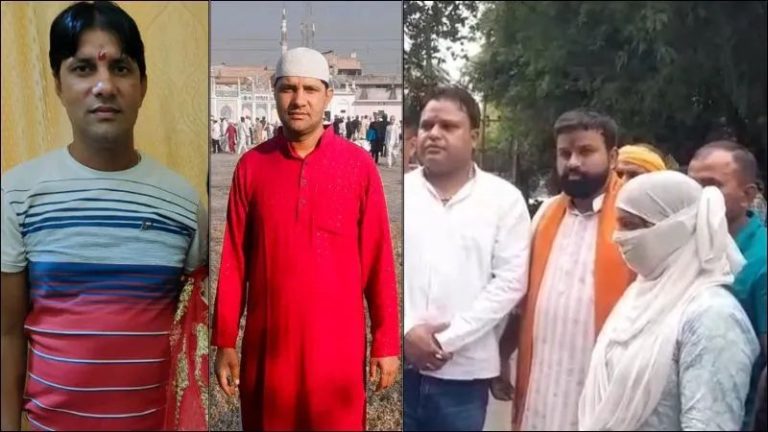
A Hindu woman living in Moradabad, Uttar Pradesh has registered a case of love jihad. The victim Hindu woman says that Iqrar Pasha married the victim by posing as Raj Thakur. After marriage, it was revealed that his real name is Iqrar and he is a Muslim.
According to media reports, the victim woman said that the accused Iqrar and his family members are pressurising her to change her religion. The victim told that when she refused, they forcibly fed her meat and beat her up.
The victim woman also said that Iqrar’s brothers raped her and threatened her children with a gun. The victim mentioned that she met Iqrar Pasha in 2022. She told that Iqrar Pasha used to apply tilak on his forehead and pretended to be Raj Thakur and also tied Kalawa on his wrist.
मुरादाबाद-जिले में सामने आया लव जेहाद का मामला, आरोपी इकरार पाशा ने राज ठाकुर बन प्रेमजाल में फंसाया
पीड़िता को मंदिर ले जाकर उसके साथ की शादी, शादी के ढाई साल बाद सामने आई सच्चाई
पहले से शादीशुदा और तीन बच्चों का बाप है आरोपी, पीड़िता ने एसएसपी से की पूरे मामले की शिकायत, SSP… pic.twitter.com/NCBb4IcQBj
— भारत समाचार | Bharat Samachar (@bstvlive) May 5, 2025
The victim said that he befriended the victim by posing as a Hindu and trapped her in his love trap. The accused Iqrar Pasha married the victim Hindu woman in a temple. It has also come to light that he used to perform puja-paath at home so that no one comes to know that he is a Muslim.
The victim further said that Iqrar Pasha did not introduce her to his family for two and a half years after marriage. Getting suspicious, the victim investigated about Iqrar and found out that her husband is not a Hindu but a Muslim. She also found out that Iqrar Pasha is already married and has 3 children.
When the victim protested against this and went to Iqrar Pasha to seek answers, he threatened to kill her and asked her to convert. The woman complained about this in Majhola police station. Hindu organizations have met SSP Moradabad and demanded action in this matter.
SSP Satpal Antil has said that the woman’s complaint will be investigated and appropriate action will be taken.
Israel has launched a massive air strike on Yemen’s Hodeidah Port in response to the Houthi attack on Tel Aviv’s main airport that occurred on Sunday, 04 May. As per reports, as many as 50 bombs have been dropped on the Hodeidah Port in Yemen as Israeli war planes launched a coordinated strike on May 5.
Israeli PM Benjamin Netanyahu had promised to avenge the Tel Aviv airport attack.
Houthis of Yemen, backed by Iran, have been targeting Israel and Red Sea shipping for months. Most of their missiles targeted at Israel have been deflected by air defence systems so far, except one incident of hitting Tel Aviv city in 2024. The May 4 incident of a Houthi missile falling near Ben Gurion airport was an exception. Soon after Houthis had announced a comprehensive blockade of Israeli air space and declared that they would continue attacking the airports.
The Houthis had also sent emails to major International Airport organisation bodies, asking them to avoid the Israeli airspace as the airports would be constantly on their target.
Reports suggest that around 30 fighter planes were engaged from the Israeli side to bomb the Hodeidah Port and a cement factory nearby. Fuel depots and storage facilities were targeted, causing a massive oil spill and fire on seawater and land.
It is notable here that Yemen lies over 2000 km away from Israel, and the two nations are separated by the entire span of Saudi Arabia’s western coast along the Red Sea. The land distance even includes the breadth of Jordan after the Saudi mainland, still the Houthis have been trying to hit Israel with ballistic missiles for over a year.
Reuters reported that 70% of damage has been sighted at the port’s 5 docks, warehouses and customs area. The air strikes came when two container ships were unloading their cargo.
Yemen’s Hodeidah Port is the second largest port of the country after Aden. It handles 80% of the food supplies coming to Yemen. Houthi official Abdul Qader al-Mortada has stated that Israel should now wait for the ‘unimaginable’ counter attack by the Houthis.
The Houthi-run Saba news agency has reported that one person has been killed and 35 injured in the attack.
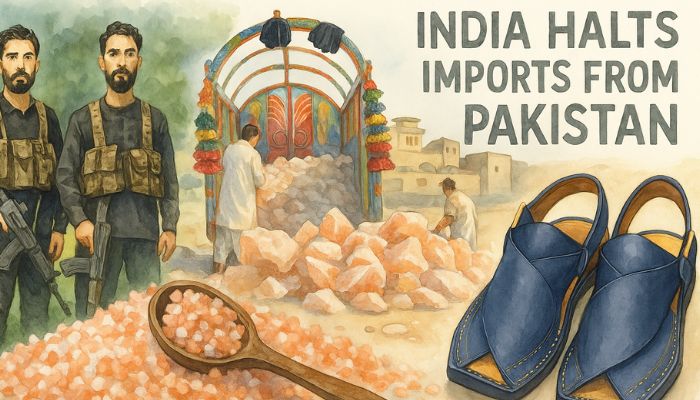
On 3rd May, Government of India imposed a blanket ban on all imports from Pakistan. The decision has been taken following the deadly Pahalgam Terrorist Attack that claimed lives of 26 innocent tourists, as Hindus were targeted. Pakistan-sponsored terrorist outfit Lashkar-e-Taiba’s offshoot, The Resistance Force, claimed responsibility for the attack, before taking a U-turn. India has taken several steps against Pakistan since then including revoking visas issued to Pakistani nationals including medical visas, suspending Indus Water Treaty, banning social media accounts of Pakistan celebrities, shutting down port for Pakistani ships and more.
The recent decision to ban imports will intensify the economic retaliation against the hostile neighbouring country. The decisive move covers both direct shipments and goods routed through third countries. With this decision, India has signalled a complete breakdown in trade ties with Pakistan. Notably, while direct imports from Pakistan are minimal, the indirect imports from Pakistan tune to around $500 million via countries like Sri Lanka, UAE, Indonesia and others.
What did India import from Pakistan?
Several products from Pakistan are popular in Indian markets. Top most products from Pakistan include Sendha Namak or Himalayan Rock Salt. It is mined from the Khewra salt range in Pakistan and is commonly used during fasts and in Ayurvedic practices. Despite the religious and health-linked relevance in India, the pink salt originating from Pakistan will not be allowed to enter India.
Similarly, Peshawari chappals and Lahori Kurtas, along with salwar suits and other garments will soon not be available in Indian markets. These products are often marketed by Indian boutiques as exclusive fashion imports.
The hidden trade between India and Pakistan
According to media reports, around $500 million worth of Pakistani goods enter India via intermediary countries like Sri Lanka and the UAE. These products used to come directly via Pakistan; however, the hostile relations between the two countries have resulted in them being channeled through alternate countries. The UAE often repackages and relabels Pakistani dry dates, leather, fruits and textiles before sending them to India. Chemicals from Pakistan come to India via Singapore.
Furthermore, Pakistani cement, soda ash, and raw materials for the textile industry also come from Pakistan via Indonesia. Sri Lanka serves as an alternative country for products like dried fruits, salt, and leather goods.
An estimated $500 million worth of exports reach India through these routes. As India has put a blanket ban on products originating from Pakistan and coming to India via direct and indirect routes, monitoring and identifying these products has become a necessity for the officials. Speaking to PTI, an unnamed official said, “This comprehensive ban imposed by India, including a ban on indirect exports, would enable the customs authorities to prevent Pakistani exports from entering India through circumvention.”
Direct imports from Pakistan are around $0.5 million per year, which is now expected to drop to zero. Notably, the only product that may attract the attention of consumers in India is Himalayan Pink Salt, also known as Sendha Namak, as the majority of it is produced in Pakistan. However, there are other sources from which India can obtain it.
Not to forget, India had imposed a 200% tariff on Pakistani goods in 2019 following the Pulwama attack. Direct trade between India and Pakistan between April 2024 and January 2025 was merely $0.42 million, which mostly included figs, basil, rosemary, and Sendha Namak.
As trade has stopped between India and Pakistan, products that were exported to Pakistan are also halted. These include cotton, organic chemicals, food products, animal fodder, edible vegetables, plastic articles, man-made filament, coffee, tea, spices, dyes, oil seeds, dairy products, and pharmaceutical items, which will create a void in the Pakistani consumer market.
Dry fruits and industrial goods also hit
Dry fruits coming from Balochistan and Peshawar such as almonds, walnuts, figs and raisins were in demand during winters and festival season in India. These too will go off shelves. Furthermore, cotton, confectionery items, optical goods, chemicals, steel and cement were part of the broader trade list between the two countries.
Impact and the road ahead
Pakistan’s economy is struggling and import ban will further push the country to bankruptcy. Domestically Indian markets may experience a temporary disruption in supply of some specialty products such as pink salt or sendha namak, however, alternates for the products are always available in the market. Government of India is likely to push for domestic production of certain products that were imported from Pakistan.
India has sent a strong signal that trade and talks cannot happen if Pakistan continues to sponsor terrorism in India. Cross-border terrorism will be met with unflinching economic consequences for the neighbouring country.
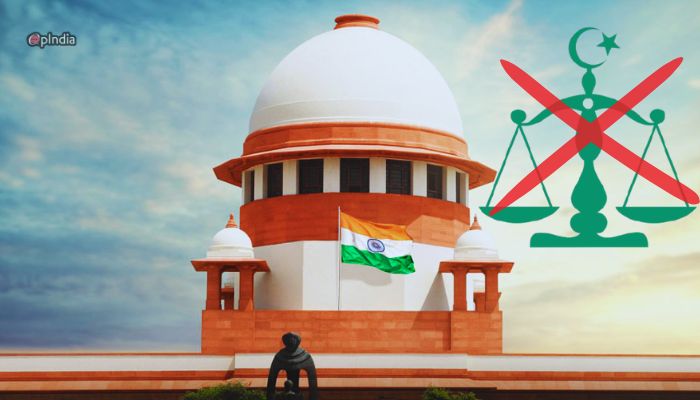
The ‘Sharia Court’, ‘Court of Qazi’, ‘Darul-Qaza’ or ‘Kajiyat’, have no legal recognition and their observations are not legally binding. The Supreme Court of India ruled this on the 28th of April 2025, while hearing the case of a Muslim woman who challenged the Allahabad High Court’s 2018 decision upholding a family court’s decision not to award her any maintenance on the ground that she was the cause of the dispute.
The court gave the woman ₹4,000 in monthly support from the date she first filed the petition, overturning the Allahabad High Court’s decision. Additionally, the husband was ordered to keep providing for the children’s financial needs until they reached adulthood.
Despite being focused on a specific case, the Supreme Court’s ruling upholds a more general constitutional principle: India’s legal system cannot be superseded or overruled by Islamic statements or arbitration through Sharia courts. Although parties may voluntarily choose to abide by such decisions, they cannot be enforced by the law. Most importantly, the Supreme Court minced no words in making it abundantly clear that only Indian courts have the power to make decisions when rights under statutory provisions, like maintenance, are at issue.
“‘Court of Kazi’, ‘Court of (Darul Kaja) Kajiyat’, ‘Sharia Court’, etcetera, by whatever name styled, have no recognition in law,” the Supreme Court bench comprising justices Sudhanshu Dhulia and Ahsanuddin Amanullah said.
Compromise in Darul Qaza, divorce in Darul Qaza: The paradox of Sharia courts in a secular country with a full-fledged judiciary
In the present case, the Muslim man named Gaffar Khan had earlier obtained a talaqnama through a Darul Qaza (Qaziyat) in Bhopal, Madhya Pradesh, and used it to argue against his obligation to pay. The Supreme Court, however, clarified that such forums are not recognised in Indian law and their declarations are not legally binding.
Notably, the couple were both in their second marriage when they tied the knot in 2002. The husband is employed with the Border Security Force (BSF). The couple had two children together. However, their marriage turned bitter later on. In 2005, the husband filed for divorce in the ‘Court of Kazi’, Bhopal, securing a compromise on 22nd November 2005. Under this, the duo agreed to live together.
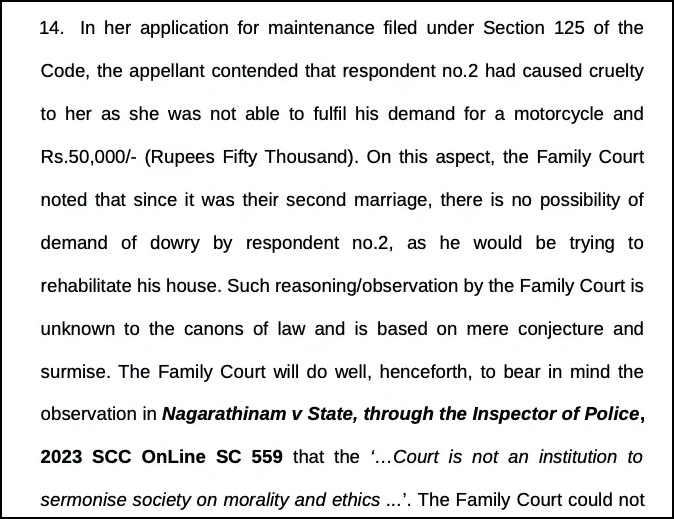
However, their marriage further declined as the appellant woman named Shahjahan claimed her husband used to beat her, demanded dowry, including a motorcycle and ₹50,000. She also alleged that Gaffar Khan forced her and the children out of their home in May 2008. Subsequently, the husband then sought a divorce again, this time in the ‘Court of (Darul Kaja) Kajiyat’, Bhopal, in September 2008.
However, soon after, the Muslim woman filed a plea with the Family Court seeking maintenance of ₹5,000 a month for herself and ₹1,000 each for their two children. The court, however, decided to grant maintenance only for children since the woman voluntarily decided to leave her matrimonial home. The court had also said that since it was the petitioner woman’s second marriage, there was no question of dowry demands. The matter reached the Allahabad High Court, which alarmingly upheld the Family Court’s ruling, saying that the woman’s separation lacked justification and the Family Court’s observations were not perverse.
Fast forward to 2025, the Supreme Court overturned the Allahabad High Court’s decision and ordered the husband to provide maintenance to the petitioner. In this case, the apex court bench made several observations that negate the legal status of Sharia courts and similar Islamic bodies functioning as a parallel judiciary. This came after Shahjahan moved the Supreme Court challenging the rulings of the lower courts, contending that she was illiterate, had no income and that she was wrongly blamed for leaving the matrimonial home. She disputed the lower court’s reliance on the ‘compromise deed’ and Sharia court divorce.
Supreme Court’s observations regarding the legal status of Sharia Courts
In its analysis of the present case, the Supreme Court observed that the proceedings made several references to bodies such as the “Court of Kazi,” the “Court of (Darul Kaja) Kajiyat,” and the “Sharia Court.” In response, the Court addressed this matter in a “Post-Script” section of its ruling.
Under this, the apex court cited the 2014 Vishwa Lochan Madan vs Union of India case. In that case, the court had undertaken the examination of whether Dar-ul-Qaza is a parallel court and “fatwa” has any legal status. The court had observed that while the adjudication by a legal authority sanctioned by law is enforceable and binding and meant to be obeyed unless upset by an authority provided by law itself, however, the decisions of Dar-ul-Qaza or the fatwa “do not satisfy” any of these requirements. Dar-ul-Qaza is “neither created nor sanctioned by any law made by the competent legislature.”
“Therefore, the opinion or the fatwa issued by Dar-ul-Qaza or for that matter anybody is not adjudication of dispute by an authority under a judicial system sanctioned by law. A Qazi or Mufti has no authority or powers to impose his opinion and enforce his fatwa on anyone by any coercive method. In fact, whatever may be the status of fatwa during Mogul or British Rule, it has no place in independent India under our constitutional scheme. It has no legal sanction and cannot be enforced by any legal process either by the Dar-ul-Qaza issuing that or the person concerned or for that matter anybody. The person or the body concerned may ignore it and it will not be necessary for anybody to challenge it before any court of law. It can simply be ignored,” the Supreme Court said in its 2014 ruling in the Vishwa Lochan Madan vs Union of India case.
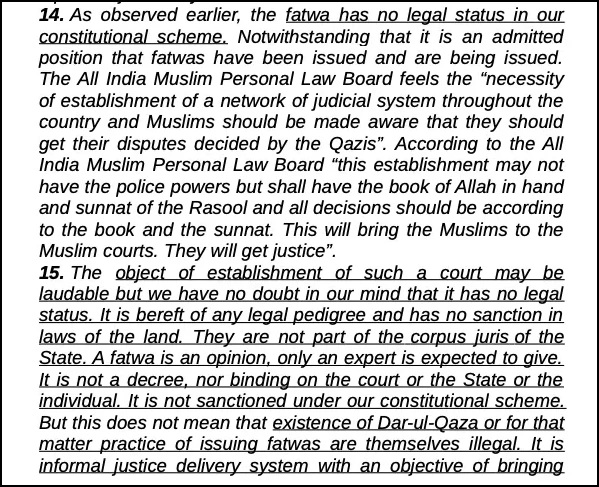
In the same ruling, the Supreme Court back in 2014 had also said that the Fatwa or Islamic proclamation has no legal status in our constitutional scheme. Notwithstanding that, it is an admitted position that fatwas have been issued and are being issued. The All India Muslim Personal Law Board feels the “necessity of establishment of a network of judicial system throughout the country and Muslims should be made aware that they should get their disputes decided by the Qazis”.
Excerpt of SC ruling in the Vishwa Lochan Madan case (2014) cited by the bench in its order in the present case
However, the court had observed that a Fatwa is bereft of any legal pedigree and has no sanction in the laws of the land. They are not part of the corpus juris of the State. A fatwa is an opinion; only an expert is expected to give. It is not a decree, nor binding on the court or the State or the individual. Although not legally binding, the Supreme Court had observed that the existence of Darul-Qaza or the practice of issuing Fatwas is not essentially illegal. In addition, the court said that the issuance of a Fatwa should not be objected to as long as it does not infringe upon the rights of individuals granted under the law.
Citing the Supreme Court’s observations made in the 2014 Vishwa Lochan Madan case, the Supreme Court bench recently said that ‘Court of Kazi’, ‘Court of (Darul Kaja) Kajiyat’, ‘Sharia Court’, etc., by whatever name styled, have no recognition in law.
The top court came down heavily upon the approach of the Family Court and the Allahabad High Court of relying on the ‘settlement deed’ presented before the ‘Qazi court’ in Bhopal. The bench stressed that courts cannot rely on the declarations of non-judicial bodies like Sharia courts to decide legal entitlements.
“As noted in Vishwa Lochan Madan (supra), any declaration/decision by such bodies, by whatever name labelled, is not binding on anyone and is unenforceable by resort to any coercive measure. The only way such declaration/decision can withstand scrutiny in the eye of law could be when the affected parties accept such declaration/decision by acting thereon or accepting it and when such action does not conflict with any other law. Even then, such declaration/decision, at best, would only be valid inter-se the parties that choose to act upon/accept the same, and not a third-party,” the recently passed Supreme Court order reads.
The court also slammed the Family Court for its speculative and “baseless” observation that just because it was the petitioner and respondent no-2’s (husband, Gaffar Khan) second marriage, there was no likelihood of a dowry demand. It said that such an observation was “unknown to the canons of law.”
“The family court’s observation that there was no likelihood of dowry demand because it was a second marriage is baseless and contrary to legal reasoning,” the Supreme Court stated.
The court also noted that the Family Court’s assumption that Shahjahan caused the marital discord was based on mere conjecture and was devoid of any evidence.
In the present case, the apex court directed the husband to pay Rs 4,000/- per month as maintenance to the appellant, from the date of filing of the maintenance petition before the Family Court. The maintenance awarded to the children will also be payable from the date of filing of the maintenance petition before the Family Court.
Are Sharia courts ‘supreme’ for Indian Muslims?
Over the years, several Muslim clerics and politicians have issued statements prioritising Sharia over the constitution, with many asserting that Indian Muslims will follow only Sharia. A latest example of this came on 14th April 2025, when Hafizul Hasan, a minister in the Jharkhand government, said that for him, Sharia comes before the constitution. In an accidental moment of truth, Hasan divulged the Al-Taqqiya Islamists often use to fool ‘secularists’, as he said that “We carry the Quran in our hearts and the Constitution in our hands. Muslims walk with the Quran in their hearts and the Constitution in their hands.”
There are around 100 Sharia courts in ‘secular’ India. Back in 2023, the All India Muslim Personal Law Board (AIMPLB) boasted that there are over 100 Sharia courts in India and that AIMPLB intends to set up such Islamic courts in all of India’s Muslim majority districts. In 2018, too, the Muslim body had said it plans to open Darul-Qaza (Sharia courts) in all districts of the country.
In 2020, AIMIM urged Muslims to disregard the Indian Judiciary and approach Sharia courts to resolve their disputes. This, however, was not shocking as Hamid Ansari, the former Vice President of India, had also once made a similar assertion. He had backed the idea of setting up the Shariat courts in every district of the country, saying that each community has the right to practice its own personal law.
While AIMPLB, Muslim-appeasing politicians and Islamists continue to push Muslims towards resolving their disputes through Sharia-courts or Darul-Qaza, essentially bolstering a parallel judiciary functioning on Islamic religious lines, the Family Court in the Shahjahan vs State of Uttar Pradesh vs others case, treating the compromise deed from the ‘Court of Kazi’ and the Talagnama from Darul-Qaza as authoritative, essentially granted judicial legitimacy to non-judicial Islamic entities. As the Supreme Court observed, this effectively violated the principle that only statutory courts, established under the Constitution of India, can adjudicate disputes. The courts placing reliance on non-judicial entities for settling disputes essentially undermines the country’s secular legal framework while endorsing a parallel judicial system in violation of constitutional principles.
The Allahabad High Court, upholding the same, was even more alarming. If courts themselves would extend legitimacy to the Sharia courts or rely on the declarations of such non-judicial bodies to determine legal entitlements, what would even be the point of existence of the judicial system in India? The Supreme Court’s intervention, however, overturned this miscarriage of justice and reaffirmed the primacy of statutory law while also reiterating that Sharia Courts/Darul-Qaza, Kazi Courts or any such Islamic ‘courts’ are non-legal entities and their ‘rulings’ are not legally binding.
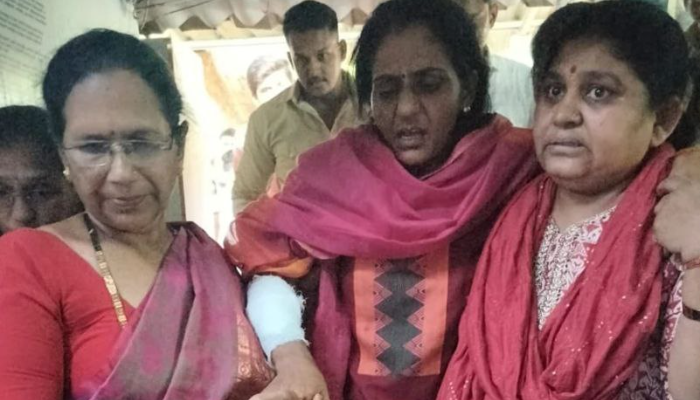
On Saturday, May 3, a 43-year-old woman lawyer Sheetal Bhosale was disrobed, harassed, slashed with a blade, and threatened by two passengers aboard a Mumbai-Indore train. The complainant, a Thane lawyer stated that she entered the general compartment of the 12961 Mumbai Central-Indore Avantika Express after an impromptu decision to travel to Indore. Now, the Palghar Government Railway Police has arrested Imtehaj Abidbhai Odia (28) of Bhavnagar and Rubina Yusuf Pathan (43) of Surat on 4th May.
The victim stated that Rubina Pathan got into a confrontation with her shortly after the train left on its journey. According to The Free Press Journal, a disagreement over religious symbols escalated the dispute as the Muslim woman took issue with the religious symbols (a rudraksha bracelet and a bangle engraved with the name of Chhatrapati Shivaji Maharaj) worn by Bhosale. “Wearing rudraksha is nonsense,” she stated to which the latter replied, “Do I say anything about your burqa? Then why are you offended by my beads?” The argument then descended into violence.
The victim went to use the restroom at approximately 9:45 pm as the train passed through Saphale. Upon her return, she discovered Rubina Yusuf Pathan searching through and discarding items from her suitcase. When questioned, Rubina alleged that the lawyer had stolen her purse and reportedly pulled down her pants in an attempt to search for missing Aadhaar and PAN cards in front of everyone, while abusing her.
BREAKING:
Advocate Shital Bhosale allegedly attacked with knives by 4 Muslim men and a Muslim women aboard the Avantika Express—her only “crime”?
Wearing a Rudraksha Mala & a Chhatrapati Shivaji Maharaj tattoo.
An officer revealed to Hindustan Times, “When Rubina did not find the identity cards, she attacked the lawyer with a sharp object.” She drew a knife and cut the latter’s forearms.
During the assault, the accused even threatened to use a key to pierce her neck. “The two accused pushed the lawyer against the window and kept assaulting her, causing injuries to her neck and lips. They also prevented other passengers from taking photographs or videos during the incident,” the official mentioned.
During the incident, the accused called the GRP to complain about the lawyer. A GRP team then stopped the train at Valsad station and found that she had a serious cut on her arm and was bleeding profusely. After her wound was treated, the authorities arrested the pair of accused and sent them to Palghar along with the lawyer. The attorney filed a case against the two in Palghar, stating that they had beaten her and taken ₹1,500 from her handbag. She added that her golden ring went missing.
The accused have been booked in accordance with pertinent Bhartiya Nyaya Sanhita sections including section 74 (assault or use of criminal force to women), 118 (1) (voluntarily causing hurt or grievous hurt by dangerous weapons or means), and 351 (2) (criminal intimidation punishment).
The complainant charged that a house guard at the Vapi railway station ignored her repeated pleas for assistance. Staff from the Valsad Railway Police only stepped in after she called the railway helpline. Moreover, she stated that Imtehaj Abidbhai Odia was harassing and causing annoyance to other passengers while intoxicated.
On Sunday (4th April), the family of the deceased Haragobindo Das wrote to the West Bengal Governor CV Ananda Bose, narrating how they are being threatened by Trinamool Congress (TMC) goons and the police.
For the unversed, Harogobindo Das (70) and his son Chandan Das (40) were killed on 11th April this year by Muslim rioters opposing the recently enacted Waqf Amendment Act. A total of 4 extremists, namely Kalu Nadar, Dildar Nadar, Inzmam Ul Haque and Ziaul Sheikh, were arrested in connection with the murder of the father-son duo.
The wife of Haragobindo Das, Parul, and daughter-in-law Pinki wrote a 4-page letter to CV Ananda Bose requesting to make travel arrangements to the Calcutta High Court, where the duo wanted to file a petition.
The letter read, “We, the two widows of Haragobindo Das and Chandan Das, are writing to you with a broken heart and trembling hands, seeking justice and ensuring security. We are writing this from a hidden location, not only fearing the threats of the ruling party but also the police who are continually threatening us.”
The tragic deaths of Late Haragobinda Das and Late Chandan Das in Jafarabad, Samsherganj, Murshidabad, are a heartbreaking reminder of the fragile safety of our Sanatani community in WB. The WB Government, under Mamata Banerjee, must be held accountable for failing to ensure the… pic.twitter.com/YwRNI7hnD9
According to Parul and Pinki Das, a team from the Bidhannagar police station came to abduct them from Salt Lake BG Block.
They informed, “There were at least 40 uniformed police personnel and that apart there were several police personnel in plain clothes. They started shouting, threatening and hurling abuses and despite us saying that we will not open the door, in a fit of rage they broke open the doors, damaged the property and barged inside the house where we were camping.”
The Muslim-dominated Murshidabad district has witnessed large-scale incidents of violence, vandalism, arson and targeted attacks against the Hindu community on 11th April) in the garb of protests against the newly enacted Waqf Amendment Act.
OpIndia has reported in detail how Hindus were selectively targeted, including their homes, shops and temples. The carnage began soon after Jumma Namaz on 11th April in the name of ‘protests’ against the new Waqf law and continued till 12th April.
As grief gives way to fury, a seething India finds itself once again confronting the reality of jihadist terror nurtured across its western border. Decades of Pakistani complicity in fomenting violence have brought the nation to a boiling point. New Delhi now pushes for Pakistan’s diplomatic isolation, while quietly weighing tougher, more decisive countermeasures.
The trigger this time—a horrifying act of savagery in Pahalgam. Hindu tourists were hunted down and executed in cold blood, reportedly after being religiously profiled. Some were even forced to disrobe to confirm circumcision—a grotesque ritual of hate. The brutal nature of the killings, the calculated targeting, and the indignity inflicted on the victims have ignited nationwide outrage. India is no longer just mourning—it is demanding justice, and more than that, retribution.
Yet, amid this national reckoning, the political knives are out. Some Congress leaders, instead of standing with the nation, have chosen to mock and question the government. Former Punjab Chief Minister Charanjit Singh Channi cast doubts on the Balakot airstrikes. Congress leader Ajay Rai went further, waving a toy Rafale jet adorned with lemons and chilies, making a mockery of national security.
It is political theatre at its worst.
Worse still is the amnesia. In attempting to portray Prime Minister Modi and the BJP as hesitant to act against Pakistan—a claim the BJP vigorously counters, especially when contrasting it with former PM Manmohan Singh’s post-26/11 inaction—Congress ignores its own damaging legacy. A long series of miscalculations, both geographic and geopolitical, committed under Congress rule, sowed the seeds of today’s Kashmir crisis.
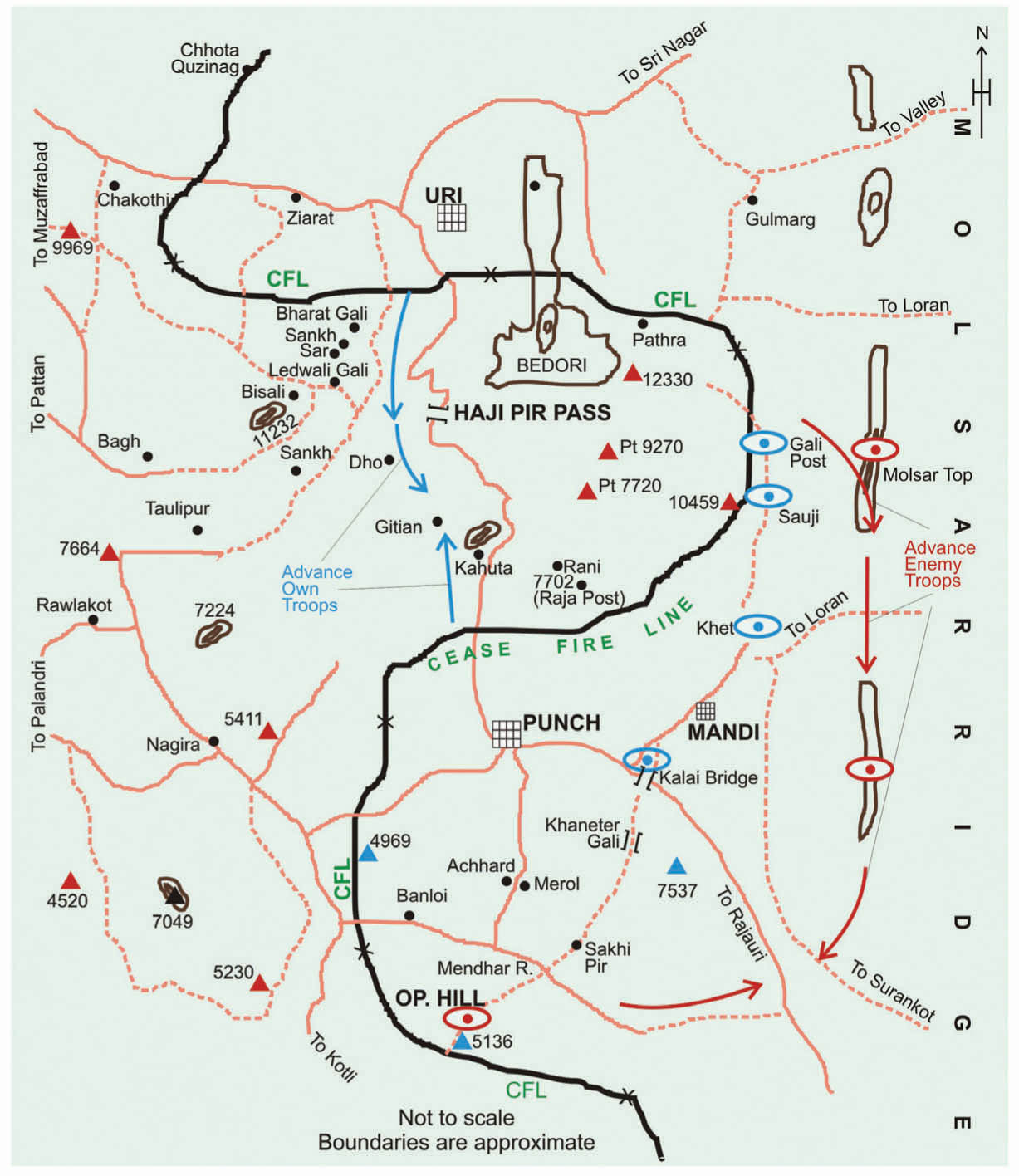
One of the most costly? The return of the Haji Pir Pass.
The mountain pass that should have never been returned
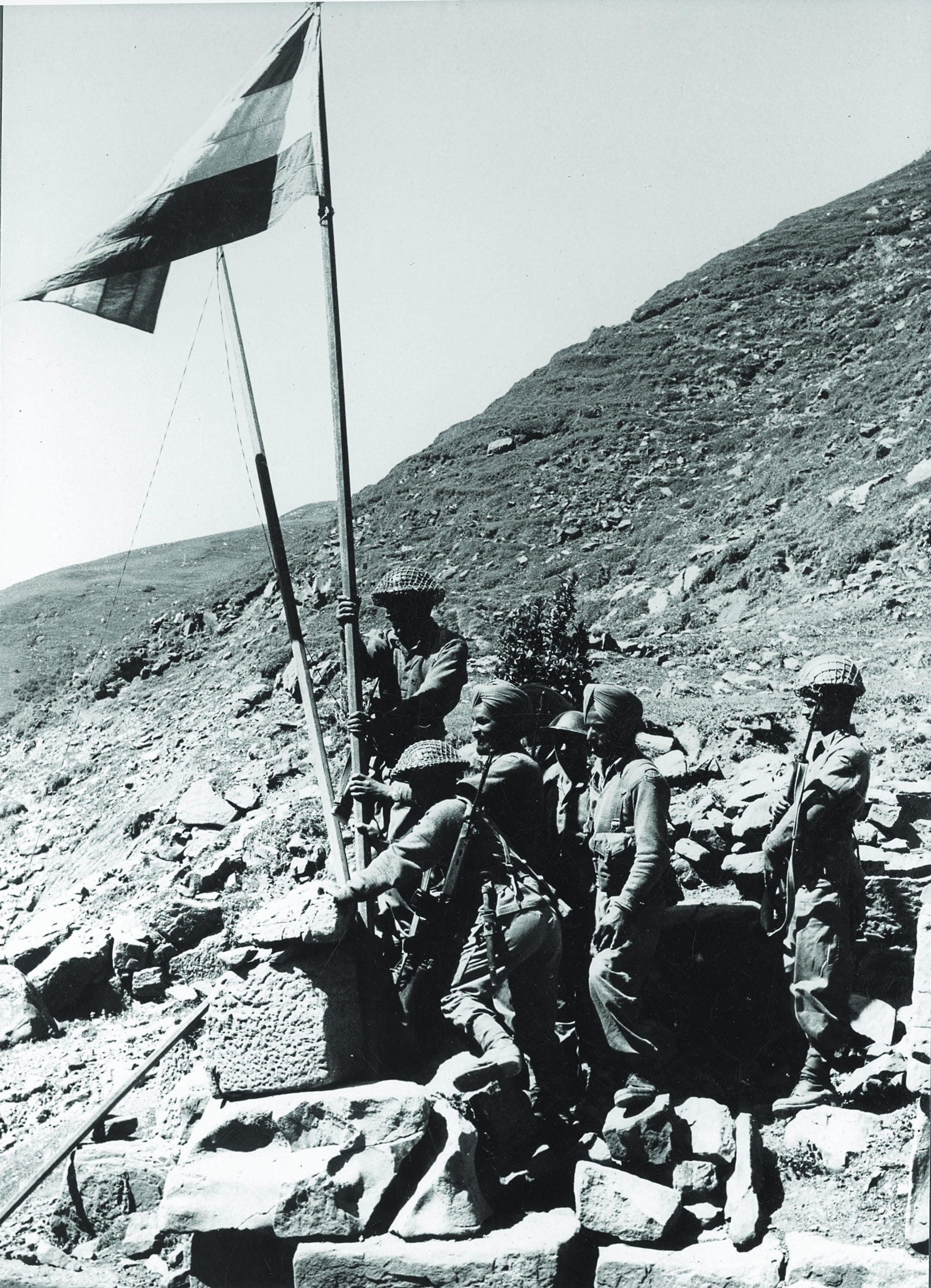
India’s resounding military victory in the 1965 war with Pakistan offered an unprecedented strategic opportunity. Among the most critical gains was the Haji Pir Pass—perched at 2,637 meters in the formidable Pir Panjal range, it wasn’t just a patch of high ground. It was a tactical prize that offered a vastly shorter and more secure land corridor between Jammu and Kashmir. Retaining it could have made cross-border infiltration arduous, if not impossible.
In August 1965, under the shadow of monsoon clouds and enemy fire, the Indian Army launched a daring offensive. Major (later Lt Gen) Ranjit Singh Dayal led the elite 1st Para Special Forces through the treacherous Hyderabad Nallah. With just biscuits in their packs, they struck under cover of rain and darkness. By dawn on August 26, the impossible had been done—Haji Pir Pass was in Indian hands.
India crowned the 1965 victory with the capture of strategically important Haji Pir Pass
It was a feat of military brilliance, unheard of in 1965, achieved with raw courage and minimal resources.
At the time, Pakistan was executing Operation Gibraltar—a plan to infiltrate thousands of irregulars into Jammu and Kashmir, using the Haji Pir Bulge as a funnel. Behind enemy lines, arms and supplies were stockpiled. Indian Army Chief General J.N. Chaudhury called for bold, offensive action. “Make them react to us,” he ordered—and that’s exactly what the Army did.
Haji Pir Pass was captured by Indian Armed Forces in 1965 war
The operation not only plugged infiltration routes but also threw Pakistan’s plans into disarray. But just days later, Islamabad launched Operation Grand Slam, a blitzkrieg-like attack on Akhnoor meant to sever Jammu and Kashmir from the rest of India. India’s quick counter-offensive on September 6, pushing into Lahore and Sialkot, forced Pakistan to pull back. Had it succeeded, Pakistan would have taken control of the Jammu-Srinagar highway, and with it, the entire state. Disaster was averted—barely.
But what was won by sweat and blood on the ground was soon lost to diplomacy in a conference room abroad.
Tashkent: Where strategic advantage was traded for the chimera of peace
Just five months later, during the Soviet-brokered Tashkent talks, Prime Minister Lal Bahadur Shastri agreed to return Haji Pir to Pakistan. The declaration was signed on January 10, 1966. Shastri died mysteriously the very next day. For many, it wasn’t diplomacy. It was capitulation.
And those who closely followed the 1971 Bangladesh war of liberation, it was an appalling precedent that came back to haunt India, when it agreed to return 93,000 Prisoners of War captured in Bangladesh, again while chasing the chimera of peace with a nation whose identity was deeply rooted in its pathological animosity towards India.
The surrender in Tashkent had stunned military establishment as it led to two crippling disadvantages: Pakistan retained a key infiltration route, and India lost a critical piece of geography that could’ve altered the Kashmir equation permanently.
For many back in India, it wasn’t just surrender, it was an opportunity lost to secure its flank permanently.
A missed opportunity in 1971
After the 1965 ceasefire, India had leverage. Pakistani forces were just four kilometers from the vital Akhnoor bridge. Indian policymakers, fearing another dagger thrust at Jammu, agreed to return Haji Pir in exchange for Pakistani withdrawal from Chhamb.
The real tragedy? India never attempted to retake Haji Pir in the 1971 war, despite having overwhelming superiority and strategic momentum on the Western front. As Lt Gen Dayal would later reflect, “It was a mistake to hand it back. Our people don’t read maps.”
Indeed, maps tell the tale clearly. According to Maj Gen (Retd.) Sheru Thapliyal, had Haji Pir remained with India, infiltration into the Kashmir Valley, Poonch, and Rajouri would have been drastically reduced. The road from Jammu to Srinagar via Uri and Poonch would have been 200 km shorter—and far more secure.
Veteran special forces officer P.C. Katoch put it plainly: the pass, though modest in altitude, was mighty in military significance. And yet, it was lost—not in battle, but at the negotiating table.
Strategic advantage lost at a negotiating table
The saga of Haji Pir is not merely a chapter in military history. It is a mirror held up to India’s strategic thinking—of victories won by soldiers but lost by politicians. It is a tale of maps ignored, sacrifices squandered, and hard lessons still unlearned.
Today, as India faces yet another bloody provocation, the story of Haji Pir serves as a solemn reminder: some opportunities don’t come twice. And when they do, the nation must not flinch, falter, or forget.
Some mistakes are forgiven. Others, like Haji Pir, are etched into the mountains—and seared on to the memory of a nation that must learn from its past to safeguard its future.
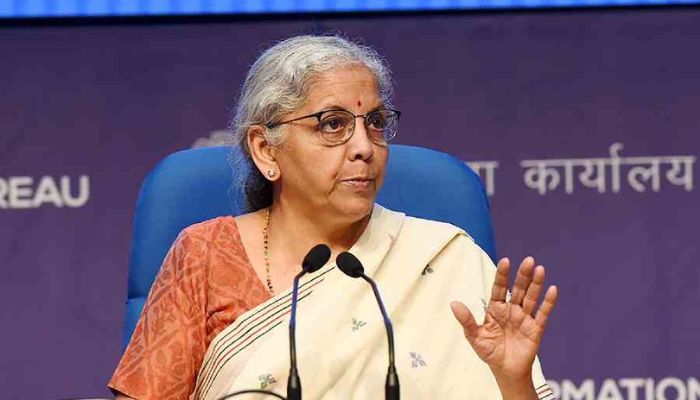
The Ministry of Finance dismissed media reports that said New Delhi has asked Italy to cut down on financing to Pakistan in the wake of Pahalgam terror attack.
In reports published by various news outlets, the demand was made at a meeting between Finance Minister Nirmala Sitharaman and her Italian counterpart Giancarlo Giorgetti, on the sidelines of the 58th ADB Annual Meeting in Italian city of Milan.
As per United Nations Development Programme website, the Italian Development Cooperation is an essential UNDP partner in Pakistan and across the world. “Some of Italy’s major initiatives and contributions are in Pakistan,” UNDP website read.
In a separate meeting with the Asian Development Bank (ADB), India has demanded that the regional development bank cut funding for Pakistan.
India has sharply downgraded diplomatic ties with Pakistan after the April 22 terrorist attack on tourists in Jammu and Kashmir’s Pahalgam, leading to the death of 26 individuals and several other injured, mostly tourists.
India suspended the Indus Waters Treaty of 1960, which would over a period of time will severely reduce Pakistan’s water supply.
Further, sources told ANI that India will also approach FATF (Financial Action Task Force) to include Pakistan in the grey list.
Sitharaman is leading the Indian delegation of officials from the Department of Economic Affairs, Ministry of Finance for the 58th Annual Meeting of the Board of Governors of Asian Development Bank (ADB), scheduled from May 4 to 7 in Milan.
According to an official statement from the Ministry of Finance, the meetings will be attended by official delegations of the Board of Governors of ADB, official delegations of ADB members and international financial institutions. The Union Finance Minister will participate in the Annual Meeting’s focal events like the Governors’ Business session, Governor’s Plenary Session and as a panelist in the ADB Governors’ Seminar on “Cross-Border Collaboration for Future Resilience”.
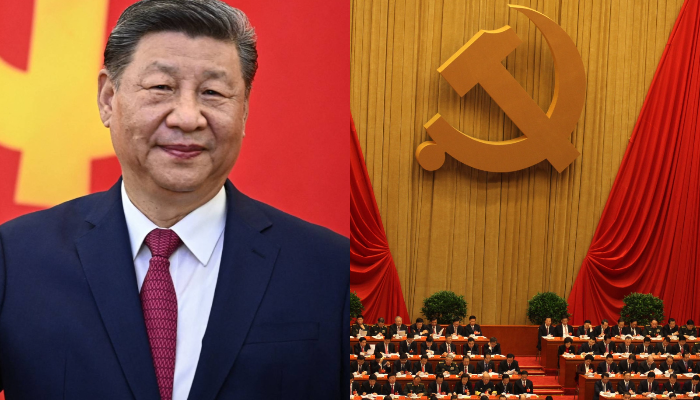
Top officials in China continue to vanish and the most recent example is the absence of General He Weidong from yet another important event on 25th April. He was not present at the Politburo study session presided over by President Xi Jinping, as per a report in South China Morning Post. Weidong missed the tree-planting ceremony earlier in the outskirts of Beijing as well. Notably, it is a yearly springtime custom for the military leadership of the country for over 40 years.
Weidong was missing from a high-profile, two-day working meeting on neighborhood diplomacy on 9th April either. Additionally, official media reported that he was absent from a symposium held on 14th March to commemorate the 20th anniversary of the Anti-Secession Law’s implementation. Amidst escalating tensions across the Taiwan Strait, the symposium marking the legalization of “peaceful national reunification” with Taiwan in 2005 brought together prominent figures from the party and China’s military.
Weidong’s final public appearance took place on 11th March, when he and other high-ranking officials sat on the rostrum for the closure of China’s annual premier political assembly, the National People’s Congress. Ironically, he urged the advancement of anti-corruption operations and better military training during a 5th March review of government work reports with General Zhang Youxia.
He Weidong’s failure to attend the significant occasions fits into an increasingly common trend of missing Chinese military officials. The disappearance of these figures is reportedly a part of Xi Jinping’s purge of the highest ranking members of the military. General He Weidong is one of the two vice-chairpersons of the influential Central Military Commission (CMC) and one of the 24 members of the Communist Party’s Politburo.
An inquiry into him would be unprecedented. The sole historical example in the People’s Republic of China pertains to party veteran He Long during the Cultural Revolution, who was completely rehabilitated only following Mao Zedong’s demise.
The disappearance of Chinese officials
Beijing has targeted two of the seven members of the CMC which is headed by Xi Jinping, in the last two years and the third disappeared from the public view more than a month ago. CMC member Admiral Miao Hua was expelled from the National People’s Congress (NPC) Standing Committee, which is the nation’s highest legislative. He directed the Communist Party’s ideological framework and personnel changes. He was relieved of his duties and subjected to an investigation in late November.
The dismissal of Tang Yong, who served as the deputy head of the military’s anti-corruption agency, from his position in the Chinese People’s Political Consultative Conference, the premier political advisory institution in the country, in March has also been viewed as a sign that he is under suspicion for corruption.
Li Shangfu became the shortest-serving defense chief in decades when he was fired as China’s defense minister in late 2023. He was kicked out of the CMC a few months later. Both him and Wei Fenghe, his predecessor and the defense minister from 2018 to 2023, were ousted from the party after becoming the subject of corruption inquiries.
The first official explanation for Li Shangfu’s abrupt departure came from a report by China’s top military authority, the Central Military Commission, which claimed that both individuals had “gravely hurt the work of the party,” the advancement of defense and the reputation of senior leaders. Dong Jun, the first individual to hold the position of navy chief after his departure, in December, is also under scrutiny for corruption.
Qin Gang, China’s former foreign minister, disappeared from the public eye in June 2023, months after taking office, in another high-profile case that ended in outster. A month later, he was sacked as foreign minister, reports FirstPost. Other representatives have similarly went missing from time to time. The head of the People’s Armed Police Force General Wang Chunning has been missing from important meetings and has since faded from the spotlight. Ground force commander Li Qiaoming and People’s Liberation Army (PLA) naval commissar Yuan Huazhi, have reportedly been unaccounted for since last December.
The People’s Liberation Army Rocket Force commander, General Li Yuchao, and his deputy, General Liu Guangbin also vanished in 2023. Xi Jinping ordered their replacements in August. Wang Houbin, who has been the PLA navy’s deputy commander since 2020, was subsequently named the Rocket Force’s commander by the Chinese president. The Rocket Force also appointed Xu Xisheng, a member of the party central committee and an air force officer as its new political commissar.
The head of the ministry of industry and information technology, Xiao Yaqing, dropped from the scene in July 2022. Three weeks later, he was under investigation for corruption, according to official media. Since Xi Jinping’s rise to power in China, at least 78 senior officers within the PLA, holding no less than a two-star rank, consisting of eight former or serving members of the CMC, have been removed from their posts.
Xi Jinping’s iron fist control
An analyst mentioned, “The most powerful tools that Xi uses to control the PLA are his anti-corruption campaign, which allows him to purge the corrupted, disloyal and incapable ones, and his military reform plan, which allows him to reshape the PLA’s structure and modernisation, promoting the loyal and capable ones to newly created crucial positions. I see no changes in these factors,” according to South China Morning Post.
“After all, while Xi’s control over the military certainly cannot compare to that of war veterans such as Mao Zedong and Deng Xiaoping, he is certainly much stronger than Jiang Zemin and Hu Jintao,” he added. Xi Jinping was allegedly able to capitalize on the influence of his father, revolutionary veteran Xi Zhongxun and his prior experience as secretary to former Chinese defense minister Geng Biao, unlike previous leaders Jiang Zemin and Hu Jintao who lacked substantial military backgrounds or connections prior to their ascent to power.
According to the analyst, given that the majority of CMC members were known to be his loyalists, he demonstrated unassailable and overwhelming control over top military appointments, particularly following the 20th party session in 2022. He added that Xi Jinping’s ability to defy the customary “retire at 68” regulation to retain Zhang Youxia, the dependable vice-chairman of the CMC, who was 72 at the time, for at least another five-year term was a vital hint.
The Beijing-based analyst voiced, “They are all Xi’s loyalists, but that doesn’t mean that there are no frictions or tensions among them. There is a cutthroat race for the top posts in the next CMC among the top commanders as the 21st party congress is just two years away,” mentioned South China Morning Post. The crackdowns would actually increase Xi’s influence since they highlighted that he had “the ultimate say on who to hire and who to fire,” confirming his overwhelming control over top appointments, noted Deng Yuwen, former deputy editor of the Central Party School’s official journal.
“This is by far the largest shake-up of PLA leadership and state-owned enterprises involved in military procurement in recent memory. It suggests deep anxiety and dysfunction within the ranks of China’s military, and a failure of trust between Xi and the military,” conveyed Lyle Morris, per Economic Times. He works at the US-based Center for China Analysis as the Senior Fellow for Foreign Policy and National Security. He stated that these visible actions indicated a significant issue of trust and corruption within the PLA.
200 new detention facilities in China
Over 200 specialized detention centers have been constructed or extended nationwide by China to further President Xi Jinping’s expanding anti-corruption initiative. Suspects could be detained in these “Liuzhi” centers for at least six months without access to family visits or legal representation. The contentious “shuanggui” system, which was criticized for torture and abuse, was replaced by Liuzhi, which was codified in 2018.
The facilities feature padded floors, 24-hour security and security cameras to keep an eye on the inmates. Officials, civil servants and managers of public institutions are also among their targets in addition to members of the Communist Party. More than 218 Liuzhi centers were constructed or enlarged between 2017 and November 2024. The extended detention policy, according to critics, permits forced confessions and misuse of authority.
According to a lawyer who defends officials in corruption trials, inmates frequently endure torture, intimidation and intense psychological pressure. “Most succumb to the agony,” he stated, based on NDTV. There is a nationwide plan in place to build these facilities between 2023 and 2027 and authorities have set standard construction guidelines for liuzhi centers.
Local anti-graft organizations might be misusing their authority by holding entrepreneurs on fictitious accusations in order to demand bribes, according to critics. Economist Zhou Tianyong argued that such practices could hurt China’s economy and called for reforms in a now-censored piece.
Xi Jinping’s millionaire family
According to a US intelligence report, the family of Chinese President Xi Jinping still owns millions of dollars in financial interests and economic endeavors in China and the Chinese Communist Party (CCP) remains plagued by “endemic” corruption, despite his ten-year anti-corruption campaign targeting the officials. It asserted that Xi Jinping’s family has maintained significant financial stakes in both state-owned and private companies via their political ties.
It mentioned, “Their high-ranking positions could have provided them with access to privileged information, and both private and state-run enterprise activities might have benefited family investments due to their associations with people in political authority.” The report further emphasised, “Corruption is an endemic feature of and challenge for China, enabled by a political system with power highly centralized in the hands of the CCP, a CCP-centric concept of the rule of law, a lack of independent checks on public officials, and limited transparency.”
The research stated that the combined assets of Xi Jinping’s siblings, nieces and nephews “amounted to over $1 billion in real estate and business investments.” It unveiled, “Their senior-level positions would have granted access to privileged information and both private and state-owned enterprise actions could have advantaged family holdings due to their connections to persons with political power.”
According to the report, bribery is the source of illegal income for up to 65% of Chinese government officials. “Corruption in China often involves money in the form of different types of bribery or graft, and open-source research has demonstrated that some officials and their families have amassed significant wealth due to their positions and connections,” the report stated.
Jinping launched an anti-corruption campaign at all levels of the Communist Party after taking office in 2012. It targeted both high-ranking “tigers” and low-ranking “flies” and led to hundreds of thousands of officials being investigated and punished, according to RFA (Radio Free Asia). Centralized control, a lack of independent scrutiny, and limited accountability, particularly at the province level, are systemic problems that contribute to corruption in China, per the Office of the Director of National Intelligence (ODNI).
According to the research, these circumstances allow public servants to accumulate riches through corrupt activities at a pace that is estimated to be four to six times their official wages. it revealed that Xi Jinping first targeted his political adversaries or people connected to them with charges of corruption.
The Editor-in-Chief of Newslaundry, Raman Kirpal, had recently stirred the hornet’s nest by downplaying the rape of a minor Hindu girl in Nainital by a 65-year-old Muhammad Usman as an ‘affair’ and ‘small incident.’
He made the comments on Saturday (3rd April) during the course of a podcast on the YouTube channel of the propaganda outlet, which was taken down after being called out on social media.
Kirpal is not new to controversies. The current Editor-in-Chief of Newslaundry had previously been convicted of criminal defamation in 2007.
As a reporter of the Pioneer in 1994, he published a fake interview of the district magistrate of Muzaffarnagar, Anant Kumar Singh.
Kirpal had falsely claimed that the district magistrate made a statement favouring rape of women in the village. Singh dragged the accused to the court, where he was declared guilty, fined and sentenced to jail.
But he got away with just a fine and apology in 2022 since he was a ‘first-time offender’ and 28 years had passed since the incident (when Kirpal published the fake interview of Anant Kumar Singh).
Raman Kirpal and the background of the case
It was October 1994. Raman Kirpal was a reporter with the Pioneer. He ran a fake story with the headline ‘Any man will rape a woman in a lonely spot: DM, Muzaffarnagar.’
This concocted story was published both in the Pioneer and the Hindi daily Swatantra Bharat. The then magistrate of Muzaffarnagar, Anant Kumar Singh, had not given any such interview or made any statement to Raman Kirpal.
Despite this, Kirpal attributed the following statement to Singh – “You see, it is human tendency when a woman is seen at a lonely place in a jungle, any man will be inclined to rape her.“
Singh had denied giving any such interview from Day 1. This did not stop the Pioneer and Swantantra Bharat from publishing the fake interview.
The magistrate of Muzaffarnagar issued a contradiction, which was not covered by the editors of either of the newspapers. He then notified the Press Council of India (PCI), which reprimanded the journalists and the papers.
The criminal defamation case and its aftermath
Forced by circumstance, Anant Kumar Singh filed a criminal defamation case in 1997. Ten years later, in 2007, Raman Kirpal was convicted of publishing a ‘concocted, false and defamatory’ interview.
He was fined ₹5000 and sentenced to 1 year of rigorous imprisonment by a special court.
Suresh Chandra, the special chief judicial magistrate, observed that Anant Kumar Singh had proved beyond a reasonable doubt that the interview published by Raman Kirpal and others was defamatory and concocted.
“The accused people have failed to prove that the reporter had actually taken the interview,” the judge noted. Kirpal had vowed to file an appeal in the Allahabad High Court.
In 2012, an additional district judge in Lucknow issued non-bailable warrants against Raman Kirpal and cancelled his bail application. His appeal was also dismissed, and the conviction was upheld.
Judge P.N. Srivastav noted that Anant Kumar Singh “has proved beyond reasonable doubt that the interview written and published by the appellants have lowered his reputation in the eyes of the common man while the appellants have failed to produce any evidence which may even suggest that the reporter has taken the interview.”
When the accused claimed to be innocent
However, Raman Kirpal was successful in getting a stay on the warrants from the Allahabad High Court. He had claimed to The Hindu newspaper that the ‘interview’ indeed took place.
“I also had a photographer with me who took pictures during the interview, providing additional proof that the interview took place. Unfortunately, I had left The Pioneer by then, and the newspaper also changed hands, my taxi bills proving my trip to Muzaffarnagar have been lost,” he alleged.
Apology of Raman Kirpal and the verdict of the Allahabad High Court
The matter came to an end in August 2022 when the Allahabad High Court, in its judgment, accepted the ‘apology’ of Raman Kirpal and let him go with a fine. The court observed that 28 years had passed since the incident.
The current Editor-in-Chief of Newslaundry, who had claimed to be innocent in 2012, said this in his apology-
“Realizing my mistake, I offer my unconditional apology to the Respondent No. 2/Original Complainant for publishing such defamatory and derogatory news about him and sincerely express my regrets for the irreparable loss, pain and agony caused to him, his family and friends. I am deposing the same voluntarily without being influenced by coercion or inducement. I also submit that any such false attributions made were entirely unintentional, non-wilful and inadvertent.”
The court noted,
“Thus, this Court thinks that the apology tendered by the revisionist is genuine and bonafide. The incident took place 28 years back. The two courts have concurrently held the revisionist guilty for offence under sections 500 I.P.C. The two courts have convicted and sentenced the revisionist as mentioned above.“
“It is not disputed that the accused-revisionist is the first time offender and was not previously convicted in any other case. Learned counsel for the revisionist submits that in view of the express provisions of Section 361 Cr.P.C., considering the facts and circumstances, nature of the offence, the character of the accused-revisionist and particularly, the time period which has lapsed since the date of incident, the benefit of Section 4 of the Act may be granted in this case.“
The Allahabad High Court also upheld his conviction but released him on probation. The court directed Raman Kirpal to pay a personal bond of ₹50000. He was further told to keep ‘peace in society’ and refrain from committing further offence.
Kirpal was additionally directed to pay ₹1 lakh to Anant Kumar Singh, whom he defamed through his fake interview.