Home Blog Page 4456

Farm to market: How Agri-startups are working to empower small and medium farmers in India

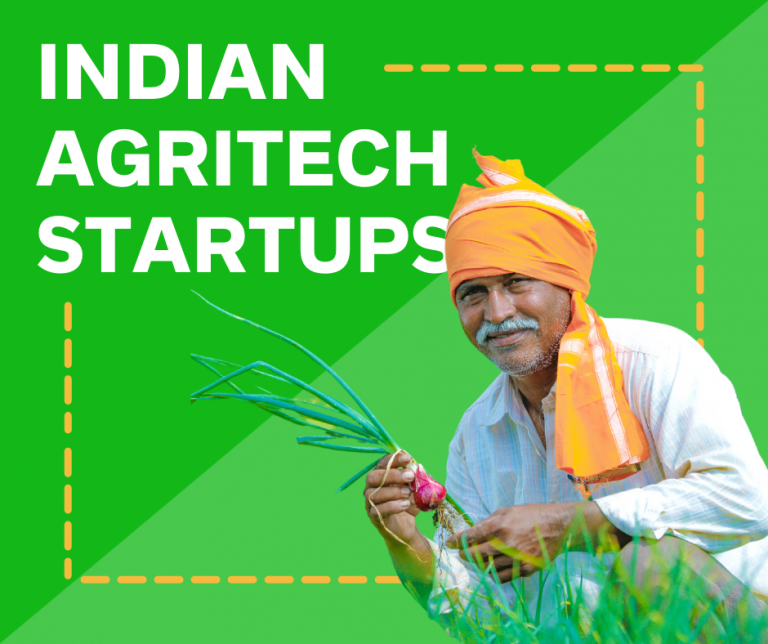
Prime Minister Narendra Modi in one of his speeches explained the dire need for Farm laws. He explained how the division of land or low landholding, lack of modern technology, lack of investment, and high-interest loans have plagued the agricultural sector of India. The Prime Minister emphasized the need to remove barriers for our farmers, create an open market for them, and encouraged investment in the agricultural sector by enhancing logistics and technology.  

However, the Indian Agriculture sector is now witnessing an increased interest from the startups who are working on multiple fronts to enhance the sector. From developing the farm to fork model, to offering advanced logistics to consulting the farmers on various fronts, Indian agri-startups are sensing a boom in the industry.

As per a report in Inc42, the Indian Agritech market is expected to touch $24.1 Billion by 2025. India’s Agritech startups clocked just $204 Mn in 2020 which shows this segment is largely untapped and with the right push it has the potential to grow manifold. 

An article in Analytics India magazine by Shraddha Goled had listed some of the major startups helping farmers weed out the middlemen and directly sell produce at desirable rates in the open market. 

AgriBazaar

Mumbai-based company AgriBazaar, started in 2016, is an online platform that helps farmers connect with traders, banks, enterprises, and governments. The company offers a digital platform for small farmers and merchants to directly sell and buy farm produce without the involvement of middlemen. The farmers receive payment directly in their bank accounts via AgriBazaar’s e-wallet, AgriPay. The startup also provides last-mile logistical support to the farmers to boost their sales along with services such as crop advisory, warehousing, and quality testing.
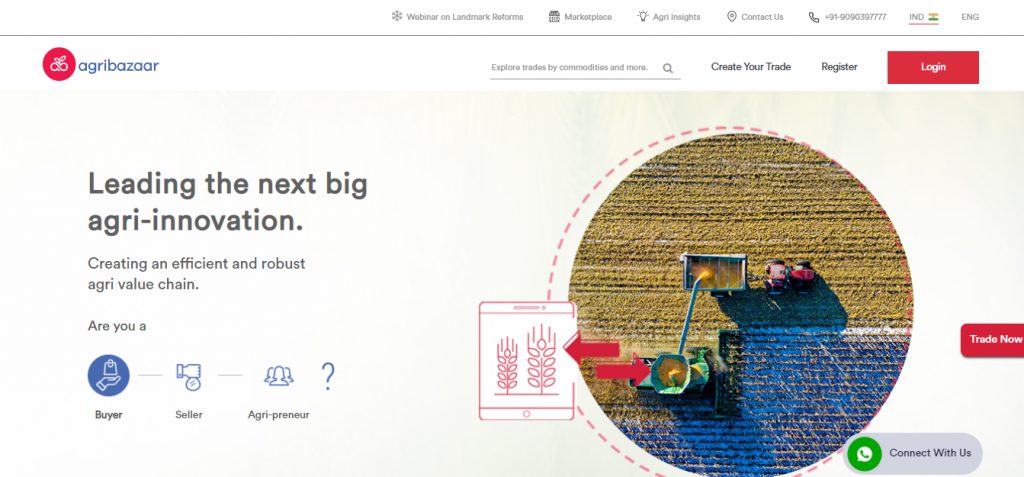
AgriBazaar’s website

CroFarm

This startup is conquering every relevant segment of the agribusiness. NCR-headquartered Crofarm was founded by former Grofers executives in 2016, CroFarm is dedicated to creating a demand-driven and tech-enabled supply chain in India. A farm-to-business supply chain startup, Crofarm delivers fresh fruits and vegetables to both online and offline retailers after procuring them directly from the farmers.

Currently, there are more than 5,000 retailers and over 10,000 farmers in their network. The startup uses an AI-based demand prediction system to study the data to make procurements and tracks inventory by its shelf life, which sends an alert in case the procurement is ageing. To be able to facilitate the farmers and customers better, Crofarm uses communication tools built on WhatsApp to manage customer interactions.

CroFarm’s website

DeHaat

Apart from taking farmers and their produce to institutions, DeHaat also provided expert advisory to farmers. DeHaat is an Agritech platform that provides end-to-end agricultural solutions and is a marketplace for farmers to sell their produce to large institutional buyers directly without the involvement of any commissioning agents. Again, the company ensures last-mile connectivity for easy logistics and storage services. In positive news, DeHaat has assisted farmers on its clientele to achieve a 20% increase in prices. DeHaat is also using advanced data technologies to improve production efficiency and offers consultations to farmers on choosing the correct crop, soil health, suitable fertilizers and pesticides to be used, right time for harvesting the produce, and more.
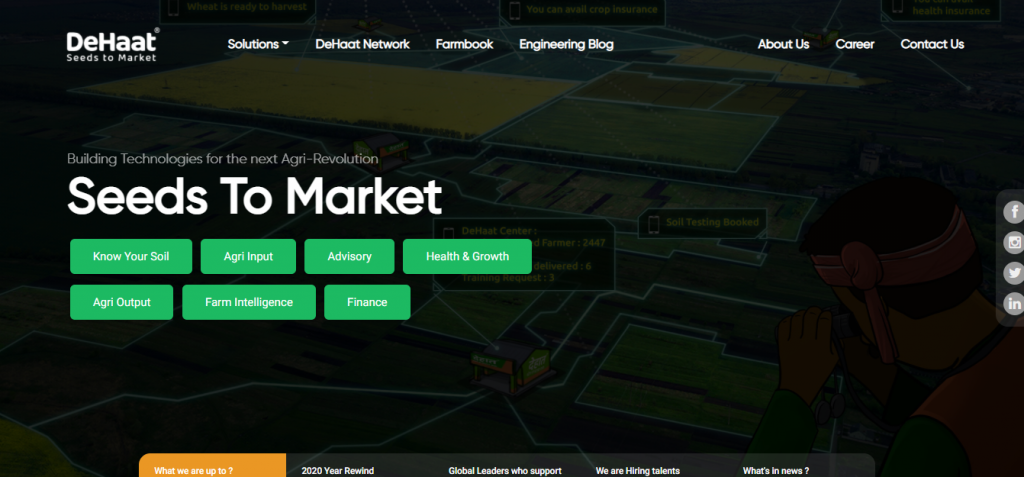
DeHaat’s website

Farmpal

Farmpal’s story is rather fascinating and convincing of the fact that access to the open market is essential for farmers. Karan Hon, the owner of the Agritech startup grew up in a family of marginal farmers in Maharashtra’s Ahmednagar district and would accompany his father to the local mandi in the evenings to sell fruits and vegetables while in school. In an interview with YourStory, Karan said, “But we always returned disappointed because our crops never got the price they deserved, and sometimes it was hard to make ends meet”. To ensure no other farmer endures the same exploitation, after a two-decade-long career, he developed an app-based platform that registers orders directly from buyers and transfers the orders to its network of 1,000+ farmers. Farmpal’s price comparison feature ensures that farmers can sell their produce at rates higher by 20 to 30 percent than what they would normally get in the mandis. 

Farmpal’s website

Farmers Fresh Zone

The Agritech startup Farmers Fresh Zone is founded by an engineer who hails from an agricultural family. In line with the trend of fresh, chemical-free, and organic food, the startup through its omnichannel presence, has connected over 1,500 farmers to urban consumers to date who now have access to safe-to-eat, pesticide-free fruits and vegetables directly.
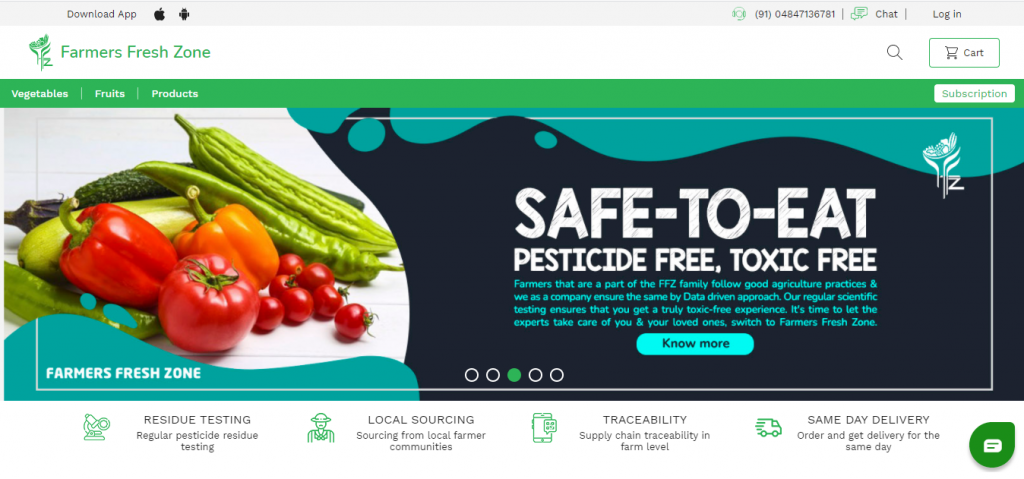
Farmers Fresh Zone website

KrishiHub

Founded in 2016, KrishiHub, procures fresh vegetables directly from farmers and delivers them to business establishments such as restaurants, and hostels and canteens. Using an AI-powered supply chain to undertake farm-to-doorstep delivery, they help determine the best route for delivery agents to ensure delivery within 12 hours. Just like DeHaat, KrishiHub offers additional services such as machine learning-enabled weather forecasting, precision agriculture using satellite, regional language-supported discussion forums for the farmers.
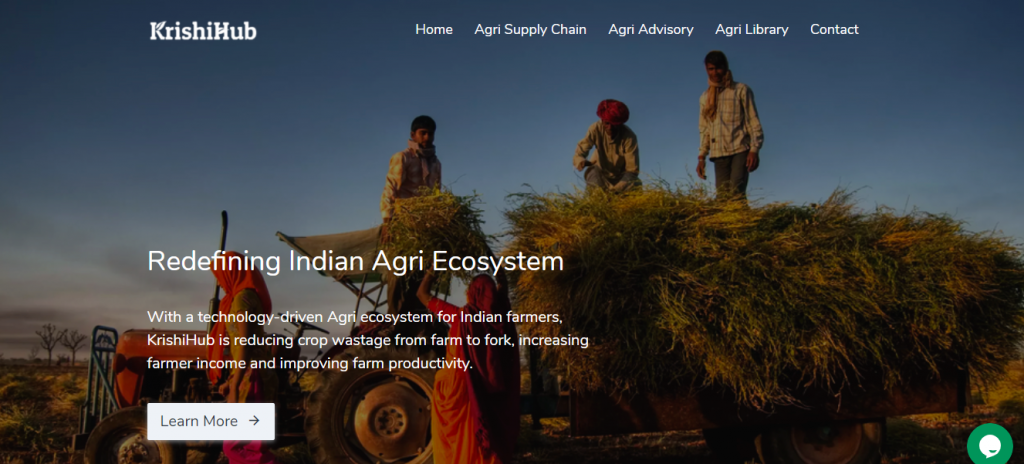
KrishiHub’s website

NinjaCart

Bengaluru-based NinjaCart procures fresh produce from the farmers and delivers it to retail stores in 12 hours. To ensure transparency, every supply can be traced back to its source. NinjaCart is working to take control of the supply chain to solve asymmetries, inefficiencies, and disorganization in a traditional system. The startup claims to provide better prices and consistent demands to farmers. Currently working with businesses in 7 major cities, NinjaCart is also listed on popular food delivery platforms.
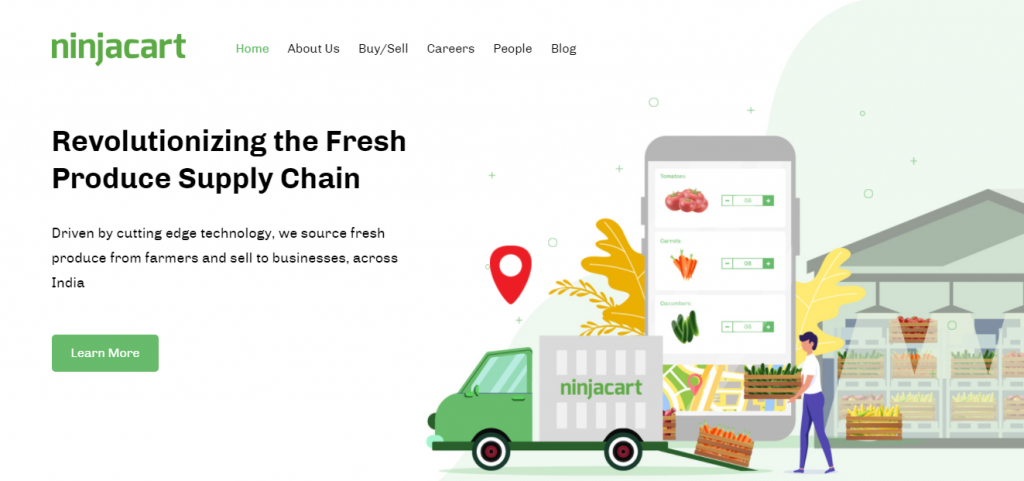
NinjaCart’s website

With increased investment and innovation in the Agri startup segment, companies are working towards providing varied solutions such as advisory, finance, technology and training to farmers, especially in the rural segment. With the Digital India movement and easy accessibility to the internet, the companies are able to reach more and more small farmers in the far off agrarian lands.
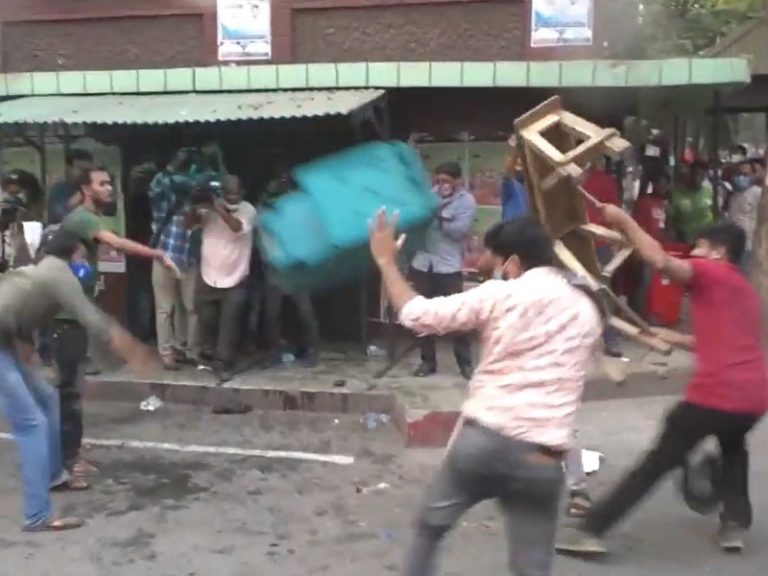
Bangladesh: Leftist students suffer injuries after their protest against Modi turns violent

On March 23, at least 20 Leftist students, including Masud Rana, Central Committee President of Samajtantrik Chhatra Front, were injured in an alleged attack by Bangladesh Chhatra League. The Leftist students in Bangladesh were protesting against the upcoming visit of PM Modi on March 26-27. Chhatra Odhikar Parishad students also burnt effigies of PM Modi. PM Modi’s visit to Bangladesh comes when the neighbouring country is celebrating 50 year of independence.

The protests were being held as the Left-Leaning students were not happy with PM Modi’s “extreme anti-Muslim religious communalism and pogrom in Gujarat.” The protesters further alleged that during discussions over bilateral issues, Bangladesh’s interests are being left unresolved by India. They also alleged that the National Register of Citizens in Assam is being used to put pressure on Bangladesh, and India gets everything in its interest by arm-twisting Bangladesh.

11 of the injured, including Rana, were admitted to Dhaka Medical College Hospital for treatment. In a press note released from the left-leaning organizations, it was mentioned that except Masud, all ten were seriously injured. According to Salman Siddiqui, president Samajtantrik Chhatra Front’s Dhaka University unit, Pragati Tapan Barma, general secretary of the unit, was one of the seriously injured.

The Daily Star quoted Al Kaderi Joy, convener of Progressive Students’ Alliance, saying that several Chhatra League leaders and activists had attacked them with sticks, brickbats, and broken branches. He said, “We had a scheduled protest program against Narendra Modi’s visit to Bangladesh, and as part of it, we were supposed to burn an effigy of the Indian prime minister. Several Chhatra League leaders and activists attacked us with sticks, brickbats, and broken branches.”

He further said that after the first attack, they stood there, but the Chhatra League came back and attacked again. “Around 20 of our leaders and activists were injured,” Joy added. It was alleged that the members of the Chhatra League snatched away the effigy of PM Modi.

Chhatra League denied allegations

Lekhak Bhattacharjee, General Secretary, Chhatra League, denied the allegations and said they were fighting among themselves. He said, “Members of a leftist group fought among themselves on the campus and in the process, some of our men were injured while caught between them. We have nothing to do with the attack.”

Several Journalists were injured

Five journalists, Rubel Rashid, photographer of the Daily Desh Rupantor, and Jibon Ahmed of Daily Manab Zamin, Kazi Salauddin Raju of Zuma Press, Jabed Hasnain Chowdhury of the United News of Bangladesh, and freelance journalist ‘Himu’, were also injured during the violence.

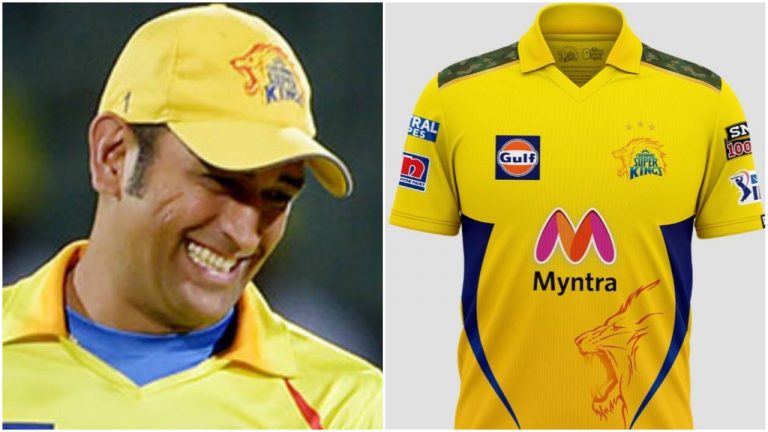
Chennai Super Kings unveils jersey for IPL 2021, here is why ‘liberals’ are triggered at ‘Sanghi MS Dhoni’

Ahead of the Indian Premier League (IPL) 2021, Chennai Super Kings captain MS Dhoni unveiled the team’s new jersey for the tournament on Wednesday.

In a video shared by the franchise, the former India captain unboxed the jersey to share its first glimpse of new outfit with fans and followers.

Interestingly, this year CSK have come up with a new look for their jersey as it features a new camouflage design on the shoulders. The camouflage design has been imprinted as a tribute to the Indian armed forces.

It is worth mentioning that MS Dhoni is an honorary Lieutenant Colonel with the Territorial Army, and he will be sporting the new jersey as he leads the Chennai side in IPL 2021.

In a statement released, the Chennai Super Kings confirmed that the new-look jersey features camouflage as a tribute to India’s armed forces and three stars atop the much-loved franchise’s logo.

“It has been on our mind for some time now to find ways to raise awareness about the significant and selfless role of the armed forces. The camouflage is an appreciation of their service they are the true heroes,” CSK CEO KS Viswanathan said.

‘Liberals’ are upset with ‘Sanghi’ MS Dhoni

The latest Chennai Super Kings’ jersey with camouflage on the shoulders as a tribute to the armed forces has not gone well with a few people on social media. The ‘liberals’ on social media are upset over CSK’s decision to pay tribute to the brave Indian soldiers, which, according to them, was nothing but propagating the “Sanghi” agenda.

Several ‘liberals’ descended on social media after it was revealed that the CSK jersey had a nationalist flavour to it. Cancelling both CSK and its skipper MS Dhoni, the ‘liberals’ claimed that CSK was pushing soft military Sangh propaganda.

For them, wearing nationalistic symbols and cheering for Indian Army was a Sangh propaganda.

One user claimed CSK was getting army stripes to spread soft military Sangh propaganda. The left supporting CSK fans will not utter a word now as deep inside they were also Sanghis, said the Twitter user with woozy eye emoji.

Calling MS Dhoni a Sanghi, a user asked whether CSK had gone “fully crazy”. The user wanted “MSD Sanghi” to be stopped.

One Shibumi Raje said it was getting harder and harder to be a Dhoni fan anymore, presumably because of Dhoni’s respect for the Armed Forces

Another woke activist declared that CSK always brought toxicity into IPL by wearing army stripes.

According to Twitter user Aishworrya, no one should now ask to keep politics away from cricket to avoid ruining it. ‘Why are sanghis so hypocrite?’ she asked. Well, as per Aishworrya, wearing camouflage was part of politics and supporting the Indian Armed Forces was Sanghi propaganda.

Incidentally, this is not the first time that MS Dhoni has been at the receiving end of the attacks over his constant and open admiration for Indian Armed Forces.

Remember, in 2019, several left-wing social media users had attacked Mahendra Singh Dhoni for wearing the Balidan insignia on his wicketkeeping gloves. Similarly, there was outrage after the Indian Cricket team had worn Army caps during an ODI match against Australia at Ranchi to pay homage to the CRPF personnel who had lost their lives in the ghastly Pulwama terror attack.

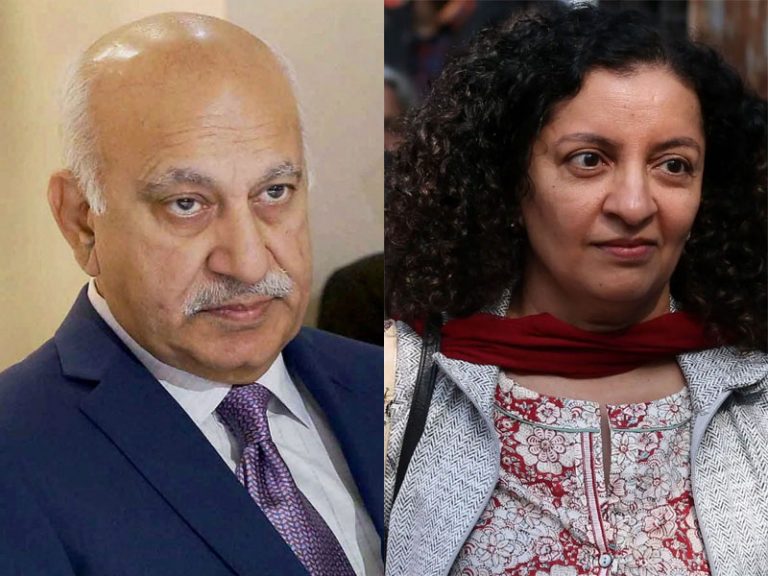
#MeToo and defamation case: MJ Akbar challenges Priya Ramani’s acquittal in Delhi High Court

Former Union Minister MJ Akbar has appealed in the Delhi High Court challenging the acquittal of journalist Priya Ramani in the defamation case. Akbar filed the case against Ramani in 2018 in connection to the sexual harassment allegations against him. The High Court will hear the matter on Thursday.

Acquittal of Priya Ramani

On February 17 this year, a Delhi Session Court had acquitted Ramani in the defamation case. During the judgment, the court observed that a man of social status could also be a sexual harasser. It further added that the woman has the right to put her grievance even after decades. Additional Chief Metropolitan Magistrate Ravindra Kumar Pandey said during delivering the judgement that sexual abuse takes away dignity and self-confidence. Thus, the right to reputation cannot be protected at the cost of the right to dignity.

The court said The society must understand the impact of sexual abuse and harassment on its victims.” It added that the defendant had the rights under Article 21 that is guaranteed under the Constitution, and she has the right to put up her case on the platform of her choice.

The case against Priya Ramani

In 2018, during the #MeToo moment, journalist Priya Ramani alleged that Akbar sexually harassed her when she was 23. Akbar, then serving as MoS, resigned from the Union Cabinet on October 17, 2018. Akbar filed a defamation case against her in 2019, to which Ramani had pleaded not guilty.

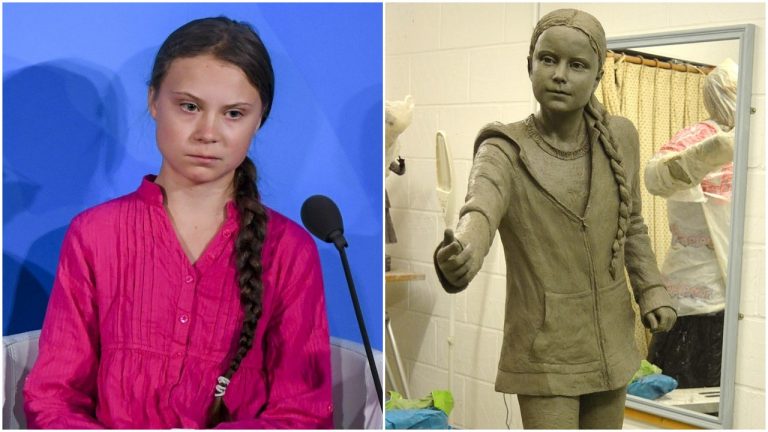
UK university faces criticism for installing £24,000 bronze statue of Swedish protestor Greta Thunberg

A British university is facing criticism for its plans to instal a life-sized statue of 18-year-old Swedish Andolanjeevi Greta Thunberg on its Hampshire campus. Local residents have stated that she has nothing to do with the city.

According to the reports, the Winchester University in the UK had commissioned a life-size bronze statue of the controversial ‘activist’ Greta Thunberg at the cost of £24,000. The bronze design sculpture of the alleged activist – named ‘Make a Difference’ – was commissioned by the University as an “inspiration for all students”.

The statue that was commissioned by the university in 2019 was created by British artist Christine Charlesworth. The statue is set to be unveiled on March 30.

“The university wanted a sculpture of Greta because it is a very ‘green’ university, and they feel that Greta will be an inspiration to all the students,” Charlesworth said.

The statue is the first life-sized depiction of the 18-year-old Swedish school drop-out, who gained international attention after protesting against climate change in 2018 with the help of a widespread PR campaign.

Locals, students criticise university for commissioning statue of Greta

The decision to install the statue of Greta Thunberg within the university campus has not gone well both with the locals and the students of the university.

“What a total waste of money,” local resident Simon Dixon said, according to the Hampshire Chronicle. “Total waste of money. I wonder whose bright idea that was,” he added.

Another University student Henry Osbourne said he wondered why he and others at the school were not given a vote to decide on whose statue should be installed inside the campus.

Michelle Coombs, another resident said, “I think the statue sculpture itself is very good. But Greta has no connection with Winchester, or am I wrong?” he added.

Some locals also suggested that the university could have commissioned a statue as a tribute to Kev, the local Big Issue seller, who is more popular than Greta.

Anne Goodchild said someone else who could have been immortalised in statue form, saying, “Kev the guy who sells the homeless paper, definitely a Winchester icon”. Gary Shotter said, “How about a statue of the legendary Murray Walker, a Hampshire man!”

Kev Collick is a local activist in the city who has been raising funds for children in need.

Greta Thunberg and her attempts to create chaos inside India

Last month, the so-called ‘activist’ Greta Thunberg had created a massive controversy by trying to mobilise violent protestors who have been opposing India’s farm reforms. The controversial activist had expressed her support in favour of rioters who had stormed iconic Red Fort and desecrated the Indian national flag to protest against the three farm laws passed by the democratically elected Indian government with a majority vote in the parliament.

Greta Thunberg had also accidentally released a toolkit that her supporters could use to propagate lies and misinformation about farmer protests. In a follow-up tweet, she shared a document that she called a ‘toolkit’ that can be used to understand what the protests are about and how her followers can support the cause.

The Toolkit, however, revealed how certain people, political parties, media agencies, national and international organizations and Khalistani sympathizers are using the farmer protests to propagate their agenda under a Global conspiracy against India.

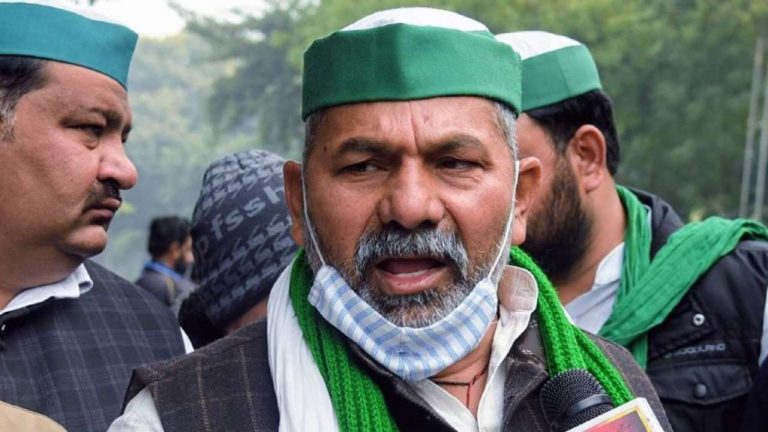
Rakesh Tikait booked for provoking farmers to lay siege to Bengaluru like they did in Delhi

Bharatiya Kisan Union (BKU) leader Rakesh Tikait has been booked by the Karnataka police for provoking farmers during a Mahapanchayat in Shivamogga March 20 to lay siege to Bengaluru similar to what was done in Delhi. A case has reportedly been filed against Tikait at Kote police station under section 153 (wantonly giving provocation with the intent to cause riot) of the Indian Penal Code.

“An FIR was filed against Rakesh Tikait for giving a speech that could have incited violence in the state and was filed by Shivamogga police”, Shekhar HT, Assistant Superintendent of Police, Shivamogga said. Urging the farmers to intensify the agitation against the three farm laws enacted by the central government last year, Tikait asked farmers to ‘make a Delhi in Bengaluru’. “You have to make a Delhi in Bengaluru…and surround the city from all directions”, he said during the Mahapanchayat in Shivamogga. However, the organisers of the Mahapanchayat termed it an act against the principles of democracy. The organisers alleged that the BJP is suppressing the voices against the Centre.

Protestors mainly from Punjab, Haryana and parts of Uttar Pradesh have been agitating against the three farm laws at three Delhi border points- Singhu, Tikri and Ghazipur- for more than three months. They have been demanding repeal of the farm laws. Several rounds of talks between the central government and the ‘representatives’ of the ‘farmers’ have ended in deadlock with ‘farmer representatives’ being adamant on getting the laws repealed.

Delhi was engulfed in riots following a tractor rally by ‘farmers’ on Republic Day

In January, the ‘farmer representatives’ had called for a tractor rally on Republic Day to intensify the protest against the three farm laws. Despite the ‘farmer representatives’ agreeing to restrict the tractor rally to the routes approved by the police, the protestors in the rally broke barricades and entered the national capital. What followed was an unprecedented situation. The protestors barged into the red fort, insulted the tricolour hoisted religious flags atop it. Armed protestors unleashing violence on the streets of Delhi clashed with police personnel who were trying to stop them. Nearly 400 police personnel injured in the clashes with some of them being admitted to the ICU.

Several FIRs have been registered by the police in connection with the Republic Day violence and many persons have been arrested including Khalisant supporter and actor-turned activist Deep Siddhu.

One more riot? Tikait gives a call to break barricades and enter Delhi again

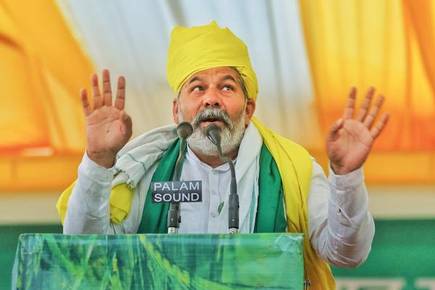
BKU leader Rakesh Tikait's Bharat Yatra seems to have one thing in common and that is a call for violence. While addressing a rally in Jaipur, Rakesh Tikait on Tuesday asked the gathering to be ready with tractors to break the barricades and enter Delhi once again. In a clear case of advocating violence, Rakesh Tikait tweeted the same through his official Twitter handle. 

“You would need to go to Delhi when asked and have to breach barricades again,” Tikait said in Jaipur while addressing the crowd. The BKU leader, confident that his rally would attract at least 1 lakh farmers, witnessed a crowd of less than 5000, as per a report in Bhaskar. Moreover, the rally was disrupted by bad weather, and one youth was injured in a mild stampede caused due to the damage of tents on the protest site. Rakesh Tikait seemed visibly upset with the number and said this will just help the Centre to implement the laws in full force. In another attempt to create chaos, Rakesh Tikait has given a call for Bharat Bandh on March 26.

Using misinformation as armor to fuel the protests, Tikait had earlier said, “we need to start such protest in every city until these three black laws are taken back and the law on MSP is not brought.” He was addressing a rally in Shivamogga, Karnataka last week. He also encouraged the farmers in Karnataka to organize a protest in the state similar to the violent rally in Delhi. He said the farmers should ‘gherao’ (surround) Bengaluru from all sides. In a tweet, he appealed to manufacture a Delhi-like violent protest that shook the entire nation on January 26, in Bengaluru.

However, the local police have registered a case under Section 153 (giving provocation with intent to cause riot) against Rakesh Tikait for inciting the crowd.

To this, he responded on Twitter saying that no case can compel him to stop his agitation and that his aim is to fight against the brute force.

Rakesh Tikait and his brother Naresh Tikait have been constantly giving calls for protests and violence through their verified Twitter accounts.

The another tweet, which was retweeted by Rakesh Tikait, asked the farmers to make protests a part of their routine.

The self-acclaimed Annadata has declared that all roads, public transport, markets, and other public spaces will remain shut on March 26 from 6 am to 6 pm as a mark of Bharat Bandh.

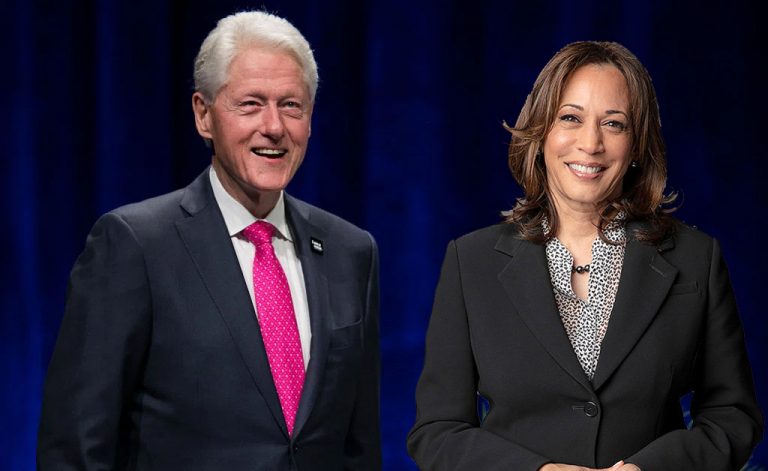
Paedophile Jeffrey Epstein’s friend and rape accused Bill Clinton to host “women empowerment” program with VP Kamala Harris

U.S. Vice President Kamala Harris and Former U.S. President Bill Clinton will be speaking together at an event on Friday organized by the Clinton Foundation. The theme of the event in question is “empowering women” in the United States and across the world.

The event in question, part of the Clinton Global Initiative (CGI), will feature the U.S. politicians focusing on the challenges women facing especially in the context of the Coronavirus pandemic, and then on how to “empower women” around the world.

It is interesting to note that Kamala Harris is scheduled to talk with Bill Clinton on women issues, despite Bill Clinton being credibly accused of sexual assault by multiple women over the years, including but not limited to sexually harassing Paula Jones, of raping Juanita Broaddrick, of sexually assaulting Kathleen Willey, and of repeatedly sexually assaulting Leslie Millwee. Clinton has denied all of these allegations.

Bill Clinton was also an associate of notorious billionaire paedophile Jeffrey Epstein and took flights with Epstein on his infamous “Lolita Express” private jet, where Epstein offered underage girls for sex. In January 2020, pictures of Bill Clinton emerged with Epstein’s “pimp” Ghislaine Maxwell and another woman described as a “sex slave” on Epstein’s aircraft. More pictures of Bill Clinton with alleged Epstein victims have emerged, including one where Clinton receives a shoulder rub from an alleged Epstein victim.

The event with Bill Clinton is hosted at Kamala Harris’s alma mater Howard University, not to be confused with the more famous Harvard University. Other speakers including former Secretary of State Hillary Clinton, Democratic activist Stacey Abrams, and American author Wes Moore.

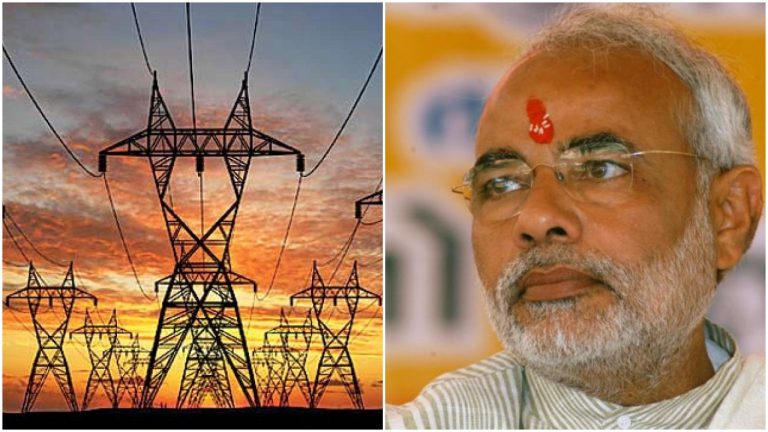
The success of Gujarat model: How Narendra Modi pioneered reforms to restructure the ailing power sector in Gujarat

In early 2000, Gujarat’s power sector was in shambles just as any other state in the country. The villages and the cities barely had access to a continued supply of electricity. A decade later, Gujarat ensured that its 18,000 villages and 9,700 hamlets had access to the round-the-clock three-phase power supply.

The fascinating turnaround story of Gujarat’s power sector over the last two decades, first under Narendra Modi and then under various other Chief Ministers, is often cited as a model for power sector reforms in the country. Today, Gujarat has more power than it needs, with low tariffs and an uninterrupted power supply.

So how did the turnaround really happen? Here is the story:

Before 2001, electricity in a rural village was a rare commodity. The state’s electricity sector was loss-making as it was riddled with extreme inefficiencies and corruption. When Narendra Damodardas Modi took over as chief minister of Gujarat in October 2001, he found the state’s power situation grim. The Gujarat State Electricity Board, or GSEB, was in deep distress with a mounting loss of over Rs.2,200 crore in 2001. The GSEB paid interest costs of about Rs 1,227 crore in the fiscal year.

In addition to that, the transmission and distribution losses were as high as 35.27 per cent, and load shedding was a frequent phenomenon. The GSEB was also suffering from a fund crunch to produce its own power, and it could not persuade the private sector to invest in the state.

Several issues, such as power generation problems, higher fuel cost, mounting losses, and loss of power to unmetered supply, had plagued the Gujarat power sector. However, in his first term as the Chief Minister, Modi took up the challenges and initiated a series of reforms to revive the state’s power sector.

Holistic reforms in Gujarat’s power sector

The then Chief Minister Modi’s first major decision was to appoint Manjula Subramaniam, a joint secretary in the prime minister’s office, as the Chairperson of GSEB and Principal Secretary, Energy and Power. Soon, the officer was authorised with full powers needed to tackle the crisis that had hit the state. Manjula Subramaniam initially concentrated on two areas: reinforcing the power utility’s finances and raising employee morale. 

At first, a debt restructuring initiative was taken up, by which banks and financial institutions were persuaded to lower their interest rates. Next, the GSEB renegotiated the power purchase agreements or PPAs signed with private players and brought down the rates for power procurement, which resulted in savings of Rs. 500 crore in the next year and another Rs.1,000 crore in the next.

Following year, the Modi government began to plug the leakages in the distribution sector by acting on power thefts in Gujarat that ranged between 20 per cent in urban areas and 70 per cent in rural regions. The government passed a law against power thefts and set up five police stations across the state to act on power thieves. The government acted strictly on firms with large pending bills, including disconnecting their supply if they failed to clear the arrears.

In rural areas, unmetered power supply was stopped altogether. As the tariff for power used for agricultural purposes was much lower, many stole from this subsidised supply for their household needs as well, resulting in huge losses for GSEB. To tackle this, the GSEB joined hands with the Asian Development Bank to fund the installing of meters.

Jyoti Gram Yojna – the flagship scheme of Gujarat government

One of the most important reforms introduced was to separate the feeder line that supplied power to the rural areas into two. The supply power for agricultural needs and non-agricultural usage for the household was differentiated. This was part of the Jyoti Gram Yojna, a scheme Modi announced in 2003 to supply round-the-clock power to villages. The success of the scheme was such that after Narendra Modi was elected as the Prime Minister, the scheme was scaled up at the national level as “Deen Dayal Upadhyaya Gram Jyoti Yojana”.

The Jyoti Gram Yojana (JGY) was launched in September 2003 to provide three-phase round-the-clock quality power to domestic and commercial users of villages and their hamlets.

Under the scheme, a parallel rural distribution network of 78,454 km of new lines, 2,257 JGY feeders, 18,724 new transformer centres and 4,530 special design transformers were set up. The JGY controlled power theft and losses, thus freeing the distribution companies from suffering major financial losses. The financial health of these Discoms became better year-after-year.

Continuing, in May 2003, the Gujarat government also passed the Gujarat Electricity Industry (Reform and Reorganisation) Act, which divided the GSEB into a holding company, a power generation company, a power transmission company and four distribution companies to bring better management and efficient operations.

Thinking ahead of its time, the Modi government had also set up a state electricity regulator – a first in the country. The regulator was made truly independent of political pressures, thus giving them the freedom to revise power tariffs every year to avoid any losses to the exchequer.

Another lowkey reform, but that had a tangible outcome on the restructuring of the state’s power sector was restoring the employees’ confidence. Manjula Subramaniam was tasked to understand the concerns of many employees, who had feared for their job loss due to the widespread reforms. The GSEB reached out to the employees and started training programmes at all levels to skill them for redeployment. The state government ensured that no one was laid off. The success was evident within weeks, as now employees took more interest in reforms, and they themselves began to implement the necessary reforms.  

The several reforms initiated by the Modi Government to re-configure the power state in the state created wonders. The losses were stopped, and efficient usage of electricity without any leakages was made the norm. The major upgradations and clear cut policies pertaining to the power sector also boosted investor confidence, who were ready to bring in private capital for power generation.

Within three years, the massive power sector reforms undertaken by the state Government yielded results, making Gujarat into a power surplus state by 2003. The erstwhile GSEB, which has now been rebranded as Gujarat Urja Vikas Nigam Ltd (GUVNL), had posted a loss of Rs. 2,246 crores in 2000-01, on revenue of Rs. 6,280 crores. In 2019, GUVNL posted a profit of Rs.928 crore on total revenue of Rs 50,959 crore.

If one takes a closer look at the necessary reforms initiated by Gujarat, especially in the areas of capacity addition, restructuring power distribution companies – reveals how the leadership took breathtaking reforms to make a power deficit to a surplus state within a decade.

Several states have initiated such reforms in the past few years to improve their power generation capacities and Discoms by replicating the Gujarat story. However, not all states have achieved major success. As Prime Minister Modi took the reigns of Delhi in 2014, he introduced holistic reforms to restructure the power sector across the country. As Electricity is a concurrent subject, states too have equal responsibility to carry out such reforms that the centre has incentivised. There has been a slight improvement in the power sector in the country, however, much needs to be done.

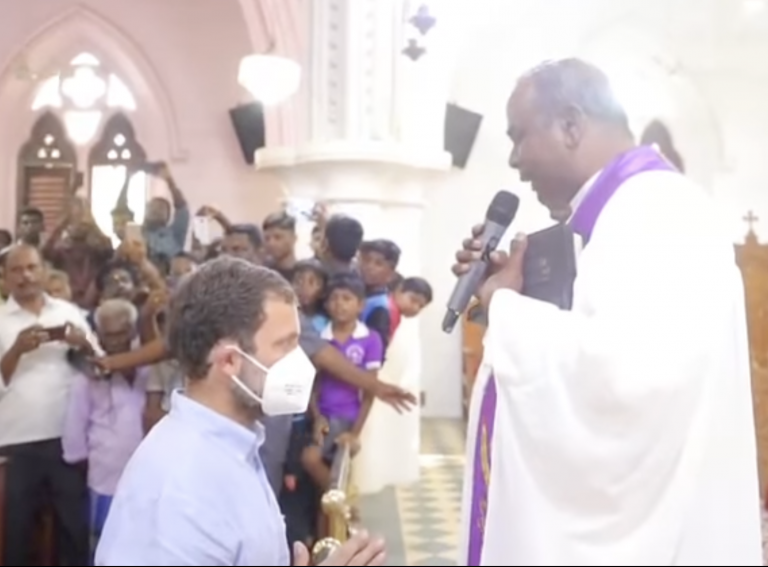
Rahul Gandhi condemns ‘attack’ on Kerala nuns in UP, here is what he said on rape of nuns in Kerala churches and Palghar lynching

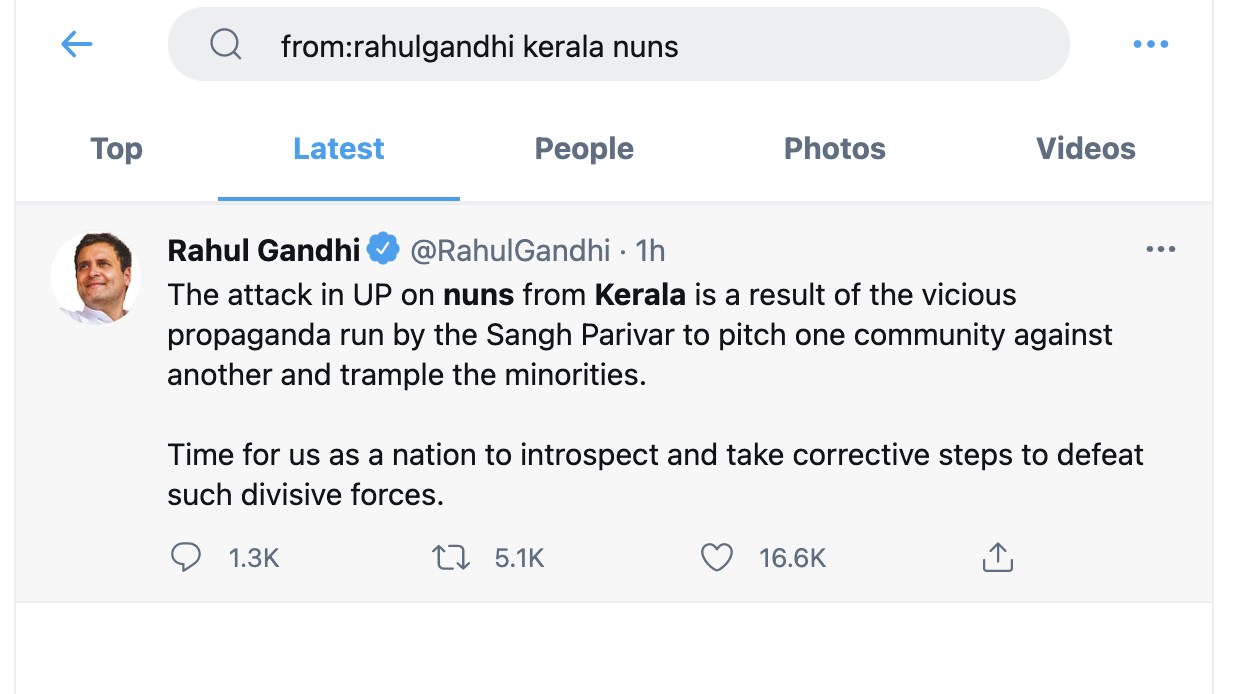
In a tweet posted today, Congress leader Rahul Gandhi condemned the ‘attack’ of Kerala nuns allegedly by Bajrang Dal activists in a train near Jhansi, Uttar Pradesh.Rahul Gandhi attributed the harassment to “vicious propaganda run by the Sangh Parivar”.

The ‘attack’ Rahul Gandhi is talking about is questioning of the two nuns over suspicion of forceful religious conversion. The incident happened in Jhansi. The railway police authorities questioned them and upon finding no basis for the complaint, they were let off. The incident took place on March 19. However, senior Congress leader chose to express his concern only after five days and that too after Home Minister Amit Shah had already assured action against the culprits who allegedly harassed the nuns.

Any kind of harassment is indeed condemnable and Rahul Gandhi’s concerns are appreciated. He has earlier expressed concerns for the nuns who were raped by priests and bishops in Kerala church as well. As can be seen through his series of tweets on Kerala nuns.

Rahul Gandhi’s concerns on crimes perpetrated against nuns in Kerala.

Whilst there are umpteen cases of Kerala nuns being sexually abused, the heinous case of Father Franco Mulakkal, largely because of the Church’s systematic role in trying to suppress the nuns from speaking out.

Bishop Franco Mulakkal, Archdiocese of Jalandhar, Punjab, was arrested by the police officials on September 21st, 2018 after the investigating team found evidence that linked him in the sexual harassment case. A nun from Kerala had accused a Bishop from Jalandhar of raping her. The accused, Franco Mulakkal, Bishop of the Roman Catholic Diocese of Jalandhar, is said to have raped her at a guest house in Kuravilangad in May 2014 and exploited her sexually on several other occasions.

On 16th  January 2019, four out of the five nuns who had supported the rape survivor nun were asked to leave the Kuravilangad convent, and go to convents, previously assigned to them. The letter accused nuns of  ‘issuing malafide statements’, and spreading baseless stories to ‘tarnish the image’ of the Missionaries of Jesus congregation. Sister Anupama, one of the four nuns served transfer notice, had slammed the notice and alleged that this is a ploy to break a unity of nuns to save Bishop Franco, who is facing rape allegations from one of their colleagues.

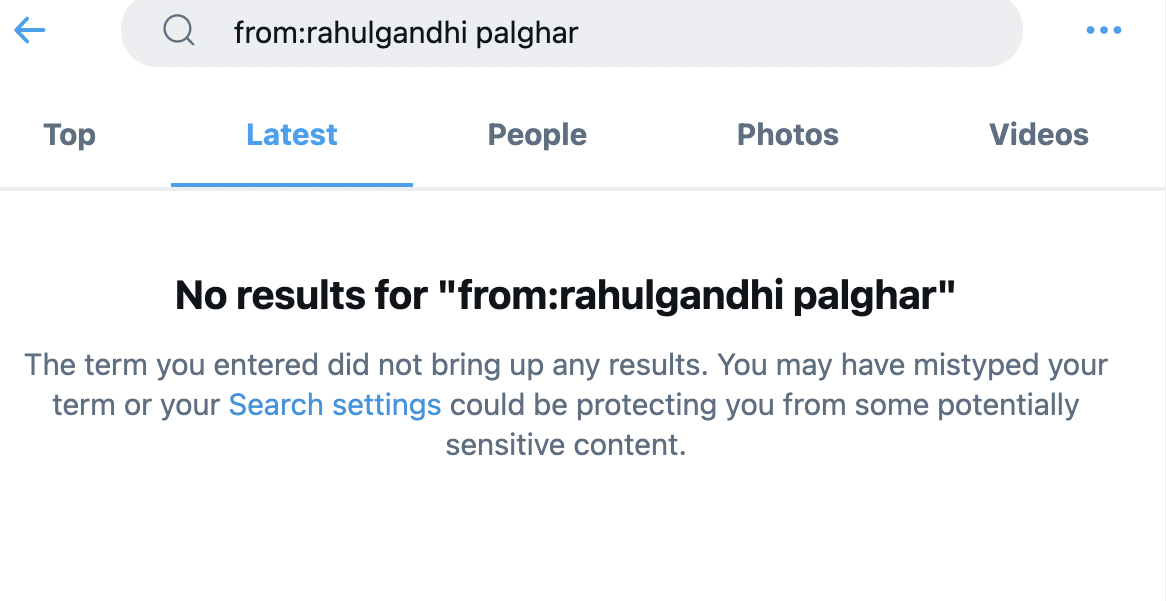
Rahul Gandhi has similarly expressed concerns over the sadhus from Palghar, Maharashtra, who were lynched to death last year even as Maharashtra police officials watched as they were killed.

Rahul Gandhi’s tweets on Palghar lynching

The concern of Congress leaders was so much that when Republic TV’s Arnab Goswami questioned Congress president Sonia Gandhi’s silence over the same, he was hounded by the Mumbai Police and accused him of making ‘communal comments’. Congress is part of the ruling alliance, Maha Vikas Aghadi, in Maharashtra along with NCP and Shiv Sena.