Home Blog Page 4704

Children home run by Harsh Mander’s NGO in the dock as NCPCR inspection reveals child sex abuse: Here are the shocking details

The National Commission for Protection of Child Rights (NCPCR) initiated an inspection into two children homes, Umeed Aman Home for Boys and Khushi Rainbow Home for Girls, in South Delhi established by Centre for Equity Studies on the basis of a complaint received regarding a violation of the Juvenile Justice Act. Consequently, two teams were established by the NCPCR led by the Chairperson himself to investigate the matter. Harsh Mander is the director of CES, according to NCPCR.

The two homes were inspected on the 1st of October, 2020. Furthermore, the NCPCR was also aware of a case of child sexual abuse at Umeed Aman Ghar which is run by the Aman Biradari Trust according to NCPCR. The Aman Biradari Trust was founded by none other than Harsh Mander, former member of Sonia Gandhi’s National Advisory Council (NAC) and a member of an organisation with links to the Italian Secret Service and the Italian Government.

The NCPCR notes, “It was informed by the Former Member (of the NCPCR) that the said complaint was received in the Commission in 2012 but the matter was not dealt adequately at that time and that the same is required to be looked into in light of present complaint that has been received by the Commission.”

The NCPCR during its visit discovered that numerous norms and regulations were flouted at these homes. Covid norms and social distancing were not observed and apart from these, there were other serious violations.

Umeed Aman Ghar for Boys

The Child Care Institution registration was not renewed. There was no adequate counselor, cook or helper available. There were no records of recruitment of each staff, or work profile, and no medical officer was available on call. Most worryingly, “The rooms of the Home were not segregated and there was mingling of minor children with the elder children, which made the minor children vulnerable to abuse and bullying by the elder children.”
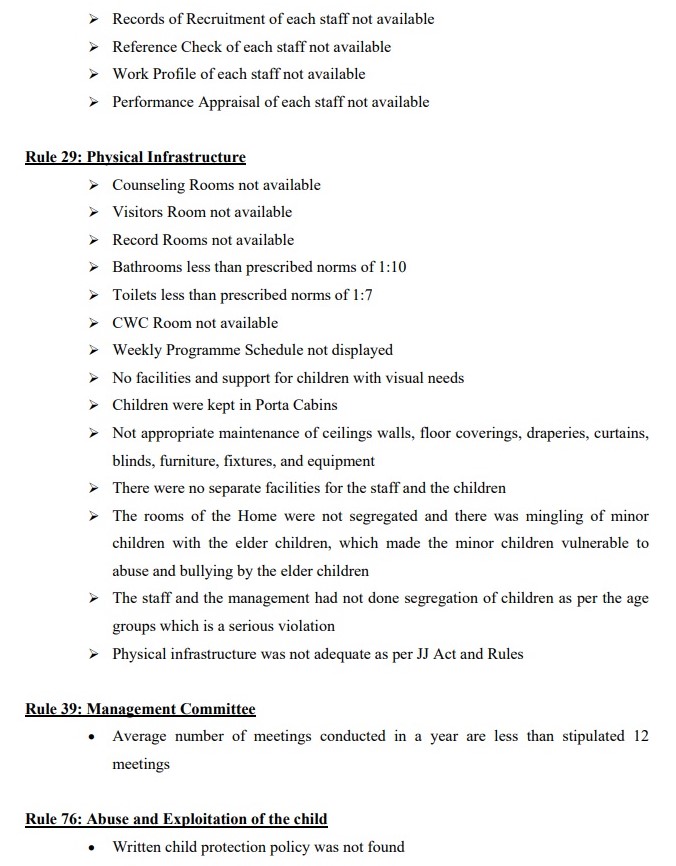
Rules violated at Umeed Aman Ghar

The NCPCR noted that it had come to its knowledge that there were multiple cases of child sexual abuse that had occurred within the institution at 2012, 2013 and 2016. However, during the inspection, the Commission was told that there had been no case of sexual offence at the institution and neither has been any case of child rights violation reported.

The NCPCR said, “The response given by the Staff and In- charge of the Home regarding this matter has been observed to be misleading and incorrect which is a serious violation and offence.” Furthermore, the child rights body has stated that it has knowledge of sexual abuse continuing in the shelter home and yet, it was not being reported.
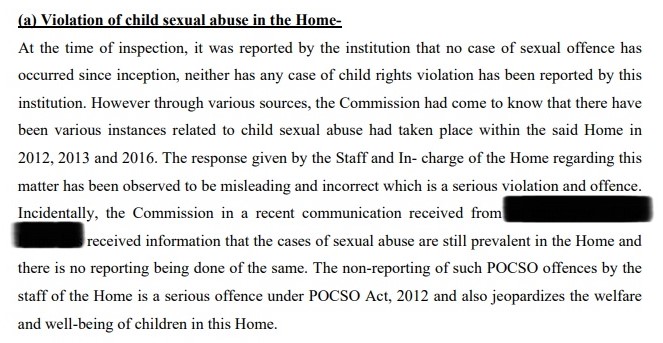
Child Sex Abuse at Umeed Aman Ghar

The Commission also noted that a series of contradictory statements were made in regard to child sex abuse at the institutions. After initial denial of the shelter homes, CES appears to have admitted that these cases did occur. In fact, the NCPCR cites a Delhi High Court order where the state government was directed “to take appropriate action against the Manager who had failed to report the child sexual abuse incident at that time.”

In light of such events, “the Commission has taken a serious view of the contradictory submissions made by the Centre for Equity Studies and that such concealment of facts from the NGO makes it clear that the safety and security of children in this Home is jeopardized and that the children must be shifted from this institution at the earliest.”
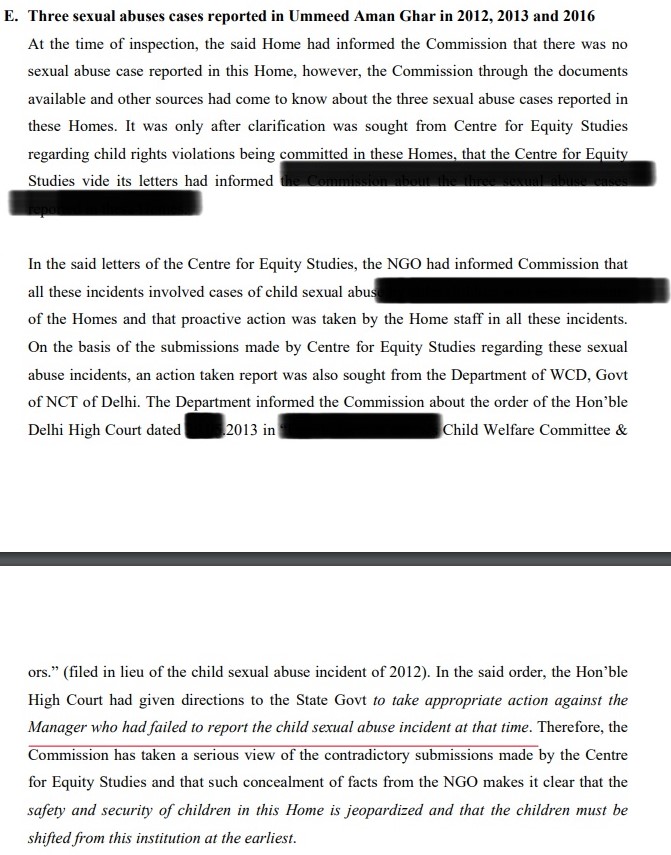
The NCPCR notes that the children must be shifted from Umeed Aman Ghar

The manner in which the manager was dealt with was also quite disgusting. Instead of taking stern action against the manager, he was simply moved from one home of the organisation to the other. the Department of WCD of the Delhi Government was aware of this and yet, did not take any action in this regard.

The Department of WCD (Delhi) did seek clarification regarding taking note of the fact that the action was not appropriate and yet, for some reason, no action was taken when the department did not receive a reply.

Khushi Rainbow Home for Girls

There were similar violations observed at Khushi Rainbow Home for Girls with the notable exception of child sex abuse. There were no record of recruitment of each staff, only one child welfare officer for 90 children, no classrooms, the staff residence was not as per prescribed norms. There were only 8 bathrooms for 90 children. Sanitation was a major concern and the general situation appeared to be quiet pathetic.
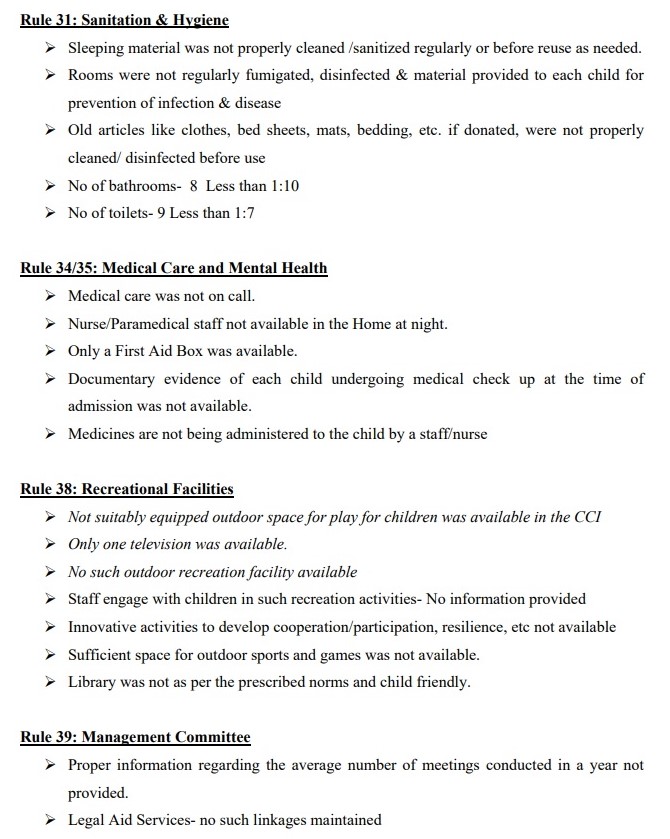
Violations at Khushi Rainbow Home for girls

The Funding Problem observed by NCPCR

The shelter homes for children were being funded by multiple sources. Apart from Center for Equity Studies, the Rainbow Foundation of India (RFI), the Association for Rural and Urban Needy (ARUN-India), the ‘Dil Se Campaign’ of Can Assist Society and Aman Biradari and an MoU between the CES and the Delhi Government’s Samgra Shiksha Abhiyan.

It is all a bit confusing but as per the website of ‘Can Assist’, ARUN-India is the parent organization of RFI although there does not appear to be any mention of it on the RFI’s website. There is also an admission in the Can Assist website that there is funding involved from the Delhi Government and the Aman Biradari Trust is involved as well.
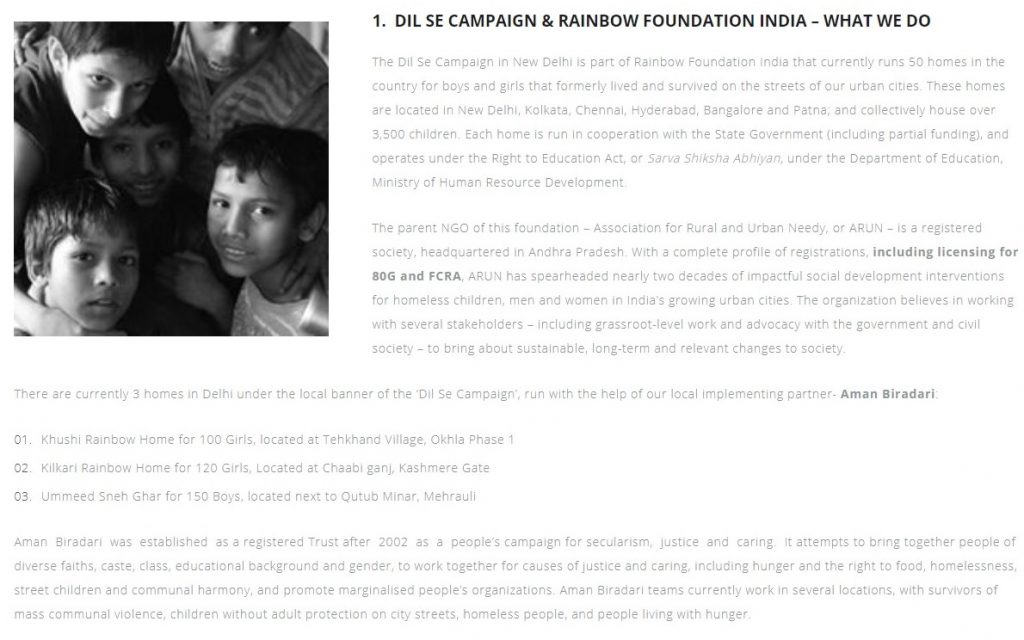
The intersection of RFI, ARUN-India, Aman Biradari and Can Assist

According to the NCPCR, lakhs and lakhs of rupees were given every year to the child shelter homes every year. The Umeed Aman Ghar, particularly, received over Rs. 15 lakh in the financial year 2020-21 alone from ARUN-India. From RFI, it received over Rs. 41 lakh. Khush Rainbow Home received over Rs. 38 lakh from the RFI. And this is apart from the funding received from the Delhi Government which was well over Rs. 40 lakhs for the past couple of years for Umeed Aman Ghar.

Furthermore, the two shelter homes informed the Commission that they were receiving funds from the Delhi Urban Shelter Improvement Board (DSUIB) but later, CES told NCPCR that the funds were being received from DSUIB for urban shelter Homes for Homeless adults. DSUIB also told NCPCR that no funds had been made available to these shelter homes.

The NCPCR noted, “It may be noted that while it has been stated by Centre for Equity Studies as well as DUSIB that no grants were provided to the said two Homes and that the grants were given for the shelter Homes of the NGO, the Commission had received the information of the grants received from DUSIB from these two Homes itself.”

It adds, “Further, as per the information provided by the Homes as well as DUSIB, it is seen that there is a huge discrepancy of the funds disclosed by these two Homes and the funds being granted by DUSIB. While DUSIB has stated that it has not provided any funds in the year 2020-21, the Homes have stated that they have received a grant of Rs.7,48,000/- till September 2020 for the financial year 2020-21.”

NCPCR Recommendations

The NCPCR recommended that the Departments of WCD and Education of the Government of Delhi take serious view of the matter and initiate an investigation into the serious lapses and violations at the two shelter homes. The NCPCR also recommended that an investigation also be carried out against the inspection officials so as to comprehend how were these glaring flaws ignored for so long.

In addition, the NCPCR has also recommended that Economic Offences Wing of the Delhi Police investigate the multiple sources of funding of these shelter homes and the Ministry of Home Affairs has also been urged to investigate possible FCRA violations. It was also noted that foreign nationals had visited these homes for “voluntary service”, the NCPCR urged the Home Ministry to investigate whether any VISA violations had been committed.


Rubina Memon, a life convict in 1993 Mumbai serial blasts, gets parole to attend daughter’s wedding

On December 31, 2020, the Bombay High Court granted parole to Rubina Memon, a life convict in the 1993 Mumbai blasts to attend her daughter’s wedding on January 8, 2021. A vacation bench comprising Justice SS Shinde and Justice Abhay Ahuja granted the parole keeping the human rights of the daughter in mind. In its order, the Court said, “Considering the aforesaid circumstances and keeping in mind the human rights of the daughter, we are inclined to entertain the Petition.”

Memon approached Court after Yerawada Central Prison delayed the decision

Memon applied for the parole at the Yerawada Central Prison, but the authorities did not decide on the same. She then approached the High Court for the same. When the Court took a plea for hearing, the police informed the Court that the parole had been granted for two days. The police also said that before the release, payment of Police Bandobast needs to be made. The Court recorded the same and posted the case for further hearing on December 31, 2020.

The Court granted 7-day parole

On December 31, Rubina’s advocate Farhana requested the Court to grant at least 7-day parole to attend marriage functions of her daughter. The Court was informed that during the 13 years of imprisonment, Memon was never granted parole. After noting the conduct of Memon in prison, the Court granted her parole for seven days starting from January 6 to January 11. Memon has to deposit Rs. 1 lakh before the release with the police headquarters at Pune.

Who is Rubina Memon?

Rubina Memon is one of the convicts in the 1993 Mumbai Blast case. She is currently serving life imprisonment in the Yerawada Central Prison, Pune for her involvement in the blasts that claimed 257 lives and left over 700 injured. She is the sister-in-law of the prime accused Tiger Memon. Reports suggest that Tiger is currently hiding in Pakistan. Rubina was convicted for the offences under the Terrorist and Disruptive Activities (Prevention) Act (TADA) in 2006.

In 2015, the High Court had rejected her plea for furlough leave stating that if she was released on parole people will come to meet her in large numbers and it will create law and order problem. The Court also mentioned how people had turned for the funeral of Yakub Memon who was executed by hanging on July 30, 2015, for his involvement in the 1993 Mumbai Serial Blast case. The Court said, “If she is released on parole people will turn up to meet her in large numbers and there would be a law and order problem, particularly in view of the fact that during the funeral of Yakub Memon, a huge crowd had turned up.”

The curious case of IT probe against a certain ‘Daljit Singh’ for money laundering and subsequent meltdown of actor-singer Diljit Dosanjh

The curious case of alleged links of actor-singer Diljit Dosanjh with a shell company purportedly used to route money from abroad into India is getting interesting by the day. After the Income Tax department launched a probe into allegations of money laundering against a certain Daljit Singh, actor-singer Diljit Dosanjh has now taken to Twitter to rant and rave against the inquiry.

In a series of tweets against the Income Tax inquiry, a seemingly rattled Dosanjh grumbled about the state of affairs in the country and shared a Platinum certificate issued by the Ministry of Finance for the year to allege that he has been one of the honest taxpayers.

Interestingly, the certificate he shared on Twitter bears his name as ‘Daljit Singh’. Perhaps, Dosanjh believes that just because he has been awarded a ‘Platinum Certificate’ by the IT department for the year 2019-20, he is immune to any probe launched against him in connection with his alleged past wrongdoings.

Dosanjh’s vehement condemnation comes on the heels of a probe launched by the Income Tax department for allegedly routing foreign money to finance farmer protests. A complaint was lodged by Legal Rights Observatory (LRO) on December 27, based on the research shared by Twitter user Vijay Patel who had alleged that a company named Speed Records and certain dubious individuals, including a certain ‘Daljit Singh’, have been prudently involving in money laundering and routing activities to fund the anti-farm laws agitation.

The curious case of a shell company owned by a certain Daljit Singh

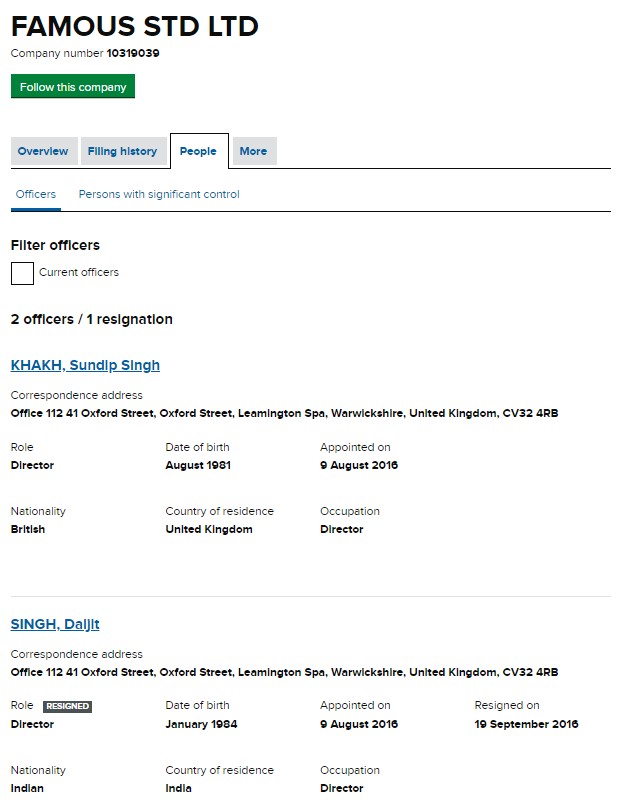
The complaint also raised aspersions on the involvement of actor-singer Diljit Dosanjh in enabling the laundering and routing of money to support the ongoing farmers’ agitation in the country. It alleged that another company named Famous Std. Ltd. was incorporated on 9th August 2016 and dissolved on 16th January 2018 with Directors Sundip Singh Khakh and one Mr Daljit Singh.

Details on Famous STD LTD

Interestingly, Mr Daljit Singh was born in January 1984, the same month and year when actor-singer Diljit Dosanjh was born. However, the complaint added that it was unclear whether both the persons are the same. But Diljit Dosanjh’s meltdown on Twitter and the IT certificate shared by him that described him as ‘Daljit Singh’ indicates that the person in question might be none other than himself.

Diljit Dosanjh’s manager Sundip Singh Khakh was a director in FSL

Curiously, the other director of the company FSL, Sundip Singh Khakh is also the manager of actor-singer Diljit Dosanjh. Furthermore, Kaka Singh Mohanwalia alias Sundip Singh Khakh has been amongst the many suspected individuals who are allegedly linked to Speed Records, a company that has been registering themselves on and off from the year 2011 to 2020, under various names, but either with the same address registered or same personnel operating as office bearers, indulging in suspicious activities detrimental to Indian interests, involving Indians too in activities such as anti-CAA riots as well as farmers’ agitation.

LRO complaint alleges shell companies linked to Daljit Singh involved in funding ongoing farmers’ protests

Speed Records, UK, was incorporated with UK Director Kaka Singh Mohanwalia alias Sundip Singh Khakh, which was a dormant company. One Mr Dinesh Auluck who is the owner of Speed Records India resigned from his office on 5 August 2013 just a month after the establishment of the company. The company was later dissolved on 9th September 2014.

Similar irregularities were also witnessed in other supposed shell companies put up by suspected individuals. Another company with the name Speed UK Recs Ltd was incorporated on 21st June 2013. The same Mr Dinesh Auluck joined this company on 8th July 2013 and resigned from his office in just 12 days on 20 July 2013. This company, too, was dissolved on 3 February 2015.

“It is to be noted that the curious case of this vanishing companies and bobbing up of its office bearers in subsequent in later companies show an elaborate network established with a well-thought-of stratagem to hoodwink Governmental Authorities there and also facilitate convenient mode for funding and supporting anti-national and secessionist activities in India,” the complaint filed by LRO said.

Diljit Dosanjh’s NGO Saanjh Foundation’s links with Sukhbir Singh Badal under the scanner

Diljit Dosanjh is also under the scanner of the IT department for his NGO Saanjh Foundation. Diljit Dosanjh receives an honorarium for music events conducted through his Saanjh Foundation, which does not have an FCRA Registration to operate in India. The complaint filed by the LRO also alleged that the NGO’s address is the same as that given by former Deputy Chief Minister Sukhbir Singh Badal in a defamation case.

It is also pertinent to note that Diljit Dosanjh has been a vocal supporter of the ongoing farmers’ protests and has also donated Rs 1 crore to the farmers’ cause. It is also submitted that the IT sleuths had had already raided the houses of popular Punjabi singers Diljit Dosanjh, Miss Pooja and Gippy Grewal and the premises of two Punjabi film-producing firms in the year 2012 and they are alleged to have been associated with Dharam Seva, Speed Records and other dubious companies in the UK.

Kerala: Mohammad Noufal and Shamim from Wayanad arrested for sexually abusing two minor Adivasi girls

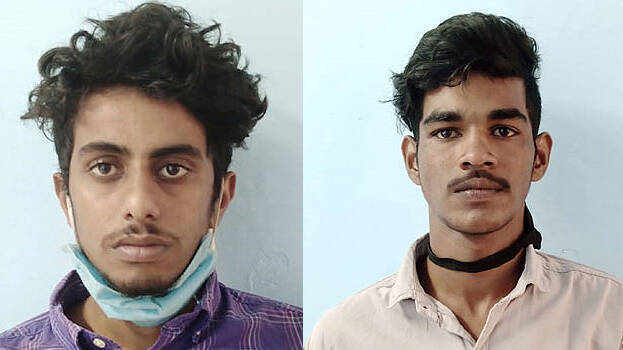
Two teenage youths named Mohammad Noufal and Kaniampatta Shamim from Wayanad have been arrested by the Kerala police on Sunday. The youths, aged 18 and 19 respectively, hail from Kambalakkad, one of the small towns near Kalpetta in the Wayanad district, Kerala. They are accused of sexually abusing two minor Adivasi girls on new years eve.

The incident came to the fore when a parent of one of the girls lodged a missing complaint with the police. It is alleged that the two accused persons used to talk to the two minor girls over the phone and gradually established a relationship.

On new years eve, the youths took the girls to a lodge in Mysore where they raped them. The boys have been arrested and charged under the POCSO Act and the Prevention of Scheduled Caste and Scheduled Tribe Violence Act.

50th anniversary of victory in 1971 war: Bangladesh Army delegation to take part in Republic Day parade

0

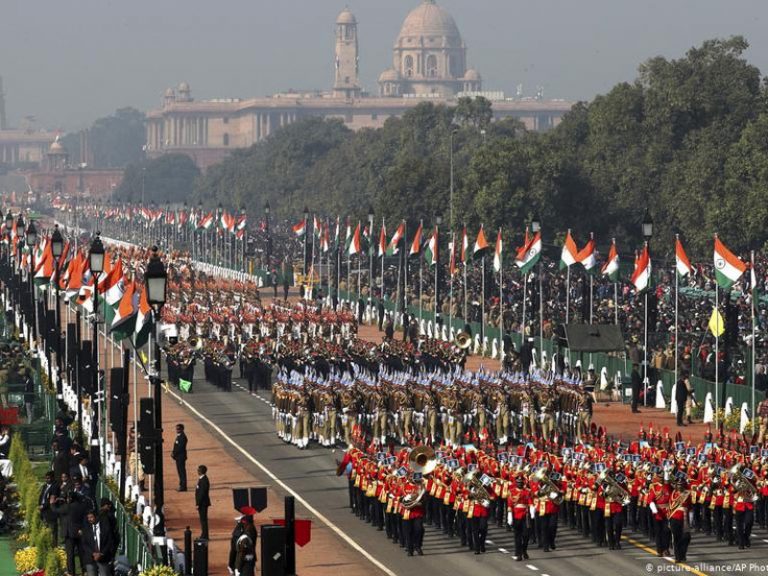
India will be celebrating 50th year of victory over Pakistan in the 1971 war this year. Defence Ministry officials have said in a statement that a Bangladesh Army delegation would be present in this year’s Republic Day parade on January 26.

The 1971 war was one of the fastest and shortest campaigns in military history. A new nation was born as a result of the swift campaign undertaken by the Indian Army against the Pakistani Army that was committing atrocities in then-East Pakistan under the leadership of General Amir Abdullah Khan Niazi.

Niazi, along with his 93,000 troops, after facing defeat in the 1971 war, had surrendered to the Indian Army.

Covid-19 restrictions to affect celebrations

The government may scale down the number of visitors for the Republic Day parade 2021 to avoid overcrowding and ensure Covid-19 restrictions are followed during the celebrations. Keeping in mind the concerns over new virus strains, the agencies are more vigilant.

72nd Republic Day celebrations

On January 26, India will celebrate 72nd Republic Day honouring the historic date when the nation completed its transition towards becoming an independent republic after the Constitution came into effect. On December 11, the government of Uttar Pradesh announced that Ram Mandir and Ayodhya to be the theme of Uttar Pradesh’s Republic Day tableau and the proposal for the same was approved.

Govt of India removes the word ‘Halal’ from its Red Meat Manual: Here is what it means

In a welcome move, the government of India has removed the word ‘Halal’ from its Red Meat Manual issued by Agricultural and Processed Food Products Export Development Authority (APEDA).

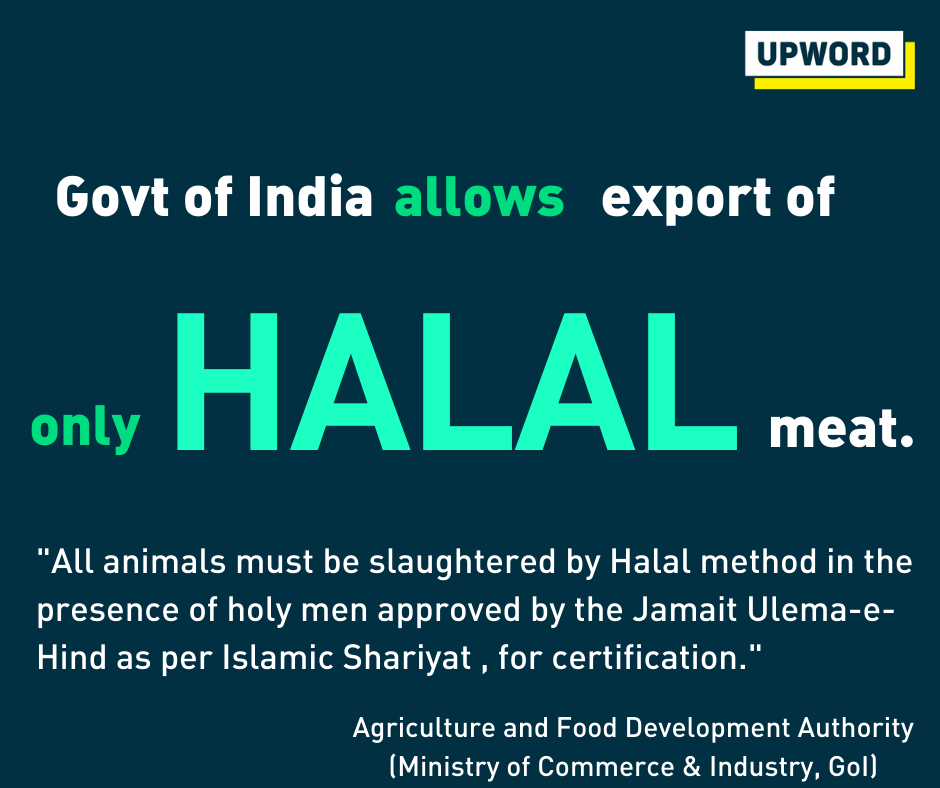
About 6 months ago, the issue of the Red Meat Manual reading as if it promotes and is imposing the Halal method of slaughter in India had surfaced. Platform UpWord had tweeted a picture with some problematic wording of the manual.

Graphic by UpWord

The excerpt that was tweeted by UpWord read, “All animals must be slaughtered by Halal method in the presence of holy men approved by the Jamiat Ulema-e-Hind as per Islamic Shariyat, for certification”.

Soon, the government had issued a clarification as to why the term Halal and the process is mentioned in the APEDA Red Meat Manual.

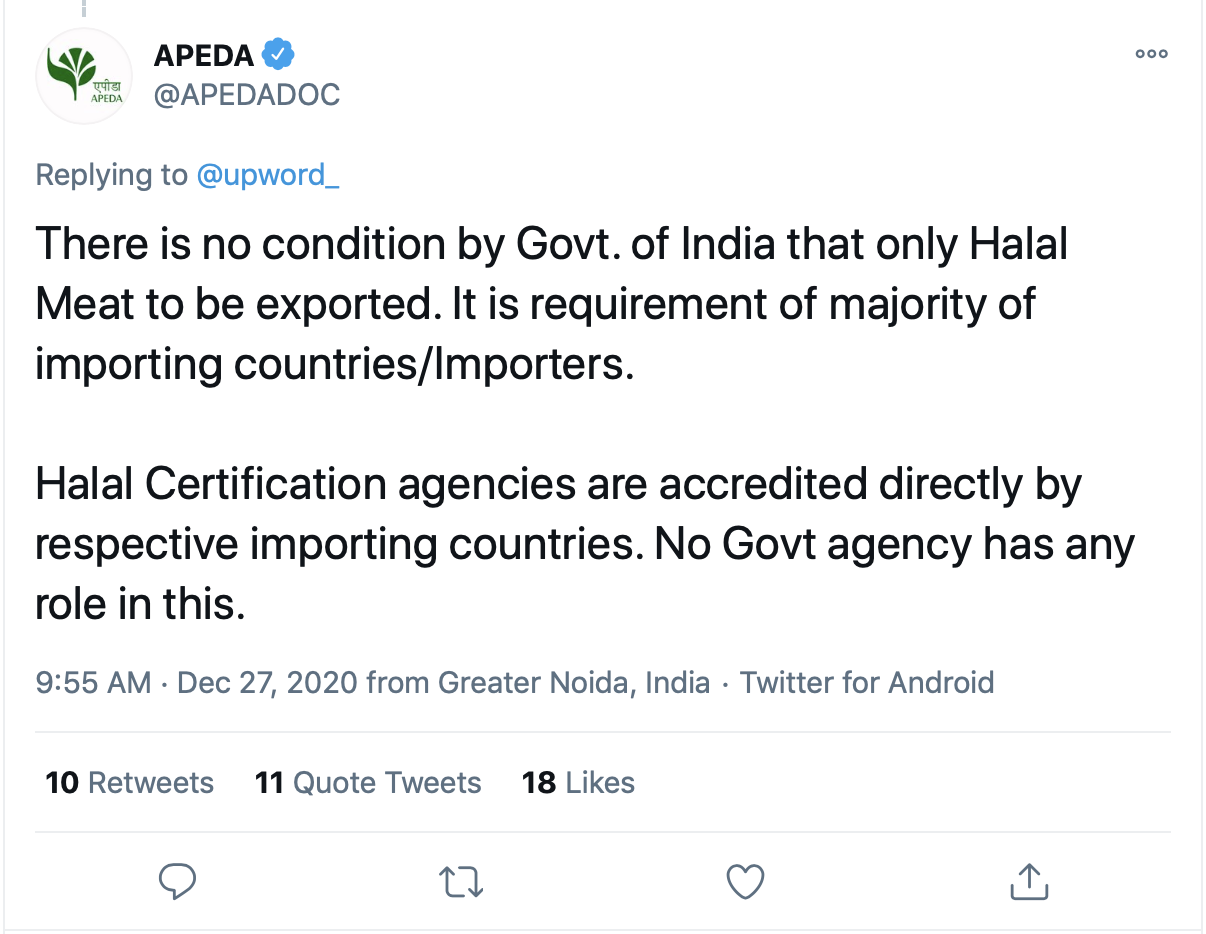
Clarification by the APEDA handle

APEDA said that there is no condition imposed by the government of India and that the govt does not mandate that only Halal Meat has to be exported. However, it is the requirement of the majority of countries importing the meat. APEDA further clarified that Halal Certification agencies are accredited directly by the respective importing counties and no govt agency has a role in it.

Essentially the government of India says that in their Red Meat Manual, the standards for Halal slaughter are mentioned not because the government mandates that meat be slaughtered only by the Halal method, but because the importing countries require that the meat be slaughtered in this specific manner. Since most meat importing countries are Islamic countries, it follows the reason that those countries would demand that their meat be slaughtered only by the Halal method.

However, it is true that the wording of the manual did give the impression that the government was mandating and promoting the Halal method, which would essentially mean mandating a religious practise, even if it was to ensure that the importing countries continue to import our product.

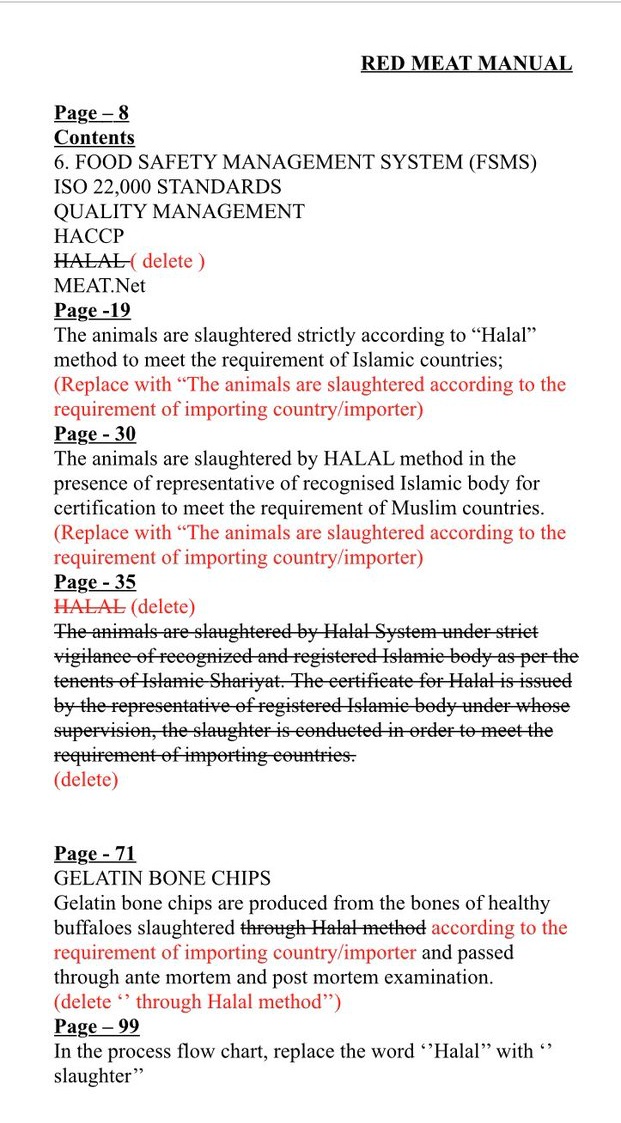
Taking stock of the situation, the government of India has now changed the Red Meat Manual to exclude the word ‘Halal’ from the manual altogether.

For example, in the older manual, the section on ‘Food Safety Management Systems (FSMS) had an entire sub-section on ‘Halal’.

However, how that section has been removed completely.

Except from new manual by APEDA

This was one of the main sections where the confusion was created as if the government of India mandated that slaughtering the meat using the Halal method was a part of the ‘Safety Management System’ according to APEDA.

An entire section that read, “The animals are slaughtered by Halal System under the strict vigilance of recognised and registered Islamic body as per the tenets of Islamic Shariyat. The certificate for Halal is issued by the representatives of registered Islamic body under whose supervision, the slaughter is conducted in order to meet the requirement of importing countries” has also been removed.

Some changes in the manual

Several such changes have been made in the red meat document wherein the word ‘Halal’ has been removed.

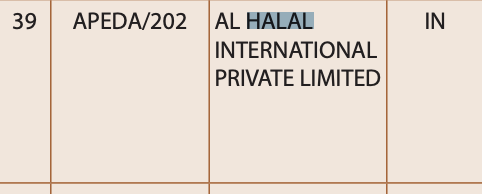
The only place now where the word ‘Halal’ appears is in the list of APEDA Registered Integrated Abattoirs Cum Meat Processing Plants, as a name of a plant itself.

Excerpt from new APEDA Manual

Words like ‘Islamic’, ‘Halal’, ‘Ulema’, ‘Shariyat’ etc, that were there earlier have been removed and do not appear in the Red Meat Manual anymore.

What do these changes in the Red Meat Manual by APEDA mean?

Essentially, the changes in the manual are to ensure that the wording is not misconstrued to mean that the government of India mandates the Halal method in any way, which demands the hegemony of Muslims.

It is a fact that importing countries are mostly Islamic countries and mandate that the meat be cut, cleaned, packaged etc in the Halal manner and thus, it is impossible for the government to do away with the Halal method of slaughter itself for the foreseeable future.

The change in the manual, however, can be seen as a big step towards changing the discourse. While the importing countries do mandate that the meat be cut, cleaned and packaged in accordance with the practice of Halal, the government itself not ‘endorsing’ or appearing to mandate the practice opens up a window of opportunity for Hindus who wish to bring about a change.

When the manual had the word ‘Halal’ in it, it was entirely possible to dismiss even the possibility of selling or exporting Jhatka meat, since the manual provided a loophole to exclusively stick to the Halal method of slaughter. It also gave the impression that a secular country is open to endorsing rigid religious practices as mandated by Islamic clerics and associations. This is not to say that the change in the wording itself can break the hegemony of the Halal cartel, however, it is essential to provide a window to Hindus to make the changes they wish to.

Halal method of slaughter: A method that makes Hindus its hostage and promotes Islamic hegemony

It is important to note that Halal is not just a dietary preference but a method that imposes Islamic supremacy on those who don’t follow the faith.

Halal can only be performed by a Muslim man. Thus, non-Muslims are automatically denied employment at a Halal firm. There are certain other conditions that must be fulfilled that makes it quite clear that it is intrinsically an Islamic practice. Guidelines are available at the official website of a certification authority of Halal in India which makes it clear that non-Muslim employees cannot be employed in any part of the slaughtering process.

Throughout the document that lists the guidelines to Islamic slaughtering, care is taken to mention the religion of the employees involved. It makes it abundantly clear that only Muslim employees are allowed to participate in the entire process at every stage. Even the labelling of the meat can be done by Muslims only.

Thus, it’s quite apparent that when a person demands that he be served only Halal meat, he isn’t merely exercising a diet preference but he is also playing a part in deciding who is involved in the process of slaughtering the animal and labelling it. Furthermore, Muslims are barred by their scriptures from consuming non-halal food. Thus, when a Muslim specifically demands Halal meat, it’s an explicit instance of them demanding service that can only be performed by Muslims. The obvious implication is that a Muslim denies service from a non-Muslim due to his religious identity.

The Halal certification department also specifies the exact Islamic method of slaughtering. It says that the slaughtering of the animal must be done in just one stroke without lifting the knife, using a sharp knife. It says that the windpipe (throat), food-tract (oesophagus) and the two jugular veins must be cut in a single stroke. Care must be taken that the head is not severed and the spinal cord is not cut. The rules also say that meat slaughtered by a machine can’t be halal, it must be slaughtered by a Muslim person.

Essentially, the entire industry thus ensures the exclusion of people of all other faiths and ensures that only Muslims are employed. Not just that, they ensure that the meat is slaughtered while chanting Islamic slogans.

The Department of Halal Certification of the European Union makes it even more clear that employment opportunities at a Halal firm will be exclusively available to Muslims. It says, “Slaughtering must be done by a sane adult Muslim. Animals slaughtered by a Non-Muslim will not be Halal.” It states further, “The name of Allah must be invoked (mentioned) at the time of slaughtering by saying: Bismillah Allahu Akbar. (In the Name of Allah; Allah is the Greatest.) If at the time of slaughtering the name of anyone else other than Allah is invoked (i.e. animal sacrificed for him/her), then the meat becomes Haram “unlawful.””

The way forward

While the change in terminology by the government is a welcome step which opens a window for Hindus, the next steps have to be taken by Hindus themselves and not the government. While the change in the wording gives Hindus an opening, the government cannot create a demand for Jhatka meat and that is something that Hindus would have to do for themselves.

It is a fact that the Halal method of slaughter will continue on the ground since the demand for Halal meat is created by Muslims. If Hindus want the Jhatka method to take predominance, the demand itself will have to be created first, just as Islamic nations and those who belong to the faith of Islam created for Halal.

Only recently, for example, it was reported that the South Delhi Municipal Corporation was planning to make it necessary for eateries and meat retailers in its jurisdiction to specify whether the meat they’re serving is halal or jhatka.

The resolution which has been approved by the standing committee of the civic body on Thursday and would now be going to the house of the Parliament for approval, states that “thousands of eating places are working in 104 wards of 4 zones falling below SDMC and meat is being served in 90% eating places however it’s not displayed by them whether or not…(it) is halal or jhatka.” An identical state of affairs prevailed at meat retail shops, it read.

“According to Hinduism and Sikhism, consuming halal meat is forbidden and in opposition to the religions… Therefore, the committee resolves that this route be given to eating places and meat shops that it should be displayed mandatorily as to which meat is being bought and served by them…that halal or jhatka meat is available here”, furthered the resolution.

This was possible because demand was created by Hindus for Jhatka meat. After the raging debate, several Hindus asked for Jhatka meat at eateries and questioned them about why Jhatka was not being served, which could be the dietary preference of people who belonged to faiths other than Islam.

Thus, while the government has taken the first step and removed the problematic nomenclature that promoted Islamic hegemony in the meat market, the market for Jhatka, for the slaughter process to take predominance, has to come from Hindus.

Delhi: Punjab farmers’ road blockade disrupts supply chain, traders body claim Rs 27,000 crore losses incurred

As the ‘farmers’, primarily those from Punjab and Haryana, continue to agitate against the three new farm laws on the border areas of Delhi, the economic activities in Delhi and its neighbouring states of Uttar Pradesh, Haryana, Punjab and Rajasthan have come to a halt. The traders body has stated that, as of now, these states have incurred a loss to a tune of Rs 27,000 crore.

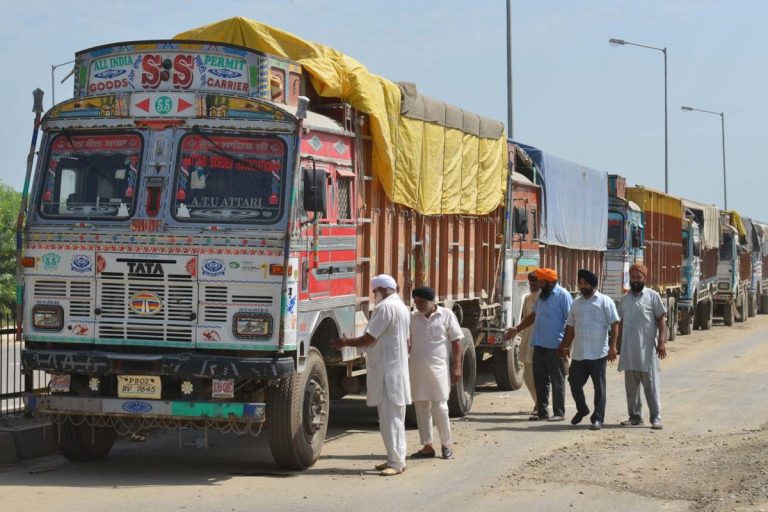
Confederation of All India Traders (CAIT) said that since the roads connecting the national capital to many neighbouring states remain closed, the supply chain has got disrupted. BC Bhartia, the national president of the traders body and its national general secretary Praveen Khandelwal said the supply of goods to and from Delhi has been ‘greatly affected’ and trucks are having to travel longer via alternate routes except for highways.

The CAIT heads told the news daily Hindustan that the supply of goods coming to Delhi from Punjab, Haryana, Himachal Pradesh, Jammu and Kashmir, Madhya Pradesh, Gujarat, Maharashtra and other states of the country has been adversely affected.

Bhartia and Khandelwal informed that every day, almost 50,000 trucks carrying goods and essential supplies enter Delhi from various states while 30,000 trucks leave from Delhi. Not only the arrival of goods to Delhi but also the supply from the national capital to the whole country has been greatly affected due to the ongoing farmers’ agitation, which has almost exceeded a month.

Bhartia and Khandelwal said that even though the trucks are having to take longer alternative routes, the CAIT and the All India Transport Welfare Association (ATWA) are ensuring that the supply of essential commodities continues without any disruption. However, in this situation, it is imperative that the farmer leaders and the government reach a solution as soon as possible. 

Meanwhile, the leaders of the Samyukt Kisan Morcha have said they would intensify their agitation if the government did not accede to their demands during the next round of talks on January 4. Darshan Pal, a senior leader of the farmers’ agitation, also said that the boycott of goods and services of certain industrial groups, including petrol pumps and shopping malls run by them, would continue. They also warned that the toll plazas would be picketed on major highways as part of the agitation.

7th round of talks between farmers and the central Govt to be held today

The protesting farmers and the central government will hold the seventh round of talks on Monday. Six rounds of talks have so far failed to end the deadlock. After the 6th round of meeting between the union government and the protesting farmers against the new farm laws, a consensus had been reached on two less continuous among the four demands of the farmers mainly from Punjab. However, the farmers have asserted that they will not end the protests unless their other two demands are also not met, repeal of new farm laws and law on MSP.

Madhya Pradesh govt to bring law against stone-pelting, will recover damages: CM Chouhan

In a major development, Madhya Pradesh Chief Minister Shivraj Singh Chouhan informed on Sunday that the state government will bring in laws to contain the menace of stone-pelting and damage to life and public property during protests.

As per reports, the announcement comes in the backdrop of several stone-pelting incidents in Muslim-dominated areas in Indore, Ujjain and Mandasur on Hindu religious processions. Under the proposed law, the accused will face strict punishment and have to pay for damages caused to public property. If they fail to do so, the government will be able to auction their property and compensate for the damages. In case of damage to private property, the perpetrators will now have to compensate the owners.

Rule of law will prevail in Madhya Pradesh, says Shivraj Singh Chouhan

While speaking to the media, MP CM said that stone-pelting could not only result in deaths but also can spread terror and disrupt law and order situation in the state. He emphasised, “Stone pelters are enemies of the society…Till now, stone pelting was considered a minor offence but we are bringing a law which will make the offenders pay.”

Shivraj Singh Chouhan said that the rule of law will prevail in the state with the introduction of the new law.“While people have a right to raise their issues peacefully in a democracy, no one has the liberty to damage public property…I have given instructions to formulate these laws and work on it has already started,” he added.

Shivraj Singh Chouhan gives stern warning to the mafia

Recently, Chouhan had issued a stern warning to the mafia elements in the state asking them to leave Madhya Pradesh or they will be “buried 10 feet deep”. Addressing a Good Governance Day event, organised to mark the birth anniversary of former prime minister Atal Bihari Vajpayee, Shivraj Singh said he has been in a “dangerous” mood lately and will not spare those who are involved in illegal activities.

“Leave, Madhya Pradesh, otherwise, I will bury you 10 feet deep and no one will know about your whereabouts,” the Madhya Pradesh Chief Minister warned. Cautioning mafia and others involved in illegal activities, the Chief Minister added that the state government would hold talks with central departments to solve the drug problem in the state. Drug peddlers, land mafia, chit fund mafia, goons and other such people will not be spared, he had added.

Bengal: TMC leader Samsul Afrin created fake MNREGA ID cards, stole money to benefit his Bangladeshi relatives

An internal investigation by the administration in the Muslim-dominated district of Murshidabad has unearthed how a local TMC leader rigged the MNREGA scheme to benefit his Bangladeshi relatives to the tune of ₹7 lacs, reported Hindustan Times.

Samsul Arfin, the accused TMC leader and Deputy Head of the Gurapashla gram panchayat in Nabagram block, had created fake job cards in the name of his relatives to collect money from the Mahatma Gandhi National Rural Employment Guarantee Act 2005 (MNREGA). Reportedly, Afrin created the fake job cards using variants of the name of the same beneficiaries and withdrew money from banks and post-offices using the ATM cards. He had transferred the fraudulently-obtained money to his relatives, 13 of whom are Bangladeshi nationals, as per the HT report.

Following a written complaint, a former Block Development Officer (Nabagram) conducted an internal inquiry and found that the Deputy Head of the Gurapashla gram panchayat and other staff members were involved in the misappropriation of funds. A First Information Report (FIR) was registered at the Nabagram police station in December 2019, after the former BDO filed a complaint against Afrin and others.

TMC leader on the run

The case was registered under Indian Penal Code Sections 34 (acts done by several persons in furtherance of common intention), 406 (criminal breach of trust), 409 (criminal breach of trust by public servant), 420 (cheating) and 486 (sale of goods with counterfeit property mark), as per the incumbent BDO Pankaj Das.

Although the TMC leader moved the Calcutta High Court for anticipatory bail soon after the FIR was filed, his petition was rejected. However, Afrin was not arrested and a little progress had been made so far in the case. A police officer, while assuring of his arrest, conceded that Afrin had been on the run from the law enforcement authorities.

Political Reactions on the case

While speaking about the case, TMC spokesperson Apurba Sarkar stated, “If the Deputy Head is involved in the alleged embezzlement of government funds the administration has the right to take legal action against him. We are not going to shield him.”

Reacting strongly over misappropriation of government funds to benefit Bangladeshis, Congress President Mir Badam Ali stated, “Arfin embezzled government funds with help from some staff members. Some of the beneficiaries are even minors. The TMC leader helped Bangladeshi nationals make money out of a Central government project.”

TMC leaders siphon off compensation meant for Cyclone Amphan

It may be noted that in June this year, West Bengal CM Mamata Banerjee was forced to order a probe after allegations of large-scale corruption by TMC leaders in cyclone Amphan distribution had emerged. The state govt had decided to provide ₹20,000 each to 5 lakh people who had suffered damage to their houses due to the cyclone, but soon, more than 2000 complaints were filed with the CM alleging corruption.

Several TMC gram panchayat members and their relatives who own pucca houses and didn’t suffer any damage had received the relief, while genuine victims didn’t receive the same. Amazingly, some TMC leaders had actually justified getting money despite not suffering any damage, saying that the relief is meant for distribution among citizens, and that’s why they had also availed the same. Following the allegations, the state govt had ordered a probe. Later, the High Court had asked the CAG to probe the matter.

Reliance moves high court over vandalism and destruction of Jio telecom towers by ‘protesting farmers’ in Punjab

0

Days after ‘protesting farmers’ from Punjab destroyed and looted thousands of Jio telecom towers in Punjab, Reliance Industries Limited, through its subsidiary Reliance Jio Infocomm Limited, filed a petition in the Punjab & Haryana High Court.

Reliance has sought urgent intervention of government authorities to bring a complete stop to illegal acts of vandalism by miscreants in Punjab. “These acts of violence have endangered the lives of thousands of employees and caused damage and disruption to the vital communications infrastructure. The miscreants indulging in vandalism have been instigated and aided by vested interests and our business rivals,” Reliance said in a statement.

Last week, Punjab Chief Minister Captain Amarinder Singh directed police to act against Jio tower vandals in Punjab. The directions came hours after Youth Congress leader instigated more vandals. Thousands of Jio towers have been vandalised and looted. Videos of ‘protesting farmers‘ stealing a generator from the tower and ‘donating’ it to a Gurudwara have also gone viral on social media.

Earlier, Jio had also written to TRAI alleging Airtel and Vodafone Idea were indulging in unethical campaign to port users from Jio to their network.