Home Blog Page 5022

Pakistan’s vicious narco-terrorism plan in India and its connection to Khalistan movement

In October 2019, PM Modi said, “When our neighbour could not succeed in its nefarious designs by sending terrorists and weapons, it hatched a conspiracy to smuggle drugs into our country to destroy our youth.” In 2018, Punjab CM Amrinder Singh, while talking about the drug problem in Punjab, said, “Pakistan has a long-term plan of destroying our youth. They are trying to demolish the youth along the border.” He was referring to seizures of hundreds of kilograms of drugs in Gujarat, and Jammu & Kashmir that was, according to him, were intended for Punjab.

Neither the drug problem in India nor Pakistan’s role in pushing drugs in India is new. Drug usage in border areas, especially Punjab, has increased exponentially in recent years. However, in the last few years, the instances and quantity of drugs being seized have increased exponentially. In the recent case of drug connection with Sushant Singh Rajput’s death, Narcotics Control Bureau (NCB) Director Rakesh Asthana said that they had found connections to international drug racket linked to Dubai and terror organizations. He stated, “Drugs were procured for rave parties, and the funds were used for narco-terrorism.”

What is narco-terrorism?

Narco-terrorism as a word was first used in the 1980s in the US when the drug smugglers in Bolivia, Colombia, Peru, Nicaragua, and other Central American started using the illegal trade as a profession. Their impact on the economy in the region was so deep that they virtually ran the parallel government. The US became the largest consumer of the produced drugs, and the country is still struggling with the problem.

According to Kshitij Prabha, Principal at Russell Square International College, Narco-terrorism can be defined as the nexus between narcotics and terrorism. Prabha published a paper ‘Narco-Terrorism and India’s Security’ during her tenure as Associated Fellow, IDSA, in which she discussed the role of neighbouring countries, specifically Pakistan, in pushing drugs in India. In her paper, she referred to the Golden Crescent, which is a “slice of the opium-producing area that cuts across Iran, Pakistan, and Afghanistan (Sanker Sen, Heroin Trafficking in the Golden Crescent).”

In 1999, Pakistan and Afghanistan produced around 6000 metric tons of drugs. It is a major security concern for India as it acts as a major source of funding for Pak-sponsored terrorism in India. It is much easier for the terror organizations to raise funds for terror activities in Indian territories using drug money as the price tag is almost a hundred times more compared to the production cost. Also, the price differs exponentially in international markets. For example, one kilogram of heroin from the Golden Crescent that costs around one lakh to produce may sell for anywhere between Rs 30 lakh to one crore depending on the market.

One of the most notable uses of drug money and drug trafficking routes in terror operations in India was the 1993 terrorist attacks in Mumbai in which the Dawood Ibrahim gang was involved. It was found that the explosives used in the terror attack were brought to India using the same routes that the Dawood gang used to smuggle people, arms, and contraband. According to a report in Times of India, a US Congressional report described D-company as a criminal syndicate operation comprised of over 5,000 members active mainly in Pakistan, India, and the United Arab Emirates. The report suggested that it has a strategic alliance with ISI and has relationships with Islamists, including Lashkar-e-Taiba and al-Qaida.

Importance of tracking the drug-routes

India has been a victim of Pakistan-sponsored terrorism for decades. There have been several instances where drugs originated from Pakistan have been seized in India. Pakistan’s government in collaboration with the ISI is using narcotics to fund terrorism in India. In 1994, during an interview, Pakistan’s former Prime Minister Nawaz Sharif said that Pakistan’s army chief and the head of its intelligence agency (ISI) proposed a detailed plan to use the heroin trade to fund military operations in 1991. Sharif added that though he disapproved of the “plan,” he had no source to verify if the ISI obeyed his orders or not. The neighboring country is also exploiting the religious sentiments of the Muslims in the bordering states of Punjab, Jammu and Kashmir, Rajasthan, and Gujarat. ISI often lures the economically backward Muslim population of these states for easy movement of drugs into different states of India that further helps in funding terrorism.

Siegfried O. Wolf in ‘Pakistan’s bigger plans of narco-terrorism’ said that in the last years, it had established smuggling networks across India, especially in the Kashmir Valley. The network helps in a steady supply of weapons and narcotics. After the major terrorist attacks in Uri and Pulwama, India increased security measures that resulted in the suspension of traditional smuggling routes. Pakistan shifted its concentration to other land-based trafficking routes via Punjab and Gujarat. Border Security forces have seized several consignments on the India-Pakistan border that contained both weapons and narcotics.

According to the World Drug Report of 2010, India had 871,000 heroin users and 674,000 opium users in 2009. By 2018, according to a survey conducted by Atul Ambekar et al. under the Ministry Of Social Justice And Empowerment, about 2.1% of the country’s population (2.26 crore individuals) used opioids. It is impossible to prevent drug usage without understanding the routes smugglers use to traffic drugs in the country. The easy availability of the drugs in these areas increases the drug usage exponentially. By understanding the routes, border security forces can significantly reduce the transport of drugs from Pakistan and other neighbouring countries to India.

Drug problem in Punjab and its connection to Khalistani Movement

N.S. Jamwal in ‘Management of land borders’ mentioned that during the peak of the Khalistan movement in Punjab, Sikh terrorists in Punjab made an “unholy alliance” with the drug traffickers. They used to get weapons from Pakistan with the help of drug traffickers. The traffickers arrested by the security forces confessed on many instances that the security forces on the other side allowed them to cross the border on the condition that they will deliver weapons to the terrorist organizations in India. Even after terrorism in Punjab was nabbed by the security forces, the use of drug traffickers to deliver weapons and funds to terror organizations is still in use.

Dr. Pushpita Das, Associate Fellow at the IDSA, in a report on Drug Trafficking in India, said that during the 1980s, the Lahore-Fazilka-Bhatinda-Delhi route became the most favoured route to send drugs in India, followed by the Attari-Wagah route. It has been alleged that the Samjhauta Express has been frequently used to transport illicit drugs from across the border.

Though the connection between Khalistan and drug trafficking via Pakistan can be traced back to more than four decades, there has been an increase in such cases in recent times. Here are some notable cases that help in exploring the connection between Pakistan’s ISI and Khalistan Movement.

532 KG heroin was seized on Attari Border, Amritsar in June 2019. It was being brought via trade route hidden in hundreds of rock salt bags. The main accused, Ranjeet Singh Rana, was arrested in May 2020 in Haryana. His location was revealed during interrogation Bikram Singh and Maninder Singh, who were accomplices of Hilal Ahmed Wagay, a close associate of Hizbul Mujahideen commander Riyaz Naikoo. When Bikram was arrested, he was en route to deliver 29 lakh of drug money to Wagay.

In July 2019, there were reports that Pakistan based Khalistani terrorists are smuggling drugs in India to fuel terror-activities in Punjab. The report mentioned three instances linked to Paramjit Singh Panjwar, chief of Khalistan Commando Force, a terrorist organisation, based in Lahore since 1994. In May 2019, six Pakistani fishermen were arrested for smuggling 218 KG narcotics on Gujarat border. On 26th May the Maldivian police intercepted an Iranian boat with a Pakistani national and seized large quantity of drugs that were supposed to be delivered in India. On 10th July, based on Indian Intelligence’s inputs, Sri Lankan coast guard seized 50 KG heroin from a Pakistani boat.

According to a report of February 2020, the Khalistan Liberation Force leader Harmeet Singh “PHD” was killed in Pakistan over a rivalry between two groups as they wanted to have control over drug money. Singh was wanted in 17 cases by Indian security forces. The Hindu quoted an anonymous source who stated the recent increase in drug trafficking has resulted in the generation of huge money for the syndicates that they are using to push weapons for terror activities in India.

In July 2020, the Ministry of Home Affairs (MHA) designated nine individuals associated with Khalistani Movement as terrorists. Out of those ten individuals, Lakhbir Singh Rode and Paramjit Singh Panjwar were designated as terrorists for their involvement in drug trafficking and anti-India activities.

Is Khalistan Movement rising again in Punjab?

Though Punjab has not experienced surge in terror activities in the recent years, there is no doubt that from time to time Khalistani Movement shows its presence in the state. Since “Referendum 2020” was launched by Khalistani supporters that is supposed to happen in November 2020, there has been an increase in Khalistan-related activities in Punjab. In June 2020, on the 36th anniversary of operation Blue Star, Akal Takht Jathedar Giani Harpreet Singh said every Sikh wants Khalistan. Ahead on Independence day 2020, journalists across states received malicious calls demanding the creation of Urdustan and Khalistan. On 15th August, pro-Khalistani elements were arrested for hoisting Khalistani flags on government buildings. On 23rd August, a Khalistani sympathizer was arrested for praying in support of the Referendum 2020.

These activities need the money and the nexus between Khalistani groups, ISI and smugglers are raising easy drug money to support militancy in Punjab while destroying the youth with drug addiction.

NIA arrests two terrorists, including 2008 Bengaluru blast accused, from Riyadh, Saudi Arabia

0

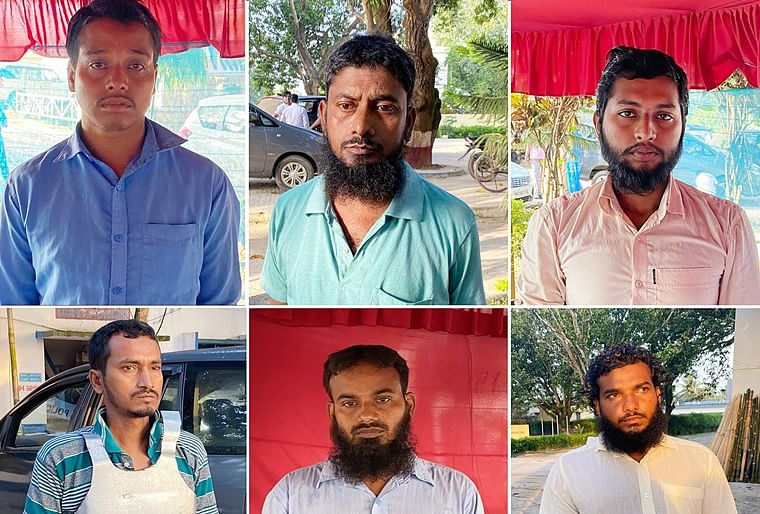
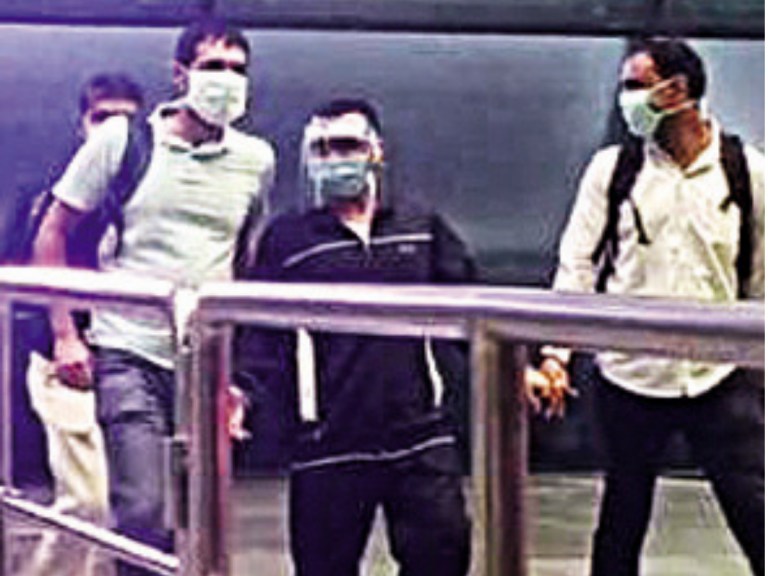
The National Investigation Agency (NIA) has formally arrested two terrorists named Shoaib and Gul Navas from the Thiruvananthapuram International Airport on Monday evening. As per reports, Shoaib is a resident of Kannur in Kerala while Gul Navas is from UP. A special team of NIA had brought the two terrorists from Riyadh, Saudi Arabia.

The special NIA team had taken them into custody with the help of Saudi authorities in Riyadh about 2 weeks ago.

As per reports, the Kerala native Shoaib is an accused in the 2008 Bengaluru serial blasts case and had been absconding since then. The terrorists had red-corner notices against them. Shoaib is accused of links with the terrorist group Indian Mujahideen.

The other terrorist named Gul Navas is reportedly an active member of Pakistan-based Lashkar-e-Toiba. He is an accused in the Delhi blast case.

The two terrorists were reportedly brought to India after a lookout notice was issued against them in Riyadh.

Terrorists interrogated by RAW and other agencies

As per reports, the two arrested terrorists were interrogated for hours by RAW officials and other agencies. Shoaib will be taken to Bengaluru, while Gul Navas will be taken to Delhi for further action.

While Shoaib was interrogated at the NIA headquarters at Kochi, Gul Nawas was interrogated at the IB headquarters at Thiruvananthapuram.

Shoaib was involved in Bengaluru blasts

As per a report in Manorama, Kannur native Shoaib was one of the earliest members of the Indian Mujahideen terrorist group. Thadiyantavide Naseer, the founder of the Indian Mujahideen. Naseer has been arrested and in jail. Shoaib had escaped to Pakistan in 2014. He is the last accused in the blasts to be arrested. He had reportedly married in Pakistan and was even running a business. He was a frequent visitor to Riyadh. After gathering information on Shoaib, the NIA had coordinated with the Riyadh authorities to nab Shoaib.

Recent arrests by NIA in Kerala and Bengal

On Friday, the NIA had arrested three Al Qaeda terrorists named Iyakub Biswas, Murshid Hasan and Musharraf Hussain from Kerala’s Ernakulam. 6 more Al Qaeda terrorists named Najmus Sakib, Abu Sufiyan, Mainul Mondal, Leu Yean Ahmed, Al Mamun Kamal, Atitur Rehman were arrested from Bengal’s Murshidabad.

Fantasy Sports like Howzat engage over 90 million users

0

Entertainment used to be the primary motivation for people to watch sports, but ever since the introduction of fantasy sports, the market has changed. ESPN brought a revolutionary change in 2001 by introducing the Super Selector fantasy game. It increased user traction, and the sports enthusiasts had a whole new gaming segment to explore. Sports fans’ status elevated from mere spectators to stakeholders in the popular games of their choice.

In the 19 years of fantasy sports’ existence, the user base of all fantasy sports operators combined has increased from around half a million to a whopping 90 million users. In just two decades, the face of fantasy sports has changed a lot with the launch of various fantasy sports apps. As per a Google-KPMG report, India’s online gaming industry is growing at an exponential rate every year and is expected to be worth $1.1 billion by 2021. With an annual growth rate of 22.1%, fantasy sports is a booming industry in India.

Key Reasons for the Boom in the Fantasy Sports Industry

The high engagement and popularity of fantasy sports is primarily due to the rich and better gaming experience that fantasy sports providers provide to sports enthusiasts. Fantasy sports apps provide various contests ranging from free-to-join to paid leagues. Now viewers have an add-on benefit to test their sports knowledge by selecting teams of real players for upcoming matches. Each player is allotted a credit as per their recent performance and ranking. Fantasy sports players select their teams and join contests. They get rewarded with real cash prizes if their teams emerge victorious in cash contests.

Fantasy sports apps have become more popular than ever with the massive growth of digital infrastructure. The increasing internet penetration and wide smartphone adoption have positively impacted people’s participation in online fantasy sports. The number of fantasy sports operators and users is increasing day by day.

Immense popularity of Fantasy Sports Apps Post-2016

With over 60 odd platforms, the spike in the number of users on fantasy sports apps was witnessed mainly after 2016. According to a KPMG report, “The evolving landscape of sports gaming in India’ states a growth by over twenty-five times in the number of fantasy users from June 2016 to Feb 2019 only. The given founding is also corroborated by the fact that 30 new fantasy sports companies were launched in 2017-2018 alone.”

With the current engagement of over 90 million users via fantasy cricket app like Howzat, the fantasy sports user base is expected to increase by over 20 million users by the end of the Indian T20 league 2020. Even though most of the popular sports like football, basketball, and kabaddi are available on the fantasy sports platform, almost 85% of the user base consists of users who play fantasy cricket alone. KPMG backs the fact and states the viewership of Indian T20 league grew by 21% on television and 32% on online streaming apps in 2018, and the user base of fantasy cricket has grown even more.

Innovations Lead to Engagement

With the rapidly growing online sports ecosystem, the gap between real sports and fantasy sports is being bridged constantly. Fantasy sport app developers are investing in new technologies to improve their product and enhance user engagement. The growth of online payment apps has also boosted the growth of the fantasy sports gaming industry. Digital transactions have made depositing cash and withdrawing winnings very easy and lightning fast.

Innovation is playing a key role in ensuring fantasy sports players get the best experience. Popular apps like Howzat continue to innovate and bring new features to engage users. The app offers users both cash contests and free contests in fantasy cricket and other fantasy sports. Winners of cash contests get huge cash prizes. Besides, there are lots of offers like deposit bonuses, cashback, and intact cash offers, which help fantasy sports players have the best experience and make big money.

A New Growing Community of Sports Fanatics

The high engagement in fantasy sports has resulted in online community building. Daily contests on fantasy sports platforms have led to the growth of online gaming communities. Fantasy sports communities have become sacred places for sports fans to engage in meaningful and profound discussions around their favorite sports. The number of videos and articles giving tips on player selection and other aspects of fantasy sports has skyrocketed in the recent past. Blogs like the Howzat Blog post-match predictions and tips on probable playing elevens and team selection regularly to help sports lovers select the best teams. 

The KPMG report considers India the largest emerging market when it comes to gaming app downloads. With the current rising number of active users on fantasy apps, it is evident people play fantasy sports not just for entertainment but also to utilize their sports knowledge at better, bigger platforms. With such rapid growth of esports and Indian online gaming infrastructure, the future of fantasy sports and fantasy sports gaming apps in the country is bright.

Rajya Sabha Deputy Chairman Harivansh Singh serves tea to protesting MPs who had attacked and heckled him, PM praises the gesture

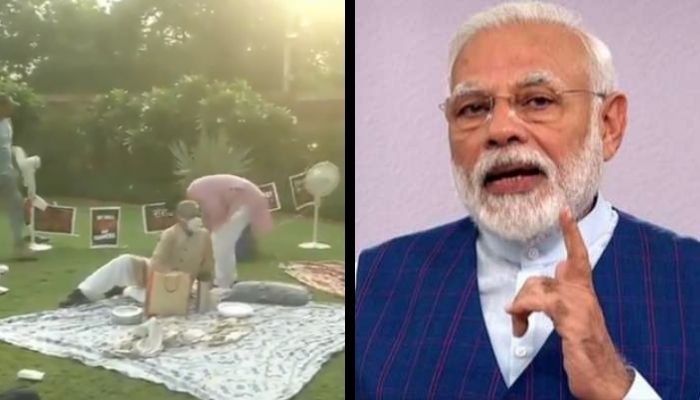
Two days after being manhandled by the members of the opposition parties during the passage of two historic farm reform bills , Rajya Sabha Deputy Chairman Harivansh Singh brought tea for the MPs. In a video shared by ANI, Singh can be seen taking out plates, cups, and tea flask from his bag and serving it to those who assaulted him in the well of the House.

The MPs were protesting outside the Rajya Sabha after being suspended for their unruly behaviour.

Touched by the thoughtful gesture of Harivansh Singh to pacify the wary Parliamentarians, Prime Minister Narendra Modi heaped praise on the Rajya Sabha Deputy Chairman. He tweeted, “To personally serve tea to those who attacked and insulted him a few days ago as well as those sitting on Dharna shows that Shri Harivansh Ji has been blessed with a humble mind and a big heart. It shows his greatness. I join the people of India in congratulating Harivansh Ji.”

The assault on Rajya Sabha Deputy Chairperson

The opposition parties were protesting against the passage of two historic farm reform bills inside the house on Sunday. Following the ruckus by the opposition parties, the audio system in the house was damaged resulting in the house being adjourned for a few minutes to bring back the audio system live.

In a shocking act, Trinamool Congress Rajya Sabha MP Derek O’Brien brazenly attempted to heckle the Deputy Chairman of the Upper House of Parliament Harivansh Narayan Singh on the floor of the Parliament during the discussion. He entered the well and climbed the dais of the Rajya Sabha Deputy Chairman in an attempt to halt the proceedings of the house. The Trinamool MP also tried to tear the rule book of the house on the floor of Rajya Sabha.

8 MPs suspended for heckling Rajya Sabha Deputy Chairman

On 21st September, Vice President M Venkaiah Naidu, the chairman of Rajya Sabha, suspended eight Rajya Sabha MPs for one week for unruly behaviour in the house. Derek O Brien, Sanjay Singh, Raju Satav, KK Ragesh, Ripun Bora, Dola Sen, Syed Nazir Hussain, and Elamaran Karim will not be allowed in the house for the next seven days. VP Naidu called the incident unfortunate and condemnable. He urged MPs to do some introspection

Coronavirus: Daily new cases show a perceptible decline as India registers highest ever recovery at over 1 lakh cases

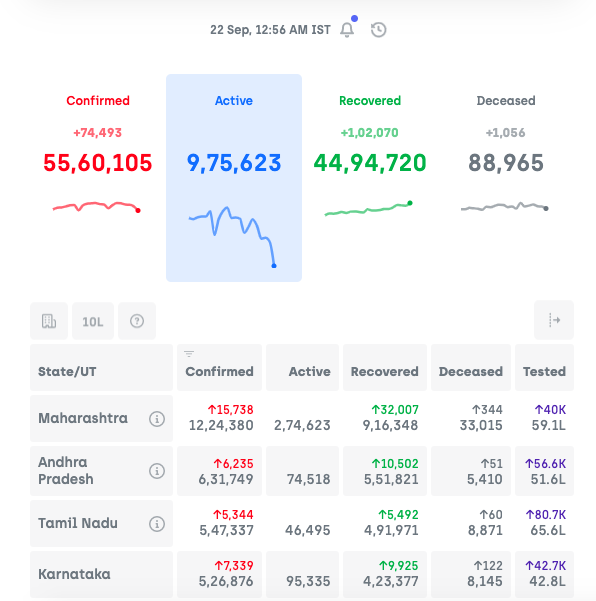
On Monday, India registered highest ever recovery at over 1 lakh cases against confirmed new cases of little below 75,000.

Coronavirus cases in India

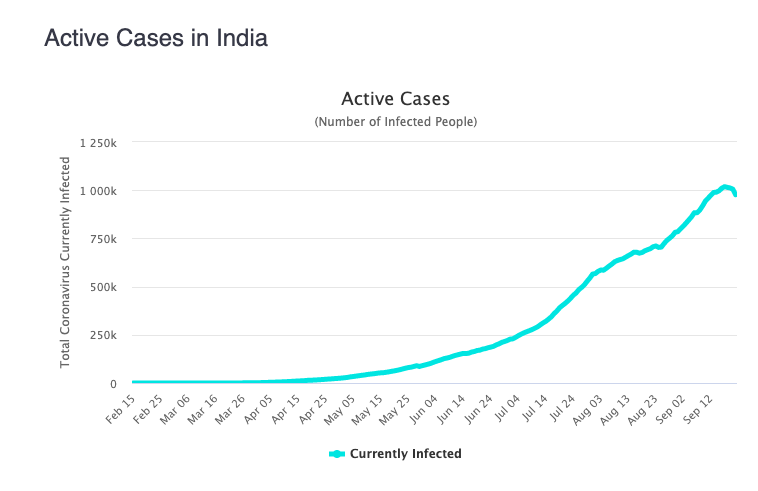
In fact, if trends continue, India seems to have bent the curve.

Graph courtesy: worldometers.info

As one can see, since past few days, the daily recoveries are higher than daily new cases of coronavirus, thereby, the graph of active cases of coronavirus has curved.

As per data shared by Professor Shamika Ravi, the growth rate of active coronavirus cases in India has fallen to -0.3% for the first time. The negative growth rate is at a 7 day average and hence reduces the weekend effect of reduced testing.

7-day moving average of daily confirmed cases shows a perceptible decline.

India has currently registered a recovery of over 80%.

Daily active cases are also showing a continued decline along with a consistent upward trend in daily recoveries.

She further explained that nearly all major hotspot states in India have shown a considerable decline in daily new cases over last week.

While it is too soon to celebrate, if the trend continues, we can take a sigh of relief that the worst is behind us.

Chinese coronavirus pandemic

The coronavirus pandemic that originated in Wuhan province of China has till now infected over 3 crore people worldwide and resulted in deaths of almost 10 lakh people. United States of America has been worst affected with highest positive cases recorded, followed by India and Brazil.

Al-Qaeda terrorists nabbed by NIA possessed explosives, had mobilised masses for anti-CAA violence in Murshidabad: Reports

0

Days after the National Investigative Agency (NIA) nabbed 9 Islamic terrorists linked to Pakistan-sponsored Al Qaeda from West Bengal and Kerala, several shocking revelations have come to light.

Citing NIA sources, ABP Ananda reported that the terrorists had travelled to Karnataka and Kerala as migrant workers in 2019 where they came in contact with Al-Qaeda handlers. Besides, three terrorists had also travelled to Delhi to work as migrant labourers.

The NIA investigators have informed that during December last year, at least 6 of the Al-Qaeda terrorists were stationed in Murshidabad. They had participated in Anti-CAA violence and mobilised masses to hit the streets. The central investigative agency has also recovered laptops from the terrorists that contained inciteful videos to brainwash the youth.

Al-Qaeda terrorist shared pro-Pak posts, explosives recovered

The National Investigative Agency has informed that one of the terrorists, namely Leu Yean Ahmed had shared pro-Pakistan posts on his Facebook timeline. He had also lamented the killing of Iranian major General, Qasem Soleimani, at the hands of the US forces. The central investigative agency has also recovered chocolate bombs from the accused who were conspiring to manufacture Improvised Explosive Devices (IEDs).

Terrorists had a ‘secret’ meeting prior to their arrest

It has also come to light that the apprehended terrorists had organised a secret meeting before they were nabbed by the NIA. The said meeting took place at the residence of fellow Al-Qaeda terrorist, Al-Mamun Kamal and lasted for 1.5-2 hours. The Central investigative agency is yet to ascertain the objective of the meeting and the number of times such meetings have been held in the past. The NIA had tracked their GPS locations and closed in on the area. Even though the meeting was concluded by then, the investigative officials were able to hunt them down using their GPS location.

NIA launches manhunt for absconding terrorist

The NIA has also launched a man-hunt to nab one Mamu Ansari. He had been on the run from the law enforcement authorities. On Monday, raids were conducted at several locations, including the residence of his relatives. The terrorists were escorted to the National Capital on Monday and will be produced before the Patiala High Court today. As per international protocols, not more than two terrorists connected to a globally banned extremist group can be taken together. Hence, the apprehended terrorists were brought to Delhi in separate flights. The NIA has sought 14 days custody of the Al-Qaeda terrorists before the Court.

NIA nabs 9 Al-Qaeda terrorists

The National Investigation Agency had arrested nine terrorists linked to Al-Qaeda from Murshidabad in West Bengal and from Ernakulam in Kerala on Friday. The officials also seized some digital devices and documents. The arrested terrorists have been identified as Murshid Hasan, Iyakub Biswas, Mosaraf Hossein, Najmus Sakib, Abu Sufiyan, Mainul Mondal, Leu Yean Ahmed, Al Mamun Kamal, Atitur Rehman. Al Qaeda was founded in the 1980s by Osama Bin Laden and is an Islamic terrorist organisation that has been responsible for carrying out several terrorist attacks all around the world.

“Mujhe darr lag raha hai, mujhe maar denge”: Sushant Singh Rajput’s SOS five days before his death

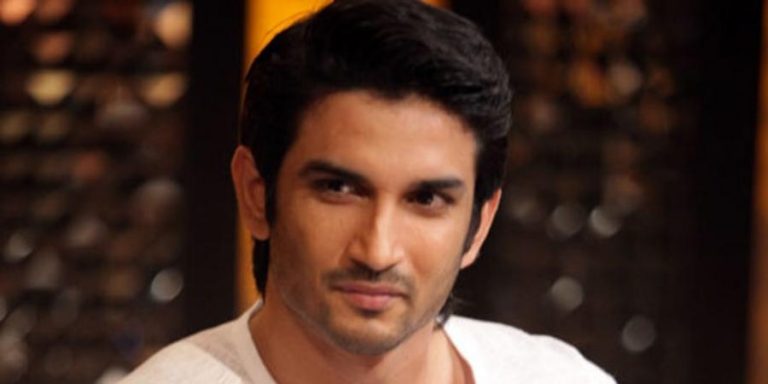
Five days before his untimely death on 14th June 2020, Sushant Singh Rajput had reportedly written to his family expressing fear to his life and safety. As per reports, he had messaged his sister Meetu Singh on 9th June. His former manager, Disha Salian, was also found dead under mysterious circumstances on 8th June, 2020. Both the deaths were at that time alleged to be suicides but now investigation is being carried to to see if they were murders.

In the SMS that Sushant sent to his sister Meetu, he wrote, “Mujhe darr lag raha hai, mujhe maar denge (I am scared, I think they will kill me)”. He had further written to her that he has been trying to get in touch with Rhea who had not been responding. He had said that it is very urgent that he speaks to Rhea as he was afraid he may be implicated in something.

Disha Salian and Sushant Singh Rajput death

Recently, a sensational new information had come to light where an eyewitness had told News Nation that Disha Salian was gang-raped by 4 men in the party which she attended on the eve of her death on June 8. The eyewitness confirmed that there were a total of 6 people in the party, including Disha Salian’s fiance Rohan Rai. He has since been away from Mumbai. However, India Today report suggests he is now back in Mumbai and met investigating officials as well.

‘Maal you have?’ Deepika Padukone’s name emerges in the Bollywood drug abuse probe as NCB investigation intensifies

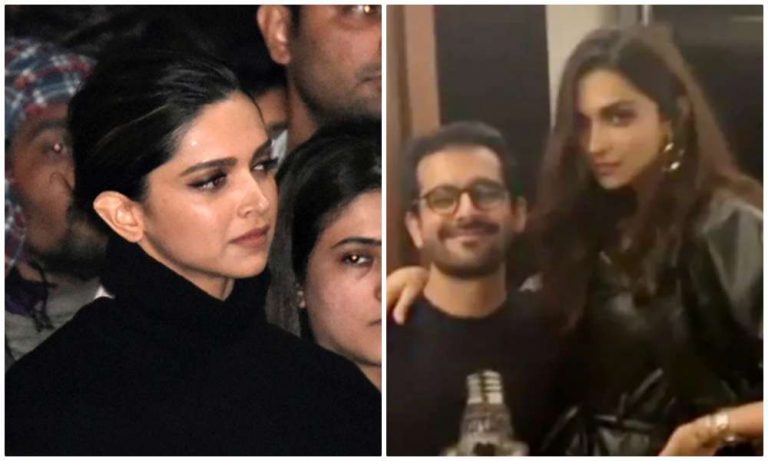
In a sensational revelation, Bollywood’s top actress Deepika Padukone’s name has emerged in the latest drug abuse probe carried out by the Narcotics Control Bureau (NCB). WhatsApp conversations have reportedly gone viral where the actress is allegedly asking for hash (or hashish, drug made from cannabis plant) from a certain person named ‘K’, who many believe is her manager, Karishma Prakash.

Prakash has now been summoned by the NCB for questioning. The update comes after Rhea Chakraborty’s talent manager Jaya Saha’s name appeared in some of the text messages with the former. As reported by Republic, both, ‘D’ and ‘K’ were part of WhatsApp group discussing drugs. Republic has confirmed that the ‘D’ in drugs chat is Deepika Padukone.

As per Republic, the conversation on 28th October, 2017 went something like this:

10:03 AM (+91-992——-) ‘D’ (believed to be Deepika): K…Maal you have?

10:05 AM (+91-961——-) ‘K’: I have but at home. I am at Bandra…

10:05, K: I can ask Amit if you want

10:07, Deepika: Yes!! Pllleeeeasssee

10:08, K: Amit has. He’s carrying it

10:12, Deepika: Hash na?

10:12, Deepika: Not weed

10:14, K: What time are you coming to Koko

10:15: Deepika: 1130/12ish

10:15: Deepika: Till what time is Shal there?

K: I think she said 11:30 because she needs to at the other place at 12

Another conversation between ‘N’ and ‘J’, accessed by Times Now, two people are reportedly discussing procurement of MDMA, the banned drug.

As per the chats, N messaged J, “You promised me, get me some nice MD (apparently referring to MDMA) in Bombay and we will party together.”

To which, J replied, “How you are making me into a peddler. However, your wish is my command.”

In another WhatsApp exchanges, J messaged ‘S’, “Hello, I’m sending the CBD oil with Jinal today.” To which, S said, “Thank you.”

‘N’ and ‘S’ are believed to be top Bollywood actresses while ‘J’ is believed to be Jaya Saha.

Jaya Saha’s name had appeared during interrogation of Rhea Chakraborty where talking to Rhea on November 25, 2019, Jaya had advised, “Use 4 drops in tea or water and let him (presumably Sushant Singh Rajput) sip it… Give it 30-40 minutes to kick in”. Thank you so much,” Rhea had texted Jaya Saha. To that, Jaya had replied to Rhea saying “No problem bro, hope it helps”.

Rhea was arrested on 9th September and is currently lodged in Byculla jail.

Drug-link up

Karishma Prasad and Jaya Saha worked with KWAN Talent Management Agency in Mumbai which was co-founded by film producer Madhu Mantena Varma. He was earlier married to fashion designer Masaba Gupta and Bollywood actress Nandana Sen, daughter of Nobel laureate Amartya Sen. He also co-founded Phantom Films with filmmaker Anurag Kashyap along with Vikas Bahl and Vikramaditya Motwane. Phantom Films was dissolved after October 2018 #MeToo allegations on Vikas Bahl where he was accused of sexually harassing an actress. Recently, Anurag Kashyap, too, was accused of sexually assaulting an actress, Payal Ghosh.

Even as Pune continues to suffer from the Coronavirus crisis, jumbo covid centres still operating at 50 per cent capacity

Pune is amidst the throes of a raging coronavirus outbreak, with the total number of caseloads in the district crossing the 2.6 lakh mark. 2580 new cases were reported on Monday with 42 more deceased due to the virus, taking the death toll to 5306.

However, despite being smaller than many other cities in the country and having substantially lower population than Mumbai and Delhi, Pune’s emergence as the newest and the most potent coronavirus hotspot raised questions on the state government’s ability to contain the virus.

The state apathy towards taming the virus in Pune was also highlighted by BJP MLA Siddharth Shirole in August this month, who had remarked that the Maha Vikas Aghadi government was not dealing with the COVID-19 pandemic in Pune in a professional manner, leading to a meteoric rise in the number of cases.

Now, the details received by OpIndia confirm the allegations levelled by Siddharth Shirole against the Maha Vikas Aghadi government. The details reveal that the medical facilities in Pune remain woefully underutilised even as patients and hospitals in the city grapple with the paucity of medical equipment, ventilators and beds.

Jumbo covid facilities in Maharashtra remain woefully underutilised

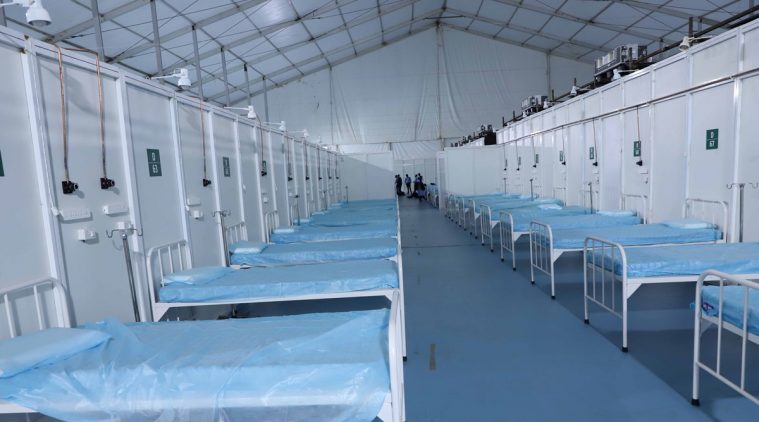
After months of persuasion and persistent requests, the Maharashtra government had agreed to build JUMBO COVID hospitals, with the view to provide medical facilities to the sick and contain the spread of the virus. The hospitals were inaugurated by CM Uddhav Thackeray and Deputy CM Ajit Pawar via video conference on August 23 and 25.

A total of 1914 beds (critical care ICU + Ventilators) were launched with pomp and celebrations almost a month back. However, the hospitals have not been operating on its original capacity. Within the first week of its operation, the original medical care contractor was dismissed, and the responsibility of managing the health facilities was pushed on the ill-prepared Pune Municipal Corporation (PMC) and Pimpri Chinchwad Municipal Corporation (PCMC). But this is not the worst part. Despite having the capacity of 1914 beds, the facility is operating at approximately 50 per cent of its original potential, even after a month since its start.

Here are the utilisation numbers of the JUMBO hospitals launched in August:-

  • COEP Ground, PMC – 330 ( 41% of the total capacity of 800 )( 270 Oxygen,  30 ICU w/o Ventilator, 20 ICU with Ventilator )
  • Aundh-Baner DCH, PMC – 227 ( 65% of the total capacity of 350 )( 200 Oxygen,  19 ICU w/o Ventilator, 8 ICU with Ventilator )
  • Magar Stadium, PCMC  – 500(62.5% of the total capacity of 800)( 450 Oxygen, 30 ICU w/o Ventilator, 20 ICU with Ventilator )Total Ventilators Currently Available in Pune – PMC ( including all other Govt and Private Hospitals )

Even when Pune has emerged as the worst-hit from the coronavirus outbreak, the state government has not utilised the medical facilities to its true potential. Patients suffering from serious complications induced by the virus are being turned away, citing overcapacity and lack of medical equipment, ventilators and beds necessary for their treatment.

The failure to suppress the escalating coronavirus cases in Pune, and subsequently, its incompetence in utilising the health infrastructure to its optimum capacity to provide medical attention to the needy is a scathing indictment of the Maha Vikas Aghadi government’s bungled handling of the coronavirus outbreak. Far from devoting time, resources, and energies in building and utilising the health capacities in Pune, the state government was more interested in fighting to prevent the CBI from assuming the investigation of the Sushant Singh Rajput’s death and meting out retribution on actor Kangana for her critical remarks against them.

BJP MLA Siddharth Shirole’s intervention led to the creation of dedicated coronavirus facilities in Pune

It is pertinent to note that it was BJP MLA Siddharth Shirole’s intervention that had led to the establishment of two of the jumbo coronavirus centres, an 800-bed-facility each at Pune and PCMC. With private facilities already stretched and also being used for non-COVID related cases, Shirole had fought hard for a dedicated coronavirus facility in Pune to free up the private and other healthcare facilities to treat non-COVID patients from in and around the city. 

While talking to OpIndia last month, Shirole had opined that the medical infrastructure in both Pune and PCMC were sufficient to avert the crisis and the coronavirus outbreak could be brought under control, provided the state government acted responsibly and sincerely managed the jumbo coronavirus centres. Shirole’s suggestions fell on deaf ears as Pune continue to witness an alarming rise in the number of coronavirus cases, with its health infrastructure remaining massively underutilised.

As NCB delves deeper into the drug angle in Sushant’s death case, Bollywood’s connection with drug mafias in Amritsar and Pakistan emerge

0

Hours after the Narcotics Control Bureau (NCB) chief in an interview with Outlook magazine exposed how the Bollywood drug racket has international links to Dubai and terror organisations, a report by Hindustan Times states how large drug cartels in Amritsar and Pakistan are also supplying cocaine and other hard drugs to Mumbai, and to Bollywood.

According to the report, one NCB official privy to the investigations into the drug angle in film actor Sushant Singh Rajput’s death said that the department is working on tracing the backtrail from consumer to peddler to supplier to those controlling the trade.

“We have a fair idea as to who is involved in the Bollywood drug scene and (who the) Mumbai suppliers (are). The evidence is being collected before the consumers of hard drugs including heroin, cocaine and methamphetamine and their suppliers are charged,” said the senior NCB official on the condition of anonymity.

Names of drug dealers linked with Maharashtra politicians and companies managing film actors under the scanner: NCB official

He informed that the main Amritsar link is expected to be summoned this week by NCB. He also confirmed that the Narcotics Department, leaving no stone unturned, has also sought the help of the US, UK, Canada and Australian drug enforcement agencies to unearth suppliers of cocaine to Mumbai. 

The official added that the drug angle in Sushant’s case has to be handled carefully as names of drug dealers linked with Maharashtra politicians and companies managing film actors and actresses are also coming under the scanner.

According to NCB officials, the majority of cocaine lands in India through the Columbia-Brazil-Mozambique route, while other African destinations and the Dubai area are sometimes used as an alternative route. They furthered that since India is the largest producer of potassium permanganate, a chemical compound which is used in processing cocaine, these international cartels are eyeing at setting up a cocaine processing unit in the country.

Pakistan using drug funds to sponsor terrorism: NCB

Moreover, considering India consumes nearly one ton of heroin every day, there are possibilities that these international organisations are planning to set up a processing unit in India for Afghan heroin, which they believe enters India either through Pakistan’s Punjab province or through the sea route from Gujarat. The terror state of Pakistan has always used drug money for terrorist funding.

NCB Chief Rakesh Asthana had also concurred to the fact that the drug funds were used for narco-terrorism. He said that the drug syndicate of the film industry could just be the ‘tip of the iceberg’.

80% Bollywood stars on drugs, claimed Rhea Chakraborty

Earlier, Rhea Chakraborty had revealed to the NCB that 80% of Bollywood stars are on drugs. In her statement, Rhea had reportedly accepted her role in procuring drugs for Sushant Singh Rajput. She had also stated that actress Sara Ali Khan and Rakul Preet Singh, designer Simone Khambatta had consumed narcotics substances. The names of Sushant’s friend Rohini Iyer and filmmaker Mukesh Chhabra had also been mentioned by Rhea during her interrogation.