Home Blog Page 512

Assam: 170 bighas of poppy cultivation worth crores destroyed by government

Assam government is tightening its noose around the growing problem of drugs in the state. Chief Minister Himanta Biswa Sarma posted a video on X today (2nd February) showing the Assam Police destroying 170 bighas of poppy cultivation, worth over Rs 27 crore in open market.

Taking a dig at the drug smugglers in the state, Biswa captioned the video,” Dear Local Pablo Escobars, sorry to spoil your Udta Assam party! Because Goalpara pooice destroyed 170 bighas of poppy cultivation in the Chaar areas worth Rs 27.20 crore in January. So next time you think of drugs, think of Assam Police first”.

Assam police nabbed a drug peddler last month

The Assam government has rolled up its sleeves against the drug mafia in the state. Three days ago (30th January), South Salmara Mankachar police nabbed a drug peddler during a special narcotics operation in Kharuabandha OP in South Salmara Mankachar district in Assam. The police reportedly seized 2.33 grams of drug (suspected heroin) kept in two vials, 1400 ya a tablets, 134 empty plastic vials to be used for drug peddling, aluminium foil and a smartphone.

On examination of the smartphone, the police found evidence drug smuggling activities linked to Bangladesh. According to the police, the captured drg peddler revealed about supplying drugs in Bangladesh.

The menace of coss-border drug-smughling

The smuggling of drugs in and out of country has become a menace for authorities. The authorities have sped up their effort to curb drug smuggling.

In a major breakthrough last month, the Border Security Force (BSF), exposed a large-scale drugs juggling racket involving underground bunkers in Nadia district of West Bengal. The underground bunkers were being used for storing contraband. A huge consignment of 62,200 bottles of banned cough syrup worth Rs 1.4 crore was seized. The operation was reportedly carried out by 32nd Battalion of the BSF’s South Bengal Frontier with the help of local police on inputs by intelligence agencies.

Cough syrup has codeine content which makes it popular among smugglers. The cough syrups were stacked in three underground storage tanks.
Bihar: Aftab Khan entraps Hindu girls with the fake identity of ‘Ankit’, pretends to be ‘Bajrang Bali’ devotee, forces victims into prostitution

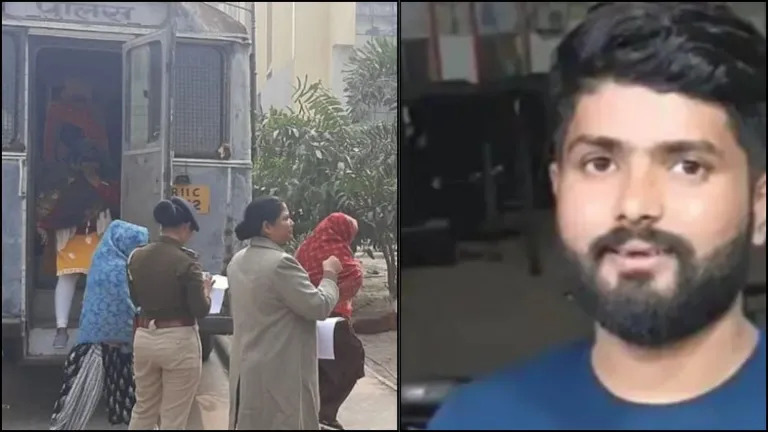
A group of Muslims, led by Aftab Khan, had been entrapping Hindu girls in the sex trade in the Purnia district of Bihar.

On Thursday (30th January), the police conducted raids in the Kathiar More area of Purnia and rescued 11 minors, who were forced into prostitution.

The cops have arrested 32 people in connection with the case. The ringleader of the sex trade was Aftab Khan, who wrote ‘Jai Bajrang Bali’ on his car to pass off as a Hindu man.

Using the identity of ‘Ankit Tiwari’, he used to lure Hindu girls into his love trap under the pretext of marriage. Thereafter, Aftab would coerce his victims into the sex trade.

His aides included Mohammed Shakib, Mausam Khan, Guddu Khan and Zubeda. While Shakib and Mausam kept Hindu aliases ‘Rajiv Shah’ and ‘Rishabh Shah’, Zubeeda went by the name of ‘Katrina.’

Shakib used to procure Hindu girls from different areas. Mausam would befriend Hindu girls through ‘wrong numbers.’ Guddu Khan and Zubeeda also helped run the ‘prostitution ring.’

The Muslim gang, run by Aftab Khan, used to charge ₹10000 per night from clients. They also sold victims in other States, even raking in ₹5 lakhs from some brokers.

The police have nabbed all accused, barring the ringleader who has been on the run from the law enforcement authorities.

A First Information Report (FIR) was registered against him and efforts are underway to nab him at the earliest. The minor girls were handed over to a juvenile’s reform home.

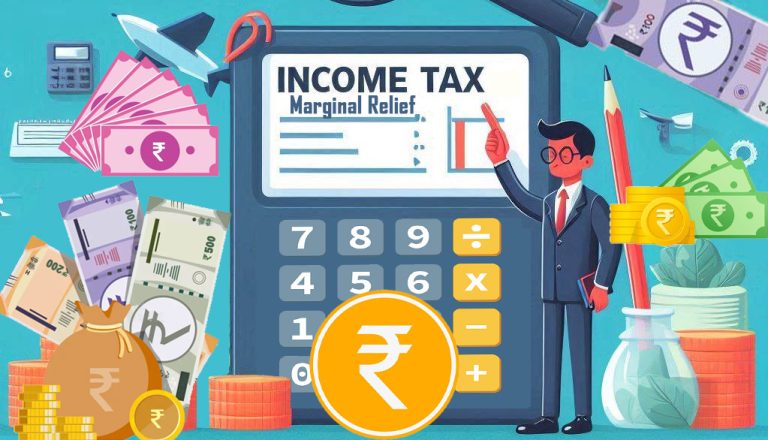
You don’t have to pay full income tax if income exceeds ₹12 lakh by a small amount: Read what is Marginal Relief and how it works

The budget for 2025-26 has provided major relief for the middle class by reducing the income tax burden. Finance Minister Nirmala Sitharaman in her budget speech announced substantial changes to the tax structure and raised the minimum taxable income to ₹12 lakh. This means, those with an annual income of ₹12,00,000 don’t have to pay income tax under the New Tax Regime.

Following the announcement, social media users and media have started calculations of income tax under the new structure. However, it seems that many people have missed one key component of the income tax calculation, which is the marginal relief.

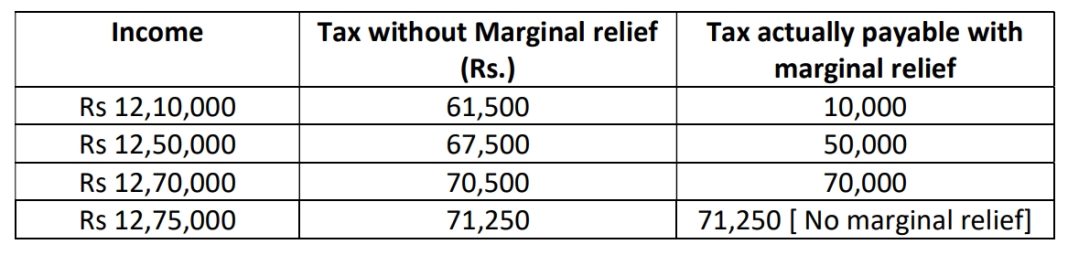
Several social media users have posted that once a person’s income exceeds ₹12 lakh, he or she will have to pay income tax on the whole income. Some are saying that one person’s income increases from ₹11.90 lakh to ₹12.10, the tax outgo will go up from zero to ₹61,500, based on calculation of tax for the slabs above 4L, 8L and 12L.

While it is true that if the income exceeds the exemption limit, tax becomes payable on the entire taxable income, there is actually a relief for income that exceed the limit by a very small amount. This is called the marginal relief.

The marginal relief was introduced under the New Tax Regime to ensure that taxpayers with income slightly above the exemption limit do not pay excessive tax compared to those earning below the limit. As a result of this marginal relief, taxpayers earning slightly above ₹12 lakh won’t have to pay the income tax calculated on their income, as the marginal relief will be deducted from the payable tax.

Under the tax structure announced in the budget, marginal relief will be calculated by deducting the amount exceeding ₹12,00,000 from the tax calculated on the entire taxable income, and this marginal relief will be deducted from the calculated tax.

Let us see this with an example of a taxable income of ₹12,10,000. As this exceeds the exemption limit of ₹12 lakh, tax will be calculated on the entire amount. As per slabs, this will be 0 for first ₹4 lakh, ₹20,000 for next ₹4 lakh at 5%, ₹40,000 for the next ₹4 lakh at 10%, and finally 15% on the remaining ₹10,000. Thus, the total tax amount will be ₹61,500.

This seems unfair compared to a person earning ₹11,90,000, who don’t have to pay any tax. To remove this feeling of unfairness, the marginal relief has been introduced.

Now, as the income of ₹12,10,000 exceeds the exemption by ₹10,000, this will be deducted from the tax calculated to get the marginal relief. It will be ₹61,500-₹10,000, or ₹51,500 in this case. Therefore, this marginal relief so arrived will be deducted from the tax calculated to get the payable tax. This will be ₹61,500- or ₹51,500=₹10,000 in this case.

Under the new structure, marginal relief will be available if the taxable income exceeds the exemption by maximum ₹75,000. Therefore, if the income is above ₹12,75,000, there will be no marginal relief, and tax will be payable on the entire income.

Non-bailable warrants issued against Baba Ramdev and Acharya Balkrishna in misleading advertisement case

0

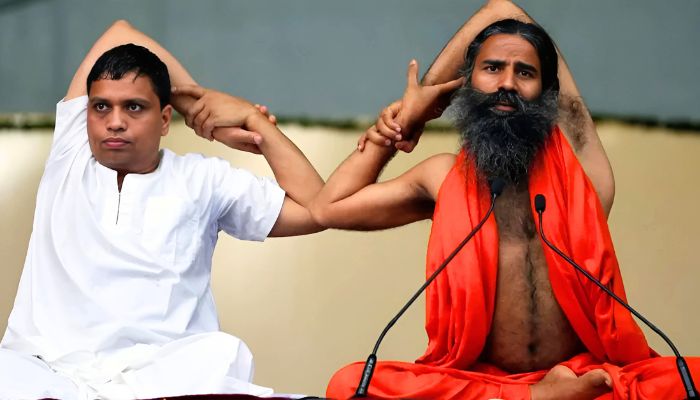
On 1st February, the Palakkad District Court in Kerala issued non-bailable warrants against yoga guru Baba Ramdev and Patanjali Yogpeeth president Acharya Balkrishna as they failed to appear in a criminal case concerning misleading medical advertisements. The case was filed by the Kerala Drugs Inspector against Divya Pharmacy, a subsidiary of Patanjali Ayurved Limited, over alleged violations of advertising regulations.

Court escalates action after repeated absence

Initially, the Judicial First Class Magistrate-II in Palakkad had issued bailable warrants for Baba Ramdev and Balkrishna to appear on 1st February. However, their failure to attend court prompted escalation in the matter, and the judge issued non-bailable warrants against the two. The next hearing in the matter is scheduled for 15th February. Divya Pharmacy has been named the first accused, Acharya Balkrishna the second, and Baba Ramdev the third in the case.

Legal basis of the case

The complaint against Divya Pharmacy was filed under Sections 3, 3(b), and 3(d) of The Drugs and Magic Remedies (Objectionable Advertisements) Act, 1954, highlighting multiple violations of the advertisement code. Section 3 prohibits advertising certain drugs for the treatment of specific diseases and disorders. Section 3(b) specifically bans advertisements claiming to enhance sexual pleasure, while Section 3(d) forbids claims related to diagnosing, curing, or preventing diseases as outlined under the Act’s rules.

Patanjali’s history of legal troubles

Patanjali and its founders have a long history of legal troubles. A few months back, the Supreme Court of India scrutinised Patanjali’s products for misleading advertisements disparaging modern medical practices like allopathy. The complaint filed by the Indian Medical Association (IMA) against Patanjali stemmed from ads during the COVID-19 pandemic, where Baba Ramdev made claims about curing the virus and undermining modern medicine.

Despite the contempt notice issued for continuing such advertisements, the court later closed the case after accepting a public apology from Ramdev, Balkrishna, and Patanjali Ayurved.

Earlier, the Bombay High Court imposed a ₹4 crore fine on the company for selling camphor-based products in violation of regulatory norms. While some cases have been resolved, the latest non-bailable warrants highlight the continuing legal scrutiny surrounding Patanjali and its founders.

Tahir Hussain, former AAP Councillor accused in 2020 anti-Hindu riots and AIMIM candidate for Delhi elections, says he is not getting time to campaign because of travel time from Tihar jail

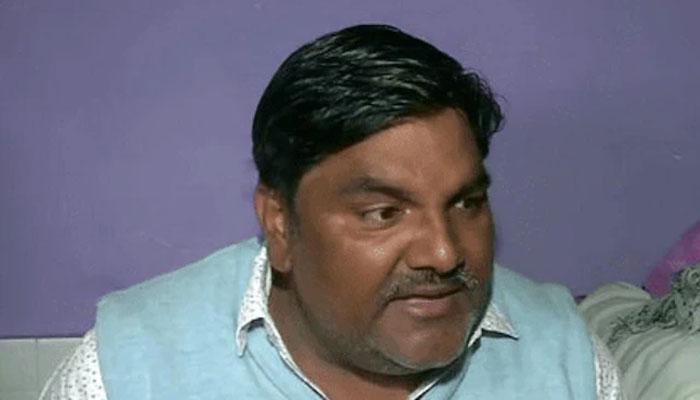
AIMIM candidate Tahir Hussain, accused in the 2020 Delhi riots, has been granted custody parole by the Supreme Court to campaign for the Delhi Assembly elections. However, Hussain on Sunday alleged that he’s not getting adequate time to campaign, citing that it takes him two hours to travel to and from jail, leaving him with less than 8 hours to campaign.

Hussain expressed his concerns to the police administration, hoping to get the full 12 hours to campaign today and tomorrow.

“On the direction of the Supreme Court, I was given 12 hours to campaign for the (Delhi assembly) elections. It takes one hour to get here (Mustafabad assembly constituency area) from the jail, and then another hour to go back. Before today, I used to be brought here around 9:30 – 10 am, and they used to take me back before 5 pm. So I was not getting even 8 hours (to campaign). I had expressed my concern to the police administration about this… I hope that today and tomorrow I get the full-time to campaign,” Hussain told ANI.

He also accused the BJP and his former party, AAP, of trying to hinder his electoral efforts in the Mustafabad constituency.

“I have seen in the last five years that the administration officials work constitutionally. I am not blaming anybody. There’s a huge conspiracy in Mustafabad that my main opponent from the BJP doesn’t want me to campaign. More than that, AAP is trying to stop me from campaigning,” Tahir Hussain said.

Earlier on January 28, the Supreme Court granted custody parole to Tahir Hussain- a former AAP councillor, who was accused in the 2020 Delhi riots, to campaign for elections.

A bench of Justices Vikram Nath, Sanjay Karol and Sandeep Mehta orders that Hussain shall be released from jail as per jail manual timing upon the deposit of the expenses i.e. around 2 lakh per day (12 hours).

Hussain was booked in the murder case of Intelligence Bureau (IB) officer Ankit Sharma during the 2020 North-East Delhi riots. The violence erupted on February 24, 2020, resulting in 53 deaths and many injuries. 11 FIRs were registered against Hussain in connection with the riots.

Tahir Hussain is contesting against BJP’s Mohan Singh Bisht, a sitting MLA from neighbouring Karawal Nagar, AAP’s Adil Ahmad Khan and Congress’ Ali Mehdi, son of former MLA Hasan Mehdi.

Kerala: SIT files chargesheet against Malayalam actor and CPI (M) MLA Mukesh in sexual assault case

0

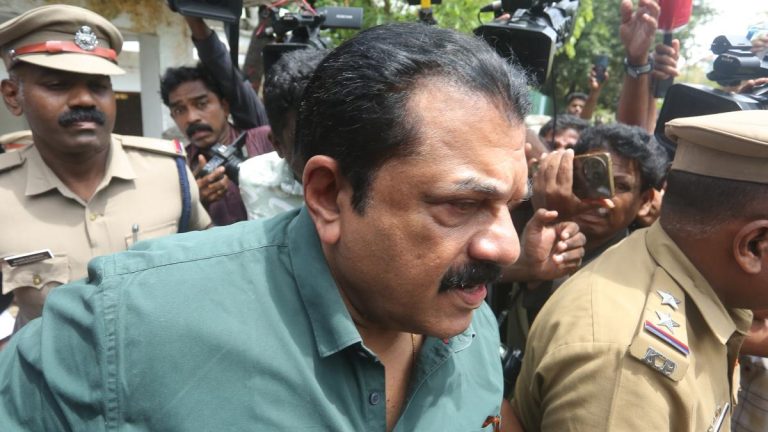
The Special Investigation Team (SIT) on Sunday confirmed that it has filed a chargesheet in an alleged rape case against CPI (M) MLA and actor M Mukesh.

The chargesheet filed at the Ernakulam Judicial Magistrate Court claims that there is digital evidence against Mukesh in the case.

WhatsApp chats and email messages between Mukesh and the complainant have been submitted as evidence. The SIT also stated that it has received circumstantial evidence and witness statements.

In addition to harassment, a section of sexual assault has also been charged against Mukesh. The case is that Mukesh sexually assaulted the complainant by promising her membership in The Malayalam film star organization AMMA.

Mukesh was booked on the complaint of actress Minu Muneer. The case was registered by Maradu police on the complaint of the Aluva native.

The First Information Report against Mukesh was filed under Section 376 (rape), which is a non-bailable offence, Sections 354 (assault or criminal force to woman with intent to outrage her modesty), and 509 (insult the modesty of a woman by word, sound, gesture or object) of the Indian Penal Code (IPC).

Last year in August, the lawyer of Malayalam actor-politician Mukesh said that his client is ready to cooperate with the police investigation in the case registered against him in connection with sexual harassment allegations levelled by a woman actor.

The lawyer, Geo Paul, has also stated that the investigation team must collect as much evidence as possible, and if the allegations are found to be false, the police can file a refer report.

A redacted version of the Justice Hema Committee report on harassment faced by women in the Malayalam cinema industry was made public last year. It contains shocking accounts alleging harassment, exploitation, and ill-treatment of women professionals.

The report, published after redacting the names of witnesses and the accused, notes that the Malayalam film industry is controlled by about 10 to 15 male producers, directors, and actors who dominate and exert control over the industry.

The report of the three-member panel headed by a former judge of the Kerala High Court and set up by the state government in 2017, was submitted to the Pinrayi-led Kerala government in December 2019 and made public only this month.

Following the release of the Justice Hema Committee report, there have been sexual harassment allegations against several actors in the Malayalam film industry.

(This news report is published from a syndicated feed. Except for the headline, the content has not been written or edited by OpIndia staff)

UP STF investigates possible conspiracy in Prayagraj Mahakumbh stampede

0

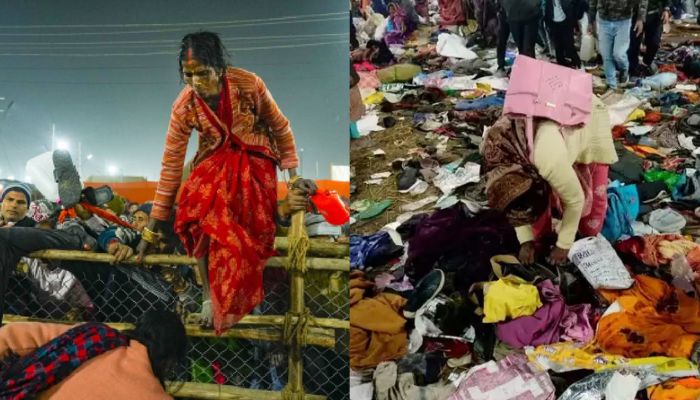
The Uttar Pradesh Police’s Special Task Force (STF) has intensified its probe into a possible conspiracy behind the tragic stampede that occurred during the Mouni Amavasya at Prayagraj Mahakumbh. According to a report in Aaj Tak, the STF is exploring whether the stampede was the result of a deliberate conspiracy. The investigation team is scrutinising mobile data from the Sangam Nose area, attempting to identify any suspicious activity, the report suggested.

Aaj Tak quoted unnamed sources stating that data from over 16,000 mobile numbers is being analysed. Initial findings have revealed that several numbers have been inactive since the incident that took place on the intervening night of 29th and 30th January.

Furthermore, CCTV footage from the command and control room at the Mahakumbh Mela area is being analysed with facial recognition software to identify suspects. The incident claimed 30 lives, and 60 people were reported injured.

High alert ahead of Vasant Panchami

The third “Amrit Snan” is scheduled for 3rd February, on the occasion of Vasant Panchami. Uttar Pradesh Police is on high alert considering the large influx of devotees for the holy dip. Senior officials will reportedly remain deployed overnight across Mahakumbh and Prayagraj to ensure security. The rituals will begin at 5 AM on 3rd February for the general public. Panchayati Akhara Mahanirvani will take the dip at 4 AM, followed by the other 12 Akharas.

Traffic restrictions imposed in Prayagraj

To ensure the safety and security of the devotees, strict measures are being implemented by the state authorities. Entry of vehicles into Prayagraj city has been restricted from 2nd to 4th February. Devotees arriving from other districts must park their vehicles at designated stands outside the urban area and proceed to the nearest ghats via shuttle buses or on foot. Separate parking facilities have been arranged for large and small vehicles.

So far, more than 34 crore devotees have participated in the Mahakumbh.

Notably, after the tragedy, the UP Government cancelled all VIP passes. All 40 pontoon bridges connecting the Mahakumbh Mela to the city have been opened to facilitate movement. Previously, only vehicles with valid passes were allowed access to various camps within the Mahakumbh Mela area.

Prime Minister’s visit to Mahakumbh

Prime Minister Narendra Modi is expected to visit the Mahakumbh on 5th February. Security will be further tightened considering his visit.

Bangladesh: Mirajuddin barges into temple and vandalises idol of Goddess Saraswati, angry Hindus hand him over to police

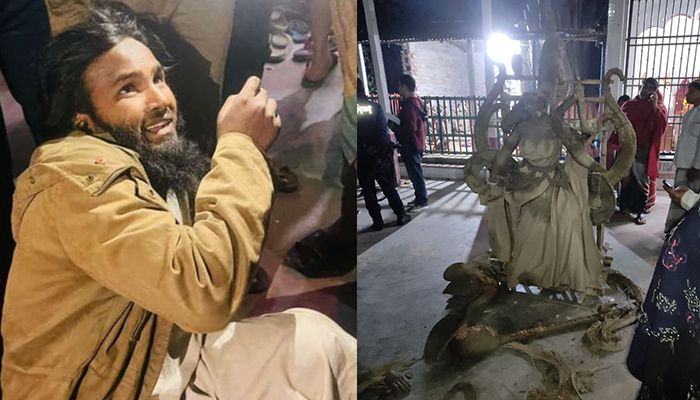
On Friday (31st January) night, a Muslim man barged into a Kali temple in Faridpur city of Bangladesh and vandalised an under-construction idol of Goddess Saraswati.

According to reports, the accused was identified as 32-year-old Mohammed Mirajuddin. He was caught red-handed attacking the Hindu place of worship, following which the accused was handed over to the people.

Mirajuddin was subsequently arrested and produced before a court. He was thereafter remanded to custody. According to the temple committee members, the Kali temple is protected by a 4-foot brick wall and the main gain is made of rods.

This facilitated the easy entry of Mohammed Mirajuddin into the temple premises. The idol which was vandalised was being prepared for Saraswati Puja, scheduled to be held on Monday (3rd February).

Mirajuddin was previously involved in the destruction of the idol of Saraswati idol at the Faridpur ISKCON temple in February last year. Despite his arrest at that time, he was released on grounds of ‘mental instability.’

A Hindu student named Samar Mondal, who lives adjacent to the Kali temple, informed, “The idol was being prepared by an artisan in exchange for 6000 Taka. Hindu students living in our hostel wanted to perform Saraswati Puja. We will not be able to get it repaired on time.”

Attack on Hindus in Bangladesh since the ouster of Sheikh Hasina

OpIndia has been vetting and reporting cases of atrocities on Hindus since the ouster of Sheikh Hasina on 5th August 2024.

There have been at least 205 attacks on Hindu temples, shops and businesses within 3 days of the fall of Dhaka.

We previously exposed how Muslim students have forced as many as 60 Hindu teachers, professors and government officials to resign from their positions.

Human rights activist and exiled Bangladeshi blogger, Asad Noor, has recently revealed that the minority community is now being coerced into joining ‘Jamaat-e-Islami’.

On 6th September, a procession of Hindu devotees carrying the idol of Lord Ganesha came under attack in the Kadam Mubarak area in Chittagong city of Bangladesh.

Ahead of the Durga Puja celebrations, a radical Muslim man named Yasin Mia vandalised the idols of Goddess Durga and other Hindu deities in Gouripur town in the Mymensingh district of Bangladesh on 25th September.

In the latest series of attacks, idols of Goddess Durga and other Hindu deities were vandalised at the Rishipara Barwari Puja Mandap and the Manikadi Palpara Barwari Pujamandap on 28th September and 1st October respectively.

The attacks were carried out in Sujanagar upazila in Pabna district in Rajshahi Division of Bangladesh. While a total of 4 idols were defaced at the Rishipara Barwari Puja Mandap, another 5 Hindu idols were destroyed at the Manikadi Palpara Barwari Pujamandap.

On 3rd October, 7 idols of Hindu deities were destroyed at the Gopinath Jiur Akhara Durga Puja mandap in Kishoreganj, Dhaka Division, Bangladesh.

On 5th November, the Hindu community came under attack from police and law enforcement authorities in Hazari Goli in Chittagong city of Bangladesh.

On 29th November, a violent Muslim mob attacked Hindu minorities and vandalised 3 temples in Patharghata in  Chittagong district of Bangladesh.

The Hindu religious sites that the Muslims targeted included the Shantaneshwari Matri Temple, the Shoni Temple, and Shantaneshwari Kalibari Temple. The attack took place immediately after the conclusion of Jumma Namaz

On 30th November, a prominent Hindu journalist named Munni Saha was arrested by the police from Karwan Bazar in Dhaka city of Bangladesh.

A group of extremists attacked the Mahashmashan Kali Mata Mandir, vandalised 7 idols of deities and stole gold ornaments on 13th December 2024.

On 19th December, a Muslim man identified as Alal Uddin vandalised an idol at the Polashkanda Kali Temple and then attempted to create a fake alibi. The incident occurred in Haluaghat upazila in the Mymensingh district of Bangladesh.

Another 37-year-old Muslim man identified as Azharul vandalised several idols of deities in Haluaghat Upazila in the Mymensingh district of Bangladesh.

The recent arrest of Chinmoy Krishna Das Prabhu and his aides, attempts at banning Hindu organisation ISKCON and stiffling Hindu protests with cases of ‘sedition’ highlight systematic persecution under the interim government of Muhammad Yunus.

There have been multiple instances of attacks on Hindus under the pretext of ‘blasphemy.’ The recent cases of Hridoy PalUtsab MandalPartha Biswas PintuAkash DasPranta Talukder and Utsab Kumar Gian are shining examples of targeted persecution.

So far, there have been many attempts to downplay violence against Hindus as ‘fake‘, ‘exaggerated‘ or ‘politically motivated‘.

CRPF officer Poonam set to become the first person to get married inside the Rashtrapati Bhavan: Read details

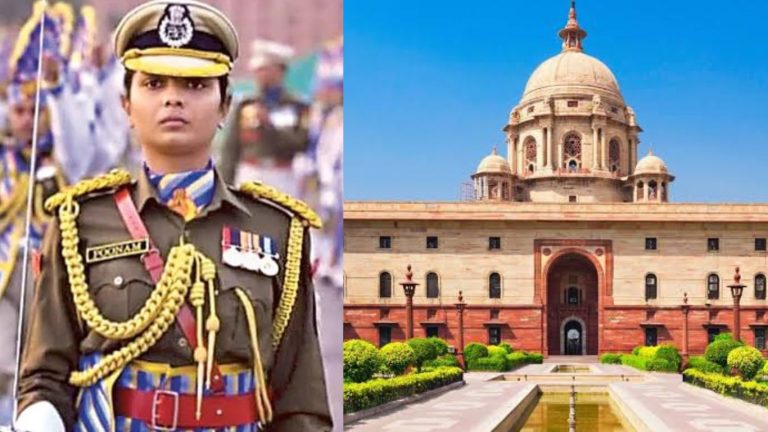
For the first time in history, the Rashtrapati Bhavan in Delhi is set to host a wedding ceremony on February 12. In an exceptional gesture, President Draupadi Murmu granted permission to CRPF Assistant Commandant Poonam Gupta to get married inside the Rashtrapati Bhavan.

President Murmu impressed by the CRPF Commandant’s service

The reason behind the President’s exceptional decision was Poonam Gupta’s good conduct. As per reports, President Murmu was impressed by the distinguished service of Gupta. Assistant Commandant Poonam Gupta, who is presently posted as Personal Security Officer (PSO) at Rashtrapati Bhavan, had led all-women contingent of the CRPF during the 74th Republic Day ceremony.

Gupta is reportedly getting married to CRPF Assistant Commandent Avneesh Kumar who is currently posted in Jammu and Kashmir.

Wedding ceremony to have a select guest list

The wedding ceremony which will reportedly be hosted at the Mother Teresa Crown Complex at Rashtrapati Bhavan will have a select guest list including relatives and close friends.

Who is Assistant Commandant Poonam Gupta

Poonam Gupta’s journey is nothing short of inspiring. She has remarkable academic achievements. Gupta holds a Bachelor’s degree in Mathematics, a Master’s degree in English Literature and Bachelor of Education (B.Ed.) from Jiwaji University, Gwalior. She secured rank 81 in the 2018 UPSC CAPF exam.

She has also served in the Naxal-affected areas of Bihar showcasing her dedication and resilience in service. She has an active presence on social media as well. On her Instagram account, she posts about her life as a CRPF officer. She also posts about women emepowerment and issues of public awareness.

China condemns US tariffs, warns of countermeasures and impact on drug cooperation

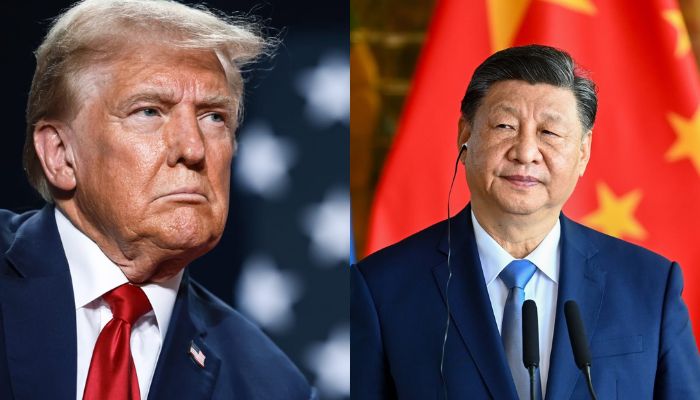
On 2nd February, hours after US President Donald Trump imposed a 10% tariff on Chinese goods, Beijing condemned the move and called it a violation of global trade rules. China warned the United States of countermeasures to defend its “legitimate rights and interests.” Earlier, Canada and Mexico have also condemned the tariffs imposed on them.

In an official statement, the foreign ministry of China said that the tariffs severely breach World Trade Organisation (WTO) regulations and could disrupt cooperation on critical issues like drug control. The ministry said, “Trade and tariff wars have no winners.” The ministry stressed that unilateral tariff hikes would harm both economies and warned that such measures would not resolve the US’s economic challenges. The ministry added that it would instead strain bilateral relations.

Furthermore, China also addressed the concerns raised by the US over fentanyl. The foreign ministry emphasised that China has taken strong steps to control fentanyl production and has cooperated extensively with Washington. China said, “In the spirit of humanity and goodwill, China has given support to the US’s response to this issue.” The ministry further highlighted that in 2019, China classified all fentanyl-related substances as controlled, a move taken at the request of the US government.

Notably, the Trump administration, in an official statement, accused China of failing to take adequate steps to curb the export of precursor chemicals used in the production of fentanyl and of allowing transnational criminal organisations to engage in money laundering activities. The US government justified the tariffs by arguing that previous administrations failed to use economic leverage effectively to address these issues.

China’s foreign ministry has urged the US to adopt a rational approach to its domestic fentanyl crisis rather than using tariffs as leverage. “The US needs to view and solve its own fentanyl issue in an objective and rational way instead of threatening other countries with arbitrary tariff hikes,” the statement said.

Furthermore, China warned that additional tariffs could jeopardise future cooperation on counternarcotics efforts. “China calls on the US to correct its wrongdoings, maintain the hard-won positive dynamics in the counternarcotics cooperation, and promote the steady, sound, and sustainable development of the China-US relationship,” the foreign ministry added.