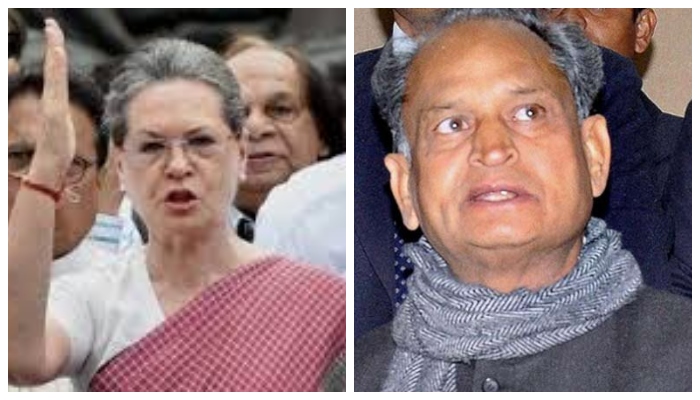
Coming as a major embarrassment for Congress interim president Sonia Gandhi, who made tall claims of paying for the migrant workers, the Congress-led government in Rajasthan has admitted to charging migrant labourers for the Jaipur-Patna Shramik Special train. According to a Times Now report, the Ashok Gehlot government has admitted of accepting money from migrants workers for their travel back to their native place.
According to multiple reports, while most state governments have paid for the travel of migrant workers from the state exchequer, Kerala, Rajasthan and Maharashtra remain the only three states to have charged the migrant workers for their travel back to their native place.
It is pertinent to note that in two of three states- Kerala, Maharashtra and Rajasthan, Congress is in the government. Rajasthan is ruled by the Congress party while Maharashtra is presided over by the Maha Vikas Aghadi government-a coalition of Shiv Sena, NCP and the Congress party.
Sonia Gandhi blamed centre for levying charges on the migrant workers
Ironically, the Rajasthan government’s admission comes barely a day after Sonia Gandhi had courted controversy by blaming the centre for levying charges on the migrant workers
Based on a fallacious report published in ‘The Hindu’ that said railways is charging extra money from stranded migrants to travel in special trains, Sonia Gandhi had jumped in to declare that her party will be bearing the non-existent cost of the railway tickets of the migrants. Railways had issued a clarification that it is not charging any money from the migrants.
Congress offers to pay for fares which anyway government was paying for
On Monday, Congress leaders took to Twitter to claim that since government is charging money for the railway fare of the stranded migrants going back home on Shramik Special trains, the party will chip in and bear the expenses for the same. This offer to pay for the migrants’ fare came two days after the Railway Ministry had clarified that the state and central governments are facilitating the movement of migrants through Shramik Special trains. On Sunday, 3rd May, 2020, Madhya Pradesh Chief Minister Shivraj Singh Chouhan took to Twitter to clarify Madhya Pradesh State Government will bear their expenses.
However, now that Congress has offered to use its own money instead of tax payers’, Rajasthan Chief Minister has offered to absolve Congress party of the responsibility.
Hours after Congress offered to pay for the railway fares of stranded migrant workers, the Congress government in Rajasthan has stepped in to save the party’s money. Rajasthan Chief Minister Ashok Gehlot has announced that the state government, not the party, will pay for the railway fares of migrants.
Ashok Gehlot uses Rajasthan tax payers’ money to save Congress treasury
Taking to Twitter, Gehlot on Monday credited Sonia Gandhi said that “On direction of Sonia Gandhi, we have decided that Rajasthan government will bear expenses of those who are travelling from Rajasthan to other states.”
Sonia Gandhi had actually directed state Congress units, not Congress run governments, to pay for the migrant workers. Hence, Gehlot, in a bid to save the party fund will now use Rajasthan tax payers’ money by bearing the expenses. While many state governments, like Madhya Pradesh, have stepped in to bear the expenses of migrant workers, Congress-led Rajasthan government’s decision had come after the party president directed party funds be used for the same.
Congress caught it its own web of lies
In the entire farce created by the Congress, first, the party falsely accuses Railways of charging migrants workers and offers to bear expenses of those who are travelling from Rajasthan and other Congress-ruled states to other states. Honouring his president’s words, Rajasthan CM Ashok Gehlot had confirmed to pay on behalf of the migrant workers. Here, he cleverly plans to save the party fund by devising using Rajasthan taxpayers’ money by bearing the expenses. Eventually, it appears that the migrant workers land up paying for their own travel, an allegation Congress had levied on the central government based on which the entire drama was formulated.
In a video that has now gone viral on social media, AIMIM supporter Abu Faisal can be seen fear-mongering amidst the outbreak of the Wuhan Coronavirus in the country. He began by claiming that Muslim women should refuse to take injections prescribed by doctors as it can make them sterile.
In a video widely circulated on social media, Faisal is seen alleging that a ‘vicious campaign’ that is supposedly underway to limit the Muslim population. Encouraging his Muslim brethren to assault non-Muslim doctors, he said that the Muslim patient must inject the non- Muslim doctor first before taking the prescribed medication.
Claims coronavirus is a Hindu conspiracy
To back his insidious claims, he plays the recording of a call wherein a man can be heard claiming that young Muslim men are administered slow poison, in a bid to turn them sterile or cause eventual death. Furthermore, Faisal says that Coronavirus is a conspiracy by the Rashtriya Svayamsevaka Saṅgha (RSS) and no infectious virus exists.
Halfway into the video, he alleges that the media has been directed to target Muslims and defame Islam under the garb of Coronavirus pandemic. Spewing vitriol against Hindus, he refers to them as “dung” and “piss” worshippers. He further provokes all Muslims to unite by citing impending doom.
Warns of genocide against Hindus
Further referring to Hindus as “swines”, “cow piss drinkers” and choicest of expletives, he threatens of destroying the saffron. Abu Faisal says that cow’s urine runs in the body of Hindus and that they are a blot on humanity. He added that the pandemic is a conspiracy by Hindu groups to restrict the movements of Muslims and damage Muslim businesses.
Warning of genocide against Hindus, he claimed that his restraint is due to the month of Ramzan. And interestingly, his contentious video has received overwhelming support from fellow Muslims. He goes on to call Hindus as a ‘dung eating’ community and terms Hindus as ‘Sooar ke aulaad’ (children of pigs). He claims that Muslims can easily kill, rape and wipe out Hindus. The video has been the subject of a heated social media discussion.
The video was shared on Abu Faisal’s Facebook page on May 2 and has received thousands of likes and shares. Over 6 lakh people have watched it on Facebook. Faisal’s Facebook page claims connections with the AIMIM and is named ‘AIMIM Abu Faisal’.
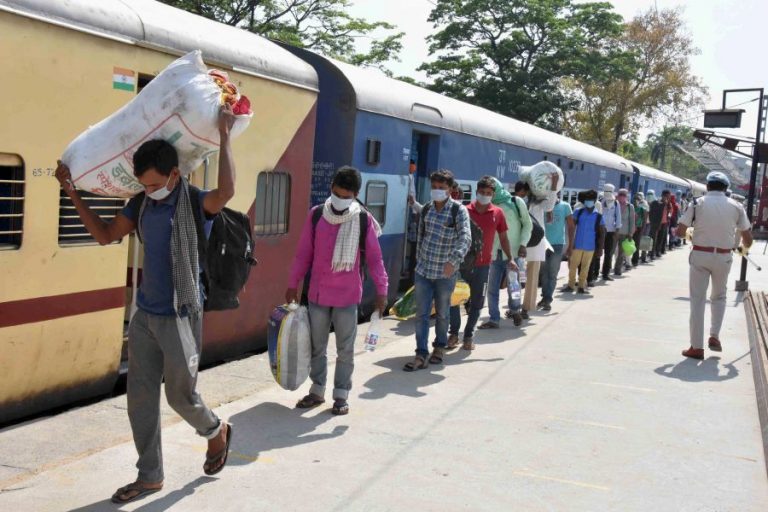
The conversation as India continues to battle the Coronavirus pandemic has been revolving around the sorry state of migrant workers who are stranded in different states, waiting to go back home. With no mode of transportation as a lockdown was imposed to battle the pandemic, stranded migrant workers had taken to the streets several times in several states demanding that the government facilitate their travel back home. Keeping in view the grim situation, the central government started ‘Shramik’ trains. These are special trains that are meant to ferry migrant workers back to their home states during the Coronavirus lockdown.
The controversy started with the Congress party President, Sonia Gandhi, claiming that the central government is charging passengers for their return back home. Several media houses too peddled this blatant lie. In reality, 85% of the cost is borne by the Central Government (Railways) and 15% was to be borne by the state government. The state govt could choose to cough up the money from their own coffers, take help of some NGO or collect the money through other means. The central government and the railways were not charging the passengers directly at all and the mode of collection of that 15% was left to the state. Considering the Congress was extremely outraged at the through (though a lie of their own making) of money being charged to stranded migrant workers, one would have expected that the Congress-ruled states would ensure that the 15% was drawn from the state coffers and not the migrant workers.
However, that is not what happened.
According to some reports, while most state governments have paid for the travel of migrant workers from the state exchequer, Kerala, Rajasthan and Maharashtra remain the only three states to have charged the migrant workers for their travel back to their native place.
As per PTI, Maharashtra state minister Nitin Raut has written a letter to Chief Minister Uddhav Thackeray urging him to bear the travel cost of migrants leaving the state. He also wrote to Railway Minister Piyush Goyal on Sunday, requesting that the railways bear the cost of transportation of migrants from the state. In addition to this, a report by Times Now claims that besides Maharashtra, Kerala and Rajasthan have also asked the migrants to pay for the railway tickets.
If one recalls, protests had erupted in Maharashtra and Rajasthan earlier were migrant workers had demanded to go home. There are several protests that have been reported from several other states where migrants from Maharashtra, Rajasthan and other states are also demanded to be sent back home.
New Indian Express reported today (emphasis added):
“Just days after migrant labourers protested at IIT-Hyderabad wanting to back home, several migrant labourers staged a protest on Saturday in Tellapur at the construction site of a well-known real estate developer. Their demand was similar. They wanted to be sent back home by train or bus. Police officials swung into action to pacify an estimated 3,000 labourers at the site. These included migrants from West Bengal, Bihar, Jharkhand, Rajasthan, Madhya Pradesh and Odisha”.
Over the last three days, the Gujarat government has facilitated the return of over 4,600 migrant workers to their native states of Rajasthan and Madhya Pradesh over the past three days.
However, the numbers are not nearly sufficient. According to a report in the Times of India, 2.84 Lakh migrant workers have registered from various states to go back home to Rajasthan. Bengal too has thousands of labourers stuck in various parts of the country, waiting to go back home, seeing a glimmer of hope as Sharmik trains start ferrying workers back.
But, with thousands and lakhs of workers waiting to return to their home states and the central government running shramik trains, there seems to be a discrepancy in the numbers emerging from central railways.
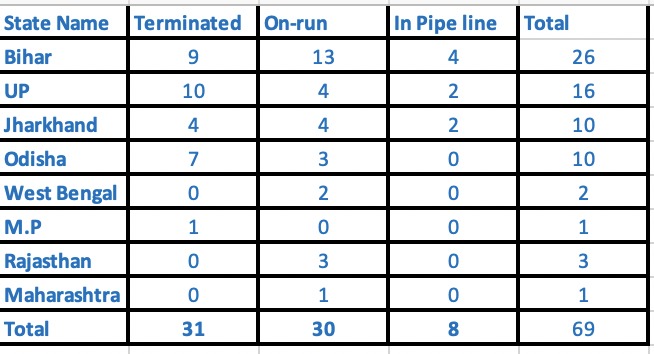
Number of Shramik Trains that have run so far from and to various states (A list of destination states)
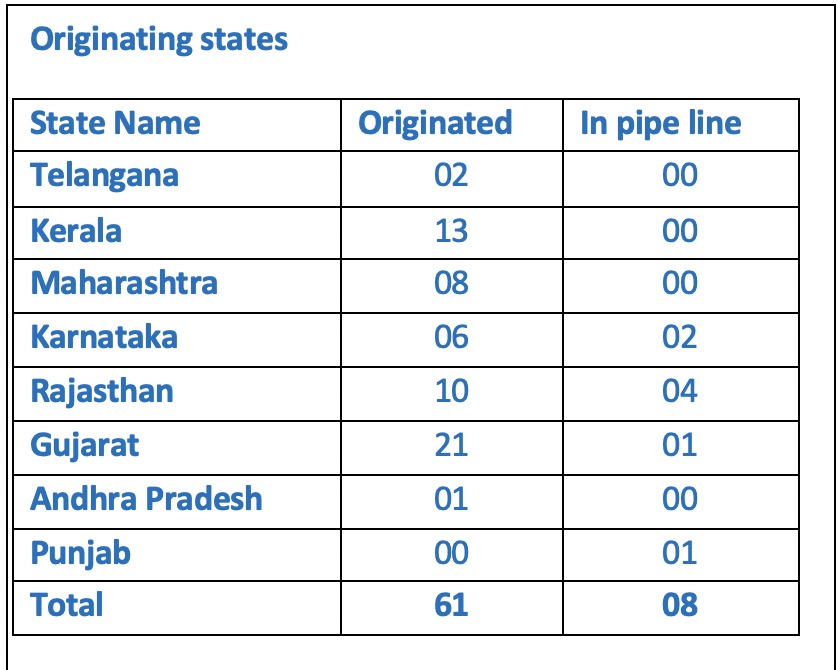
Number of Shramik Trains that have run so far from and to various states (A list of originating states)
Till today morning at 9 AM, 69 trains have been operated by the central government and railways. However, when one sees, the number of trains that have left from states like Rajasthan and Maharashtra are far more than the number of incoming trains to these states (that carried their own migrant labours from other states). In fact, for West Bengal, only two trains have been operated that have carried their own migrant labours back to the state from other states like Rajasthan.
The obvious conclusion drawn from this is that states like Maharashtra and Rajasthan specifically and sending our more migrant labourers to their own home states than accepting their own migrant labours back from other states.
According to sources in the Railways Ministry, West Bengal, Rajasthan and Maharashtra are not giving permission for the trains carrying their own migrants back from various states.
Let us analyse what is happening is different states.
Rajasthan and migrant workers
On the 26th of April, Rajasthan Chief Minister Ashok Gehlot said that migrant workers from other states who were stuck in Rajasthan would be allowed to go back to their home states. However, talking about the migrant labours from Rajasthan stuck in other states, he said that they would be allowed to come back in a ‘phased manner’. The same Hindustan Times report also mentioned that “Uttar Pradesh, Madhya Pradesh and Haryana have already initiated the process to bring back migrant labourers stranded in other states after the lockdown to curb the spread of coronavirus pandemic was imposed in March till April 14 and then extended till May 3”.
So, while Uttar Pradesh, Haryana and Bihar are ready to accept their migrants back, Rajasthan is emphasising that they will accept their own labourers back in a “phased manner”. Interestingly, only 3 Shramik trains have are ‘on-run’ so far that are getting Rajasthani migrants back to the state. On the other hand, 10 trains carrying migrant labours back to other home states have already been terminated and 4 are in the pipeline.
Essentially, while 2.84 lakh migrant workers are waiting to go back to their home state, Rajasthan, from various other states, the Rajasthan government is solely focussing on sending labourers of other states back from Rajasthan but not on accepting their own labourers from other states. While the Rajasthan government is grandstanding and stating that it will bear the cost of migrant workers leaving the state, it has not said anything about accepting its own labourers back, who are stranded in different states.
This could potentially cause a crisis in other states which are accepting their own migrants and also tending to migrants from states like Rajasthan which are not focused on getting their own people back to the state.
Maharashtra and migrant workers
For the state of Maharashtra, the numbers are not very different. Only one train has got its own labourers back from various states while 8 trains have ferried labourers back from Maharashtra to their home states.
For example, labourers from Maharashtra were protesting in MP demanding that be sent back home as recently as April 30th. In Hyderabad too, migrant labours including those from Maharashtra staged a protest demanding to go back home.
The conduct of the Maharashtra government has been the worst, so far. While news emerged that they are charging migrant labourers for a health check-up before allowing them to return to their home states, as a measure of hollow grandstanding, Uddhav Thackeray had urged the central government not to charge migrants, hiding the fact that it is the state that is supposed to cough up the 15% and thus, that migrant labourers are being charged is solely the doing of the Maharashtra government.
While Maharashtra itself seems slow in accepting their own migrants back, Maharashtra minister and NCP leader Nawab Malik went ahead and alleged that the Uttar Pradesh government was purposefully putting stringent conditions for the repatriation of migrants staying in Maharashtra in a bid to avoid accepting them even though a total of 16 trains (either terminated, running or in the pipeline) are scheduled to bring migrants back to UP.
West Bengal and migrant workers
The West Bengal government has itself said that they are going slow in accepting their own migrant labours back.
It was reported that the state feels the return of so many people without Covid-19 tests needs to be planned with utmost care so that the infection does not spread to new areas through those coming back. West Bengal chief secretary Rajiva Sinha said no one coming from other states would be allowed to enter containment zones. “So, if someone taking a train for Bengal hails from a containment zone, he or she cannot be sent home. Some other arrangement needs to be made and these require time,” Sinha said.
“It won’t be proper to allow lakhs of stranded migrants labourers all in one go. They need to be brought back in phases because detailed planning has to be made. Else every effort made till date will go down the drain,” Sinha added.
With this stand, it is no surprise that only two trains have carried Bengal labours back to the state from other states.
Madhya Pradesh and migrant workers
Though the trains that ferried migrant labours back to Madhya Pradesh is only one, Shivraj Singh Chouhan has expressly stated that all migrant workers who belong to MP will be brought back. In fact, due to the distance not being much, the State Government arranged several busses for the migrants to come back to MP from various other states, especially from Maharashtra, Rajasthan and Gujarat.
On Saturday, Mr. Chouhan had announced the State government was making arrangements to bring back its native labourers stuck in different States in buses.
“We will not let them walk,” he said. “We have seen them walk back home on roads and rail tracks in the heat. They must be a worried lot. So, we will make all arrangements for their travel, send them back to their villages in buses.”
Before boarding buses, the labourers would be screened for illnesses. “I request all villagers to behave in a humane way with them. The returnees will be home quarantined,” he said.
“I have received several phone calls from individuals in different States wanting to come back. We have arranged for e-passes for them so that they could return using their own transport,” he said.
Thus, the MP government does not seem to be shrugging its responsibility as far as accepting its own people back is concerned.
While the Congress rule states and opposition ruled states like Rajasthan, Maharashtra and West Bengal seem to uncaring about their own workers stranded in various states, they seem eager to send labourers back from their own state to other states like MP, UP, Bihar and Jharkhand. Potentially, this could cause another crisis for the destination states since several would not only be tending to their workers who are coming back but also workers from these states who are not being accepted by their states.
While this politics played out, these states have been trying to deflect attention by wrongly blaming the central government for charging migrant labourers for the Shramik trains while it was explicit that the 15% has to be coughed up by the state while 85% cost is being borne by the Railways.
On Monday, the Inter-Ministerial Central Team (IMCT) in its letter to the State Chief Secretary Rajiv Sinha highlighted the “extremely high mortality rate” of Coronavirus in the State of West Bengal, besides the lack of transparent and consistent reporting of the pandemic.
The team appointed by the Central Government for making an on-spot assessment has made its final observations after spending two weeks in the State, starting from April 20.
IMCT observes High Mortality Rate
Slamming the State Government, the IMCT leader Apurva Chandra stated that 105 people have lost their lives to the Wuhan Coronavirus pandemic out of 816 reported cases in West Bengal. As such, the Mamata Banerjee-led-State accounts for the highest mortality rate (12.8%) in the country. Chandra attributed the weak surveillance of the government and the low testing conducted in the State as the cause behind the high mortality rate.
Highlighting the lack of transparency and vicious attempts to downplay the outbreak of the Chinese virus in West Bengal, IMCT emphasised on the need for consistent reporting and daily surveillance of patients in hotspots.
Discrepancy in Data
IMCT also pointed out the discrepancy in data released by the State Government about the status of the pandemic in the State. At one time, the West Bengal Government put the number of infected patients at 744. However, it stated the figure of 931 infected patients while briefing the Union Health Ministry on the same day.
Further, the letter alleged that the State bulletins of May 1 and May 2 did not mention the total mortality or the number of Coronavirus patients in the State. IMCT highlighted how the State claimed to have surveyed 50 lac people but did not provide any evidence for the same to the team.
IMCT alleges non cooperation from West Bengal Govt.
On April 25, IMCT complained that four letters had been written to the State Government since April 20 but no response had been received for the same. IMCT alleged that in gross violation of the MHA order, the Chief Secretary of the government had made media statements refusing to allow senior officials to accompany the team, under the pretext of “not wasting their time.”
The leader of the team further revealed that while a presentation was made by the State Health Department on 10 aspects sought by IMCT, the hard copy of the presentation was not provided to the team.
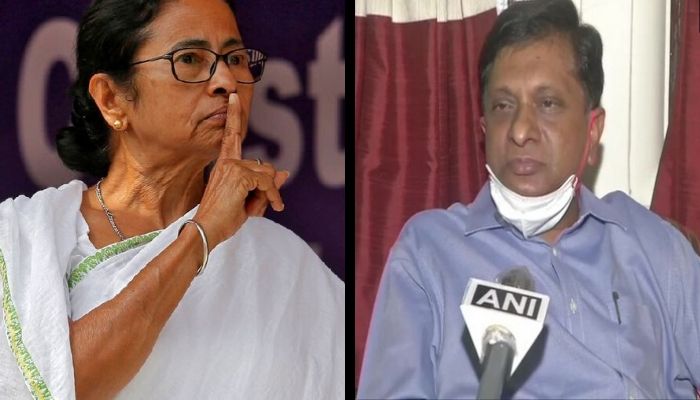
On the scale of responsible behaviour, West Bengal’s CM, Mamata Banerjee is competing hard to share a spot with China’s Xi Jinping. From fudging data to opening businesses at whim to not cooperating with the Centre, Bengal’s didi (as Mamata is popularly known in the state) is presenting a model of how NOT to handle corona.
The central team that visited Kolkata, Howrah and few other districts in the state to assess the situation said that West Bengal had the highest mortality rate in the country, at 12.8 per cent, but shunning all facts and figures, Mamata Banerjee’s government has been heavily relying on the committee of “experts” it has constituted and reviewed time and again to tackle the crisis in India.
Incidentally, the members of these panels have always been carefully cherry-picked by the chief minister herself and allegiance towards Mamata Banerjee is the only thing which is needed to make it to these ‘prestigious’ teams.
Mamata Banerjee on May 3 (Sunday), for the sixth time now, revamped her team of ‘experts’, who will be overseeing the state’s fight against the coronavirus pandemic.
While earlier, doctor’s like Dr Sukumar Mukherjee- indicted for worst possible medical negligence, and doctor Thomas Frieden- guilty of sexual assault in New York 2018 found a place in the panel, this time it is Dr Pradip Kumar Mitra, who courted huge controversy in June 2015 when he reportedly agreed to allow a dog, which belonged to a close relative of senior Trinamool leader, to be admitted to the state-run super speciality Institute of Post Graduate Medical Education & Research (IPGMER) for dialysis, who has been roped in.
Dr Pradip Kumar Mitra- Mamata Banerjee’s latest obsession
Dr Pradip Kumar Mitra, a former director of the state-run super speciality Institute of Post Graduate Medical Education & Research (IPGMER) who has now been pulled out of retirement. Dr Mitra was removed from the post and shunted off to a nondescript hospital after in 2015 he agreed to perform dialysis on the pet dog (there are no dialysis facilities for animals in veterinary hospitals in Kolkata) belonged to a close relative of senior Trinamool leader and West Bengal Medical Council president Dr Nirmal Majhi.
The bizarre request for performing dialysis on the pet dog reached Dr R.N. Pandey, the then head of IPGMER’s Nephrology department in 2015. Dr Pandey forwarded the request to Mitra, who allegedly agreed to it.
It was after senior doctors of the department objected and put their foot down that the plan was aborted.
Dr Pradip Kumar Mitra was censored by Medical Council of India
Last year, the Medical Council of India (MCI) censured and warned the trio of Mitra, Pandey and Majhi. Mitra, who protested his removal and termed his transfer as a demotion, had threatened to resign. He was then made an Officer on Special Duty (OSD) to the state health department and then the Director of Medical Education (DME). It becomes imperative to note here that the West Bengal state department is headed by the chief minister Mamata Banerjee herself.
Mamata Banerjee and her committee of ‘experts’ a hoax
The new committee, named ‘Covid Management & Containment Committee’ headed by Dr Pradip Kumar Mitra as the state coordinator, has been given the task of overseeing the functioning of testing laboratories, treatment facilities and protocols for coronavirus positive patients and other related matters.
This committee is preceded by another one. Chief Minister Mamata Banerjee had announced the constitution of a ‘Cabinet Committee on Covid Management’ in the fag-end of last month.
That four-member committee was headed by finance minister Amit Mitra. That committee, too, had been criticised since it did not have the health minister (Mamata Banerjee holds the health portfolio) in it.
Prior to this one, Mamata Banerjee announced the formation of a global team of experts that will help the Bengal government formulate policy decisions to tackle the Covid-19 crisis. Called ‘Global Advisory Board for Covid Response Policy in West Bengal’, the team comprises of eight members led by Nobel Laureate Abhijit Banerjee, the economist who advised Congress on the ill-conceived NYAY. Here, Dr Sukumar Mukherjee was a member.
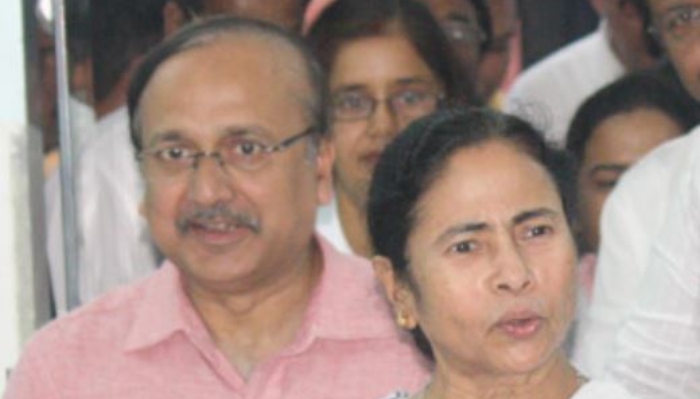
Dr Sukumar Mukherjee, a veteran medical practitioner, rheumatologist and internal medicine specialist, with the responsibility to head this department, is the doctor who was entrusted with the responsibility to head the committee created prior to this one is a doctor with a severely tainted past.
Dr Sukumar Mukherjee stands indicted in India’s worst medical negligence case: Anuradha Saha death case in 1998. But his proximity to Mamata not only made him a permanent member of whichever committee the CM was forming to tackle the pandemic but in the past, it had also brought him the membership of the West Bengal Clinical Establishment Regulatory Commission in 2017.
Besides, Dr Thomas Frieden, who was guilty of sexual assault in New York 2018, was also a part of this prestigious team formed by none other than, Mamata Banerjee.
Prior to this committee, Mamata Banerjee, on March 26 said that the department had set up a 12-member “committee of experts” to advise the government on various technical issues related to the fight against coronavirus. The committee was formed to “advise the government on where and how to set up quarantine facilities in the state” and also recommend the “treatment protocol” for patients to be followed across hospitals in the state. WB CM Mamata Banerjee had entrusted Dr Sukumar Mukherjee with the responsibility to head this department.
Like Dr Sukumar Mukherjee and Dr Thomas Frieden, Dr Pradip Kumar Mitra is also indispensable for Mamata Banerjee. This is probably the reason why, despite his tainted past, this doctor like the other two has been roped in as Mamata Banerjee’s panel of experts.
In late-March, the state government formed what is popularly called a ‘death audit committee’ that was tasked with auditing deaths of all Covid-19 infected patients. The committee was empowered as the only one to certify if such a patient had died of the coronavirus or co-morbidities.
This committee is headed by Abhijeet Choudhury, a gastroenterologist. “How can a gastroenterologist head such a committee? A virologist or epidemiologist should have been asked to head this committee,” said a senior epidemiologist serving at the state-run super speciality SSKM Hospital in Kolkata.
West Bengal sitting on a “time-bomb”
The suppression of facts and fudging of data has become a major worry for authorities and health experts in West Bengal, which has now snowballed into a huge controversy between the Trinamool Congress-led West Bengal government and health-care experts.
The health-care experts believe that the situation in Bengal is very grave as the Mamata Banerjee-led government has not been giving real data to assess the actual seriousness of the pandemic. From threats to doctors for whistleblowing against the state government against lack of facilities to allegations of state government illegally disposing of dead bodies, there have been serious allegations against the Mamata Banerjee government in Bengal.
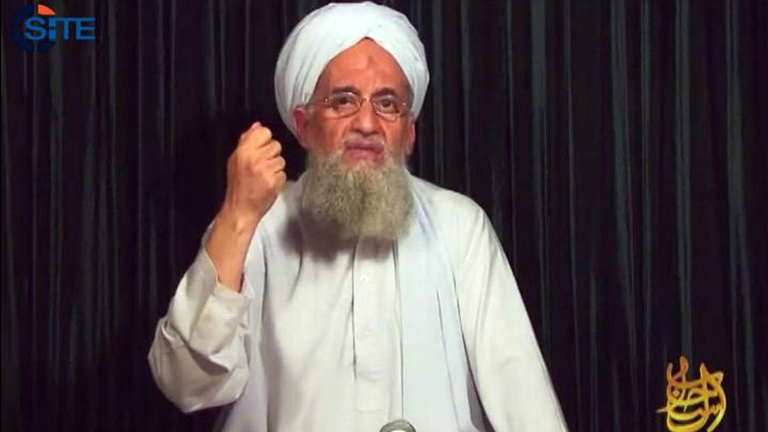
Al-Qaeda Chief Ayman-Al-Zawahiri urged the Indian Muslims to join the jihad against India. This comes days after the Organisation of Islamic Cooperation(OIC), the Kuwaiti government, and many Arab activists accused India of being an Islamophobic country. Yemen’s Al-Qaeda in the Arab Peninsula(AQAP) which is a globally banned terror outfit issued a statement accusing India waging war against Muslims in the country.
Crying foul against the Citizenship Amendment Act, enacted by the Modi government which proposes citizenship to persecuted religious minority communities of Pakistan, Afghanistan, and Bangladesh, the AQAP had alleged that the Indian government has taken several steps against Muslims.
The anti-India statements coming from the Arab countries are a part of Pakistani propaganda against India over the Citizenship Amendment Act and revocation of Article 370 in the erstwhile states of Jammu and Kashmir, also the widespread criticism of Tablighi jamaat which turned out to be a super spreader of the Wuhan coronavirus infection in India.
Yemen and Saudi Arabia based outfits considered dangerous
Al Qaeda, under Osama Bin Laden, had carried out the 9/11 attacks on World Trade Centre in New York, USA. He was later killed in his Abbottabad hideout in Pakistan. The current Al Qaeda chief has urged Indian Muslims to wage a war against the Indian government. He stated that the Indian Muslims should “unite ranks, gather arms and wage jihad.”
As per the US government, the AQAP active in Yemen and Saudi Arabia is considered the most active and dangerous terror outfit branches.
Called for ‘unrelenting blows’ to Indian Army and J&K government
Earlier the Al-Qaeda Chief and successor to Osama bin Laden, Ayman-al-Zawahiri had called for “unrelenting blows” for the Indian Army and the government of Jammu and Kashmir to militants of Kashmir. In a 14-minutes speech titled as ‘Don’t forget Kashmir’, Al-Zawahiri said, “(I am) of the view that the Mujahideen in Kashmir — at this stage at least — should single-mindedly focus on inflicting unrelenting blows on the Indian Army and government, so as to bleed the Indian economy and make India suffer sustained losses in manpower and equipment.” He added, “Pakistan’s conflict with India is essentially a secular rivalry over borders managed by American intelligence. You (the scholars) must clearly state that supporting the jihad in Kashmir, the Philippines, Chechnya, Central Asia, Iraq, Syria, the Arabian Peninsula, Somalia, the Islamic Maghreb and Turkistan is an individual obligation on all Muslims until sufficient strength is achieved to expel the disbelieving occupier from Muslim lands.”
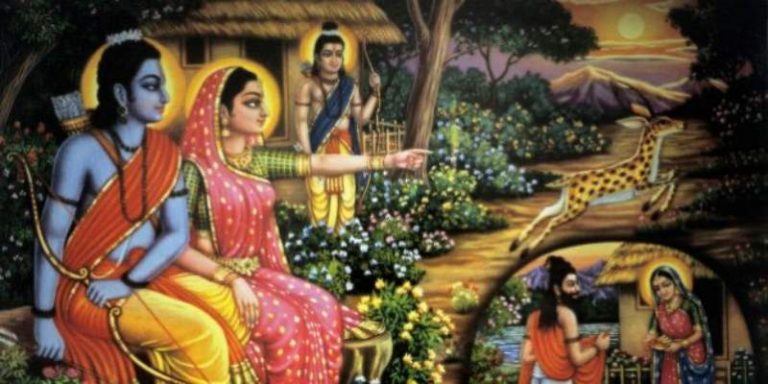
Journalist Saswat Panigrahi has highlighted a disturbing trend among left-leaning Odia poets, many of whom are state and national level award, winners. In numerous poems and statements, some of these so-called ‘intellectuals’ seem to be peddling blatant Hinduphobia, and a smear campaign against Hindu gods and goddesses.
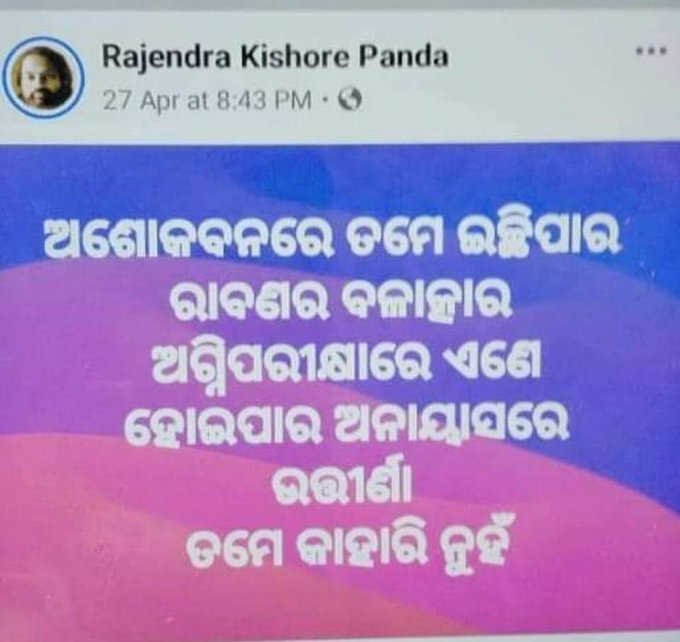
In one of his Facebook posts on Ram Navami, Sahitya Academy award winner poet Rajendra Kishore Panda had written on Maa Sita, “In Ashok Vana, you were desirous of being raped by Ravana, and yet you cleared the Agni Pariksha easily, you cannot be trusted.”
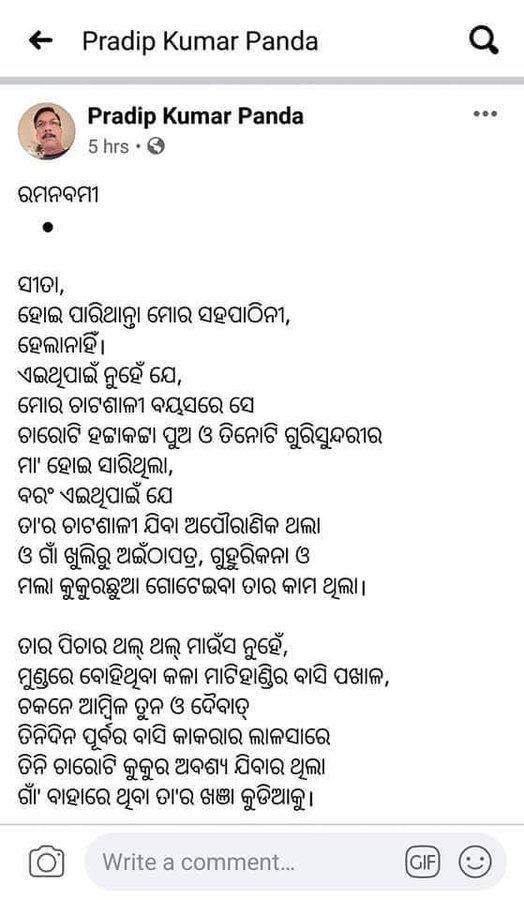
Another poet Pradip Kumar Panda wrote a poem titled ‘Ram Navami’. With a lot of poverty porn and a cunning usage of issues of untouchability and lack of education, the poem depicted abject sexualisation and objectification of women in the Hindu goddess’ name, a theme often used by leftists to present their creations as ‘intellectual’.
Panda’s poem above can be translated as follows: “Sita, you could have been my classmate in school but alas, it never happened. Not because you were the mother of three healthy sons and four fair and beautiful daughters, but because of the fact that going to school was ‘not allowed in Puranas’. And because of the fact that it was your (Sita’s) job to collect leftover food, dead puppies and soiled nappies in the village”.
The poem further reads, “Some dogs in the village always follow Sita to her hut outside the village. The dogs were not lusting after her plump, undulating buttocks, but after the leftover food she carried in a mud pot on her head.”
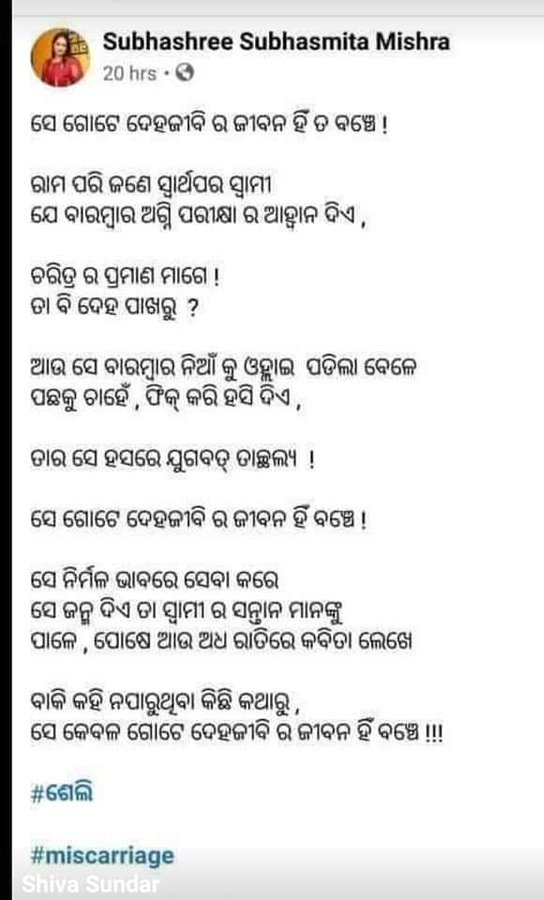
Another such ‘intellectual’ poem by poet Subhashree Subhasmita Mishra reads, “She lives the life of a prostitute. For a selfish husband like Ram, who keeps on demanding Agni Parikhsha as the evidence of her good character, that too from her body. She climbs down to the pyre and smiles looking back at the world, mocking it. She lives the life of a prostitute, keeps serving her husband, keeps birthing children for him, nurtures them and writes poems in the midnight. Yes, she lives the life of a prostitute indeed.”
It is notable here that after the so-called poem by the above mentioned poet Pradip Panda received some backlash on social media, another poet Kedar Mishra shared a justification, asking the critics, “Are poets the contractors of your political emotions?”. Mishra then added, “Your political emotions are not based on Valmiki or Vyasa. Your Ram and Sita are the characters of politics and TV serials. There are many variations of the characters of Ram and Sita, available in the multiple adaptations of Ramayana.”
Mishra then brings in the ‘intellectual’ argument. He claims that the Sita of Valmiki and Sita of Balram Das, Bhanja, (Odia poets who had written grand poems on Ramayana which are celebrated in Odisha) are different. However, Mishra failed to mention that neither Balram Das nor Upendra Bhanja has ever tried to smear or disrespect Sita’s character. Their literary works are venerated in Odia households and are a part of Odia lifestyle because of the simple, poetic and emotional depictions of the stories of Ramayana. He went on to claim that the poems are metaphorical and the depictions are based on different interpretations of the epics.
Saswat Panigraphi had further informed that he had dared the poets to write posts on similar ‘interpretations’ and ‘metaphors’ of other religions. But was promptly blocked by them. He has further informed that police complaints have been registered against poets Rajendra Panda and Subhashree Subhasmita Mishra for hurting religious sentiments.
It is notable here that defence analyst Abhijit Iyer Mitra was jailed for over 40 days by the Naveen Pattnaik government in 2018 for hurting religious sentiments when he had mocked the sculptures at the Konark Sun Temple for erotic poses. It is painful to see that such blatant hatred against Hindu gods and cheap sexualisation of Hindu scriptures is being peddled as poetry in the name of freedom of expression and intellectualism.
Leftists have always ridiculed, insulted and peddled hatred against Hindu traditions, scriptures and Gods in the name of ‘intellectualism’. What is indeed saddening is that the same leftists have never dared to hold up their defences of freedom, bravery and intellectualism in their works when it comes to other religions. It is always the Hindus, Hindu gods and Hindu customs and rituals which are their targets.
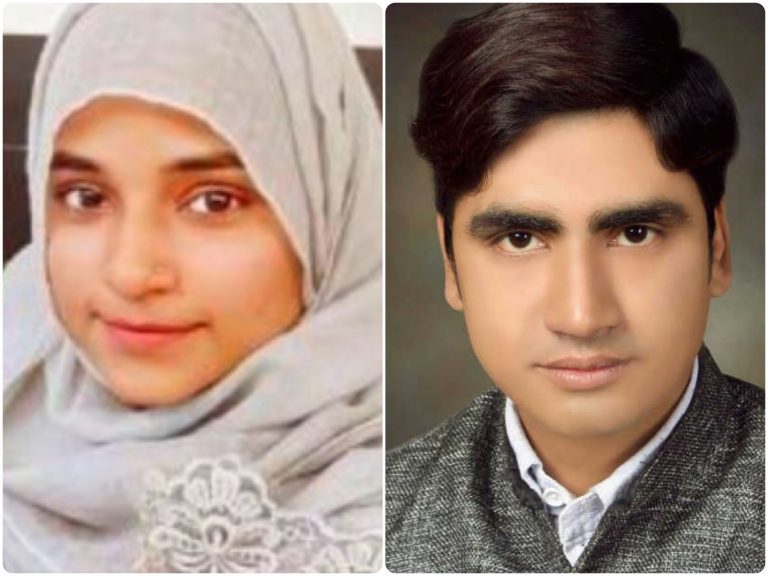
A local Samajwadi Party leader Shamim Nomani has been arrested on the charges of abetting the suicide of freelance journalist Rizwana Tabassum after the suicide note recovered from her blamed him for taking such an extreme step. Rizwana Tabassum has contributed to portals such as The Wire, ThePrint and BBC Hindi amongst others.
“Shamim Nomani is responsible for this,” the retrieved suicide note said. Tabassum had killed herself in Harpalpur of Varanasi district on Monday.
The SSP’s PRO Sanjay Tripathi on Tuesday said that Shamim has been formally arrested. He was taken into custody and interrogated on Monday night. In addition, the PRO said that the autopsy report of journalist Rizwana Tabassum had confirmed death by hanging.
A case has been registered against Samajwadi leader Shamim Nomani on the charge of abetment to suicide under Section 306 on the complaint filed by Tabassum’s father, Varanasi Sadar CO Abhishek Pandey revealed.
Nomani and Tabassum were long-time friends but none of their acquaintances knows what may have transpired between the two for Tabassum to take such an extreme step of giving up her life. Tabassum’s grieving father lamented, “She was a good daughter as well as a good journalist. She had no enmity with anyone.”
A journalist with The Wire and The Print committed suicide
A freelance journalist, Rizawana Tabassum, was found dead in Varanasi yesterday. She took the radical decision of giving up her life by committing suicide. In her suicide note, she has accused a local youth leader associated with the Samajwadi Party as responsible for her suicide.
According to Varanasi Sadar CO, Abhishek Pandey, an FIR has been registered against Shamim Nomani, a resident of Lohta, regarding the same. As per reports, the suicide note left by the journalist said ‘Shamim is responsible’. Rizwana has contributed to portals such as The Wire, The Print and BBC Hindi among others.
A case has been registered against a 35-year-old man for bolting from a quarantine centre in Odisha’s Jharsuguda even as the coronavirus positive cases surged to 170 in the Ganjam district where around 150 migrant workers fled a quarantine centre on Sunday citing paucity of water. The man escaped on Monday, even before the sample of his swab test were out, raising fears of a possible spike in the COVID-19 infection in the region.
The police have registered a case against the absconder, Asif Khan, who had come to Jharsuguda from Nala road, Rourkela, a known coronavirus affected area on April 26, 2020. He had reportedly visited a containment zone at Nala Road of Rourkela town in neighbouring Sundargarh district and was therefore lodged at the BTM school quarantine centre in Jharsuguda from April 27, 2020.
The Nala Road containment zone which was visited by Khan is a Muslim-dominated region and has so far reported 7 positive coronavirus cases, including the recent case of a 29-year-old woman.
Man lodged in quarantine centre in Jharsuguda for coming from Rourkela (Nala Road – #COVID19 affected area) on April 26, flees the camp without permission or knowledge of competent authority. Jharsuguda police registers case to trace out the absconding detainee pic.twitter.com/mIzlLvzcVH
Khan’s swab sample was sent for testing and the results were awaited. However, in the wee hours of May 4, 2020, he fled away from the quarantine centre without permission or knowledge of any competent authorities of the isolation centre.
Khan has been booked under Sections 188, 269, 270 and 271 of the Indian Penal Code and an investigation into his escape has been ordered by the police. Measures are being taken by the authorities to trace the absconded quarantine detainee.
Fleeing of suspected coronavirus patient pose a major risk to the country
Earlier, in the first week of April, 3 people suspected of carrying Wuhan coronavirus, managed to escape from the government quarantine centre in Kolkata late last night, setting alarm bells ringing about the security of the containment centres. A massive manhunt was launched by the Kolkata police the subsequent morning after which the three escapees were traced.
In another such incident, a man named Javed Khan who was accused of attacking policemen in Tatpatti Bakhal area of Indore earlier in April was arrested again after fleeing a quarantine facility. Javed Khan, who had allegedly attacked doctors and cops had later tested positive with Chinese coronavirus on April 11. He was later shifted to an isolation ward in Jabalpur. He along with 6 other people were earlier arrested under the stringent National Security Act (NSA) for attacking a team of doctors in the Tatpatti Bakhal area in Indore.
Escaping patients suspected of being infected with COVID-19 pose a massive threat to the country’s battle against the coronavirus. The immensity of the danger posed by coronavirus victims fleeing quarantine was best encapsulated by the meteoric rise of the outbreak in South Korea, enabled by a single coronavirus patient who refused to employ social distancing and was believed to have engendered 80 per cent of the total coronavirus cases in the country.
The Cyber Cell Branch of the Delhi Police has apprehended a 15-year-old juvenile and identified 20 other accused involved in the Boys Locker Room group case. The teenager was apprehended after cops discovered his registered phone number that was reportedly switched off.
The police found that the boy had shared a picture in the Instagram group and reached his house after determining his address. The names of four South Delhi schools and one in Noida have surfaced in connection to the case.
The mobile phone of the apprehended student has been recovered and it is also being examined: Delhi Police Cyber Cell on Delhi school boys glorifying rape on a Instagram chatroom https://t.co/qiPO9eNgY5
The principal of one of the Delhi schools said, “It does come as a shock to us as we have an atmosphere in school that encourages discussion around issues of gender and respect, as well as cybercrime. I also believe that the involvement of parents in their children’s lives is very important when it comes to things like these.”
The cell phone of the juvenile has been recovered and is now being examined. A First Information Report (FIR) has been registered under Indian Penal Code (IPC) Sections 465 (forgery), 469 (forgery to harm reputation), 509 (insulting the modesty of a woman) and Sections 67 and 67A of the Information Technology Act, 2000.
“Bois Locker Room” Instagram chat group
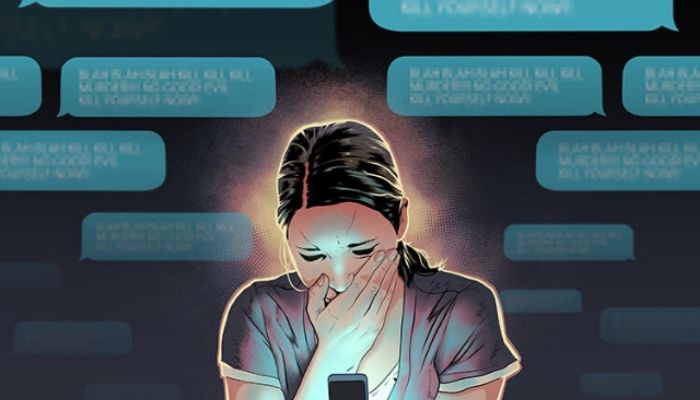
Recently, social media was awash with repugnant details of an Instagram chat group comprising of boys that discussed ‘gang-raping’ girls in a group called ‘Bois Locker Room’ (Bois, being a spin on the word ‘boys’). The group allegedly ran by teenage boys, involved graphic sexualisation and sharing of private photos of underage girls, objectifying them and planning gang-rapes with minor girls. The petrifying incident came to light after a girl from South Delhi shared a screenshot on social media and busted the said group and a host of other such groups.