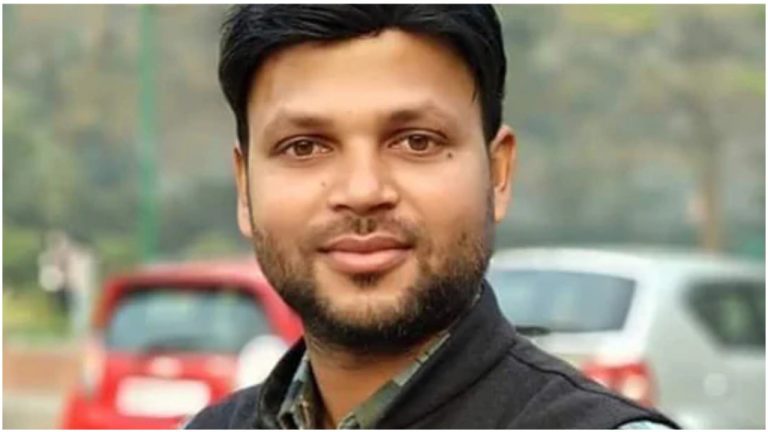
On Thursday, the Delhi Police arrested a student leader of the Jamia Millia University for instigating violence during the anti-Hindu Delhi riots.
According to the reports, Meeran Haider, a 35-year-old a PhD student from Jamia Millia Islamia University, was arrested on Thursday in connection with rioting and criminal conspiracy pertaining to anti-Hindu riots in north-east Delhi that have claimed the lives of 53 people and left over 400 injured.
Meeran Haider is also the president of the Rashtriya Janata Dal youth wing’s Delhi unit. Meeran Haider is also a member of Jamia Coordination Committee (JCC). Haider is currently being interrogated at the special cell’s Lodhi Colony office.
According to the police, Haider, who is a resident of Jamia Nagar, was served a notice on March 31, asking him to join the probe in the case of rioting and criminal conspiracy that was registered by the crime branch after the north-east Delhi riots.
According to ToI journalist, Raj Shekhar Jha, Haider and his few associates had mobilised around 60 people to instigate riots in the national capital. He was also allegedly present in the Chand Bagh area during the riots. The accused had also run Whatsapp groups to incite riots in Delhi.
35-year-old Jamia student Meeran Haider is the head of the Delhi youth wing of RJD. He was adoing his MPhil in West Asian Studies, has MBA and an https://t.co/CPqzwXFDEw degrees. Police have found that he was running Whatsapp groups to incite riots in Delhi. pic.twitter.com/uEwf5bDTgB
“We arrested Haider in the case, as we have enough evidence to prove the charges against him. His role in funding the riots and anti-CAA protests is being probed,” the special cell officer associated with the probe said.
Joint commissioner of police of the special cell Neeraj Thakur confirmed the arrest of the scholar, Meeran Haider, but did not disclose details.
The suspect’s involvement in the conspiracy to instigate the riots, funding the violence and the agitation against the Citizenship Amendment Act (CAA) in Shaheen Bagh is also being probed, another officer reportedly said.
The Jamia Coordination Committee, which was forefront at instigating violence on the streets of Delhi during the anti-CAA protests, had extensively run a so-called ‘awareness campaign’ in Muslim-dominated areas of Delhi where anti-Hindu riots had erupted in Delhi.
Meanwhile, the Jamia Co-ordination Committee has reacted to the arrest of their leader and condemned the arrest of Haider while calling his arrests ‘shameful’.
“It is shameful that even in circumstances like these, Muslim voices are being targeted and witch-hunted by the state. JCC demands that he must be immediately released as all charges against him are baseless,” the JCC said.
On the day of US President Donald Trump’s visit to India in February, the national capital had witnessed large-scale violence under the garb of anti-CAA protests. The anti-CAA riots turned communal in Delhi resulting in severe violence on the streets of Delhi. The anti-Hindu riots that engulfed the streets of Delhi have resulted in deaths of around 53 persons and more than 250 people sustained injuries in the violence.
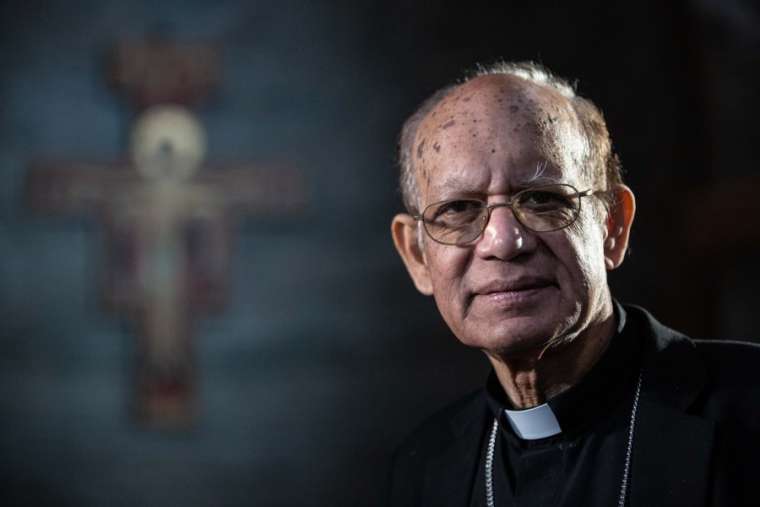
As the menace of coronavirus sweeps across the country, the Archdiocese of Bombay, Cardinal Oswald Gracias has appealed to his followers to cremate the bodies of those who have died of Coronavirus. Calling upon the clergy of all the churches in Mumbai, the cardinal has asked them to follow their instructions issued by the Brihanmumbai Municipal Corporation(BMC) and the burn the dead bodies of Christians who died of Coronavirus.
In a video message put out on his YouTube channel, Christian priest Cardinal Oswald Gracias requested Christians and church priests to resort to cremation instead of burials for the coronavirus victims. He also advised people to strictly comply with the government restrictions, exercise social distancing and continuously wash their hands with soaps to limit the spread of the deadly contagion. Citing the current situation in the country and the world, Gracias contended that the government might be compelled to extend the restrictions beyond April 14 and therefore strongly advised the Christian padres from organising baptisms, first communions and marriages immediately after April 14.
“Looking at the situation in other countries, the government in India might be compelled to extend the lockdown beyond April 14. Therefore, I urge all the Christian padres to not organise any baptisms, first communions and marriages immediately after April 14. It would not be prudent to do so.,” Cardinal Gracias said.
The Archdiocese of Bombay further exhorted the pastors to abide by the BMC circular, proscribing the burial of coronavirus victims and instead mandating cremations for the same with not more than 5 mourners to be present in the funerals.
“In Mumbai, the BMC has ordered the body of the coronavirus victims be cremated. Burial is not allowed. Also, the mourners are to be restricted to 5. The police station should also be informed about the funeral,” Gracias said.
It is pertinent to note here that while the Archdiocese has given sagely advice, the circular that was issued by BMC was reportedly withdrawn after outrage by NCP Minister of Maharashtra Nawab Malik.
As per a WHO report, the burial of coronavirus patients poses the risk of a further outbreak of the disease but the cremation doesn’t hold any such risks. The report said that when the body is burnt in an electric machine, its temperature is around 700– 1000 ° C. This causes the virus to die and there is no risk of it spreading. However, the WHO says that if a dead body of a coronavirus victim is buried, the risk of its spread aggravates. The WHO report states that if such a body is buried in the ground, then care should be taken that there is no water source within 30 meters of the burial site.
In order to maintain social distancing and orderly withdrawal of money by beneficiaries, the Department of Financial Services (DFS) has directed the banks to regulate the arrival of account-holders at branches, Business Correspondents and ATMs for withdrawal of money.
The DFS has released a schedule of disbursement based on the last digit of the account number of the beneficiary to avoid unnecessary over crowding at banks.
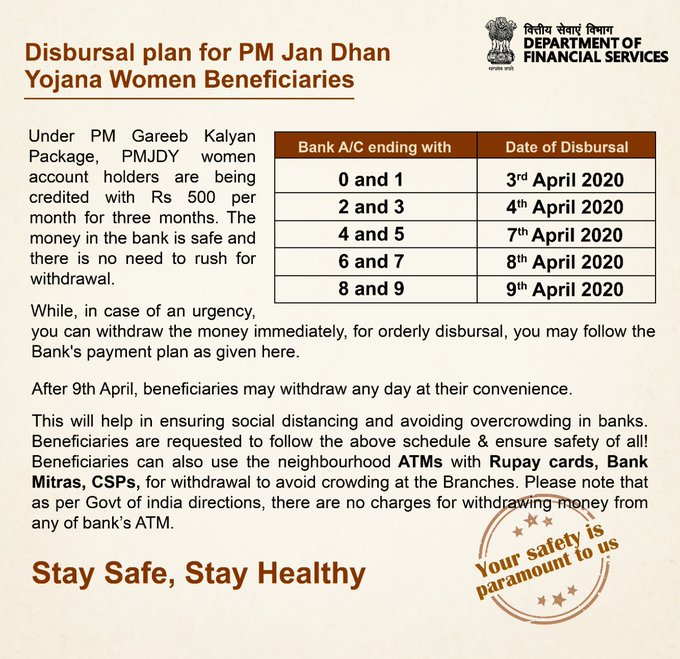
On Friday, the Department of Financial Services appealed to PMJDY women account holders to check the last digit of their account number and follow schedule shared below to visit banks or Bank Mitras to maintain social distancing during the nation-wide lockdown.
Appealing PMJDY women a/c holders to check last digit of their a/c no. & follow schedule shared below to visit banks, CSP & Bank Mitras. Withdrawal can also be done via any bank’s ATM. No charges for using ATM. Let’s follow social distancing & fight #corona@PMOIndia@FinMinIndiapic.twitter.com/No1XfMMTsW
The Ministry of Rural Development will be releasing the lump sum amounts Rs 500/- per woman to the female account holders of Pradhan Mantri Jan-Dhan Yojana (PMJDY) for April 2020, and the same will be credited to the designated accounts of individual banks on 2 April 2020.
The women PMJDY account holders having account number with the last digit as 0 or 1 can withdraw at the banks on April 3, 2019. Similarly, the women PMJDY account holders having account number with the last digit as 2 or 3 can withdraw at the banks on April 4. The beneficiaries with an account number ending with 4 or 5 will be allowed to visit banks on April 7.
On the similar lines, women with bank accounts ending with 6 or 7 can visit banks on April 8. Finally, the account holders ending with 8 or 9 can withdraw at the banks on April 9.
After April 9, the beneficiaries may go to the branch or BC on any date as per normal banking hours. Banks may accordingly phase out the credit to beneficiary accounts. In case of emergency, the account holders can withdraw their money immediately.
The decision was announced after Finance Minister Nirmala Sitharaman had said that an ex-gratia payment of Rs. 500/- will be deposited to women for the existing PMJDY account holders, for next three months, under the PM Garib Kalyan Package.
In yet another act of mob attacking police personnel, a Muslim mob on Thursday surrounded the police and hurled stones at them in Uttar Pradesh’s Aligarh after the police asked them not to offer group namaz in a mosque, reportsTimes Now.
According to the reports, three people have been arrested after the mob attacked the police force in Aligarh. The police have launched an investigation following the attacks. The mosque comes under Sarai Rahman area in Bannadevi police station area of the city. Repotedly, two police personnel were injured in the incident.
According to an Amar Ujala report, on Thursday night, around 25 to 30 people arrived at the mosque in Sarai Rahman area to offer prayers defying the nationwide lockdown. Deepak Kumar, the in-charge of the Raghuveer Puri police station, got the information and reached the spot with two personnel – Shivam and Vikrant.
The police appealed to the group not to assemble outside and instead offer Namaz at their respective homes citing lockdown. However, the mob did not heed to the advice and pelted stones at them.
Speaking to media, Circle Officer Pankaj Srivastava said, “These people gathered at a mosque in Bannadevi area to offer namaz. Police reached there and tried to explain to them that it is not advisable to perform community prayers when a coronavirus lockdown is in place. But the people did not heed to the advice and pelted stones at police.”
He added that the police personal had to leave the place as the public got violent. Later a larger team of police then reached the spot and made the people understand that violence will be strictly dealt with, added Srivastava. Three persons were arrested in the matter and the police have launched an investigation.
The attack on police personnel, healthcare workers continues unabated in the country at a time when these frontline workers have put their lives at stake to limit the spread of coronavirus.
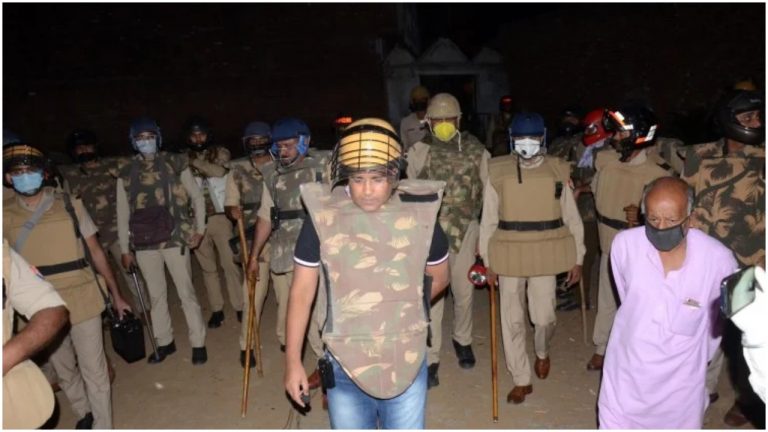
Earlier on Wednesday, a sub-Inspector and a constable of Uttar Pradesh Police were seriously injured when a police team trying to enforce the ongoing lockdown was attacked by a group of villagers in Muzaffarnagar.
The police team was on patrol in Morna village when they saw locals gathered outside in groups. When they were asked to follow the prohibitory orders, they began pelting stones at the police and some of them even attacked the cops with iron rods, said police personnel. Two policemen were injured during the attack.
Earlier in the day, it was reported on how six Muslims associated with controversial Tablighi Jamaat had indulged in the deplorable act of walking around the ward without their trousers on and making lewd gestures towards the nurses during their quarantine at MMG District Hospital in the city. An FIR has also been registered against these people for misbehaving with nurses and hospital staff.
In a similar incident, a Muslim mob had not only assembled at a local mosque in Mainpuri, Uttar Pradesh but also attacked the policemen for asking to avoid mass prayers (namaz) in the view of nationwide lockdown due to the coronavirus pandemic.
In Indore, a medical team was attacked by a mob in Tatpatti Bakhal for visiting the locality to check on a patient with suspected coronavirus symptoms. Yesterday in Bengaluru, a nurse and ASHA workers were also attacked by the residents of Sadiq layout for trying to collect health details and trace symptomatic persons.
Following such heinous attacks on police personnel and healthcare workers, the Uttar Pradesh government has decided to invoke National Security Act (NSA) against those who attack police personnel anywhere in the state during the nation-wide coronavirus lockdown
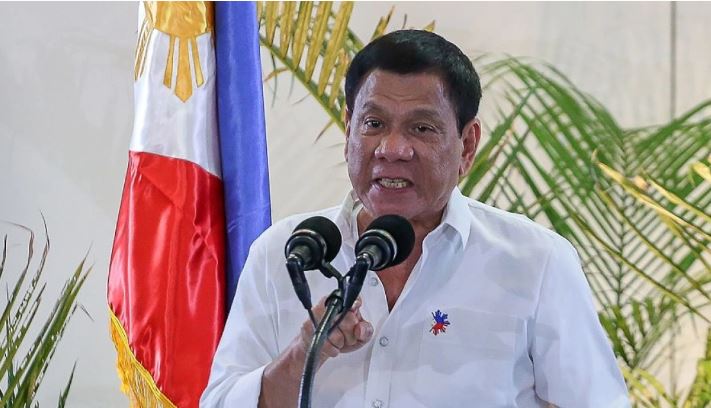
In an unprecedented move to contain the deadly Chinese Coronavirus from spreading further in his country, the Philippines President Rodrigo Duterte has ordered the police and military to ‘shoot dead’ the lockdown violators.
In a televised address to his citizens, Rodrigo Duterte said: “It is getting worse. So once again I’m telling you the seriousness of the problem and that you must listen. My orders to the police and military…if there is trouble and there’s an occasion that they fight back and your lives are in danger, shoot them dead…Is that understood? Dead. Instead of causing trouble, I will bury you”, Duterte was quoted as saying.
The President stressed that physical abuse and discrimination against medical workers in the country was a grave crime that would not be tolerated.
He furthered that it was vital everyone cooperates and follows home quarantine measures, as authorities try to slow the contagion and spare the country’s fragile health system for being overwhelmed.
While many activists criticised Duterte over his fierce rhetoric and accuse him of inciting violence and vigilantism, his office came to his defence calling it a hyperbole. They said that the President’s intention was to stress on people not violating the lockdown.
The Philippines on March 31 (Tuesday) reported 538 new virus cases – the highest daily jump in the number of infections. As on April 3, 13:00 pm, Philippines recorded 2,633 positive Covid-19 cases and 107 deaths.
The passports of 211 foreign nationals, out of 287, who had attended the religious congregation organised by Tablighi Jamaat at Nizamuddin Markaz between March 13 and March 15 have been seized by law enforcement authorities. These foreigners have been hiding in different mosques in the State of Uttar Pradesh. A total of 34 First Information Reports (FIRs) have been registered against them.
Charges have also been pressed against 450 people under Epidemic Diseases Act in Meerut and the adjoining areas. A total of 2,058 members of Tablighi Jamaat have been apprehended from Bijnor, Saharanpur, Shamli, Muzzaffarnagar, Baghpat, and Bulandshahr.
Additional Chief Secretary (Home) Avnish Kumar Awasthi said that the visas of people coming from abroad are constantly being reviewed. He has also urged the people involved with the Tablighi Jamaat should inform themselves to avoid corona. He has also sought help from the common people to report to the police on receiving any information about them.
A report has been lodged against 10 people including nine citizens of Thailand in Prayagraj at Kareli police station in the city late Thursday. A lawsuit has also been instituted against Maulana of the mosque on charges of providing asylum. SP City Brijesh Srivastava has said that his passport will also be confiscated.
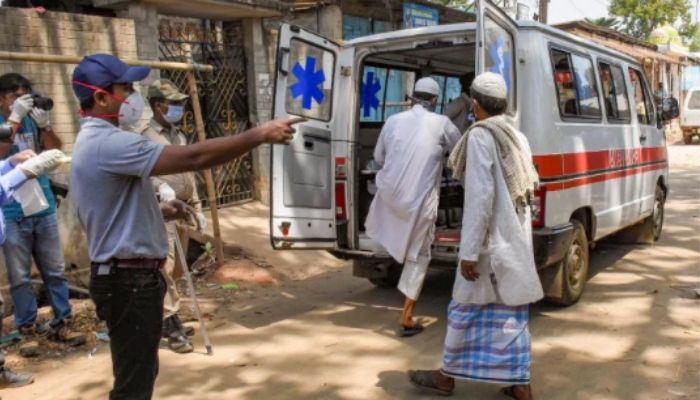
The Uttar Pradesh police have registered an FIR against six Muslims associated with controversial Tablighi Jamaat for walking around the ward without their trousers on and making lewd gestures towards the nurses during their quarantine at MMG District Hospital in Ghaziabad. This incident of Tablighi Jamaat members misbehaving came after they were quarantined.
The Chief Medical Officer of the District MMG Hospital in Ghaziabad had written a letter to the Ghaziabad police informing about the criminal behaviour of the Jamaatis. The CMO had written that the members of the Tablighi Jamaat who as kept at the isolation ward of the hospital have been roaming in their wards naked with their pants. The letter states that obscene comments and songs are being heard from the ward, and inmates are asking for beedi-cigarette from the staff of the hospital. The CMO also writes that those people are also making lewd gestures towards female employees of the hospital.
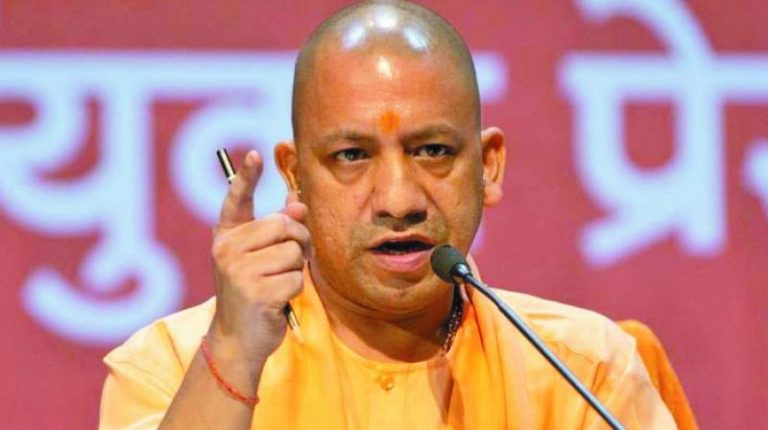
Following the increased mob attacks against frontline healthcare workers and policemen engaged in fight against the deadly Coronavirus, the Uttar Pradesh government has decided to invoke National Security Act (NSA) against those who attack police personnel anywhere in the state during the nation-wide coronavirus lockdown, reports ANI.
According to the reports, the Yogi Adityanath-led government has issued orders that strict action will be taken under the NSA against mobs who have been indulging in attacks against police, health-workers who have been on the frontline to limit the spread of the Chinese pandemic COVID-19.
Uttar Pradesh Government has issued orders that strict action will be taken under the National Security Act (NSA) against those who attack police personnel anywhere in the state during #CoronavirusLockdown.
At a time when the authorities across the country are scrambling to identify the symptomatic patients, especially the ones who had attended the Tablighi Jammat in mid-March, there have been attacks on policemen by mobs in various place across the country.
Last week, in a similar act, a Muslim mob had not only assembled at a local mosque in Mainpuri, Uttar Pradesh but also attacked the policemen for asking to avoid mass prayers (namaz) in the view of nationwide lockdown due to the coronavirus pandemic.
Similarly, six Muslims associated with controversial Tablighi Jamaat had indulged in thedeplorable act after they had walked around the ward without their trousers on and making lewd gestures towards the nurses during their quarantine at MMG District Hospital in the city. An FIR has also been registered against these people for misbehaving with nurses and hospital staff.
The number of COVID-19 cases has risen to 126 in Uttar Pradesh. Of these 126 cases, 17 have been fully cured and discharged while two have died – one each in Meerut and Basti.
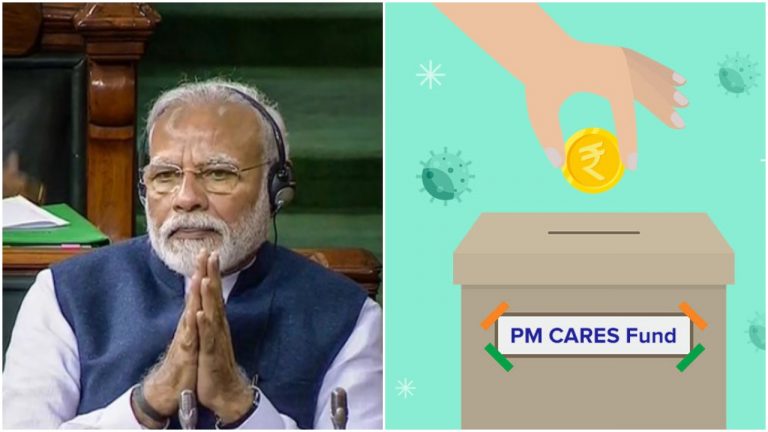
After Prime Minister Narendra Modi launched the PM CARES Fund to fight the Wuhan Coronavirus, a lot has been discussed about the similarities and differences between PM CARES Fund and PMNRF. The Prime Minister’s National Relief Fund (PMNRF) was established in the year 1948. Initially, the purpose of the fund was to provide assistance to displaced people from Pakistan during and right after the partition of India. The resources of the PMNRF are now utilized primarily to render immediate relief to families of those killed in natural calamities like floods, cyclones and earthquakes, etc. and to the victims of the major accidents and riots. Assistance from PMNRF is also rendered, to partially defray the expenses for medical treatment like heart surgeries, kidney transplantation, cancer treatment and acid attack etc. The fund consists entirely of public contributions and does not get any budgetary support. The corpus of the fund is invested in various forms with scheduled commercial banks and other agencies. Disbursements are made with the approval of the Prime Minister.
It is pertinent to note that the PMNRF is not constituted by the parliament.
In the wake of the Partition of India, Prime Minister Jawaharlal Nehru had said that while the government of India is utilising its funds to ensure that the displaced can re-settle and re-start their lives, it was not enough and helping those displaced needed a collective effort of the nation. To that end, a national fund was set up that could be used to help people suffering from any disaster but especially, was to be used to help the refugees from Pakistan post-partition.
It is thus that PMNRF was constituted day the then Prime Minister Jawaharlal Nehru. However, what is little known is that when it was constituted, the managing committee had included the President of the Congress party specifically.
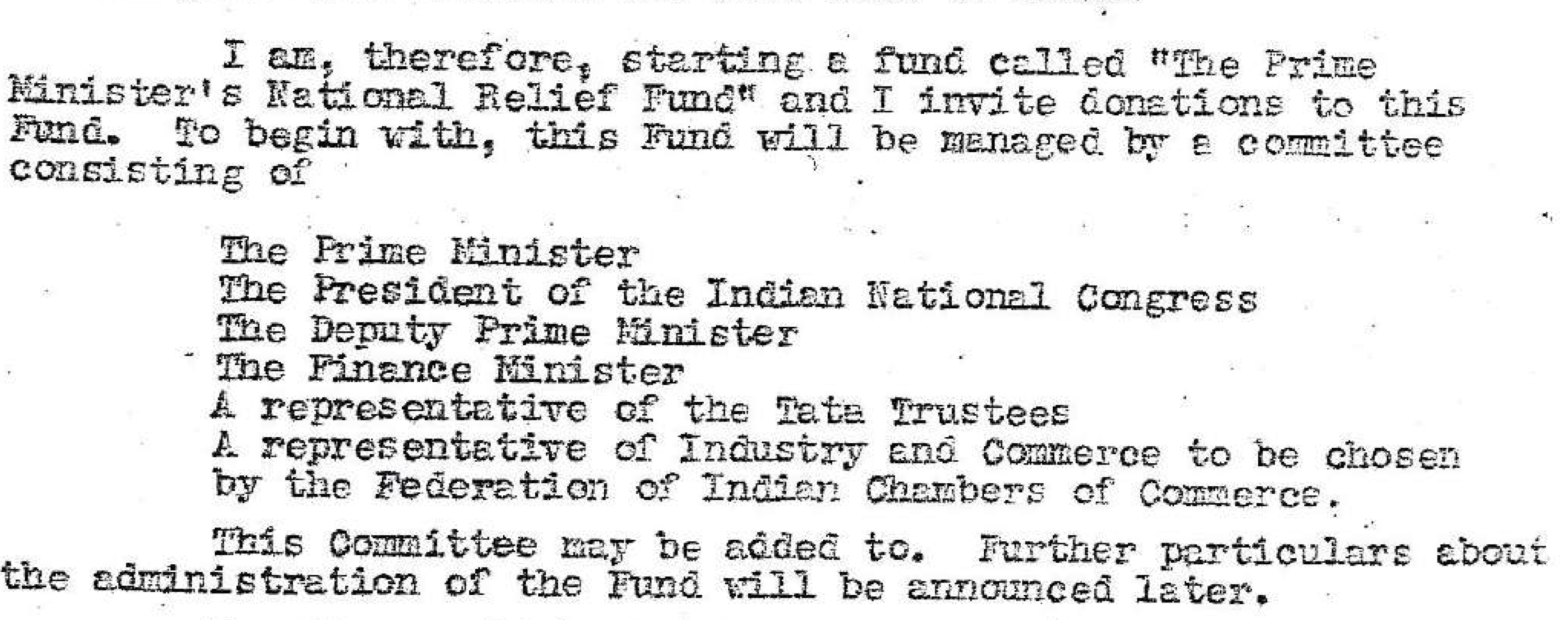
When the Fund was constituent, the following people were included in the managing committee of the PMNRF.
i) The Prime Minister. ii) The President of the India National Congress party. iii) The Deputy Prime Minister. iv) The Finance Minister. v) A representative of Tata Trustees. vi) A representative of Industry & Commerce to be chosen by FICCI.
1948 Notification announcing formation of PMNRF by PM Jawaharlal Nehru
In the notification, it was said that more members would be added to the committee later on.
In fact, it was only sometime in the year 1985, the then Managing Committee of the Fund entrusted the entire management of the said fund to the Prime Minister. The PM was conferred with sole discretion to appoint a “Secretary of the fund” on his behalf, upon whom amongst other things, the authority to operate the bank accounts of the fund was also delegated. It is pertinent to note that this decision was taken when Prime Minister Rajiv Gandhi was in-charge of the fund.
Interestingly, the PMNRF is far less transparent than the PM CARES since after PMNRF was deemed a trust, it has functioned without a trust deed. Essentially, giving unbridled power to the Prime Minister with zero accountability. Till date, nobody knows what the guidelines that govern the PMNRF are.
In the face of the Wuhan Coronavirus, Prime Minister Modi launched PM CARES Fund where he invited public contribution to fight the pandemic. The PM CARES Fund is an emergency fund that was set up to provide relief to those affected by the Wuhan Coronavirus. The PM CARES, or the Prime Minister’s Citizen Assistance and Relief in Emergency Situations Fund has been set up as a public charitable trust. The Prime Minister is the chairman of this trust and its members include Defence Minister, Home Minister And Finance Minister.
As soon as it was launched, the fund received a thumping reception with thousands of people donating to it, including industrialists, Bollywood stars and the average folk. However, one question that was repeatedly raised as to why a PM CARES Fund was created instead of simply using the PMNRF or even renaming the PMNRF to PM CARES.
Business Standard noted in an article that PM CARES Fund is far more democratic than the PMNRF.
It says:
Under PMNRF, the criterion for disbursement of money and selection of beneficiaries is purely at the ‘discretion of the PM and in accordance with the PM’s directions.’ Modi’s PM CARES now delegates that power of deliberation and decision making to three other ministers of the government, who handle some of the most crucial portfolios. Apart from Modi who will chair the trust, it also has his top three ministers – Home Minister Amit Shah, Defence Minister Rajnath Singh and Finance Minister Nirmala Sitharaman as members. As chairman of the PM CARES trust, Modi still has the responsibility of sanctioning and approving his ministers’ recommendations; but unlike PMNRF he is not the proverbial ‘judge, jury and executioner.’ By the looks of it, Modi seems to have diluted the powers of his own office over the crucial fund with the creation of PM CARES.
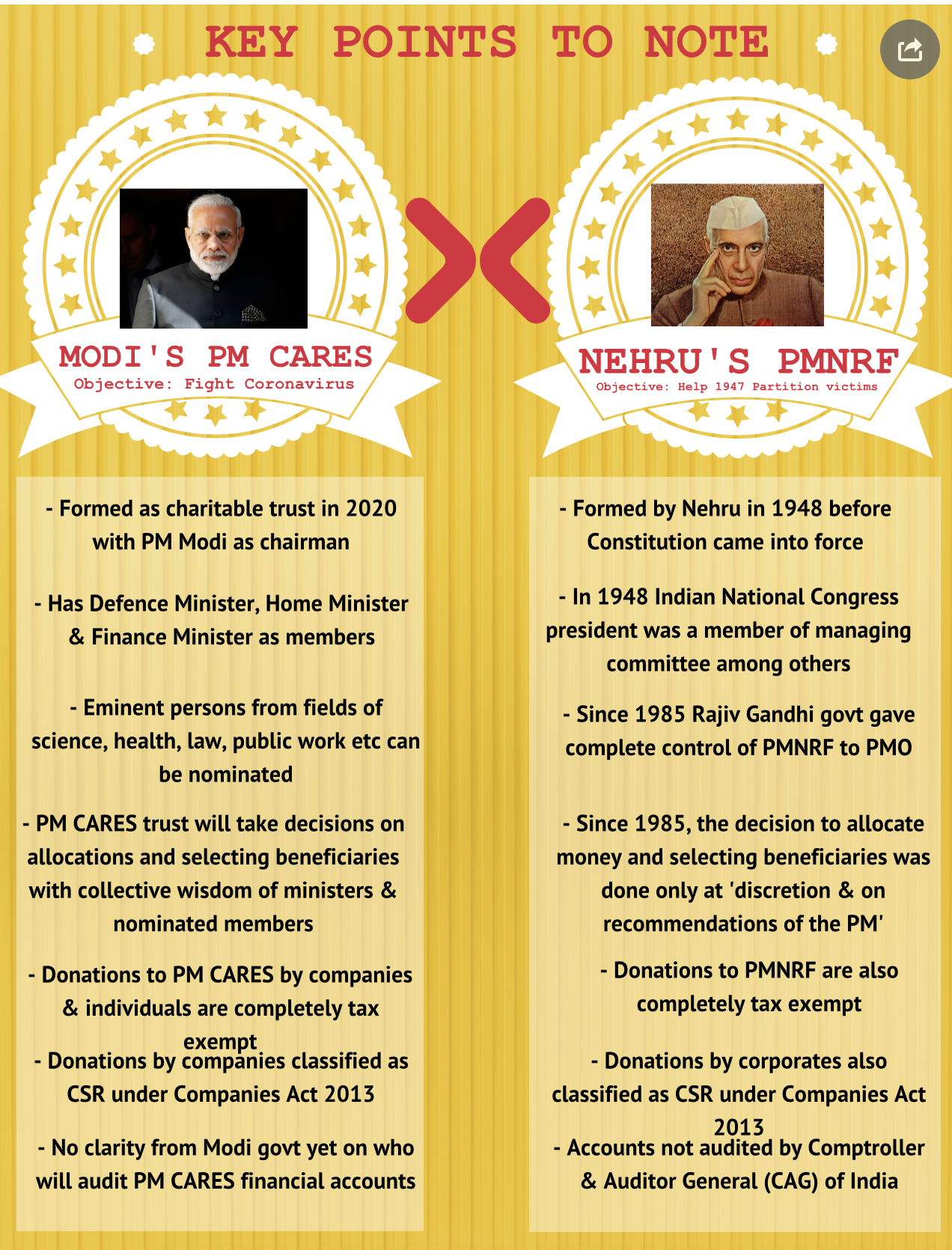
The report also summarised the differences between the PM CARES Fund and the PMNRF.
Difference between PM CARES Fund and PMNRF (By Business Standard)
It thus suffices to say that the PM CARES Fund is far more adequate and transparent than the PMNRF is even though the latter has come to the rescue of several citizens as well.
It is also now reported that the Prime Minister’s Citizen Assistance and Relief in Emergency Situations Fund (PM CARES Fund), which is a dedicated national fund with the primary objective of dealing with the Coronavirus pandemic, will have up to 13 eminent experts to undertake relief or assistance of any kind relating to a public health emergency including the creation and up-gradation of healthcare facilities. Most importantly, the eminent experts will be working pro bono.
There is also a provision to set up an advisory board of not more than 10 persons — selected by the trustees from among the medical practitioners, healthcare professionals, academicians, economists and lawyers.
“The responsibility of the trustees in PM-CARES has been defined, unlike in the Prime Minister National Relief Fund (PMNRF). The latter has no provision of an advisory board. PMNRF has the PM, deputy PM, finance minister, Congress president and a representative of the Tata Trust and industry representative chosen by FICCI, as members of the trust,” a senior official speaking to Economic Times revealed.
A senior BJP functionary said Congress was objecting to PM-CARES because the Congress president had not found a place in it unlike in the PMNRF. “The idea is not to make the PM-CARES fund political in any sense. There is no BJP representation on the PM-CARES fund – people will be on the trust based on their positions in government,” the functionary said.
“PM-CARES’s objectives include undertaking and supporting relief or assistance of any kind relating to a public health emergency or any other kind of emergency, calamity or distress either man-made or natural, including the creation or up-gradation of healthcare or pharmaceutical facilities, other necessary infrastructure, funding relevant research or any other type of support.”
A whopping 60% (295 persons) out of the new 485 confirmed positive cases of Wuhan Coronavirus detected within a single day on Thursday had attended the Nizamuddin Markaz organised by the Tablighi Jamaat, reportedThe Times of India. The event was held between March 13 and March 15 and saw a footfall of around 3400 members. Even after the event, thousands of Jamaat members had continued to gather in the Nizamuddin Markaz Mosque in Delhi.
So far more than 2500 people have been infected in India while 70 patients have lost their lives. As of Thursday, Delhi reported 141 cases while Maharashtra reported 88 new cases most of them Jammat members. 129 of the 141 confirmed cases in Delhi are Jamaat members.
#Covid19 in India: Nearly 65% of 544 new all-India cases linked to #TablighiJamaat’s event in city
The massive jump of cases in India is solely due to the Tablighi Jamaat members who had gathered in the Nizamuddin mosque despite government orders against mass-gatherings. The Jamaat members taking buses and trains to their respective localities all over India has resulted in a massive nation-wide spread within a span of few days. As per government reports, over 9000 Tablighi Jamaat attendees and their primary contacts have so far been quarantined.
North-Eastern state Assam, which had so far been untouched by the coronavirus, saw 16 positive cases in a single day, all of them were Tablighi Jamaat returnees. Tablighi members have also taken the coronavirus as far as Andaman Nicobar Islands and Arunachal Pradesh.
The Uttar Pradesh police have registered an FIR against six Tablighi Jamaat members for walking around the ward without their trousers on and making lewd gestures towards the nurses during their quarantine at MMG District Hospital in Ghaziabad. This incident of Tablighi Jamaat members misbehaving came after they were quarantined. The Chief Medical Officer of the hospital had earlier written a letter to the cops, informing about the criminal behaviour of the Jamaatis.
In what could be termed as a massive effort undertaken by the Ministry of Home Affairs (MHA) in coordination with states, until now, as many as 9000 Tablighi Jamaat workers and their primary contacts have been traced and placed in quarantine across the country in view of the coronavirus infection. Out of these 9000 people, 1306 are foreign nationals and the rest are Indians.
The Prime Minister’s Citizen Assistance and Relief in Emergency Situations Fund (PM CARES Fund), which is a dedicated national fund with the primary objective of dealing with the Coronavirus pandemic, will have up to 13 eminent experts to undertake relief or assistance of any kind relating to a public health emergency including the creation and up-gradation of healthcare facilities. Most importantly, the eminent experts will be working pro bono, reports Economic Times.
The PM-CARES will be headed by the prime minister, who will be the chairperson of the Trust. He will have the power to nominate three people to the board of trustees who shall be eminent persons in the field of research, health, science, social work, law, public administration and philanthropy.
The board of trustees also include the Defence Minister, Home Minister and Finance Minister in an ex-officio capacity.
Reportedly, there is also a provision to set up an advisory board of not more than 10 persons — selected by the trustees from among the medical practitioners, healthcare professionals, academicians, economists and lawyers.
“The responsibility of the trustees in PM-CARES has been defined, unlike in the Prime Minister National Relief Fund (PMNRF). The latter has no provision of an advisory board. PMNRF has the PM, deputy PM, finance minister, Congress president and a representative of the Tata Trust and industry representative chosen by FICCI, as members of the trust,” a senior official speaking to Economic Times revealed.
A senior BJP functionary said Congress was objecting to PM-CARES because the Congress president had not found a place in it unlike in the PMNRF. “The idea is not to make the PM-CARES fund political in any sense. There is no BJP representation on the PM-CARES fund – people will be on the trust based on their positions in government,” the functionary said.
“PM-CARES’s objectives include undertaking and supporting relief or assistance of any kind relating to a public health emergency or any other kind of emergency, calamity or distress either man-made or natural, including the creation or up-gradation of healthcare or pharmaceutical facilities, other necessary infrastructure, funding relevant research or any other type of support.”
PM-CARES will also render financial assistance, provide grants of payments of money or take any such other steps deemed necessary by the Board of Trustees to the affected population. Both PM-CARES and PMNRF offer 100% income-tax exemption on donations and will accept them from individuals and organisations abroad too, the ET report says.
The Prime Minister’s Citizen Assistance and Relief in Emergency Situations Fund (PM CARES Fund) was created on 28 March 2020 following the Chinese COVID-19 pandemic in India. The fund will be used for combating, containment and relief efforts against the coronavirus outbreak and similar pandemic like situations in the future.