Home Blog Page 5718

Congress-NCP is playing dirty politics over Sai Baba temple at Shirdi vs Pathri

Recently, Sai Baba devotees in Maharashtra and elsewhere were shocked with the controversy raked up by ruling Nationalist Congress Party – Indian National Congress – Shiv Sena alliance. An indefinite bandh was called in the temple town after the controversy broke but was called off earlier this week after BJP leader Radhakrishna Vikhe-Patil met CM Udhhav Thackeray. The ruling alliance declared that the state government intended to develop a grand temple complex at Pathri – which is believed to be birthplace of Sai Baba by many – with a budgetary allocation of 100 crore rupees. This was seen as attempt to shift the main Sai Baba’s Temple from Shirdi – where Sai Baba took samaadhi – to Pathri, a city 275 Kms away from Shirdi.

Here it is pertinent to note that a Sai Baba temple already exists at Pathri, but it was never polularised the way Shirdi is popularised. This is why devotees of Sai Baba flock only to Shirdi to offer prayers and seek blessings. Now with the controversy of creating a bigger temple at the birth place of Sai Baba, i.e. at Pathri, the state government intends to popularise one more place of worship where devotees of Sai Baba can visit.

This controversy has shaken everybody in Shirdi, which recently observed a total shutdown to oppose the proposed move. Shirdi is a small village with a population of around 36,000. The town depends on religious tourism arising from Sai Baba Temple. With diversion of devotees from Shirdi to Pathri, people in Shirdi are bound to be impacted economically.

This brings the whole story to the economics of religion and the religion of money. Shirdi Sai Baba Temple Trust is one of the richest temple trusts in the country with annual donation income of Rs. 689 crs in FY 2019 and investments of Rs. 2,238 crs as on 31st March, 2019. Beyond this, Shirdi Temple Trust controls the development of Shirdi village. This includes issuing permissions for development of hotels, lodges, guest houses, and other accommodations for pilgrims and all other commercial development in the village. This is to highlight the influence and financial and other control that the temple trust wields on the village and resultant powers of the people who control the trust.

This trust was controlled by Congress with Congress’ strongman from Ahmednagar District – where Shirdi is located – Radhakrishna Vikhe Patil at the helm. When Vikhe Patil quit Congress to join BJP, Congress lost its control over Sai Baba temple trust. It appears that Congress is not in a position to now shake off Vikhe Patil’s control over Shirdi Sai Baba temple trust.

Hence, to counter the said loss of control over Shirdi Temple, Congress–NCP came up with the idea of developing and promoting the Pathri Temple. This is done with the intent to reduce footfalls at Shirdi and divert them to Pathri. This would naturally impact donation income at Pathri Temple in a positive manner, while hurting finances at Shirdi Temple.

It is fairly understood that the temple trust at Pathri is under the strong control of NCP and Congress. This is why Congress–NCP intend to push for development of Pathri. The intent is very clear. With growth of Pathri as an alternate pilgrimage destination, the trust and in turn the trustees would wield disproportionate power and reap dividends from development of Pathri village.

Here it is important to highlight the fact that Shirdi Sai Baba Temple is under Government control, by virtue of The Shree Sai Baba Sansthan Trust (Shirdi) Act, 2004. This brings us to other interesting and important debate on whether temple trusts must be under government control.

Read: Government control of Temples : A perspective from Shri Jagannath Temple, Puri

Governments have repeatedly proved that they have hardly cared for promotion of culture, social and other aspects around the temples. Rather they have focused only on milking temples for very selfish financial and secular political agenda. Same situation is now playing out at Shirdi, with secular parties working on breaking the unitary influence of Shirdi over Sai Baba devotees to promote their selfish personal economic goals.

It’s high time we start thinking more seriously on the utility of Government control over temples and comparing it with benefits of communal and societal control over temples. It’s high time we start thinking over what is expected from temples beyond creating sacred space for religious and spiritual activities to various socio-cultural agenda of the community and society. It’s high time we start thinking on how the Hindu community can build adequate competencies and capabilities to manage these temples that not only focus on religious and spiritual aspects but also socio-cultural aspects.

Pune police unhappy with Maharashtra government for casting aspersions on Bhima Koregaon violence probe: reports

The Pune police who are investigating the Bhima Koregaon violence case are unhappy with the Maha Vikas Aghadi government after they raised questions on the probe on Thursday, reports Republic TV.

According to the reports, the Maharashtra Deputy CM Ajit Pawar and Home Minister Anil Deshmukh had met Pune Police officials on Thursday morning to review cases related to the 2018 Bhima Koregaon violence.


However, in the review meeting held by Deputy CM Ajit Pawar and Home Minister Anil Deshmukh on Bhima Koregaon case raised questions on several aspects of the investigation and sought clarity on the investigations as Pune Joint Commissioner and Maharashtra DGP Subodh Jaiswal briefed them for 30 minutes.

Following the Maha Vikas Aghadi government raising aspersions on the Pune police over their investigations, the police have asked more time for giving documents demanded by the Home Minister.

According to media reports quoting police sources, the police officers involved in the case are not happy with such interference in the investigation into the important case. Police feel the case is watertight with strong evidence recovered like letters exchanged with Maoist terrorists, and the case has serious security implications. Sources say the police forces feel demoralised as their probe in the case is being questioned after the change in government in Maharashtra.


Earlier on December 21, NCP chief Sharad Pawar had demanded a Special Investigation Team (SIT) probe into the police action against activists in the Elgar Parishad case. Casting aspersions on the investigative agencies’ role in the Bhima Koregaon case, Sharad Pawar said, “We will ask CM Uddhav Thackeray to form a Special Investigation Team to probe the matter.”

Echoing similar sentiments, NCP MLA Jitendra Awhad had also exhorted the Shiv Sena-NCP-Congress government to drop the charges slapped against Sudhir Dhawale, a prime accused in the Bhima Koregaon case.

Meanwhile, on December 18, draft charges were framed against the nineteen accused including the nine activists – Sudhir Dhawale, Rona Wilson, Surendra Gadling, Mahesh Raut, Shoma Sen, Arun Ferriera, Vernon Gonsalves, Sudha Bharadwaj and Varavara Rao by the police.

The draft charges include ‘conspiracy to assassinate PM Narendra Modi’, ‘overthrow the government’, ‘waging war against the Government of India’ under the Unlawful Activities Prevention Act (UAPA). The draft charges also state that some of the arrested are active members of the banned CPI-Maoist party. If convicted under ‘waging war against India’ faces the death sentence or imprisonment for life, as per IPC section 121.

In the draft charge sheet, the police had revealed that all the 19 accused were conspiring to assassinate PM Narendra Modi during his roadshows in a manner similar to the killing of former PM Rajiv Gandhi.

The draft further stated that the Elgar Parishad violence was part of the conspiracy by the accused to attempt to overthrow the government and commit illegal acts including inciting people, fomenting and provoking violence through clashes at Koregaon Bhima, organising funds and recruiting cadres for terrorist activities.

According to the Pune police’s case, the Elgar Parishad event held in the city on December 31, 2017, was funded by CPI (Maoist) as part of a larger conspiracy to create social unrest and overthrow the government. The alleged provocative statements at the event contributed to the January 1, 2018 caste clashes at Koregaon Bhima, the police claimed.

Read- Cases against ‘Dalit activists’ arrested during Bhima Koregaon violence will be dropped: Uddhav Thackeray assures NCP leaders

On the 200 anniversary of the battle of Bhima-Koregaon on January 1 in 2018, a large number of people had gathered at the memorial near Pune. While the crowd was dispersing, violence erupted not only in Pune and surrounding areas but across the state. A 28-year-old youth, Rahul Patangale, was killed in the violence. 52 cases were registered and 152 people were arrested for violence and riots in the streets.

Since June 6, 2018, the Pune police have arrested ten ‘activists’, who are known to be sympathisers of left-wing terror. Sudhir Dhawale, Rona Wilson, Surendra Gadling, Shoma Sen, Mahesh Raut, P Varavara Rao, Sudha Bharadwaj, Arun Ferreira and Vernon Gonsalves were arrested for their alleged links with CPI (Maoist). Another accused Gautam Navlakha is accused of having links with Maoists, Kashmiri separatists, Pakistan’s ISI and banned terror organisation Hizbul.

The Pune police had filed a 5,000-page charge sheet, which had names of 10 persons of the above ‘Urban Naxals’. Addition to these five, absconding underground Maoists Milind Teltumbde, Prakash alias Ritupam Goswami, Prashant Bose alias Kishan da, Manglu and Deepu have also been named in the charge sheet. The KKM members and the Maoist operatives have been referred in the draft as “underground, absconded and a wanted accused” in the case.

Madhya Pradesh: Dalit man burnt alive by Muslim men dies in Delhi hospital

0

A Dalit youth who was set on fire by his neighbours in Madhya Pradesh’s Sagar city succumbed to burn injuries on Thursday. The youth who suffered more than 60 per cent burns, died at the Safdarjung Hospital in Delhi, reports PTI.

According to the reports, 24-year-old Dhaniram Ahirwar, who belonged to Dalit community was set to fire by pouring kerosene on him on Tuesday in Madhya Pradesh by around 15-20 men.


The shocking incident had happened on January 14 in Dharmashree area under Motinagar police station in Sagar in Madhya Pradesh. The attack on Ahirwar had happened over a  dispute with a group of people including Chuttu, Azzu Pathan, Kallu and Irfan, who assaulted Dhaniram and his family members.

The accused allegedly surrounded him, poured kerosene on him and then set fire to the man. It is alleged that around 15 to 20 persons from the Muslim community were involved in this crime.

The accused persons were harassing Dhaniram for last several months. He had even lodged a complaint with the Motinagar police station in Sagar against them, saying that his life is under threat, but police took no action to protect him. A fight had taken place two days prior to the incident between the two sides, but the Madhya Pradesh police failed to take any action even after that.

The Madhya Pradesh police had registered a case under sections 294, 323, 452, 307 of the IPC and also under the SC/ST Act against Chuttu, Azzu Pathan, Kallu and Irfan. Three of them have been arrested by police in the case, while the fourth is absconding.

Following the attack on Dalit youth, Madhya Pradesh BJP had attacked the Congress government, alleging that more people were involved in the case but police not taking any action against them due to political reasons.

Madhya Pradesh BJP chief Rakesh Singh said that out of 15 to 20 people who had attacked the Dalit man, only 2-3 have been arrested. He said that only formalities have been done in such a shocking incident because Congress is playing the politics of vote bank and appeasement.

Shashi Tharoor wanted govt intervention in private business to uphold ‘liberal values’, but refuses to help Hindu victim

Shashi Tharoor, a senior leader from the Congress party, has once again demonstrated that he has no principles and the loyalty towards values and virtues that he claims to have is all fluff. In reply to a desperate appeal by defence-analyst Abhijit Iyer-Mitra to intervene in the matter of the doctor from Kerala who was forced to resign, he said that there was no basis for intervening with a private hospital making a decision on employment.

The appeal by Abhijit Iyer-Mitra was in response to the recent case of Dr Vyas Vishwanathan being forced to resign from the hospital he worked in at Palakkad, Kerala. He was forced to resign due to his support towards the Citizenship Amendment Act and the deportation of illegal immigrants from the country. The Defense Analyst said that since Narendra Modi just uses people, he was hoping that Shashi Tharoor will ‘do something to set this right’ even though the doctor’s views were diametrically opposed to his.

Shashi Tharoor’s reply to Abhijit Iyer Mitra’s desperate appeal

Dr Vishwanathan was accused of being genocidal and a ‘religious fanatic’ and following complaints to the hospital, he had to issue his resignation. Iyer-Mitra’s desperate appeal to Shashi Tharoor came after he resigned himself to the fact that Prime Minister Narendra Modi won’t personally intervene in the matter.

Iyer-Mitra’s appeal to Narendra Modi

Amusingly enough, Shashi Tharoor who rejected Iyer-Mitra’s desperate appeal had introduced a Bill in the Lok Sabha in 2016 that advocated for intervening in the affairs of private businesses. In 2020, Tharoor says he sees no basis for intervening in the matter of Dr Vishwanathan but the ‘Anti-Discrimination and Equality Bill’ he introduced in the Lok Sabha four years ago was based entirely on the premise that it is righteous for the government to interfere with how private businesses are run in order to uphold secular-liberal values.

The Anti-Discrimination and Equality-Bill, 2016 would have made it illegal for house-owners to refuse to rent out their accommodation as per their own preferences. It would have attracted ‘exemplary’ punishment. Furthermore, the Bill specifically mentions as hospitals and nursing homes as places where the provisions of the Act, if the Bill is passed, will apply. It is worthy of note that Tharoor’s Bill provides the basis for interfering into business operations but in this particular instance, where the victim is a Hindu who supports the CAA and NRC, Tharoor suddenly believes there is no basis.

Definition of Workplace according to Tharoor’s Bill

In fact, Tharoor’s Bill goes so far as to say that “Catering to the prejudices of others is not a legitimate objective.” However, the statement made by the leader with respect to the case of Dr Vishwanathan only serves to expose the utter lack of commitment to ideals. Some examples of ‘discriminatory’ behaviour that Tharoor’s bill seeks to remedy include “An employer pays part-time workers at a lower hourly rate than full-time workers, for doing the same work. A majority of part-time workers in his establishment are women but a majority of full-time workers are men” and “A milk delivery company has a policy of not supplying milk to butchers”.

For purposes of feigned objectivity, Tharoor’s bill also adds an instance of a Hindu boy being attacked for his relationship with a Muslim girl. But, to compensate that perhaps, another illustration of discriminatory behaviour says, “A young woman has her movements restricted and monitored by her family because she is seen at a cinema hall in the company of a young man belonging to the same gotra as herself.”

Read: Kerala: Doctor forced to resign, accused of being genocidal and ‘religious fanatic’ for seeking deportation of illegal immigrants

The larger aim of the Bill is clear from the manner in which it defines ‘disadvantaged groups’. The Bill, if it ever passes both the houses of the Parliament, will legitimize the worst form of identity politics that has immense scope for misuse. There is, indeed, a proliferation of disadvantaged groups. The Scheduled Caste and Tribes are to be expected and is natural, however, a subtle attempt is made to equate even Muslims and Christians and other religious minorities with SCs and STs.

Some of the other ‘disadvantaged groups’ mentioned are utterly incredulous as well. People with a darker skin tone are considered to form a ‘disadvantaged group’, non-vegetarians are considered to form another ‘disadvantaged group’. The most incredulous, however, is that ‘gender-non-conforming persons’ are to be treated as a ‘disadvantaged group’ as well. Tharoor advocates government intervention into private businesses to rectify ‘discriminatory’ behaviour against all these groups. However, in the case of Dr Vishwanathan, Tharoor doesn’t see any basis for a personal intervention on the matter.

To be fair to Tharoor, the Anti-Discriminatory Bill would have applied equally to majority communities as well as the minority communities. The Bill defines “caste, race, ethnicity, descent, sex, gender identity, pregnancy, sexual orientation, religion and belief, tribe, disability, linguistic identity, HIV status, nationality, marital status, food preference, skin tone, place of residence, place of birth or age” as protected characteristics.

Read: Communal Violence Bill 2.0? Congress promises new law for ‘hate crimes’ in manifesto

Any discrimination on the basis of this would lead to remedial action, as per this Bill. However, as is obvious from a common-sense point of view, it’s easy to figure out why such a law if it ever came into place would be unimplementable and would turn out to be just another tool in the hands of privileged people to harass those not so privileged.

Shashi Tharoor says, “Cases of discrimination continue to be witnessed in all spheres of social, economic and political life. They are frequently directed against Dalits, Muslims, women, persons of different sexual orientations ‘hijras’ persons with disabilities, persons from the North-Eastern States unmarried couples and non-vegetarians, among others.” He adds, “There is a need to protect everyone who are subject to all forms of unfair discrimination under single comprehensive legislation which should be neutral and free from bias. Although it is normally minorities that are at the receiving end of discrimination, the law, in order to be sound, should encompass all citizens. It must protect both minorities as well as majorities, which is the intention of this Bill.”

In reality, the Bill does not provide a solution to any of this but is only a cause for unleashing greater strife. Furthermore, it would have made it very easy for people to target legitimate businesses. For instance, we have seen leftists outrage against ‘Brahmin Sambar Powder‘ and see it as not a dietary preference but a symbol of caste supremacy. Furthermore, it would have penalized vegetarian house owners for refusing to rent their homes to non-vegetarians. And the possibilities are endless. The Bill if it ever becomes an Act will make it extremely easy for governments to bully private businesses into submission.

Thus, Shashi Tharoor, whose entire Bill is dependent on government intervention into private affairs, says Dr Vishwanathan’s case is not suitable even for his personal intervention. It only goes on to show that the Anti-Discrimination and Equality Bill he introduced has little to do with either equality or reducing discrimination. The sole purpose of it is politics and the motivations behind it are the same that led to the forming of the anti-Hindu Communal Violence Bill.

CPI leader Ameer Haider Zaidi abuses journalist Deepak Chaurasia during TV debate on CAA, calls him ‘bh*dwa patrakar’

Once against demonstrating the intolerant behaviour of left-liberals, News Nation Consulting editor Deepak Chaurasia was abused by a CPI leader during a TV debate on the channel. During a debate on the Citizenship Amendment Act, CPI spokesperson Ameer Haider Zaidi referred to Chaurasia as ‘bh*dwa patrakar’ (pimp journalist) several times, calling him a slave of the government.


In a video shared by Deepak Chaurasia on Twitter, Zaidi was heard saying, “if you debate only to insult Muslims and lick the shoes of the government, then shame on your journalism. I challenge you Deepak Chaurasia, you bh*dwa patrakar, that if you invite persons like me, at least learn to respect”. He was also using the Hindi pronoun ‘Tu’ to refer to Chaurasia, instead of ‘aap’ or even ‘tum’, which is considered a insult when used in formal situations outside family and friends.

These insulting comments created invited sharp reaction from few other panellists, as journalist Awadhesh Kumar, spiritual leader Acharya Vikramaditya, BJP leader Vijay Jolly and Muslim Scholar Dr. Shoaib Jamei strongly objected to use of abusive language by the CPI leader for the anchor of the show.

Among these commotion, Deepak Chaurasia said that he has the courage to show the abuses of Zaidi on his channel, and asked him to keep talking. The CPI leader goes on to abuse him even more by using unparliamentary language and angrily leaves the show, while other panellists kept asking him to not do that and apologise to the journalist. Acharya Vikramaditya even said that there should be an arrest warrant against him for such behaviour. Vijay Jolly said that communists in India should be ashamed of such a communist leader.

Sharing the video, Deepak Chaurasia tweeted that when the conceptual reasoning ability of an organisation dies, it resorts to abuses. ‘If you feel better by abusing me, then please abuse me more. But Zaidi sahab., don’t fill the mind of children with your Mental frustration’, he added.

To fill the void left by newly ‘secular’ Shiv Sena, Raj Thackeray’s MNS goes saffron on Balasaheb’s birth anniversary

Today on the birth anniversary of Balasaheb Thackeray, founder of the Shiv Sena and Raj Thackeray’s uncle, Maharashtra Navnirman Sena (MNS) chief Raj Thackeray unveiled his party’s all-saffron new flag with Shivaji Maharaj’s Raj Mudra at the party’s first Maha Adhiveshan at Nesco Centre in Goregaon.

The old one had blue, green and saffron bands and the image of a train engine.

MNS old flag (left) and the all-new saffron flag (right)

Raj Thackeray probably hopes to occupy the space left partially vacant after the Shiv Sena ditched its ideologies to adapt it’s new ‘secular’ makeover after joining hands with the Congress-NCP.

Notably, while stitching up an alliance with Congress and NCP in Maharashtra, the erstwhile Hindutva Party Shiv Sena had come out hailing the tenets of ‘secularism’. In fact, the preamble of the Common Minimum Program (CMP) signed between the three allies had asserted that the alliance between Shiv Sena, Congress and NCP will uphold “secular” values of the constitution.

Meanwhile, MNS has not only changed the colour and design of its flag but in an attempt to change its course leaning more towards Hindutva ideology, for the first time ever, displayed Vinayak Damodar Savarkar’s picture on the dais next to that of Chatrapati Shivaji Maharaj at the MNS state executive meeting.


Thackeray began the party seminar, which will be held in three sessions, by paying tribute to late Balasaheb Thackeray and garlanding a picture of Veer Savarkar along with B R Ambedkar, Sabitribai Phule, and Probodhankar Thackeray kept beside a bust of Chatrapati Shivaji Maharaj.

Raj Thackeray’s son Amit Thackeray was inducted into the MNS at this meeting.

Senior MNS leader Sandeep Deshpande who felt that nobody has copyright over the saffron and that whole Maharashtra is saffron said that the new changes “will bring new energy” to Maharashtra, and a “new twist” in Maharashtra politics.

Read: Shiv Sena agrees to uphold ‘secular values’, work for ‘minorities’ in Maharashtra: Read details of Common Minimum Program

MNS was founded in 2006 after Raj Thackeray split from Shiv Sena. Lately, the party was not performing well enough in elections. Now, with Shiv Sena holding the secular flag, MNS probably thought it to be the right time to hold a saffron flag.

There have also been speculations of an alliance between the Bharatiya Janata Party and the MNS following Thackeray’s meeting with former chief minister Devendra Fadnavis earlier this month though the BJP leader said there was “no scope” for a tie-up.

“There is a difference in the ideologies of the MNS and BJP. There is no scope for an alliance. It is not possible until our ideologies are different. We can consider it in the future if the MNS changes its ideology,” Fadnavis had said after the meeting.

Days before Delhi polls, AAP extends its support to anti-CAA Shaheen Bagh ‘protestors’

Senior AAP leader and Delhi Deputy Chief Minister Manish Sisodia has publicly declared that he stands in solidarity with Shaheen Bagh protesters, where anti-India and anti-Hindu slogans were shouted during the anti-CAA protests.

Speaking to the CNN News18 ahead of the 2020 Delhi elections, Delhi Deputy CM Manish Sisodia categorically stated that the Aam Aadmi Party stands with the protestors of Shaheen Bagh, Delhi.


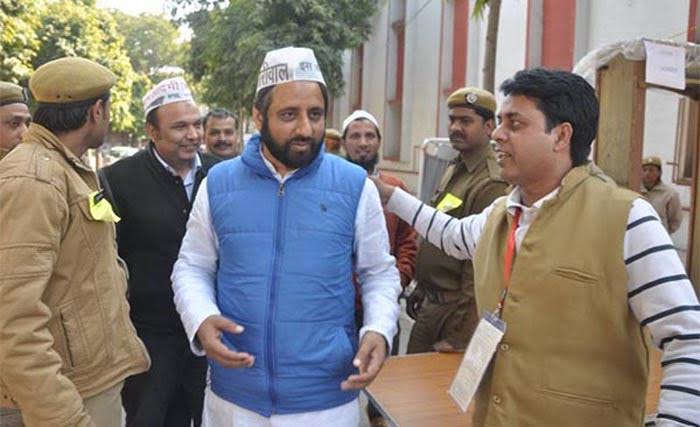
It is rather unsurprising to see Delhi Chief Minister Arvind Kejriwal and his Aam Aadmi party supporting the communal protestors of Shaheen Bagh. The AAP leadership had earlier decided to steer clear from openly taking sides on the issue of Shaheen Bagh protests after they had received a huge backlash after AAP MLA Amanatullah Khan was spotted at the Jamia Nagar protests which turned violent in December. Later, an FIR was also filed against him for instigating violence through social media.

In an inflammatory speech on December 15 at Delhi’s Shaheen Bagh, Khan had attacked the BJP government for enacting the Citizenship Amendment Act by claiming that it was discriminatory for Muslims of the country. Khan had also alleged that the silence of Muslims on the Triple Talaq Act was taken as their weakness by the central government.

Read: After Congress, AAP leaders booked for anti-CAA violence, ‘protestors’ question absence of Rahul, Priyanka and Kejriwal at Shaheen Bagh, Jamia

The speech which was attended by thousands of impassioned people gathered to protest against the CAA was allegedly delivered just minutes before the violence broke out on the streets of Delhi.

However, despite all this, Kejriwal had steered clear from Shaheen Bagh protests. Neither did he physically go there nor did he tweet to extend his support to the road blockages caused by Shaheen Bagh ‘protestors’.

Assam: 644 terrorists from 8 banned outfits surrender in mega arms lay down ceremony in Guwahati

A total number of 644 terrorists belonging to eight banned extremist outfits surrendered in Assam today, along with 177 firearms. The terrorists of the insurgent groups United Liberation Front Asom, National Democratic Front of Bodoland, Rabha National Liberation Front, Kamtapur Liberation Organisation, CPI (Maoist), National Santhal Liberation Army, Adivasi Dragon Force, and National Liberation Front of Bengalis surrendered in Arms laying down event in presence of Assam Chief Minister Sarbanand Sonowal and various police officials welcoming the move.

Assam Chief Minister Sarbanand Sonowal on Thursday said that the government will arrange re-employment of the 644 extremists who have surrendered today at a mega Arms and Ammunition Lay Down Ceremony held at the Guwahati Medical College and Hospital auditorium. Speaking at the event, he said, “the government’s aim is to make Assam free of corruption, terrorism, and foreigners. Without peace, the state cannot progress and therefore we want a peaceful state. The surrendered could take the benefits of the government’s schemes”.

Assam
CM Sarbananda Sonowal with a surrendered militant

“The government will extend all possible assistance to you. My appeal to you is that wherever you live, you work to create an environment of peace,” the CM added. He praised IGP Hiren Chandra Nath of Assam Police and urged other militants who are still serving the militant groups to surrender.

“This is an important day for the state and the Assam Police. Altogether 644 cadres and leaders of eight militant groups laid down their arms,” Director General of Police Bhaskar Jyoti Mahanta told reporters. He said it was one of the largest surrender of militants in recent times.

Among the 644 insurgents who have surrendered, 301 are from Bengali insurgent group National Liberation Front of Bengalis (NLFB), forming the largest group. Among the rest, 50 are from ULFA, 8 from NDFB, 6 from KLO, 87 from NSLA, 13 from RNLF, 178 from ADF and 1 from CPI(Maoist). The Bengali outfit also surrendered larget number of weapons, 75 in total 177, along with 1.93 kg of explosives and 31 grenades. Other groups didn’t deposit any explosive.

Such a large number of insurgents from the Bengali outfit surrendering with such large scale arms and ammunition has raised eyebrows, as it is little known in the region compared to other groups like ULFA and NDFB. According the sources the group was formed in 1990s in lower Assam following some stray incidents of violence on Bengalis but the group had remained dormant for many years.

All of the surrendered militants have returned from various places along with a huge amount of arms and ammunition. Earlier this month, the NDFB signed an agreement with the government promising to abjure the violence and join in peace talks with the government.

Read- Assam: Over 30,000 Bodo people march in Udalguri demanding separate state of Bodoland

A tripartite agreement was signed by representatives of NDFB and the Centre and Assam government. Active members of NDFB including their President B Saoraigwra were brought back from Myanmar on 11 January. Top leaders including ‘Saoraigwra’, it’s general secretary, commander-in-chief, and finance secretary were a part of this group, said an official.

The group carried 25 weapons, more than 50 magazines, more than 900 assorted ammunition and communication equipment. Saoraigwra’s group was active in Myanmar along with the other Northeast insurgent groups.

The demand for a separate state for Bodos has been going on in Assam for about five decades with several Bodo overground and Militant groups raising it leading to several protests, violence, vandalism, and deaths.

A Bodo territorial council under the sixth schedule of the constitution was created in 2003 to meet political, developmental and identity-related aspirations of the Bodos. Agreements were signed in 1993 and 2003 to resolve the vexed issue.

Jharkhand: Islamists pelt stones, petrol bombs from inside the mosque on pro-CAA rally, VHP alleges police inaction

0

Stones were pelted from inside the mosque in a rally taken out by the Vishva Hindu Parishad (VHP) in Jharkand earlier today.


In a video shared by VHP on social media, a police officer can be heard saying that the stones were pelted from the mosque on the rally. As per the video, the policemen were also injured in the stonepelting. The VHP alleged that stones and petrol bombs were hurled at the rally targeting homes of Hindus as well as women. “Police was mute spectator. As soon as Soren formed government with Congress support the Hindus are attacked?” VHP tweeted.

Read: Jharkhand: Pieces of meat thrown near Shiv temple causes outrage among devotees, road blocked for 6 hours

The incident happened when the pro-CAA rally reached Amlatoli Chowk area in Jharkhand’s Lohardaga district. While the stonepelting at the rally led to communal tension, as per reports, the police force is present there and law and order situation is under control.

Watch: Anti-CAA ‘protestors’ chant pro-Islam slogans inside Delhi Metro

In a video that has gone viral on social media, a group of anti-CAA protestors could be seen raising pro-Islam slogans against the Modi government inside what appears to be Delhi metro. In the video, it can be seen that Hijab-clad women along with few male protestors have been hurling slogans against the BJP, RSS and PM Modi.


The undated video was posted on 22nd January on social networking site Twitter. The group chants ‘Modi tere naam, Islamophobia, Amit Shah tere naam Islamophobia,’ before asking the government to roll back CAA and NRC. It is pertinent to note here that NRC, which the group is demanding to be rolled back, has not even been introduce in draft form.

After blocking roads and causing public inconvenience in cities like Delhi, the protestors now seem to have resorted to hijacking public space like metro to shout slogans. The occupying of Delhi Metro and chanting slogans inside the train resembles ‘protests’ in Shaheen Bagh where the anti-CAA mobs have also occupied national highways and bus stops causing huge inconvenience to the residents of Delhi.