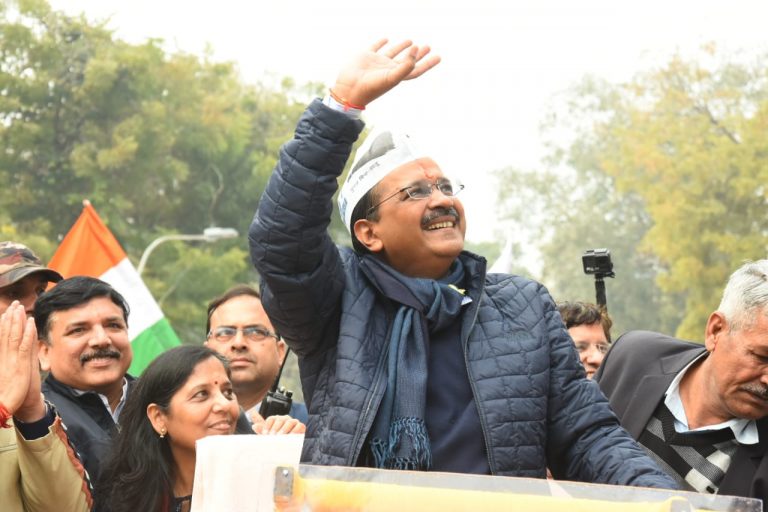
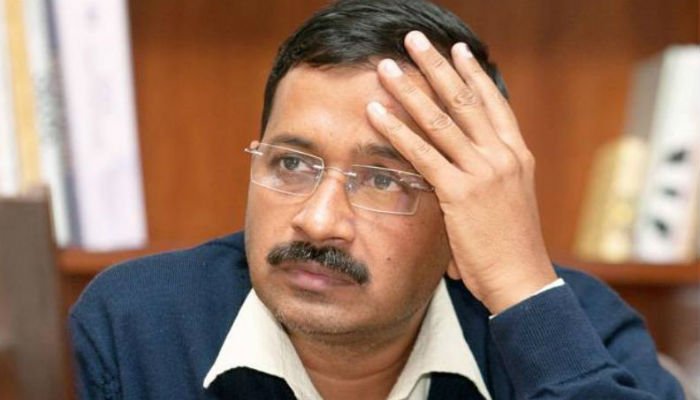
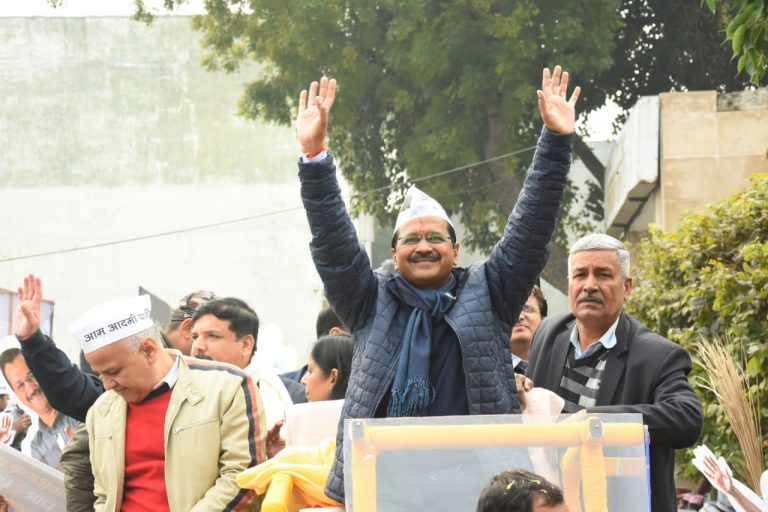
Aam Aadmi Party supremo and Delhi Chief Minister Arvind Kejriwal failed to reach the Election Commissioner’s office by the 3 PM deadline to file the nomination. Apparently, Kejriwal could not reach the EC office because he was stuck in his own roadshow where his supporters were celebrating his nomination even as a huge fire gutted files of Delhi’s Transport Department.
Kejriwal will now file his nomination tomorrow from Jamnagar House. Tuesday is also last date to file nominations for Delhi when the state goes to polls on 8th February, 2019. Earlier today, Kejriwal offered prayers at the iconic Valmiki temple in New Delhi and his road show was expected to go through New Delhi before concluding near Patel Chowk Metro Station.
Kejriwal will be contesting from New Delhi seat for the third time in 2019. He had won it first in 2013 by defeating the then Chief Minister, Sheila Dikshit. However, within 49 days of forming government, Kejriwal resigned to contest general elections against BJP’s Narendra Modi from Varanasi. Kejriwal lost the 2014 elections against Modi and then again fought Delhi elections in 2015 where AAP won 67 out of 70 seats.
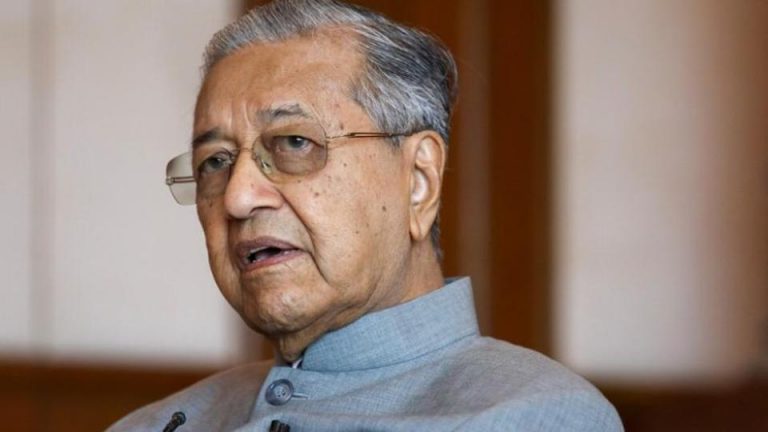
After threatening India with a trade war, Malaysian PM seemed to have struck with a sobering realisation as he said that his country is “too small” to take retaliatory action against India over the palm oil curbs.
The world’s largest buyer of the edible oil, India, effectively stopped imports from its largest supplier and the world’s second-largest producer following Malaysian PM Mahathir’s deprecatory remarks against India regarding its internal policies pertaining to Jammu and Kashmir and the CAA.
Speaking to reporters in Langkwaki, a resort island off the western coast of Malaysia, Mahathir said, “We are too small to take retaliatory action against India. We have to find ways and means to overcome that.”
India has been the largest buyer of the palm oil from the South-east Asian nation since the last 5 years. As a probable result of the palm oil import curbs by India, benchmark palm futures in Malaysia tanked 10 per cent last week, the steepest decline in more than 11 years.
But the Indian government had denied the allegations saying the decision was not country-specific and said that decision to restrict refined palm oil import was a commercial decision. However, MEA spokesperson Raveesh Kumar had stated, “The state of the relationship is one of the factors that businesses look at before doing business. If I am an importer and I have to import a certain product from a country, I would certainly keep that at the back of my mind, as to how the status of the two countries are.”
The 94-year-old Malaysian premier had also drawn sharp criticism after his disapproving remarks against India at the United Nations General Assembly. In his address to the 74th UNGA, Mahathir accused India of “invading and occupying” Jammu and Kashmir. This was after India abrogated Article 370, stripping Jammu and Kashmir of its separate status and subsequently bifurcating the state into two union territories- Jammu and Kashmir and Ladakh.
Earlier, undeterred by Indian traders’ calls for a boycott of palm oil, Malaysian PM remained firm saying he would not retract his criticism of New Delhi’s actions in Kashmir.
In fact, the Malaysian PM had also issued a statement about the recently enacted Citizenship Amendment Act. Criticising the Citizenship Law, Mahathir said he felt the law was “grossly unfair”.
In addition to this, the Indian government is also displeased with Malaysia for sheltering radical Islamic preacher Zakir Naik, who has been accused of money laundering and hate speech in India. The Malaysian PM had said that even if the Indian government guarantees a fair trial for Naik, he faces a serious threat of “vigilante action” in India and that Malaysia would relocate the preacher only if it could find a third country where he would be safe.
It is, however, not the first time that the 94-year-old Malaysian PM has expressed his helplessness. Earlier, asked about his silence over the plight of Uighur Muslims, and China’s ventures into the disputed waters of the South China sea, Mahathir had stated that his country is not strong enough to take on China, hence he maintains silence.
“The Malay states have existed near China for the past 2,000 years. We have survived because we know how to conduct ourselves. We don’t go around trying to be aggressive when we don’t have the capacity, so we use other means.” He had added that in the past, Malaysia used to send tributes of gold and silver to the Chinese rulers every year to pledge its subservience.
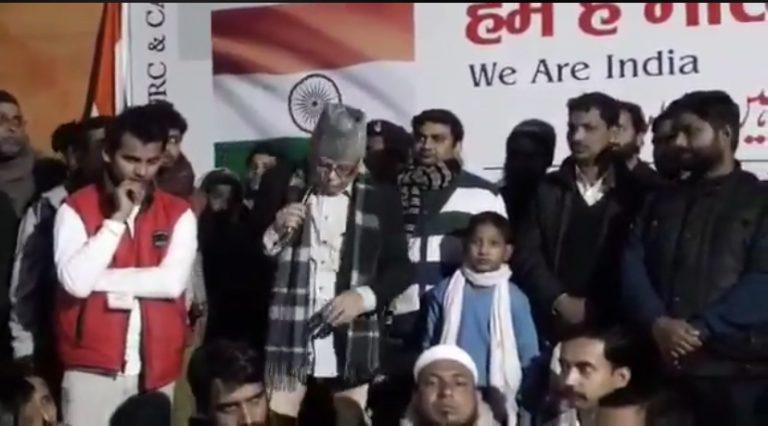
Sabbah Haji, the Director of Haji Public School in Jammu & Kashmir’s Doda who enjoys a good camaraderie with those in the liberal camp, has taken offense at the fact that the protests at Shaheen Bagh against the Citizenship Amendment Act are ‘too Indian’. She claims that she felt like an ‘outsider’ at these protests.
3. Attended protests at #ShaheenBagh + #JamiaMillia in solidarity against injustice, oppression and state violence, but as an outsider.
The extreme Indianness of it all was jarring for me, coming from where I do. (Understand, this is a real thing.) So aloof, but in solidarity.
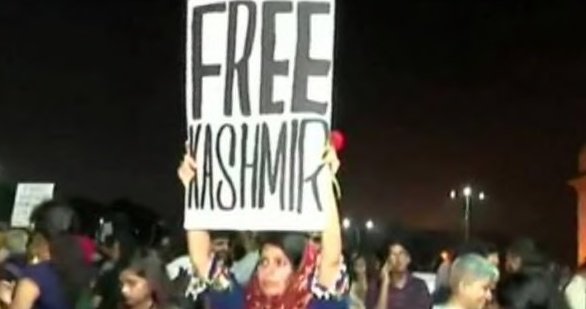
Haji’s first tweet in the thread was in response to a tweet by one Tanzeel Khan which was in reply to The Wire journalist Arfa Khanum Sherwani’s show of phony solidarity towards Kashmiri Pandits on the 30th anniversary of their ethnic cleansing from the valley. Khan claimed that a woman was stopped from holding up a placard that said ‘Free Kashmir from Indian Occupation’ and therefore, Sherwani had no right to speak of Kashmiri Pandits.
I would say talk about both, both need to be talked about. What happened to the KPs and what’s been going on in Kashmir for much longer, Kashmiri aspirations and its condition today. https://t.co/UXsUgtuJfl
Haji is often provided a platform by mainstream outlets to speak on matters related to Kashmir. The individual who finds even the Shaheen Bagh protests to have ‘extreme Indianness’ was interviewed by Priya Ramani in an article on LiveMint. She has also been awarded by liberal institutions for her work on education.
In the past, Haji has made the argument that there’s no need to integrate Kashmiris into mainstream India. She has also opined that Kashmiris do not feel unsafe because of Islamic terrorists in the Valley, who she calls ‘armed militants’ and implied that it is the Indian Army that is making Kashmiris feel unsafe. She also happens to be one of those Kashmiris who support Pakistan over India.
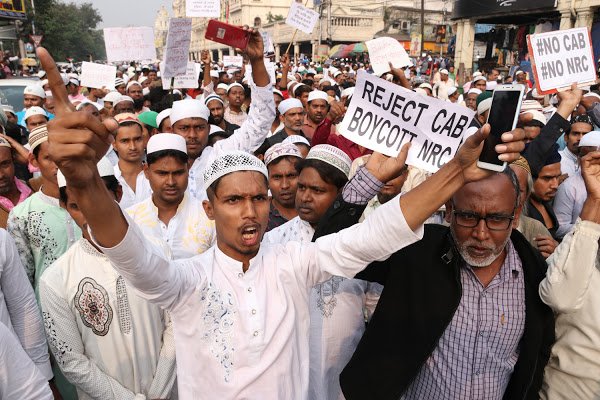
Amusingly enough, Shaheen Bagh is the same place where chants of ‘Jinnah Wali Azadi‘ were raised by the anti-CAA protesters. Thus, to claim that the protests have ‘extreme Indianness’ which makes it jarring is rather disturbing. At the same protests, children were used in order to peddle a nefarious agenda. These children were raising extremely disturbing slogans and they appeared to be indoctrinated into a cult of hatred.
In the protests, the sacred Hindu religious symbol of Swastika was desecrated by the anti-CAA protesters. The protesters also clashed with Kashmiri Pandits on the 30th anniversary of their genocide. However, even after all of this, the protests still demonstrate ‘extreme Indianness’ according to certain people.
We have now established that Shaheen Bagh protests which have been peddled as ‘organic’ protests’ are far from it. However, social media profiles of some of the organisers and participants reveal a more hateful and disturbing trend.
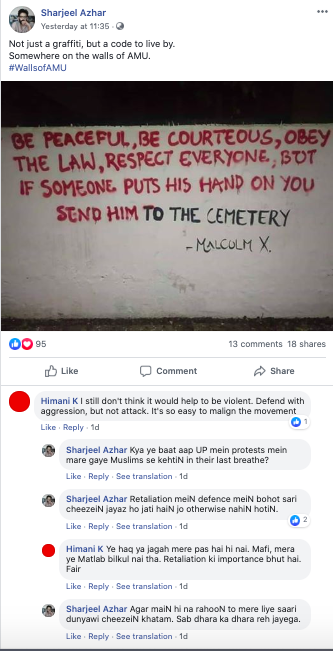
Here is a post by one Sharjeel Azhar who believes in sending anyone who ‘puts a hand on you’ to the ‘cemetery’. While it is a quote by American politician Malcolm X, Azhar believes it is not just a graffiti, but a ‘code to live by’.
“Send them to the cemetery” – hateful messages on Facebook
When someone tried to point it out to him that violence may not be the best way to put across your point, Azhar tried to compare violent rioters to ‘self defence’.
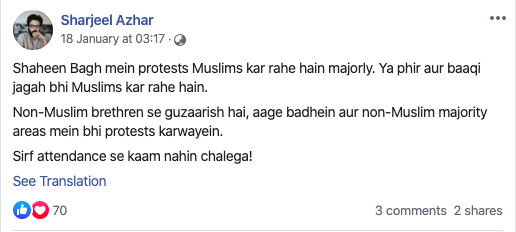
Appeal to non-Muslims to protest in non-Muslim areas
In one of his posts, Sharjeel Azhar has urged non-Muslims to come out and protest in non-Muslim areas as only ‘attendance’ in protests such as Shaheen Bagh isn’t enough. He urges Delhi Chief Minister Arvind Kejriwal to stand in solidarity with the protestors.
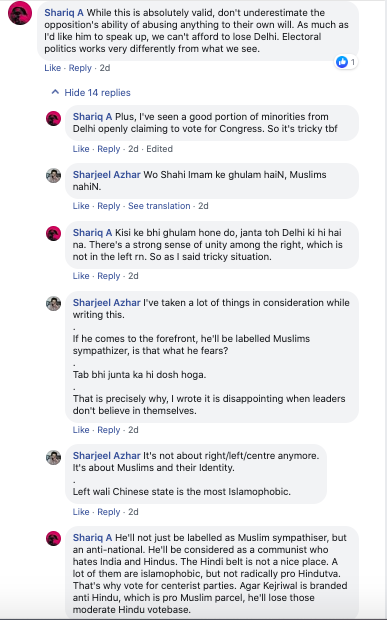
Discussion over Arvind Kejriwal not supporting the protests
And one Shariq A joins him in discussing how Kejriwal is not joining the protests because he would appear ‘pro-Muslim’ and that might upset the majority. For Arvind Kejriwal, it is more important to win Delhi than to appear ‘pro-Muslim’ as per the above conversation.
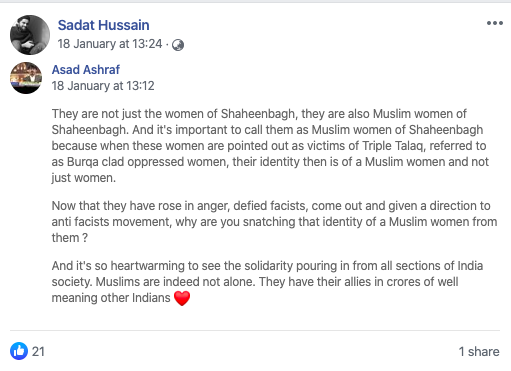
Muslim women of Shaheen Bagh
There are more such posts where asserting religious identity of the protestors is more important than the protests. This when the Citizenship Amendment Act, the one which they are protesting against, does not affect the protestors in any way. But the more you read such posts on social media, the more you realise that the anger is more about the Ayodhya verdict than the CAA.
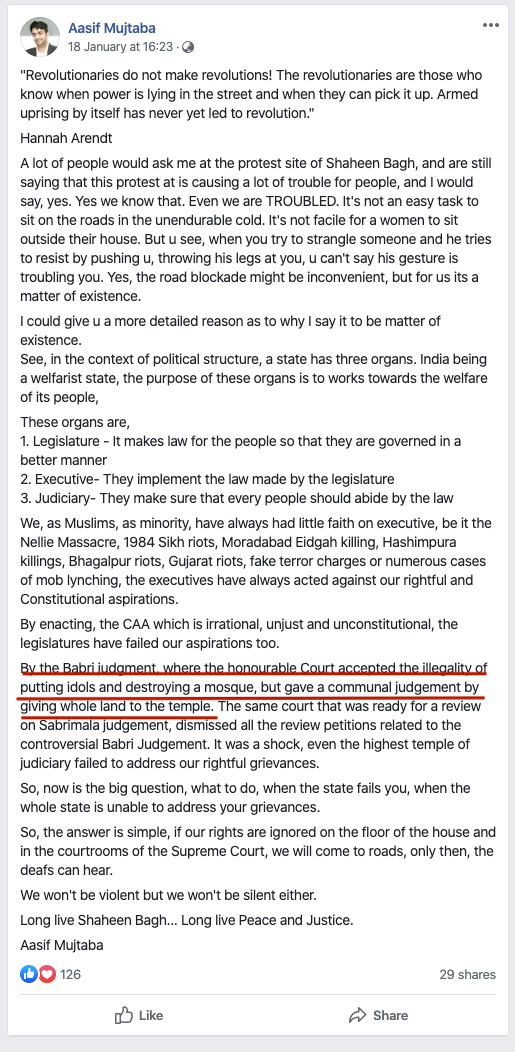
IIT Delhi’s Mujtaba Aasif expresses disappointment over Ayodhya verdict
There are more.
Reached late for for the protest. Could barely stand w/ the migraine. An old Chicha smilied & said:
“Beta, pehle Mandir kiya aur abhi CAA. Abhi 370 kiya na? Sab wahi hai. Khud ke kaghaz nahin aur humaare chahiye. Fikr nahin karo. Phiraun yaad hai?”
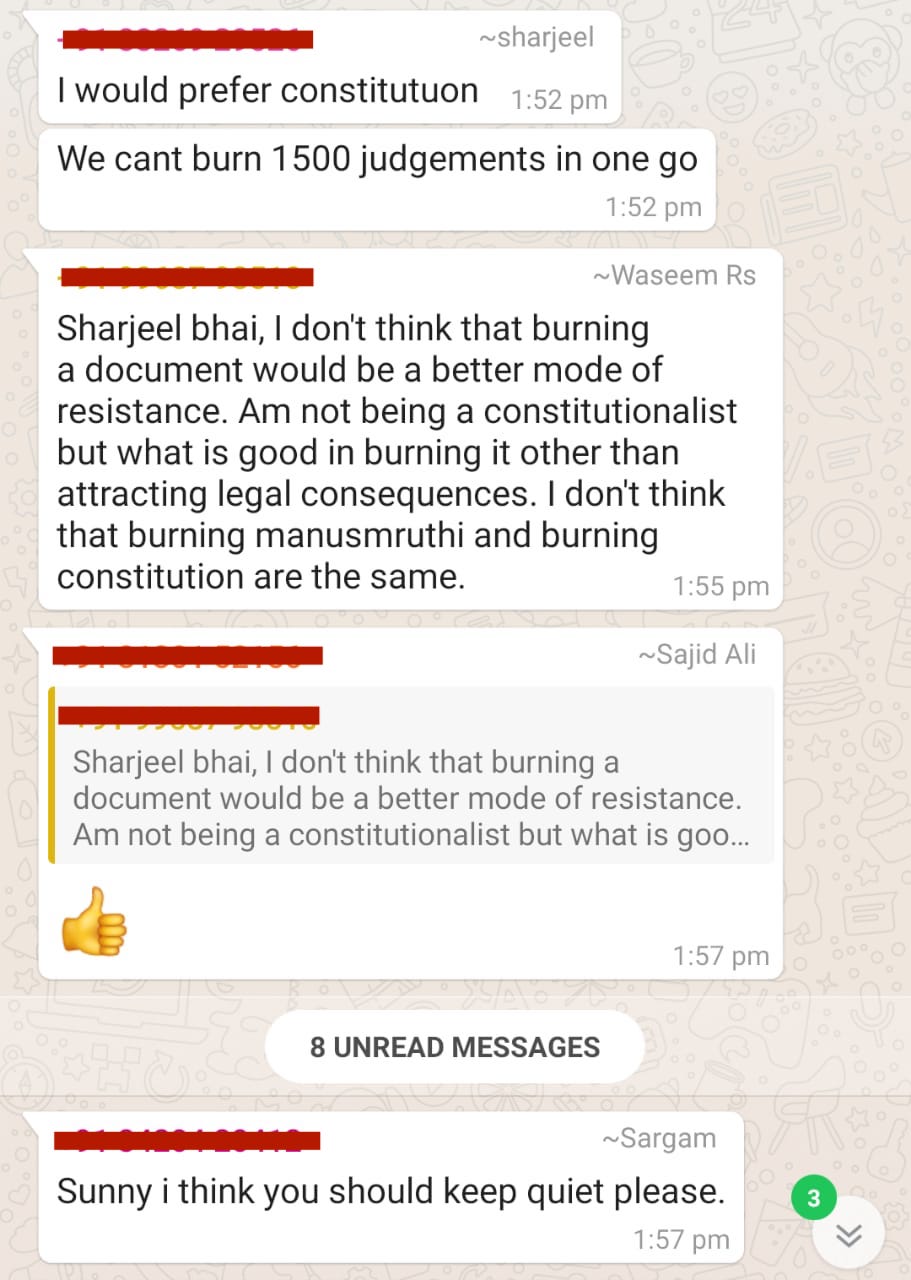
While many such conversations of cab drivers and protestors appear imaginary, even if the above conversation is imaginary, it just shows that the anger of these ‘protestors’ is currently stemming from the Ayodhya verdict. Sharjeel Imam, the JNU student who gave the hateful speech outside Jamia campus on December 14th 2019, a day before the violence broke out, also wanted to hold a ‘burning constitution’ ceremony over Ayodhya verdict.
Sharjeel expressing his desire to burn the constitution after the Ram Janmabhoomi verdict.
Sharjeel has been one of the coordinators of the Shaheen Bagh protests which have been widely circulated as organic protests. Moreover, these protests are also being referred to as ‘anti-CAA’ protests, while they are more likely a way to show their anger against the Ram Janmabhoomi verdict.
So from what it appears, the anger of Shaheen Bagh ‘protestors’ is because of the Ram Janmabhoomi verdict and since they were not able to show it back then, the passage of CAA provided the platform because of misinformation and fear-mongering that has been spread across social media as well as mainstream media. These anti-CAA protests initially did get support from the ‘seculars’ who felt that there should be no religious discrimination. However, when the ‘protestors’ started making it about Islam with their ‘La ilaha Ilallah’ (there is no god but Allah) slogans, the ‘seculars’ started distancing themselves. Shashi Tharoor was also attacked by the radicals when he cautioned that using such slogans may make it more about Islam than about equality. Anti-CAA protests stopped being ‘secular’ once a religion started asserting its identity.
Now, the same ‘protestors’ who have been angry and ready to burn down constitution over Ram Janmabhoomi verdict, are insisting that the protestors be identified by their religion as it is far more important to be a Muslim protestor than a ‘secular’ protestor.
Secularism may be all about seeing all religions equally, but if you are a Muslim, then you are Muslim first, ‘secular’ later.
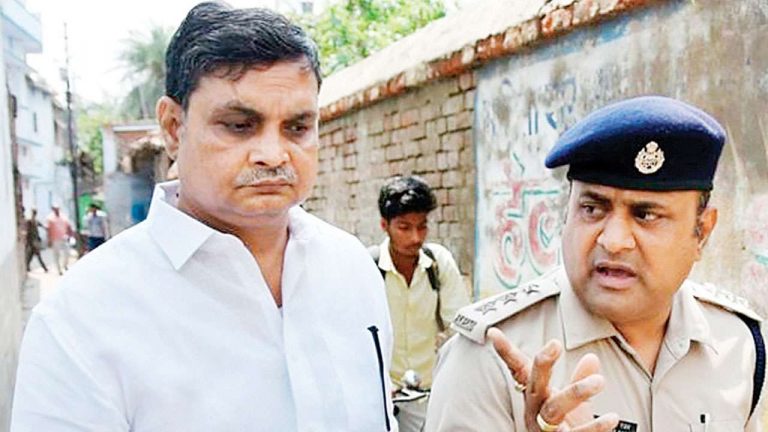
South Delhi’s Saket court on Monday convicted 19 people, including NGO owner Brajesh Thakur in the Muzaffarpur shelter home sexual assault case. The court convicted Thakur for aggravated sexual assault under the POCSO Act and gang rape while one accused Mohammad Sahil alias Vicky was acquitted for lack of evidence.
Additional Sessions Judge Saurabh Kulshreshtha convicted the former Bihar People’s Party (BPP) MLA Brajesh Thakur for aggravated sexual assault under POCSO Act and gang-rape.
The offences entail a maximum punishment of life imprisonment. The quantum of punishment will be announced by the court on January 28, 2020.
Last week, Justice Kulshreshtha rejected the plea filed by Thakur seeking witness testimonies to be dismissed on grounds of unreliability. Thakur claimed in his plea that the prosecution witnesses in shelter home sexual assault case were not to be trusted as investigations into the allegations of murder were based on their statements. However, rejecting the plea, the Justice said the case related to the sexual assault is different from that of the murder of some.
Other convicts in the case include Indu Kumari (Principal), Meenu Devi (house mother), Manju Devi (counsellor), Chanda Devi (house mother), Neha Kumari (nurse), Kiran Kumari (helper), Hema Masih (PO), Ravi Roshan (Child Protection Officer), Vikas Kumar (CWC), Roji Rani, Vijay Tiwari (Brijesh’ driver), Guddu Kumar (shelter home staff), Krishna Kumar (shelter home staff), Ramanuj Thakur (shelter home staff), Shajista Parveen (Brijesh’ associate), Ashwini Kumar (a doctor), Dilip Kumar (CWC chairman) and Ramashankar Singh.
Another accused Premila is still absconding. Shajista’s nephew Vikki alias Mohammad Sahil was acquitted for lack of evidence.
The shocking incident of Muzaffarpur shelter home came to light in June 2018 when the Tata Institute of Social Sciences (TISS) submitted a report, based on conversations with several girls at the home.
The shelter home was housing the girls between the ages of 7 to 17 and many of the girls were suffering from speech-impairment. It was reported that they were given sedatives in the dinner and raped during the night and the inmates were brutally beaten regularly by the shelter home staff, including women and compelled the girls to have sex with the visitors.
Over 42 girls were allegedly raped and sexually abused at a shelter home named Balika Grih in Muzaffarpur, run by Brajesh Thakur, the chief of a state-funded NGO called Seva Sankalp Evam Vikash Samiti.
An FIR was lodged against 11 people, including Thakur, on May 31. The probe was later taken over by the Central Bureau of Investigation (CBI). It also revealed that ex-minister Manju Verma’s husband had links with accused Brajesh Thakur.
In the middle of the Lok Sabha elections, I had written an article looking at Google Trends, which showed the BJP miles ahead of the Congress and the rest of the opposition. On a personality basis, Narendra Modi was even further ahead and Rahul was simply nowhere. And now, it is time to analyse the Delhi elections according to Google Trends.
The election turned out exactly the same way.
Here is what the map looked like in the 30 days before April 24, 2019.
Map in the 30 days before April 24, 2019
Blue for the BJP and red for the Congress. On April 24, 2019, Google Trends said India was an ocean of blue. How was the Congress going to win when nobody even cared about what they had to say?
I had also pointed out how Google Trends appears to have accurately captured the Congress surge in the three Hindi heartland states in Dec 2018. Just look at the Google Trends map for the period Sept 1, 2018, to Dec 1, 2018.
Google Trends map for the period Sept 1, 2018, to Dec 1, 2018.
See how the BJP seems ahead almost all across the Hindi heartland except for Rajasthan, Madhya Pradesh and Chhattisgarh, the three election-bound states.
If Google’s wisdom seems so profound in states with huge rural populations, surely it should be taken even more seriously in Delhi. A purely urban electorate saturated with media and the internet.
So what does the BJP vs AAP comparison look like in the last 30 days in Delhi?
BJP vs AAP comparison
First of all, take a moment to admire just how accurately Google Trends picks up what is going on in the minds of the public. What is that sharp red spike for AAP?
It’s from Jan 14, 2020.
And when did AAP announce its candidates? On Jan 14, 2020, of course! You don’t even have to look that up. Google Trends knows everything.
But other than that, the BJP (blue) dominates over AAP (red) almost uniformly. And you can see that interest in BJP is peaking, rising almost in hockey-stick fashion.
This is bad news for AAP.
Wait! There is an obvious objection and one must address it here. The BJP is a national party, while AAP is not. Perhaps BJP is getting more interest simply because people think about BJP in the context of a much wider range of issues, while AAP only matters in local politics?
So let us see the related searches for BJP in Delhi, according to Google trends.
Related searches for BJP in Delhi, according to Google trends.
It is evident that all these searches are related to the state election and not national issues.
So we know two things for sure. First, BJP is getting much more interest in Delhi than AAP is. Second, the interest in BJP is driven primarily by local issues and not national issues.
Now I know there are some opinion poll agencies (with absolutely pathetic track records, I must add) which have projected the Delhi election as some kind of one way victory for AAP. I don’t trust them. I’d rather look at Google Trends data.
By now, everyone has noticed that Kejriwal has maintained a safe distance from the CAA issue. He’s stayed away from Shaheen Bagh. In fact, in recent days, top liberals have also been begging with Shaheen Bagh protesters to temporarily withdraw their movement for strategic reasons.
Is Kejriwal confident? I doubt this.
Again, keep in mind that Delhi is a 100% urban environment where media and internet matters a lot. And AAP is media savvy, known to have an extensive online presence. Despite this, Google Trends shows interest in BJP clearly ahead of AAP.
One last thing. AAP is synonymous with Kejriwal. How about we compare BJP vs Arvind Kejriwal?
BJP vs Arvind Kejriwal
Again, pretty big and uniform lead for BJP and the gap only widening in the last few days. If you ask me, that’s the classic surge that the winner gets towards the end.
Addressing an audience in Bihar’s Araria, RJD Rajya Sabha MP Ashfaque Karim had an embarrassing moment while addressing the audience about the alleged cons of the Citizenship Amendment Act. While criticising the citizenship law as discriminatory against Muslims, Karim’s pants accidentally fell off, sending the audience into fits of laughter.
अररिया — आरजेडी के राज्यसभा सांसद असफाक करीम CAA के विरोध में सभा को संबोधित कर रहे थे और अचानक ???
As can be seen in the video attached in the above tweet, Karim’s pants slip down as he asserts that everyone except Muslims who has come to India prior to December 31, 2014, will be granted citizenship. Despite the embarrassment, Karim continues his speech against the law unfazed.
“Everybody knows that the law pertains to people who came to India prior to December 31, 2014, except Muslims. The government, through this law, will grant citizenship to everyone except Muslims from Pakistan, Afghanistan and Bangladesh,” Karim said.
Citizenship Amendment Act was passed by the parliament in December to grant citizenship to the persecuted minorities of Pakistan, Afghanistan and Bangladesh who have fled to India on or before December 31, 2014.
The passage of the Act had sparked off protests across some parts of the country, especially leftist bastions such as JNU, Jamia Millia University and Aligarh Muslim University. RJD too had joined in the anti-CAA protests by calling out a bandh in Bihar on December 21, 2019. However, during the Bandh, armed RJD workers and supporters were seen running amok on the streets of cities of Bihar and vandalising auto-rickshaws and private vehicles.
A fire in New Delhi’s Transport department today has gutted all documents related to the Delhi Transport Department.
Sunil Chaudhary, Deputy Chief Fire Officer, Delhi: All the documents related to Delhi Transport Department have been gutted in the fire that broke today. Investigation has been initiated. https://t.co/JSmemrouiS
Taking to Twitter, Mishra said that since Aam Aadmi Party is losing the upcoming Delhi elections, the ruling party got the documents relating to scams destroyed. “It is the most corrupt department of Kejriwal,” Mishra alleged. BJP leader Harish Khurana too raised suspicion on the timing of fire in transport department.
ट्रांसपोर्ट डिपार्टमेंट में इस वक़्त आग लगना बहुत कुछ शंका पैदा करता है।
बहुत सी टेंडर डॉक्युमेंट एवं अन्य महत्वपूर्ण दस्तावेज़ के जलने की आशंका है।@ArvindKejriwal सरकार के जाने से कुछ दिन पहले यह होना बहुत कुछ कहता है।@BJP4Delhi@BJP4Indiahttps://t.co/PdOXwcuv7Q
In June 2016, AAP leader Gopal Rai had become the third Transport Minister in Delhi government to resign in less than three years. Controversial AAP leader Jitender Singh Tomar was embroiled in a fake degree scam in which Kejriwal backed him to the hilt. Kejriwal tried to defend Tomar till the very last moment, but when multiple investigations and proofs began coming out in public, Tomar was finally forced to resign, after he was arrested on charges of fraud and cheating by the Delhi Police. AAP leader Asim Ahmed Khan was sacked by AAP supremo Kejriwal allegedly over graft charges, although Khan himself blamed “AAP’s internal politics”. The minister wasn’t given any notice of this move and was sacked in a dramatic fashion, in an apparent bid to show-case a zero-tolerance-to-corruption attitude.
Gopal Rai, however, quit as transport minister over ‘health reasons’. Even then Delhi’s transport department had been embroiled in allegations of corruption. Current Transport Minister of Delhi, Kailash Gahlot, has also been allegedly involved in corruption. In October 2018, Income Tax Department raided 16 locations of Gahlot over alleged tax evasion case.
Meanwhile, neither Aam Aadmi Party official Twitter account nor Delhi CM Arvind Kejriwal, who is busy filing his nomination today, have tweeted on the fire at transport department. In fact, all official Twitter handles are tweeting celebrations over AAP supremo Arvind Kejriwal’s nomination from New Delhi constituency ahead of Delhi Assembly elections.
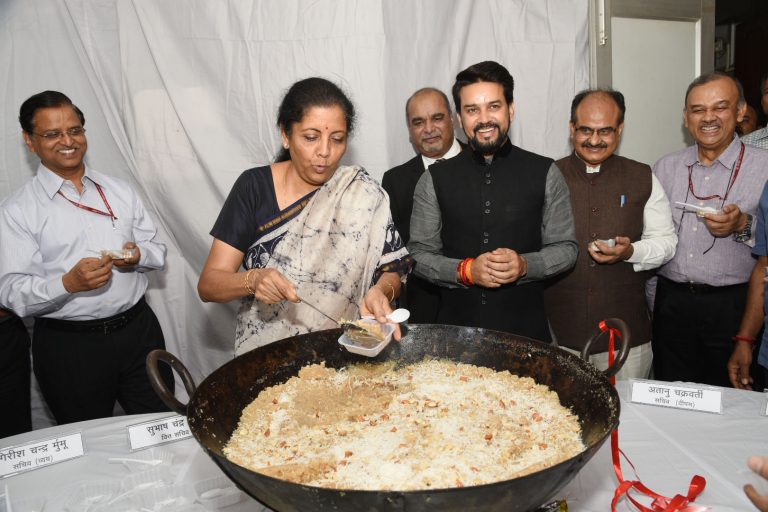
Union Minister of Finance Nirmala Sitharaman today presided over the customary ‘Halwa Ceremony’ that is observed every year by the current finance minister to mark the beginning of the process of printing the documents related to the budget. Sitharaman, along with colleagues, observed the symbolic ritual at the North block.
Delhi: Finance Minister Nirmala Sitharaman at ‘Halwa Ceremony’ being held at Ministry of Finance, North Block, to mark the beginning of printing of documents relating to Union Budget 2020-21. pic.twitter.com/WnCt9Hm4Ws
However, many people, including NDTV journalist Nidhi Razdan chose to take a swipe at the government ahead of the traditional ‘Halwa Ceremony’ preceding the yearly Budget without caring to know about its genesis and the significance attached to it.
In what appeared as a jibe against the government, Nidhi quoted a tweet informing about the commencing of the ‘Halwa Ceremony’ by saying “Just leaving this here”. However, when one Twitter user schooled Nidhi on how the ceremony has been a decades-old tradition at the ministry and has been followed by many of Sitharaman’s predecessors, Nidhi went on the defensive, claiming she was only being sarcastic.
The only thing dead here is ethical journalism. Quit it and try sarcasm. https://t.co/635zJxH0mN
The ‘Halwa Ceremony’ is an age-old practice, followed by successive Union governments a few days before the presentation of the budget in the parliament. During the ceremony, halwa is prepared in a large container and served to the finance ministry officials after which they move to the basement of the North Block to prepare and print the budget documents.
The staff at the ministry of finance work in total secrecy at the basement, ensuring there is no leakage of the budget details. The Halwa ceremony is held to appreciate the staff and officials for their hard work and to hail their efforts in the coming days as they remain locked in the North Block basement.
They remained cut-off from their families until the budget is presented by the finance minister. Communications and travel are restricted until the budget is presented in the parliament by the Finance Minister.
The Union Budget 2020 is expected to be announced by the Finance Minister on February 1, 2020. This is the seventh annual budget to be presented under the PM Modi government at the centre.
The Commerce Ministry has recommended a restriction on the purchase of tax-free alcohol at duty-free shops to one bottle, according to reports. The measure has reportedly been recommended with an eye to reducing the import of non-essential goods into the country. The current limit is 2 litres of alcohol at such shops.
Commerce ministry recommends restricting purchase of tax-free alcohol to one bottle at duty-free shops as part of steps to reduce import of non-essential goods: Sources.
The recommendations also include the prohibition of the purchase of cigarette cartons at these shops. These recommendations are reportedly part of proposals made by the Commerce Ministry for the upcoming budget which is set to be unveiled on the 1st of February bu Finance Minister Nirmala Sitharaman.
People on social media were not too pleased with the reports and took to Twitter to voice their disenchantment.
This is utter nonsense. Restricting purchase? Guys don’t be ridiculous..@PiyushGoyal sir please explain..
First of all,buying just 2 bottles itself is such a shame. Then catch hold of non drinkers .?@sats45 kaka ab bolo.. https://t.co/9HFgtrk75o
However, as it turns out, the recommendations made by the Commerce Ministry are not entirely radical or in contravention of existing global norms. For instance, the United States of America permits individuals to bring one litre of alcohol into the country duty-free. The limit goes up to five litres if the alcohol is brought from U.S. insular possession such as the U.S. Virgin Islands or Samoa.
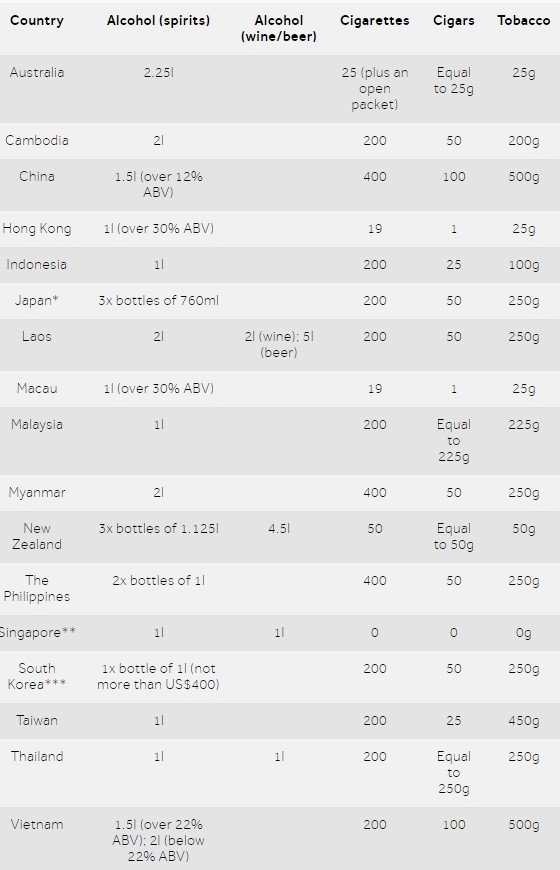
As of 2017, countries like Japan, Thailand and Singapore have such restrictions as well. Japan restricts it to three bottles of 760 ml each while Thailand limits it to one litre. Singapore has the same limit as Thailand. China has it at 1.5 litres while Australia limits it at 2.25 litre and Cambodia at 2 litres. Macau and Taiwan have it at 1 litre. Thus, India should it decide to limit the purchase of alcohol at duty-free shops to 1 litre will not be as drastic or radical as some Indians are believing it to be.
Source: Business Traveller
When it comes to restrictions on cigarettes and tobacco, India has the limit at 100 cigarettes and 25 cigars or 125 gm of tobacco per passenger. This is, again, not radically different from other countries as can be seen from the table which shows data from 2017. Australia limits the number of cigarettes and cigars to 25 and equal to 25 gm respectively, the same for Hong Kong is 19 and 1. Singapore has it at 0. However, admittedly, the other countries have set the bar much higher at either 200 cigarettes and a couple at even 400.
Thus, if India decides to bring the limits down a notch, it will neither be without precedent nor it would something drastic as most would like to believe. However, it is imperative that the Finance Minister ensures these are not part of the budget’s core plans to boost economic growth. By default, these measures cannot be the go-to method for economic revival. It can be said with a relative amount of certainty that when the budget is declared, restriction on duty-free tobacco and alcohol will not be the first thing that people will look out for on the 1st of February.
Union Minister of Railways, who announced the interim budget in 2019, confirming the recommendations, told TOI, “It’s not a question of large or small (quantities). Even under GST, while alcohol is not included, tobacco is a sin good. As a nation, we are not encouraging the import of alcohol.” “All that we have done is highlighted that these are global best practices. I am not sure if India can afford to be so liberal, particularly when it relates to liquor and cigarettes,” he added.