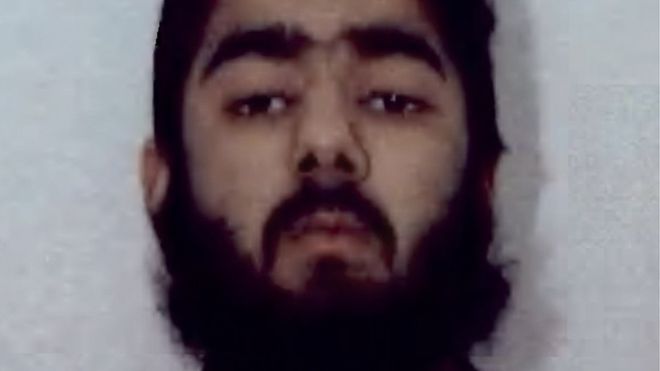
Usman Khan, the London Bridge Terrorist, was considered a ‘poster boy for deradicalization’ following his release from prison after being convicted on charges of terrorism, it has now been revealed. Learning Together, a Cambridge University programme, worked with Usman Khan in prison and after his release and he was advertised as a success story.
Khan also wrote a ‘Thank You’ note to the organizers after they provided him with a computer that he could use without violating his bail conditions. The programme also shared his note of gratitude alongside a poem that he wrote. The poem goes, “I write so my words become a soothing light, I write so I can enter the coldest of hearts, I write so I can speak to those locked off from the world engulfed in the blinding absence of sight. I write so I can express what I feel is right.”
Although the face of the person is not visible in the image, it is understood to be Khan. In the note of gratitude, Khan wrote, “I typed these reflections on the chromebook I received and I am truly grateful to be able to express myself through it.” “I cannot send enough thanks to the entire Learning Together team and all those who continue to support this wonderful community.”
Usman Khan was banned from entering London but he received special permission to attend the event organized by Learning Together. In a handwritten letter following his 2012 conviction, Usman Khan claimed that he no longer endorsed extremist positions. The letter states, “I would be grateful if you could arrange some kind of course that I can do where I can properly learn Islam and its teachings, and I can prove I don’t carry the extreme views which I might have carried before.”
Source: Mirror UK
And it continues: “I would like to do such a course so I can prove to the authorities, my family and soicity (sic) in general that I don’t carry the views I had before my arrest and also I can prove that at the time I was immature, and now I am much more mature and want to live my life as a good Muslim and also a good citizen of Britain.”
It is also revealed that Jack Merritt, one of the two victims of Khan, worked with him while he was in prison. His family, however, has slammed the Tory government’s plans to review Britain’s judicial sentencing system in the aftermath of the attack. “We know Jack would not want this terrible, isolated incident to be used as a pretext by the government for introducing even more draconian sentences on prisoners, or for detaining people in prison for longer than necessary,” they wrote.
It appears that Usman Khan succeeded in convincing those around him that he had indeed been reformed. However, it’s now being suspected that he had planned the attack for a great many years. He was eventually shot dead after he had murdered two and injured several others. It is now known that Usman Khan had previously boasted about his UK benefits while plotting a “Mumbai-style attack”. Khan and the plotters had plans to raise funds to build a terrorist training camp in Pakistani-controlled Kashmir. The group also had also planned to carry out a “Mumbai-style attack” on high-profile figures, according to court documents.
However, people who knew him in his younger days don’t appear surprised by the turn of events. Rhys Miller, a former classmate, wrote on Facebook: ‘Look who it is – the guy who walked around school with a picture of Osama bin Laden on the front of his planner and used to sit in the corner of the cafe with 20 of his mates watching videos of the planes going into the Twin Towers.’ He asserted that Khan’s extremism was ‘brushed under the carpet’ and ‘blatant red flags’ were ‘ignored’.
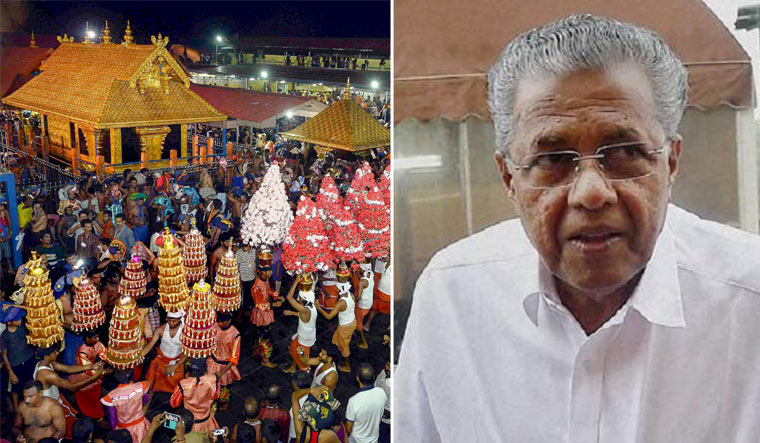
Bindu Ammini, who was attacked with chilli spray while waiting near the Ernakulam police commissioner’s office on November 26 seeking police protection to enter the Sabarimala shrine has now moved to the Supreme Court seeking safe passage of all women regardless of age, religion.
She claims that there is no stay of the 2018 SC verdict and the Kerala police are bound to give protection to women (between the age of 10 and 50) who wanted to climb the Sabarimala shrine.
It was reported that Bindu Ammini had earlier decided on moving a contempt of court petition in the SC alleging that the Kerala government was not cooperating with women seeking to enter the sanctum sanctorum of Sabarimala, but has instead moved a writ petition now in the apex court.
This writ petition is in the form of public interest litigation (PIL) in which she has sighted the 2018 SC’s Sabarimala judgement and went on to say that this judgement has not been stayed by the top court. She also argued that SC had not referred the issue to a larger bench in its November 14 order.
Last week, Bindu Ammini, while speaking to the media at the Press Club in Kottayam, said that the police or members of the Sangh Parivar, preventing women from the trek amounts to contempt of court.
She slammed the Kerala government for not giving police protection and dodging their responsibilities under the pretext that there was a lack of clarity in the Supreme Court’s latest judgment.
The apex court on November 14 referred the Sabarimala issue to a larger seven-member bench but did not impose a stay on its September 2018 verdict.
“There is no lack of clarity in the recent ruling. Those who have lack of clarity should seek clarity. Instead, the government is trying to escape from their responsibility. All political parties are trying to make political mileage out of the Sabarimala issue, eyeing on their respective vote banks. The Left has fallen for the trap prepared by the Sangh Parivar. And the Sangh Parivar is trying to create riots using people who have no sense of history,” she had said.
Bindu and another woman named Kanakadurga were sneaked into the Sabarimala shrine last year by the communist government to forcibly break the traditions of the temple. Both of them were reportedly CPM workers and they were accompanied by policemen dressed in plain clothes inside the shrine.
The devotees at Sabarimala had later alleged that the women were sneaked in via the VIP entrance early in the morning on January 2 last year.
The HC appointed monitoring committee had slammed the Kerala police and Patthanamittha administration for taking unauthorised steps to facilitate the entry of the two CPIM activists Bindu and Kanakadurga causing huge embarrassment for the Pinarayi Vijayan led Kerala government.
The Pinarayi Vijayan-led Kerala government had faced severe protests and outrage by Hindus for its use of force to blatantly disregard the traditions and sentiments of a community and go out of its way to escort activists and atheists inside the temple.
The Kerala government’s excesses were slammed by the High Court. The Sabarimala excesses had also made the CPM face a massive electoral rout in the 2019 general elections.
This year, the Kerala government has been on a cautionary mode. They have made it clear that the SC’s decision to take on the review petitions for the September 2018 order and its statements on the regard have de facto stayed the earlier order and they will not provide state protection to women within the restricted age-group who are seeking entry into the shrine.
The efforts of non-Hindus, activists and atheists to forcibly enter a Hindu religious shrine under the garb of democratic rights and disregarding the faith and traditions of the devotees have been criticised widely by Hindus around the world.
It is notable here that the Sabarimala temple is the seat of Lord Ayyappa who is worshipped there in his ‘Naishtika Brahmachari’ form. Hence, only the devotees who had observed a rigorous 41-day penance and are carrying the ‘Irumudi’ are traditionally allowed into the shrine. Women of menstruating age are barred.
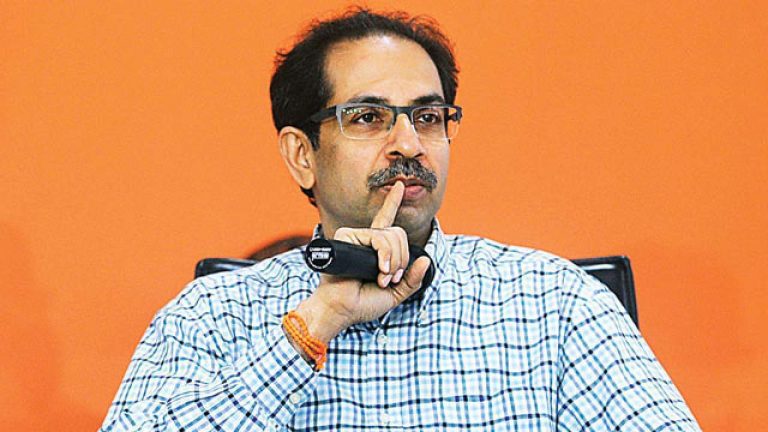
Soon after the newly selected chief minister of Maharashtra Uddhav Thackeray declared that all the cases on the Aarey metro car shed protestors will be withdrawn, an NCP MLA Jitendra Awhad had exhorted the Shiv Sena-NCP-Congress government to drop the charges slapped against Sudhir Dhawale, a prime accused in the Bhima Koregaon case.
Dhawale, a known Naxal sympathiser, was among ten activists arrested in 2018 as part of the inquiry into the caste violence at Bhima Koregaon on January 1 of the same year. They were accused of masterminding the violence and of having links with the banned Communist Party of India (Maoist).
It is noteworthy to mention that the accused Sudhir Dhawale, whom the NCP MLA Jitendra Awhad wants to be exculpated by the Maharashtra Chief Minister Uddhav Thackeray, wrote a book likening the CM’s father Balasaheb Thackeray to German chancellor Adolf Hitler and called him a “fascist slave of capitalists”. In the book, Dhawale claimed that Balasaheb Thackeray held a dim view of democracy and espoused fascist ideology, like the Nazi dictator Adolf Hitler.
“Balasaheb’s admiration for Adolf Hitler was not hidden. Therefore, when the former PM Indira Gandhi called upon the Emergency in the country, Balasaheb had openly extended his support to her. This tiger was afraid of being incarcerated during that time. Just like Hitler’s rule was characterised by his sudden caprices, similarly, Balasaheb’s capricious behaviour was no less. Scores of innocent people died because of Balasaheb Thackeray’s whims and fancies. On one hand, his Shiv Seniks dig up cricket pitches to oppose matches between India and Pakistan, on the other hand, he invited Pakistani cricketer Javed Miandad to his house,” Dhawale said in the book.
Furthermore, describing Balasaheb Thackeray as “Brahminical Fascist Don”, Dhawale alleged in the book that in order to once again establish the supremacy of Hindutva, Balasaheb presided over the killings of innocent Dalits across various parts of Maharashtra. “In 1974 Worli riots, across Marathwada, Dalit women were raped, mass killings ordered, their houses were ransacked. Only after these incidents, Shiv Sena’s hegemony was established in the region,” Dhawale wrote.
The request from the NCP MLA Jitendra Awhad comes at a time when the Shiv Sena supremo Uddhav Thackeray, the son of late Balasaheb Thackeray has been appointed as the Maharashtra Chief Minister with the support of Nationalist Congress Party and the Indian National Congress and has received widespread criticism for allying with the very parties who stand against Hindus and had demonised not only Shiv Sena but also Bal Thackeray in the past.
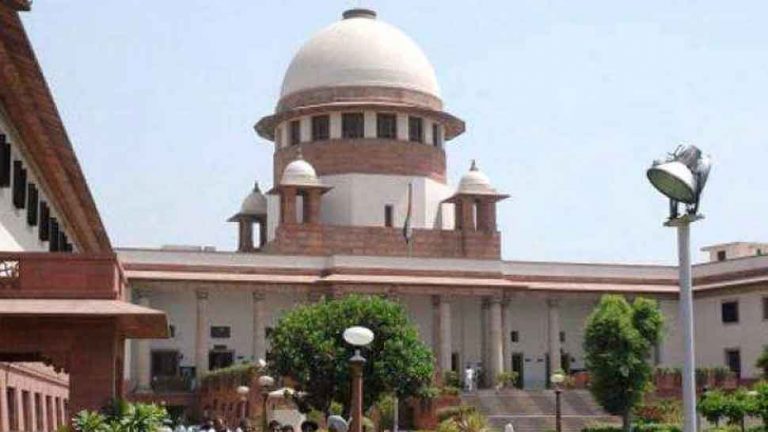
Maulana Syed Ashhad Rashidi, the president of Jamiat Ulama-i-Hind has filed a review petition against the Ayodhya Verdict that had awarded the ownership of the Ram Janmabhoomi to the Hindu side.
In its petition, the Muslim organization has accused the Supreme Court of condoning the ‘illegalities’ committed by the Hindu side. They have also accused the Supreme Court of issuing a ‘mandamus to destroy the Babri and build a Temple in its place’.
The 217 page review petition has been filed by Advocate Ejaz Maqbool.
“..The present Review Petition in this Hon’ble Court under Article 137 of the Constitution of India seeking review of the judgment and order dated November 9, 2019…”
The petition states, “That this Hon’ble Court by the impugned judgment and order has virtually granted a mandamus to destroy the Babri Masjid and to construct a temple of Lord Ram in the said place. The Hon’ble Court by virtue of the impugned order has though acknowledged few of the several illegalities committed by the Hindu Parties, particularly in 1934 (damaging the domes of the Babri Masjid), 1949 (desecrating the Babri Masjid) and 1992 (demolition of the Babri Masjid), but this Hon’ble Court has proceeded to condone the said illegal acts and has awarded the disputed site to the very party which based its claims on nothing but a series of illegal acts.”
The petition adds, “Further, this Hon’ble Court has in an attempt to balance the reliefs between the parties, while condoning illegalities of the Hindu parties, has allotted alternate land admeasuring 5 acres to the Muslim parties, which was neither pleaded nor prayed for by the Muslim parties.”
The petitioners alleged that the Court committed an “error apparent on record by passing the impugned judgment and order directing for a temple to be built at the disputed land, which virtually amounts to a mandamus to destroy, because had the Babri Masjid not been illegally demolished on December 6, 1992, the execution of the present order would have required the destruction of an existing mosque to make space for a proposed temple.” It was also claimed that the Supreme Court in its Ayodhya Verdict “failed to appreciate that there can be no lasting peace without justice and accountability.”
It was also claimed by the petitioners that the Ayodhya Verdict “erred in disregarding the basic principle that no person can derive benefit out of an illegality while granting title to the Hindu parties.” According to them, the Supreme Court also committed a mistake “by not appreciating that the structure in question had always been a mosque and had been in exclusive possession of the Muslims.” The petition also states that the Court equated “wanton acts of destruction and trespass committed by the Hindu parties to acts of assertion of claim over the disputed site.”
The review petition also demands that the Supreme Court issue a stay on its Ayodhya Verdict and directs the Central Government that no steps should be taken to fulfil its obligations under the verdict.
It is notable here that the Sunni Central Waqf Board, one of the litigant parties in the long-running case, had earlier made it clear that they will not file a review petition in the apex court.
The brutal rape and murder in Telangana has shaken the very conscience of the nation. With widespread outrage not limited to social media, the case has occupied the media’s primary focus and rightly so. While primarily and exclusively, rape is about men exerting their depraved power over women, it is the Left which often peels layers and concerns itself with semantics. They did so in the Telangana case as well, and this article is to present the other side of the story. It is to understand why the identity of the rapist is also of consequence by extrapolating the Left’s theories.
The main accused in the case is one Mohammad Pasha. Pasha was the mastermind of the heinous crime and the one who was responsible for killing her. It was Pasha who smothered her while raping her and it is he who strangled her by putting his hands on her nose and mouth. By all accounts, whether it is the remand report or even Left websites like The Quint who are trying to interview his mother to paint him as a victim of poverty, the foremost accused is Pasha. The other three accused, equally brutal, are Jollu Shiva, Jollu Naveen and Chennakeshavulu.
With Mohammad Pasha alias Mohammad Ali alias Arif being the mastermind of this heinous crime, it was obvious for his name to be splashed everywhere. His identity as a Muslim, fuelled his name being highlighted further.
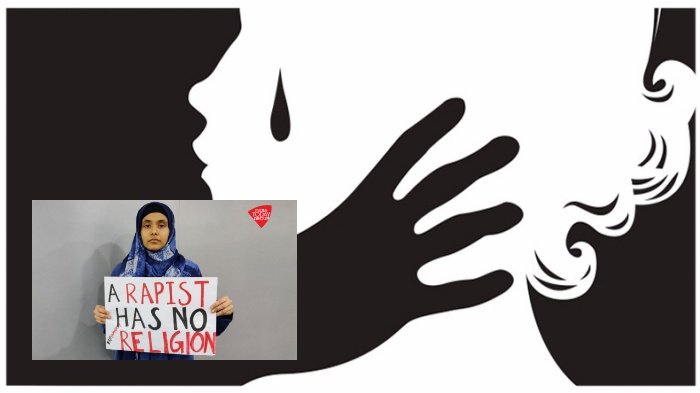
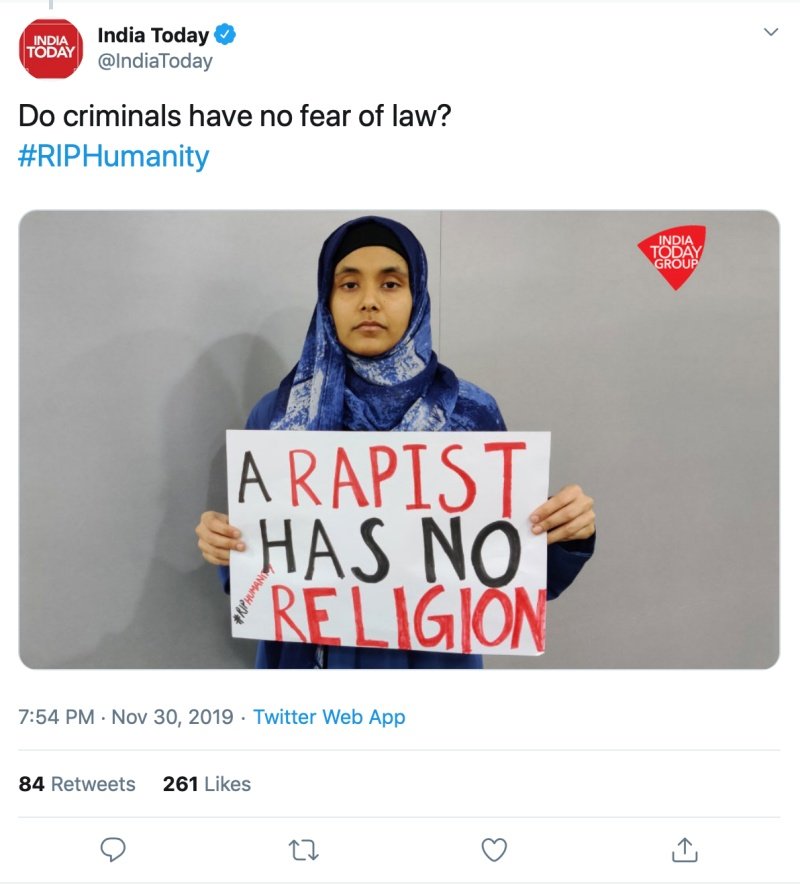
The Left immediately sprung up to action and condemned the crime being given a “communal colour”. In fact, The Quint, that is now trying to whitewash the Mohammad by interviewing his poor mother, did a fact-check that essentially slammed “BJP supporters” for communalising the incident. India Today even tweeted that ‘Rapists have no religion’ while using a Hijabi woman as their model.
India Today tweet
When a heinous crime such as this happened, should the perpetrator be the prime focus or the victim? This is the first, foremost and the eternal question that plagues reportage and conversation around such issues. However, even if the victim is the focus, the invariable glare comes on to the monsters who would so brutally snuff the life out of an innocent.
The contention here, however, was not the fact that the perpetrators were being spoken about. The content of the Left was that the ‘right’ was communalising the crime by focussing on Mohammad instead of all 4 perpetrators (the others were not Muslims).
At this juncture, one must ask the broader question independent of the Telangana case but not excluding it – is there a rationale of mentioning the identity of the perpetrator when he is a Muslim and the victim is a Hindu?
To answer that question we must understand why media and the Left highlight the identity of Dalit victims even in crimes which are not motivated by caste considerations and then understand whether that rationale holds true for crimes where the perpetrator or the main conspirator of a crime is a Muslim and the victim is a Hindu.
Why the identity of a Dalit victim is mentioned after a crime and the concept of ‘Intersectionality’
It is often noticed that the caste identity of a Dalit victim is mentioned by the media and the Left while reporting crimes. The non-Left has theorised that this is perhaps to drive a wedge in the society and further the narrative that in Hindu majority India, Dalits and lower-castes are brutalised on a regular basis and therefore, further the ‘Muslim-Dalit unity’ trope that would then help ‘secular fronts’ electorally. Essentially, the non-Left has religated this practice of mentioning the caste identity of Dalit victims to the ‘break-India project’ and the project to demonise Hindus.
While that may be the agenda for several media houses and Left intelligentsia, the rationale behind highlighting the caste identity of Dalit victims has a separate origin altogether. The theory essentially believes that the victim would have been at a lower risk had her identity not been that of a Dalit and hence, mentioning the caste identity is essential as even if the crime is not motivated by caste animosity, the victim was at a higher risk by virtue of her caste. To reach this conclusion, the sociological theory of ‘Intersectionality’ must be understood threadbare.
‘Intersection’ is essentially the point where two entities meet. This concept is then extrapolated to society in general. When talking about the sociological concept of Intersectionality, one must understand what society and people are defined as. The society is defined by the people, the social constructs, way of living and belief system. When it comes to the people who make up that society, one needs to understand what a person’s identity is. Identity itself is essential ‘who a person is and what he identifies himself as’. An individual is made up of his beliefs and qualities and those which are unique to him, identify him as a person which, in turn, shapes his perceptions and value systems. A person, through his own perceptions and value systems, identifies himself and what his relationship is with the society on the whole. The perception and value system of the individual is shaped by the messages he receives from the society, his school, parents, neighbourhood, religious institutions, so on and so forth.
Intersectionality is thus a theoretical framework for understanding how aspects of one’s social and political identities (e.g., gender, race, class, sexuality, disability, etc.) might combine to create unique modes of discrimination. So for example, a Jewish woman might be discriminated against not exclusively for her Jewish identity or gender identity but because both these identities intersect and create a unique form of discrimination in a place where Christian women are not discriminated against. Or, where a black woman is more discriminated against than a black man. For instance, a White woman is less privileged than a White Man but more privileged than a Black Man.
Applying this theory, the caste and gender identities of a Dalit woman are mentioned in the media when a crime is committed, since the victim was at a higher risk of being discriminated against not just because of the historical suppression of Dalits on the whole but also because of her gender identity even if the crime is not motivated specifically by caste animosity.
While the media does overdo it and their motivations might be suspect, there is merit to the argument that a Dalit woman living in a disadvantaged area is more at risk than an upper-caste woman in the same area or in a more affluent area and thus, it is not incorrect to mention the caste and gender identity of the victim who might have been at a higher risk due to the intersectionality of her identities.
Intersectionality should apply not only to the victim but also the perpetrator
Intersectionality as a concept is mostly applied to the victim where intersecting identities of the victim puts her at a greater risk of discrimination. However, the concept of Intersectionality must also apply to the perpetrator on how his intersecting identities make him more prone to committing a crime against the victim, whose intersecting identities puts her at greater risk with respect to the perpetrator in question.
While the identity of the victim is important and nothing can diminish that, the identity of the perpetrator how the identities of the victim and the perpetrator intersect at a societal level is equally important to understand the risk the victim faces historically.
It is pertinent to understand here that in a country as diverse as India, it is not only the identity of the victim that determines the factor of risk but also the identity of the perpetrator. It is important to understand how the two communities view each other through social constructs that determine the factor of risk the victim faces from the perpetrators of a particular identity.
For example, the media in India and the Left mentions the Dalit identity to drive home the point that Dalits are oppressed by upper-caste Hindus. Here, it is not only the identity of the Dalit victim that is in play but also the identity of the perpetrator. That the Left mentions the identity even of the perpetrator does not take away the gender identity or the caste identity of the victim. However, the victim was not at higher risk only because of her identity as a Dalit woman but also because of the intersectional identity of the perpetrator – Upper-caste Hindu male.
Why the same theory must be applied when the perpetrator is a Muslim and the victim is a Hindu
While the Left highlights the intersecting identities of a Dalit woman when a crime is committed, when the identity of a Muslim criminal is mentioned especially in sexual crimes against Hindu women, the allegation that is often hurled is that the non-Left is trying to ‘communalise’ a crime. However, if the same theory is applied to such crimes, would it not justify highlighting the religious identity of the criminal when the perpetrator is a Muslim and the victim is a Hindu?
The sociological concept of Intersectionality itself admits that tenets of the concept are fluid and change depending upon time and place. For example, we do not talk about race or gender contracts the way we used to 100 years ago.
When we talk about religious identities, one must also acknowledge in no uncertain terms that Hindus and Muslims have been co-existing in India but the historicity of that relationship is strained and blood-soaked at the very least.
Hindus have seen over 800 years of Islamic rule where they were beaten, raped, killed and converted. Where their temples were trampled upon and their identity as Hindus was under siege. Post the Islamic rule, in Independent India, the atrocities committed by Islamists have not stopped, whether the Left likes to believe it or not. If we take Kashmir, for example, India’s only Muslim dominated state, the picture becomes evident. The Hindu minority of the state were beaten, raped, murdered and cleansed from the state. The slogans that emanated from the mosques of Kashmir in the 90s said that Hindu men should leave the valley but leave their women behind for the Islamists. The chants also asked the Hindus to either convert to Islam or leave the valley.
With these examples alone it is acceptable to conclude that Hindus have been historically at a disadvantaged position with respect to Muslims in India and have often been victimised, brutally, by Muslims.
Other than collective crimes by the Muslim community like that of the Islamic invasion and the plight of Hindus in Kashmir, several crimes at the individual level too have proved that Muslims are more likely to victimise Hindus and this barring the acts of rioting that the Muslim community has initiated.
A large section of Muslims believe that Hindus are Kafirs and idol-worshippers who deserve sub-human treatment, even death. The mentality is evident in several cases like that of Kamlesh Tiwari, where he was brutally murdered for allegedly insulting the Prophet of Islam. Without getting into a long-winded section explaining an established truth, a list of 50 crimes that were committed by Muslims against Hindus in a short span of time can be read to get the drift.
With the established truth that Muslims are more likely to target Hindus, in crimes where Muslims are the perpetrators, mentioning the religious identity of the Muslim is pertinent considering it is the intersectionality of the Hindu and Muslim identities of the victim and perpetrator that puts the Hindus at higher risk of being victimised.
Why mentioning Muslim identity is even more pertinent when the victim is a Hindu woman
Intersectionality is a sociological concept says that intersecting identifies give rise to unique models of oppression. We have already established the Hindu identity itself puts a victim at a higher risk when the perpetrator is a Muslim. With intersecting identities of gender and religion, the Hindu woman is placed at a higher risk than Hindu men, for example, or Muslim women when the perpetrator is a Muslim.
Historically, Hindu women have been oppressed brutally by Muslims. One recalls the rampant rapes during the Islamic rule, and even in Kashmir where women were brutally raped by Islamists. It is a technique that many Islamists adapt to convert Kafir women to Islam. In recent times too, we have seen several cases where the Muslim perpetrator victimised the Hindu woman. There have been rampant cases of Love-Jihad where Muslim men trap Hindu women with the excuse of a relationship and then, convert, rape and/or murder.
It is thus established that the intersecting identities of gender (women) and religion (Hindu) do put women at a higher risk. In individual cases, one can never judge the risk factor. Even when Dalit women are victimised and their identities mentioned as such, it is entirely possible that in a particular case, the intersecting identities of gender and caste played no role in her victimisation. However, the identity is mentioned due to Intersectionality, as a matter of principle keeping in mind the history of abuse and oppression faced by Dalit women.
In the case of Hindu women too, nobody says that in every case, the Hindu woman’s religion and gender identity is necessarily a contributing factor for the Muslim perpetrator, but as a principle, considering the historicity of atrocities by Muslims on Hindu women, the identity of the perpetrator must be mentioned.
In the Telangana case, for example, the head of the gang that committed the heinous crime was Mohammad Pasha, a Muslim. The victim was a Hindu woman. Now, we do not know the religiosity of Pasha himself, however, as a principle, one is to ask if the women would have been at less risk if she was a Hijabi woman instead and was the victim at a higher risk because of her intersectional identity of being a Hindu woman in front of a Muslim perpetrator.
While there is no correct answer considering we do not know the level of indoctrination or religiosity of Pasha, the identity of the Muslim perpetrator is to be mentioned, just as the caste and gender identity of the Dalit woman victim is mentioned regardless of motivating factors of the crime.
What happens when the victim is a Dalit woman and a perpetrator is a Muslim man?
We have already established that the Muslim identity of the perpetrator is an essential component and should be mentioned when the victim if a Hindu woman. However, what happens when the victim is a Dalit woman and the perpetrator is a Muslim man?
The media is often extremely dishonest when it comes to such crimes. As explained in detail, intersectionality is when the intersecting identities of an individual put her at a higher risk. As also discussed above, when the perpetrator is of Muslim identity, the intersecting identities of both the perp and the victim play a role in determining the risk factor that the victim faces.
When a Muslim man victimises a Dalit woman, one must ask the very important question of which intersecting identity of that woman put her in harm’s way. Was it her identity as a Dalit woman or as a Hindu woman? When the perpetrator is a Muslim, one has to assume that for him, the differentiation between a Brahmin woman and a Dalit woman does not exist. For him, the two intersecting identities that put the victim at a higher risk is that of gender (woman) and that of her religion (Hindu) and not of her caste (Dalit). For a Muslim, per his religion, all Hindu women are Kafirs and thus, the Muslim will not differentiate between different castes.
In such a scenario, one has to ask why the media and the Left continue to highlight the Dalit woman identity of the victim instead of the intersecting identities of a Muslim man victimising a Hindu woman? While the concept in itself holds merit, it is this chicanery of the media that raises several doubts on their intent.
Conclusion
This theory of Intersectionality, while a sociological concept is rooted in Marxism. While the roots and their explanation is a subject for another day, it suffices to say that the concept itself is rooted in communism and its allied offshoots such as feminism. One has to wonder why then does the Left often raise hell when the Muslim identity of the perpetrator is mentioned? Is it because if their denial to accept empirical evidence that Muslims are often the oppressing force or their blatant agenda that Hindu lives aren’t as precious as Muslim lives? Their misplaced notions that Dalits are not Hindus and are in fact closer to Muslims in their political fantasy? Either way, while we reject Communism, their theory of Intersectionality, to have merit, must be applied to all categories of crimes, which also means that the Muslim identity of the perpetrator must be explicitly mentioned when the victim is a Hindu woman.
Identity is the principal focus of the theory of intersectionality. It mandates that every individual be viewed through the prism of his collective identity, This theory is extremely mainstream in the Left and acquired the status of a hallowed doctrine in academia. Concepts such as ‘Savarna privilege’ and ‘White Male Privilege’ have their origins in this theory. Therefore, leftists cannot discard this theory simply because the current situation does not suit their agenda. It must be applied in all situations uniformly. Leftists cannot argue that every individual and situation must be viewed through the prism of the identities of the individuals involved and then claim that the Muslim identity of the rapist does not matter when the victim is a Hindu woman.
While the entire nation is shocked over the barbaric rape and murder of a 27-year-old veterinary doctor in Hyderabad and demanding capital punishment for the accused, left-wing media seems to have taken it upon itself to whitewash the crimes of the accused rapists by creating a wave of sympathy on the pretext that they belonged to deprived sections of the society.
The Quint, which has a history of whitewashing crimes of Islamic terrorists like Osama Bin Laden and being terror sympathisers, has now resorted to similar propaganda in the horrific Hyderabad rape and murder case.
The Quint has interviewed the family members of the four accused, including the main accused Mohammad, alias Areef, a 25-year-old lorry driver of Narayanpet district.
In what appears to be the attempt to deviate from the issue, which is the brutality of the act itself, the left-wing rag Quint has tried to absolve the crimes of the accused Mohammad by creating a wave of sympathy by highlighting the deprivations and poverty of his family. In doing so, the Quint has tried to humanise the whole incident in favour of the accused Mohammad so that he gets a reprieve for committing the barbaric crime.
In its first report, the Quint has talked to the mother of the accused, who has claimed that Mohammad returned home after committing the crime, who told her that he had killed a woman in an accident. The mother said, she asked him if he wanted to eat, but the accused refused, she added.
“She could sense that Mohammad was engrossed in thought. After some time, he broke his silence and told his parents about the crime. Hearing about it, Molanbi felt petrified for her son,” writes Quint in its report while depicting the soft side of the accused.
“We did not ask him questions. He looked scared and distressed (emphasis added) and all he wanted to do was to go to sleep. So, we all did,” said the mother according to the Quint report.
The report further states that Mohammad’s father, Hussain, told him repeatedly that he should have been more careful. The Quint then talks about how the rapist was the sole earning member of a poor family where neither of the parents could work.
According to Quint, Molanbi, the mother of the accused and her husband Hussain are dependent on Mohammad, who had dropped out of school in Class 10 to earn money. Hussain had reportedly worked as a driver but cannot work anymore as he fell off the lorry and hurt his back.
The mother of the accused has also claimed that she cannot move around much after her operation. She claimed that she still suffers from the pain and she has no means to earn money. While the poverty of the family is indeed unfortunate, it does not take away the fact that their son raped and killed a woman and then set the body on fire.
The Quint report adds more melodrama to the interview by reporting on how the accused had helped her mother when she had to undergo an operation. Quoting his mother, the report states, “I needed an operation a year ago, where my uterus needed to be urgently removed. He worked hard to make the money for my treatment”. Again, unfortunate, but does not absolve him of his crimes.
Mohammad is one of the four accused in connection with the brutal rape and murder of the 27-year-old veterinarian Dr Preeti Reddy (name changed). The accused had burnt the body after raping her in the outskirts of the city on Wednesday night.
In its second report, the Quint has also talked to parents of three other accused – Jollu Shiva, Jollu Naveen and Chinakunta Chennakashavulu.
Jollu Shiva, a cleaner who was the one who was asked the victim to allow him to take her two-wheeler for repairing the puncture. According to the police, Jollu also raped the deceased victim inside the compound. He then went and bought the petrol from a petrol bunk and also set her dead body on fire at Shadnagar road.
According to the Quint, Jollu Rajappa, the father of Shiva’s father, said he felt humiliated as the policemen went on taunting him. The father claimed that he was asked by the police on why they let their child go down the wrong path. “They kept asking us why we let our child go astray. I did not say anything. Just looked down and listened. What can I say? Is this why we wanted a son?” said the father.
“Rajappa, with his arms folded and his back straight, seemed like a man whose pride was hurt. The family says it has faced humiliation ever since the news came out, (emphasis added)” reads the Quint report.
Shiva’s sister who returned home after the arrest reportedly said to The Quint, “Kill him. What else should they do? After what he has done, what else does he deserve? Kill him.”
Jollu Naveen, another accused is the son of Rajappa’s sister – Laxmi. Naveen’s father passed away 12 years ago after battling cancer. His mother, Laxmi, takes care of the family.
The report states that Naveen ‘behaved strangely’ after he committed the crime. The accused’s mother Laxmi said, “He didn’t show any signs of remorse, guilt or anything. He was absolutely alright. He didn’t say anything to me about what transpired the previous night. He ate, did things as he normally does, and went off to sleep.” The Quint couldn’t give any further spins and humanise him as accused’s mother had already mentioned how he does not feel any remorse.
When asked about the nature of the crime, the mother did not defend her son. The mother said she was angry with her son, “How dare he do something like this? How dare he even think of something like this?” asked the mother. She said she was in disbelief that her son could be this person. “He should be punished,” the mother of Naveen said.
The fourth accused Chinakunta Chennakeshavulu, unlike other accused, is a married man. He not only dragged the doctor inside the compound but also raped her, dumped the body into the lorry and was present when the body was burnt. But Chennakeshavulu has ‘kidney problems’, which did not come in way of raping a woman, because of which he does not work.
In a bid to generate sympathy wave for his family, The Quint says how his mother also wishes he is ‘strictly punished’. Jayamma said, “There is no one who can understand the pain of a child being taken away from her mother. I am in pain and I do not understand why and how he could do this, however, he must be strictly punished,” the Quint described his mother as ‘looking distraught’ and had her eyes well up with tears.
This is not the first time that Quint has been on a project of humanising rabid criminals and terrorists. In 2017, the Quint had taken their ‘humanising project’ to the next level after they had observed the “death anniversary” of terrorist Osama Bin Laden. The left-wing fake news propaganda website had written about the ‘human aspects’ of Osama by revealing that how good or bad a father and a husband he was.
Following the crackdown on dreaded Urban Naxals, the Quint – one of the members of the ‘liberal-secular’ industry had suffered a meltdown in the left-liberal camp and had to come to the rescue of these terrorist sympathisers.
The Quint in one of its reports stood behind Vernon Gonzalves and had attempted to eulogise the raided Urban Naxals. The Quint had resorted to concerted attempt to whitewash the crimes that those arrested had committed in the past. The left-wing media had created an impression that Gonzalves was let out of jail in 2013 because he was found innocent and quotes him intensively to paint a picture of how he was falsely accused.
The Case:
On Wednesday night, a 27-year-old veterinarian Dr Preeti Reddy (name changed) was brutally raped and murdered and her body was set ablaze on the outskirts of Hyderabad. Four people have been reportedly arrested in connection with the case.
According to the reports, the four accused had pre-planned the crime after they had noticed that the victim had parked her two-wheeler at the Tondupally toll plaza. The accused assumed that the lady would come to pick it up later in the evening. The accused then deflated the tyre.
As Preeti Reddy (name changed) was returning home from work a little after 8 pm to pick her vehicle, she noticed a flat tyre. She immediately called her sister, who suggested that she leave her two-wheeler at the toll plaza and take a cab home. Before she could, two men approached her, who offered to take her vehicle for repair.
The woman was allegedly ambushed and dragged into the bushes by the accused barely 50 metres from Tondupally toll plaza behind a line of trucks that was parked near the road. Her charred body was found under an underpass on Thursday morning.
According to police, the accused took her body to an under-construction bridge a few kilometres away and set it on fire. The police stated that the victim’s innerwear and some other objects including an alcohol bottle found around 100 metres from the spot led them to believe she was sexually assaulted before being killed.
The Telangana police have also confirmed that Preeti Reddy was kidnapped and gang-raped. The incident has sparked massive outrage among the public over the never-ending cases of sexual violence against women.
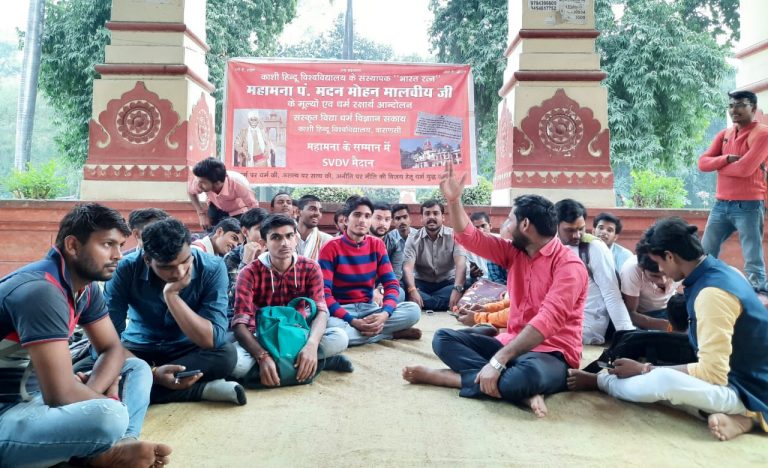
The protest by BHU’s SVDV (Sanskrit Vidya Dharma Vigyan) students against the appointment of professor Firoz Khan in the Dharma Vigyan faculty of the university continues unabated. The 10-day time limit demanded by the university’s administration to resolve the issue also ended today. After getting no positive response from the BHU management in these last 10 days, the protesting students decided to sharpen their protest against the university management.
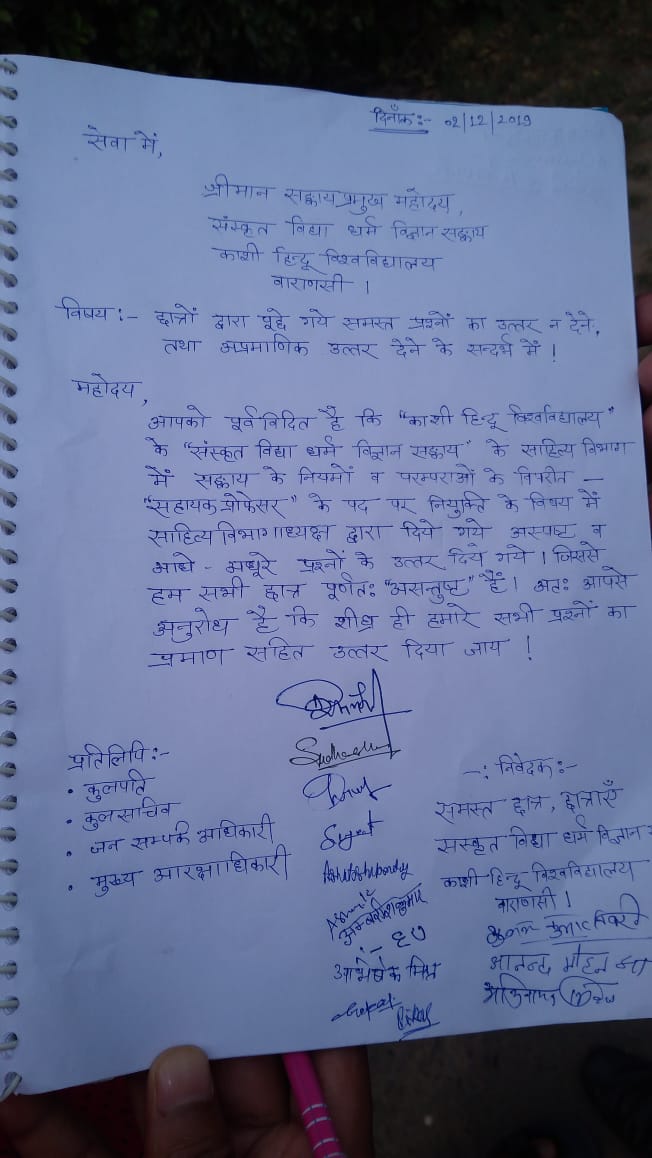
The students conducted a ‘gherao’ at 12 noon today in front of the SVDV department, with their written demand duly signed by all the SVDV students. The students said that until the administration takes action on their demands, they will not allow Firoz Khan to enter the department.
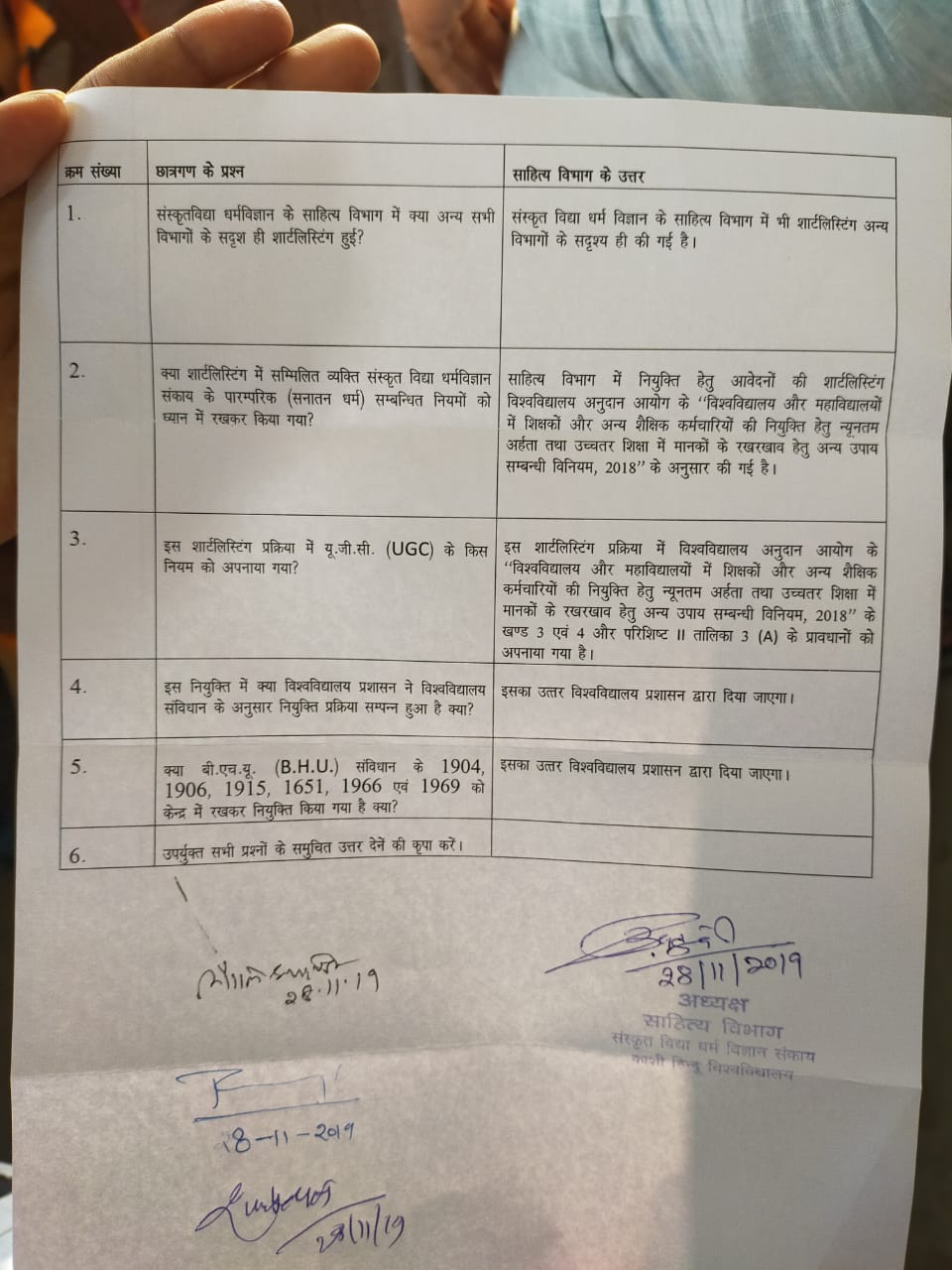
In a written petition submitted with the head of the SVDV, the students said that the answers given by the department to their querries were unclear and incomplete, and all the students are ‘unsatisfied’ with the response. They demanded that the administration reply to the questions soon with proofs.
The students had asked whether shortlisting of candidates in the department were similar to other departments, whether the shortlisting was done keeping in mind the Sanatan Dharma rules of the Sanskrit Vidya Dharma Vigyan department, which UGC rules were followed, and whether the recruitment was done as per university constitution and specific sections of the constitution. The department had replied that the shortlisting was similar to other departments, but for the next two questions they gave generic replies saying the standard UGC rules were followed. For the two questions on the University Constitution, they didn’t furnish any reply, saying they will be replied by the university administration.
Responding to the replies, the students said, if the shortlisting procedure is same in all departments than why there are differences in scoring points of the same person in different departments. They also questioned how 0 and 100 scores were awarded if UGC rules were followed, as there is no provision for giving 0 or full marks in the rules.
The SVDV students have for almost a month been consistently trying to preserve their religion and culture by agitating against the appointment of a non-Hindu to the ‘Faculty of Theology’. There are two departments for Sanskrit in BHU, one under Arts Faculty and the other under SVDV Faculty. The first is the study of Sanskrit language and the other is the theology of Hindu religion. There are different ways of studying in these two. Sanskrit is taught as a language in the Sanskrit department. On the other hand, in the SVDV, students are taught about the customs, mantras, shlokas, rituals of worship and rituals of Sanatan Dharma.
In the Dharma Vigyan Department, even Sanskrit is learnt with an interpretation of theology and hence, the students were demanding that only a practising Hindu be allowed to teach them in the Dharma Vigyan department. Students are not protesting against a Muslim teaching Sanskrit language as most media reports tried to project.
Various former students and professors, scholars, saints and Mahants have also voiced their support to the student’s effort to revere the teachings and the principles of Mahamana. In fact, two Emeritus Professors of SVDV, Prof. Reva Prasad Dwivedi and Prof. Kamlesh Dutt Tripathi had written a three-page letter to President Ramnath Kovind expressing their displeasure over the entire controversy also slamming the appointment of Firoz Khan. Moreover, on October 30, students had written to PM Modi asking for a high-level inquiry into the appointment of Khan in the ‘Faculty of Theology’.
In such a situation where this protest has seemed to reach a deadlock, the meeting of the Executive Council to be held on December 7 in BHU is being considered to be important. Though it is yet to be decided whether the meeting will be held in Delhi or BHU campus, according to Opindia sources, in the meeting which is scheduled to be held on December 23 wherein important agendas like the name of awardees and chief guest’s name for the upcoming convocation of the university will be discussed, appointment of Dr Feroz Khan in the faculty will also be an important agenda for discussion.
Student’s launched a signature campaign to press their demands:
As a part of the ongoing agitation for cancellation of the appointment of a non-Hindu faculty in the ‘Faculty of Theology,’ the protesting students held a signature campaign at the Simha Gate from 2 pm to 5 pm yesterday (December 1, 2019), which was spearheaded by Dandi Swami Paramhans Dev Ji.
#BHU के सिंह द्वार पर #SVDV में फिरोज खान की नियुक्ति की उच्च स्तरीय जाँच के लिए हस्ताक्षर अभियान चलाते ‘धर्म विज्ञान संकाय’ के छात्र, जिसका शुभारम्भ दंडी स्वामी द्वारा किया गया। #ferojKhanpic.twitter.com/bGn216U28J
While speaking to OpIndia, Swami Paramhans Dev Ji said that he has extended his support to the students as the “Constitution also provides special rights to special institutions of religion and that right should be given to all. The Faculty of Sanskrit Science and Religion also has special powers, but due to lack of knowledge, the administration has made a mistake. It should accept its mistake and try to rectify it”, said Swamiji.
It is pertinent to note here that, Mahamana Madan Mohan Malaviya ji had throughout his life given special attention to the preservation of Hinduism and Sanatan practices. The proof of which lies in the fact that the main Vishwanath Temple along with 50 other smaller temples built in the BHU campus have always been under the supervision of the Dharma Vigyan faculty of the university.
In fact, how close Hindu traditions and culture were to Mahamana’s heart can be understood by the fact that before his death he had made a last wish to the Birla family, one of the main altruist of the Viswanath Temple situated in the university’s campus, that the completion works of the temple should not stop after his death. Today a grand temple stands tall in the university campus.
Pertinently, before this temple came into existence, the Dharma Vigyan faculty of the university was in fact, a temple. It was not only shaped like one but was also believed to be helping in resolving any ethnic or religious conflicts arising within the theological system. In fact, the Panchang (the Hindi calendar based on astronomy) originating from this department is a world heritage. Another proof of its uniqueness is that it is the first institution where a statue of the donor Birla is installed in the pranam posture (folded hands) as if paying homage to this apogee of Sanatan Dharma.
To preserve this culture the SVDV students do not only learn Sanskrit as merely a language but Sanskrit is learnt with an interpretation of theology. In fact, in the SVDV, students are taught about the customs, mantras, shlokas, rituals of worship and rituals of Sanatan Dharma. This was in fact, reflected in the worship of Gram Devata (village deity) along with his Yajna-Havan and chanting.
The worship of the village deity which commenced with the blessings of Vijay Sri for the success of this movement as well as to restore the peace and energy of the campus, was conducted at various places like the Ruiyeshwar Mahadev Temple at Ruia Hostel, Raseshwar Mahadev of Ayurveda Faculty, Akela Baba of Faculty of Arts, Devi Kotmata at the Shopping Center, Bal Hanuman of Tyagaraja Colony, Bade Karaman Baba of Agricultural Sciences, Chota Karaman Baba, Ram Darbar, Shiv ji and Radhakrishna, Kashi Vishwanath Temple, Chaura Mata located at Seer Gate, Bachau Akhara Bir Hanuman Mand at New building of Central Office Gullu Bir Baba, established in 1871, Hanuman Temple at Nagarjuna Hostel, guest house at Malviya Bhavan, Hanuman and Ram Temple at Sir Sunderlal Hospital, Sankat Haran Mahadev Temple at the small gate of the hospital, Daira Bir Baba situated in BHU’ trauma center and at the Mata Saraswati temple at BHU’ foundation area. The puja ended with an aarti.
धर्म विज्ञान संकाय के छात्रों ने आन्दोलन में विजय श्री के लिए की ग्राम देवताओं की पूजा। छात्रों ने मन्त्रों के माध्यम से जल्द ही परिसर में पुनः शांति स्थापना की कामना की। #SVDV#BHU#Ferozkhanpic.twitter.com/ten4JzKeTz
Vijay Sri alleged that BHU’s VC Rakesh Bhatnagar (previously a faculty at the Jawaharlal Nehru University) has neither any attachment to Hinduism nor Sanatan traditions nor with the student’ of the Dharma Vigyan Department of the university. This is the reason, why, Bhatnagar did not think it important to attend the puja being conducted at a stone’s throw away distance from his house. The Acharya also said that even after being called several times, the Vice-Chancellor did not think it appropriate to go to any religious event of Malaviya Bhavan, right next to his residence.
The students had also alleged that despite repeated invitations, until 6 in the evening no one from the administration reached the Puja site. According to the protesting students when they called Chief Proctor OP Rai, to invite him for the religious event, he made an excuse to avoid the function. He said that the administration was busy in a meeting, which the students said was just an excuse to not attend the Hindu ceremony as they actually did not have any respect for Hindu traditions and customs.
Management’s disregardful attitude irked the students who alleged that the university management does not care for their sentiments as they are busy masking behind the pretence of being secular. While talking to OpIndia, Sashikant Mishra, one of the forebearer’s of this protest, said that the administration’s disregard for the religion became obvious when Dr Firoz Khan’s name was proposed for appointment in the Dharma Vigyan faculty of the university. Sashikant Mishra had many questions for the administration, which he was sure the management had no answers to.
Meanwhile, at the conclusion of the program, Dr Munish Mishra, an alumnus and a former member of the Student Council present there, reiterated his statement, “Still confusion is being spread that the students are opposing Dr Firoz. They are actually opposing the administration for manipulating the rules of the Faculty of Religion by the appointment of a non-Hindu in the department. Should the administration not follow the rules made by the person who built such a large university? Malaviya ji must have made a special arrangement for this faculty only after some thinking, so it should be followed at all costs, said Mishra.
Due to a small lapse, the administration has hurt the dignity and honour of the university. History will never forgive those who are responsible for it. The administration could have solved this problem easily but they did not want to bow down, that is why such a big controversy arose. We were forced to protest. There is still time, the administration should rethink and rectify quickly so that the protest can be stopped and classes can be resumed at the earliest, furthered Dr Munish Mishra.
“All forms and signatures will be sent to the Prime Minister and the Ministry of Human Resources as well as the President to conduct a high-level inquiry into the appointment,” said Shashikant Mishra, who played a key role in organising the village deity puja along with spearheading the signature campaign.
Dr Firoz Khan’s current status:
Dr Feroz Khan gave an interview at the Ayurveda faculty amid protests from students of SVDV in which he has been selected according to Opindia sources but nothing has been officially said by the administration yet.
Meanwhile, according to sources Dr Feroz Khan will be appearing for another interview in the Sanskrit department of the Faculty of Arts on 4 December.
Thirteen people contending for a single seat available in the Dharma Vigyan faculty of the university:
Things might not be as easy for Dr Firoz Khan as it appears, as according to sources, there will be at least 13 contenders fighting for the single position available in the Faculty of Arts of the university at the interview scheduled on December 4. The merit list for the OBC category includes 39 candidates wherein Dr Feroz Khan’s name appears in the 11th place in the merit list.
List of candidates for the interview in Sanskrit Department of Faculty of Arts
It is pertinent to note here, that around 216 candidates had applied for the four seats (out of which three are under the OBC category and one under SC/ST category) available in the Sanskrit department of the Faculty of Arts. While 180 applications had been received against the three positions of OBC, 36 applications were received for one post of ST.
After scrutiny of applications and verification of certificates, the merit list has been prepared for the interview which is scheduled on December 4. The names of 39 candidates have been shortlisted for OBC category and 10 for ST have been included.
Now, where this protest will lead to, a lot depends on the BHU administration and the chancellor. Meanwhile, the university’s information and public relations office has issued a statement in which professor Firoz Khan, whose appointment in the theology department of BHU had created displeasure amongst the students of the Dharma Vigyan Department, has been quoted as criticising media for creating false news and spreading rumours against him.
Meanwhile, even after his appointment to the Dharma Vigyan Department, professor Khan has not made any attempt to enter the department. The students, however, feared that the administration might attempt to bring him to the SVDV today, but nothing of this sought has happened until now.
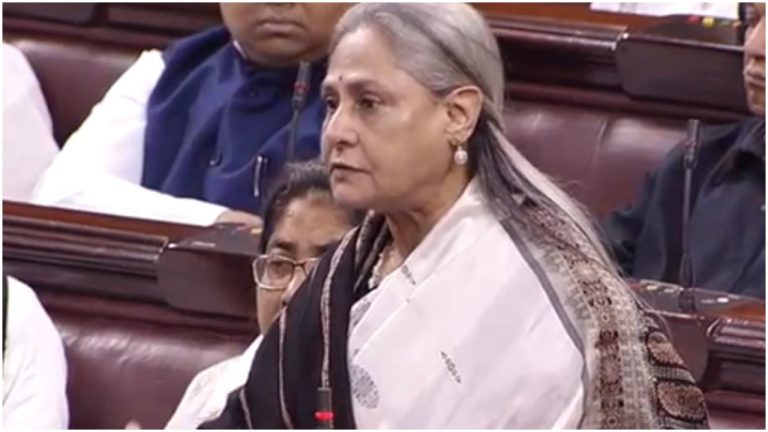
Taking a strong stance on the recent horrific rape and murder of a 27-year-old doctor in Hyderabad, Samajwadi Party MP Jaya Bachchan on Monday stated that rapists must be brought out in the public and lynched.
Amidst the ongoing rage over the Telangana incident, actor-turned-politician Jaya Bachchan said we need to name and shame the criminals and added that the people who commit crimes against women should be lynched to put an end to such crimes.
#WATCH “People now want Govt to give a definite answer. These type of people (the accused in rape case) need to be brought out in public and lynched,” Rajya Sabha MP Jaya Bachchan on rape & murder of woman veterinary doctor in Telangana pic.twitter.com/HFNjUHtSHB
Questioning the state government for failing to provide security to women, Jaya Bachchan asked, “A similar incident happened in Hyderabad a day before the vet was raped. Do you not think the security in charge should be questioned and they should be asked to give an answer to why they were not able to protect that area?”.
“I think these people need to be shamed in front of the entire country. People who have not done their jobs properly. These kinds of people (the accused) should be brought out in public and lynched,” Jaya Bachchan said.
The Telangana incident has led to massive protests and an outpouring of rage and grief across the country. On Monday, these protests also reflected in both the houses of parliament with members from both the houses across various political parties expressed shock over the incident and demanded strict punishment for the accused.
Reportedly, Union Minister Rajnath Singh spoke in the Lok Sabha and stated that the central government was “open to every suggestion to curb such heinous crimes”.
“We are ready for discussions in the House so that stringent provisions in the law could be explored to give punishment to those involved in such ghastly incidents,” Rajnath Singh said speaking at Lok Sabha during the Zero hour.
In Odisha, alleged police apathy has prompted a woman physics lecturer who was allegedly raped by her relative last month, to commit suicide on Saturday. Following the women’s death, the police sprung into action, suspending an ASI while transferring an Inspector.
The SI of Jharpokharia police station Prasanta Swain has been suspended for delaying the investigation and IIC Sarat Mahali transferred to the district headquarters.
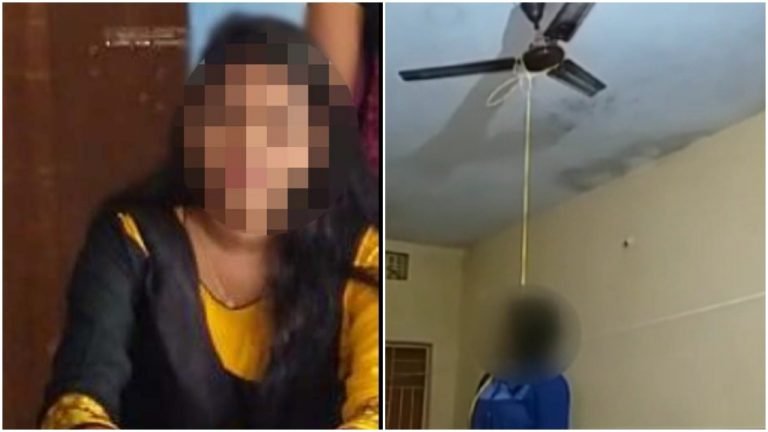
The victim, a physics lecturer, had committed suicide inside a hostel room in the Rairangpur College. She was found hanging at around 8.30 pm on Saturday.
As per reports, the woman who hails from the Pandhada village in Odisha’s Mayurbhanj district, had gone to her sister-in-law and brother’s house to celebrate Kali Puja on October 26 when she was allegedly raped by her sister-in-law’s brother Soumya Ranjan Sahu. When she revealed her ordeal to her sister-in-law, she was persuaded to keep silence on the issue.
However, the accused contacted the victim and allegedly sent her obscene photographs recorded during the incident, threatening her that if she reported about the incident to anyone, he will upload her pictures on the Internet. The woman then filed an FIR with Jharpokharia police station on October 30. The police registered the FIR under sections 376 and 506 of the Indian Penal Code and the victim was sent for a medical test at PRM Medical College and Hospital. Her statement was also recorded but no action was taken against the culprit for a month.
Perturbed by police inaction, on Saturday night, the woman committed suicide and her body was found hanging in her room in the women’s hostel of the college. According to the victim’s father, a suicide note was recovered from his daughter’s hostel room. The incident touched off an upheaval with the victim’s father along with some other students of the college not allowing the body to be taken for post-mortem for around 12 hours. The agitators were placated by Rairangpur Town IIC Ranjan Kumar Sethi and SDPO Snehasish Sahu and subsequently, the body was taken for post-mortem.
As the police are awaiting the post-mortem report, the SP stated that the primary accused along with his other two accomplices, Debabrata Mandal and Sujit Mandal have been arrested from Dhanmandal in Cuttack district. Debabrata and Sujit allegedly threatened the victim. The complaint filed by the victim’s father mentions 6 people as accused. The police have caught 3 of them while the remaining three are yet to be arrested.
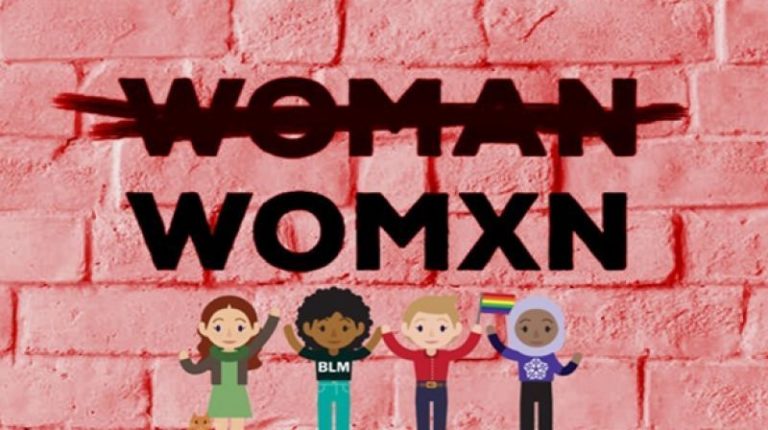
In recent times, there has been a dedicated attempt at altering the fabric of the English language. While it’s natural for new words to emerge and for the language to develop, there hasn’t been any attempt as such to change the basic structure of the language. However, with the advent of postmodernism, we do witness such a radical attempt underway with terms like Womxn coming to the fore. So what is the term ‘womxn’ and why is it being used?
Indian liberalism is Western Progressivism with a Time Lag. Therefore, when clownish ideas sprout in the fringes of Western society, it inevitably trickles down to the fringes of Indian discourse from where it infiltrates more mainstream discussions. One of the most obvious examples of this is Postmodernist English. Until very recently, the usage of this could be found only in the extreme fringes of Indian discourse. However, as time has elapsed, it is beginning to make its presence felt in more mainstream discussions.
Two years ago, the usage of words such as ‘womxn’, ‘persynally’, ‘myntion’, ‘harassmynt’ could be found in the remote corners of far-left websites such as Kaafila. One Sayantan Dutta, whose preferred pronouns is they/them presumably, wrote in 2017 that “the structure of language has mirrored the patriarchal structure of the society, and therefore they practices aungendering mechanism persynally by neutralizing gendered roots of some words.” We are expected to believe that twisting the spellings of words that contain a series of letters denoting the masculine gender will somehow lead to a less patriarchal language.
If words such as ‘harassment’ and ‘personally’ reflect the patriarchal structure of the English language, it would imply that even alphabets are patriarchal given the fact that they, too, developed at a time when society was deeply patriarchal. However, no attempts have yet been made to change the way alphabets are written to make them feminist. It appears that the individuals are not as committed to Feminism as they would have us believe.
Regardless, from the fringes of Kafila, it has now become part of mainstream feminist discourse in India. Rituparna Chakraborty, a pioneer of the Me Too movement in India who curates the official Twitter Handle of the campaign for India, has begun writing ‘Women’ as ‘Womxn’ because apparently, the latter is more inclusive. It’s a ‘gender-neutral term’, we are told, that includes ‘trans, intersex and nonbinary women’.
It’s a gender neutral term to include those who identify as trans, intersex and non binary women
The Urban Dictionary defines womxn as “A spelling of “women” that is a more inclusive, progressive term that not only sheds light on the prejudice, discrimination, and institutional barriers womxn have faced, but to also show that womxn are not the extension of men but their own free and separate entities. More intersectional than womyn because it includes trans-women and women of colour.” It’s not entirely clear how the word is meant to be pronounced.
It’s extremely unlikely that such harebrained attempts at altering the English Language will ever be successful to any meaningful extent. The more likely reaction from the masses is undisguised contempt or annoyance. What we see here essentially is a centralized attempt at chartering the future course of the English language. Probability of success would have been much higher if ordinary citizens were more receptive to the ideas that are driving the change but as it so happens, they are not.
Another interesting feature of such postmodernist language is that no one has called for any other language apart English to be made ‘gender-neutral’. One would assume that the structures of Hindi, Sanskrit, Spanish, French, Japanese, Mandarin, and other languages are likely to be just as ‘patriarchal’ as that of English. However, no calls have been made to alter the ‘patriarchal structure’ of any language other than English. The obvious reason for this is the fact that English is the preferred language of Western Elite and Postmodernism is a Western disease. Therefore, all its activism is limited to English alone.
Even in India, we see that sections of society that are most Westernized are the ones who pick up such language. People who remain rooted in Indian traditions are much less likely to buy into Western delusions. Thus, the usage of Postmodernist English is restricted to a minute section of Indian discourse although attempts are being made to normalize it to a great extent.
Thus, the best-case scenario for such changes is that Postmodernist English will at some point in time become the language of the elite classes of Westernized Society. Right now, it is only a tool that signals a person’s ideological inclinations. Going forward, it’s likely to remain another avenue for individuals to demonstrate their social status. It is unlikely to ever become popular with people at large. At the end of the day, Postmodernist English is just another tool for the bourgeois to distinguish themselves from the plebs.