On Monday, 21st October, the Supreme Court held back the Union Government and the States from serving on the National Commission for Protection of Child Rights (NCPCR) communications to revoke the recognition of Madrassas that do not comply with the Right to Education Act 2009 and to inspect all Madrassas.
A bench consisting of Chief Justice of India DY Chandrahcud, Justice JB Pardiwala, and Manoj Misra issued the interim decision after hearing a writ case brought by the Jamiat Ulema-l-Hind, an organization of Islamic clerics, challenging the NCPCR’s actions.
NCPCR has been long making efforts to get the Madarsa students into the formal education system. On June 7th, 2024, the NCPCR addressed the Chief Secretary of the State of Uttar Pradesh, requesting that the recognition of Madrassas that do not conform with the RTE Act be withdrawn. Later, on June 25th, 2024, the NCPR appealed to the Secretary, Department of Education & Literacy, Ministry of Education, Government of India, directing all States and UTs to conduct assessments of existent Madrasas per the UDISE code (Unified District Information System for Education).
The acknowledgment and UDISE Code of Madrassas that do not conform with the norms under the RTE Act of 2009 were requested to be removed with immediate effect. The NCPCR further asked the Union not to expand the UDISE system to madrasas. The NCPCR advised that the Union create a separate category of UDIE to record information about all Madrasas, whether recognized, unrecognized, or unmapped.
Following that, on June 26th, 2024, the Uttar Pradesh Chief Secretary directed all District Collectors to conduct a detailed investigation of all government-recognized madrassas in the state that admit non-Muslim children and to ensure immediate admission of all children enrolled in madrasas into schools.
The Government of Tripura had released a similar instruction on August 28, 2024.
On July 10th, 2024, the Union Government directed all states and union territories to follow the NCPCR’s instructions. The petitioner contacted the Supreme Court, claiming that these rulings violated religious minorities’ right to education under Article 30 of the Constitution.
While issuing notice, the Court directed that pending further orders, the communications dated June 7th and June 25th of NCPCR, as well as the consequential communications dated June 26th of the Chief Secretary of Uttar Pradesh, communication dated July 10th issued by the Secretary, Department of Education & Literacy, Ministry of Education, Government of India, and communication dated August 28th issued by the Government of Tripura, shall not be acted upon.
Senior advocate Indira Jaising, representing Jamiat Ulama-e-Hind, made an oral request during the proceedings to include all states and union territories as parties to the petition, which the Supreme Court granted. The writ petition was filed by advocate Fuzail Ahmed Ayyubi. In the case, the Supreme Court ruled that no action would be taken against madrassas based on the NCPCR’s directives or those issued by various states for the time being.
The Right to Education Act (RTE) 2009 mandates free and compulsory education for all children aged 6 to 14 years, requiring both private and government schools to meet prescribed standards. The NCPCR’s directive applies to madrassas that are either recognized under the RTE Act or connected to the UDISE (Unified District Information System for Education) code.
The petitioner argued that the NCPCR’s and government’s directives infringe upon the rights of religious minority educational institutions, asserting that these orders violate both the rights of religious minorities and the fundamental principles of the Indian Constitution, which guarantees religious freedom and the right to education to all citizens.
After hearing the arguments, the Supreme Court issued an interim order preventing any state or central government from acting on the NCPCR’s directives until the next hearing. As a result, no action will be taken against madrassas not adhering to the RTE Act at this stage.
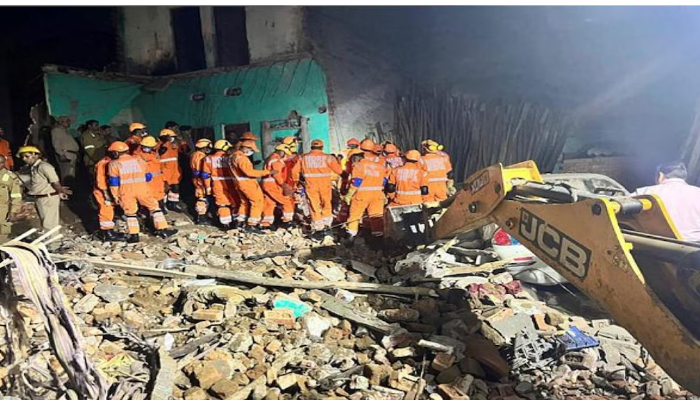
Six people lost their lives and three others were wounded in an explosion involving an oxygen cylinder which also led to a partial collapse of a house in the Sikandrabad area of Bulandshahr district, Uttar Pradesh. According to Bulandshahr District Magistrate Chandra Prakash Singh, the incident happened on October 21st in the evening at Riyazuddin’s home, inhabited by about 19 individuals, including women and children. Five people were killed at first, then in the early hours of 22nd October, that number rose to six.
They were transported to the district hospital, according to city magistrate Chandra Prakash Priyadarshi. There were three male and three female victims. The deceased has been identified as Riyazuddin alias Raju (50), his wife Rukhsana (45), Salman (16), Tamanna (24), Hivja (3) and Aas Mohammed (26). One of the injured is in a critical state.
“A total of six bodies have been brought here in the district hospital for post-mortem, three male bodies and three female bodies. These are the victims of the Sikandrabad tragedy. I can’t exactly say the total number of casualties. I have my duty in the district hospital and six bodies were brought here,” Chandra Prakash Paryadarshi stated. “A cylinder blast occurred at a house in Ashapuri colony between 8:30-9 pm. There were 18-19 people in the house, eight people were rescued from here whose condition were very critical. The Chief Medical Officer has confirmed the death of five people, three people are still injured, out of which one is in serious condition but his treatment is underway,” he had informed earlier.
Senior Superintendent of Police of Bulandshahr Shlok Kumar revealed that after being hospitalized for treatment, Riyazuddin’s wife was recently taken home by the family, who had brought an oxygen cylinder and its accessories to aid with post-hospitalization care. He stated “This oxygen cylinder exploded. The cylinder, its nozzle, etc have been recovered from the debris. The bodies have been sent for post-mortem and further legal proceedings in the matter are underway.”
Rescue and relief efforts were started as soon as information of the casualties was received, according to Dhruva Kant Thakur, Additional Director General of Police, Meerut Zone. He mentioned that the rescue effort encompassed members of the local government, police, fire department, NDRF, and medical personnel. “Chief Minister (Yogi Adityanath) took immediate cognisance of the incident. We were sent to the spot and directions were issued that good-quality treatment should be given to the injured persons,” Chandra Prakash Singh conveyed. Regarding the rescue effort, he added that gas cutters had to be used to pry open the house’s iron roof beams. An excavator was dispatched to clean the rubble at the same time.
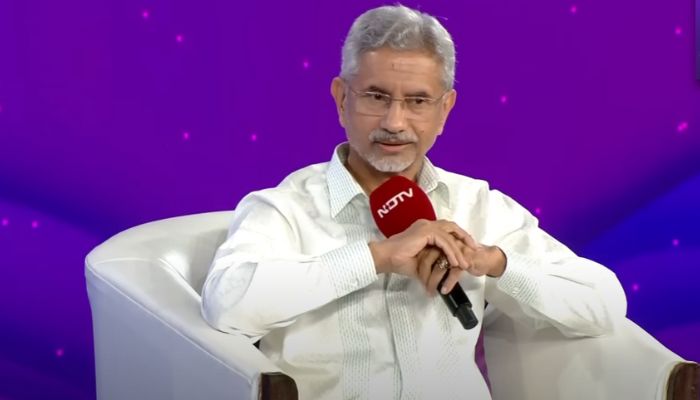
On Monday (21st October), External Affairs Minister S Jaishankar spoke on the ongoing diplomatic tension between India and Canada and pointed out that the issue needed to be analysed both from a Western and Canada-specific perspective.
During the NDTV World Summit, he pointed out that there has been a shift in the power balance from overtly Western domination to the rise of regional powers around different pockets of the world (something which has made Western countries in particular uncomfortable).
“In the last 20-25 years, there has been what you can call a rebalancing or multipolarity. Many non-western countries have a bigger share, bigger contribution, and a bigger role (in geopolitics). And a bigger influence which will naturally come. So, the equations in a way between the west and the non-west I think are changing,” S Jaishankar emphasised.
He pointed out, “There was a time when in the conversation you were looking up and I was looking down. Now, the conversation is no longer like that. It takes a little bit of getting used to.”
“Today, when the natural diversity of the world has started to express itself when many more countries and particularly many more large countries like India or China have points of view and positions to take, there will be contestations, frictions and arguments. So, it won’t be so smooth,” the EAM added.
S Jaishankar then highlighted the Canada-specific issue, which has been the bone of contention between the two countries. He referred to the bombing of Air India Flight 182 by Khalistani terrorists, adding that the problem goes beyond recent geopolitics.
Hypocrisy and double standards of Western nations like Canada
“It was a reflection of something which was going on there. But at a time when many people felt that, it was all behind us, I think developments in (domestic) politics went in a different direction. And we are seeing, to some degree, the consequences of that” the EAM stated.
The career diplomat-turned-politician noted, “They seem to have a problem if Indian diplomats are even trying to make efforts to find out what is happening in Canada on matters which directly pertain to their welfare and security. But look what happens in India. Canadian diplomats have no problem going around collecting information on our military, on our police, profiling people, and targeting people to be stopped in Canada.”
“We tell them, look, you have people openly threatening leaders of India, diplomats of India. Sometimes the threat is not just verbal, it’s physical. So their answer is freedom of speech…But if an Indian journalist says the Canadian High commissioner walked out of South Block looking very grumpy, it is apparently foreign interference,” he further exposed Canada’s hypocrisy
On Monday (21st October), Israel announced that it had declassified evidence that claimed the location of a hidden Hezbollah finance base underneath a Beirut hospital. It has been revealed that this Hezbollah bunker at the hospital was storing over $500 million in gold and cash.
In a press release, the Israel Defence Forces (IDF) said Hassan Nasrallah’s bunker had hundreds of millions of dollars in cash and gold, which was allegedly used to fund the Islamic terror outfit’s activities.
“Tonight, I am going to declassify intelligence on a site that we did not strike—where Hezbollah has millions of dollars in gold and cash—in Hassan Nasrallah’s bunker. Where is the bunker located? Directly under Al-Sahel Hospital in the heart of Beirut,” IDF Spokesperson Rear Admiral Daniel Hagari said.
“Tonight, I am going to declassify intelligence on a site that we did not strike—where Hezbollah has millions of dollars in gold and cash—in Hassan Nasrallah’s bunker. Where is the bunker located? Directly under Al-Sahel Hospital in the heart of Beirut.”
The IDF spokesperson, however, stated that the site has not yet been struck, in spite of the purported presence of huge amounts of gold and cash. “The bunker was deliberately placed under a hospital. According to estimates, there is at least half a billion dollars in dollar bills and gold stored in this bunker. That money could have been used to rehabilitate Lebanon, but it went to rehabilitate Hezbollah. This money could and still can be used to rebuild the state of Lebanon. The [Israeli] Air Force aircraft are watching the site and will continue to track it,” Hagari said.
He added that the money that should have been used to revive the economy of Lebanon, was instead being used to fund Hezbollah. Hagari also added that Hezbollah operated factories and other resources in Syria too, to generate money for their terrorist activities, including the “suitcases full of gold and cash” it kept receiving from the government of Iran.
Notably, on Monday, Israeli forces struck numerous branches of Hezbollah-linked financial group Al-Qard Al-Hassan in the southern neighbourhoods of Beirut, across southern Lebanon and in the eastern Bekaa Valley, the Hezbollah stronghold. The strikes caused no casualties as civilians were warned before to move away. IDF’s Arabic language spokesperson said that the Israeli strikes targeted several locations including those linked to Al Qard Al Hassan, which was allegedly used to purchase arms and pay money to Hezbollah terrorists. The IDF spokesperson added that Hezbollah maintains hundreds of millions of cash in the 30 branches and that the strikes were intended to prevent the terrorist organisation from rearming.
On Sunday (20th October), the elite Khar Gymkhana terminated the playing membership of Indian cricketer Jemimah Rodrigues after her father Ivan repeatedly booked its premises for ‘Christian conversion meetings’ using her ID.
Jemimah Rodrigues, who plays for the women’s cricket team, was the first female cricketer to be awarded the membership of the top sports club in March last year.
According to Khar Gymkhana’s managing committee member Shiv Malhotra, Ivan Rodrigues booked the sporting club’s banquet hall for ‘meetings to religious conversions.’
It was reportedly carried out between March 2023 and November 2024 at the behest of a Christian evangelical group called Brother Manuel Ministries. According to the bye-laws Rule 4A of the constitution of Khar Gymkhana, religious activities are not allowed on its premises.
Testimonies of Khar Gymkhana committee members
“Though Jemimah was granted the membership, her father exploited this privilege by booking the banquet hall for meetings related to religious conversions. From March 2023 to Nov 2024, the hall was predominantly booked on weekends, preventing other members from securing reservations for their events. This misuse extended to providing discounted rates, and in some cases, security deposit was waived,” Malhotra toldThe Times of India.
The objection was first raised by ex-president of Khar Gymkhana, Nitin Gadekar, toldThe Indian Express, “Me, Malhotra and a few other members went to see it. We saw the room was dark, trance music was playing and a lady was saying ‘He is coming to save us’. I was surprised how Gymkhana can allow this in the first place,”
“How can our club president allow such a thing to happen without the managing committee being aware of any of this? I took it up at the AGM yesterday. Everyone agreed that while an inquiry must be initiated, Jemimah’s club membership must be terminated immediately,” he emphasised.
President of the elite sports club denies allegations
A resolution to the effect was passed at the general body meeting, following which the 3-year-honourary membership of Jemimah Rodrigues was terminated. The elite sports club had so far recovered ₹3.5 lakhs in arrears from Jemimah for 35 such events.
Khar Gymkhana president Vivek Devnani however cried foul and claimed that the allegations and accused committee members of ‘politicising’ the matter.
“Khar Gymkhana is scheduled to have its managing committee and trustee elections later this month. These allegations are being made with political motives. No evidence has been offered for any alleged wrongdoing. I would request and trust our wider body of members and the media to be cautious in relying on misrepresentations and falsehoods,” he claimed.
The United States of America is the only remaining superpower in the world after the dissolution of the Union of Soviet Socialist Republics (USSR). It regularly presents itself as the champion of human rights, the upholder of justice, and the flag-bearer of a rule-based system in which morality and international laws are paramount. The US also publicly and implicitly issues sermons India, its purported friend and ally, which is a member of both Quadrilateral Security Dialogue (QUAD) and I2U2 (India-Israel and US-UAE) about the same through its numerous proxies and programs.
The latest incident included allegations of Canada, which has proven itself to be a haven for Khalsitanis, against India surrounding terrorist Hardeep Singh Nijjar’s death last year, even after it repeatedly failed to hand over any proof. The Western power demanded that India ‘assists’ Justin Trudeau’s government in their probe into the gang war style murder of the wanted criminal, in an attempt to lend legitimacy to the absurd accusations. The conflict has led to a severe diplomatic standoff between the two nations since last year which has only become more intense owing to the statements of Justin Trudeau and his administration.
The US enjoys playing the role of “big brother” to other countries and uses its military might and international stature to eliminate its enemies, including Osama bin Laden, without giving a single thought about any country’s sovereignty or violating international law. On the other hand, it never misses an opportunity to criticize other nations, especially an emerging power like India when they take measures to safeguard their countries from similar elements. Well, at least no one can accuse the USA of being objective or neutral.
China and India are at present rising to prominence as Asia’s two superpowers. While the US pretends to be a strategic partner of India, claiming that both countries share the same democratic values and ideals, it has publicly opposed Communist China’s expansionist policies, which are becoming more aggressive as its economies expand and pose a threat to regional peace and stability. The two countries are fierce rivals who seek to undermine one another and compete for influence in various parts of the world.
The Pacific Islands is one such place where, the region’s sordid history with the United States appears to pose a tough challenge to significant American interests there and its effort to counter China. Moreover, it yet again exposes the country’s willingness to engage in heinous human rights abuses and breaches of international law to further its own interests, a privilege it vehemently denies to other nations.
What are the Pacific Islands
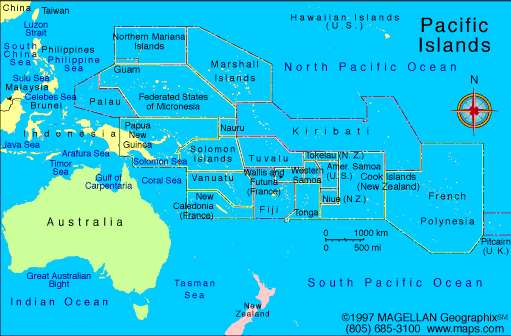
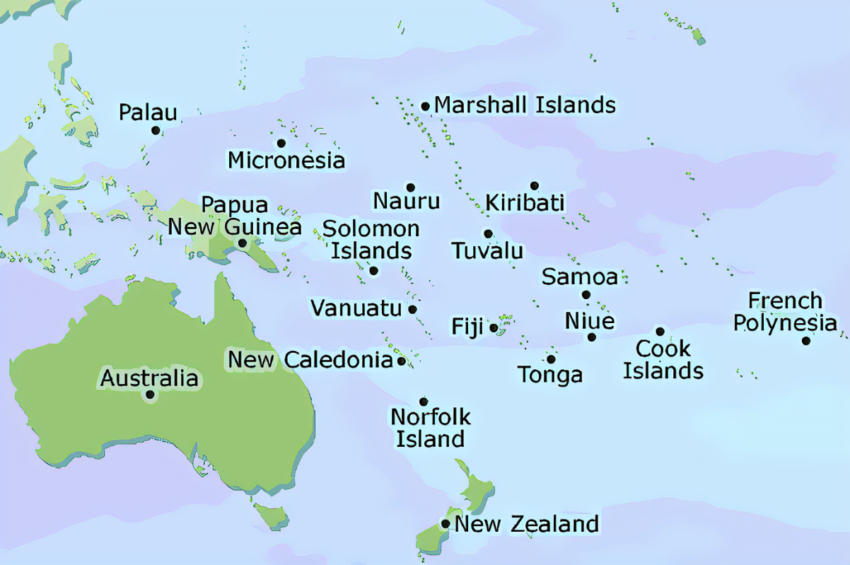
The Pacific Islands are a group of islands in the Pacific Ocean. They consist of Melanesia, Micronesia, and Polynesia, the three ethnogeographic regions. The Pacific Island region is made up of millions of square miles of ocean and more than 300,000 square miles (800,000 square km) of land, of which New Zealand and the island of New Guinea make up around nine-tenths. It consists of a combination of dependent states, linked states, autonomous states, and essential portions of non-Pacific Island nations.
Image via InfoPlease
The vast chain of islands situated to the north and east of Australia and south of the Equator is known to the inhabitants of New Guinea island, the Bismarck Archipelago, the Solomon Islands, Vanuatu (the New Hebrides), New Caledonia, and Fiji as Melanesia (from the Greek words melas, “black,” and nēsos, “island”). Micronesia is a group of islands located north of the Equator and east of the Philippines. Its arc extends from the Northern Mariana Islands, Palau, and Guam in the west, through the Federated States of Micronesia (also known as the Caroline Islands), Nauru, and the Marshall Islands, and culminates in Kiribati.
The numerous (“poly”) islands of Polynesia are located in the eastern Pacific, mostly encircled by the massive triangle that is formed by the Hawaiian Islands to the north, New Zealand to the southwest, and Easter Island (Rapa Nui) to the east. Tuvalu, Wallis and Futuna, Tokelau, Samoa (the old Western Samoa), American Samoa, Tonga, Niue, the Cook Islands, and French Polynesia (including the Society, Tuamotu, and Marquesas islands) are other parts of this widely dispersed collection.
The main Pacific Islands, which stretch obliquely from northwest to southeast across the Equator, are classified into two primary physiographic zones based on the type of island they are, oceanic and continental. The bulk of the population is found in Papua New Guinea, Hawaii, Fiji, the Solomon Islands, and New Zealand, where most residents are of European ancestry. The majority of Pacific Islands have a high population density, with most people living close to the coast. Over three-quarters of the Pacific Islands’ indigenous people are Melanesians. More than one-sixth of the population is Polynesian, and roughly one-twentieth is Micronesian. Hawaii has the highest concentration of individuals of European descent after New Zealand.
The Pacific Islands are home to several hundred different languages, the majority of which are Austronesian in origin. Almost all Pacific Islands have French or English as their official language, therefore most islanders know it at least a little. Traditional beliefs and customs have mostly been replaced by Christianity, while in some places, like Papua New Guinea, the Christian faith is frequently combined with traditional customs. Christian missionaries went to Oceania with the specific goal of converting the societies there.
Pacific Islands grapple with US-caused nuclear legacy
China and the United States are vying for access and influence in the Pacific Islands, a territory that could be vital to winning a war in Asia, much as it was in World War II when they provided bases for military operations and helped to isolate and weaken Japan. Now, a growing risk of increasing geopolitical crises plaguing the Pacific island region is highlighted by China’s promise to claim Taiwan. The United States House of Representatives enacted legislation in September to fortify relations with the area and resist Beijing.
However, US lawmakers seem to have forgotten their nation’s history with the Pacific Islands, much like their antics with other nations involving drone assaults on wedding parties in Afghanistan or orchestrating fabricated “revolutions” in Arab countries and more recently in Bangladesh. It could be a deliberate or an honest mistake considering how often they have betrayed the sovereignty and rights of other nation-states for the past multiple decades, as an instrument of Washington DC’s foreign policy.
Notably, the same dynamic is in motion in the region where US weakness, specifically its refusal to confront the legacy of US nuclear testing, is damaging its interest far more than any Chinese strength.
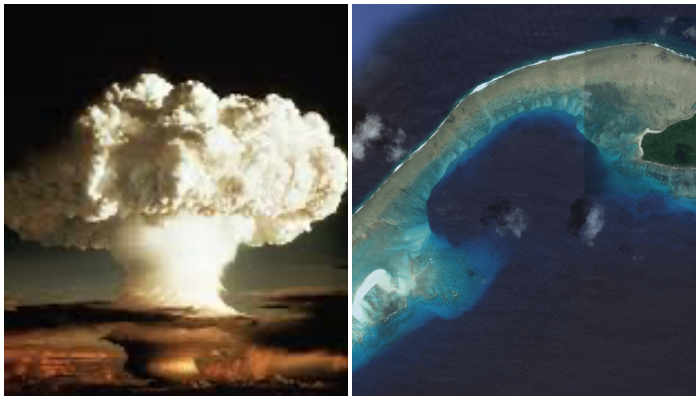
67 nuclear tests, including the Castle Bravo, 1000 times stronger than Hiroshima
The United States conducted 67 nuclear and thermonuclear tests on the Marshall Islands, which is the equivalent of detonating 1.6 Hiroshima bombs every day over the course of 12 years, reported The Diplomat. It is pertinent to note that no nation has carried out more nuclear tests than the US and their aftermath left a path of devastation spanning decades and continents.
The impacts, which include environmental degradation, cancer and other health issues, and indefinite evacuation from unusable islands, are still being suffered by the Marshallese people. The way the US has treated the Marshall Islands, both historically and currently, is viewed by Pacific Island nations as essentially unfair, and expectedly it has negatively impacted their opinions of the country. They have been demanding justice but it appears that their pleas haven’t yielded much result.
Image via Pacific Islands Bulletin
The Pacific Islands Forum, the leading regional body in Oceania, came under intense scrutiny from Western media in August after it succumbed to China and took Taiwan’s name out of its joint statement. It led to quite a commotion among US policymakers, who should have been far more worried about the negative view of the forum in relation to their country which was absent from the headlines.
The Pacific Islands Forum serves as the primary forum for collaboration among the islands and is essential to understanding the area.
It presented a contradictory image when member states praised Washington’s climate aid while simultaneously pointing out American injustice toward the Marshall Islands, the Diplomat article explained. As part of their commitment to help the Marshall Islands reach “a justified resolution” to US nuclear testing, they decided to keep up “bilateral, regional, and multilateral action.”
March marked the 70th anniversary of the superpower’s greatest test, Castle Bravo, with a visit to the Marshall Islands by then-Secretary General Henry Puna. That one detonation was 1000 times stronger than the nuclear bomb that had wiped out Hiroshima in 1945.
Puna stressed in his speech that the nuclear nations who used the Pacific as a testing ground showed “overwhelming foreign disrespect” and stressed that “we must hold our great friends, the US accountable to this.” The American efforts to address the nuclear legacy, in his opinion, have been “inadequate” and “therefore remain unfinished.” The region’s combined voice doesn’t seem to be given much weight by the US.
According to Washington DC, a “full and final settlement” for relentless nuclear testing and related damages to people, environment, and geology in a particular region is $150 million. This sum was given to the Marshall Islands in 1986 upon their separation from the US under the terms of the Compact of Free Association.
Today, the settlement would be worth about $430 million after accounting for inflation. However, the Pacific Islands Forum and the Marshallese government deem it starkly inadequate. An impartial Nuclear Claims Tribunal was established in 1986 as mandated by the Compact, and it subsequently determined that US compensation should be $2.3 billion, which has been adjusted for inflation and is currently over $3 billion.
No amount of compensation could ever heal the destruction wrought by the testing, but only the USA can add insult to the unprecedented injury by seeking to avoid taking responsibility for its actions in such an inconsiderate way.
Furthermore, the Compact was signed by the Marshall Islands during the time that they were still under the US administration, effectively under USA control.
Experiments performed on non-consenting Marshallese ‘test subjects’
The horrors perpetrated by the US didn’t end there as it performed horrific experiments on non-consenting Marshallese test subjects which were also kept under wraps along with the broad range of ramifications, among other crucial details, at the time under classified documents. Washington has consistently rebuffed the decades-long request for full nuclear compensation, which is backed by the Pacific Islands Forum. Although a lot of US actions in the region are now not adverse, they don’t make up for previous wrongs and nuclear justice will mean nothing less than full reparations for the Marshallese people.
Editor of the Marshall Islands Journal and foremost authority on the legacy of nuclear power Giff Johnson voiced, “There is great awareness among Pacific Island leaders that the United States has not fully addressed the damage it caused. The nuclear legacy is a black mark on the long-term ties between Washington and the Marshall Islands and on US pledges and promises in the broader Pacific region.”
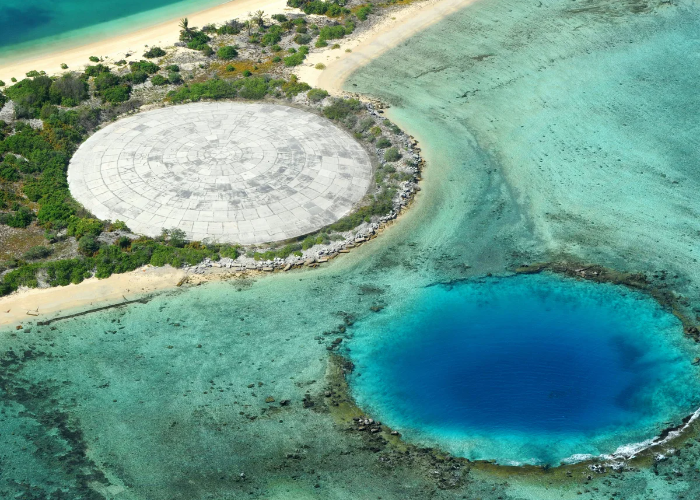
During its clean-up operation on Enewetak Atoll, in the Marshall Islands, the military built a giant concrete dome to house the toxic material left over from the nuclear tests. (Source: Asahi Shimbun/Getty)
When the Pacific wasn’t a top priority, most US policymakers weren’t troubled by this disgraceful reputation, further cementing the true essence of the country’s policy to engage primarily for selfish benefits with little or no regard for other people. However, it is now a top priority since the tables have turned and the US needs the Pacific Islands on its side, lest they drift to China’s influence. Interestingly, the well-crafted rhetoric from the United States in the Pacific Islands will always sound hollow in the absence of nuclear justice, which could make it difficult for the former to deepen its relations with them.
The United States ambassador to the Marshall Islands referred to the nation as Washington’s “closest partner” in August. The United States government has asserted that it is dedicated to human rights, that it is “listening and responding to Pacific priorities,” and that it supports a stable, peaceful region where “the environment can thrive.” The denial of full nuclear compensation runs counter to all of these statements and the US lip service is of no use to the people inhabiting the Islands.
Benetick Kabua Maddison in a demeaning comparison that capitalized on how the US is perceived in the Marshall Islands highlighted, “Letao is an ancient Marshallese deity infamous for mischief and cunning. Given the nuclear heritage and the experiences of their generation, Marshallese people, especially the elders, believe that the United States best represents these qualities of all nations.” He is the executive director of the Marshallese Educational Initiative which works for the community in the US. “Pacific Islanders want a region that is nuclear-free and independent and not an arena for competition between China and the US, two nuclear-armed states,” he asserted.
The Pacific Islands believe that nuclear justice is more crucial than ever as geopolitical tensions grow and the world faces the possibility of nuclear war. A report on the effects of nuclear testing in the Marshall Islands on human rights was to be prepared, according to a 2022 United Nations resolution. However, Washington claimed to have “accepted and acted on” its duties and rejected the resolution which was supported by the Pacific Islands Forum. A final UN report was released in late September. It urged the US to consider offering a formal apology and full reparations to the Marshall Islands, in its conclusion.
Marshall Islands President Hilda Heine also recounted the atrocities inflicted by the US in the United Nations General Assembly and pointed out that the testing “left behind deep scars, with communities remaining in exile from their home islands, billions of dollars in unmet adjudicated claims, and a social and environmental burden upon our youngest and future generations.” She added that although the nuclear legacy needs to be handled, there hasn’t been “no meaningful reconciliation” or formal apology with the United States during her speech to the UN Human Rights Council in Geneva, this year. She mentioned that the Marshallese people were taken advantage of, forced to relocate, and allowed to participate in scientific research without their consent.
Washington’s actions thus far make it abundantly clear that it merely wants to use the Pacific Islands as a means of containing China. It is not particularly interested in prioritizing making amends for its heinous acts against the country or in pursuing nuclear justice.
Marshall Islands and the series of nuclear testings
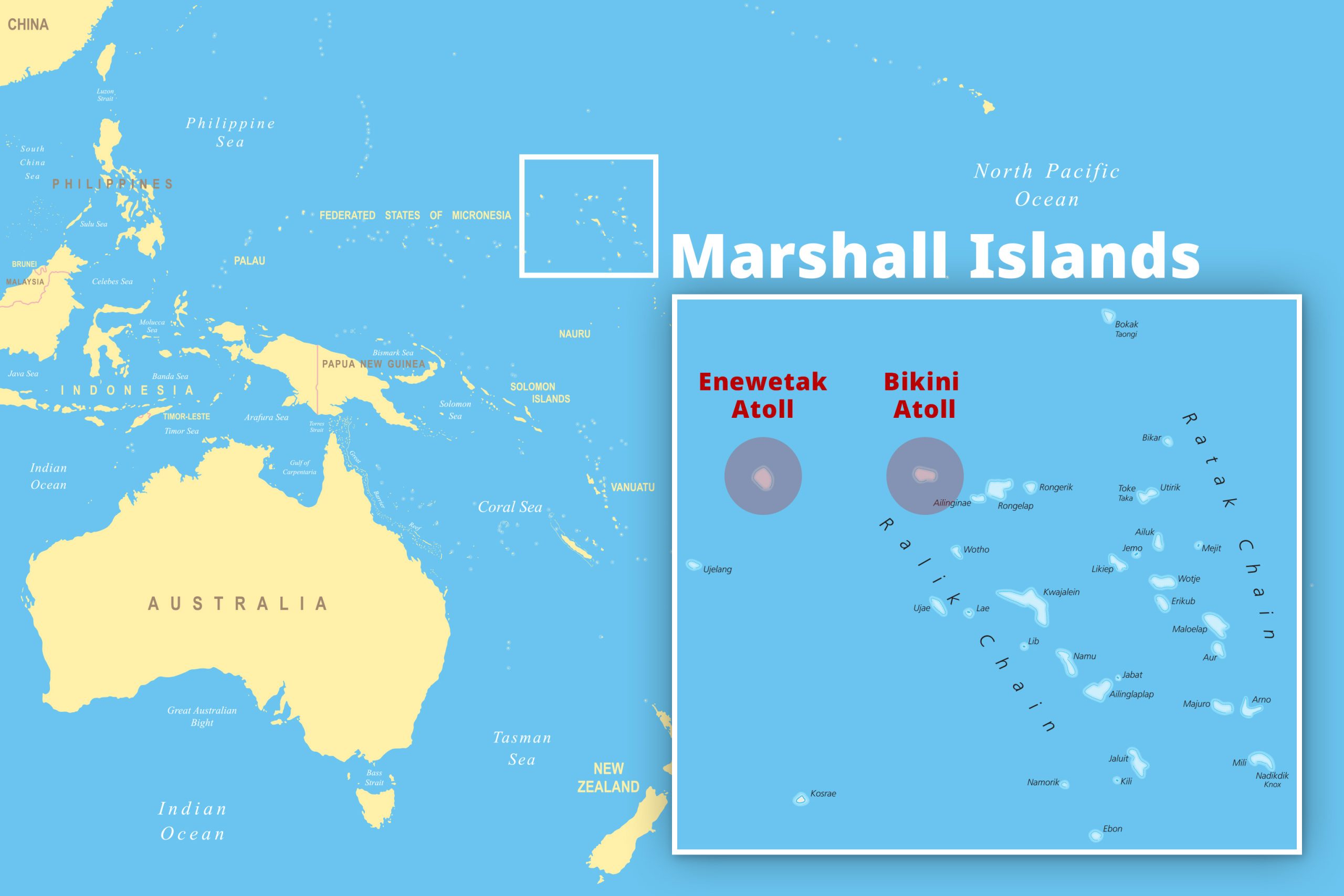
The Marshall Islands are situated between Hawaii and Australia, north of the equator, and consist of two chains of 29 coral atolls. There are several islands on each atoll. The Marshallese have made it their home for thousands of years. Japan established military stations on the Marshall Islands after capturing them in 1914. Japanese forces were routed by U.S. Marine and Army forces in February 1944 on the atolls of Kwajalein and Enewetak. Then, both atolls were converted into US military installations. The United States intended to test potent nuclear weapons in the Marshall Islands because of their isolated position, small population, and proximity to other American military installations.
The United Nations established the Trust Territory of the Pacific Islands including the Marshall Islands in 1947, with the United States then serving as its administrator. In 1946, there were 52,000 people living on the islands. The United States carried out 67 nuclear tests in the Marshall Islands between 1946 and 1958. The US carried out forty-four of these tests close to Enewetak Atoll and twenty-three at Bikini Atoll, the effects were felt throughout the Marshall Islands. On March 1, 1954, the explosion of a 15-megaton Castle Bravo on Bikini Atoll severely impacted the Marshallese. The residents of Rongelap Atoll started experiencing acute radiation sickness symptoms, such as nausea, vomiting, and severe burns.
Every year on March 1 since then, the Marshallese flag is flown at half mast, remembering the victims of the testing.
Image via The Diplomat
The United States increased the scope of its nuclear research and development initiatives following World War II. The Atomic Energy Commission (AEC) was founded by the US government to oversee the advancement of atomic science and technology during times of peace. This quick development was partly caused by the perception that acquiring more nuclear weapons would solidify American dominance and the fear that the Soviet Union would increase its atomic arsenal.
Operation Crossroads
“Operation Crossroads” was the name of the initial round of testing in the Marshall Islands. It was designed to look at how nuclear bombs would affect naval warships. On 1st July 1946, the “Shot Able” test was conducted at Bikini Atoll to kick off testing in the islands. The Bulletin of the Atomic Scientists verified the potency of these weapons after Shot Able. They calculated that the explosion would instantly kill soldiers on ships up to one mile distant. The test was then carried out by the US on the 25th of July.
Since the “Trinity Test” (the code name of the first detonation of a nuclear weapon, conducted by the United States Army) in 1945, the US had not conducted any nuclear weapons until these explosions. Furthermore, these were the first nuclear explosions in US history since the “Little Boy” and “Fat Man” bombs were dropped over Japan. On 10th August 1946, Operation Crossroads came to an end because of radiation concerns, particularly for the soldiers who were engaged in it. The United States launched a protracted effort to decontaminate Bikini Atoll in 1969.
Operation Greenhouse to Castle Bravo explosion in 1954
President Harry S. Truman decided to step up US research into thermonuclear weapons in January 1950, signalling an increase in nuclear testing by the country. A series of nuclear experiments known as “Operation Greenhouse” was carried out in Enewetak Atoll in 1951 to assess design concepts that would eventually play a crucial role in the creation of the hydrogen bomb. The goal of the experiments was to increase the destructive force of nuclear bombs while decreasing their overall size, including the required amount of fissile material. “Operation Ivy,” the first set of thermonuclear tests by the US, was performed in November 1952 at Enewetak Atoll. The first hydrogen bomb test to be successful was called “Shot Mike.” The United States then executed the “King Shot” on 16th November.
On 1st March 1954, the United States detonated “Castle Bravo,” its greatest nuclear explosion in history, at Bikini Atoll. This was a component of the thermonuclear test program known as “Operation Castle” and was more powerful than “Little Boy” by a factor of almost 1,000. Bravo employed a device known as “Shrimp” that ran on lithium deuteride. The delivery of a hydrogen bomb was tested for the first time with Bravo.
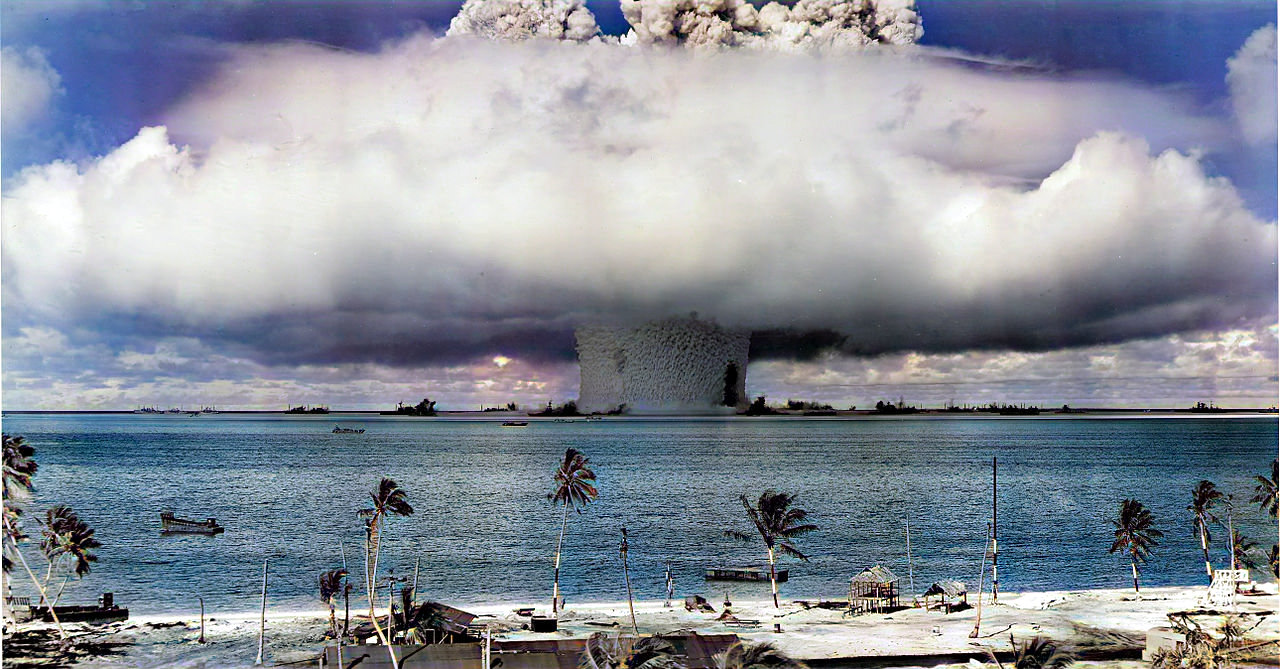
The Baker explosion at Bikini Atoll. (Source: US Department of Defense)
Major General Percy Clarkson and scientific director Dr Alvin C. Graves ordered the test to proceed as scheduled in spite of possible risks. Radioactive material was discharged into the atmosphere and adjacent atolls as a result of Castle Bravo. Scientists had underestimated the test’s intensity. This fallout and debris distribution was facilitated by wind patterns, weather, and ocean currents. Particles of radioactive material, water, and crushed coral made up the fallout, which entered the atmosphere as ash-coloured snowflakes.
Nearby atolls and US service members were impacted by the event. Later, portions of Europe, the United States, Japan, India and Australia were discovered to have radioactive material traces. This was the largest radiation accident in US history and led to protests against atmospheric nuclear testing across the globe.
Deceit, false promises and human experimentation
In 1946, the Marshall Islands’ military administrator, US Navy Commodore Ben Wyatt, requested the Bikinian people to evacuate their homeland “temporarily” so that nuclear tests might be carried out there for “the good of mankind and to end all wars.” 167 people were living on Bikini Atoll at the time. The US administration had already identified Bikini as a test site, so the people’s assent was moot. Afterwards, many locals complained they felt forced to leave. They were famished by 1948 after the US military moved them to the Rongerik Atoll which severely lacked resources. They were moved to Kili, which wasn’t much better.
The inhabitants of Bikini Atoll were once again relocated in 1969, but they were forced to leave in 1978 when it was discovered that the radiation levels were too high. Bikini Atoll is still uninhabitable, therefore they are unable to return home as they were promised by the US administration. The Marshallese lodged a complaint with the UN a month later, but it was ineffective in stopping US nuclear testing. The US government ordered the evacuation of Enewetak Atoll’s people in 1948 as a result of Operation Sandstone, which involved increased nuclear testing.
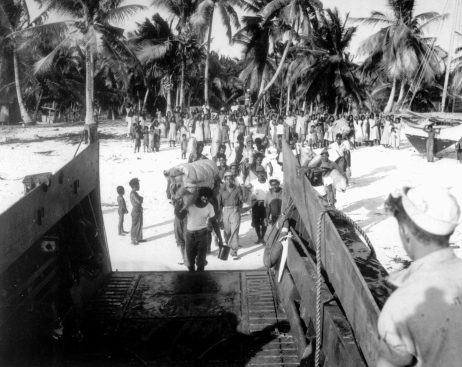
An advance team of Bikini men board a landing craft to assist US Navy Seabees in building new homes for the islanders on Rongerik. (Source: Associated Press)
Imagine India, China, or any other country relocating the inhabitants of a remote island in the middle of the Pacific Ocean and testing nuclear bombs there, causing unimaginable damage to the ocean ecosystem and environment in a large area.
Castle Bravo is a particularly tragic example of the catastrophic impacts of nuclear testing in the Marshall Islands. It was dubbed “the worst single incident of fallout exposures in all the US atmospheric testing program” by the Defense Nuclear Agency in 1982. Radiation covered an area of around 7,000 square miles, equal to the region of New Jersey and remnants were found all over the world. Importantly, the hazard stemmed from the US government’s policies and inactions, and not just from Bravo’s magnitude. The closest atolls, Rongelap and Ailinginae, were less than 100 miles from the test site, thus the US had not evacuated them. Unaware of the danger, children reportedly played amid the radioactive ashfall. Only US staff members had been informed about the test.
Other populated atolls like Ailuk, Likiep, and Utirik were exposed to radioactive particles. The evacuation of Rongelap and Ailinginae was delayed by the US forces until 3rd March while people from Utirik were moved the following day. Many Marshallese people were sick from radiation by then. The US military knew the winds would change hours before the test, but they still did not act promptly to remove people east of Bikini, as the country ultimately blamed shifting winds for the damage. US ships were close enough to assist, but hundreds of civilians living on Ailuk and Likiep were never rescued, a March 1 article in The Diplomat describes.
The US administration even lied about the imminent danger. The world was made aware of Bravo and the “ashes of death” it had unleashed when radioactive material fell on a nearby Japanese fishing trawler named ‘Fukuryu Maru’ and the crew returned home suffering from serious radiation illness. The term “fallout” emerged, bringing with it a global movement opposing nuclear testing. In retaliation, the former US Atomic Energy Commission asserted that only Bikini and three other islands were affected. However, declassified records from 1994 revealed that the US administration was aware that Bravo had significantly increased the radiation exposure of over a dozen atolls.
The repercussions on health, both short and long-term, were disastrous. The residents of Rongelap had apparent burns, blisters and hair loss, but US officials alleged that they exhibited no symptoms of exposure. Miscarriages and stillbirths were common among Rongelapese women, and their “jellyfish babies” were born without bones. Thyroid disorders affected one-third of Rongelapese people, while thyroid cancers affected 90% of Rongelapese children. A medical program run by the United States was set up for Rongelap and Utirik, but thousands of Marshallese from other islands impacted by Bravo and following tests are still not eligible since the US hasn’t acknowledged the extent or seriousness of the effects.
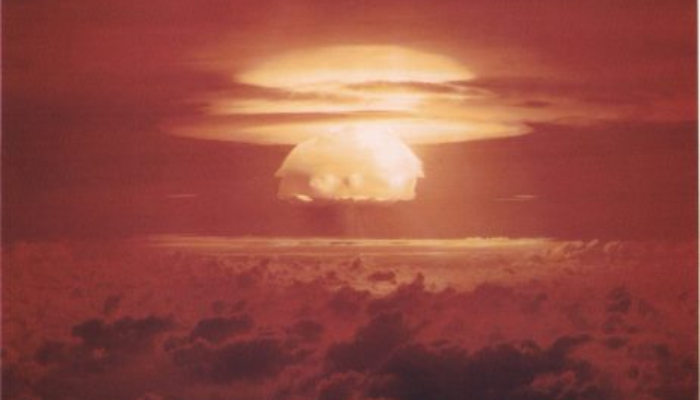
Nuclear weapon test Bravo yielded 15 megatons of TNT on Bikini Atoll. (Source: US Department of Energy)
According to evidence disclosed in 1994, the US government initiated Project 4.1, the most dehumanizing plan, six days after Bravo. Under this program, US scientists examined the effects of radiation on the Marshallese people without their knowledge or agreement. Statesman Tony deBrum of the Marshall Islands informed the US Congress in 1996 that US doctors had taken out patients’ teeth both healthy and unhealthy for scientific purposes. Marshallese women were forced to strip in front of male US scientists. The project ran for several decades.
The United States administration deliberately relocated islanders to tainted atolls during that period. Rongelap was dubbed “by far the most contaminated place in the world” by Merril Eisenbud, the director of health and safety for the Atomic Energy Commission, in 1956. Thus, he suggested the return of the Rongelapese people so that researchers could look into how they absorbed radiation. He rationalized this recommendation by calling the people “mice” and characterizing them as primitive. In 1957, the United States government relocated Rongelap under the pretence of safety, a move that a US official later described as a cover-up.
Conclusion
The Marshallese people were unwillingly subjected to scientific research, their environment and health were destroyed, they were misled about their radiation exposure, they were evacuated too late or not at all, they were resettled on contaminated land and they were frequently forcibly removed from their homes by the United States. The Marshall Islands has never received an apology from the White House for nuclear testing or related actions. A US government committee determined in 1994 that the radiation exposure of the Marshallese people was not driven by research goals after reviewing recently disclosed materials. The study has been hailed by the US administration as though it clears the guilty.
The history of the Pacific Island countries and their cruel tryst with nuclear explosions seem to have been buried under the debris of time and the high-handedness as well as the conceited approach of the US which doesn’t seem to end any time soon even when it desperately seeks their support and backing.
It should come as no surprise that there is a long history of the US being blatantly hypocritical and having a dubious comprehension of the rules-based international order. It should in fact be known as “USA rules-based international order,” but the country’s name seems to be left off to deceive the rest of the globe, particularly those not in the West, into adhering to an illusion of uniformity and equality where neither exist. When in reality, other nations, specifically those which adopt autonomous positions on the international scene and refuse to act like its satellite state are forced to submit to this kind of conformity for the benefit and hegemony of the US.
In a recent incident in Bahraich, Uttar Pradesh, where a Hindu man, Ramgopal Mishra, was brutally murdered, OpIndia conducted extensive ground reporting, highlighting the plight of Hindu victims who were on the receiving end of the violence. In such cases, it is common for the families of the victims and eyewitnesses to share their versions of events with the media, as happened when we spoke to the witnesses and family members.
However, the Bahraich police have issued statements, which can only be described as a subtle threat to reporters, suggesting that the publication of the stories might “create tension” in the area and warned of legal action over the reports for showing eyewitness statements.
ऐसे भ्रामक तथ्य जिनके सम्बन्ध में अभी कोई साक्ष्य उपलब्ध नहीं हुआ है, उन्हें बिना जानकारी के प्रसारित न करें । इससे जनपद की कानून व्यवस्था बिगड़ने की प्रबल सम्भावना है जिस पर विधिक कार्यवाही अमल पर लायी जाएगी ।
In one of the videos shared by OpIndia, Bahraich Police wrote, “Do not propagate such misleading facts for which no evidence is available yet, without any information. There is a strong possibility of law and order in the district deteriorating due to this, on which legal action will be taken.” The video in question here was of Vinod Kumar Mishra’s statement. Mishra is one of the victims of violence. In his statement, he said that announcements were made from two mosques, instructing, “Whoever you find, kill them right there, cut them down.” It was a witness statement. In general, witness statements are considered evidence as per the law. However, in this case, the reporter and media house (OpIndia) received a warning from the police.
The reaction from the police was troubling because they dismissed eyewitness accounts under the pretext of avoiding unrest. This is clearly an obstruction of both justice and transparency. It becomes extremely difficult to document such incidents properly and narrate the story from the victims’ point of view when the media are consistently silenced. At this point, it is essential to discuss and examine the legal provisions regarding the rights of eyewitnesses, media, and victims while questioning the response given by the district police.
Victims’ right to be heard and the media’s duty to report
One of the fundamental rights provided by the Constitution of India is the right to freedom of speech and expression, laid down under Article 19(1)(a). The said article grants every citizen of India the right to freedom of speech and expression, and it inherently includes the right to convey one’s experiences and grievances, specifically in cases involving criminal offences and violence.
Victims must be provided with the opportunity to share their accounts with the public so that the process of justice remains transparent. The role of the media in such cases holds the utmost importance. The press is considered to be the fourth pillar of democracy, and the media have the responsibility to report incidents truthfully, without any fear of intimidation.
In addition, Article 21 of the Indian Constitution provides the right to life and liberty, which also includes the right to seek justice and redress for wrongs suffered. The dismissal of a victim’s plea under the pretext of “creating tension” undermines these fundamental rights and goes against the spirit of the law.
By bringing the first-hand accounts of the eyewitnesses and victims, the media and press ensure that justice is not limited to courtroom proceedings but also finds a voice among the masses. In the case of the Bahraich violence, the reaction given by the police suggested that reporting on such incidents would act as fuel for local tensions. However, it is the duty of the police not to silence such violence. They must ensure that law and order are maintained without compromising the truth. Silencing the voices of eyewitnesses is not going to help the process of justice. Unfortunately, dismissing witness accounts, as seen in this case, undermines the constitutional rights of both victims and the media.
Bharatiya Sakshya Adhiniyam (BSA) and the importance of eyewitness testimony
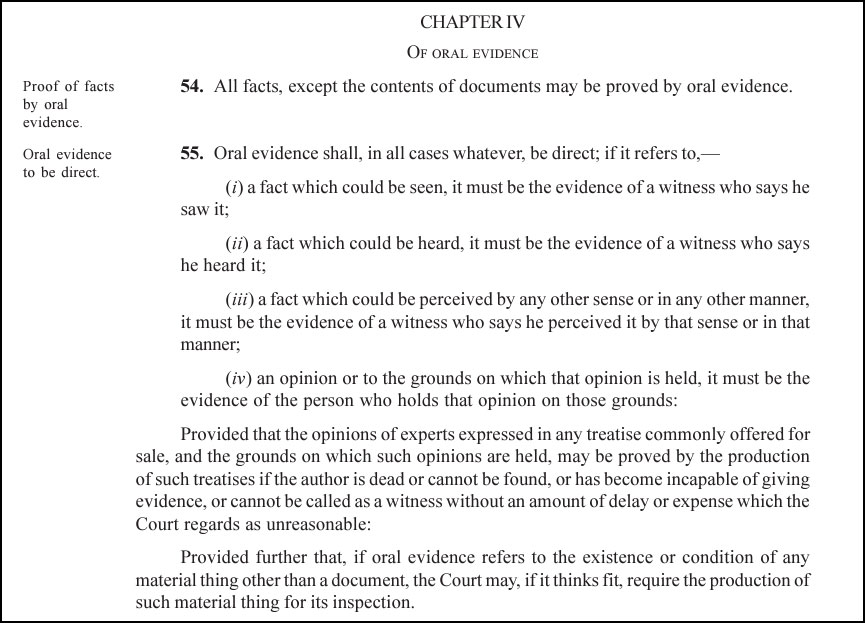
If we speak in legal terms, Chapter IV of the Bharatiya Sakshya Adhiniyam (Indian Evidence Act) clearly explains how oral evidence is used in court. It states that, except for the contents of documents, most facts in a case can be proved through what a witness says (oral evidence). Notably, the law requires that the testimony must be direct. This means that the person giving oral evidence should have seen the crime happen. Similarly, if the witness giving an oral statement has heard something important, they must have heard it themselves for it to be used as evidence.
Source: MHA
In this case, Mishra categorically said that he heard announcements from the mosque calling for the murder of Hindus. This is a clear case of oral evidence, which is permissible in a court of law. In criminal proceedings, such testimonies are often crucial in establishing facts and determining the course of justice.
By dismissing these accounts, citing the possibility of “tension” in the region, the police effectively shut down key evidence that could have aided an impartial investigation. Such testimonies must be considered on their merits, and the dismissal of an eyewitness’s statement cannot become a norm for the sake of maintaining “calm” in the region. The law clearly stands in favour of the victims, ensuring that their stories are heard, documented, and judged fairly by the court of law.
Why the police cite ‘tension’ to dismiss reports
When it comes to communally sensitive areas, police authorities tend to cite the likelihood of “tanaav failne ki sambhavna” (the possibility of unrest) to avoid addressing incidents that could trigger wider reactions. Maintaining public order is a legitimate concern for law enforcement agencies. However, it should not come at the cost of silencing victims.
In such cases, the police sometimes use the threat of unrest as an excuse to prevent the documentation of uncomfortable truths, which is visible in the case of the Bahraich violence. OpIndia has previously reported how attacks on Hindus are often downplayed under the guise of avoiding communal tension, thereby ignoring the victims’ plight. In an article published by OpIndia, it was observed that “attacks on Hindus are frequently brushed aside, with authorities citing the need to maintain communal harmony while ignoring the actual violence that is taking place under their watch.”
The reaction from the Bahraich police cannot be considered an isolated event. There is a widespread pattern followed by law enforcement agencies to avoid the possibility of “communal tension” and downplay incidents that could spark debate around religious violence, especially when it is against Hindus. This leads to communal injustice, even against the majority population of the country.
The importance of recognising that Hindu lives matter
It is essential to acknowledge that in incidents like the one in Bahraich, where Hindus were specifically targeted, the narrative often fails to capture the gravity of the violence they endure. The notion that Hindu Lives Matter is not just about seeking justice for the community but also about recognising the broader failure of our systems to protect them. In many cases, attacks on Hindus are either underreported or dismissed as incidents that may “create tension,” pushing their suffering into the shadows.
When the justice system or media avoid giving due attention to these cases, it not only denies Hindus the right to seek justice but also marginalises their experiences. It is time to ask: why should one community’s plight be overlooked to avoid discomfort? The narrative must shift, and the recognition that Hindu lives matter needs to take centre stage.
OpIndia’s stance is clear and firm
In this case, and in every case where Hindus come under attack, OpIndia’s stance is firm and clear. As a media house, it is our responsibility to tell the stories of Hindu victims who were on the receiving end of violence. Threats to silence our voice, which echoes the ordeal of the victims, are not going to work.
In a democratic society, freedom of speech is not just a privilege but a necessity. If we silence one side of the story, particularly the Hindu side, which is often neglected in mainstream narratives, we are only allowing injustice to flourish unchecked. If we value the principles of justice and democracy, we must ensure that the truth is not sacrificed for the sake of avoiding “tension.”
OpIndia’s coverage of Bahraich violence can be checked here.
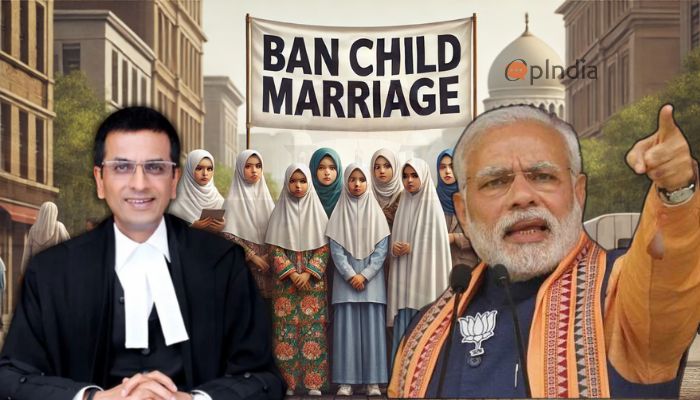
In a recent ruling, the Supreme Court of India refused to extend the prohibition on child marriage to all faiths regardless of personal laws. The Central government sought that the Supreme Court issue a direction extending the application of the Prohibition of Child Marriage Act (PCMA) to all Indians regardless of their religion. However, the top court refused to do saying that a Bill regarding the same is pending before a standing committee and that there is confusion about the interface of personal laws with PCMA provisions banning child marriage.
Society for Enlightenment and Voluntary Action’s PIL highlights loopholes in PCMA and the prevalence of child marriages
The bench comprising Chief Justice DY Chandrachud, Justice JB Pardiwala and Justice Manoj Misra issued a 141-page ruling on the 18th of October on the petition filed by an NGO named Society for Enlightenment and Voluntary Action. The NGO contended that despite PCMA’s enactment 18 years ago, the rate of child marriages in India remains alarmingly high.
It accused authorities of failing to prevent child marriages and called for more effective enforcement mechanisms, awareness campaigns, the appointment of Child Marriage Prohibition Officers (CMPO), and comprehensive support systems for child brides, including education, healthcare, and compensation, so as to guarantee the protection and welfare of vulnerable minors. The petitioner NGO sought that the Supreme Court issue effective guidelines in this regard.
“The issue of the interface of personal laws with the prohibition of child marriage under the PCMA has been a subject of some confusion,” the court said.
The court further stated that the Central government had sent a note of submission filed after the judgment was reserved in the case requesting that the court rule that the PCMA prevails over personal law.
“There are conflicting pronouncements by various High Courts about the precedence of the Prohibition of Child Marriage Act (PCMA), 2006 over the personal laws. Hence, Hon’ble Court may consider issuing directions pronouncing that the PCMA will prevail over the personal laws governing marriage,” the Union government’s note read.
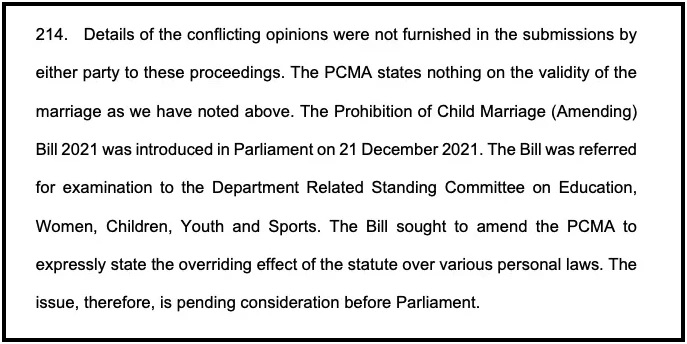
The Supreme Court noted that while the government’s note mentions conflicting court pronouncements, the details regarding the same were not furnished before the court.
Why Supreme Court refuse to extend the application of PCMA over all faiths?
It was observed that the Prohibition of Child Marriage (Amendment) Bill 2021, which seeks to change the PCMA to specifically provide that it will take precedence over multiple personal laws, was introduced in Parliament on December 21, 2021, and referred to the Standing Committee. “The issue, therefore, is pending consideration before Parliament,” the court said.
Notably, the top court observed that there are certain gaps in the PCMA and that since there is no constitutional challenge or a case in argument, it decided to make suggestions only for the Union government to consider and refrained from making any declaration.
“In the course of this judgment, we have traced the full breadth of the lawagainst child marriage. The PCMA is the central legislation governing the issue onthe subject. In light of the Constitutional guarantees accruing to children, weobserve certain gaps in the PCMA. Absent a Constitutional challenge or a casebeing argued, we resist making declarations and restrict ourselves to makingsuggestions for the scrutiny of the Union. The legal question on these issues,however, is kept open if it were to come before a Constitutional court in anappropriate proceeding,” the court order states.
Supreme Court asks Parliament to consider banning child betrothals
The apex court also expressed concerns over the prevalence of child betrothals and said that marriages fixed in the minority of a child have the effect of violating their “free choice” and “childhood”. The court asked the Parliament to consider amending PCMA to prohibit child betrothals.
“The issue of forced marriage is intricately linked to child marriage, as both practices deny individuals, particularly minors, the fundamental right to make autonomous decisions regarding their lives. The imposition of forced marriage reflects the broader systemic issue of coerced relationships that deny the victims agency and autonomy. This lack of agency is heightened in the context of child marriage, where children are subjected to societal and familial pressures that undermine their ability to give informed consent,” the court said and called child marriages an ‘evil’.
Calling on the Parliament to prohibit child betrothals, the court said: “Lastly, we note that while the PCMA seeks to prohibit child marriages, it does not stipulate on betrothals. Marriages fixed in the minority of a child also have the effect of violating their rights to free choice, autonomy, agency and childhood. It takes away from them their choice of partner and life paths before they mature and form the ability to assert their agency. International law such as CEDAW stipulates against betrothals of minors. Parliament may consider outlawing child betrothals which may be used to evade penalty under the PCMA. While a betrothed child may be protected as a child in need of care and protection under the JJ Act, the practice also requires targeted remedies for its elimination.”
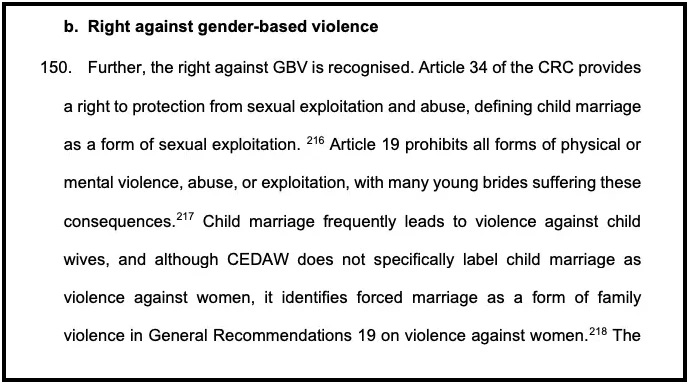
The court also stressed the importance of consent of the parties entering in a marriage and cited several judgements wherein the courts reinforced the right to free and informed consent within the context of marriage. In addition, the court cited the relevant provisions of the Convention on the Elimination of All Forms of Discrimination Against Women (CEDAW) 1975 to emphasise how child marriage frequently leads to violence against child wives. The court further noted that child marriage violates the right to education, the right to health, the right to childhood and the right to be informed, among others.
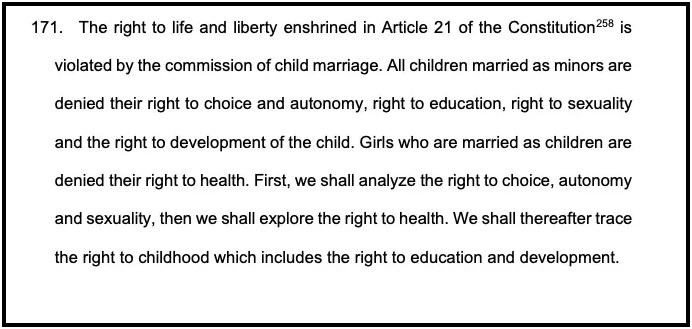
The bench further stated that child marriage violates the right to life and liberty enshrined in Article 21 of the Constitution.
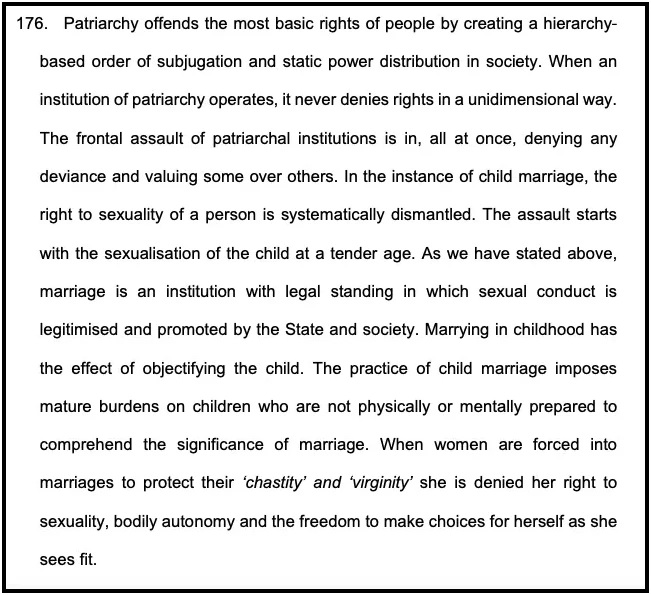
Furthermore, the court pointed out the role of “patriarchy” in the context of child marriage. “In the instance of child marriage, the right to sexuality of a person is systematically dismantled. The assault starts with the sexualisation of the child at a tender age. As we have stated above, marriage is an institution with legal standing in which sexual conduct is legitimised and promoted by the State and society. Marrying in childhood has the effect of objectifying the child. The practice of child marriage imposes mature burdens on children who are not physically or mentally prepared tocomprehend the significance of marriage,” the court said adding that when women are coerced into marriage, they are denied their right to bodily autonomy, sexuality and freedom to make choices for themselves.
The court also mentioned how child marriage has adverse effects not only on child wives but also on child husbands. “Boys married at young age equally feel pressures associated with sexual performance. Often, the only resource available to them is their peer group. The performance of sexual activity is an avenue for men to exhibit their masculinity. Because of their tender mind and patriarchal notions of masculinity and sexual dominance, they are likely to fall into egregious misinformation by their peersand commit violence on their child brides,” the court said.
Supreme Court issues guidelines for the effective implementation of PCMA and eradication of child marriage
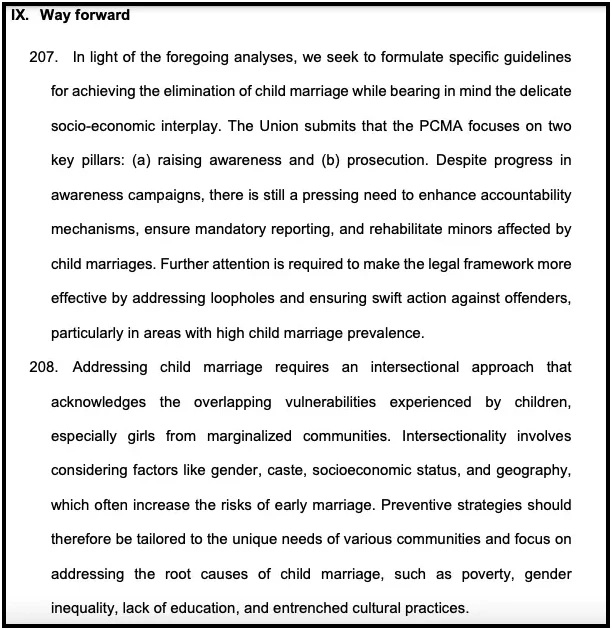
The Supreme Court gave several guidelines to the government, such as age-appropriate and culturally sensitive sexuality education for children in schools. It proposed a ‘Child Marriage Free Village’ campaign, similar to the ‘Open Defecation Free Village’ movement, engaging local and community leaders.
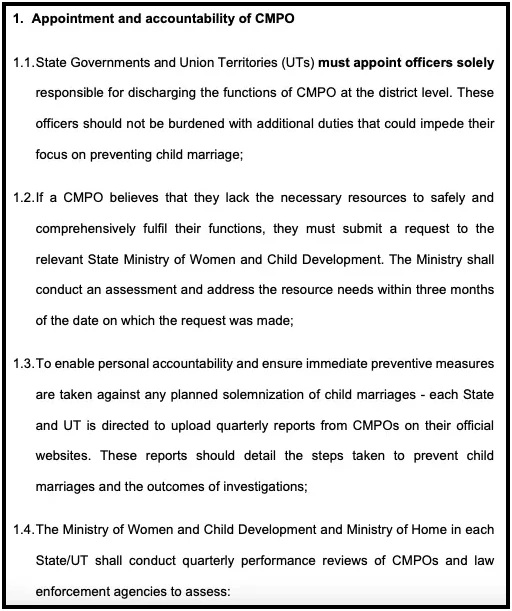
The ruling directed the Home Ministry to create a specific portal for online reporting of child marriages; and the Ministry of Women and Child Development to launch a compensation scheme for girls who choose not to marry. The court also recommended the allocation of an annual budget to prevent child marriages and assist those affected. In the legal enforcement section, the court laid down directives for the state governments for the appointment of district-level CMPOs and ensuring their accountability. It also emphasised the responsibility of the Collectors and Superintendents of Police for “actively preventing child marriages in their districts.” The court also recommended setting up of “Specialized Police Unit” and a “Special Child Marriage Prohibition Unit”.
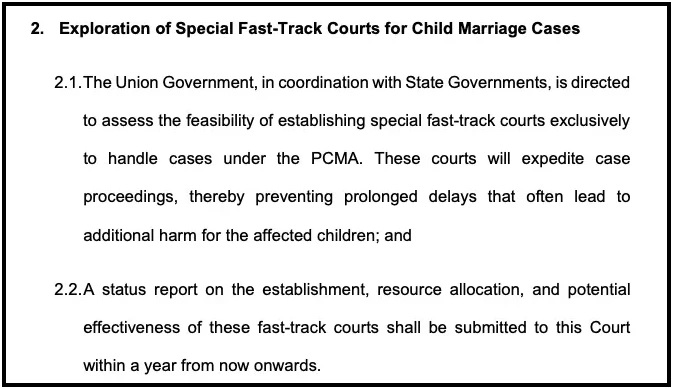
The court also laid guidelines in the context of the role of the judiciary in preventing child marriages. The Supreme Court directed magistrates to take proactive measures like issuance of suo motu injunctions to prevent the solemnization of child marriages and focus on “auspicious days” known for mass weddings and prevent the occurrence of the same. Moreover, the court urged the Centre and State governments to work in collusion to assess the feasibility of setting up special fast-track courts exclusively to handle cases under the PCMA in an expedited manner.
All excerpts taken from the relevant Supreme Court order dated 18th October 2024.
In addition to recommending measures for the governments and the judiciary, the court also suggested taking legal action against neglectful public servants and called for community involvement and awareness campaigns as well as integration of sex education in school curricula to curb and eventually eradicate child marriages among other measures.
The disturbing facts regarding child marriage in India
India has achieved significant success in curbing child marriages over the decades, however, the country is still far from the absolute eradication of this practice. According to official data, Karnataka has seen a stunning 8,348 child marriages in the last three years, with Tamil Nadu having the highest number at 8,966, 8,324 in West Bengal, 4,440 in Telangana, 3,416 in Andhra Pradesh, 3,316 in Assam, 2,043 in Maharashtra, 1,206 in Gujarat, 1,197 in Uttar Pradesh and 1104 in Haryana.
These numbers are alarming and call for effective measures to stop child marriages. While the Supreme Court has refused to extend the application of PCMA over all faiths superseding their personal laws, it is the need of the hour. While spread across religious communities, child marriages in the Muslim community have been rampant and even the courts have in many cases upheld the ‘legality’ of such marriages involving Muslim minors. This is so because the Prohibition of Child Marriage Act of 2006 applies to all Indian citizens, except the Muslim community who are governed by the Muslim Personal Law (Shariat) Application Act of 1937.
Courts relying on Sharia to uphold the legality of Muslim child marriages
Back in 2022, it was reported that the Delhi High Court upheld the legality of a 15-year-old minor girl’s marriage who had alleged to have been subjected to abuse and violence by her partner, stating that she is of ‘Marriageable Age’ under Islamic Sharia Law. The court held that a Muslim girl who is less than 18 years old but has attained puberty is free to marry anyone as per the Muslim Personal Law. The court observed that the minor Muslim girl can not only marry without the consent of her parents but can also reside with her husband even when she is less than 18 years of age.
Even before this case, the Punjab And Haryana High Court also justified child marriage in 2022 by grantingprotection to a 16-year-old Muslim Girl who married a 21-year-old Muslim boy while noting that she is of Marriageable Age under Muslim Personal Law. In the year 2021, a similar verdict was given by the Punjab and Haryana High Court. While hearing the plea filed by a 36-year-old man and a 17-year-old girl, she gave the verdict relying on various court rulings and article 195 in ‘Principles of Mohammedan Law’, an authoritative textbook by Muslim personal law jurist Sir Dinshah Fardunji Mulla, that states: “Every Muslim with a mature mind who has attained puberty can contract marriage. Minors who have not attained puberty can be validly contracted in marriage by their parents.”
In a historic decision taken earlier this year, the Assam government, led by Chief Minister Himanta Biswa Sarma, repealed a 20th-century law that allowed child marriages within the Muslim community in the State.
While much like the now-outlawed practice of instant Triple Talaq, the Muslim personal law board supports child marriage also. As per the Muslim Personal Law (Shariat) Application Act of 1937, a Muslim girl of the age of 15 is deemed ‘marriageable’.
Why PCMA should supersede the personal laws of all religions
While the Supreme Court expressed its deep concerns over the prevalence of child marriage in India and issued relevant guidelines and the Modi government also brought forth a pending Bill which if passed would ensure PCMA’s application over all religious communities, the issue needs speedy addressal as the more the delay the more minor girls and boys, particularly those belonging to the Muslim community will pushed into child marriage and robbed of their rights and freedom.
It is deeply problematic that the Prohibition of Child Marriage Act applies to Hindu and other religious communities, however, it is not so in the case involving Muslim minors even as child marriage in this community is quite common. According to the National Family Health Survey-V (NFHS 2019-21) data, 7% of women in India aged 15 to 19 have commenced childbearing, with Muslims having the highest ratio (8.4%). The figure is 6.8% for Christians and 6.5% for Hindus, implying that adolescent pregnancies among Muslims are 30% greater than among Hindus.
Source: UNICEF website
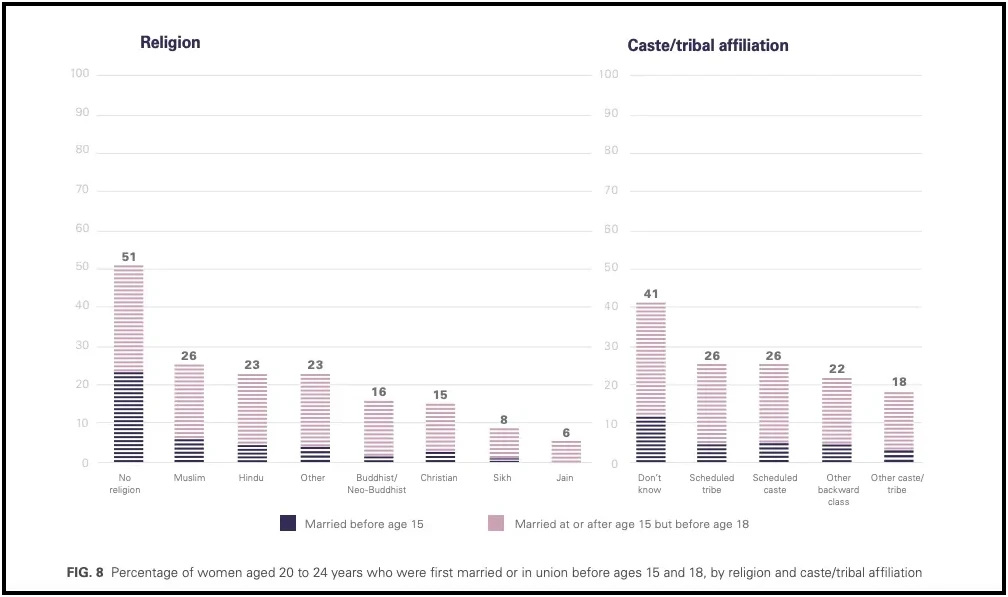
Meanwhile, a UNICEF report published last year said that 26% of Muslim women were first married or in union before ages 15 and 18. In addition to the effective implementation of the Supreme Court guidelines, it is crucial to extend the application of PCMA over all faiths regardless of their personal laws. Child marriage has several adverse impacts including restricted access to education, health issues due to early pregnancies, the perpetuation of poverty, turning of minor girls into baby-producing machines, this is rampant in a significant section of the population, particularly among the Muslim community, thus the restriction on PCMA’s applicability on Muslims perpetuates the practice of child marriages among the community and its adverse effects as well.
In a secular country, it does not make sense that Muslim minors, particularly girls are not allowed their right over their bodies and freedom to choose their partners. This perpetuates gender-based discrimination within the Muslim community. The discussion around child marriage among Muslims is not intended to mock the community but to stress the fact that despite the prevalence, child marriage among this community goes almost unchecked. Thus, the unequal enforcement of child marriage prohibition should be discontinued and a blanket ban on child marriage be imposed.
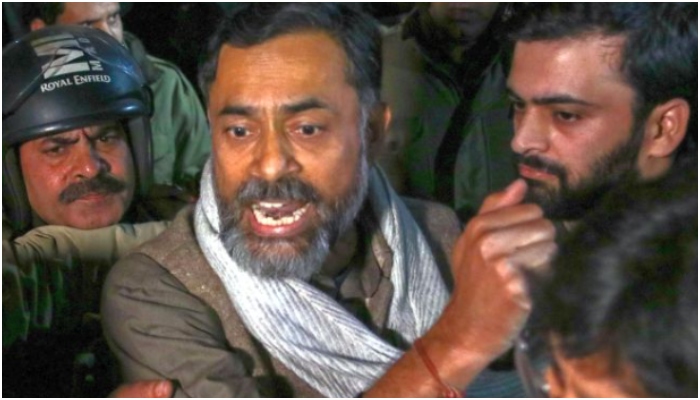
On Monday, 21st October, founder chief of Swaraj India and Aandolanjeevi, Yogendra Yadav, was allegedly manhandled by Vanchit Bahujan Aghadi (VBA) activists and supporters of party president Prakash Ambedkar in the Akola region of Maharashtra.
The VBA members argued with the Aandolanjeevi Yogendra Yadav, and attempted to assault him, after which he was escorted out of the event venue under a security cordon of activists. The activists stopped the Bharat Jodo Campaign event that Yogendra Yadav was addressing, and also stopped him from talking to the attendees.
The video of the incident was posted by local news media Lokmat in which the VBA activists could be seen raising slogans against Yogendra Yadav. They also broke the chairs and created chaos, after which the police had to be deployed to get Yadav out of the event venue safely.
The incident apparently happened when Yogendra Yadav reached the Akola region of Maharashtra for the Bharat Jodo Campaign ahead of the state assembly elections scheduled in November this year.
Yadav took to X to post about the incident. “The attack on me and my colleagues of Bharat Jodo Abhiyan in Akola (Maharashtra) today is a matter of grave concern for every democracy lover. As part of the Vidarbha tour of Bharat Jodo Abhiyan, we were holding a conference on the topic ‘Protection of Constitution and our vote’, when a mob of 40-50 people climbed on to the stage and moved towards me to stop me from speaking. We remained seated and local colleagues formed a circle and protected us. Even after the police arrived, the rioters continued to attack and vandalize. The meeting ended there,” he said.
आज अकोला (महाराष्ट्र) में मुझ पर और भारत जोड़ो अभियान के साथियों पर जो हमला हुआ वह हर लोकतंत्रप्रेमी के लिए गंभीर चिंता का विषय है। भारत जोड़ो अभियान के विदर्भ दौरे के तहत हम “संविधान की रक्षा और हमारा वोट” विषय पर सम्मेलन कर रहे थे, तो मुझे बोलने से रोकने के लिए 40-50 लोगों की… pic.twitter.com/59wsdPWVob
“In the last 25 years, I have addressed several places in Maharashtra, but this has never happened before. This is sad not only for Maharashtra but also for those who believe in the Constitution and democracy. This incident further strengthens our dedication to protecting our democracy. Whoever is scared of what I say, listen – I will come back to Akola!”, he added.
This is a day after Yadav declared that he would campaign for the Maha Vikas Aghadi in the upcoming Maharashtra assembly elections. “We have already started our work and intend to focus on 150 seats for the Congress-led alliance,” Yadav was quoted as saying here on Saturday.
Yogendra Yadav, a former psephologist, was intimately affiliated with the Aam Admi Party before splitting with its founder, Arvind Kejriwal. Later, he founded Swaraj India, a loose alliance of various smaller grassroots NGOs advocating for clean governance. He also served as the Congress’s Bharat Jodo Abhiyan convener.
Addressing reporters on Saturday, Yadav stated that his organization would support MVA candidates in 40 Vidarbha seats. A general assembly election is scheduled to be held in Maharashtra on 20th November 2024 to elect the 288 members of the Maharashtra Legislative Assembly, the counting and the results will be declared on 23rd November 2024.
A BJP leader and his son were at the receiving end of public fury following the brutal killing of a Hindu youth by Islamists in Bahraich earlier last week. An FIR has been filed in the case.
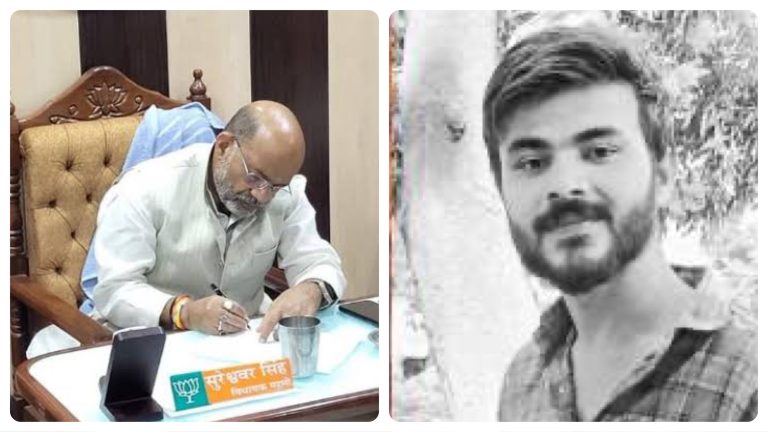
Sureshwar Singh, the BJP MLA from Mahsi in Bahraich, has lodged a case against eight men from his own party, accusing them of serious offences, including inciting riots, stone-pelting, and attempted murder. He also claimed that following the murder of Ram Gopal Mishra in Bahraich, he was attacked with stones and bullets were fired at him.
Sureshwar Singh, #BJP MLA from Mahsi in Bahraich, filed a case against 8 men his own party under serious charges- inciting riots, stone-pelting, and attempted murder. MLA alleges, after death of Ramgopal Mishra amid #Bahraich violence, he was attacked with stones and fired upon. https://t.co/pvA4zI9jR2pic.twitter.com/eXMBWm1IoQ
— Arvind Chauhan, very allergic to 'ya ya'. (@Arv_Ind_Chauhan) October 21, 2024
Among the 8 people booked in the case include BJP Yuva Morcha city president Arpit Srivastava.
However, Srivastava rubbished it saying Singh had filed a fake case against him and others. Dismissing allegations of bullets fired by him, Srivastava said Singh’s son was hurling abuses when the workers voiced their protest.
Bahraich violence: Islamists go on a rampage against Durga Visarjan procession, kill one Hindu youth
A clash broke out between two communities during the immersion of the Devi Durga idol in Rehua Mansoor village in the Hardi police station area of Bahraich in Uttar Pradesh on Sunday, after Muslims objected to DJ music played in the procession. One person was shot dead during the violence while several others were injured from stone pelting. The deceased, identified as 22-year-old Ram Gopal Mishra, who was part of the idol immersion group, was found dead after being reportedly dragged inside his house by Abdul Hamid and his family.
Mishra was rushed to the medical college hospital after the firing, but he died there during treatment.
Eyewitness reveals announcements made from mosques to attack Hindus
According to an eyewitness account, announcements were made from mosques to attack Hindus during the Durga Visarjan procession in Bahraich.
Speaking to AajTak, a brother duo Vinod and Satyavan Mishra said that they were right behind the DJ during the Durga Visarjan procession when violence erupted. The eyewitnesses of the incident said that it was a horrific scene as stones were being pelted at Hindus causing injuries while announcements were being made from the most to attack the Hindu procession.
Vinod Mishra and Satyavan Mishra, who were injured in the Bahraich violence, say that Abdul Hameed’s family had raised objections to the song being played on the DJ. The Muslim side asked Hindus to stop playing the ‘offensive’ song. “We did not stop. They [Muslims] then abused and slapped the DJ operator and pulled the lead [wire]. After this, they attacked the idol of Maa Durga leaving it broken,” the Mishra brothers said.
During the anti-Hindu violence, Vinod Mishra sustained a head injury and his hand was broken while his 90% disabled brother was also severely injured.