On Friday (13th September), the Attorney General of India told the Supreme Court that the Union government has received some ‘sensitive material’ which is delaying the appointment of Chief Justices of 7 High Courts. This comes nearly two months after the Supreme Court collegium had recommended these appointments.
It is pertinent to note that the Collegium holds the final authority on appointments to constitutional courts but the Union government gathers information about the potential appointees, such as their track record, any criminal record, or activities/links that could harm national interests before executing the recommendations of the SC collegium.
A three-judge SC bench comprising Chief Justice of India DY Chandrachud, Justices JB Pardiwala, and Manoj Misra was hearing a PIL that has sought directions to implement the recommendations of the Collegium in a time-bound manner.
Explaining the delay in the appointment of these seven Chief Justices of High Courts, Attorney General R Venkatramani said, “I have received some information…I’ll share it, information is confidential, sensitive, I’d like to place it on record.”
The attorney general further stated that the government was refraining from filing an affidavit as putting these issues in the public domain would neither be in the interest of the institution nor of the personalities involved.
Venkatramani added, “I would like to place the inputs and my suggestions in sealed cover for perusal by the judges.”
Earlier, on 11th July, the SC collegium comprising CJI Chandrachud and Justices Sanjiv Khanna and B R Gavai had recommended the appointment of Chief Justices of seven High Courts. These included – the appointment of Justices Manmohan as CJ of Delhi HC, Rajiv Shakdher as CJ of Himachal Pradesh, Suresh Kumar Kaith as CJ of J&K and Ladakh, G S Sandhawalia as CJ of Madhya Pradesh, N M Jamdar as CJ of Kerala, Tashi Rabstan as CJ of Meghalaya and K R Shriram as CJ of Madras HC.
Furthermore, there are many more recommendations of the SC collegium which are pending before the Union government. They include appointments and transfers of HC judges.
During the hearing, the CJI-led bench made efforts to persuade the Attorney General to convince the Union government to expeditiously clear the appointments to the HCs. Currently, there is a pendency of 60 lakh cases before the High Courts but 30% of HC judges’ posts are lying vacant.
CJI DY Chandrachud also revealed that he had a conversation with the AG on Thursday. He had requested him to “sort out” the issues that are delaying the appointments that had been recommended by the Collegium.
The bench will now hear the matter on 20th September.
The National Investigation Agency (NIA) has chargesheeted a key Naxal leader in the banned outfit’s Magadh Zone revival case, the agency said on Saturday.
Vinod Mishra, alias Binod Kumar Mishra, a close associate of Polit Bureau Member and Chief of the North Regional Bureau of Naxal outfit Pramod Mishra, alias Sohan Da, alias Banwari Ji, alias BB Ji alias Baba, has been named in the supplementary chargesheet under various sections of the Indian Penal Code (IPC) and the Unlawful Activities (Prevention) Act.
In a statement, the NIA said its investigations have revealed that accused Vinod Mishra provided shelter and logistics support to Naxal leaders and cadres for holding meetings at his house for furtherance of their nefarious activities as part of their efforts to revive and strengthen the proscribed organisation in Magadh Zone (Gaya and Aurangabad area, Bihar).
The case (RC-26/2023/NIA) originated from the arrest of two top Naxal leaders on August 10, 2023. Various Naxal literature, handwritten letters and seven memory cards were seized from their possession at the time of their arrest. The seized memory cards contained various photographs, letters, correspondences and literature related to Naxal activities.
NIA had taken over the probe in October and had registered the case against three accused persons, including Pramod Mishra, along with accused Anil Yadav alias Ankush alias Lavkush and Vinod Mishra, besides others.
In February 2024, the agency had chargesheeted Pramod Mishra and Anil Yadav (Sub-Zonal Committee Member of the Naxal Group). Vinod Mishra, who had been evading arrest since the registration of the case, was nabbed on March 20, 2024, from Dhanbad, Jharkhand.
“Investigations have revealed that the arrested accused and others were engaged in propagating the anti-India ideology of CPI (Maoist) and were also in the process of recruiting cadres and collecting levy to further their agenda to revive the outfit in the Magadh Zone with the aim to disrupt the sovereignty and territorial integrity of India,” said the NIA.
(This news report is published from a syndicated feed. Except for the headline, the content has not been written or edited by OpIndia staff)
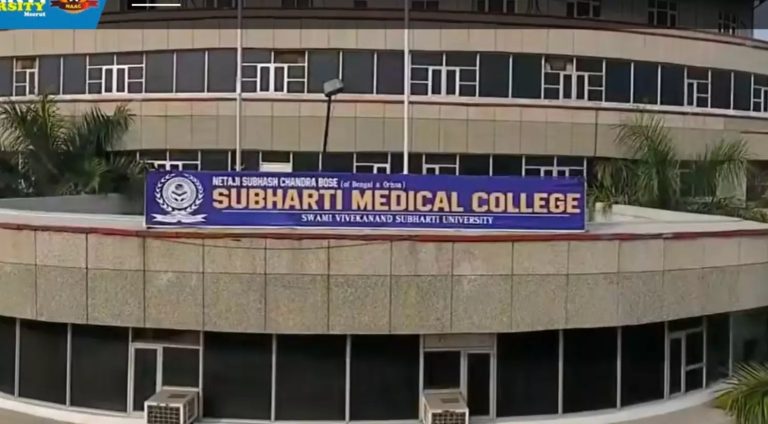
A shocking case of religious conversion for medical seatshas come to light from Uttar Pradesh’s Meerut. After investigating a complaint, the concerned DMs found out that around 20 MBBS candidates adopted Buddhism just to secure a seat under the minority quota at Meerut’s Subharti University. Additionally, the candidates had submitted certificates claiming that they hail from the Buddhist community, however, the certificates were made in violation of UP’s anti-conversion law. Subsequently, the concerned DMs cancelled their certificates.
As per a Dainik Bhaskar report, counselling for MBBS admission is currently ongoing in UP. Certain institutions come under the category of minority colleges. They are permitted to give admission under the minority quota.
After a Supreme Court ruling, a private university named Subharti University was allowed to have a 50% minority quota. In the current admission cycle, it has 200 MBBS seats, out of which 100 seats are reserved for the minority quota. Needless to say, Muslims, Christians, Buddhists, Jains, Parsis, and Sikhs come under the definition of minority.
In the first round of counselling, 22 seats at Subharti Medical University were to be filled under the minority quota. 20 candidates who took admission under this quota, had submitted certificates of Buddhism.
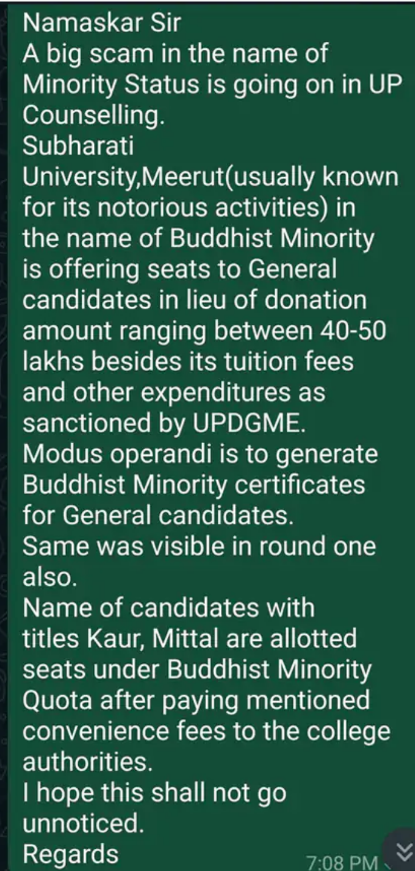
In the meantime, the Director General of the Medical Education Department, Kinjal Singh received a complaint through WhatsApp. The complaint stated that a major scam was ongoing in the name of minority quota in medical counselling. According to the complaint received on WhatsApp, in Meerut’s Subharti University, general candidates were securing seats under the minority quota by paying Lakhs of rupees in donations besides tuition fees and other charges.
The WhatsApp message
The WhatsApp message said: “A big scam in the name of Minority Status is going on in UP Counselling. Subharati University, Meerut (usually known for its notorious activities) in the name of Buddhist Minority is offering seats to General candidates in lieu of donation amount ranging between 40-50 lakhs besides its tuition fees and other expenditures as sanctioned by UPDGME. Modus operandi is to generate Buddhist Minority certificates for General candidates. Same was visible in round one also. Name of candidates with titles Kaur, Mittal are allotted seats under Buddhist Minority Quota after paying mentioned convenience fees to the college authorities. I hope this shall not go unnoticed.”
As per Dainik Bhaskar’s report, candidates with the surname like Mittal were given admission under the minority quota.
Acting on the complaint, Kinjal Singh ordered an investigation. During the investigation, it was found that only candidates belonging to the Buddhist religion were admitted to Subharti Medical University under the minority quota. Subsequently, their certificates were called for.
The investigation also revealed that all the certificates were issued recently. These certificates were issued from Meerut, Bijnor, Saharanpur, Gautam Buddha Nagar, Prayagraj, Lucknow, Varanasi, Muzaffarpur and Hapur districts.
Kinjal Singh ordered the DMs of these districts to investigate their certificates. A copy of the order was also sent to the Director of the Minority Department.
Following the order, DMs of all districts accepted that the certificates were issued in violation of the rules. Except Varanasi, all DMs have ordered the cancellation of the certificates issued to these candidates. The officer of the Minority Welfare Department of Varanasi is on leave. Therefore, a certificate issued from there has not been cancelled.
How can a person lawfully attain a Certificate of Buddhism –
Be a Buddhist by birth
Parents have converted to Buddhism
Duly following the procedure laid down under the Uttar Pradesh Prevention of Unlawful Religious Conversion Act 2021 to convert to Buddhism lawfully, that is certifying that the person is not converting his/her religion under duress or through allurement.
What are the rules under the UP’s anti-conversion law?
The Uttar Pradesh government passed a law in 2021 that prohibits religious conversion through force, coercion, or allurement. The act is called the Uttar Pradesh Prohibition of Unlawful Conversion of Religion Act 2021. Sections 8 and 9 of this law clearly state that a person who wants to convert his/her religion must submit a written declaration to the DM/ADM of his/her district. This written declaration has to be submitted at least 60 days in advance. It should be mentioned that the person wants to change his/her religion with his/her free consent and without any force, coercion, or inducement.
Why these admissions under the Minority quota were found to be unlawful and fraudulent?
All the 20 candidates who got admission under the minority quota and had submitted certificates claiming their religion to be Buddhism, hail from the Hindu Dharma. It is said that they made a Buddhism certificate only to seek admission. These certificates were issued by DM, SDM, and Minority Officers in violation of Uttar Pradesh’s anti-conversion law.
During the investigation, it was found that these certificates violated two rules of UP’s anti-conversion law –
Firstly, the declaration of religious conversion was not submitted to the concerned DM 60 days in advance.
Second violation- The certificates were not issued from the candidate’s home district.
Director General of Medical Education, Kinjal Singh said, “The District Magistrates of Meerut, Bijnor, Saharanpur, Gautam Buddha Nagar, Prayagraj, Lucknow, Varanasi, and Hapur were ordered to submit a report on the issuance of Buddhist minority certificates. After this, the district officials started cancelling the certificates of all these people.”
Meanwhile, the Subharti University management is also being accused of giving admission through hefty donations. This allegation is currently under investigation.
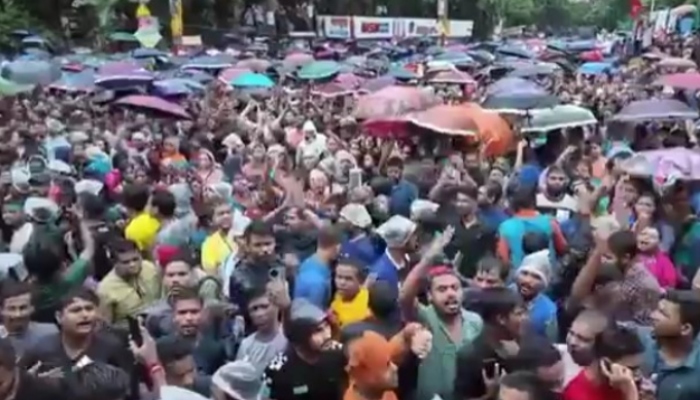
With the escalation in violence and persecution, Hindus throughout the Islamic nation of Bangladesh have taken to the streets to voice their anguish over the rampant attacks on their homes, temples, and families. They have highlighted the systemic targeting of their religious identity and livelihoods by Islamist extremists. The situation has led to a surge in protests, as the Hindu minority seeks justice and protection from the brutalities they continue to face in a country where they are increasingly marginalized.
The protests that were temporarily suspended based on assurances from the chief adviser and other officials resumed on Friday afternoon (September 13), with members of the Hindu community in Bangladesh returning to the streets to demand an end to the repression of minorities.
Members of Sanatani Odhikar Andolon—a coalition of various Hindu organizations—and Bangladesh Hindu Jagran Manch blocked the Shahbagh intersection in Dhaka, reiterating their eight-point demand, accusing the government of failing to take effective action to address their concerns. The blockade, initiated around 4:30 pm halted vehicular traffic, leading to significant congestion in the area.
Dhaka Shahbag Blocked By Hindu Organisations For 5 Hours Demanding To The Government To Ensure Their Safety.
Likewise, members of the Sammilito Sanatani Samaj-Bangladesh organised a rally at Jamal Khan Intersection of Chattogram City to press the eight-point demands.
Massive protests in Bangladesh by Hindus in #Chattagram demanding minority rights.
Their eight demands include: conducting a speedy tribunal trial for the incidents of attacks on minorities following the government’s fall; compensating and rehabilitating victims of communal violence; creating a minority protection law; establishing a ministry for minority affairs; converting the Hindu Religion Welfare Trust into a Hindu Foundation; transforming the Buddhist and Christian Religion Welfare Trusts into foundations; recovering endowed properties and formulating a law for their protection; properly enforcing vested property laws; and instituting a five-day holiday for Durga Puja.
Speakers at the event stated that no government in the 53 years since independence has prosecuted the atrocities committed against the Hindu community in the country, creating a culture of impunity for such crimes that has emboldened perpetrators over the years. They also noted that minorities consistently become the targets of repression whenever incidents occur.
After the student-led mass uprising, we thought we would get a non-discriminatory social system. However, since August 5, homes of Hindu people, their temples and business establishments were attacked in 49 districts of the country. According to Prothom Alo’s report, there were a total of 1,068 attacks on Hindus between August 5-20,” said Chinmoy Krishna Das Brahmachari.
“The chief adviser to the interim government is a Nobel Peace Laureate. We hope he will take steps to establish peace for all people, including the Hindu community, in the country,” he added.
Poet and writer Farhad Mazhar stated that the vandalism of shrines across the country was premeditated and criticized the government for failing to take action to prevent the attacks. “Firstly, it is a criminal offence. However, the new government did not take any action to prevent such attacks. Secondly, these attacks on shrines were pre-planned and carried out after public announcements. We have seen these announcements on social media,” he said.
He made these comments while speaking at a human chain event at the National Museum premises in the capital.
The ousting of Sheikh Hasina from power in Bangladesh on 5 August intensified the ongoing persecution and marginalization of Hindus in the Islamic nation, escalating to what can be termed a silent genocide. Under Sheikh Hasina’s government, while there were still incidents of violence against minorities, with her political fall, Islamist groups have gained more influence, and their agenda of creating an Islamic Bangladesh free of minority communities, particularly Hindus, has come to the forefront.
Since her ousting, the persecution of Hindus has taken several forms—ranging from physical violence, destruction of temples and religious symbols and systematic displacement from ancestral lands. Islamist mobs, often posing as pro-democracy, anti-quota, or anti-government protesters, have exploited political unrest to carry out attacks on Hindu communities with greater impunity. In the past few days, numerous Bangladeshi Hindus have stepped forward to share their harrowing experiences amid the ongoing genocide against their community.
Muhammad Yunus, the Chief Advisor to the interim government in Bangladesh, whitewashes Islamist crimes against Hindus
Meanwhile, Muhammad Yunus, the Chief Advisor to the interim government in Bangladesh attempted to downplay the anti-Hindu pogroms unleashed by Islamists following the fall of Sheikh Hasina by calling it ‘exaggerated’. Yunus further tried to contextualise the Islamist violence against the Hindu minority saying that he told Prime Minister Narendra Modi that there were several ‘dimensions’ to the issue.
“I have said this to Modi also that this is exaggerated. This issue has several dimensions. When the country went through an upheaval following the atrocities by (Sheikh) Hasina and the Awami League, those who were with them also faced attacks,” Yunus said.
Further emphasising the ‘political’ aspect of anti-Hindu violence in Bangladesh, Muhammad Yunus said, “Now, while beating up Awami League cadres, they had beaten up Hindus as there is a perception that Hindus in Bangladesh mean Awami League supporters. I am not saying that what has happened is right, but some people are using it as an excuse to seize property. So, there is no clear distinction between Awami League supporters and Hindus.”
“These attacks are political and not communal. And India is propagating these incidents in a big way. We have not said that we can’t do anything; we have said that we are doing everything,” Yunus continued.
On Saturday (September 14), PM Modi shared heartwarming visuals of a new addition to his family at his official residence, Lok Kalyan Marg. The Prime Minister shared heartening visuals of his interaction with a calf, given birth by one of the cows at his residence.
Taking to X, formerly known as Twitter, PM Modi tweeted, “There has been an auspicious arrival of a new member in the Prime Minister Housing Family on Lok Kalyan Marg. In the Prime Minister’s residence, the beloved mother cow has given birth to a new calf, which has a symbol of light on its forehead. Hence, I have named it ‘Deepjyoti’.” PM Modi also shared videos and pictures of the calf inside his residence.
हमारे शास्त्रों में कहा गया है – गाव: सर्वसुख प्रदा:'।
लोक कल्याण मार्ग पर प्रधानमंत्री आवास परिवार में एक नए सदस्य का शुभ आगमन हुआ है।
प्रधानमंत्री आवास में प्रिय गौ माता ने एक नव वत्सा को जन्म दिया है, जिसके मस्तक पर ज्योति का चिह्न है।
In yet another tweet, PM Modi shared pictures of himself sitting along with the calf on his couch, adoringly kissing it on its forehead. In yet another picture, the calf is seen wearing a rose garland with PM Modi praying at a temple inside his residence.
PM Modi’s adorable pictures of spending time with the newborn cow, are winning the internet, with several netizens gushing over the Prime Minister’s loving affection for the calf.
Hinduism regards the cow as a sacred animal. In Hinduism, the cow is considered a sacred animal and symbolises wealth, strength, and motherly love. It is believed to be the earthly representative of the divine and nourishing Mother Goddess, who represents fertility and bountifulness. Their milk is believed to have a purifying effect on human bodies.
PM Modi has never been apologetic about his cultural and religious moorings, evidenced by his participation in Hindu rituals across the country. From participating in Ram Mandir Pran Pratishtha in Ayodhya to various age-old traditions in hallowed temples in Tamil Nadu, PM Modi has displayed he is as religious as an able administrator. Moreover, PM Modi has always been fond of cows, also referred to as gaumata by practising Hindus. Earlier this year, on the occasion of Makar Sankranti, Prime Minister Narendra Modi fed and cared for some cows at his official residence at Lok Kalyan Marg. The pictures had gone viral then wherein PM Modi was seen surrounded by many cows.
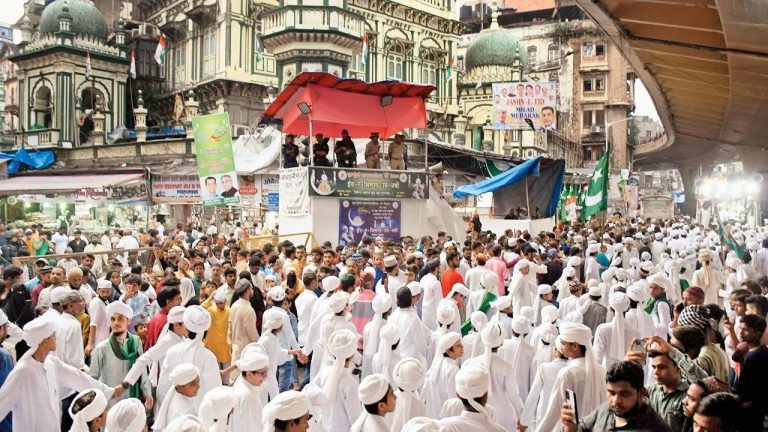
The Maharashtra government has rescheduled the Eid-e-Milad holiday in Mumbai from September 16 to September 18.
The order was issued by an official notification on Friday.
This decision follows requests from Muslim MLAs and organisations, who planned to hold Eid-e-Milad processions on September 18 to avoid conflicts with Ganpati immersion ceremonies.
The notification stated, “Among the 24 public holidays notified by the State Government, the Eid-e-Milad holiday is indicated on Monday, September 16, 2024. Eid-e-Milad, a religious festival of Muslims, is widely celebrated by the Muslim community on a large scale. A procession program is organised on this occasion. On Tuesday, September 17th, 2024, since there is the Hindu festival of Anant Chaturdashi, to maintain peace and social harmony between the two communities, the Muslim Community has decided to organise the procession program on Wednesday, 18th September, 2024. Therefore, the public holiday of Eid-e-Milad is being declared on Wednesday, September 18, 2024 instead of Monday, September 16, 2024.”
The notification also mentioned that outside Mumbai City and Mumbai Suburbs, district collectors will decide whether to maintain the holiday on September 16 or reschedule it to September 18, based on local procession plans.
The change was made as per the notification to “maintain peace and social harmony” between the two communities during these overlapping festivals.
Eid-e-Milad marks the birth of Prophet Muhammad Muslims across the world participate in processions during the celebration.
(This news report is published from a syndicated feed. Except for the headline, the content has not been written or edited by OpIndia staff)
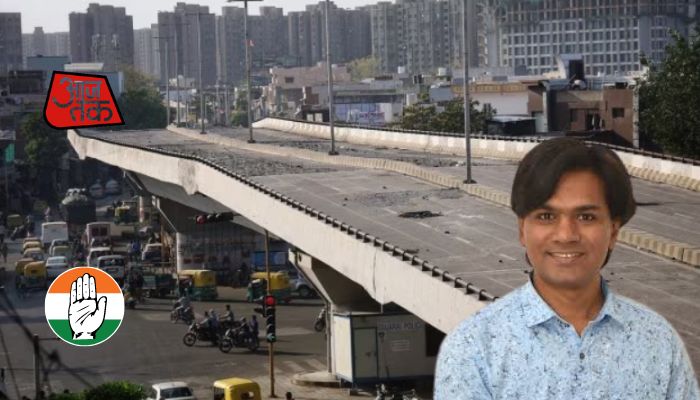
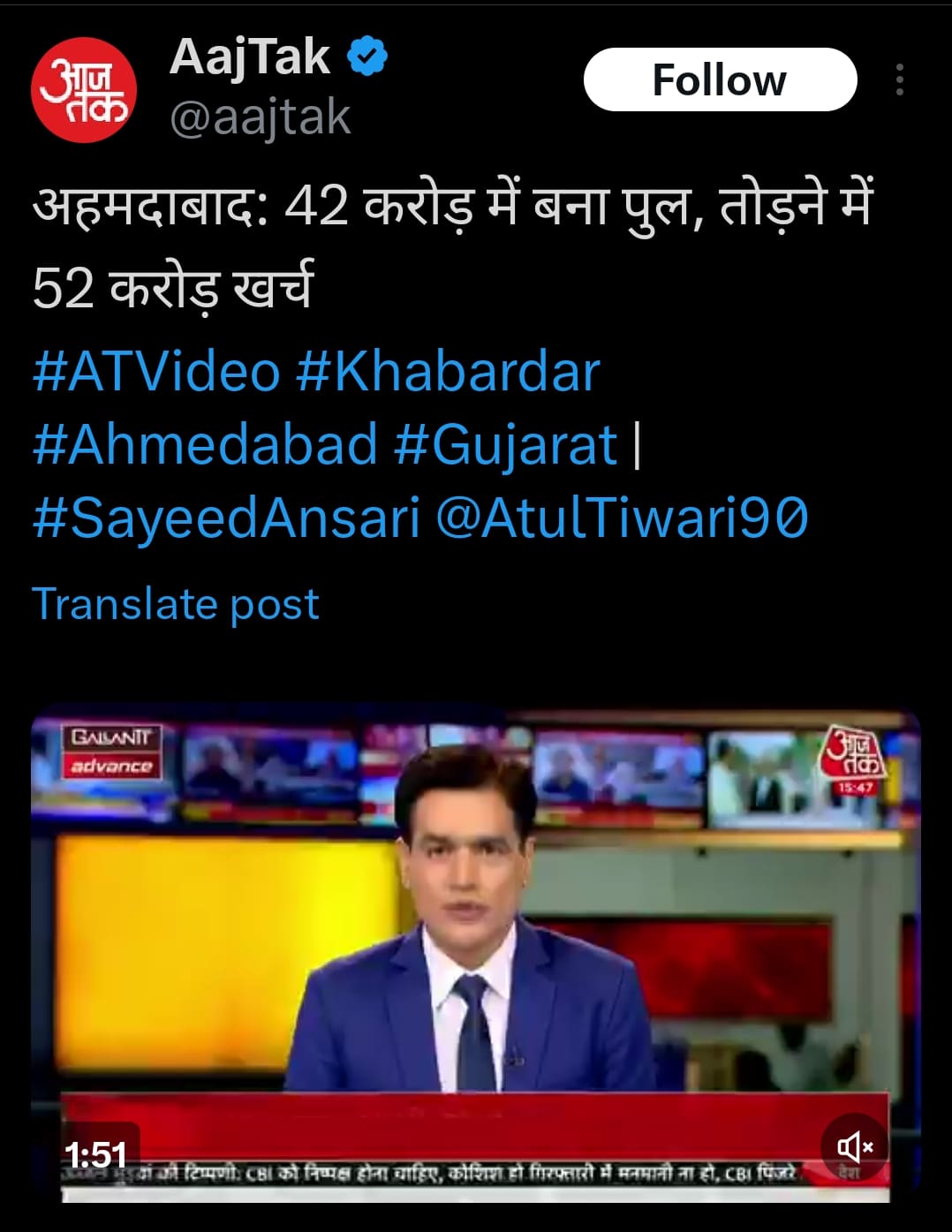
On Friday (13th September), the popular Hindi news channel ‘Aaj Tak’ peddled fake news about the construction and demolition cost of the Hatkeshwar bridge in Ahmedabad city of Gujarat.
In a tweet, Aaj Tak falsely claimed that the bridge was constructed at a cost of ₹42 crores but the Ahmedabad Municipal Corporation (AMC) spent ₹52 crores on demolishing it.
For the unversed, the Hatkeshwar bridge in Ahmedabad was made open to the public in 2017 but was shut down in 2022 after it developed critical structural stability issues.
Screengrab of the tweet by Aaj Tak
The bridge was constructed by Ajay Engineering Infrastructure Private Limited with SGS India Private Limited as its project monitoring consultant. According to reports, the total construction cost of the infrastructure project was 34 crores.
Aaj Tak falsely claimed that the Hatkeshwar bridge in Ahmedabad was built at a cost of ₹42 crores i.e. 8 crores extra. On top of that, the Hindi news channel alleged that the total cost of demolition stood at a staggering ₹52 crores.
In reality, ₹52 crores (₹51.7 crores to be precise) is not the cost of demolition of the infrastructure project.
एक जिम्मेदार और अग्रणी समाचार चैनल के रूप में, आपको प्रकाशन से पहले तथ्यों की जांच करनी चाहिए।
तथ्य यह है: पुराने पुल को ध्वस्त करने और नए पुल के निर्माण की संयुक्त लागत Rs. 52 करोड़ है।
It is the total cost of demolition as well as reconstruction of the Hatkeshwar bridge as evident from the tender of the Ahmedabad Municipal Corporation (AMC) issued in July this year.
Aaj Tak made the dubious claims to insinuate a ‘quid pro quo corruption’ on the part of the AMC officials.
While it is true that substandard material was used in the construction of the infrastructure project (as confirmed by experts from IIT Roorkee and SVNIT Surat), AMC was quick to lodge an FIR against the Ajay Engineering Infrastructure Private Limited.
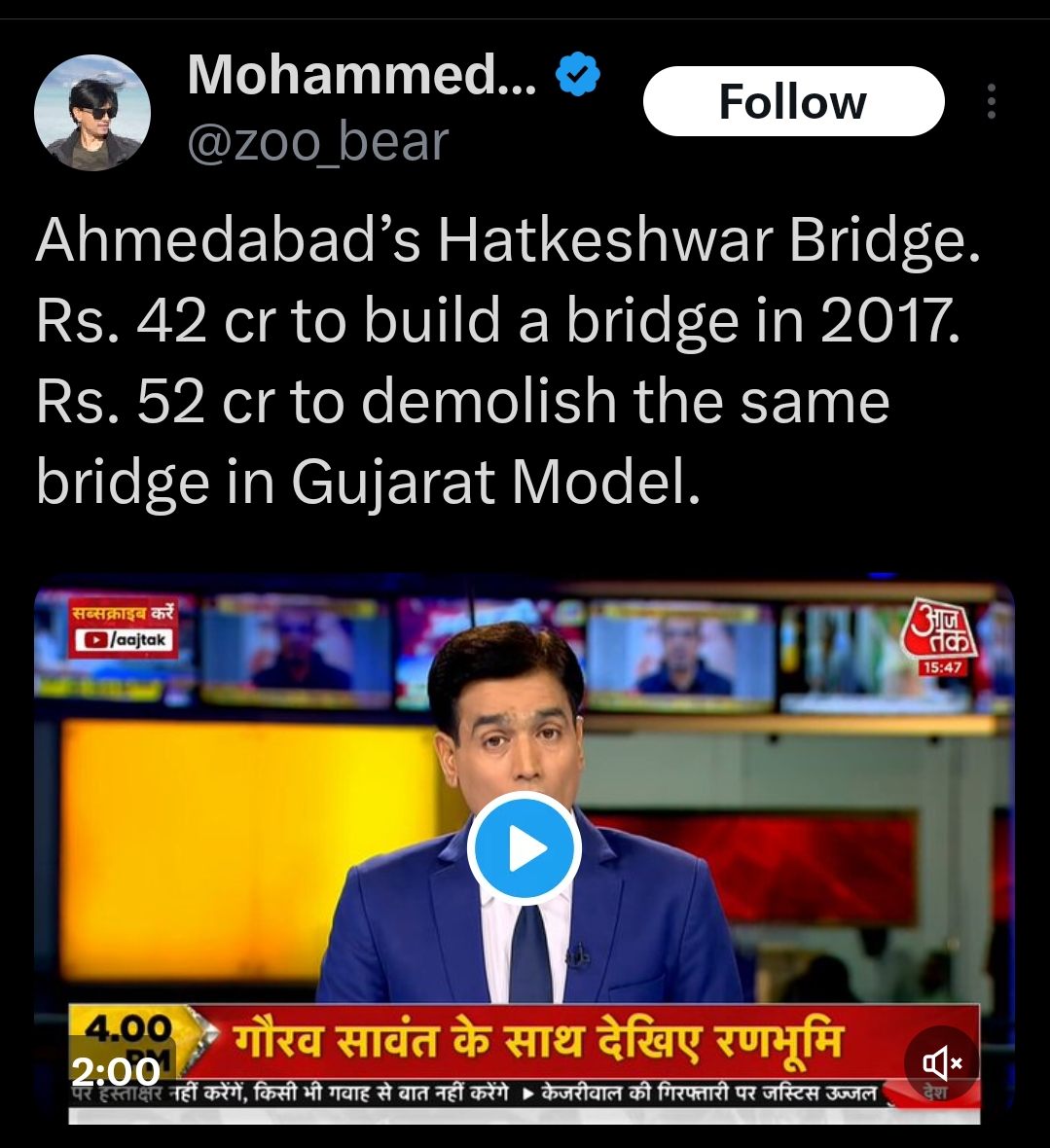
Screengrab of the tweet by Mohammed Zubair
Gujarat Minister Harsh Sanghavi had even clarified that the cost of reconstruction of the Hatkeshwar bridge would be recovered from the contactor which originally built the project in 2017.
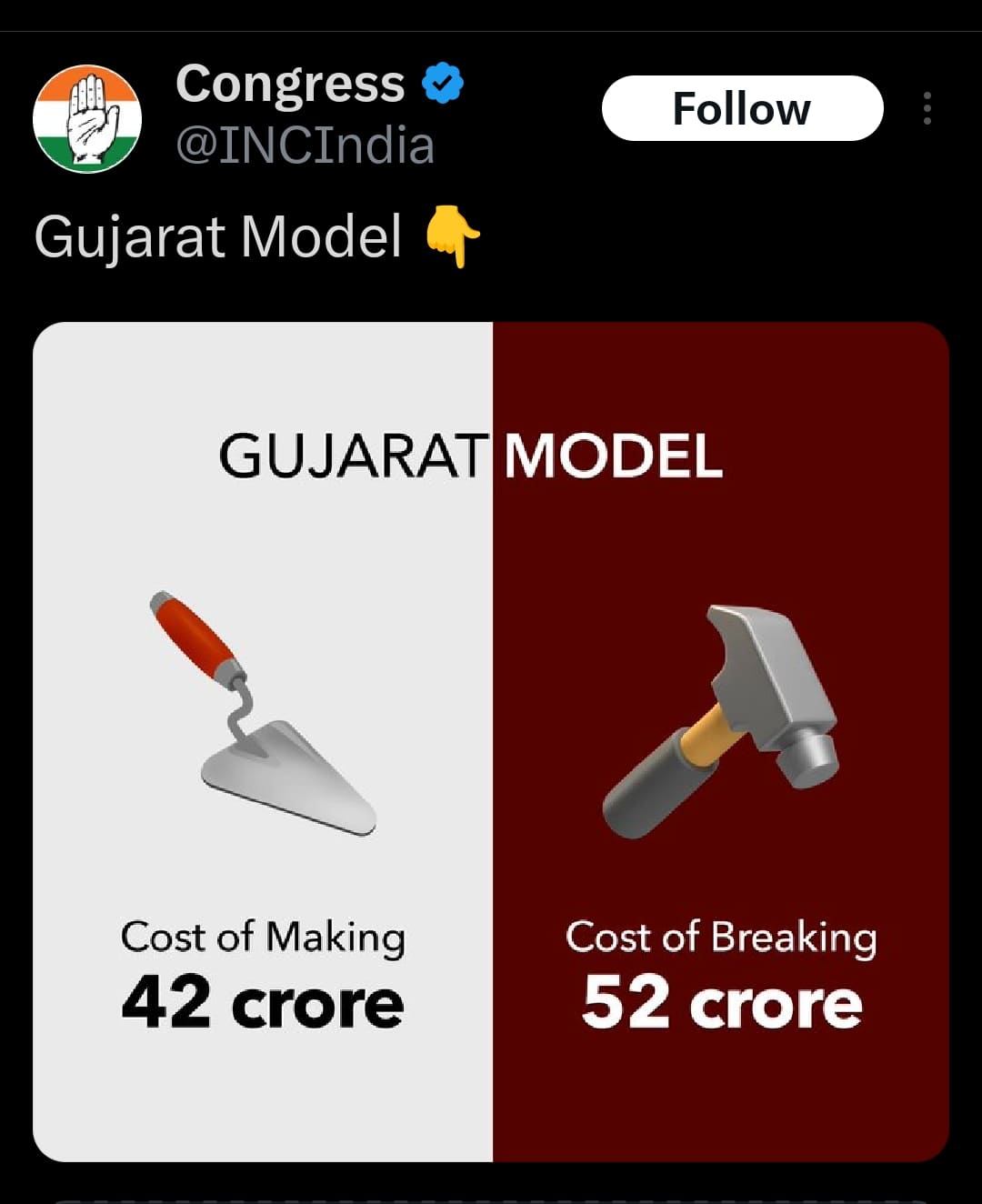
This however did not stop the so-called ‘fact checker’ from Alt News, Mohammed Zubair, from disseminating the lies peddled by Aaj Tak. He also took potshots at the ‘Gujarat Model’ based on his fake claims.
The Congress party did not stay behind in propagating fake news about the disparity between the demolition and construction of the Hatkeshwar bridge.
Screengrab of the tweet by Congress
It claimed, “Cost of making – ₹42 crores, cost of breaking – ₹52 crores.”
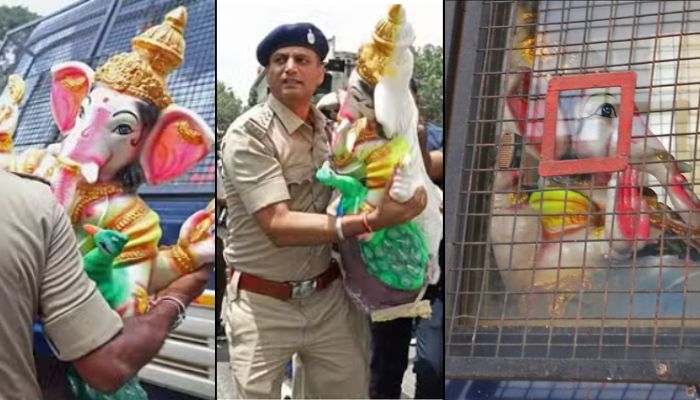
Amid the targeted attack on Hindus by radical Muslim mobs in Nagamangala village in the Mandya district of Karnataka, a picture of Lord Ganesha’s idol being caged in a police van went viral on social media.
The heartbreaking image surfaced online soon after radical Muslim mobs ran a rampage in Mandya and pelted stones at the idol of Lord Ganesha during the immersion ceremony on Wednesday (11th September) night.
By Friday (13th September), images of a cop carrying an idol of Lord Ganesha to safety began trending on social media. The Hindu deity was seen locked in a police van instead of being placed at the temple.
As a Hindu this makes me sad, here’s the entire story on
Speculations were soon rife on social media about the whereabouts of the Ganesha idol and the location of the incident. While it was initially believed to be from Mandya, it turns out that the ‘arrest’ of the Hindu deity was carried out in Bengaluru.
As per a report by OneIndia, the seizure of the idol of Lord Ganesha occurred during a protest by Hindus in Bengaluru against the atrocities committed against their community in Mandya.
The Bengaluru police arrested 40 Hindus for taking out demonstrations in the Town Hall area allegedly without permission. The protest was organised by the Bengaluru Metropolitan Ganesh Utsav Committee.
This visual of Lord Ganesha in a police vehicle is terrifying.
Why is the Congress hell-bent on insulting our dieties, & belittling the belief and faith of millions of Hindus? pic.twitter.com/mFux03khJg
Following the arrest, the police deployed at the site took the Lord Ganesha idol from the Hindu protestors and put it inside their caged vehicle. At that time, photographers covering the demonstration clicked pictures of the Hindu deity being ‘arrested’ by the Bengaluru police.
While speaking about the matter, a cop told OneIndia, “The group of people attempted to protest in front of the Town Hall without permission. As a precautionary measure, about 40 individuals were taken into custody.”
Bengaluru South MP Tejasvi Surya took to X (formerly Twitter) to slam the local police and the Congress-led-Karnataka government for hurting Hindu sentiments. “This visual of Lord Ganesha in a police vehicle is terrifying. Why is the Congress hell-bent on insulting our dieties, & belittling the belief and faith of millions of Hindus?” he tweeted.
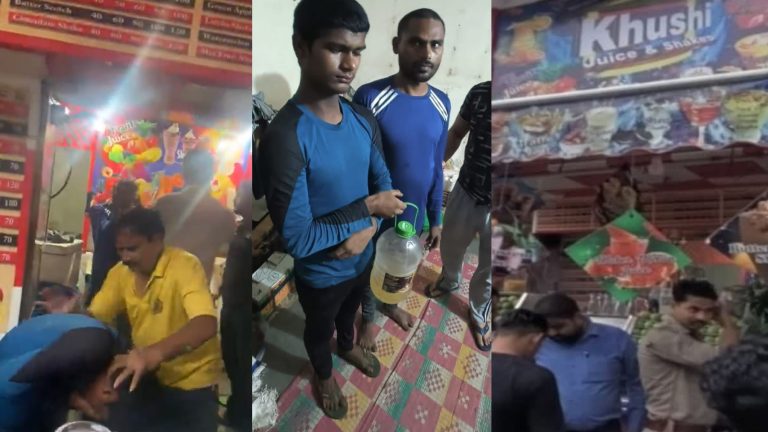
In a shocking incident in Ghaziabad’s Loni Border area, a juice shop was found mixing urine with juices sold to customers. Aamir Khan, owner of Khushi Juice Corner, and his assistant were beaten badly by locals on the allegation of mixing urine in juice and serving it to customers.
On receiving information from people, the police reached the spot and saved Aamir alias Shazid Khan and his assistant from the crowd and took him into custody. Along with him, his minor helper has also been detained by the police. This incident has created a stir in the entire area.
Giving information about the incident, ACP Bhaskar Verma said that the police had received a complaint about urine being mixed in juice on 13 September. When the police reached the spot under Indira Police station and search the shop, an one litre can filled with human urine was found. When asked, the shopkeeper could not give any satisfactory answer to the presence of urine in the shop.
Shocking: Mohd. Aamir & Kaif were serving Juice to customers by mixing URINE in it?
~ Case of Ghaziabad's 'Khusi Juice Corner'. A jar full of Human Urine was found during the Police Raid. Case registered. pic.twitter.com/YTBG8yD2dM
As a result, police arrested Amir Khan and his minor assisted. Police have registered an FIR in this case and further investigation is underway. The can has been sent for analysis.
As per reports, local residents caught the shopkeeper mixing urine with juice, and beat him up. They then called the police and then handed him over to the police.
यूपी : गाजियाबाद में जूस में पेशाब मिलाकर कस्टमर्स को पिलाया जा रहा था। दुकान संचालक आमिर और कैफ को पुलिस ने गिरफ्तार किया। दुकान से करीब एक लीटर पेशाब बरामद हुआ। पब्लिक ने दोनों आरोपियों की पिटाई की। pic.twitter.com/cePg6p2YzE
During the incident, someone also made a video of it, which is now going viral on social media. In the video, some people can be seen beating the two shopkeepers. As the assistant is minor, his name has been withheld from this report, although social media users have been naming both the accused, which reveals that both belong to the same community.
The police are now investigating the reason behind such ghastly act of the juice seller.
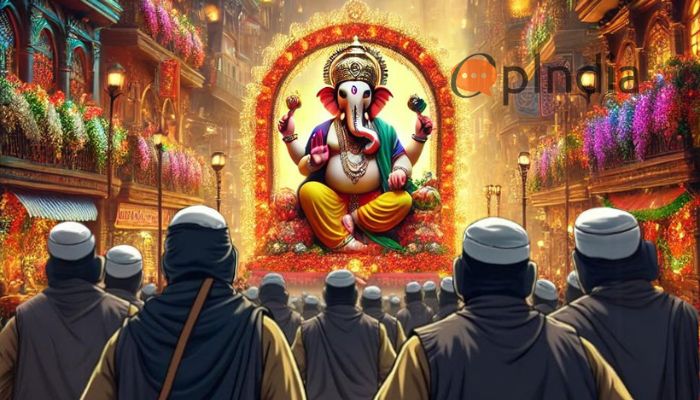
This year, the Hindu festival of Ganesh Chaturthi was marred by multiple attacks on Ganesh Puja pandals across the country by Muslim mobs. OpIndia documented several such incidents wherein Muslim mobs including minors pelted stones on Ganpati pandals, Ganesh idols and Hindus celebrating their festival.
In Gujarat’s Surat, two Muslim women Rubyna Pathan and Laima Sheikh were arrested for inciting their children to attack and break Ganesh idols. In another incident in Surat, some Muslim minors pelted stones at a Ganeshutsav pandal in the Lal Gate area’s Variyali Bazaar. In the Kutch district, Muslims attacked Hindu youths carrying an idol of Bhagwan Ganesh. On 7th September, miscreants pelted stones at a Bhagwan Ganesh idol in Mochipura of Ratlam district in Madhya Pradesh. In Karnataka’s Nagamangala, riots erupted after a Muslim mob pelted stones at the Ganpati Visarjan procession merely because the Hindus celebrating were dancing in front of the Dargah for a few minutes.
This, however, is not a new trend. Every year, Hindu processions on festivals like Ganeshotsav, Ram Navmi or Hanuman Jayanti are attacked by Islamist mobs over some excuse or the other. While Islamists hating Hindus is not a lesser-known fact, did you know about one of the first attacks on Ganesh Puja by Muslim mobs? In 1895, riots erupted in Dhulia [Dhule], Maharashtra over the Ganpati celebration. Before delving into what transpired in Dhulia in 1895, it is pertinent to take a look at how Muslims used trivial excuses to attack Hindus just two years before the Dhule Riots, how the Ganpati celebration was popularised and how it irked the Islamists.
1893 Bombay Riots which inspired Lokmanya Bal Gangadhar Tilak to unite Hindus through Ganeshotsav
The grand public celebration of Ganesh Chaturthi gained prominence in Maharashtra and other parts of the country with the efforts of Lokmanya Bal Gangadhar Tilak in 1893. The pattern of Islamist mobs attacking Ganpati processions and pandals is not new in India, rather it dates back to the Mumbai riots of 1893. These riots are one of the first documented incidents in which a Hindu religious celebration, particularly the Ganesh festival, became a trigger for Muslims to unleash violence against Hindus. This trend has persisted over the decades, with similar attacks occurring around the festival season, demonstrating a long history of hatred against Hindus and their festivals harboured by certain Islamist groups.
On the 11th of August 1893, a large communal riot erupted in Mumbai as ceremonial music was being played at the Hanuman temple in Pydhonie. Right before the Bombay riots, similar riots broke out in Prabhas Patan, which was under the control of the nawab of Junagadh. On the 25th of July 1893, Muslims attacked Hindus and desecrated temples in Somnath during Muharram. Muslims in Junagadh had been clamouring for control of all governmental jobs in the state and to avenge the Azamgarh riots.
3 Hindus were compelled by increasing Muslim aggression. On 25th July, 1893, Muslims attacked Hindus & desecrated temples in Somnath during Muharram. Junagadh’s Muslims had been agitating to gain control over all administrative jobs in the state & avenge riots in Azamgarh. pic.twitter.com/B5D3uTr2Mb
— Savitri Mumukshu – सावित्री मुमुक्षु (@MumukshuSavitri) September 1, 2022
Following the Somnath riots, several Muslims travelled to Bombay to seek donations to release the arrested Muslim rioters. In response to the destruction in Somnath, prominent Gujarati Hindus in Bombay started collecting funds for Hindu victims. Muslims from all over India were flocking into Bombay, including Pathans, Chilli Chors, and Julahas from Gangetic areas who had attacked Hindus during the Mau and Rangoon riots. When Hindus in Bombay formed the Society for Cow Protection, the Muslim mobs were agitated and were looking for a fitting opportunity to attack Hindus.
The Islamists found an excuse in ceremonial music played at the Hanuman temple at Pydhonie. This temple was in close vicinity of the Jama Masjid. Armed with lathis, Muslim rioters stormed out of Bombay’s Jama Masjid, beating Hindus and vandalising the Hanuman Temple, claiming that the temple’s bells “disturbed” Namaz. Riots lasted three days, with looting, arson, and killing. Many Hindus died, and temples and stores were ravaged. Historical accounts say that around 80 people were killed in the riots.
However, the British, led by Lord Harris, continually backed the rioting Muslims and blamed Hindus for the rioting. The Cow Protection Movement was blamed for the spark. In 1894, during the Deccan riots, Harris blamed Brahmins for the widespread violence and disobedience. This recurrent injustice convinced Tilak that because the British government was siding with Muslims, it was pointless to expect them to protect Hindus; consequently, Hindus had the right to act in self-defence. Tilak decided to popularise a Hindu festival just as the Greeks used to do to propagate national culture and foster unity. Because Ganeshotsav was already a celebration across caste lines, Tilak saw the festival as a potential unifier of Hindus, fostering feelings of Hindu unity and nationalism.
1895 Dhulia Riots: The first Islamist attack on Ganpati celebration
Notably, before Ganeshotsav, Muharram was the most popular festival in the erstwhile presidency of Bombay. As larger-than-life “Ganpati Melas”, full of music processions, and cultural programs gained popularity among Hindus they served as powerful tools of mass mobilisation. However, the Islamists were for obvious reasons displeased. It is said that in 1895, an idol of Lord Ganesh emerged from the Panjhra [Panzara] river in Dhule. The Hindus then constructed a temple and installed the idol in the sanctum sanctorum of the temple as per the rituals.
Inspired by the tradition popularised by Tilak, a Dhulia resident and freedom fighter Khambete Guruji started the tradition of the Ganpati celebration. As the Ganpati Visarjan procession passed through the old Shahi Jama Masjid of Dhulia/Dhule, the local Muslims turned angry and attacked the Hindus resulting in communal violence, however, the British police opened fire at the crowd leaving several people dead. The temple dedicated to Lord Ganesh came to be known as the “Khooni Ganpati” temple after the riots and Shahi Jama Masjid was called “Khooni Masjid”. While the communal tensions subsided gradually, this was the first known Islamist attack on the Ganpati celebration. In a similar incident, Muslims attacked a procession at the Daruwala bridge in Pune in which freedom fighter Sardar ‘Tatyasaheb’ Hari Ramchandra Natu was injured.
The next major anti-Hindu rioting in Dhule occurred after 6th December 1992, following the demolition of the Babri structure in Ayodhya. Around 1000 Muslims gathered and attacked Hindu homes in Lala Sardar Nagar. They destroyed and burned some Hindu houses.
From 1895 to 2024, a Hindu procession passing through a Muslim-dominated area becomes a flashpoint for Islamist violence. Since 1893, Islamist groups have frequently attacked Ganpati processions. Several communal riots in the twentieth and twenty-first centuries have revolved around the same core issue: processions being attacked as they pass near mosques or through Muslim-dominated, however, now the Islamists are using minors to express their hatred for idol worshipping Hindus as seen in Surat.
The past riots and the recent attacks suggest that over centuries, a lot has changed, India has gained freedom from British Raj, and partitioned to carve out two Muslim-majority countries, yet the Islamist hatred for Kafirs especially Hindus does not appear to be subsiding anytime soon. The Islamists love to assert their dominance and overtly express their religiosity, however, are intolerant of the Hindus expressing their religiosity fearlessly. Islamists have always resisted any type of Hindu resurgence or cultural identity in the public sphere, particularly when such activities are held on a large scale. As Tilak dreamed, the Ganpati celebration should continue to be not just a celebration of the birth of Lord Ganesh but also that of Hindu resurgence and unity.