Home Blog Page 6

Explained: Why India is set to join the elite club of countries with $1 trillion in exports and why it matters 

India is scripting history with record goods-and-services exports even during times of global uncertainty and economic tumult. In May 2026, Union Minister of Commerce and Industry, Piyush Goyal, announced that India has set a target of achieving exports worth $1 trillion in 2026 and $2 trillion over the next five years.  

Numbers indicate that India is heading on a credible path toward s $1 trillion worth of exports in FY 2026-27 with sustained momentum. 

What’s the math behind India’s $1 trillion exports dream inching closer to reality 

In the financial year 2025-26, India’s total exports, including merchandise and services, surged to a record $863.11 billion, jumping 4.59% from $825.25 billion the previous year. 

Merchandise exports were recorded at roughly $441.8 billion, while services reached about $421.3 billion in FY 2025-26. 

Reaching $1 trillion from that base necessitates around 15.86% growth. This is the figure the Modi government has set as its target for the current fiscal year, FY 2026-27.  

What fuels the optimism that India will achieve the ambitious $1 trillion exports target is the performance in the first half. Indian exports in the first half of the ongoing financial year are close to the required pace. 

April-September 2026-27, which is the first half or H1 of the current financial year, witnessed total exports of $476.20 billion, marking a 13.84% year-on-year (YoY) surge from $418.31 billion in the same period of the prior year. This brings the number very close to the 14% figure and already over half of the full-year $863 billion record. 

If we look at the numbers, merchandise exports in the first half increased strongly by about 18.5% to $259.89 billion as compared to US$ 219.30 billion during April-September 2025-26. 
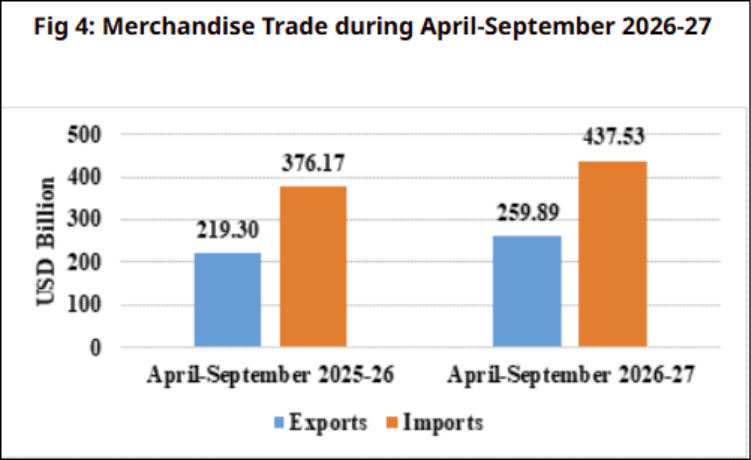
Source: PIB

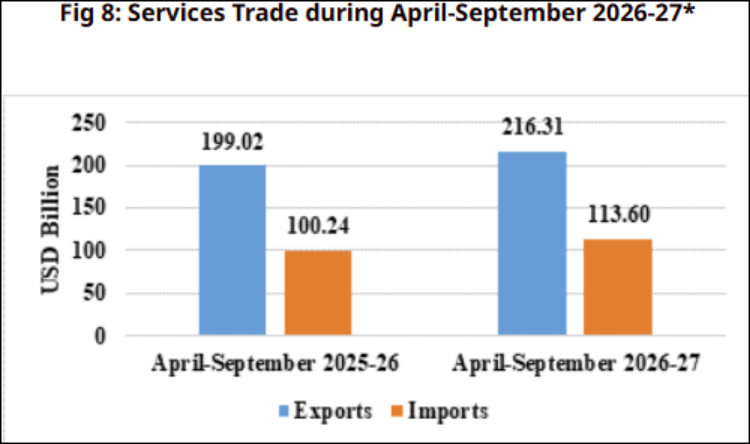
Meanwhile, services exports also demonstrated solid growth of about 8.7% to $216 billion as compared to US$ 199.02 billion in April-September 2025-26. 
Source: PIB

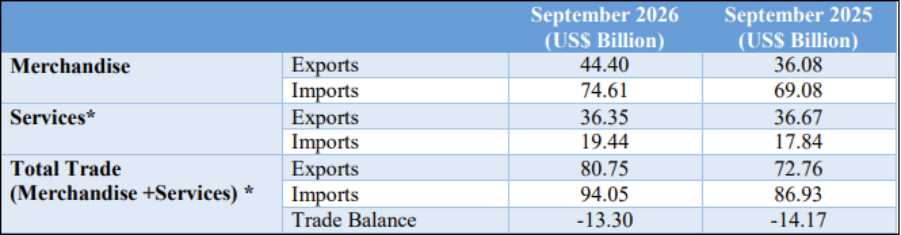
In fact, September 2026 alone saw merchandise exports skyrocketing 23% YoY to $44.4 billion. 
Source: PIB

Numbers indicate that services continue to be reliable. It powered India’s FY 2025-26 export record and continues to expand, although at a relatively moderate pace compared to the recent acceleration in merchandise exports. 

Interestingly, over the past 12 months, from October 2025 to September 2026, India’s total exports have hovered around $930 billion. This, plus the strong FY 2026-27 first-half run-rate, shows that the Indian economy has already been heading towards the $900+ billion annualised zone. 

Petroleum products and electronics emerge as the primary engines of India’s $1 trillion exports target 

Amid ongoing crisis in West Asia and the prolonged Russia-Ukraine war, and resultant uncertainties in oil markets, Indian refiners are gaining big.  

As per commodity analytics firm Kpler, in September 2026, diesel exports surged to roughly 620,000 barrels per day, marking a one-year high, with a significant share heading to Europe. 

Both high refining margins and supply disruptions caused by the West Asia crisis, Russian constraints, and Chinese curbs generated this “aapda mein avsar” or opportunity amid crisis for Indian refiners. 

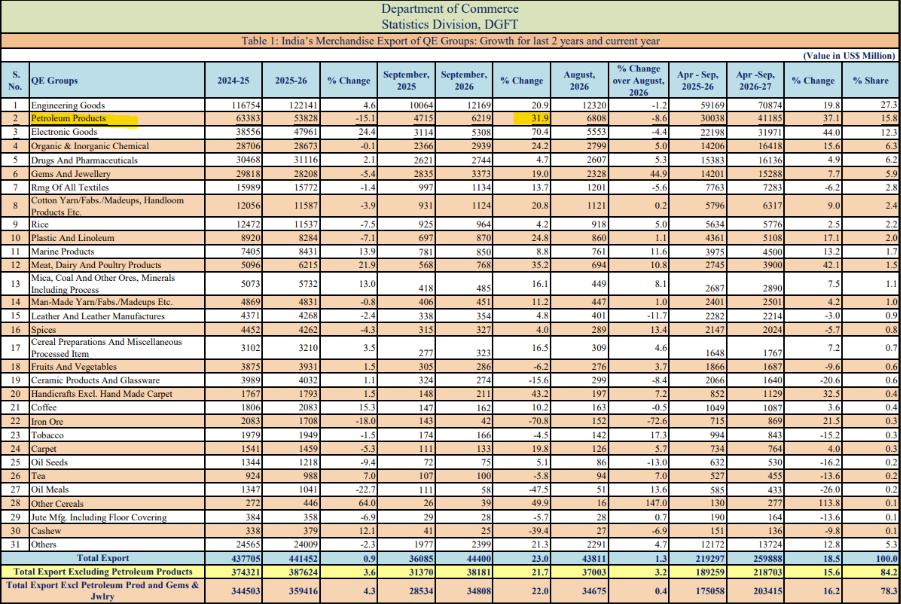
Overall, petroleum product exports increased sharply in September 2026 by 31.9% to $6.2 billion.  
Source: Department of Commerce

As global supply tightness persists for more months, this boom is expected to continue. 

Meanwhile, electronics has emerged as an even more dramatic bright spot.  

In August 2026, electronic goods exports increased from 89.8% year-on-year to $5.55 billion as compared to $2.93 billion in August 2025. In September 2026, electronics exports surged 70.4% to $5.31 billion from $3.11 billion YoY. 

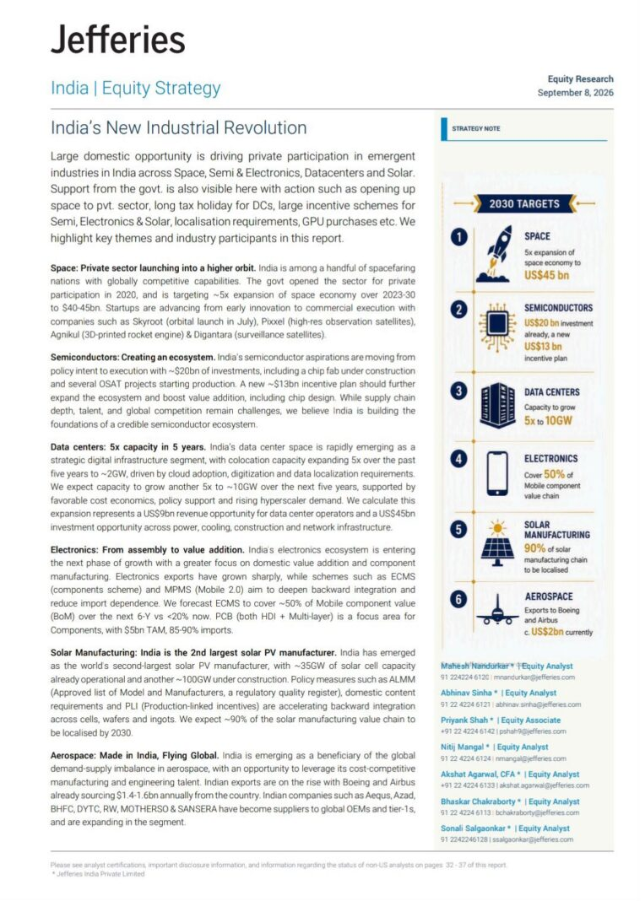
In its report titled India’s New Industrial Revolution, global investment bank Jefferies describes electronics as a key driver of the next phase of India’s industrial growth in the coming years.   

It noted that India is focusing on domestic value addition and component manufacturing. The global investment banking company highlighted that Central government initiatives like the Electronics Component Manufacturing Scheme (ECMS) and Mobile Phone Manufacturing Scheme (MPMS) aim to deepen backward integration and reduce import dependence. 

The Jefferies report forecasted that the ECMS will cover 50% of mobile component value versus 20% now. 
Source: Jefferies report titled India’s New Industrial Revolution

Highlighting an increase in electronics exports, the Jefferies report stated, “From assembly to value addition. India’s electronics ecosystem is entering the next phase of growth with a greater focus on domestic value addition and component manufacturing. Electronics exports have grown sharply, while schemes such as ECMS (components scheme) and MPMS (Mobile 2.0) aim to deepen backward integration and reduce import dependence. We forecast ECMS to cover ~50% of Mobile component value (BOM) over the next 6-Y vs <20% now. PCB (both HDI + Multi-layer) is a focus area for Components, with $5bn TAM, 85-90% imports.” 
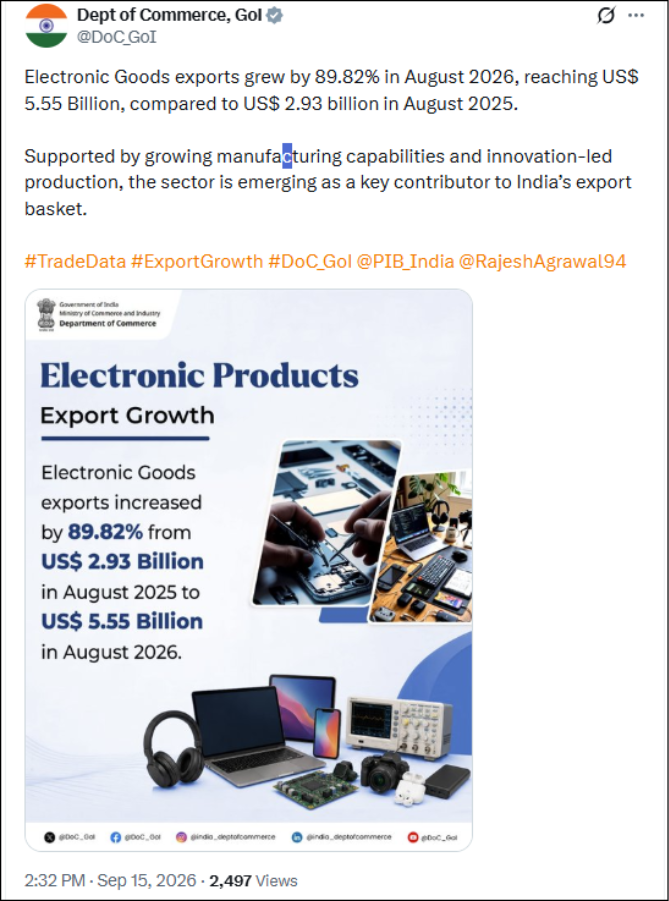
Source: X

Apparently, engineering goods, chemicals, and other manufacturing categories have also made impressive contributions. These gains reflect production-linked incentive schemes, enhanced integration into global supply chains, particularly for the US market, and a wider manufacturing push. 

Meanwhile, non-petroleum merchandise exports have also strengthened over time, widening the base beyond energy. 
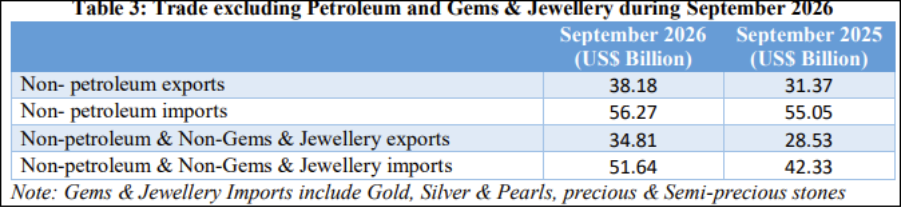
Source: PIB

India’s total exports near-doubled since the Modi government came to power in 2014 

An interesting aspect to note about the story of the rise in India’s exports is that when the Modi government came to power in 2014, India’s total exports, which include goods and services, stood at $466.22 billion in 2013-14, with merchandise exports recorded as $314 billion and services exports worth $152 billion.  

Since then, the Indian economy has, under the Modi government, witnessed recovery and consistent growth. In over 12 years, India’s exports witnessed a rise to the $863 billion level and a run-rate nearing or exceeding $900 billion. 

Why the $1 trillion exports milestone matters for India 

Reaching the $1 trillion exports milestone would position India along with a small elite group of major exporters, which currently has China, the US, and Germany at the top. 

India joining this club would bolster external balances by creating more foreign-exchange earnings against persistent oil and component import requirements, supporting reserves as well as curbing vulnerability to trade deficits. 

Structural supports for this are free trade agreements expanding preferential access, a competitive currency and sectoral diversification. However, some caveats remain. Overall trade deficits have remained sizable due to import growth matching or exceeding export gains.  

While sustaining and slightly accelerating the pace from the first half through the second half would secure India its $1 trillion target, it is not going to be automatic.  

Factors like global demand, geopolitical dynamics, and commodity prices impact the growth trajectory.  

What makes the $1 trillion worth exports target realistic is the combination of electronics momentum, refining gains, stable resilience of services, and the Modi government’s policy measures with continued execution. 
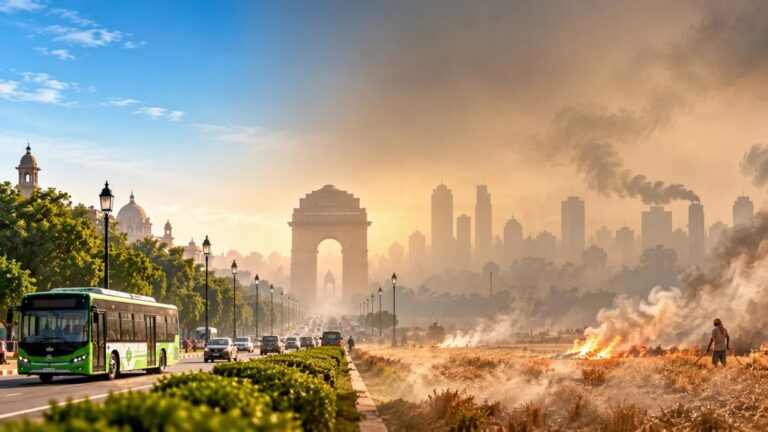
Delhi’s air pollution: Beyond the burn, what really chokes the capital of India

Every winter, as a thick, toxic blanket of smog descends upon New Delhi, the public narrative quickly shifts to a familiar scapegoat: agricultural stubble burning in the neighbouring states of Punjab and Haryana. While the seasonal burning of crop residue undeniably spikes the city’s Air Quality Index (AQI) to hazardous levels between October and November, it represents only a fraction of a much larger problem. Looking “beyond the burn” reveals a complex web of year-round, systemic pollutants that are genuinely responsible for choking the capital of India.

First and foremost are vehicular emissions, which act as the most persistent and significant contributor to Delhi’s poor air quality. Depending on the time of year, vehicular exhaust accounts for roughly 40% of the city’s total air pollution. With millions of registered cars, trucks, and two-wheelers navigating the congested streets daily, the city’s atmosphere is constantly pumped with carbon monoxide, nitrogen dioxide, and deadly PM2.5 particles. Despite the introduction of stricter BS-VI emission standards and a push toward electric vehicles, the sheer volume of daily traffic and the lingering presence of older, heavily polluting diesel engines continue to overwhelm the environment.

Secondly, the region’s booming infrastructure comes at a steep environmental cost. Dust from poorly regulated construction sites and unpaved roads contributes to over 20% of the particulate matter in the air. When vehicles speed down the city’s vast road network, they continuously kick up settled dust, re-suspending it into the air people breathe. This man-made dust is heavily compounded by Delhi’s unique geography. Being entirely landlocked, the city acts as a natural sink. Northwesterly winds transport dust from Rajasthan, while the imposing Himalayas to the north trap the escaping air, creating a confined “airshed” that locks pollutants in. During winter, temperature inversion—where cold air traps warmer, polluted air close to the ground—creates the dreaded “winter syndrome,” halting the dispersion of toxins entirely.

Industrial emissions and urban waste management failures form another critical pillar of the crisis. The National Capital Region (NCR) is surrounded by numerous industrial clusters, many of which operate with minimal environmental oversight. Coal-fired thermal power plants and unregulated factories emit massive amounts of sulfur dioxide and industrial soot. Furthermore, Delhi is home to towering landfill mountains, such as the Bhalswa landfill. These massive garbage dumps frequently catch fire, releasing highly toxic and carcinogenic fumes. Additionally, the burning of localized garbage and biomass by vulnerable populations seeking warmth during the cold months significantly increases localized pollution.

In conclusion, fixing Delhi’s air pollution crisis requires moving beyond the seasonal panic over farm fires. While offering farmers viable alternatives to stubble burning is necessary, it will not cure the capital’s year-round respiratory crisis. True relief demands stringent, year-round enforcement of industrial regulations, sweeping improvements to public mass transit networks, strict dust-control measures at construction sites, and scientific waste management. Until policymakers collectively address these foundational issues, residents will continue to choke on the byproducts of unchecked growth.

Read the full article on Chapter 1 Magazine.

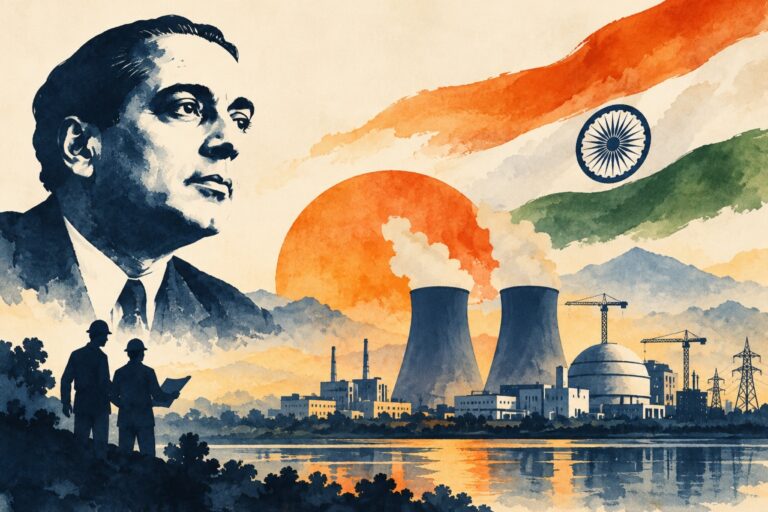
India’s 100 GW nuclear power ambition for 2047

The world seems to have shed its inhibition toward nuclear power and is starting to build nuclear reactors at a pace not seen in the last few decades. 

The government of India has set an extraordinary ambition: expand nuclear capacity to around 22 GW by 2032 and 100 GW by 2047. The goal is ambitious and necessary too, if India wants to expand clean energy production while matching the ever-increasing demand of a rapidly growing economy of 1.4 billion people. 

India has spent decades mastering the science of nuclear reactors. However, to match the enormous gap between the current installed capacity of nuclear power at 8.78 GW and the 2047 ambition of 100 GW, India needs to build at an industrial scale.

The target of around 22 GW by 2032 and 100 GW by 2047 also highlights the acknowledgement that India’s future electricity needs cannot be met through conventional energy sources alone. Rapid industrialisation, expanding cities, artificial intelligence, data centres and electrification will require enormous quantities of dependable power. 

Solar and wind are essential to India’s energy transition, but nuclear energy offers something different: continuous, low-carbon electricity that does not depend on sunshine or wind conditions.

The government’s immediate goal is to add roughly 13 GW of nuclear capacity by 2031–32. That means commissioning reactors at an average pace of approximately 2.4 GW annually over the remaining five-plus years. The longer-term challenge is considerably greater. Even if India reaches 22 GW by 2032, achieving 100 GW by 2047 would require another 78 GW in the next 15 years, an average of 5.2 GW every year. No other country in the world has ever built at such a scale and speed.

The United States added approximately 95 GW during its major nuclear expansion between 1970 and 1990, averaging 4.75 GW annually. France’s nuclear expansion during the 1970s and 1980s averaged around 4 GW annually, while China’s recent growth has been approximately 3 GW per year. India’s proposed construction pace would demand an industrial mobilisation at levels unprecedented in the nation.

Construction of nuclear power plants has been difficult in India. Rajasthan Unit 7 took roughly fifteen years to reach full power. Kudankulam’s four upcoming Russian-supported reactors could add 4 GW, but delays and cost escalation remain concerns. The approved costs of Kudankulam Units 3–6 have risen to approximately ₹1.38 lakh crore, around 55% above initial estimates.

The problem is not merely technical either. Nuclear plants require specialised equipment, skilled welders, engineers, stringent quality controls and experienced contractors. Delays increase financing costs while postponing electricity revenues. India’s strategy of constructing standardised 700 MW PHWR reactors in fleet mode could improve efficiency, but only if multiple projects advance simultaneously and without any delays.

The SHANTI Act, 2025 brought a major reform by opening nuclear power generation to private participation and revising the liability framework. Companies including Adani Power, Tata Power, Reliance and JSW Energy have expressed interest, while the government envisages substantial private investment towards the 2047 target.  

Also, legal permission does not automatically translate into operational reactors. Private investors still need clarity on tariffs, financing, liability, fuel supply and long-term returns. India’s expansion could require investment approaching $210 billion, making financial viability as important as technological capability.

India’s domestic uranium production is insufficient for its expanding requirements. Canada’s agreement to supply nearly 22 million pounds of uranium concentrate between 2027 and 2035 strengthens supply security, but international dependence is expected to remain significant.

Geopolitics also affects construction. Russia provides reactor technology and fuel for Kudankulam, but disruptions associated with the Ukraine war have complicated project execution. Meanwhile, proposed American reactors at Kovvada and French reactors at Jaitapur remain stalled despite years of negotiations.

India has demonstrated that it can build nuclear reactors. The question is whether it can build them fast enough, consistently enough and economically enough to transform the country’s energy future.

The 2032 deadline is a test of execution, while 2047 is a test of industrial transformation. Read the full article here in Chapter 1 Magazine. 

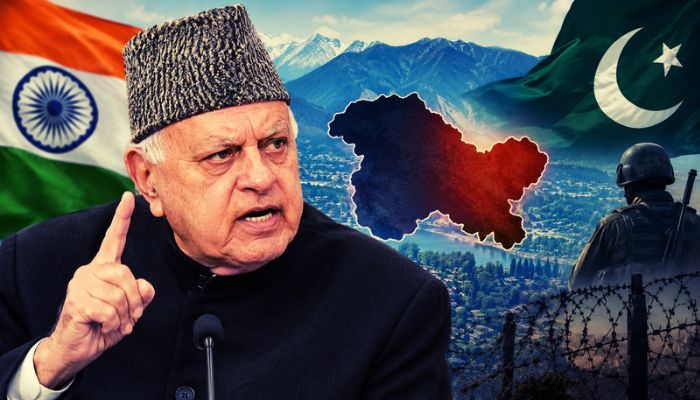
Farooq Abdullah says ‘Pakistan keeping Kashmir issue alive is saving us’: Beyond the NC leader’s political self-goal, why Pakistan’s ‘jugular vein’ rhetoric is hypocritical and futile 

Farooq Abdullah, the former Chief Minister of Jammu and Kashmir, and National Conference supremo, Farooq Abdullah laid bare his traitorous intentions when claimed that it is Pakistan, which is keeping the supposed Kashmir issue alive, or else New Delhi’s plans are not good. Abdullah resorted to blatant fear-mongering and instigation, saying that Kashmiris should fight or be ready to perish into oblivion. 

Contempt for the Indian government, approbation for Pakistan: Farooq Abdullah has lost the plot or is scribing a seditious one? 

Addressing his party workers on 24th October, Farooq Abdullah said, “What hope will you (people of Jammu and Kashmir) have from them (Delhi)? Will you expect that they will do justice for you? Have the courage to fight, or you will be wiped out, and your identity will disappear. They are silent today because there is noise in the world, and our neighbour (Pakistan) is constantly behind this. Everywhere they say, ‘the decision regarding Kashmir has not been made. That is what is saving us. Otherwise, their intentions are not good.” 

To balance out his outrageous remarks, Abdullah affirmed that the people of Jammu and Kashmir “never said that we are not Indians”. 

In the same breath, Farooq Abdullah conveyed dissatisfaction with the very BJP-led Central government that abrogated Article 370, over statehood restoration, and approval for Pakistan’s efforts are raking up the supposed Kashmir issue on international forums. 

The former Jammu and Kashmir Chief Minister essentially resorted to instilling fear into the minds of Kashmiris and inciting them to ‘fight against Delhi’. His statement carried a threatening undertone: if Delhi doesn’t ‘listen’, Kashmiris are ready to fight with Islamabad by their side. 

Pakistan’s efforts to internationalise Kashmir and pressure India are as futile as Farooq Abdullah’s whining against the Modi government 

There is no doubt that not only Farooq Abdullah, but a significant section of Jammu and Kashmir’s political circles continues to harbour the chagrin of Article 370’s abrogation.  

While terrorists never abandoned their violence pursuits against India, it is also true that there also is a section of people in the Union Territory, who still cling to the idea of separating Kashmir from India, when the ‘Nizam’ changes. 

However, Pakistan has for decades been trying to keep the Kashmir issue on the international agenda across various forums, including the United Nations General Assembly, the Organisation of Islamic Cooperation (OIC) and lobbying manoeuvres that yield no substantial results. 

A Pakistani PM raking up the Kashmir ‘plebiscite’ issue in the UN General Assembly, farcical OIC resolutions, and the ‘Kashmir is our jugular vein’ rhetoric of Pakistan’s Madarsa-bred de facto ruler, Field Marshal Asim Munir, have produced little beyond ritualistic statements. 

In the UN, Indian diplomats regularly counter Pakistan’s ‘Kashmir under siege’ cries and propaganda with facts on Kashmir’s progress and development.  

After the August 2019 abrogation of Article 370, Pakistan’s attempts to force UNSC action or any international pressure on India have failed.  

Most countries in the world treat the issue as bilateral.  

Although the OIC regularly makes references to Kashmir, given that Saudi Arabia, Azerbaijan and Turkey are its important members, with both having good relations with Islamabad, and Turkish President Recep Erdogan ritualistically reiterates his “Kashmir self-determination” rhetoric in UNGA speeches, India, however, has repeatedly rejected any such references as interference in internal affairs and without locus standi. 

Besides, even though the Mecca Defence Pact might force Saudi Arabia to lean towards Pakistan further, even Riyadh would not want to antagonise India, countries like the United Arab Emirates (UAE) do not allow Saudi Arabia and Turkey dictate its foreign policy in the name of the Islamic Ummah, particularly when it comes to relations with India. 

In fact, India and the UAE are building formidable ties, with the India–Middle East–Europe Economic Corridor in central focus. 

Simply put, while the OIC may, in its resolutions, rake up Kashmir performatively to keep Pakistan content, each of the member countries wants good, rather, strong relations with India bilaterally. 

Pakistan often cries hoarse about India ‘arbitrarily’ abrogating Article 370, and cites UN Security Council resolutions on Kashmir, particularly Resolution 47 of 1948 and the UNCIP resolutions of 13th August 1948 and 5th January 1949 to push for a plebiscite and internationalise the Kashmir issue. However, those very resolutions required Pakistan first to withdraw its troops, proxy tribesmen, and others who entered to fight, only after which Indian military presence would be reduced. 

Since Pakistan never fully complied with the precondition and maintained its forces and administration in Pakistan-occupied Kashmir, a status quo prevailed for decades. Given that the Instrument of Accession signed by Maharaja Hari Singh in 1948 acceded all of Jammu and Kashmir to the Indian Union, Pakistan has no legal claim to Kashmir, let alone having locus standi to advocate a plebiscite or right to self-determination. 

If Pakistan truly cared about Kashmiris on the Indian side, it would have stopped sponsoring cross-border terrorism in Jammu and Kashmir. However, Islamabad continues to harbour this delusion that continuing proxy jihad and destabilising Kashmir will help it sustain its claim.  

However, of the much-highlighted ‘Kashmir issue ‘, the only issue that remains unresolved is Pakistan’s departure from PoK and its integration into India. 

Farooq Abdullah praising Pakistan for somehow keeping the Kashmir issue ‘alive’ is a massive self-goal. Abdullah wants the Modi government to restore statehood for Jammu and Kashmir. However, his pro-Pakistan rhetoric only contributes to exacerbating the delay.  

Indian Kashmir is a ‘jugular vein’; PoK is ground for persecuting Kashmiris: The Ummah rhetoric and hypocrisy of Pakistan 

Besides the UNSC resolutions, Pakistan’s [illegal] claim to Kashmir also rests on the claim that Raja Hari Singh was a Hindu while the majority of Kashmiris were Muslims, and that Singh did not take the wishes of Kashmiri Muslims, especially those from the dominant Valley, while acceding J&K to India. 

However, Pakistan’s inhumane treatment of Kashmiris, who are largely Muslims, exposes its hypocrisy and hollowness of the ‘Ummah unity’ and ‘Tera Mera rishta kya, la ilaha ill Allah’ rhetoric. 

While Pakistani leaders, including Army Chief Asim Munir and puppet Prime Minister Shehbaz Sharif, routinely call Indian Kashmir Pakistan’s “jugular vein” and claim solidarity with Kashmiris, it continues to deprive Kashmiris in PoK of even basic rights, development and dignity.  

The ongoing suppression of dissent in PoK demonstrates how the ‘Islamic Republic’ of Pakistan, the self-declared Riyasat-e-Medina, has no qualms about brutalising and killing Kashmiri Muslims in territories under its occupation merely for demanding basic rights and dignity. 

The Pakistan-occupied Jammu and Kashmir (PoJK) has been on a boil ever since the local people rose in protests against the oppressive Pakistan Army-controlled regime in June 2026. 

The protests began after the Pakistani authorities banned the Joint Awami Action Committee (JAAC) under the Anti-Terrorism Act 2014, declaring it a proscribed organisation, citing threats to peace and security. Soon after, internet and mobile services were also suspended in parts of the region. 

The unrest in PoJK began with a dispute over 12 assembly seats in the 45-seat PoK Legislative Assembly, which are reserved for refugees from Indian Jammu and Kashmir. Local groups allege that Islamabad uses these seats to influence elections and install governments of its choice, essentially diluting local representation. 

On 7th June, the PoK ‘Supreme Court’ ruled that the 12 seats are ‘constitutionally protected’ and cannot be abolished without a constitutional amendment. Since the Pakistani regime uses these 12 reserved seats for installing its puppets in the PoK Assembly to retain strong control over the region, they are reluctant to accept the JKAAC’s demand. 

It is ironic that Pakistan calls PoK ‘Azad Kashmir’ while stripping PoK residents of fair electoral rights. 

So much for the love and solidarity with Kashmiris on both sides that, after guns failed to silence the people of PoK, Islamabad resorted to blocking the region’s food, fuel, and healthcare supplies.  Pakistani forces have killed more than 80 PoK residents so far, including Usman Nazir, the brother of Jammu and Kashmir Joint Awami Action Committee (JAAC) leader Sardar Umar Nazir. 

In late July 2026, Pakistan’s Defence Minister Khawaja Asif branded protesters in Pakistan-occupied Kashmir as “enemies like India” while defending Islamabad’s violent crackdown. 

In fact, Asif had called the residents of PoK’s Rawalakot and Mirpur “not proper Kashmiris” just because they demand basic rights and dignity. 

There is nothing ‘Azad’ about the Pakistan-occupied Kashmir. Pakistani occupying authorities maintain strict control not only over the Kashmiri people and institutions but also over the narrative about the occupied territory.  

All this while, Pakistan claims that it wants to ‘liberate’ Indian Kashmiris, who enjoy freedoms unimaginable for PoK Kashmiris. 

While on the Indian side of Kashmir post-Article 370 abrogation, free and fair assembly elections have been held, tourism has boomed, infrastructure development and economic activity are witnessing an unprecedented surge; on the side under Pakistani occupation, even basic facilities and life with dignity are a luxury. 

Clearly, Pakistan’s manoeuvres for “keeping the issue alive” regarding Indian Kashmir, while it continues to suppress the Kashmiri population in PoK, are all aimed at serving its own political ambitions and not any Ummah-driven solidarity.  

Farooq Abdullah and his ‘Mere Pakistan-Ummah aayenge’ dream is a recurring one 

NC leader Farooq Abdullah has a track record of making statements that are useful for Pakistan to sharpen its rhetorical attacks on India.  

In August 2026, Abdullah questioned why terrorist attacks seem to occur whenever the demand for restoring Jammu and Kashmir’s statehood gathers momentum. The remarks came in the wake of the Kulgam terror attack, where terrorists killed two migrant labourers from Chhattisgarh. 

Farooq Abdullah alluded that terror attacks are orchestrated whenever there are talks demanding restoration of Jammu and Kashmir’s statehood. 

Abdullah’s controversial remarks came even as he knew that restoring statehood immediately after terrorist attacks would risk creating the perception that violence can influence constitutional outcomes, handing Pakistan-backed terror groups exactly the psychological win they seek. 

In September 2024, Farooq Abdullah reiterated his party’s stand, saying that the alliance would try to restore the special status if voted to power. 

“How many years BJP took to abrogate it (Article 370)? By God willing, we will also restore it. It (Article 370) is the heartbeat of the people of Jammu and Kashmir. Article 370 and 35 A will be restored,” Abdullah said. 

Soon after, speaking on Geo News to senior journalist Hamid Mir, the Pakistan Defence Minister was asked whether Pakistan and the National Conference-Congress alliance are on the same page on the restoration of Article 370 and 35A in Jammu and Kashmir. 

Khwaja Asif replied, “Absolutely. Even our demand is also the same…” 

Asif had even expressed hope that Article 370 could return should the NC-Congress alliance come to power in JK. 

“I think it is possible. Currently, the National Conference and Congress have very great importance over there. The population of the valley has been motivated a lot on this issue, and I believe there is a chance that the Conference (National Conference) will come to power. They have made this an election issue that the status of Jammu and Kashmir should be restored,” the Pakistani defence minister said back then. 

Months before, in May 2024, Farooq Abdullah spoke like a Pakistan loyalist and said that “Pakistan is not wearing bangles” and “has atom bombs”. 

“If the defence minister is saying it, then go ahead. Who are we to stop? But remember, they (Pakistan) are also not wearing bangles. It has atom bombs, and unfortunately, that atom bomb will fall on us,” Farooq Abdullah said during a media interaction on 5th May 2024. 

The Gupkar gang member’s statement came after Union Defence Minister Rajnath Singh, in an interview, said that India will continue to assert its legitimate claim on PoK; however, he emphasised that India will not have to use force and the occupied region will eventually choose to merge with India, seeing unprecedented development in Jammu and Kashmir and return of peace in the region. 

Abdullah has batted for Pakistan. Abdullah has time and again emphasised that the Modi government should resume ‘talks’ with Pakistan to resolve disputes and ensure peace in J&K.  

In December 2023, Abdullah claimed that Kashmir would become Gaza if the Indian government didn’t resume talks with Pakistan, even as the Modi government maintained that it will not hold any talks with Pakistan unless the country stops cross-border terrorism against India. 

“If we do not find a solution through dialogue, we will meet the same fate as Gaza and Palestine, which are being bombed by Israel,” Farooq Abdullah said. 

Interestingly, Abdullah had once batted even for China, saying that Kashmiris would prefer to be ruled by China rather than India, adding that the people of Kashmir “do not feel or want to be Indian”. 

With his ‘Pakistan is keeping the Kashmir issue alive and that is saving us [Kashmiris]’, remarks, while maintaining absolute silence of Pakistan’s persecution of PoK residents, Farooq Abdullah may have toned down his anti-India rhetoric, his itch to bat for Pakistan has not subsided yet. 

The statements coming from top Kashmiri politicians approbating Pakistan indicate it may still not be the right time to restore Jammu and Kashmir’s statehood, and that restoration under any political pressure might reignite the dormant flame of separatism.  

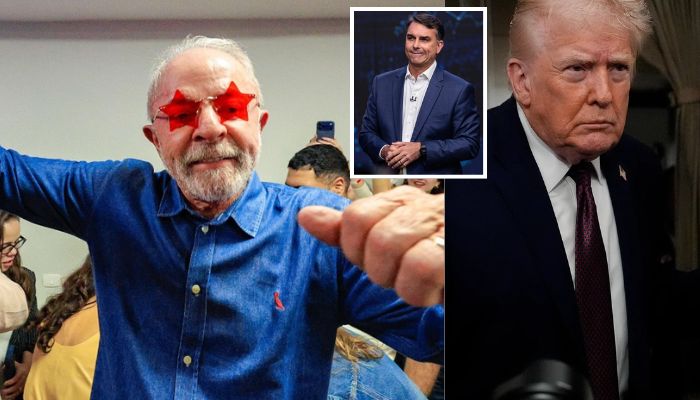
Lula defeats Flávio Bolsonaro in Brazil presidential election: Read how Lula thwarted the US attempts at regime change and to restore pro-Trump Bolsonaro

Luiz Inácio Lula da Silva, the President of Brazil, defeated his right-wing rival Flávio Bolsonaro in the presidential election on Sunday, 25th October, securing another term in office despite pressure from US President Donald Trump. According to official figures released by Brazil‘s Superior Electoral Court (TSE), Lula secured 51.79% of the valid votes against Flávio Bolsonaro’s 48.21%, a decisive difference of over 4 million votes.

The victory marks a historic milestone in Brazilian political history. For the first time since the nation’s return to democracy in 1988, a candidate who lost the initial round of voting managed to stage a total comeback and win the presidency in the runoff. In the first round earlier in the month, Flávio Bolsonaro had taken the lead, leaving Lula trailing. However, Lula mobilised millions of voters to flip the tide. 

Celebrating his victory alongside First Lady Rosângela da Silva and political allies in a video released by his campaign, Lula thanked supporters who stood up for the country’s democratic values. Delivering a clear statement on international affairs, Lula declared that the result proved Brazil “will not accept being anyone’s backyard”.

Lula’s victory is significant beyond Brazil’s domestic politics. The country is Latin America’s largest economy, with an annual GDP of around $2.6 trillion, and Lula has repeatedly opposed Trump’s efforts to expand Washington’s influence over the region. His return to office means Brazil will continue to be led by a president who has challenged the US administration on trade, sovereignty and its treatment of Latin American countries.

The victory comes at a time when several Latin American countries have elected right-wing leaders, many of whom share political positions with Trump. Lula’s win, therefore, represents a setback for those who hoped to bring Brazil under a government more closely aligned with Washington. Together with Mexico, Brazil will continue to have a left-of-centre government at the head of one of the region’s two most populous nations.

Flávio Bolsonaro refuses to accept defeat, demands annulment of election results

Despite the electoral court confirming Lula’s victory, Flávio Bolsonaro refused to concede defeat on Sunday night, 25th October. He questioned the decision to extend voting hours and demanded that the election results be annulled, arguing that the circumstances surrounding the vote made the outcome impossible to accept.

Bolsonaro challenged Supreme Federal Court Justice Cristiano Zanin’s decision to extend voting by two hours. He claimed that the measure had not been applied equally and had undermined the principle of equal voting conditions. “It is impossible to recognise the election results given the circumstances in which these events unfolded,” Bolsonaro said while announcing his intention to challenge the result through the courts.

The dispute follows the political path taken by his father, former Brazilian President Jair Bolsonaro, who also refused to accept his defeat to Lula in the 2022 presidential election. Jair Bolsonaro was subsequently convicted of plotting a coup to remain in power and sentenced to 27 years in prison in September 2025. The younger Bolsonaro’s refusal to concede could prolong the political confrontation even after the electoral court’s confirmation of the results. 

However, a demand for annulment does not itself invalidate an election, and any legal challenge would have to be decided through Brazil’s judicial system.

Overcoming a foreign Regime-change strategy

Lula’s electoral triumph represents a major resistance against external political interference. Over the past year and a half, the United States executed what amounted to a concerted regime-change strategy aimed at ousting Lula and replacing him with a pro-Washington leadership. The objective of this intervention was straightforward: to remove an independent, anti-Trump voice leading South America’s largest economy and install a subservient, pro-US right-wing government under Bolsonaro.

By pushing through punitive economic sanctions, threatening aggressive tariffs, and manipulating diplomatic channels, foreign actors attempted to destabilise Lula’s administration and force a political shift in Brasilia. 

Yet, by securing a mandate directly from the Brazilian electorate, Lula successfully weathered this regime-change push. His survival at the ballot box highlights a firm rejection of outside interference and re-establishes Brazil’s determination to chart an independent foreign policy course.

The US campaign to restore Bolsonaro

The attempts to influence Brazil’s political trajectory were orchestrated by key political appointees within the US State Department. A Reuters investigative report revealed that two senior officials, Darren Beattie, Senior Advisor for Western Hemisphere Affairs, and Ricardo Pita, Deputy Assistant Secretary for North America, led a covert campaign designed to tilt the electoral playing field in favour of the Bolsonaro clan.

Operating with broad authority over Washington’s Latin America policy, Beattie and Pita explicitly instructed US diplomats in Brazil that restoring former President Jair Bolsonaro to power was an official US priority, even though the elder Bolsonaro had been legally barred from holding office due to his involvement in the 2022 coup attempt.

When Jair Bolsonaro was sentenced to 27 years in prison in September 2025, the officials pivoted immediately to his son, Senator Flávio Bolsonaro. US embassy staff were ordered to avoid engaging with any rival conservative contenders who might split the right-wing vote against Flávio.

To systematically weaken Lula’s standing ahead of the 2026 election, these officials advocated for punitive US measures against Brazil. These actions included designating prominent Brazilian criminal groups as foreign terrorist organisations and pushing for US sanctions against the Brazilian Supreme Court Justice spearheading the judicial investigations into Jair Bolsonaro. 

While former State Department officials condemned these efforts as crossing the line from standard diplomacy into blatant political intervention, the campaign reflected a calculated attempt to use state power to engineer an election outcome.

Washington’s strategic ambitions in South America

The aggressive backing of Flávio Bolsonaro was tied directly to Washington’s wider geopolitical ambitions across Latin America. Over the preceding 18 months, right-wing or far-right candidates had won presidential contests in seven Latin American nations, many enjoying explicit support from Donald Trump.

Winning Brazil, the continent’s economic powerhouse with a $2.6 trillion GDP, represented the ultimate prize to cement ideological control over the entire Western Hemisphere.

To pressure the Brazilian state, the US administration repeatedly deployed economic leverage. When Brazilian courts moved to prosecute Jair Bolsonaro for his role in the 2022 plot to overturn election results, a conspiracy that involved draft decrees, military backing, and assassination plots against Lula and top judges. Washington threatened a massive 50% tariff on Brazilian goods, labelling the trial a “witch hunt.” 

Later, as the 2026 campaign intensified, a 25% tariff was imposed on select exports, and US State Department officials tried to enter Brazil under the guise of inspecting “electoral integrity,” only to be denied visas by Brazilian authorities for attempting to meddle in domestic affairs.

Instead of weakening Lula, these aggressive tactics backfired. Lula leaned into the confrontation during his campaign, portraying Flávio Bolsonaro as “Trump’s candidate” who would compromise national sovereignty and leave Brazil vulnerable to exploitation. By standing firm against economic threats, Lula turned the foreign intervention into a rallying cry for national pride.

A historic comeback in the fourth term

Lula’s re-election secures an unprecedented fourth non-consecutive term as president, capping one of the most remarkable political journeys in modern history. After three unsuccessful presidential bids, he won his first term in 2002 and was re-elected in 2006. Though his early political legacy was later shadowed by corruption scandals and imprisonment, his convictions were eventually annulled, clearing the way for his political comeback in 2022 when he narrowly defeated Jair Bolsonaro.

During his third term, Lula focused on rebuilding key social safety nets, significantly slowing deforestation in the Amazon, and repairing democratic institutions after years of political volatility. His 2026 victory solidifies his legacy as a central figure in Latin American politics who successfully resisted foreign pressure and preserved domestic governance. 

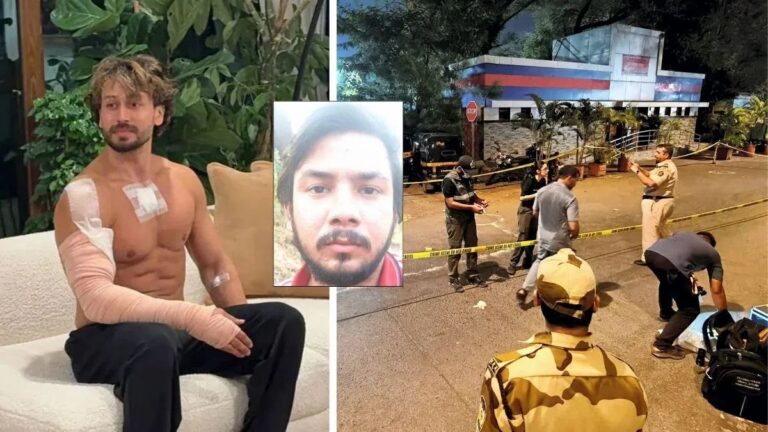
Who is Pranjal Thakral? 22-year-old arrested in Tiger Shroff firing case, executed Anil Pandit’s plan

The Mumbai Crime Branch has arrested 22-year-old Pranjal Thakral from Indore, Madhya Pradesh, in connection with the firing attack on Bollywood actor Tiger Shroff. Thakral is the 11th accused to be arrested in the case. Investigators allege that he played a key role in the attack at the behest of Anil Pandit, a suspected Lawrence Bishnoi gang operative believed to be operating from the United States.

According to the investigation, Thakral was allegedly responsible for arranging the logistics and funds required for the operation. Police also suspect that he supplied a second pistol to one of the shooters involved in the incident.

Investigators are now examining digital and financial evidence to establish the extent of Thakral’s involvement and trace the wider network allegedly linked to Pandit.

Secret messaging app used to communicate with alleged mastermind

According to the police, Pandit and Thakral relied on a secret messaging application to communicate while attempting to avoid detection by law enforcement agencies.

Investigators have retrieved conversations from Thakral’s mobile phone. These chats, along with an examination of financial transactions, are expected to provide crucial leads about the alleged conspiracy and help the Crime Branch trace Pandit’s international network.

Pandit, who is suspected of orchestrating the attack, remains outside India, according to the information available in the case.

Thakral’s arrest could prove significant for investigators seeking to establish how the alleged operation was planned, financed and executed, as well as identify other individuals who may have assisted the accused.

Who is Pranjal Thakral?

Pranjal Thakral is a 22-year-old engineering diploma holder who had reportedly been released on bail in March this year. According to the police account, he had been jailed in connection with an attack on a businessman in Panipat, Haryana, allegedly carried out on Pandit’s instructions.

Investigators suspect that Thakral began working with Pandit on the plan targeting Tiger Shroff soon after his release.

His alleged involvement in the two cases has placed him under the Crime Branch’s scanner as investigators attempt to establish the links between the accused and the wider criminal network.

Thakral was produced before the holiday bench of the Killa Court on Sunday and remanded to police custody until October 31. Investigators are expected to question him about the planning of the attack, the movement of weapons and the financial arrangements allegedly made for the shooters.

How the firing attack on Tiger Shroff unfolded

The incident took place on the evening of October 18, when at least two men allegedly opened fire at the car of the 36-year-old actor as he was leaving Pushpa Narsee Park, also known as Pushpa Narsee Ground, in Mumbai’s Juhu area after playing football.

According to the Mumbai Police, the assailants fled on a motorcycle, which they later abandoned in Andheri. They subsequently travelled to Surat and boarded the Pune–Jaipur Express.

Three alleged shooters were eventually arrested in Kota, Rajasthan, while reportedly attempting to escape towards Nepal via Delhi.

The arrests were part of a wider investigation into the shooting, which drew attention because of the alleged involvement of individuals linked to the Lawrence Bishnoi gang.

Lawrence Bishnoi gang link under investigation

Anil Pandit, described by investigators as a member of the Lawrence Bishnoi gang, claimed responsibility for the attack, according to reports. Police are examining his alleged role as the person who planned and coordinated the operation.

Police sources have also indicated that the gang initially considered targeting another high-profile personality but changed its plans because of the security arrangements surrounding that individual.

Investigators are now trying to establish the motive behind the attack on Shroff and determine whether the shooting was part of a broader targeting strategy.

With Thakral in custody, the Crime Branch will be looking to piece together the alleged chain of command, the financing of the operation and the supply of weapons. His phone records, conversations with Pandit and financial transactions could prove important in determining how the attack was organised and identifying any remaining links in the network.

The investigation is continuing, and the allegations against the accused remain subject to the legal process.

Who is Randall Sequeira, the doctor-turned-activist arrested for inciting tribals to violence in the name of anti-mining activism in Odisha

0

In mid-October, the police arrested Dr Randall Sequeira and charged him with serious criminal offences, including attempt to murder and rioting, for his role in instigating violence in the name of an ‘anti-mining campaign’ in Rayagada district of Odisha. This is not the only time he has spat poison against the government and instigated violence.

Sequeira has been arrested and charged with serious criminal offences, including attempt to murder and rioting, for his role in instigating violence in the name of an ‘anti-mining campaign’ in Rayagada district of Odisha.

The Police have rejected claims that the arrest is part of a crackdown on dissent, stating that Randall Sequeira was actively inciting tribals against the state government.

Police also arrested another man, Laxman Naik, from Sequeira’s residence in Bhawanipatna, Kalahandi district, on the night of 16 October 2026. Both are now in judicial custody. The arrests relate to a violent clash between tribals and police in Kantamal village in April 2026, during a protest against the construction of an approach road to the Sijimali bauxite reserve.

According to police, the two men were not named in the original FIR registered in connection with the clash, which left people on both sides injured, but their involvement was established during the subsequent investigation.

DIG Singh said, “The arrested persons were not innocent“. Dr Randall Sequeira was not providing medical services to the people but was engaged in instigating tribals against the State government. Naik was also misleading people. Why do police arrest any innocent person, especially a doctor?”

The officer added that while many doctors work in the Kalahandi and Rayagada districts, no one else has been arrested, and that those claiming Sequeira’s innocence should examine whether he was actually treating patients or instigating them. Police have also cited pending cases against him, including that he instigated tribal women to make false allegations against the state government.

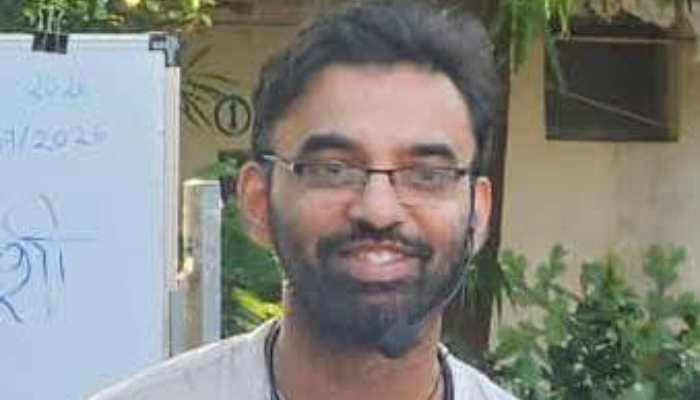
Randall Sequeira is a 39-year-old is a doctor who grew up in Mumbai. He completed his MBBS at St. John’s Medical College, Bengaluru, and an MD in internal medicine at Sawai Man Singh Medical College and Hospital, Rajasthan.

Randall Sequeira and his connection with Harsh Mandar and the Karwan-e-Mohabbat

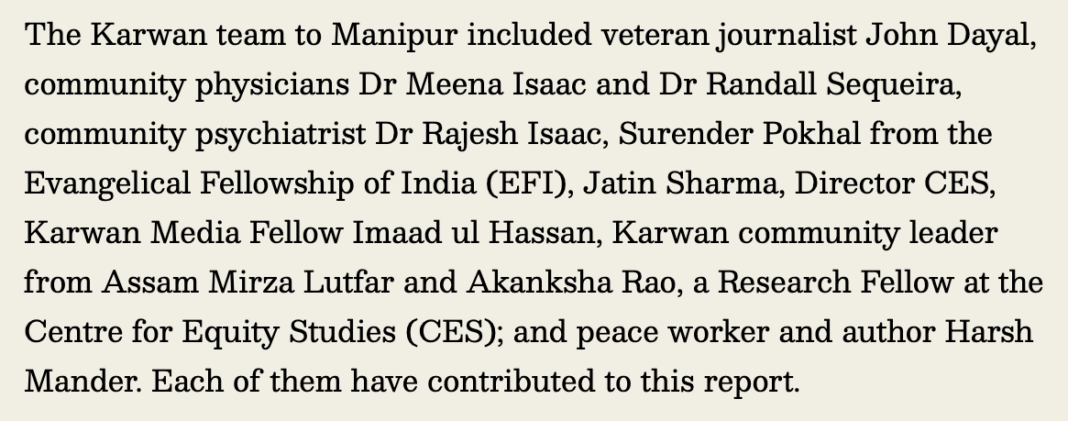
Sequeira’s arrest did not occur in a vacuum. He has a connection with Karwan-e-Mohabbat, which was founded by Harsh Mandar in 2017. The group was heavily involved in mobilising support for the Shaheen Bagh protests against the Citizenship Amendment Act. In a Substack post titled “The Humanitarian Crisis in Manipur – a report by Karwan-e-Mohabbat”. It is mentioned that he was a member of their team that produced this venomous report against the Manipuri government and Hindus.

Karwan-e-Mohabbat’s Manipur report is a textbook example of anti-Hindu, anti-Meitei bias masquerading as humanitarian concern. Their 2023 report paints the predominantly Hindu Meitei community as the aggressor and the state government as a partisan enabler, while giving the predominantly Christian Kuki-Zo side a virtual clean chit. The report’s central claim is that the government was “culpably absent” and showed a “visible disparity” by supporting Meitei camps while Kuki camps relied on churches. It paints the state as a perpetrator.

In a article written in The New Leader by the title “The Inheritors of the land” Sequeira also compared the Indian State to “Pharisees” and “Sadducees, basically Christian terms for Jewish classes who collaborated with the Roman Empire.

The parallel is striking. In Manipur, the Karwan-e-Mohabbat report accused the state government of partisanship and abdication. In Odisha, Sequeira stands accused of instigating tribals to make false allegations against the state government. The same individual who helped craft a narrative delegitimising one state government is, according to police, actively working to subvert another through instigation and falsehood.

Randall Sequeira was barred from entering Rayagada ahead of an anti-mining protest in Sijimali in 2025

Last year, an administrative order was issued to ban Randall Sequeira from entering the Rayagada district prior to a planned protest against mining at Sijimali in Odisha.  

While an  Orissa High Court ruling did not exempt Sequeira from criminal proceedings, it quashed the ‘exclusion order’.

Unsurprisingly, Sequeira has contributed articles for the Islamo-leftist propaganda portal The Wire.

Explained: What is the Odisha Vedanta Bauxite-mining issue, and how vested interests weaponise ‘ecological concerns’ and ‘tribal rights’ to stall a major industrial project

The Odisha Police recently arrested ‘activists’ Dr Randall Sequeira and Laxman Naik for instigating local tribals to attack security personnel in Kantamal in April this year over the Bauxite-mining issue. Sequeira and Naik were arrested on October 16, 2026, in connection with a clash between locals and police in Kantamal village in Rayagada district in April. The Police said that two ‘activists’ instigated members of the tribal communities to attack security personnel during a protest against mining activities in the district. While it is claimed that Randall Sequeira, who is a doctor from Mumbai, has been serving the local tribals in Odisha, the Police have maintained that he, along with Naik, has been misleading and instigating locals against bauxite mining in the region.

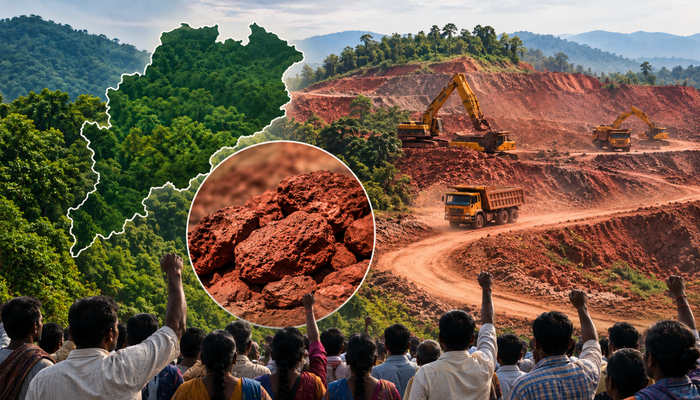
Notably, Sequeira and Naik have been supporting the agitation against bauxite mining in Odisha. The agitation relates to a conflict over a proposed bauxite mining site in the Sijimali hill region of Odisha. In 2023, the BJD government in Odisha auctioned the Sijimali bauxite block in Rayagada and Kalahandi districts, which was awarded to Vedanta Limited.

What is the issue?

In April this year, clashes erupted between locals and the police after the construction of an approach road to the mining site began near Shagbari village. The road started from Purlong/Purulang and went up to Sagabari Ghat, intended to connect State Highway 44 to the Sijimali hilltop.

The latest anti-mining protests organised earlier this month also demanded the withdrawal of the recently passed Mines and Minerals (Development and Regulation) Amendment Act, 2026. It is being claimed that the law would weaken state control over mineral resources and reduce mining revenue accruing to Odisha.

In 2023, Vedanta won the mining rights to the Sijimali bauxite block. It was allocated to Vedanta on a 50-year lease, covering 1,549 hectares, including roughly 699–708 hectares of forest land. The reserve is estimated at 311 million tonnes of high-grade bauxite.

The site also covers more than 44 villages, with communities largely belonging to Kondh and other Adivasi groups, alongside Dalit residents. The presence of the villages in the vicinity of the project has provided a trigger for the so-called pro-environment voices opposing the project. Some anti-development elements and vested interests have been resisting the mining project in the guise of raising ecological concerns and the rights of local tribals.

Once operational, the project is expected to have manifold benefits. It will supply raw-material security for industry, create considerable employment opportunities for locals, and generate public revenue. Unfortunately, most development projects in the country face similar roadblocks created by vested interests in the name of safeguarding the environment or community rights.

Odisha’s bauxite mining project is the latest target of a recurring pattern of political opportunism and hollow environmentalism. This is evident from the fact that the BJD government had granted the mining rights in the state to Vedanta, but the party has now joined the voices opposing the project.

Politics intensifies on Odisha Bauxite-mining issue

Earlier this month, on October 2, 2026, the BJD began a month-long padayatra and held a 12-hour economic blockade in Sundargarh coal areas against the Mines and Minerals (Development & Regulation) Amendment Act, 2026, which is also being opposed by those opposing the Sijimali bauxite mining project. The party alleged that the amended law diminishes the rights of mineral-rich states and affects their financial autonomy.

The latest anti-mining protests in Odisha have also received the support of the opposition parties, including the Congress. Recently, a senior Congress leader and the party’s general secretary (communications) condemned the arrest of Randall Sequeira and Laxman Naik, alleging that they were arrested because they supported protests by tribal and Dalit communities against bauxite mining projects. The Opposition’s stance packages the mining issue with other unrelated grievances (electoral rolls, regime change), which suggests a wider anti-government campaign rather than a mining-specific concern.

An old anti-development pattern

Odisha’s bauxite mining is not an isolated case where so-called ecological warriors are up in arms against a major industrial or development project. Recently, we saw widespread protests and violence in Arunachal Pradesh against the proposed Siang Upper Multipurpose Project (SUMP). The project is an 11,000-megawatt mega-infrastructure and hydroelectric project planned along the Siang River in the Upper Siang district of Arunachal Pradesh. Beyond power generation, its large storage capacity serves as a flood-control mechanism to regulate water discharge during peak monsoon seasons, protecting downstream regions in Assam and Arunachal Pradesh.

Despite the fact that the SUMP has a key geopolitical and strategic objective to protect India’s water security against China’s upstream infrastructure on the Yarlung Tsangpo (the Siang/Brahmaputra), the anti-development elements in the state have been creating unrest over it.

Clearly, their own vested interests are the motivation behind their actions rather than the interests of the nation or the local population. While the environmental rights or tribal rights champions leading such protests against development go on to receive global praise and acclamation, the local populations struggle to even maintain their livelihoods.

This reminds of the infamous ‘activist’ Medha Patkar, who led the ‘Narmada Bachao Andolan’ against the Sardar Sarovar Dam on the Narmada River, and deprived the locals of regular water supply for years. Because of the Andolan, the project was stalled for several years.

Many years later, in 2022, an FIR was registered against Patkar by the Enforcement Directorate (ED) for suspected money laundering during the famous Narmada Bachao Andolan. Additionally, the Department of Revenue Intelligence and the Income Tax Department also launched investigations into Patkar’s shady dealings. Interestingly, the so-called environmental activist was also seen taking part in Congress leader Rahul Gandhi’s Bharat Jodo Yatra.

Another such environmental champion named Alok Shukla rose to prominence through vigorous social media campaigns after he opposed the Rajasthan government’s mining endeavours in Chhattisgarh, where numerous coal blocks operate unhindered. Shukla was conferred the 2024 Goldman Environmental Prize. 

He was given the prize for his efforts to safeguard Hasdeo Arand, a vast expanse of highly dense forest in central India covering 170,000 hectares, against coal mining operations. The conferment of the prize, which was conferred by the California-based Goldman Environmental Foundation on Shukla, underscores the influence of international forces on India’s energy security and economic progress.

Niyamgiri bauxite mining project in Odisha, the Kudankulam Nuclear Power Plant in Tamil Nadu, and the Sterlite Copper smelter in Tamil Nadu, the list of various industrial or development projects that were delayed or stalled because of unnecessary environmental activism is long. While the so-called ‘environment activists’ continue to progress in their lives, the progress of the nation as well as the local communities lags.

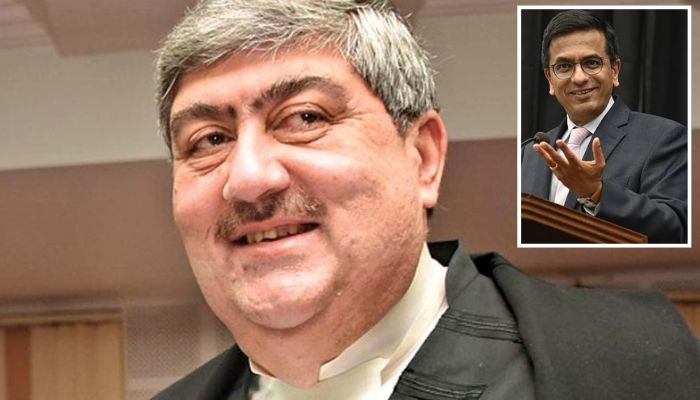
Accused of harassment, shielded MF Hussain and more: Meet Sanjay Kishan Kaul, former SC judge who has become the hero of Congress and the Left for targeting DY Chandrachud

Former Supreme Court judge Justice Sanjay Kishan Kaul has triggered a political controversy after raising questions about former Chief Justice of India (CJI) DY Chandrachud’s approach to judicial appointments. According to Kaul, Chandrachud wanted to seek the government’s views on proposed judicial appointments before the Supreme Court Collegium formally deliberated on the names, a practice Kaul reportedly disapproved of as seeking the government’s “pre-approval”. The Congress has seized on these remarks to question the independence of the judiciary under the Modi government.

On Sunday, 25th October, Congress general secretary Jairam Ramesh cited a report based on Kaul’s forthcoming memoir, Without Fear or Favour, and accused the government of exerting pressure on the judiciary. Ramesh claimed the book raised “serious questions” about judicial independence and referred to allegations of government involvement in appointments, attempts to obtain approval before Collegium meetings, and questions raised about the caste of a judge belonging to a minority community.

In an interview with journalist Karan Thapar for the propaganda outlet The Wire, Kaul recalled an alleged incident in which Chandrachud took him aside during a Collegium meeting and asked whether he should telephone the government to ascertain its views on proposed appointments. Kaul said he opposed the idea of contacting the government while the Collegium was still deliberating on the names.

According to Kaul, the Collegium had agreed on five names, but Chandrachud wanted to include a sixth name that had been proposed at the last minute. Kaul suggested that the former CJI might already have obtained some form of government approval for the other names, including the sixth candidate. “Maybe he had already taken some kind of approval [from the Government] for the other names, including the sixth name,” Kaul said, according to the reported interview.

Ramesh also referred to Kaul’s account of a separate incident involving a Prevention of Money Laundering Act (PMLA) case. He alleged that a matter was reassigned to another bench after a bench headed by Kaul raised the possibility of reconsidering aspects of an earlier ruling, without consulting Kaul. Ramesh described these accounts as evidence of possible interference in the Supreme Court’s functioning and argued that the judiciary must remain free from pressure from those in power.

“When there is pressure to obtain government approval for judicial appointments, and when benches hearing sensitive cases are altered, one must ask — in the interest of safeguarding democracy, if this does not constitute pressure on the judiciary and an erosion of its independence, then what does?” Ramesh said.

This public rift between two former senior judges of the top court has turned an intense spotlight on Justice Sanjay Kishan Kaul’s own past track record, judicial outlook, and long career. 

Who is Justice Sanjay Kaul?

While Justice Sanjay Kishan Kaul now positions himself as a staunch defender of judicial integrity and procedure through his upcoming memoir Without Fear Or Favour, a closer examination of his judicial track record reveals a career marked by deeply contentious rulings, persistent accusations of hurting public and religious sentiments, severe institutional conflicts, and questionable associations.

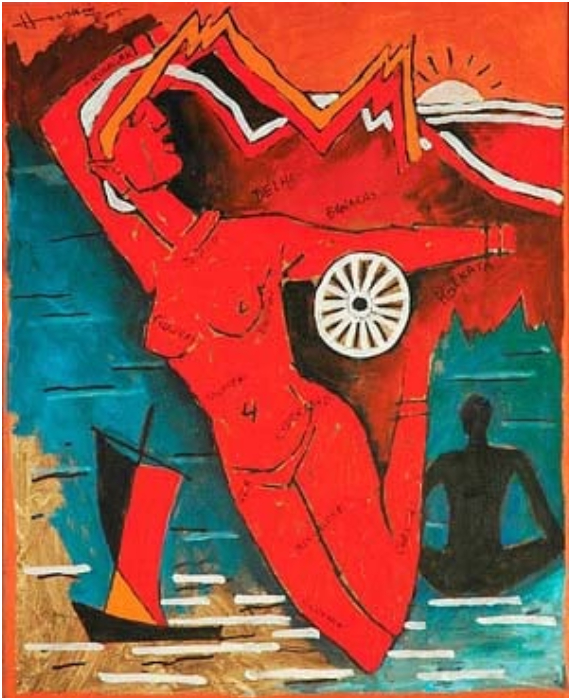
Justice Kaul’s rise to national prominence in legal circles in May 2008 came on the back of a deeply divisive judgment that shielded the controversial Islamist painter M.F. Husain from criminal proceedings. Husain had drawn widespread condemnation across India for his nudist depictions of ‘Bharat Mata’ (Mother India) as well as revered Hindu gods and goddesses. 

The depictions, showing a weeping, naked woman symbolising the country, alongside nude portrayals of sacred deities, sparked massive public outrage and criminal complaints across Maharashtra, Gujarat, and Madhya Pradesh filed by citizens aggrieved by the manifest disrespect toward national and religious symbols. Facing overwhelming anger from right-wing organisations and civic groups, Husain chose to flee the country into self-imposed exile in Dubai and Qatar.

The painting of ‘Bharat Mata’ which Husain claims was never titled by him (Image source- Hindujagruti.org)

Instead of holding the artist accountable for hurting the deeply held sentiments of millions of citizens, Justice Kaul quashed all three criminal cases against the 92-year-old anti-India Islamist painter. Dismissing the widespread public grievance, Justice Kaul claimed: “The allegations made against the painter are baseless, and it would not be proper to hold that he had a deliberate intention to manifestly insult Bharat Mata.”

In his 74-page judgment, Justice Kaul sought to legitimise explicit nudism under the garb of historical aesthetics, writing: “We have been called as land of Kama Sutra then why is it that in the land of Kama Sutra, we shy away from its very home. Beauty lies in the eyes of the beholder, so does obscenity.” 

He further defended eroticism by adding, “Ancient art has never been devoid of eroticism where sex worship and graphical representation of the union between man and woman has been a recurring feature.” By shielding Husain, who had previously compared Indian public opposition to Hitler’s regime, Justice Kaul’s ruling was widely criticised for setting a dangerous precedent where offensive, anti-national, and religiously insensitive depictions were given complete judicial protection at the expense of public morality.

Undermining community traditions: The Perumal Murugan ruling

Justice Kaul extended this controversial philosophy during his tenure as Chief Justice of the Madras High Court when he ruled in favour of Tamil author Perumal Murugan. Murugan’s novel Madhorubhagan (One Part Woman) had caused severe anguish among local community members and religious groups in Tiruchengode due to its derogatory depiction of local temple festival customs and traditions attached to childlessness. The outrage was so intense that Murugan publicly announced the “death” of his writing career on Facebook and withdrew his books.

Delivering the judgment alongside Justice Pushpa Sathyanarayana, Chief Justice Kaul dismissed the legitimate cultural concerns of the local communities. The bench famously brushed aside public objections by declaring: “If you do not like a book, throw it away. There is no compulsion to read a book. Literary tastes may vary — what is right and acceptable to one may not be so to others. Yet, the right to write is unhindered.”

Invoking controversial Indian-British authors like Salman Rushdie to justify his stance, Justice Kaul asserted that Indian society’s tolerance levels were declining and held that creative freedom overrode local community sensibilities. 

Justice Kaul consistently prioritised offensive artistic expressions over the protection of long-standing social, cultural, and religious values, repeatedly dismissing popular outrage as mere intolerance.

Allegations of administrative harassment and caste bias

Justice Kaul’s administrative leadership as Chief Justice of the Madras High Court was similarly embroiled in severe controversy, highlighted by a public conflict with fellow High Court judge, Justice C.S. Karnan. Justice Karnan formally wrote to the Chief Justice of India, the President, and Law Minister Sadananda Gowda, accusing Chief Justice Kaul of blatant administrative harassment, belittlement, and discrimination against a Dalit judge.

In his official letter, Justice Karnan openly confronted Justice Kaul’s arbitrary exercise of power: “Since your Lordship is solely in-charge of the Madras High Court and invested with administrative power, Your Lordship has elected to allot me insignificant / dummy portfolios while those juniors to me, have been allotted significant assignments, which is tantamount to belittling my capabilities as a judge of many years in this August Court. Being a Dalit do you expect me to take such treatment lying down? Or do you expect me to fight for my rights till the bitter end?”

Justice Karnan also exposed the murky underbelly of judicial appointments, attacking the Collegium system under Kaul’s leadership as a tool of nepotism meant “only to entertain their own favourites comprising close relatives, distant relatives and in the absence of the abovementioned choices, then the selection would go to close associates and good friends.”

The situation deteriorated further when Justice Kaul set up a judicial recruitment committee that excluded fair community representation. Justice Karnan issued a judicial order halting the selection process, citing administrative improprieties and revealing that judges from the same community and close relatives had been favoured. Justice Karnan went on to request financial audits into the potential misuse of government funds by Chief Justice Kaul and the Registrar General, exposing deep-seated administrative dysfunction and alleged high-handedness during Kaul’s tenure at the High Court.

Resurfaced optics: Socialising with CJP leader Saurav Das

Adding to the questions surrounding his personal conduct and objectivity, photographs have recently resurfaced online showing Justice Kaul attending the Cockroach Janta Party (CJP) co-convener Saurav Das at his personal residence during last year’s Diwali celebrations.

The revival of these images has raised serious eyebrows given Das’s recent legal troubles. Saurav Das was recently released from Tihar Jail after being compelled to sign a peace bond before the Special Executive Magistrate (SEM), undertaking not to engage in activities that disturb public peace or tranquillity. The SEM (New Delhi), Ritu Raj, subsequently directed Das to produce official documents proving his residential address in Delhi.

Far from being an unblemished guardian of judicial ethics, Justice Sanjay Kishan Kaul’s career reflects a pattern of polarising decisions that repeatedly offended religious and cultural sentiments, severe allegations of administrative harassment and caste-based discrimination from within his own court, and questionable social connections with controversial figures. His recent attacks on former CJI D.Y. Chandrachud must therefore be evaluated against the backdrop of his own deeply controversial record on and off the bench.