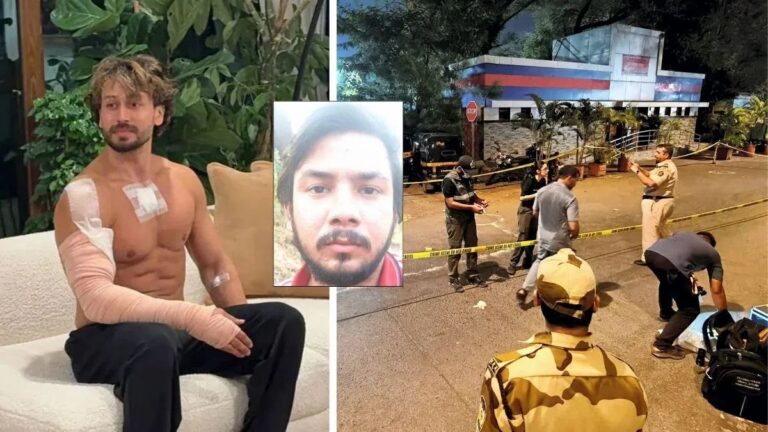
The Mumbai Crime Branch has arrested 22-year-old Pranjal Thakral from Indore, Madhya Pradesh, in connection with the firing attack on Bollywood actor Tiger Shroff. Thakral is the 11th accused to be arrested in the case. Investigators allege that he played a key role in the attack at the behest of Anil Pandit, a suspected Lawrence Bishnoi gang operative believed to be operating from the United States.
According to the investigation, Thakral was allegedly responsible for arranging the logistics and funds required for the operation. Police also suspect that he supplied a second pistol to one of the shooters involved in the incident.
Investigators are now examining digital and financial evidence to establish the extent of Thakral’s involvement and trace the wider network allegedly linked to Pandit.
Secret messaging app used to communicate with alleged mastermind
According to the police, Pandit and Thakral relied on a secret messaging application to communicate while attempting to avoid detection by law enforcement agencies.
Investigators have retrieved conversations from Thakral’s mobile phone. These chats, along with an examination of financial transactions, are expected to provide crucial leads about the alleged conspiracy and help the Crime Branch trace Pandit’s international network.
Pandit, who is suspected of orchestrating the attack, remains outside India, according to the information available in the case.
Thakral’s arrest could prove significant for investigators seeking to establish how the alleged operation was planned, financed and executed, as well as identify other individuals who may have assisted the accused.
Who is Pranjal Thakral?
Pranjal Thakral is a 22-year-old engineering diploma holder who had reportedly been released on bail in March this year. According to the police account, he had been jailed in connection with an attack on a businessman in Panipat, Haryana, allegedly carried out on Pandit’s instructions.
Investigators suspect that Thakral began working with Pandit on the plan targeting Tiger Shroff soon after his release.
His alleged involvement in the two cases has placed him under the Crime Branch’s scanner as investigators attempt to establish the links between the accused and the wider criminal network.
Thakral was produced before the holiday bench of the Killa Court on Sunday and remanded to police custody until October 31. Investigators are expected to question him about the planning of the attack, the movement of weapons and the financial arrangements allegedly made for the shooters.
How the firing attack on Tiger Shroff unfolded
The incident took place on the evening of October 18, when at least two men allegedly opened fire at the car of the 36-year-old actor as he was leaving Pushpa Narsee Park, also known as Pushpa Narsee Ground, in Mumbai’s Juhu area after playing football.
According to the Mumbai Police, the assailants fled on a motorcycle, which they later abandoned in Andheri. They subsequently travelled to Surat and boarded the Pune–Jaipur Express.
Three alleged shooters were eventually arrested in Kota, Rajasthan, while reportedly attempting to escape towards Nepal via Delhi.
The arrests were part of a wider investigation into the shooting, which drew attention because of the alleged involvement of individuals linked to the Lawrence Bishnoi gang.
Lawrence Bishnoi gang link under investigation
Anil Pandit, described by investigators as a member of the Lawrence Bishnoi gang, claimed responsibility for the attack, according to reports. Police are examining his alleged role as the person who planned and coordinated the operation.
Police sources have also indicated that the gang initially considered targeting another high-profile personality but changed its plans because of the security arrangements surrounding that individual.
Investigators are now trying to establish the motive behind the attack on Shroff and determine whether the shooting was part of a broader targeting strategy.
With Thakral in custody, the Crime Branch will be looking to piece together the alleged chain of command, the financing of the operation and the supply of weapons. His phone records, conversations with Pandit and financial transactions could prove important in determining how the attack was organised and identifying any remaining links in the network.
The investigation is continuing, and the allegations against the accused remain subject to the legal process.
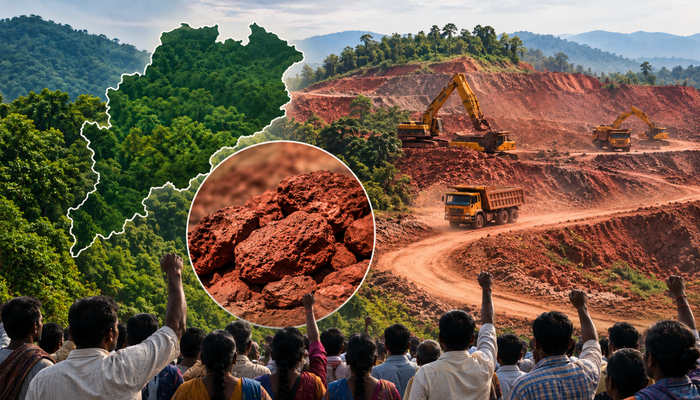
In mid-October, the police arrested Dr Randall Sequeira and charged him with serious criminal offences, including attempt to murder and rioting, for his role in instigating violence in the name of an ‘anti-mining campaign’ in Rayagada district of Odisha. This is not the only time he has spat poison against the government and instigated violence.
Sequeira has been arrested and charged with serious criminal offences, including attempt to murder and rioting, for his role in instigating violence in the name of an ‘anti-mining campaign’ in Rayagada district of Odisha.
The Police have rejected claims that the arrest is part of a crackdown on dissent, stating that Randall Sequeira was actively inciting tribals against the state government.
Police also arrested another man, Laxman Naik, from Sequeira’s residence in Bhawanipatna, Kalahandi district, on the night of 16 October 2026. Both are now in judicial custody. The arrests relate to a violent clash between tribals and police in Kantamal village in April 2026, during a protest against the construction of an approach road to the Sijimali bauxite reserve.
According to police, the two men were not named in the original FIR registered in connection with the clash, which left people on both sides injured, but their involvement was established during the subsequent investigation.
DIG Singh said, “The arrested persons were not innocent“. Dr Randall Sequeira was not providing medical services to the people but was engaged in instigating tribals against the State government. Naik was also misleading people. Why do police arrest any innocent person, especially a doctor?”
The officer added that while many doctors work in the Kalahandi and Rayagada districts, no one else has been arrested, and that those claiming Sequeira’s innocence should examine whether he was actually treating patients or instigating them. Police have also cited pending cases against him, including that he instigated tribal women to make false allegations against the state government.
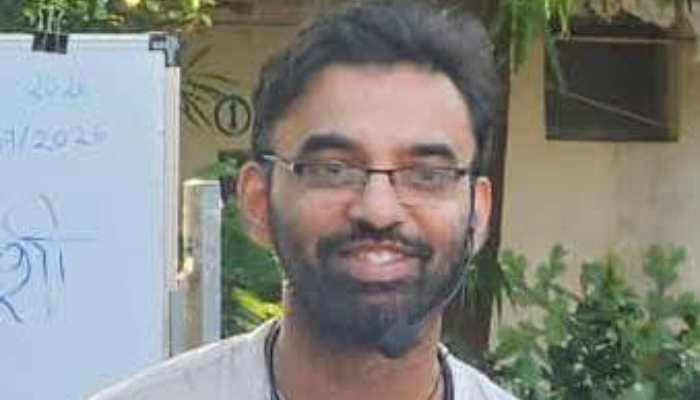
Randall Sequeira is a 39-year-old is a doctor who grew up in Mumbai. He completed his MBBS at St. John’s Medical College, Bengaluru, and an MD in internal medicine at Sawai Man Singh Medical College and Hospital, Rajasthan.
Randall Sequeira and his connection with Harsh Mandar and the Karwan-e-Mohabbat
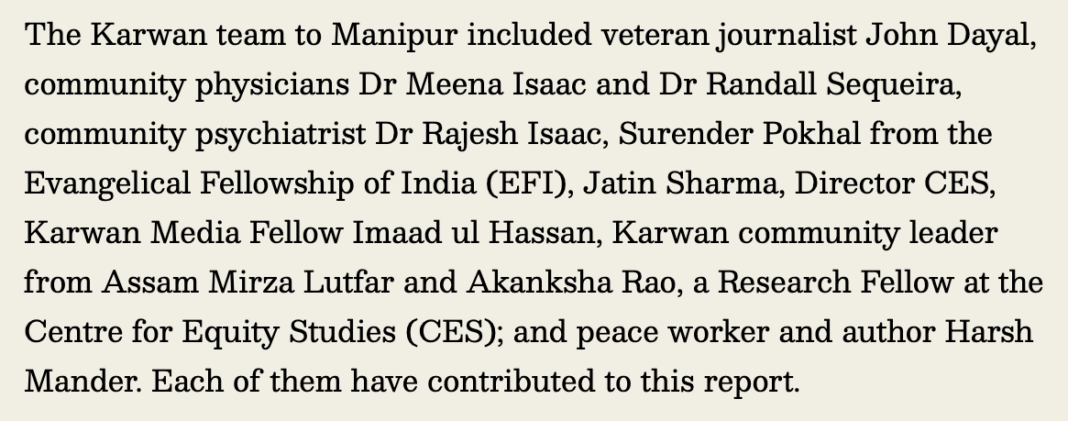
Sequeira’s arrest did not occur in a vacuum. He has a connection with Karwan-e-Mohabbat, which was founded by Harsh Mandar in 2017. The group was heavily involved in mobilising support for the Shaheen Bagh protests against the Citizenship Amendment Act. In a Substack post titled “The Humanitarian Crisis in Manipur – a report by Karwan-e-Mohabbat”. It is mentioned that he was a member of their team that produced this venomous report against the Manipuri government and Hindus.
Karwan-e-Mohabbat’s Manipur report is a textbook example of anti-Hindu, anti-Meitei bias masquerading as humanitarian concern. Their 2023 report paints the predominantly Hindu Meitei community as the aggressor and the state government as a partisan enabler, while giving the predominantly Christian Kuki-Zo side a virtual clean chit. The report’s central claim is that the government was “culpably absent” and showed a “visible disparity” by supporting Meitei camps while Kuki camps relied on churches. It paints the state as a perpetrator.
In a article written in The New Leader by the title “The Inheritors of the land” Sequeira also compared the Indian State to “Pharisees” and “Sadducees, basically Christian terms for Jewish classes who collaborated with the Roman Empire.
The parallel is striking. In Manipur, the Karwan-e-Mohabbat report accused the state government of partisanship and abdication. In Odisha, Sequeira stands accused of instigating tribals to make false allegations against the state government. The same individual who helped craft a narrative delegitimising one state government is, according to police, actively working to subvert another through instigation and falsehood.
Randall Sequeira was barred from entering Rayagada ahead of an anti-mining protest in Sijimali in 2025
Last year, an administrative order was issued to ban Randall Sequeira from entering the Rayagada district prior to a planned protest against mining at Sijimali in Odisha.
While an Orissa High Court ruling did not exempt Sequeira from criminal proceedings, it quashed the ‘exclusion order’.
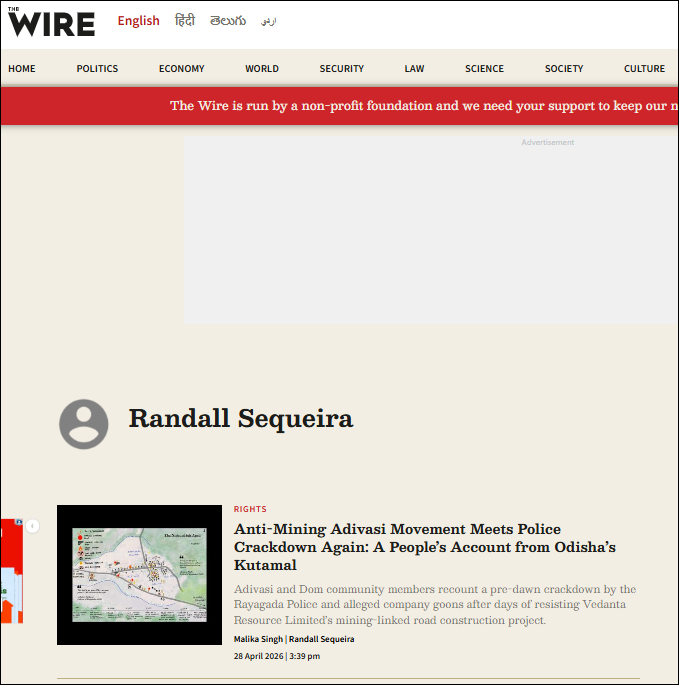
Unsurprisingly, Sequeira has contributed articles for the Islamo-leftist propaganda portal The Wire.
The Odisha Police recently arrested ‘activists’ Dr Randall Sequeira and Laxman Naik for instigating local tribals to attack security personnel in Kantamal in April this year over the Bauxite-mining issue. Sequeira and Naik were arrested on October 16, 2026, in connection with a clash between locals and police in Kantamal village in Rayagada district in April. The Police said that two ‘activists’ instigated members of the tribal communities to attack security personnel during a protest against mining activities in the district. While it is claimed that Randall Sequeira, who is a doctor from Mumbai, has been serving the local tribals in Odisha, the Police have maintained that he, along with Naik, has been misleading and instigating locals against bauxite mining in the region.
Notably, Sequeira and Naik have been supporting the agitation against bauxite mining in Odisha. The agitation relates to a conflict over a proposed bauxite mining site in the Sijimali hill region of Odisha. In 2023, the BJD government in Odisha auctioned the Sijimali bauxite block in Rayagada and Kalahandi districts, which was awarded to Vedanta Limited.
What is the issue?
In April this year, clashes erupted between locals and the police after the construction of an approach road to the mining site began near Shagbari village. The road started from Purlong/Purulang and went up to Sagabari Ghat, intended to connect State Highway 44 to the Sijimali hilltop.
The latest anti-mining protests organised earlier this month also demanded the withdrawal of the recently passed Mines and Minerals (Development and Regulation) Amendment Act, 2026. It is being claimed that the law would weaken state control over mineral resources and reduce mining revenue accruing to Odisha.
In 2023, Vedanta won the mining rights to the Sijimali bauxite block. It was allocated to Vedanta on a 50-year lease, covering 1,549 hectares, including roughly 699–708 hectares of forest land. The reserve is estimated at 311 million tonnes of high-grade bauxite.
The site also covers more than 44 villages, with communities largely belonging to Kondh and other Adivasi groups, alongside Dalit residents. The presence of the villages in the vicinity of the project has provided a trigger for the so-called pro-environment voices opposing the project. Some anti-development elements and vested interests have been resisting the mining project in the guise of raising ecological concerns and the rights of local tribals.
Once operational, the project is expected to have manifold benefits. It will supply raw-material security for industry, create considerable employment opportunities for locals, and generate public revenue. Unfortunately, most development projects in the country face similar roadblocks created by vested interests in the name of safeguarding the environment or community rights.
Odisha’s bauxite mining project is the latest target of a recurring pattern of political opportunism and hollow environmentalism. This is evident from the fact that the BJD government had granted the mining rights in the state to Vedanta, but the party has now joined the voices opposing the project.
Politics intensifies on Odisha Bauxite-mining issue
Earlier this month, on October 2, 2026, the BJD began a month-long padayatra and held a 12-hour economic blockade in Sundargarh coal areas against the Mines and Minerals (Development & Regulation) Amendment Act, 2026, which is also being opposed by those opposing the Sijimali bauxite mining project. The party alleged that the amended law diminishes the rights of mineral-rich states and affects their financial autonomy.
The latest anti-mining protests in Odisha have also received the support of the opposition parties, including the Congress. Recently, a senior Congress leader and the party’s general secretary (communications) condemned the arrest of Randall Sequeira and Laxman Naik, alleging that they were arrested because they supported protests by tribal and Dalit communities against bauxite mining projects. The Opposition’s stance packages the mining issue with other unrelated grievances (electoral rolls, regime change), which suggests a wider anti-government campaign rather than a mining-specific concern.
On 16 Oct, 2026, the Odisha police picked up physician and activist Dr Randall Sequeira and Dalit activist Laxman Naik. They have been supporting protests by Dalit and Adivasi communities against Bauxite mining projects. This is part of a larger campaign of repression in Odisha which has seen 43 police cases and over a 100 people jailed in three years.
Congress MP from Koraput @saptagiriulaka and the Odisha Congress are providing support to the arrested activists.
Bauxite mining projects in Sijimali, Kutrumali and Niyamgiri are being pushed through with brazen violations of Panchayat (Extension to Scheduled Areas) Act (PESA), 1996 and the Forest Rights Act, 2006, though these are Fifth Schedule areas. This contravenes the 2013 Supreme Court judgement on Niyamgiri which upheld the right of the Gram Sabhas to withhold consent for mining activity.
In Sijimali, there are serious allegations of forging of Gram Sabha consent. The Congress has documented such cases of ‘Angutha Chori’ across BJP-ruled states. It is no surprise that one of the proposed mines is a Modani project.
The Union Govt granted the Sijimali project environmental clearance in May 2026. Last month, the Odisha CM promised “all possible support” for such projects – following which, the crackdown on activists and local communities has intensified. This is the double engine model at work denying Adivasi communities their rights.
Odisha’s bauxite mining is not an isolated case where so-called ecological warriors are up in arms against a major industrial or development project. Recently, we saw widespread protests and violence in Arunachal Pradesh against the proposed Siang Upper Multipurpose Project (SUMP). The project is an 11,000-megawatt mega-infrastructure and hydroelectric project planned along the Siang River in the Upper Siang district of Arunachal Pradesh. Beyond power generation, its large storage capacity serves as a flood-control mechanism to regulate water discharge during peak monsoon seasons, protecting downstream regions in Assam and Arunachal Pradesh.
A wannabe Medha Patkar has emerged in Arunachal Pradesh, where NHPC offices and police vehicles were set ablaze amid demands to halt the crucial Siang project.
Who is backing this agitation, and what role is China playing? @banduneakanksha investigates. https://t.co/RugPj0YB1o
Despite the fact that the SUMP has a key geopolitical and strategic objective to protect India’s water security against China’s upstream infrastructure on the Yarlung Tsangpo (the Siang/Brahmaputra), the anti-development elements in the state have been creating unrest over it.
Clearly, their own vested interests are the motivation behind their actions rather than the interests of the nation or the local population. While the environmental rights or tribal rights champions leading such protests against development go on to receive global praise and acclamation, the local populations struggle to even maintain their livelihoods.
This reminds of the infamous ‘activist’ Medha Patkar, who led the ‘Narmada Bachao Andolan’ against the Sardar Sarovar Dam on the Narmada River, and deprived the locals of regular water supply for years. Because of the Andolan, the project was stalled for several years.
Many years later, in 2022, an FIR was registered against Patkar by the Enforcement Directorate (ED) for suspected money laundering during the famous Narmada Bachao Andolan. Additionally, the Department of Revenue Intelligence and the Income Tax Department also launched investigations into Patkar’s shady dealings. Interestingly, the so-called environmental activist was also seen taking part in Congress leader Rahul Gandhi’s Bharat Jodo Yatra.
Another such environmental champion named Alok Shukla rose to prominence through vigorous social media campaigns after he opposed the Rajasthan government’s mining endeavours in Chhattisgarh, where numerous coal blocks operate unhindered. Shukla was conferred the 2024 Goldman Environmental Prize.
He was given the prize for his efforts to safeguard Hasdeo Arand, a vast expanse of highly dense forest in central India covering 170,000 hectares, against coal mining operations. The conferment of the prize, which was conferred by the California-based Goldman Environmental Foundation on Shukla, underscores the influence of international forces on India’s energy security and economic progress.
Niyamgiri bauxite mining project in Odisha, the Kudankulam Nuclear Power Plant in Tamil Nadu, and the Sterlite Copper smelter in Tamil Nadu, the list of various industrial or development projects that were delayed or stalled because of unnecessary environmental activism is long. While the so-called ‘environment activists’ continue to progress in their lives, the progress of the nation as well as the local communities lags.
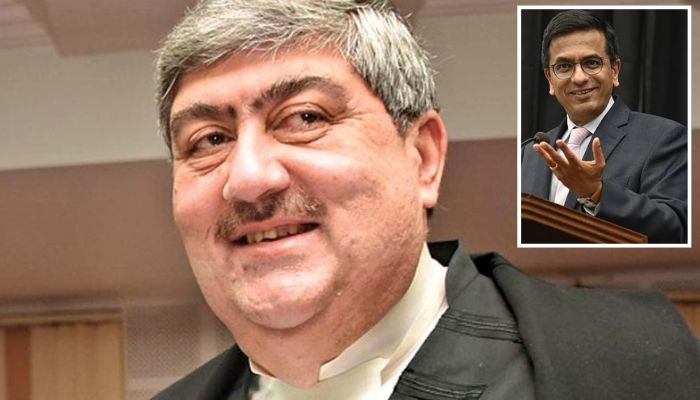
Former Supreme Court judge Justice Sanjay Kishan Kaul has triggered a political controversy after raising questions about former Chief Justice of India (CJI) DY Chandrachud’s approach to judicial appointments. According to Kaul, Chandrachud wanted to seek the government’s views on proposed judicial appointments before the Supreme Court Collegium formally deliberated on the names, a practice Kaul reportedly disapproved of as seeking the government’s “pre-approval”. The Congress has seized on these remarks to question the independence of the judiciary under the Modi government.
On Sunday, 25th October, Congress general secretary Jairam Ramesh cited a report based on Kaul’s forthcoming memoir, Without Fear or Favour, and accused the government of exerting pressure on the judiciary. Ramesh claimed the book raised “serious questions” about judicial independence and referred to allegations of government involvement in appointments, attempts to obtain approval before Collegium meetings, and questions raised about the caste of a judge belonging to a minority community.
पूर्व सुप्रीम कोर्ट जज जस्टिस संजय किशन कौल की किताब ने मोदी सरकार के कार्यकाल में न्यायपालिका की स्वतंत्रता पर गंभीर सवाल खड़े किए हैं।
न्यायाधीशों की नियुक्तियों में सरकार की दखलंदाज़ी, कॉलेजियम की बैठक से पहले ही सरकार की मंज़ूरी लेने की कोशिश और अल्पसंख्यक समुदाय के एक न्यायाधीश के नाम पर उनकी जाति को लेकर सरकार के बेतुके सवाल – जस्टिस कौल ने इन घटनाओं का ज़िक्र किया है। जिन बातों को लोग खुलकर कहने से कतराते थे, जस्टिस कौल ने वो सब बड़े सयंत शब्दों में दर्ज किया है।
हैरानी की बात यह है कि पूर्व चीफ़ जस्टिस ऑफ़ इंडिया ने नियुक्तियों से पहले सरकार के साथ चर्चा किए जाने की बात से इनकार नहीं किया है। जब पूर्व CJI जस्टिस चंद्रचूड़ कहते हैं कि सरकार की CJI से बातचीत और नियुक्तियों में भूमिका तो होती ही है, तो न्यायपालिका की स्वतंत्रता को लेकर सवाल और गंभीर हो जाता है।
जस्टिस कौल का यह ख़ुलासा कि PMLA मामले में उनकी अध्यक्षता वाली बेंच द्वारा कोर्ट के फ़ैसले के कुछ पहलुओं पर पुनर्विचार का सवाल उठाए जाने के बाद मामला बिना उनसे चर्चा किए दूसरी बेंच के सामने पहुँचा दिया गया, बेहद गंभीर है। इससे सरकार द्वारा सुप्रीम कोर्ट के कामकाज में दैनिक दख़लअंदाज़ी का अंदाज़ा लगाया जा सकता है।
अगर न्यायाधीशों की नियुक्तियों पर सरकार की मंज़ूरी का दबाव हो और संवेदनशील मामलों की सुनवाई करने वाली बेंच भी बदल दी जाए, तो लोकतंत्र की सुरक्षा के लिए पूछना ज़रूरी है: अगर यह न्यायपालिका पर दबाव और उसकी स्वतंत्रता को कमज़ोर करना नहीं है, तो फिर क्या है?
संविधान की रक्षा करने वाली संस्था को सत्ता के दबाव से मुक्त होना चाहिए। लोकतंत्र में न्यायपालिका की स्वतंत्रता कोई विकल्प नहीं, अनिवार्यता है।
In an interview with journalist Karan Thapar for the propaganda outlet The Wire, Kaul recalled an alleged incident in which Chandrachud took him aside during a Collegium meeting and asked whether he should telephone the government to ascertain its views on proposed appointments. Kaul said he opposed the idea of contacting the government while the Collegium was still deliberating on the names.
According to Kaul, the Collegium had agreed on five names, but Chandrachud wanted to include a sixth name that had been proposed at the last minute. Kaul suggested that the former CJI might already have obtained some form of government approval for the other names, including the sixth candidate. “Maybe he had already taken some kind of approval [from the Government] for the other names, including the sixth name,” Kaul said, according to the reported interview.
Ramesh also referred to Kaul’s account of a separate incident involving a Prevention of Money Laundering Act (PMLA) case. He alleged that a matter was reassigned to another bench after a bench headed by Kaul raised the possibility of reconsidering aspects of an earlier ruling, without consulting Kaul. Ramesh described these accounts as evidence of possible interference in the Supreme Court’s functioning and argued that the judiciary must remain free from pressure from those in power.
“When there is pressure to obtain government approval for judicial appointments, and when benches hearing sensitive cases are altered, one must ask — in the interest of safeguarding democracy, if this does not constitute pressure on the judiciary and an erosion of its independence, then what does?” Ramesh said.
This public rift between two former senior judges of the top court has turned an intense spotlight on Justice Sanjay Kishan Kaul’s own past track record, judicial outlook, and long career.
Who is Justice Sanjay Kaul?
While Justice Sanjay Kishan Kaul now positions himself as a staunch defender of judicial integrity and procedure through his upcoming memoir Without Fear Or Favour, a closer examination of his judicial track record reveals a career marked by deeply contentious rulings, persistent accusations of hurting public and religious sentiments, severe institutional conflicts, and questionable associations.
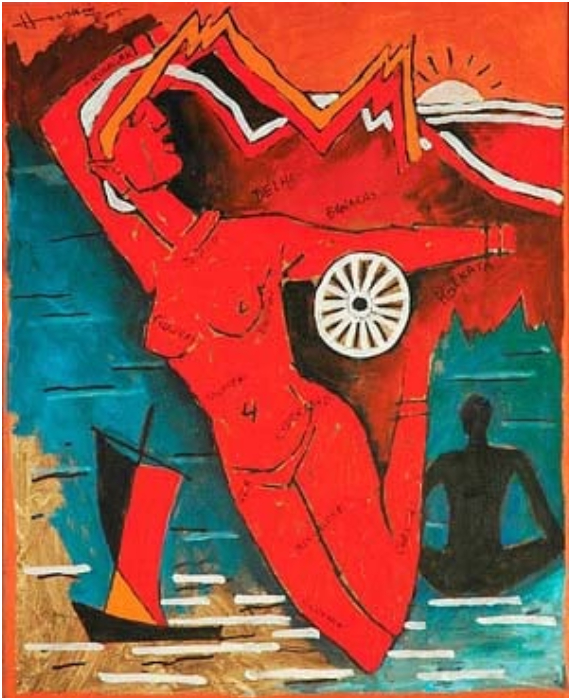
Justice Kaul’s rise to national prominence in legal circles in May 2008 came on the back of a deeply divisive judgment that shielded the controversial Islamist painter M.F. Husain from criminal proceedings. Husain had drawn widespread condemnation across India for his nudist depictions of ‘Bharat Mata’ (Mother India) as well as revered Hindu gods and goddesses.
The depictions, showing a weeping, naked woman symbolising the country, alongside nude portrayals of sacred deities, sparked massive public outrage and criminal complaints across Maharashtra, Gujarat, and Madhya Pradesh filed by citizens aggrieved by the manifest disrespect toward national and religious symbols. Facing overwhelming anger from right-wing organisations and civic groups, Husain chose to flee the country into self-imposed exile in Dubai and Qatar.
The painting of ‘Bharat Mata’ which Husain claims was never titled by him (Image source- Hindujagruti.org)
Instead of holding the artist accountable for hurting the deeply held sentiments of millions of citizens, Justice Kaul quashed all three criminal cases against the 92-year-old anti-India Islamist painter. Dismissing the widespread public grievance, Justice Kaul claimed: “The allegations made against the painter are baseless, and it would not be proper to hold that he had a deliberate intention to manifestly insult Bharat Mata.”
In his 74-page judgment, Justice Kaul sought to legitimise explicit nudism under the garb of historical aesthetics, writing: “We have been called as land of Kama Sutra then why is it that in the land of Kama Sutra, we shy away from its very home. Beauty lies in the eyes of the beholder, so does obscenity.”
He further defended eroticism by adding, “Ancient art has never been devoid of eroticism where sex worship and graphical representation of the union between man and woman has been a recurring feature.” By shielding Husain, who had previously compared Indian public opposition to Hitler’s regime, Justice Kaul’s ruling was widely criticised for setting a dangerous precedent where offensive, anti-national, and religiously insensitive depictions were given complete judicial protection at the expense of public morality.
Undermining community traditions: The Perumal Murugan ruling
Justice Kaul extended this controversial philosophy during his tenure as Chief Justice of the Madras High Court when he ruled in favour of Tamil author Perumal Murugan. Murugan’s novel Madhorubhagan (One Part Woman) had caused severe anguish among local community members and religious groups in Tiruchengode due to its derogatory depiction of local temple festival customs and traditions attached to childlessness. The outrage was so intense that Murugan publicly announced the “death” of his writing career on Facebook and withdrew his books.
Delivering the judgment alongside Justice Pushpa Sathyanarayana, Chief Justice Kaul dismissed the legitimate cultural concerns of the local communities. The bench famously brushed aside public objections by declaring: “If you do not like a book, throw it away. There is no compulsion to read a book. Literary tastes may vary — what is right and acceptable to one may not be so to others. Yet, the right to write is unhindered.”
Invoking controversial Indian-British authors like Salman Rushdie to justify his stance, Justice Kaul asserted that Indian society’s tolerance levels were declining and held that creative freedom overrode local community sensibilities.
Justice Kaul consistently prioritised offensive artistic expressions over the protection of long-standing social, cultural, and religious values, repeatedly dismissing popular outrage as mere intolerance.
Allegations of administrative harassment and caste bias
Justice Kaul’s administrative leadership as Chief Justice of the Madras High Court was similarly embroiled in severe controversy, highlighted by a public conflict with fellow High Court judge, Justice C.S. Karnan. Justice Karnan formally wrote to the Chief Justice of India, the President, and Law Minister Sadananda Gowda, accusing Chief Justice Kaul of blatant administrative harassment, belittlement, and discrimination against a Dalit judge.
In his official letter, Justice Karnan openly confronted Justice Kaul’s arbitrary exercise of power: “Since your Lordship is solely in-charge of the Madras High Court and invested with administrative power, Your Lordship has elected to allot me insignificant / dummy portfolios while those juniors to me, have been allotted significant assignments, which is tantamount to belittling my capabilities as a judge of many years in this August Court. Being a Dalit do you expect me to take such treatment lying down? Or do you expect me to fight for my rights till the bitter end?”
Justice Karnan also exposed the murky underbelly of judicial appointments, attacking the Collegium system under Kaul’s leadership as a tool of nepotism meant “only to entertain their own favourites comprising close relatives, distant relatives and in the absence of the abovementioned choices, then the selection would go to close associates and good friends.”
The situation deteriorated further when Justice Kaul set up a judicial recruitment committee that excluded fair community representation. Justice Karnan issued a judicial order halting the selection process, citing administrative improprieties and revealing that judges from the same community and close relatives had been favoured. Justice Karnan went on to request financial audits into the potential misuse of government funds by Chief Justice Kaul and the Registrar General, exposing deep-seated administrative dysfunction and alleged high-handedness during Kaul’s tenure at the High Court.
Resurfaced optics: Socialising with CJP leader Saurav Das
Adding to the questions surrounding his personal conduct and objectivity, photographs have recently resurfaced online showing Justice Kaul attending the Cockroach Janta Party (CJP) co-convener Saurav Das at his personal residence during last year’s Diwali celebrations.
Sanjay Krishan Kaul was at a Diwali party with fatherless Saurav Das last year. All’s making sense now. https://t.co/BjqJ5SknzA
The revival of these images has raised serious eyebrows given Das’s recent legal troubles. Saurav Das was recently released from Tihar Jail after being compelled to sign a peace bond before the Special Executive Magistrate (SEM), undertaking not to engage in activities that disturb public peace or tranquillity. The SEM (New Delhi), Ritu Raj, subsequently directed Das to produce official documents proving his residential address in Delhi.
It cannot be more obvious than this….
Sanjay Kishan Kaul was at a Diwali party with fatherless Saurav Das last year.
And today, all of a sudden, he makes these allegations, and all the leftists are quoting that post.
Seems like this is today’s agenda 🙂 https://t.co/xH8FzL6CeC
Far from being an unblemished guardian of judicial ethics, Justice Sanjay Kishan Kaul’s career reflects a pattern of polarising decisions that repeatedly offended religious and cultural sentiments, severe allegations of administrative harassment and caste-based discrimination from within his own court, and questionable social connections with controversial figures. His recent attacks on former CJI D.Y. Chandrachud must therefore be evaluated against the backdrop of his own deeply controversial record on and off the bench.
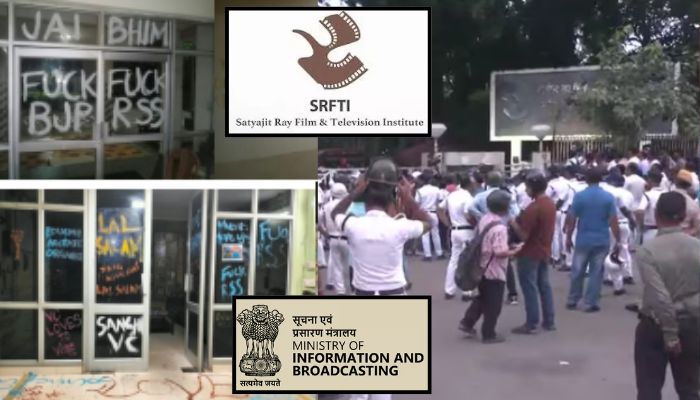
Tensions broke out on 27th September at the Satyajit Ray Film and Television Institute (SRFTI) in Kolkata, West Bengal, following a violent clash between the leftist student organisation, Student Federation of India (SFI), and the Akhil Bharatiya Grahak Panchayat (ABGP), an organisation linked to the Rashtriya Swayamsevak Sangh (RSS). Days after the incident, SRFTI under the Ministry of Information and Broadcasting submitted an internal report on 24th October, detailing how leftist goons indulged in anti-Hindu sloganeering and also attacked the institute’s vice-chancellor.
#WATCH | Kolkata, West Bengal: A clash broke out between members of the SFI and the Akhil Bharatiya Grahak Panchayat during an event organised by the Akhil Bharatiya Grahak Panchayat at the SRFTI (Satyajit Ray Film & Television Institute) auditorium. Heavy police deployment in the area.
More details awaited
According to the claims made by the SFI attackers, members of the ABGP raised provocative slogans during their event. Conversely, members of the ABGP stated that individuals associated with the SFI forcibly disrupted their gathering, tore down official posters, and physically assaulted those in attendance.
The SRFTI Student Union, in a statement, later admitted that it was they who went to the auditorium to protest over the RSS-affiliated body organising a programme without their permission and created a ruckus. In a statement issued on 27th September evening, the SRFTI Student Union issued a statement, saying that they were not informed about permission being granted to the ABGP for conducting a programme at the Main Theatre auditorium.
The Student Union and the student body were not informed about the event before permission was granted. A similar event had also reportedly taken place on campus a few months ago without the knowledge of the students. At around 2:00 PM, students went to the Main Theatre to put up posters questioning the Institute’s decision to allow such an event without informing the student community. The ABGP members present at the venue confronted the students and attempted to remove them from the theatre. The situation then escalated into physical violence against students. Students were verbally abused, including being called "anti-national" and "cockroaches". Members of the group then physically attacked students, including women students, using punches, kicks, stones, bricks, sticks and other objects. Students were chased through the campus, including students who were not part of the protest and were simply carrying out their academic work: SRFTI
Findings of the SRFTI report on late September 2026 leftist violence
On 24th October (Saturday), the SRFTI, under the Ministry of Information and Broadcasting, submitted an 18-page internal report detailing the attack and establishing a comprehensive timeline of events. OpIndia has accessed a copy of the report, which records the sequence of events beginning with the clash, the registration of a First Information Report (FIR), the constitution of a Special Investigation Team (SIT) by the West Bengal government and the subsequent measures taken by the institute.
The internal document begins by setting out the official sequence of events alongside the security measures implemented around the initial clash. Explaining the background of the 27th September incident, the report clarifies: “On Sunday, 27 September 2026, when no regular academic activities were scheduled, an external organisation conducted a programme in the Main Auditorium with the requisite permission and on a paid basis. The programme did not involve unauthorised entry.”
Referring to the RSS-linked ABGP, the document confirms that the event had full administrative clearance. Addressing the actions of the protesting student groups, the report states, “Students in protest unauthorisedly entered the theatre premises, resulting in confrontations and physical fights.”
The report explicitly condemns the actions of the SFI goons who breached the venue without authorisation, adding, “Illegal entry of students inside the ongoing programme and vandalism led to the spiral of events with subsequent violence and agitation.”
Regarding official legal proceedings, the document records, “An FIR was registered on a formal complaint, and the Government of West Bengal constituted a Special Investigation Team (SIT).”
It notes that the overall matter remains under active investigation by law enforcement authorities.
Detailing the immediate administrative updates and security protocols, the report highlights, “Following the incident, the Institute strengthened access control and internal security, maintained close coordination with local police, and facilitated interactions between student representatives and senior police officials.”
Furthermore, the document underlines that an internal fact-finding committee was established, initiating formal disciplinary proceedings over acts of vandalism and wall defacement committed on campus. The report emphasises that these actions represented specific acts of misconduct rather than peaceful demonstration.
Disciplinary actions culminated in the rustication of six leftist students for a period of one year following their involvement in vandalism and physical misconduct directed at the Vice-Chancellor. The document confirms that academic activities at the institute remain suspended until 13th November, with all students formally directed to vacate hostel premises and leave the campus.
Timeline of escalation: Gherao and blockade of the Vice-Chancellor
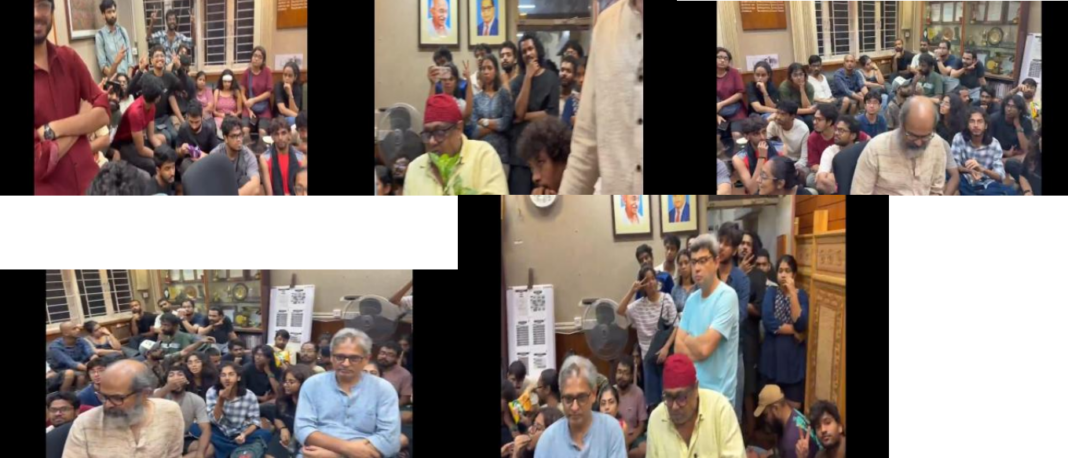
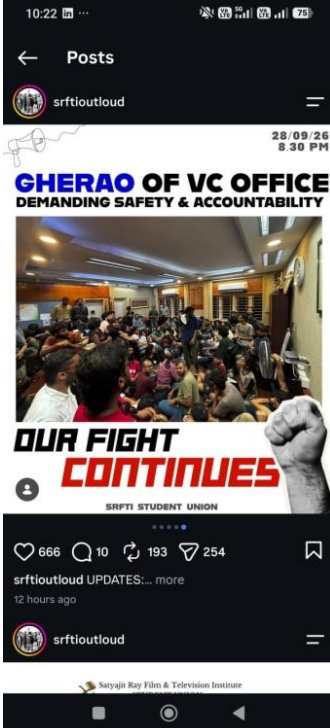
The internal report shifts to a detailed timeline tracking the repeated disruptions caused on campus following the initial clash. The timeline highlights that on 28th September, 2026, while the Vice-Chancellor was performing official duties inside his office, SFI goons gathered inside his room, occupied the space, and used abusive language against him.
The situation deteriorated further in October. Following the dispersal of a gathering outside the main gate around 6:00 PM on 4th October, a group of approximately 250 SFI members surrounded and gheraoed the Vice-Chancellor until roughly 11:00 PM. The blockading group effectively held the Vice-Chancellor hostage for nearly five hours.
Image via I&B report
During these five hours, the goons raised slogans and used abusive and objectionable language against institutional leadership. The report observes that this prolonged obstruction of the Vice-Chancellor from leaving his office or carrying out official duties raised serious concerns regarding the safety and dignity of institutional authorities, noting that such behaviour remains entirely inconsistent with the principles of a peaceful demonstration.
Image via I&B report
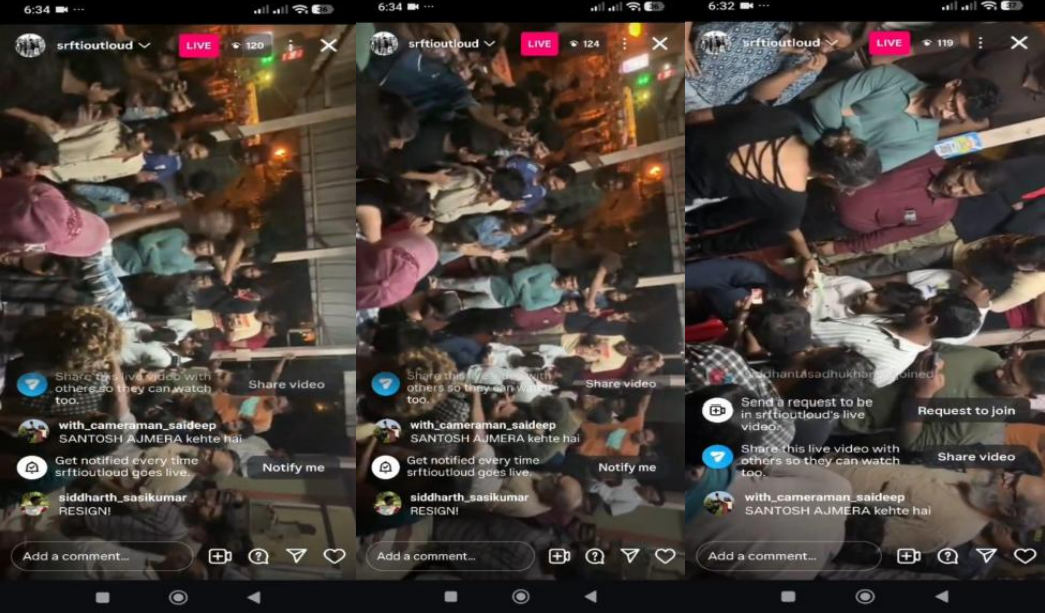
During the blockade, the SFI-led students’ union broadcast the entire incident live via their Instagram account under the username ‘srftioutloud’.
Image via I&B report
Defacement of institute property with derogatory and anti-Hindu slogans
One of the major issues highlighted in the report is the repeated defacement of the institute’s walls with abusive, derogatory and politically provocative expressions. As institutional walls were being defaced with derogatory, unparliamentary, and provocative wording, the institute received a formal communication from the Police Administration expressing serious concern that such expressions could aggravate public order.
In response, the institute administration issued an official notice to all students cautioning that any act of defacement or destruction of property would invite immediate disciplinary action under Academic Byelaws.
Despite the administrative notice, during the late-night hours preceding 6th October, SFI goons again defaced the outer walls of the institute using unparliamentary expressions. Subsequently, the Competent Authority constituted a committee to review the facts, identify responsible individuals, and proceed with appropriate disciplinary measures. The report stresses that property defacement and the use of provocative statements undermine the academic environment, institutional discipline, and campus safety.
Based on the findings of the investigative committee, three students identified in connection with the wall paintings were issued show-cause notices requiring responses within 24 to 48 hours. The report notes that cursing words were explicitly used against the highest authorities in the Government and the Hindus.
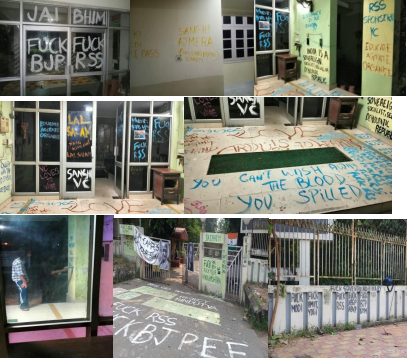
Photographs included in the report show slogans targeting the BJP, the RSS, the ABGP and other organisations. Some of the writings contained explicit profanity. The slogans included “Jai Bhim”, “Fck BJP” and “Fck RSS”. The Vice-Chancellor was also personally targeted through phrases such as “Sanghi VC” and “RSS-sponsored VC”.
Image via I&B report
The Communists also made their ideological stance clear by painting slogans like “Lal Salam” across the institute’s doors, alongside phrases targeting religious identity and national concepts, including ‘F*ck Hindutva’ and ‘F*ck your Hindu Rashtra’.
Additional defacement targeted political organisations and student unions, displaying phrases like “F*CK ABVP”, “F*ck ABGP”, “F*ck BJP”, and “F*ck BJYM”. Wall paintings also directly referenced state and national political leaders, including West Bengal Chief Minister Mamata Banerjee, Prime Minister Narendra Modi, and Uttar Pradesh Chief Minister Yogi Adityanath.
Notably, a look at the social media presence of SRFTI reveals the extent to which radical ideology has permeated the campus environment. The institute’s Instagram page is filled with anti-Hindu slogans, explicit profanity, and severe hostility towards the BJP and RSS. Rather than serving as an objective academic platform representing a premier national film institute, the page functions essentially like an official mouthpiece for the SFI, regularly amplifying political rhetoric, hate speech, and confrontational campaign posts.
SFI goons gheraoed VC’s office again on 6th October
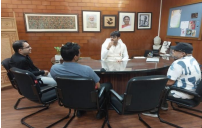
The report next describes another confrontation on 6 October, when at approximately 4:00 PM, a group of 50 to 60 SFI goons entered the Vice-Chancellor’s office without permission and occupied the administrative space. Members of the Staff Welfare Association subsequently entered the premises to offer support to the Vice-Chancellor against the abusive language being directed at him.
During this encounter, the SFI members also shouted directly at the staff members present. The report notes that this unauthorised entry, combined with confrontational conduct, severely disrupted essential administrative functions.
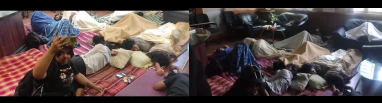
The leftist students occupied the Vice-Chancellor’s office for nearly two full days, using the space for sleeping and playing recreational games like chess and carrom. The occupying group refused to clear the room despite persistent requests from administrative staff. Following the incident, three students were issued show-cause notices for unauthorised occupation of administrative facilities.
Vandalism, damage to official property, and physical assault on the VC
During the two-day illegal occupation of the Vice-Chancellor’s office, property within the room was damaged, including the Vice-Chancellor’s official chair. The occupying group also disrespected and damaged an official portrait of the Prime Minister, breaking the photo frame and throwing it near the bathroom area.
The destruction of property continued in the following days. On 16th October, housekeeping staff discovered a broken windowpane in the Vice-Chancellor’s office with shattered glass scattered across the floor. The office air conditioning unit and water pipelines were also found damaged.
Apart from vandalism, the report details the matter of verbal abuse and physical misconduct towards the Vice-Chancellor. According to the document, after a meeting involving heads of departments and other senior officials to condemn the vandalism of the VC’s office, students surrounded the Vice-Chancellor and abused him and other senior officers. The report specifically names a student, Shubham, revealing that he verbally abused the VC and physically manhandled him by kicking him. Other students joined in the verbal abuse.
The administration has photographs and video footage of the incident. The report says that this material is available with the institute’s administration.
The allegations of physical misconduct became a significant part of the disciplinary proceedings. The document states that six students were rusticated for one year under the institute’s academic by-laws following incidents involving vandalism and alleged physical misconduct towards the Vice-Chancellor.
Further security breaches occurred on the night of 23rd October, when SFI goons again bypassed security personnel, broke the lock of the new Classroom Theatre (CRT), and occupied the building without authorisation. The group used high-value institutional equipment, including the sound and lighting systems, to hold a late-night party. Additionally, the outer perimeter walls of the institute were defaced again with anti-Hindu slogans including “F*ck Hindu rashtra” and “Reject Hindutva”.
Institute strengthens security, initiates disciplinary action
Concluding its account, the I&B Ministry report details the steps taken by SRFTI to address the incidents and restore normalcy. The institute filed an FIR against unidentified persons in connection with the violence on 27th September 2026. The West Bengal government subsequently constituted an SIT to investigate the matter.
The report also states that the Joint Secretary (Institutions) communicated with the Chief Secretary of West Bengal regarding the safety and security of students and staff members. The institute increased the height of its main gate, installed fencing wire and deployed additional security personnel on campus.
The Vice-Chancellor and other senior officials also held discussions with students, urging them to restore normalcy and resume regular academic activities. At the same time, the administration issued notices warning students against defacing institutional property and threatening disciplinary action under the academic by-laws.
After the walls were defaced again in early October, a committee was constituted to establish responsibility. Three students were issued show-cause notices following the committee’s findings. Six students were subsequently rusticated for one year following incidents involving vandalism and alleged physical misconduct towards the Vice-Chancellor.
The report further states that the institute suspended academic activities until 13th November 2026. Students were directed to vacate their hostel rooms and leave the campus in accordance with the applicable rules.
The findings detailed a systematic sequence of unrest triggered at the Satyajit Ray Film and Television Institute (SRFTI). What began last month as an unauthorised entry by SFI goons and forcible disruption of a fully permitted, paid event hosted by the RSS-linked Akhil Bharatiya Grahak Panchayat (ABGP) escalated into weeks of continuous administrative paralysis and physical confrontations.
The recent protests organised by Cockroach Janata Party (CJP) and the opposition against the Election Commission’s Special Intensive Revision (SIR) exercise have shed light on the dubious methods being used to mobilise public opinion and attack the government. What was projected as a grassroots movement demanding accountability from the Election Commission has been exposed to be coordinated by political messaging, online propaganda and attempts to discredit the authorities.
From organising demonstrations on the ground to amplifying anti-government narratives on the internet, the controversy has brought attention to the opposition ecosystem’s desperation to shape public perception in its favour.
सिर्फ ₹599 में फर्जी पत्रकारिता का Sponsored ड्रामा! 🚨
इंडिया टुडे की रिपोर्ट ने CJP और विपक्ष के आंदोलन पर सवाल खड़े किए हैं।
रिपोर्ट के मुताबिक, इंडियन प्रेस यूनियन जैसी संस्थाओं के जरिए ₹599 से ₹1799 में प्रेस कार्ड, फर्जी प्रोफाइल और माइक बांटे गए, बिना किसी मीडिया अनुभव के।
दंगों को भड़काने और दिल्ली पुलिस व सरकार को बदनाम करने के लिए एडिटेड CCTV फुटेज और भाड़े के पत्रकारों के इस्तेमाल का भी दावा है।
मकसद कानून-व्यवस्था को नुकसान पहुंचाना और CJP व उसके राजनीतिक आकाओं के नैरेटिव को सोशल मीडिया पर ट्रेंड कराना था। ❌
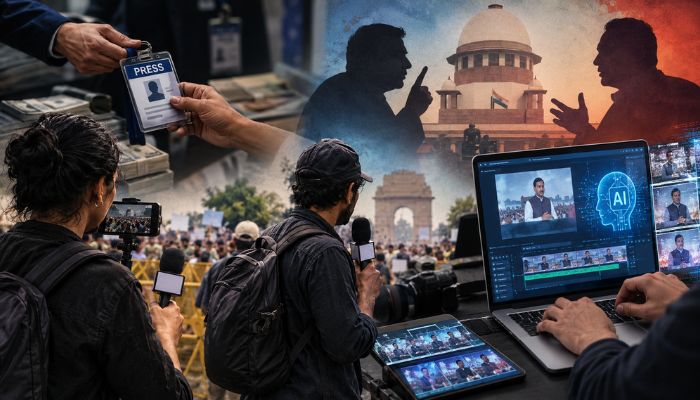
One particularly disturbing aspect of these allegations concerns the sale of press cards and journalist credentials by organisations to represent the media. An investigation by India Today found that several websites and organisations were offering press IDs, membership certificates and other journalist-related credentials for a fee. The report has uncovered a deeply disturbing pattern where fake narratives are manufactured, funded, and weaponised under the guise of independent journalism. This engineered network goes far beyond depicting purported spontaneous public outrage, pointing toward a calculated design to target the government, mislead citizens, and manufacture artificial unrest.
The business of fake news: How self-styled “journalists” turned protests into a propaganda battlefield
The report revealed that the recent protests involved not just hired crowds, but also paid journalists deployed to build a narrative against the government and the Delhi Police. To mislead the public, a fake outfit called the “Indian Press Union” was set up. Press cards, fake profiles, microphones, and vehicle passes were distributed for prices ranging from just ₹599 to ₹1,799. There was no experience and no media background required, you could simply hang a ₹599 card around your neck and become an “independent journalist” for CJP.
The report highlighted that many of these individuals possessed press ID cards, microphones, and logos of suspicious, newly-emerged news websites created between February and March of this year. Organisations like the Indian Press Union (IPU), NEED24, and FNF were front and centre.
While the IPU claimed operational history dating back to 2016, India Today found no supporting evidence. Further investigations revealed that these websites sold journalistic credentials for as low as ₹599, featuring AI-generated interview videos to create an illusion of authentic, established media houses.
Websites like Hind Media Network advertised press IDs and reporter profiles for ₹599 alongside microphone kits for ₹3,500. NEED24 News offered reporter profiles for ₹999 and State Bureau Chief designations for a ₹25,000 annual subscription. Similarly, the Indian Press Union offered printed press IDs and car stickers for ₹1,799.
OpIndia earlier reported how an undercover operation exposed these “independent journalists” who were ready to peddle Samajwadi Party (SP) propaganda for a few thousand. Similarly, a clip of an online chat group recently went viral on social media, showing its members discussing the media strategy to remove the democratically elected Modi government.
During the discussion, it was disclosed that about 5000 influencers, YouTubers, and content creators form part of their group, which also included “independent journalists.” Internet Freedom Foundation’s Founder Trustee, Apar Gupta, was part of the conversation. Interestingly, IFF has CJP leader Ashutosh Ranka’s sister, Khushboo Ranka, as a Trustee.
Delhi Police arrests “independent journalist” over AI-Generated Video
The gravity of this manufactured propaganda hit harder when Delhi Police arrested a 24-year-old “independent journalist” over an AI-generated video showing Assistant Commissioner of Police (ACP) Vivek Bhagat allegedly misbehaving with a woman protester. Delhi Police had detained one such “independent journalist,” who stated that CCTV footage was being edited and fabricated to portray the Delhi Police and the government negatively.
The fabricated video was circulated through an Instagram account, @news_aaina0776, presented as genuine CCTV footage. It showed an officer in inappropriate conduct with a woman while displaying a photograph, name, and designation of ACP Bhagat to falsely implicate him. The police social media monitoring unit flagged the reel on October 4, resulting in an FIR at the Cyber Police Station under multiple sections of the Bharatiya Nyaya Sanhita.
Investigators traced the account to Nadeem Ahmed Ameen, a 24-year-old resident of Palwal, Haryana, who ran the Instagram news handle “News Aina Today” and was apprehended from Mewat on 5th October.
During questioning, Ameen confessed that he created the video using AI tools on 3rd October to defame the Delhi Police, provoke protesters, and create unrest, having launched his handle in April and actively posting during the CJP protests at Jantar Mantar. Additional DCP Manjeet Sheoran noted that the deliberate goal was to spread anarchy and trigger riots.
The exposed agenda: Not an “independent journalist,” but an active CJP worker
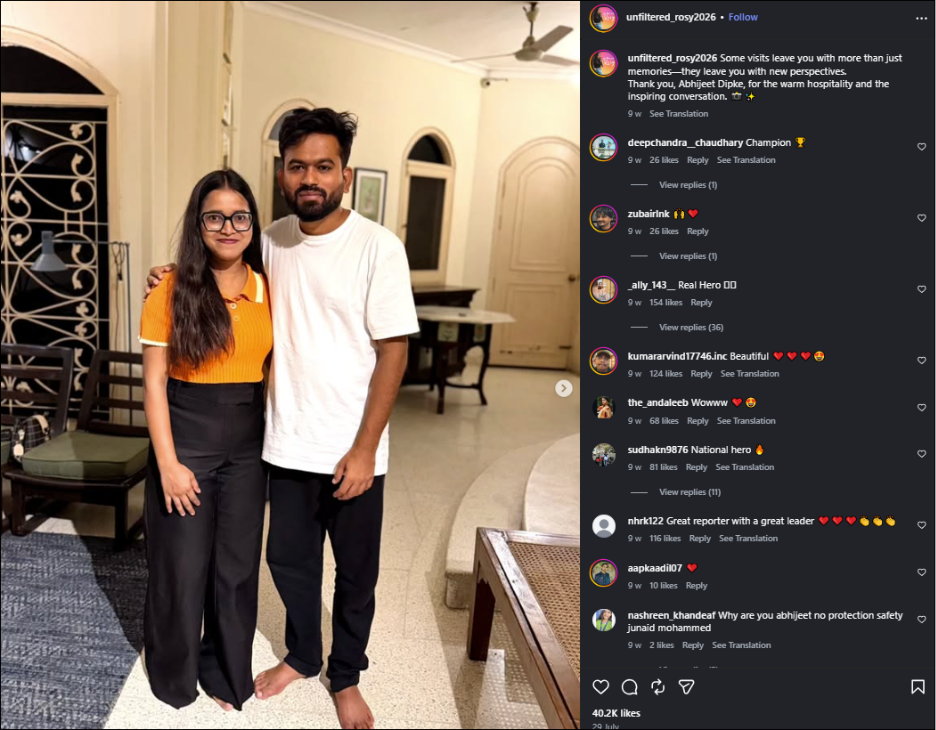
Adding another layer of deception, the woman who claimed to be an independent journalist and accused ACP Vivek Bhagat was also not an independent journalist, but a CJP worker. The accusations had been under probe, but Rosy was revealed to be an active CJP worker.
She is an Instagram influencer with over 61k followers and a known CJP supporter, masquerading as an “independent journalist” while accusing ACP Bhagat of molesting her during the detention of AISA activist Neha Bora on 3rd October. Afterwards, CJP founder Abhijeet Dipke and co-convenor Saurav Das rushed to social media to label ACP Bhagat as a “sexual predator” and “Amit Shah’s blue-eyed boy.”
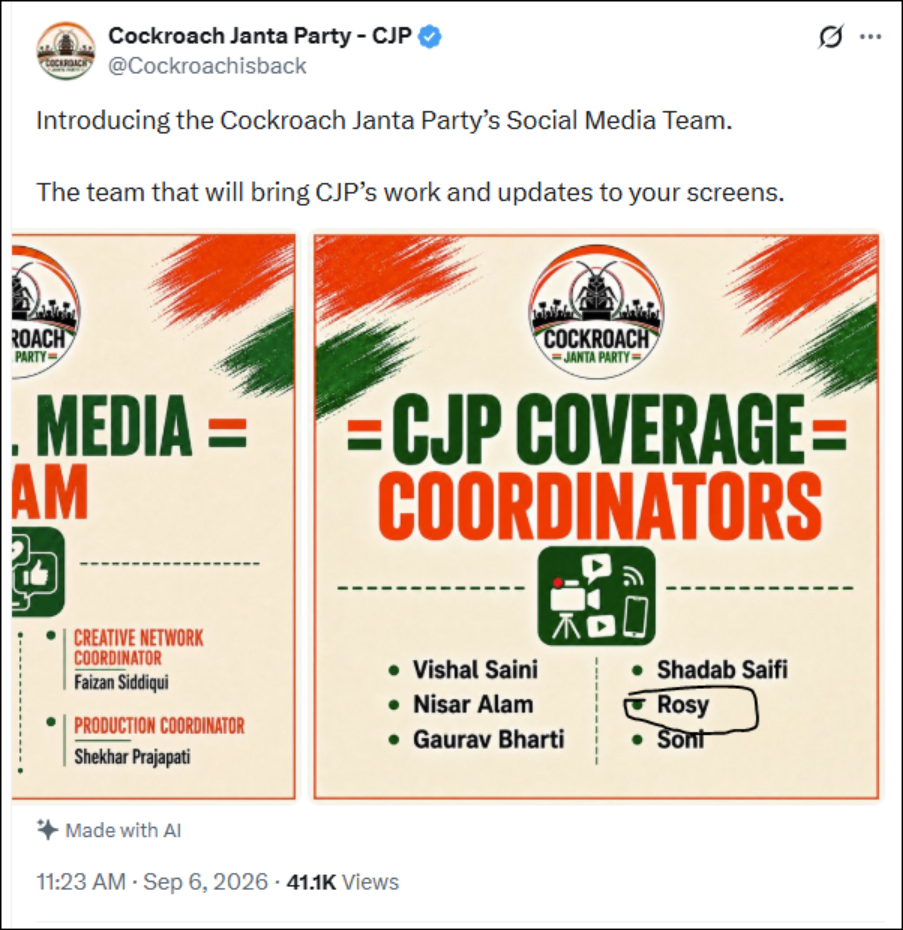
In a 6th September post introducing the CJP’s social media team, Rosy was listed as a coverage coordinator. Her feed is replete with pro-CJP propaganda, celebrating Abhijeet Dipke’s return, and even justifying offensive social media remarks against Hindu deities by figures like Nishu Azad. Far from being a neutral reporter exposing “Godi media,” she was a partisan influencer weaponising a false narrative.
A scary reminder of the anti-CAA protests and 2020 Delhi riots
It was all planned to fuel unrest and defame the government and Delhi Police, and serves as a scary reminder of the anti-CAA protests, which later converted into anti-Hindu riots.
Rather than a sudden outbreak, the events followed a deliberate trajectory. It began with intense university protests and provocative speeches, creating a perilous environment of extreme hostility in the name of an anti-government movement. This momentum was then channelled into localised sit-in demonstrations across several areas, turning those locations into active mobilisation zones. Over time, these protest sites incorporated speeches to target Hindus.
Eventually, the strategy shifted toward a much more sinister objective. Protesters began blocking major traffic corridors, creating widespread disruption for both the administration and common people. Police were targeted when they intervened to clear the blockades and restore order. The most horrifying culmination of these protests came in the form of anti-Hindu riots carried out by the Islamo-leftist faction.
During this orchestrated violence, IB staffer Ankit Sharma and Constable Ratan Lal lost their lives, and DCP Amit Sharma suffered severe injuries in targeted attacks. The mayhem left 53 people dead and hundreds injured.
The riots left large parts of Northeast Delhi under fear for days before normalcy returned. The Crime Branch of Delhi Police registered FIR No. 52/2020 to probe the larger conspiracy behind the violence. According to the prosecution, the riots were not spontaneous, but part of a deep-rooted conspiracy carried out under the cover of protests against CAA and NRC.
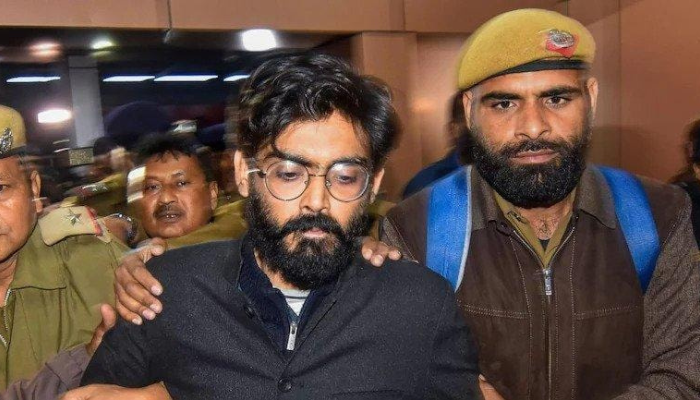
Umar Khalid, Sharjeel Imam, Tahir Hussain, Khalid Saifi, Ishrat Jahan, Gulfisha Fatima, Natasha Narwal, Devangana Kalita, Athar Khan, Safoora Zargar, and others were named in the FIR. Today, a similar playbook is being deployed, using digital deception and fabricated narratives to incite street-level conflict. Furthermore, CJP leaders have also been vocal in their support for these accused, including Umar Khalid.
When the ‘fourth pillar of democracy’ is made into a tool for political propaganda
The most worrying aspect of this controversy is the misuse of journalism itself. Journalists are widely regarded as the fourth pillar of democracy because they inform the public, question those in power and hold institutions accountable. Their credibility depends on accuracy, transparency and independence.
This is precisely why the sale of press credentials and the use of fabricated videos are so concerning. When almost anyone can purchase a press card and present themselves as an independent journalist, the public may struggle to distinguish genuine reporting from politically motivated content.
People often trust someone who identifies as an independent journalist because they assume that the person has no political affiliation and is reporting events impartially. That trust can be exploited if an individual conceals their political connections or circulates unverified claims as facts. The danger becomes even greater when AI-generated videos are presented as authentic evidence. The aim is evidently to sneak into restricted areas, flout the law, and forcibly push CJP and its political backers’ failed narrative into trending discussions on social media.
When trusted titles like “independent journalist” are sold for a few hundred rupees and handed to internet influencers with no media background, accountability vanishes. The rise of these seasonal, paid propagandists creates a profound crisis for authorities and ordinary citizens trying to separate factual reporting from orchestrated subversion. Safeguarding the nation requires recognising that these tactics are not freedom of expression; they are a calculated conspiracy designed to burn cities for political gains.
OpIndia earlier reported how some social media influencers and content creators turned into self-styled, ‘independent’ journalists overnight, driven by a desire to go viral and gain followers and views by covering the CJP-led protests. This sudden change was also triggered by the Delhi Police’s order making press accreditation mandatory for journalists covering the latest CJP demonstrations.
So-called activist and certified anti-national, Sharjeel Imam, is back in the news for a recent interview with ‘The Quint’ published on 29 September, 2026. His Islamo-leftist defenders have defended this interview with bizarre justifications. According to them, his jail term is the reason for his anti-India stance.
In this interview, Imam calls the Indian Constitution “fascist” and a “roadblock to the dignified existence” of Muslims. He labelled secularism as a “lie and a trap,”. He denounces democracy as a contrivance. This is the same man whose interim bail was revoked in October 2026 for flouting court conditions, a detail his apologists prefer to bury.
For a self-proclaimed ‘Marxist’ man who claims to speak for the marginalised, Imam’s words about Hindus are highly venomous. He insisted that “all Hindus are the same,” united in denying Muslims political power. He reduces the entire Hindu civilisational ethos to a monolith of oppression. He claimed the secular framework is “actually a branch of the overarching nationalist framework, which the Hindutva framework is also a part of”.
According to him, the Constitution itself is a Hindutva document, a “roadblock” to Muslim dignity. He blamed “Brahminical forces in Congress” for Partition and gave a clean chit to the Muslim League. He called the secular framework “particularly Islamophobic and parochial”. And he dismisses the very idea of an ancient Hindu Indian nation as a “myth”.
He even shared his disturbing vision of creating a separate Islamic state for Muslims, offering a window into the rabid mind of an Islamist whom the opposition ecosystem has hailed as a “liberal hero,” while he views them with the same contempt reserved for “Hindutva.”
Under his Islamic doctrine, he explained Hindu idol worship as “Shirk” (idol worship), a primary source of oppression in human history. He regarded Hindus as the most inveterate polytheists – “Kafir”.
This is not a criticism; it is the old communal separatist Muslim League language of a Hindu conspiracy, recycled for a new generation. Let us look at what he said about Hindus in the past.
The 2019 Facebook post: Mocking Pujo and exposing the ‘Marxist’ hypocrisy
A glance at his old social media history reveals a deep-seated hatred for Hindu traditions, particularly the worship of idols. In a Facebook post dated 22 September, 2019, Imam made his contempt for Durga Puja abundantly clear.
According to his jihadi worldview, the grand Hindu festival is nothing more than a period of “superstition” that interrupts his grand “revolutionary struggle.” But his bigotry goes further, targeting the very core of Hindu faith: idol worship.
Here, the mask of the so-called secular, progressive activist slips away completely. Imam uses the deeply derogatory Islamic theological term butparasti (idolatry) to describe Hindu customs, and mocks the “beauty of idols” by calling them “husn- e-butaan, another Sunni Wahhabi derogatory term.
The author of recent islamist manifesto, imam wrote this to target the bengali commies who celebrate durga pujo https://t.co/jn64mzGkOw
He then questions the authenticity of Marxist Hindus, wondering if they are merely “cultural Hindus,” if they have undergone a “ghar wapsi,” or if they are hiding their true feelings. His “Sarvhara ki Kranti (revolution)” apparently requires a complete erasure of Hindu cultural identity.
This brings us to the ultimate exposure of Sharjeel Imam’s hypocrisy. As a self-proclaimed Marxist, Imam theoretically subscribes to a fundamentally atheistic, materialist ideology. Yet, He writes “Insha Allah” (Allah’s will) and signs off with “fi amaanillah” (may you be in Allah’s protection). He looks down upon Marxist Hindus for embracing their cultural roots during Pujo. Still, he himself has no problem using his own religion, Islam’s religious terms, to spread venom against Hindu rituals.
He uses Islamic concepts like ‘shirk’ and ‘butparasti’ to demean Hindus, all while pretending to be a leader of the oppressed. Imam’s rhetoric is not about social justice; it is an openly Hinduphobic project that has no place in a democratic India.
The ‘Shirk’ Manifesto: When a Sharjeel Imam labels Nationalism and Humanism as supreme sin
If his 2019 Pujo post exposed his cultural bigotry, his subsequent social media activity exposes his deep-rooted ideological agenda to delegitimise the very foundations of the Indian Republic and Hindu thought. In a post dated 7 November, 2019, Imam presents what he calls the “bunyaadi ideological qismein” (basic ideological types) of shirk.
Came across a tweet by a Bong Didi, who said we should engage with Sharjeel Imam’s ideas. So I wanted to understand from his Junooni followers, that in this post, is Imam showing his hate for Hinduism and Hindus or both?
Thank you in advance for your engagement. https://t.co/6brZNvumXe
In Islamic theology, shirk is the ultimate, unforgivable sin: idol worship. Imam weaponises this concept to build a taxonomy of everything he despises, explicitly targeting Hindus and the Indian state:
Idolatry: but-parasti: A direct, theological attack on the core of Hindu faith. By labelling the worship of murtis (idols) as shirk, he reduces millions of Hindus to polytheists to be condemned.
Nationalism: watan-parasti: Here, he equates love for the nation (watan) with polytheism. For him, a Hindu’s reverence for Bharat Mata or the Indian nation is an act of sin.
Humanism: insaan-parasti: He demonises the very idea of humanism, showing utter contempt for the Hindu ethos of Vashudhaiva Kutumbakam (the world is one family). Because Muslims divide the world between ‘Momin’ (believer in Allah) and ‘Kafir’ (non-believer), considering only momins as family.
Secularism: dahr-parasti (zamana-parasti): He dismisses the secular, constitutional framework as a form of atheism. Because, as a Muslim, he can follow only Shariah law. Proving once again that he views the Indian Constitution as inherently illegitimate.
But this post also lays bare Sharjeel Imam’s intellectual fraud. He lists “materialism: maadda-parasti” as a form of shirk. This is a stunning self-inflicted blow. Marxism, the very ideology he claims to champion, is fundamentally rooted in dialectical and historical materialism. By declaring materialism to be shirk, Imam effectively excommunicates himself from the Marxist ideology he claims to embrace.
You cannot be a Marxist if you believe the materialist worldview is an Islamic theological sin. You can not claim to be a progressive fighting for “humanism” when you categorise humanism as shirk. And you certainly cannot claim to be a defender of the Constitution while labelling secularism and nationalism as supreme sin.
Conclusion
He calls himself a Marxist, but he exposes his hypocrisy himself. He mocks Hindus’ Puja and idol worship as “superstition,” yet frames his own politics with “Insha Allah,” “fi amaanillah,” and Islamic polemics against “butparasti.”
A self-styled ‘Marxist’ who invokes divine will and communal vocabulary is not fighting fascism. Rather, He is engaging in identity politics based on communal affiliation.
Imam is not a Marxist; he is an Islamist supremacist who uses the vocabulary of the Left as a Trojan horse. He demands secularism for his own community, but through terms like “but parsti and watan parsti,” etc. and by calling those terms “Shirk”, he makes it abundantly clear that his ultimate goal is the subjugation of Hindu culture and the rejection of the Indian nation-state.
His ideology is not about revolution; it is about raw, firm Islamic theological bigotry. He is not a revolutionary critic but a communal extremist Muslim posturing masquerading as leftism.
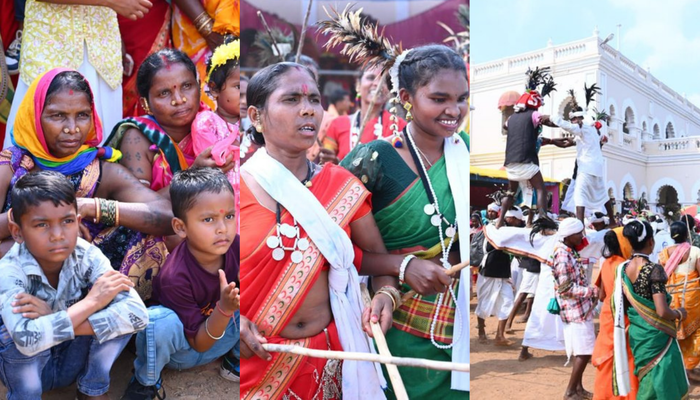
Chhattisgarh’s Bastar region is witnessing a grand 75-day-long Dussehra celebration. The festival commenced with Pat Jatra on August 12, 2026, and will formally conclude on October 27, 2026, with the farewell of Maa Danteshwari. President Droupadi Murmu is on a 2-day visit to the region to take part in the celebration.
#WATCH | Chhattisgarh | President Droupadi Murmu attends a public event and exhibition dedicated to Bastar Dussehra at Jagdalpur https://t.co/w7ALMgC4Bg
Even though the festival is called Dussehra, the celebration is not centred on the defeat of Ravana by Lord Ram, unlike popular Dussehra festivities in most of India. Bastar Dussehra is organised in reverence for Danteshwari Devi, the presiding deity of Bastar, and the Kuldevi of the Bastar royal family.
#WATCH | Jagdalpur, Chhattisgarh | Deities from around 50 villages, once heavily affected by Naxalism, participated in the world-famous Bastar Dussehra for the first time following the end of Naxalism in the region.
(22.10) https://t.co/YseyxewSA1
Bastar Dussehra is one of the oldest festivals of the country with a history of over six centuries. It was started by the Kakatiya dynasty and has been preserved and promoted by the local tribal communities ever since. The festival is deeply linked to the spiritual beliefs of the tribes of Bastar.
A festival marked by diverse rituals
The festival is marked by a series of intricate rituals like Pat Jatra, Ratha Yatra, Kachan Gadi, and Muria (Muriya) Darbar, vibrant processions, and cultural performances. The core royal and tribal rituals of the festival take place every year in Jagdalpur, where tribals from nearby villages gather to attend the festivities.
Organised by the royal family of Bastar, the festival begins on Hariyali Amavasya in the month of Shravan, with Pat Jatra, which is a ceremonial worship of the first sacred timber. Villages across the region send their deities, priests, and craftsmen to take part in it. Over the days, the festival moves through a sequence of rituals, including the building of the great chariot, processions through Jagdalpur, the nighttime rites of the goddess, and the gathering of village deities.
In the closing days of the festival, a distinctive ceremony of Muria Darbar is organised, which marks the conclusion of the festival. The ceremony is held in Jagdalpur after the great chariot processions and the main Dussehra rituals have been completed.
Traditionally, the ceremony offered a platform for representatives of different communities, especially from the Muria tribe and Manjhi-Mukhiyas communities, to present their problems and community-related matters before the King. Even though the darbar system no longer exists in the modern democratic setup, the ceremony represents Bastar’s important traditional social system and highlights its social dialogue and community participation.
While the festival has been celebrated continuously for centuries, the festivities were dimmed by rampant Naxal activities in the region. Villages located in deeply affected areas such as Sukma, Bijapur, and Narayanpur were cut off from the celebrations due to Naxal violence. For decades, the villages that sustain this festival lay in the shadow of Maoist violence, but this year, the celebrations attracted a larger number of tourists and visitors to the region, which was long infested by red terror.
How the Bastar Dussehra festivities are different this year
Bastar Dussehra this year witnessed the participation of deities from around 50 villages in formerly Naxal-affected areas. This was unprecedented, as villages from the formerly Naxal-infested region participated for the first time in the historic festival since the region was declared to be free from Naxalism by the central government on March 31, 2026.
The tribals of the region, which was besieged by the Naxal menace for decades, are finally getting to lead normal lives, free from the shadows of red terror. This normalcy, which was once impossible to imagine in the region, has become a reality because of the Modi government’s declared mission for total extermination of Naxal terror in the country. The government and the security forces together undertook the arduous task of uprooting the Maoist ideology from the region in pursuance of the government’s zero-tolerance policy towards left-wing terrorism.
During last year’s Bastar Dussehra celebrations in Jagdalpur, Union Home Minister Amit Shah reiterated March 31, 2026, as the firm deadline to eradicate Naxalism from the region and the country. He urged local tribals associated with the Maoist ideology to give up arms and surrender to join the mainstream. To encourage tribals to renounce insurgency, the state government promised ₹1 crore in aid to each village declared Naxal-free. The government also formulated a policy for the rehabilitation of surrendered Maoists.
The end of Naxalism
For the complete eradication of left-wing terror from the region, the government adopted a multi-pronged strategy combining aggressive military operations, enhanced coordination between Central and State forces, and development efforts to address the root causes of Naxalism. While on one hand the government offered Maoist cadres an opportunity to bury their past and lead normal lives, on the other hand the security forces launched an offensive in the deepest Maoist strongholds.
In January 2024, the government launched Operation Kagar as part of its intensified efforts to deal a death blow to the Naxal menace. Under this operation, around 1 lakh paramilitary troops, including the Central Reserve Police Force (CRPF), its elite CoBRA units, District Reserve Guards DRG), and state police, were deployed in the left-wing terrorism affected areas. The security personnel were equipped with modern technology like drones for information gathering, AI for intelligence gathering, and satellite imagery, among others.
Under the operation, the security forces neutralised Maoist cadres along with the entire remaining Maoist leadership. Top Maoist leaders like the General Secretary of the CPI (Maoist) and head of the Central Military Commission, Nambala Keshava Rao alias Basavaraju, and Central Committee member, commander of the People’s Guerrilla Liberation Army (PGLA) Battalion 1, and secretary of the Dandakaranya Special Zonal Committee, Madvi Hidma, along with several others, were eliminated during the operation, crippling the Maoist organisations. During the operation, security forces carried out massive, intelligence-driven operations in Chhattisgarh, Jharkhand, Madhya Pradesh, Maharashtra, Andhra Pradesh, and Telangana, encompassing the entire Naxal-infected Dandakaranya region.
To further sniff life out of the Maoist cadres, the government launched a crackdown on all Maoist financial routes, which sustained their terror activities, starving them of funds as well as motivation. Raids and probes by government agencies led to the seizure of assets worth crores possessed by Maoist cadres. Over the last few years, strong political will combined with the on-the-ground efforts of the security forces has yielded the desired results. Hundreds of Maoist cadres laid down arms while several hundred were killed during the security forces’ operations.
Insurgency to normalcy
As a result of the sustained efforts of the government and the security forces, the tribals of the Naxal-affected areas are now able to breathe free air. In August this year, a group of women formerly associated with the Maoist ideology walked the ramp at a tribal fashion show in Raipur, Chhattisgarh.
The women walked the runway in traditional handloom outfits at the event, organised to mark National Handloom Day. The event marked a major leap for these women who once walked in the Naxal-affected forests, carrying weapons. The eradication of the Maoist ideology gave them an opportunity to join mainstream society and lead a life they could not have even imagined under the shadows of Naxalism.
The shift is visible in various aspects of the lives of people living in formerly Naxal-affected regions. In April this year, a remote village in the Narayanpur district received tap water connections for the first time. The region was previously designated as a “highly sensitive” zone because of persistent Naxal threats. The Maoist ideology prevented any form of development from reaching tribal villages, fueling resentment against the government. However, after the end of red terror, development projects of both the centre and the state are being implemented across the region.
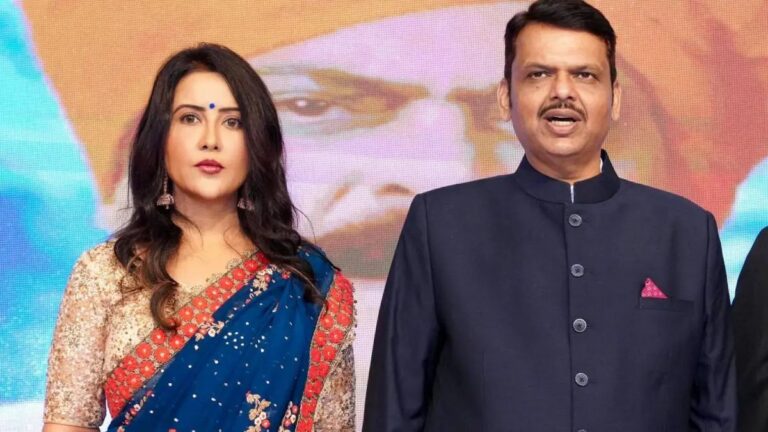
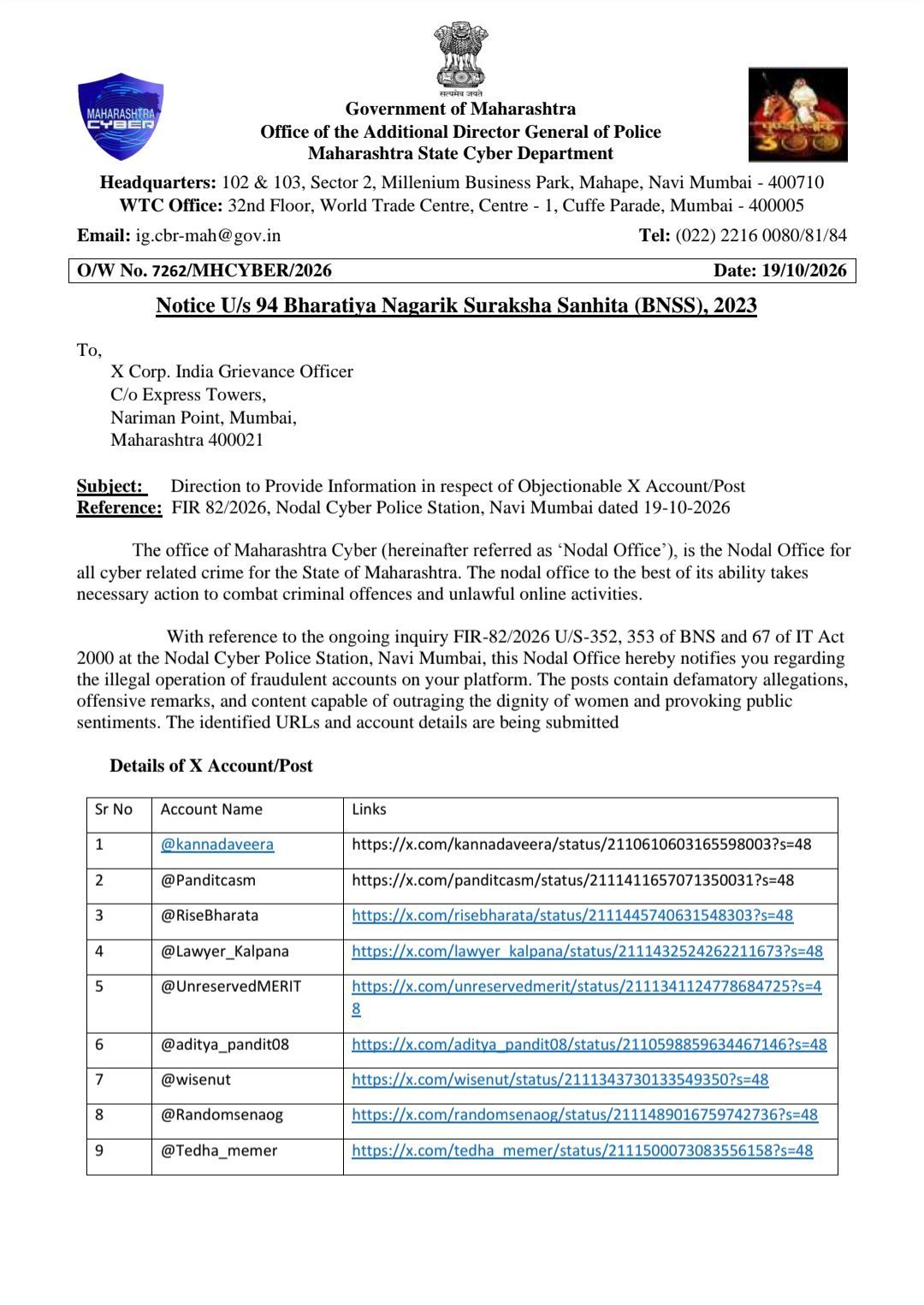
A controversy erupted surrounding Maharashtra Chief Minister Devendra Fadnavis’s wife, Amruta Fadnavis, after the Maharashtra Cyber Department issued a notice to X Corporation seeking details of multiple accounts and posts identified in an ongoing investigation.
The notice, dated October 19, 2026, was issued under Section 94 of the Bharatiya Nagarik Suraksha Sanhita (BNSS), 2023, in connection with FIR No. 82/2026 registered at the Nodal Cyber Police Station in Navi Mumbai. It seeks account registration records, email addresses, mobile numbers, IP addresses, login timestamps, device identifiers and other information that could help investigators identify the account operators.
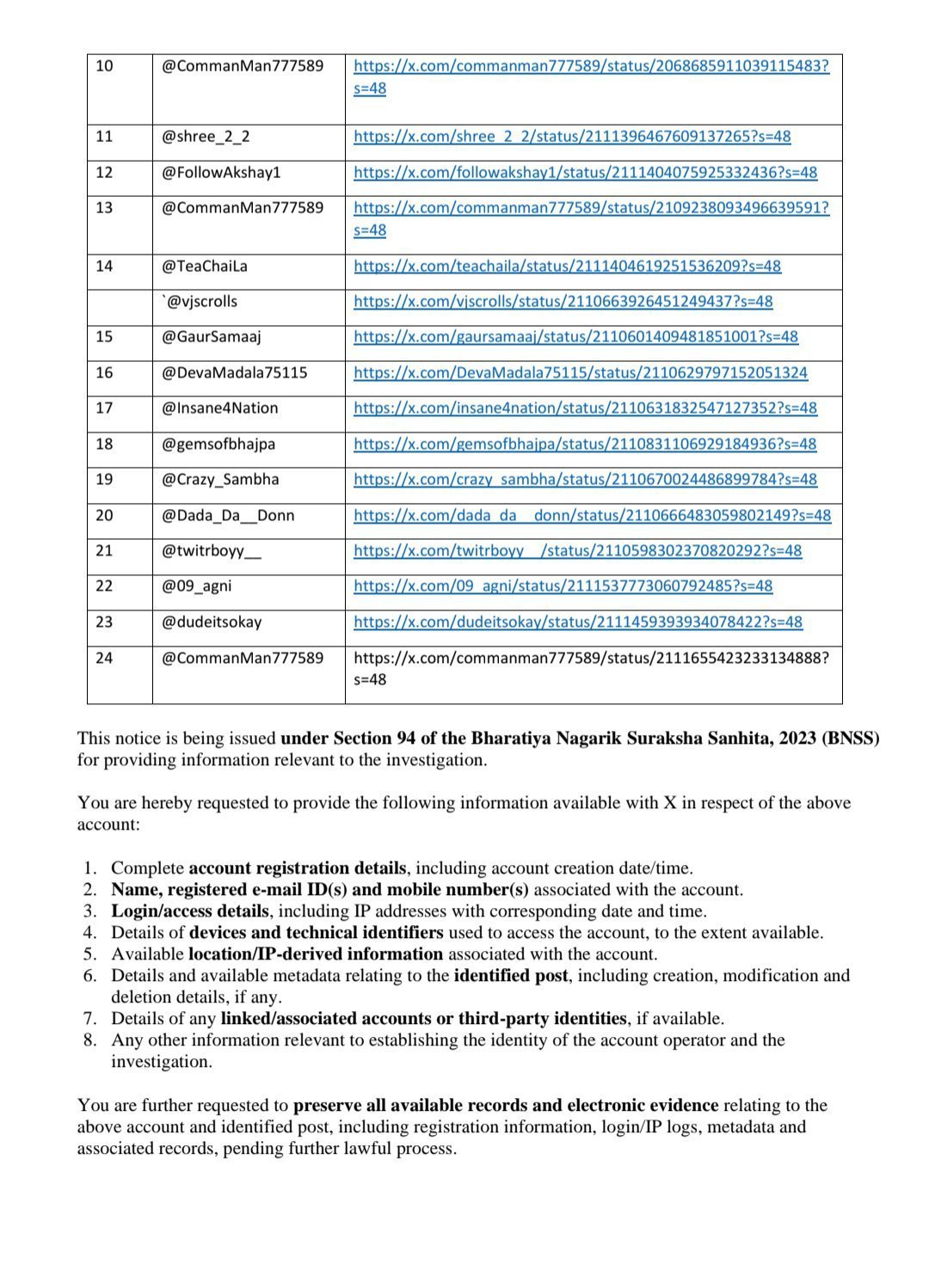
The document lists multiple X accounts and individual post URLs. It also directs the platform to preserve available electronic evidence, including account records, login logs and post metadata.
According to the notice, the investigation concerns allegations of defamatory content, offensive remarks and material capable of provoking public sentiment. The FIR invokes Sections 352 and 353 of the Bharatiya Nyaya Sanhita (BNS), 2023, and Section 67 of the Information Technology Act, 2000.
Intriguingly, some of the accounts mentioned in the list have been suspended. The suspension has naturally sparked discussion of high-handed behaviour by authorities and whether police action is justified for criticising Amruta Fadnavis over her endorsement of Muslim participation in Garba celebrations.
How Amruta Fadnavis’s Garba remarks triggered the controversy
The controversy began in September 2026 after Amruta Fadnavis endorsed Muslim participation in Garba and Dandiya events during Navratri in Maharashtra.
The Vishva Hindu Parishad (VHP) had called for Muslims to be barred from such events, a position backed by Maharashtra minister Nitesh Rane, who cited concerns of ‘Love Jihad’, a phenomenon where Muslim men lure Hindu girls into relationships while keeping their identity incognito. Amruta Fadnavis, however, expressed a different view, arguing that Muslims should be allowed to participate in Garba.
Speaking to reporters, she said:
“There is nothing wrong with a Muslim person attending the celebrations. If a Muslim also comes and enjoys the festival properly, I do not see anything wrong with it.”
"I think the festival of ours is inclusive… If any Muslim man wants to enjoy the Garba, there should be no problem."
Amruta Fadnavis replies to Minister Nitish Rane’s statement calling to bar Muslims from Garba. https://t.co/x177BHlXqq
Her remarks drew criticism from social media users who disagreed with her position and subsequently trolled her for her singing, public appearances and social engagements.
Maharashtra Cyber names multiple X accounts
The police notice identifies several accounts, including @kannadaveera, @Panditcasm, @RiseBharata, @Lawyer_Kalpana, @UnreservedMERIT, @aditya_pandit08, @wisenut and @Randomsenaog, among others.
Maharashtra Cyber has asked X to furnish information about account creation, registered contact details, login history, IP addresses, device identifiers, location-related information and metadata associated with the identified posts.
The agency has also sought information about linked accounts and third-party identities, where available, as part of efforts to establish who operated the accounts.
Posts deleted and accounts suspended as controversy over police action grows
Following the circulation of the FIR-related information and the police notice, several posts identified in the controversy were deleted. Some accounts mentioned in the list, including @randomsenaog, @tedha_memer, have been suspended, although it has not been independently established whether those suspensions were directly linked to the posts concerning Amruta Fadnavis.
The developments have prompted questions about the scope of the police action. If the investigation concerns threats, unlawful abuse or other independently actionable content, those allegations must be assessed on their evidence. If the action extends to legitimate criticism or satire, it raises a different set of concerns about how law enforcement is being used to suppress criticism of those in power and their family members.
Children seen hitting Amruta Fadnavis’s posters with slippers
The controversy took another turn when videos purportedly showing children hitting or slapping posters of Amruta Fadnavis with slippers began circulating online.
Social media posts linked the footage to incidents in Ahilyanagar and Kolhapur, portraying the acts as part of the backlash against her Garba remarks. It was then used by some to justify police action against social media users over their posts on Amruta Fadnavis.
Allegations of a coordinated smear campaign and a ‘hit job’
As the controversy exploded online and with many prominent influencers questioning the Fadnavis government for initiating action against ‘right-wing’ accounts criticising Amruta Fadnavis, some on social media presented a theory defending the Maharashtra government, claiming that the backlash against Amruta Fadnavis was not entirely organic and that there was a political conspiracy and public-relations networks linked to prominent leaders behind the ‘hitjob’ targeting Devendra Fadnavis.
According to this theory, her remarks were used as a pretext for a wider campaign involving distorted clips, unrelated photographs, personal attacks and videos of children striking her posters with footwear. Some have alleged that the broader objective was to portray Devendra Fadnavis as being at odds with Hindu sentiment by targeting his wife.
These claims have not been independently substantiated. No evidence was cited to establish that agencies linked to particular political leaders orchestrated the posts or videos.
‘Better than Lata Mangeshkar and Asha Bhosle’: Sarcastic posts flood X
The police notice has also prompted a wave of sarcastic posts ostensibly praising Amruta Fadnavis’s singing, with users comparing her to legendary singers Lata Mangeshkar and Asha Bhosle. A raft of social media users took to X to mockingly praise Amruta Fadnavis following the Maharashtra Cyber Department’s FIR on a critical post against the CM’s wife.
One user sarcastically described her as the greatest singer ever, claiming that she was better than Beyoncé and Taylor Swift and could sing in several languages.
Amruta Fadnavis ji is the greatest singer ever.. like even better than Beyonce nd Taylor Swift tbh. She sings in Hindi Marathi Gujarati English Japanese Spanish nd even French
and she the most beautiful too, haters please upgrade your playlist and your taste lmao https://t.co/FcCGPtHA81
Another declared that Amruta Fadnavis was better than Lata Mangeshkar and Asha Bhosle combined, sharing a montage depicting contemporary singers crying while she performed.
Amruta Fadnavis >>>>> Lata Mangeshkar & Asha Bhosle combined. https://t.co/rCDad6wPlF
The exaggerated praise was obviously intended as mockery, while also drawing attention to the police investigation and the possibility of legal consequences for online posts targeting the Chief Minister’s wife.
Another user, @Being_humor, took a sarcastic dig at the BJP, suggesting that the party’s political calculations were so elaborate that they had left even its own right-wing (RW) ecosystem scratching its head.
The user came up with a tongue-in-cheek theory that the BJP had devised a “Chanakya-level” masterplan to protect right-wing influencers facing FIRs in opposition-ruled states. Since the party could not directly intervene in those cases, it was allegedly getting FIRs registered against its own influencers in BJP-ruled states instead.
The supposed masterstroke? If police from an opposition-ruled state arrived to arrest an influencer, they would discover that the person was already behind bars in a BJP-ruled state. The courts, according to the user’s sarcastic theory, would then refuse to let the other state’s police take the influencer away.
BJP has played Chanakya-level politics that has left even the RW confused.
Many RW influencers are facing FIRs filed against them by opposition-ruled states and are fearing arrest.
BJP can’t fight these cases directly, so it filed FIRs against its own RW influencers in BJP-ruled states. That way, if the police from an opposition-ruled state come to arrest these influencers, they will already be in jail in a BJP-ruled state, and even the court will not allow the police from the opposition-ruled state to take them away.
Jahan humari soch khatm hoti hai, wahan BJP ki soch shuru hoti hai. 🥹🙏🏻
However, the controversy and ironic tweets in its aftermath reveal the growing disillusionment among a large section of ‘right-wing’ social media users with the Maharashtra government, resorting to dry, cutting sarcasm to express their disapproval.
Is Maharashtra police being misused to suppress dissent?
The Maharashtra Cyber investigation now raises several questions. What specific content forms the basis of the allegations against each account? Were the identified posts independently unlawful, or did some amount to criticism and satire? Were the reported account suspensions connected to the investigation? And is there evidence to support claims that the poster-slapping videos and online attacks were coordinated?
The police notice establishes that investigators are seeking information from X. It does not establish the guilt of the account holders or prove the existence of a political conspiracy.
The controversy, however, raises a larger question about the use of the police machinery by governments when criticism is directed at those in power or their families. While the authorities are entitled to investigate genuine threats, criminal intimidation and other unlawful content, that power must not become a means of discouraging criticism, satire or political disagreement.
When social media users face FIRs and demands for their personal information over posts mocking a politically influential figure over their remarks, it can create a chilling effect, prompting others to self-censor for fear of police action. The distinction between unlawful conduct and unpalatable criticism must remain clear, regardless of who is being criticised.
A society is inarguably in a deplorable state when outrage against a heinous crime is contingent on the identity of the victim and the perpetrator rather than the severity of the crime itself. The conspicuous silence of Kashmir and negligible outrage across India on the rape and murder of a 15-year-old tribal girl in the Chatroo area of Kishtwar by her government school’s teacher, Khalid Hussain, exemplifies this hypocrisy. The same Kashmir that burnt for over 45 days due to the fake 2009 Asiya-Neelofar ‘rape-murder’ case is demonstrating a profound moral decay and hypocrisy in the Kishtwar minor rape and murder case.
Kishtwar rape and murder case: The cover-up, social boycott threat against the victim’s family and complicit silence
In August 2026, a 15-year-old Muslim Gujjar schoolgirl in the Chatroo area of Kishtwar was allegedly raped repeatedly for over months by her teacher and in-charge headmaster at the Government Middle School, Khalid Hussain, resulting in pregnancy.
When the pregnancy was detected around 10th August at a local Public Health Centre, instead of mandatory reporting under the Protection of Children from Sexual Offences (POCSO) Act, 2012, it is alleged that the accused teacher, his brother Tariq, doctors, hospital staff, a brother-in-law, a pharmacy owner, and two local community figures hatched a conspiracy to cover up the matter and arrange an illegal abortion.
A junior staff member and two sanitary workers at the District Hospital Kishtwar were given money to aid the termination of the victim’s pregnancy.
On the 19th and 20th of August 2026, the 15-year-old victim’s age was falsely recorded as an adult on hospital registration slips, and illegal and unsafe methods were used inside and outside the hospital to terminate the minor’s advanced pregnancy.
However, as the victim’s health deteriorated, she was rushed in accused Khalid Hussain’s private vehicle to the Doda Government Medical College.
The minor girl died on 20th August during the botched procedure. Reports say that the victim was referred to GMC Jammu in view of her critical condition. However, the 15-year-old died on the way at Udhampur.
The police investigation revealed that Khalid Hussain’s vehicle, in which the victim was transported, was later washed to destroy evidence.
As the matter came to light, Khalid Hussain was removed from service, and the contracts of two accused sanitation workers at the Kishtwar district hospital were also terminated after their arrests.
Initially, a case was registered at the Chatroo Police Station.
What followed as a local protest and shutdown in the Chenab Valley. The case was transferred to the Special Crime Wing in Jammu.
Meanwhile, the police arrested over nine people, including Khalid Hussain and his brother.
Thereafter, Inspector General of Police, Crime, Sarah Rizvi, formed a special investigation team (SIT) led by Senior Superintendent of Police, Special Crime Wing, Jammu, Sanjay Kumar Parihar, immediately after the Crime Branch took over the probe.
During the initial probe by the Kishtwar Police SIT, DNA samples of the minor victim and the newborn, collected at District Hospital Kishtwar, were sent to Central Forensic Science Laboratory (CFSL) in Chandigarh for comparison with samples from the main accused and his co-accused brother.
In October 2026, the police filed a 1000+ page chargesheet against 15 accused persons, with teacher Khalid Hussain as the prime accused, relatives, doctors, hospital staff, community leader, etc.
All the accused have been booked under BNS, POCSO, SC/ST (Prevention of Atrocities) Act, and MTP Act, citing 143 witnesses.
“Two doctors and another accused have been booked under Section 21 read with Section 19 of the POCSO Act for failing to report the matter to the police despite having knowledge of the minor victim’s pregnancy,” the police said.
Meanwhile, the main accused remains in police custody.
The local police have stated that the deceased victim’s father was prevented from approaching the police. Not only this, but he was also subjected to immense pressure and intimidation.
Devastated by the death of his daughter, the victim’s father was also threatened with social boycott.
“A settlement deed or Razinama was prepared in a local meeting at the residence of one of the accused. The SIT has seized this document, and the expert opinion of Forensic Science Laboratory (FSL) Jammu has confirmed the authorship of the writing and the signatures on it,” a police spokesperson said.
While the mainstream political leaders across all parties have demanded a fair and speedy investigation into the matter, this disturbing case has somehow failed to shake the conscience of society at large.
However, nearly two decades ago, Jammu and Kashmir witnessed violent protests, intense political theatre, sustained agitation, and international media attention over the Asiya-Neelofar rape and murder case, which actually was not a rape and murder case at all.
The 2009 Asiya-Neelofar rape and murder hoax was concocted to exploit the accidental death of two women to target the Indian Army
On 30th May 2009, bodies of a 22-year-old Neelofar Jan and her 17-year-old sister-in-law, Asiya Jan, were found in the Rambi Ara stream near Shopian. Even before a proper investigation, allegations spread that both women were raped and murdered by Indian Army officers. The two women had, in reality, died after accidental drowning on 29th May 2009.
What triggered weeks-to-months-long intense protests and strikes across the Kashmir Valley, which attracted foreign media’s attention, was the postmortem reports. The postmortem reports by local doctors claimed that the deceased duo were raped and murdered.
At that time, the Hurriyat or the separatist groups, played the central role in protest mobilisation and intensified their ‘demands’ for breaking Kashmir away from India.
The death of Asiya and Neelofar back in 2009 had triggered violent protests led by Majlis-e-Mashwarrat. The situation could return to normal only after a Central Bureau of Investigation (CBI) probe found that the two sisters, Asiya and Neelofar, were neither raped nor murdered.
CBI, back in 2009, had filed a chargesheet against six doctors, two civilians, five lawyers and the brother of the victim for fabricating evidence. It was alleged that the lawyers had coerced two civilians to turn witnesses. The CBI has also rejected the Majlis’s claim of rape and murder, saying that the two women decided to cross the Rambi Ara river in Shopian as they were getting late. However, the two drowned in the river and died.
CBI produced statistics from the state irrigation department indicating that the Rambi Ara river recorded increased water discharge in that specific month in 2009.
In June 2023, the Jammu and Kashmir government terminated the services of two doctors Bilal Ahmad Dalal and Nighat Shaheen Chilloo who collaborated with Pakistan to falsify the postmortem reports of Asiya and Neelofar Jan.
The doctor duo intended to falsely implicate the Indian Army officials in murdering and raping the two girls. Dr Bilal Ahmad Dalal and Dr Nighat Shaheen Chilloo wanted to spread disaffection against the Indian armed forces.
It later emerged that the two teams of doctors who conducted the postmortem of the deceased girls had blatantly lied in their reports. The first team had claimed that Asiya died of cardiovascular arrest and Neelofar of neurogenic shock. The second team of doctors from Pulwama claimed sexual assault on both the girls.
The CBI investigation questioned the entire operation, claiming that doctors had assembled a piece of the heart and labelled it as lung components. Furthermore, the second team of doctors tampered with the vaginal swab samples. It didn’t belong to one of the women. Dr Nighat Shaheen failed to inform the CBI of where she obtained the samples.
In addition, the DNA tests on 47 officials whose samples were gathered came back negative.
In 2010, India Today had published a report wherein they claimed to have accessed the call recordings of the doctors involved in the postmortem of Asiya and her sister-in-law Neelofar. According to the report, Dr Nighat Shaheen, who was a part of the second team of doctors, “had concluded that the girls were raped without even examining their vaginas.”
Dr Nighat Shaheen and the other doctors had falsely stated in the report that Asiya’s hymen was ruptured.
However, the whole rape and murder hoax fell apart when the doctors of AIIMS conducted the autopsy and concluded that Asiya’s hymen was intact.
For nearly 45 days, Islamists and Kashmiri separatists led by the Hurriyat pushed the narrative that the Indian Army, the CRPF, the police, and “Delhi” had committed a horrific crime and thus were not worthy of their sympathy, let alone trust.
The Indian and foreign Islamo-leftist media presented the Asiya and Neelofar death case as a quintessential example of how Indian security forces ‘torment’ Kashmiris.
While the Kishtwar rape and murder triggered localised protests, political statements and standard media reporting, nothing on the scale of mobilisation and outrage, as well as national and international media coverage, was seen during the 2009 Asiya-Neelofar case.
What explains the selective silence of the same coterie on Kishtwar rape and murder, which agitated for weeks over a hoax
It is nothing but the narrative utility that explains the selective silence not only of the same groups that went berserk in 2009 over a fake rape and murder.
The 2009 Asiya-Neelofar case fit in the pre-existing ‘Indian armed forces rape and kill Kashmiri women’ apocrypha.
Blaming the accidental death of two young women on Indian forces, giving it a more provocative spin by alleging rape by fabricating medical evidence, weaponised the case for spreading anti-India hate, separatist mobilisation, and inviting external pressure on the Indian State.
Remember the nationwide outrage over the 2017 Kathua rape and murder case? From locals, human rights bodies, intellectuals, Bollywood celebrities to international media, all were collectively outraged; several protests happened and social was weaponised by Islamo-leftists to highlight the religious identity of the victim and the perpetrators. The whole placard gang had given a religious colour to the horrific crime.
However, the Kishtwar rape and murder case does not fit these templates. The accused perpetrator is a local Muslim; the victim is a tribal Muslim girl from the Jammu region, while the cover-up involved local doctors and hospital staff rather than security personnel.
In fact, various segments of that society, doctors, teachers, religious clerics, relatives, and even political leadership, all played a part in suppressing the matter.
Essentially, the society collectively attempted to bury a genuine case of rape, and in the process of this suppression, the 15-year-old victim lost her life.
However, beyond the performative outrage and a few social media posts, even a fatal cover-up involving teacher, medical, and community actors could not stir the collective conscience of those who claim to be the ‘true protectors’ and ‘champions’ of Kashmiris.
This deliberate silence, though disturbing, is not surprising. Back in May 2019, during the widespread protests in Jammu and Kashmir over the rape of a three-year-old girl by one Tahir Ahmad Mir, the Shia-Sunni Coordination Committee (SSCC) called for an immediate end to the protests to prevent Shia-Sunni tensions. They advocated an end to the protests, arguing that it may turn into communal tension as the victim and accused belong to two different sects of Islam.
In fact, for years, it remained an open secret that during the local Islamic terrorism in the region, women were frequently sexually abused by the Islamic terrorists in the valley.
There is a prevalent mindset, perhaps, that crimes not how horrific they are, deserve maximum outrage only when it is convenient to target the perpetrators. But when the perpetrator is one of their ‘own’, he should get punishment, but there is no need to make a big issue out of it.
Apparently, it is one of the reasons why the death and dignity of two Kashmiri women, Asiya and Neelofar, were turned into a tool for serving ideological-political means, but now the times have changed, and the degeneracy committed in 2009 can no longer be replicated; thus, silence is the only choice.
It is understandable that the groups that enjoyed local power and influence in 2009 are no longer influential to the same level; neither can separatist sentiments be reignited, as the days of Azadi slogans and stone-pelting are gone. There is undoubtedly a deliberate, hypocritical and calculated silence.
Apparently, the identity of the accused perpetrators and the victim(s) govern the extent and intensity of outrage, political-ideological utility, and not the severity of the crime itself.