Two teachers at an unnamed comprehensive school in the Frankfurt area of Germany have reportedly imposed a ban on non-Muslim students in the fifth class from drinking water in the classroom. According to reports, they did so in “consideration” of a few Muslim students observing fasting during Ramadan.
The development was first reported by the German outlet NIUS on 13th March. The article’s English-translated title read, “Comprehensive school near Frankfurt: Because it is Ramadan, fifth graders should no longer drink in class.”
According to reports, the class consists of 27 students, with 3 of them being from the Muslim faith. The fifth-grade students, aged around 10-11 years, informed their parents that two teachers had forbidden them from drinking water in class because three of their Muslim classmates were fasting during Ramadan.
As part of their fasting practice, Muslims observing Ramadan refrain from consuming any food or drink, including water, during daylight hours and break their fast at sunset with iftar.
A father of one of the school students told NIUS, “At dinner, we always talk about how the day was. I asked my daughter what was new at school. She then told us that two teachers had forbidden the students from drinking in class because three of the 27 children were fasting.”
The father explained the strange development pointing out that usually students were allowed to drink from their water bottles and refill them from water dispensers. He added that the children have their water bottles on the table and are allowed to drink in class if they are thirsty. He noted, “You can always fill up your bottles in the hallway outside, there’s a water dispenser.”
Bewildered by the recent development, he said, “We found this announcement strange. On the one hand, the children in fifth grade are between 10 and 11 years old. Even for religious Muslims, the fasting requirement only applies from the age of 14. And: The fact that 24 children have to take three children into consideration when it comes to basic physical needs – that’s a strange intervention.”
Speaking with the German portal, he noted that he and his wife told their daughter that she should drink if she was thirsty.
However, the NIUS report added that the decision to ban students from drinking water was seemingly a personal ruling by two teachers. Notably, according to the girl, the announcement made by the two teachers does not appear to be a school requirement. Evidently, another teacher at the same school allowed the children to drink as usual if they wished.
Despite repeated attempts to get a response, the school has not responded to any query in this matter.
According to reports, the incident occurred in the same German city, Frankfurt which recently made headlines for becoming the only city where Ramadan lights were installed in its city centre, last month.
??‼️ Move over, Christmas! Frankfurt embraces multiculturalism by becoming the first German city to introduce Ramadan lighting throughout its city center. pic.twitter.com/nnKR6xSRAn
In an application to the city council last year, the governing German Green Party wrote, “By decorating during Ramadan, the city of Frankfurt is sending an important signal to Muslims and appreciates the people of Muslim faith in this city.”
Hailing from the same party, Frankfurt Mayor Nargess Eskandari-Grünberg said, “They are lights of togetherness, against reservations, against discrimination, against anti-Muslim racism, and also against anti-Semitism.”
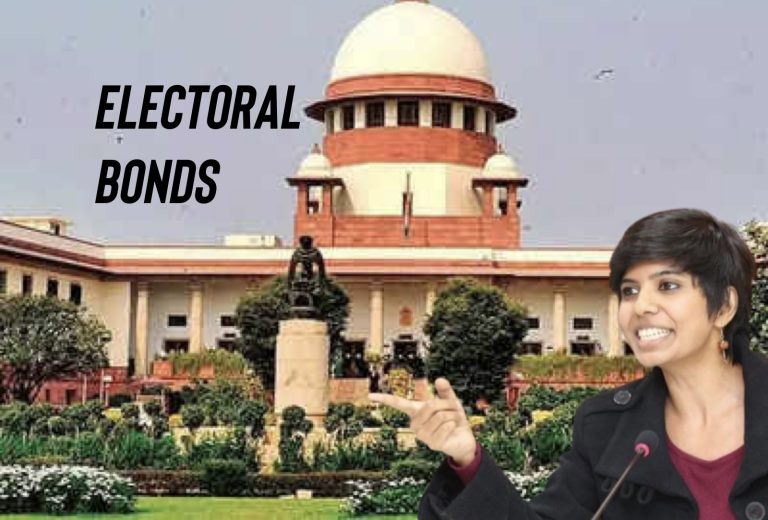
Earlier today (March 18), the State Bank of India made a profound disclosure during the Supreme Court’s hearing over the electoral bonds. Senior advocate Harish Salve, representing SBI, revealed that the bond numbers issued by the banks are only available on the bond and not anywhere else.
When probed if the purpose of the bond number is for security or an audit trail, the bank responded by saying it is only for the security feature and the audit trail is different.
Salve : In two files. The bond number is only on the bond. It is visible only under UV light.
CJI : Is it only a security feature or for audit trail?
Nevertheless, the Supreme Court on Monday ordered the SBI to submit all “conceivable” details available with it regarding electoral bonds, including the alphanumeric number corresponding to each bond.
The court also asked the SBI, in the interest of avoiding controversy in the future, to file an affidavit by 5 PM on Thursday that it has disclosed all details in its custody and that no details have been withheld.
Electoral bonds are money instruments that act as promissory notes or bearer bonds that can be purchased by individuals or companies in India. They are issued specifically for the contribution of funds to the political parties.
The development came weeks after the Supreme Court deemed the electoral bonds scheme invalid, labelling it ‘unconstitutional’. Additionally, it ruled that anonymous poll bonds infringe upon the Right to Information as outlined in Article 19(1)(a). Chief Justice of India DY Chandrachud expressed that poll bonds violate fundamental rights and raised concerns about them leading to quid pro quo.
However, the submissions made by senior advocate Harish Salve on Monday (March 18) for the SBI poked holes in the conspiracy theories widely popular among the leftist circles relating to electoral bonds, especially after the report published by The Quint ‘journalist’ Poonam Agarwal.
The matter pertains to a unique secret code printed on each electoral bond that is not visible to the naked eye but can be seen under UV light. The hidden alphanumeric code, the bank said was a security feature and not for auditing purposes.
In essence, the SBI conveyed that just because the bond contains hidden numbers, it doesn’t mean they can be used to link donors with political parties, shattering the web of insinuations that The Quint ‘journalist’ Poonam Agarwal had weaved in her report that was widely hailed in the leftist circles as “pathbreaking journalism”. Several far-left propaganda portals such as The Wire, Scroll, and others had sung paeans to Agarwal over her “investigation” into electoral bonds.
Earlier this week, several left-leaning ideologues extolled The Quint journalist Poonam Agarwal, who was booked for abetment of suicide in the Army Jawan’s suicide case in 2017, for her report on electoral bonds, where she alleged that the electoral bonds were not completely anonymous as claimed by the late BJP leader Arun Jaitley and that the secret codes on them could be used by the Centre to link donors with political parties.
Describing it as ‘apparent outmanoeuvring by the Centre’, the report insinuated that the government was undertaking “unprecedented secret surveillance” with the help of hidden alphanumeric codes in the name of transparency through electoral bonds. This, in layman’s language, meant that the Centre was keeping a tab on who bought electoral bonds for which political parties.
Relevant sections from The Quint report
The author also tried to imply a breach of trust on the part of the government after senior leader Arun Jaitley had promised complete anonymity on political donations via electoral bonds.
“The Quint’s investigation reveals that while the public will remain clueless about who has donated to which party, the government has access to those details, collated through alphanumeric numbers on the electoral bonds, which are invisible to the naked eye,” the Quint report authored by Poonam Agarwal read.
Relevant section from The Quint report by Poonam Agarwal
Those are two incredible leaps of faith by The Quint journalist who tried projecting her assumptions as facts by claiming that the secret codes on the electoral bonds could be used to draw a link between donors and the political parties, thereby compromising the promised anonymity to the donors, while also being a tool of surveillance for the Centre to know who was donating to which political party.
Another ridiculous argument that Agarwal furthers is that the watermark is enough and the alpha-numeric hidden code was not needed for security purposes. This doesn’t hold water because that would mean even currency notes don’t need serial numbers printed on them for security as they, too, have watermarks.
Those assumptions were laid to ruin by the SBI earlier today when it submitted in the top court that the hidden secret codes on the bonds are meant for security purposes and not recorded by the bank, much like the serial number on the currency notes, which banks don’t record during deposit and withdrawal, making it impossible for them to tell who was issued with currency number note and who deposited which note.
In a video explaining her stance on electoral bonds, Poonam categorically says that the bank would record the alpha-numeric code at the time of purchase of bonds, which would later be used to link donors to political parties. This has now been proven false, with the SBI submitting to the Supreme Court that the bond numbers are on the bonds only, nowhere else.
Since SBI has confirmed it hasn’t documented the figures, if the Supreme Court presses, SBI might scan the bonds and release the numbers, potentially connecting them to the recipient political parties. However, linking them to the donors seems a remote possibility.
Some political parties like the DMK and AIDMK were able to publish the donor names presumably because the companies may have given them the bonds directly. But for others, like the TMC and JDU, which said many donated them anonymously with some bonds being dropped in drop boxes, it is impossible to furnish the data if the parties didn’t keep the record.
Poonam Agarwal charged in 2017 army jawan suicide case
It is noteworthy to mention that Poonam Agarwal was booked for abetment of suicide in the Army jawan’s death case after carrying out a “sting operation” for the website The Quint at Deolali cantonment in Nashik, Maharashtra.
Poonam had entered the cantonment with hidden cameras concealing her identity as a journalist and recorded videos that showed army jawans employed as sahayaks (helpers) indulged in doing menial jobs that they should not be doing.
She talked to a jawan Lance Naik Roy Mathew in particular, who allegedly had no idea that he was talking to a journalist, and the conversation was used to prove that jawans were not happy with the sahayak system and that they were being exploited.
A few days later, Roy Mathew was found dead in an abandoned barrack in the cantonment. A diary was recovered from the barrack, which suggested that the jawan was under pressure and it was a case of suicide. Roy Mathew’s family members also confirmed that he was scared and under pressure as his identity was reported to have been revealed due to the “sting operation” and subsequent media coverage.
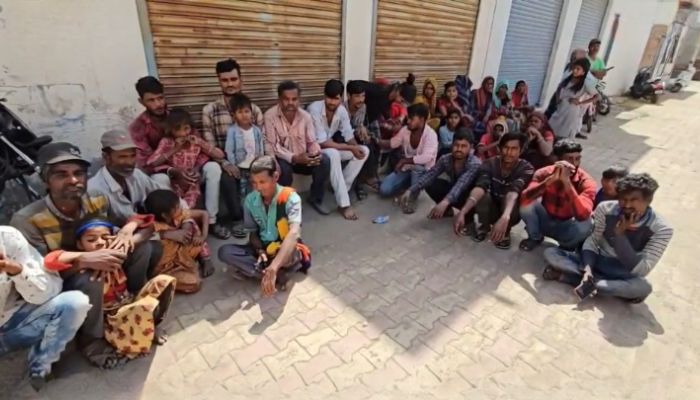
On Sunday (17th March), early in the morning, a contractor Mohammad Rafiq in Anjar of the Kutch district in Gujarat set ablaze 12 huts of daily wage labourers to burn them alive along with their families, as per reports. The accused torched the huts situated in the Mochi Bazar near Khatri Chowk in Anjar because the workers refused to work for him unless he paid their pending dues for the earlier work.
Mohammad Rafiq fled the spot and later was arrested by the police. A case is registered against him under various sections of the IPC based on the complaint given by the aggrieved workers.
The aggrieved labourers work on daily wages. Accused Mohammad Rafiq is a contractor. He had taken these labourers to work and after completion of the work, he did not pay them the predecided wages. Instead, he gave them just Rs 100 each. When the labourers told him that they would not work for him anymore, Mohammad Rafiq threatened to burn them all alive.
As per reports in the Gujarati media, a brief altercation in this regard took place on Saturday evening. In the wee hours of Sunday (17th March), Mohammad Rafiq came to the huts where these labourers were living. At that time, women, children, and elderly persons were sleeping inside these huts. Mohammad Rafiq sprinkled some inflammable petroleum liquid on these huts and set them on fire and he fled from the spot.
बड़ी ख़बर :
कोंट्रक्टर ने 12 श्रमिक परिवारों को ज़िंदा जलाने की कोशिश की.
श्रमिकों को पैसे ना देकर शोषण कर रहा था,ग़ुस्से मैं ज्वलनशील प्रवाही से घरों को लगाई आग.
घरों मैं रहते परिवार मुश्किल से जान बचा पाये.
अंजार पुलिस ने फ़ौरन आरोपी मोहम्मद रफ़ीक को पकड़ लिया है.
As soon as the huts were set ablaze, everyone inside the huts came out. The municipality authorities were contacted and the fire brigade vehicle was called. But before any aid could reach the spot, the huts and everything were reduced to ashes. Fortunately, there was no casualty reported in this incident. The flames of the fire also caused sparking in the electricity wires over the huts.
The accused Mohammad Rafiq immediately fled from the spot. A police team was deployed to nab him after a complaint was registered at the Anjar police station. The complaint was lodged by 46-year-old Badrilal Gangaram Yadav and other labourers living in the huts.
Anjar’s police inspector SD Sisodia said, “Different teams were sent to nab the accused. Meanwhile, when the accused reached near the railway station, he was arrested. At present, the police have registered a complaint under sections including attempt to murder and further investigation is underway.”
According to the family members of the victims, all the people here work as labourers and earn daily wages. The accused Rafiq used to take the labourers from the area for retail labour and used to give only Rs 100 without paying the fixed amount and also used to issue threats. These workers were fed up with Rafiq and refused to work for him. But now all the workers have been rendered homeless as Mohammad Rafiq burnt their huts.
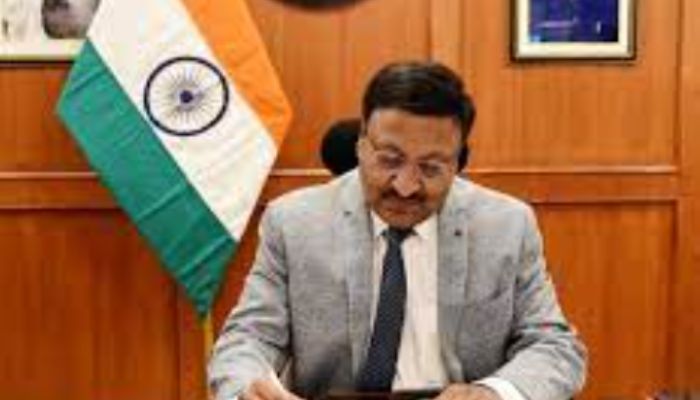
In a decisive move towards upholding the principles of free, fair and transparent elections, the Election Commission of India (ECI) has issued orders for the removal of Home Secretaries in six states namely Gujarat, Uttar Pradesh, Bihar, Jharkhand, Himachal Pradesh and Uttarakhand.
Additionally, the Secretary of the General Administrative Department in Mizoram and Himachal Pradesh have also been removed.
The commission has directed all the State Governments to transfer the officers connected with election-related work, who have completed three years or are in their home districts.
Maharashtra had not complied with the directions in respect of few Municipal Commissioners and some Additional / Deputy Municipal Commissioners in Maharashtra.
While conveying displeasure to the Chief Secretary, the Commission directed transfer of BMC and the additional / Deputy commissioners with the direction to report by 6pm today.
The Chief Secretary was further directed to transfer all the similarly placed Municipal commissioners and Additional / Deputy Municipal Commissioners of other Corporations in Maharashtra.
This step comes as part of the Commission’s resolve and commitment to maintaining a level playing field and ensuring the integrity of the electoral process, which has been emphasised by CEC Rajiv Kumar time and again and recently during the Press Conference for announcement of Schedule for General Elections 2024.
The Commission meeting chaired by Shri Rajiv Kumar, comprising of Election Commissioners Shri Gyanesh Kumar and Shri Sukhbir Singh Sandhu was held on Monday at noon.
The officials who have been removed in these seven states were found to be holding dual charges in the office of Chief Minister in respective states which may potentially compromise or be seen to be compromising the impartiality and neutrality required during the electoral process, especially in matters relating to law and order, deployment of forces, etc.
Furthermore, the Election Commission has also taken the necessary action to remove the Director General of Police (DGP) of West Bengal. This decision was taken due to DGP being removed from any active election management related duty earlier, during 2016 Assembly Election in the state and in 2019 Lok Sabha Elections.
With this step, the Election Commission of India has shown its commitment to conducting free, fair, and transparent elections.
Through these measures, the Commission ensures that all stakeholders uphold the highest standards of integrity and impartiality, thereby safeguarding the level playing field in the entire electoral process. (ANI)
(This news report is published from a syndicated feed. Except for the headline, the content has not been written or edited by OpIndia staff)
Ahead of the 2024 Lok Sabha elections, goons associated with the ruling Trinamool Congress (TMC) party in West Bengal have yet again unleashed ‘khela‘ (game) of violence against their political rival BJP.
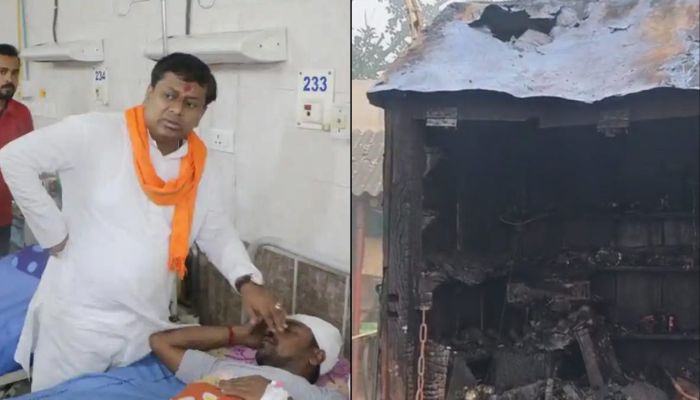
Recently, there have been several cases of unprovoked assaults on BJP workers by TMC in the State. On Saturday (16th March), a BJP karyakarta named Joydeb Das was mercilessly thrashed and attacked with sharp weapons.
The incident took place in Kushmandi in Gangarampur subdivision in Dakshin Dinajpur district of West Bengal. As per a report by ETV Bharat, the attack was carried out by local TMC leader Tarun Pal and his accomplices.
সারা রাজ্য জুড়ে @AITCofficial এর অত্যাচারের শিকার বিরোধীরা… তৃণমূলের হার্মাদ বাহিনী দ্বারা আক্রান্ত কুশমন্ডি বিধানসভার বিজেপি কর্মীর সাথে গতকাল রাতে গঙ্গারামপুর সুপার স্পেশালিটি হাসপাতালে দেখা করে তাঁর শারীরিক অবস্থার খোঁজখবর নিতে গিয়েছিলাম…#shameontmc#shameonmamatapic.twitter.com/olBVgs42fx
— Dr. Sukanta Majumdar ( মোদীজির পরিবার ) (@DrSukantaBJP) March 17, 2024
The victim is a driver by occupation. Reportedly, Tarun Pal had been hounding Joydeb Das ever since the latter’s sister-in-law Mithali was fielded as a BJP candidate for the 2023 Panchayat election.
Das is now undergoing treatment at the Gangarampur Super Specialty Hospital. His father was also injured during the attack. According to BJP President (West Bengal) Sukanta Majumdar, the victim’s wife was molested by Tarun Pal and his men.
The attack took place shortly after the Election Commission of India (ECI) announced the dates for the upcoming Lok Sabha elections. Following the incident, Majumdar went to the hospital and visited the injured BJP karyakarta.
In a tweet on Sunday (17th March), he informed, “Opponents persecuted across the state by TMC.Met a BJP worker from Kushmondi Assembly, who was attacked by TMC goons, at Gangarampur Super Specialty Hospital last night to inquire about his condition.”
TMC assaults BJP workers in two separate incidents
According to BJP’s national spokesperson Amit Malviya, TMC goons assaulted a female BJP worker named Suprabha Majumdar in the Basanti gram panchayat area in South 24 Parganas district of West Bengal.
Malviya added that a 75-year-old woman and a 17-year-old girl were also attacked by the same goons.
Pre-poll violence begins in West Bengal! Home Minister Mamata Banerjee, like always, is looking the other way… She is not just the most incompetent CM and HM across India but also sinister.
In Purandar village of Basanti Gram Panchayat, BJP worker Suprabha Majumdar and… pic.twitter.com/diGaEfvWnE
— Amit Malviya (मोदी का परिवार) (@amitmalviya) March 17, 2024
The BJP spokesperson added that the BJP booth President and party workers were also attacked with spades and iron rods in Balikhal in the Burakhali Gram panchayat area.
“We are standing with them and have provided them all legal and medical help,” Amit Malviya said in a tweet.
Shop of BP worker set ablaze
At around 2 am on Sunday (17th March) night, the shop of a poor BJP worker named Reena Thakur was allegedly set on fire by TMC-sponsored goons. The incident took place in Pandabeswar in Paschim Bardhaman district of West Bengal.
As per a report by Anandabazar Patrika, the victim is the general secretary of BJP’s Mahila Morcha Mandal in Padabeswar. She was earlier a member of the Trinamool Congress but left the party for BJP about 6 months ago.
Since then, she has been harassed, intimidated, threatened and even assaulted by TMC goons. Rina Thakur has also been coerced to join the Trinamool Congress.
With fear of losing gripping TMC, pre-poll violence starts!
Trinamool miscreants set the shop of Pandaveshwar BJP worker Rina Thakur on fire! pic.twitter.com/OdRbmI0Rh0
Hours after the ECI announced the election date, her shop was set ablaze. While speaking to Anandabazar Patrika, the victim narrated, “At around 2 am, my neighbour Tulsi Bauri called me and informed me that my shop is on fire.”
“After seeing my shop burning. I tried to put out the fire. The police were also called. There is nothing left in the shop. It’s all over,” she further lamented.
Despite filing a complaint with the police, Rina Thakur informed that action has not been taken against the culprits. She has accused a local TMC leader
“TMC goons have been torturing me ever since I joined BJP. Santosh threatened to kill me several times. A month ago, I was beaten by his men. I had also complained to the police. But they burnt my shop now,” the BJP worker narrated.
The attacks are reminiscent of the post-poll violence unleashed against BJP workers by the ruling TMC government during the West Bengal Vidhan Sabha elections in 2021 and the pre-poll violence during the 2023 West Bengal Panchayat elections.
Dalit BJP leader killed
On Monday (18th March), BJYM Bolpur Vice President Krishanu Sinha took to X (formerly Twitter) to inform that a Dalit BJP leader was allegedly killed by TMC goons. The victim, identified as Tanmoy Das, was the President of BJP SC Morcha Mandal in Nanur.
Sinha tweeted, “Before the LS election, another murder by TMC goons. Tanmoy Das, BJP SC Morcha Mandal President of Nanur was killed in a premeditated manner on his way home after meeting. “
“All of us including district president, went to Santiniketan PS to demand a proper autopsy,” he further added.
Before the LS election,another murder by TMC goons. Tanmoy Das, BJP SC Morcha Mandal President of Nanur was killed in a premeditated manner on his way home after meeting. All of us including district president, went to Santiniketan PS to demand a proper autopsy.@abhijitmajumderpic.twitter.com/PWnXLKrsKn
— Krishanu Singha ( Modi Ka Parivar ) (@KrishanuOnline) March 18, 2024
2021 post-poll violence in West Bengal
Using violence as an instrument to subdue their political opponents has become a distinctive feature of the TMC rule in West Bengal. Ever since the Mamata Banerjee-led retained power in the state, the persecution of dissenters and opposition workers has only intensified.
More than a dozen BJP workers lost their lives in the post-poll violence that ensued following the victory of the TMC party in the assembly elections. Some reports said women in West Bengal were raped, assaulted and, in some cases, even killed, just because they adhered to a different political ideology.
In 2021, a victim who was raped by the TMC goons in front of her father shared her harrowing ordeal with OpIndia. She narrated how she was attacked and sexually assaulted by perpetrators associated with the TMC party.
In the aftermath of the assembly election results, TMC goons wreaked havoc, attacking and plundering the houses of their opponents. In one such attack, TMC goons lynched BJP worker Avijit Sarkar to death.
On Monday (18th March), Prime Minister Narendra Modi came down heavily on Rahul Gandhi and the I.N.D.I. alliance leaders for the Congress MP’s statement saying that he will fight against ‘Shakti’.
Asserting that he is ready to take the challenge head-on, PM Modi said that this election is a fight between those who want to destroy ‘Shakti’ and those who worship ‘Shakti’ adding that, “Muqabla 4 June ko ho jayega.” (4 June will be a showdown). The counting of votes for all 543 Lok Sabha seats will take place on 4th June.
Addressing a public rally in Jagtial in Telangana, PM Modi said that he is willing to sacrifice his life in the service of Indian mothers and sisters who are the divine form of Shakti, Shakti Swaroopa.
Extending his gratitude to Nari Shakti (women) for their large presence at the rally, PM Modi said, “It’s an honour for me that Nari Shakti has come here to bless and support me.”
“Yesterday, the I.N.D.I. alliance hosted a rally in Mumbai. The I.N.D.I. alliance in their manifesto said that their fight is against Shakti. For me, every mother, daughter & sister is a form of Shakti. I worship them in the form of Shakti. I am the worshiper of Bharat Mata,” the PM said.
#WATCH | Telangana: During his public address in Jagtial, PM Modi says, "The INDI alliance in their manifesto said that their fight is against 'Shakti'. For me, every mother, daughter & sister is a form of 'Shakti'. I worship them in the form of 'Shakti'. I am the worshiper of… pic.twitter.com/ccVUoEVVNb
He further said, “To those who are fighting against Shakti, I accept your challenge. “Main jaan ki baazi laga dunga (I will sacrifice my life for Shakti).”
Addressing the large gathering, PM Modi asked, “Can someone talk about the destruction of Shakti?”
Contrasting the two approaches, PM Modi asserted, “We dedicated the success of the Chandrayaan mission to Shakti by naming the point where Chandrayaan landed as Shiv Shakti.”
#WATCH | Telangana: During his public address in Jagtial, PM Modi says, "Can someone talk about the destruction of 'Shakti'?…We dedicated the success of the Chandrayaan mission by naming the point where Chandrayaan landed as 'Shiv Shakti'…The fight is between those who want… pic.twitter.com/VJKksQtM2W
This comes after Congress scion Rahul Gandhi while concluding his ‘Bharat Jodo Nyay Yatra’ with a rally at Shivaji Park in Mumbai on 17th March, spoke about Shakti (The Divine Feminine in Hinduism) and asserted that he wants to fight this Shakti.
Notably, Shakti is considered to be The Divine Feminine which is the energy present in and running all beings. In Hinduism, there is no concept of fighting against Shakti, instead, Shakti is what helps fight against evil.
#WATCH | Mumbai, Maharashtra: At the conclusion ceremony of the Bharat Jodo Nyay Yatra, Congress leader Rahul Gandhi says, "There is a word 'Shakti' in Hinduism. We are fighting against a Shakti. The question is, what is that Shakti. The soul of the King is in the EVM. This… pic.twitter.com/lL9h9W0sRf
“There is a word ‘Shakti’ in Hinduism. We are fighting against a Shakti. The question is, what is that Shakti? The soul of the King is in the EVM. This true. The soul of the King in the EVM and every institution of the country, in ED, CBI and Income Tax department. A senior leader from Maharashtra left Congress and cried in front of my mother and said ‘Sonia ji, I am ashamed that I don’t have the power to fight this Shakti. I do not want to go to jail.’ Thousands of people have been threatened like this,” Rahul Gandhi said in a shocking distortion of the meaning and value of the concept of Shakti.
As the 2024 Lok Sabha Elections are approaching, the issue of political donations via electoral bonds has surged to the forefront. It has revealed a complex interplay of ethics, legality and political strategy. Days before the General Elections’ dates were announced, the Supreme Court directed the Election Commission of India to publish all the details of donors and political parties that received donations via electoral bonds. As the information came in parts, the Bharatiya Janata Party became the apparent target for propagandists, opposition parties and certain sections of the media.
The reports highlighted that the ruling party, BJP, was the top receiver of corporate donations, which ignited a firestorm of targeted attacks on the party. However, those who attacked the BJP conveniently ignored the common sense that the ruling party at centre and over a dozen states should naturally get maximum donations. Furthermore, regional parties like DMK and Trinamool Congress, which are ruing in a single state each, managed to bag over a thousand crore each in donations via electoral bonds. Despite its stronger hold on national and state politics, Congress received less money than TMC for two consecutive years.
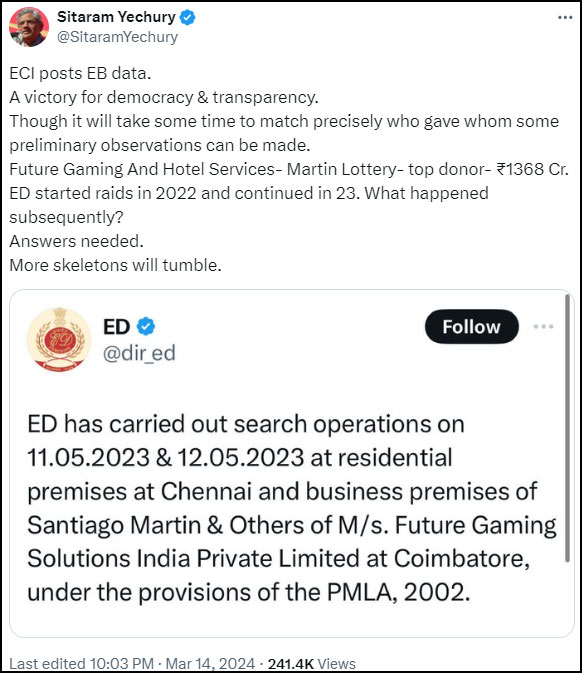
The outcry of the propagandists, opposition parties and media revolved around the claim that the BJP “must have indulged in corruption” and used electoral bonds as a legal way to force corporate houses to donate. For example, Future Gaming and Hotel Services PR purchased electoral bonds worth Rs. 1,368 crores in 22 phases. Initially, because BJP is the largest receiver of donations, “dots” were “connected” that the company paid to BJP after the Enforcement Directorate and other agencies raided it.
The narrative was built purely on assumptions, as there was no way to connect any political party to the donors then.
CPI(M) leader Sitaram Yechury, without taking names of any political party connected Future Gaming And Hotel Services to ED raids. It was an indirect but targeted towards the BJP. However, when more information on electoral bonds came out, Yechury decided not to question DMK, which got most of its donations from the company.
Source: X
Soon, more data was published by the ECI based on the directions issued by the Supreme Court. The data revealed that the Future Gaming and Hotel Services PR, owned by Santiago Martin, donated electoral bonds worth Rs 509 crores. Interestingly, the total money received by DMK via electoral bonds stood at 656.5 crores. It needs to be clarified to whom Future Gaming and Hotel Services PR paid the rest of Rs 859 crores in donations as the details were not revealed in EC’s second set of information. Not to forget, OpIndia categorically provided details of Martin’s links to DMK, TMC, Congress and CPI(M) after the Electoral Bonds first dataset was released.
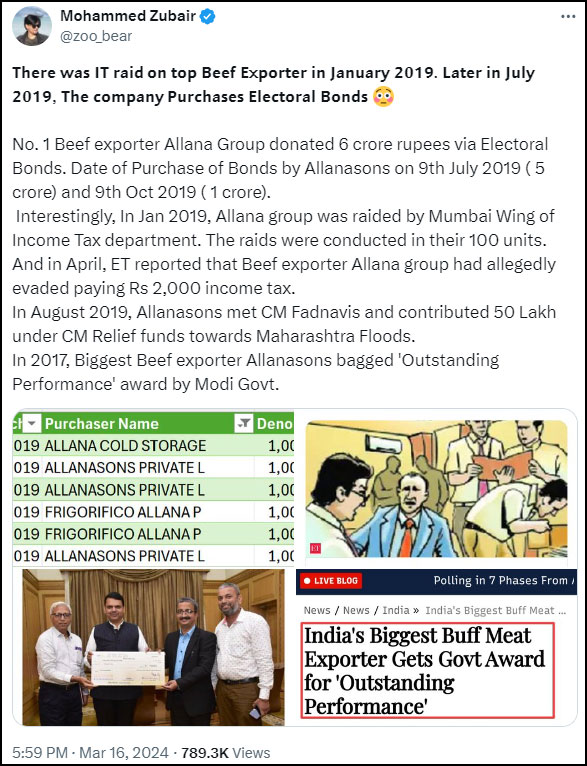
Another example is Allana Group, India’s largest buffalo meat exporter. Alt-News co-founder Mohammed Zubair speculatively “connected dots” from the data available on 16th March and argued that the company donated to BJP after the Mumbai Wing of the Income Tax Department raided it. Two points need consideration. First, without any proof that the money went to the BJP, Zubair led his followers in that direction. Further, he conveniently ignored the fact that the export of cow meat is banned in India. Only cara beef or water buffalo beef gets exported as per the law. However, when we talk about “beef” without mentioning the source, it gives the impression that cow beef is getting exported from India and the BJP-led government is promoting it.
Source: X
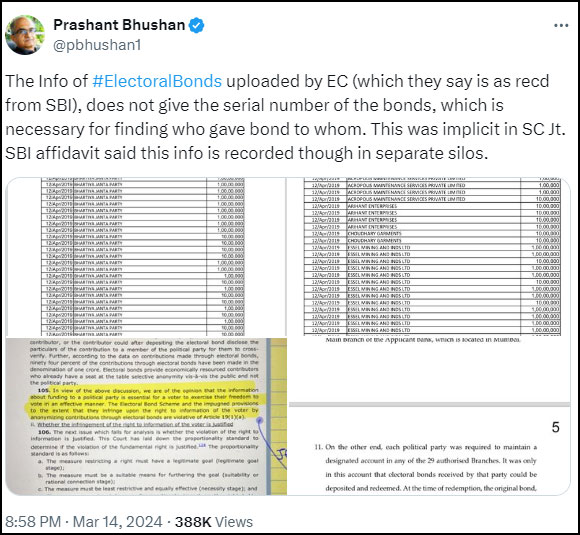
Prashant Bhushan, the advocate who is on the front of the Electoral Bond case in the Supreme Court, shared screenshots of the list of Electoral Bonds released by ECI containing BJP’s information. However, when more information was released and DMK came under the scanner for receiving 508 crores from the Future Gaming and Hotel Services PR, Bhushan decided to stay quiet.
Source: X
The News Minute selectively spotted several companies they could link to BJP and ED raids. Under the “Project Electoral Bond” section, the news portal published a series of reports that mainly targeted the BJP.
Source: The News Minute
OpIndia also reported how allegations and counter-allegations started soon after the data was released in two sheets. Contrary to the belief of the opposition parties, the names of many companies, that they were accusing of donating heavily to BJP, do not feature in the list of the buyers of electoral bonds. Some of them alleged that the govt didn’t allow other vaccines because of the ₹50 crore donation from Serum. Several social media users also shared images of Adoor Poonawalla to alleged links with the company and the BJP.
CAT IS OUT OF THE BAG !!
Govt. Procured Covid Vaccine #Covishield from Serum Institute of India.
In Return, Serum Institute of India donated 50 crores to BJP via electoral bonds.
The narrative suggests that BJP, as the ruling party, benefitted disproportionately from corporate giants. They raised alarms that there was a chance of arrangements between these companies and the ruling party. However, they forgot to acknowledge that the legally done political contributions cannot be termed inherently corrupt or unethical. Bringing the electoral bonds scheme minimises black money pumped into politics.
Furthermore, political donors have the right to stay anonymous as they may quickly become a political target. However, the Supreme Court’s judgment overturned donors’ right to anonymity, which the Parliament ensured.
The selective outrage with insinuations and conjectures overlooked that such donations were made across the political spectrum. The double standard only fueled the distorted narration, which will have more significant implications on the public understanding of the matter, especially during the General elections.
No one is denying that transparency is essential in the democratic process. However, it is necessary to understand how donations work in the political spectrum and how it becomes difficult for the donors if the power changes hands.
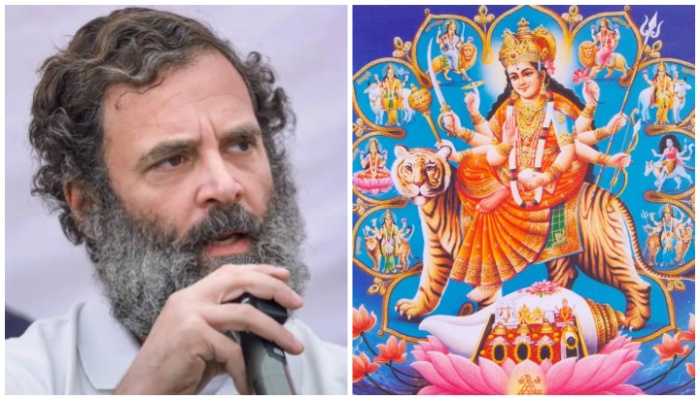
On Sunday (17th March), Congress scion Rahul Gandhi’s Hinduphobic mindset was once again on display. During ‘Bharat Jodo Yatra’s concluding rally at Shivaji Park in Mumbai, the Congress’ blue-eyed boy took a dig at the PM Modi-led NDA regime comparing them to the powerful Hinduism symbol of ‘Shakti,’ often associated with Maa Durga, one of the most important goddesses in the Hindu pantheon. Rahul Gandhi said that he wants to fight this Shakti.
“There is a word ‘Shakti’ in Hinduism. We are fighting against a Shakti. The question is, what is that Shakti? The soul of the King is in the EVM. This true. The soul of the King in the EVM and every institution of the country, in ED, CBI and Income Tax department. A senior leader from Maharashtra left Congress and cried in front of my mother and said ‘Sonia ji, I am ashamed that I don’t have the power to fight this Shakti. I do not want to go to jail.’ Thousands of people have been threatened like this,” Rahul Gandhi said in a shocking distortion of the meaning and value of the concept of Shakti.
#WATCH | Mumbai, Maharashtra: At the conclusion ceremony of the Bharat Jodo Nyay Yatra, Congress leader Rahul Gandhi says, "There is a word 'Shakti' in Hinduism. We are fighting against a Shakti. The question is, what is that Shakti. The soul of the King is in the EVM. This… pic.twitter.com/lL9h9W0sRf
He added, “What do you think? People left Shiv Sena and the NCP just like that? No. The Shakti I am talking about grabbed them by their throats and turned towards the BJP. And all of them have gone there out of fear.”
Rahul Gandhi’s bizarre interpretation of Shakti, took Netizens by shock, who called Gandhi hinduphobic and misogynistic. The BJP too called out the INDI bloc’s repeated insult to Hinduism.
Rahul Gandhi has been trying since 2014 to accentuate his Hindu credentials, from frequenting temples to studying the Upanishads and Gita, all out of his desperation to acquire the PM chair, which he and his Momma think belongs to him as a birthright and has been usurped illegally by rank outsider Modi. However, in his desperate attempts to unseat the BJP, he has inadvertently repeatedly exposed his innate disdain for Sanata Dharma. And by disparaging Shakti, who is revered in Hinduism as the “Great Mother” and is the ultimate essence and manifestation of Divine feminine power, he has only descended farther today.
Shakti is deeply ingrained in Hindu theology, philosophy, and mythology
Shakti is considered to be The Divine Feminine which is the energy present in all beings. In Hinduism, there is no concept of fighting against Shakti, instead, Shakti is what helps fight against evil.
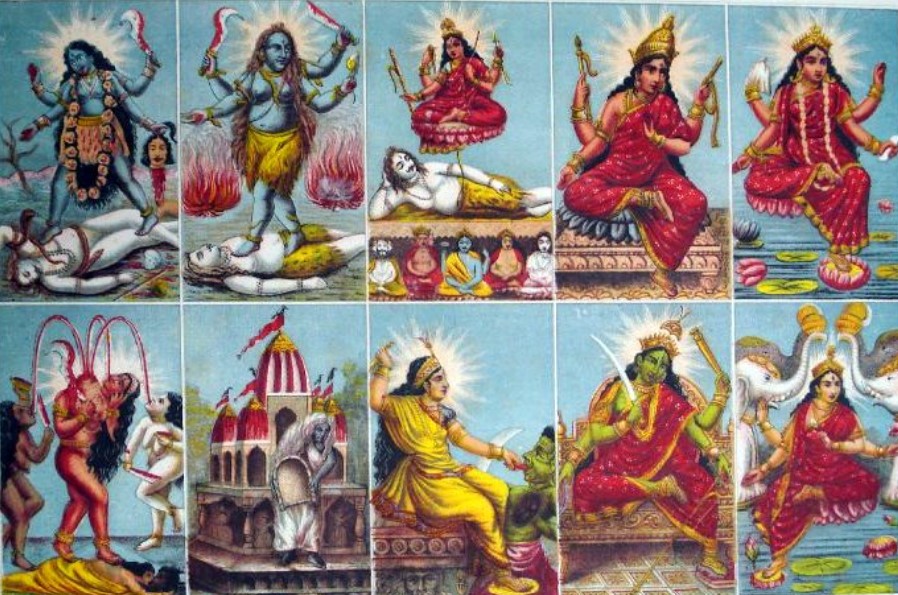
According to Hindu mythology, there are 10 Mahavidyas (also Dus Mahavidya) who are the manifestations of Goddess Shakti. They are Kali, Tara, Tripura Sundari, Bhuvaneshwari, Chinnamasta, Bhairavi, Dhumavati, Bagalamukhi, Matangi, and Kamala. All these Mahavidyas reside in Manidweepa (the eternal supreme abode of Shakti).
Source: Hinduism Facts
The concept of Shakti is deeply ingrained in Hindu theology, philosophy, and mythology, and it has a rich history dating back thousands of years.
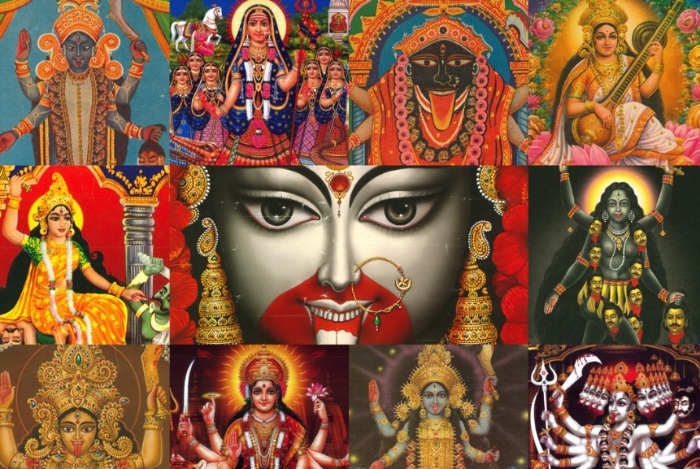
Forms of Shakti in Hinduism (Source: TemplePurohit)
Philosophical Significance: In Hindu philosophy, Shakti is considered the primordial cosmic energy that underlies all existence. She is believed to be the active aspect of the divine, responsible for creation, preservation, and destruction. Without Shakti, the male deities such as Brahma, Vishnu, and Shiva would be inert and powerless.
Mythological importance: Shakti is personified as various goddesses in Hindu mythology, each representing different aspects of feminine power and energy. Some of the prominent goddesses associated with Shakti include Durga, Kali, Parvati, Lakshmi, and Saraswati. These goddesses are revered for their strength, wisdom, nurturing qualities, and ability to protect devotees from evil forces.
Spiritual importance: The core of many Hindu rites and rituals is the worship of Shakti. Shakti is a spiritual energy that is linked to kundalini energy, which is said to remain latent at the base of the spine and can be awakened by a variety of spiritual practices in Hinduism. In contrast, yagna is a form of devotion that entails offering sacrifices to the goddess in a sacred fire and praying to her.
Role of Shakti as a creative force: According to Hindu mythology, the goddess Shakti is connected to creative force and is in charge of both the creation and destruction of the universe. Shakti is represented in Hindu mythology as a strong, energetic force that propels the universe forward. The mother goddess, a central figure in Hinduism, is one of the most important ways Shakti appears as a creative force. She is seen as a symbol of the protective and life-giving qualities of the divine feminine.
A common portrayal of the mother goddess is that of a strong warrior who uses weapons to defend and shield her devotees. She is connected to the cycles of birth, death, and reincarnation. She is a symbol of compassion, love, and strength, embodying the virtues of motherhood via her protective and nurturing nature.
Shakti peethas: According to Hindu tradition, there are powerful energy centres called Shakti Peethas scattered across the Indian subcontinent and neighbouring regions. These are believed to be the places where parts of the goddess Sati’s body fell after she immolated herself in the sacrificial fire of her father Daksha’s yajna (ritual sacrifice). Each Shakti Peetha is associated with a specific goddess and holds great religious significance for devotees.
Festivals and worship: Throughout India and in Hindu communities worldwide, various festivals and rituals are dedicated to honouring Shakti. Navaratri, Durga Puja, and Kali Puja are some of the major festivals celebrated with great fervour, where devotees worship the goddess and seek her blessings for protection, prosperity, and spiritual growth.
Similarly, the celebration of Navratri is a festival dedicated to the worship of the goddess Durga in her various forms. The festival is celebrated over nine nights and involves fasting, puja (worship), and other rituals to honor the goddess.
Empowerment of women: The worship of Shakti has also been instrumental in empowering women in Hindu society. By venerating goddesses who embody strength, courage, and independence, Hinduism provides a spiritual basis for gender equality and the recognition of the divine feminine.
Worship of Shakti has been persisting for last 8000 years
The concept of Shakti has been a fundamental part of the Hindu tradition for thousands of years. The worship of feminine deities and fertility goddesses can be traced back to prehistoric times in the Indian subcontinent. While the origins are not clear, it has been reported that the worship of Shakti or Mahadevi has been going on in the subcontinent for the last 8000 years.
Archaeological evidence suggests that ancient civilizations revered female fertility figures, which could be considered early manifestations of Shakti worship. For example, the Indus Valley Civilization (c. 3300–1300 BCE) had a sophisticated culture with evidence of goddess worship. Archaeological findings include figurines resembling female deities, possibly associated with fertility and the nurturing aspects of the divine.
After the collapse of the Indus Valley Civilization and the advent of the Vedic Age, worship of Devi and Shakti persisted. A new pantheon of gods emerged with the Vedic Age, and the deities associated with the Cult of Shakti found a position in this pantheon.
Since the Vedic Age also brought writing and texts that were created to formulate ceremonies and rituals, this was the time when Shaktism became codified. Among the female deities mentioned in the Vedas, Ushas is the most significant. The Vedas have several hymns that are only dedicated to her.
Goddess Usha (Source: Hinduism Stack Exchange)
Shakti is also mentioned in Rig Veda, one of the oldest Hindu scriptures, describing her as the cosmic energy that permeates the universe. The three Divine Mothers mentioned in the Rig Veda who birthed the Vedic gods are Aditi, Prithvi and Saraswati. Prithvi continued to exist in later Hinduism as Bhudevi (goddess of the earth).
Essentially, Shakti is the central figure in Hinduism and Rahul Gandhi’s derogatory statement about her has transformed him from an awkward, lousy and gaffe-prone communicator to an outspoken adversary of Hinduism and an anti-Hindu tool of the grand old party.
Number of times Rahul Gandhi has insulted Hindus and their faith
Last year, in his desperation to deride the Modi government, Rahul Gandhi ended up making a statement which was deeply Hinduphobic. While trying to make the point that MPs were not contributing to any productive work in the parliament by way of formulation of laws, Rahul Gandhi compared them to Murthis in a Temple. Rahul Gandhi made the argument that the Murthis, that Hindus worship, are powerless and ‘useless’, just as the MPs in the parliament – which is to say – they serve no purpose.
This is the exact trope which is used by Islamists to negate and insult Murthi-puja – the very core of the Hindu faith. The argument made by the Islamists and extremist Christians is that the Murthis in the temple are merely stones and serve no purpose beyond perpetuating superstition. This line of argument is extended to denying legitimacy to Sanatan Dharma and the Hindu faith in general, insulting those who practise ritualistic Hinduism.
For Rahul Gandhi to claim that Murthis are useless, essentially means that he believes Murthi puja – the very core of Sanatan Dharma – is merely a superstition and serves no purpose – essentially furthering the Hinduphobic narrative of the Islamists and Missionaries against Hindus.
This is not the first time that Rahul Gandhi has made Hinduphobic comments. In 2014, speaking about women’s safety, Rahul Gandhi had said that people go to the temple and worship to the Goddess, call women mothers and sisters, but the truth is that those very people molest women in a bus.
Rahul Gandhi seems to have an uncanny ability to connect every ill of the society to the Hindu community and shield every ill of any other community. One recalls how a Wikileaks document revealed how the Congress party played politics over the 26/11 Mumbai attacks. It did not escape the notice of even the then U.S. ambassador to India, David Mulford. The observation made was that the Congress party after the attack had chosen to pander to Muslim fears.
Further, there was another Wikileaks cable that revealed that Rahul Gandhi had travelled abroad and claimed that Hindu extremism is worse than Muslim extremism and terrorism. This comment was made in 2009.
Therefore, it is clear that Rahul Gandhi has a lengthy history of disparaging the Hindu population and linking himself to groups that often make disparaging remarks about Hindus. In this instance as well, Rahul Gandhi has insulted the Hindu community and their beliefs in his zeal to attack the Modi government.
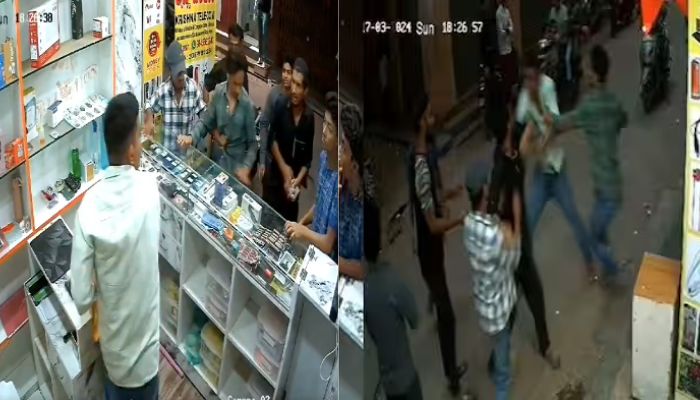
In Karnataka’s Bengaluru, a Hindu shop owner named Mukesh was allegedly attacked on Sunday (17th March) by a group of youth for playing Hanuman Chalisa and other Hindu devotional songs in his shop, which is located near a mosque. The incident took place on Jumma Masjid Road in the Siddanna Galli area.
According to an Asianet Kannada report, the victim runs a shop named Vardhaman Telecom in Siddanna Galli. A CCTV footage of the incident shows the 5 to 6 accused coming to the victim’s shop on Sunday evening.
Initially, a verbal argument ensues as seen in the video. The argument soon escalated to assault as the accused youths dragged the Hindu victim out of his shop and thrashed him. The footage shows the victim singlehandedly confronting the attackers. However, he was seen getting knocked to the ground.
? ????? ????? ?????? ??? ???????? ?? ? ?????? ??? ?? ??? ?????? ???? ?? ??????????, ?????????, ??? ??????? ??? ??????? ???????. Freedom of Religion only for minorities?… pic.twitter.com/ZxgHPuwiLd
Speaking about the incident, victim Mukesh Kumar told Asianet Kannada, “As usual in the shop, I used to sing bhajans in the evening during the puja. They came to the shop and asked, “Why are you playing bhajans during our Azaan time?” They then proceeded to attack him and initially tried to stop him. First, he took the speaker and hit me on the head. It was as if he had a weapon in his hand. That’s why it hurt so much.”
Mukesh further alleged that since he opened his shop two months ago, the accused had been making “roll calls” and trying to extort money from him.
The Hindu victim submitted a complaint at Halasuru Gate Police Station demanding that an FIR be registered. However, it was claimed that the police were reluctant to register an FIR against the accused.
Following this, a large group of local traders gathered outside the police station and pressured the authorities to register an FIR. Subsequently, the police lodged an FIR and initiated an investigation.
Speaking to OpIndia, Halasuru Gate Police Station incharge said that the three main accused identified as Suleiman, Shahnawaz and Rohit have been arrested so far.
The officer denied the charges against the police, however, confirmed that around a hundred people had gathered outside the police station on Sunday to protest. The officer denied any communal angle in the matter and said that the accused persons and the victim know each other.
“The FIR has been registered, and three people have been arrested. Three main accused were arrested yesterday night and an FIR has been registered. Enquiry is going on. Suleiman, Shahnawaz and Rohit are the main accused. There is no communal angle. It was about playing a song near the masjid. They [the accused] were telling the complainant to lower the volume of the speakers. There was an altercation over this,” the Halasuru Gate Police Station incharge said.
When OpIndia asked about the alleged reluctance in registering FIR in the matter, the officer said, “No, we had immediately done an FIR, took action and conducted searches…but some people diverted the matter saying it was a Hindu-Muslim fight.”
Speaking about the protest, the officer told us that around a hundred people came from the Nagarapet and Kumbarpet areas from the sides of both, the complainant and the accused, creating a nuisance.
When asked about what measures are being undertaken to arrest the rest of the accused the officer said, “Inquiry is going on. After inquiry, all those involved will be arrested.”
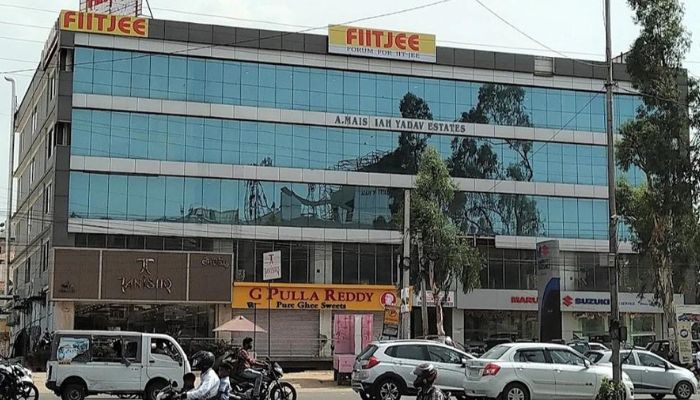
On Sunday (17th March), FIITJEE, a coaching institute known for preparing students for engineering entrance exams, faced significant backlash on social media due to a controversial advertisement. The ad featured a former student’s image and suggested that her academic performance declined after leaving FIITJEE to join another institution.
Criticism was particularly directed at the inflammatory language used to describe the competitor, labelling it as “evil” and referencing its location in Kota, a city that has seen several suicides in recent times. The advertisement, prominently displayed on the front page of a national newspaper, implied that the ex-student could have achieved a perfect score in the JEE-Mains 2024 exam had she remained with FIITJEE instead of transferring to the other institution.
Indian Revenue Service officer Katyayani Sanjay Bhatia took to social media platform X to share a photo of the advertisement, bringing it to public attention. She wrote in her post, “A new low in advertisements FIITJEE. You are posting a picture of a child saying that she performed badly because she left your institute! I have blurred the picture because I don’t believe in this disgusting way of claiming your superiority by belittling a girl child.”
A new low in advertisements @fiitjee . You are posting the picture of a child saying that she performed badly because she left your institute! I have blurred the picture because I don't believe in this disgusting way of claiming your superiority by belittling a girl child. pic.twitter.com/W18Rd9rh1s
She further said, “We talk about parents putting pressure on kids for IIT JEE, but what about this manner of advertising where you shame a student for not performing? And claiming superiority by claiming that she would have performed had she been in your institute? Shameful.”
We talk about parents putting pressure on kids for IIT JEE, but what about this manner of advertising where you shame a student for not performing? And claiming superiority by claiming that she would have performed had she been in your institute? Shameful @fiitjee
She added, “And it doesn’t stop here. They are claiming their superiority by talking about the institute with a ‘history of suicides’. Shameful. Suicides in Kota are an issue that concerns us all above petty competition but claiming in this manner is cheap.”
And it doesn't stop here.They are claiming about their superiority by talking about the institute with a 'history of suicides'. Shameful. Suicides in Kota are an issue that concerns us all above petty competition but claiming in this manner is cheap@fiitjee @EduMinOfIndiapic.twitter.com/QS90pkPs9s
The IRS officer also tagged the Ministry of Education, the Advertising Standards Council of India, and the Ministry of Women and Child Development, urging them to take notice of such advertising malpractices.
This also propagates the very wrong belief that right strategy=right result. Life is not so linear @fiitjee. Let's teach the younger generation nishkam karma and despite all hardwork results are not in our hands @EduMinOfIndia@MinistryWCD JEE aspirants should not be mislead
She said in her post that publishing a student’s picture in a national daily saying that they couldn’t perform is disgusting and puts such undue pressure on students.
And goes without saying (even though I have completed for competitive examinations) that getting into IIT really isn't everything. Life indeed is how you respond to situations, not how you just win. The examination of life is really beyond such petty messaging by @fiitjee
This criticism by the IRS officer sparked outrage against FIITJEE amongst social media users. Akshay Akash wrote, “I have respect for Fiitjee due to their teachers but This is horrible advertising! Don’t know how this was approved in the first place that too, on the first page of a national newspaper.”
I have respect for Fiitjee due to their teachers but This is horrible advertising!
Don't know how this was approved in the first place that too, on the first page of a national newspaper ??
Reacting to Bhatia’s post, Zoho CEO Sridhar Vembu posted, “India has to get out of this ultra-competitive exam pressure on children and young adults. This is one area where I would *not* learn from East Asia but instead learn from Finland which has a superb state-funded educational system that serves every child without such competitive insanity.”
India has to get out of this ultra-competitive exam pressure on children and young adults. This is one area where I would *not* learn from East Asia but instead learn from Finland which has a superb state-funded educational system that serves every child without such competitive… https://t.co/AjdkIl0Nmt
He added, “Intense pressure at a young age all too often destroys talent and creates zombified adults. It is the rat race to extinction. Intense competition is for companies serving a market and for sports, not for children in education. As an employer, we have pledged to not even consider academic credentials. We are also investing in educational alternatives that are inspired by Finland.”
Dr Darpan Jakkal posted, “Absolutely disgusting and I feel that the NCPCR should take a cognisance on priority.”
Absolutely disgusting and I feel that @NCPCR_ should take a cognisance on priority
Lokesh posted, “I am confused now. I saw news sometime ago stating that coaching below 16 is not allowed according to new guidelines, but this advertisement seems to contradict that….”
"I am confused now. I saw news sometime ago stating that coaching below 16 is not allowed according to new guidelines, but this advertisement seems to contradict that….
This advertisement by FIITJEE has come at a time when suicides of students preparing for competitive examinations are rapidly rising. Multiple reports of students crumbling and committing suicides under performance pressure and societal pressure have surfaced in the past few months. As FIITJEE gets called out for this advertisement, it remains to be seen if any action is taken against the coaching institute.