Home Blog Page 1267

Attack on Hindus on Ram Navami in West Bengal: NIA arrests Afroj, Ashraf, Mohammad Pappu and 13 others

On 26th February, the National Investigation Agency (NIA) issued a press release announcing the arrest of 16 persons for conspiring and carrying out an attack on Hindus during Ram Navami in Dalkhola of district Uttar Dinajpur, West Bengal.

The arrested persons have been identified as Afroj Alam, Ashraf, Imtiaz Alam, Irfan Alam, Kaiser, Farid Alam, Furkan Alam, Mohammad Pappu, Suleman, Sarjan, Nurul Hoda, Wasim Arya, Salahuddin, Jannath, Wasim Akram and Tanweer Alam. All of them are residents of Dalkhola.

As per the press release, NIA arrested the accused of the Ram Navami attack in West Bengal based on the revelations that came to light during the investigation. The accused were identified based on the video footage seized by the investigating agency during the court of the investigation. The attack on Hindus took place on 30th March 2023 during the Ram Navami procession. NIA stated that the accused were among the attackers.

Initially, West Bengal police registered a case against 162 persons following the attack on Hindus at Tajamul Chawk, Uttar Dalkhola. Later, on 27th April 2023, the Calcutta High Court ordered the transfer of the cases to NIA, and subsequently, the investigation agency took up six such cases. Further investigation into the matter is underway.

Attack on Hindus on Ram Navami in Dalkhola, West Bengal

On 31st March 2023, clashes broke out between two communities during a Ram Navami procession in the Dalkhola area of Islampur town of North Dinajpur. One person was killed and 5-6 policemen were injured in clashes in a Muslim-dominated area. The Bengal Police stated that the cause of the young man’s death was a heart attack. In 2023 alone, 29 instances of attacks on Hindu processions took place. OpIndia’s detailed report can be checked here.

Nepali Congress to hold discussions with other parties to declare Nepal ‘Hindu state’, says party

0

The Nepali Congress will hold discussions with other parties and work to declare Nepal a Vedic Sanatan Hindu state, party leader and member of Parliament Shankar Bhandari said.

In an interview with ANI, Shankar Bhandari, who has been leading the “Vedic Sanatan Hindu Rastra establishment campaign” within the Nepali Congress, claimed reinstatement of the Hindu state would be a course correction in Nepali politics.

“What we believe, attempt and request with all existing parties in the Federal Parliament would be to hold discussion with them. We have also been informed that the Nepal Communist Party is also worried about increasing conversion, and it is counterproductive. We all should work together for Vedic Sanatan Hinduism, other parties have also noticed this, and we are confident about it,” Bhandari said.

He further said that they will soon start a national debate over it and hold discussions with political parties, adding that they need a two-third majority to declare a Hindu state.

“As per our constitutional provision, we need a two-third majority (to declare Hindu state); serious error which was made at the time of promulgation of constitution- intentional or out of ignorance, we should not be late to rectify those errors, we are determined on it. We will soon start a national debate over it and hold conversations with political parties,” he said.

The campaign launched by Bhandari gained popularity during the five-day Maha Samiti meeting held in Godawari, Lalitpur, on February 19.

Bhandari’s campaign to collect signatures to pressure the party’s top leaders managed to get the signatures of about 1100 participants out of the 1950 designated members of the Maha Samiti meeting.

During the concluding session of the party’s mass meeting, Bhandari submitted the collected signatures to party President Sher Bahadur Deuba, who then promised to take the issue to the Central Committee meeting.

Among those 42 signatories are the central members of Nepal’s largest party in parliament, which includes former General Secretary, Shashank Koirala.

However, the agenda for a Hindu nation was not deliberated upon during the Maha Samiti meeting.

After the 2006 People’s Movement-II, Nepal reinstated democracy, overthrowing centuries-old monarchies. In successive years, it became a republican nation and adopted a new democratic and republican constitution in September 2015.

After the overthrow of the monarchy, Nepal became a secular state, changing its status from a Hindu state where the monarch or the king were worshipped and regarded as the reincarnation of Lord Narayan.

Upon being asked whether the Nepali Congress in the long term is aiming to reinstate the monarchy in the Himalayan nation, the leader rejected the claims and said, “It (monarchy) came on as a practice from the past, but there is no mention of the king being worshipped as God in any of the Hindu scriptures, there are different theories and policies regarding it.”

He further said that since the 16th century, Hinduism in Nepal has been targeted.

“Since the 16th century, the eternal Hinduism of Nepal has continued to remain a target, as per my knowledge. There have been attempts to hinder it by linking it with monarchy, the intervention of foreign nations, and raising tensions alleging it to be against ethnic groups. We have already taken note of this and we will hold a ground-level discussion in case it is needed, explain to all, in between the political parties and make them clear that it is not against any ethnic groups or personal freedom,” he added.

Notably, demands for a Hindu state have been rising in Nepal, as other parties have also continued to stage protests and agitations demanding the reinstatement of the religious identity of the nation.

The Rastriya Prajatantra Party, a pro-monarch faction, has also launched their campaign for a Hindu state, with the reinstatement of monarchy as their demand.

Congress leader Bhandari clarified that his party would only support the demands of the Hindu state but not the constitutional monarchy to achieve the aim.

During the previous Mahasamiti meeting, 714 individuals expressed their support for a Hindu nation by signing a petition, which was then submitted to the party president.

Additionally, 22 central members presented their signatures to President Deuba, urging for the inclusion of the Hindu nation agenda in the Mahasamiti meeting discussions.

Moreover, Hinduism is the most followed religion in the Himalayan nation, which stands at 81 per cent out of the total population, i.e., 291 million, 64 thousand and 578, as per the census of 2021.

Similarly, 23,93,549 people, i.e., 8.21 per cent, follow Buddhism, 5.09 per cent follow Islam, 3.17 per cent follow Kirant and 1.76 per cent follow Christianity. (ANI)

(This news report is published from a syndicated feed. Except for the headline, the content has not been written or edited by OpIndia staff)

“To me, this is misuse of freedom of speech”: EAM Jaishankar on space given to Khalistani elements by Canada & other countries

0

External Affairs Minister S Jaishankar called out the space given to extremist Khalistani elements in foreign countries and said this is not freedom of speech, but a misuse of it.

He said it is not good for any country to send that kind of message for their own reputation and expressed hope that action will be taken against those who attacked Indian missions.

The EAM was speaking at the event ‘The Rise of the Global South’ at TV9 Bharatvarsh Conclave on Monday.

Speaking about the situation in Canada, Jaishankar said, “We had to suspend the issue of visas in Canada because our diplomats were not safe going to work, they were repeatedly threatened, intimidated, and got very little comfort from the Canadian system at that time…which has improved since then.”

“We reached a stage, where, as a minister, I could not risk exposing my diplomats to the kind of violence prevalent there. That part of it has been rectified, so today our visa operations are pretty much normal,” he added.

The EAM further called out the argument of ‘freedom of expression’ stating that throwing smoke bombs at missions and advocating violence is a “misuse” of freedom of speech.

“Regarding the space that is being given to extremists, they keep saying us, ‘There is freedom of speech, democracy’. Freedom of speech can’t extend to intimidating diplomats, throwing smoke bombs in embassies and consulates, advocating violence and separatism against a friendly state. To me, this is not freedom of speech. This is a misuse of freedom of speech,” Jaishankar said.

Recalling the vandalism incident on the Indian High Commission in the UK, he said that the mission didn’t get the protection New Delhi had expected.

“To the point of someone climbing on to our HC and bringing down our Indian flag. I asked my colleagues ‘Let’s put us in each other’s shoes’. How would you react if a mob attacked your premises anywhere in the world? You will not say freedom of speech and expression, you will be jumping up and down. But, things have improved in the UK,” the EAM said.

In a stern message, Jaishankar said that if a country is not taking action against someone attacking foreign missions, “there is a message in it.”

“We have had a much firmer response in Australia and the US. We had an arson attack in the US, but that is under investigation. If the receiving state does not take action against someone who attacks an embassy or a consulate, there’s a message in it. Now, I don’t think it’s good for any country to send that kind of message for their own reputation. That’s why we want action to be taken against those who attacked our missions,” Jaishankar added.

Notably, there has been a rise in Khalistani extremism in several countries like Canada, Australia, the US and the UK.

After the killing of the designated terrorist Hardeep Singh Nijjar last June, the Khalistani extremists targeted Indian diplomats in several countries and issued threats against them.

Especially in Canada, multiple incidents of Khalistan extremism were reported lately. In June this year, a tableau parade was organised in Canada celebrating the assassination of former PM Indira Gandhi, which drew severe criticism from New Delhi. Multiple temples were also vandalised in Canada by pro-Khalistani protestors, with anti-India graffiti.

Amid strained ties, India stopped issuing visas to Canada amid concerns over the safety of Indian envoys there. Later, the e-visa service was resumed, and physical visa was also started in multiple categories.

In the UK, a group of extremist elements attacked the Indian High Commission in London last March.

Similarly, in the US, the Consulate General of India in San Francisco was attacked on March 19 by a group of assailants. Subsequently, on July 2, at midnight, a few people attempted to set the Consulate building on fire. The case is being probed by the National Investigation Agency. (ANI)

(This news report is published from a syndicated feed. Except for the headline, the content has not been written or edited by OpIndia staff)

‘We use Arabic, it is our language’: Kuwait-based designer company slams Pakistanis for ‘Sar Tan Se Juda’ slogans against a girl wearing Arabic dress

Following a near-lynching incident of a Pakistani girl wearing an Arabic print dress, and her facing threats of ‘sar tan se juda’, the Kuwait-based company that designed the dress lambasted Pakistanis for sending them “disturbing” messages and dragging them into the episode. 

Instagram handle semplicitakw shared a story in which it reminded Pakistanis that the brand uses Arabic texts in different fonts ‘everywhere’, hinting about the dress that triggered an Islamist mob. Notably, the mob had assaulted the woman while chanting slogans of ‘sar tan se juda’ because they believed she committed ‘Gusthaki’ by wearing a dress with Arabic calligraphy. 

In their post, the Kuwaitian company wrote, “Dear pakistani people, We have nothing to do with the recent incident that happened to the innocent girl. We are based in Kuwait company (sic) And we do NOT ship worldwide. Please stop following and messaging since its (sic) really disturbing.” 

Pointing toward the use of Arabic on the dress based on which Islamist mob considered it an act of Gusthaki, the company added, “We use arabic words and letters in different fonts everywhere since its our language!” 

Meanwhile, according to the Instagram handle, the dress had been in the public for almost over 48 weeks, that is nearly a year. Notably, Kuwait is also an Islamic country where the company had unveiled and sold its dresses but the outrage erupted in Pakistan. Pakistanis got outraged over the presumption of Arabic texts being some ‘Quranic verses’ which according to Islamists would be wrong to print on dress casually and attracts ‘Gusthaki’ or blasphemy which is punishable by death in Pakistan.

Several netizens also slammed Pakistanis over the incident and putting a woman’s life in danger for the random use of Arabic and considering anything written in Arabic as Quranic verses or its adulteration.  

Pakistani journalist in exile Taha Siddiqui wrote, “Even the designer is fed up!,” along with a poster on which the text read, “The designer of Arabic print dress that became controversial doesn’t want Pakistani followers.”

A Pakistani digital outlet, Dialogue Pakistan shared a purported chat with the designer company in which it clarified the meaning of the Arabic texts written on that dress that sparked outrage.

According to their claim, the Kuwaiti brand said “haya” means life, and “halwa” translates to beautiful. 

Islamist mob threatened the woman’s life chanting Sar Tan se Juda slogans before being rescued by Police

As per reports, the incident took place in Lahore, Pakistan. The Islamic fanatics mob, led by Tehreek-e-Labbaik Pakistan members, thought that the colourful Arabic text on the white dress was Quranic verses, and therefore she committed blasphemy, which is punishable by death in Pakistan.

The woman was spotted wearing the dress by the fanatics while she was dining at a restaurant in Ichhra Market in Lahore. A large group of people assembled soon after, who surrounded her, and hurled abuses and threats. Some of the crowd surrounded the woman, leaving her frozen in fear, while some bystanders attempted to protect her from lynching by the bloodthirsty mob. As per the videos of the incident that went viral, the mob can be heard chanting the hateful slogan ‘Sar Tan se juda’ which bay for the head of the alleged blasphemer. 

Meanwhile, as the situation escalated, police arrived at the scene and escorted the woman out from the spot. In the viral videos, a female police officer can be seen escorting the woman, who was covered in a burqa by the cops. Several Pakistanis lauded the act of the Policewoman arguing that she should be awarded for her brave act of saving the woman from the Islamist mob. 

In the wake of the protest by the Islamist mob, the woman was forced to apologise. 

Nonetheless, initially, media reports had claimed that the dress was from Saudi Arabian label Shalik Riyadh, which was launched during Ramazan in 2022. “The best Ramadan 2022 collection has arrived,” Shalik Riyadh had captioned while posting an image of the dress on Instagram. However, as per an Instagram post by semplicitakw, the said dress was reportedly designed by a Kuwaitian company. 

‘Privileges are not above the law’: Delhi customs responds to journalist Yana Mir’s tantrum on bag checking incident at IGI airport

0

In response to Kashmiri journalist Yana Mir’s outrage about a ‘bag checking’ incident at Delhi’s IGI airport, Delhi customs department responded by saying, “privileges are not above law”. Customs department also stressed that bag scanning of international passengers is done ‘routinely’.  

Notably, earlier in the day on Monday (26th February), Kashmir-based Journalist Yana Mir had shared a video on X (formerly Twitter) alleging mistreatment by the Delhi customs officials when she arrived at the Indira Gandhi International (IGI) airport. According to her claim, the customs officials asked questions as if they considered her a “brand smuggler”. 

Taking to X, Mir shared a post along with the video of the bag scanning that had gone viral. In the post, she wrote, “How I was welcomed back to India: Madam scan your bag, open your bag, why you have Louis Vuitton shopping bags? Did you pay for them? Where are the bills???? What Londoners think of me: INDIAN MEDIA WARRIOR. What Delhi customs thinks of me: Brand Smuggler.” 

Replying to her post, the Delhi customs informed that she wasn’t co-operating, and creating a “fuss” about bag checking. The department also shared video footage to support its claim.

To her post, the Delhi Customs (Airport and General) replied, “Bag scanning of international passengers is done routinely. While other paxs (passengers) put their luggage inside the scanner without any fuss Ms Yana Mir felt needlessly offended. Staff remained courteous throughout. Privileges are not above law. Footage tells the story.”

In another reply, it added, “Ms Yana Mir didn’t cooperate at all when requested to get her bags scanned. Her luggage was ultimately picked up by airline staff and Customs officer for scanning as seen in the footage.”

Notably, Yana Mir is a Kashmir-based journalist, she had recently made headlines for her remarks, “I am not Malala and I am safe in my country” at the UK’s Parliament building. Incidentally, in her post targeting Delhi’s customs department, she claimed that London residents consider her Indian ‘media warrior’ because of her remarks made at the UK Parliament. 

At the event, she had said, “I am not a Malala Yousafzai. I am not a Malala Yousafzai, because I will never have to run away from my home country. I am free, and I am safe in my country India, in my home in Kashmir, which is part of India.” 

The recent outrage on the baggage checking incident happened on her way back to India when she arrived at Delhi’s IGI airport.  

Supreme Court stays criminal proceedings against Tamil Nadu BJP chief K Annamalai, says his remarks are not deemed as hate speech

On 26th February, the Supreme Court of India stayed criminal proceedings against Bharatiya Janata Party (BJP) Tamil Nadu chief, K Annamalai, in the matter related to alleged hate speech against a Christian Missionary NGO. Reportedly, Annamalai remarked during an interview that Christian Missionaries had filed a petition in court against the use of firecrackers in Diwali. His remarks led to legal challenges and accusations of “inciting communal disharmony”.

Presiding the matter, Justice Sanjiv Khanna and Justice Dipankar Datta issued a notice to stay the trial court proceedings against Annamalai. The decision of the apex court to stay the proceedings came after a detailed review of the translated remarks in question. While dictating the orders, Justice Khanna stated, “It is not hate speech…it will not be…”.

The controversy leading to the court case against Annamalai stemmed from an interview where the BJP leader pointed out that a Christian Missionary NGO had filed a petition in the Supreme Court of India to ban firecrackers. His statement led to a controversy as the Christian Missionary NGO claimed Annamalai attempted to foster communal unrest. Annamalai filed a plea in the Madras High Court to quash the case against him in the trial court. However, the High Court refused to accept the plea and highlighted the importance of assessing the psychological impact of such statements on the “targeted community”.

However, the Apex court emphasised the need to interpret the speech carefully and the legal consequences. The matter will be next heard on 29th April 2024.

Senior Advocate Siddharth Luthra and J Sai Deepak represented Annamalai in the apex court. They argued that the interview expressed concerns and did not violate peace or incite hatred between the communities.

An individual identified as Piyush had filed a complaint with the DGP, Home Secretary, and the Commissioner of Police, Salem, against Annamalai, arguing that the BJP leader’s comment might lead to communal tensions.

Based on his complaint, a case was registered against Annamalai under Sections 153A and 505(1)(b) of the Indian Penal Code (IPC). Annamalai challenged the case against him and the entire proceedings, contending it would be against his freedom of speech and expression. Furthermore, he also claimed that the complaint was filed 400 days after the interview was published on YouTube. The Magistrate and High Court observed an offence under the relevant sections.

Zerodha founder Nithin Kamath suffers mild heart attack: Doctor says sleep deprivation, over-exercising may be the reason

0

Nithin Kamath, co-founder of Zerodha, disclosed in a tweet on Monday (February 26, 2024) that he suffered a mild stroke six weeks ago. He added that he went from “having a big droop in the face and not being able to read or write, to having a slight droop but being able to read and write more.”

Kamath tweeted on Monday, “Around 6 weeks ago, I had a mild stroke out of the blue. Dad’s death, lack of sleep, weariness, dehydration, and overwork are all plausible causes.”

“From being absent-minded to more present-minded. So, 3 to 6 months for full recovery. I wondered why a person who’s fit and takes care of himself could be affected. The doctor said you need to know when you need to shift the gears down a bit. Slightly broken, but still getting my treadmill count,” Kamath added in the tweet.

Meanwhile, many of the social media users wished well for the Zerodha founder and CEO and asked him to take care of and wished for faster recovery. Former managing director of BharatPe, Ashneer Grover said, “Dude, take care. Most likely you are deeply affected because of the passing away of your dad – it got me too after my dad’s demise – I simply collapsed one day. Take a break!”

Deepak Shenoy, CEO at Capitalmind advised, “My goodness, this has been a super tough time for you Nithin, take it easy, and wish you the best to be healthy and smiling soon!”

Notably, one of the doctors from the Apollo Hospital, Hyderabad, Dr Sudhir Kumar, suggested over-exercising could primarily be the reason for the stroke. “At age 44, one of the fittest persons, Nithin Kamath suffered a minor stroke, but glad to note that he is making a swift recovery, and I wish him a superfast and complete recovery. He has rightly recognized 5 likely risk factors that could have caused his stroke: Stress (of losing his father), Sleep deprivation, Over-exercising (over-working out), Exhaustion (related to work commitments and workouts), and Dehydration,” he said.

“It is important to exercise in moderation (and not over-exercise), ensure adequate sleep, and cut down on work (if one is over-working). Exercising and being fit are good, as has been proved by Nithin Kamath. Despite suffering from a stroke, it was a milder one, and he is on the road towards complete recovery,” he added.

‘Can’t stretch Article 21 to protect those threatening national sovereignty & integrity’: Karnataka HC dismisses bail plea by ISIS terrorist charged under UAPA

0

The Karnataka High Court while denying bail to an ISIS terrorist has said that Article 21 cannot be stretched too long to afford protection to persons who have least concern for rule of law and pose threat to sovereignty and integrity of the nation.

The HC said this while dismissing an appeal filed by ISIS terrorist Mazin Abdul Rahman who is charged with sections 120B, 121, 121A of IPC and sections 18, 20 and 38 of the Unlawful Activities (Prevention) Act.

Rahman, who is accused of being associated with the banned terrorist outfit Islamic State (IS), had approached the HC to challenge the order of the special court refusing bail to him.

A division bench of Justices Sreenivas Harish Kumar and Vijaykumar A Patil stated, “Article 51(A)(a) obligates every citizen of India to abide by the Constitution and respect its ideals and institutions, the national flag and the national anthem. Clause (c) mandates every citizen to uphold and protect the sovereignty, unity and integrity of India. These are fundamental duties of every citizen.”

The court further added, “The appellant being a citizen of India is obligated to perform his duties and instead if he becomes a member of an organisation conspiring to wage war against India and show defiance to the Constitutional mandates, it is surprising that he tries to invoke Constitutional jurisdiction of this court.”

The National Investigation Agency (NIA) on 11th January 2023 arrested ISIS terrorist Mazin Abdul Rahman along with Nadeem Ahmed KA in connection with the Shivamogga ISIS conspiracy case.

The accused argued that except for the allegation of his involvement in conducting recce, there are no allegations that indicate his involvement in anti-national activities.

The prosecution opposed the appeal submitting that the intention of the accused was to wage war against India. He accused several encrypted communication platforms and received several incriminating materials.

Upholding the denial of bail to the IS accused, the court ruled that “the accusations in the charge sheet do not appear to be imaginary, rather they are the result of analysis of the data found in the devices recovered from the possession of the appellant.”

“It is our considered view that Constitutional powers cannot be exercised when materials produced before the court prima facie show or indicate threat to unity, integrity and sovereignty of our country, instead it is the duty of the Constitutional Courts to protect the nation and its society from such people who indulge in anti national and anti societal activities. Without the nation there is no Constitution,” the court said.

West Bengal: Five Hindu temples vandalised in Howrah on Shab-e-Barat, youths wearing skull cap spotted in CCTV, locals protest

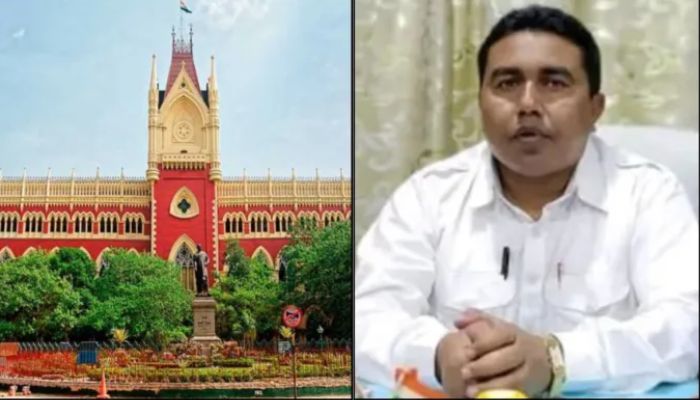
On Sunday (25th February) night, five Hindu temples were vandalised in Bankra town in Howrah district of West Bengal. The development was confirmed on X (formerly Twitter) by BJP leader Suvendhu Adhikari.

In a tweet, he informed, “Last night miscreants vandalised 5 Sanatani Temples at Bankra; Howrah. The locals as a mark of protest are blockading rail lines. I am requesting Shri Praveen Kumar Tripathi (IPS); Commissioner of Howrah city police and DGP of West Bengal
to arrest the culprits as quickly as possible.”

“Also kindly take steps to restore normalcy in the area and persuade the agitators to continue their rightful protests without blocking public transport. The continuous reluctance of the WB Police to take action against miscreants who indulge in vandalism of Sanatani Temples has emboldened them to target the Sanatani Community over and over again,” Suvendhu Adhikari further emphasised.

The development coincides with the Shab-e-Barat celebrations which took place on Sunday (26th February).

In visuals shared by Suvendu Adhikari, it could be seen that the temples were vandalised. A CCTV footage of the incident showed young boys sporting skull caps reportedly involved in vandalism.

After the matter came to light, local Hindus staged a protest on Monday (26th February) morning. The angry demonstrators also blocked the rail lines, demanding an immediate arrest of the culprits.

A large contingent of police was deployed in the area to contain the law and order situation.

Violence in Sandeshkhali

On 8th February this year, hundreds of women in Sandeshkhali took to the streets to protest against land grabbing, non-payment of wages and sexual violence committed by Trinamool Congress goon Sheikh Shahjahan and his two aides Shiba Prasad Hazra and Uttam Sardar.

The women attacked Shahjahan’s illicitly obtained properties and set fire to a poultry farm owned by Shiba Prasad Hazra. They also surrounded the Sandeshkali police station and demanded the immediate arrest of the trio. The agitation in the village lasted for 3 days.

During that time, the TMC goons retaliated and the police acted as mute spectators. In several cases, the cops themselves resorted to harassment of the women. It had come to light that the residents were the subject of sexual violence by the TMC for a long time.

On 10th February, the local police imposed Section 144 in various areas in Sandeshkhali and also banned the use of the Internet in 16 panchayats scattered over the two blocks of Sandeshkhali-I and Sandeshkhali-II.

In a bid to pacify the angry villagers of Sandeshkhali, the TMC leadership suspended Uttam Sardar from the party for six years. The suspended TMC leader and Zilla Parishad member was subsequently arrested in the Sandeshkhali police station area.

The Mamata Banerjee-led-TMC government arrested a former CPI(M) MLA named Nirpada Sardar in connection to the case on 11th February. BJP leader Vikas Singh, who happens to be the Convenor of the Basirhat Lok Sabha constituency, was also arrested in connection to the women’s protest against TMC goons.

On 17th February, the police arrested TMC leader Shibu Prasad Hazra over land grabbing and sexual exploitation of women in Sandeshkhali. The primary accused Sheikh Shahjahan, is still on the run from the law enforcement authorities.

Legendary Ghazal singer Pankaj Udhas passes away at 72

On Monday, 26th February, veteran singer Pankaj Udhas passed away. The legendary Ghazal singer was 72 years old. His family members conveyed the news of his demise. In a statement to the media, they wrote, “With a very heavy heart, we are saddened to inform you of the sad demise of Padmashri Pankaj Udhas on February 26, 2024, due to a prolonged illness.”

Pankaj Udhas was born on May 17, 1951, in Jetpur, Gujarat. He began his career in 1980 with the release of Aahat, a Ghazal album. He soon became synonymous with ghazal music in India. In Bollywood, the ghazal singer performed the legendary song Chitthi Aayee Hai for Sanjay Dutt’s film ‘Naam’.

Pankaj Udhas recorded several albums and held numerous live concerts over the years, boosting his standing among fans. Pankaj Udhas was honoured with India’s fourth-highest civilian award, the Padma Shri. Udhas is accredited with popularising Ghazal singing across the country.

Taking to his Instagram account, popular singer Sonu Nigam wrote, “One of the most important part of my childhood, is lost today. Shri Pankaj Udhas ji, I will miss you forever. My heart cries knowing that you are no more. Thank you for being there. Om Shanti.”