Prime Minister Modi will launch ‘Swasth Nari, Sashakt Parivar Abhiyaan’ and the 8th edition of the Poshan Maah scheme on the occasion of his birthday on Wednesday (17th September), in a step towards strengthening healthcare and nutrition services for women, adolescent girls, and children across the country.
The Ministries of Health and Family Welfare (MoHFW) and Women and Child Development (MoWCD) will be jointly leading the initiative, described by the government as India’s largest-ever women and child health mobilisation drive. Ministry of Ayush will also be participating in the ‘Swasth Nari, Sashakt Parivar Abhiyaan’, which will witness collaborative efforts of State and Union Territory (UT) administrations, Ayush research institutions, educational institutions, industries and private sector, associations, NGOs, and cooperative societies.
Under the initiative, MoHFW will ensure the delivery of preventive, promotive, and curative health services through health camps and facilities across the country. At the same time, MoWCD will incorporate Poshan Maah activities with the campaign, mobilise women and adolescent girls through Anganwadi centres, and lead large-scale nutrition counselling and recipe demonstrations.
As part of the initiative, the two Ministries will be organising a series of activities focusing on women’s health, including awareness campaigns on anaemia prevention, balanced diets, and menstrual hygiene, to make sure that the health and nutrition needs of women and adolescent girls are taken care of.
On 17th September 2025, Hon’ble Prime Minister Shri @narendramodi Ji will launch the Swasth Nari Sashakt Parivar Abhiyaan – a month-long campaign (17th September, 2025 – 2nd October, 2025) dedicated to the health and well-being of women and children.
The Swasth Nari, Sashakt Parivar Abhiyaan aims to advance the Hon’ble Prime Minister’s vision of Health, Poshan (Nutrition), Fitness, and a Viksit Bharat by 2047. This nationwide intensified campaign seeks to provide women-centric preventive, promotive, and curative health services at the community level. It will strengthen screening, early detection, and treatment linkages for non-communicable diseases, anaemia, tuberculosis, and sickle cell disease, while also promoting maternal, child, and adolescent health through antenatal care, immunisation, nutrition, menstrual hygiene, lifestyle and mental health awareness activities. At the same time, the campaign will mobilise communities towards healthy lifestyle practices with a special emphasis on obesity prevention, improved nutrition, and voluntary blood donation.
Here are the highlights of the initiative:
Nationwide Health Camps: A nationwide campaign will be organised from 17th September to 2nd October 2025 at Community Health Centres (CHCs), Ayushman Arogya Mandirs, District Hospitals and other government health facilities. Over 1 lakh health camps to be organised across the country, making it the largest ever health outreach initiative for women and children.
Participation of public representatives: To ensure greater penetration of the initiative till the grassroots level, public representatives, including Central and State Ministers, MPs, will join the campaign. ASHAs, ANMs, Anganwadi workers, SHGs, PRIs, urban local bodies, MY Bharat volunteers, and youth groups will also be contributing to the initiative at the community level.
Specialist Services: Medical Colleges, District Hospitals, Central Government institutions, private hospitals, as well as central government institutions like IIMS, Defence and Railway hospitals, ESIC hospitals, CGHS centres and Institutes of National Importance (INIs), will offer specialist services, including Gynaecology, Paediatrics, Eye, ENT, Dental, Dermatology, and Psychiatry. Many private sector health facilities have also come forward to support the initiative. This will help in enhancing the outreach and the quality of the initiative.
Screening of diseases at health camps: During the 16-day campaign, the health camps will offer facilities, including screening for non-communicable diseases such as hypertension, diabetes, and obesity through BP, blood sugar, and BMI checks.
Women-centric services: Women will be able to avail services like oral cavity checks, clinical breast examinations, demonstrations of breast self-examination, and cervical cancer screening at the camps. Referral services for mammography and oncology care will also be available, alongside awareness sessions on oral, breast, and cervical cancers. Screening, medical advice and referrals for diseases like Tuberculosis and Sickle Cell disease will also be offered.
Antenatal care: The health camps will also provide comprehensive antenatal care, including haemoglobin testing, blood pressure monitoring, weight checks, and foetal growth tracking. In addition to that, Mother and Child Protection (MCP) card distribution, counselling on safe pregnancy and institutional deliveries, growth monitoring of children, Infant and Young Child Feeding counselling, and immunisation services will be offered.
Blood donation: To strengthen trauma care, surgeries, and treatment of blood disorders, blood donation drives will be organised in the camps across the country. Besides, enrolment of beneficiaries under PM-JAY, Ayushman Vaya Vandana, and ABHA schemes will be done. Helpdesks will be set up at the health camps for card verification and grievance redressal.
AYUSH Services: Ayush services, including Yoga sessions and Ayurveda consultations, will be organised to promote holistic health and wellness practices for women and families.
Several other Ministries, including the Ministry of Rural Development, the Ministry of Panchayati Raj, the Ministry of Education, the Ministry of Youth Affairs & Sports, the Department of Empowerment of Persons with Disabilities (DEPwD), the Ministry of Social Justice & Empowerment, the Ministry of Defence, the Ministry of Railways, the Ministry of Labour & Employment, the Ministry of Heavy Industries, and the Ministry of Home Affairs will also be facilitating and participating in the initiative.
A chilling case of child sexual abuse has come to light in north Kerala, where a 16-year-old boy was allegedly exploited by multiple men, including an RPF official, a local politician, and a senior Education Department official, over a period of two years. Police have so far arrested nine accused, while efforts are on to trace others still on the run.
According to investigators, the boy came into contact with the accused through a dating app. Several men befriended him online and gradually won his trust.
After establishing contact, the accused allegedly took the boy to various locations in Kasaragod, Kannur, and Kozhikode districts. There, he was repeatedly subjected to sexual assault. Police said the abuse was not a one-off incident but continued over time, with the boy being paid money after the assaults, pointing to deliberate and systematic exploitation.
The case came to light when the boy’s mother noticed a stranger inside her house. The man fled on being spotted, prompting her to grow suspicious. Without delay, she approached the Chandera police with a complaint.
Following the complaint, the boy was produced before Childline officials for counselling and questioning.
His account confirmed the abuse, and based on their report, a formal police investigation was launched.
So far, 14 people have been booked under the Prevention of Children from Sexual Offences (POCSO) Act. Shockingly, the list also includes a senior Education Department Officer, a Railway Protection Force official, and a local political leader.
Nine accused are now in custody. Five others, believed to be outside Kasaragod district, are still at large. Their details have been circulated to other jurisdictions to facilitate arrests. Most of the accused hail from Kasaragod and Kannur.
A Special Investigation Team (SIT) led by a DySP and four Inspectors has been formed to probe the case. The SIT will investigate eight incidents reported in Kasaragod, while the remaining six have been handed over to police units in Kannur and Kozhikode.
While the investigation continues, the case has already sparked deeper questions. How safe are minors in the age of unmonitored dating apps? Why did powerful men feel confident they could exploit a child without consequence? And does this case represent only the visible tip of a larger problem – male child abuse often hidden in silence?
Police have assured that the case will be taken to its “logical conclusion.” But for Kerala, the Kasaragod case is more than a criminal investigation. It is a grim reminder that predators can operate across districts shielded by power, technology, and social stigma. The alleged involvement of an RPF official, a senior Education Department member, and a local politician reveals the rot that has pervaded every corner of Kerala’s social and institutional fabric, eroding public trust in the very pillars meant to safeguard society.
It also underscores the state’s steady decline into lawlessness, whether it is the sinister Islamism that keeps cropping up far too frequently, widespread political violence, rampant cases of gold smuggling, or the child abuse case reported in Kasaragod now, Kerala, once celebrated for its literacy, can no longer take pride in that alone while its social order unravels.
“India brags that they have 1.4 Billion people, then why wouldn’t they buy one Bushel of corn from us? Doesn’t that rub you the wrong way, that they sell everything to us, and they don’t buy our corn? They put tariffs on everything. The President (Trump) says, ‘treat us the way we treat you. We got to right years of wrong. So we want the tariff going the other way. We fix this. That’s the President’s motto, and you either accept it, or you are going to have a tough time doing business with the world’s greatest consumer, ” Lutnick was seen saying to Axios.
.@mikeallen asks on The Axios Show if the U.S. is “pissing away valuable relationships” with steep tariffs against allies.@howardlutnick: “India brags that they have 1.4 billion people. Why won’t their 1.4 billion people buy one bushel of U.S. corn?” pic.twitter.com/SPZUJLzWEM
Well, Lutnick is partially wrong here, because India did buy some US corn in 2024-25. India imported 1100 tonnes of US corn, as per reports. The 1100 tonnes were a minor part of India’s total corn imports of 0.97 million tonnes in 2024-25, the majority of which comes from Myanmar and Ukraine.
India imported 0.53 million tonnes of corn from Myanmar and 0.39 million tonnes of corn from Ukraine in 2024-25, the Indian Express stated.
Why doesn’t India import more corn from the USA?
India’s domestic demand for corn is steadily rising keeping track with its rapid economic growth. India imports corn mainly for the purposes of feeds in the livestock and poultry industry, and as a feedstock for the ethanol production industry. Historically Myanmar and Ukraine have been the biggest exporters of corn to India.
India doesn’t buy more US corn for the following reasons:
Almost all US corn is from genetically modified crops. India does not allow the import of GM crops unless specifically approved by the relevant authorities. This makes a large volume of US corn restricted for Indian import.
India operates a Tariff Rate Quota (TRQ) for corn imports. Limited quantities can enter at a lower duty, but volumes beyond that face 50% duty, making US corn uncompetitive.
Pre-war Ukraine and primarily Myanmar sell corn to India at a cheaper price and importing from Myanmar costs less in terms of freight charges. Also Indian government has been traditionally favouring imports from Myanmar as per its neighbourhood first policy.
In the past years, there has been a push for self-sufficiency. The Indian government tries to avoid expensive agricultural imports from faraway nations.
Even when small consignments of US non-GM corn are available, certifying their non-GM status and meeting India’s strict phytosanitary requirements is a cumbersome process for indian importers.
Why is the US so keen to sell corn to India?
USA is the world’s biggest producer of corn. On average, the USA grows around one-third of the world’s corn. In good harvest years, output far exceeds what domestic livestock, ethanol, and food industries can absorb. Not having enough exports means surplus corn in their domestic market that will crash corn prices and cause losses to corn farmers.
The sheer volume of corn production in the US is the reason corn exports often feature as a part of trade negotiations and deals of the US done with several countries, like Japan, Mexico and South Korea.
Farm lobbies and commodity groups like the US Grains Council and National Corn Growers Association push the US government hard to open new export markets, to keep domestic farmers happy and land prices high. The trend for EVs in the US means that there is a reduce in demand and consumption of corn for ethanol production domestically.
From National Corn Growers Association, USA
Apart from the above, the US has been in sharp competition from nations like Brazil, Argentina, etc for corn exports into large Asian markets.
For the past several years, China has been the largest importer of US corn. In 2022, China imported $5.21 billion worth of corn from the USA. In 2024, the corn import by China from the USA was reduced to a mere $331 million. Following Donald Trump’s trade war with China, there has been a sharp decline in China’s imports and in the first 7 months of 2025, China has imported only a tiny amount of US corn, worth a minuscule $2.4 million, as per reports.
Hence, the US is in desperate need of a new and sufficiently large market to export its corn.
Commerce Secretary Howard Lutnick’s whining about India not buying enough US corn is more rooted in desperation to sell, rather than a trade balance, as he is trying to portray it as.
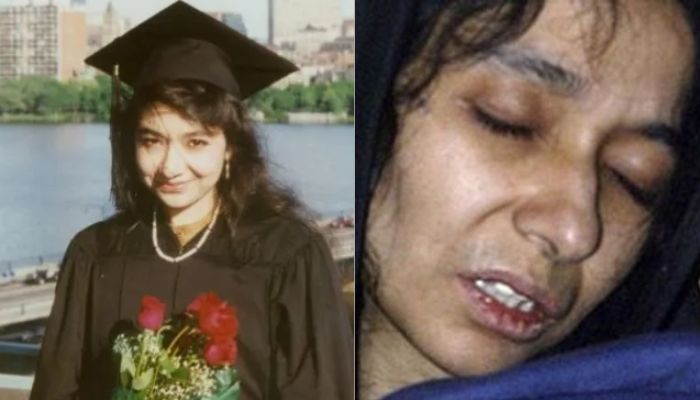
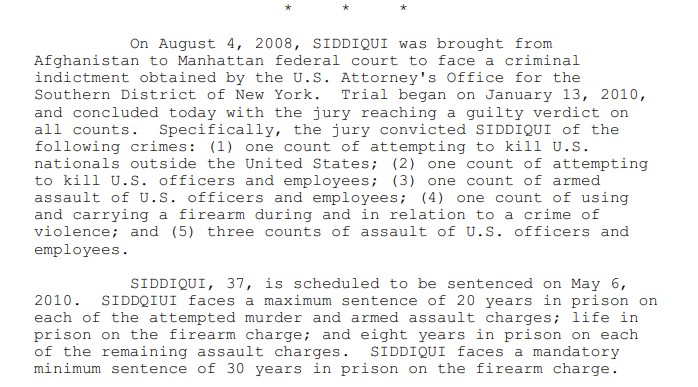
From a Pakistani neuroscientist to the infamous ‘Lady al-Qaeda’, Aafia Siddiqui, continues to garner support and sympathy from Pakistani politicians and ‘human rights’ activists despite her Jihadi terror linked past. Aafia Siddiqui is currently serving an 86-year prison sentence in a Texas jail in the United States. Siddiqui convicted in 2010 of attempted murder of US officials in Afghanistan.
The hopes for her repatriation to Pakistan rekindled when Field Marshal Asim Munir, visited the US for a White House dinner with President Donald Trump in April this year after days after India defeated Pakistan during Operation Sindoor. However, Munir did not raise the matter with Trump.
قوم کی عزت، فیلڈ مارشل جنرل عاصم منیر کے ہاتھ میں ہے۔
In January this year, the outgoing US President Joe Biden also refused to grant clemency to Aafia Siddiqui. The US government informed the Islamabad High Court that Siddiqui’s clemency petition, submitted with claims of new evidence and humanitarian concerns about her health, was rejected.
In September this year, the Islamabad High Court formed to hear the case of Aafia Siddiqui, was dissolved as Justice Inaam Ameen Minhas declined to hear the petition and urged the formation of a larger bench. The petition was filed by Aafia Siddiqui’s sister, Fauzia Siddique. Earlier, a contempt notice was issued to Prime Minister Shehbaz Sharif and his cabinet for failing to comply with previous court orders and filing their response in the case.
‘Lady al-Qaeda’ Aafia Siddiqui: Victim of human rights violation or Islamic terrorist?
Aafia Siddiqui is a 52-years-old terrorist of Pakistani origin. Born in Karachi, Siddiqui moved to the US in 1990 on a student visa. She got her bachelor’s degree in biology from MIT and a PhD in neuroscience from Brandies University in 2001. Aafia’s mother worked as an Islamic educator and politician and her father a neurosurgeon. During her time in Boston, Aafia Siddiqui volunteered with Islamic ‘charities’ including the Al-Kifah Center which was found to be linked to the al-Qaeda. Siddiqui also expressed strong anti-American opinions after the 9/11 Islamic terror attack that killed numerous innocent people. She also expressed support for Jihad.
The FBI questioned Siddiqui and her then-husband, Amjad Khan, about their suspicious purchases like night-vision goggles, and manuals on explosives, body armour and 45-military-style books including The Anarchist’s Arsenal. During his FBI interview, Amjad Khan claimed that he brought these materials for camping and hunting. Amidst the FBI investigation, Aafia and her husband divorced and she returned to Pakistan with her three children.
In March 2023, Siddiqui and her children vanished in Karachi, Pakistan. Initially, Pakistani authorities acknowledged detaining her for questioning over her alleged al-Qaeda links, only to later deny involvement. In May 2004, the US FBI issued a worldwide alert, naming Aafia Siddiqui one of its first female “most-wanted” terrorists, alleging that she was an al-Qaeda terrorist and courier. Her whereabouts between 2003 and 2008 remain disputed. While a journalist who supported Siddiqui, Yvonne Ridley, claimed that Aafia was abducted and secretly tortured in places like Bagram Air Base, the US Department of Justice said that she hid in Afghanistan-Pakistan border areas with the family of al-Qaeda jihadi terrorist and 9/11 mastermind, Khalid Sheikh Mohammed.
Later, Siddiqui married Khalid Sheikh’s nephew, Ammar al-Baluchi. Although Aafia’s sister Fauzia Siddiqui denies the marriage ever took place, however, both Pakistani and US intelligence, al-Baluchi’s family, as well as Aafia herself confirmed that the marriage indeed happened. Siddiqui confirmed this later during her FBI interviews.
In 2008, she was detained by Afghan authorities. According to the Department of Justice, they had found a number of items in her possession, including handwritten notes that mentioned a mass-casualty attack. There was a list of various locations such as Plum Island, the Empire State Building, the Statue of Liberty, Wall Street, and the Brooklyn Bridge in the US, including in the items.
As per an official complaint signed by Mehtab Syed, Special Agent of the FBI in 2008, on the evening of 17th July 2008, officers of the Ghazni Province Afghanistan National Police (“ANP”) discovered Aafia Siddiqui along with a teenage boy, outside the Ghazni governor’s compound. ANP officers questioned Siddiqui in the local dialects of Dari and Pashtu. However, she did not respond. Since Siddiqui spoke in Urdu, the officials suspected that she was a foreigner.
The ANP officials searched her handbag and found numerous documents describing the creation of explosives, chemical weapons, and other weapons involving biological material and radiological agents. Aafia Siddiqui’s papers included “descriptions of various landmarks in the United States, including in New York City.
In addition, among Siddiqui’s personal effects were documents detailing United States military assets, excerpts from the Anarchist’s Arsenal, and a one gigabyte digital media storage device (thumb drive).” She also possessed numerous chemical substances in gel and liquid form that were sealed in bottles and glass jars.
On 18th July 2008, two FBI special agents, a US Army Warrant Officer (the “Warrant Officer”), a US Army Captain (the “Captain”), and US military interpreters, arrived at the Afghan facility where Siddiqui was held. The officers did not know that Aafia Siddiqui was held here “unsecured” and behind a curtain. The Warrant Officer sat and kept his loaded but safe US Army M-4 rifle on the floor. Soon after, Siddiqui appeared before the Captain with the Warrant Officer’s rile and pointed it towards the Captain. A struggle to snatch the rifle from her ensued. She allegedly yelled in English, “Get the f&*k out of here”, as she fired the rifle.
Siddiqui was shot at least once; however, she continued to kick and assault the officials while shouting “Allahu Akbar”. Aafia Siddiqui was also yelling in English that she wanted to kill Americans. “May the blood of [unintelligible] be directly on your [head/hands]” and “I am going to kill all you Americans,” she allegedly said.
It was only after Aafia Siddiqui lost consciousness, that the situation came in control and she was provided medical attention. Siddiqui was booked on two counts of attempted murder, assault, and weapons charges.
On 23rd September 2010, the United States Attorney for the Southern District of New York, Preet Bharara, announced that Aafia Siddiqui has been sentenced in Manhattan federal court to 86 years in prison for the attempted murder and assault of U.S. nationals and U.S. officers and employees in Afghanistan. Judge Richard Berman found guilty Aafia Siddiqui guilty of all charges brought up against her. Judge Berman cited Siddiqui’s ‘high intelligence’ and al-Qaeda links as aggravating factors.
She is currently serving an 86-year prison sentence for attacking US Army and FBI personnel in Afghanistan.
Interestingly, Aafia Siddiqui has been a deeply antisemitic person and even during her trial, she disrupted proceedings by claiming that there was a Jewish conspiracy at play against her. She even demanded DNA tests for jurors saying that if they were from Israel or ‘Zionists’, the trial won’t be fair.
“If they have a Zionist or Israeli background . . . they are all mad at me. I have a feeling everyone here is them [sic] — subject to genetic testing. They should be excluded if you want to be fair,” Siddiqui told the judge.
Synagogue attack, al-Qaeda’s prisoner exchange offer, demands by human rights groups and Islamist outfits and sister Fowzia Siddiqui’s legal battle: Islamists from all walks of life have been seeking Aafia Siddiqui’s release
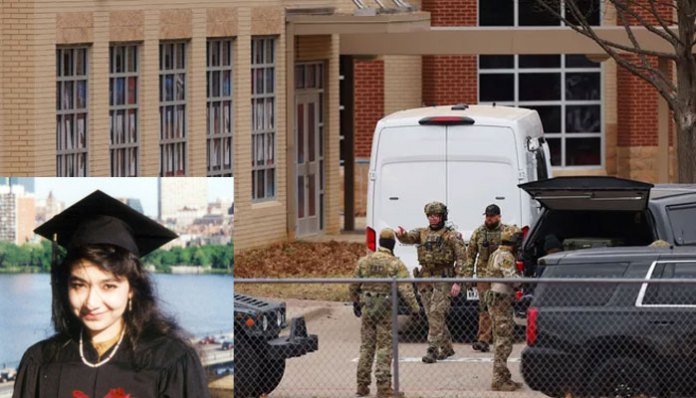
Many ‘human rights’ advocacy groups both in Pakistan and the US as well as Islamist outfits project Aafia Siddiqui as a ‘victim’, however, in 2022, a Jewish synagogue in Texas, was attacked by Islamic terrorists, including one Akram, who sought Siddiqui’s release. On 15th January 2022, Congregation Beth Israel in Colleyville, Texas was attacked by Islamic terrorists who took the Jewish people who came for there for a Sabbath morning service, as hostage and demanded Aafia Siddiqui’s release from prison as a condition for freeing the hostages, including one Jewish Rabbi.
Besides being a Jewish place-of-worship, the Colleyville synagogue was also in vicinity of the Federal Medical Center Carswell in Fort Worth, where Siddiqui was imprisoned. As the Jewish sabbath program was being live-streamed, when jihadi Akram took four people hostages, the authorities monitored his anti-America, antisemitic and Jihadist rants. The standoff persisted for 10 to 11 hours, during which Akram continuously demanded Aafia Siddiqui’s release. Eventually, jihadi Akram was fatally shot by FBI officers and hostages were rescued unharmed.
The FBI classified this incident as a “terrorism-related” and a hate crime, driven by antisemitism and Islamic jihadist ideology. Investigation into Akram’s internet history revealed interests in Aafia Siddiqui’s case, gun stores, information about Rabbis in Texas.
Before the Colleyville synagogue attacks, Islamic terrorist groups including al-Qaeda, ISIS and the Afghan Taliban have on many occasions offered to release American hostages in exchange for Aafia Siddiqui. In 2014, the Islamic State (ISIS) sought Siddiqui’s release in exchange for American hostages, journalist James Foley and human rights activist Kayla Mueller. However, the US always dismissed these offers and both Foley and Mueller were killed by ISIS jihadis in separate incidents.
Islamic terrorist groups who have vowed to kill Kafirs, have sought Siddiqui’s release and often cite her in their propaganda materials as a symbol of Muslim ‘victimhood’. International ‘human rights’ groups notorious for sympathising with Islamists, have advocated also for Siddiqui’s release.
Unsurprisingly, Pakistani governments and politicians have also advocated for Siddiqui’s release. Given Pakistani political and military establishment takes pride in harbouring Islamic terrorists, Pakistani senate in an 2018 resolution, hailed ‘Lady al-Qaeda’ Aafia Siddiqui as “Daughter of Pakistan”.
From then Prime Minister Yusuf Raza Gilani’s 2010 promises, PML(N) leader and former PM Nawaz Sharif’s pledges, Pakistani leaders have lobbied the US to seek Siddiqui’s release. Resolutions, rhetoric and requests have been Pakistan’s tactics over the years to secure the al-Qaeda terrorist’s release. Last year, a high-level delegation comprising senators from Pakistan visited the US to seek Siddiqui’s release.
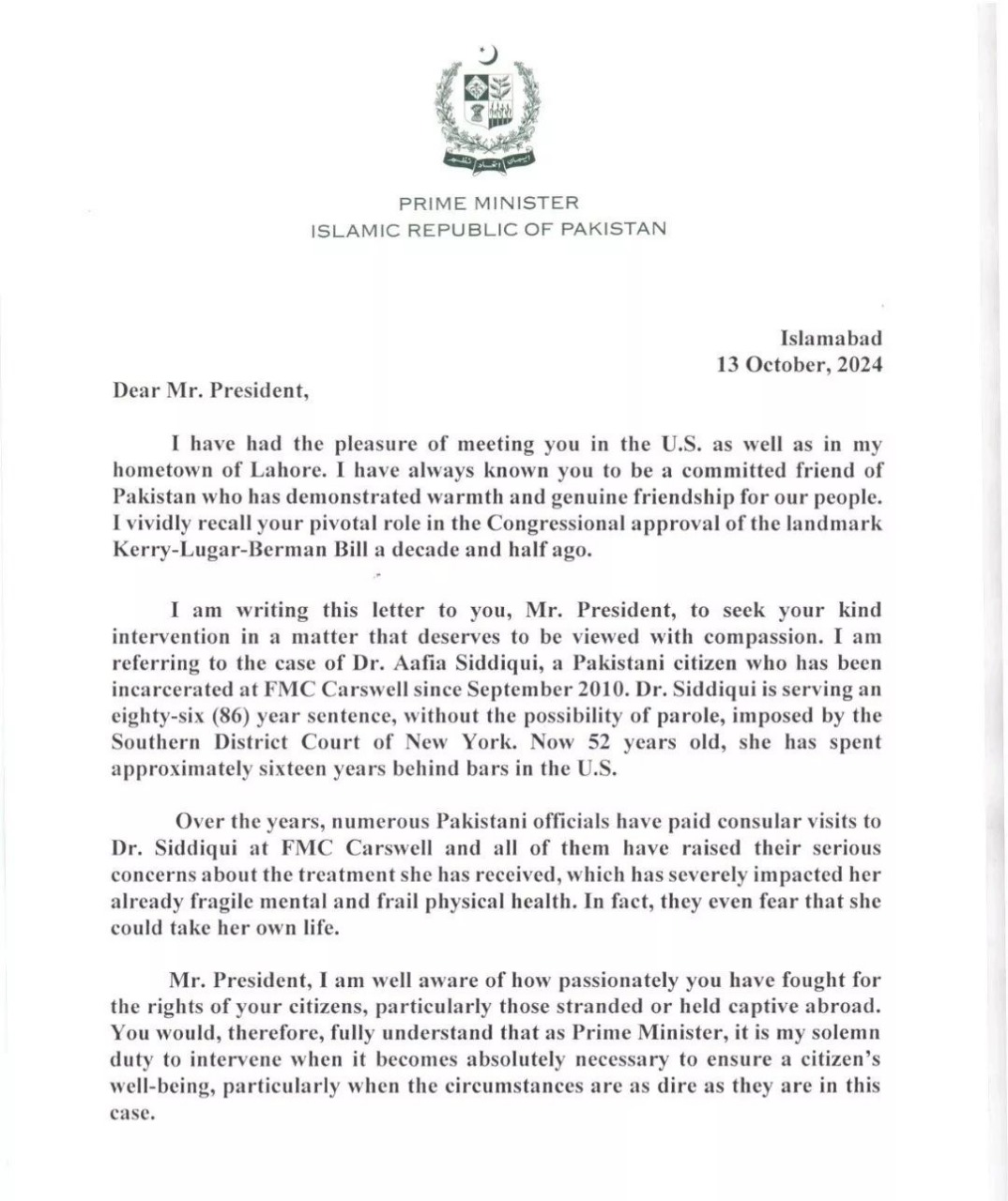
Last year, PM Shehbaz Sharif wrote a letter to then US President Biden for her release on humanitarian grounds. However, Biden denied Sharif’s request, dashing hopes to secure Siddiqui’s release for Trump’s inauguration.
In July this year, Pakistani foreign minister, Ishaq Dar, sparked controversy by comparing Aafia Siddiqui’s case with that of jailed former PM Imran Khan, calling it a matter of “due process”.
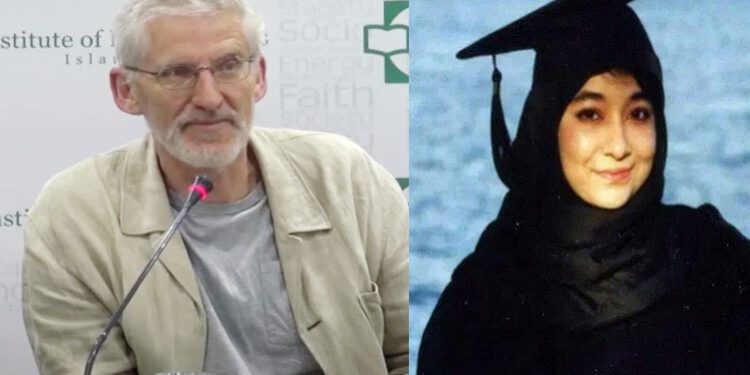
Recently, Aafia Siddiqui’s lawyer, Clive Stafford Smith, said that he plans to file a fresh appeal in New York, claiming that he has found video evidence of the incident which allegedly disapproves the prosecution’s accusations.
Clive Stafford Smith (L), Aafia Siddiqui (R)
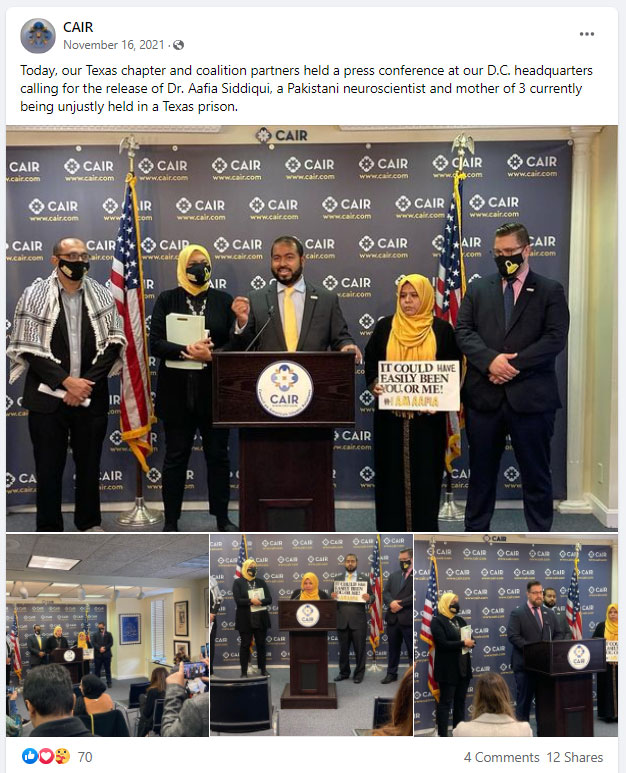
Besides, jihadi groups, and Pakistan government, US and UK-based ‘human rights’ and Islamist groups like CAIR, Amnesty International, CAGE International, Code Pink, among others have advocated for the release of ‘Lady al-Qaeda’.
Notably, just two months prior to the Texas synagogue attack, CAIR International (Council on American-Islamic Relations) had sought the release of Siddiqui and held events and rallies in her support. CAIR Texas DFW organize multiple online and offline campaigns to show support for Siddiqui and also raise funds for her legal battle against the conviction.
OpIndia earlier reported about the Hinduphobic proclivities of CAIR International, their support for crowdfunding scam accused ‘journalist’ Rana Ayyub, and their backing for the extremely Hinduphobic ‘Dismantling Global Hindutva‘ conference.
In 2022, Rutgers University and the Network Contagion Research Institute (NCRI) published a study which showed that there was a massive spike in Twitter activity for ‘Free Aafia Movement’ ahead of the attack on the Jewish synagogue in Texas.
Islamist propaganda outlets including Al Jazeera and Crescent International have also been pushing narratives favouring Aafia Siddiqui.
Dr Fowzia Siddiqui, the sister of convicted al-Qaeda terrorist Aafia Siddiqui, has been running the “Aafia Movement” to secure her release. As their website, “The Aafia Movement is an international initiative dedicated to securing justice and freedom for Dr. Aafia Siddiqui, a Pakistani-Muslim woman currently serving an unjust 86-year sentence in U.S. federal prison.”
Source: The Aafia Movement
The website features, articles and illustrations telling Aafia Siddiqui’s supposed story of how an educated Pakistani-Muslim woman and a ‘Hafiza’, the woman who has memorised Quran and partook in Muslim rights activism, was ‘victimised, and subjected to ‘atrocities’ by the American authorities in the name of ‘war on terror’. There is another website, “The Aafia Foundation”, dedicated to the same purpose.
Back in 2023, Fowzia Siddiqui and lawyer Clive Stafford Smith alleged that Aafia “holds no special importance for the US” and it’s the government of Pakistan that didn’t do enough to bring her back. Smith even advocated for exchanging Aafia for Shakeel Afridi. Afridi has been jailed in Pakistan for many years over allegations of helping the US in tracing the Al-Qaeda chief Osama Bin Laden who was killed in Abbottabad in 2012. Predictably, Pakistani government, showed no interest in this prisoner swap proposal.
At present, Aafia Movement employs social media, interviews, seminars, documentary screenings, awareness campaigns and tours, fundraisers and other activities to advocate for Aafia Siddiqui’s release from prison. Amusingly, Islamic terror groups, Islamist advocacy groups, Islamist apologist ‘human rights’ groups and jihadi sympathisers in general, have been calling Aafia Siddiqui’s incarceration a ‘miscarriage’ and ‘travesty’ of justice, peddling Muslim victimhood and Islamophobia narratives while Aafia’s family denies her links to al-Qaeda or any Islamic terror group altogether.
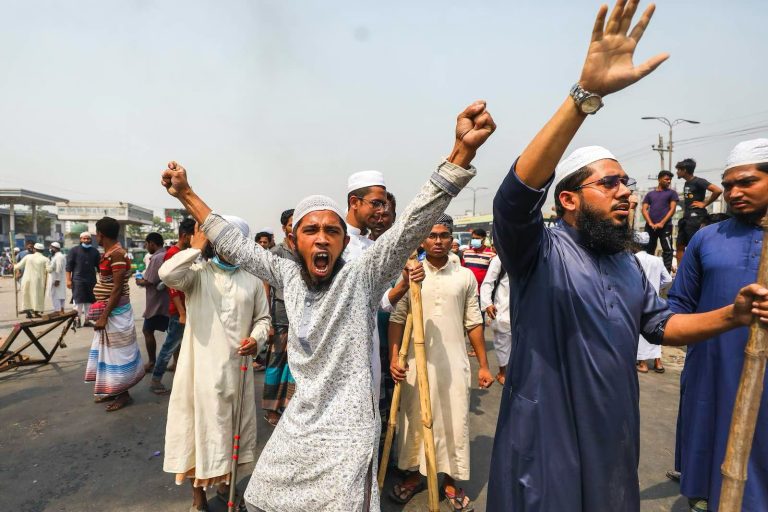
The Jamaat-e-Islami’s stunning campus victory signals a deeper political shift that could reshape India’s eastern frontier. The news from our eastern neighbor, Bangladesh, barely registered as a blip in India’s busy news cycle. After all, it was “just” a student election.
But beneath this seemingly minor event lies a profound geopolitical tremor. The student wing of the Jamaat-e-Islami (JeI), the Islami Chhatra Shibir, swept the Dhaka University Central Students’ Union (DUCSU) elections a feat that marks the first time since Bangladesh’s birth in 1971 that an Islamist group has captured this prestigious and politically symbolic institution.
For many, this development may appear irrelevant a student body in a foreign country choosing its representatives. But for New Delhi, this is no ordinary development. It signals a dramatic shift in Bangladesh’s political mood, one that could have serious consequences for India’s national security, border stability, and regional diplomacy. In the past, Dhaka University elections have often served as a political barometer for the nation, foreshadowing major electoral trends.
To understand the magnitude of this victory, one must look at the broader context. Bangladesh has been politically unstable since the dramatic fall of Sheikh Hasina’s Awami League government earlier this year. Mass student-led protests toppled the regime, forcing Hasina into exile and leading to the formation of an interim administration under Nobel laureate Muhammad Yunus. The Awami League, which had ruled for over 15 years, has now been officially banned from participating in the general elections scheduled for February 2026.
The other traditional powerhouse, the Bangladesh Nationalist Party (BNP), is no better positioned. Its matriarch, Begum Khaleda Zia, is ailing and largely inactive. Much of its leadership has been based in London for years, creating a perception of detachment from grassroots realities. While the BNP retains some loyal voters, it is struggling to mobilize mass support in the current climate of upheaval.
With both the Awami League and BNP weakened or sidelined, a massive political vacuum has emerged. Into this void steps the Jamaat-e-Islami, a party with deep organizational roots, a robust welfare network, and a cadre-based system that has been quietly building strength during years of suppression under Awami League rule. Its student wing’s triumph at Dhaka University is not merely symbolic it represents the first tangible evidence of the Jamaat’s resurgence.
It is tempting to interpret this victory as a sudden surge of Islamist fervor among Bangladesh’s youth, but that would be an oversimplification. In reality, the electorate’s support for the Jamaat appears to be less about ideological alignment and more about frustration. After decades of governance marked by corruption, nepotism, and political violence, many young voters see the Jamaat as untainted by the rot of the traditional parties.
This is not unlike what we have witnessed in other parts of the world, where voters, disillusioned with mainstream politics, turn to groups that present themselves as “clean” outsiders, even if their ideology is extreme or exclusionary. For a generation born long after the 1971 Liberation War, the Jamaat’s collaborationist role during that conflict carries far less emotional weight than it does for their parents or grandparents. Instead, these voters are focused on the here and now jobs, governance, and accountability.
For India, this development could mark the beginning of a deeply challenging phase. The Awami League, under Sheikh Hasina, was New Delhi’s most dependable partner in the region. Hasina’s government worked closely with India on counter-terrorism, cross-border infrastructure, and connectivity initiatives. Under her leadership, India’s northeastern states experienced relative stability, as Dhaka cracked down on anti-India insurgent groups operating from Bangladeshi territory.
That era may be ending. With the Awami League out of the picture and the BNP weakened, the Jamaat now has a realistic shot at securing a powerful role in the next government possibly even leading a coalition. A Jamaat-led or Jamaat-influenced regime would fundamentally alter the dynamics of India-Bangladesh relations.
There are three primary concerns for New Delhi. First, border security could deteriorate. A Jamaat ascendance could embolden anti-India elements along the border. Historically, Islamist groups in Bangladesh have maintained close ties with the Pakistani ISI and have offered shelter to insurgent outfits operating in Assam, Tripura, and Meghalaya. A sympathetic government in Dhaka could undo years of counter-terrorism cooperation.
Second, there is the risk of rising religious persecution. Bangladesh’s Hindu minority has always been vulnerable during periods of political turmoil. Under regimes sympathetic to hardline Islamists, attacks on Hindu temples, businesses, and communities have historically spiked. India could face a humanitarian crisis along its borders if communal violence intensifies.
Third, there is the danger of strategic realignment. A Jamaat-led government may tilt Bangladesh away from India and towards China or even Turkey, both of which have cultivated ties with Islamist and conservative political movements across the Muslim world. This would threaten India’s strategic interests in the Bay of Bengal and undermine initiatives like BIMSTEC and the Act East policy.
The DUCSU election result is, therefore, not an isolated event but a warning sign. Bangladesh’s political tectonic plates are shifting. For too long, India has viewed Bangladeshi politics through the prism of the Awami League vs. BNP rivalry. That framework is now obsolete.
New Delhi must recalibrate quickly. This means intensifying diplomatic engagement not only with the interim government but also with emerging political forces, including moderate factions within the Jamaat. It must strengthen border management to preempt a surge in infiltration, arms smuggling, and cross-border militancy. Contingency plans must be built for a possible refugee influx in case of communal violence or political breakdown. India must also leverage regional partnerships, especially with Bhutan and Nepal, to present a united front on counter-terrorism and migration issues.
India’s traditional stance of “non-interference” may sound noble, but in practice, events in Dhaka directly affect security and stability in the Northeast. Ignoring them would be dangerously naïve. The DUCSU election was more than a campus poll; it was a political earthquake. The tremors may have started in Dhaka, but their aftershocks could soon be felt from Kolkata to Guwahati.
For India, the message is clear: a new chapter in Bangladesh’s history is unfolding, and we must be prepared to deal with its challenges head-on.
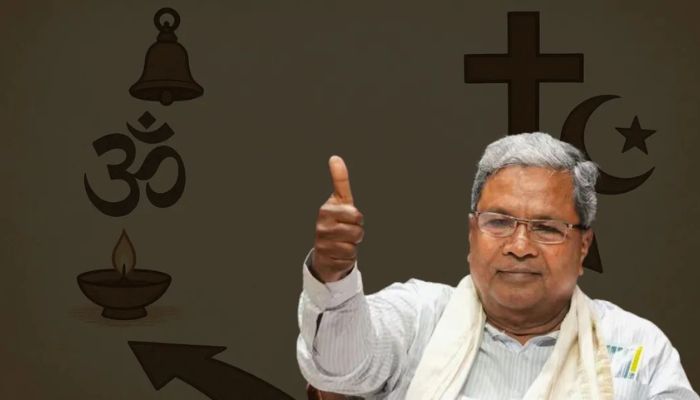
Karnataka Chief Minister Siddaramaiah has again sparked controversy with his recent comments equating religious conversions to ‘caste discrimination’ and ‘inequality’ in Hindu society.
While responding to media questions about caste census, the CM suggested that people convert to other religions not because of external influence but because they feel alienated by social structures in Hinduism.
Siddaramaiah’s statement on conversions
Siddaramaiah argued that conversions are often a response to inequality and discrimination within Hindu society. “Even if we say don’t convert, some of them do it as a result of the system.
In our Hindu community, if there was equality and equal opportunities, why would anyone convert? Did we bring untouchability,” Mr Siddaramaiah said on Saturday, 13th September, while answering media questions about caste census.
“There can be inequalities in Islam, Christianity or any religion. We or the BJP didn’t ask anyone to convert but people have… It is their right,” he added.
R Ashoka, Leader of the Opposition in Karnataka Assembly, hit back.
“If there is equality in Islam, why are women not allowed to enter mosques? If there is equality in Islam, why was there opposition to banning triple talaq? If there is equality in Islam, why are non-Muslims, including Hindus, referred to as kafirs in the Quran? Do you have the courage to ask this, Siddaramaiah?” he said in a post on X, formerly Twitter.
Chief Minister’s remark has attracted strong criticism
The Chief Minister’s remark has attracted strong criticism from those accusing him of singling out Hindu practice while ignoring corresponding problems in other religions. Siddaramaiah has easily said about conversions and the inequality in Hindu religion. Will he be able to question any other religion on this? Obviously, this will not happen. Because for him, questioning Hindus is an easy target.
History is a witness that whether it was the era of medieval invaders or the campaign of missionaries during the British rule, the conversions that happened during that period were due to political or economic pressure. The poor and the deprived were motivated to change their religion by luring them with education, health and money.
On the other hand, if we talk about equal opportunity, then it is constitutionally the government’s duty to provide equal opportunity to the people. If people are leaving their faith because of a lack of opportunity, then the responsibility also lies with the state to address these gaps.
“Clean chit” to missionaries and radical groups
The manner in which this statement has been made is very dangerous. This argument of Siddaramaiah is like giving an open license to those missionaries and fundamentalist organisations who have been engaged in dividing the poor, Dalits and the deprived from the Hindu society through greed and false promises for decades.
Is it not true that Christian missionaries first make the poor dependent in the name of education, health and help and then force them to convert? Is it not true that thousands of girls and families have been trapped by Islamic fundamentalist organizations through ‘love jihad‘ and the lure of money?
If there are some shortcomings as a society, have there been no attempts to correct them? Is becoming a Muslim or a Christian the only solution? No other religion has done as much work for reform as the Hindus have.
Today, crores of Dalits and people from backward classes reach heights in politics, education and other fields while living in Hindu society. This is clearly evident from the people occupying top positions in the country.
Today, there is a need to expose the statements of such leaders. If there are some shortcomings in Hindu society, then their solution is social reform and education, not conversion. Putting Hinduism in the dock every time and giving a clean chit to missionaries is actually a direct attack on the nation and culture.
Siddaramaiah’s recent decision in the favour of Christian communities
Siddaramaiah’s remarks are also tied to his political strategy of minority appeasement. His government has backed demands from Muslim reservations to the construction of exclusive colonies in the past. His recent decision to name an upcoming metro station in Bengaluru‘s Shivajinagar after St. Mary’s Basilica was also interpreted as a support to Christian communities.
A strong response came from Maharashtra on this decision, with Chief Minister Devendra Fadnavis saying it was an insult to Shivaji Maharaj.
With elections around the corner in Karnataka‘s politically charged atmosphere, such remarks are being interpreted as efforts to consolidate minority vote banks, even at the risk of alienating Hindu voters.
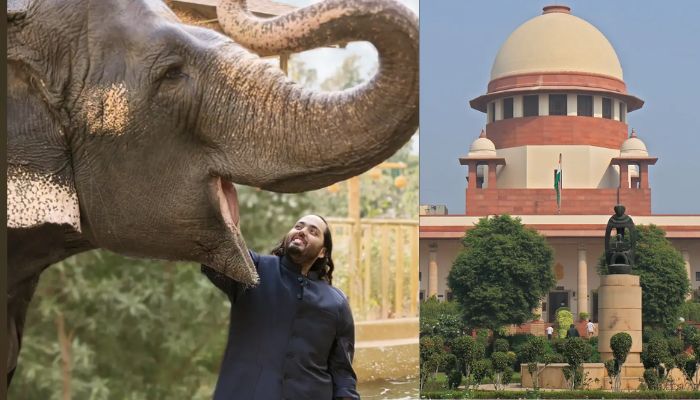
The Supreme Court on Monday, 15th September, said that the acquisition of animals by Vantara, the Greens Zoological Rescue and Rehabilitation Centre run by the Reliance Foundation in Jamnagar, Gujarat, was within the law.
The Court made this observation after going through the report of the Special Investigation Team (SIT) it had set up to look into allegations of irregularities.
A bench of Justice Pankaj Mithal and Justice P. B. Varale said the report showed that all acquisitions, including elephants, were carried out in compliance with the rules and regulations. “The acquisition of animals… has been carried out in regulatory compliance,” Justice Mithal remarked while reading from the report.
According to the media reports, the Court made it clear that the SIT had found no foul play in how the animals were brought into the facility, either from within India or from abroad.
The bench said they had not gone into the report in detail before the hearing because they wanted to examine it openly in court. During the session, Solicitor General Tushar Mehta, senior advocate Harish Salve who appeared for Vantara, and the petitioner’s lawyer were present.
Justice Mithal said “Acquisition of animals…carried out in regulatory compliance,” and added that the Court will make the report a part of the order. He also said that the matter would be closed after orders were passed in chambers.
Objections over making the report public
However, both Mehta and Salve requested the Court not to make the SIT report public. They said that a certain narrative is going on and publishing the report will allow more speculation than necessary. Salve added that there is some confidentiality attached to how the animals are taken care, etc. Justice Mithal then said that the Court will pass orders during lunch in chambers and will then close the matter.
“My only concern is, when the Committee came, whole staff of Vantara was made available, everything was shown. There are certain propriety concerns as to how the animals are being looked after, how do you keep these animals. Large moneys have been spent with experts to develop these, there is some degree of commercial confidentiality. Mylords may understand, this is something which is the rival of the world, this kind of facility. There is narrative which is trying to bring this down. If the whole record is put, we don’t want the rest of the world to know because if tomorrow, in New York Times there is another article or you will see in Times Magazine another article..” Salve told the bench.
Justice Mithal responded firmly, saying the Court would not allow unnecessary doubts to be raised now that an independent expert body had verified everything. “We are satisfied we the report of the Committee…Now, we have a report of an independent committee, they have gone through everything, they have taken help of experts. Whatever they have submitted, we will go by that. And all authorities will be free to take actions based on recommendations and suggestions. You are also bound, we will not permit anyone to raise questions again and again.”
Court urges end to unnecessary allegations
The bench also cautioned against spreading allegations for the sake of creating controversy. Justice Mithal said: “See, there are certain things we probably feel are the pride of this country. We should not unnecessarily rake up all these matters and raise hue and cry for the sake of that. Allow certain good things to happen to the country. We should be happy about all these good things…If the acquisition of an elephant is in accordance with the law, what is the difficulty?”
He pointed out that elephants in temples are also used for processions and festivals like Dussehra, and if those traditions are accepted, there should be no objection when elephants are legally acquired by a rescue and rehabilitation centre.
The Court further refused to take up a fresh plea regarding a temple elephant being shifted, saying the matter was already covered by the SIT’s findings.
The bench appreciated the promptness with which the SIT carried out its investigation and suggested that the members should be given an honorarium for their work.
With this, the Court indicated that the controversy surrounding Vantara’s acquisitions should now come to an end, making it clear that no foul play had been found.
Background: Why Vantara came under the scanner
The controversy around Vantara started earlier this year when concerns were raised regarding the acquisition of animals, particularly elephants, by the Reliance Foundation centre. Complaints and reports in the media and NGOs indicated that animals were being relocated without complying with the Wild Life (Protection) Act, 1972, and international conventions such as CITES.
Controversy were also erupted when an elephant called Mahadevi was transferred from a temple in Kolhapur to the Jamnagar centre in July, triggering a flurry of petitions. On 25th August, (2025), the Supreme Court ordered an inquiry by a Special Investigation Team (SIT) headed by its former judge, Justice J. Chelameswar.
The SIT also included former Chief Justice of Uttarakhand and Telangana High Court Justice Raghavendra Chauhan, former Mumbai Police Commissioner Hemant Nagrale, and senior customs officer Anish Gupta. The SIT has been directed to conduct its inquiry “forthwith” and submit its report by 12th September.
The SIT was asked to examine a wide range of allegations: from compliance with wildlife laws and import/export rules, to animal welfare standards, to even complaints of misuse of resources like water and carbon credits. Allegations of financial irregularities and wildlife smuggling were also listed in the petitions.
Significantly, the Court had then observed that the petitions were primarily based on media reports and complaints and lacked substantial evidence. Nevertheless, in view of the seriousness of the allegations, the Court directed a fact-finding inquiry to determine the truth.
Vantara, meanwhile, had welcomed the Court’s ruling and pledged to cooperate fully with the SIT. The foundation asserted that its priority was “rescue, rehabilitation and care of animals” and urged that speculation must not overshadow its activities.
Now, with the SIT finding no violations and the Supreme Court closing the matter, the spotlight shifts back to Vantara’s work as one of the largest animal rescue and rehabilitation centres in the world.
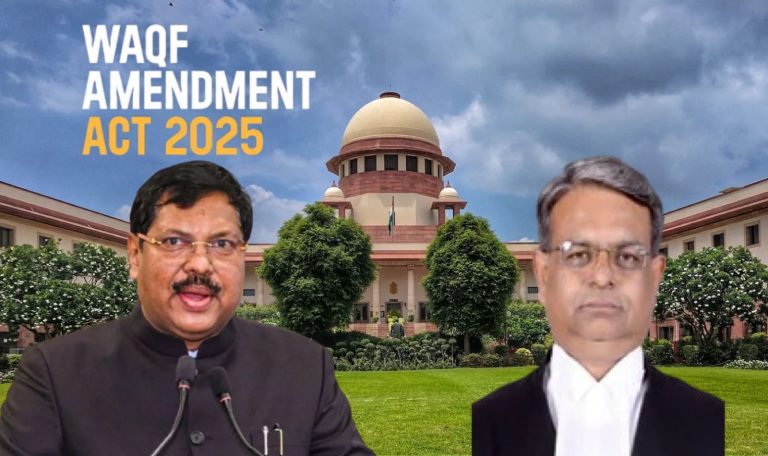
The Supreme Court of India has once again stepped into a zone where it was never meant to tread: legislating from the bench. On September 14, the apex court stayed key provisions of the Waqf (Amendment) Act, 2025, which had been passed by Parliament earlier this year after an intensive debate for over 12-hours in the Lok Sabha and a subsequent 14-hour discussion in the Rajya Sabha.
What the Supreme Court said
Chief Justice BR Gavai, while pronouncing the order, remarked that “only in the rarest of rare cases a legislation can be stayed.” Yet, ironically, the bench went on to do precisely that. The Court observed that though the 5-year condition for a Muslim practitioner before creating waqf was not arbitrary in itself, in the absence of a mechanism to verify such practice, it could lead to misuse. Hence, the provision was stayed till state governments frame rules.
On the question of government land claimed as waqf property, the Court went further. It said that “permitting the Collector to determine the rights of the properties is against the doctrine of separation of powers as the Executive can’t be permitted to determine the rights of citizens.” In essence, it meant until a tribunal or a higher court decides the matter conclusively, the government cannot de-recognize such land from waqf claims. No third-party rights can be created either, but the encroacher, conveniently, continues to sit tight on disputed land.
The Court also imposed caps on the number of non-Muslim members in Waqf Boards and directed that as far as possible, the CEO of a Board should be Muslim. It justified these as interim “protective” measures while the larger constitutional challenge is heard.
This move raises an uncomfortable yet crucial question: Is the judiciary slowly becoming the biggest stumbling block in the government’s effort to reclaim illegally occupied lands and bring accountability to India’s largest landowner after the Indian Railways, the Waqf boards?
Let’s be clear. The court did not strike down the entire law. It carefully picked provisions, citing arbitrariness and separation of powers. But in doing so, it created a dangerous precedent: a court can be used to stall executive action whenever vested interests feel threatened.
For decades, the Waqf boards have operated as a parallel land authority, often beyond the pale of scrutiny, claiming vast swathes of land, sometimes even government land, as “waqf property.” The 2025 amendments were a long-overdue attempt to bring order, transparency, and accountability. Yet, the judiciary’s intervention threatens to undo this effort.
Why these observations are problematic
The Court’s logic may sound legally sophisticated, but its practical effect is disastrous. Take the Collector’s role. In any land dispute, be it between private citizens, companies, or even between individuals and the State, the first level of determination always begins with the revenue officer. That is the system across India. Why should waqf properties suddenly enjoy an exemption from this? By ousting the executive from this process, the Court has made it nearly impossible for the government to protect its land from encroachment without first wading through years of litigation.
As for the 5-year condition, the Court itself acknowledged that people could convert opportunistically to Islam just to misuse waqf protections. Yet, instead of allowing the law to operate, it suspended it until rules are framed.
Essentially, the judiciary is saying: “Yes, the Parliament was right in principle, but we will not allow the law to run until we micromanage its rule-making.” This is nothing but judicial babysitting of the legislature.
Government land as Waqf property? Court’s stay encourages encroachment
One of the most significant provisions Parliament introduced was that if a property is in dispute with the government, it cannot be treated as Waqf property until the matter is resolved. This was a common-sense safeguard. After all, how can disputed government land suddenly be stamped as “Allah’s property” merely because a Waqf board unilaterally decides so?
Yet, the Supreme Court stayed this provision. Its reasoning? That allowing a government officer like the Collector to decide such disputes violates the “separation of powers.” So until a tribunal or court finally settles the matter, a process that can drag on for decades, the Waqf board’s claim stands. In effect, the stay order arms encroachers with a legal shield to squat on government land indefinitely, knowing full well that litigation in India is a marathon.
Imagine the motivation this gives to encroachers: Aggressively go hunting for lands, squat on them until challenged. If the local administration orders them to vacate, drag the case endlessly, and continue enjoying the fruits of encroachment while the government’s hands remain tied. This isn’t judicial protection of rights; it’s judicial endorsement and encouragement of encroachment.
Parliament passes, judiciary pauses
The larger issue here is not about the fine print of waqf reforms but about constitutional propriety. Parliament debated and passed the Amendment Act. The executive brought it into effect, citing the urgent need to curb the misuse of waqf claims. Yet, the judiciary has stepped in, not to strike down a law after a full hearing, but to “temporarily” suspend parts of it. In practice, the judiciary has assumed legislative and executive powers.
This pattern is not new. Whether it was farm laws, CAA implementation, or now waqf amendments, courts have increasingly taken upon themselves the role of not just interpreting the law but deciding whether a law can be operational at all. This is judicial overreach, plain and simple. And it undermines the delicate balance between the three pillars of democracy.
When courts begin to “pause” laws passed by the elected representatives of the people, they effectively place themselves above Parliament. Is this the constitutional design? Certainly not.
Selective sensitivity
Interestingly, the same courts that routinely preach judicial restraint suddenly become hyperactive when it comes to laws affecting “minority sentiments.” The Waqf boards today control more land than many state governments, yet their opacity has remained unquestioned for decades. The 2025 amendments aimed to abolish dubious practices like “waqf by user,” prevent creation of waqfs over protected monuments and Scheduled Areas, and subject them to the Limitation Act like everyone else.
Most of these provisions were left untouched. Yet, the moment the government asserted its right to prevent its own land from being swallowed into the waqf blackhole, the judiciary chose to intervene. Why this selective sensitivity? Why should public land, the collective property of taxpayers, be treated as second-class compared to claims of a religious body?
Dangerous precedent
The Supreme Court has often reminded the executive and legislature of the “rarest of rare” standard in staying laws. Ironically, it seems to forget its own principle when it comes to waqf. If every contested provision of a statute can be stayed merely because petitioners dislike it, then Parliament’s authority stands hollow. Tomorrow, every reform, from UCC to temple management laws, will be dragged to the courts, not for final adjudication, but to ensure endless paralysis.
This is the real danger of the September 14 order. It signals to vested interest groups: If you cannot stop a law in Parliament, stop it in the courts.
The Modi government has a daunting task: reclaiming India’s land from illegal encroachment and parallel legal systems. The Waqf (Amendment) Act 2025 was a bold step in this direction. By staying critical of provisions, the Supreme Court has not only emboldened encroachers but also sent a chilling message to Parliament: your mandate is conditional upon our approval.
At stake is not just waqf land but the very principle of the separation of powers. If courts continue to act as the ultimate arbiter of legislative wisdom, India risks turning into a “juristocracy” where unelected judges dictate governance. That is not what our Constitution envisioned.
The people of India elect Parliament to make laws. The courts’ job is to interpret, not interfere. The sooner the judiciary remembers this, the better it will be for our democracy.
On 15th September every year, India celebrates Engineers’ Day. The day celebrates India’s engineering heritage and professionals. Engineers’ Day is observed on the birth anniversary of Sir Mokshagundam Visvesvaraya who was one of India’s greatest engineers. Sir Visvesvaraya was the brain behind projects like the Krishna Raja Sagara dam. On this day, India honours innovators and builders from past and present for shaping society through their marvellous work in the field of engineering.
Today, on Engineers’ Day, I pay homage to Sir M. Visvesvaraya, whose brilliance left an indelible mark on India’s engineering landscape. I extend warm greetings to all engineers who, through their creativity and determination, continue to drive innovation and tackle tough…
It is a tribute to the nation’s engineering heritage and professionals. The date marks the birth anniversary of Sir Mokshagundam Visvesvaraya, one of India’s greatest engineers, famed for feats like the Krishna Raja Sagara dam. It is a day to honour innovators and builders, past and present, who shape society through their work in the field of engineering.
While Indian history is often remembered for magnificent temples, it is worth recalling that our ancestors were also remarkable city builders and engineers. From ancient dams and reservoirs to planned cities, highways and ports, ancient India’s engineering marvels speak to a sophisticated urban civilisation. On this Engineers’ Day, let’s have a look at a few of these feats that prove India’s forebears were kickass engineers in their own right.
Ancient dam still irrigating Tamil Nadu
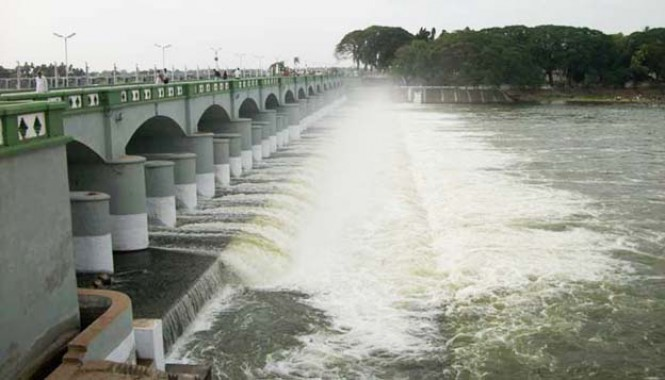
The Grand Anicut is an ancient dam built across the Kaveri River. Locally known as Kallanai, it was built around the 2nd century CE by Chola King Karikala Chola. The Grand Anicut is one of the oldest water-regulation structures in the world that are still serving the region. It is a 329-metre-long stone dam which tames the flow of the river to irrigate the Cauvery Delta.
Source: Sikkim Express
The dam was constructed using unhewn stone and engineered to divert waters into canals to boost agriculture in the region. In the 19th century, British engineers were so impressed that they strengthened and replicated its design for newer projects. The dam originally irrigated about 69,000 acres of farmland which expanded to over a million acres by the early 20th century with improvements.
Kallanai is not only a tourist attraction but living proof of ancient India’s engineering prowess.
Bhopal’s 11th-century lake still supplies a city
Another engineering marvel is Bhojtal which is also known as the Upper Lake of Bhopal. It was created by Paramara King Raja Bhoj in the 11th century. It was constructed on the Kolans River to provide water to the people of the kingdom.
Source: Trip Untold/Samir Singh
It has been over a thousand years since the lake was constructed, and it is still the lifeblood of Bhopal. Bhojtal fulfils the water needs of 40% of the city’s population. The lake covers 32 square km and is among the oldest human-made lakes in India. The name of the city “Bhopal” is derived from Bhoj Tal or Bhoj’s Lake itself.
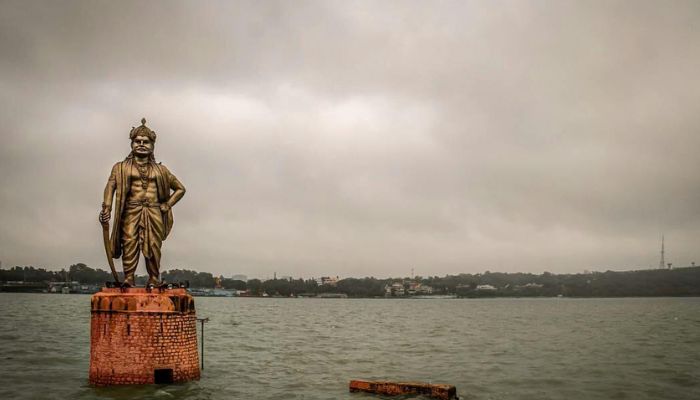
In 2011, the lake was formally renamed Bhojtal in honour of its founder, and a statue of Raja Bhoj now watches over its waters. Bhojtal is also part of a UNESCO-listed wetland.
Harappan cities – Water systems and a dockyard
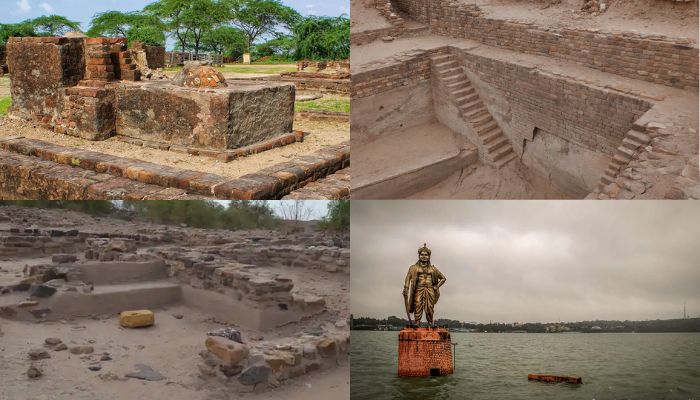
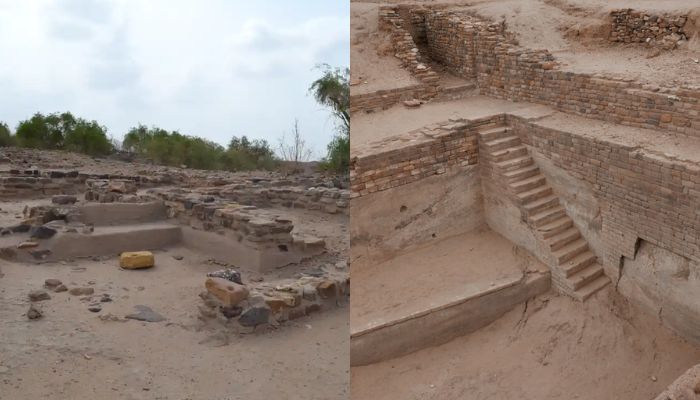
Long before the Cholas and Paramaras, the people of the Indus Valley Civilisation were building carefully planned cities with infrastructure that would be impressive even today. The city of Dholavira is located in present-day Gujarat. It was a thriving city around 2,500 BCE. Those who lived in the city engineered a series of massive water storage tanks and step-wells to create a unique water management system to harvest the scant rainfall in the Rann of Kutch.
Source: UNESCO
During excavation, archaeologists have found at least five large reservoirs at the site. There are huge sunken basins carved into rocks. Furthermore, a sophisticated network of drains has been found at the site. These innovations allowed a city in a semi-desert to thrive for centuries.
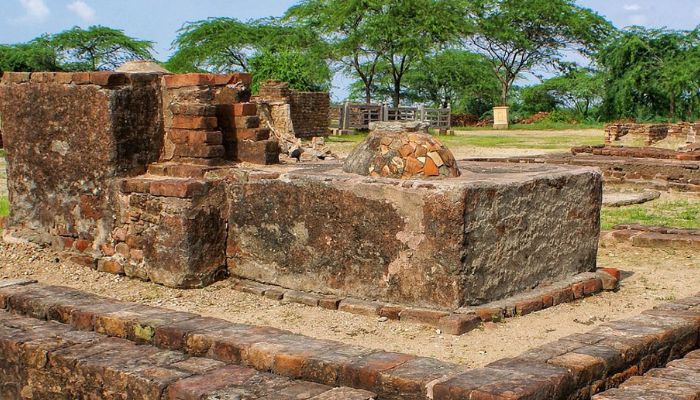
The Harappans mastered the seas as well. The port-town of Lothal, which was a thriving region in Gujarat in 2,400 BCE, is home to what archaeologists believe is the world’s earliest known dockyard. It is a massive rectangular dock which spans over 220 metres. It once connected Lothal to an ancient tributary of the Sabarmati River and allowed ships to berth inland.
Source: The Print
It was an astonishing maritime infrastructure for its time, complete with sluice gates to control water flow, enabling trade with Mesopotamia and beyond. Marine excavations have found salt and marine microfossils in Lothal’s basin, confirming it was open to the sea.
Both Dholavira and Lothal are prime examples of how Indian subcontinent cities were pioneering city planning, water engineering and maritime architecture 4,000 years ago.
Mauryan highways linked the subcontinent
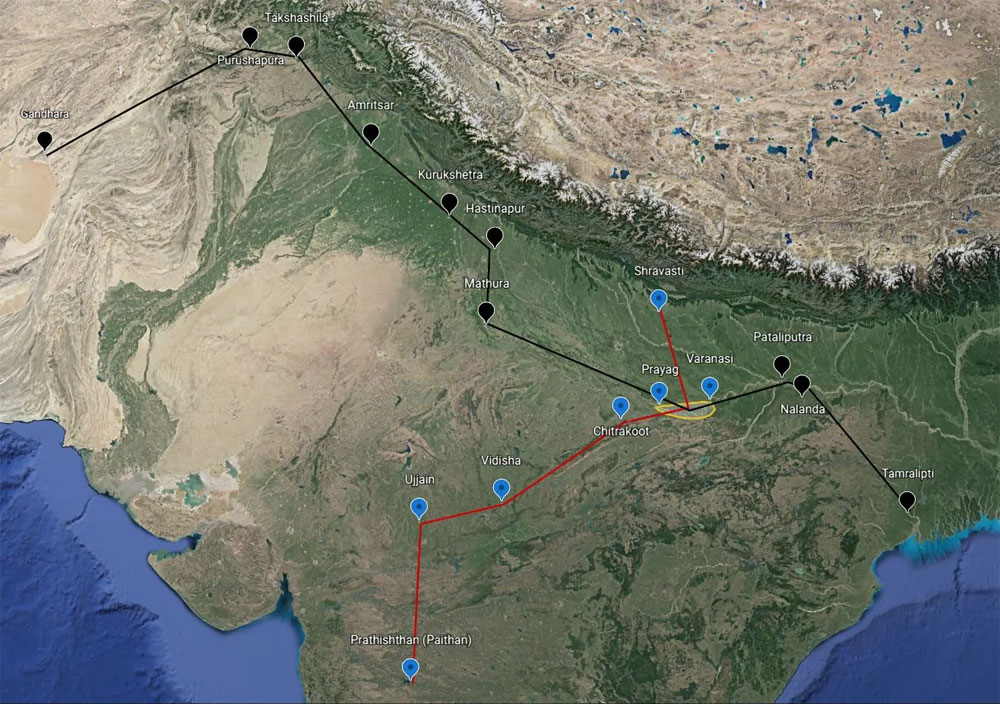
During the Mauryan Empire between the 4th and 2nd centuries BCE, the state built extensive highways to knit together its vast territories and promote trade. The two most celebrated routes were the Uttarapatha (Northern Road) and the Dakshinapatha (Southern Road). The Uttarapath was a grand trunk route running across the Indo-Gangetic plain, it stretched from the Gangetic delta in the east across north India to Taxila (in the northwest, near modern Islamabad).
Source: letusdiscoverindia
The arterial road connected important cities like Pataliputra or Patna, Mathura and Taxila. These roads enabled the flow of goods, armies and ideas. Equally important was the Dakshinapath, the road branching southwards from Ujjain down into the Deccan.
These highways were more than dirt tracks. They were maintained routes with milestones and shade trees. Emperor Ashoka, in his inscriptions, mentions planting banyan trees for shade and digging wells along roads for travellers and animals. Safe and well-kept highways were crucial for governance. Couriers, pilgrims and traders all used them. The Mauryan highways show that over 2,200 years ago, India had a concept of national road networks to connect distant corners of the subcontinent, a striking feat of administrative engineering.
Poompuhar – An ancient global port city
On India’s southeastern coast, the ancient Tamils built a city that stood as a bustling maritime gateway. Poompuhar, also known as Kaveripattinam or Puhar, was a flourishing port city at the mouth of the Kaveri River and served as an early Chola capital which was at its height during the 3rd century BCE to the 2nd century CE. It was a cosmopolitan harbour teeming with trade.
Source: destinationinfinity
Tamil literature of the Sangam Age paints a vivid picture of this planned city. The markets were full of goods, the streets were broad and there were warehouses. The harbour was so deep that “big ships entered the port of Puhar without slacking sail” to unload exotic cargo. Poems like the Pattinappaalai describe multi-storeyed mansions in the city, busy wharves, and even mention specific districts for merchants and artisans.
Submerged wharves and pier walls have been discovered on the seabed off Poompuhar, indicating parts of the ancient city now lie under the waves. Researchers believe a combination of erosion and a cataclysmic tsunami (possibly around 300 CE) swallowed sections of Poompuhar, leading to its decline. Yet, in its prime, this city was a hub connecting South India to Rome, Greece, Southeast Asia and beyond. Roman coins and beads unearthed in the area speak to its international reach.
Conclusion
These examples, a 2,000-year-old dam, a medieval lake, Indus Valley water works, imperial highways, and a lost port city, highlight the overlooked engineering genius of ancient India. Our ancestors were not only building places of worship, but also planning entire cities, managing water resources, constructing infrastructure and facilitating commerce on a grand scale. Their projects were built to last, with some still serving us today.
As India observes Engineers’ Day in honour of modern engineering heroes, it is also a moment to take pride in this legacy of innovation.
The Indian cricket team defeated Pakistan in a one-sided encounter during the ongoing Asia Cup tournament held in UAE. Besides winning by 7 wicket, Indian cricket team refused to shake hands with the Pakistan team and dedicated the dominating win to the victims of Pahalgam terror attack and the Indian armed forces.
This rattled Pakistani public as well as the ex-cricketers and sports journalists. The Pakistan cricket team did not just face a humilating defeat but was rightfully treated with utmost indifference.
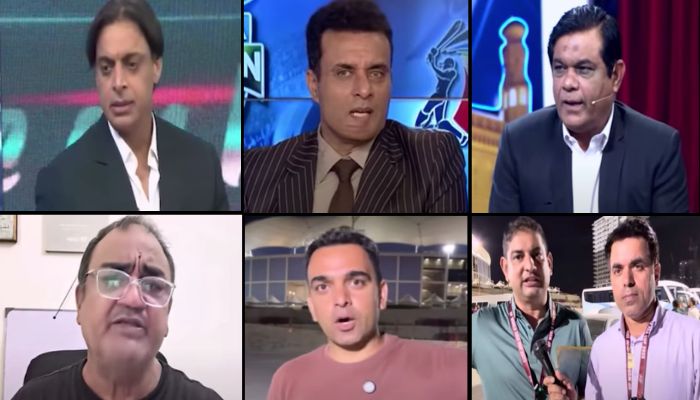
Former Pakistani fast bowler Tanvir Ahmed, who fantasised about Pakistani batsmen hitting Jasprit Bumrah for 6 sixes in an over, lamented, “You are putting pressure on your players. Where are you taking the world? Where are you taking cricket? I mean this must is a unique situation. They left and did not shake hands.”
“BCCI has forbidden their players to to shake hands My request is to the chairman of the Pakistan Cricket Board not to shake hands with India. It is your turn to insult them,” he weave more fantasises.
Shoaib Akthar, who had vowed to capture Kashmir and do Ghazwa-e-Hind, was seen pleading India for a handshake.
“It is disappointing and I am speechless. It is disheartening. I do not know what to say. Please don’t make it political. This is a cricket match. We are saying good things for you. What is your problem in shaking hands? Show some grace. Fights also happen at home. It doesn’t mean you should take it to the next level by not shaking hands,” he claimed.
Pakistani sports analyst Sanaullah Khan lamented, “Pakistan-India match is over. When you can play a match and do other things, what was the probelm with a handshake?”
He lashed out at the Chairman of the Asian Cricket Council (ACC), Mohsin Naqvi, for not taking strict action against India.
Pakistani sports journalist Ejaz Wasim Bakhri claimed, “When the Indian cricket team was going back to the dressing room, they did not shake hands with the Pakistani team. And even during the toss, Surya Kumar Yadav did not shake hands with the Pakistani captain.”
His sidekick remarked, “Look, I think that the game should be kept away from politics. If they felt that it was distasteful to shake hands, then they should not have come here to play altogether.”
Former Pakistani captain Rashid Latif whined, “The bad thing that happened today was that there was no handshake. When our captain took the team to the Indian dressing room, their team left the room.”
“The ICC should must take note of it. It is better that you do not play cricket altogether. Because it is a gentleman’s game. Lack of handshake is not good sign for international cricket,” he alleged.
Another Pakistani sports journalist cried foul after India turned down handshake with his cricket team.
“It was known that they would not leave any stone unturned to show that they are superior than Pakistan. What was this gimmick of not shaking hands after the match? They clearly wanted to show their superiority,” he claimed.