For the fans of Potterverse who always lamented that the movies ‘miss too much’, there is finally some good news. Following the enormous success of the Harry Potter film series, Harry Potter and his friends are coming back to life on the small screen in a new decade-long television series.
The Harry Potter TV series is officially a go at Max, the streaming service formerly known as HBO Max. However, details on the cast, writers and showrunner are yet to be announced.
In a presentation on Wednesday, the CEO of Warner Bros. Discovery, David Zaslav, unveiled the new service, which combines the original HBO Max with Discovery+ and features the tentpole series based on JK Rowling’s books.
According to a statement from the newly rebranded Max, the live-action series, based on all seven of the series’ books released between 1997 and 2007, would last ten seasons and be made with the same epic skill, love, and care as this worldwide phenomenon is popular for.
“The series will feature a new cast to lead a new generation of fandom, full of the fantastic detail, much-loved characters and dramatic locations that Harry Potter fans have loved for over 25 years,” it read.
The original films will remain at the core of the franchise. “Each season will be authentic to the original books and bring Harry Potter and these incredible adventures to new audiences around the world, while the original, classic and beloved films will remain at the core of the franchise and available to watch globally,” the letter assured.
Ruth Kenley-Letts, Neil Blair, and JK Rowling will all serve as executive producers for the show. Additionally, David Heyman, who served as executive producer on all eight of the Harry Potter movies (which were released between 2001 and 2011), is also in talks to executive produce.
“We are delighted to give audiences the opportunity to discover Hogwarts in a whole new way,” remarked Casey Bloys, the chairman and CEO of HBO and Max Content.
“Harry Potter is a cultural phenomenon and it is clear there is such an enduring love and thirst for the Wizarding World. In partnership with Warner Bros Television and JK Rowling, this new Max Original series will dive deep into each of the iconic books that fans have continued to enjoy for all of these years,” he noted.
The author of one of the most successful books in history, JK Rowling commented, “Max’s commitment to preserving the integrity of my books is important to me, and I’m looking forward to being part of this new adaptation which will allow for a degree of depth and detail only afforded by a long-form television series.”
Fans of the Potter universe were anticipating the possibility of a TV series, which has been in development since at least 2021. The value of the Harry Potter universe as a whole, encompassing books, movies, theatre shows, and video games, and merchandise, is valued at $25 billion (£20 billion). Interestingly, some transgender activists who hate JK Rowling for her views on women’s rights and term her as a ‘transphobe’, have declared that they will oppose the Harry Potter series.
Three weeks after pro-Khalistani elements desecrated the Indian tricolour at the Indian High Commission in London, and attacked the building, Prime Minister Narendra Modi sought action against anti-India elements during a telephonic meeting with his UK counterpart Rishi Sunak on Thursday (April 13).
As per reports, PM Modi has called for strong action against anti-India elements and protection of Indian diplomatic establishments in the UK. Rishi Sunak has condemned the attack on Indian High Commission in London and assured his Indian counterpart of the security of the Indian Mission.
The Indian Prime Minister also sought an expedited response from the UK in the extradition of fugitives such as Vijay Mallya and Nirav Modi. The two leaders also talked about the need for a mutually beneficial ‘Free Trade Agreement’ between India and the UK.
We also agreed on the need to take strong action against anti-India elements and to ensure security of Indian diplomatic establishments in the UK. We also discussed the issue of economic offenders.
In a tweet, PM Modi informed, “We reviewed progress on a number of issues to further strengthen India-UK Comprehensive Strategic Partnership, including FTA.”
He further added, “We also agreed on the need to take strong action against anti-India elements and to ensure the security of Indian diplomatic establishments in the UK. We also discussed the issue of economic offenders.” PM Modi and Rishi Sunak also shared greetings on the eve of Baisakhi.
Indian High Commission in London faces attacks from Khalistanis
On March 19 evening, pro-Khalistani elements barged into the Indian High Commission in London and removed the tricolour from the premises.
A mob of Khalistanis could be seen staging a protest outside the Indian High Commission. Amidst chants of ‘Khalistan Zindabad’, a man sporting an orange turban was seen scaling the walls of the building and pulling down the Indian flag.
He then waved the Khalistani flag jubilantly while Indian officials at the building seized the tricolour from the man. Some of the Khalistanis were also spotted holding a poster of ‘fugitive’ Amritpal Singh.
#WATCH | United Kingdom: Khalistani elements attempt to pull down the Indian flag but the flag was rescued by Indian security personnel at the High Commission of India, London.
Even after assurances from the London Metropolitan Police about raising the level of protection for the Indian High Commission, pro-Khalistan supporters on March 22 breached the security cover and threw eggs and inks to deface and vandalize the building.
The police had deployed forces in 24 buses as well as the mounted police, however, the Khalistanis were still successful in vandalizing and defacing the premises.
A day after Asad Ahmed was gunned down by a Special Task Force (STF) of the Uttar Pradesh police, it has now come to light that he was frequently changing his location between Kanpur, Prayagraj, Delhi and Noida.
Asad Ahmed, the main accused in the murder of Umesh Pal, was reportedly staying in Jhansi for 4 days prior to his encounter. He also took refuge in Jamia for 12 days.
Ahmed was helped by his local accomplices, who ferried him between different locations. The Uttar Pradesh Special Task Force (STF), comprising 12 personnel from Noida, Praygraj and Lucknow, was formed to nab him.
"UP police is on the hunt for the people who helped & gave shelter to Asad & Ghulam after the murder of Umesh Pal," Priyank reports. pic.twitter.com/4TNtcYXAas
The operation was led by DSP Vimal and DSP Navendu and continued for 45 days, culminating in the encounter of Ahmed. As per reports, the police had an informer associated with the gang of the deceased gangster, who gave details about his exact location.
At the time of the encounter, Asad Ahmed was reportedly in disguise. A total of 42 rounds were fired during the confrontation between the police and the gangster. The cops had also recovered British Bulldog Revolver .455 bore and Walther P88 7.63 bore pistol from Ahmed and his aide.
It has also come to light that UP Chief Minister Yogi Adityanath took regular updates on the police operation and whereabouts of the accused in the Umesh Pal murder case.
We had information that to help the accused Atiq and Ashraf escape there could be an attack on the police convoy bringing them back to UP in the case (Umesh Pal murder case). In view of this information, teams of civil police and special forces were deployed: Prashant Kumar,… pic.twitter.com/AyZcwUBvL6
Prashant Kumar, Special Director General, Law and Order, Uttar Pradesh Police, had earlier informed that Asad Ahmed was planning to break his father Atiq Ahmed out of police custody. For this, he was also planning to attack the police convoy.
He wanted to execute his plans when Atiq Ahmed was being brought to UP for court hearings, the SDGP said. Meanwhile, the Samajwadi party and liberals have claimed that the encounter was fake and sought a probe into the matter
The Armenian Genocide, a series of systemic killings, and organised extermination of the minority population of Christians during the Ottoman Muslim rule in the region of Armenia is one of the most horrific state-sponsored genocidal events of the 20th century.
Usually, the Armenian Genocide refers to a series of massacres of the Armenian Christian population carried out by officials of the Ottoman Empire from 1915 onwards. The genocide began in 1915 and lasted until 1923, killing an estimated 1.5 million Armenian Christians, among other minority Christian groups.
However, years before 1915, a tragic event in Adana in April 1909 displays how the Ottoman Empire was prejudiced against the Christians under their rule and how an entire population was branded the enemy of the state, and subjected to tragic, horrific murder on an enormous scale.
Ottoman Empire’s genocide of the Armenian population: Hamid II’s massacre of Armenians in 1895
The population of Armenian Christians under Ottoman rule in Western Asia has been subjected to multiple events of atrocities and massacres over centuries. In 1895, Ottoman Sultan Abdul Hamid II ordered the killing of the Armenian population after Armenian groups demanded equal rights for minority Christians under the Islamic Ottoman regime.
Beginning in the fall of 1895, Hamid II’s officials and irregular militia started attacking Armenian villages and settlements and killing the general population with impunity. By the spring of 1896, an estimated 300,000 Armenians were killed. Rapes and forced conversions were rampant too. This was the initial stage in what was to be decades of violence and massacres for the Armenian people living under the Ottoman caliphate.
The large-scale violence against the Armenian population was a turning point, marking the beginning of a pattern of violence and persecution that would continue for decades, culminating in the Armenian Genocide of 1915.
The Adana massacre of 1909
Adana massacre covered in a French newspaper, image via @GraecoSyrian on Twitter
The region of Adana (Adana Eyalet) was located in the region of southeastern Anatolia, which was then part of the Ottoman Empire. Around 1909, a rumour started reading that the Armenians living in the region are planning a revolt against the Ottoman Empire. Unlike the Hamiddian massacre, this event was carried forward by local Ottoman officials and Islamic groups, with motives of the social and economic devastation of Armenian and other minority groups.
Adana region in Ottoman Empire, Modern Turkey
The violence began on April 14, 1909, when Muslim mobs began attacking Armenian neighbourhoods in Adana and its surrounding areas, burning homes and businesses, and killing Armenian civilians. The violence quickly spread to other Christian communities, including the Greeks and Assyrians. The Ottoman authorities were either unable or unwilling to stop the violence, and in some cases, even encouraged it.
Over 1300 Assyrians and hundreds of Greeks and Syrian Christians were also killed. Beginning on April 14, Muslim mobs instigated and aided by Islamic clerics and Ottoman officials, started raiding villages and killing anyone and everyone from the minority communities.
Images of devastation and torture in the Adana massacre in 1909, via @ResearchWing and @HistoryfyToday
An estimated 20,000 to 30,000 Armenians and hundreds of Greeks and Assyrians were rounded up, tortured, raped and killed. People were carved with knives and shops and homes were gutted in the fire.
How it was fuelled
The massacre was fuelled by a combination of factors. Religious intolerance against minority Christians, economic competition, and Ottoman government policies all played a role. The Ottoman Empire was in a state of decline, and the rise of fanaticism mixed with ‘nationalist’ sentiments towards the Empire was fuelling hatred against Christians who were perceived as being sympathetic towards the Russian State.
Socio-economic differences between the Muslim Turks and Armenians were also one of the reasons. Though the general Armenian population was not particularly rich, some Armenian Christians had found success. This was used as a trigger to incite the Muslim mobs against the population, branding the Armenians as traitors of the Ottoman Empire because of their religion.
In the months prior to the massacre, rumours began to circulate that Armenians were plotting to take over the Ottoman Empire with the support of European powers. These rumours were spread by Ottoman officials and Muslim leaders, who used them to stoke fears and fuel anti-Armenian sentiment. Even after the April 14 massacres, Ottoman officials and soldiers kept spreading the claims that it was the Armenians who had attacked Muslims.
The Committee of Union and Progress, or CUP, was a political party that emerged in the late 19th century in the Ottoman Empire, on the promise of a centralized and modernized Ottoman state. In the years before 1909, the CUP had gained significant influence in the Ottoman government, with many of its members holding key positions in the Empire. Anti-Armenian sentiment often formed a key rhetoric of the CUP.
It is said that many CUP members were actively and directly involved in the Armenian massacre, some members even helping to fuel the rumours that the Armenians are plotting to overthrow the Ottomans.
After the massacre
The Ottoman Empire, whose officials and soldiers were active and willing perpetrators of large-scale violence against minority Christian groups, never acknowledged their roles. Despite reports of widespread atrocities against Armenian civilians, Ottoman officials never took any decisive action to stop the massacre. As the violence continued unabated and got widely reported, the Ottoman government finally sent troops to stop the violence, but that proved to be futile too. Because they were mostly Ottoman Muslim troops who often participated in the violence against minorities.
A book by Rouben Paul Adalian mentions that a total of 24 churches, 16 schools, 232 houses, 30 hotels, 2 plants, 1429 cottages, 253 farms, 523 shops, 23 mills and many other public buildings were burnt in Adana alone.
Even an investigation carried out by the Ottoman government after the massacre was found to be horribly biased against the Armenians. No meaningful steps were taken to prevent similar incidents in the future and the perpetrators were never brought to justice. Most of the officials involved went unpunished. Hence, the massacre only paved the way for future atrocities at a grander scale against the Armenians, eventually leading to the 1915 genocide that killed millions of them.
The remnants of the hatred and legacy of violence between the two ethnic groups continue even today, in the form of the ongoing conflict between Armenia and Azerbaijan, and Turkey’s open support to Azerbaijan against the Armenians.
In Odisha’s Sambalpur, a bike rally organised by ‘Hanuman Jayanti Samanyoy Samiti’ and Bajrang Dal came under violent stone pelting when it was passing near a masjid in the Dhanupali area, triggering clashes on Wednesday evening, April 12. A look at the FIR filed following the incident reveals how a Muslim mob attacked Hindus during the procession while shouting highly incendiary slogans.
As per the FIR filed by complainant Dhirendra Kumar Swain, who was stationed at Motijharan chowk on the fateful day along with Sub-Inspector Dharmendra Bhoi to maintain law and order during the Hanuman Jayanti procession.
In the procession, about 1000 motorcyclists holding religious flags proceeded towards Goplbazar via Bhutapada Motijharan, Sunapali, Dhankauda . The rally reached near Motijharan chowk at about 6 PM.
Half of the members of the procession crossed Motijharan chowk while the other half of the procession made a halt there for some time. While there, the procession was chanting slogans like ‘Jai Shri Ram’, ‘Jai Bajrang Bali’ and that was when the procession came under attack from around 200 Islamists. They abused the members of the procession and threatened them to vacate the place immediately.
Soon, they started pelting stones at the procession. As per the FIR, the Islamists attacked the members of the rally with iron rods, lathis, and swords, with the intention to kill. During the attack, apart from shouting obscenities, Islamists were shouting ‘kafir log’, ‘sale logo ko kaat denge’, ‘salo ko India wapas nehi jaane denge’, as per the FIR.
Details of the FIR
15 attackers have been named in the FIR along with 150 to 160 other unidentified attackers.
The accused named in the FIRThe accused named in the FIR
Stone pelting on Hanuman Janmotsav procession in Odisha
In Odisha’s Sambalpur, a bike rally organised by ‘Hanuman Jayanti Samanyoy Samiti and Bajrang Dal came under violent stone pelting when it was passing near a masjid in the Dhanupali area, triggering clashes among two groups on Wednesday evening, April 12. As per reports, several police personnel, including the woman IIC of Dhanupali Police Station have been injured in the clashes.
Videos of the incident showed continuous stone pelting near a masjid and adjacent lane. The bikes and scooters used in the rally are seen lying scattered as the stone pelting disrupts the bike rally. Police personnel were seen making futile attempts to prevent the mob from attacking, while abusive words are heard.
As per reports in the Odia media, 10 police personnel, including the ASP of Sambalpur have been injured in the violent clashes. As per reports, 25 people have been detained so far after the violence. Additional police forces were soon deployed to disperse the mob.
Hindu activist Kajal Hindustani has said that she will continue to work against land jihad, love jihad, and forced conversions. She made these remarks while addressing the media as she stepped out of the Junagadh jail after she was granted bail.
Kajal Hindustani said, “Even after this much I am firm on what I said. This is why I was not afraid and now I am here in front of you. I had trusted that I will definitely get justice. And I got justice and I am here in front of you all.”
Kajal Hindustani further said, “There are many workers who work a lot for Dharma. As people from the other side commit such things, it is our duty to save our faith. I was doing social work against land jihad, love jihad, and forced conversions. I still do that and I continue to do that.”
She said that she has full trust in the judiciary and is confident that she will get justice, saying that she has not done anything wrong. “I have not done anything wrong and never gone against the constitution. I believed that I would get justice and I got justice and today I am before you all,” she said.
Appealing people to continue working for the cause, she said, ‘Everyone will do their respective work. We have a religion to protect the way others do their work. That is why I must continue to fight land jihad, love jihad, illegal conversions and not sit at home, the work will continue.’
Many supporters welcomed Kajal Hindustani chanting Jai Shri Ram slogans as she came out of jail. She was taken to the residence under tight police security. Two police vehicles guarded her car in the front and back as the convoy moved towards her house. On the way to her house, she was welcomed by people who showered flowers and garlands on her.
On 13th April 2023, Hindu activist Kajal Hindustani was granted bail in the Ram Navami speech case in Una. She was released on a bond of Rs 50,000. She came out of Junagadh jail after five days.
On Sunday, April 9, Hindu activist Kajal Hindustani was arrested by Gujarat’s Una police. This came after a case was registered against her for an alleged ‘hate speech’.
On March 30, the Ram Navami procession (Shobhayatra) was taken out in Una of district Gir Somnath, Gujarat. Following the procession, an event was organized where Hindu activist Kajal Hindustani was one of the speakers. The Dharmasabha took place at Raavanvadi near Trikon Bagh.
During her speech, Kajal Hindustani raised several issues, including Love Jihad and Land Jihad. The local Muslims deemed her speech controversial and took the entire city hostage. There were reports of stone pelting at various places, and the city was on the edge for two days. In addition to this, the infamous Sar Tan Se Juda slogans were also raised against her.
During Dharmsabha, Kajal Hindustani said that if Muslim women marry Hindu men, it would benefit them. After her speech, Muslim leaders filed a complaint against her and demanded action. An FIR was registered against Kajal under Section 295A, 153A, and 505 of the Indian Penal Code.
The Islamic holy month of Ramzan is going on when Muslims observe Roza, the dusk to dawn fast, and observe several other prescribed rules. In this context, a video related to Ramzan is going viral on social media. In a video, a Mufti is explaining how to perform Istinja in Ramzan while fasting. Istinja is the process of washing and cleaning the private parts after defecation or urination.
Since Muslims do not even eat or drink water throughout the day in Ramzan, the Mufti tells, in the viral video, how to wash the anus after defecation during fasting so that water does not go from the anus into the stomach. The issue is important because if any substance enters the stomach via either mouth or stomach during the Roza period, it will invalidate the fasting. The video of Mufti Mamur Badar Qasmi is going viral.
रोजे के टाइम गांड धोते टाइम गांड को टाइट रखे वरना पानी पीछे से अंदर चला जायेगा और रोजा टूट जायेगा – मौलाना जी pic.twitter.com/X5Mvg4kX7N
Mufti tells people to hold their breath while performing Istinja. After this, he shakes hands as he explains the process of washing the anus using water. Mufti argues that holding the breath will not open the anus, but will keep it tight and closed so that water will not go inside the stomach through the anus at the time of performing Istinja.
Mufti says that if something goes into the stomach through the mouth or through the anus, then the fast will be violated for that reason. Mufti also gives some examples of Islamic religious books to make his talk appear believable.
Do people who believe in Islam really ask such questions? Do Maulanas and Muftis really answer such questions of the people? We tried to explore this.
The viral video is just 47 seconds, so our first task was to find the entire video. Mufti Mamur Badar Qasmi’s official account was found on YouTube. Here’s a short video uploaded on April 5, 2023. In this, Mufti calls the viral video edited, calling it a conspiracy to defame himself.
After this short video, we searched for the original video of Mufti Mamur Badar Qasmi, which is being edited and made viral on social media. We found this original video, which was uploaded 2 years ago. This is a 7-minute 18 second video.
After watching the entire video, it is clear that Mufti Mamur Badar Qasmi spoke about the misconceptions about ‘how to wash the anus after defecation in fasting’. He told his viewers in the video that it is impossible to get water in the stomach through the anus while performing the Istinja. He said, yes, there is a possibility that a person whose anus is very loose may get water in his stomach while performing the Istinja.
According to Mufti Mamur Badar Qasmi, the anus is very tight. If someone wants to insert something in it, it goes inside with great difficulty. Mufti also told that whenever there is constipation one has to apply extra force while defecating. He further said that if the anus was so loose, faeces would come out during sleep or anytime during the day at a slight pressure. This proves that the anus is very hard and tight, clarified the Mufti. He said that the anus remains closed, and nothing can go inside and come outside without applying pressure.
In his short video, Mufti said that there is a Barelvi Maulana who was saying how to perform Istinja during the fast. We tried to find out if that Maulana advised people that one should perform Istinja in the fast by shrinking the anus inside. And do people who believe in Islam really ask such questions? Do Maulanas and Muftis really answer such questions of the people? We searched for videos about this too.
The video of Barelvi Maulana mentioned by Mufti Mamur Badar Qasmi in his video was also found on YouTube. That video is 5 years old. In the 2-minute 25-second video, different users ask Maulana two questions. The person with Maulana handles technical gadgets and writes questions on iPad. Maulana then answers these questions. The second question is related to Istinja. Maulana’s answer can be heard in this video.
In this video, Maulana says, “Do not breathe much while defecating in the fast. Shrink yourself as much as you can. Do not open too wide while you sit. This can cause water to reach the stomach, which will violate the fast.”
Therefore, it makes it clear that are conflicting opinions of clerics regarding the issue. In this example, one cleric claimed that water can enter the stomach via the anus and this will invalidate Ramzan fasting, while the other cleric said that it is not possible, but his video was edited to claim that he said the opposite.
The video of Mufti Mamur Badar Qasmi, which is viral on social media, is edited. Watching his entire video, it is clear that he has not given information on the issue of “how to wash the anus after defecation in Ramzan”.
However, questions like “How to wash the anus or perform Istinja after defecation during Ramzan fasting?” are asked by people who believe in Islam. Maulanas and Muftis also answer such questions of the people, and at least one such cleric claimed that water can enter the stomach via the anal opening.
It is not an issue of “satisfaction, we want to see action on the ground,” said Ministry of External Affairs spokesperson Arindam Bagchi on the vandalism and attacks on the Indian High Commission in the United Kingdom.
Bagchi said this while addressing the weekly media briefing of the Ministry of External Affairs on Thursday. “Are we satisfied with actions against the vandalism and attacks on the High Commission? As I mentioned, the issue is not of satisfaction. We wanted to see action on the ground,” he said.
He also said, “We have been urging host countries, including the UK, to take action against those who vandalised the flag as well as the High Commission, identify them and take action against the perpetrators. We are certainly pressing them to continue to take measures to ensure security of premises, security-safety of our personnel who are there in London.”
“This is the ongoing conversation we are having with the UK authorities,” the MEA spokesperson added.
Regarding the violence at the Indian High Commission in London, UK Foreign Secretary James Cleverly has said, “Acts of violence towards staff at the Indian High Commission are unacceptable and I have made our position clear to the High Commissioner Vikram Doraiswami. The police investigation is ongoing and we are in close contact with the Indian High Commission in London and the Indian Government in New Delhi.”
“We are working with the Metropolitan Police to review security at the Indian High Commission, and will make the changes needed to ensure the safety of its staff as we did for today’s demonstration,” it added.
The UK Foreign Secretary’s official statement also read, “We will always take the security of the High Commission, and all foreign missions in the UK, extremely seriously, and prevent and robustly respond to incidents such as this.”
Notably, the Indian community in March, earlier this year, held a large gathering in front of the Indian High Commission against the “disrespectful act” of Khalistan supporters towards the Indian flag and demanded that the Mayor of London, Sadiq Khan, and the British government act against the perpetrators at the earliest.
The desecration of the Indian Flag led to an unprecedented outpouring of support from the diverse Indian community in Britain.
Expats from all across the UK travelled to London to express their solidarity with the Indian Flag. The gathering resoundingly debunked the idea of Khalistan, saying there are no takers for it.
(This news report is published from a syndicated feed. Except for the headline, the content has not been written or edited by OpIndia staff)
A native of Muzaffarpur, Bihar, Nitesh Yadav who was working at a food stand in Bengaluru complained that the locals were abusing him because of the language barrier. His inability to speak in Kannada allegedly led to his harassment, mockery, and even threats from the community.
“I am from Bihar’s Muzaffarpur and I work at a food stall in Bengaluru. The people who come to our stall have a major problem with the Hindi-speaking people. What do they think of themselves? Will they kill us? Everybody abuses and belittles us, without even showing mercy. I request the government to do justice to the Hindi-speaking people in Karnataka,” he can be seen stating in the viral video.
The youth also used some abusive language in the video. He claimed that three people who came to the eatery in Rajajinagar, where he works, and abused him for being a Bihari and not knowing Kannada.
Shameful incident of racism coming out from Karnataka. Man of Bihar exposing the xenophobia of locals.
Such mentality must not be accepted in 21st century India. All of India is for all Indians. Very heartbreaking to see such videos. pic.twitter.com/RjNXNK1QCK
“A few people came to eat food and I served all of them. I work hard to make ends meet and all I receive is abuse and hate. What is a Hindi-speaking man to these people? Is being Bihari a crime? Do we not belong to this country? I challenge, come and kill me now. I am ready,” the man was screaming in the video which was shot in front of his eatery in Rajajinagar and uploaded on his Facebook profile.
The incident took place on April 7, according to the police. However, the police said that it was an argument over a ‘torn currency note’ and ‘bad food’, and the youth deliberately made it a language issue. The customers gave the young guy called Nitesh Kumar Yadav a currency note that was reportedly ripped, and this caused an altercation between them, police said.
According to police, preliminary investigation shows that this turned into a big issue as the youth did not understand Kannada and the customers didn’t understand Hindi. “He intentionally turned this into a language issue by shouting in the middle of the road. We have learnt that he has returned home. No one has filed any complaint, so far,” the police remarked. The incident took place in April 7, according to Subramanyanagar police station officers.
Talking to The Indian Express, a police official said, “This was never actually a language row. There was a communication gap between the ladies and Yadav. We learnt that the ladies had visited the hotel and had ordered a rice item. However, they did not like the food and they paid the man with a torn Rs 100 note. A war of words ensued after he did not accept the money. In the heated argument, the Bihar man did not understand Kannada and the ladies did not understand Hindi.” The police officer further claimed that Yadav intentionally turned into a language issue.
The police also said that no complaint has been filed by anyone in this regard.
Responding to this issue, Bengaluru police commissioner, CH Pratap Reddy said, “The person has been identified by our North Division police. Prima facie it appears that there was an argument between the youth and the customers in the eatery. The inquiry has begun. Since the youth has returned to his hometown, we are collecting more details from him and action will be initiated.”
#WATCH | The incident allegedly happened around April 7, when he was working at a restaurant, where he had an altercation with a customer who only knew Kannada. He has returned to Bihar: CP Bengaluru Pratap Reddy on man from Bihar allegedly harassed for not knowing Kannada pic.twitter.com/Owa8XqjIrZ
The senior officer further advised the locals to refrain from posting about any similar instances on social media and instead call 122 to report them. “If anyone dials 112 in trouble, within 30 minutes our teams will reach the spot. If the issue is not resolved, then people can opt to reach out through social media,” he conveyed.
“Bengaluru is a cosmopolitan city and mutual respect should be there between people from all regions,” he added.
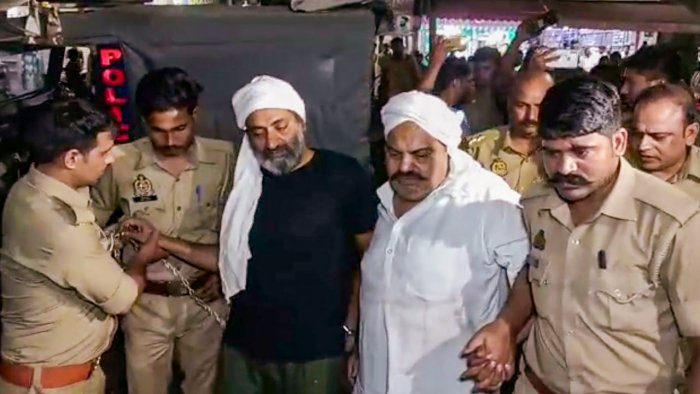
On 13th April 2023, Asad Ahmed, son of gangster turned politician Atiq Ahmed, was killed in a police encounter at Jhansi. Asad Ahmed was wanted in the Umesh Pal murder case. Along with Asad, his associate Ghulam Muhammad was also killed in the encounter with the Uttar Pradesh Police STF.
As soon as the news of this encounter came to light, liberals started questioning the authenticity of this encounter and started demanding a probe into this encounter with the dreaded gangster. Bahujan Samaj Party chief Mayawati and Samajwadi Party chief Akhilesh Yadav were the flag bearers of the people questioning this encounter.
Akhilesh Yadav tweeted, “By doing false encounters, the BJP government is trying to divert attention from the real issues. The BJP does not believe in the court at all. Today’s and recent encounters should also be thoroughly investigated and the culprits should not be spared. The power does not have the right to decide what is right or wrong. BJP is against the brotherhood.”
झूठे एनकाउंटर करके भाजपा सरकार सच्चे मुद्दों से ध्यान भटकाना चाह रही है। भाजपाई न्यायालय में विश्वास ही नहीं करते हैं। आजके व हालिया एनकाउंटरों की भी गहन जाँच-पड़ताल हो व दोषियों को छोड़ा न जाए। सही-गलत के फ़ैसलों का अधिकार सत्ता का नहीं होता है।
Asking for a probe into this encounter, BSP supremo Mayawati tweeted, “Many types of discussions are going on about the killing of Prayagraj’s Atiq Ahmed’s son and another person in a police encounter today. People feel that their apprehension of a repeat of the Vikas Dubey incident has come true. Therefore, a high-level inquiry is necessary so that the complete facts and truth of the incident can come before the public.”
प्रयागराज के अतीक अहमद के बेटे व एक अन्य की आज पुलिस मुठभेड़ में हुई हत्या पर अनेकों प्रकार की चर्चायें गर्म हैं। लोगों को लगता है कि विकास दुबे काण्ड के दोहराए जाने की उनकी आशंका सच साबित हुई है। अतः घटना के पूरे तथ्य व सच्चाई जनता के सामने आ सके इसके लिए उच्च-स्तरीय जाँच जरूरी।
Trinamool Congress Party’s MP Mahua Moitra addressed the media and criticized the encounter of the gangster who had a reward of Rs. 5 lakhs on his head. She said, “This does not surprise me because I remember one of your colleagues (media person) was telling me before this, that gentleman who is brought from Gujarat to Meerut and in connection with that the honourable chief minister of Uttar Pradesh Mr Ajay Bisht, had said that cars can overturn. His real name is Ajay Bisht. He calls himself a Yogi. But I redescribe his name. I call people by their real names. So, anyways, his car overturned and he said that cars can overturn. The other name for Mr Ajay Bisht was ‘Mr Thok Do’. Because whenever he was a chief minister or when he was an MP, he would like to tell his police and law and order enforcement agencies, ‘Thok do’ which means finish them off. So this kind of lawlessness, jungle rule without resorting to the rule of law, encounters killings have always flourished under the honourable gentleman and continue to do so.”
#WATCH | “The other name for Mr Ajay Bisht was ‘Mr Thok Do’….so this kind of complete lawlessness, jungle raj, encounter killings always flourished under the gentleman&contiue to do so,” says TMC MP Mahua Moitra on police encounter killing of Umesh Pal murder accused today. pic.twitter.com/MS7fy0l4g6
Mahua Moitra further said, “I hope that the people of India will see this, for what it is is just the tip of the ice. So when you start with something that is incitement of violence like ‘Maar Do’, ‘Kaat Do’, ‘Jala Do’, this kind of hatred, venom this is the kind of culture that ultimately lands up in the kind of jungle law. Why do we have a constitution? Why did we become independent? Because we wanted to live under the framework of the rule of the law. That is the most important thing our constitution guarantees us. So when you have a chief minister, a home minister that is basically sitting there saying that puppies get crushed under the vehicle or cars can overturn or it is okay if somebody dies, then you are basically pointing fingers at the constitution, which is exactly what the government and the BJP is doing day after day after day.”
Asad Ahmed was planning to free Atiq Ahmed
Notably, Asad Ahmed, son of the mafia don Atiq Ahmed, who was killed in an encounter with the Uttar Pradesh police Special Task Force, was planning to get his father out of the police custody. Prashant Kumar, Special Director General, Law and Order, Uttar Pradesh Police, shared this information on 13th April 2023.
Asad Ahmed was plotting to get his father Atiq Ahmed out of police custody. For this, he was also planning to attack the police convoy. Asad Ahmed wanted to execute his plans when Atiq Ahmed was being brought to UP, the SDGP said. the encounter took place on the same day when Atiq Ahmed – who was taken to Prayagraj by road from Gujarat’s Sabarmati jail – and his brother Ashraf both were produced before the chief judicial magistrate’s court in connection with the Umesh Pal murder case. After Umesh Pal’s murder, Asad and Ghulam were both on the run. Several teams of STF were deployed to nab the two miscreants who were finally killed in an encounter.
Atiq Ahmed confessed his links with Pakistan’s ISI and Lashkar-e-Taiba
As liberals demand a probe into the death of Asad Ahmed in an encounter to shield the mafia-turned-politician and former Samajwadi Party MP Atiq Ahmed and his gang under the garb of respecting the constitution, it becomes necessary to see how the encounter took place and whom the deceased Asad Ahmed was planning to free from the police custody.
According to police officials, on Thursday, when an STF (Special Task Force) team stopped Asad and Ghulam, who were trying to escape on a motorcycle in Jhansi, both of them opened fire on the STF team. Asad and Ghulam were killed in the STF’s retaliatory action.
Also, on Thursday, the Prayagraj Chief Judicial Magistrate ordered Atiq Ahmed and his brother Ashraf to four days in police custody in the Umesh Pal murder case. Both were detained by police on April 13. Atiq Ahmed said in a statement to Uttar Pradesh Police that he has direct connections with Pakistan’s Inter-Services Intelligence (ISI) and terror outfit Lashkar-e-Taiba.
In his statement included in the police chargesheet, Atiq Ahmed said, “I have no dearth of weapons because I have direct connections with Pakistan’s ISI and the terror organisation Lashkar-e-Taiba. Weapons from Pakistan are dropped on the Punjab border with the help of drones and local connection collects them. Terrorists in Jammu and Kashmir get weapons from this consignment. If you take me with you, I can help you recover the money, arms, and ammunition used in the incident.”
On March 28, an MP-MLA court convicted and sentenced Atiq Ahmed to rigorous life imprisonment in the kidnapping of now-dead Umesh Pal. Atiq Ahmed, who has been charged in over 100 instances over the last 43 years, was convicted in the same case.