Home Blog Page 252

Bangladesh says it is not trying to join an alliance with China and Pakistan to sideline India in the region, but here is how their actions under Yunus govt suggest the opposite

Bangladesh’s interim government under Muhammad Yunus is actively deepening engagements with Pakistan and China, especially after Operation Sindoor. However, the Bangladesh government is simultaneously denying any intent to form alliances targeting India, even though their actions suggest so.

This diplomatic recalibration of Bangladesh marks a significant shift from the India-aligned posture of ousted Prime Minister Sheikh Hasina’s administration and has introduced new complexities into South Asia’s geopolitical landscape.

Bangladesh revitalizing Pakistan relations

The most striking transformation has taken place in Bangladesh-Pakistan relations, historically strained since Bangladesh’s independence from Pakistan 1971. Under Yunus’s caretaker administration, bilateral ties have witnessed unprecedented momentum.

After a 13-year pause, direct trade has resumed, highlighted by Bangladesh’s import of 50,000 tons of Pakistani rice in February 2025 and the movement of over 1,000 containers through Chittagong port. Visa procedures have been simplified, and direct flights restarted, facilitating people-to-people exchanges.

A high-level Bangladeshi military delegation visited Pakistan in January for talks with Army Chief General Asim Munir. The Bangladesh Navy’s participation in Pakistan’s AMAN-25 multinational exercise the first in over a decade signals expanding defence cooperation. Discussions about Bangladesh acquiring Pakistani JF-17 Thunder fighter jets underscore the relationship’s strategic depth.

Pakistan’s Foreign Minister Ishaq Dar is scheduled for the first ministerial-level visit to Dhaka in 13 years, reflecting mutual eagerness to normalise relations despite historical grievances.

Strategic alignment with China

Concurrently, Bangladesh has accelerated its pivot toward Beijing, moving beyond Hasina’s cautious balancing act. China is expanding its Industrial Economic Zone in Chattogram and modernizing Mongla Port. Most provocatively, Dhaka has invited Chinese involvement in the Teesta River project, a longstanding friction point in India-Bangladesh relations.

During his state visit to China in March, Yunus framed Northeast India as “landlocked” and declared Bangladesh the region’s “only guardian of the ocean,” suggesting it could become “an extension of the Chinese economy.” These remarks triggered outrage in India and revealed Dhaka’s willingness to leverage geography against New Delhi.

Following Yunus’s visit, both countries established eight memoranda of understanding on economic and technological cooperation, embedding Chinese influence deeper into Bangladesh’s development architecture.

The Kunming trilateral and diplomatic denials

The June 19 meeting in Kunming, China, between Bangladeshi, Chinese, and Pakistani officials became the focal point of regional anxieties. While Bangladesh framed it as an “informal” discussion on connectivity and trade, Pakistan hailed it as the “inaugural meeting of the Bangladesh-China-Pakistan trilateral mechanism”. Key contradictions emerged:

•⁠ Divergent Characterizations: China and Pakistan announced the creation of a “joint working group” to advance cooperation in infrastructure, trade, maritime affairs, and climate change. Bangladesh’s statements conspicuously omitted this institutional framework.
•⁠ ⁠Official Reassurances: Foreign Affairs Adviser Touhid Hossain vehemently denied alliance-building: “We are not forming any alliance… It is certainly not targeting any third-party.” He emphasized the meeting’s “official-level, not political-level” nature and offered that Bangladesh would similarly engage if India proposed a trilateral with Nepal.
•⁠ ⁠Strategic Ambiguity: Despite these denials, the convergence of interests is evident. The discussions identified 12 cooperation areas—from agriculture to disaster management—that align perfectly with China’s Belt and Road Initiative ambitions to integrate South Asia under its leadership.

India’s countermeasures and regional implications

New Delhi has responded with calibrated pressure, viewing these developments as strategic encroachment. India revoked Bangladesh’s transshipment rights through Indian territory to Nepal, Bhutan, and Myanmar, citing “congestion” a move widely interpreted as punishment for Dhaka’s outreach to Beijing and Islamabad.

Prime Minister Narendra Modi limited his interaction with Yunus to a brief handshake at April’s BIMSTEC summit, a stark contrast to his warm rapport with Sheikh Hasina. External Affairs Minister S. Jaishankar pointedly reinforced India’s view of the Northeast as a BIMSTEC connectivity hub, countering Yunus’s “landlocked” characterization.

India perceives Chinese infrastructure plans near Bangladesh’s Lalmonirhat district proximity to the vulnerable Siliguri “Chicken’s Neck” corridor as a direct threat. Renewed Bangladesh-Pakistan defense ties compound fears of a two-front challenge during India-Pakistan tensions.

The delicate balancing act

Bangladesh walks a diplomatic tightrope, seeking economic diversification while managing fallout with India. Hossain admits the relationship with India is in “readjustment,” lacking the “deep relationship” of the Hasina era but insisting Dhaka maintains “no dearth of goodwill”. Yunus recently proposed an “integrated economic plan” for Bangladesh, Nepal, Bhutan, and India’s Northeast, a seeming softening from his Beijing remarks. However, the proposal notably excludes India itself from the planning framework.

Analysts question whether this reorientation can survive Bangladesh’s transition to an elected government. As South Asia expert Michael Kugelman notes, India may tolerate commercial ties but views Bangladesh-Pakistan military cooperation as a “red line”.

Redrawing South Asia’s map

The emerging alignment carries profound regional consequences:

•⁠ China’s Regional Architecture: Beijing advances its vision of an India-free regional bloc, potentially expanding its 2020 quadrilateral dialogue (with Afghanistan, Pakistan, Nepal) to include Bangladesh and Myanmar. Chinese-backed corridors connecting Chittagong to Gwadar or undermining India’s highway projects could fracture South Asia into competing zones of influence .
•⁠ ⁠SAARC’s Irrelevance: The Kunming process accelerates the decline of India-centered SAARC, replacing it with Chinese-convened minilaterals that exclude New Delhi.
•⁠ ⁠Multilateral Risks: Should Bangladesh align with China-Pakistan positions on Kashmir or Indo-Pacific strategy at UN forums, it could affect India’s ability to form regional consensus.

Bangladesh’s interim government insists its engagements remain transactional, not strategic. Yet the geopolitical undertones are unmistakable. As Hossain conceded about India ties: “Let us acknowledge the truth”. Whether this recalibration represents temporary hedging or a lasting realignment depends on Dhaka’s ability to navigate the competing gravities of regional power dynamics where economic aspirations must continually be weighed against the inescapable realities of geography and India’s enduring strategic footprint.

The politics of contradiction: How LGBTQ patron Muhammad Yunus turned into ‘saviour of Muslims’ in Bangladesh

Social media platforms have recently seen an uptick in a curious and seemingly contradictory campaign, portraying Nobel Laureate Muhammad Yunus as the new “saviour” of Muslims in Bangladesh.

This sudden transformation of Yunus into a hero for Islamic groups has raised eyebrows, especially considering his and his daughter Monica Yunus’ long-standing ties to LGBTQ activism and advocacy.

Despite Yunus’s decades-long involvement in promoting and funding LGBTQ causes globally, a growing segment of Islamic leaders in Bangladesh now view him favourably. This contradictory narrative exposes the fragile and often opportunistic dynamics of Bangladeshi politics, where ideological lines can be redrawn overnight.

At the center of this controversy is ‘Sing for Hope’, a New York-based non-profit founded in 2006 – the same year Yunus received the Nobel Peace Prize.

Yunus and his daughter Monica are credited as co-founders of the organisation, which is well-known for celebrating LGBTQ “Pride” annually and collaborating with globally recognised LGBTQ advocacy groups.

‘Sing for Hope’ is supported by numerous prominent institutions, including the New York State Council on the Arts, the New York City Department of Cultural Affairs, the Department of Education, and various private foundations such as the Beatrice and Reymont Paul Foundation and the Laurie M. Tisch Illumination Fund.

It is a registered 501(c)(3) charitable organization (EIN 01-0856384), and Muhammad Yunus remains an active founding board member, making regular financial contributions to its programs.

In an interview with NBC News, Monica Yunus reflected on her identity and her father’s legacy, stating, “I came to my Bangladeshi identity later in life. I’ve obviously seen the work of my father and been influenced by it. I consider myself an ambassador for his work”.

Raised by her Russian-American mother in New Jersey after her parents divorced, Monica has been a vocal advocate for the arts and inclusivity, and is frequently seen at LGBTQ Pride events representing ‘Sing for Hope’.

While some critics on social media accuse ‘Sing for Hope’ of explicitly promoting LGBTQ agendas – including gay and lesbian advocacy – its public positioning is more subtle but nonetheless clear.

The organization actively participates in Pride celebrations, designing rainbow-themed pianos and collaborating with LGBTQ-friendly institutions such as the Elton John AIDS Foundation and Playbill.

These actions underscore a visible alignment with LGBTQ causes, even if not declared as a central mission.

Notably, in 2012, Yunus joined three other Nobel Laureates in publicly supporting LGBTQ rights in Uganda, where anti-gay prosecutions had sparked global outrage.

This statement drew significant backlash in Bangladesh, and in 2013, Islamic groups organized protests against Yunus for his perceived endorsement of gay rights.

Yet today, many of these same groups appear to be softening their stance, even supporting Yunus. This U-turn raises significant questions about political expediency and the possibility of strategic manipulation of religious sentiment.

Yunus’s involvement with LGBTQ-friendly causes is not an isolated matter. His network includes powerful global figures such as George Soros, who is widely known for his support of liberal social movements, including LGBTQ rights.

Additionally, ‘Sing for Hope’ is engaged in humanitarian projects beyond LGBTQ advocacy – such as supporting AIDS patients, organizing cultural diplomacy initiatives at global forums including the United Nations, Harvard University, and the Kennedy Center, and partnering with organizations like UNICEF and the Skoll World Forum.

Muhammad Yunus is accused of financial and political misconduct

However, support for LGBTQ rights and humanitarian work cannot absolve Yunus of serious allegations concerning his financial and political conduct.

His controversial microfinance model – praised in the West – has drawn sharp criticism at home for exploiting impoverished women as collateral for profit-driven ventures. Allegations of corruption, abuse of foreign donations, and financial irregularities have followed Yunus for decades.

More alarmingly, Yunus now stands accused of crimes that transcend financial wrongdoing. These include attempts to stoke religious discord – particularly targeting Hindus, Christians, and Buddhists in Bangladesh – as well as manipulating the country’s political system to maintain a grip on power.

Serving as the de facto “chief advisor” of the current interim regime, Yunus appears reluctant to hold free and fair elections, reportedly seeking to delay the next general polls until December 2026 or beyond.

This reluctance to restore democratic governance is beginning to trigger growing discontent among the Bangladeshi populace, including many who once supported him.

Yunus’s hunger for political power and financial influence is increasingly seen as self-serving. Many fear he views Bangladesh less as a nation of people to uplift, and more as a lucrative cash cow to exploit.

Conclusion

Muhammad Yunus may continue to dazzle the West with rainbow-colored diplomacy and global applause, but in Bangladesh, a different truth is unfolding – one mired in manipulation, hypocrisy, and betrayal of democratic values.

His carefully curated image as a humanitarian and LGBTQ ally cannot shield him from the mounting evidence of corruption, political opportunism, and religious discord.

As he clings to unelected power, suppresses democratic transition, and enriches himself under the guise of reform, Yunus is no longer the face of hope – he is becoming a symbol of deception.

No global honor or celebrity endorsement can erase his role in turning Bangladesh into a playground for vested interests and personal gain.

The world must look beyond the façade and confront the uncomfortable truth: Muhammad Yunus is not the savior of Bangladesh – he is its latest illusionist.

Lucknow: A day before Muharram, 300 firearms and 50,000 cartridges seized from a house, Hakim Salahuddin arrested

A large cache of weapons, cartridges, and illegal weapon-making tools were seized in Lucknow, just a day before Muharram. The weapons were recovered from the house of Hakim Salahuddin alias Lala in Mirzaganj, Malihabad, which is approximately 100 meters away from the police station. During a raid at his residence, the police recovered as many as 300 firearms and 50,000 cartridges.

Along with the weapons, tools used to manufacture them were also seized. The raid was carried out under heavy security, and the area within a 20-meter radius of the house was completely cordoned off. As people started gathering near the house, the police removed all those present inside and took them in for questioning.

On Thursday, June 26, acting on intelligence, a police raid was conducted which resulted in recovering bags of cartridges and hundreds of complete and semi-finished weapons. A security force has been deployed around the area and an STF team is probing the matter. The police are in search of the associates of Salahuddin, and the accused is currently being interrogated and has been kept in custody, said Jitendra Dubey, ADCP.

Running weapon factory in house

The police said that they received information about the illegal supply of cartridges and weapons from Salahuddin’s house. Following this, teams from Malihabad, Rahimabad, and Mall police stations conducted a raid late Thursday evening. During the raid, Salahuddin, a youth named Owais, his wife, and his daughter were present in the house.

Further investigation uncovered that the illegal arms trade was taking place from his house. Huge quantities of weapons and cartridges, gunpowder, weapon-making materials, animal skin, and several other objectionable items were discovered from his house.

As Muharram is approaching, the probe and police teams have become more alert. Along with the weapons, the police also found body parts and skins of protected animals at his residence. This has raised suspicions of Salahuddin’s involvement in wildlife trafficking as well.

20 bags of cartridges and 300 weapons recovered

As per police sources, 20 bags have been found which contained about fifty thousand cartridges from Salahuddin’s house. Around 300 illegal weapons of 315 and 312 bore have been found. Apart from these, illegal items like rifles, Mausers, and pistols were also discovered. So far, the investigation has revealed that these items were manufactured at his home only. Foreign made weapons were also found from his house.

Salahuddin previously used to run a doctor’s clinic near the Malihabad post office. His wife was a government teacher, and one of his daughters is in Norway for study purposes. His other child is pursuing a B.Tech degree.

According to police sources, Salahuddin had been supplying illegal weapons across Uttar Pradesh for a long days. Since his house was next to the police station, nobody grew suspicious. Even the police had no clue about it.

After success in Operation Sindoor, Indian drone startup Raphe mPhibr raises $100 million funding: How India is becoming more Atmanirbhar in defence manufacturing

In a massive boost to indigenous aerospace manufacturing, Raphe mPhibr, a UAV manufacturing startup, has raised $100 million in a funding round led by General Catalyst. The drones manufactured by Raphe mPhibr proved to be very useful during Operation Sindoor conducted in May this year in response to a Pakistan-sponsored Islamic terror attack in Pahalgam.

So far, Raphe mPhibr has raised $145 million (over Rs 1,200 crore) in funding. This is reported to be the biggest ever fundraising by an Indian aerospace manufacturing firm.

The Noida-based startup’s CEO, Vivek Mishra, told NDTV that to beat China in drone technology and market, “a very strong ecosystem for design, development, and manufacturing” needs to be built.

Raphe mPhibr drones fired missiles at terror and military establishments in Pakistan during Operation Sindoor. The Noida-based company is increasing its domestic drone capabilities due to growing military interest and national security concerns, including an impending Army order.

The drones offered by the company include the mR10 operational drone swarm, the mR20 for high-altitude logistics resupply, the X8 compact platform for maritime patrol and situational awareness at sea, and the Bharat lightweight man-carried drone for quick surveillance in complex terrain.

At present, all customers of the company are Indian government entities including the Indian Army, Navy, and Air Force, along with central armed police forces such as the Border Security Force, Central Reserve Police Force, and the Indo-Tibetan Border Police. The company plans to expand beyond India and enter new markets. To achieve this, it has already participated in defence air shows abroad. The company also has obtained some export licenses.

Raphe mPhibr domestically produces its flight controllers, batteries, and all components and materials required to build drone structures, including subtractive metals, thermoplastics, carbon fibre composites, wire harnesses etc. It also develops proprietary autopilots and inertial navigation systems at its facility. However, the company imports radars and high-end cameras, which it also plans to manufacture in-house within the next 18 months.

Since its conception in 2016, Raphe mPhibr has flown more than a million kilometres, provided the first operational drone swarm in history, and created India’s first in-house, cutting-edge, military-grade autopilot and lightweight internal combustion engine. Co-founded by brothers Vikash Mishra (chairman) and Vivek Mishra (CEO) in 2017, the Noida-based startup currently offers nine different drones with payloads ranging from 2 kg to 200 kg, covering a distance between 20 km to 200 km.

Notably, CEO Vivek Mishra told TechCrunch that they do not rely on China for any of the components it uses in the drones.

Taking to X, General Catalyst’s Managing Director, Neeraj Arora, announced the $100M investment and said, “I’m excited to announce our leading $100M investment in @Raphe_mPhibr, our largest commitment in India’s defense ecosystem and a key part of driving global resilience at @generalcatalyst. Vikash Mishra and Vivek Mishra combine technical expertise, focused leadership, and disciplined execution. They deeply understand the challenges facing India’s defense today and have an unwavering vision for the future. Their work is closely aligned with the Indian Armed Forces and demonstrates a firm commitment to strengthening Indian resilience.”

“India’s defense sector is entering a new chapter. Through the “Make in India” initiative, the country is placing greater focus on domestic innovation and manufacturing. Raphe is a clear example of that progress. Its cutting-edge unmanned aerial systems are already making an impact in real-world operations. At General Catalyst, we back founders tackling complex, high-stakes challenges with an endurance mindset. Raphe is helping shape the future of Indian resilience, and we are proud to partner with them on this journey,” he added.

Indigenous weaponry, Atmanirbhar and invincible Bharat: India’s pivot towards boosting domestic defence manufacturing and curbing reliance on imports

While the Modi government has been pushing for Atmanirbhar Bharat in the defence sector, after the success of Operation Sindoor, there has been a pivotal shift in defence strategy. Indian defence startups are raising significant funding. This reflects a growing investor confidence in India’s indigenous defence capabilities.

Over the last 14 years, India slashed its defence import dependency from 11 per cent to 4 per cent of global imports. This remarkable reduction is driven by the Modi government’s Make in India and Atmanirbhar Bharat initiatives.

Moreover, indigenous defence production has skyrocketed 174 per cent since 2014–15. It has reached Rs 27 lakh crore ($16 billion) in FY 2023–24. India is also exporting weaponry to over 100 countries.

According to a report by Kotak Mutual Fund, India, which in 2010 was the largest importer of defence equipment, slipped to fourth place in 2024. In 2010, India accounted for 11 per cent of the world’s total defence imports, making it the top importer globally. Pakistan, with 9 per cent, Australia, at 6 per cent, and South Korea, at 5 per cent, followed suit.

Countries like Saudi Arabia, the United States, Singapore, and China each had a 4 per cent share, while Algeria and Portugal accounted for 3 per cent each. The remaining 47 per cent was shared among other countries. The report stated that this decline is the result of India’s focus on indigenisation and strengthening domestic defence manufacturing.

India’s defence exports have seen strong growth in recent years, registering a compound annual growth rate (CAGR) of 41 per cent since 2017. The exports have increased from Rs 15 billion in 2017 to Rs 236 billion in 2024.

India has become self-reliant in the defence sector like never before. Indian defence startups are effectively contributing to our national security as well as economic growth. Programs like Project Kusha and the SRIJAN portal, as well as increased private sector involvement from companies like Bharat Forge and Tata, among others, are strengthening this self-reliance.

Indigenous defence systems proved their mettle during Operation Sindoor

India’s Operation Sindoor demonstrated the country’s military might, tactical prowess, and technical brilliance before the world. With its integrated network of air defence systems, the Indian Armed Forces protected military bases and strategic assets, while Pakistani forces, being cowards of the top order, launched drones, missiles and rockets against Indian civilians and military assets, even as India’s precision strikes specifically targeted terror camps in initial strikes.

On the 8th of May 2025, Pakistan targeted many Indian cities, including Jammu, Amritsar, Pathankot, and Jaisalmer. It fired drone swarms at these cities. Pakistan wanted to harm India’s military bases and residential areas and overwhelm the air defence systems, a tactic often used by Hamas against Israel. India gave a befitting reply to this; they foiled all these attacks. India used its advanced defence systems for this. While the S-400 system purchased from Russia foiled many attacks, most of them were answered by Indian systems.

Akashteer system: India’s indigenously developed ADCRS

The Indian Armed Forces gave a befitting response to the Pakistani attack and unleashed India’s very own “Iron Dome” Akashteer Air Defence System (ADS) along with S-400 Sudarshan Chakra ADS to foil Pakistani plans of targeting Indian civilians. The Akashteer system was deployed on the western front to form an advanced shield over the International Border (IB) and LoC. This air defence system integrates inputs from radar sources like early-warning systems and ground-based radars to render a live web of real-time data to precisely track aerial threats. With the Akashteer system’s help, Indian forces intercepted and neutralised every missile launched by Pakistan towards India.

Counter-Unmanned Aircraft System (C-UAS) /D-4 Anti-Drone systems developed by DRDO responded to Pakistani drones

Developed by the Defence Research and Development Organisation (DRDO), the D4 Anti-Drone Systems is an indigenously developed drone detection and neutralisation system. The Indian forces used these to thwart Pakistani drone attacks during the conflict.

The Indian Air Force used a combination of anti-aircraft guns and surface-to-air missiles along with an integrated counter-UAS grid to take down Pakistani projectiles. The integrated counter-UAS grid was used to counter unmanned aircraft systems and neutralise drones and other incoming threats like missiles launched by Pakistan.

Akash Missile System

Developed by DRDO and manufactured by Bharat Dynamics Limited (BDL), the Akash Missile System is a medium-range-surface-to-air missile system designed to intercept and destroy various aerial threats like fighter jets, drones, and cruise missiles, with a range of 25-30 km and the ability to engage the targets at the altitude of over 20 km. This system is equipped with indigenous Rajendra radar and mobile launchers. It can not only track but also neutralise multiple targets simultaneously. An effective demonstration of the same was seen in India’s counter against Pakistan’s recent drone and missile attacks against Indian cities, religious sites and military infrastructure. Akash Missile System is fully operational in the Indian Army and Air Force. It is highly mobile and can be deployed on wheeled or tracked vehicles for rapid response.

Akash system’s development has a story of its own. Last month, the former DRDO scientist Dr Prahlada Ramarao, the man who led the Akash system’s development, said that initially, the Indian Army had reservations about the system. However, Ramarao, the man chosen by none other than India’s “Missile Man”, former President APJ Abdul Kalam, went ahead and designed the Akash system.

BrahMos: The invincible

India launched its BrahMos supersonic cruise missile in a live battle for the first time as it carried out pinpoint strikes on Pakistani military installations, in the wee hours of 10th May. The Indian Air Force retaliated against attempts to violate the country’s airspace by targeting a number of key facilities deep into Pakistan, including Rafiqui, Murid, Nur Khan, Rahim Yar Khan, Sukkur and Chunian. The airfields in Skardu, Bholari, Jacobabad and Sargodha were reported to have sustained more damage. Sialkot and Pasrur radar locations were also hit. Several accounts indicate that the BrahMos missile was probably one of the weapons used in tandem with Scalp and Hammer munitions.

Jointly developed by India and Russia, this long-range supersonic cruise missile, BrahMos, is an unmanned payload rocket that has a warhead, precision-guided weaponry, an aerodynamic frame, a propulsion system and a guidance system.

MRSAM Missile System

India has also used the MRSAM system in this attack. This is also a surface-to-air missile (SAM) system, but it is capable of hitting a longer distance than the AKASH system. This has also been developed by DRDO. It has been made in collaboration with Israel. MRSAM consists of supersonic missiles. It is capable of hitting targets at a range of about 70 kilometres. MRSAM is currently used by the Indian Air Force and Navy. MRSAM can be mounted on trucks and is also installed on ships.

Nagastra-1 loitering munition, SkyStriker loitering munition, and Pinaka Multi-Barrel rocket launcher

The Indian Armed Forces also used the Nagastra-1 man-portable loitering munition, which is a suicide drone. Developed by Solar Industries with DRDO oversight, Nagastra-1 has a range of 15 to 20 km. It has an endurance of up to 60 minutes with a 1-2 kg warhead for precision strikes. Unlike traditional missiles, Nagastra-1 can be aborted mid-flight and recovered. In Operation Sindoor, this cost-effective loitering munition was used to target terrorist infrastructures deep inside Pakistan. Nagastra-1’s success demonstrates India’s surging expertise in low-cost, precision-guided munitions for asymmetric warfare.

The success of indigenous defence systems in Operation Sindoor opens gateways for the Indian defence sector boom

The massive success of Akash, BraMos, C-UAS and other indigenous systems gives a major boost to the Indian defence sector and bolsters confidence in the capabilities of native manufacturers to increase self-reliance in the defence arena. With indigenous defence systems outclassing Chinese and Turkish technology, as seen in Operation Sindoor, these systems would play a significant role in curbing India’s dependence on foreign suppliers. This self-reliance would not only save costs but also enhance strategic autonomy, which is at the core of India’s foreign policy under the Modi government. Indigenous systems are also vital as they are tailored to India’s unique security challenges, like asymmetric threats and high-altitude warfare.

The DRDO’s focus on developing next-generation systems like Akash-NG, BrahMos-II hypersonic missiles, among others, demonstrates that India is committed to remaining at the forefront of defence innovation. Now, besides DRDO and HAL, private firms are also emerging as gamechangers for India in the defence arena.

Earlier in June 2025, the DRDO transferred technologies related to nine crucial systems to 10 industrial units. The technologies are being transferred by the Vehicles Research & Development Establishment (VRDE), a DRDO laboratory located in Ahilyanagar, Maharashtra. This move was aimed at empowering private and public sector units in defence manufacturing.

India’s firm commitment to self-reliance and smart policy initiatives has led to its burgeoning global presence in the defence industry. Defence exports have increased 30 times in the last ten years, from ₹686 crore in FY 2013–14 to an all-time high of ₹21,083 crore in FY 2023-24. OpIndia reported earlier how schemes like Innovations for Defence Excellence (iDEX), Production-Linked Incentive or PLI Scheme for Drones and Drone Components, MAKE Projects, Defence Industrial Corridors, Positive Indigenisation Lists (PILs), Ease of Doing Business (EoDB), among other initiatives by the Modi government, have fostered a conducive environment for domestic defence manufacturing and curbing reliance on imports.

With India continuing to innovate and scale production, the Atmanirbhar Bharat vision in the defence arena is transforming the country into a self-reliant military powerhouse. While this journey of self-reliance is not devoid of challenges, this transition not only bolsters India’s national security but also positions the country as an emerging reliable defence exporter with sustained innovation and policy support, maintaining momentum.

‘No Space For Jeff Bezos’: Read why the city of Venice is protesting against Amazon founder’s Rs 480 Crore wedding

Amazon founder and billionaire Jeff Bezos (61) and his former TV journalist partner Lauren Sanchez (55) are getting married in a lavish multi-day ceremony in Venice, Italy. The couple has landed in the city for a three-day celebration that is expected to cost up to €48 million (almost ₹480,28,80,000) from 26th to 28th June with 200-250 VIP guests. The city’s airport reportedly saw the landing of 95 private aircrafts.

However, due to security concerns and the potential for demonstrations, the wedding was rescheduled to a remote and less accessible area of the lagoon city. The couple had planned to enjoy their nuptial in Cannaregio, a well-known and bustling nightlife district, but they had to adjust their plans to avoid protests.

Some locals and pressure organizations have been threatening blockades for weeks, saying that the event will convert the picturesque city of gondolas and palazzi into a private amusement park for the wealthy. The high-profile guests from the entertainment, political and financial sectors will now proceed to Arsenale, an extensive 14th-century complex in the eastern Castello district.

It is believed to be a safe from protests because it is surrounded by water, fortified walls and is inaccessible by land when connecting bridges are raised. The Arsenale, which was formerly a massive shipyard that supplied the Venetian Republic’s maritime empire, has been renovated and transformed into an exhibition area for the Venice Biennale art event.

Elon Musk, Leonardo Dicaprio, Eva Longoria, Oprah Winfrey, Mick Jagger, the Kardashian and Jenner family and pop sensation Katy Perry are among the attendees. The Amazon owner’s mega yacht, reportedly valued at over $500 million, is docked at the port of Venice for the wedding where the bride and the groom will be joined by their famous guests for a party.

Nevertheless, not everyone in the city is excited for one of the most expensive weddings.

Why people are protesting against the Bezos wedding

The “privatisation” and “exploitation” of the city, according to the protesters, are the main issues, not the marriage itself. They had been threatening to take over the city and disrupt peace for weeks by vowing to take action against the wedding and its preparations. The couple reportedly backed down when demonstrators warned to obstruct the access of their guests by filling the canals with inflatable crocodiles, according to the “No Space for Bezos” group.

The event is being protested by over a dozen Venetian organizations, including housing advocates, anti-cruise ship campaigners, and university groups, under the banner “No Space for Bezos”. The group initially gained attention when Mayor Luigi Brugnaro of Venice declared that Bezos and Sanchez would marry in Venice.

The group displayed a banner on the major bell tower of the remote island of San Giorgio Maggiore that featured the name of the Amazon owner crossed out. The renowned Rialto Bridge across the Grand Canal was draped with another banner.

The protesters have put out anti-Bezos banners on famous Venetian locations during small-scale demonstrations. Greenpeace and the British organization “Everyone Hates Elon,” which destroyed Tesla cars in protest against Elon Musk, joined them this week to raise a huge banner in Saint Mark’s Square against tax benefits for billionaires.

A banner in Venice featured Jeff Bezos’s laughing visage magnified to enormous proportions and dispersed around a plaza with “If you can rent Venice for your wedding, you can pay more tax,” written above the picture in Piazza San Marco. It was swiftly removed by the police. “No space for Bezos,” “No Kings” and “F**k Bezos,” among others images, were laser-projected onto a structure in Venice on 26th June.

Additionally, a life-size mannequin holding cash was spotted attached to a huge Amazon box while sporting a blue jumpsuit of Amazon employees. It was spotted floating past gondolas in Venice. Borne Media, an activist outfit, used a remotely controlled motorized raft to stage the protest.

Demonstrators take over Venice

The local activists had organized a more structured agitation with the goal of blocking boat access to canals so that guests could not arrive at the wedding location on 28th June. They then declared victory and changed the protest to a march from the train station, saying their pressure compelled organizers to move the event to the Arsenale, a more easily protected site outside of Venice’s crowded core.

“It will be a strong, decisive protest, but peaceful. We want it to be like a party, with music, to make clear what we want our Venice to look like,” stated Federica Toninello, an activist with the Social Housing Assembly network.

Tommaso Cacciari, a key figure in the campaign that was successful in preventing cruise ships weighing more than 25,000 tons from passing through the Giudecca Canal in central Venice, stated that Bezos has a different political and corporate character. “Bezos is not a Hollywood actor. He is an ultra-billionaire who sat next to Donald Trump during the inauguration, who contributed to his re-election and is contributing in a direct and heavy way to this new global obscurantism,” he accused.

The location change, per local press accounts, was also brought on by security concerns following United States entry into the conflict between Israel and Iran, particularly since President Donald Trump’s daughter, Ivanka, arrived in Venice on 24th June. Venice’s officials have increased security around the city, especially in the Jewish neighborhood. Ivanka Trump is married to Jared Corey Kushner, a Jewish-American businessman and investor.

The activists declared that they would plan a “no Bezos, no war” march rather than seek to interrupt the wedding. “We feel as if we scored a victory. The crocodile initiative would have given a bad impression of the city, this is why the venue was changed even if the authorities might try to claim it was because of the war,” expressed one protestor.

“We have shown once again that Venice is not a servant of the powerful but continues to be rebellious and resistant. Now, faced with the war scenario that looms on the horizon, at a time when the eyes of the world are focused on Venice, we invite everyone to join the cry ‘no war’,” remarked “No Space for Bezos” on social media.

According to Greenpeace, the initiative’s goal was to draw attention to the “social and climate injustice” of these kinds of events. It  claimed that lifestyles driven by “the arrogance of a few billionaires” are harming the world and that “Bezos embodies an economic and social model that is leading us towards collapse.”

Multiple groups unite to protest against the wedding

Notably, climate change campaigners, residents fighting overtourism and others opposed to Bezos’ backing for Donald Trump have united to protest against the A-list mega-event. Protest banners have been spread from bridges over the canals and “No Space for Bezos” placards have been strewn all over the city in recent days.

Concerns are also raised by critics regarding the tech tycoon’s political affiliations as well as Amazon’s labor policies and continuing tax conflicts with European governments. Furthermore, activists contend that the Bezos wedding is a prime example of larger shortcomings in local government, specifically the preference for tourists over the interests of locals.

They point to ineffectual policies like the day-tripper tax, which they argue serves to further solidify Venice’s reputation as a theme park. Their main grievance is the underfunding of basic services and affordable housing.

On the other hand, the wedding has been defended by city officials who denied that the occasion would cause any disturbances, and Mayor Luigi Brugnaro, who hoped to meet Bezos during his visit, referred to it as an honor for Venice. “Venice once again reveals itself to be a global stage. Those 20 people who are putting up posters are clearly capitalising on his image,” he emphasised. Corila, a Venetian environmental research society, revealed in a statement that Bezos run Earth Fund was providing a “important donation” to help its efforts.

Sanchez and Bezos had declared their engagement in 2003. Bezos was previously married to novelist and co-founder of Amazon, MacKenzie Scott and Sanchez’s former husband is Patrick Whitesell, who runs a Hollywood agency. There are reports that former US Marines have been employed to provide security, five hotels are completely booked, luxury yachts have occupied the harbor while private jets clogged up the Venice airport.

The Arvind Kejriwal of NYC: How Zohran Mamdani won the Democrat nomination for the mayor post by promising freebies and Wall Street is losing sleep over it

In a seismic shift for American urban politics, 33-year-old democratic, so-called socialist Zohran Kwame Mamdani has clinched the Democratic nomination for New York City mayor, defeating former Governor Andrew Cuomo. People are comparing his platform to the controversial welfare model of Delhi’s former Chief Minister Arvind Kejriwal.

The freebie revolution: Mamdani’s unapologetic welfare platform

Mamdani’s platform dubbed “The People’s New Deal” centers on radical affordability measures which are in fact ‘unworkable freebies’. These include:

•⁠ ⁠Universal Rent Control: Expansion of rent stabilization to cover 1 million apartments, with powers to freeze increases.
•⁠ ⁠City-Run Grocery Stores: A public network selling staples at cost to combat food inflation.
•⁠ ⁠$1 Public Transtit: Slashing subway and bus fares to a flat dollar, funded by new taxes on corporations and the ultra-wealthy.
•⁠ ⁠”Green New Deal for Housing”: Taxing vacant luxury properties to fund social housing.

Wall Street and business leaders warn these policies could cripple the city’s economy. Philippe Laffont of Coatue Management predicted a “wealthy exodus” to low-tax states, while hedge fund titan Bill Ackman admitted feeling “depressed” by the win. Shares of NYC real estate firms like SL Green and Vornado plummeted 6–7% within hours of his victory.

Mamdani & Kejriwal: Welfare populism across continents

Zohran Mamdani’s platform mirrors Arvind Kejriwal’s policies in key areas: proposing free utilities (broadband vs. electricity/water) for low-income residents and using similar populist branding (“Redistribute billionaire greed” vs. “Common Man’s Party”).

However, their funding differs sharply (Mamdani: taxes on finance/luxury; Kejriwal: subsidies later marred by corruption).

Crucially, both faced intense elite backlash, labelled as economically destructive (“Suicide by Mayor”/”Revdi culture”). This shows welfare populism’s global adaptability and shared critiques over feasibility.

Outsider to nominee: How Mamdani toppled Cuomo

Mamdani’s ascent from a little-known state assembl ymember to mayoral nominee is a masterclass in progressive mobilization:

•⁠ ⁠Cost of living Fury: He tapped into voter anguish over inflation, framing Cuomo as an out-of-touch relic. “Cost of living is the issue of our time,” noted Democratic strategist Neera Tanden.
•⁠ ⁠Generational Warfare: At 33, Mamdani contrasted sharply with 67-year-old Cuomo, whose sexual harassment scandals and establishment ties alienated younger voters.
•⁠ ⁠Digital Savagery: Viral video campaigns mocking Cuomo’s billionaire donors and promoting “tax the rich” memes outflanked traditional advertising.
•⁠ ⁠Coalition of so called marginalized: Muslim, immigrant, and youth voters rallied behind his unapologetic support for Palestine and immigrant rights.

Cuomo, backed by Bill Clinton and Wall Street heavyweights like Michael Bloomberg, spent over $8 million but failed to counter Mamdani’s narrative of “people vs. plutocrats”.

The Kejriwal connection: Global populism’s new Face

Mamdani’s platform drew immediate comparisons to Arvind Kejriwal, Delhi’s former Chief Minister, who pioneered free utilities and education but faces corruption charges. Kejriwal himself tweeted, “Free ki revri reached the US,” after Donald Trump mimicked his electricity-subsidy rhetoric. Yet critics warn Mamdani risks repeating Kejriwal’s pitfalls:

•⁠ ⁠Sustainability Fears: Economists question funding sources for universal programs. Delhi’s free electricity strained public coffers, enabling graft allegations.
•⁠ ⁠Polarizing Baklash: Mamdani faces vitriol from Hindu Indian-Americans who brand him a “jihadi” for participating in a rally organized by anti India and pro Khalistani elements in New York in 2020. Where they abused Hindus called them bastards.

Wall Street’s cold sweat

Finance elites foresee a dystopia:

•⁠ ⁠Wealth Flight: Fears of new taxes on passive income and financial transactions could accelerate relocations to Miami and Texas.
•⁠ Real Estate Collapse: Rent controls threaten profits for landlords; REITs are already tanking.
•⁠ ⁠”Hot Commie Summer”: Hedge fund CEO Dan Loeb’s sarcastic social media post captured Wall Street’s despair.

What’s next

Mamdani enters November’s general election favored against Republican Curtis Sliwa and independent incumbent Eric Adams.

But his true test lies in reconciling utopian promises with governance realities a challenge Kejriwal’s AAP ultimately faltered against in Delhi after initial success. As democratic socialism’s star rises, New York becomes the laboratory for a global experiment.

Cases of Christian conversion rise rapidly in Chhattisgarh, Rajasthan, and Madhya Pradesh, some districts saw 41% increase in Christian population: Report

Cases of Christian conversions have rapidly grown across several states, including Chhattisgarh, Madhya Pradesh, and Rajasthan. This is evident from the spike in number of Christian families living in various districts of these states over the last few years. According to a report by Dainik Bhaskar, the religious composition of the population in several districts of Rajasthan, Chhattisgarh and Madhya Pradesh has drastically changed in the last couple of decades, particularly in tribal areas.

Chhattisgarh

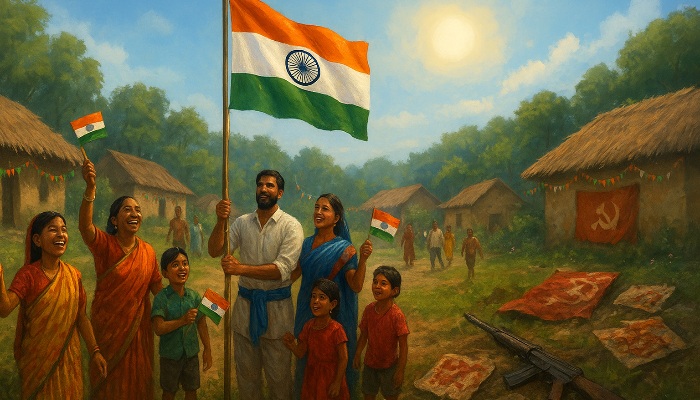
The report says that in Sitonga village of the Jashpur district, there used to be a single church, but over the last 20 years, around 200 families have converted to Christianity. Out of the total 400 families in the village, around 270 families have become Christians. Flags carrying Christian symbols are hoisted on many houses.

Additionally, the increased number of Christians in several villages of Bastar and Narayanpur district has caused a conflict regarding the burial of dead bodies of Christians. Currently, church yards are being used for burials as local Hindu organisations are reportedly opposing the burial of dead bodies of Christian converts in the cremation grounds of the villages.

Former MLA and tribal leader Rajaram Todem said that more than 50% population of many communities in Bastar has converted to Christianity. As per the report, there are 25 houses in Behrapara of Ambikapur and over the last decade, around 19 families have converted to Christianity here.

However, Chhattisgarh Christian Forum President, Arun Pannalal, blames the government for the resistance of local Hindu organisations.

Madhya Pradesh

In the Burhanpur and Raipur districts in Madhya Pradesh, around 10 FIRs have been lodged against people on the allegations of religious conversions. The cases of conversion are not limited to these districts only. People have been offered money as well medical facilities to lure them to convert.

In Dungra Dhanna of Jhabua district, there are many people who have Christian names and Hindu surnames and fathers’ names. For example, one Thomas, son of Jairam Singharia, in the village said that he fell sick a few years ago. Some Christian preachers advised him to visit a church and prey. He recovered after some time and started practicing Christianity.

Another person named Xavier Ninama, who works in a Christian missionary school, said that he became a Christian but also believes in tribal religion. Around 25% population in the Dungra Dhanna village has converted to Christianity. A similar situation exists in Alirajpur, Dhar, Ratlam and Chhatarpur.

Rajasthan

A similar pattern of religious conversion is witnessed in various districts of Rajasthan. Missionary organisations here have been offering money to people and providing facilities like installing hand pumps with the message of the Bible written on them.

A woman named Suman from Teen Kedi in Ganganagar district said that she was taken to Delhi for baptism and was given monetary help ranging from 2000 to 5000 on many occasions. Similar cases have come to light from Gadoli, Jambudi, Shivpura of Banswara district and Jagannathpura, Makda Dev and Obra of Udaipur district. Around 8 years ago, out of the total 800 families in these six villages, only 70 were Christians. At present, out of 900 families, around 450 have become Christians marking a 41% increase. The number of churches in the villages have also reportedly increased four times.

However, Kulvinder Singh, the state president of Pastor Welfare Association, denied that religious conversions are taking place in the region. He claimed that what is being referred to as a church is actually a ‘prayer hall’.

In many villages in the Banswara district, the Jesus Christ organisation has installed hand pumps and stone inscriptions with a Bible message. One such stone inscription Badi Send village reads, ‘one who drinks this water will feel thirsty again, but the one who drinks from that water (Jesus’ well) does not remain thirsty for eternity. The picture is of Badi Send village.

Notably, tribals who have converted to Christianity can claim the benefits of conferred on the ST category if they continue to follow tribal customs. The report quoted a High Court advocate named Himansh Nigam who explained that as per the Constitution (Scheduled Castes) Order- 1950, Scheduled Tribe status is conferred only on those belonging to Hindu, Sikh or Buddhist religion. But, if a person has not changed his religious status legally or through affidavit, then his religious status will be decided by the court. However, if an individual belonging to a Scheduled Tribe follows tribal customs even after conversion, then his tribal status can remain.

Uttar Pradesh issues guidelines for Kanwar Yatra: No sale of meat on the yatra route, no liquor, shopkeepers asked to display their names

Ahead of the Kanwar Yatra in July, Uttar Pradesh Chief Minister Yogi Adityanath has laid down the rules and regulations to ensure the smooth conduct of the pilgrimage. These decisions will ensure that Hindu pilgrims don’t have to endure any hardships during their yatra.

On Wednesday, June 25, CM Yogi Adityanath chaired a high-level meeting with senior officials to ensure proper maintenance of law and order, communal harmony, and appropriate public amenities throughout Uttar Pradesh. The meeting was attended by all police commissioners, divisional commissioners, district magistrates, and senior superintendents of police across the state.

“The joyous atmosphere should continue, but there should be no mischief. Any conflict in the name of caste or religion to disturb peace will not be tolerated. Some disruptive elements conspire to spread caste hatred at times. Officials should not wait for government approval to take action,” said Yogi.

During the meeting, he issued guidelines to ensure the safety and convenience of Hindu devotees during the Kanwar Yatra.

Guidelines to follow during the festivals

On Thursday, June 26, CM Yogi visited Ghaziabad to review key departmental projects, preparations for the upcoming Kanwar Yatra, and initiatives under the Hindon River rejuvenation plan. The review meeting was held at Kailash Mansarovar Bhavan in Indirapuram, where he issued orders to over 20 departments.

Meat and liquor shops must remain closed along the route of the Kanwar Yatra. All shopkeepers on the yatra route must display their names. UP Minister Jaiveer Singh said,”The Kanwar Yatra is a Hindu religious pilgrimage. There should be no objection to writing names on shops during such a significant event. Since the yatra is tied to religious sentiments, meat shops must remain closed. Hiding one’s name serves no purpose, hence, instructions have been issued for all to display names clearly.”

Dedicated routes have already been planned, including Muradnagar to Tila Mod and the Delhi–Meerut Expressway. These areas have been earmarked for special arrangements such as watchtowers, CCTV surveillance, proper lighting, public toilets, and medical facilities. Barricading of road dividers and display of price lists at food stalls will also be ensured.

It has been mandated that camps along the yatra route be kept plastic-free, with enhanced facilities like dustbins, sanitation workers, fire extinguishers, and clean drinking water. CM Yogi also encouraged the use of eco-friendly cups, plates, and glasses.

A public address (PA) system will be deployed for effective communication at key junctions. Additionally, management of unmanned railway crossings, cleanliness at fuel stations, and gender-specific toilet facilities will be ensured.

Special caution for sensitive districts

CM Yogi Adityanath emphasized that districts bordering Uttarakhand should exercise extra caution. Sound levels of DJs, music, and drums must be kept within advisable limits and adhere to prescribed norms. Loud noise, offensive slogans, and deviations from traditional routes will not be allowed. He also warned that cutting down trees, removing slums, or displacing shelters of the poor for convenience will not be tolerated.

The CM strictly instructed that the display of weapons and politically motivated use of religious processions will be prohibited. Entry of animals on yatra routes should be restricted. Social media must be closely monitored, drone surveillance will be in place, and the administration must promptly counter any misinformation.

“Administration and police must ensure that all events are conducted peacefully by coordinating with peace and organizing committees. The Panchayati Raj and Urban Development departments should make adequate preparations, especially since large gatherings of devotees are expected at Shiva temples each Monday during the month of Shravan,” Yogi stated.

Multiple festivals during Shravan

The sacred Hindu month of Shravan will be observed from July 11 to August 9. During this period, festivals such as the Kanwar Yatra, Shravani Shivratri, Nag Panchami, and Raksha Bandhan will be celebrated. Additionally, the Jagannath Yatra is scheduled from June 27 to July 8, and Muharram will also be observed between June 27 and July 8.

“This upcoming period is extremely sensitive in terms of law and order, healthcare, sanitation, education, and disaster management. All departments must coordinate and remain accountable in their duties,” the Chief Minister asserted.

Last year, the Kanwar Yatra was observed from July 22 to August 2. Similar measures and guidelines were implemented to ensure the smooth conduct of the yatra.

Don Bosco Hinduphobia incident: Local Congress leader, who claims to be part of school management committee, intimidates victim’s family over phone

Days after the Don Bosco School in Assam’s Sirajuli came under scanner over the forcible removal of tilak from the forehead of a Hindu child, attempts are now being made to intimidate the victim’s family.

OpIndia spoke to Avadh Kishor Verma, the uncle of the 6-year-old child.

He shared an audio clip of a phone call made by a local Congress leader named Milkhas Topo, who claimed to be a part of the management committee of the Don Bosco School in Sirajuli.

According to Avadh, the phone call was made to his brother Binay Kumar Verma on Wednesday (25th June), a day after he filed a police complaint against the accused teacher Rini Rose and the school administration.

The accused Congress leader admitted that he was notified by the school authorities and demanded that Vinay narrate the entire chain of events. When the latter compiled, Milkhas Topo attempted to downplay the brazen act of Hinduphobia.

“It is a big school. The Principal cannot keep an eye on everything that’s happening there. Can he individually look after everyone?” he was heard saying in the audio clip.

When Binay objected to the blatant trivialisation of the traumatic episode to his niece, Milkhas brazened out, “This is a Christian school. You were given a diary at the time of admission. Read the guidelines written there.”

The Congress leader inquired about the location of Binay’s office and suggested that workers from AASU (All Assam Students’ Union) would be coming there.

Milkhas directed that the victim’s family keep their essential religious practices limited to their homes and not bring them to the school. He then began hurling expletives such as ‘kela’ at Binay.

The local Congress leader then spoke to the victim’s grandfather Balram Verma and justified the act of Hinduphobia. He remarked, “What is the big fuss if the tilak of the kid was wiped off?”

Milkhas Topo then reiterated his earlier comments about ‘reading diary guidelines’ and then misbehaved with the victim’s grandfather.

According to Avadh Kishor Verma, Milkhas is the President of the Congress party in the Sonitpur district of Assam.

What happened after the police complaint

On being asked what transpired after the police complaint, the victim’s uncle stated that the school authorities went to the police station on Tuesday (24th June)and promised to give in writing that such an incident would never be repeated.

A day later, Milkhas Topo intimidated the victim’s family members over the phone. Later on Wednesday (25th June), the Principal of Don Bosco School in Sirajuli came to the house of the victim and further gave assurances.

They urged the victim’s family to withdraw the police complaint. Avadh Kumar Verma informed OpIndia that the family decided to remove the child from the school after the traumatic experience.

The Background of the Incident

On Monday (23rd June), a teacher of the Don Bosco School identified as one Rini Rose wiped off the sacred Hindu mark from the forehead of the student studying in Kindergarten.

The incident left the child in a traumatised state. When the victim informed her parents about it, they rushed to the school and complained to the Principal (Father). They were assured that such an incident would never repeat again.

However, the child was subjected to a similar treatment on Tuesday (24th June). Tilak, which is sacred to both Hindu culture and religion, was forcibly removed from her forehead.

Screengrab of the police complaint filed by Avadh Kishor Verma

The kindergarten student was additionally threatened with assault if she showed up with the ’tilak’ on her forehead again. The threat by her class teacher, Rini Rose, has caused immense emotional distress to her.

Forced by circumstances, the victim’s uncle, Avadh Kishor Verma, filed a complaint with the Officer-in-Charge of Dhekiajuli police Station. OpIndia had exclusively accessed a copy of the complaint.

This act not only hurt our religious sentiments but also amounts to an infringement of our fundamental right to practice and express our religion, as guaranteed by the Constitution of India. It is a direct act of religious discrimination and a deliberate insult to the Hindu faith,” Verma pointed out in his complaint.

He had added, “I am ready to co-operate fully with the investigation and can provide any additional details or evidence required. Thank you for your attention to this serious matter.

Avadh Kishor Verma exclusively told OpIndia that a few days earlier, the Tulsi Mala of a Hindu Bengali student was forcibly removed by the authorities of the Catholic school.

Freight Equalisation Policy: Another Nehru ‘gift’ that kept mineral-rich states like Bihar and Odisha backward while Southern states and Maharashtra prospered with industrialisation

The Nehru-Gandhi family has ruled India for so long that the implications of their policies continue to affect the nation to this date. India has encountered everything from territorial conflicts to internal discord, threats to democracy and the Constitution as well as significant economic challenges, all under the leadership of Congress-led governments steered by the most “distinguished” political family in the country.

The decisions, whether misguided, flawed, driven by personal or political interests, or for any other reason, can be debated. Yet, it is clear that they functioned as barriers to the development and progress of the country, causing the nation to endure the most adverse ways of misery, the consequences of which are borne even by the current population.

One such move was the Freight Equalisation Policy, which, rather than advancing equitable industrial progress as its name suggests, ultimately created a stark economic disparity for generations to come. Have you ever pondered why the most resource-rich eastern Indian states like Bihar, Jharkhand and Odisha have such a poor industrial growth?

Ofcourse, there are other underlying factors, but the catastrophic freight equalization policy played a major role in devastating the states. Introduced in 1952, it subsidized long-distance freight transportation with the goal of facilitating equitable economic development. Instead, it exacerbated poverty and income inequality in the eastern region.

Its outcome was calamitous and the repercussions continue to be apparent in these states till today. Interestingly, the mineral-abundant eastern states have primarily functioned as consumer markets for merchant capital that evolved into industrial capital since independence, a legacy also attributed to the British imperialists.

The policy did not apply to raw materials like cotton, rather, it only applied to specific commodities that were considered necessary for the economy, such as iron, steel and cement. Therefore, states that benefited from it, remained dominant in the market for raw resources including cotton.

Likewise, eastern India was not provided with the opportunity to set up cotton and textile mills since cotton was not subsidized under this program as the manufacturing industries began to shift west and south.

FEP: A glaring failure

The union government under Nehru implemented the the Freight Equalisation Policy in 1952 and it lasted until 1993. The primary rationale behind it was to encourage balanced regional development by stimulating industrial development in places which were far from major raw material suppliers and manufacturing centers.

However, Hansraj Bhardwaj, who was a minister in the government of India, accepted that the policy had fallen short of its objectives and had to be revoked.

“This policy did fulfil this objective in the initial years. However, various committees appointed by the union government from time to time reviewed the policy and observed that the beneficial effect of the policy in terms of regional dispersal was more than offset by the increased in real transport costs,” he acknowledged, while responding to a query.

He added that other tools including suitable credit and fiscal policies, the supply of necessary infrastructure and transportation subsidies, among others were available to achieve balanced regional growth. “Government accepted these recommendation and freight equalisation was gradually phased out in most items,” the minister highlighted.

The policy suggested that industrialists paid the same amount for raw resources as they did in mineral-rich states, including coal, iron ore, aluminum, bauxite, limestone, mica, etc. Hence, the states that produced these important minerals lost their competitive edge as a result of this strategy, which also discouraged private investment in eastern states with abundant mineral resources, including West Bengal, Assam, Bihar, Jharkhand, Odisha, Madhya Pradesh and Chhattisgarh.

The subsidised transportation of raw minerals to coastal states with adequate infrastructure and market cities in the nation’s preferred locations, Mumbai and Pune in Maharashtra, Ahmedabad in Gujarat, Chennai in Tamil Nadu, Bengaluru in Karnataka, Hyderabad in Andhra Pradesh and Delhi was the reason for the disincentive.

Industrialization in the mineral-rich eastern states was hampered as majority of industries were started outside of these regions. Private capital’s incentives to install production facilities in these states were diminished. Hence, the companies found industrial sites in other regions of the nation that were nearer to coastal markets and trade centers. Odisha, despite being a coastal state that is also mineral rich, was also left out of this incentivisation.

Moreover, the new paradigm of development during the economic reforms policy regime comprising of liberalization, privatization, and globalization, assumed an open market system with less governance, moving away from the inspector raj or license rule. It resisted the open market system’s fair playing field since less privileged governments had worse infrastructure and fewer competitive advantages.

Why was FEP introduced

The Freight Equalisation Policy’s premise was that all Indian states should have ‘equal access’ to resources for producing iron and steel without having to shell out more for transportation. Eastern India’s natural gift of minerals was perceived as ‘unjust’ for some reason. After the Planning Commission was established in 1950, redistribution of income and resources sounded like a reasonable decision, during the height of Nehruvian socialism.

92% of the nation’s steel production and 48% of all manufacturing in 1950 originated from the states of West Bengal and Bihar which also had Jharkhand at the time. Coal and other natural resources were abundant in the states as well. There were just two integrated steel plants (ISPs) in India at the time, one in Burnpur, West Bengal, and one in Jamshedpur, then Bihar.

Prime Minister Jawaharlal Nehru was a strong supporter of industrial growth under central government and was influenced by Fabian Socialism. He authorized the establishment of additional steel factories in Durgapur, West Bengal, Bokaro Steel City, Bihar, Bhilai, Madhya Pradesh and Rourkela, Odisha.

However, the Planning Commission also made the decision to offer freight transportation subsidies to businesses located wherever in India. It neutralized the benefit that a manufacturing sector would receive from being situated near a steel factory. “Only by securing a balanced and coordinated development of the industrial and the agricultural economy in each region can the entire country attain higher standards of living,” read the Second Five Year Plan which outlined its intention clearly in 1956.

The goal of manufacturing firms is to keep transportation expenses as low as possible. As a result, those who produce items using iron and steel are usually found near steel plants which has led to an industrial boom since the Industrial Revolution. The cost of transportation was no longer a consideration when the FEP was put into effect, therefore the price of the land, the availability of inexpensive labor and other state government incentives were the main factors in the decision to open a plant.

The data indicated that even though the subsidies were relatively minimal, the companies were able to relocate from eastern India to other regions of the country. At the expense of eastern India, areas such as western and southern India prospered as centers of manufacturing. The government equalized shipping prices for cement and fertilizer in addition to steel, citing their value for agriculture. However, the same approach was not extended to all resources and goods.

How FEP ruined the steel industry

Multiple industries were covered under the Freight Equalisation Policy but India’s manufacturing sector employed very few of these commodities in comparison to the iron and steel sector. As a result, it had little to no impact in these other industries. The foundation of Indian manufacturing was the iron and steel sector.

It was determined in 1954 that the union government, acting through Hindustan Steel Limited (HSL), would be in charge of future steel production. HSL was given the task of developing new steel mills in Durgapur, Bhilai, Bokaro and Rourkela. Both Tata and IISCO (Indian Iron and Steel Company, previously Steel Corporation of Bengal) were privately held until 1972, when the latter was taken over by the government.

Iron ore is the main raw material used to make steel, and it can only be obtained in a few places. The iron ore would thereafter be transformed by the Integrated Steel Plants s into coils, plates, structural steels and pig iron. Therefore, the conversion of iron ore into steel and wrought iron products which is the initial step in the supply chain would not be affected once the site of ISPs was selected.

The users of these products can be categorized into two main types: (a) those who produce customized refined steel and alloy products based on specifications, for instance, in car axles and (b) their users, like the auto industry. The industries included in the aforementioned categories would have preferred to be as close to the ISPs as feasible to minimize their expenses in absence of this policy. The place itself, as provided by nature, would actually be the biggest subsidy.

The alleged “factory retention price” was determined by the union government and was contingent on the steel type and the distance of transit. The difference in transportation costs was covered as credits for manufacturing facilities situated farther away and an equalization fund was founded to compute the difference between the factory retention price and the price of steel paid for short distances.

The formation of a joint plant committee was initiated precisely to control these rates. Therefore, any inherent regional advantage was effectively eliminated through artificial means regulated by the government. Older factories would relocate to areas with higher labor and land prices if they were given incentives and since the policy offered a consistent shipping rate, geography was no longer a factor in the decision to build a new plant.

FEP withdrawn after damage was inflicted

It should be noteworthy that the state governments of Bengal and Bihar did not receive sufficient compensation from the center during this time of major losses. An interministerial assessment in 1977 demonstrated that the subsidies received were just a minor portion of the ultimate price. Meanwhile, the union government persisted to stand by its policy.

Nevertheless, the manufacturing sector’s downward trend persisted, despite the centre’s claims. Furthermore, the Freight Equalisation Policy’s emphasis on heavy industries prevented the economic diversification. It put an end to Bihar’s early industrial boom. The state’s industrial output increased by 75% between 1951 and 1961 which was a substantial increase over the 41% national average.

As a result, it saw the creation of more than 100,000 new jobs. However, Bihar’s industrialization began to slow down as the policy’s long-term effects became apparent. A distance-based subsidy cap was finally introduced by the National Development Council in 1991. Due to the relatively high ceiling, the national exchequer was drained until the policy was ended in 2001, confessing its failure.

“The removal of the freight equalisation and licensing policies cannot compensate for the ill that has already been done,” cried former Lok Sabha speaker Somnath Chatterjee in 1996. He headed the West Bengal Industrial Development Corporation at the time.

Which states gained from FEP

The Freight Equalisation Policy’s goal was to level the playing field, but its ignored eastern India’s natural advantage of having easily accessible mineral fortune, and allowed other states to prosper while the mineral producing regions remained backward.

Tamil Nadu used it to further modernize and grow its well-established textile sector. The initiative strengthened the state’s textile output and exports by lowering the cost and increasing access to raw resources like cotton.

Gujarat also experienced a rise in heavy industries like chemicals and steel. The impact of the policy was further amplified by its proximity to ports and a growing industrial ecosystem.

Similarly, heavy industries were drawn to Maharashtra by its convenient location close to ports and pre-existing industrial infrastructure which was made possible by the policy’s subsidized transportation. The creation of important industrial belts like the Mumbai-Pune corridor was greatly aided by the same.

The agriculturally proficient state of Punjab also profited from the policy. It promoted the establishment of industries for agricultural machinery and food processing as well as diversified the state’s economy and generating new job alternatives.

It also boosted industrial development in Andhra Pradesh which is abundant in coal and limestone. The policy brought in the steel and cement companies, which employed the state’s natural resources and boosted its economy.

Fallout from FEP resonates decades later

The late President Pranab Mukherjee supported the long-standing allegation of Bihar and other states that the Freight Equalization Policy had significantly impeded the growth of eastern India. In 2017, He referred to a remark of Bihar chief minister Nitish Kumar in the 1990s while he was a member of the Lok Sabha.

He stated that the latter appeared to have a point when he charged that the policy destroyed the competitive advantage of Bihar and other eastern states of the country. “So, despite having mineral resources and fertile land, Bihar, and now Jharkhand, too, could not make the desired progress,” Mukherjee pointed out.

Last year, finance minister Nirmala Sitharaman also stated that the region that suffered as a result of the Freight Equalization Policy is now at the center of the National Democratic Alliance (NDA) government’s development agenda.

The cabinet minister noted how eastern Indian states lost greatly as a result of this policy since it reduced incentives for the establishment of enterprises near mining areas which pushed companies farther away and hurt the economic prospects of the region. People left in pursuit of work as a result of that as well.

Last year, former union minister Rajeev Chandrasekhar similarly attributed North India’s development deficit on the Freight Equalisation Scheme of the successive Congress governments at the centre. “It is also necessary for the people of India today, especially in North India, to know why it is that North India has lagged behind South India in development,” he stated.

He was responding to former Congress MP DK Suresh’s startling statement that if the center “continues the trend” of withholding funds from the southern states, they will want their own nation.

“The answer to that is, from 1952 under the Congress till 1995, almost 40 years, the Congress government pursued a freight equalisation policy that made it absolutely no incentive for companies to invest in Jharkhand, to invest in Bihar, to invest in the north of India,” outlined Chandrasekar.

“South India garnered all the investments because of the policy. So if anything, today the people of states like Jharkhand and people of states like Bihar should be asking Congress, Why did you do this to us for 50-55 years? Now MPs from the Congress in the south are saying we should not help north India. So this is the hypocrisy of the Congress. This is the double speak of the Congress that one leader talks about jodo, another leader talks about todo,” he charged.

K. Annamalai shows the mirror

K. Annamalai, the Vice President of the Tamil Nadu Bharatiya Janata Party (BJP), also addressed the issue of how the policy represented a significant injustice to the northern states of India, while launching a stinging attack on North and South division politics perpetuated by parties such as Dravida Munnetra Kazhagam (DMK), Congress leaders and their ecosystem.

“We live in age, a reality where some of the political parties and leaders have started to emphasise North and South. Our Chief Minister claimed that we contribute more tax from the south region but receive less while the share of some other state is higher than their contribution. He called it unfair. Sometimes, we don’t read our history properly. The second year plan, when India wanted to have a balanced development, Freight Equalisation Policy was enforced,” he stated.

Annamalai then underlined the aforementioned figures to outline how the policy hindered the growth of the eastern states of India. “38% of engineering output originated from Bengal and Bihar. Nevertheless, the government believed that the southern region was not progressing as it should have been,” he expressed.

He added that the south’s failure to manage the expenses associated with the transportation of coal, steel and other raw materials led to the government’s implementation of the policy.

“The engineering output, which was at 92%, decreased to 30% over a span of 30 years. Additionally, 17 steel plants were established in both western and southern India. The imbalanced policy resulted in advancement in one area while another experienced setbacks,” the BJP leader voiced and highlighted that hence the claims of superiority by some southern politicians are baseless.

Conclusion

The distribution of wealth via artificial means, which is a central agenda for Congress, the left and their ecosystem, seldom proves effective in the long term and the failure of the Freight Equalisation Policy illustrated the same. However, the party persists in misleading voters for electoral benefits, despite its many detrimental policies.

The severe industrial lag of the eastern states remains a striking example of the same, while their unwarranted reliance on larger financial assistance from the central government, a problem created by the grand old party, is often employed as a means to deride and belittle them.