Home Blog Page 3094

The history forgotten: The persecution of Parsis by Muslims in Persia and their migration to India

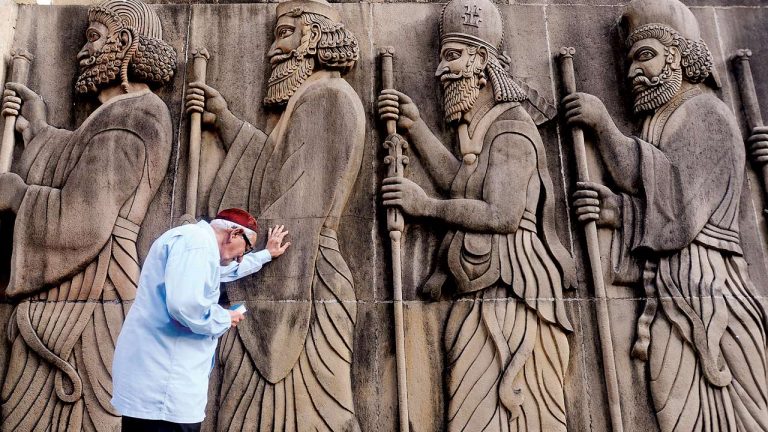
The spread of Islamic radicalism has resulted in the migration of native communities from their motherland on multiple occasions in the past. The departure of Parsis, or Zoroastrians, from Persia to other areas of the world as a result of the expansion of Islam in the 7th century AD is one such instance. We shall cover the entire history of the Religion with reference to the infamous events of religious persecution as we delve deeper into the exodus of Zoroastrians as a result of Islamic invasions and their migration to India.

The Parsis are an ethnoreligious minority currently residing in the Indian subcontinent. Following the invasion of Sassanid Iran by Arab Muslims under the Rashidun Caliphate in the 7th century AD, their ancestors moved to India. Parsis adhere to Zoroastrianism, also known as Mazdayasna in its original form, one of the world’s oldest religions. Until the middle of the seventh century, Persia (modern-day Iran) was a politically independent state with a Zoroastrian majority. For about 1000 years, until the Sassanian Empire, Zoroastrianism was the recognised official religion of the state.

History of Zoroastrianism

According to scholars, the origin of Zoroastrianism dates to the Bronze Age, when the Prophet Zarathushtra first revealed and preached “the Good Religion.” Around 1750 BC, Zarathushtra spread his ethical monotheistic doctrine across ancient Persia and Central Asia, converting a limited number of faithful men and women. Legend has it that Zarathushtra was invited to impart his teachings to King Vishtasp, who became one of the first of many Central Asian kings to adopt this new and revolutionary faith.

Zoroastrianism ultimately acquired widespread recognition, eventually becoming the religion of Cyrus the Great’s Achaemenian Empire (550-330 BC). Alexander the Great vanquished the Achaemenians in 330 BC, and the city of Persepolis, together with its collection of holy manuscripts, was destroyed by fire. After almost a century of Greek domination under the Seleucids, the Parthians (256 BCE-226 AD) ascended to power and dominated Iran for a number of years. The Sassanian Empire (226–652 AD) succeeded the Parthian Empire, and during the next 400 years, its monarchs made Zoroastrianism Iran’s official religion. With up to 30 million followers, this was the heyday of Zoroastrianism.

Persecution of the Zoroastrians

The Sassanian Empire was overthrown by Arab Muslims in 652 AD. A major portion of Zoroastrians converted to Islam; some practised their faith privately and were frequently persecuted. Forced conversions and intermittent violence were used as forms of discrimination and harassment against Zoroastrians both during and after the Arab Muslim conquest of Persia.

Throughout the history of Zoroastrianism, there is abundant documentation of Zoroastrians being persecuted. It is known that Muslims who came to the region during the Rashidun Caliphate invasion destroyed Zoroastrian temples. Many Zoroastrian temples were demolished, and mosques were built instead, with many Persian libraries set ablaze. Many Iranian fire temples were converted to mosques by the Muslim rulers. In territories that had been taken over by Muslims, Zoroastrians even had to pay a tax called Jizya.

In order to escape persecution and the negative effects of being treated like a second-class citizens during the Islamic caliphates, many Zoroastrians converted to Islam. Their children were sent to an Islamic school to learn Arabic and memorise the Quran, among other religious lessons, when a Zoroastrian subject converted. In an effort to persuade Zoroastrians to convert to Islam, the number of laws governing their behaviour rapidly increased, reducing their ability to participate in society and making life difficult for them. Zoroastrianism’s supremacy over religion in Persia was eventually toppled by the Arab invasion, which also made Islam the state’s official religion.

Migration of Zoroastrians to India

As Muslims began to Islamize Persia, many Zoroastrians fled to India, where they were granted sanctuary. According to legend, the Zoroastrians fled to northern Iran first, then to the island of Hormuz, and finally to India to save themselves and their faith. According to the Qissa-i Sanjan, the only documented chronicle of Zoroastrian emigrants in India, a small handful made their way to Gujarat, where they were given the name “Parsi”—literally, those from Paras or Fars, which is the traditional word for Persia.

Modern-day Parsis narrate a legend about Zoroastrian ships arriving in Sanjan and being received by Jadi Rana, a native ruler in Gujarat. Rana offered the immigrants a full glass of milk to indicate that there was no place for them. The Zoroastrians responded by adding a spoon of sugar to the milk, demonstrating their intention to blend in and subtly sweeten the figurative glass of milk without filling it to the brim. It is believed that following this incident, Jadi Rana granted the immigrants permission to stay on the condition that they learn Gujarati and wear the local attire Saree. The immigrants agreed to the requests and founded the town of Sanjan in Gujarat, named after their hometown in Iran. They began to live there as agriculturalists for a long time after their arrival.

Parsis gaining affluence

Many Parsis who had previously resided in rural villages around Gujarat moved to the English-run towns as soon as British commercial posts were established in Surat and throughout India in the early 17th century to take advantage of the new employment opportunities. Due to their increased openness to European influence and aptitude for trade and business, the condition of Parsis changed drastically.

After the East India Company seized power in Bombay in 1668, Parsis from Gujarat started to emigrate there. Their work and skill as merchants were largely responsible for the city’s expansion in the 18th century. By the nineteenth century, they were a distinctly wealthy society, and starting around 1850, they had great success in heavy industries, particularly those connected to railways and shipbuilding. The Parsis gained notoriety in India’s social, industrial, and educational domains over the ensuing decades. They were at the vanguard of progress, earned enormous wealth, and donated generously to the underprivileged.

Present status of Parsis in India

The Parsi community in India is one of the most prosperous minority and migrant communities in the world. Despite accounting up only 0.0005% of India’s population, they have had a significant impact on the country’s economy. According to the 2011 Indian Census, there are 57,264 Parsis in the country. The entire Parsi population in 2001 was 69,601. The population of the Parsi community was 91,266 in 1971 and 71,630 in 1981. The drop has eased in successive years, but the 2011 census revealed that their numbers are once again declining.

Maharashtra has the largest Parsi population of 44,854, followed by Gujarat with 9,727. There are just 221 Parsis in Delhi. In Andhra Pradesh, there are 609 Parsis, whereas in Karnataka, there are 443. Some of the Prominent Parsis from India are Jamsetji Nusserwanji Tata – founder of the Tata group, Homi Jehangir Bhabha – renowned Indian physicist, Field Marshal Sam Manekshaw – former Chief of the Army Staff, Ardeshir Godrej – Founder of the Godrej Group of companies, Dr. Cyrus Poonawalla – founder of the Serum Institute of India.
Kanhaiya Lal beheading: Witness seeks for government help through media, currently living in hiding, report says

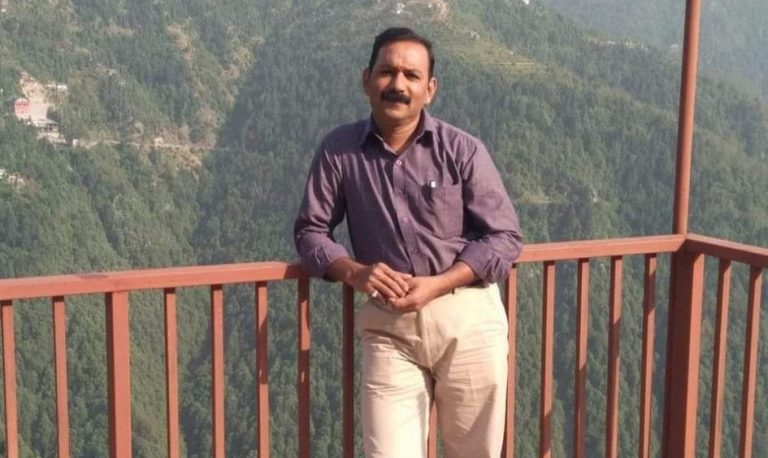
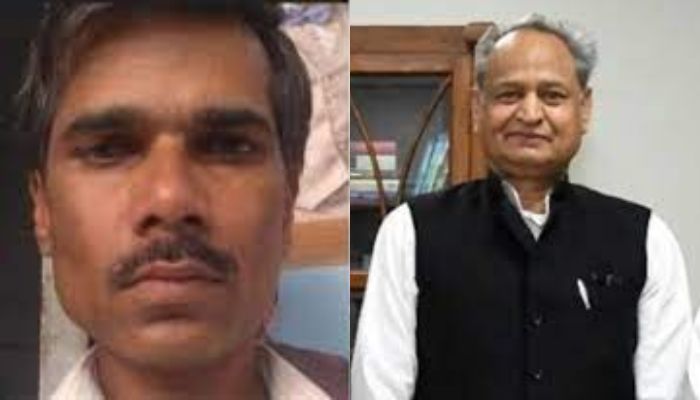
Rajkumar Sharma, one of the witnesses of the Kanhaiya Lal beheading incident, is currently living in anonymity due to fear. Rajkumar Sharma’s family members, while talking to the media, have asked for help from the government. Kanhaiya Lal, a Hindu tailor in Udaipur, was beheaded by two Islamists on 28th June 2022 for a social media post supporting the former spokesperson of Bharatiya Janata Party Nupur Sharma.

In an interaction with The New Indian, Rajkumar Sharma’s wife told, “We thought that it is our duty to ensure that this thing never happens with anyone else again. This is why we are cooperating with the government. All I wish is that my husband gets to do a job in a safer place. Government should help us for financial and security purposes. I request you to convey our request to the government. I cannot tell the government and the chief minister directly. Otherwise, I would go there and urge them to help us. Therefore, I am asking them for help. We have cooperated with the government and we expect help from the government in return. So, please take our voice to the government or please tell me the address and contact details of the chief minister so that I can tell him the same.”

Rajkumar Sharma used to work in Kanhaiya Lal’s shop. He was present in the shop when the murderers attacked. Rajkumar Sharma provided the details of the brutal attack as he spoke to the media. Rajkumar Sharma and Ishwar Gaud are the two eyewitnesses to the incident. Right now, he is forced to live in anonymity as he fears that he will be attacked by some Islamists in a similar manner. Rajkumar Sharma is not stepping out of his home due to fear. Another eyewitness Ishwar Gaud is injured as he tried to save the deceased Hindu tailor Kanhaiya Lal.

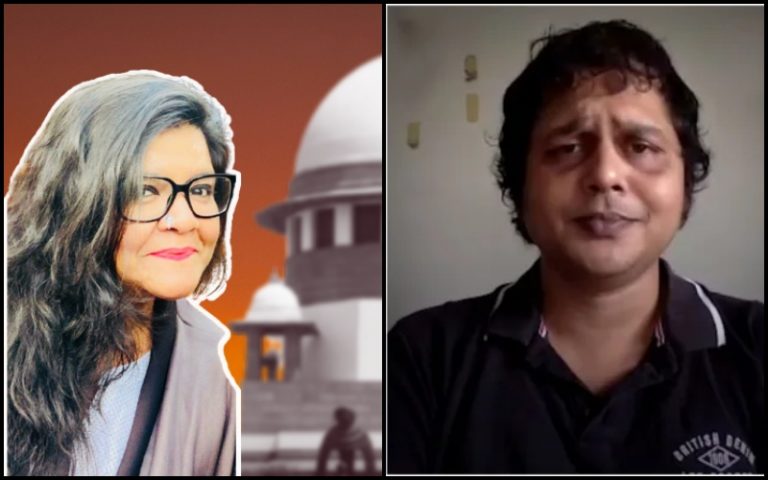
TMC’s Saket Gokhale asks AG to initiate contempt proceedings against us: Here is why this is a hill I am willing to die on

On the 1st of July, ex-spokesperson for BJP Nupur Sharma approached the Supreme Court to save her life. All she wanted was for multiple FIRs filed against her to be clubbed, so she does not have to travel from city to city in order to cooperate with the investigation against her. Her argument? She has been getting death and rape threats constantly and owing to security concerns, it would be dangerous for her to travel.

She did not refuse to cooperate with the investigation. She did not tell the Supreme Court to quash the FIRs against her. She merely wanted her life not be endangered in the process of the investigation.

The Judges of the Supreme Court made shocking observations while refusing to grant her request. She was mocked for being under threat when the Judges asked her if she was under threat or had she become a threat, she was the recipient of sarcasm when the Judges remarked “they must be red carpeting you” to her lawyer saying she was cooperating with the investigation and worst of all, the Judges held her “loose tongue” responsible for the beheading of Kanhaiya Lal by Islamists. Why was Kanhaiya Lal beheaded? Because he supported Nupur Sharma.

The observations by the Judges while dispensing the case did not make it to the written order making these remarks their personal opinions and not the opinions of the Supreme Court – the institution.

OpIndia, on its part, criticised the observations by the Judges, as it should have. As the Editor-in-Chief, I wrote an article where I questioned the Judges, asking them if they would blame the “loose tongues” of their fellow Judges for the threats they receive by Islamists after pronouncing the judgements in certain cases – The Ram Janmabhoomi case, the Hijab verdict, the Gyanvapi case, to cite a few examples.

It should be kept in mind that one of the Judges who made these remarks had earlier pulled up security agencies for not doing enough when Judges are at the receiving end of threats – this is the same Judge who dismissed the threats that Nupur Sharma was receiving.

In another report, we wrote that the Judges had emboldened Islamists. Our earlier headline had said that the Supreme Court had spoken the language of Islamists but once the observations did not make it to the written order, we had to change it and criticise the Judges specifically and not the Supreme Court.

TMC leader Saket Gokhale, who has taken donation money from unsuspecting Muslims to fund his own lifestyle, took offence. Today, he wrote a letter to the Attorney General of India, demanding that criminal contempt charges be brought against OpIndia and me, as the editor-in-chief of the platform and author of the article, because we lowered the majesty of the Supreme Court.

Saket Gokhale claims that we insulted the Supreme Court and “twisted” its observations in the Nupur Sharma case. He is, of course, just saying this. He wants to go after OpIndia and prove a point – when the Judges decide in our favour, they absolutely cannot be criticised.

While we should be terribly worried about the contempt proceedings and what happens if the AG accepts the demands of Saket Gokhale, I write this article today to say, with utmost conviction – We did no wrong and this is a hill I am gladly willing to die on.

First and foremost, the Judges, in this case, extended their brief when they made these observations. They proclaimed Nupur Sharma as guilty in a case where they had no jurisdiction to go into the merits of the case at all. They had to decide if there is sufficient threat against her for the FIRs to be clubbed – as they have done before in the case of Kamlesh Tiwari. Legally, the comments were unnecessary and against their brief. Retired Judge, SN Dhingra, has himself slammed the Judges for their “political comments”.

Retired high court judge SN Dhingra said, “Supreme Court has apparently said that Nupur Sharma was high on the power she had as a member of the ruling party and she carelessly went on to make those comments. As per my conscience, the same things also apply to the Supreme Court. Supreme Court itself cannot hold anyone guilty without any investigation. The case was put in front of the Supreme Court only for transferring the FIRs and not for proving any charges against her. I don’t understand how the Supreme Court can make such oral observations? If the Supreme Court had guts, it would have given those comments as a part of the written order. The Supreme Court has only written in the order that the petition is dismissed as withdrawn. Why? Why did the court not include its comments in the written order so that the Supreme Court could be held answerable to the questions like – how is it righteous of you to consider her guilty without any trial of the case, to become a prosecutor yourself, to charge the accused on your own, and declare her guilty only to deliver your judgment orally?”

This absolute shock was not only expressed by SN Dhingra but the public at large. Average citizens who have reposed their faith in the legal system time and again felt dejected and infuriated by these “political comments” by “judges drunk on power” (SN Dhingra’s words, not mine).

Here are some samples:

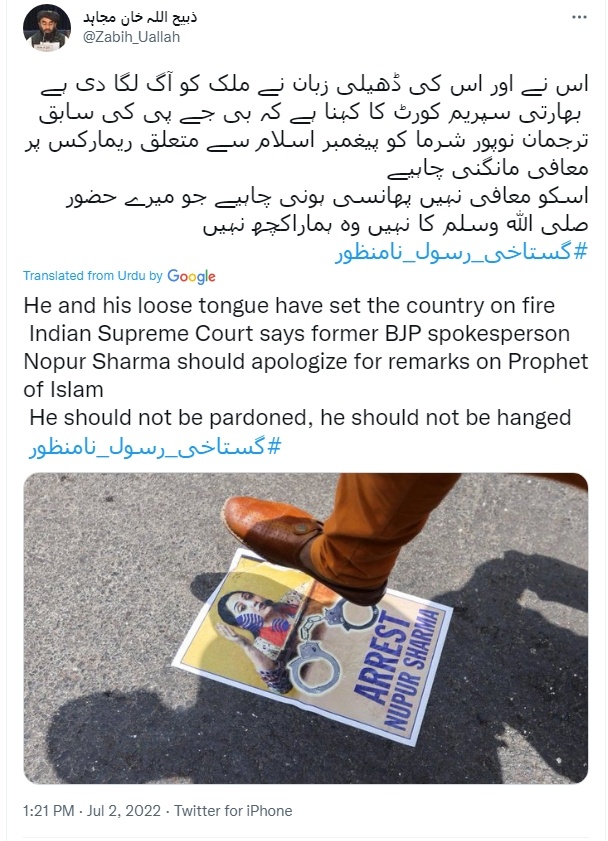
And these are just samples. One can cite millions of such tweets expressing absolute shock and dismay at the conduct of the Judges. The support that accrued for these observations, unironically, came from the Taliban.

Taliban Spokesperson supporting Judge’s comments on Nupur Sharma

Is it the contention that I have to agree with arguments that the Taliban agrees with simply because they came from two Judges? As a journalist and a woman who has watched another woman be thrown to the wolves by all and sundry, I refuse to submit and I refuse to “behave”.

The upside of this petition by Saket Gokhale is that at least, fundamentalist allies like him have essentially admitted that Islamism is a bad thing. If they believe us saying that the Judges spoke the language of Islamists and that, according to him, is liable for contempt, then he also admits that Islamism should be condemned. I will take that small victory that he and his supporters unwittingly delivered to us.

The other upside to this is we will finally find out if the Courts are willing to treat a Nupur Sharma and a Prashant Bhushan equally. I am but a dispensable cog in the system and an average citizen who picked up her pen because others had sold theirs. I am no Prashant Bhushan who can get the courts to open their doors at 12 AM for a convicted terrorist. The lower court has in the past treated Hindus and Muslims differently, I would hope and pray that the Supreme Court treats Prashant Bhushan and a dispensable journalist the same as well. We will find out, at least. That is a small victory I am also willing to accept as a consequence of Saket Gokhale’s letter to the AG.

Let me state my position as clearly as I possibly can without going into the merits of Nupur Sharma’s case because that is not the purpose of this article. A woman is being told that she will soon be beheaded. She is being told that Islamists will find her and gang-rape her. She is being told that she will be chopped into pieces and thrown in the gutter. The ones issuing these threats have proved that they will act upon it – they beheaded Kanhaiya Lal for supporting Nupur Sharma, they beheaded Umesh Kohli for supporting her and have rioted on the streets demanding “Sar Tan Se Juda”. The Judges, in this case, provided sanctity to the offence that allows them to murder by saying Nupur Sharma was responsible for Kanhaiya Lal’s murder, thereby almost exonerating the Islamists and their religious hate that led to the murder. I, as a journalist and a woman, will not stand quietly. I, as a journalist and a woman, stand by every word I have written against the observations of the Supreme Court. If contempt charges are brought against me – I will fight them. If Bharat, this ancient civilisation, can bring itself to have a discussion around the restraint that Judges should exercise in making unnecessary comments because of my “loose tongue”, so be it. Bring it on.

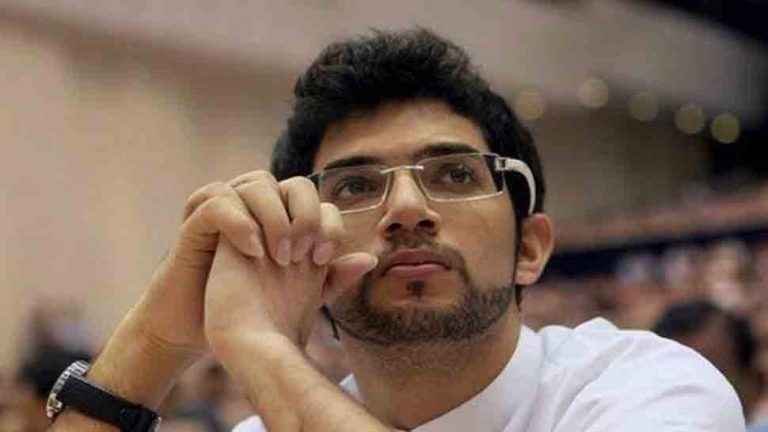
Even Kasab was not provided so much security: Aaditya Thackeray complains about the security provided to Shiv Sena MLAs from CM Eknath Shinde’s camp

Son of former Maharashtra CM Uddhav Thackeray, and a former minister in the Maharashtra cabinet, Aaditya Thackeray has questioned the security provided to the Shiv Sena MLAs from the current Chief Minister Eknath Shinde’s camp. All the MLAs from the Shinde camp were brought to the Maharashtra Assembly under tight protection ahead of the election for the post of assembly speaker.

“What are you scared of? That some of your MLAs may run away? Why so much fear?” Aaditya Thackeray said ahead of the election which was won by NJP’s Rahul Narvekar to become the new speaker of the Maharashtra assembly.

Thackeray said that even Ajmal Kasab, the perpetrator of the deadly 26/11 terror attack in Mumbai wasn’t provided so much security in Mumbai after his arrest.

The newly formed Shiv Sena-BJP government is now set to face the floor test on the 4th of July to prove its majority.

Threats to MLAs from Eknath Shinde camp

Shiv Sena’s Rajya Sabha MP and Usshav Thackeray loyalist Sanjay Raut had issued a series of implicit threats against the ‘rebel’ Shiv Sena MLAs after they had left for Guwahati.

Speaking to ANI a few days ago, Raut had said, “The (Eknath Shinde) faction that’s challenging us must realise that Shiv Sena workers are yet to come on the roads. Such battles are fought either through law or on the roads. If need be then our workers would come on the roads.”

In another statement to NDTV, Sanjay Raut had directly threatened the rebel MLAs with street violence. When he was questioned about the future of Uddhav Thackeray as chief minister, he stated, “Let all the MLAs come to the floor of the House. We will see then. These MLAs who have left… will ultimately have to come back to Maharashtra. They will find it difficult to return and move around in Maharashtra.”

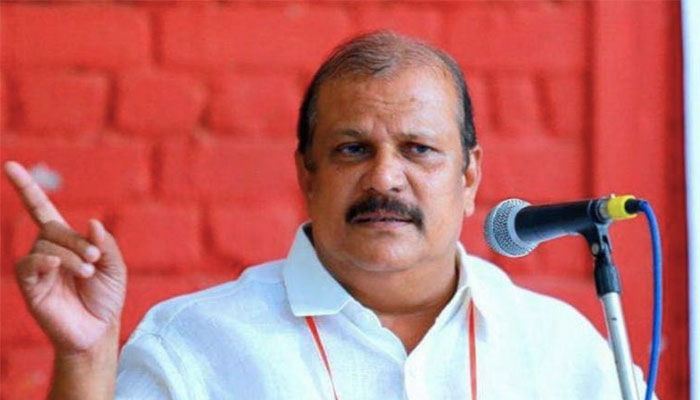
Kerala: Former MLA PC George granted bail after he was arrested in a sexual harassment case

On July 2, Kerala police arrested former Poonjar MLA and senior Kerala leader PC George after an accused in a solar panel scam accused him of sexual harassment in a complaint. Earlier, PC George was arrested for giving a statement where he claimed Hindus are given neuter drugs in Muslim hotels. However, later he was released on bail.

George was arrested by the Cantonment Police from a guest house in Thiruvananthapuram. He was being questioned by the Crime Branch of Kerala Police in connection to the defamation of Chief Minister  Pinarayi Vijayan in the Gold Smuggling Case by the primary accused, Swapna Suresh.

He then approached court for bail, and he was granted bail by a Magisterial court in the city. The court approved the bail on the condition that he will cooperate with the investigation.

George was booked under Sections 354 and 354A of the Indian Penal Code (IPC). The complaint was lodged by a person named KT Jalil. In his complaint, Jalil alleged that Suresh and George wanted to tarnish the image of CM Vijayan and levelled false allegations against him.

OnManorama said in a report that the investigating officers questioned PC George after Sarita S Nair said in a statement that he had forced her to make the revelations.

It has been alleged that George had called the woman to a guest house in Thycaud on February 10, 2022, and sexually assaulted her. The woman, in her complaint, alleged that George provided her wrong information. He was then called by the Police for questioning at Thycaud’s guest house for alleged conspiracy against the government.

On the day Swapna Suresh made the allegations against CM, an audio clip of a conversation between George and the complainant also surfaced. As per the complainant, the incident and that conversation took place on the same day.

Swapna Suresh, who is facing charges in a gold smuggling case, had accused CM Vijayan of giving her a bag full of currency notes in Dubai in 2016. She had alleged that CM had forgotten to take a bag, and it was sent to the CM via a diplomat in the consulate. When the bag was brought to the embassy, it was full of currency notes.

‘Hindus are given impotancy-inducing medicine at Muslim hotels’

In May 2022, PC George was arrested by the Police for alleging that Hindus are given neuter drugs at Muslim-owned restaurants and hotels. He also appealed to boycott Muslims. A case was registered under Section 295A of the IPC against him on April 30, 2022, following which he was arrested from his house.

George has said that the people from the Muslim community start businesses in non-Muslim areas and earn money from them. George had appealed to people to boycott Muslim businesses. He said, “Muslims spit thrice in food. Their Maulana says that spit is perfume. Why should we eat their food?”

He further asked people to avoid eating at Muslim restaurants as they use “impotence-inducing drops” in foot items that would make Hindu men impotent and Hindu women infertile. He claimed that the Muslims were trying to take over the country. He also urged Hindus and Christians to have at least four children.

‘Goli maaro saalo ko’ is not same as ‘sar tan se juda’: You and I are not same

Ever since the abhorrent calls for beheading by Islamists over their perceived ‘blasphemy’ in ‘gustakhi of their Nabi’ are being normalised, now even by the highest institute of judiciary in India, albeit indirectly, this false equivalence is being brought up by some radicals.

Earlier, the same bunch of zombies have tried to paint Jai Shri Ram as a ‘war cry’ and ‘hate speech’, most likely because of the way how ‘Allahu Akbar’ could send chills down anyone’s spine, especially in crowded malls, planes because we know someone nearby is likely to blow himself/herself off. I agree, terrorism has no religion. It is just that some misguided children decide to blow self, public property and airplanes in name of religion which almost always has been single source in recent times.

Since in recent cases of beheading, killing of Hindu men for merely extending support to ex-BJP spokesperson Nupur Sharma, cannot be spinned as ‘killed after forced to chant ‘Jai Shri Ram”, the usual suspects have tried to compare the 2nd most terrifying chant after ‘Allahu Akbar’, ‘Sar tan se juda’ to ‘goli maaro saalo ko’.

Now, let me explain the ‘goli maaro saalo ko’ slogan that has been riling up the ‘liberals’ since 2019 anti-CAA violence where those nationalists who put India first demanded the traitors be shot dead. Demanding capital punishment for traitors, who sell their country for peanuts, sometimes in violation of FCRA and other laws of the land by taking money from countries like Pakistan which may not have the best interest for India in mind, is not wrong. As long as none of those chanting and demanding punishment picks up gun and shoots one of them.

This makes total sense because that is exactly how the ‘liberal’ jamaat has been justifying Islamist propaganda outlet Alt News cofounder Mohammed Zubair’s dogwhistling against ex-BJP spokie Nupur Sharma.

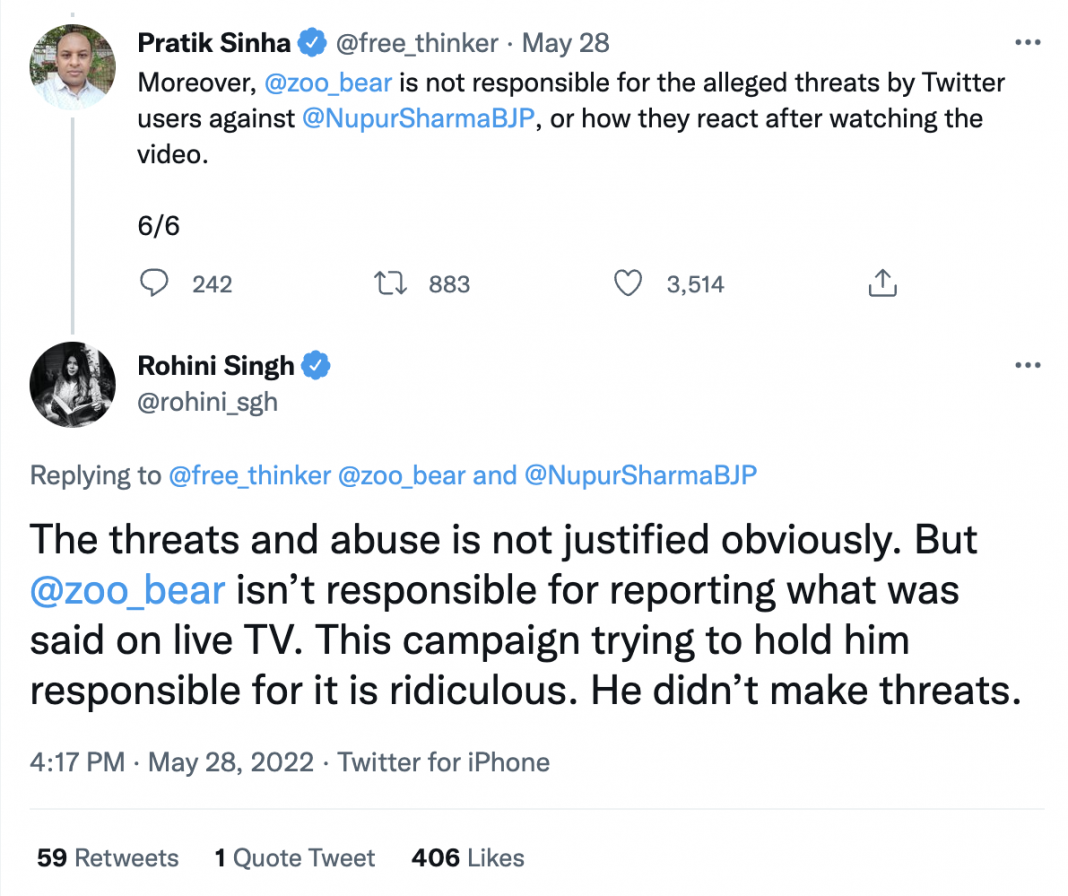
Zubair isn’t responsible

‘Goli maaro saalo ko’ is a rhetorical statement. It means how the judiciary must take strict action against the traitors and execute them. While now they are hanged till death, at one point in human history, convicts were also put before firing squad. Since in India it is not there, it is clearly a rhetorical slogan.

Much like ‘Tilak, taraju aur talwar, unko maaro joote chaar’ – the political slogan raised by respected Dalit leader Mayawati asking people to beat up Brahmins, Banias and Kshatriyas (upper caste, so to say) people.

So just as Mayawati did not literally mean Brahmins be beaten up, ‘goli maaro saalo ko’ does not literally mean public execution of traitors. It is just judicial process be undertaken and they be given strict punishment.

So, if Zubair isn’t responsible for zombies baying for Nupur Sharma’s blood calling for her beheading *AND* killing even those who support her, those who call for strict punishment for traitors shouldn’t be responsible when terrorists are hanged.

However, ‘sar tan se juda’ slogan (full chant – Gustakh-e-Nabi ki ek hi saza, sar tan se juda, sar tan se juda) does call for literal beheading of the one who has ‘blasphemed’. If you have said anything that could hurt the religious feelings of ‘believers’, beheading is permitted by the Islamic law.

Further, if you ask any Islamist, they would quite likely say how Quran is above the constitution for them. Safdar Nagori, 2008 Ahmedabad bomb blast convict had quite infamously said the constitution holds no value for him and Quran is above all. A resident of Ujjain, Madhya Pradesh, 54-years-old Nagori was associated with the banned Islamic terrorist organization Students Islamic Movement of India (SIMI). He was the main conspirator of the 2008 Ahmedabad serial blasts.

After SIMI was banned, some members started other outfits like PFI and SIO and others and they have been at the forefront of raising hateful slogans against Hindus including demanding their beheading.

And, to make things abundantly clearer that the two slogans are not same, one can see how after ‘goli maaro saalo ko’, no one has really picked up guns and killed anyone, but after ‘sar tan se juda’ slogans were raised in recent controversy, at least three Hindus have been killed by Islamists for supporting a woman who had the audacity to do ‘gustakh-e-Nabi’.

So you see, you and I are not same. You believe Sharia above all. While I have full faith in judiciary and even though I may not agree with it many times, I will still abide by the law of the land, even if judiciary of secular India is more likely to hear urgent hearing of a terrorist than an average Hindu.

I will not go about wielding swords, knives and beheading people or blowing myself up in the name of Allah.

That’s the difference.

Jai Hind.

Maharashtra: Samajwadi Party, AIMIM abstain as MVA loses speaker post to BJP, Rahul Narwekar becomes the new assembly speaker

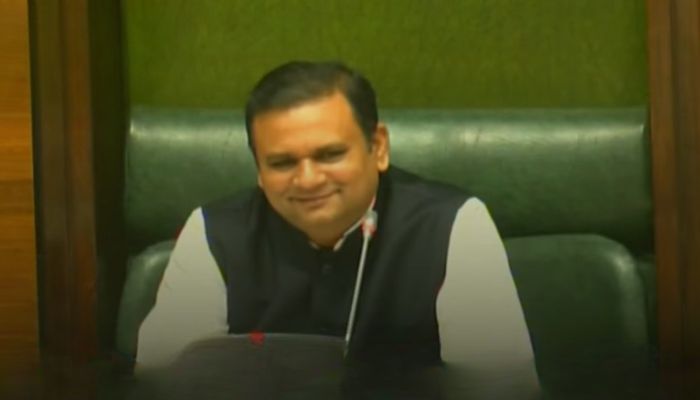
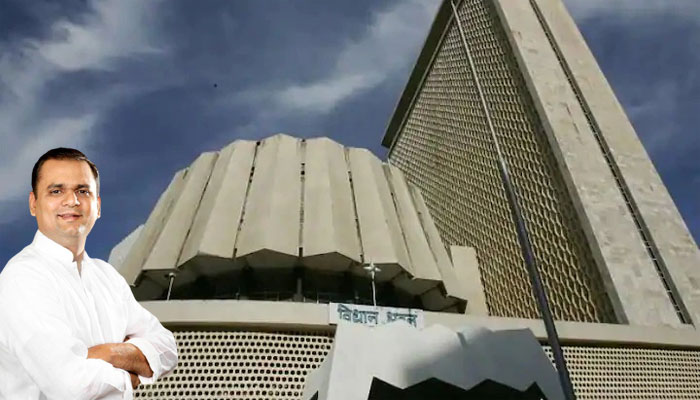
On July 3, Bharatiya Janata Party (BJP) leader Rahul Narwekar was elected as the speaker of the Maharashtra Assembly. Narwekar got 164 out of the total 288 votes. The voting was done by a headcount instead of ballot voting. During the process, every member of the Legislative assembly spoke up his/her name and number in support of the candidate.

Interestingly, Samajwadi Party and All India Majlis e Ittihadul Muslimin (AIMIM) abstained from voting during this process. Samajwadi Party has two MLAs in the assembly, while AIMIM has one MLA.

BJP has 106 MLAs in the house. It is supported by 7 other independent MLAs. Eknath Shinde camp has 49 MLAs in the house, out of which 39 are ‘rebel’ Shiv Sena MLAs. Hitendra Thakur, Bahujan Vikas Aghadi MLA from Vasai, and MNS MLA Raju Patil also voted for Rahul Narwekar. Maha Vikas Aghadi candidate Rajan Salvi secured 107 votes.

Out of 288 MLAs in the Maharashtra state assembly, Nawab Malik and Anil Deshmukh of the Nationalist Congress Party are currently in jail so they didn’t appear for voting while one Shiv Sena MLA passed away recently. This reduced the assembly to 285 members. Out of the MLAs present in the house, 164 voted for Rahul Narwekar, 107 voted for Rajan Salvi while 3 of them abstained.

Rahul Narvekar is Bharatiya Janata Party’s MLA from the Colaba constituency in Mumbai. Before joining BJP, he was part of Shiv Sena for 15 years and NCP for around five years. In 2019, he joined BJP just before the state elections.

45-years-old Narvekar comes from a political family. His father, Suresh Narvekar, was a municipal councilor from Colaba, and his brother Makarand Narvekar is currently serving as a municipal councilor from the same seat. His father-in-law Ramraje Naik-Nimbalkar is an NCP leader. He is currently serving as chairman and speaker of the Maharashtra Legislative Council. In the 2019 state elections, he won the assembly seat with a margin of over 15,000 votes and defeated Ashok Jagtap of Congress.

Vet doctor Yusuf Khan, who had provoked Islamists to kill Umesh Kolhe for supporting Nupur Sharma, was good friends with the victim

With two more accused arrested in the brutal murder of Pharmacist Umesh Kolhe for supporting Nupur Sharma, now it has come to light that most murders by Islamists, he was also betrayed by people known to him. Just like Kanhaiya Lal’s support to Nupur Sharma was highlighted by his neighbour Nazim, leading to Kanhaiya’s beheading in Udaipur, Kolhe was also a good friend with veterinary doctor Yusuf Khan, who had instigated the killers against Kolhe.

This was revealed by Mahesh Kolhe, brother of victim Umesh Kolhe. He said that from police note on the case, he has learnt that his brother was murdered for his post on Nupur Sharma.

Mahesh Kolhe added that Umesh Kolhe was good friends with Yusuf Khan, a practicing veterinarian, who was arrested from Amaravati for his involvement in the case. He informed that they have known Khan since 2006.

The victim’s brother hoped that the pace of investigation will speed up as the mastermind in the case has been arrested, and others will also be arrested. He demanded that the trial should be done in a fast-track court and maximum punishment must be given.

While police had already arrested 5 persons in the case, including the killers, yesterday two more accused were arrested, Veterinary doctor Yusuf Khan Bahadur Khan and Mastermind Sheikh Irfan Sheikh Rahim who runs an NGO. According to police, Yusuf Khan had forwarded Umesh Kolhe’s message supporting Nupur Sharma in WhatsApp groups, instigating Islamists against him by saying that he was supporting someone accused of blasphemy. “Khan instigated the other accused,” the police had said.

Yusuf Khan and Umesh Kolhe got to know each other because their professions linked, Khan a veterinary doctor and Kolhe a medical store owner. Eventually they had become good friends over the years. Reportedly, Khan had even attended the funeral of Umesh Kolhe after the murder.

On the other hand, Irfan Sheikh who was arrested from Nagpur, had provided monetary and logistical support to the killers. He had promised to give ₹10,000 each to the killers, and help them escape safely in a car.

The involvement of a person well known to the victim points towards a disturbing trend in violence by Islamists which was first observed in the genocide on Kashmiri Pandits, and also happened in the Kanhaiya Lal murder case.

In the Udaipur case, after filing a case against the Hindu tailor for supporting Nupur Sharma, his neighbour Nazim had leaked his photo and address on social media, adding that he has committed blasphemy, thereby provoking Islamists. Nazim and others had also prevented Kanhaiya Lal to open his shop for a week, and finally when he opened the shop, he was beheaded by Islamists posing as customers.

Similar incidents had happened in the genocide of Kashmiri Hindus, including in the case of the brutal murder of engineer BK Ganjoo. As Islamists were on a killing spree of Kashmiri Hindus in 1990, Ganjoo had hidden in a rice barrel. But, his location was disclosed to the terrorists by his own neighbours. He was shot dead by the terrorists who fired multiple rounds at the rice barrel allowing the blood to drip out of the container. The rice soaked in the blood was then forcefully fed to Ganjoo’s wife. The incident was also depicted in the movie The Kashmir Files.

Another victim Girija Tickoo was also called by her colleagues to collect her paycheck. As per reports, her movements were informed to local Islamists and Tickoo was kidnapped from a colleague’s home, to be tortured and later cut into pieces with a saw.

It is notable that while the Umesh Kolhe murder took place almost two weeks ago, only yesterday the local police revealed that he was killed for supporting Nupur Sharma. Before that, the police were claiming that it was case of robbery gone wrong. But the police finally admitted to the real motive of the murder after the case was handed over to NIA by the union home ministry, and also after the government in Maharashtra changed.

Udaipur beheading: ₹1.7 crores raised by 14,000 donors for the family of Hindu tailor Kanhaiya Lal. Here is how the funds will be distributed

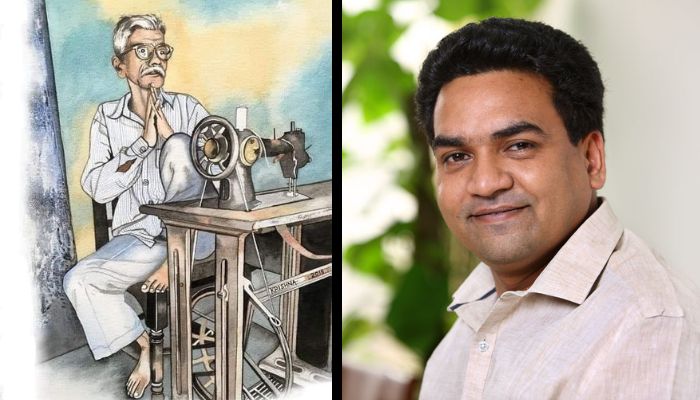
On Sunday (July 3), BJP leader Kapil Mishra shared the information that more than 14,000 donors from across the globe have come together to contribute a whopping ₹1.7 crore for the family of Kanhaiya Lal.

Lal, a tailor by occupation, was beheaded by two extremists, namely, Riyaz Attari and Mohammad Ghaus, for sharing a post in support of the ex-BJP spokesperson Nupur Sharma.

While addressing the media, Kapil Sharma announced, “Out of the total amount collected, we will provide ₹1 crore to Kanhaiya Lal’s family. This amount will first be used to pay off their home loan.”

The BJP leader further informed that the fundraiser will cover the educational expenses of the deceased’s children and the legal fees. “I have taken the bank account details of Kanhaiya Lal Ji’s wife and will transfer the amount,” he said.

“In this way, his family will not feel that the breadwinner is no more with them. Although we cannot bring back Kanhaiya Lal ji, we will not let his family feel weak due to financial insecurity,” Kapil Mishra emphasised. He added that the deceased Hindu tailor had sacrificed his life for Dharma.

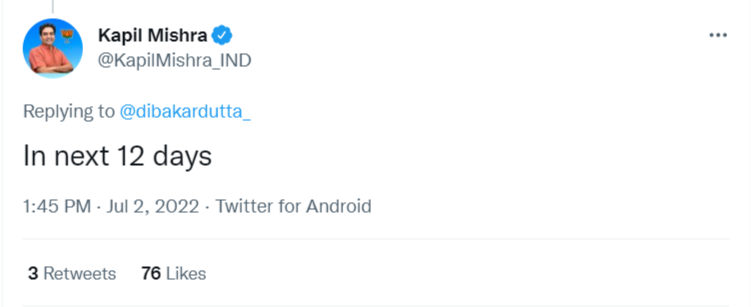
Earlier, in a tweet, the BJP leader had stated that the funds will be disbursed to the beneficiaries within a span of 12 days.

Screengrab of the tweet by Kapil Mishra

Beneficiaries of the fundraiser

On Friday (July 1), Kapil Mishra informed that besides Kanhaiya Lal, several other people will get the benefit of the fundraiser. He stated that a sum of ₹25 lakhs will be provided to the family of Ishwar Singh, who was injured while trying to stop the murderers of Kanhaiya Lal.

Another sum of ₹30 lakhs will be handed over to the family of deceased pharmacist Umesh Kolhe, who was killed by Islamists in Amravati for supporting Nupur Sharma on June 21.

A police constable named Sandeep, who was stabbed by a mob in the line of duty in Rajasthan, will be given a sum of ₹5 lakhs. The remaining amount will be transferred to the bank account of Kanhaiya Lal’s wife.

“Firstly thank you one and all for the support you guys have shown to the fundraiser. To raise such a big amount within such a short time is not something one can do without the support of Dharmiks,” Kapil Mishra remarked.

Maharashtra Assembly: BJP’s Rahul Narwekar elected as the new speaker with 164 votes, 107 MLAs voted against him

On July 3, Bharatiya Janata Party (BJP) leader Rahul Narwekar was elected as the speaker of the Maharashtra Assembly. Narwekar got 164 out of the total 288 votes. The voting was done by a headcount instead of ballot voting. During the process, every member of the Legislative assembly spoke up his/her name and number in support of the candidate.

Narwekar had filed his nomination for the post of the speaker on July 2. The seat of the speaker was lying vacant since last year after the resignation of Congress leader Nana Patole from the post. Since then, Narhari Zirwal, deputy speaker, has been acting speaker of the Legislative Assembly.

Who is Rahul Narvekar?

Rahul Narvekar is Bharatiya Janata Party’s MLA from the Colaba constituency in Mumbai. Before joining BJP, he was part of Shiv Sena for 15 years and NCP for around five years. In 2019, he joined BJP just before the state elections.

45-years-old Narvekar comes from a political family. His father, Suresh Narvekar, was a municipal councillor from Colaba, and his brother Makarand Narvekar is currently serving as a municipal councillor from the same seat. His father-in-law Ramraje Naik-Nimbalkar is an NCP leader. He is currently serving as chairman and speaker of the Maharashtra Legislative Council.

In the 2019 state elections, he won the assembly seat with a margin of over 15,000 votes and defeated Ashok Jagtap of Congress.

Second blow for MVA after Eknath Shinde was elected as the CM of Maharashtra

This is the second blow in quick succession for the previous Maha Vikas Aghadi alliance after losing the CM chair. Following the resignation of Uddhav Thackeray from the CM post, Shiv Sena leader Eknath Shinde was sworn in as Chief Minister of Maharashtra with support from BJP. Former Chief Minister of Maharashtra Devendra Fadnavis was elected as the new Deputy Chief Minister.