Around 17 lakh votes were polled in the internal elections of the Indian Youth Congress (IYC) in Chhattisgarh in the election process that ended on June 12 at midnight, according to the Hindi daily Jagran, and several dogs, cats, and cows are among the individuals who cast their franchise.
According to the new system adopted by the Youth Congress to conduct internal polls, elections are conducted online, using an app-based system named Congress Sandesh app. As per the Jagran report, voters have to enrol as IYC members using documents to establish their identity, and then exercise their franchise. This app-based system was first used in the Maharastra Youth Congress election conducted last year.
Congress Sandesh app
The Jagran report has now quoted a source close to a member of the Chhattisgarh Youth Congress as saying that the party has received several applications enrolled in the name of dogs, cats and cows.
Voters registered as IYC members using identification documents to take part in the polls, which were held online using an app-based system. Additionally, applicants had to provide an 8-second video to prove their identity. According to sources, numerous clips that were uploaded on the IYC enrollment app- the Congress Sandesh app, contained the videos of dogs, cats, and cow, and the names used to register these applications are also names that are generally associated with animals.
As per reports, the Chhattisgarh Youth Congress received as many as 17 lakh new applications seeking membership, which included these applications that were registered on the names of animals. High-ranking sources inside the Youth Congress claim that if the central level of monitoring is not tightened, then these votes will likewise be deemed legal.
Besides, it is also being reported that many voters had voted three to five times at the district and assembly level. The candidates received the results of the ballots cast by those who voted before the results were even announced. Moreover, a fee of Rs 50 was also charged as nomination process and candidate voting fees. As just a result, over Rs 11 crore has been deposited in the Youth Congress’s account. If the sources in the Chhattisgarh Congress Youth unit are to be believed, it is expected that these votes would get rejected, when a scrutiny into the same is conducted.
It should be mentioned that roughly one-third of the over 19 lakh votes cast in Maharashtra’s internal elections to elect Indian Youth Congress (IYC) office-bearers were rejected due to irregularities such as voters exercising their franchise multiple times, data inconsistencies, and other anomalies.
The election process, which includes nominations, voter registration, and polling, had begun in Maharashtra on November 12, 2021, and ended on December 12, 2021. For the first time, polls were conducted online, utilising an app-based method, in which voters had to register as IYC members using documents to prove their identity and then exercise their franchise.
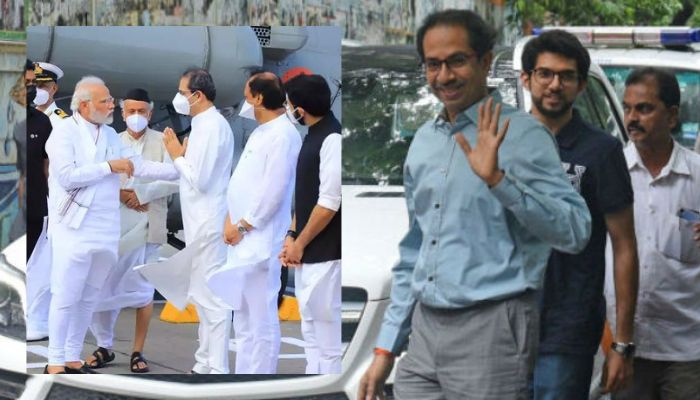
News has come from Maharashtra where CM Uddhav Thackeray has reportedly lashed out at Prime Minister’s security officials after they asked his son and Maharashtra Environment Minister Aaditya Thackeray to get out of his car. As reported by TV9 Marathi, CM Thackeray lost his cool and had a minor scuffle with the security officials, after the father-son duo was to follow the PM Modi’s convoy during his visit to Mumbai on Tuesday.
On Tuesday, after wrapping up his visit to Dehu in Pune, PM Modi reached Mumbai two grace two functions in the city. He was welcomed by Maharashtra CM Uddhav Thackeray, Deputy CM Ajit Pawar, Minister Aaditya Thackeray and Leader of Opposition Devendra Fadnavis at INS Shikra point, Naval Helipad in Mumbai.
However, following the protocol, the security officials asked Aaditya Thackeray to get out of the CM’s car, which was to follow the PM’s convoy until the next destination. According to a said security protocol, only the Chief Minister of the state is allowed to become part of the PM’s convoy.
At this time, CM Uddhav Thackeray lashed out at the security men for asking Aaditya Thackeray to do so. Apparently, this led to a two to three-minute delay in following up the PM Modi’s convoy up to the Raj Bhavan to unveil the Revolutionaries’ Gallery in the city.
PM Modi is on a day-long visit to Maharashtra on June 14. In the afternoon, he inaugurated the ‘Shila Mandir’ of Sant Tukaram Maharaj in Dehu, Pune. Further, Modi landed in Mumbai to inaugurate an exhibition gallery commemorating Indian Revolutionaries at Raj Bhavan, Mumbai. Further, he will precede the bi-centenary celebrations of the Gujarati Newspaper ‘Mumbai Samachar’ at the Bandra-Kurla Complex.
At the very core of humanity, is a war to survive. It is a paradigm that no animal or man can escape. The civilisational war we see today may be dressed up differently depending on the issue we choose to debate – reclamation of cultural heritage and places of worship, judicial reforms, police reforms, demographic challenge, citizenship to persecuted minorities from neighbouring Islamic nations, the law against forceful religious conversion and the list is endless – however, at the very heart of it, every issue revolves around the survival of an ancient civilisation that has now morphed into a “secular” quip or a people, who have fought, for centuries, for the preservation of that ancient civilisation.
When Rangeela Rasool was published by Mahashay Rajpal, the court had clearly exonerated him saying that commentary on historical figures, including Prophet, does not promote enmity between groups. That, however, did not stop the Islamists from murdering him brutally. It was also craftily brushed under the rug that Mahashay Rajpal had published Rangeela Rasool (written by Pandit Chamupati Lal) after serious provocation by the Muslim community where they chose to publish two books mocking Hindus and their faith. In this case, Mahashay Rajpal and Pandit Chamupati Lal chose to answer words with words. Book with a book. However, for the Islamists who constantly want special treatment and concessions from the Hindu community, that was “blasphemy”, a crime punishable by death under Sharia.
The trajectory of the Nupur Sharma case was not too different. After the discovery of the Shivling, Islamists on television debates and social media started mocking Hindus and their faith. They called Hindus penis worshippers and far worse. During the TimesNow debate, when panellists started mocking the Hindu faith yet again by calling the Shivling a fountain, Nupur had had enough. She lashed out asking the Islamist panellist how he would feel if she was to mock their faith. She did not mock him per se – she asked how he would feel.
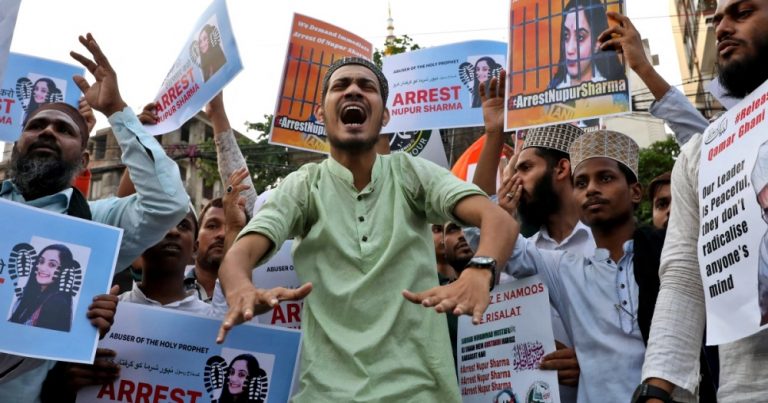
And boy did the Islamists answer. They took to the streets, shouted ‘sar tan se juda’ slogans, pissed on her picture, hung her effigies and did everything that one expects from uneducated barbarians.
So far, Nupur Sharma is safe. Alive. However, one has to reconcile with the fact that she is a woman marked for life. Wouldn’t take much for us to reconcile with it, sadly. That is just how the human race is. An atrocity that shocked us yesterday would become the norm tomorrow. The Hindu memory is painfully short and soon, the community would move on to the next outrage cycle leaving Nupur Sharma alone to deal with the consequences of bruising the extremely fragile sentiments of the Islamists.
One would expect the Nupur Sharma issue to be one that united the Left and the Right (for the lack of a better phrase) in India. After all, it is the Left and the Liberals who claim that India is stifling freedom of speech and expression. They also rally vociferously for the right to offend and the right to criticise religion – we saw that in several cases – Munnawar Farooqi being a case in point. The Right, let us assume, would speak up because Nupur Sharma commented on Islam specifically, a religion they allegedly despise, but the Left would speak up for Nupur’s right to speech, therefore, uniting the two factions. That did not happen. Instead, there were cries about Hindus becoming increasingly hateful under the Modi regime, atrocities against Muslims being on the rise and general wails of Islamophobia that we have heard all too often.
Pakistan approached the United Nations demanding action against India due to Nupur Sharma’s “Islamophobic comments”. Bhutto demanded that the UN take note of “rising Islamophobia” in India. Attempting to arm-twist the UN further, Bilawal Bhutto reportedly said, “Silence could be taken as complicity and could lead to further incitement to violence, communal discord and hate incidents”.
Essentially, Pakistan told the UN that if it does not get involved and chastise a nation of 1.3 billion people because one woman politician went on a TV debate and made a 10-second innocuous comment that repeated what the Islamic hadiths say, Hindus would get emboldened to exercise their free speech further and incite the Muslims to riot and indulge in violence. If you find something fundamentally flawed in that argument, where 1.3 billion people need to be condemned for a factually correct statement by one person so that the tolerant, peace-loving, sar tan se juda chanting, stone-pelting and rioting Islamists do not indulge in violence, you are an Islamophobe.
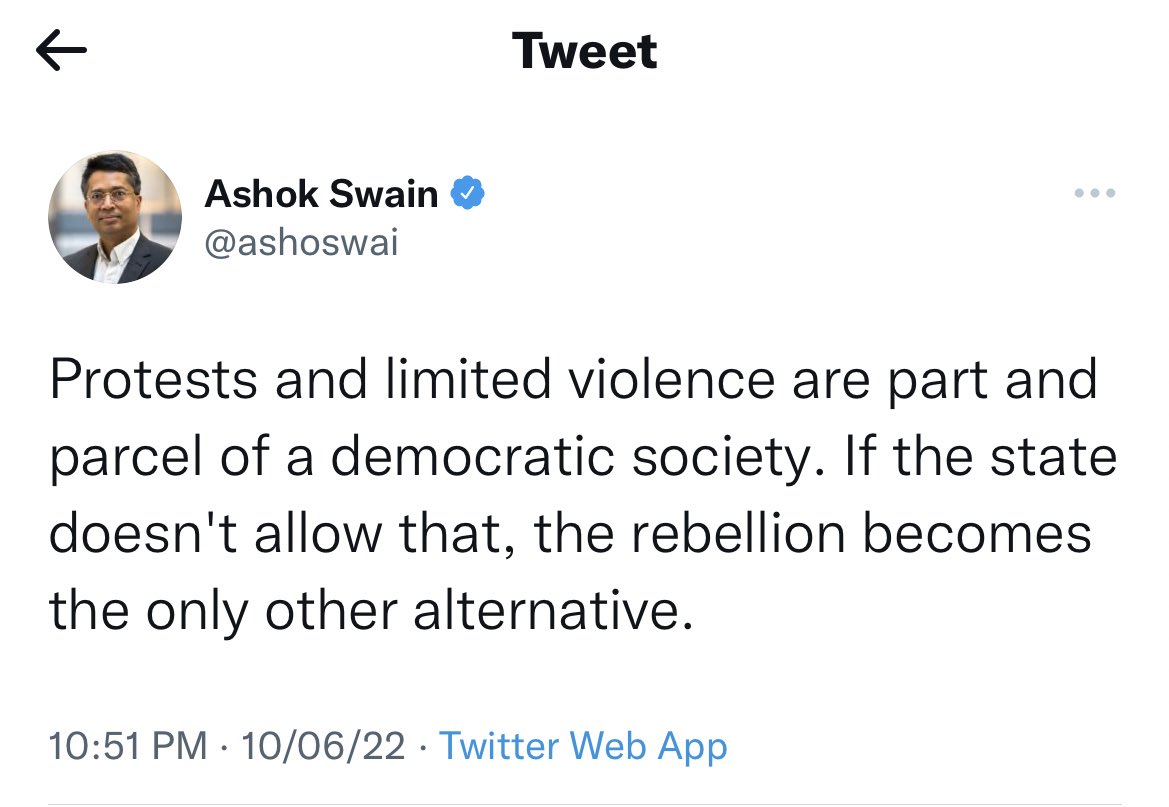
We live in an age where any criticism of Islam or even a comment on the collective behaviour of the Ummah based on facts is seen as Islamophobia. If you report a crime committed by Islamic fundamentalists with a clear religious motive, like conversion, it is Islamophobia. If you condemn the violence that the intolerant minority indulges in, it is Islamophobia. In this case, Nupur’s response to Hinduphobes was Islamophobia and the Hindu community’s condemnation of rape, death and beheading threats to Nupur Sharma was also Islamophobia – they are just upset about the comment, after all. A little anarchy is justified. A little violence is a part of the democratic process, it was said – the state must allow it. If you disagree with this asinine view, you, my friend, are an Islamophobe.
Tweet by Ashok Swain
So what is Islamophobia?
The United States House of Representatives in December passed a bill called ‘Combating International Islamophobia Act’. It was introduced by famed Jihad supporter, Ilhan Omar. The bill aims to combat global Islamophobia. The bill allows the Department of State to establish an office to monitor and combat Islamophobia and address related issues and of course, it requires the submission of annual reports to Congress about global Islamophobia and what countries have done to act against it.
The vague, subjective law allows all speech directed at Islam, forget criticising it, to be termed as Islamophobic – a term that in itself is problematic on several levels.
A phobia, by its very definition, is an irrational fear. Islamophobia, essentially means, that anybody who comments negatively against Islam has an irrational fear of Muslims and Islam similar to that of xenophobia or racism. Firstly, it is rather hilarious that a bunch of converts believe that they are a separate race. But beyond that, to accept absolutely anything as “Islamophobia”, we need to evaluate if the fear of Islam or that of the Ummah is one that is irrational, to begin with.
According to the UN definition, Islamophobia refers to irrational hostility and fear toward Islam, and therefore aversion and fear toward Muslims or the majority of them. It also refers to the practical consequences of such hostility in the form of discrimination, unequal treatment toward Muslims (individuals and communities) and their exclusion from the main political and social agenda.
Let us break this down.
The first defining characteristic of Islamophobia is that the fear and/or hostility has to be ‘irrational’. The predominant fear against Islam is that it treats non-Muslims as sub-humans and believes in waging Jihad against those who don’t follow Islam. That Jihad is violent and humiliating. They believe in converting non-Muslims by force and have indulged in several genocides of non-Muslims in the name of Islam. These are all factual statements. We have seen the rise of Al Qaeda, ISIS, Jaish e Mohammad, Lashkar e Toiba, Hamas, Al Shabab, Hizballah, Al-Aqsa Martyrs Brigade, Lashkar e Jhangvi, Boko Haraam etc and the common aim of all of these Islamic organisations that have been designated as terror organisations, is to establish an Islamic Caliphate.
India, specifically, has seen Islamic terrorism perhaps far more than any other nation in the world. Even if we move past the Mughal invasions, the Khilafat movement and the Malabar genocide of Hindus itself is an examples of how Muslims executed Hindus in a concerted manner because they had sworn their allegiance to the Turkish Caliphate. We have seen grooming gangs in the UK, grooming jihad in India, Taharrush in Egypt, Germany, the UK and other places like Pakistan, genocides across the world and sporadic incidents of violence directed at non-Muslims from Sweden, to Africa, the US, UK, Germany, India, Pakistan, Bangladesh and everywhere else where a substantial Muslim population exists.
The go-to reason to brand such basic facts as “Islamophobic” is to claim that none of this is the true representation of Islam. An erstwhile Muslim, Waseem Rizvi, had once gone to court with a list of Quranic verses that directed violence towards Kafirs. Here are some of them:
Surah 2 (Al-Baqarah)
Verse 191: And kill them [in battle] wherever you overtake them and expel them from wherever they have expelled you, and fitnah1 is worse than killing. And do not fight them at al-Masjid al-Ḥarām until they fight you there. But if they fight you, then kill them. Such is the recompense of the disbelievers.
Surah 3 (Ali ‘Imran)
Verse 151:
We will cast terror into the hearts of those who disbelieve for what they have associated with Allah of which He had not sent down [any] authority.1 And their refuge will be the Fire, and wretched is the residence of the wrongdoers.
Surah 4 (An-Nisa)
Verse 56: Indeed, those who disbelieve in Our verses – We will drive them into a fire. Every time their skins are roasted through, We will replace them with other skins so they may taste the punishment. Indeed, Allah is ever Exalted in Might and Wise.
Verse 89: They wish you would disbelieve as they disbelieved so you would be alike. So do not take from among them allies until they emigrate for the cause of Allah. But if they turn away [i.e., refuse], then seize them and kill them [for their betrayal] wherever you find them and take not from among them any ally or helper,
Verse 101: And when you travel throughout the land, there is no blame upon you for shortening the prayer,1 [especially] if you fear that those who disbelieve may disrupt [or attack] you.2 Indeed, the disbelievers are ever to you a clear enemy.
This is a short indicative list. The full list of 26 verses listed by Waseem Rizvi can be read here.
Therefore, the argument that it does not represent Islam is certainly not an accurate one. Let us, for a moment, assume that none of this represents Islam and it is indeed a peaceful religion that wishes nothing more than peaceful coexistence. Given that assumption, one has to then ask the question of why so many factions of the Muslim community take to terrorism and overall violence against non-Muslims. Who are those thousands and lakhs of Muslims who have, in India, taken to the streets to demand the beheading of Nupur Sharma? Are they not Muslims and do their wishes not adhere to true Islam?
I am no Maulana and these are questions that the Muslim community has to answer.
Given this, and the fact that their conduct has been similar throughout the world, can we really blame someone for being scared of Islam and can we, logically, call that fear irrational? For most living organisms, anything that threatens their right to exist would be deemed an enemy. Nobody in their right mind can say that all Muslims are the enemy, however, their fear that Islam threatens their existence is not misplaced, given the mountain of evidence and the trail of blood that stand as a witness.
In fact, the term Islamophobia itself reveals the true intent of the Muslim Brotherhood in coining and furthering this term. Islam as a religion has to be open to criticism and it is completely rational to be scared of certain aspects of Islam, as detailed above. One may want to fight “Muslimphobia” and if that is the aim, the phrase used has to be that and not Islamophobia. When one shuts down all criticism of Islam and even deems quoting the Hadiths as blasphemy, one can safely argue that it is not the non-Muslim who is Islamophobic but those taken offence who are truly Islamophobic since they have a fundamental problem with their own texts being quoted.
Frankly, one suspects, that the Muslim community themselves don’t believe that these facts are “Islamophobic”. This term, which was popularised by the widely fundamentalist Muslim Brotherhood, was only a tool to ensure that all comments and criticism of Islam is stifled. It was a tool to scare people into submission and exploit the innate goodness in the world that makes people not want to hurt the sentiments of others, overall. It is a mythical beast that has been peddled with influence and money to ensure that the atrocities of the Islamists get shielded by piggy-backing on the victims of real atrocities – those who have been discriminated against because of their colour, race or worse, religion (Hindus and Jews come to mind).
If the Muslim community believes that the terrorists, stone pelters, those demanding Nupur Sharma’s beheading etc do not follow “real Islam”, they need to give the world a reason to trust them and explain the parts of their faith that propagate violence. If they think it is a part of Islam, they need to evolve and summarily denounce the last stone pelter and hardliner on the streets. Failing this, Islamophobia as a blanket term cannot stop people from fighting for their own survival by being scared of people who have persecuted those who don’t follow their diktat for centuries.
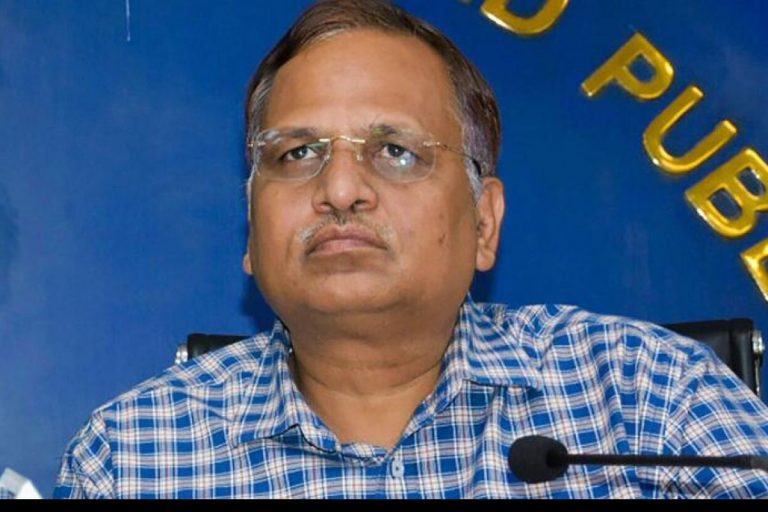
The Enforcement Directorate (ED) notified the trial court on Tuesday that during questioning, Delhi minister and AAP leader Satyendra Jain claimed that he lost his memory owing to the effect of Covid.
According to the Additional Solicitor General (ASG) SV Raju who is appearing on the behalf of ED in court, Satyendra Jain made the assertion that he lost his memory after being faced with papers pertaining to his involvement in trusts that received money from hawala operations.
The AAP minister’s ED detention had already been extended till Monday, June 13. The bail hearing for Jain was set for Tuesday, June 14. The court heard Satyendra Jain’s bail application on Tuesday and reserved its decision until June 18.
In his argument before the Rouse Avenue Court last week, ASG Raju, representing the interests of the ED, stated that Satyendra Jain is a very slow writer. “He Takes about two hours to write one page. His statement has to be taken in his handwriting otherwise he says ‘it’s not my statement’,” ASG Raju said.
On May 30, the ED arrested Satyendra Jain under the provisions of the Prevention of Money Laundering Act. On May 31, the trial court remanded him to the custody of ED. ED raided the residence and other places associated with Aam Aadmi Party leader and Delhi Minister Satyendra Jain on June 6 and 7. Following the raid, the agency confiscated Rs. 2.85 crore in cash and 133 gold coins weighing 1.80 kg in total.
Satyendra Jain was charged with money laundering in August 2017 by the Central Bureau of Investigation (CBI). Based on the FIR made by the Central Bureau of Investigation (CBI), the ED initiated a criminal case against the AAP leader, alleging that Jain could not explain the source of income received by four firms in which he was a stakeholder. From 2010 to 2014, the firms allegedly laundered Rs 16.39 crores in cash.
The Home Ministry authorised the prosecution of Delhi minister Satyendra Jain in matters including disproportionate assets and money laundering in November 2019. Under the PMLA, 2002, the Enforcement Directorate temporarily attached immovable assets worth Rs. 4.81 crore owned by Akinchan Developers Pvt. Ltd, Indo Metal Impex Pvt Ltd, and others in April of this year. The move was taken in connection with the case filed against AAP minister Satyendra Jain, his wife Poonam Jain, and others for disproportionate assets and money laundering.
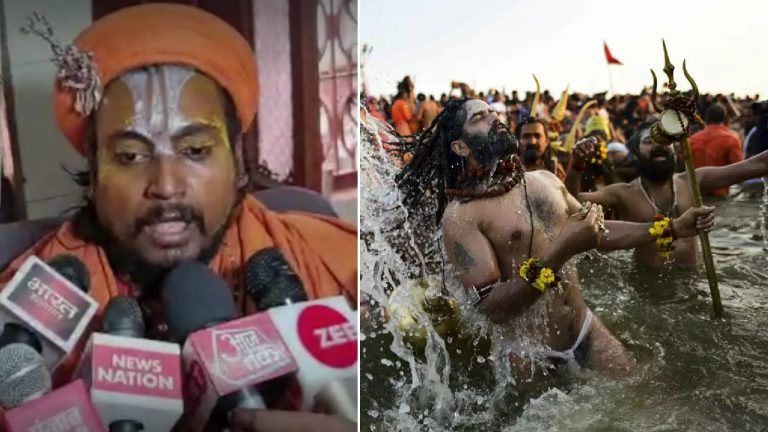
A video of Mahant Balak Das, Chief of the Paatal Puri Math, has gone viral on the internet, in which he can be heard declaring that 18 lakh Naga Sadhus will march to the streets to protect suspended BJP spokeswoman Nupur Sharma if Islamists attempt to harm her. The video has been gaining rounds on the internet fascinating people about the Naga Sadhus.
नागा साधु नुपुर शर्मा के साथ हैं ? कल्पना करिये उस दृष्य” का जब “18 लाख” नागा साधु सडक पर उतरेंगे। और यदि सही आकलन खुद ना कर पाओ तो इतिहास पढ़ लेना pic.twitter.com/BpSeL3510L
The video was shot on June 11, at the Dharma Parishad in Kashi. The Dharma Parishad was hosted in Varanasi’s Sudam Kuti of Har Teerath. Mahant Balak Das, Chief of the Paatal Puri Math, presided over the session. This gathering was attended by the head priests and leaders of several Maths, Peethas, and Akhadas in Kashi, as well as many other Hindu saints and sages.
Mahant Balak Das, while speaking to the reporters, said, “Anarchy is being spread day by day. Now it has reached such an extent that lord Shiva is being made fun of, they are cracking jokes about it. They even drilled it and called it a fountain. And even after this, the people of Sanatan Dharma kept peace.”
“But today it has reached the limit, a daughter of India said what has been written in their Quran, that too after listening to derogatory remarks on Lord Shiva so much. Sanatani people are all peaceful, yet these clerics are calling people from mosques to come and throw stones and spread chaos,” he further said.
Mahant Balak Das said elaborating that Naga Sadhus will be out on the streets to protect Nupur Sharma if things go wrong. “Today our daughter is being threatened with rape! If anything happens to her, then note that this seer community will not remain calm and 18 lakh Naga sadhus will come down on the road, along with the whole saint society will come down on the road and then you can imagine the scene.”
Kashi Dharma Parishad
Several Hindu seers have openly supported Nupur Sharma at the Dharma Parishad in Kashi. They have said unequivocally that those threatening Nupur Sharma should be apprehended and prosecuted. They also condemned the violence that erupted in several parts of the nation during the Friday Namaz on June 10th, 2022. Hindu gurus have warned Islamists that they will also fight in the streets. In all, 16 such resolutions were passed in the Dharma Parishad convened in Kashi on June 10, 2022.
Who are Naga Sadhus?
The Naga Sadhus are Shaivites (Lord Shiva’s devotees) who reside in the Himalayas. The Kumbh Mela is the only time of year when they come down to the plains, making it a very important occasion for them. The Naga Sadhus have distinct characteristics derived from Lord Shiva. They carry tridents topped with human skulls. Their bodies are covered with thick ash, and their heads are adorned with heavy coils of matted hair. Even in the freezing weather, these ascetics stay without clothes.
To avoid the cycle of life and death and to reach salvation, the Naga Sadhus reject the material world and embrace celibacy. Dattatreya is believed to have started the sect of the Naga Sadhus in ancient times, but the date of their inception is unknown. Shankaracharya was the first to initiate the Nagas to defend Sanatan Dharma (Hinduism). Naga Sadhus carry weapons like swords, tridents, and spears and their camps are called ‘chhavni’, like military camps. They hold jousting matches to practice their weapons.
On June 14, Defence Minister Rajnath Singh, along with the chiefs of three armed forces, launched the Agnipath scheme for the recruitment of youth in the armed forces. Those who get enrolled in the armed forces under this scheme would be called Agniveers. The enrollment under the scheme will be open for both men and women for a four-year period, including the training.
During the press conference, Defence Minister said that after the four-year service period, Agniveers will get preference in PSUs, and State Governments’ jobs and announcements for such jobs will be made soon by the respective authorities. The Government has announced the recruitment of 46,000 Agniveers this year.
भारतीय सेनाओ को विश्व की बेहतरीन सेना बनाने की दिशा में आज Cabinet Committee on Security ने एक ऐतिहासिक निर्णय लिया है I आज हम ‘अग्निपथ’ नामक एक transformative योजना ला रहे हैं जो हमारी Armed Forces में transformative changes लाकर उन्हें fully modern और well equipped बनाएगी: RM
— रक्षा मंत्री कार्यालय/ RMO India (@DefenceMinIndia) June 14, 2022
Agnipath scheme would allow the patriotic and motivated youth to serve in the armed forces for a short period of four-year. As per the press release by the Defence Ministry, the scheme has been designed to enable a youthful profile of the Armed forces.
During the press conference, Chief of the Army Staff Manoj Pandey said that while formulating the recruitment structure under the scheme, the strategies followed by different countries were studied. Adding to the fact, Defence Minister said everyone should understand nothing has been copied from the armed forces of other countries, but the recruitment model was studied, and features were modified and adapted as per the needs and requirements of the Indian Armed Forces.
The Ministry added, “This is a major defence policy reform introduced by the Government to usher in a new era in the Human Resource policy of the three Services. The policy, which comes into immediate effect, will hereafter govern the enrolment for the three services.”
Benefits for the recruited under the Agnipath scheme
The recruits under the Agnipath scheme, also known as Agniveers, will get attractive benefits that include a customised monthly package clubbed with risk and hardship allowances as applicable in the three services. After Agniveers complete four-year of service in the armed forces, they will get a one-time ‘SevaNidhi’ package that would comprise their contribution, including accrued interest thereon.
अग्निवीरों के लिए एक अच्छी pay package, 4 साल की सेवा के बाद exit पर Seva Nidhi Package एवं एक liberal ‘Death and disability package’ की भी व्यवस्था की गई है: रक्षा मंत्री
— रक्षा मंत्री कार्यालय/ RMO India (@DefenceMinIndia) June 14, 2022
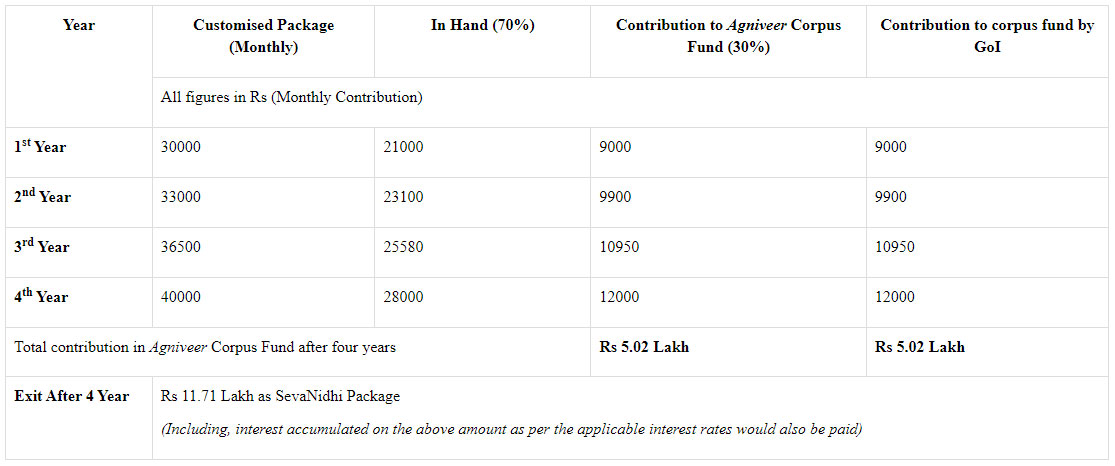
The Government will match the contribution from the accumulated amount of their contribution, including the interest. As per the press release, the contribution made by the recruits will be around Rs 5.02 Lakh, which will be matched by the Government. At the exit, Agniveers will get Rs 11.71 lakh as SevaNidhi fund. It is noteworthy that the amount paid to the Agniveers as SevaNidhi will be exempt from Income Tax.
Sevanidhi breakdown as per govt’s press release. Source: PIB
The Ministry said, “The ‘SevaNidhi’ would aid the Agniveer to pursue his/her future dreams without any financial pressure, which is normally the case for young people from the financially deprived strata of society.” Apart from that, Agniveers will also get a non-contributory Life Insurance Cover of Rs 48 lakh for the duration of their engagement period in the Indian Armed Forces.
इससे economy को भी higher skilled workforce की उपलब्धता होगी जो productivity gain और overall GDP growth में सहायक होगा: रक्षा मंत्री
— रक्षा मंत्री कार्यालय/ RMO India (@DefenceMinIndia) June 14, 2022
During the period of service, the recruits will learn various military skills, including discipline, physical fitness, leadership qualities, courage and patriotism. The Ministry added, “Post this stint of four-year, the Agniveers will be infused into the civil society where they can contribute immensely towards the nation-building process. The skills gained by each Agniveer will be recognised in a certificate to form part of his unique resume.”
Enrollment of Agniveers for JCO and other ranks
Around 25% of the recruited Agniveers will be enrolled in Armed Forces as regular cadres post the four-year service. 100% of candidates can apply on a volunteer basis to enrol in the regular cadre. The Ministry said, “They would be required to serve for a further engagement period of a minimum of 15 years and would be governed by the existing terms and conditions of the service of Junior Commissioned Officers/Other Ranks in Indian Army and their equivalent in Indian Navy and Indian Air Force and that of Non-Combatant enrolled in the Indian Air Force, as amended from time-to-time.”
Upto 25% #Agniveers to be selected as regular cadre based on central, transparent system after four years.
100 % candidates can apply on volunteer basis to enroll in regular cadre.
The Agniveers recruited under the scheme would form a distinct rank in the armed forces. It will be different from the existing ranks.
Post four-year service, they will be offered an opportunity to apply for permanent enrolment in the Armed Forces. These applications will be considered in a centralised manner based on objective criteria, including performance during their four-year engagement period, and up to 25% of each specific batch of Agniveers will be enrolled in the regular cadre of the Armed Forces.
Enrollment of the Agniveers will take place via a centralised online system for all three services with specialised rallies and campus interviews from recognised technical institutes such as Industrial Training Institutes and National Skills Qualifications Framework, among others.
It will be based on an ‘All India All Class’ basis. The eligible age will be between 17.5 years to 21 years. Agniveers have to pass required medical eligibility conditions as per the armed forces as applicable to respective categories/trades.
The educational qualification for Agniveers will remain as in vogue for enrollment in various categories. For example, for entry into General Duty (GD) soldier, the educational qualification is Class 10.
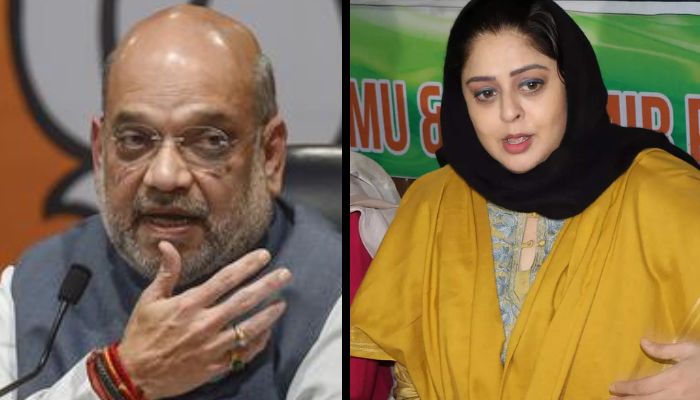
On Monday (June 13), Congress leader Nagma Morarji courted controversy after she tweeted a fake letter attributed to India’s Union Home Minister Amit Shah.
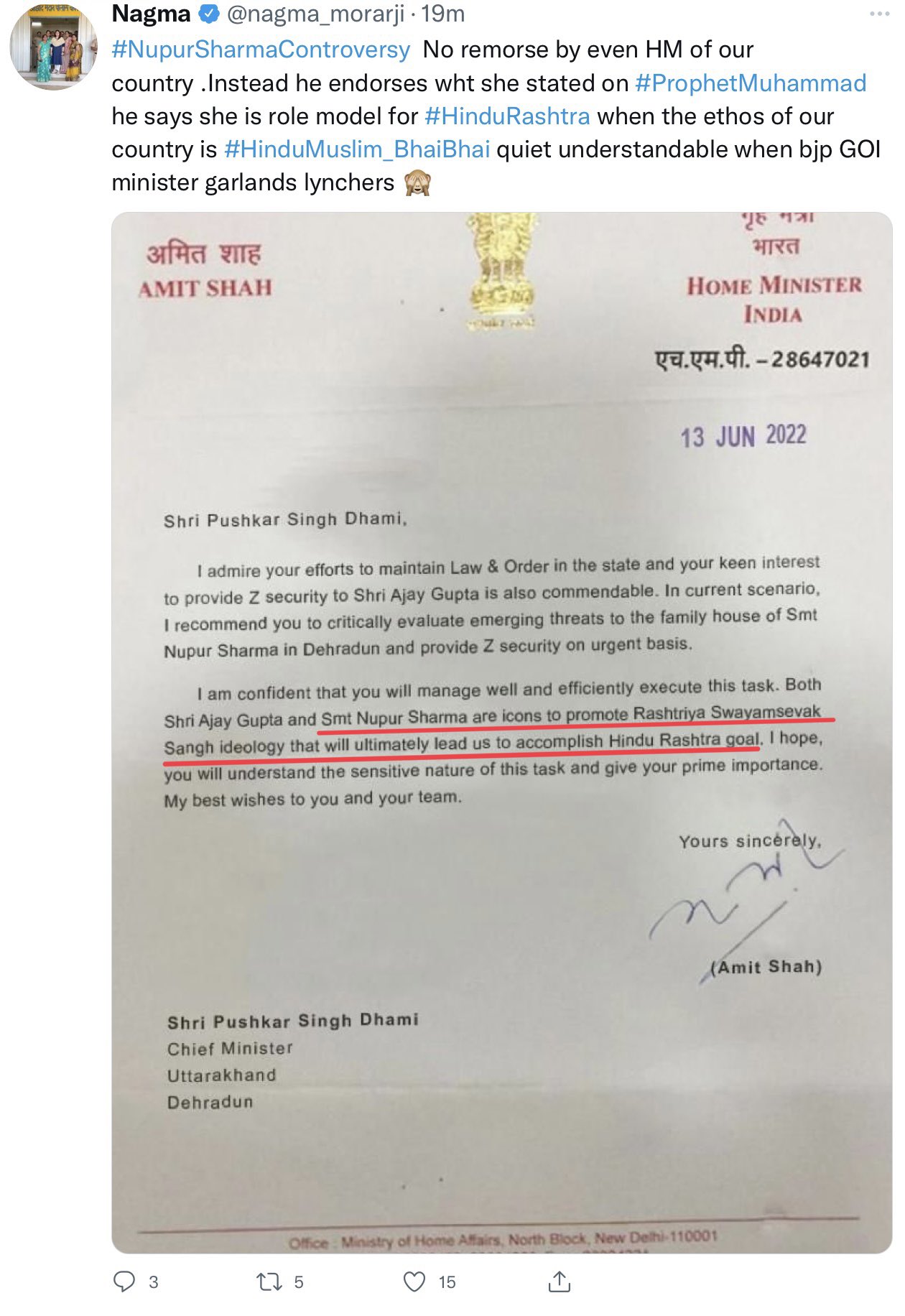
The purported letter directed Uttarkhand Chief Minister Pushkar Singh Dhami to provide Z security to former BJP spokesperson Nupur Sharma on an urgent basis.
“In current scenario, I recommend you to evaluate emerging threats to the family house of Smt Nupur Sharma in Dehradun and provide Z security on urgent basis,” the letter said.
Screengrab of the letter tweeted by Nagma Morarji
Furthermore, the alleged letter identified Nupur Sharma as an RSS ideologue who could help achieve the goal of a Hindu Rashtra.
“Both Shri Ajay Gupta and Smt Nupur Sharma are icons to promote Rashtriya Swayamsevak Sangh ideology that will ultimately lead us to accomplish Hindu Rashtra goal,” the letter claimed.
While tweeting a copy of the letter, Nagma Moraraji wrote, “No remorse by even the Home Minister of our country. Instead, he endorses what she stated on Prophet Muhammad. He says she is a role model for Hindu Rashtra when the ethos of our country is Hindu-Muslim Bhai Bhai. Quite understandable when BJP Minister garlands lynchers.”
Nagma Morarji deletes fake letter on being caught
Journalist Swati Goel Sharma was quick to call out her bluff. She tweeted, “This is how braindead former Bollywood professional and now Congress leader Nagma Morarji is. She is tweeting a letter in name of Amit Shah that has fake written all over it.”
On being pointed out that the letter is fake, Morarji quickly deleted her tweet without bothering to tender an apology.
However, this is not the first time that the Congress leader had tweeted a photoshopped image to peddle her agenda. In April 2019, she shared a morphed picture of Sambit Patra to claim that the promise of LPG stoves made by PM Modi was hollow.
Nagma Morarji tweeted a picture wherein Patra was seen having food on the roadside with a homeless couple. The image showed a woman cooling on a chulha instead of an LPG stove. On investigation, Opindia found that the image was in fact a merger of two different pictures.
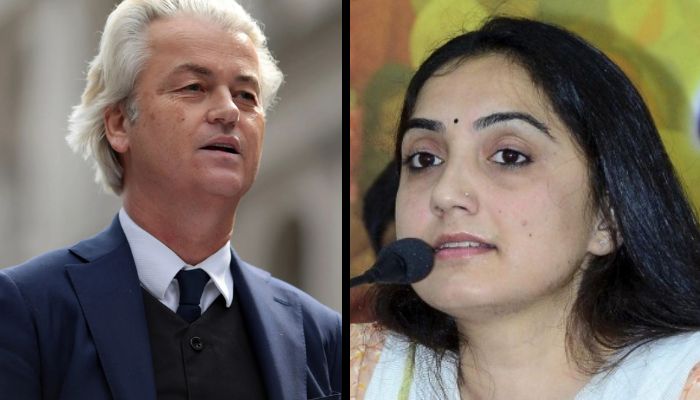
Days after Geert Wilders extended his support to ex-BJP spokesperson Nupur Sharma, Islamists have been trolling the Dutch legislator to speak against Hinduism.
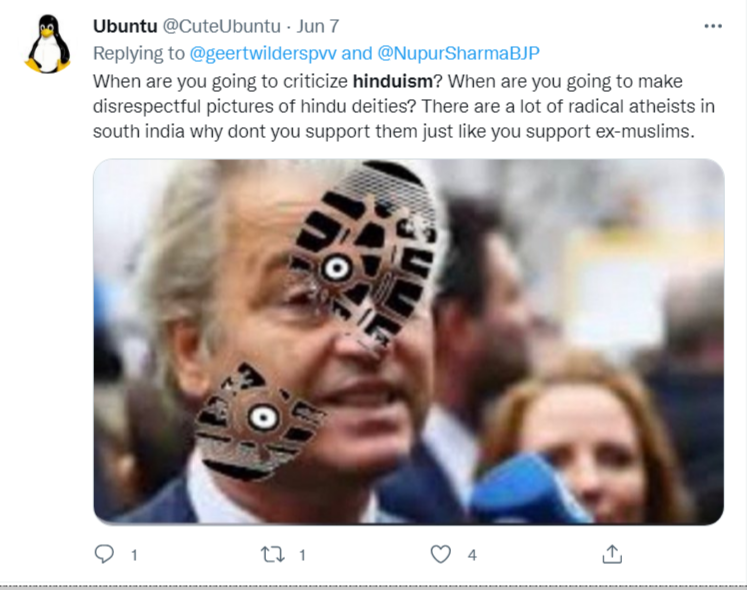
“When are you going to criticise Hinduism? When are you going to make disrespectful pictures of Hindu deities? There are a lot of radical atheists in South India. Why don’t you support them just like you support ex-Muslims?” wrote one Ubuntu.
Screengrab of the tweet
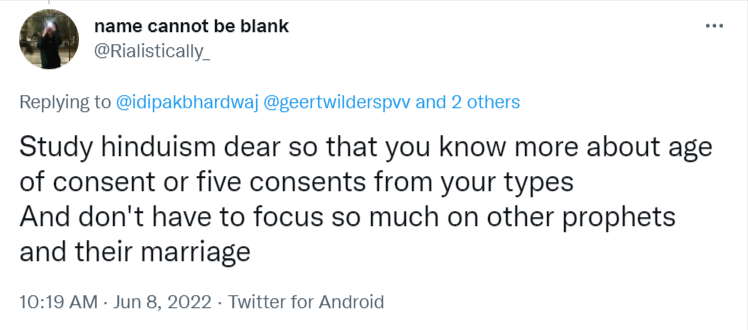
One Islamist asked the Dutch politician to study Hinduism to know about the age of consent. “And don’t have to focus so much on other Prophets and their marriage,” he added.
Screengrab of the tweet
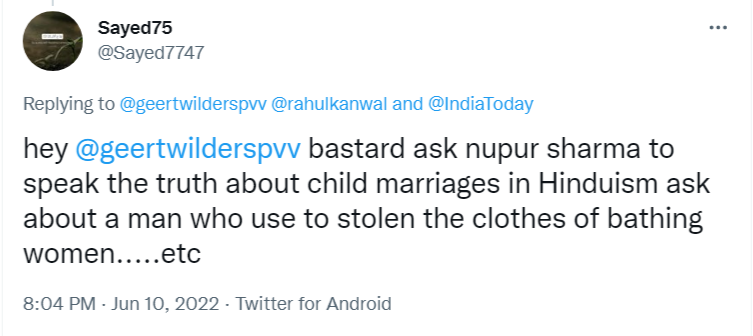
One Islamist named Sayed wrote, “Hey Geert Wilders, bast*rd ask Nupur Sharma to speak the truth about child marriages in Hinduism. Ask about a man who use to steal the clothes of bathing women…etc.”
Screengrab of the tweet
Befitting reply by Geert Wilders
On Tuesday (May 14), the Dutch politician tweeted, “Cultural relativism is a misleading concept. People are equal but cultures are not. A culture based on humanity and freedom is always better than a culture based on intolerance and submission.”
He further emphasised, “Therefore, I respect Hinduism a million times more than Islam. #IsupportNupurSharma.”
Cultural relativism is a misleading concept. People are equal but cultures are not. A culture based on humanity and freedom is always better than a culture based on intolerance and submission. Therefore I respect Hinduism a million times more than Islam. #IsupportNupurSharma
Earlier on Sunday (June 12), he had vowed to help the former BJP spokesperson in any way possible.
“The police registered a FIR on charges of hurting religious feelings, promoting enmity and causing public mischief against Sharma. This is outrageous. She did nothing wrong. If I can help her in any possible way, I will,” informed Geert Wilders.
“The police registered a FIR on charges of hurting religious feelings, promoting enmity and causing public mischief against Sharma.”
He had also exposed the hypocritical treatment meted out to people, in the name of secularism, for committing blasphemy.
“I am not Indian nor a Hindu. But I know one thing. Secularism should not mean that demeaning Hindu Gods is justified and telling the truth about Muhammad is not. So when Nupur Sharma reacted to someone demeaning Hindu Gods it was totally justified,” he wrote.
I am not Indian nor a Hindu.
But I know one thing.
Secularism should not mean that demeaning Hindu Gods is justified and telling the truth about Muhammad is not.
It must be mentioned that the Dutch legislator had received multiple assassination threats for supporting Nupur Sharma. He had shared screenshots of threats sent by Islamists on social media.
One of the threats read, “InshaAllah, a day will come when I will take off your head with my dagger and hang it on the minaret of Pakistan, then we will raise a slogan. Mumtaz Qadri has passed away but the gun is still there. You have no more days.”
Another one read, “You Son of a bitch you will be killed soon. We will make you a sign of fear for people like you till the end of times..” Wilders has maintained that he receives death threats on a daily basis from Pakistani and Turkish Muslims who wish to kill in the name of Prophet Muhammad.
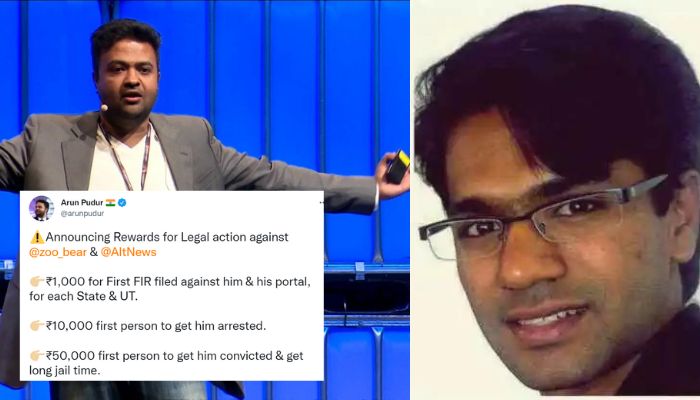
Indian-origin billionaire businessman Arun Pudur, who is known for speaking up in support of Dharmic causes on Twitter, has taken up a battle against Alt-News co-founder Mohammed Zubair. Pudur has announced a host of rewards for those who are willing to take ‘legal action’ against Zubair over his Hinduphobic posts.
Pudur, who runs a software firm Celframe Technology Group of Companies, took to Twitter to make the announcement. According to the rewards, the person who will get Zubair convicted of Hinduphobia with a long-term jail will be awarded ₹50,000/- from Pudur.
Those who get a jail term for Zubair through legal action get ₹10,000/- and ₹1,000/- for the very first FIR filed in every Indian state and Union Territory against Mohammed Zubair and his ‘fact-checking’ portal Alt News.
This came after Mohammed Zubair deleted his Facebook account – perhaps to scrub it clean of its controversial content against Hinduism and Hindu Gods. Zubair, who has been a serial offender of Hinduphobia according to many netizens, has been caught in an ire after his old tweets mocking Hinduism and Hindu Gods have surfaced online in the wake of the Nupur Sharma controversy.
According to the announcement made by Arun Pudur, the action against Mohammed Zubair must be legal. Those interested in participating should message the official documents against the Alt-News cofounder to the businessman privately. Talking about the announcement, Pudur writes, “Zubair has long abused, lied and manipulated Media. It is time he serves the time that fits the crime. Too many got hurt, riots and deaths. This has to stop!”
the time that fits the crime.
Too many got hurt, riots and deaths. This has to stop!
Malaysia-based Pudur has decided to take serious cognisance of Mohammed Zubair’s offences, especially in light of the derogatory social media posts made by him against Hinduism. After Zubair’s Facebook account was taken down, people are unearthing his old tweets mocking Hindu Gods.
Arrest this idiot as he is mocking our beloved Bajarang Bali !! @HMOIndia@AmitShah plz take against this moron for this post !! He is openly mocking Hindu deities!! Thank you ? https://t.co/9DXcMg2Xac
— Shiv Dayal Sharma (@ShivDay84342914) June 14, 2022
Lord Hanuman maintained celibacy through out his presence during Treta yuga-Dwapara Yuga and continues to be even in this Kali Yuga.
Nupur Sharma has already pointed out how the ‘fact-checker’ has instigated blasphemy threats against her by sharing cropped versions of her comments on Prophet Mohammed. It turned out that the AltNews co-founder himself has a history of making derogatory posts about Hinduism and Hindu Gods.
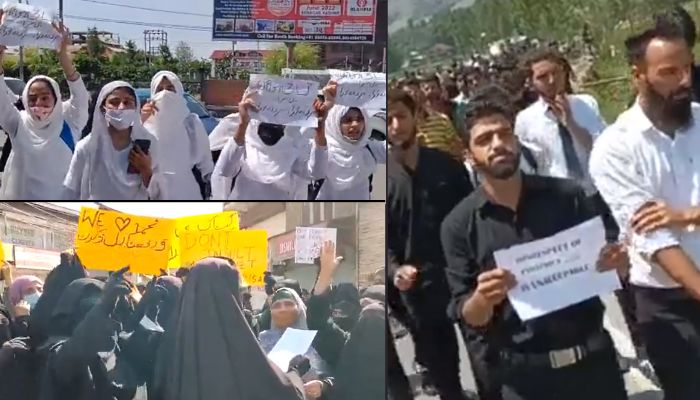
“We want Nupur Sharma beheaded’, ‘Sar tan se Juda’, the Islamist cries targeting suspended BJP spokesperson Nupur Sharma have now emerged in the Kashmir valley too. Videos of Kashmiri Youth and women have surfaced on the Internet demanding gory punishments for Sharma over her alleged ‘blasphemous’ remarks.
Amid continued death and rape threats publically issued to Nupur Sharma globally, the same has come from Jammu and Kashmir where local youth could be seen giving Islamist slogans and chants calling for the beheading of the politician. Times Now Executive Editor Padmaja Joshi shared a video on Twitter in which Hijab-clad college-going girls could be seen giving ‘Sar tan se Juda‘ chants in a protest rally.
They were seen raising slogans demanding Islamic rule and beheading of anyone who insults Islam.
Even little girls. This purported protest against Nupur Sharma, is from Srinagar, asking for ‘Nizam e Mustafa’ and prescribing beheading as punishment. pic.twitter.com/kasRJsgzQu
The rally was taken out by some teenage girls in Srinagar demanding the beheading of ‘blasphemers’ and declaring that they want Islamic rule.
In a video shared by Swarajya journalist Swati Goel Sharma, Kashmiri male students could be seen giving similar disturbing slogans against Nupur Sharma. “Bolo, Bolo kya chahiye, Gustakh-e-Nabi ka Sar chahiye!” (Tell us, what do you want – We want the head of the one who insulted the Prophet) could be heard from the men protesting against Nupur Sharma.
The brutal campaign launched by Islamists against Nupur Sharma, the former BJP spokesperson is only becoming more intense with every passing day. After the Jumma Namaz on Friday, June 10, radical Islamists wreaked large-scale havoc in states like Uttar Pradesh, Jharkhand, Telangana, Maharashtra, Delhi, West Bengal and Uttarakhand.