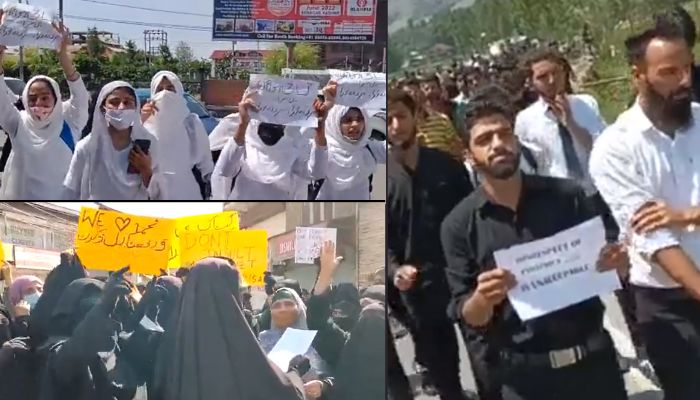
“We want Nupur Sharma beheaded’, ‘Sar tan se Juda’, the Islamist cries targeting suspended BJP spokesperson Nupur Sharma have now emerged in the Kashmir valley too. Videos of Kashmiri Youth and women have surfaced on the Internet demanding gory punishments for Sharma over her alleged ‘blasphemous’ remarks.
Amid continued death and rape threats publically issued to Nupur Sharma globally, the same has come from Jammu and Kashmir where local youth could be seen giving Islamist slogans and chants calling for the beheading of the politician. Times Now Executive Editor Padmaja Joshi shared a video on Twitter in which Hijab-clad college-going girls could be seen giving ‘Sar tan se Juda‘ chants in a protest rally.
They were seen raising slogans demanding Islamic rule and beheading of anyone who insults Islam.
Even little girls. This purported protest against Nupur Sharma, is from Srinagar, asking for ‘Nizam e Mustafa’ and prescribing beheading as punishment. pic.twitter.com/kasRJsgzQu
The rally was taken out by some teenage girls in Srinagar demanding the beheading of ‘blasphemers’ and declaring that they want Islamic rule.
In a video shared by Swarajya journalist Swati Goel Sharma, Kashmiri male students could be seen giving similar disturbing slogans against Nupur Sharma. “Bolo, Bolo kya chahiye, Gustakh-e-Nabi ka Sar chahiye!” (Tell us, what do you want – We want the head of the one who insulted the Prophet) could be heard from the men protesting against Nupur Sharma.
The brutal campaign launched by Islamists against Nupur Sharma, the former BJP spokesperson is only becoming more intense with every passing day. After the Jumma Namaz on Friday, June 10, radical Islamists wreaked large-scale havoc in states like Uttar Pradesh, Jharkhand, Telangana, Maharashtra, Delhi, West Bengal and Uttarakhand.
Netizens on Twitter are dredging up old tweets of AltNews co-founder Mohammed Zubair after a social media user on Monday highlighted how the ‘fact-checker’ who instigated the blasphemy threats against Nupur Sharma has a history of making derogatory posts over Hinduism and Hindu Gods.
After being exposed for his Hinduphobic posts, Zubair quickly pulled down his Facebook account, perhaps to scrub it clean of its controversial content. However, social media users pointed out how Zubair has been a serial offender, and his offences are not restricted to Facebook alone but extend well into the Twitter realm.
A raft of social media users dug up old tweets from the AltNews co-founder where he made uncharitable comments on Hindu beliefs and made Hindu Gods the object of his ridicule. They have demanded the arrest of AltNews co-founder who had recently triggered a barrage of blasphemy threats against Nupur Sharma for her comments on Prophet Muhammad derived from authentic Islamic Hadiths.
Social media users dredge up old tweets of Mohammed Zubair mocking Hinduism and Hindu Gods
For instance, in 2018, Zubair tweeted what appeared like a photoshopped picture of a hotel to insinuate that ‘Honeymoon Hotel’ had changed to ‘Hanuman Hotel’ after 2014, the year when PM Modi came to power at the centre.
Lord Hanuman maintained celibacy through out his presence during Treta yuga-Dwapara Yuga and continues to be even in this Kali Yuga.
In yet another tweet, Zubair mocked Lord Hanuman in his bid to take a swipe at the BJP.
Arrest this idiot as he is mocking our beloved Bajarang Bali !! @HMOIndia@AmitShah plz take against this moron for this post !! He is openly mocking Hindu deities!! Thank you ? https://t.co/9DXcMg2Xac
— Shiv Dayal Sharma (@ShivDay84342914) June 14, 2022
In a tweet from 2018, Zubair mocked Hindu scriptures by using a photoshopped picture to depict Mahabharata’s Sanjay showing a “Facebook live video” of the Kurukshetra war to Dhritrashtra.
Take a look at Hιnduphobιc posts done by @zoo_bear co-founder of @AltNews, all these posts hurt the religious sentiments of Hindus and this is just an iota of his thoughts(Which he forgot to delete).
Days after Mohammed Zubair dog whistles Islamists over alleged blasphemy against Prophet Muhammad, the Hinduphobic posts from ‘fact-checker’ surface online
On Monday, days after India witnessed violent protests that saw Islamists running riot, indulging in violence over the alleged insult of Prophet Muhammad, Twitter user The Hawk Eye (@thehawkeye) shared a collage of past tweets and posts by Mohammed Zubair mocking Hindu Gods and beliefs.
In one of the tweets shared by The Hawk Eye, Zubair is seen mocking Shivling and comparing it with the top view of the Vatican City. He said the post comparing Shivling with the Vatican City inspired him to come up with a parody Facebook page ‘Unofficial: Subramanian Swamy’ in 2014.
Apparently, one of the posts on the Facebook page ‘Unofficial Mohammed Zubair‘ mocks Arun Govil to take a swipe at Lord Ram, suggesting that ISRO must consult the actor because he would know more about the rocketry.
Another post by ‘Unofficial Mohammed Zubair’ shows an aeroplane under the water with the caption: “Breaking: Underwater Pushpak Vimana used by Raavan 5000 years found in the Indian Ocean.”
Besides ridiculing Hindu Gods, Zubair has also poked fun at Hindu beliefs and took a dig at Sanskrit, regarded as one of the most important languages of Hinduism and the means of communication by the Hindu Gods.
As his Hinduphobic posts started getting traction, with netizens sharing screenshots to highlight how Zubair has been moving and hurting the sentiments of Hindus, the AltNews co-founder quietly pulled down his Facebook page.
A horrifying act of animal cruelty has come to light in Uttar Pradesh’s Ayodhya district. According to media reports, Shahabuddin, a native of Shivkar village, has been arrested for raping a cow in broad daylight. He was noticed by someone from the village, who recorded the entire incident, leading to his arrest.
Two videos of the crime have surfaced on social media, showing Shahabuddin indulging in the dastardly act. The incident occurred on June 7, when a bystander recorded Shahabuddin during the crime. The video was subsequently reported to the police by Hariom Singh, a resident of Sarai Khargi. Following the complaint, the police arrested Shahabuddin on Friday. A case has been filed against the accused under Section 377 of the Indian Penal Code for having unnatural intercourse with an animal. The accused is currently in police custody.
According to Sumit Srivastava, Inspector of Kotwali Bikapur Police Station, the accused has given his statement and confessed to the crime. He said, “The accused youth has given a statement. He confessed to the rape. After that, he was arrested and presented in the local court. Now it is being ascertained why the accused committed this crime, is he mentally weak or is there something else. It is also being ascertained whether he has done such act in the past.”
A friend of mine and I got into a slightly heated debate last night over the recent ‘unpleasant incident’ where ex-BJP spokesperson Nupur Sharma’s comments on Prophet Muhammad in a television debate ‘hurt religious feelings’ of Muslims and triggered riots where calls for her beheading, hanging publicly were made.
“Do you think what she did was right?” he asked. I said she cited the Islamic scriptures. What she said is written in their holy books. “But what was the need?” he asked. It got me thinking. I would have thought the same and reacted in similar fashion a few years back. Having brought up with ‘secularised education’ where Mughals are hailed as some sort of brave men who ‘gifted’ India the Taj Mahal, we were deprived of the actual history where Hindu temples were razed down and the atrocities inflicted on us because of our faith. The forced religious conversion, a menace that plagues India even today, was enforced by the ones who ruled us. Our school books never really taught us that. And most are so brainwashed that they refuse to see reality of forced religious conversion and dismiss it as imagination of ‘Hindutva’
So I don’t quite blame him. And the 80% Indians who think Nupur shouldn’t have said things (which, I must reiterate, is in the Islamic holy scriptures). But even if whatever she said upset you, how is it justified to call for her beheading? A maulana in Kashmir threatened to behead Nupur such that her head would be at one place, her torso elsewhere. In a viral video, little Muslim kids who have not even attained puberty yet are urinating on picture of Nupur while showing their middle finger.
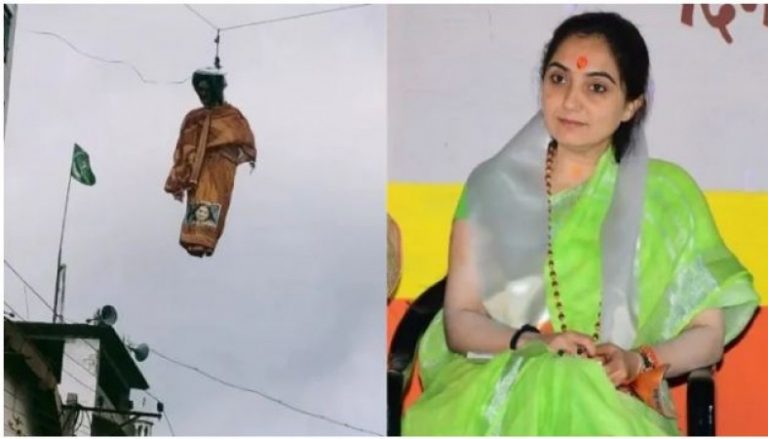
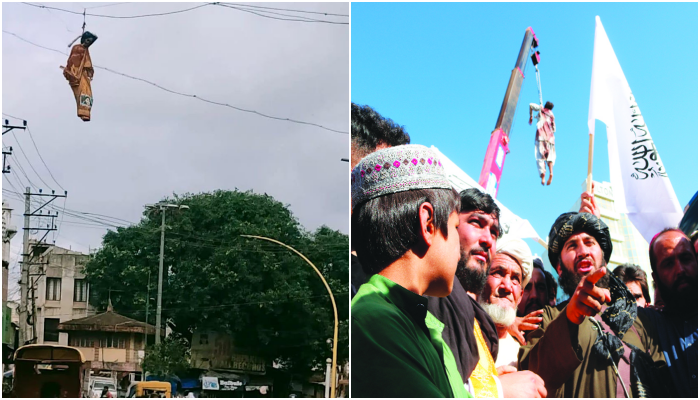
Protests have erupted across India in Uttar Pradesh, Karnataka, Gujarat, Delhi and so many places on two consecutive Fridays after the Jumma Namaz where rioting Muslim mobs have pelted stones while protesting against Nupur Sharma. All this, even after Sharma has withdrawn her statement and the BJP has suspended her. At a mosque outside Belgavi in Karnataka, an effigy of Nupur was hanging, in an apparent threat to the fate she and anyone else who does the ‘gustakhi’ deserve.
You now who else does it? The Taliban.
(L), Nupur Sharma’s effigy hanged in Karnataka, (R), Taliban hang corpses from cranes in Herat, images via ANI and Pioneer
Taliban, as soon as it returned to power in August 2021, in gross violation of human rights, Taliban unleashed atrocities on dissenters and people were killed and their corpses were hung from cranes for public viewing. What Taliban did yesterday, some in India are demanding today.
How is this all okay? If what Nupur said was ‘wrong’, is all this in response to it justified?
We are all conditioned by our ‘secular’ upbringing that we refuse to see that the rioting in name of blasphemy or calling for someone’s beheading for same is a bigger crime than actually citing one’s religious scriptures which they decided is blasphemy because perhaps they just felt like. It is so deeply ingrained in our minds that while we all speak about freedom of speech, in front of a rioting mob, we end up blaming the victim for ‘triggering’ them by ‘hurting their religious sentiments’.
When Hindus feel offended that the Shivling found inside the wuzukhana of disputed Gyanvapi structure is referred to as ‘fountain’ and jokes are cracked, many Hindus themselves accuse them of being ‘too sensitive’. “My faith is not that weak that it can’t take a joke,” they would say to justify how Hindus should not feel offended at the idea that those who offered namaz at the disputed structure were washing their dirty hands and feet in the wuzukhana where the Shivling was found. That they knew and they still did it. The same people would then blame Nupur for her comments for triggering riots.
What is good for the goose should be good for the gander. Just because Hindus don’t take to street power and don’t run riots or give calls for beheading those who mock our faith, it is they who must be mindful of not hurting others’ religious feelings. Because the other side knows how to play victim and get away with it because of the ummah.
But what is the proof it is the Shivling? “You can’t go about calling every stone a Shivling,” my friend said. Fair. But the fact that Aurangzeb demolished the Kashi Vishwanath temple, the evidence of which is abundant, is ignored. ‘So now what?’ Well, now we reclaim our history. We reclaim our temples.
धर्मो रक्षति रक्षितः – The Dharma protects those who protect it.
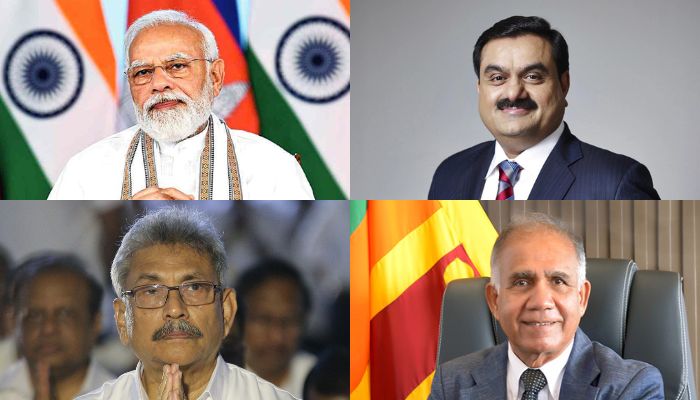
In Colombo, MMC Ferdinando, the chairman of Ceylon Electricity Board (CEB) has resigned from his post days after claiming that Prime Minister Narendra Modi allegedly pitched for The Adani Group over a wind power project in the country before President Gotabaya Rajapaksa. After taking back his statement earlier in the week, Ferdinando resigned from the state-run electricity company on Monday.
During the meeting of the Committee on Public Enterprises (COPE), Ferdinando claimed that President Rajapaksa had revealed to him that a wind power project in Mannar, Northern Province was awarded to the Adani Group after Indian PM Modi urged him to do so. Categorically denying his claims, Rajapaksa had cleared the air tweeting, “Regarding a statement made by the CEB Chairman at a COPE committee hearing regarding the award of a Wind Power Project in Mannar, I categorically deny authorization to award this project to any specific person or entity. I trust responsible communication in this regard will follow.”
Re a statement made by the #lka CEB Chairman at a COPE committee hearing regarding the award of a Wind Power Project in Mannar, I categorically deny authorisation to award this project to any specific person or entity. I trust responsible communication in this regard will follow.
According to the Times of India, Sri Lanka’s Energy Minister Kanchana Wijesekara has accepted the resignation letter of MMC Ferdinando. Notably, on Sunday the official had written to the COPE chair in Parliament that his claims were wrong and he had become “emotional” due to some questions that made him uneasy. He also stated that this retraction was not under influence of either Rajapaksa or any Indian High Commission officer.
A controversy was hatched in India after Leftist media portals like The Wire disseminated the officer’s withdrawn claims as facts. Congress leader Rahul Gandhi was also quick to target the BJP and Prime Minister Modi over the Wire piece.
The Adani Group has won the tender bid to build a 1,000 MW wind power facility near Mannar worth more than USD 1 billion. Adani Green Energy, a subsidiary of the Adani Group, had presented a proposal to the Sri Lanka Board of Investment (BOI) and the Ceylon Electricity Board (CEB). Around December last year, the agreement was approved.
The Hindu outfit Vishwa Hindu Parishad (VHP) released a press statement on June 14 in which it strongly condemned the rising Islamic violence in India. The press release came days after the June 10th incidents of violence, when Islamist mobs ran riot in numerous parts of the country following the Friday Namaz, to protest against suspended BJP spokesperson Nupur Sharma.
— Vishva Hindu Parishad -VHP (@VHPDigital) June 14, 2022
The Hindu outfit has warned that the members of the Bajrang Dal, the youth wing of VHP will take to the streets on June 16 to protest against the rising Islamic intolerance and violence in the country.
It said that the Jihadi fundamentalists have continued to launch fatal attacks on Hindus. They have vandalised and burnt Hindu homes. To oppose the rising Jihadist activities in the country, the Bajrang Dal will deliver a memorandum to the President of India by organising a sit-in in district headquarters across the country on Thursday, June 16, 2022.
Milind Parande, the Union General Secretary of the Vishwa Hindu Parishad, urged that rigorous vigilance should be maintained around mosques where Islamist crowds and rioters emerged after Friday prayers on June 10. Those who instigated the mob should be arrested as soon as possible.
Without naming anyone in particular, Parande urged that the safety of individuals who are being threatened by these radical Islamists be guaranteed and that those who have started this intimidation campaign be detained and criminal proceedings filed against them. Those who are involved in the violence and those who have a jihadi mindset should be brought to books. Mosques and organisations like Jamiat-e-Ulema-e-Hind, which provide food and water to the rioters, should be shut down immediately, he added.
Mobs run rampage in several cities after Jumma Namaz over Nupur Sharma’s Prophet Muhammad remark
The press statement came after the June 10 incidents of violence reported from various parts of the country. After the Friday Namaz, Islamist mobs ran riot in numerous parts of the country to protest against ex-BJP spokesperson Nupur Sharma. In some places, the enraged mob set fire to Nupur Sharma’s effigy and posters, while in others, stones were thrown, injuring cops and citizens, and causing property damage.
The vile campaign against the former BJP spokesperson began after Alt News co-founder Mohammed Zubair shared her video with a commentary on Prophet Mohammad to encourage trolls to attack her. In the last week of May 2022, during a news debate, Nupur Sharma asked what if she makes offensive remarks about Islam the way people were making offensive remarks about Shivling and Hinduism.
Since then, the domestic and foreign Islamists have been baying for the blood of the former BJP spokesperson. Multiple death and beheading threats have come her way. A number of FIRs have also been filed against her in different states of India. Despite her suspension from the BJP over her said derogatory and subsequent apology, Islamists have continued to target her with threats. There are multiple bounties on her head as well now ranging from Rs 20 lakhs to 1 Crore.
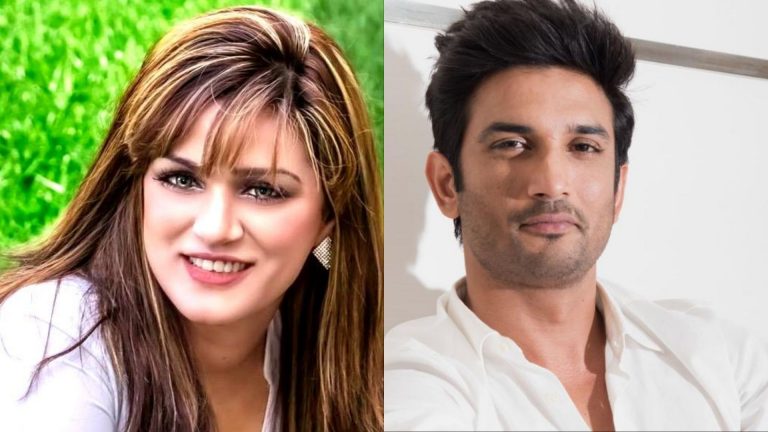
Today (June 14), on the second death anniversary of actor Sushant Singh Rajput, his sister Shweta Singh Kirti took to Instagram to pen an emotional note for her deceased brother. The actor was found dead under mysterious circumstances at his apartment in Bandra, Mumbai on June 14, 2020.
His untimely death was mourned by millions of his fans and supporters around the world. It triggered a massive debate on Bollywood’s entrenched drug culture and toxicity of nepotism and power play, which fans blamed for the actor’s untimely death.
Paying her heartfelt tribute to her beloved brother, Shweta Singh Kirti urged late Sushant Singh Rajput’s fans to light a lamp today and perform a selfless action to bring a smile to someone’s face.
In her post, where Shweta Singh Kirti used an old picture of the 34-year-old actor holding the hand of one of his young fans, she wrote, “It has been 2 years since you left your mortal abode, Bhai, but you have become immortal because of the values you stood for. Kindness, compassion and love for all were your virtues. You wanted to do so much for so many. We shall continue to model after your wonderful virtues and ideals in your honor. Bhai, you have changed the world for the better and will continue to do so even in your absence,” she said.
“Let us all light a lamp today and perform a selfless action to bring a smile to someone’s face,” she added.
“Ghar se masjid hain bahut door chalo yuun karle, kisi rote hue bachche ko hasaya jae. #ForeverSushant”, she ended her post with a poem by Muqtida Hasan Nida Fazli, commonly known as Nida Fazli, roughly translated as, “since the mosque is too far away from home, let’s make a crying child laugh for a while.”
Sushant Singh Rajput’s death
On June 14, 2020, actor Sushant Singh Rajput was found dead at his apartment. He allegedly committed suicide, according to the Mumbai Police. However, the case took a lot of twists and turns over time and eventually, the case was handed over to the Central Bureau of Investigation. The investigation agency had issued a statement some time back in which they said that the investigation was underway and the death case was being probed from all angles.
The untimely death of the actor had, however, opened a pandora’s box for Bollywood, with a host of well-known actors and filmmakers opening up about the hierarchy in Bollywood or the ‘privilege club’ and how hard it is for an outsider to be successful in the industry. Moreover, the actor’s death also turned the spotlight on the drug culture prevailing in Bollywood, with NCB rounding up several Bollywood celebrities who were accused of consuming and procuring drugs.
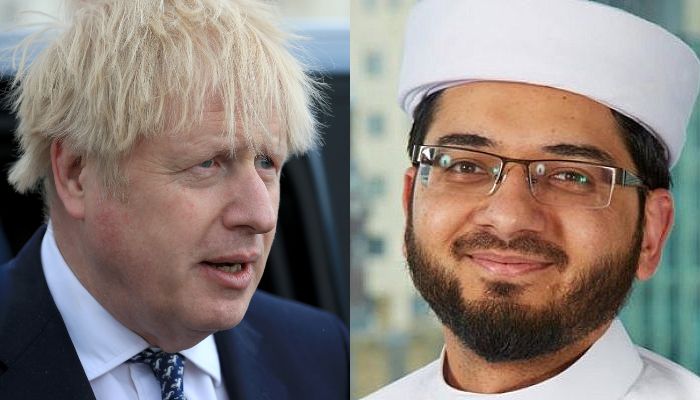
On Saturday (June 11), the UK Department for Levelling Up, Housing and Communities removed an Islamic cleric named Qari Asim from the position of Deputy Chair of the government’s Anti-Muslim Hatred Working Group.
Reportedly, he was appointed as an Independent Advisor to the Government of the United Kingdom in July 2019. The decision to remove him came against the backdrop of the cleric’s call to boycott the film ‘The Lady of Heaven,’ which is based on the life of Prophet Muhammad’s daughter Fathima.
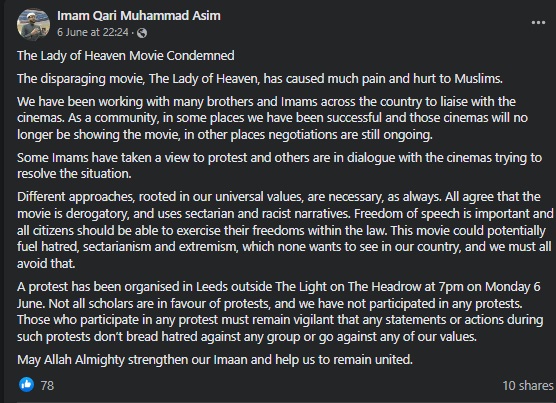
In a Facebook post on June 6, he had written, “The disparaging movie, The Lady of Heaven, has caused much pain and hurt to Muslims. We have been working with many brothers and Imams across the country to liaise with the cinemas.”
Screengrab of the Facebook post of Qari Asim
“As a community, in some places, we have been successful and those cinemas will no longer be showing the movie, in other places negotiations are still ongoing. Some Imams have taken a view to protest and others are in dialogue with the cinemas trying to resolve the situation,” he had added.
“All agree that the movie is derogatory, and uses sectarian and racist narratives. Freedom of speech is important and all citizens should be able to exercise their freedoms within the law,” the cleric had opined.
Imam Qari Asim pointed out that the movie had the potential to fuel extremism, sectarianism and hatred in the United Kingdom. He also called upon Muslim protestors to stay united and remain vigilant.
UK government fires Qari Asim
In a letter [pdf] written on June 11, the UK Department for Levelling Up, Housing and Communities stated that it cannot continue its association with Imam Qari Asim due to his campaign against artistic freedom.
“We write now because we have no option but to withdraw the appointment and end your roles with Government with immediate effect. Your recent support for a campaign to limit free expression- a campaign which has itself encouraged communal tensions – means it is no longer appropriate for you to continue your work with Government in roles designed to promote community harmony, ” it said.
“You have encouraged an ongoing campaign to prevent cinemas from screening the film “Lady of Heaven”, a clear effort to restrict artistic expression, and the campaign you have supported has led to street protests which have fomented religious hatred,” the letter emphasised.
EXCLUSIVE: Qari Asim has been sacked by the government for campaigning to limit free speech which is incompatible with the role of government advisor. pic.twitter.com/icfQY8LrQW
The Department noted that he was responsible for mobilising protestors in Leeds by advertising a demonstration on his Facebook post. “This clear involvement in a campaign to limit free expression is incompatible with the role of a government adviser,” it added.
The United Kingdom government accused Qari Azim of encouraging sectarian chanting and anti-Shia hatred outside cinema halls. Although he was appointed as an adviser to counter ‘anti-Muslim hatred’, the government found him complicit in enabling such behaviours.
“Your actions are incompatible with the role of a government adviser on anti-Muslim hatred. This country is proud of its democratic values and freedoms, which include tolerance, freedom of expression, and community,” the letter concluded.
Islamic cleric justifies his actions
A day later on Sunday (June 12), Qari Asim wrote to Michael Gove, who serves as the Secretary of State for Levelling Upm Housing and Communities.
He claimed, “I have been contributing to the Government’s Anti-Muslim Hatred Working Group for over 10 years in a voluntary capacity and have served conscientiously in order to minimise anti-Muslim hatred in our country.”
He accused the government of creating hurdles in his work. “In the last 3 years, despite many attempts to make progress with my role, neither has a second adviser been appointed nor have terms of reference been issued to commence the process for establishing a definition which captures anti-Muslim prejudice,” he alleged.
“Due to this apparent lack of political will at the very top level of Government, I was not given any resources to undertake the work that my role demanded. This has fuelled perceptions that the current Government is not serious in tackling anti-Muslim prejudice,” he added.
My response to the Department of Levelling Up, Housing & Communities’ recent letter removing me as Government’s Adviser to define #Islamophobia ?? pic.twitter.com/EcdoWiVXwZ
In his defence, he claimed that he did not personally organise any protests outside any cinema halls against ‘The Lady of Heaven’ film. He also said that he believed in dialogue but supported people’s democratic right to protest.
“I am of the firm opinion that the challenge to and critique of the “Lady of Heaven” film is part of free speech, though violence and intimidation can never be. My concern has always been that due to the way in which this film was made, it risked fuelling extremism and tension in communities that would undermine cohesion in British society,” he remarked.
Qari Asim said that his concerns found acceptance among both Shia and Sunni scholars. “In the spirit of free speech, while I continue to be concerned about the divisive nature of this film, I remain fully supportive of open public dialogue and scholarly debate around historical narratives between Sunni and Shia perspectives that do not fuel hatred or division in communities,” his letter read.
“I did unequivocally condemn anti-Shia hatred displayed during the protests in Leeds, that came to my attention, to my own congregation. As soon as I learnt about the anti-Shia slogans being chanted during the Leeds’ protest, I publicly and firmly condemned such hateful rhetoric in our Makkah Mosque in Leeds,” he said.
The Islamic cleric stated, “I also reached out to the Shia mosque in Leeds to show our solidarity with the Shia community. I have spent a lifetime working to promote both interfaith and intra-faith inclusivity, peace and harmony. I am on record for challenging and condemning anti-Shia hatred and violence in this country and abroad.”
“I therefore strongly disagree with the characterisation of me in the letter as someone who has supported anti-Shia statements. I also refute any attempts to attribute comments made by individuals attending the protests to me, or any suggestion that I have any association with sectarian rhetoric,” he concluded.
Currently, Qari Asim serves as the head Imam at the Makkah mosque in Leeds.
Three members of the Kerala Youth Congress have been charged with an attempt to murder after staging a protest inside an airplane flying Kerala Chief Minister Pinarayi Vijayan. The Valiyathura police department registered the case under Indian Penal Code Section 307 after receiving a complaint from Chief Minister’s bodyguard Anil Kumar. The Director-General of Civil Aviation (DGCA) will also look into the incident.
Farzeen Majeed, Naveen Kumar, and Sunith Kumar, all Kannur residents, are the accused in the case. Other allegations against them include obstructing official duties, conspiring, and engaging in activities that endanger the plane’s safety.
Former MLA K S Sabarinathan shared a video clip of the incident on social media, showing the two being pushed by a person accompanying the Chief Minister and the accused asking whether they have the right to question. Sabarinathan later claimed that LDF leader E P Jayarajan shoved the protesting Youth Congress activists. Two of the three accused Youth Congress activists are being treated at the Thiruvananthapuram Medical College under police protection after claiming to have been beaten up during the incident.
What is the matter?
On Monday, activists of the Kerala Youth Congress boarded a commercial flight flying Kerala Chief Minister Pinarayi Vijayan to Thiruvananthapuram from Kannur, waving black flags in protest of alleged police harassment.
The chief minister was at Kannur on a three-day official tour. The Youth Congress workers were nabbed by the CM’s security team and LDF leader Jayarajan, who was accompanying Vijayan, and were handed over to the CISF. Jayarajan described the incident as worse than a “terrorist strike.” The incident was also criticized by CPI(M) state secretary Kodiyeri Balakrishnan, who claimed that Youth Congress workers were plotting to attack the CM.
Meanwhile, Congress leader VD Satheesan described it as a “symbolic protest against police repression.” Farzeen Majid, head of the Youth Congress Mattanur block and one of the protestors, claimed that their objective was just to register a protest, and they were “brutally beaten” at the airport by the CM’s security team and Jayarajan, making them suffer serious injuries.
According to police, the Youth Congress activists started chanting slogans after the CM took his seat. Kannur range DIG Rahul Nair stated that they received an intelligence tip on this and warned the CISF, but the youth Congress workers managed to board the plane after displaying the medical history of a cancer patient receiving treatment at the Regional Cancer Centre in Thiruvananthapuram.
According to sources, this incident also prompted attacks on certain Congress offices, including the State Headquarters in Thiruvananthapuram, purportedly by members of the CPI(M) and its youth wing DYFI.
Attack on Congress offices
Unknown attackers threw a crude bomb at the Congress office in Perambra, Kozhikode, at approximately 12:55 a.m. on Tuesday, shattering the windows and doors of the building.
Aside from Kozhikode, similar attacks occurred in other regions of the state. The head office of the Kerala Pradesh Congress Committee was also attacked purportedly by DYFI workers. Protesters also pelted stones at the KPCC and vandalized a vehicle parked in front of the building. Congress leaders claimed that the attack was carried out by CPM workers to retaliate against the protest by Youth Congress workers.
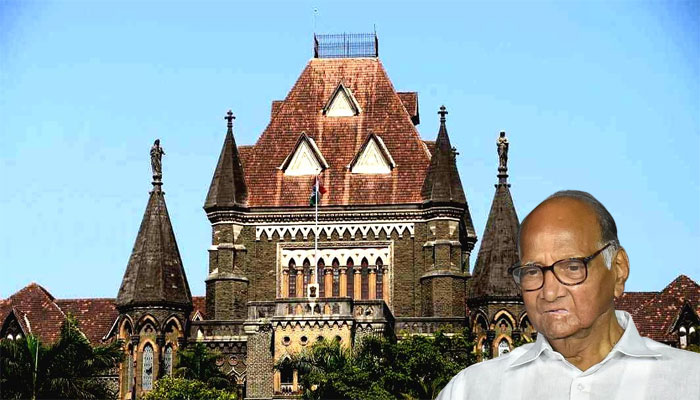
On June 13, the Bombay High Court instructed the Chief Public Prosecutor (PP) of Maharashtra Aruna Pai to take instructions from the State Home Ministry and submit a no-objection statement over the release of 22-years-old pharmacy student Nikhil Bhamare from Nashik. At least six First Investigation Reports (FIR) were filed against Bhamare for alleged derogatory social media posts on Nationalist Congress Party (NCP) chief Sharad Pawar.
Bhamare had posted a tweet in May, following which complaints were filed against him, and he was arrested and as a result, had to miss his exams.
Bhamare was booked under Sections Sections 153, 153A, (Promoting enmity between groups) 500, 501 (defamation), 504 (criminal intimidation), 505, 506 (statements leading to public mischief) of the Indian Penal Code (IPC).
On Monday, a two-judge bench comprising Justice SS Shinde and Justice MN Jadhav heard the petition filed by Subhash Jha, Bhamare’s advocate, seeking the quashing of FIRs. Bhamare sought release from the custody as an interim measure. During the hearing, Justice Shinde observed that no name was mentioned in the FIR, but Bhamare has been in prison for over a month. He said, “Nobody is named on page 48 (which included the primary tweet by Bhamre) and to keep someone in prison for a month. How is this the basis of everything? What gave rise to the FIR as per page 48?”
In his argument, Advocate Jha pointed out that the first FIR against Bhamare was registered in Thane at Naupada Police Station. Justice Shinde remarked, “Some student is kept in custody like this. Even the towering personality will not like that such a student is kept in jail.” Notably, Justice Shinde had refused to grant bail to Republic’s editor-in-chief Arnab Goswami when he was arrested by the Mumbai police over a reopened case.
When Pai tried to explain to the court that the investigation had led to Bhamare, Justice Shinde was not pleased with the argument. He said, “[It] does not matter. What will happen if you take action like this, you are unnecessarily undermining the image of the person (Sharad Pawar) who has received the second-highest civilian award.” The Government of India had awarded Pawar with Padma Vibhushan in 2017.
Pai further tried to argue that Bhamare had antecedents, but Justice Shinde refused to hear it. He said, “You take instructions. Talk to the home secretary and make a statement that you are not opposing his release from custody. People at the highest position are perhaps not aware of what is going on. Where are there allegations? There are hundreds and thousands of tweets every day. Will you take cognizance of each tweet?”
Apart from Bhamare, Marathi actor Ketaki Chitale was also booked and arrested for allegedly posting derogatory remarks against Pawar. She has spent over a month in jail.