Home Blog Page 3165

US Supreme Court overturns Roe v Wade, eliminates constitutional right to an abortion

In a historic decision, the Supreme Court of the United States overturned Roe v Wade, the landmark 1973 ruling that established the constitutional right to an abortion in the country. The ruling was 6-3 in favour of overruling the judgment.

Justice Samuel Alito backed by 5 other justices, including Chief Justice John Roberts wrote, “We hold that Roe and Casey must be overruled. The Constitution makes no reference to abortion, and no such right is implicitly protected by any constitutional provision, including the one on which the defenders of Roe and Casey now chiefly rely, the Due Process Clause of the Fourteenth Amendment.”

The three democrat-appointed justices, Stephen Breyer (appointed by Bill Clinton), Sonia Sotomayor, and Elena Kagan (both appointed by Barack Obama) have opposed the move but they were in minority.

After the Court’s decision, individual states are free to set their own abortion laws in the United States, without the fear of running afoul of the federal government. Since 1973, abortions during the first two trimesters were permissible following the Roe v Wade judgment. This verdict has made it possible for individual states to ban abortions even before the completion of the first trimester.

Announcing the decision, the court said, “The Constitution does not confer a right to abortion, Roe and Casey are overruled, and the authority to regulate abortion is returned to the people and their elected representatives.”

The decision, which was leaked in early May by someone working within the Supreme Court, means that abortion rights will be rolled back in nearly half of the states immediately. The much divisive issue of abortion is now set to become the focal point of the mid-term elections later this year, and indeed during the next presidential elections.

What was Roe v Wade verdict

n 1973, The U.S. Supreme Court in the Roe V Wade case made a landmark decision protecting a pregnant woman’s liberty to choose to have an abortion without excessive government restriction. The decision struck down many U.S. federal and state laws relating to the abortion of the foetus. In this case, ‘Roe’ is the listed name of the 22-year-old pregnant Norma McCorvey whereas ‘Wade’ was the defendant Henry Wade, the district attorney from Dallas, Texas.

With abortion for pregnant women becoming legal, several laws that made abortion illegal in states across America were struck down by the Supreme Court decision. At the time of the Roe v/s Wade Judgement, the foetal viability was around 28 weeks or 7 months. With advances in medical science over time, the threshold has now been brought down to 23 or 24 weeks (around 6 months) in many cases. 

Faced with a coup, Shiv Sena workers resort to what they do best: Office of rebel Dalit MLA vandalized, posters of Eknath Shinde painted black

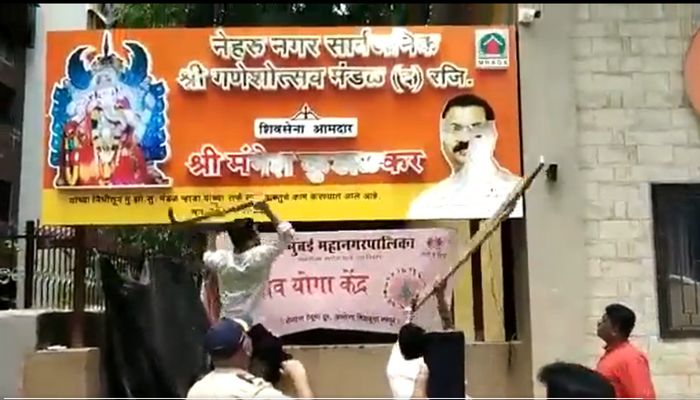
As the coup within Shiv Sena gets stronger by the day, Shiv Sainiks in Maharashtra have started using their ‘street power’ against the ‘rebel’ Eknath Shinde camp. On 24th June 2022, Shiv Sena goons vandalized the board outside the office of Mangesh Kudalkar, who is one of the rebel MLAs of Shiv Sena currently in Assam. Shiv Sainiks in Nashik were also seen throwing eggs and black ink on the posters displaying rebel leader Eknath Shinde.

Mangesh Kudalkar is a Shiv Sena MLA from the Kurla constituency in Mumbai, which is reserved for Scheduled Castes. The police constable present nearby remained just a silent spectator while Kudalkar’s office was vandalized. Shiv Sena goons started hitting the board outside Kudalkar’s office with rods and they kept on hitting the board till someone passing by reminded them of the image of Lord Ganesha on that board. A few more Shiv Sainiks gathered in the Chuna Bhatti area of Mumbai and raised slogans against Mangesh Kudalkar.

Supporters of rebel Shiv Sena leader Eknath Shinde had raised the posters and banners of their favorite leader in Nashik. In those banners, Eknath Shinde was projected as the staunch and true Shiv Sainik following Balasaheb Thackeray. Shiv Sena goons threw eggs and black ink on these posters and raised slogans against Eknath Shinde and rebel MLAs.

Dilip Lande, another Shiv Sena MLA representing the Chandivali constituency in Mumbai also faced the ire of Shiv Sainiks. In Chandivali, they destroyed banners and posters of MLA Dilip Lande. Somnath Sangle, a former corporator of Shiv Sena took some Shiv Sainiks with him to Sakinaka to vandalize Dilip Lande’s banners put up in that area.

Meanwhile, rebel Shiv Sena leader Eknath Shinde, shared a video from his Twitter handle in which MLA Yamini Jadhav has expressed her concerns and complaints regarding the party leadership.

Yamini Jadhav, a cancer survivor, is a Shiv Sena MLA from the Byculla constituency in Mumbai. She said in the video that none of the top leadership of the party visited or contacted her during her illness and treatment.

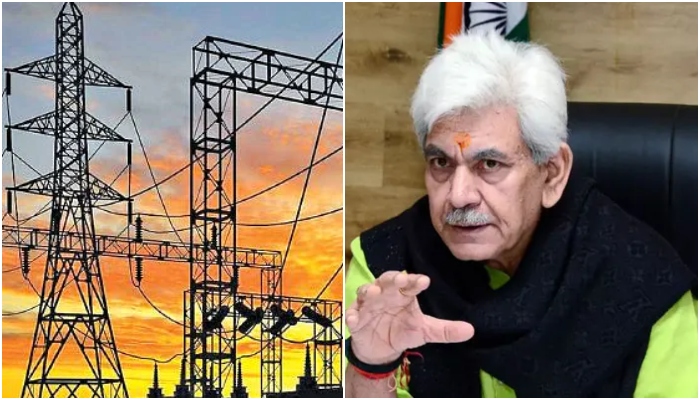
‘No money, no power’, J&K Lt Gov Manoj Sinha refuses to provide free electricity, to take strict action against power theft

On Thursday, Jammu and Kashmir Lieutenant Governor Manoj Sinha stated that the electricity distribution system in the Union Territory has been improved and that the people of Kashmir would be provided with better power supply. However, he refused to provide the electricity for free and affirmed that those who would fail to pay for the power, won’t get the electricity.

“Centre doesn’t provide us free electricity. There is a huge power debt left by the previous regimes. We have improved the distribution system and will provide better power to people. But power won’t be free anymore,” he said. He was speaking on June 23 at the inauguration event of Srinagar Integrated Command & Control Centre (ICCC) developed by Srinagar Smart City.

According to the reports, Sinha slammed the previous governments for leaving the heap of power debt. “There is a huge power debt of Rs 11000 cr left by the previous regimes,” he said adding that the state administration will now take strict action against the power theft. He said power theft is a criminal act and police may have to interfere while dealing with power thieves.

Further advocating the underground laying of power cables to supplying quality power to the people of Kashmir, Lieutenant Governor said that smart meters will be installed in Srinagar and those who won’t pay for power, won’t be provided the power supply. He also urged the citizens to to apply for water and electricity connections online now. “There will be online payment mode of bills as well”, he added.

While smart city initiatives are being introduced in Srinagar, Sinha said that it was important to focus on smart economy also. Regarding the power related complaints, he affirmed that no complaints other than the one relating to unscheduled cuts will be entertained by the administration. He reiterated that people will have to mandatorily pay for the power supply.

Meanhwhile, Sinha also elaborated the developments in the Srinagar Smart City initiatives. “Srinagar Smart City aims to secure and increase livability, sustainability, efficiency for all citizens. The holistic approach in functioning of Srinagar Smart City will help in achieving five long term goals-smart mobility, smart economy, smart environment, smart living and smart governance,” he was quoted.

“Srinagar is embracing modern technical tools for sustainable and integrated urban living”, he said adding that real time data would ensure effective management of services like water, electricity, mobility, education, healthcare, environment, and security, inching closer towards realizing the goal of a smarter city.

Bihar: Islamists attack Lakshmi Narayan temple in Araria, vandalise ‘Sheshnag’ idol and hoist Islamic flag, case registered

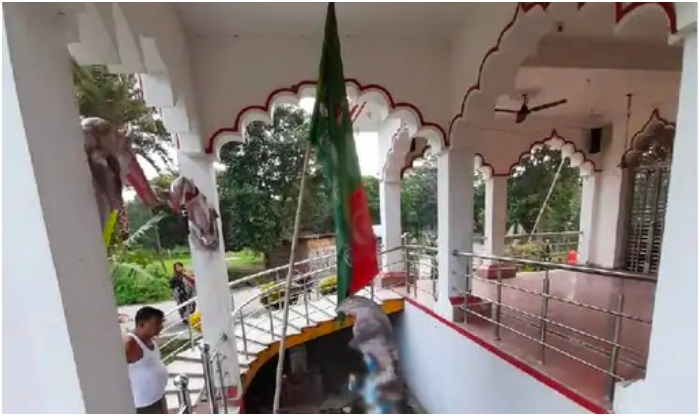
On Thursday, a group of unidentified persons attacked the Lakshmi Narayan temple in the Araria district of Bihar and vandalized the temple idol. The group who attacked the temple and damaged the idol also hoisted the Islamic flag inside the temple.

According to the reports, the incident happened in a village in the Rampur Kodarkatti panchayat area where the miscreants attacked the temple on Tuesday night and dismantled the Hindu religious symbol and saffron flag posed inside the temple. They also vandalized the idol of ‘Sheshnag’ and hoisted the Islamic flag which was later taken down.

The incident came to light on Wednesday morning when residents of Rampur Kodarkatti panchayat visited the temple and spotted the Islamic flag atop the Lakshmi Narayan temple. They were further shocked to see the vandalized idol of Sheshnag. The Police was immediately informed who reached the spot to investigate the issue on Wednesday. Reports mention that SDO Shailesh Chandra Diwakar, SDPO Pushkar Kumar, City SHO Shiv Sharan Sah reached the spot, investigated the matter and registered a case against unidentified persons.

The Chief Representative of the Panchayat Rajesh Kumar Singh said that people were shocked to see the damaged temple premises. He stated that the attackers had malicious intent behind damaging the Hindu religious symbol and the temple idol. The information was given to the police who immediately reached the spot and began the investigation into the matter.

Also, Sub-Divisional Police Officer, Puskar Kumar confirmed that an FIR has been registered against the identified persons for attacking the Lakshmi Narayan temple. Rajesh Kumar Singh meanwhile held an official meeting with the villagers and panchayat representatives and assured the people that strict action would be taken against the miscreants who are involved in the attack.

Taking the cognizance of the incident, local BJP MP Pradeep Kumar Singh also expressed outrage and gave a 24-hour ultimatum to the administration for bringing the culprits to justice. So far the Police have registered the case and have assured to identify and arrest the miscreants. The police force has also been deployed in the area to maintain peace in the village. Investigations are underway.

Pakistan arrests Sajid Mir, the ‘dead’ mastermind of the 2008 Mumbai attacks who has suddenly come back to life

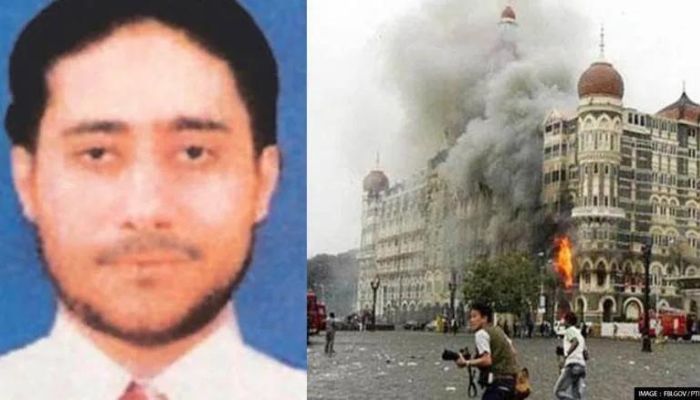
Sajid Mir, a prominent Lashkar-e-Taiba (LeT) leader located in Pakistan who was one of the key conspirators of the 26/11 Mumbai terror attack, has been detained by Pakistan. This significant development took place after years of denial of his existence by Pakistan, and even claims that he was dead.

Sajid Mir was wanted in connection with the 2008 Mumbai terrorist attacks. He is wanted by the FBI and has a $5 million bounty on his head. About 170 people, including six Americans, were killed in a sequence of coordinated attacks carried out by 10 LeT terrorists on November 26, 2008, in Mumbai.

Mir is also the alleged brain behind the Denmark bombing operation codenamed ‘Micky Mouse’, referring to the publishing of cartoons of the Prophet in the Danish newspaper Jyllands Posten.

Following the development, a senior fellow of the Observer Research Foundation Sushant Sareen tweeted, “This is HUGE! The Paks first said Sajid Mir doesn’t exist; then they said they don’t know who he is; then they said he is dead; now they pulled his ‘dead’ body from the grave & made him alive to arrest him??? And then we are asked why no one trusts Pakistan??? FATF really worked.”

The FBI stated, “Sajid Mir allegedly served as the chief planner of the (Mumbai) attacks, directing preparations and reconnaissance, and was one of the Pakistan-based controllers during the attacks. Additionally, Mir allegedly conspired to commit a terrorist attack against a newspaper and its employees in Denmark between 2008 and 2009.”

FBI added, “Sajid Mir was indicted in the United States District Court, Northern District of Illinois, Eastern Division, Chicago, Illinois, on April 21, 2011, and was charged with conspiracy to injure the property of the foreign government; providing material support to terrorists; killing a citizen outside of the U.S. and aiding and abetting, and the bombing of places of public use. An arrest warrant was issued on April 22, 2011.”

Sajid Mir is now arrested by Pakistan. According to reports, Pakistan is taking this measure to remove itself from the Financial Action Task Force’s (FATF) Grey list for supporting terrorism.

SFI workers vandalise Rahul Gandhi’s office in Wayanad over SC order on Eco Sensitive Zone, clash with Congress workers

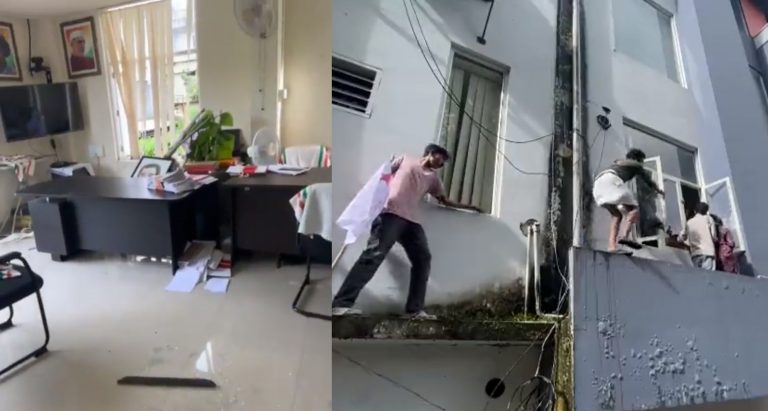
The office of Rahul Gandhi in Wayanad in Kerala was vandalised by SFI workers today. The Congress leader is Lok Sabha MP from Wayanad. The SFI workers marched to Rahul Gandhi’s office, and then entered the office and vandalised it.

The Congress party has blamed the Students’ Federation of India (SFI) for the vandalism. SFI is the student wing of the Communist Party of India (Marxist).

Videos posted by Congress workers show that the miscreants entered the office of Rahul Gandhi and clashed with the Congress workers present in the office in Wayanad. In a video posted by Youth Congress on Twitter, the workers of SFI and Congress can be seen fighting with each other.

Chairs in the office were broken and Congress workers were beaten.

“The extremism in the left-wing politics of Kerala is out in open. Why is Kerala Government promoting such hooliganism in Kerala? The goon should be identified and put behind the bars,” youth Congress Twitter account posted along with the video.

In another video, the miscreants can be seeing entering the office which looked like is located on the first floor of a building. Some of them are seen carrying and waiving the white SFI flag with red star.

The entire was ransacked and vandalised as a result of this clash. Videos taken after the incident show how fixtures and furnitures were destroyed in the clash. One portrait of Rahul Gandhi is seen lying on a chair, while another portrait with its frame broken is seen lying face down on the floor.

Reportedly, the SFI workers are angry over Rahul Gandhi’s alleged silence of the recent Supreme Court order over maintaining eco sensitive zone. Earlier this month, the apex court had ordered to maintain an Eco Sensitive Zone of 1 km around protected forests. The court banned any permanent structures in such ESZs.

This has triggered protests in Kerala, as it is feared that thousands of people will lose their livelihood due to this. Farmers in several areas in the state including Idukki, Kottayam, Pathanamthitta and Wayanad are already protesting against the order, as they use the edges of the protected forests for farming. The state govt and the church are supporting them.

According to media reports, the SFI workers that ransacked Rahul Gandhi’s office demanded that he break his silence over the issue. But Congress workers claim that SFI was angry because Rahul Gandhi had already written a letter to Kerala CM over the issue.

Rahul Gandhi had sent a letter to CM Pinarayi Vijayan over the issue on June 2, where the Congress MP had urged the state govt to intervene in the matter. He had suggested the state govt to the Central Empowered Committee (CEC) and the Ministry of Environment, Forest and Climate Change (MoEF and CC) to solve the issue.

He had written that there was growing apprehension about the grave implication of the judgment on the lives and livelihoods of the people in the State. As one of the most densely populated regions in the Western Ghats, maintaining a minimum ESZ of one kilometre would hamper the activities of the local communities, many of whom peacefully coexisted in these protected areas for generations, he had said in the letter.

Rahul Gandhi had said that the court order allows for some dilutions of the provision in overwhelming public interest, and the state govt should take advantage of the same.

However, the ruling LDF had termed the act of Rahul Gandhi writing to the CM over the issue as childish and immature. The left parties had said that state govt has no role in this matter, and only the central govt can intervene in it.

Sidhu Moosewala’s song SYL released posthumously: From wishing for return of Babbar Khalsa terrorist to ‘sovereignty’ for Punjab, read about the problematic lyrics

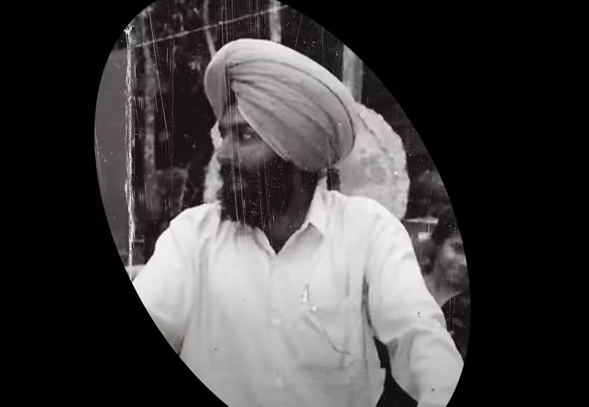
Khalistani sympathiser and Punjabi singer Sidhu Moosewala was shot dead near his village in Mansa on the 29th of May 2022. Since his death, his first song ‘SYL’ (Satluj Yamuna Link Canal) has been released which centers around the long-standing river water dispute between Punjab, Haryana, and Himachal Pradesh. The song has expectedly got a large number of views on YouTube having been released less than 4 weeks after Moosewala’s death.

As the Twitter user “The Hawk Eye” summarised on Twitter, the lyrics of the song glorified terrorists, provoked violence, and tried to fuel the fire of ‘self-determination’ for Punjab, talking about an independent Khalistan.

The song, in which Moosewala repeatedly says that forget water, we will not give even a drop of water to anyone, has problematic lyrics and visual imagery all the way through. Right at the start, Moosewala talks about giving Haryana, Himachal Pradesh, and Chandigarh to Punjab. On 1st November 1966, post-independence Punjab was divided into 3 states, Punjab, Haryana, and Himachal Pradesh on the basis of language.

Further, in the very next line, Moosewala says that after ‘returning’ Haryana and Himachal Pradesh to Punjab, complete sovereignty should be provided to Punjab else they will not give any water to anyone. This demand for sovereignty for a state is only a step short of demanding a separate Khalistan.

The song also goes on to warn that if there is no alternative way then Balwinder Jattana will return. Jattana was the terrorist who killed 2 senior engineers working on the SYL project in Chandigarh. Affiliated with Babbar Khalsa terrorist outfit, the Ropar resident Jattana killed Chief Engineer and the Superintending Engineer working on the SYL project in 1990. Following the murders, the construction on SYL stopped as the terrorised engineers refused to continue working on it. Jattana was later killed in a police encounter in 1991.

Moosewala talks about return of terrorist Balwinder Jattana in the video (Screenshot from the video)

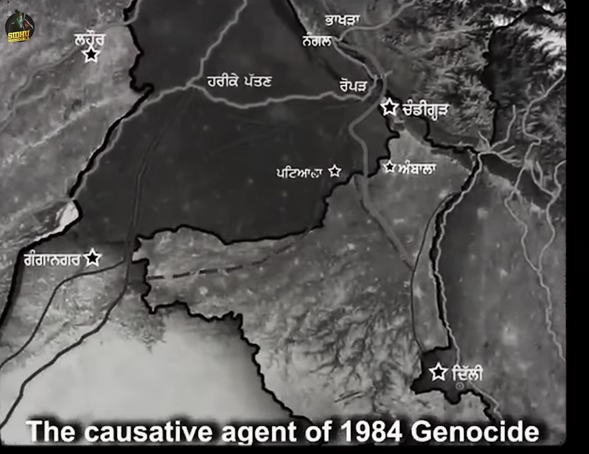
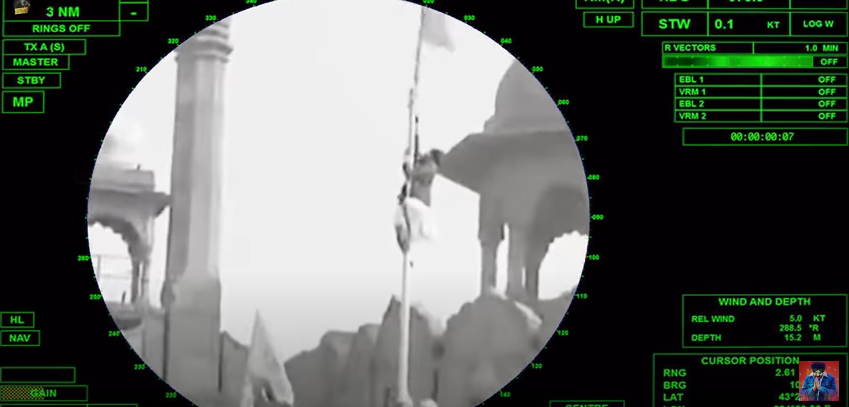
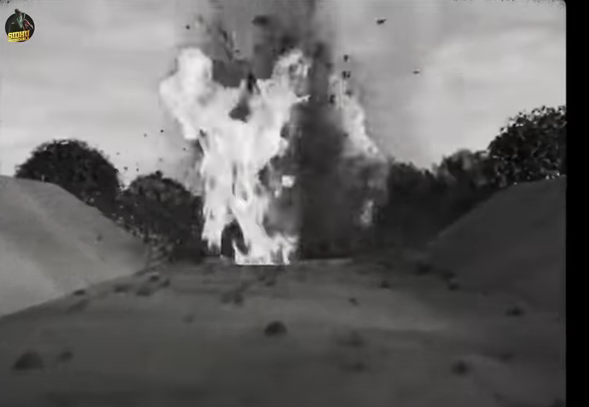
In the text on-screen during the song, Sidhu Moosewala goes on to call SYL canal the causative agent of the Congress-led pogrom of Sikhs in Delhi in 1984. The flag hoisting at Red Fort by a Sikh mob on 2021 Republic Day also finds a place in the video of the song. The video also shows a bomb blast on an animated canal, pushing the idea that violence should be used to stop SYL.

Screenshot from the Moosewala song ‘SYL’ calling the dispute the causative agent of 1984
Screenshot from the video. Sikh flag being hoisted at Red Fort
Screenshot from the video showing an animated bomb blast on the Satluj-Yamuna Link canal

The song ends with Meghalaya Governor Satyapal Malik’s disturbing speech in which he said that one should not test Sikhs’ patience as they killed Indira Gandhi, General Vaidya in Pune, and General Dwyer in London.

While Rahul Gandhi claims ED officials hailed his stamina, ED says Rahul said he was too tired and did not answer 20% questions

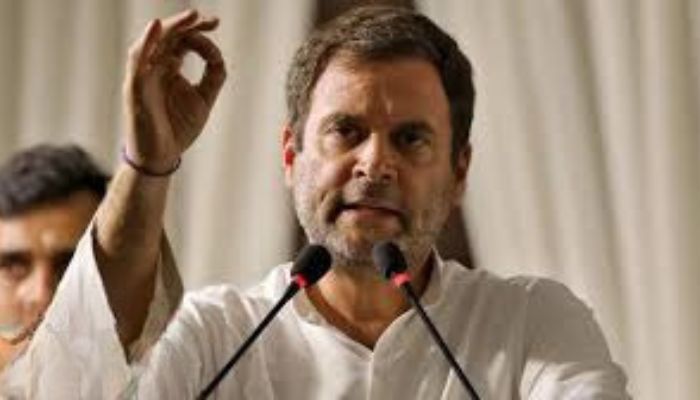
Congress leader Rahul Gandhi who is under ED’s radar in the National Herald case claimed on Wednesday 22nd June 2022 that the Enforcement Directorate (ED) officials interrogating him were surprised by his stamina. However, the ED officials have refuted this claim and said that Rahul Gandhi dodged 20% of the questions saying that he was too tired to answer them.

On Wednesday, June 22, Rahul Gandhi attended a program at the All India Congress Committee headquarters. It was a meeting of lawmakers and senior leaders called from various states. Rahul Gandhi claimed that the agency officials were astounded by his stamina and resilience since he remained seated still for hours while they kept moving. Rahul Gandhi said that when the officers inquired about his secret, he attributed it to his vipassana training.

But what ED officials have revealed is in sharp contrast to the claims made by the Congress leader. According to a report by the Times of India, a source in the agency said, “The fact is that he avoided replies to almost 20% of the questions put to him by saying that he was feeling too tired.”

Gandhi has been recording his statement with the ED in multiple sessions in connection with the National Herald case. After he was questioned on June 14, it was reported by some media outfits that he was interrogated for 20 hours. However, the ED sources clarified that he was questioned for only three hours and the rest of the time was utilized by Gandhi to evaluate and proofread his responses. The responses are reviewed, corrected, and retyped before they are signed by Gandhi.

The agency sources said, “He took long to go through his own replies and it is the reviews which accounted for the longer part of the session each day.” The Wayanad MP would arrive at around 11 am at the ED office and every day he left at 11 pm. In between, he was allowed to go home for a one-hour lunch break.

The ED sources also said that it was wrong of the Congress party to publicize the claims made by the Gandhi scion about what happened during the ED interrogation, considering the fact that the party had earlier sent a legal notice to the home minister, the finance minister, and the law minister in which the party had accused ED of committing a criminal offence of leaking the details of the interrogation.

The National Herald scam is one of the most notable legal cases in Indian history, as the Gandhis are directly accused. The mother-son duo of Congress President Sonia Gandhi and her son Rahul, along with their aides – Oscar Fernandez, Motilal Vohra and Sam Pithroda are alleged to have been involved in massive ‘cheating and breach of trust’ in the acquisition of Associated Journals Ltd (AJL) by Young Indian Pvt Ltd (YIL). Assets worth crores of rupees had been allegedly transferred for purposes other than originally intended for a paltry sum. Sonia Gandhi and Rahul Gandhi got unconditional bail in December 2015.

‘Tehelka tapes have no legal value, claims were only to seasonalise and politicise’: Supreme Court while dismissing Zakia Jafri’s plea

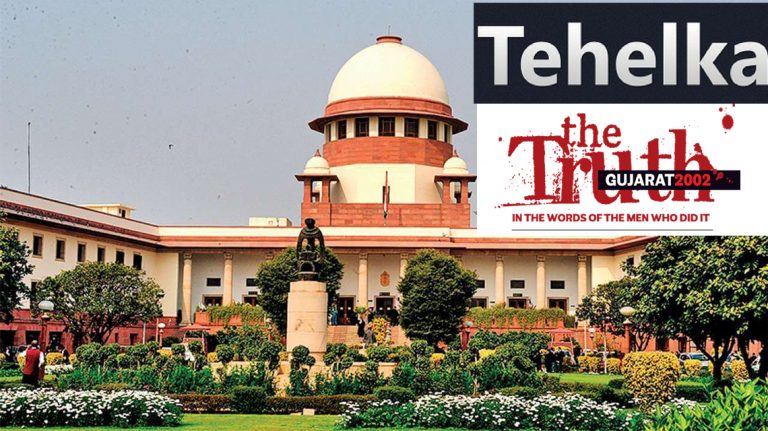
While dismissing a plea challenging the clean given to PM Narendra Modi by SIT in the 2002 Gujarat riots, the Supreme Court today said that the Tehelka tapes are of no avail. The plea was filed by Zakia Jafri, widow of former Congress MP Ehsan Jafri, who was killed during the violence at Gulbarg Society in Ahmedabad on February 28, 2002. The petitioner had heavily relied on the tapes to alleged that Modi was involved in the riots. The court also said that claims made by people like Sanjeev Bhatt and Haren Pandya were only to seasonalise and politicise the issue.

The Supreme Court bench led by Justice AM Khanwilkar said that while the petitioner has heavily relied on the Tehelka tapes involving alleged confessions of some people that had appeared in 2007, they are not legally acceptable. The bench further said that the tapes were already considered ‘at great length’ by the court between 2008 and 2011 when the court was monitoring the SIT probe, and the tapes are of “no avail”.

The apex court said that the confessions seen in the tapes are extra-judicial and they don’t stand the test of law. The court said that such extra-judicial confessions can be taken only against the maker of the statement, not against other persons mentioned in the statement.

“It does not follow that the contents of such tape would have probative value. Upon investigation, if it was to be found that the tape and the contents have probative value, only then it could be used, that too against the maker of the statement alone and not against any other person,” the court noted.

The court also noted that the SIT had interrogated all the relevant persons seen in the Tehelka sting videos, and their statements were recorded. Moreover, some of the claims made in the tapes were not corroborated by probe of the SIT, like the claim that there was a build-up of arms and ammunition in Gujarat even before Godhra train burning incident.

In another very important observation, the court said that there is no evidence or recovery of the bullet fired from private weapon by any member of the mob that attacked Jafri. Instead, the “empty cartridge shells and bullet casings” found at the site were actually fired from the licenced weapon of Ehsan Jafri.

The bench further noted that the Tehelka tapes only alleges criminal conspiracy at the local level, and they have nothing to do with the allegations of a “larger conspiracy” which was probed by the SIT. The court said that the local level conspiracies were already investigated in respective cases, which includes nine cases probed by the SIT under the supervision of the Supreme Court.

Dismissing the petition, the apex court said that doubting the wisdom of the court would be a travesty of justice, because the entire investigation was completed by the SIT under the supervision and monitoring of the court.

The bench also agreed with the SIT lawyer that Zakia Jafri has been changing goalposts regularly. While she earlier alleged a ‘larger conspiracy’ based on Tehelka tapes and the claims of Sanjeev Bhatt and Haren Pandya, after the SIT found those claims baseless, she changed her position saying “there can be no direct evidence regarding larger conspiracy”.

Dismissing the claims of a larger conspiracy, the court said, “This argument, we unhesitatingly opine, is nothing short of red herring.” The judgement further added, “What has been conveniently glossed over is that, to make out a case of larger criminal conspiracy, it is essential to establish a link indicative of meeting of minds of the concerned persons for commission of the crime(s), committed during the relevant period across the State including the heart-rending episode unfolded at Godhra on 27.2.2002, in which large number of Kar-sevaks were burnt alive in train bogies”.

The court said that the SIT has proved the claims of Sanjeev Bhatt and Haren Pandya to be false, and also found how the state govt did their best to control the riots. The bench said that the statements of Bhatt, Pandya and one R B Sreekumar were only to sensationalise and politicise the issue, however the statements were replete with falsehood.

The Tehelka tapes refers to a sting operation the controversial magazine Tehelka had conducted five years after the 2002 Gujarat riots, which were aired in November 2007 on Aaj Tak. In the tapes, several Sangh Parivar activists had allegedly described that the Gujarat riots were pre-planned by Vishwa Hindu Parishad and Bajrang Dal. However, the SIT had found that the tapes had no legal basis, and therefore they were not included in the evidence in the cases. Today the Supreme Court confirmed that the sting tapes are not legally valid.

This is not the first time the Supreme Court has rejected material produced by the left-liberal ecosystem who are trying to somehow implicate PM Narendra Modi in the Gujarat riots cases. Earlier, the apex court had refused to consider the book ‘Gujarat Files’ authored by controversial journalist Rana Ayyub in the proceedings. The court had thrashed the book saying that it was based upon surmises, conjectures, and suppositions.

In fact, the claims made by Rana Ayyub in her book are so questionable that even the extreme leftist publications had also refused to publish it, and eventually Ayyub had published it herself. The book was based on a sting operation Rana Ayyub had supposedly conducted, but she has not published the videos still now.

Journalist Madhu Tehran had revealed that she had offered to publish the tapes on Tehelka, but Rana Ayyub had refused.


Gautam Adani and his family’s donation of Rs 60,000 crore to be used in the fields of healthcare, education, and skill development

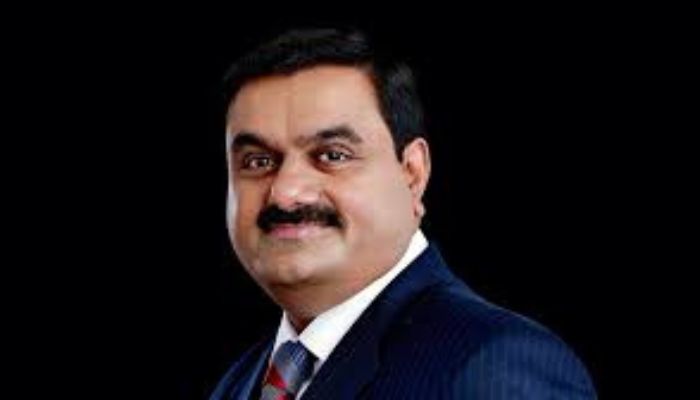
On the occasion of the 60th birthday of Adani Group’s chairman Gautam Adani, he and his family decided to donate Rs 60,000 crore for social causes. The Adani Foundation will administer this corpus for various social causes.

According to reports, the Adani Foundation will oversee the donations, which will be used to support healthcare, education, and skill development. Gautam Adani said, “This is one the largest transfers made to a foundation in the Indian corporate history. This commitment also honors the birth centenary year of my father Shantilal Adani.”

A statement released by the Adani group said, “To utilize the potential of India’s demographic advantage, there is an ever-growing need to focus on the areas of healthcare, education, and skill development. The shortfalls in each of these areas are roadblocks to an ‘Atmanirbhar Bharat.’ The Adani Foundation has gained rich experience in working with communities focused on integrated development efforts across all these areas. Addressing these challenges can significantly enhance the competence and competitiveness of our future workforce.”

Providing more details on the donations to be made, Gautam Adani said, “In addition to being the 100th birth anniversary of my inspiring father, this year also happens to be the year of my 60th birthday and therefore the family decided to contribute Rs. 60,000 crores towards charitable activities related to healthcare, education, and skill development, especially in the rural regions of our nation.”

He added, “We will invite three expert committees in the coming months to formalize strategy and decide the allocation of funds in these three areas. The committees will have members from the Adani family in supporting roles.”

Gautam Adani further said, “At a very fundamental level, programs related to all these three areas should be seen holistically and they collectively form the drivers to build an equitable and future-ready India. Our experience in large project planning and execution and the learnings from the work done by the Adani Foundation will help us uniquely accelerate these programs.”

The Adani group, which began as a modest agri-trading company in 1988, has grown into a conglomerate that engages in green energy, airports, data centers, cement, mining, logistics, and power generation. Gautam Adani is currently Asia’s richest person.