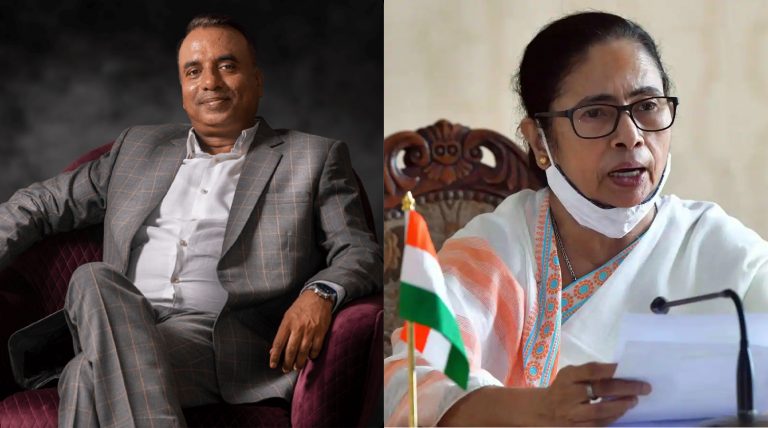
Purti Realty, a real estate group based in West Bengal, has alleged that three of its engineers were kidnapped by the aides of TMC MLA Ashima Patra. In a mail sent to Bengal CM Mamata Banerjee, Purti Realty’s managing director Mahesh Agarwal said that the MLA’s men were trying to extort money from the company, and the three employees of the company were kidnapped for ransom.
In the mail, a copy of which was posted on Twitter by BJP MP Locket Chatterjee, The Purti Realty MD said that one Rajib Basu Roy, who had identified himself as a close aide of the MLA, had called the company the during Durga Puja and asked for 50,000 T-shirts in the name of MLA Ashima Patra. But when the company told him it will cost Rs. 35,00,000 if the T-shirts are procured at Rs 70 per piece, he asked for 5,000 T-shirts instead.
After that on October 28, Rajib Basu Roy allegedly entered the site of the company in Hooghly and asked for extortion money, threatening that if not paid by the next day, he will show his political and muscle power, said the company MD. He added that on October 29 at around 9-9:30 AM, Rajib Basu Roy came to the site in a white Scorpio bearing number JH10 BS 3866 and started beating the employees with sticks and bamboos.
After that, the TMC MLA’s men kidnapped three engineers of the company Piyush Kanti Poral, Tanmoy Borik and Sudip Sarkar. Agarwal wrote that after kidnapping the three men, he sent message to the company to bring money to him and release the men from Hotel Hindustan on Durgapur Expressway.
“Respected Mam, we with folded hands request your good self to strictly look into the matter and save the investment environment of the state initiated by you,” Purti Realty’s managing director Mahesh Agarwal pleaded West Bengal CM Mamata Banerjee in the mail. He added that “these types of local goons are spoiling the image and creating the fear factor for our West Bengal peace loving environment.”
A glaring example of how a businessman became a victim of extortion. His employees got kidnapped!
It shows how Mamata Banerjee is running the extortion industry in West Bengal with the help of her MLA’s and party cadres. The prime reason why Bengal reeks of backwardness! pic.twitter.com/dsQiHlC1uH
Sharing the mail on Twitter, Locket Chatterjee said the incident of businessman becoming a victim of extortion “shows how Mamata Banerjee is running the extortion industry in West Bengal with the help of her MLA’s and party cadres. The prime reason why Bengal reeks of backwardness.”
Purty Realty is currently executing two projects on the Durgapur Expressway in Hooghly worth Rs 1000 crore, the Rs 400 crore phase 1 of Marriot Resort project and the Rs 600 crore Amazon Logistics project, and the location of the projects falls under the Dhaniakhali assembly constituency represented by TMC MLA Ashima Patra.
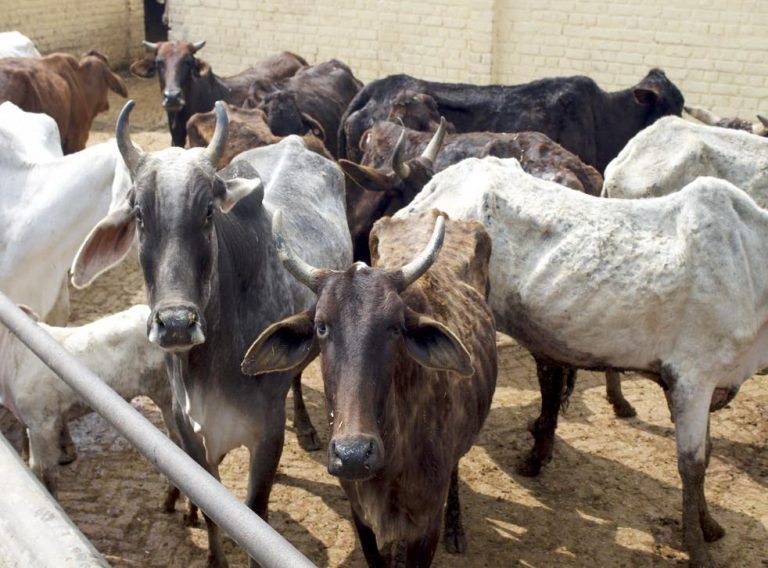
Surajpur Kotwali Police have arrested a man named Dharmendra for killing 58 cows in a dairy located at the Khodna Khurd village of Greater Noida. According to reports, the man had killed the cows by feeding them with poisonous substances. Police also recovered pesticides from Dharmendra after the arrest.
As per reports, Dharmendra used to look after the cows in a Khodna dairy before he was fired from the job by the owner, Omvir Singh. Singh, also a resident of the Khodna village, had fired Dharmendra from the job for not doing his work properly. Reports claimed that in order to exact revenge on the owner, Dharmendra had poisoned the cows and killed them.
According to the police, owner of the dairy, Omvir Singh had informed them about the incident when the cows died under suspicious circumstances. Upon inspection by a team of veterinarians, it was found that the cows had consumed poison.
Reportedly, police investigating the case have arrested Dharmendra on October 30. Interrogation revealed that the accused was a drug addict and mixed poison with water to kill the cows in the dairy in the village in Greater Noida.
An incident of cow slaughter was also reported in Panipat, Haryana recently where a beheaded carcass of a cow was found. A large number of gaushala’s servants and Gau Rakshaks reached the spot after receiving information about the cow slaughter along with the police from the Sector-29 police station.
According to reports, Gaushala head Harpal Singh had filed a case against the unknown killers at Sector-29 police station under Animal Cruelty Act. It was also reported that the head of the cow was not found.
Members of the Hindu Munnani and the ABVP were stopped by the police from entering the Manonmaniam Sundaranar University (MSU) in Tirunelveli district of Tamil Nadu on Wednesday where a lecture on “Periyar and Islam” was organized.
It was the second lecture of the ‘Samooga Needhi and Arivoli (Social Justice and Enlightenment)’ series on ‘Periyar and Islam’ for which Riyaz Ahmed, the joint editor of ‘Puthiya Vidiyal’, (Daily Dawn) was invited as the guest speaker. The seminar was organised by the Centre for Study of Social Exclusion and Inclusive Policy in association with the Department of Sociology at MSU.
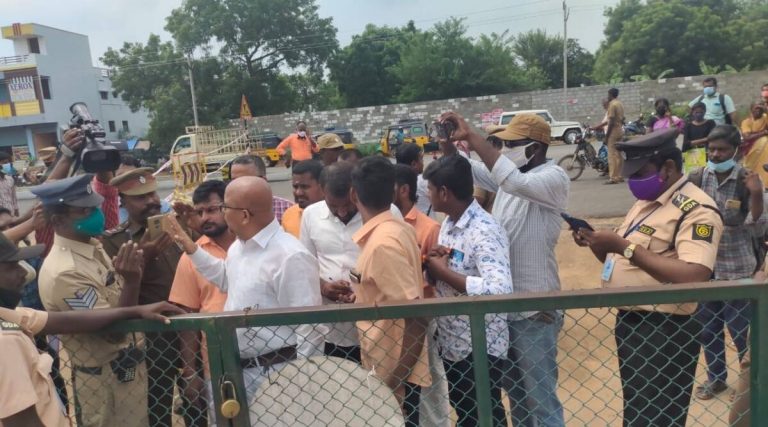
According to media reports, as the programme started around 11 am, members of Hindu Munnani and ABVP assembled outside of the university. They demanded that they should be allowed as an audience of the programme. A large number of the police force was deployed outside the main gate which prevented them from entering leading to heated arguments. Police said that only students were allowed to participate in the programme. They sent an e-mail to the Governor of Tamil Nadu RN Ravi to bring the matter to his notice.
A leftist news portal unmid.com claimed that the event was wrapped up an hour after it began following the requests from police and university authorities. The portal quoted Professor S Samuel Asir Raj, Director of the Centre for Study of Social Exclusion and Inclusive Policy, saying that he had received a phone call to end this talk.
Riyaz Ahmed is the joint editor of Puthiya Vidiyal (Daily Dawn) newspaper which is the mouthpiece of Popular Front of India
However, Hindu Munnani State Secretary K Kutralanathan said they never asked the cops to cancel the lecture. But they wanted to attend the programme to check if any objectionable content was stated during the lecture. What made people suspicious about the agenda of this programme was that the guest speaker is joint editor of Puthiya Vidiyal, a mouthpiece of Popular Front of India which was banned in Jharkhand as K Kutralanathan claimed. Notably, the then BJP government in Jharkhand had banned the Popular Front of India which is a radical Islamic outfit in 2018 and 2019.
K Kutralanathan told the media that they wanted to know how the university administration invited such a person, but the university had no reply. Heb said that they never demanded to cancel the lecture but they wanted to attend which the police did not allow. Protesters demanded whether it was required in an academic institution to organize a lecture on the issues related to religion. Besides, they further asked whether the university will allow them to organize something similar programme on the Hindu religion.
Kutralanathan expressed concerns this university has the dubious distinction of the breeding ground for many anti-national movements. He said that the emerging security concerns can’t be denied as districts like Tirunelveli, Thoothukudi and Tenkasi of Tamil Nadu share borders with Kerala. There have been reports of arrests of ISIS operatives from the region.
Dr S Samuel Asir Raj, the director of the Centre for the Study of Social Exclusion and Inclusive Policy at the MSU told the media that the vice-chancellor had told him to drop the event but he denied.
MSU courted controversies for wrong reasons
Earlier, MSU had included a controversial book – “Walking with the Comrades” written by Naxal sympathizer and a notorious anti-India propagandist Arundhati Roy in its postgraduate English syllabus. But following the protest from the ABVP, the university withdrew it from the syllabus earlier in November 2020.
Popular Kannada actor Puneeth Rajkumar breathed his last following a massive heart attack on October 29. His untimely demise has left a void in the entire film industry. Born on March 17, 1975, Puneeth Rajkumar went on to become one of the highest-paid actors in the Sandalwood industry. In addition to being a dedicated and exceptionally professional actor, Puneet Rajkumar was a philanthropist who was always ready to aid the homeless and underprivileged.
Puneeth Rajkumar and his contribution to the fight against Covid 19
Though he rarely spoke about his philanthropic activities, the actor was a strong supporter of social causes and contributed generously to charities and foundations. When the nation was grappling with the Covid crisis last year, Puneeth Rajkumar had donated Rs 50 lakh to the Karnataka CM Relief Fund to help the state in its fight against Covid-19.
Besides the monetary contribution, Puneeth Rajkumar also played a vital role in the fight against Covid-19 by spreading awareness throughout 2020 and 2021.
The then Karnataka CM BS Yediyurappa had tweeted about the same. “Kannada actor @PuneethRajkumar met and handed over a cheque for Rs 50 Lakh as contribution to the CM Relief Fund. He has appealed to all his fans and the people of Karnataka to contribute to the fund, stay indoors and stay safe,” Yediyurappa had Tweeted on March 31, 2020.
Kannada actor @PuneethRajkumar met and handed over a cheque for Rs 50 Lakh as contribution to the CM Relief Fund.
Moreover, at the peak of the pandemic’s second wave, the actor teamed up with the Bengaluru Police to make a video about the necessity of Covid-appropriate behaviour. He had also teamed up with fellow Kannada actors to help individuals who were losing their jobs in the film industry as a result of the pandemic.
Puneeth Rajkumar helped flood victims
The Kannada superstar had, in 2019, donated Rs 5 lakh to the Chief Minister’s Natural Calamity Relief Fund to help flood victims in North Karnataka during the severe floods.
Puneeth Rajkumar’s innumerable contributions to social causes
Besides, Puneeth was supporting 26 orphanages, 16 old age homes and 19 gaushalas.
In an earlier interview, the power star had stated that the money he earns from singing songs not written by his family is donated to charities. He also makes frequent contributions to a couple of Kannada medium schools.
Actor’s Shakthidhama organisation, a home for the homeless women
He was also involved in philanthropic work along with his mother at the Shakthidhama ashram in Mysore. The actor, through his charitable institution, ‘Shakthidhama’ was supporting thousands of girl students.
The organisation provides educational opportunities to disadvantaged girl children and educates them up to class tenth after which the girls are supported to choose the course of education in line with their aptitude. It also provides shelter to rape victims, those rescued from prostitution, victims of domestic violence, human trafficking and the destitute. The women are given training in life skills to instil confidence. Around 4,000 women have been benefited so far from the voluntary organisation, supported by actor Rajkumar’s family.
Kannada Star Puneeth Rajkumar’s Eyes Donated
According to reports, the actor, like his late father Dr Rajkumar, had decided to donate his eyes following his death. Dr Bhujanga Shetty, Director Narayana Nethralaya, who collected the eyes of Puneeth, remembered how he received a call from his elder brother Raghavendra Rajkumar to collect his eyes.
“Many people pledge their eyes and their family forget at the time of death. But, Puneeth’s family is different. His father, legend of Kannada film industry Dr Rajkumar always reminded me to take his eyes when he passed away. Later, the family reminded me when his wife Parvathamma Rajkumar breathed her last. Today (Friday) again I got a call from his family to collect eyes within no time,” Dr Bhujanga Shetty explained.
“Puneeth’s is a family of commitment. His eyes will be transplanted to two persons by tomorrow,” he added.
Puneeth Rajkumar became the 3rd member of his family to donate his eyes after his father Dr Rajkumar and mother Parvathamma.
Puneeth Rajkumar, a fitness enthusiast, was hurried to Bengaluru’s Vikram Hospital following he complained of chest pain after a two-hour workout in the gym. He died shortly after. He is survived by his wife Ashwini Revanth and two daughters Dhriti and Vanditha.
Puneeth Rajkumar’s last rites would be performed tomorrow, October 31, as the family awaits the arrival of his daughter, who lives abroad.
On Monday (October 25), the National Aeronautics and Space Administration (NASA) issued a press release highlighting the possible discovery of a planet outside the Milky Way galaxy. The exoplanet candidate is located in the Messier 51 (M51) galaxy (Whirpool galaxy) and was detected using the Chandra X-ray Observatory.
It was the first time that NASA scientists had discovered an exoplanet candidate outside the Milky Way galaxy. Until now, astronomers have identified exoplanets as far as 3000 light-years away from the Earth. However, the exoplanet candidate in the M51 galaxy is estimated to be about 28 million light-years away. The feat was achieved using a new strategy and was led by Rosanne Di Stefano. “We are trying to open up a whole new arena for finding other worlds by searching for planet candidates at X-ray wavelengths, a strategy that makes it possible to discover them in other galaxies,” she remarked.
The new technique can help in the detection of exoplanets that are located a distance greater than current optical light transit studies. Based on the data collected by the scientists, they estimated that the size of the newly discovered exoplanet candidate (denoted as M51-ULS-1) would be the same as the Saturn. However, the study would require more data to confirm the interpretation of scientists. Due to the large orbit of the exoplanet candidate, it will take about 70 years or more to reach a conclusion.
The location of the possible exoplanet candidate (Image Courtesy: X-ray: NASA/CXC/SAO/R. DiStefan)
“Unfortunately to confirm that we’re seeing a planet we would likely have to wait decades to see another transit…And because of the uncertainties about how long it takes to orbit, we wouldn’t know exactly when to look,” informed Nia Imara, who co-authored the study. Another scientist who was part of the project, Julia Berndtsson, stated, “We know we are making an exciting and bold claim so we expect that other astronomers will look at it very carefully. We think we have a strong argument, and this process is how science works.”
During the study, Rosanne Di Stefano and the other co-authors looked for X-ray transits in 3 galaxies, located outside the Milky Way galaxy. The Chandra X-ray Observatory and European Space Agency’s XMM-Newton were used to cover a total of 64 systems in Messier 101 galaxy, 119 systems in the Messier 104 galaxy and 55 systems in the Messier M51 galaxy. The scientists will continue to look for potential exoplanet candidates using the archives of XMM-Newton and Chandra X-ray Observatory.
The recent feat achieved by NASA has again ignited the debate around the existence of extra-terrestrial life (aka aliens.) In a tweet on Thursday (October 28), the space agency remarked, “Are we alone in the universe? To understand how one discovery builds on the next, @NASAAstrobio is asking for help to put together a scale that would lead to scientists being confident in saying they found life beyond Earth.”
In an article in the journal Nature, NASA chief scientist Jim Green emphasised on the need for developing a scale to report instances of extraterrestrial life. “Our generation could realistically be the one to discover evidence of life beyond Earth. With this privileged potential comes responsibility. The magnitude of the question of whether we are alone in the Universe, and the public interest therein, opens the possibility that results may be taken to imply more than the observations support, or than the observers intend,” read the abstract of the research paper.
NASA is encouraging the scientists to develop a new framework that can help provide context to the findings of ‘extra-terrestrial life.’ Jim Green underlined how discussions around the discovery of extraterrestrial life could result in sensationalisation. He, therefore, provided a sample scale called the Confidence of Life Detection (CoLD) scale that can be used as a starting point for discussions about such life forms among scientists and communicators. He stated, “Having a scale like this will help us understand where we are in terms of the search for life in particular locations, and in terms of the capabilities of missions and technologies that help us in that quest.”
Green’s scale contains 7 levels, which can help scientists to declare that they have found life beyond Earth. At Level 1, scientists will report evidence about the ‘signature of life’. It can include traces of biologically relevant molecules. According to Jim Green, at level 2, the scientists must ensure that their findings/detection was not influenced by earth-borne contamination. The focus for the Level 3 and Level 4 must be to establish that the finding is a biological event and not a chemical one. While Level 3 pertains to demonstrating that the biological source is capable of producing signals, Level 4 involves removing non-biological sources from that environment.
According to Green, Level 5 is achieved when an additional independent biological signal is detected. At Level 6, scientists announce alternative hypotheses after excluding the first detection. Level 7 is reached when scientists make independent confirmation of additional biological behaviours. While Green conceded that the CoLD scale may not be accepted by the whole of the global scientific community, it however can pave the way for the development of a new framework. While putting his scale to practice, the chief scientist at NASA had informed that a 4.5-billion-year old Martian meteorite ALH84001 reached only Level 3 on the scale.
“Realizing this potential requires a community-level dialogue among scientists, technologists and the media to agree on objective standards of evidence for life and best practices for communicating that evidence. “Doing so before life-detection results are reported, rather than in response to a specific finding, will enable a more dispassionate, objective, and broad-reaching treatment of the subject and ensure that its packaging supports clear understanding by the public at large. The purpose of this Perspective is to call for such dialogue and propose a draft framework and set of considerations to seed the discussion,” the article concluded.
Meanwhile, Bill Nelson, NASA administrator under the Joe Biden administration, said recently that “we hope it’s not an adversary here on Earth that has that kind of technology,” speaking about the unidentified aerial phenomena spotted by men in the US Navy.
Nelson said, “Before we leave, I haven’t even talked about the search for extraterrestrial life. What do you think we’re doing on Mars? We’re looking for life. This is a part of NASA’s mission. That’s what this telescope is gonna be looking for. Are there other planets elsewhere that there is life?”
He added, “And they don’t know what it is, and we don’t know what it is. We hope it’s not an adversary here on Earth that has that kind of technology. But it’s something. And so, this is a mission that we’re constantly looking — what, who is out there? Who are we? How did we get here? How did we become as we are? How did we develop? How did we civilize? And are those same conditions out there in a universe that has billions of other suns in billions of other galaxies — it’s so large I can’t conceive it.”
The recent statements clearly indicate that very senior officials in the US Government are very seriously considering the possibility of the existence of extraterrestrial life and that we could possibly encounter them in the near future.
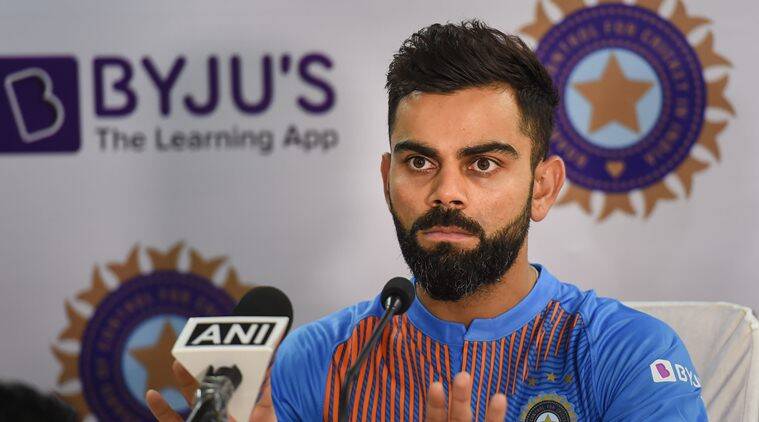
Virat Kohli was asked a question on the Mohammad Shami controversy during a press conference on Saturday, responding to which he lashed out at cricket fans in India over the abuse that the bowler faced. The Indian captain said that the team stands fully behind Mohammad Shami.
Virat Kohli said, “To me attacking someone over their religion is the most, I would say, pathetic thing that a human being can do. Everyone has the right to voice their opinion and what they feel about certain situations, but I personally have never ever even thought of discriminating [against] anyone over their religion. That is a very sacred and personal thing to every human being and that should be left there.”
Kohli continued, “People take out their frustrations because they have no understanding of what we do as individuals – they have no understanding of how much effort we put on the field.”
Virat Kohli stated further, “They have no understanding of the fact that someone like Mohammed Shami has won India ‘n’ number of matches in the last few years and he’s been our primary bowler with Jasprit Bumrah when it comes to making an impact in games in Test cricket. I mean, if people can overlook that and his passion for the country, I honestly don’t even want to waste one minute of my life to give any attention to those people. Neither does Shami and neither does anyone else in the team. We stand by him fully. We are backing him 200 percent, and all those who have attacked him can come with more force if they want to: our brotherhood, our friendship within the team, nothing can be shaken.”
While the batsman did not explicitly state he was speaking about Indian cricket fans, his response leaves little room for doubt. Intriguingly enough, reports and OpIndia’s own investigation revealed that Mohammad Shami was abused along religious lines by Pakistani accounts, ostensibly in a bid to defame India.
Several accounts from which the Indian bowler had received abuse had been created very recently, which were then promoted by usual suspects with noted anti-India animus. However, Virat Kohli, due to his arrogance, gave Pakistan a free pass and unwittingly aided in the efforts to malign India’s reputation.
Virat Kohli targets social media critics
Virat Kohli said, “There’s a good reason why we are playing on the field and not some bunch of spineless people on social media that have no courage to actually speak to any individual in person.”
“They hide behind their entities and go after people through social media, making fun of people and that has become a source of entertainment in today’s world, which is so unfortunate and sad to see because this is literally the lowest level of human potential that one can operate at, and that’s how I look at these people,” he added.
Kohli also said, “We, as individuals, understand what we want to do on the field and the strength of character and mental toughness that we have and precisely doing what we are doing on the field. None of these people are even in the vicinity to even imagine doing something like that. They don’t have the courage or spine to do that. So that is how I see things and this drama created on the outside is purely based on people’s frustrations, their lack of self confidence, their lack of compassion, hence they find it so amusing to go after people.”
Netizens are not happy with his answer
Netizens are angry over the fact that Kohli chose to attack Indian social media users when Mohammad Shami was abused by Pakistanis.
More woke stuff @imVkohli no one attacked Shami, it was Pakistani propaganda and ISI Bots. Stop guilt trapping us !!! https://t.co/BDMRHBgrJX
Shut up @imVkohli ! It has already been proven that the pakis trolled him! You should apologise to the indian cricket fans! Blaming this on us just shows how disconnected you are from the fans! You do not know your own people! You have fallen in grace! Sad!? https://t.co/GfMbuclV4W
People are extremely angry with Kohli’s response and are letting their opinions known.
Kohli condemning abuse of Shami after it had been shown that no Indian abused Shami and it was a Pakistan project, this Indian team can fuck of to be honest…. Hope Kane Williamson ends this painful tournament tomorrow…
kōzhi ensuring that the remaining .786% ppl outside his utterly illiterate tardfam who hoped India would somehow scrape through to the semis, would now start praying for India to lose to Kiwis & get KOed from thubaay.
The controversy erupted after India were soundly beaten in their first match of the T20 World Cup 2021 against Pakistan. Apart from the controversy surrounding Mohammad Shami, there were other controversies as well. Former Pakistan captain Waqar Younis had said that watching Mohammad Rizwan offering Namaz in front of Hindus was the best thing about Pakistan’s victory, which also attracted huge criticism.
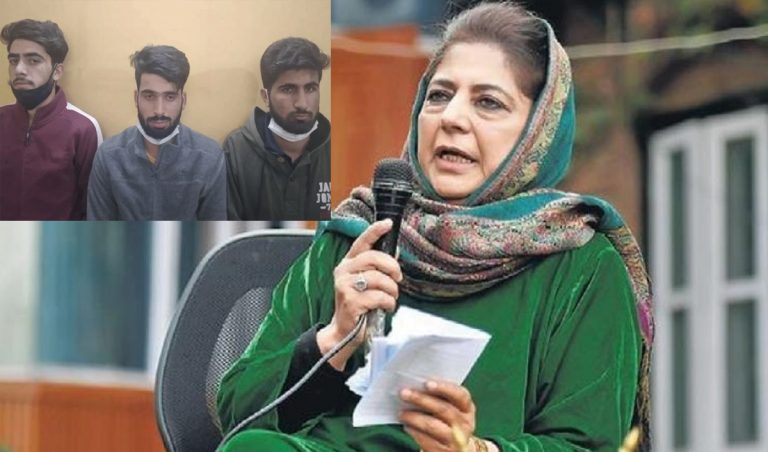
PDP President Mehbooba Mufti has requested Prime Minister Modi to intervene in the matter of the arrests of three Kashmiri students in Agra for celebrating the win of the Pakistan cricket team against India in the T20 world cup. She wrote a letter to the PM yesterday to express concern over the latest developments in Jammu and Kashmir, and defended Kashmiri students supporting the Pakistan cricket team saying that sense of patriotism can’t be forced on people.
PDP President @MehboobaMufti writes to PM Modi regarding the arrests of three Kashmiri students in Agra for allegedly celebrating Pakistan’s win over India in #T20WorldCup match. “I request you to intervene so that future of these youngsters is not destroyed,” she says
The letter addressed to the Prime Minister said, “I write to you with a deep sense of disappointment & concern about the alarming situation in Jammu and Kashmir. Not too long ago when you presided over an all party meeting in Delhi you expressed your intention to remove “dill ki doori” between Delhi and J&K…”
The letter then read, “..We had been waiting for the roll out of a policy to address the hearts and minds of people especially youth. While the spree of raids, arrests, killings continue unabated the level of repression and state intolerance has touched a new low…”
PDP Mehbooba Mufti said that home minister Amit Shah had talked about engaging with the youth during his recent J&K visit, but what happened instead was shocking and worrying, referring to the arrest of several people for supporting Pakistan in the cricket match. Defending that act of supporting the cricket team of the enemy nation, Mehbooba Mufti said, “…A friendly cricket match between India & Pakistan that was solely a source of entertainment for people here bruised by incessant lockdowns, internet gag and restriction of movement led to booking youngsters under the draconian UAPA for simply choosing to cheer the winning side…”
She said that brightest young people doing professional courses like MBBS were targeted and slapped with anti-terror laws. She then went on to say, “Patriotism and sense of loyalty has to be cultivated with compassion and can’t be forced by wielding the baton or by the barrel of a gun”. She also added, “Such punitive actions laced with contempt will only further the sense of mistrust and alienation between the younger generation and the rest of the country,” virtually threatening that youths will join the separatist terror groups if they are not allowed to support Pakistan in sports.
Mehbooba Mufti then requested PM Modi to intervene in the matter so that the future of the young bright minds is not destroyed, “I fervently request you to intervene so that the future of these young bright minds is not destroyed”
Notably, Students in Kashmir’s Srinagar colleges were booked under the UAPA (Unlawful Activities Prevention Act) and other relevant sections of the Indian Penal Code for celebrating Pakistan’s victory against India in the T20 World Cup match. Two separate cases were registered for two separate incidents that occurred at the hostel of SKIMS hospital in Soura and hostel in Government Medical College (GMC) in Karan Nagar, Srinagar.
Also, Uttar Pradesh Police booked 7 more people in 5 districts for raising pro-Pakistan slogans after India lost to Pakistan in the T20 World Cup match. According to reports, sedition charges were invoked against them and three were arrested in Agra on allegations of raising pro-Pakistan and anti-India slogans.
Apart from that, Kashmiri students in Sangrur, Punjab at the Bhai Gurdas Institute of Engineering and Technology were thrashed by students from Uttar Pradesh and Bihar for cheering for Pakistan during the India Pakistan match.
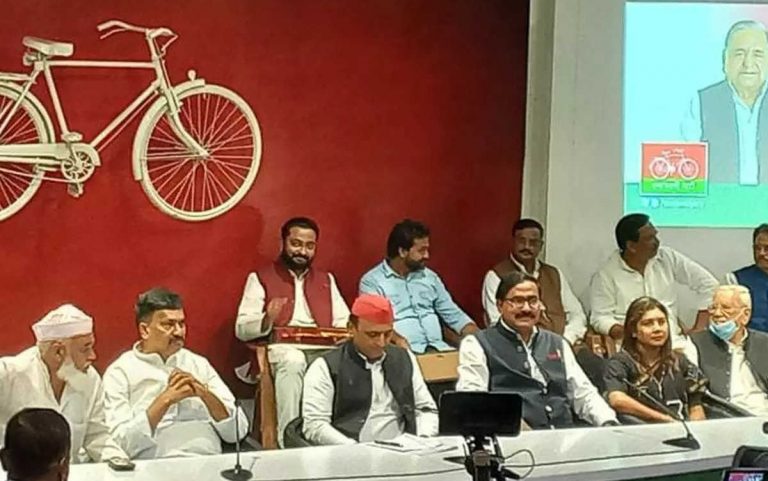
Ahead of the assembly elections in Uttar Pradesh, six suspended MLAs of Bahujan Samaj Party (BSP) and one BJP MLA joined the Samajwadi Party (SP) led by Akhilesh Yadav on Saturday in Lucknow.
The BSP MLAs who joined Akhilesh’s party are Aslam Raini (Bhigna), Mujtaba Siddiqui (Pratapur), Aslam Ali Chaudhary (Dhalauna), Hakim Lal Bind (Handia), Sushma Patel (Mungra Badshapur) and Hargovind Bhargava (Sidhauli). Rakesh Rathore is the BJP MLA from Sitapur Sadar assembly constituency who has switched to SP. BSP had suspended these MLAs after they opposed the nomination of BSP’s official candidate for Rajya Sabha polls in October last year.
Lucknow: Six suspended BSP MLAs — Hargovind Bhargav, Mujtaba Siddiqui, Hakim Lal Bind, Aslam Raini, Sushma Patel, and Aslam Chaudhary and BJP MLA from Sitapur Sadar Rakesh Rathore today joined Samajwadi Party in presence of party president Akhilesh Yadav. pic.twitter.com/CTcM52n0BW
Their joining has no element of surprise since these MLAs had earlier hinted that they will join the SP. In October last year, BSP chief Mayawati had suspended seven of her party’s MLAs who had opposed the nomination of BSP’s official candidate Ramji Gautam for the Rajya Sabha election. Six of them were in regular touch with the SP, and had met Akhilesh Yadav in June. That time they had made their intention known to join the SP. Two other expelled BSP MLAs Ramachal Rajbhar (Akbarpur) and Lalji Verma (Katehari) are also set to join the SP on November 7. Both were considered close to Mayawati who had delegated them key responsibilities like the leader of the opposition and BSP national general secretary respectively. They had also served in Mayawati-led cabinet in Uttar Pradesh. Both were expelled from the BSP in June this year for their alleged anti-party activates during the panchayat election earlier this year.
The BJP MLA Raakesh Rathore has a known history of anti-party and activities. Rathore, a businessman by profession, had started his political career from the BSP. He unsuccessfully contested the Sitapur assembly seat as the BSP nominee in 2007. He had joined the BJP ahead 0f the last assembly election and got the BJP ticket. But right after he won the election, he became critical of the party and the Yogi Adityanath government. When the Uttar Pradesh government had thrown its might to control the Covid-19 pandemic he was mocking and criticizing the Yogi government. He had said that MLAs had no status in Uttar Pradesh adding that he might have to face sedition charges if spoke too much.
He had also mocked Prime Minister Narendra Modi’s ‘Tali thali, diya jalao’ appeal. Rathore had met Akhilesh Yadav last month, confirming that he will be joining Samajwadi Party soon. At that time, BJP leaders had said that non-performers who are sure that they will not get tickets in 2022 are looking for greener pastures, and Rathore is one of them.
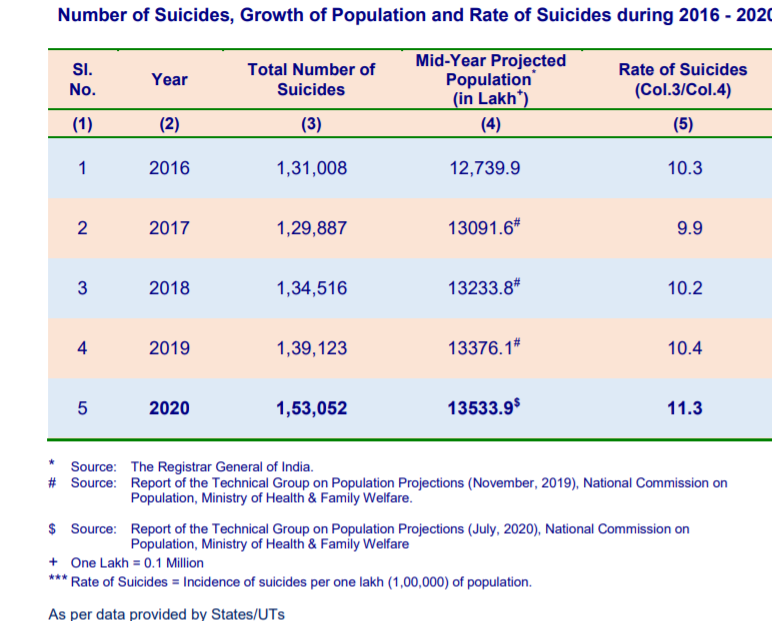
The number of suicides reported in the country during the year 2020 increase by 10% compared to 2019 data, as per the latest National Crime Records Bureau (NCRB) report on accidental deaths and suicides. According to the report, 1,53,052 suicides were reported during 2020 in the country. The number of suicides increased by 10% compared to 2019, as it went up from 1,39,123 in that year.
Source: NCRB
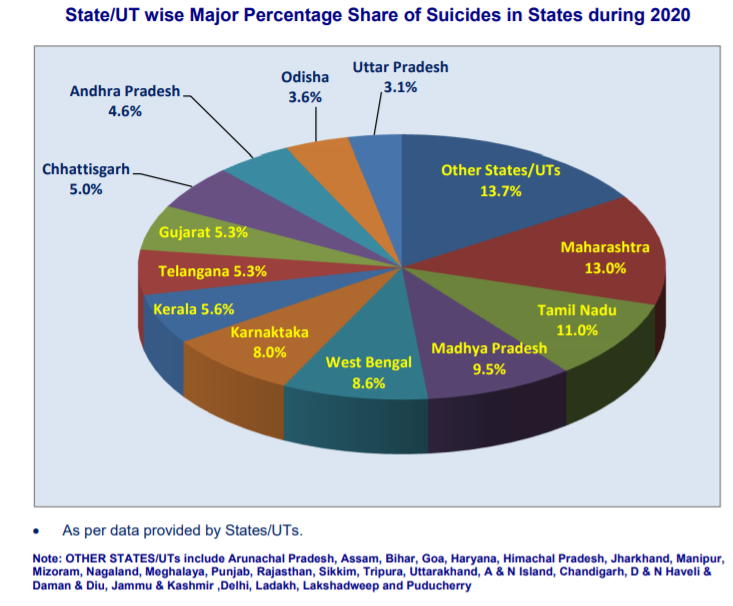
Maharashtra reported the highest number of suicides with 19,909, comprising 13% of the total suicides, while Tamil Nadu followed Maharashtra with 16,883 suicides and 11 % of the total number. Madhya Pradesh, West Bengal, Karnataka marked 9.5%,8.6% and 8.0% of the total suicides in 2020 respectively. The total of these five states accounts for 50.1% of the total number of suicidal deaths reported in the country.
Source: NCRB
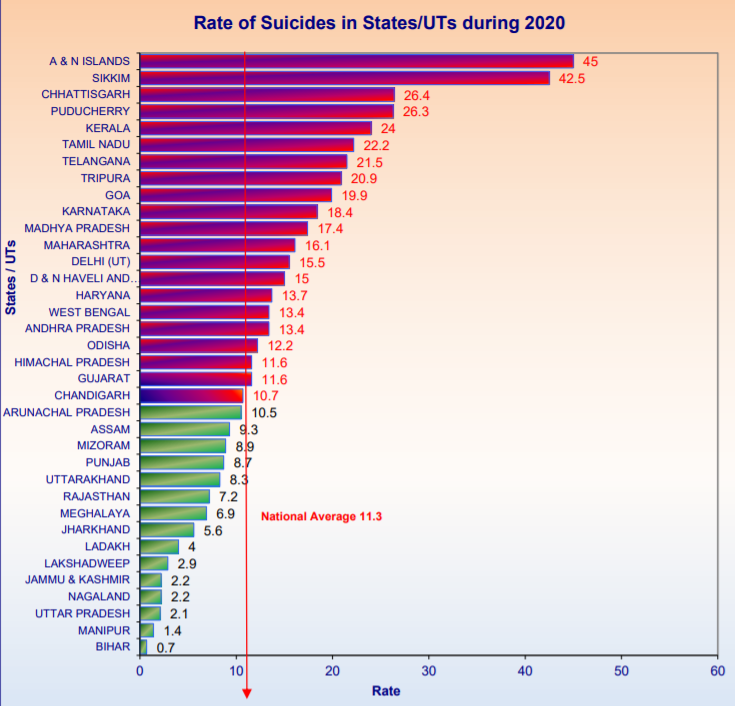
Delhi reported the highest number of suicidal cases among the Union Territories (UTs) according to the report with 3142 suicides. Uttarakhand (82.8%), Mizoram (54.3%), Himachal Pradesh (46.7%), Arunachal Pradesh (42.9%), Assam (36.8%) and Jharkhand (30.5%) reported significant increases in the suicidal deaths in 2020 as compared to 2019.
Manipur (24.1%), Puducherry (17.2%), Uttar Pradesh (12.1%), Haryana (4.5%) and Chandigarh (2.3%) showed the highest percentage decrease in suicides from 2019 to 2020.
Source: NCRB
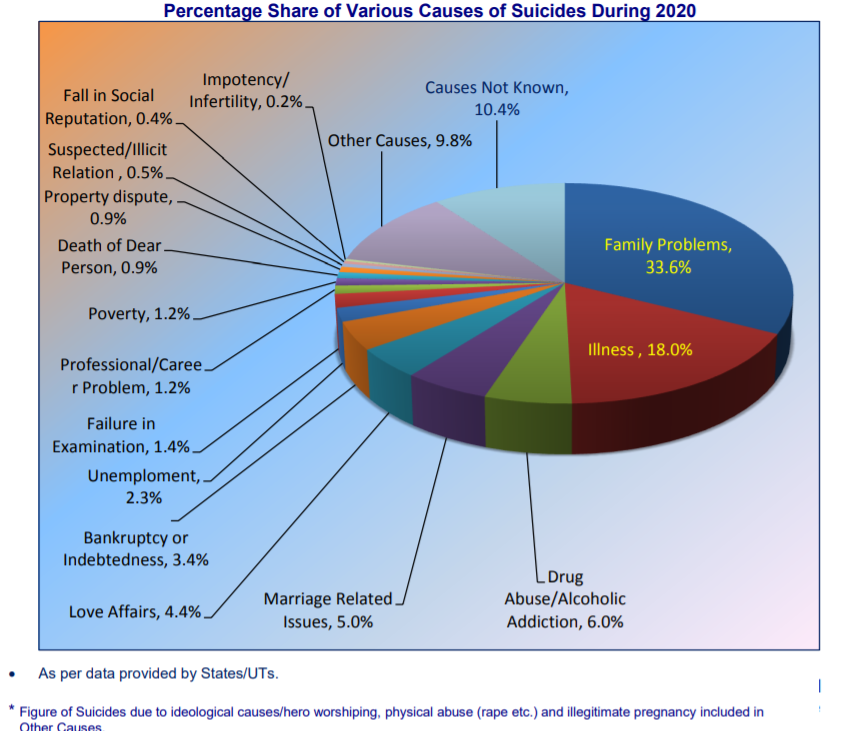
According to the report, during 2020, ‘Family Problems’ and ‘Illness’ were the major causes of suicides comprising 33.6% and 18.0% of total suicides respectively. Other causes of suicides listed in the report include ‘Drug Abuse/ Addiction’ (6.0%), ‘Marriage Related Issues’ (5.0%), ‘Love Affairs’ (4.4%), ‘Bankruptcy or Indebtedness’ (3.4%), ‘Unemployment’ (2.3%) ,‘Failure in Examination’ (1.4%), ‘Professional/Career Problem’ (1.2%) and ‘Poverty’ (1.2%).
Source: NCRB
The report further noted, “…A total of 10,677 persons involved in farming sector (consisting of 5,579 farmers/cultivators and 5,098 agricultural labourers) have committed suicides during 2020, accounting for 7.0% of total suicides victims (1,53,052) in the country. Out of 5,579 farmer/cultivator suicides, a total of 5,335 were male and 244 were female.Out of 5,098 suicides committed by agricultural labourers during 2020, 4,621 were male and 477 were female…”
The report also added, “Majority of victims engaged in farming sector were reported in Maharashtra (37.5%), Karnataka (18.9%), Andhra Pradesh (8.3%), Madhya Pradesh (6.9%) and Chhattisgarh (5.0%).”
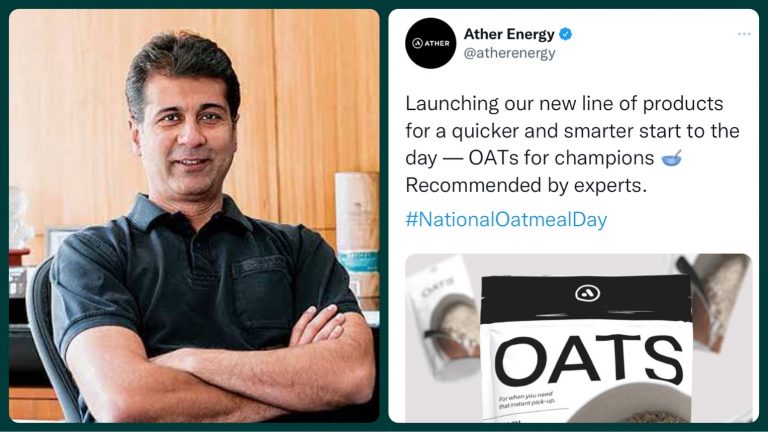
A day after Bajaj Auto Managing Director Rajiv Bajaj took a dig at electric-vehicle manufacturers, saying legacy automobile companies are champions and they eat OATS (Ola, Ather, Tork and SmartE) in breakfast, the electric two-wheeler maker Ather Energy made a witty riposte by announcing that it was launching a new line of products—OATs for champions.
“Launching our new line of products for a quicker and smarter start to the day — OATs for champions. Recommended by experts,” the official Twitter account of Ather Energy tweeted.
Taking a swipe at the legacy automobile companies, the post shared by Ather Energy shared a picture of a packet of OATS that mentions – ‘for when you need that instant pick-up’, which refers to instant acceleration offered by electric two-wheelers as against their gasoline counterparts.
Rajiv Bajaj targets fledgling EVs, says legacy companies would eat them in breakfast
The post was uploaded, presumably in jest, after Rajiv Bajaj targeted EV startups like Ola, Ather, Torks and SmartE(OATS) on the launch of new Pulsar 250 CC this week. Bajaj said he would bet on BET(Bajaj, Enfield, TVS), for they have a proven track record.
Bajaj’s primary assertion was that EV startups are chiefly cash-burning businesses while the legacy behemoths were cash-flow businesses. He said champions like Bajaj, Enfield and TVS have always adapted to evolving market dynamics. They have successfully adapted on various fronts, be it cost, competition or new regulations. And they have capabilities to adapt again in the emerging EV ecosystem. He said that EV startups should not take established players lightly.
“I’m going to bet on BET. BET means Bajaj, Enfield and TVS. They are champions and they have a proved track record…We are champions and we eat OATS(Ola, Ather, Torks and SmartE) for breakfast,” Bajaj said.
What do champions eat for breakfast? For Rajiv Bajaj, it’s OATS.
Besides the biting remarks against EV startups, Bajaj also slammed Ola for not delivering even a single piece till date. Railing against the new startup companies, Bajaj said making customers wait for deliveries and creating unnecessary hype is what the new companies have mastered in.
By contrast, established players like Bajaj thrive on a cash flow model, Bajaj cited. He said his company is 75 years old and know how to tackle numerous hurdles in its way.