Home Blog Page 3871

Pakistani national sentenced to 12 years in US for wire fraud, hacked 1.9 million phones cost AT&T $200 million in losses: Full story

0

On Thursday (September 16), a Pakistani national was sentenced to 12 years in prison on charges of wire fraud and causing losses to the tune of $200 million for AT&T i.e. the largest telecommunication company in the world.

According to the pressnu release by the US Department of Justice, the accused was identified as one Muhammad Fahd. In June 2012, the Pakistani citizen had reached out to an AT&T employee on Facebook and offered large sums of money to help him unlock phones secretly. He operated under the alias of ‘Frank Zhang’. Fahd asked the employee to recruit others, who then used their credentials to remotely unlock phones. The accused worked out of a call centre in Bothell in Washington.

During that time, telecommunication company AT&T had subsidised the cost of cell phones, sold them under instalment plans to make them affordable. However, when Fahd effectively unlocked such phones, it meant that account holders did not need to pay At&T anymore as the phones were removed from the network of the telecom company. The Pakistani fraud also asked his co-accused to set up fake businesses, create fake invoices to collect payments in the name of genuine business establishment.

Pakistani national hired employees, software developer to compromise AT&T systems

After a new unlocking system was implemented in 2013 by the telecom company, it became difficult for Mohammed Fahd to unlock phones without authorisation. As such, he hired a software developer and installed malware into the computer systems of AT&T. The objective was to unlock a large number of phones effectively and gain network access credentials of other employees. The recruited employees of AT&T shared ‘confidential information’ about computer systems and unlocking procedures with him. This helped the software developer tailor-make the malware for AT&T’s computer systems.

Fahd to pay restitution of $200 million, pled guilty to wire fraud in September last year

In an internal forensic analysis conducted by the world’s largest telecommunication company, it was discovered that a total of 19,00,003 (19 lac) cell phones were compromised. As a consequence, the customers did not make payments to AT&T, causing a loss of $201,497,430.94 to the company. The Pakistani national was charged for wire fraud in 2017 and was arrested the following year in Hong Kong. Muhammad Fahd was then repatriated to the United States where he appeared before the Seattle District Court.

It was only in September 2020 that he pled guilty to all charges, 7 years after he began the game of deceit and fraud. He was directed to cough up a restitution amount of $200,620,698. While sentencing Muhammad Fahd to 12 years in prison, District Judge Robert S Lagnik emphasised that the accused committed ‘terrible cybercrime’ for a long period, despite being well aware of the probe initiated against him by the law enforcement authorities. The case was jointly investigated by the US Department of Justice, US Secret Service, and IRS-CI.

NIA releases hotline number, asks people to report ISIS propaganda on social media and Jihadi activities in India: Read full details

National Investigation Agency (NIA), the premier investigation agency of India has released a hotline number 011-24368800 for common people to inform or lodge complaints against people involved in propagating ISIS ideology on social media or trying to radicalize youth.

The NIA has investigated a large number of cases related to terror funding, conspiracy and attack and out of which 37 are such cases where accused were inspired by ISIS. The most recent case was registered by NIA in June 2021. During the investigation, NIA arrested a total of 168 accused. Chargesheets have been submitted in 31 cases, and 27 accused have been convicted by the special NIA court.

Islamic State of Iraq and Syria (ISIS) is one of the notorious terrorist outfits of the Middle East. Infamous for its brutal violence and assaults on civilians, the outfit aims to establish an Islamic state through violence.

What has left security agencies worried is the findings of the probe that confirms that ISIS is trying to spread its tentacles in India through continuous online propaganda. Among Indian states, the maximum number of cases of ISIS modules, recruitment, radicalization and even some joining ISIS terrorists have been reported from Kerala. Especially the northern part of Kerala has been under the scanner of security agencies.

ISIS has been using open social media sites like Facebook, Twitter, Telegram, Hoop Instagram and likes to identify and trap gullible youths. Once a person shows interest the ISIS handlers sitting abroad start radicalization of youths using encrypted social media platforms like the dark web. The handler asks them to upload and spread ISIS literature, generate online content, translate terror literature in local languages, prepare modules sleeper cells, collect arms and ammunition, assemble IEDs, terror funding and attacks.

ISIS also publishes India centric online propaganda magazine ‘Voice of Hind’ on monthly basis to radicalize and recruit youths. There are instances where local recruits of the ISIS also established modules of ISIS that operate under different names. For instance, during the investigation of the murder of Y. Wilson, Special Sub-Inspector of Tamil Nadu Police in January 2020 allegedly by ISIS operatives Abdul Shameem and Thowfeek it was found that they are part of the Al-Hind module of ISIS.

It was found by Khaja Moideen and Mehboob Pasha with an intention to establish Khilafat or Islamic Rule in India, as part of furthering the objectives of ISIS. There are other modules too like  Hizb-ut-Tahrir which was busted in Bengaluru. They have been tasked to kill Hindu leaders in India.

There are instances when even terror training camps were organized in the deep forest of South Indian states to give training to recruits to operate weapons and manufacture IEDs. This was revealed during the investigation of one of the ISIS terror cases of Kerala investigated by NIA (RC 02/2020/NIA/DLI) where ISIS operatives had manufactured and tested IEDs using the dark web for secret communications with foreign-based handlers and jungle camping equipment were procured to organize terror training camps.

West Bengal CID team arrived to arrest BJYM leader in Aligarh locked up in a room and beaten up: Read about the case and what led to altercation

A CID team from West Bengal reached Aligarh in Uttar Pradesh on Friday, September 17 to apprehend Yogesh Varshney, a leader of the Bharatiya Janata Yuva Morcha (BJYM), who had in 2017 allegedly make a threat against West Bengal Chief Minister Mamata Banerjee. A group of enraged BJP members reportedly locked up the four police officers in a room and beat them up all night after the officers had misbehaved with the family members of the leader.

In a video of the incident that surfaced on social media, when the WB police officers were being led out of the house, a member from the crowd is heard shouting ‘Khela kar denge’.

The Aligarh police then responded to the video saying that the Bengal police was unable to arrest anyone. “In the course of the investigation, the Bengal Police Station reached the Gandhipark area, there was a rift with the team of the local people – the local people accused the team of misbehavior – the situation was pacified by the officials immediately on the spot, no arrest was made by the West Bengal Police”.

It may be noted that the ‘Khela hobe’ slogan was initially coined as the Trinamool Congress’ election slogan, ahead of the West Bengal Vidhan Sabha polls, soon turned into a war cry. During her election rallies, the West Bengal Chief Minister continued to provoke her party workers to retaliate against the central armed forces and BJP workers. Several instances of violence were thus reported during the various stages of polling.

Meanwhile, the action taken by the BJYM members was in reprisal for the maltreatment of BJP leaders’ family and female members of the house by the police officers sent by West Bengal CM Mamata Banerjee to nab BJYM leader Yogesh Varshney.

The CID had reached to arrest the BJP leader as they allege that the BJP’s youth wing had announced a bounty of Rs 11 lakh for West Bengal Chief Minister Mamata Banerjee’s head in the year 2017 after the police in her state used batons to disperse a rally in West Bengal’s Birbhum district for raising slogans Jai Shri Ram slogans on Hanuman Jayanti.

The West Bengal police had misbehaved with BJYM leader’s family members

According to a report by the Hindi daily Jagran, four police officers from West Bengal’s CID, including SI Suvasish Dutt and constable Alamgir, arrived in Aligarh late Friday evening with the attachment and arrest warrant issued by the court against BJYM leader Yogesh Varshney in a 2017 case.

The cops arrived at Gandhipark police station first. At around 7.30 pm, the team arrived at Yogesh’s house, accompanied by Gandhipark outpost in-charge Sandeep Kumar and a constable. The outpost in charge and the constable stopped at the door outside. Policemen in plain uniform, who came from West Bengal, entered the house and enquired about Yogesh.

Yogesh was not at home at that time. While searching the house, the police officers got into a scuffle with Yogesh’s family members. It is believed that they also misbehaved with the ladies of the house. On hearing the family member’s screams, people from the neighbourhood collected. The information reached Yogesh Varshney, who in turn informed his party members. The latter then reached Yogesh’s house in large numbers and locked the WB police officers in the house. The officers were reportedly beaten and the warrant and their identity cards were also snatched from them.

Ultimately local police intervened and “rescued” the CID team for the BJP leaders’ house.

Taliban sidelined Mullah Baradar at the behest of Pakistan, Mullah Mohammad Hasan Akhund chosen as PM because of his ‘better links to Islamabad’

0

Days after the Taliban announced the names of cabinet members of the interim government in Afghanistan, it has now come to light that the acting Prime Minister Mullah Mohammad Hasan Akhund was chosen due to his close ties with the Pakistani ISI, reported Bloomberg.

Given his public stature and supposed ‘moderate views’, it was initially speculated that Mullah Abdul Ghani Baradar would be appointed as the acting Prime Minister of the Islamic Emirate. However, Baradar was sidelined for a lesser-known Talib i.e. Mullah Mohammad Hasan Akhund and appointed the latter’s deputy. Bloomberg News reported that one of the key factors influencing the decision was Hasan’s ‘better links with Islamabad’, besides not being a threat to the Haqqani network. Hasan was appointed by the supreme leader of the Taliban aka Maulvi Haibatullah Akhundzada.

Bloomberg News further informed that Mullah Abdul Ghani Baradar was physically attacked by a Haqqani Network terrorist named Khalil ul Rahman Haqqani at the Presidential Palace in Kabul. The incident took place earlier this month during the discussion on the interim cabinet formation. Reportedly, Baradar wanted the inclusion of ethnic minorities and non-Talibs in the cabinet in hopes of being ‘acceptable’ to the world. However, Haqqani despised the idea and began assaulting Baradar. The scuffle soon escalated with bodyguards firing at each other, resulting in deaths and injuries.

Baradar was physically assaulted by Haqqani Network terrorist

Bloomberg News pointed out that Baradar was not injured in the attack but had left Kabul for Kandahar to speak to the Maulvi Haibatullah Akhundzada. The Haqqani network has four members in the interim cabinet, including the FBI’s most wanted terrorist Sirajuddin Haqqani. He was appointed the Acting Interior Minister of the Islamic Emirate. Baradar had spent 8 years in Pakistan prison and was released last year under the direction of the Donald Trump administration. Given that his ‘moderate views’ posed a threat to both Islamabad and the Haqqani network, Baradar was pushed to the sidelines.

Talibs deny claims of brawl, internal conflicts

Following the revelation of a ‘shoutout’ in the Presidential palace, Baradar had denied reports of internal conflicts within the Taliban regime. He alleged, “Praise be to God, I am safe and sound. Another statement made by the media that we have internal disputes is also completely not true.” Taliban spokesperson Bilal Karimi also claimed that there were no differences between the cabinet members and affirmed that Mullah Abdul Ghani Baradar was not sidelined. “There are no differences among the leaders of the Islamic Emirate,” Karimi said. “They don’t brawl over any office or government positions,” he remarked.

Taliban announced all-male cabinet including UN-designated list of terrorists

On September 7, the Taliban announced a 33-member cabinet of the Afghan government, headed by Mullah Muhammad Hassan Akhund. Hassan had earlier served as the deputy prime minister of the first Taliban government between 1996 and 2001. He is also on the blacklist of the United Nations for participating in terrorist activities. However, the most eyebrow-raising appointment made by the Taliban was that of Sirajuddin Haqqani, the new acting interior minister, who heads the terror group known as Haqqani Network and is on the FBI’s most-wanted list.

The terror group is said to have close ties with the Taliban, which the appointment of Haqqani had confirmed. They have been behind some of the deadliest attacks in the country’s two-decade-long war – including a truck bomb explosion in Kabul in 2017 that killed more than 150 people. Unlike the wider Taliban, the Haqqani network has been designated a foreign terrorist organisation by the US. It also maintains close ties to al-Qaeda. Besides, the Taliban cabinet also includes four members who were held at the Guantanamo Bay, the American detainment camp, for 13 years before being exchanged in 2014 for Sgt. Bowe Bergdahl, an American soldier kidnapped by the Taliban.

Rajasthan Congress Govt passes bill to register child marriage, BJP protests, says it justifies child marriage: Details

The Rajasthan Congress government led by Ashok Gehlot has passed the ‘Compulsory Registration of Marriages Amendment bill of Rajasthan’ on Friday, September 17. By clearing the passage of the aforementioned bill to register child marriage, the Congress government has allowed the registration of child marriages in the state.

According to the bill, if the girl is under the age of 18 at the time of the wedding and the boy is under the age of 21, the parents must notify the registration officer within 30 days by furnishing a memorandum to the officer in the prescribed format. The concerned authority will begin the registration process based on the information provided.

Rajasthan government’s decision to pass the contentious bill to register child marriage faces strong opposition from all quarters

The opposition strongly objected to the Congress government’s decision. During the Parliament proceeding, BJP, the assembly’s main opposition party, questioned why there is a need for registration and what the bill’s purpose is if child marriage remains illegal. Furious BJP MLAs then walked out of the House. Before the bill was passed, BJP demanded voting on it, but the chairman ignored it. The bill was passed by voice vote. 

Independent MLA Sanyam Lodha, once a close aide of Ashok Gehlot, expressed strong opposition to the former’s decision, saying that the Bill “justifies child marriage, it is unjust, and it is against the people.”

“There is now an abundance of people who educate their children and don’t like child marriages. But if you justify child marriages, this will send a wrong marriage before the nation. The Rajasthan Assembly will be humiliated before the entire nation,” added Lodha.

Leader of Opposition Gulab Chand Kataria said that the state is formulating a law that is against the Child Marriage Act. “Back then too, you had used the same words as now…you are authorising minor kids to get married. The only restriction is that their kin have to inform within 30 days.”

“We made a mistake once and now we are repeating it,” Kataria said and apologised for the 2009 Act saying that he was a member of the Assembly back then too. “If minor kids get married and the state gives them a certificate as per law then how is this correct?” Kataria lashed out.

Furthermore, social activist, Dr Kriti Bharti, the managing director of Saarthi Trust in Jodhpur, who has successfully annulled scores of child weddings in recent years, also criticised the contentious bill. Bharti said the bill exposes the state government’s “double standards”.

The activist tore into the Congress government in the state saying: “While the rest of the world is trying to eliminate child marriages, the Rajasthan government is actively promoting it. This is only to appease the Jati Panches, who is the party’s vote banks.”

Rajasthan Govt justifies the contentious bill

Despite facing so much resentment, the Ashok Gehlot went on to justify its outlandish decision. Parliamentary Affairs minister Shanti Dhariwal replied in the Assembly that the Bill “nowhere says that underage marriages will be legal.”

“Even if a marriage among underage children is held, its registration is mandatory. However, the Bill doesn’t make the marriage legal and the District Collector can take action against them,” Dhariwal said.

He added that the Bill doesn’t go against the central Act either. He also said that in 2006, the Supreme Court had ruled that registering the marriage is mandatory, whether one is minor or not.

Child marriage prohibited in India

It may be noted that there has been a law in India against child marriages for the last 90 years. The previous law, the Child Marriage Restraint Act of 1929, only included measures for preventing or prohibiting child marriages, not for restraining solemnization. As a result of the ineffectiveness of the Child Marriage Restraint Act, 1929, new legislation to replace it was enacted on 1 November 2007 in India and the Prohibition of Child Marriage Act 2006 came into force. The current law serves three purposes: it prevents child marriages, protects children involved in the marriages, and prosecutes perpetrators.

Child marriage is now a cognizable and non-bailable offence under this statute. The court can order an injunction to prevent the marriage from taking place, and if the marriage takes place after the injunction, the marriage will be considered null and void. The act of performing, conducting, or abetting a child marriage is likewise punishable under this statute. Parents will be held liable if they encourage or promote child marriage,

NDTV’s Ravish Kumar has a meltdown yet again, lies about Dainik Bhaskar publishing full-page ad wishing PM Modi on his birthday after IT raids

NDTV’s Ravish Kumar who often peddles fake news and has frequent meltdowns against Prime Minister Modi, the government and anyone who refuses to toe his agenda took to Facebook on PM Modi’s birthday to lie through his teeth yet again. The veteran propagandist alleged that after the IT raids against Dainik Bhaskar, the paper had been tamed and to please PM Modi, ended up publishing a full-page ad wishing him on his birthday.

Ravish Kumar in his Facebook post wrote that after the IT raids, the Agrawal seniors are keeping their eye on Prime Minister Modi. He alleged, that after the raids, their reverence for PM Modi had increased so much that instead of writing ‘Pradhanmantri’ in the ad, they ended up writing ‘Prashanmantri Shri’.

Ravish Kumar, as we all know, has a complicated relationship with the truth and every time he wants to denigrate the Prime Minister, he concocts another lie. This time too, Ravish did not hesitate from peddling lies to further his agenda.

The ad itself, as can be seen from the image shared by Ravish Kumar himself, was not an ad given by the government or published unilaterally by the paper. It was, in fact, an ad that was paid for by some supports of the Prime Minister. Below the image of PM Modi, one can see the names of those who wanted to wish the PM on his 71st birthday by way of this ad in the Dainik Bhaskar paper.

Ad wishing PM Modi in Dainik Bhaskar

Further, Ravish Kumar is also patently wrong when he claims that Dainik Bhaskar printed the ad and replaced “Pradhanmantri’ with ‘Pradhanmantri Shri’ because their reverence for PM Modi increased after the IT raids.

As a newsman, Ravish Kumar should be aware that newspapers publish ads exactly how the people paying for the ad want it. Therefore, Dainik Bhaskar, that was paid by the individuals who were getting this ad publish, did not make any changes to the ad and published it as it is.

The Bureau Chief of Dainik Bhaskar also responded on the post of Ravish Kumar confirming this.

Response of Dainik Bhaskar Bureau Chief

Rohit, the Bureau Chief of Dainik Bhaskar responded to the post by Ravish Kumar saying that an ad is published just as it is received by the newspaper and that the paper should not be questioned for the words chosen by those who want to get an ad published in the paper.

There was a larger point, however, that Ravish Kumar was trying to make with his misleading post. He was trying to say that Income Tax raids are conducted by the Modi govt to muzzle the free press and shut down dissenting voices. He further wanted to insinuate that after the IT raids, Dainik Bhaskar, who was being critical of the Prime Minister, had now started singing his praises.

We have often seen how the Left cabal cries vendetta and muzzling of freedom of the press every time legitimate action is taken against the media organisations. In Dainik Bhaskar’s case, the Income Tax Department revealed that it had found evidence of profits being siphoned off from listed companies and fictitious transactions of Rs 2,200 crore during the raids on the offices at Dainik Bhaskar group. Similarly, documents relating to unpaid taxes on Rs 700 crore of income over six years, violations of stock market rules have been found in searches at the Dainik Bhaskar Group.

The Income Tax Department said that during the search, they found that the DB group was operating several companies in the names of their employees, which have been used for booking bogus expenses and routing of funds. During the search, several of the employees, whose names were used as shareholders and directors, admitted that they were not aware of such companies and had given their Aadhaar card and digital signature to the employer in good faith. 

“Some were found to be relatives, who had willingly and knowingly signed the papers but had no knowledge or control of the business activities of the companies, in which they were supposed to be directors and shareholders,” the statement said. 

The IT department had further said,

“The real estate entity of the group operating a Mall had been sanctioned a term loan of Rs 597 crore from a nationalised Bank. Out of this, an amount of Rs.408 crore has been diverted to a sister concern as a loan at a low-interest rate of 1%. While the real estate company has been claiming expenses of interest from its taxable profit, it has been diverted for personal investments of the holding company,” the Income Tax Department said in a statement. 

The Dainik Bhaskar Group, which operates more than 100 companies, did barter deals for advertisement revenues through its media channel, in which it received immovable properties in lieu of actual payments, the department said. The IT department has found evidence indicating cash receipts in respect of the subsequent sale of such properties. 

With such extensive evidence of illegal transactions and financial impropriety, to allege that the raids were conducted to “tame” the media company editorial is simply propaganda and a lie that is being furthered to target the Modi government.

‘Raghav Chadha, stay away from me and my name,’ Rakhi Sawant tells AAP leader after he dragged her name in fight with Navjot Singh Sidhu

AAP leader Raghav Chadha stirred a major controversy on Friday when he compared Congress leader Navjot Singh Sidhu with entertainer Rakhi Sawant. Responding to a video message posted by Sidhu on Twitter, Chadha had termed Sidhu as the Rakhi Sawant of Punjab politics, for which he was widely criticised by netizens for using a ‘sexist’ jibe against the Punjab Congress chief. After the tweet went viral, now Rakhi Sawant herself have come forward to slam the AAP leader for dragging her name in politics.

In an interview taken by Telly Reporter, when asked about her reaction to Raghav Chadha’s tweet, Rakhi Sawant asked back, ‘kisi shamat ayi hai jo mere pe comment kar rahe hai’? (Whose end has arrived that commenting on me?). When told that an AAP leader invoked her name, she said that she does not care about any ‘AAP ka neta’ or ‘Baap ka neta’ (AAP’s leader or father’s leader).

Rakhi Sawant then addressed Raghav Chadha directly. ‘Raghav Chadha, stay away from me and my name. Jo Mr. Chadha ho naa, mera naam loge naa, to tumhara Chadha utar dungi’, the celebrity said in her characteristic style.

She added that due to the controversy created by Raghav Chadha, her name was trending on social media. She said that Chadha had to use to her name, and her name trends on social media. Her husband Ritesh was with her during the interview.

Ritesh had replied to Raghav on Twitter objecting to the use of Rakhi Sawant’s name for political benefits. He asked Chadha to treat his tweet as warning, saying that if Chadha uses his wife’s name again, he will face legal issue. “I will also ensure you will never win again. Because you don’t deserve that position. You are trying to spoil someone name,” Ritesh added.

He also tagged Arvind Kejriwal asking him to educate his MLA, saying that if he educates, AAP will be seen nowhere.

Raghav Chadha had invoked the name of Rakhi Sawant after Navjot Singh Sidhu had criticised AAP supremo Arvind Kejriwal in his video, alleging that the Delhi CM has decreased prices of even those crops for which MSPs have been announced. He had also slammed the Delhi govt for notifying the farm laws against which Punjab farmers are protesting.

Reacting to this, Raghav Chadha had tweeted, “The Rakhi Sawant of Punjab politics -Navjot Singh Sidhu- has received a scolding from Congress high command for non stop rant against Capt. Therefore today, for a change, he went after Arvind Kejriwal. Wait till tomorrow for he shall resume his diatribe against Capt with vehemence”.

Sidhu had immediately responded to Chadha’s tweet, saying he is still descending from apes to become a man. “They say man descended from the apes and the monkeys, Looking at your mind @raghav_chadha  I believe you are still descending ! You still haven’t answered my question about notifying the Farm Laws by your Government,” Sidhu had tweeted.

In the meanwhile, Raghav Chadha was slammed by many people for dragging Rakhi Sawant into his political fight. Even left-liberal journalists, who generally give a free pass to AAP leaders on various issues, criticised him for this.

Critics termed the tweet of Raghav Chadha as misogynist, saying that it was in very bad taste. Netizens also came in support of Rakhi Sawant, saying she is a self-made woman who works her in her field.

Uttarakhand Congress goes into panic mode after its MLA joined BJP, sends observers to district, city units for review meetings

0

Ahead of the assembly election in Uttarakhand scheduled the next year, the Congress party is facing worries after one of the sitting MLA of the party Rajkumar joined the BJP. Rajkumar who was earlier with the BJP had won the last assembly election from Purola assembly seat on a Congress ticket.

Rajkumar had joined and left BJP multiple times in the last several years. After being elected as BJP MLA from Sahaspur in 2007, he had left the party 2012 when he was denied a ticket. He had contested as an independent candidate from Purola in 2012, but didn’t win. Rajkumar returned to BJP 2013. But when he was again denied a ticket in 2017, he joined Congress. He was fielded from Purola, and he won the election this time.

But he has again returned to BJP, saying that he is impressed with the good work of the party. He said, “The BJP is working towards making people from the lower castes independent, while Congress has made these people dependent on subsidies since Independence. I’ve joined the party today after seeing BJP’s great work in Uttarakhand.”

Now amid the signs of desertion, the Uttarakhand Congress has decided to send observers and co-observers across districts of the state for the ground assessment of the affairs of the party with a direction to submit the confidential report to the state unit within 15 days.

Ganesh Godiyal, who has recently been picked for the job of state president has appointed senior leaders, MLAs and office-bearers as observers and co-observers. He has also informed the co-in-charge of the state unit of the party Dipika Pandey Singh, an MLA from Jharkhand who has been picked by the central leadership to revive the electoral prospects of the party in Uttarakhand.

Observers and co-observers have been asked to hold meetings with office-bearers and workers of the party at the district level in the assigned districts.

A party leader said that incidents of party leaders joining other parties send an adverse message against the Congress party. He added that the state unit is trying its best to keep the leaders together and contest the Assembly polls to get back power.

“Observers and co-observers will tour all the districts and hold a review of organisational activities of booth committees, affairs of district units and check whether these units and leaders there are working in coordination with each other or not,” said Mathura Datt Joshi, party’s senior spokesperson and general secretary (organisation).

Apart from this, the state Congress unit has also decided to consider re-induction those party leaders who had been expelled from the party for anti-party activities in past five years. A committee will examine the requests of such expelled leaders.

Only time can tell whether such exercise can resolve the deep-rooted crisis and trust deficit the party has been facing. A few days back, the former state president of the Congress Kishore Upadhyaya too joined the BJP.  However, during election time such changes of consorts are quite natural but the Congress is worried that such desertion will escalate into a massive problem for the party.

The party is already plagued by intense internal factionalism and there is no serious move from the central leadership to resolve it. The factionalism between the camps led by former chief minister Harish Rawat and leader of opposition Pritam Singh has worse affected the party. This is not a single case of factionalism.

The central leadership has endorsed Rawat as the chief ministerial face by appointing him as chairman of the election campaign committee. Rawat managed the post of state party president for Garhwali Brahmin industrialist Ganesh Godiyal who is a known Rawat loyalist.

But such arrangements have miffed others. Kishore Upadhyay, a Garhwali Brahmin, quit the party because of this. Former minister and another Brahmin from the Garhwal region Navprabhat decided to stay away from any committee. He was expecting the central leadership to promote him as state unit chief but he was asked to prepare the party manifesto.

The forgotten ‘Abba Jaan’ controversy: How the Left claimed that ‘Pita Shri’ of Mahabharat was inspired by ‘Abba Jaan’

For years, so-called liberals, Islamists, and leftist historians have glorified and celebrated the Mughals, who looted the country and massacred Hindus, as the ‘original nation builders‘. These ‘secular’ historians have gone so far as to name Mughal emperor Akbar the ‘real father of the nation’, notwithstanding the Mughal barbarism and Islamic savagery in India.

Recently, Yogi Adityanath had called out the minority appeasement done by the previous SP government in Uttar Pradesh saying that earlier, ration meant for the poor was usurped by those who say ‘Abba Jaan’. This turned into a raging controversy with those who like to hail Aurangzeb calling Yogi Adityanath ‘communal’ because, for them, the truth is often a ‘right-wing conspiracy’. After the controversy erupted, several propagandists started talking about their “Abba Jaan”.

While the truth was for all to see, there is another aspect of the term “Abba Jaan” that we thought was necessary to address.

In a 2017 article, leftist propaganda website Scroll had attributed ‘Abba Jaan’ for the origin of words like ‘Matashree’ and ‘Pitashree’.

Source: Scroll

According to an article in ‘Scroll,’ writer Rahi Masoom Raza coined phrases like ‘Matashree’ and ‘Pitashree’ in 1988 while writing dialogues for BR Chopra’s ‘Mahabharata’. It says that these words were inspired by Urdu words like Abbajaan and Ammijaan. Similarly, ‘Bhaijaan’ gave birth to the word ‘Bharatashree’.

According to the leftist media outlet, these terms were created by the Urdu writer who was inspired by Urdu words, otherwise, such words never existed in Hindi.

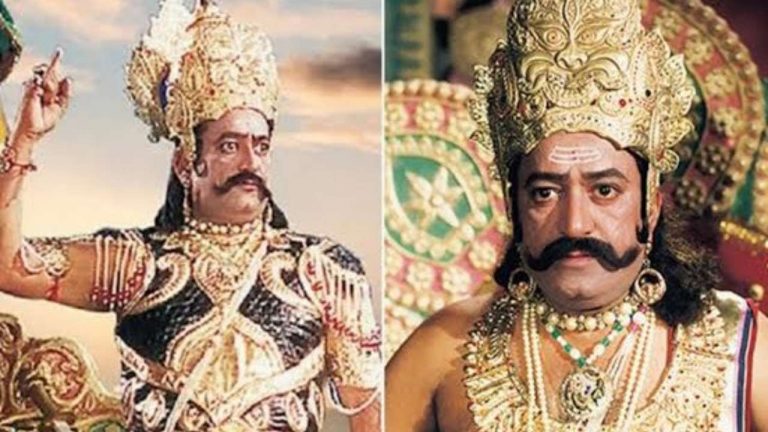
Because of its intense Hinduphobia, the leftist media outlet forgets that Meghnad greets his father Ravana as ‘Pitashree’ in the legendary serial based on the ancient Hindu epic Ramayana. Ramanand Sagar, the director of the 1987 TV series, wrote the dialogues himself. If Ramanand Sagar used the term ‘Pitashree’ in 1987, how did Urdu poet Rahi Masoom Raza coin it a year later in 1988? It is a question that the leftist media outlet must address.

Furthermore, there are works written before 1988 that include terminologies like ‘Matashree’ and ‘Pitashree.’ The word ‘Pitashree’ appears many times in the screenshot below from the book ‘Gyanodaya,’ which was released in the 1950s, leaving little doubt that these words were very much prevalent and used in Hindi poetry and literature in that decade too.

Excerpt from the book ‘Gyanodaya,’ which was released in the 1950s

Similarly, the word ‘Pitashree’ appears multiple times in popular writer Manohar Shyam Joshi’s 1983 book ‘Baat Baat Mein’. See how ‘Pitaashree’ is mentioned three times on the same page of the excerpt of the book shared below:

Excerpt from Manohar Shyam Joshi’s 1983 book ‘Baat Baat Mein’

It’s also worth noting that Pandit Narendra Sharma, who was the screenplay writer of BR Chopra’s TV adaptation of Mahabharata had assisted Rahi Masoom Raza in writing the Mahabharata dialogues step by step. In fact, Rahi Masoom Raza had himself acknowledged the fact.

In fact, Munshi Premchand, a prominent Hindi writer, also utilised similar terms in his works. His era was the British one. As a result, crediting Rahi Masoom Raza for coining the words ‘Pitashree’, ‘Matashree’, that too from Urdu words is nothing more than fabrication and the quintessential idiosyncrasy of the so-called liberals to appear secular.

From Children’s Day to Vaccination Day: Here’s how India under PM Modi transitioned from glorifying politicians to prioritising the sanctity of human life

Although March 16 is celebrated as the National Vaccination Day every year, from today onwards, September 17 will hold special significance as far as the nation’s COVID-19 vaccination is concerned, for this is the day on which India created history by administering more than 2 crore doses of Covid-19 vaccine in a single day, the highest single-day vaccination coverage perhaps in the entire world. 

On Friday, that is, on September 17, 2021, Prime Minister Narendra Modi celebrated his 71st birthday. On this occasion, the central government and various state governments decided to celebrate the Prime Minister’s birthday in the service of the country—aiming to vaccinate a record number of Indians against a scourge that has insidiously swept across the globe, killing over 4.5 million in its wake. 

As of 8:45 PM on Friday, September 17, India had already jabbed over 2.23 crore doses of COVID-19 vaccines, bettering the previous best of 1.41 crore vaccine doses in a single day, which was achieved on August 31. The country has now administered close to 80 crore doses so far, with around 20 crore getting two doses.

To put the matter into perspective, India has managed to inoculate about one-third of the United Kingdom population in less than 12 hours. September 17, therefore, will undoubtedly be hailed as the Vaccination Day for years to come. 

Central government planned to celebrate PM Modi’s birthday by boosting vaccinations

Ahead of PM Modi’s birthday, BJP had prepped its volunteers to ensure that the maximum number of people get their Covid-19 vaccines on September 17. The BJP had set the target of administering 2 crore vaccine doses on PM Modi’s birthday and had trained around 8 lakh volunteers for the same. 

Leaders of the BJP had urged healthcare officials and its volunteers to double the daily rate of vaccination. “Let’s do #VaccineSeva and give him (PM Modi) birthday gift by getting vaccinated those who have not taken the dose so far,” Union Health Minister Mansukh Mandaviya said yesterday, urging people to get the shots.

Similarly, several other ministers and workers hunkered down to increase vaccination coverage in their respective regions as a way to celebrate PM Modi’s birthday, a fitting tribute to a man who invoked the concept of trusteeship by portraying himself as a ‘Chowkidar’ overlooking the safety and security of the country.

India was in the throes of the coronavirus outbreak since March 2020. PM Modi had then placed the sanctity of human life above economic interests and imposed a strict lockdown to curb the spread of the virus. As the lockdown was underway, the central government also empowered pharmaceutical companies and scientists to create vaccines for the raging contagion. 

As a consequence, India was at the forefront of developing COVID-19 vaccines. It has two homemade vaccines to aid its fight against the virus. For the first time in history, India was no longer dependent on the benevolence of the western countries to fulfil its vaccination requirements. On January 16, 2021, less than a year since the first case of COVID-19 emerged in India, the country launched its free vaccination programme to inoculate its humongous population.

India has so far vaccinated close to 80 crore people with at least one dose of COVID-19 vaccine. It is a stunning achievement, given that the country’s fledgling vaccination programme is just 8 months old and yet more than 60 per cent of the population is already jabbed. 

The significance of this accomplishment can be gauged from the fact that it took India over 32 years to be completely vaccinated against Polio. In fact, the vaccine for polio was introduced in India only in 1979, almost 19 years after it was made available in the United States. 

Congress culture of prioritising hero-worship over ensuring public safety

For years, India imported Polio vaccines from abroad since its IPV was not licenced for manufacturing in India till 2006. No wonder, India took more than 3 decades to eradicate polio. The polio vaccination was started in 1979 and India was polio-free only in 2012.

Not just polio, vaccines for other maladies also took years to reach India. In essence, the interminably long duration for procuring vaccines or should we call it the abject failure of not developing home-made vaccines was a scathing indictment of the successive Indian governments, which were overwhelmingly led by the Congress party, whose leaders were perhaps busy ingratiating themselves with the party leadership rather than prioritising vaccination for the Indian population.

Instead of harbouring concerns for the vaccination of people against lethal diseases, Congress leaders were perhaps preoccupied with demonstrating their loyalty to the Gandhi family. Important occasions such as the birth anniversaries of Jawaharlal Nehru, Indira Gandhi, and others were treated as opportunities to exhibit one’s fealty to the Gandhi family. 

The birth anniversary of Pandit Jawaharlal Nehru, which falls on November 14, was rechristened as Children’s Day, citing his love for children. Every year, several Congress leaders across the country organise extravagant programmes and elaborate ceremonies on November 14 to celebrate the birth anniversary of their foremost leader, possibly in a bid to convey their deference to the Gandhi family. 

Recently, when Pandit Jawaharlal Nehru’s image was excluded from ‘Azaadi ka Amrit Mahotsav’ celebrations, Congress leaders, supporters and sympathisers fell over themselves to accuse the government of deliberately omitting the contribution of Nehru in India’s freedom movement. 

It is profoundly amusing that despite years of deification of Nehru, with countless buildings, grounds, parks, airports, roads and other government properties named after him, Congress leaders still feel a sense of insecurity over the exclusion of Nehru’s image from an event organised to mark the contribution of freedom fighters. 

This sense of insecurity and lack of self-belief is the hallmark of the present-day Congress, where a culture of rewarding hangers-on and punishing meritocrats has taken root. It is because of this corrosive culture that those who seek to advance in the party focus their energies on appeasing the family instead of working for the welfare of people. 

Sanctity of Human life takes precedence over indulging in extravagant celebrations

By contrast, the BJP government at the centre has chosen to mark their leader’s birthday by providing as many vaccines to the vulnerable population as possible. Like their Congress counterparts, the BJP government had the opportunity to organise an extravagant function to celebrate PM Modi’s 71st birthday, but they instead chose to divert their resources in boosting India’s vaccination programme.

Administering over 2 crore vaccine doses is a phenomenal achievement. This feat would not have been possible if it were not for the vision envisaged by PM Modi, the determination of the central government, the hard work of the BJP leaders and most importantly, the commitment and dedication of tens and thousands of healthcare workers, who put their lives in dangers to spearhead the country’s vaccination programme. 

But the threat is not yet neutralised. Newer and more transmissible variants of the virus continue to spark outbreaks across the world. It is, therefore, all the more important that India doesn’t let its guard down and persist with its task of inoculating the remaining population.

The central government seems to acknowledge the devastation the virus can wreck. It remains resolute in its ambitious target of inoculating the entire population by December 31, 2021. Given the way the vaccination programme is galloping, one won’t be surprised if the goal of attaining total inoculation would be achieved well before the slated date.