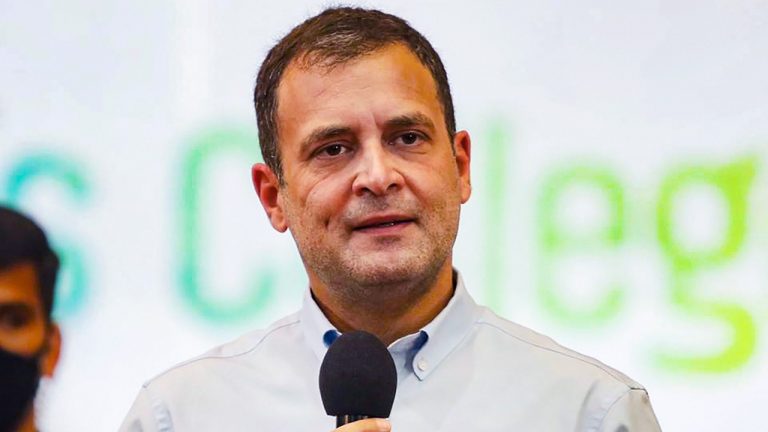
The Delhi High Court has issued a notice to Twitter over a plea seeking directions to the social media platform and Delhi Police to take action against senior Congress leader Rahul Gandhi for revealing the identity of the kin of a murder and rape victim in a tweet.
Delhi High Court issues notice to Twitter on a plea seeking directions to Twitter and the Delhi Police to take action against Congress leader Rahul Gandhi for revealing the identity of the relatives of a rape and murder victim in a tweet.
However, the Court refused to issue notices to Rahul Gandhi, National Commission for Protection of Child Rights (NCPCR) and the Commissioner of Delhi Police in connection with the matter. All three are respondents in the plea that was filed.
Twitter has time till the 30th of November to file its reply. Earlier, Twitter had removed the tweet by Rahul Gandhi where he had disclosed the identity of the parents of a rape victim. The National NCPCR had also issued notice to Twitter India asking it to take action against Gandhi’s Twitter account for violating the Protection of Children from Sexual Offences (POCSO) Act and Juvenile Justice Act by revealing Delhi’s Nangal rape victim’s identity.
The mother of the victim had later confirmed that the Congress leader had not sought her consent before sharing her photograph on social media. It was after the Congress party had claimed that he had permission to share the photograph.
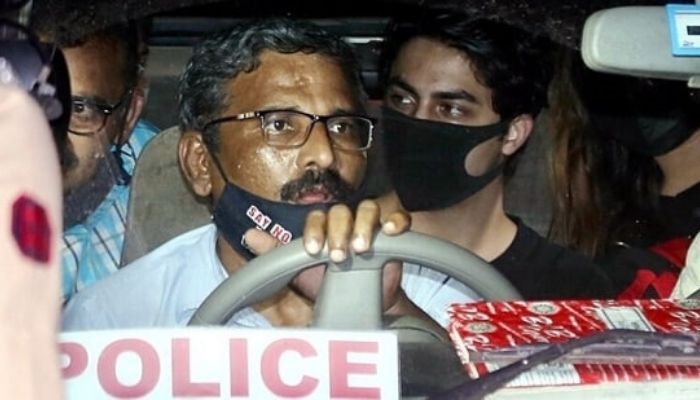
A day after the Narcotics Control Bureau (NCB) arrested actor Shah Rukh Khan’s son Aryan Khan, Mid-day reported in detail about the extensive planning undertaken by the central agency to bust the rave party at Cordelia Cruises off the Mumbai coast.
As per the Mid-day, NCB had deployed 25 officers to carry out the high-profile task. About 6 of them had boarded the cruise ship, dressed in party wear. They sprung into action after the accused began consuming illicit drugs mid-sea. The agency had earlier received a tip-off about a group of rich kids who were seeking to take drugs onboard the cruise ship.
At that time, NCB had no idea about the identity of the accused. During the raid, Midday reported that Aryan Khan looked visibly nervous, which added to the suspicion ok the NCB officials.
An official informed anonymously, “Till this time we had no clue about who these kids were. It was decided that NCB officers would pose as partygoers as it was the only way to catch the users red-handed. In many drug busts, culprits are often alerted even before the raiding party reaches them. The drugs are disposed of and it gets very tough in the court to substantiate the case.”
Mid-day reported that the NCB purchased 6 tickets for its officers at a price of ₹80,000 per ticket on three different slots to avoid raising suspicion. It had sent 6 officers on board the vessel while 6 boats were also kept on standby. The Narcotics Control Bureau also sought help from the Central Industrial Security Force (CISF) in anticipation of the situation.
CISF agreed to give free pass to VIP guests only after mandatory checking
As per the plan, the NCB officers boarded the cruise ship through the Green Gate in South Mumbai. The backup team waited on the shore in anticipation of the situation. Soon after, the undercover officials began studying the body language of the guests at the entrance. According to an NCB officer, the central agency kept a close watch on the invitees.
He recounted, “We studied their body language at the entrance to ascertain if they are the ones we were looking for.” The CISF staff was asked to allow free passage to VIP guests to help them avoid the long queue. However, CISF agreed to it only after proposing that all VIP guests would be subjected to security checks. At that time, Aryan Khan and Arbaaz Merchant took entry through the VIP queue.
Aryan Khan became nervous, alerted NCB officials through his behaviour
The NCB officer informed that the CISF checked their I-cards and began scanning their belongings including the shoes of Arbaaz Merchant. This made Aryan Khan nervous and his anxiousness caught the eye of the NCB officials. “Soon Aryan Khan and Arbaaz Merchant came inside as VIP guests, their I-cards were checked. As their belongings were being scanned including Arbaaz’s shoes, Aryan got nervous and it alerted the NCB officers. “They smelled a rat and thoroughly checked the shoes and found drugs in them. Arbaaz and Aryan were then detained for questioning,” the officer informed.
NCB seized cocaine, charas, MDMA
On being told by Aryan and Arbaaz that they were a part of an 8-member group, the NCB sprung into action and began searching the rest of the individuals who had already boarded the cruise. Soon after, they were detained and taken to custody.
One NCB official said, “When the NCB started the raid inside the cruise, some people who were at the entry point went back from there itself. Zonal Director Sameer Wankhede was around the Green Gate during that time. As soon as the drugs were recovered we informed him and he entered the cruise.”
As per reports, Aryan Khan’s arrest memo says he has been booked in connection with the seizure of 13 grams of cocaine, 5 grams of MD, 21 grams of charas, 22 pills of MDMA (ecstasy) and Rs1.33 lakhs in cash.
Whatsapp conversation between Aryan Khan and 2 other accused revealed intriguing details
On Monday (October 4), the NCB told the Court that WhatsApp chats between the son of actor Shah Rukh Khan and 2 other accused have revealed ‘shocking and incriminating’ material about international drug trafficking. The Central agency informed that Khan discussed payment modes for purchasing drugs while using several code names.
The Court held that a prima facie case is made out against Khan and other co-accused. “Investigation is of prime importance and presence of the accused is needed for detailed investigation. It is useful for both the prosecution and the accused to prove their innocence,” it said.
Khan has been remanded to NCB custody till the 7th of October. Arbaz Seth Merchant and Munmun Dhamecha have also been sent to NCB custody along with Aryan. He was represented in the Court by Satish Maneshinde, who claimed that no substance was recovered from him.
Maneshinde also said that if Aryan was permitted to be released on bail, then he will make himself available to assist in the investigation. The NCB was represented in the Mumbai city court by ASG Anil Singh. Singh said that Aryan had gone to the cruise ship by invitation and there are chats between him and others involving drugs. Therefore, there must be an investigation.
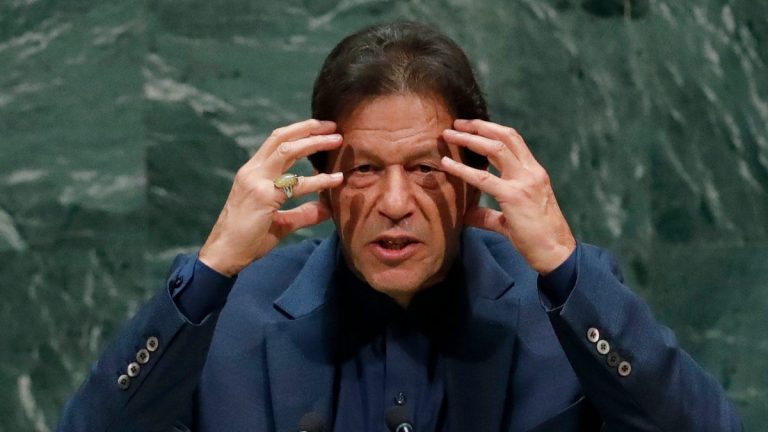
Pakistan may be a cash-strapped nation on the brink of an imminent financial collapse, but that has not stopped military leaders and powerful politicians, including those in the inner circle of the Imran Khan government to siphon off money out of the country, the ICIJ’s Pandora Papers have revealed.
As many as 700 Pakistanis, including members of Pakistan PM Imran Khan’s cabinet, inner circle, cabinet ministers, their families and major financial brokers, are among those who secretly owned an array of companies and trusts holding millions of dollars of wealth stashed offshore, according to International Consortium of Investigative Journalism(ICIJ).
The Pandora Papers have also implicated Pakistani military leaders in stashing off wealth abroad through a maze of shell companies and dubious trusts. While his ministers and aides are named in the papers, there is no direct reference saying Pakistan PM Imran Khan’s involvement.
Among those named in the papers include Finance Minister Shaukat Fayaz Ahmed Tarin, his family, and the son of Khan’s former advisor for finance and revenue, Waqar Masood Khan. Besides, the papers also reveal the offshore dealings of a big PTI donor, Arif Naqvi, who is facing fraud charges in the United States.
The ICIJ said the involvement of Pakistani leaders in hiding their wealth offshore is shocking, given that the country is plagued by chronic poverty and widespread corruption.
As per files in possession of the ICIJ, Chaudhry Moonis Elahi, a key political ally of Pak PM Imran Khan, had planned to put the proceeds from an allegedly corrupt business deal into a secret trust to evade tax liabilities in Pakistan. Elahi’s family spokesman rubbished the allegations as politically motivated and alleged that “due to political victimisation misleading interpretations and data have been circulated in files for nefarious reasons.”
Similarly, Omer Bakhtyar, the brother of Khan’s minister for industries, Makhdum Khusro Bakhtyar, transferred a $1 million apartment in the Chelsea area of London to his elderly mother through an offshore company in 2018.
Faisal Vawda, Khan’s former minister for water resources, had set up an offshore company in 2012 to invest in UK properties. He resigned in March this year over the controversy of possessing two citizenships—of the United States and Pakistan. The financial backers of Imran Khan are prominent in leaked documents, according to ICIJ.
The Pakistani military establishment, which is said to be the de facto power centre superseding Imran Khan’s government, is also involved in holding undisclosed assets and illicit properties abroad. One such shady holding involving military leaders and their families relates to a swanky London apartment, which was transferred from the son of a famous Indian movie director to the wife of a three-star general.
Pakistani news station ARY News recently said that the owner of two offshore companies registered at the address of Pakistan PM Imran Khan has disclosed that they were registered by him on a different address and denied any role of the premier in this regard.
The secret assets were uncovered by a global investigation based on 12 million files leaked to the International Consortium of Investigative Journalists (ICIJ), which has been working with more than 140 media organisations worldwide.
Imran Khan’s PM campaign was based on revelations made in Panama Papers against Nawaz Sharif
The revelations made in Pandora Papers rivals the findings of the Panama Papers, which was made the focal point of the election campaign launched by Imran Khan to stake his claim to the country’s highest titular office. Khan had vigorously campaigned against opposition leaders for their alleged wealth deposited in the foreign banks. The findings had spawned a groundswell of opposition to Nawaz Sharif-led government, leading to his downfall and catapulting Khan to the PM office three years ago.
However, over the years, Khan’s popularity among the masses had waned considerably. The primary reason for this predicament is his inability to extricate Pakistan from the economic crisis that it currently finds itself in. Several of its past allies have refused to offer help while the existing ones have imposed exacting constraints for borrowing money.
Domestically too, Khan is facing stiff resistance from the opposition parties and there is rising anger and dissatisfaction among the people of Pakistan. There have been protests against Khan’s party PTI, with people calling for the resignation of the prime minister for his abject failure in arresting the downward spiral of the economy, expanding unemployment and crumbling healthcare infrastructure.
Amidst this, the involvement of cabinet ministers and Pakistani military leaders in evading taxes and funnelling money out of the country is bound to generate further resentment among people. Therefore, Khan did not take too long to recognise problems Pandora Papers could pose for his continuance in the office of Prime Minister. Soon after the revelations were made public, Khan said he is going to launch an impartial probe into the matter.
Pakistan PM Imran Khan launches probe to investigate revelations made in Pandora Papers
Bedevilled with yet another crisis, Khan struck an anodyne tone while acknowledging the revelations made in Pandora Papers. On Monday, Khan set up a high-level commission to investigate Pakistanis named in the Pandora Papers, a day after several members of his inner circle, retired civilian and military officials, businessmen, as well as owners of the top media outlets, were listed in the leaks following an investigation uncovering financial secrets held by high-profile individuals around the world.
However, analysts who closely watch matters related to Pakistan, believe such a probe would be nothing more than a smokescreen, designed to delegitimise the allegations and protect those who are said to have amassed millions of dollars of hidden wealth.
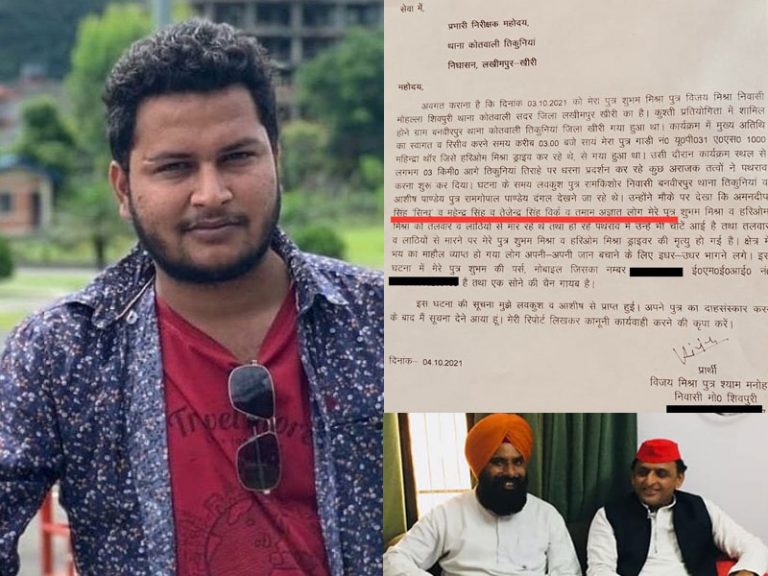
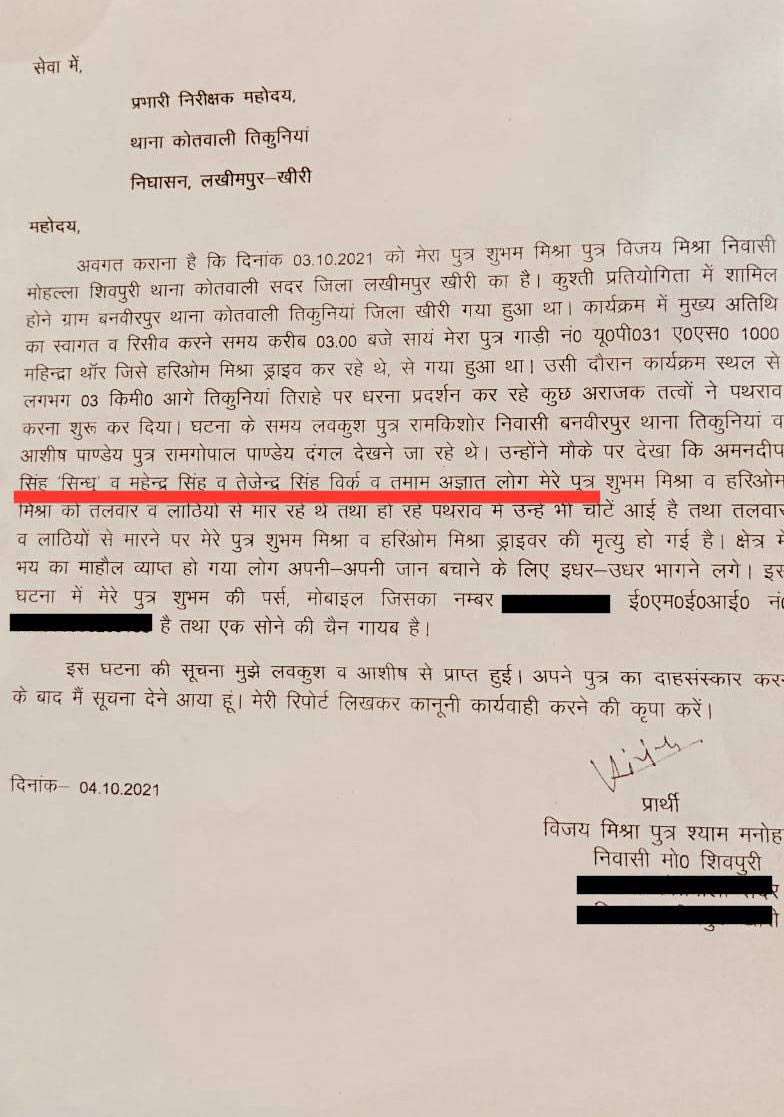
On October 3, BJP supporter Shubham Mishra was killed by violent ‘farmer’ protesters in Lakhimpur Kheri, Uttar Pradesh. Vijay Mishra, Shubham’s father, filed a complaint against Amandeep Singh Sindhu, Mahendra Singh, Tajinder Singh Virk (Farmer Union Leader) and unknown others for the murder of his son.
In the complaint, Mishra said that Shubham and his driver Hariom Mishra were killed after being attacked by the protesters with swords and batons.
The New Indian journalist Rohan Dua published a video of the intervening night of October 4 and October 5. In the video, a copy of Vijay Mishra’s complaint can be seen at 48 seconds.
Mishra said Shubham had gone to see a wrestling competition in village Banvirpur, Tikunia, Lakhimpur Kheri. At around 3 PM, he went to receive the chief guest of the competition in his Mahindra Thar that was being driven by Hariom Mishra.
Complaint filed by Vijay Mishra, father of Shubham Mishra.
Around 3 KM before Tikunia t-point, some miscreants were protesting who started pelting stones at Shubham’s vehicle. While the incident was underway, two individuals identified as Luvkush and Ashish were on the way to the wrestling ground. They witnessed the incident and saw Shubham and Hariom getting beaten to death by the protesters. Mishra mentioned that both eyewitnesses also sustained injuries at the hands of the violent mob.
Vijay Mishra claimed that the protesters not only killed his son and the driver but also took away Shubham’s gold chain, wallet and mobile phone.
Who is Tajinder Singh Virk
Tajinder Singh Virk, who was named by Vijay Mishra in the complaint, is a farmer union leader and heads Terai Kisan Sangathan. As per the News18 report, he is associated with Akhilesh Yadav-led Samajwadi Party and headed the Udham Singh Nagar chapter of the party as District President in 2018.
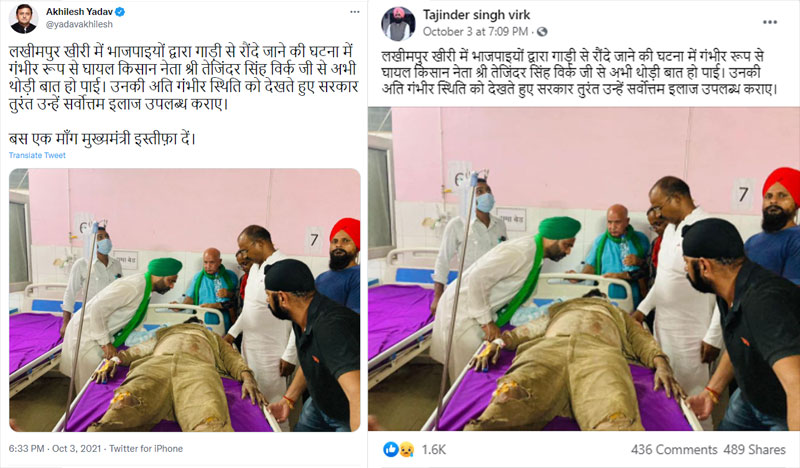
On October 3, when Virk was injured in the Lakhimpur Kheri incident, Yadav had demanded the resignation of CM Yogi Adityanath in a tweet and published a photograph of Virk being admitted in the hospital. He had said, “Had a little conversation with Shri Tejinder Singh Virk Ji, a farmer leader, who got seriously injured in the incident led by BJP workers. Keeping his critical condition in mind, the government must provide him with the best treatment immediately. Just one demand, CM should resign.”
Post by Akhilesh Yadav and Virk. Source: Twitter/Facebook
Interestingly, word-to-word post was published from the Facebook page of Tajinder Singh Virk.
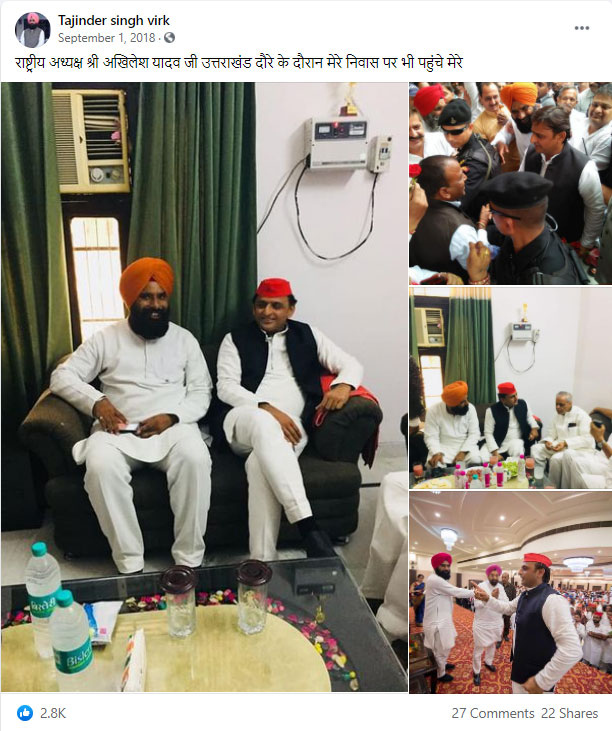
Reports suggest that in 2018 Akhilesh Yadav was in Uttrakhand for political rallies. Virk actively participated in the programs organized by Samajwadi Party. When Yadav reached Rudrapur, Udham Singh Nagar, he spent notable time with Virk. He also visited Virk’s house, and a video of the visit was published by Virk on his Facebook page on September 5, 2018.
Virk had also shared some photographs of the visit on September 1, 2018.
Akhilesh Yadav at Virk’s house. Source: Facebook.
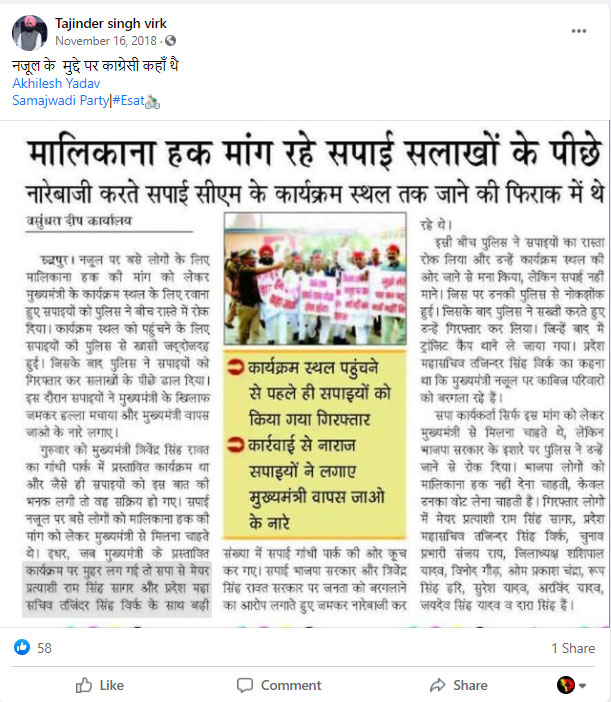
In November 2018, Virk had shared a newspaper clipping in which he was referred as “Samajwadi Party’s District President”.
News clipping shared by Virk in November 2018. Source: Facebook
Notably, Tajinder Singh Virk hails from District Udham Singh Nagar, Uttarakhand which is a part of ‘mini Punjab‘ infamous for its connections to Babbar Khalsa International, a Khalistani terrorist organization. Virk was also booked in the riots that took place in Delhi on Republic Day, 2021. His union has been part of farmer protests at Ghazipur border, Delhi.
On October 3, the BJP workers were attacked by alleged protesting ‘farmers’ at Lakhimpur Kheri, Uttar Pradesh. The clash killed eight people, including four protestors, 2 BJP workers, a journalist and a driver who was part of the BJP convoy.
News 18 reported a possible Khalistani link to the attack in which a WhatsApp group “Lalkar” was created before the Lakhimpur incident. A former member of Babbar Khalsa, a Khalistani terrorist organization, has been listed as the admin of the group.
Lakhimpur chaos a planned incident.
A Whatsapp group named ‘Lalkar’ was created before the incident. The admin was the former member of Babbar Khalsa: Sources
According to the report, a WhatsApp group named ‘Lalkar’ was created just before the Lakhimpur incident. The admin of the group was a former member of Babbar Khalsa, a banned Khalistani organisation. A video of Union Minister Ajay Mishra speaking against anti-social elements gathering in the name of farmer protests was shared in that group.
In the video, the minister was seen asking the ‘farmer protestors’ to leave the Lakhimpur area. As per the report, the video was forwarded to 2500-3000 people and used to incite people against the Union Minister.
Back in 2017, Punjab Police and Uttar Pradesh Anti Terrorist Squad had made arrests in which many operatives and sympathizers of the Babbar Khalsa International (BKI) were apprehended. Intelligence agencies had then alerted about the extensive network of BKI prevailing in the regions of western UP. Udham Singh Nagar police had arrested two Sikhs Kulwinder Singh and Harjeet Singh in 2018 for publishing pro-Khalistani posts on social media. They were also involved in creating a WhatsApp group named 20-20 Khalistan Referendum.
Many reports indicate that Babbar Khalsa and other Khalistani elements have been active in the Lakhimpur Kheri area for years.
When the violent mob attacked BJP workers with sticks and stones and called for their death on Sunday, an individual was spotted wearing a Bhindranwale t-shirt in some images. The presence of Khalistani supporters raised many questions on the incident and whether it was pre-planned violence.
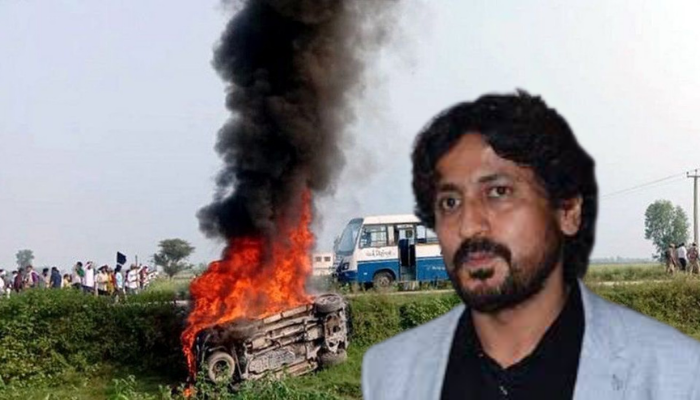
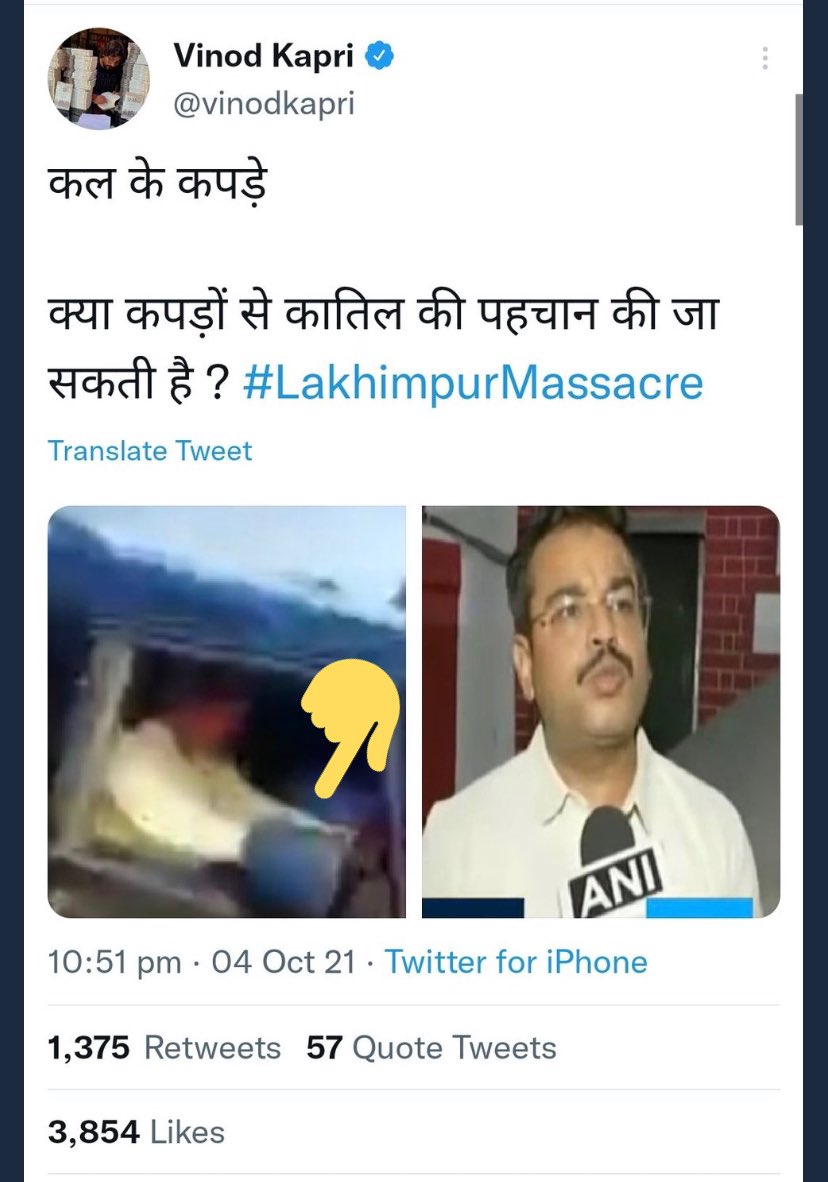
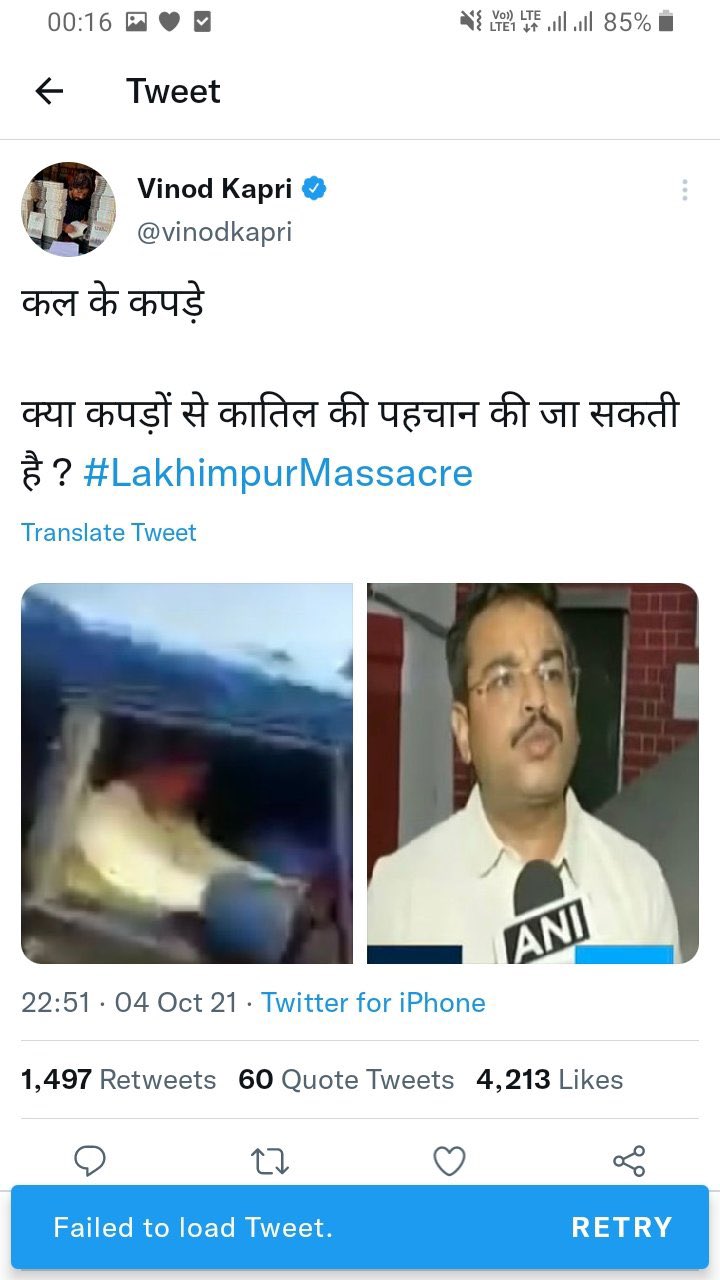
Amidst the violence that took place in the Lakhimpur Kheri district of Uttar Pradesh, journalist Vinod Kapri shared a cropped image on Twitter to insinuate that the son of a BJP leader was driving the car that ran over farmers.
In a tweet on Monday (October 4), Kapri claimed, “These are yesterday’s clothes. Can we identify the killer with his clothes? #LakhimpurMassacre.” He had shared two images alongside his tweet, one of the alleged driver and the other of the BJP leader’s son. However, he deliberately cropped the bottom part of the latter picture to give a false impression that he was wearing a full-sleeved shirt.
Screengrab of the misleading tweet by Vinod Kapri
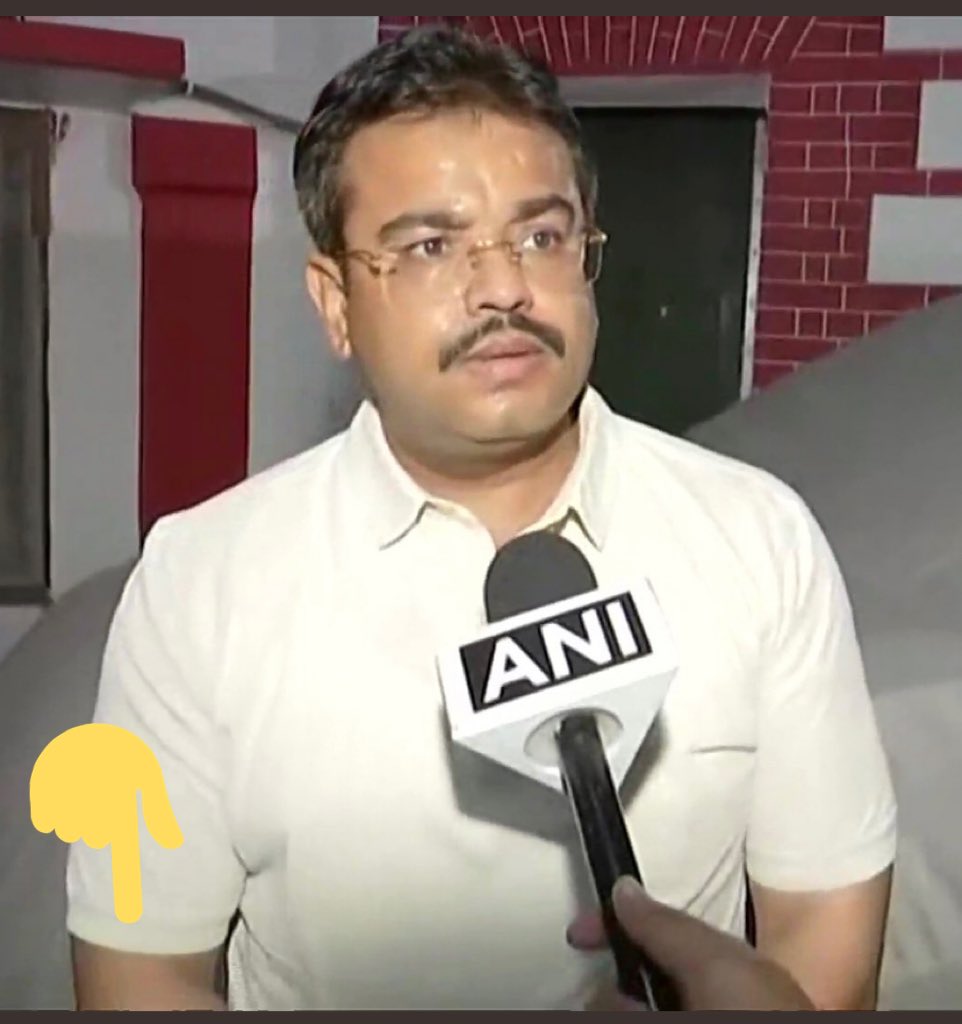
Popular Twitter user Befitting Facts pointed out that Kapri had cropped the image, which was originally posted by ANI. While it appeared that the driver and the BJP leader’s son were wearing the same clothes, a closer look at the two images clearly disproved that. The driver of the vehicle had worn a full-sleeved shirt while the latter was seen in half-sleeves.
Screengrab of the tweet by ANI
His plan to give clean chit to farmer protestors, who attacked BJP workers and killed 8 people, had failed. Vinod Kapri quickly deleted his tweet without any apology or clarification. However, by the time the misleading tweet was deleted, it had 4.2K likes and was retweeted 1.49K times.
Vinod Kapri is not new to peddling fake news. In April last year, he had falsely claimed that the Agra district hospital had asked doctors to wear polythene bags on their faces (to protect themselves from Covid-19) due to an alleged shortage of protective gear.
Kapri brazens it out
After the obvious differences were pointed out, Kapri deleted his tweet.
Screengrab of the deleted tweet by Vinod Kapri
Only to share another tweet making similar claims, this time with more images as ‘evidence’.
IT cell के पालतुओं , ये रहा ट्वीट। नरसंहार के आरोपी मोदी के मंत्री के बेटे को बचाने के लिए अब कोई नया झूठ लाओ।मुझे “आज तक” से जानकारी मिली है कि आशीष मिश्रा ने इंटरव्यू नरसंहार की रात 9 बजे दिया था। ANI interview रात 2 बजे
He shared screenshots of news reports and stated that later in the night, the BJP minister’s son had changed his shirt. But even here things don’t add up.
Was Ashish Mishra driving the car that ran over farmers?
Here are some things which are clearly wrong with the assumptions Kapri is making. The car that ‘ran over’ the farmers was attacked by farmers and the windshield broken.
Broken windshield
Logic dictates that when the car is attacked by stones, sticks and windshield is broken from the driver’s side enough to get him to lose control, he would himself very likely have some injuries. Secondly, when such a murderous, bloodthirsty mob is waiting with tempers running high, did the mob just let Mishra get away without a scratch? No scuffle? Mishra just miraculously ‘escaped’ from the mob, Kapri wants us to believe.
Ashish Mishra gave multiple statements to multiple media houses that day. Not a single one of them shows him being injured or even a scratch, no blood on his pristine white shirt. His father, MoS A K Mishra on Sunday had said that his son was not even present there when the incident took place.
My son wasn't present at spot. There were miscreants who attacked workers with sticks & swords. If my son would've been there, he wouldn't have come out alive. They've killed people&damaged&set cars on fire. We have video evidence:MoS Home Ajay Mishra Teni tells ANI in phone call
In fact, even Ashish Mishra had said he was not present when the incident took place and that he was in Banbirpur when the BJP car convoy was attacked.
Our 3 vehicles went to receive Dy CM for an event. On their way, some miscreants pelted stones, set cars on fire and killed our 3-4 workers by thrashing them with sticks: Ashish Mishra, son of MoS Home Ajay Mishra Teni on Lakhimpur Kheri incident pic.twitter.com/uo8JpEkEwW
Multiple video clips have emerged from the incident by now, but not a single one of them shows the images of Ashish Mishra very clearly. Surely there would be a clearer image instead of an extremely blurred image which Kapri claims is that of Ashish Mishra.
Further, one of the persons who was beaten to death by the ‘farmer’ mob was BJP’s Shyam Sunder Nishad. In a disturbing video, one can see he was being threatened by the mob and being made to say that he was sent by the BJP as ‘confession’. Shyam Sundar was also wearing a white full-sleeves shirt.
It is common practice for people to take turns while driving. While one of the persons killed, Hariom Mishra, was driving one of the cars, there is no information yet on whether BJP’s Shyam Sundar wearing white shirt was also driving the car.
For Kapri to conclude that the man in white shirt was Ashish Mishra, from a hazy image where even face is not clearly visible, is nothing short of writing a film script. But even there it seems he has failed.
Violence in Lakhimpur Kheri
On October 3, eight people died after BJP workers were attacked by protesting ‘farmers’ at Lakhimpur Kheri, Uttar Pradesh. As per reports, a large group of alleged farmers had gathered in Lakhimpur Kheri to mark their protest against the three Agriculture laws enacted in September last year. Deputy CM was scheduled to visit Lakhimpur Kheri. The protesters went violent and pelted stones at BJP’s convey.
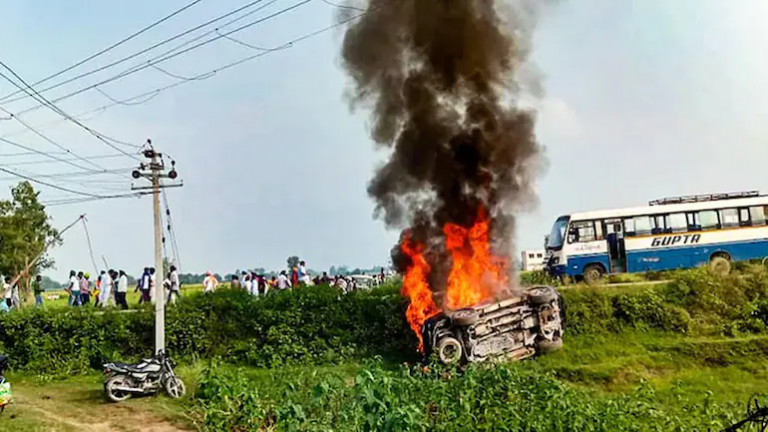
One of the cars hit the protestors, after which the protestors not only burnt two vehicles but also ambushed the people and reportedly beat the occupants inside the car to death. Disturbing visuals had emerged of the incident that led to several speculations.CM Yogi promised to take strict action against whoever was behind the incident. A heavy police force was deployed in Lakhimpur Kheri to maintain law and order.
A latest video shared on social media shows the vehicle being already damaged when it ran over some of the protestors, indicating that the driver may have been hit by a stone when the vehicle ran over the gathered protestors.
Earlier, a disturbing video footage of the people inside the vehicle being gheraoed, thrashed, and forced to make a confession, had gone viral on social media. In the video clip, a victim was seen bleeding from his head, after being possibly assaulted by the farmers. He admitted that he was sent by MoS Mishra to keep an eye on the situation. However, the frenzied mob of farmer protestors was not convinced by his response.
As per reports, the person in the video is Shyam Sunder, who was eventually lynched to death by the murderous mob. The vehicle’s driver Hariom Mishra was also killed brutally by the so-called ‘farmers’.
They tried to put words into his mouth and said, “You were sent to run over the farmers.” When he refused about being instructed by anyone to kill farmers, the protestors coerced him into accepting that he was a hitman. With folded hands, the victim begged, “Dada, dada, dada” and asked them to spare his life. “We will not beat you,” a ‘farmer’ protestor was heard saying in the background in the hopes of soliciting a false confession. He was subsequently killed by the rioting mob of ‘farmers’.
If you are staying outside of Telangana and your source of news is only the English media, I bet you would not know that the Telangana State BJP President, Shri Bandi Sanjay Kumar, has walked nearly 450 km over the past 36 days as part of his first phase of Praja Sangrama Yatra. And since it involves BJP, I bet you wouldn’t know about the overwhelming response the padayatra has received all along the 450 km route!
If you grew up in Hyderabad, you would have never imagined that a day will come where the BJP can conduct a meeting at Charminar and that the whole area will echo with ‘Vande Mataram’ and ‘Bharat Mata ki Jai’ slogans! We are familiar with the grip that the Owaisi clan has on this area and therefore the symbolism of the party President enthusing his cadre from the unlikeliest of the places shows how serious the BJP is to fight strongly for the 2023 Telangana elections. If you see this video clip from day 1 of the padayatra, you would surely understand why it set the rightest possible tone for the next 35 days of the padayatra, or even perhaps the next 2 years of the BJP’s campaign in the state.
భారత్ మాతాకీ జై.. వందేమాతరం.. జైశ్రీరాం… అని బిజెపి కార్యకర్తలు నినదిస్తే ఆకాశం చిల్లులు పడాల్సిందే.. ఇవాళ యాత్ర ప్రారంభ సమయంలో కార్యకర్తల నినాదాలతో దద్దరిల్లిన భాగ్యలక్ష్మీ అమ్మవారి ఆలయ పరిసర ప్రాంతం.#PrajaSangramaYatrapic.twitter.com/HlyGDAkEjy
Bandi Sanjay’s preparation for his padayatra was also impressive. All along these 35 days, he has spoken about relevant problems the people of the particular area he is walking in, have faced. The issues touched were wide-ranging: MIM’s communal politics; the delay in joining Ayushman Bharat; the delay in housing for the poor; the procurement of various crops; the question of government jobs; irrigation projects; corruption; and the dynastic politics of the TRS.
Throughout these 35 days, various senior leaders of the party at the national level have joined this padayatra and enthused the party cadre further. Union cabinet minister Kishan Reddy flagged off the yatra. Union cabinet minister Smriti Irani addressed the closing rally on October 2nd. In between these two events, Union Home Minister, Shri Amit Shah addressed a massive rally on 17th September (the day Hyderabad was liberated from the Nizams and became a part of India).
The padayatra has ended on October 2nd, as planned, and the party will now get ready for the all-important Huzurabad assembly bye-election. Again, if you were following media outside of Telangana, I bet you would not know the importance of the Huzurabad assembly constituency bye-election coming up on October 30th.
The lowest electoral point in the political history of the TRS party was in the year 2009 when the party won only 10 seats in the Assembly. Eetala Rajender was appointed as the floor leader of the TRS legislature party, and this signifies the importance of Mr Rajender in the TRS scheme of things. He was the first finance minister of Telangana in the 2014-18 term and then Health minister in the 2nd term. The Chief Minister, KCR had a fallout with Rajender and removed him from the cabinet at the peak of the 2nd COVID wave (citing corruption in some land deal).
The fallout was not sudden and was brewing for quite some time, but the removal was quite sudden and the timing totally unexpected. The political scenario in the state heated up with such a senior leader of the party who held very crucial posts in the party and in the government being unceremoniously sent out. Eetala Rajendar then joined the BJP, which is increasingly being seen as the opposition party that is capable of taking upon the might of the KCR and TRS parties. He’s also quit his MLA seat, necessitating a by-election. It is in this context that Huzurabad has become the next crucial election for the BJP after the Dubbaka and GHMC elections.
Ever since the 2018 election, the electoral results have been fluctuating for and against the TRS, with some key blows proving that BJP is able to grow as a strong opposition. The 2019 Lok Sabha elections, the 2020 Dubbaka by-election and GHMC elections are prime examples of BJP’s growth. The 2021 MLC and 2020 local body election results are the prime examples of TRS’s hold in the state. The BJP won only 1 seat in the 2018 assembly elections. They now have 2 MLAs in the 119 member assembly. Eetala Rajendar’s victory in the Huzurabad election will only take it up to 3 but the significance it will have in strengthening and enthusing the BJP cadre cannot be measured by this small number.
The BJP is well placed to give a very tough fight to the KCR, but it is important to not celebrate too early or become arrogant because of a couple of victories. While examples galore are being given on how Karnataka BJP has grown from 2 MLAs to winning a majority, it must also be kept in mind how Bengal was lost in 2021 despite the all-around perception that BJP is winning. I am not sure of the exact reasons why Bengal was lost, but in Telangana, KCR is as formidable an opponent as Mamta Banerjee was in Bengal. KCR’s political instincts are equally sharp and to underestimate them would be a real big folly. The efforts for this fight have to consistently be as gruelling as the past 1 year.
Extreme care must be taken on the various aspects of messaging. Consistent reports on how the 4 MPs from the state are performing; how the 48 corporators who won recently in GHMC are performing – will help bolster a positive message of the performance. There mustn’t be excessive focus on things like “central government is giving everything” because that will eventually backfire in a state-level assembly election. Instead, the same message can be conveyed by citing examples of how KCR rejected central schemes but eventually joined those very schemes that have benefitted the citizens of Telangana.
Long term activities like this padayatra are the best way forward because after all in politics, there is no alternative to being amongst the people. The Congress party is in a self-destruct mode and that space is totally up for grabs. The dynastic rule of the TRS is a perfect platform for the BJP to build upon and highlight the various governance aspects – as long as the efforts are along these lines for the next 2 years, the BJP will only continue to grow.
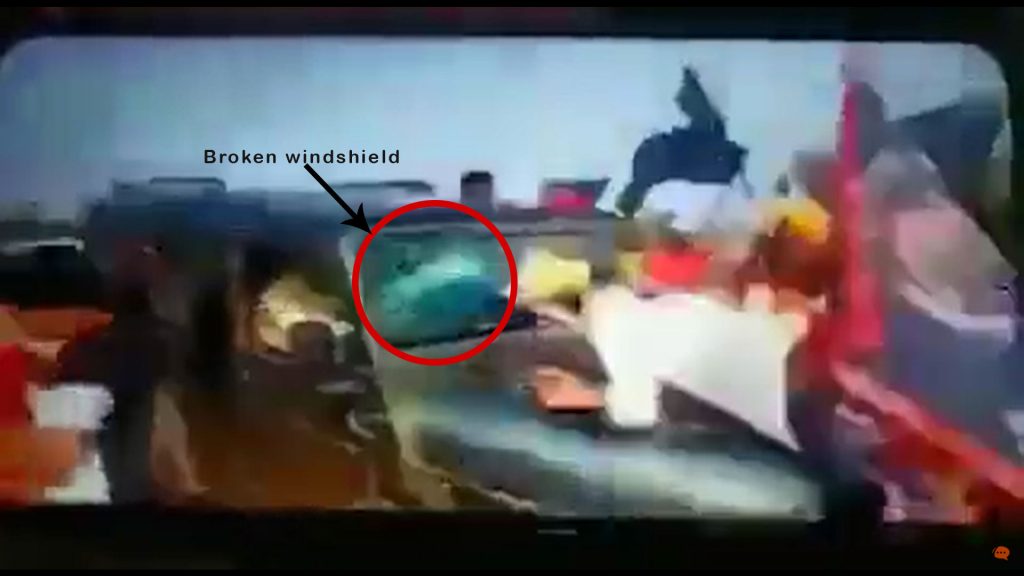
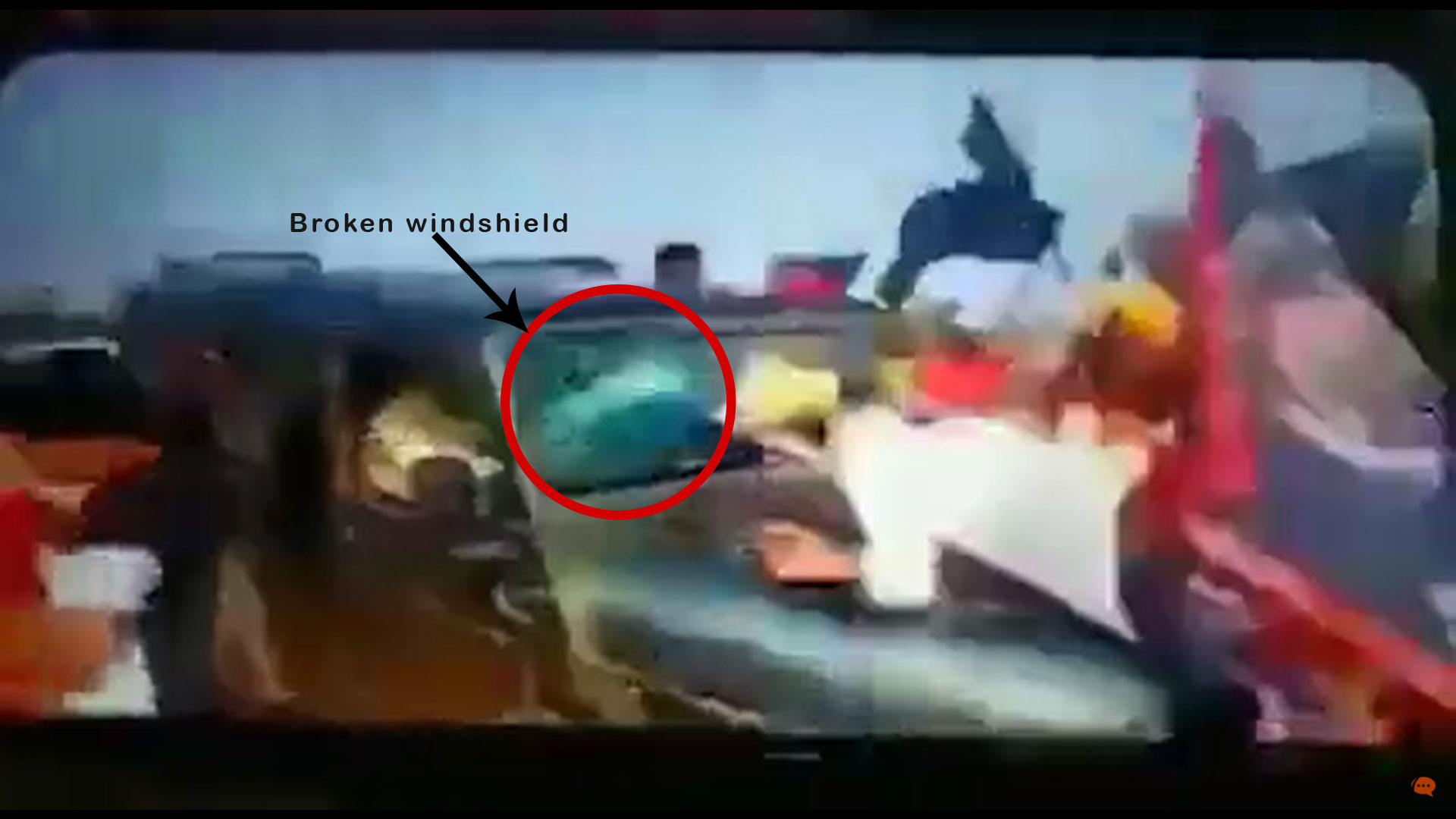
A new video from the Lakhimpur Kheri violence has now gone viral on social media platforms which shows the vehicle that rushed through the protesting ‘farmers’ was very likely attacked by stones and sticks. In the viral clip, one can see the windshield of the car broken, which would mean that after the ‘farmer’ mob attacked the convoy, the windshield broke and an injured driver then lost control of the car causing the accident.
The video is a recording of a video being played on another device.
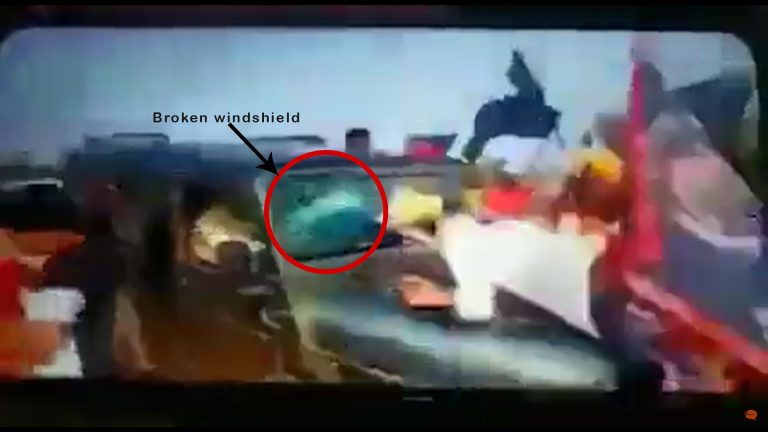
In the short 30-second clip, which has been slow-motioned, ‘farmer’ mob could be seen walking on a pathway holding black Kisan Union flags. A vehicle rushed from behind and crushed protesters. However, at 7 seconds, for a split-second, the vehicle’s windshield was visible before it hit a protestor. One can easily figure out that it was broken, which is in line with the claims that the protesters attacked the convoy with stones. Such an attack on the vehicle could have been attacked that led to driver losing the control.
Broken windshield in the circle. Source: Screenshot from the viral video
It is very likely that the driver was injured when the mob attacked the convoy and broke the windshield, following which he lost control of the car.
Another disturbing video of a man, now identified as Shyam Sundar Nishad, being beaten up by mob has gone viral where the ‘farmers’ are threatening him to accept he was ‘sent’ by BJP leader to ‘kill farmers’. One can see fear in his eyes as he could see death from close quarters.
Shyam Sundar was also lynched by the ‘farmer’ mob and beaten to death along with three other BJP workers.
Many wondered why this clip came late, why just a few seconds, and why recorded while video is playing on another device. Was it attempt to save those who were caught on cameras lynching people and try to keep the fire burning which appeared doused with ‘farmer’ leader Rakesh Tikait and all announcing truce? Only time will tell, but one thing is for sure that death of eight people is now being used to score political points. A new low in political discourse.
What happened in Lakhimpur Kheri?
On October 3, eight people died after BJP workers were attacked by protesting ‘farmers’ at Lakhimpur Kheri, Uttar Pradesh. As per reports, a large group of alleged farmers had gathered in Lakhimpur Kheri to mark their protest against the three Agriculture laws enacted in September last year. Deputy CM was scheduled to visit Lakhimpur Kheri. The protesters went violent and pelted stones at BJP’s convey.
Reports suggest that one of the vehicles allegedly hit the protesters, after which the protesters not only burnt down two vehicles but also ambushed people. A driver was reportedly beaten to death. CM Yogi promised to take strict action against whoever was behind the incident. A heavy police force was deployed in Lakhimpur Kheri to maintain law and order.
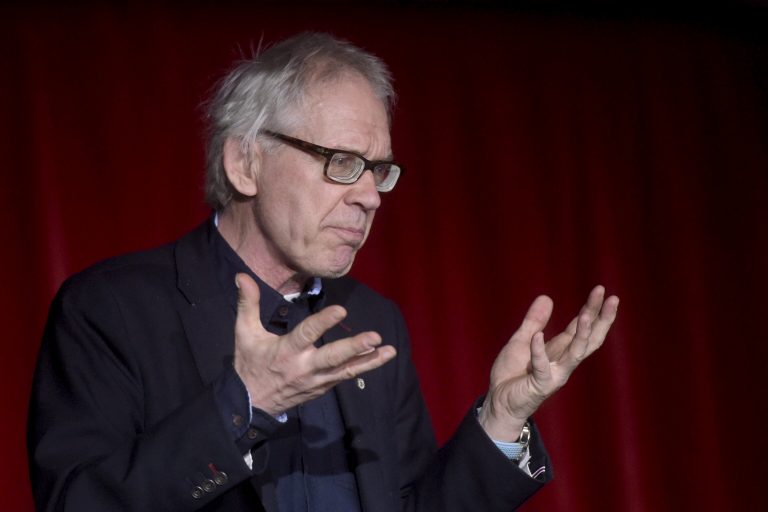
Sweedish cartoonist Lars Vilks who was included in the Al Qaeda’s hit list for making controversial sketches of Prophet Muhammad in 2007 killed in a traffic accident.
Terrible news from Sweden. Lars Vilks was a man, and an artist, of enormous courage. He should never have been in this situation, and if other artists and others across Europe had not been such cowards then he never would have been. https://t.co/kjeE2jTqjB
According to reports, the 75 year old artist Vilks was in a civilian police vehicle that crashed with a truck on its way. Two officers were also killed in the accident that took place in southern Sweden close to the town of Markaryd. Vilks was placed under police protection after he faced death threats over his drawings portraying Prophet Muhammad’s head on the body of a dog.
The police investigating the accident said, “This is a very tragic incident. It is now important to all of us that we do everything we can to investigate what happened and what caused the collision,” also adding, “Initially, there is nothing that points to anyone else being involved.”
A bounty of $100,000 was placed on Vilk’s head by Al-Qaida in 2007 for insulting the Prophet Muhammad.
In 2009, Jihad Jane or Colleen LaRose plotted to kill Lars Vilks. Later a suicide bomb attack was planned at Stockholm in 2010 by the Jihadists to punish Sweden for allowing Lars Vilks to publish his controversial drawings on the Prophet. According to reports, Lars Vilk was the main target of the Islamist terrorists for a long time and was continuously hounded by the Muslim protesters.
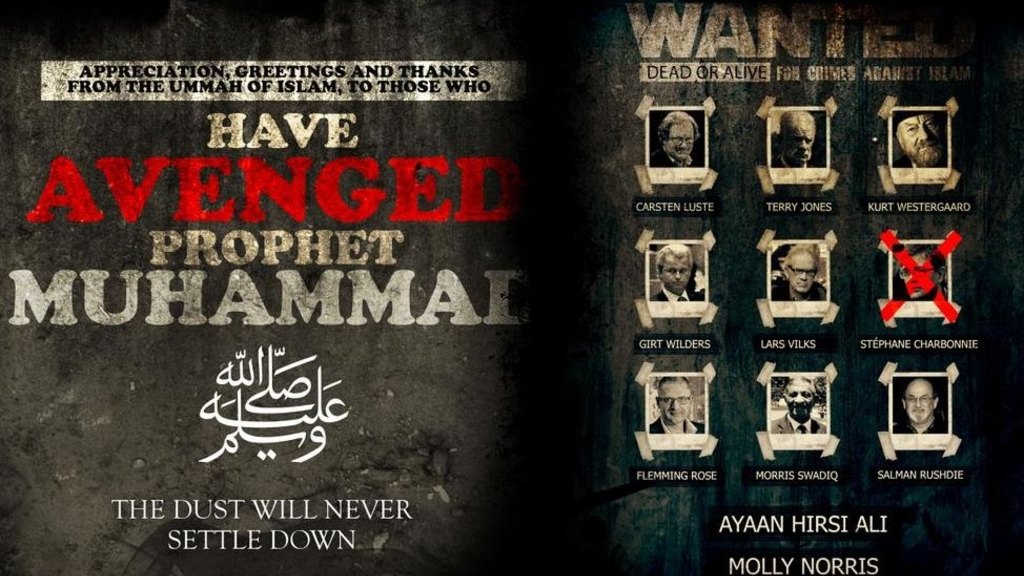
Lars Vilks was also included in the Al Qaeda hit list published in the Inspire 2013 edition, Al-Qaeda’s leading English-speaking magazine, with the heading “Wanted, dead or alive for crimes against Islam. The same list that included Charlie Hebdo editor late Stephane Charbonnier.
Source:Sydney Morning herald/Twitter
In 2015, the Copenhagen terrorist attacks happened in Denmark where Vilks was the star speaker at a free-speech event held at a cafe. A film director was killed in the attack and three police officers injured when an Islamist terrorist opened fire before going to a synagogue and killing a volunteer guard.
Unsurprisingly, the news of the Cartoonist’s death was celebrated by Islamist users on social media.
One of the users said, “Saved by the police of the world, can not run away from the police of God” while another user shared a video claiming it to be the video from the accident saying, “This is Lars pig burning video The one who insulted our master Muhammad, peace and blessings be upon him, with his dirty and ugly drawings.”
Diselamatkan polis dunia, tak boleh lari dari “polis Allah”. Nauzzubillahiminzalik https://t.co/2vlGoNAm00
Stefan Sinteus, head of Swedish southern regional investigation unit, said, “We want to completely exclude any external act targeting the car in which Lars Vilks found himself.” He added, “There is nothing to indicate that, but we want to be certain so we can rule it out.”