Home Blog Page 4330

Herman Knippenberg – The Dutch diplomat who sent the ‘Serpent’ Charles Sobhraj behind bars

Most of us have heard the name of Charles Sobhraj, the serial killer who murdered at least between 12 to 24 people between 1963 and 1976, who is in the news recently due to the BBC-Netflix series The Serpent based on his life. However, it is significantly less known how different people played a vital role in his conviction. One of the most important persons, in this case, is a Dutch diplomat named Herman Knippenberg. Over a period of time, Knipperberg collected a lot of evidence against Sobhraj, and when the time came, his efforts and documentation helped in his conviction to a large extent. This is the story of the man, the Dutch diplomat, who sent the Serpent behind bars.

The dark day of 1976

Herman’s involvement in the case began in 1976 when he received a letter in February about two Dutch backpackers who went missing in Bangkok. During that period, as the world was not yet developed enough to share information about criminals with a blink of an eye, it was much easier for the likes of Sobhraj to change identity and roam across the globe without fear of arrest. Bangkok was no different, and it used to be a less connected city at that time. In the lack of communication devices that backpackers use nowadays, sometimes travellers would go unchecked for weeks and even months.

The case of two Dutch backpackers was Herman’s first encounter with the horrifying stories of Sobhraj. The letter that Herman received was from a man who was looking for his sister-in-law and her boyfriend, identified as Henricus Bintanja and Cornelia Hemker. According to the letter, they had been writing to the family at least twice a week while travelling Asia. However, for six weeks, they did not hear from them that raised concerns.

Cornelia Hemker (left) and Henricus Bintanja (right). Dutch couple killed by Sobhraj Source: CNN

Then 31-years-old Knippenberg was working as a junior diplomat at the Dutch embassy. He had been living in Bangkok for some time with his wife, Angela. When Herman read the letter, a story that he read about the discovery of charred bodies a few weeks back started coming back to him. The bodies were found on the roadside near Ayutthaya, which is located around 80 KMs north of Bangkok. Initially, Police thought they were missing Australian backpackers, but later they were found to be alive. Connecting the dots, Herman figured they might be the missing Dutch backpackers.

One of the main reason he took an interest in the case can be asserted from one of his interviews that he gave to Daily Mail. He said, “I’d been travelling in my 20s, and I knew that people like Henk and Cornelia would keep in touch.” He immediately got hold of a Dutch dentist based in Bangkok for help in identifying the burnt bodies. He got the dental records of the missing couple and, with the help of the dentist, matched them to the bodies at the police morgue. Herman said, “What shocked me the most was when the pathologist at the mortuary told me there was soot in their lungs, which indicated they had both been set alight when they were still alive.”

While trying to what happened to the couple, he remembered a story that his friend Paul Siemons, an administrative at the Belgian embassy, told him about a French gen dealer identified as Alain Gautier who had possession of a large number of passports in his Bangkok apartment. The connection between the Dutch couple and Gautier became stronger when the couple’s parents told Herman that they were told that the couple had met a gem dealer named Alain Gautier in Bangkok. Those passports allegedly belonged to the missing persons who were believed to be murdered. Two of the passports were Dutch. However, Siemons refused to tell Herman about his source of information.

When Herman first heard the story, he thought his friend was crazy, but now he could link that story to the Dutch couple. Later, he discovered that Alain Gautier was, in fact, one of the many aliases that Sobhraj had used throughout his life. For a long time, Herman kept investigating him by his alias that was Alain Gautier. It was later revealed that while Sobhraj, the conman and serial killer, had been befriending travellers only to drug and rob them. As the security was not that perfect those days, he would take the victims’ identity and travel across Asia like a free man.

The hunt of the Serpent

After a day of his trip to the morgue, Knippenberg decided to call Siemons and asked him to tell the source of the story about the gem dealer. After some persuading, Siemons told him that Nadine Gires, a Frenchwoman who lived in the same apartment building as Sobhraj, used to introduce clients to him.

When Gires met Herman, she revealed how other people who worked for Sobhraj fled after discovering the collection of passports belonging to the missing persons. They were afraid that he would kill them too. She told Herman that she remembered seeing the Dutch couple at his home. Without wasting any time, Knipperberg alerted the authorities. If he had followed the rules, his role would have ended with Thai authorities taking over the case, but Herman continued investigating the case independently.

When the Serpent slipped out of the fingers of the law

On March 11, Gired told Knippenberg that Sobhraj and his girlfriend Marie-Andrée Leclerc alias Monique were planning to leave for Europe. He informed the Police, and officers stormed Sobhraj’s apartment. Though he was taken for questioning, he was well prepared. According to the biography of the killer written by journalists Richard Neville and Julie Clarke, “The Life and Crimes of Charles Sobhraj”, he used one of the victim’s passport. He had replaced the photo with his own and identified himself as an American citizen. He was released from custody.

Later that night, Gires called Knipperberg and informed him that one of Sobhraj’s housemate had invited her to the apartment as he wanted to talk. There was a danger to her life, but if she did not go, he might find out Gires was the one who leaked the information about the passports. When Gired was at the apartment, she was alone for a few moments and used the time to slip some passport photos she noticed into her bra. Those photos gave more information about one of his victims. The very next morning, Sobhraj and his girlfriend left Thailand forMalaysia.

When Herman came to know his true identity

After Sobhraj escaped, Knippenberg faced the wrath of the Netherlands officials, who were frustrated at the Thai police’s inaction. He was sent to three weeks’ leave. Before he left for the holiday, he and his then-wife Angela compiled a cache of documents, now known as Knipperberg cache, and dropped them across Bangkok in different embassies. Knippenberg couldn’t let go of the case even though his superiors had told him to forget about it. He said, “The more I saw it, the more I knew I had to follow this. The ambassador told me to stop, and he even sent me on leave at one point. But I wouldn’t give up on them, even though I knew I was putting my career in danger.”

After returning from his leave, he got a call from the Canadian Ambassador, who informed him about the visit that Canadian Police paid to the parents of Sobhraj’s girlfriend. They told the Police that their daughter had been travelling with her boyfriend and had left an emergency contact. The number belonged to Sobhraj’s mother, who finally revealed the true identity of Sobhraj.

Sobhraj’s filthy lair

Within few days, Gires called Herman and informed him that Sobhraj’s landlord was planning to rent out the apartment where Sobhraj lived, and his belongings would be thrown out. Knippenberg immediately formed a team and reached to the apartment to collect any possible evidence.

Knippenberg, in his statements, mentioned that the apartment was seedy and filthy. He found 5 KG of medicine and three industrial-size cartons of liquid drug that can be used as a laxative or a “chemical straitjacket.” They also got hold of Dutchwoman Hemker’s coat and handbag in the apartment.

On May 5, 1976, on the orders of the Dutch ambassador, Herman shared the story with the press, and within days, Bangkok Post printed a front-page story titled “Web of Death”. The story became a topic of discussion in Thailand that forced the Thai authorities to notice the issue. They issued an Interpol notice which led to the arrest of Sobhraj on July 5, 1976, in India.

“The Web of Death” Source: history vs hollywood

Sobhraj – The bikini killer

Sobhraj was born in 1944 in French-administered Saigon to a Vietnamese mother and Indian father. According to biographers, he had a difficult childhood. His parents had split up few years after his birth. His father rejected him, and his mother married a French soldier, after which the family moved to France.

Those who knew Sobhraj painted him as a handsome and charming conman. He had a long list of girlfriends and sometimes shuffled between many at the same time. In 1963, he was jailed for the first time for burglary. During his time as a criminal, he had escaped from prison in several countries, which led to the name “the Serpent”.

Sobhraj never revealed why he started killing. He had admitted to at least 12 killings between 1972 to 1976. He said to have killed the alleged victims by drugging them until they overdosed, drowned some of them and in some cases stabbed them and set them on fire. He had thrown some burnt bodies by the roadside. Those bodies, when discovered, were burned beyond recognition. It is unknown how many people he had killed. He was convicted for only two killings during his life, for which he is facing life imprisonment in Kathmandu, Nepal.

The first person he killed was a Pakistani taxi driver in 1972. He had killed six victims in Thailand, including an American tourist, two French nationals, a Dutch couple and a Turkish man. The American woman he had killed was found in a swimsuit floating off Pattaya beach. The case earned him the nickname “the Bikini Killer.”

Sobhraj’s arrest in India

In Spring 1976, he fled to India after the stories of bikini murders started to make the headlines. He was on Indian authorities’ radar over the international arrest warrant. He was arrested for drugging a French tour group in Delhi in July 1976. Notably, the Indian Police also charged him for the murder of an Israeli man in Varanasi and a French tourist in Delhi. However, the charges of two murders were overturned on appeal. He was found guilty only of the robbery attempt and was sentenced to 12 years of jail in Delhi’s Tihar prison.

Sobhraj Being taken to Jail in India. Source: CNN

Sobhraj’s luxury stays at Tihar

According to Sunil Gupta, former superintendent and legal officer at Tihar, Sobhraj enjoyed his stay at Tihar. He would get food based on his preference and often get conjugal visits that other inmates could not afford. Gupta wrote a memoir titled “Black Warrant: Confessions of a Tihar jailer”, in which he said how he would roam freely while other inmates had to stay in their wards.

Sobhraj used his knowledge of the law for drafting court petitions for wealthy inmates and used the money for his lavish lifestyle by bribing the guards. It was alleged that he had secret recordings of senior prison officials that could lead to their conviction under corruption charges. It helped him keep up with the lifestyle in jail.

According to Bangkok-based journalist Alan Dawson who interviewed him in Tihar in 1984, he had a “suite of three cells”. Everyone respected him and the visitors who came to meet him. It was unclear who had instructed them to be nice to people who came to meet him, Charles or the higher officials.

Escape from Tihar

On March 17, 1986, Sobhraj escaped from Tihar. Gupta ran to the prison when he was informed about the escape. He found out that Sobhraj offered gatekeepers sweets laced with sedatives on the pretext of his birthday. Over a dozen prisoners, including Sobhraj, escaped that day.

When the news of his escape made international headlines, Knippenberg was informed by his program adviser at Harvard University, where he was studying for a master’s degree. She asked him to go underground, but Herman was adamant as he believed Serpent would not come after him. He was right, and Sobhraj was arrested on April 6 while enjoying his time in Goa on his 42nd birthday. He was sent to jail for an extended time, putting an end to the statute of limitations for his extradition to Thailand.

It is believed that it was his plan to escape from prison and get re-arrested so that his jail term is extended and he can’t be extradited to Thailand. Because his jail term was 12 years was getting over soon and within the statute of limitations, which he would be extradited to Thailand after his release, where he would be executed for the crimes he committed there. His plans worked, as his jail term was extended by 10 years, exceeding the statute of limitations for extradition to Thailand.

When he was released from Tihar in 1997, the Indian govt allowed him to go back to France as at that time there was no extradition request for him from any county. In Franch, he hired a publicity agent and charged large sums of money for interviews and photographs. He once sold book and movie rights of his story for $15 million to an unnamed French actor-producer. However, no film was released. Several books and television series did make it to the market.

The conviction

In 2003, Knipperberg received a call on his first day of retirement about the arrest of Sobhraj in Nepal. He fondly remembered, “Yes. It was a Saturday morning on the 19th of September 2003. A cool spring day in Wellington. It was the first day of my retirement, and I was looking forward to a breakfast of pancakes. That’s when the phone rang.” The serpent was being charged with the 1975 murder of a tourist in Kathmandu. It is unclear why he travelled to Nepal as it was the only country left in the world where he was still a wanted man. Sobhraj denied visiting Nepal before during questioning. This is where Knippenberg made a huge entry in the story.

Boxes of evidence that Knippenberg kept for years in his Wellington home. Photo: Victoria Birkinshaw/Noeth&South.co.nz

At first, he could not believe what he was hearing. He said, “Don’t be ridiculous, he’s busy charging gullible Americans $5000 for the dubious privilege of having lunch with a serial killer in Paris.” He dug out the six boxes filled with evidence he had collected over time. He remembered correctly that his girlfriend told during questioning after her arrest in July 1976 that they spent time in Nepal. He had the documents and forwarded them to the FBI. In a statement, Knipperberg said, “I think it goes too far to say that I was directly responsible for his conviction in Nepal. Though my efforts indicated to Nepal police what there was and where to look for it.”

Connie Jo Bronzich (left) and Laurent Carrière (right). They were murdered in Nepal by Sobhraj in 1975. He was convicted for both murders. Source: CNN

Sobhraj was charged with the 1975 murder of an American tourist Connie Jo Bronzich. His lawyer approached United Nations Human Rights Commission as his arrest allegedly breached his human rights. He was detained for over 25 days without a lawyer and then sentenced in August 2004. He was not allowed to call his own witnesses or hear evidence presented against him. In 2010, Anthony Cardon, then officer-in-charge of the office of the UN High Commissioner for Human Rights in Nepal, wrote that everyone should be afforded human rights no matter how notorious their alleged crimes are. However, his statement made no difference, and Sobhraj remained in jail.

In 2014, he was sentenced to 20 years for the murder of Canadian tourist Laurent Carrière. The case was reopened in 2013 as the prosecutors were afraid he would appeal for an early release on the pretext of old age.

While many cases remained unsolved, he is spending his time in jail. Sobhraj made headlines in 2008 when the 64-year-old jailed killer married the 20-year-old daughter of his lawyer Nihita Biswas. She was his translator throughout the case. In an interview with Times of India, she claimed he was innocent, and there was no evidence against him.

Nihita Biswas and Sobhraj. Source: Indiatimes

The fear that Sobhraj may be a free man soon

There is a strong possibility that the Nepalese government let Sobhraj go based on his old age. A few years ago Nepal made changes to its jail manual which calls for the release of inmates above 72 years of age. 76 years old Sobhraj is eligible for release as per this rule, but Nepal govt has not released him. He has already filed pleas with courts for his release.

Knippenberg still remembers how injustice overpowered democracy in this case. He said, “I was confronted with a situation in which innocent people were losing their lives, and nobody lifted a finger. I saw that as the complete failure of democracy.”

Knippenberg will always be a hero who got Sobhraj arrested

Knippenberg has been deemed as a hero in the BBC/Netflix drama titled The Serpent as he helped get Sobhraj arrested in two countries. It was him who kept all the documents in perfect condition with him for years. Though his investigation was not high-voltage drama full of real-life car chases or gunfights, the work he had done in collecting proofs against Sobhraj is commendable. He collected paper clippings, made notes, kept the possible evidence with him and above all remembered the details that led to the conviction of the Serpent.

The four boxes full of four boxes of material, including yellowed photographs, extensive witness statements and photocopies of embarkation cards, flight manifests and passports, were the proof that made it possible for the Nepalese government to throw the bikini killer behind bars. However, he does not see himself as the one. “I do not see any heroes here. It was a tragic misuse of the supremely gifted mind,” he said about Sobhraj.

In 2004, in an interview with Nepali Times, he said, “I couldn’t forget him, it was like having malaria, every couple of years or so something would happen that would draw me back into the case again.” For him, the case is still open as justice has not been served in many alleged murders by Sobhraj.

Rani Ahilyabai Holkar’s family writes to Maha CM, objects to Sanjay Raut’s attempt to compare Mamata Banerjee with the great queen

The family of Rani Ahilyabai Holkar, regarded as one of the greatest women rulers in Indian history, has penned a sharp reply to Maharashtra Chief Minister Uddhav Thackeray pertaining to an editorial piece in his party’s mouthpiece Saamna. 

The letter by Shrimant Bhushan Singh Raje Holkar came after Shiv Sena leader Sanjay Raut placed Ahilyabai Holkar and West Bengal Chief Minister on the same pedestal after her win in the recently concluded state assembly elections in his editorial piece in Shiv Sena mouthpiece Saamana.

In a strong reply, the letter criticized Raut and said that it is shameful to compare National leaders to today’s mere politicians for petty gains. It further stated that Ahilyabai who dedicated her entire life serving the nation and her people cannot be compared to a politician who oppresses her own people for politics. 

Letter by Ahilyabai Holkar’s family to CM Uddhav Thackeray

Saying that the comparison just exposes the ideological competence of the writer, the Holkar family exclaimed that one must first prove their merit and then let the public decide the worth.

Sanjay Raut’s analysis

In an editorial piece, while comparing Mamata Banerjee to Ahilyabai Holkar, Raut had raised several questions on Congress’s existence as an opposition party after their embarrassing loss in assembly elections. While comparing Banerjee to a national leader, Raut also hinted at Banerjee as an emerging opposition leader.

Raut has been struggling to find a new national opposition leader since quite sometime. Earlier, he recommended NCP supremo Sharad Pawar to lead the UPA and give the opposition a sense of direction.

About Ahilyabai Holkar

Ahilyabai Holkar also regarded as Rajmata or Maharani Ahilyabai Holkar was one of the most renowned women rulers in Indian history. Not just a skilled fighter, but Ahilyabai Holkar was also highly educated, and well-versed in several languages and dialects. Residing in Maheshwar for 30 years, Ahilyabai Holkar dedicated herself to the people, promoted industrialization and spread the word of Dharma.

The narrow escape: How a group of 46 Indian nurses was rescued from ISIS captivity in strife-torn Iraq in 2014

Every year, May 12 is observed as the International Nurses Day to honour the work done by nurses and mark the contribution that they make to society. This year, the day holds special significance, given that thousands and lakhs of nurses are working tirelessly across the globe in the battle against the COVID-19 outbreak.

On this year’s International Nurses Day, it is worth revisiting the dramatic escape of a group of 46 nurses from the ISIS stronghold of Tikrit about seven years ago. In June 2014, depressing news trickled in from the strife-torn Iraq, where the Islamic State was making rapid territorial gains. The ISIS terrorists had managed to intrude into Tikrit as the Civil War between them and the Iraqi Army escalated.

On the midnight of 12 June 2014, all the nurses, both Indian and Iraqis, heard a crackle of bullets on a road nearby the hospital. For the Indian nurses, this was their first brush with Iraq’s changing reality as they heard a volley of bullets being fired, along with a loud thud of noise coming from grenade explosions. Soon, the Iraqi nurses whispered among themselves to flee the town. The Indians, on the other hand, knew they had nowhere to go. 46 Indian nurses were stranded in the hospital. All except one of the 46 nurses were from Kerala.

The next day, ISIS terrorists had occupied the ground floor of the hospital. The Indian nurses lived on the second floor of the hospital in the makeshift dormitories. All the hospital staff, including the patients, were hoarded up on the second floor as the incessant firing continued on the ground floor.

One of the nurses who were present at the hospital later recalled how the masked ISIS terrorists wielding guns came up on the second floor every once in a while, asking them to check on the patients downstairs. Terrified, they would accompany them and follow their orders. Amidst the gloom of being in captivity of ISIS, their only reprieve was their mobile phones, and they had the Indian embassy’s number on it.

On June 13, they called up Ajay Kumar, the Indian ambassador in Baghdad, and asked him to help them move out of the hospital. On the same day, they called the then Kerala CM Oommen Chandy, who reportedly offered them support and asked them to not worry. He reportedly told the nurses that the roads in Tikrit had been closed, and it was not advisable for them to travel in such circumstances.

For days on end, the nurses lived in perpetual fear of being assaulted and executed at the hands of their ISIS captors, who were also known for committing unspeakable atrocities against women and holding them as sex slaves. They spent their time in captivity watching TV bulletins and surfing news on their phones, until the television stopped working and the internet was no longer available on the phones.

Subsequently, the wards of the hospital began to empty out. In about 10 days, everyone had cleared out of the hospital, except the Indian nurses. Hopes of evacuation started diminishing as the nurses were informed that the ISIS fighters were advancing and would anytime soon capture the city and the entire hospital.

On the morning of June 30, the terrorists commanded them to vacate the hospital by 6:45 pm. Overwhelmed with fear and anxiety, the nurses called up Chandy and Kumar and told them about the ultimatum given by the ISIS terrorists. They both asked the nurses to follow the directives of the terrorists, for disobeying them would be dangerous and could invite their wrath. However, the terrorists did not turn up that evening.

With terrorists not coming to fetch them, the nurses stayed in the hospital for the next few days. On July 3, a group of ISIS fighters emerged and asked the nurses to vacate the hospital in 15 minutes. They were being shifted to Mosul. A bus was standing outside the hospital to transport the nurses. Terrified by the fate awaiting them, the nurses rang up the Indian Embassy and informed them about the development. They were advised to plead with the terrorists to let them off but to go with them if they did not relent.

As the nurses lugged themselves onto the bus, the terrorists assured them that they were not going to harm the nurses, and escort them to safety. They told them that they were being taken to Mosul and then to the Erbil airport from where they could fly back to their country. They were taken to an air-conditioned room where they were asked to sleep.

Throughout their ordeal, the Indian Embassy in Baghdad steadfastly kept in touch with them on phone and at times recharging their prepaid cell phones. The next day, that is, on July 4, the terrorists returned and asked the nurses to get ready to leave for the airport. The ISIS terrorists had arranged new buses to ferry the nurses and escort them to the border, where they had an office.

After reaching the border, the nurses patiently waited for the rescue team but could not get in touch with them. There was no phone network at the place. The rescue team was 5 km away but they were not allowed to enter the ISIS-controlled area.

The office staff then arranged another bus to ferry the nurses to the rescue team. They were then taken to the military office, and then Erbil airport after their documents were verified. The Indian Government had arranged a special flight from Delhi to Erbil to fly the nurses back. After 23 days of traumatic experience, the nurses, unscathed and unharmed, finally boarded the flight on July 5 and returned home.

The escape, which was dramatic and unprecedented, given that ISIS had become notorious for meting out brutalities on their hostages, is partly credited to the then External Affairs Minister Sushma Swaraj, who was continuously in touch with all the major countries, including Saudi Arabia and Iraq. It is believed that New Delhi activated informal channels and established peripheral contacts with ISIS, and other splinter groups in Iraq to precipitate the rescue. The foreign ministry later refused to identify interlocutors who had negotiated the release of the nurses.

It is also said that important businessmen residing in the Gulf countries played a pivotal role in helping the release of nurses. According to the sources, at least a couple of prominent Malayalee businessmen were active along with various contacts in the Gulf region, to secure the release of the nurses.

The horrifying ordeal of Indian nurses stranded in a hospital in Iraq amidst the spectre of ISIS occupation was adapted in a Bollywood movie Tiger Zinda Hai that had Salman Khan and Katrina Kaif in lead roles.

Here are 12 instances when the leftist media fanned fear against vaccines just before the second Covid wave

India is currently grappling with the second wave of the coronavirus outbreak. While the overall trends suggest that the peak is behind us and India is on its path to recovery, the central and the state governments are nevertheless continuing to augment their capacities in terms of increasing beds, oxygen supply and key antiviral drugs, in a bid to prepare for the subsequent bouts of the coronavirus outbreak.

One of the key measures taken by the governments now is aggressively carrying out vaccination drives. The central government has put curbs on the exports of the COVID-19 vaccines and allowed states to procure vaccines directly from the makers.

Although India has been the fastest country in the world to jab 17 crore people and its vaccination rate is fairly impressive, it was initially marred with low turnouts, as people suspicious of the ill effects refrained from getting jabbed. Observers claim that the initial vaccine hesitancy among Indians, along with the general complacency, may have played a huge factor in the spread of the ferocious second wave of the coronavirus outbreak.

India started its ambitious vaccination drive in a phased manner starting 16 January 2021. However, the vaccine hesitancy among people was then aggravated by several politicians and media outlets, particularly left-leaning portals, who started casting aspersions on the efficacy and safety of India’s COVID-19 vaccines.

Earlier this year, several left-leaning media websites attempted to throw a spanner in the works by building a narrative against India’s vaccination drive. The run up to the second wave of the coronavirus outbreak was replete with incidents when the left-leaning portals left no stone unturned to sabotage India’s vaccination programme. From questioning the legitimacy of the trial data released by the vaccine companies to raising unfounded fears about the approvals granted for the use of vaccines, the leftist portals published umpteen articles and employed every trick in their playbook to derail India’s inoculation campaign.

Here are 12 such instances that exhibit how the left-leaning online portals had indulged in promoting vaccine hesitancy in the months leading to the second wave of the coronavirus outbreak in India:-

1. The Print casts aspersions on the approval process for Covishield and Covaxin

In January 2021, when the Drugs Controller General of India approved the emergency use of indigenously made COVID-19 vaccines—Covishield and Covaxin, the Print published an article raising questions on the regulatory system of India that approved the vaccines. It stated that regulatory pitfalls of the Indian system helped Covishield and Covaxin get rapid approval, insinuating that the vaccines were not safe enough to be passed by the regulatory body.

Source: The Print

2. Article in The Print calls covaxin’s approval a ‘political jumla’

In another article published on the Print, the author of the article likened the DCGI’s approval of Bharat Biotech’s vaccine Covaxin to a ‘political jumla’. Not only did the article raised doubts over the safety and efficacy of the vaccine, it also said that Covaxin was approved for the express purpose of reinforcing PM Modi’s push for ‘Atmanirbhar Bharat’—a clarion call PM Modi had given in the wake of disruption caused by the lockdowns during the coronavirus crisis in 2020.

Source: The Print

3. The print propagates apprehensions about the safety and efficacy of the vaccines

At the time when India was gearing up to launch world’s largest vaccination drive, the Print published another article that served to perpetuate vaccine hesitancy. Titled as “Lack of data, doubts over trials and vaccine quality—India’s dangerous recovery cocktail”, the article painted a grim picture about India’s vaccination drive. It promoted skepticism around the clinical trials, efficacy and quality of the vaccines approved by the Indian Drugs Controller.

Source: The Print

4. Even doctors hesitant to take Covaxin: The Print

In another article published on The Print, the headlines insinuated that even doctors were having doubts over the efficacy of Bharat Biotech’s Covaxin. It said that hesitancy continues over Covaxin but doctors are still taking the shots because ‘vaccination is the only way out’. It is interesting to note that in the body of the article, The Print mentions that many doctors dismissed the suspicions around Covaxin’s efficacy, but it was not mentioned in the headlines.

Source: The Print

5. The Print questions approval granted to Covaxin by the regulatory committee

In the article titled ‘This is how Bharat Biotech changed expert panel’s mind on Covaxin in a day and got approval’, The Print attempted to allude that the Bharat Biotech’s vaccine was given a hasty approval. It asserted that a day before Covaxin was granted approval for the emergency use of the vaccine, the regulatory committee was not convinced about approving the vaccine.

Source: The Print

The article mentions that the approval was granted by the committee only after Bharat Biotech presented the updated data, justification and requested for consideration of their proposal in the wake of the incidence of new mutated coronavirus infection. However, the headline was conveniently twisted to give an impression that the approval of Bharat Biotech’s Covaxin was suspicious.

6. The Wire publishes article saying approval of two vaccines tarnished Indian Science

Leftist propaganda site The Wire too published articles that played a part in promoting vaccine hesitancy. Casting doubts over which the vaccines were approved, and by extension questioning the efficacy of the vaccines, The Wire published an article whose headline read: “India has gained two vaccines but its regulators have tarnished Indian Science”.

Source: The Wire

The article was a subtle attempt to question the efficacy of vaccines by doubting the methodology used by the regulatory body to grant the approval. The article argued that none of the two—Covishield and Covaxin—have presented the requisite data needed for approval and yet they were permitted for emergency usage by the Drugs Controller General of India.

7. Article published in The Wire fuels skepticism about the Covaxin’s trial data

After outraging over lack of clinical data, when the information was finally provided by the vaccine manufacturers, The Wire proceeded to sow distrust about the data. In an article it said that Covaxin trial’s info sheet did not mention two rare but known risks. This was yet another attempt by the Wire to discredit the indigenously made vaccine and perpetuate vaccine hesitancy among people.

Source: The Wire

8. The Wire likens India with China to undermine the indigenously vaccines

In questioning the efficacy of the vaccines approved by India, The Wire went a step further from other left portals and compared India’s transparent vaccine approvals with the opaque Chinese system. The article titled ‘Does India Want To Go China’s Way – Where Many Vaccines Exist, but Trust Doesn’t?’ continued fear-mongering about the safety and the efficacy of India’s vaccines, raising questions over their approvals and drawing a parallel with the Chinese system, where doubts over the vaccines and their approvals run abound.

Source: The Wire

9. Leftist rag The Wire calls into question the data of India’s COVID vaccines

The Wire’s scare-mongering over the efficacy of the vaccines ran for weeks after their approval, until the second wave of the pandemic hit India and the Wire trained its guns to attack the government over vaccine production. The vaccines were approved in the first week of January 2021. But even in mid-February, The Wire was persisting with its propaganda against the ‘Made-In India’ vaccines. In an article published on February 19, the Wire stated that efficacy data was still lacking for India’s COVID vaccines against SARS-CoV-2 variants.

Source: The Wire

10. The Wire casts doubts over India’s vaccination drive

The Wire also raised doubts over India’s vaccination drive. In an article titled ‘Despite mounting disputes, Government presses ahead with vaccine roll out’, the Wire essentially contended that there were no consensus on the vaccination drive and yet the government persisted with it. In essence, the Wire insinuated that the vaccination drive should have been delayed till the time all the disputes are ironed out. Ironically, the same portal is now questioning the Indian government on why it did not expedite the vaccination programme.

Source: The Wire

11. Scroll whips up fear about India’s decision to approve covid-19 vaccines

Another left leaning portal Scroll.in contributed immensely in promoting and spreading vaccine hesitancy. Days after India approved the emergency use of two indigenously made coronavirus vaccine, the Scroll published an article to undermine India’s vaccination drive, stating that India is playing with fire, in a rush to declare ‘Atmanirbhar vaccine’.

Source: The Scroll

The article painted a dystopian picture, alleging that the “opaque approval process” of the vaccine and India’s rush to get its population vaccinated against COVID-19 could result in unintended consequences. What such articles do is that they stoke feelings of vaccine hesitancy by creating fear in the minds of readers, who then propagate falsehoods about the vaccines to others and amplify the skepticism. It fuels apprehensions among people that the vaccines may have been approved through a murky process and would possibly cause harmful effects.

12. Scroll discredits Bharat Biotech’s Covaxin, raises question over its usage despite the availability of cheaper option

In another instance, an article published a day before India began its vaccination drive argued that India should not have bought an “untested vaccine” when a cheaper option with better safety data is available. This was in reference to Bharat Biotech’s Covaxin, which the article claimed was not adequately tested and was more expensive than its counterpart Covishield, which is manufactured by the Serum Institute of India.

Source: The Scroll

After creating fear psychosis against vaccines, leftist portals pivot to attack the government on the speed of vaccination drive

As the second wave of the coronavirus outbreak hit India, these very portals unabashedly made an about-face, holding forth the government on not accelerating the vaccine production enough to rapidly inoculate India’s vast population. In the months leading to the second wave of the coronavirus outbreak, these portals went into overdrive to undermine India’s vaccination drive. They raised doubts over the efficacy of the vaccines, fuelled misgivings about the vaccine trials, stoked fears about the unfounded side-effects of taking the vaccines.

When the resurgent wave of the coronavirus reared its ugly head in late March 2021, they pivoted from spreading suspicions about the vaccines to attacking the central government for not swiftly scaling up the vaccine production. The modus operandi is pretty straight forward—keep attacking the central government even if that means presiding over many contradictions and glaring hypocrisies. As long as their express purpose of portraying negativity against the Modi government is served, they don’t mind imperilling the lives of people through spreading vaccine hesitancy and then using their deaths to rail against the government.

Israel’s ‘Iron Dome’ Air Defence System: What is it and how does it work

The clashes between Israel and pro-Palestine terrorist groups over territorial-control issues have now ignited a fresh wave of violence and low-scale war in the perennial battleground of the Middle East. The decision of Israel to evict illegal Palestinians from Sheikh Jarah in East Jerusalem have now given rise to fresh escalations of tensions between Israel and Palestine, resulting in large scale violence and attacks.

With the entry of the Islamic terror group Hamas, the clashes between the two sides have now taken an ugly turn. The terror group has resorted to unleashing a massive attack against Israel. The terror outfit Hamas has escalated its attack on Israeli civilians by launching hundreds of rockets.

More than 30 Israelis have been killed in the attack after Hamas launched indiscriminate rockets from the Gaza Strip. In response to the rocket attacks, the Israel Defence Forces have struck some 140 targets in the coastal enclave against Hamas. Israel has also stepped up its attacks on the Palestinian terror group Hamas inside Gaza Strip.

The Israel Defence Forces have carried also out airstrikes on targets in Gaza in response to continued attacks by Hamas against Israel. During the retaliatory strikes on Tuesday, several high-profile Hamas terrorists are said to have been killed. However, Hamas is no mood to stop their rocket attacks on Israel.

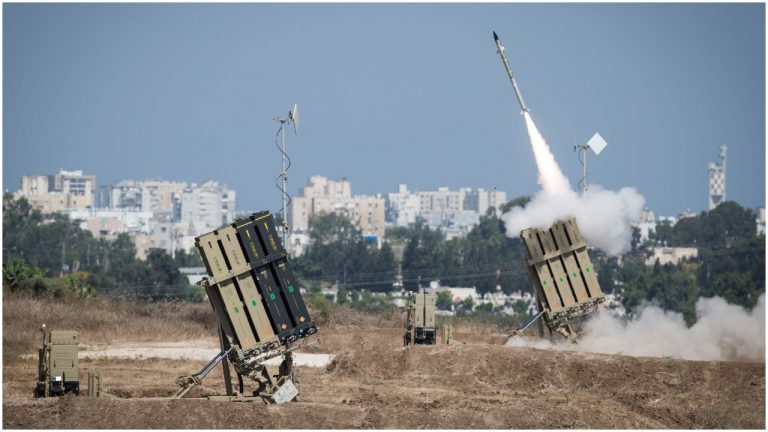
To counter the low-cost warfare initiated by Hamas, the Israel Defence Forces has now activated its state-of-art air defence system – ‘Iron Dome’ to protect its civilian population from the rocket attacks. Deploying its Iron Dome, the IDF has been successful in intercepting the continuous barrage of rockets targetting Tel Aviv and central Israel.

Here is an explainer on the Israeli air defence network ‘Iron Dome’ and how it intercepts the incoming threats.

What is Iron Dome?

Israel’s Iron Dome is an air defence system developed by the Israeli firms Rafael Advanced Defense Systems and Israel Aerospace Industries, with support from the United States.

It is an air defence system deployed by Israel to intercept and destroy short-range rockets, artillery shells and mortars fired from distances of up to 70 kilometres, to protect the Israeli population from rampant attacks by Palestinian terrorist groups. The Iron Dome is designed to intercept short-range rockets and artillery that are fired by the Islamic terror group Hamas from Gaza and other surrounding areas.

How does the system work?

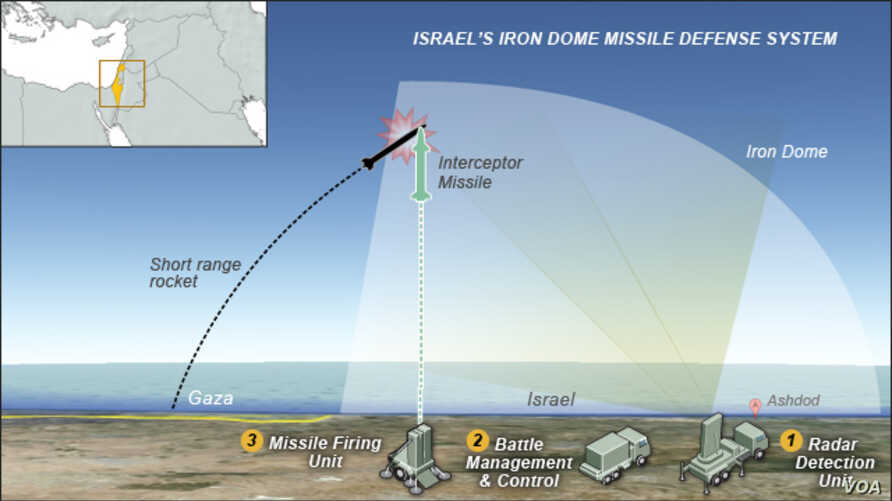
The all-weather Iron Dome relies on a system of radar and analysis to determine whether an incoming rocket is a threat and takes the appropriate response to fire an interceptor to destroy the incoming rocket. The interceptor missiles intercept those rockets that are launched to target the civilian population inside Israel.

It is a three-central component consisting of interceptor batteries that shoot rockets out of the sky, a radar that tracks the rocket as it is fired across the border into Israel, and then advanced software that predicts the rocket’s trajectory.

The information picked by the system is then used to guide Tamir interceptor missiles, which are fired vertically either from mobile units or a static launch site to detonate the incoming rocket in the air, producing explosions in the sky.

The infographic of the working of high-tech Iron Dome Air Defence System/ Image Source: Voice of America

How long has Israel been using it?

Iron Dome was first commissioned by the Israel Defence Forces in March 2011 and made its first successful intervention the subsequent month when it intercepted a Grad rocket fired from Gaza. Israel initiated its air-defence program after its war with Lebanon’s Hezbollah in 2006, when 4,000 rockets rained down on northern Israel, killing 44.

Every time Israel launches its Tamir missile to intercept rockets from Gaza, it incurs a cost of around $95,000 (Rs 70 lakhs). Due to the higher costs, Israel usually uses them only against rockets destined for residential areas, rather than those headed for open ground.

In fact, the cost of rebuilding infrastructure damaged by rockets is much cheaper than using the Iron Dome. However, with civilian lives in question, Israel has been continuously using the Iron Dome system to protect its population from rocket attacks. Reportedly, the US has partly-funded the system, pledging $429m (£303m) towards the programme.

Iron Dome – an effective air-defence system

The Iron Dome air defence system is considered one of the world’s most advanced, with a reported success rate of more than 90%.

According to experts, the commissioning of the Iron Dome has changed life for many Israelis during recent conflicts, as it now allows IDF to intercept rockets fired from Gaza with more certainty. Hence a sense of normality has returned in southern parts of the country, the region that receives a maximum number of rocket strikes. A decade later after its commissioning, the Iron Dome has thwarted thousands of rocket attacks launched by the Palestinian terrorists from Gaza.

However, some rockets fired from Gaza have made it through and resulted in deaths in Israel due to the sustained rocket launches by Hamas.

In addition to their land-based deployment, Israel Defence Forces are looking forward to deploying the Iron Dome batteries on its naval systems. The IDF has deployed the air-defence systems on its Sa’ar 6-class corvettes to protect off-shore gas platforms in conjunction with Israel’s Barak 8 missile system.

In addition, the Rafael Advanced Defense Systems and Israel Aerospace Industries are working on a multi-tiered missile defence system and long-range air defence systems with the integration of  Arrow 2, Arrow 3, Iron Beam, Barak 8 and David’s Sling anti-missile systems.

While the Iron Dome protects civilian populations against short-range rockets fired by Hamas, usually Qassams and Katyushas, The Arrow system works to take out long-range missiles targeted against Israel. It is being developed especially to counter the Scud missiles from Syria and the Shihab missiles from Iran.

David’s Sling, currently under development, is designed to intercept medium range ballistic weapons and highly accurate missiles.

‘No commode’ claims Pappu Yadav who is in jail for flouting COVID norms, complaints of mosquitoes biting him all night

Jan Adhikar Party (Loktantrik) chief Pappu Yadav, who is currently lodged in Virpur jail for flouting COVID norms, took to Twitter on Wednesday to claim that he will expose all the ‘mafia’ around Chinese coronavirus.

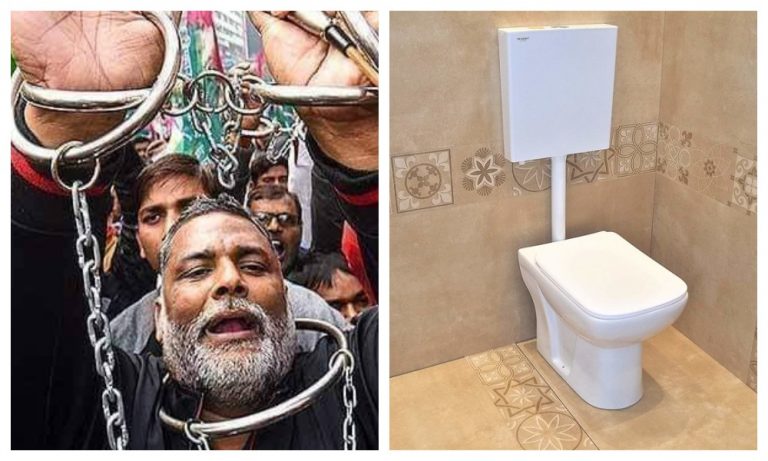
In a tweet, Yadav claimed that he is on a hunger strike in Virpur jail. “No water, no washroom. There has been an operation on my leg, I cannot sit down. There is no commode either,” he tweeted at around 10 AM today. He added that his only crime was that he tried to help COVID positive patients, save them while ‘exposing’ medicine mafia, hospital mafia and ambulance mafia. He added that he will continue to fight.

As per reports, he also said he was bitten by mosquitoes through the night.

Pappu Yadav alias Rajesh Ranjan has been member of Rashtriya Janata Dal where he was expelled in 2015 for ‘anti party activities after which he launched Jan Adhikar Party. He has also been member of Samajwadi Party and Lok Janshakti Party. He has been elected as Member of Parliament several times from various parties.

Meanwhile, fearing that Pappu Yadav might become more popular and become a hero-like figure, RJD leaders are condemning this as ‘drama’. It is because of this fear that neither Tejashwi Yadav nor his father Lalu Prasad Yadav have condemned Pappu Yadav’s arrest. As per DSP Town Suresh Prasad, Pappu Yadav was arrested for violating lockdown and roaming about in a car without permit.

Israeli forces kill Islamic Jihad and Hamas leaders in targeted strikes amid increased tension between Israel and Palestine

On May 12, Israel Defence Forces (IDF) announced that they have neutralized two top Hamas leaders in a targeted strike on Tuesday. The targets are identified as Hassan Kaogi, head of the Hamas military intelligence security department and Wail Issa, his deputy. In a tweet, IDF said, “Our fighter jets, with the ISA, neutralized key figures of Hamas’ intelligence: Hassan Kaogi, head of the Hamas military intelligence security department & his deputy Wail Issa, head of the military intelligence counterespionage department.” The IDF added, “Looks like our intel was better.”

Issa was said to be the brother of Marwas Issa, deputy commander of the Hamas military wing. Hassan and Issa were said to be responsible for rocket attacks on Israel. IDF also eliminated three additional senior Hamas officials identified as Bassam Issa, the Gaza Brigade commander, Rafa Salama, the Khan Younis Brigade commander and Mohammed Yazouri, the chief of Hamas intelligence.

Apart from Hamas leaders, three Islamic Jihad terrorists were killed were also killed in IDF strikes, which included Samah Abed al-Mamlouk, a Jihadi Islamist terrorist and Hassan Abu al-Ata, deputy commander of Islamic Jihad’s Gaza Brigade. According to Gaza-based Palestinian media, several others were injured in the attack. “An attack was carried out on a hiding place in which senior members of the Palestinian Islamic Jihad’s rocket apparatus were staying,” the Israeli military said.

“Those who were eliminated were responsible for rocket fire by Palestinian Islamic Jihad, including in the most recent round of escalation,” they added.

What is happening in Israel?

The long-standing territorial-control issues between Israel and the pro-Palestinian forces have once again escalated, resulting in large-scale violence and attacks. Reports suggest that the fresh violence in the region took place after the eviction of illegal Palestinian families from the Sheikh Jarrah neighbourhood in east Jerusalem.

Tensions between Israelis and Palestinians have escalated very high in Jerusalem for the last several days, with thousands of Palestinians clashing violently with Israeli forces at the Temple Mount. The holy site is deeply revered by both Muslims and Jews. Reportedly, over 800 Palestinians and more than 30 police officers were wounded in the clashes.

Bombay HC orders Maharashtra govt to approve transfer of vaccine plant to Bharat Biotech after forest dept blocked the deal

On Tuesday, the Bombay High Court permitted Biovet Private Limited, an associate company of Bharat Biotech, to take possession of a fully operational and ready-to-use vaccine manufacturing plant in Pune to produce Covaxin, the indigenous vaccine against Covid-19. Biovet has purchased the plant from its previous owner, but the forest department was not allowing the transfer citing irregularities.

The unit on the 12-hectare plot was being used by Intervet India Pvt Ltd (a subsidiary of Merck & Co.) to manufacture vaccines for Foot and Mouth Disease. The land was granted for the manufacturing unit in 1973.

Subsequently, Biovet had purchased the unit along with the plot of land from Intervet to manufacture vaccines, however, when Biovet approached the government for approval of the transfer of the plant, the deputy conservator of forests (Pune division) intervened saying it was a reserved forest and the initial 1973 grant itself was problematic. 

Biovet then had to approach the High Court to challenge the refusal of the govt to approve the transfer of the plant, and in an interim application, sought direction to the government to grant it licences and permissions to initiate manufacturing of Covaxin and vaccine for Foot and Mouth Disease.

A division bench comprising Justices KK Tated and N R Borkar on May 6 heard the application filed by Karnataka’s Biovet Private Limited seeking direction to the Maharashtra government to hand over possession of the manufacturing unit. 

Considering the COVID-19 situation, the HC declared, “The respondent (state government) is directed to grant appropriate licences/permissions/NOCs to the applicant (Biovet) in a time-bound manner to enable manufacture of the Food and Mouth Disease vaccine, Covaxin and other life-saving vaccines.”

“Considering the present position of Covid-19 and as the Applicants are ready and willing to start manufacturing activities without prejudice to the rights and contentions of both the parties in writ petition proceeding and considering the undertaking given by the Applicants by their affidavit-cum-undertaking dated April 30, 2021, and as the Learned Advocate General has no objection to allow the present interim application, we are satisfied that the Applicants have made out a case for allowing this Interim Application,” the court added.

RD Soni, who appeared for Biovet, had argued that the unit and machinery was lying idle due to a delay in handing over possession of the land.

Advocate General Ashutosh Kumbhakoni told the court that the Maharashtra government had no objection if the company used the unit for manufacturing life-saving vaccines, including Covaxin. However, he warned that the company should not claim any right, title and interest in future.

Soni assured the court that the company would not claim any equity in respect to the land in question, in case that was the cause of hesitancy in approving the transfer. 

“The concerned authorities are directed to hand over peaceful possession of the ready-to-use BSL-3 vaccine manufacturing facility,” added HC.

Bharat Biotech ramps up production

To support the largest vaccination drive being carried out by India, Bharat Biotech has ramped up the manufacturing capacity of Covaxin to 700 million doses per annum.

The manufacturing scale-up is happening in a step-wise manner across multiple facilities with newer ones being added to the list.

Congress leader Ali Mehdi wishes the destruction of Israel hours after terror outfit Hamas launches massive air strikes against Jewish nation

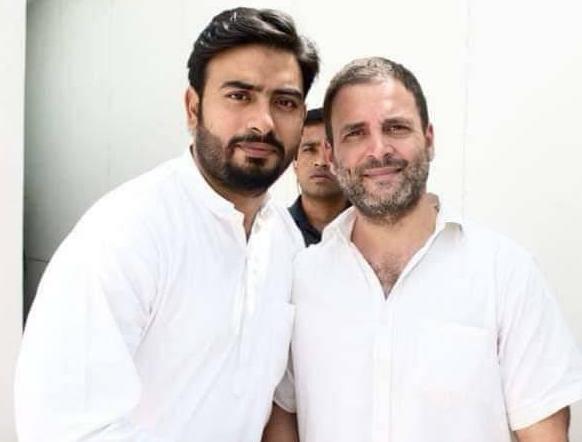
As the Israel-Palestine conflict flares up yet again, Delhi Congress VP Ali Mehdi on Wednesday took to Twitter to express his hatred for the Jewish nation. Mehdi foreboded the destruction of Israel, saying that Allah will destroy it.

“Allah will destroy Israel InshaAllah #AllahuAkbar,” Mehdi tweeted.

Source: Twitter

Along with the tweet wishing destruction for Israel, Mehdi attached a picture of a sobbing Arab woman with Al Aqsa mosque in the background.

Tensions between Israel and Palestine escalates as Hamas launches aerial rockets at the Jewish nation

Mehdi’s hateful tweet against Israel comes at a time when the hostilities between the Jewish nation and its nemesis Hamas is at an all-time high, especially after the intense aerial exchanges that started on Tuesday evening and continued well past midnight.

On Tuesday, Palestinian terrorist organisation Hamas unleashed massive airstrikes against Israel, firing hundreds of rockets inside the country. The country’s air defence system, popularly known as Iron Dome, intercepted the continuous barrage of rockets targeting Tel Aviv and central Israel Tuesday evening.

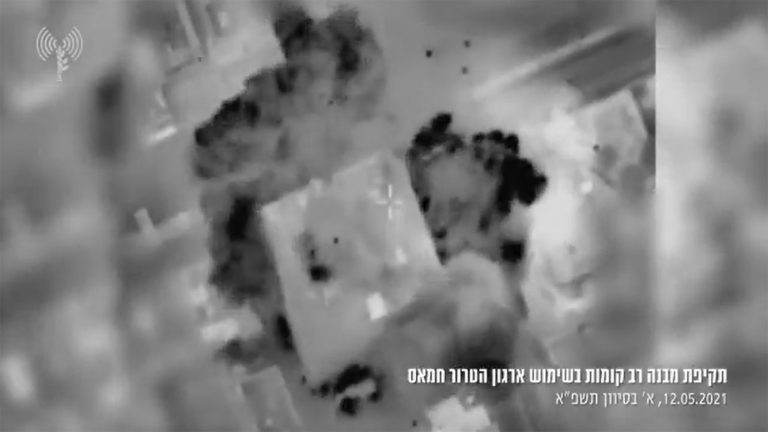
Israel, in response, stepped up its attacks on the Palestinian terror group Hamas inside Gaza Strip. The Israel Defence Forces carried out airstrikes on targets in Gaza in response to continued attacks by Hamas against Israel. During the retaliatory strikes on Tuesday, an Israeli airstrike struck a high-rise office and residential building controlled by Hamas.

At least 35 people were killed in Gaza and five in Israel in the most fierce aerial exchanges for years.

The violence is the culmination of weeks of tensions in Jerusalem, with clashes taking place between Israeli police and Palestinian protesters in and around the Al Aqsa Mosque compound, a chronic flashpoint in the protracted Israel-Palestine conflict. The mosque is perched on a 35-acre site known by Muslims as Haram al-Sharif, or the Noble Sanctuary. It is also revered by Jews as the Temple Mount.

Kerala nurse killed after terror group Hamas launches rocket attack in Israel

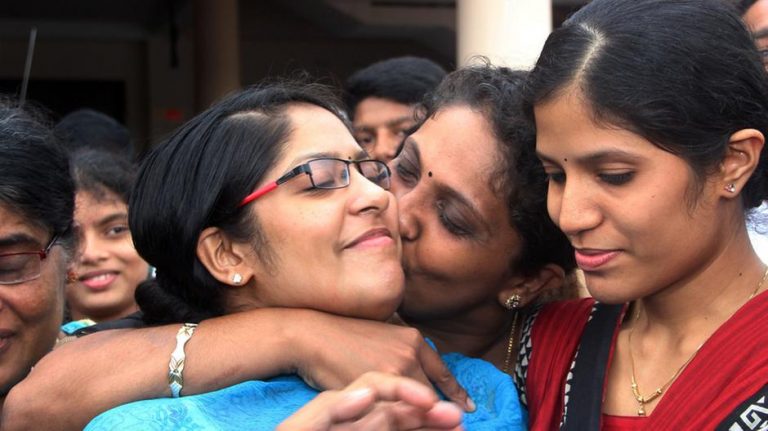
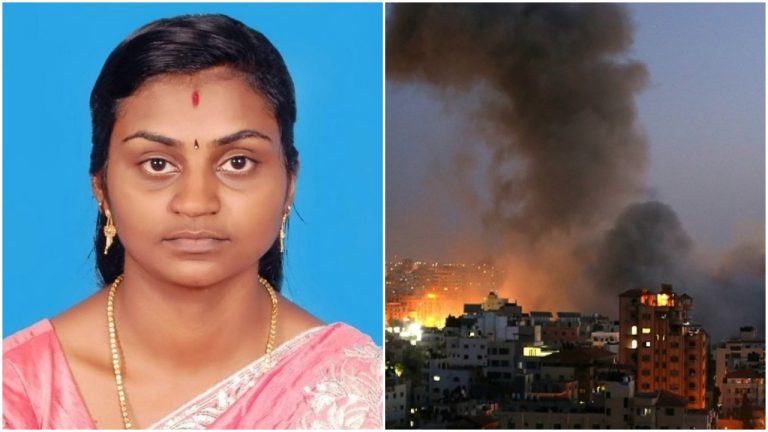
In a tragic incident, an Indian nurse from Kerala has been killed in a Hamas rocket attack at Ashkelon in Israel.

According to the reports, a 31-year-old caregiver Soumya Santosh, hailing from Idukki, Kerala, was killed in a rocket attack by Palestinian terrorists from the Gaza coastal strip. Soumya Santosh worked as a caregiver to an old woman in the southern Israeli coastal city of Ashkelon.

The Kerala nurse was on the phone with her husband when the rocket hit the apartment she was in. The wheel-chair bound lady who Soumya was taking care of was also killed during the attack. Reportedly, Soumya had lived in Israel for the last ten years in Ashkelon and is survived by a nine-year-old son and husband in Kerala.

“My brother heard a huge sound during the video call. Suddenly the phone got disconnected. Then we immediately contacted fellow Malayalees working there. Thus, we came to know about the incident,” said Saji, brother-in-law of the deceased nurse.

Soumya could not reach the bomb shelter in time

According to the local media network Channel 12, the nearest rocket shelter was a minute away from the spot, but they could not reach it in time. The apartment where the old lady was staying lacked a fortified room.

Ashkelon, a border town near the disputed Gaza Strip, has come under massive fire from Palestinian terrorist group Hamas. At least 32 people have so far been killed after terrorists from Gaza fired more than two hundred rockets towards Israel since Monday evening.

India’s Minister of State for External Affairs V Muraleedharan has expressed condemnation against the attacks and expressed grief over Soumya’s demise.

“Spoke with the family of Ms Soumya Santhosh to convey my deep condolences at her tragic demise during the rocket attacks from Gaza today. Assured all possible assistance. We have condemned these attacks and the violence in Jerusalem, and urged restraint by both sides,” he said in a tweet.

Israeli Ambassador to India Ron Malka also condoled the Indian woman’s death.

“On behalf of the state of Israel, I convey heartfelt condolences to the family of Ms Soumya Santosh, murdered by Hamas indiscriminate terror attack on innocent lives. Our hearts are crying with her 9 years old son that lost his mother in this cruel Terrorist attack,” the Israeli Ambassador said in his tweet.

The Israel-Palestine clashes:

The long-standing territorial-control issues between Israel and the pro-Palestinian forces have once again escalated, resulting in large scale violence and attacks. The court ruling of eviction of illegal Palestinian families from the Sheikh Jarrah neighbourhood in east Jerusalem has stoked tensions and sparked fresh violence in the region.

Prior to the latest exchange of fire, Israeli police were attacked by Palestinians inside the Al-Aqsa Mosque compound in Jerusalem on Sunday. The Israel police had come under severe attack by Palestinians, who pelted stones and unleashed heavy attacks on them inside the Al-Aqsa compound. More than 21 officers were wounded after attacks by Palestinians during the attacks on Monday.

Following the Israeli retaliation, the terror outfit Hamas escalated its attack on Israeli civilians by launching hundreds of rockets against Israel. At least five Israelis have been killed after Hamas launched hundreds of rockets from the Gaza Strip. In response to the rocket attacks, the Israeli army has struck some 140 targets in the coastal enclave after Hamas openly joined Palestinian terrorists to intensify the clashes between the two sides.