Home Blog Page 450

Jodhpur: Dalit minor boy brutally assaulted, vehicle keys stabbed into his head by Muslims who were outraged over a water balloon

A 17-year-old Dalit boy has been brutally assaulted by Islamists over a water balloon in the Ambedkar Colony which falls in the Pratap Nagar police station area of Jodhpur in Rajasthan. The incident transpired at around 5:00 pm on 10th March. His mother launched a complaint with the authorities. She revealed that her son was watching television when 5-6 members of the Muslim community arrived at their door and suddenly attacked him when he opened it.

Image via @TheTreeni on X

When she came out after hearing the commotion, they abused her and the young boy. The accused also hurled casteist slurs against the family. They asked how he dared to throw a water balloon at them. A vehicle key was then used by one of attackers to stab the minor in the head and it is still stuck there. She was also thrashed by the perpetrators. OpIndia has a copy of the FIR.

Copy of the FIR accessed by OpIndia

The complainant and the boy were saved when her elder son called for help and their neighbours reached at the spot and tried to intervene. However, the offenders took the opportunity and escaped from the location. The victim is now admitted in the MDM hospital, Jodhpur. The First Information Report (FIR) has been filed under sections 115(2), 126(2)/189(2) of the Bharatiya Nyaya Sanhita (BNS) and 3(1)(R)(S) and 3(2)(VA) of the Scheduled Caste and Scheduled Tribe Prevention of Atrocities (SC/ST) Act.

Deception, betrayal, and exploitation: How Gulzar Ansari posing as Sanjeev meticulously hatched a conspiracy to lure a Hindu girl away

A shocking case of Love Jihad has come to light from Kushinagar, Uttar Pradesh, where a Muslim man, under the guise of a Hindu identity, manipulated and lured a young Hindu girl before vanishing without a trace.

The girl’s family, devastated upon discovering the truth, has now turned to Chief Minister Yogi Adityanath and other authorities, pleading for swift action to bring their daughter back.

In a quiet village of Kushinagar, a labourer arrived seeking work—but with a hidden agenda. Posing as a Hindu and introducing himself as “Sanjeev,” he seamlessly integrated into the community, building trust and familiarity. He routinely visited a local household to buy milk, where he set his sights on a 12th-grade girl. His intentions became clearer as he lingered around the home, discreetly observing and strategically weaving his way into her life.

Then, one day, he suddenly disappeared—leaving behind a trail of unanswered questions. It was only after his abrupt vanishing that the family uncovered his real identity: he was not Sanjeev, but Gulzar Ansari.

Gulzar Ansari, a 30-year-old man from Uttarakhand, had been working as a labourer at a sugarcane crusher in Kushinagar for months. His actions, however, were not random. He had meticulously orchestrated a plan—changing his name, embedding himself within the village, and winning the trust of the young girl.

On December 27, 2024, after carefully manipulating her emotions, Gulzar convinced the girl to secretly meet him. Taking advantage of her innocence, he lured her away and escaped to Uttarakhand.

The truth sent shockwaves through the village. When his employer was informed, he was left stunned and immediately provided the girl’s family with Gulzar’s real identity and home address. Initially, fear of societal shame kept the family silent, but their growing desperation and fear for their daughter’s safety finally pushed them to act.

Overcome with grief, they reported the matter to the police, who, recognizing the gravity of the situation, swiftly registered a case and launched an investigation.

As news of the incident spread, BJP and Hindu activist leader Neeraj Singh, also known as Bittu, stepped in. Visiting the victim’s family with his supporters, he assured them that the case would be taken to higher platforms and that strict action would be taken against the accused.

With rising concerns over such cases, the family and local community now await justice, demanding urgent intervention to bring their daughter home and hold the perpetrator accountable.

Telangana: Two journalists who posted an interview of a farmer criticising the Revanth Reddy govt detained

0

Hyderabad Police on Wednesday (11th March) detained senior journalist Revathi Pogadadanda and her colleague Tanvi Yadav in connection with the interview of a farmer who allegedly used derogatory language to show his dissatisfaction with the Anumula Revanth Reddy-led Congress government in Telangana. The interview was posted by a digital news platform the Pulse News Break which is run by Revathi. A case was filed by the police against the journalists based on a complaint filed against them.

As per reports, several people dressed in plain clothes claiming to be police personnel arrived at the residences of the two journalists and detained them. A video was shared by Revathi when cops arrived at her doorstep around 5 am. “I woke up about 30 minutes ago, the time is about 5.15 now. The police showed up half an hour ago,” she said in the video.

She said that the cops wanted to arrest her. She accused CM Revanth Reddy of putting pressure on her and her family to silence her. The police personnel reportedly seized her and her husband’s mobile phones and laptops. The office of the YouTube channel of the Pulse News Break was also sealed.

Late in the day, a post was made from the X handle of Revathi in which a clip of the controversial interview and a copy of a complaint against her were added. “DON’T SHARE THIS VIDEO PLEASE!!! CASES WILL BE FILED. Here is a video of my team @pulsenewsbreak speaking to an old man. He expresses his frustration about various issues, in his own language. NOW! The Telangana Congress is busy filing cases and Telangana police are very religiously filing FIRs on people who are sharing this video! REALLY?!” the post read.

In the post Congress leader Rahul Gandhi was tagged questioning him,”@RahulGandhi ji! This is the democracy you talk about? Is this part of the constitution? Please teach your government Article 19 first! And I hope your government lets the media who doesn’t fall at their feet, stay free.”

Telangana government has been facing major backlash after the detention of the two journalists. The working president of the Bharat Rashtra Samiti, KTR Rama Rao condemned the detention of the two journalists. Posting on X, he questioned Rahul Gandhi, “Kya yahi hain apki “Mohabbat ki Dukaan” ? @RahulGandhi ji?”

BRS MLA from Siddipet, Harish Rao Thanneeru also attacked the Congress government in the state calling it “insecure” and “cowardly”.

BJP IT Cell head criticised the ‘illegal detention’ of Revathi accusing the Telangana government of ‘”assault on press freedom”. He added that the Telangana CM is mistaking himself for a monarch.

Expressing shock over the arrest of the journalists, Telangana BJP spokesperson NV Subhas described the police action as “Midnight crackdown on press freedom”.

How Pakistan believes Jawarhar Lal Nehru’s error helped them ‘gain’ Balochistan: The All India Radio ‘fake news’ saga

Balochistan, a region that should be celebrated for its rich natural resources, breathtaking mountainous terrain and distinctive culture has been in the spotlight for severe human rights violations by Pakistani forces, insurgency and freedom struggle over the past several decades. The largest and sparsely populated among Pakistan’s four provinces has hardly ever had peace or progress.

The area is at present in the news after separatists hijacked the Jaffar Express, a passenger train carrying more than 450 people and killed at least three individuals as well as 37 others received injuries. Afterwards, Pakistani security forces launched an operation and rescued more than 155 people and killed 27 assailants.

The insurgency in Balochistan can be traced back to the betrayal of the Baloch people by Muhammad Ali Jinnah, the founding father of Pakistan and the situation only deteriorated with the Punjab-dominated politics of Pakistan. Nevertheless, a multitude of factors played a role in leading to this unfortunate development in the region including a fabricated report from “All India Radio” regarding the possible accession of the region which catalyzed its acquisition by India’s hostile neighbour.

The Balochistan conundrum unfolds

When the British left the subcontinent, Kalat, which included almost all of Balochistan was a sovereign state. Interestingly, Muhammad Ali Jinnah was the lawyer who assisted the Khan of Kalat in drafting his argument for Balochistan’s independence. “In 1946, Jinnah, the legal adviser of the Khan of Kalat, submitted a Memorandum to the Cabinet Mission that, inter alia, demanded the separation of Balochistan from British India on geographical grounds,” informed Tilak Devasher in his book “Pakistan: The Balochistan Conundrum.”

Pakistani author Rizwan Zeb in “The Friday Times” pointed out that the Khan of Kalat, Mir Ahmed Yar Khan, also asserted that Muhammad Ali Jinnah wholeheartedly endorsed his stance and deeds during the time of the Khan of Kalat’s independence declaration. The issue between Kalat and Pakistan remained unresolved despite this. Pakistan’s Quaid-e-Azam and Ahmed Yar Khan were to meet in October 1947 to talk about the area’s future. Ahmed Yar Khan met extensively with Kalat’s foreign minister and prime minister to deliberate on potential alternatives for their country’s future in advance of the meeting.

Inayatullah Baloch detailed this conversation in his book. Five options including “accede to Pakistan, accede to India, join Afghanistan, join Iran or apply to the UK for a protectorate status,” were discussed in the meeting. Ahmed Yar Khan maintained that joining Pakistan was challenging because of public and political opposition. The delegates allegedly agreed that becoming a part of India would not be feasible as Pakistan would view this action as very aggressive and even London was unlikely to support it, along with the fact that Kalat and India have no clear geographic connection.

Ahmed Yar Khan reportedly claimed that Nehru detested him and that the “All India Congress” had never trusted him. Douglas Yates Fell, Kalat’s foreign minister was in favor of joining Iran. He made the case that it would benefit the Baloch and their unity, citing the historical connections between Iran and Balochistan as well as the fact that a sizable portion of the community also resided there.

The Khan of Kalat and several of his relatives had a favourable opinion on the prospect of joining Afghanistan. Douglas Fell opposed it, highlighting Afghanistan’s status as a close ally of the communist Union of Soviet Socialist Republics (USSR) and its already precarious status. The recommendation was also turned down by Ahmed Yar Khan. He was allegedly quite interested in the prospect of requesting protectorate status from the United Kingdom.

However, Fell asserted that this plea would never be granted by the British and there was no agreement reached at the end of this discussion regarding Kalat’s future course of action. Unfortunately, Ahmed Yar Khan’s goal of ruling Kalat as an independent state was all but dashed when Kharan, LasBela and Makran joined Pakistan. With no direct connection to the outside world, Kalat transformed into a landlocked state.

Ahmed Yar Khan responded to the development by announcing that he might file an appeal with the United Nations and that Kalat’s accession would not be voluntary. Meanwhile, the Khan of Kalat was accused by the Pakistani government of conspiring against it and requesting British support while also contacting India through an agent. These accusations mirrored the conversation in diplomatic circles and the prior interactions Ahmed Yar Khan had with his foreign minister and prime minister.

The accession of Kharan, Las Bela and Makran to Pakistan, according to Ahmed Yar Khan’s biography “Inside Baluchistan,” hurt the country’s regional relations. He enumerated four main negative effects: first, relations with Afghanistan soured; second, the Nizam of Hyderabad was persuaded to accept accession with India due to the “humiliation” of the Baloch; third, the Maharaja of Kashmir changed his mind about joining Pakistan and instead joined India; and fourth, the sheikhs of Gulf states that had previously supported Pakistan sided with India.

Notably, the Hindu ruler of the Muslim-majority state of Jammu and Kashmir, Maharaja Hari Singh, ultimately joined India in October 1947 after an invasion from Pakistan after which he requested Indian military support against Muslim marauders. He initially wanted to keep the state independent rather than join either India or Pakistan.

Balochistan’s desperation and Nehru’s rebuff

The oversight by India’s first Prime Minister Pandit Jawaharlal Nehru regarding Balochistan may not be familiar to many, yet it is historically and strategically as significant as the infamous Himalayan blunder and the Kashmir fiasco. The government of India at the time, impacted by a misguided sense of urgency and strategic blindness, opted not to back the Baloch state of Kalat which was desperate to reach an agreement with New Delhi to avert Pakistani control.

Ahmed Yar Khan attempted to get the All India Congress leadership to support his argument on the independence and sovereignty of the state of Kalat during his campaign to persuade the British to acknowledge his position.

Samad Khan, a well-known Pashtun chieftain from Balochistan who supported the Congress, spoke with the party’s high brass about Kalat’s predicament in 1946. However, Jawaharlal Nehru reportedly had little interest in endorsing it. According to the British think tank Foreign Policy Centre, he even returned the 1947 accession documents that the Khan of Kalat had signed.

Maulana Abul Kalam Azad, the president of the All India Congress in New Delhi at the time, met Baba-e-Balochistan Ghaus Bakhsh Bizenjo, a prominent member of the Kalat State National Party. Azad believed that Kalat would need to seek British protection since it could not exist as an independent state and in his wisdom declared that such a move would severely cast doubt on the Indian Subcontinent’s sovereignty.

For India, it was a case of a lost chance. Perhaps the geopolitical importance of an independent Balochistan was not understood by the Nehru administration.

A shocking “All India Radio” broadcast and a confused Indian leadership

Given the limited alternatives, Baloch historians have maintained that the Khan of Kalat had two options at this point: either join Pakistan or reject it and prepare for the worst situation, including military resistance. However, the countdown to Balochistan started before he made a decision with an All India Radio (AIR) broadcast on 27th March 1948 which declared that the Khan of Kalat had approached New Delhi in January of the same year to discuss accession with India.

VP Menon, secretary to the government unveiled that the Khan of Kalat was pressing India to accept Kalat’s accession, but India would have nothing to do with it. Gul Khan Naseer’s “Tahreekh-e-Balochistan (History of Balochistan),” also verified the same and reported that on 27th March 1948, “All India Radio” broadcasted a press conference wherein Menon stated that two months prior, the Khan of Kalat had submitted a request for accession to New Delhi, but the offer had been turned down.

All India Radio did actually broadcast Menon’s statement, confirmed Hakim Baluch, a former chief secretary of Balochistan, author and historian who has authored multiple books on the region. Gul Khan Naseer who allegedly cited Ahmed Yar Khan expressed this was a white lie to incite animosity between Kalat and Pakistan as well as aimed to provoke the Pakistani leadership into taking hasty action which would allow India to advance against the Hyderabad Deccan. During the negotiations between Pakistan and Ahmed Yar Khan, there were several rumours in Pakistani diplomatic circles that he was using the possibility of joining India as leverage.

“There is good reason to believe that he (Ahmed Yar Khan) has been flirting with both India and Afghanistan,” the British High Commissioner allegedly conveyed to Pakistan. An upset Ahmed Yar Khan also denied that he had made such a request. He protested this allegation by sending a telegram to the Governor-General of India, asking them to divulge any communications they possessed, if he had actually approached them.

Sardar Vallabhbhai Patel, the Home Minister at the time, clarified the next day that no such request had been made, although, the harm had already been done. All that India could do was stand by and watch the takeover of the Balochi state as the Pakistani army overran Kalat. The troops of Pakistan stormed the region while Indian politicians and officials were making conflicting claims. The Pakistan Navy had reached the coastal towns of Pasni and Jiwani when the Khan of Kalat was carried by force to Karachi, the country’s former capital and forced to sign the accession document.

Balkrishna Sharma brought up this matter on the floor of the house and requested that the administration provide more information on the matter to which Jawaharlal Nehru responded:

“I am glad to have this opportunity to clear up a misapprehension that has unfortunately arisen. I greatly regret that owing to an error in reporting, the All India Radio announced on the night of the 27th March that His Highness, the Khan of Kalat, had approached the Government of India about two months ago through his agents to seek permission to accede to India, but the Government of India did not agree. This statement is incorrect. No mention had been made at any time either by the representative of the ruler of Kalat or by the Government of India to the accession of Kalat state to India. In view of the geographical position of Kalat state, the question did not arise at all. I might also add that certain reports, that have appeared in the foreign press about political negotiations between the government of India and Kalat state, are also completely without foundation. The statement that any sum of money has been paid to Kalat state on behalf of the government and that the government have sought airbases in Kalat are also wholly without foundation. The facts are as follows: In August last, soon after the declaration of independence in India, the government of Kalat drew the attention of the government of India to a press communique in which it was said that the government of Pakistan had recognized Kalat as an independent sovereign state, in treaty relations with the British Government, with a status different from that of the Indian states. They invited the government of India to make a similar declaration. Sometime later, a request was made on behalf of Kalat state for permission to establish a trade agency of the state in Delhi. No formal reply was sent to either of these requests. Informally, the representative of Kalat state was informed that these requests could not be considered then. No further communication of any kind has been passed between the government of India and the government of Kalat.”

According to accounts, the comment ascribed to VP Menon was a misrepresentation of his remarks, and he did not make any such claim or statement when the matter was considered in a meeting of the Indian cabinet on 29th March 1948.

An alienated Balochistan

According to Tilak Devasher, Balochistan is alienated in two ways. The first is the “Baloch narrative,” which “rests on the deeply ingrained historical memories of independence and the injustices the people feel they have endured since they were forced to accede to Pakistan.” He quoted Baloch political leader Abdul Hayee Baloch and outlined, “The establishment has never accepted the fact that Pakistan is a multi-national country. Pakistan came into existence in 1947, but Balochs, Pathans, Sindhis, Punjabis and Seraikis have been here for centuries. They have their own cultures and languages.”

The second factor is a phenomenon that emerged after the Baloch were subjected to organized economic exploitation, discrimination, and even persecution. “The province has the highest infant and maternal mortality rates, the highest poverty rate and the lowest literacy rate in Pakistan. Within Balochistan, an average Baloch is twice as poor as an average Punjabi, Pashtun or Hazra resident of the province,” Devasher stated.

Balochi problems have intensified even with the massive projects being carried out with China’s assistance, such as the China-Pakistan Economic Corridor (CPEC) and the Gwadar port. The residents worry that foreigners will take advantage of the jobs and other advantages these initiatives generate because of their prior experiences. “For the Baloch, development is linked with the creation of employment opportunities and consequent improvement in their standard of living. For Pakistan, development means obtaining Balochistan’s mineral wealth and expediting the development of the Gwadar port and the CPEC,” he added.

There were talks in the diplomatic community, per Gurmeet Kanwal, former director of the Centre for Land Warfare Studies (CLAWS), New Delhi, about how Gwadar was run by India on behalf of the Sultan of Oman because the two nations had good relations. According to reports, the Sultan first promised Gwadar to India but the country’s leaders refused the gift and the Khan of Kalat requested him to return it to Pakistan.

“This offer was probably made verbally. While senior diplomats confirm that such an offer was made, its authenticity could not be verified independently. Oman then sold Gwadar to Pakistan for $3 million on September 8, 1958. Since December 1958, it has been an integral part of the Balochistan province of Pakistan,” Kanwal revealed in an article.

Former Research and Analysis Wing (RAW) chief Vikram Sood voiced that the new Delhi rulers were too preoccupied with Hyderabad and Kashmir to recognize the strategic importance of a sovereign Balochistan, in a February 2006 piece. “While the Pakistan Army occupied Kalat, India stood by silently; Lord Mountbatten, Mahatma Gandhi, Nehru or Maulana Azad said nothing about the rape of Baluchistan,” mentioned Indian scholar Deepak Basu.

When probed about the insurgency in the province that made up nearly half of Pakistan’s land area but only had 6% of its population, Henry Kissinger, former United States Secretary of State responded, “I wouldn’t recognise the Balochistan problem if it hit me in the face,” during a visit to the country in 1962. The political class in India had a similar attitude and narrow mindset.

The Khan of Kalat made every effort to keep his state independent. He tried to woo London to sign a pact along the same lines as the UK had with Oman as well as with Iran and Afghanistan. Moreover, he constantly implored for India’s assistance in 1948 while Pakistan waged jihad in Kashmir. However, New Delhi lost out on the opportunity to gain control of yet another lever to control Pakistan, with its leadership, under Nehru, blissfully unaware of the chronic conflict it had ignited with its repudiation of the Khan of Kalat.

Allahabad HC allows whitewashing of Sambhal Jama Masjid during Ramzan, to remain covered with tarpaulin on Holi

The Allahabad High Court directed the Archaeological Survey of India (ASI) on Wednesday (12th March) to complete the whitewashing and decorative lighting work of the Sambhal Jama Masjid within a week. A single bench of Justice Rohit Ranjan Agarwal prohibited any structural modifications in the disputed structure. On Monday (10th March), the High Court directed the ASI to submit a detailed response on whether the whitewashing, additional lighting and decorative lights were necessary for the mosque.

While the ASI’s advocate Manoj Kumar Singh noted that the whitewash of the mosque was unnecessary, the High Court observed that the ASI’s stance was not mentioned in its affidavit. Advocate Singh said that there was some flaking on the exterior of the mosque but the final decision regarding the need for whitewashing could only be made after examination by archaeologists and experts.

During the hearing, the High Court said that if the whitewashing and other related work required further examination of the mosque, then the ASI could send a team for inspection. Justice Agarwal directed the Advocate General of Uttar Pradesh Ajay Kumar Misra to produce a copy of the agreement between the mosque’s mutawallis and the state, dated January 19, 1927, which laid down the responsibilities of different agencies regarding the maintenance of the mosque.

On 25th February, Jama Masjid Committee’s lawyer Zahir Ali filed a petition before the High Court for the whitewashing of the mosque. He said that the mosque is whitewashed every year during Ramzan but this time the administration did not give permission for it. The Hindu side opposed the whitewashing of the mosque out of the apprehension that evidence of the temple might be destroyed during the whitewash.

The first hearing of the petition took place on 27th February during which the ASI submitted before the court that the mosque did not require whitewashing. Senior Advocate SFA Naqvi opposed ASI’s suggestion saying that the ASI did not explicitly oppose the whitewashing and that no whitewashing was required inside the mosque. The high court then constituted a three-member committee to inspect the mosque and submit its report. The committee included representatives of the mosque and the ASI. The committee was directed to submit the report within 24 hours. The committee reached the Jama Masjid on 28th February to inspect the mosque and prepare the report in the presence of the advocate of the Jama Masjid Committee lawyer.

Mosques in Sambhal to be covered with tarpaulin during Holi

Ten mosques in the Sambhal district of Uttar Pradesh including the disputed Jama Masjid will be covered with tarpaulin during the Holi celebration. These mosques are situated on routes where Holi processions will be taken out. The covering of mosques and mazaars is a usual practice taking place every year during Holi.

As rebels in Balochistan hold a train hostage and attack Pakistani military: Here is who they are and why they want independence from Pakistan

On 11th March 2025, the fighters from the Baloch Liberation Army (BLA) hijacked the Jaffar Express, a passenger train travelling from Balochistan’s capital Quetta to Peshawar in Khyber Pakhtunkhwa. The Baloch fighters launched the attack in the remote Bolan district, where they blew up the railway tracks, forcing the train to stop inside a tunnel. They opened fire, injuring the loco-pilot and hijacked the train taking over hundreds of passengers hostage. The nine bogies of the Jaffar Express were carrying over 400 passengers at the time of the attack.

In a statement, the Baloch Liberation Army said that if the Pakistani authorities launched an operation against them, they would kill all the hostages. While several media reports claim that 400 people have been taken hostage by BLA fighters, the rebel group in its statement said that they have taken over 100 passengers hostage.

“Any military incursion will be met with an equally forceful response. So far, six military personnel have been killed, and hundreds of passengers remain under BLA custody. The Baloch Liberation Army takes full responsibility for this operation,” the BLA spokesperson Jeeyand Baloch said adding that women, children and Baloch passengers were released.

Jeeyand Baloch said that this has been done to ensure that only serving personnel of the “occupying forces” remain with them. According to a statement from the BLA, women, children, and Baloch passengers have been freed, while military personnel remain captive. The BLA has held 182 passengers as hostages, the group’s statement released on Telegram said. It also warned of executions of hostages if the Pakistani army intervened.

The BLA stated that the attack was carried out by the BLA Majeed Brigade Fateh Squad and Special Tactical Operations Squad (STOS). Notably, the Baloch Liberation Army which emerged in the early 2000s has a fidayeen (suicide) unit Majeed Brigade. This unit of the BLA has been active since 2011 and has been carrying out attacks on Pakistani security personnel.

Later, it emerged that the BLA fighter took around 300 hostages. The BLA fighters warned the Pakistani authorities against violent retaliation and said that they would execute 10 hostages in response to Pakistan’s ongoing operation against them.

Demands of the Balochistan Liberation Army and Pakistan’s reaction

The Balochistan Liberation Army issued a 48-hour ultimatum, demanding the release of Baloch political prisoners, activists and those subjected to forceful disappearances by the oppressive Pakistan Army. The Baloch fighters threatened to execute the hostages and destroy the Jaffar Express train if their demands were not met or if the Pakistan authorities launched a military operation.  

The BLA initially said that they had killed 6 Pakistani military personnel during the attack, however, the death toll is estimated to be up to 30 Pakistani security personnel deaths in the 8-hour-long exchange of fire. While the Pakistani authorities confirmed that the train driver was injured and intense fighting ensued, they staying consistent with their nature are downplaying the casualties.

In response to the attack and hostage situation, the Pakistani authorities launched a rescue operation. Senior officer Rana Dilawar confirmed that helicopters and special forces were deployed to the mountainous area where the hijacked train remained stranded.

So far, the Pakistani authorities claimed to have rescued 104 hostages and killed 16 Baloch fighters. Some Baloch fighters took around 35 hostages to the nearby mountains, making it difficult for the Pakistani military personnel to rescue the hostages.

Meanwhile, the Balochistan government imposed emergency measures, including mobilising all institutions and declaring an emergency at a hospital in Sibi, 160 km southeast of Quetta to handle casualties.

Baloch rebel attacks humiliating Pakistan Army on a regular basis

The Baloch fighters seeking freedom of Balochistan from the occupation of Pakistan alongside the release of all the Baloch leaders and commoners abducted or unfairly jailed by the Pakistani authorities, have escalated their insurgency. In the recent past, the Baloch fighters have continuously been targeting Pakistani security forces and infrastructure with varied intensity.

In February 2025, the Baloch rebels killed 7 Pakistani personnel and injured 11 following a Baloch assault on a convoy of 29 trucks guarded by the Pakistan Army. Baloch rebels attacked the truck convoy on the Quetta-Karachi national highway. The convoy was carrying copper from the Saindak Project to Karachi. A statement issued by the Baloch Liberation Army stated that the convoy was of a Chinese company that was carrying resources away from Balochistan. BLA warned that any foreign company trying to exploit Balochistan’s resources would be equally attacked. 

In January 2025, the BLA killed over 18 Pakistani soldiers in an attack on a military base in Kalat city. The intensity of this attack compelled Pakistani forces into a defensive posture, with plans for a major counteroffensive delayed because of intelligence failures and terrain disadvantages.

In September 2024, a major controversy erupted in Pakistan over the federal government’s move to enhance the powers of security forces in Balochistan. The revised legislation, intended to bolster the effectiveness of counterterrorism efforts, includes provisions allowing for the detention of individuals suspected of terrorism or posing national security threats for up to three months. These efforts by the Pakistani government to suppress the Baloch freedom struggle received widespread condemnation from its senators who warned that the new powers, which include warrantless searches and arrests, could worsen the situation in Balochistan–a province already reeling from recent coordinated attacks. Following this, the situation has only worsened in Balochistan.

In August 2024, 23 passengers from Punjab were killed in Balochistan’s Musakhail district on Monday (26th August) by suspected BLA gunmen. The BLA fighters stopped several buses, trucks, and vans that were coming from Pakistan’s Punjab province. They forced the passengers out of their vehicles and fatally shot at least 23 persons after checking their identities. Major clashes were reported on 26th August with BLA claiming that it has killed over 100 Pakistani army personnel under Operation Herof.

In November 2024, a BLA suicide bombing at the Quetta Railway Station killed 32 people and wounded over 62. The attack disrupted rail services temporarily. This attack was also carried out by BLA’s Majeed Brigade.

In October 2024, the Balochistan Liberation Army’s fidayeen unit Majeed Brigade killed two Chinese engineers working on the controversial China-Pakistan Economic Corridor (CPEC) project.  

In March 2024, the BLA fighters killed 8 Chinese engineers.

Notably, the assassination of Nawab Akbar Bugti in 2006 was the pivotal event that escalated the anti-outsider sentiments among the Balochi insurgents.

The oppression and suppression of the people of Balochistan by the Pakistan Army and government is further aided by the deliberate silence of their media on atrocities against Baloch rebels and downplaying of the tense situation prevailing there.

In June 2024, it was reported that Pakistan, which essentially has become a puppet of China was rebuked by the Chinese government in a meeting. Beijing has asked Islamabad to launch another Zarb-e-Azb operation in Balochistan against its own citizens there so that Chinese workers and citizens can feel secure. 

Origins of the Balochistan conundrum

The Baloch people are an ethnic group across Pakistan, Iran and Afghanistan, with Balochistan being the largest region they inhabit. Founded around 2000, the Baloch Liberation Army is said to be a resurgence of the Independence Balochistan Movement of 1973-77.

Historically, Balochistan was an independent entity under the Khan of Kalat until its coercive accession to Pakistan in March 1948 following the British withdrawal. The Khan of Kalat signed the instrument of accession under pressure and not out of his own will, neither were the Baloch people given a choice. A Standstill Agreement was signed between Kalat and Pakistan on August 11, 1947, under British supervision, recognising Kalat as an independent state. Kalat was the name given to what is now known as Balochistan.

However, in 1948, Pakistan forced the Khan to merge Balochistan into Pakistan. Pakistan wanted Balochistan to be merged into its federation. Pakistan’s first Governor-General and Muslim League leader Mohammad Ali Jinnah presented this proposal to the Khan of Kalat and offered him to join their federation. The Khan of Kalat established the House of Commons and the House of Lords in Balochistan within 24 hours after the country’s proclamation of independence in 1947. The conference of Balochistan’s two houses was convened by Khan of Kalat on December 16th, 1947, to examine the prospect of joining Pakistan. The lawmakers of both Houses opposed joining Pakistan. The Khan of Kalat and his family were then imprisoned within the palace while Pakistan invaded Balochistan and seized power. Per the Pakistani narrative, except Kalat, all provinces of the erstwhile independent Balochistan— Makran, LasBela, and Kharan were willing to join Pakistan.

Since then, five major insurgencies—1948, 1958, 1962, 1973-77 and the ongoing conflict since the early 2000s, have erupted, driven by grievances of the Baloch people over political marginalisation, violent and torturous suppression and resource exploitation.  

While the fire of Balochi nationalism reignited in 2000 with BLA spearheading the war of freedom against the Pakistani oppressors, the struggle intensified after the murder of prominent Baloch leader Nawab Akbar Khan Bugti in August 2006. In response, the Pakistani establishment launched the policy of “Kill and Dump” in 2009 and began abducting the leaders of BLA, Baloch National Front, and Baloch Republican Party. Since then, countless Balochi freedom fighters have been abducted, brutalised and executed.

OpIndia’s detailed report on how Balochistan found and lost its freedom, its forced accession to Pakistan, the Pakistani establishment’s perpetual oppression of the Baloch people and the many insurgencies that ensued can be read here.

Back in 2019, OpIndia interviewed Dr Allah Nazar Baloch, founder and chief of the Balochistan Liberation Front. He said that the people of Baloch had no intention to join the democratic process of Pakistan as they have different cultures, languages, psyches, histories, and compact geography, albeit Pakistan occupied Balochistan by force. He said, “They (Pakistan) have no interest in the welfare of Balochistan and the Baloch nation. They are only interested in our 750-mile-long coast and minerals. So we Baloch have no way other than resistance, to divert the attention of the world towards oppressed Baloch.” Notably, this is one of the main reasons for attacks on Chinese nationals in the region.

Why the Baloch rebels oppose CPEC

The  Baloch Liberation Army and other Balochi rebel outfits have long been targeting Chinese engineers etc in Balochistan to oppose the exploitation of Balochistan’s rich mineral resources while depriving the Balochi people of their rights and dignity. The locals have vehemently opposed to these projects and warned China against its “illegal settlement”, “occupation” and plundering of the region’s resources. 

The CPEC is a multi-billion-dollar road project that is the result of a deal between the governments of Pakistan and China. The idea behind the project worth over $65 billion is to provide China with a clear path to transport its products from China to ports in Pakistan connecting it to the rest of the world. Alongside financial issues, the CPEC has also been facing resistance from the locals as the Pakistani governments have over the years, failed to convince the locals that the project is supposedly beneficial for them. Moreover, India has also registered its objection to the project as it passes from Pakistan-Occupied Kashmir (PoK).

The Baloch rebels accused China and Pakistan of colluding to exploit Balochistan’s natural resources like oil and gas, especially through the Gwadar Port in Balochistan, without benefitting the local people. Moreover, the large-scale projects displace the Baloch communities and bring in outsiders, threatening their demographic and cultural identity.

While Pakistan and China promote Gwadar Port as the face of development in the Gwadar region, the reality for the local people is grim. Over 1,00,000 people have no access to clean drinking water. To date, the desalinisation plant in Gwadar remains non-operational with no proper supply of clean drinking water. The historical neglect of Balochistan and its people and the exploitation its resources have been the approach of the Pakistani establishment.

Balochistan is the most resource-rich region Pakistan has a hold on, having vast reserves of natural gas, oil, coal, copper and gold. However, despite the region’s resource affluence, its people have got nothing but economic exploitation from the Pakistani establishment. Take the case of Sui Gas Field.

Found in 1952, this gas field in Balochistan supplies much of Pakistan’s energy needs, yet Balochistan itself has very limited access to it.  The excuse often given for this neglect is the rough terrains of Balochistan. However, Sui gas is supplied to the remote areas of Sindh and Punjab. While the CPEC promised billions in revenue, the Baloch people expect nothing to reach their pockets as evident from the high unemployment, and profits being funneled to Punjab-dominated elites or Chinese investors. 

Historical neglect, economic exploitation, political marginalisation and cultural erasure: Pakistan squeezing Balochistan of its resources and giving nothing in return

The chagrin of the Baloch rebels also arises from the fact that Pakistan treats Balochistan as a colonial resource base from where, it extracts wealth while leaving the region undeveloped. This is corroborated by the fact that around 70% of the population in Balochistan is identified as multidimensionally poor which is highest in Pakistan. Moreover, Balochistan makes up 4% of Pakistan’s GDP and 40% of natural gas is supplied to other provinces. Balochistan is reported to be using only 17% of its resources while the rest 83% are sent to other provinces of Pakistan. Balochistan is also way behind in basic facilities like education and healthcare.

Pakistan is known to have a Punjab-dominated system. Despite being the largest province by land area, Balochistan has minimal representation in the federal government and army, where the Punjabis hold disproportionate power. The Baloch rebels have long been asserting that the provincial government is nothing but a puppet of Islamabad. Even elections in Balochistan are marred with rigging as seen in February 2024 when Baloch nationalists protested against the election rigging in favour of parties aligned with the interests of the Pakistani army, and voter suppression.

In addition to political marginalisation, the Baloch nationalists have also raised the issue of the systematic erasure of their linguistic and cultural identity by the Pakistani establishment over the decades. The Baloch people have their own language Balochi, traditions, and tribal structure. However, instead of protecting and promoting the unique identity of these people, Pakistan has been hell-bent on eroding the cultural identity of Balochistan. Schools in Balochistan rarely teach Balochi language, and Urdu language alongside Punjabi cultural norms dominate state institutions. The Baloch rebels argue that their fight is a defence of cultural survival and accuse Pakistan of imposing a homogenous identity that would destroy the unique identity of Balochistan. The historical crackdowns on Baloch intellectuals and educators make it evident that Pakistan wants to silence the Baloch voices.

Human rights abuses

Since the early 2000s, Pakistan has adopted a “kill and dump” policy with thousands of Baloch activists, students, and civilians abducted or detained without trial, exiled, tortured and killed with their dead bodies discarded to rot. While human rights groups say that over 20,000 people have gone missing, with a 2024 UN Working Group report documenting 5,000 unresolved cases, the Pakistani authorities justify this as ‘counter-terrorism’. The BLA and other Baloch rebel groups assert that this is an ongoing genocide aimed at crushing their freedom movement.

In July 2024, thousands of Baloch people gathered near Gwadar port city for the Baloch National Gathering, popularly known as Baloch Raaji Muchi to protest the state brutality and Baloch genocide. Pakistan could not stand even a peaceful gathering of the Baloch people and the Pakistani security personnel began kidnapping, intimidating and even shooting Baloch people flocking to Gwadar to attend the event. In December 2024, residents of Parom, a town in the Panjgur district of Balochistan, staged a sit-in outside a local Frontier Corps (FC) camp, calling for the immediate release of their missing family members.

The Baloch Human Rights Council said last year citing data that 65 individuals were subjected to enforced disappearances in the first quarter of 2024, and 11 individuals were extrajudicially killed by Pakistani security forces.

Pakistan’s oppressive rule in Balochistan has sown the seeds of its own turmoil, reaping the harvest of a rebellion it can no longer contain. Decades of plundering the province’s riches, silencing the voices, and answering reasonable dissent with forced disappearances and brutalities, have escalated to a point where Baloch nationalists are compelled to undertake violent measures to have their voices heard. Pakistan’s approach of prioritising unchecked control over justice and exploitation over equal rights, cultural erasure over preservation, has fuelled the very freedom struggle it desperately seeks to crush. After all, oppression breeds resistance.

Mohammed Zubair uses lies peddled by Imam to shield Muslim rioters of Mhow, propagandists further false narrative: How police debunked the lies

Alt News cofounder Mohammed Zubair, who has a history of peddling communally charged narratives and fake news, was once again caught in the act when the Indore Police debunked a sinister narrative spread by him about crackers thrown inside a mosque.

The Indore Police put paid to the conspiracy theories hatched to shield Islamists who ran riot in the Mhow area of the city as celebrations erupted after India’s victory against New Zealand in the Champions Trophy Final. The procession celebrating India’s victory came under attack as it passed through Jama Masjid, where a mob from the Masjid started pelting stones at the attendees. 

According to Dainik Bhaskar, those celebrating the victory chanted Jai Shri Ram – resulting in the Muslims of the area turning irate and attacking the procession. According to a PTI report, the procession came under attack as it approached Jama Masjid. 

Videos of the incident that emerged have since indicated that slogans of Allahu Akbar and Naara-e-Taqbeer were raised before the Muslim mob started pelting stones.

Zubair furthers lies peddled by the Imam of the Jama Masjid

As soon as news of the violence surfaced, propagandists like Mohammad Zubair and several other Islamists, as if on cue, started working overtime to blame Hindus for violence initiated by the Muslims. Initially, Mohammad Zubair attempted to exonerate the Muslims rioters by claiming that firecrackers outside the Jama Masjid and chants of Jai Shri Ram “provoked” the Muslims to initiate violence.

Subsequently, Zubair leaned on the claims made by the Imam of Jama Masjid that Hindus provoked the riots by hurling firecrackers inside the mosque. It is worth noting that the Imam of Jama Masjid had already admitted that it was the Muslims who started the violence by attempting to lynch Hindus who were chanting Jai Shri Ram during the cricket victory celebration. 

Perhaps in an attempt to understate the role of Muslims in instigating the ensuing violence, the Imam claimed members of his community were triggered after firecrackers were thrown inside the mosque.

Self-described fact-checker Mohammed Zubair, notorious for selectively fact-checking incidents that reinforce his leftist agenda, lapped up the claims to shield Islamists and pin the blame for the violence on Hindus. Zubair quoted the Imam to claim firecrackers were thrown inside the mosque and the stone pelting took place in the presence of police.

Asif Mujtaba, the co-conspirator of Sharjeel Imam, one of the Islamists who orchestrated the onslaught against Hindus during the Delhi anti-Hindu riots of 2020 took to X (formerly Twitter) to claim that even “celebration was a tool to demean Muslims” because according to him, Hindus resorted to “communal sloganeering” outside a mosque.

Source: X

Another handle, ‘Hate Detectors’ which regularly spews venom against Hindus and blames Hindus for the violence committed by Islamists claimed that the clash erupted because Hindus raised “derogatory slogans” and burst firecrackers, disrupting prayers of Muslims inside the Jama Masjid.

Source: X

Indore police debunk false claims of ‘firecrackers hurled inside mosque’

However, Indore police officials busted the communally charged-up fake news furthered by the likes of the Imam and Zubair. In a report published by The Print, ASP Dwivedi is quoted as saying that the police are yet to recover evidence that proves firecrackers were thrown inside the mosque.

The relevant section from a report published in The Print about the Mhow violence

The officer also added that they have scoured the CCTV footage from the area, but so far evidence to prove firecrackers were hurled inside the mosque didn’t emerge.

Massive crackdown on illegal immigrants: Nationwide raids conducted against Bangladeshi and Rohingya infiltrators

0

Intensifying action against illegal immigration in the country, the authorities have been tracking infiltrators including Bangladeshis and Rohingyas across the states and detaining them for deportation. Last month Union Home Minister Amit Shah directed authorities to speed up their operations against the entire network assisting Bangladeshi and Rohingya illegal immigrants in entering and staying in the country through forged documents.

The authorities have nabbed hundreds of illegal Bangladeshis and Rohingyas across the country over the last three months for illegally entering and residing in the country.

Delhi

In the first week of January, the Delhi Police nabbed eight Bangladeshi nationals in two separate actions for illegally staying in the country. On 3rd January 2025, five Bangladeshi nationals were caught by the Delhi police. They have been living in the country since 2012.

On 4th January 2025, the Delhi Police detained five Bangladeshi nationals during a verification drive from the South West District for overstaying their visa.

In the latest action against infiltrators on Tuesday (11th March), the Delhi Police arrested five Bangladeshi nationals from different areas of the city during a verification drive. The Bangladeshis had been illegally staying in the country by forging documents.

Delhi Police have been conducting verification drives across the national capital after Lieutenant Governor VK Saxena directed the police in January this year to launch an operation to track down Bangladeshi nationals illegally staying in the city. Many such illegal immigrants living in the national capital have been found linked to serious criminal activities in the area.

Gujarat

In February this year, the Ahmedabad Crime Branch arrested and deported 15 Bangladeshi nationals. They were found involved in the trafficking of minor girls for prostitution.

Maharashtra

On 10th March 2025, a Bangladeshi national was convicted by a sessions court in Thane, Maharashtra for illegally entering and residing in the country. He was found guilty under section 14 of the Foreigners Act, of 1946. During an inquiry, he admitted that he was a Bangladeshi national and that he entered India illegally by paying ₹20,000 to an agent.

Earlier this month on 8th March, four Bangladeshi women were arrested from a hotel in Nashik, Maharashtra. The women did not possess any documents as to where they were from and how they entered India. About a month before that, on 6th February, 8 Bangladeshi nationals were arrested by the police from a construction site in the Adgaon area in Nashik for illegally staying and working in the country. Some of them were found carrying forged Aadhar cards.

On 8th February, the Mumbai Police arrested 16 Bangladeshi nationals from the Thane region. The arrested illegal Bangladeshi individuals included seven men and nine women. A team led by DCP Dr Pravin Mundhe (Zone 1) conducted a crackdown operation against illegal Bangladeshi immigrants in Mumbai, Navi Mumbai, and the Thane area. This came a day after Mumbai’s RCF police arrested 7 Bangladeshi immigrants from Mumbai’s Chembur area.

In a significant step to put a curb on illegal immigrants taking benefits of government schemes in the state, the Maharashtra government has introduced stringent rules for birth and death registration. State Revenue Minister Chandrashekhar Bawankule announced amendments to the Birth and Death Registration Act this month, making police verification mandatory for issuing birth and death certificates.

Odisha

On 9th March 2025, Odisha CM Mohan Charan Majhi informed the state assembly that 3738 Bangladeshi infiltrators have been identified in Odisha so far. The CM provided the data in response to a question raised by MLA Manas Datta. Out of these 3738 Bangladeshi infiltrators, 199 have been residing in Bhdrak, 1649 in Kendrapara, 17 in Bhubaneswar, 1112 in Jagatsinghpur, 655 in Malkangiri and 106 in Nabrangpur.

The state government said that it has been coordinating with the central government for the identification and deportation of the Bangladeshi infiltrators.

Rajasthan

In January this year, the BJP government in Rajasthan took major action against Bangladeshis and Rohingyas staying illegally in Rajasthan. On 27th January, the Jaipur Police detained 500 illegal Rohingyas and Bangladeshis. 394 out of the total detainees were identified as Rohingyas while the rest 106 were Bangladeshis.

Karnataka

Responding to a question on illegal immigration in the state, Karnataka Home Minister G Parameshwara presented some numbers in the state assembly. He said that authorities have identified 137 illegal immigrants in the state. 25 of them are Pakistani nationals while the rest are Bangladeshi nationals. He added that the authorities have been constantly monitoring their movements and will arrest them.

Kerala

On 31st January 2025, the Kerala Police detained 27 Bangladeshi nationals who had been illegally staying and working in Kochi, Kerala. The Bangladeshi nationals were nabbed under ‘Operation Clean’ carried out by a joint team of Anti-Terrorism Squad and Ernakulam Police. Many of the arrestees had forged Aadhar cards.

Earlier in January, about 7 Bangladeshi infiltrators were nabbed in Kerala making the total count of illegal immigrants arrested in the State 34.

Tamil Nadu

In January 2025, the Anti-Terrorist Squad (ATS) arrested 31 illegal Bangladeshi immigrants from rural areas in the Tiruppur and the Coimbatore districts of Tamil Nadu. The infiltrators were apprehended during raids conducted by 5 ATS teams based on specific intelligence. They were staying and working in Tiruppur’s knitting units for several months. They are said to have entered India through West Bengal.

West Bengal

In January 2025, the Government Railway Police (GRP) arrested three Rohingya Muslims from Sealdah station in Kolkata for illegally entering and staying in the country. One Abdul Rehman and two minor girls were detained by the GRP on 18th January. The illegal immigrants were residents of the Bhusidom area in Myanmar and were planning to travel to Kashmir.

In the same month, two Rohingyas were arrested from the Krishnagang area in West Bengal’s Nadia district.

‘Nobody is imposing anything on you’: Dharmendra Pradhan hits back at DMK over PM Shri row, debunks lies about NEP

Dravida Munnetra Kazhagam’s three-language formula controversy made its way to the Parliament, where Union Education Minister Dharmendra Pradhan rebuked its leaders on 11th March opposing the National Education Policy (NEP). He stated that “nobody is imposing anything on you” and added that the Tamil language in the state was “already on the decline.” Furthermore, he provided data in the Rajya Sabha to substantiate his argument about the rising dominance of English and the decreasing prominence of the regional language among the students in Tamil Nadu.

He reiterated the words of Prime Minister Narendra Modi and stated that he is proud of the ancient Tamil language. “What is your opposition to NEP? What is your opposition to NEP,” he asked and added that the new policy supports the utilization of Tamil as the medium of instruction up to the fifth grade. He highlighted that the statement “India is the mother of democracy” which is often used by PM Modi is taken from Tamil Nadu. He also pointed out how the “Sengol” was promoted by the government and referred to it as an understanding of Tamil civilization and language.

Pradhan also conveyed that learning English is important for global competition but stressed that the mother tongue is important for critical comprehension which is a primary part of the NEP. He again confirmed that mother tongue-oriented education is a must till the 5th class. “In Tamil Nadu, it is Tamil, in Andhra Pradesh it is Telugu, in Odisha it is Odia, in Madhya Pradesh it is Hindi. It is preferable until the completion of the eighth grade, after which the student is responsible for the decision.”

Additionally, he asserted that those advocating for a two-language framework in Tamil Nadu are seeing a decline in the use of Tamil in their schools while the colonial language is growing there. He called it an “alarming thing” and told them not to create fear psychosis. He stated, “Nobody is imposing anything on you.” He also informed how other languages including Telugu, Malayalam, Kannada and Urdu are being taught in government-run minority schools which also follow the three-language formula.

He also shared an anecdote about a young Tamil girl in IIT Kharagpur who learned Hindi as she wanted to be an entrepreneur on the pan-India level. He also discussed how the Tamil Nadu government has approved the teaching of Hindi in the state’s CBSE schools. “I don’t want to offend anyone but mother-tongue-based education is the primary factor of NEP.” Pradhan then also talked about other crucial aspects including skill, innovation, critical thinking and others which are given priority in the NEP.

“I appeal to my colleagues from Tamil Nadu, let them abuse me personally. The Chief Minister of Tamil Nadu has alleged that NEP and PM Shree (PM Schools for Rising India) means Sanskrit. There are no conditions. We have to take India to new heights and we will take forward the country under the leadership of Tamil Nadu. You can call me a fool but you cannot fool the people of Tamil Nadu all the time. You can scold me and I am ready to accept your insults but don’t take away the opportunity from the youth of Tamil Nadu. Don’t be so small-minded. We have to build a new country,” he mentioned amid uproar by the DMK leaders.

On 10th March Pradhan charged, “They (DMK) are dishonest. They are not committed to the students of Tamil Nadu. They are ruining the future of Tamil Nadu students. Their only job is to raise language barriers. They are doing politics. They are making mischief. They are undemocratic and uncivilised,” in the Lok Sabha while replying to a question on the centre not releasing money for the PM Shri program. Notably, the central government provides the funds after a state signs a Memorandum of Understanding (MoU) committing to implementing the National Education Policy (NEP) 2020.

“The Tamil Nadu government had initially agreed to sign the MoU. But now they have changed their stand. Many non-BJP-ruled states, including Karnataka and Himachal Pradesh, have signed the agreement,” he declared. According to the minister, he was informed by multiple DMK MPs who visited him that the Tamil Nadu government had already approved the scheme. “But when they went back, they made a U-turn. They are doing mischief with the lives of the students. They are misleading the people and doing injustice to the students of Tamil Nadu,” he accused.

He disclosed that MK Stalin, the chief minister of Tamil Nadu, had initially consented as well. “Today is March 10. We still have 20 days left in March,” about the remaining time for the Tamil Nadu government to sign the MoU on PM Shri.

The DMK responded by filing a privilege motion, in which MP Kanimozhi NVN Somu asked Speaker Om Birla to take action. Pradhan’s remarks were deemed “factually incorrect” and deceptive to the house, according to the notice. MK Stalin also attacked him over the same issue.

However, he uploaded the letter from the education department of Tamil Nadu to support his statement and wrote, “I stand by my statement made in the Parliament and am sharing the consent letter from Tamil Nadu School Education Department dated 15th March 2024.” He added, “DMK MPs and chief minister can stack lies as high as they want, but the truth doesn’t bother knocking when it comes crashing down.” He further charged that the DMK was exploiting the language issue as a pretext to hide its shortcomings in governance.

Meanwhile, Kanimozhi claimed that although the state did consent to establish PM Shri Schools, this was subject to committee recommendations. “We agreed on the condition that the government would sign the MoU based on the committee’s findings,” she tried to explain to the media. Anbil Mahesh, the education minister for Tamil Nadu contended that the letter stated that a committee would be established to review the proposal before any decisions. “Those imposing the NEP are the ones playing politics. Tamil Nadu’s education system is exemplary and has shown its capability to shape our students’ futures,” he mentioned.

Bharatiya Janata Party’s Tamil Nadu chief K Annamalai has already exposed the hypocrisy of DMK officials over NEP and the three-language formula last month. “They either run CBSE/Matriculation schools, which offer an option of 3 languages or ensure that their children/grandchildren are enrolled in such schools. After securing their children’s future, they go around spreading fallacies and propaganda against the three-language policy,” he pointed out on social media.

More importantly, NEP clearly states, “The three languages learned by children will be the choices of states, regions, and of course the students themselves, so long as at least two of the three languages are native to India. In particular, students who wish to change one or more of the three languages they are studying may do so in grade 6 or 7, as long as they can demonstrate basic proficiency in three languages (including one language of India at the literature level) by the end of secondary school.” However, DMK and its allies want to keep the issue burning for petty politics in the state.

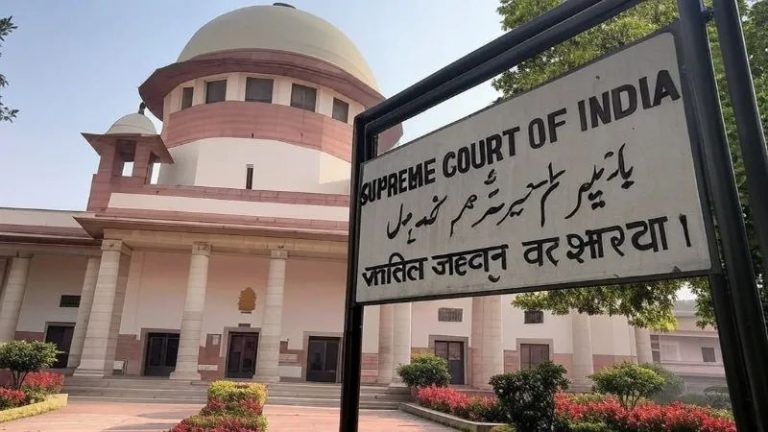
CCI and AGI Greenpac used extreme examples to manufacture timeline conflict in IBC proceedings? What Supreme Court said in HNG case

A recent Supreme Court judgment has called into question the tactics used by the Competition Commission of India (CCI) and AGI Greenpac in a high-profile HNGIL insolvency case, alleging that extreme and unlikely examples were used to create an artificial conflict between the Insolvency and Bankruptcy Code (IBC) and the Competition Act timelines.

The case, involving Hindustan National Glass and Industries Ltd. (HNGIL) ‘s corporate resolution process, has highlighted the problematic arguments CCI and AGI Greenpac use to justify delays and procedural roadblocks.

Supreme Court dismisses fabricated disharmony

In its ruling, the Supreme Court took a firm stance against the alleged manipulation of legal timelines. Point 90 of the judgment explicitly states that the Competition Act’s 210-day approval timeline applies only in cases with an “extremely high degree of Appreciable Adverse Effect on Competition (AAEC),” a scenario described as exceedingly rare. The court noted that the average approval time for combination applications before the CCI is just 21 working days, with no recorded instance of an approval exceeding 120 days.

The judgment further emphasized that out of 99 combination proposals approved by the CCI, a staggering 85 were cleared within 30 days, and the remaining 14 were resolved within 120 days. This data contradicts the extreme hypothetical situations projected by AGI Greenpac and the Committee of Creditors (CoC), which the court deemed unrepresentative of the typical regulatory process.

“The extreme and rare examples projected by the counsel for AGI Greenpac and CoC need not be given undue importance in the present interpretative exercise,” the court ruled.

The exception that proves the rule 

Following its observations in Point 90, the Supreme Court elaborated in Point 91 that in exceedingly rare cases involving a high degree of AAEC, public consultation and behavioural remedies may be required, which could lead to an elongated timeline beyond 120 days. However, the court pointed out that only one such case had been recorded in recent years, further reinforcing the argument that the 210-day timeline was an extreme exception rather than a standard regulatory practice.

By highlighting this fact, the court effectively negated AGI Greenpac and CCI’s claims that delays under the Competition Act were an unavoidable conflict with the IBC’s 330-day resolution process. Instead, the judgment reaffirmed that such delays were statistically insignificant and should not be used as justification for procedural roadblocks in insolvency resolutions.

Legal manipulation to delay CIRP

The argument presented by AGI Greenpac and CCI revolved around the premise that the resolution process under IBC would inevitably clash with the CCI’s extended review period. This narrative, however, was firmly rejected by the court, which found that the supposed delay was artificially constructed to derail the IBC’s 330-day resolution timeline.

In reality, the judgment clarified that the application for CCI approval could have been submitted at multiple stages in the resolution process—well before the final resolution plan was placed before the CoC. This would have ensured compliance with both regulatory frameworks without undue delay.

“The submission of an application before the CCI can be done at different stages and need not necessarily wait until the Resolution Plan is submitted,” the judgment stated, reinforcing that the artificial disharmony was unfounded.

Implications for future insolvency cases

The Supreme Court’s ruling is a significant blow to any future attempts to manipulate regulatory timelines as a means to stall insolvency proceedings. By firmly establishing that procedural efficiency must not be sacrificed to hypothetical scenarios, the judgment reinforces the IBC’s objective of time-bound resolutions.

Legal experts believe that this ruling will prevent the misuse of extreme scenarios to delay insolvency resolution. “This judgment ensures that businesses cannot use inflated regulatory concerns as an excuse to derail insolvency proceedings. It’s a necessary safeguard against procedural abuse,” said a senior insolvency lawyer.

With this verdict, the Supreme Court has reaffirmed its commitment to preventing legal loopholes from being exploited, ensuring that insolvency resolutions remain efficient and free from unnecessary obstructions.

Earlier, OpIndia published a series of articles where it was demonstrated how AGI Greenpac, the second-largest glass manufacturer, wanted to acquire HNGIL, the largest manufacturer of glass, without taking prior approval from the CCI. The merger of the two companies would lead to a monopolistic company – something that the Resolution Professional and AGI Greenpac attempted to skirt by manipulating the procedural requirements.