Home Blog Page 4559

Meet Swati Mohan, the Star Trek inspired MIT graduate who led the landing of NASA’s rover on Mars

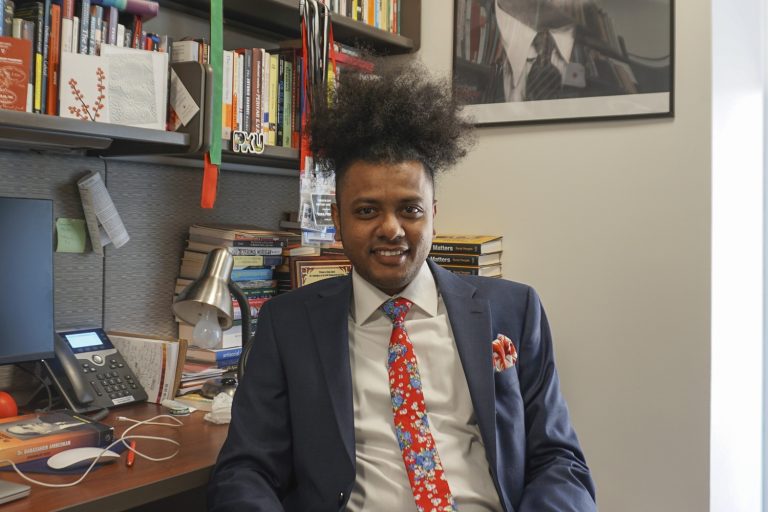
In a major feat, NASA’s Perseverance rover landed on the Martian surface after spending 7-long months in space. During the said period, the vehicle crossed 472 million km at about 19000 km per hour speed. When the rover plunged into the Mars’ atmosphere, it was an Indian-American scientist by the name of Swati Mohan who confirmed the vehicle’s survival.

In her own words, Swati Mohan said, “I led the attitude control system of Mars 2020 during operations, and was the lead systems engineer throughout development. The attitude control system points the vehicle where it needs to be and helps figure out where the spacecraft is oriented in space.” During the landing of the Mars Perseverance Rover, she provided commentary regarding the entry, descent and the landing from mission control.

According to the official website of NASA, Swati Mohan’s family emigrated to the United States when she was just a year old. She spent her childhood in Northern Virginia/Washington DC metro area before joining Cornell University for Mechanical and Aerospace Engineering in 2000. After her undergraduate programme, Swati Mohan completed her MS and PhD from Massachusetts Institute of Technology (MIT) in Aerospace, Aeronautical and Astronautical Engineering in 2010.
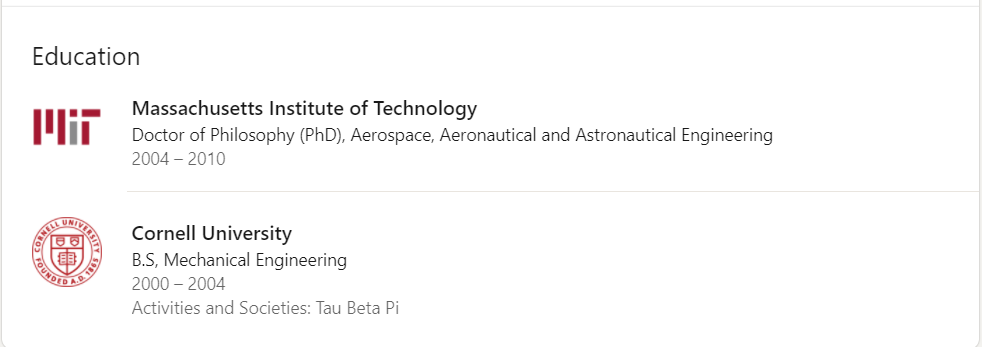
Screengrab of the Linkedin profile of Swati Mohan

While she worked at NASA’s Jet Propulsion Laboratory as a Systems Engineer between 2004 and 2005, Swati Mohan enrolled on the PhD programme at MIT in 2005. After the completion of her PhD, she joined NASA again as a Guidance, Navigation and Control Systems Engineer. She has worked on the Cassini mission to Saturn and GRAIL. Swati Mohan has been on the Mars project since 2013.
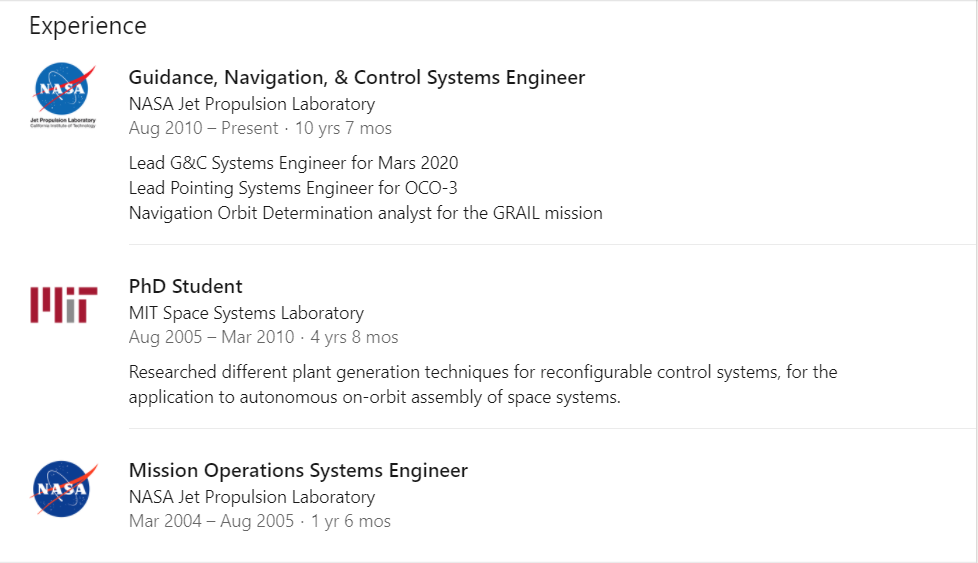
Screengrab of the Linkedin profile of Swati Mohan

Although the Indian-American scientist aspired to become a paediatrician initially, she ended up in NASA. She recounted, “I was always interested in space, but I didn’t really know about opportunities to turn that interest into a job. When I was 16, I took my first physics class. I was lucky enough to have a great teacher, and everything was so understandable and easy. That was when I really considered engineering, as a way to pursue space.”

While talking about her journey, she said, “I remember watching my first episode of “Star Trek” at the age of 9, and seeing the beautiful depictions of the new regions of the universe that they were exploring. I remember thinking “I want to do that. I want to find new and beautiful places in the universe.” The vastness of space holds so much knowledge that we have only begun to learn.

Swati Mohan added that she is the primary point of communication between Guidance, Navigation, and Controls (GN&C) subsystem and the rest of the Mars project. She is also involved in training the team, laying out the policies and procedures for the GN&C team and scheduling the mission control staffing. “The GN&C subsystem is “eyes and ears” of the spacecraft…During entry, descent, and landing on Mars, GN&C determines the position of the spacecraft and commands the manoeuvres it to help it land safely”
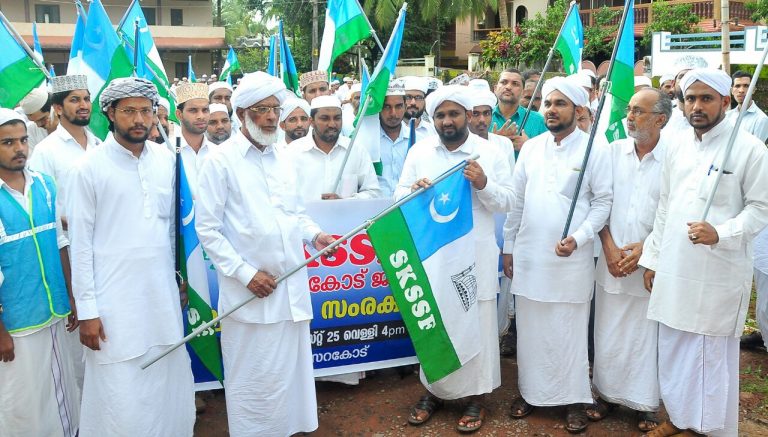
Islamic organisation wants to carve Muslim-majority ‘Malabar’ out of Kerala, threatens to start Telangana-like agitation

The Samasta Kerala Sunni Students’ Federation (SKSSF), a students’ organisation affiliated to radical Islamist organisation Samastha in Kerala, has demanded a new Muslim majority ‘Malabar state’ be carved out from Kerala.

As per reports, a massive controversy has now erupted after SKSSF’s mouthpiece – Satyadhara’s editor Anwar Sadiq Faisi demanded the creation of a new state, ‘Malabar’, by carving Muslim dominated areas of the Malabar region out of Kerala. He also warned of starting a ‘Telangana-style’ agitation if their demands are not met.

Taking to Facebook, Anwar Sadiq Faisi called for the creation of a new ‘Malabar state’ out of Kerala. According to Faisi, Kozhikode should be the state capital of the newly carved Malabar state. This demand is due to the Muslim majority in the Malabar region.

The SKSSF was formed in 1989 and is known for its fundamental views on Islam’s religious aspects. It is well known for always politically backing the Muslim League.

Citing a newspaper advertisement of the Kerala government that showed Pinarayi Vijayan’s government’s alleged excellence in handling the health crisis, Anwar Faisi said that the Kerala government had shown its disregard towards Malabar. He claimed that the Kerala government’s advertisement is the latest example of the discrimination shown towards the Muslim majority region.

“While ten thousand are wandering in Malabar without getting seats for plus two, thousands of seats are left without any students in Thiruvanathapuram and Kochi. Private buses in Malabar and KSRTC buses in the south are being monopolized. This discrimination can be seen in many such things,” Faisi said in his post.

Kerala govt neglecting Muslim-majority northern regions, says Faisi

He also claimed that the Kerala government gives importance to Southern-region of the state despite the northern Malabar region having the most assembly seats. The people in Malabar should take to the streets like Telangana to demand ‘Malabar State’ and Kozhikode as its capital, said Anwar Faisi in his post.

“In the south, too, this discrimination has been going on since the formation of the capital and the secretariat in a very remote part of the state, where even the Malayalam language was taken to a border that gave way to Tamil,” the Islamist said.

He also demanded the Kerala government to implement a special package for Malabar and asked Kerala Chief Minister to stay in the region for 3 days a week. In his Facebook post, Faisi appealed to all religious-political-cultural associations to stand united for the demand to create a new Malabar state.

Faisi is not the only one who wants a new Malabar state to be carved out of Kerala. It is not just the first time that Muslim organisations in the state are demanding the bifurcation of the Muslim-dominated Malabar region from Kerala. Faisi is the latest entrant to the separatist agenda of Islamists in Kerala. The key demand of the Islamists in Kerala is to seek a separate state of Malabar by carving out areas from districts in North Kerala – Kasaragod, Kannur, Wayanad, Kozhikode, and Malappuram where Muslims are present in substantial numbers.

Disha Ravi WhatsApp chats: Delhi HC passes interim order, asks ‘activist’ not to malign the police or authorities

0

The Delhi High court today heard the plea filed by ‘activist’ Disha Ravi, whose name has emerged in the ‘toolkit’ controversy case, seeking direction to the Delhi police not to leak any material related to the investigation in the said case.

Ravi was sent to police custody till February 19 after she was arrested by Delhi police for her alleged role in preparing the ‘toolkit’ and collaborating with a pro-Khalistani outfit named Poetic Justice Foundation (PJF). She had moved the High Court seeking action against media houses CNN News18, India Today and Times Now. Yesterday, the High Court had issued notices to the National Broadcasting Standards Authority (NBSA), News 18 and Times Now in relation to her petition.

The plea came up for hearing before a Bench of Justice Pratibha Singh. During the hearing of her petition in the High Court today, Senior Advocate Akhil Ravi, appearing for Disha Ravi, submitted before the court the reliefs sought by Disha Ravi including directing the respondents to remove all the references to her alleged WhatsApp conversations from their online platforms, restraining the respondents from disseminating any particulars of the investigation that are not in public, restraining the respondents from divulging or sharing with media any material which is part of the case file until the charge sheet is filed and directing the respondents to comply with the programme code while reporting.

Police have been leaking details to media outlets: Disha Ravi’s counsel

Senior Advocate Akhil Sibal contended before the court that Delhi police have been ‘leaking’ the details of the investigation, those not mentioned in the FIR, including the alleged WhatsApp conversations of Ravi with Swedish activist Greta Thunberg with media outlets.

Sibal alleged that a narrative was being built based on the leaked material that Disha Ravi panicked and tried to delete her chats and so on. He further contended that the press briefings of the police should be limited to the facts of the case. Sibal referred to the reports by the respondents claiming that all the reports referred to their ‘police sources’ which logically implied that the police leaked the material to them.

Sibal further alleged that the press briefings were not limited to the facts of the case and that they included ‘details, particulars, inferences, opinions’. Additional Solicitor General (ASG) RV Raju contended before the court that the media reports are not ‘gospel truth’. He said that a journalist may not want to reveal his sources and therefore he may attribute the information to police sources.

ASG Raju further contended that there are several persons interrogating and it cannot be conclusively said who leaked the details. He added that there were certain statements made to malign the police and therefore if the police hold a press conference to clarify, it should not be construed as a violation of guidelines. He urged that the bar on leaking should be applicable to both sides.

Systematic attempt to defame and pressurise the police: ASG

ASG Raju said that Disha Ravi has not said that the leaked messages are her own and that she uses the word ‘alleged’ in her petition. He alleged that this was a systematic attempt to defame and pressurise the police.

Advocate Nisha Bhambani, appearing for the NBSA, said that the NBSA did not receive any complaint and therefore it did not take any action. She added that the NBSA had jurisdiction over broadcasting including YouTube but it does not have jurisdiction over tweets.

The court noted that petitioner Disha Ravi did not say that the impugned WhatsApp messages were false.

Counsels appearing for India Today and Times Now contended that the information shown by the media channels was already in the public domain and therefore they did not violate the petitioner’s privacy.

The court passed an interim order on the petition

Senior Advocate Sibal requested the court to stop the dissemination of Disha Ravi’s ‘alleged’ WhatsApp conversations by media outlets. The court passed an interim order recording all the submissions made before it today. In the interim order, the court directed the Delhi police to conduct press briefings in accordance with the law. It directed media channels to ensure that the broadcast is based on verified sources and that proper editorial control should be exercised so that the investigation is not hampered. The court further said that once the charge sheet is out, its coverage cannot be prohibited. The court directed the people connected with the petitioner not to indulge in ‘unnecessary/scandalising messages’. The court said that it would pass an order regarding material already put on record at a later stage. The next hearing of the matter posted in March.

The court also directed petitioner Disha to ensure that there are no efforts from her to malign the Delhi Police or government authorities.

Indian Express columnist who ranted about ‘Brahmanism’ exposed as PJF collaborator, partnered with Khalistani org for Canada Govt funded project

0

Greta Thunberg exposed the dark underbelly of the global campaign against India when she inadvertently shared the ‘toolkit’ that was created to build international pressure on India. Since then, multiple revelations are being made every day. The most recent revelation involves Indian Express columnist Suraj Yengde.

Rajiv Pandit, a member of the Board of Directors of the Hindu American Foundation, revealed that Suraj Yengde had shared a $25,000 grant with the Poetic Justice Foundation (PJF) for a project on ‘Caste in Canada: The Unheard Stories of Dalit Canadians’. The PJF is a Khalistani org founded by self-proclaimed Khalistanis.

Expert on foreign funding of NGOs, @by2kaafi, pointed out to us that the grant was paid by the Social Sciences and Humanities Research Council (SSHRC), Canada’s federal research funding agency.

The toolkit makes it event that it was always part of PJF’s intention to denigrate the ‘Yoga-Chai’ image of India. One wonders if the research project in question is a part of atrocity literature to be created to slander India’s image abroad.

Suraj Yengde, the PJF collaborator, is a Harvard alumni and regularly appears on foreign platforms and in the media to peddle atrocity literature. Given his collaboration with PJF, it cannot be denied that he could be a cultivated asset to tarnish India’s reputation.

The role of Canadian government institutions also comes into question. Only recently, Citizens Lab, an interdisciplinary laboratory based at the Munk School of Global Affairs & Public Policy, University of Toronto, peddled a propaganda report top give a clean chit to ‘Urban Naxal’ Rona Wilson arrested in the Bhima Koregaon case.

Apart from its association with the Canadian government, the Citizens Lab has also received donations from dubious sources such as the Ford Foundation, George Soros’s Open Society Foundation, HIVOS and other organisations of the Canadian Government.

For the Indian Express, Suraj Yengde penned columns such as ‘Charge of Dalit patriarchy is now being used to put down any assertion of being Dalit’ and ‘The Hathras atrocity proves yet again that caste solidarity is firmer than anything else’.

Other columns include ‘Whatever we have today in Brahminism is a twisted history of Buddha’s work’.

As France passes anti radicalism law, anti-France protests intensify in Pakistan, demands for expelling French ambassador grows

0

The relation between Pakistan and France, which was strained in the aftermath of the horrifying beheading of a teacher in October last year for showing drawings of Prophet Muhammad to his class, continues to remain bitter. On one hand, France has given a nod to the anti radicalism bill to counter the growing fundamentalism in the country. Parallelly, Pakistan continues to protest against France and it’s President Emmanuel Macron, who has vowed to curb Islamic terrorism in his country.

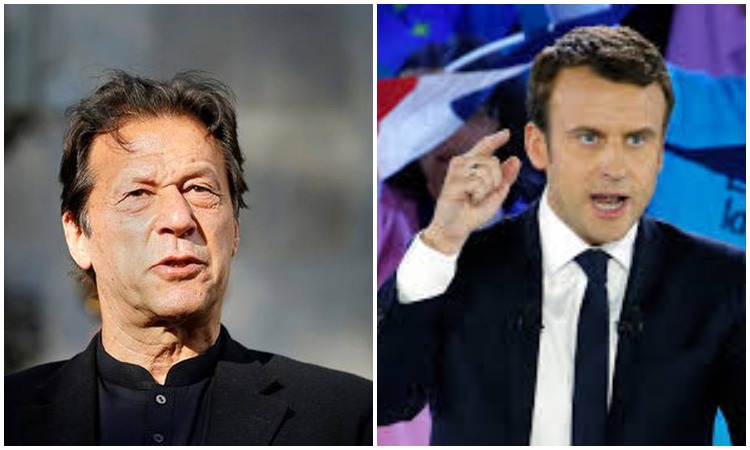
Miffed over Macron’s bold stance over Islamic fundamentalism, Pakistan Prime Minister Imran Khan has proclaimed of taking Tehreek-i-Labbaik Pakistan (TLP) party’s demand of expelling the French ambassador on the issue of blasphemy of Prophet Muhammad, to the Parliament before April 20.

The Tehreek-i-Labbaik Pakistan party, which spearheaded the anti-France protest in Pakistan, had last month, threatened to relaunch its protest if the Imran Khan Government did not fulfil its promise of expelling the French ambassador.

Meanwhile, France has denounced Imran Khan for yielding to TLP’s demand. The French daily newspaper Le Figaro has written that a source in Elysees has said that the move by Pakistan government to take the matter of the expulsion of the French ambassador to Parliament is “very badly perceived”.

“There were insulting remarks against the president (Macron) and it was taken in a personal capacity. And now the Pakistani government is considering putting the question of the ambassador’s expulsion to parliamentarians. It is very badly perceived,” Le Figaro quoted one source as saying.

According to the French daily, the relationship between France and Pakistan which was already weakened by a “slanderous tweet” against France from Shireen Mazari, the Pakistani minister of human rights in November 2020, has been further blurred after Imran Khan’s decision.

Pakistan has been antagonistic towards France ever since the French President has taken a stand against Islamic terrorism following the barbaric killing of the French teacher Samuel Paty, who had shown caricatures of the Prophet Muhammad to his class. Paty was beheaded on October 16 by an 18-year-old Muslim extremist. Following the incident, France’s President Emmanuel Macron had condemned it calling it an “Islamist terrorist attack”.

The killing of Paty was the latest attack by a Muslim extremist in France, coming after the 2015 massacre at Charlie Hebdo magazine and the 2016 truck attack in Nice. 

French President Emmanuel Macron had then refused to condemn the French satirical magazine Charlie Hebdo which faced the ire of the Muslims for publishing cartoons of Prophet and vowed to fight Islamic separatism in the aftermath of the brutal killing of the French teacher Samuel Paty.

Ever since Muslims in many Islamic countries, especially Pakistan, have been calling for both protests and a boycott of French goods in response to Macron’s stance on caricatures of Islam’s most revered prophet.

Activists from the TLP party took to the streets, calling for the Pakistani government to sever diplomatic and trade ties with France.

In October, the Pakistan National Assembly unanimously passed a resolution condemning the publication of blasphemous caricatures in France and the “resurgence of Islamophobic acts” in some countries.

All these moves had already tarnished the relationship between France and Pakistan. To make matters worse, Pakistan Prime Minister Imran Khan, in his Tweet in October 2020, slammed the French President, saying that he has “chosen to deliberately provoke Muslims”. Taking to Twitter, Khan had said: “Hallmark of a leader is he unites human beings, as Mandela did, rather than dividing them. This is a time when Pres Macron could have put healing touch and denied space to extremists rather than creating further polarisation and marginalisation that inevitably leads to radicalisation.”

Adding salt to the injuries, the Pakistani minister of human rights, also took to Twitter a month later calling out the French President. She Tweeted that Emmanuel Macron was treating Muslims like Nazis treated Jews in World War II.

Linking an online article, Mazari had Tweeted: “Macron is doing to Muslims what the Nazis did to the Jews. Muslim children will get ID numbers (other children won’t) just as Jews were forced to wear the yellow star on their clothing for identification.” France had, however, taken offence to the Tweet and demanded that Shireen Mazari withdraws her remarks against the French President, after which the Pakistan minister had deleted her Tweet.

This was the straw that broke the camel’s back. In a major shot-in-the-arm for French President Emmanuel Macron, who had vowed to act against rising extremism in the country, the French legislators in the lower house of the parliament on Tuesday passed the anti-radicalisation bill, which will empower law enforcement officials to swiftly arrest a person for spreading hate online. The bill will enable agencies to charge a person with online hate speech law, which will be punishable by up to three years of imprisonment and a fine of 45,000 euros.

After the attack on Krishna Dhaba owner in Srinagar, Shiv Shakti sweet shop area in Barzulla targeted, 2 policemen injured

0

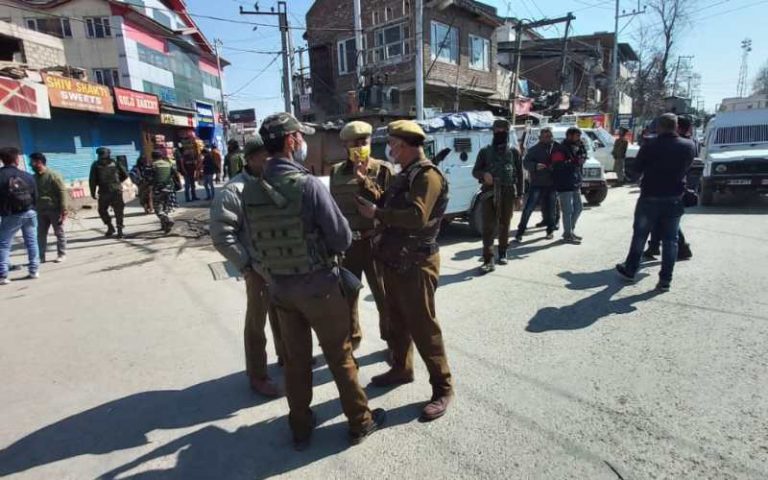
A day after Islamic terrorists opened fire at an owner of Krishna Dhaba in Dalgate area of Srinagar, the area around another food joint named Shiv Shakti Sweet shop in Srinagar’s Barzulla has been targetted by terrorists. Two police officers who were standing at the sweet shop when the attack took place, received bullet injuries and were rushed to the hospital in critical condition, where they succumbed to their injuries. 

According to a report by India TV, the Resistance Front (TRF), a shadow outfit of Lashkar-e-Taiba (LeT) has claimed the responsibility for the attack.

The two policemen have been shifted to Bone and Joint Hospital for treatment, where they have reportedly succumbed. Among the two, one slain policeman has been identified as constable Sohail. 

“Terrorists attacked a police party in Barzulla area of district Srinagar. In this terror incident, two policemen got injured. They have been shifted to a hospital for treatment. Area cordoned off. Further details shall follow,” Kashmir Zone Police said.

Meanwhile, police have cordoned off the entire area and have launched a search operation to nab the attackers.

More details are awaited in connection to the incident.

We reported yesterday how terrorists shot 22-year-old youth Aakash Mehra, son of Ramesh Kumar Mehra who owns a popular food joint Krishna Dhaba, located in a high-security area of the city. He was shot at by terrorists from a close range and critically wounded on Wednesday evening.

The banned terror outfit Muslim Janbaz Force has claimed responsibility for the attack, the Kashmir police said. After some eyewitnesses claimed that the terrorists ran away after opening fire at Aakash Mehra, the police are looking at the CCTV footage.

As per the statement issued by the terror group, they attacked the Hindu youth because he is an ‘outsider’ who intends to get domicile status in Kashmir.

Suit seeking restoration of worship at ancient Hindu temple in Gyanvapi mosque complex filed in Varanasi court

0

A suit has been filed before the court of civil Senior Divisional Judge, Varanasi on Thursday seeking restoration of the permanence of worship rituals at the principal seat of an ancient temple which is now part of the Gyanvapi mosque complex near the Kashi Vishwanath temple. The suit has been filed by Rajana Agnihotri and 9 other devotees who are also worshippers of Lord Shiva practising the Vedic Sanatan Hindu Dharma.

The suit has been registered as a miscellaneous case that will come up before the concerned court for the hearing, as informed by petitioners’ counsel HS Jain. Counsel for the Committee of Management Anjuman Intazamia Masajid, who was reportedly present in the court from the respondents’ side, sought time for filing a counter affidavit. The other respondents in the case are the Union of India through the Ministry of Home Affairs, the State of Uttar Pradesh, District Magistrate of Varanasi, Superintendent of Police, Varanasi, UP Sunni Central Waqf Board and the Board of Trustees Kashi Vishwanath temple.

Petition seeks to declare the devotees entitled to darshan and pooja at the disputed area

The petition primarily seeks to declare the devotees of Goddess Gauri, Lord Hanuman, Lord Ganesh Ji, Nandi Ji and Lord Visheshwar as entitled to have darshan, pooja and worship rituals within the area of dispute. The petition states that Article 25 of the Constitution confers on every citizen a fundamental right to worship and rituals according to the tenets of his or her religion. It further states that any obstacle created before 26th January, 1950 has become null and void by virtue of Article 13(1). “An idol worshipper cannot complete his pooja and gain spiritual advantages without having objects of worship. Any hindrance/obstacle created in performance of pooja, is denial of right to religion guaranteed under Article 25 of the Constitution of India”, the petition reads.

Aurangzeb had ordered desecration of the Kashi temple in 1669: Petition

The petition states that the Jyotirlinga was desecrated and damaged on the orders Mughal ruler Aurangzeb, whom the petition terms as ‘one of the most cruel rulers of India’, in the year 1669. However, other deities including Goddess Maa Shringar Gauri within the temple complex which is claimed to be part of the Gyanvapi mosque by the Muslim community. “That Aurangzeb, one of the cruelest Islamic rulers, was the champion in destruction of Hindu temples. He had issues Farmaans in the year 1669 to destroy many temples including the Kashi and Mathura which were prominently worshipped by Hindus. The administration complied with the order and demolished a portion of temple of Adi Visheshwar at Varanasi and later on a construction was raised which they alleged Gyanvapi mosque but they could not change the religious character of the Hindu temple as the idol of Goddess Shringar Gauri, Lord Ganesha and other associate deities continued in the same building”, the petition claimed.

Ownership of the disputed area lies with Lord Visheshwar: Petition

It is contended in the petition that the ownership of the entire property within the radius of five kos vests in Asthan Adi Visheshwar. It further argues that forcible possession of the religious place cannot alter the nature of the property and the ownership rights of the existing deity. “It is historically proved that in 1585, Raja Todar Mal, the Finance Minister of Akbar, who was the Governor of Jaunpur, had re-established and reconstructed a magnificent Lord Shiva temple at its original place consisting of a sanctum sanctorum (Garch Griha) surrounded by eight Mandapas and pavilions, which is known as the old temple”, the petition states. The plea cites Puranic ordains to say that the worship of Goddess Gauri is necessary to achieve the complete fruits of worship of Lord Vishwanath.

It has been contended in the petition that the devotees had been offering daily pooja at the disputed place until the place was restricted in 1990 by the Uttar Pradesh government to ‘appease the Muslims’ during the Ayodhya movement.

The property was never given to Waqf after demolition of temple: Petition

Rejection the claim that the property belonged to the Waqf Board, the petition said that neither the Historical books written during the Mughal period nor any Muslim historians have ever claimed that any Waqf was created by Aurangzeb by demolishing the Adi Visheshwar temple or that any member of the Muslim community or any other ruler gave the property to Waqf. The petition challenges section 4 of the Places of Worship Act as ultra vires and void, arguing that the Parliament is not empowered to enact a law that takes away or abridges the right conferred by Article 25 of the Constitution.

“This place is sacred for Hindus from the time immemorial. The temple existing thereat was demolished by Muslim invaders. It is submitted that Hindus cannot be compelled to suffer mental and spiritual shock continuously and the same is bound to affect the worldly and spiritual life of the masses for swallowing the tyrannical, wicked and cruel acts of invaders”, the plea submits.

Reliefs sought in the petition

The plea seeks the following reliefs:

  • A decree declaring that the devotees are entitled to darshan, pooja and worship of devotees within the area.
  • Declaration that the entire disputed area belongs to the Lord Adi Visheshwar situated at Dashashwamedh at the heard of Varanasi.
  • A decree in the nature of perpetual injunction against the defendants prohibiting them, their workers, agents, officials, officers and every person acting under them from interfering with or raising any objection or obstruction in the construction of a new temple building after demolishing and removing the existing structures situated thereat.
  • A decree restoring pooja and worship of Goddess Gauri, Goddess Maa Ganga, Lord Hanuman, Lord Ganeshji, Nandji and Lord Adi Visheshwar making appropriate arrangement for darshan and pooja by devotees maintaining law and order.

Mumbai: Taufiq Bashir arrested for stabbing a cow in the abdomen and limb for eating papaya from his fruit cart

0

A fruit vendor named Taufiq Bashir Mujawar (35) was arrested by the police for allegedly stabbing a cow with a knife in the abdomen and limb after the bovine gulped down papaya from his fruit cart, a report published in the Times of India said.

The incident took place at Murud in Raigad district of Maharashtra on Tuesday this week, where the accused had his fruit stall. According to the police, the cow ate papaya from the fruit cart owned by Mujawar which enraged him and in a fit of anger, the accused attacked the bovine with a knife.

A bystander informed the police of the incident after which police arrived at the spot and took the injured animal to a nearby centre for treatment. The injured cow was administered injections to stanch the bleeding and bandaged to prevent infection from spreading.

Meanwhile, Mujawar has been taken into custody and booked under various sections of the Prevention of Cruelty to Animals Act. He was subsequently produced in the court which sent him to judicial custody.

Mosques used to gather crowd for Rahul Gandhi’s ‘farmer rally’? Here is what a viral video says and what we know

A video is going viral on the internet where a Muslim cleric from Rajasthan purportedly urges his followers to attend a rally organised by the Congress party. It is not precisely clear where the video is from or what the name of the cleric is.

The cleric in his address says the event will be attended by former Congress president Rahul Gandhi, Chief Minister Ashok Gehlot and others Ministers and MLAs from the Rajasthan Assembly. He urges his followers to be in attendance at the Raj Public School at 11 a.m. on the 13th of February.

Intriguingly, the cleric says that it is necessary to demonstrate their strength as a community because of the sword hanging over them of 2025. It is not clear what he means when he says that.

It could mean that the Congress could seek retribution from the Muslim community in 2025 if they do not rally to their cause in the Lok Sabha Elections the year prior. Or, it could also indicate that the cleric is trying to fearmonger about the BJP in order to entice his followers into rallying behind the Congress party.

It is not clear when the video was captured. It surfaced on the internet on the 19th of February.

However, we do know that Rahul Gandhi did visit Rajasthan on the 13th of February. He was joined by Ashok Gehlot, Sachin Pilot, Ajay Maken and others.

Rahul Gandhi had addressed a ‘Tractor Sabha’ on the 13th of February where he peddled his usual canards about the newly passed farm laws. If the content of the viral video is authentic, then it appears another instance where the ‘farmer protesters’ demonstrating against the farm laws are not really farmers at all.

Earlier, an undated video had surfaced where ‘Azadi’ slogans were raised by Muslim protesters demonstrating against the farm laws. In the current situation, assuming that the content of the viral video is accurate, it is not clear whether Mosques were used in the region to mobilize support for Rahul Gandhi’s Rajasthan rally or if it is an isolated instance at one single Mosque.

Patanjali’s Coronil gets Ayush Ministry certification, Baba Ramdev releases research on ‘first evidence-based Ayurvedic medicine against COVID’

0

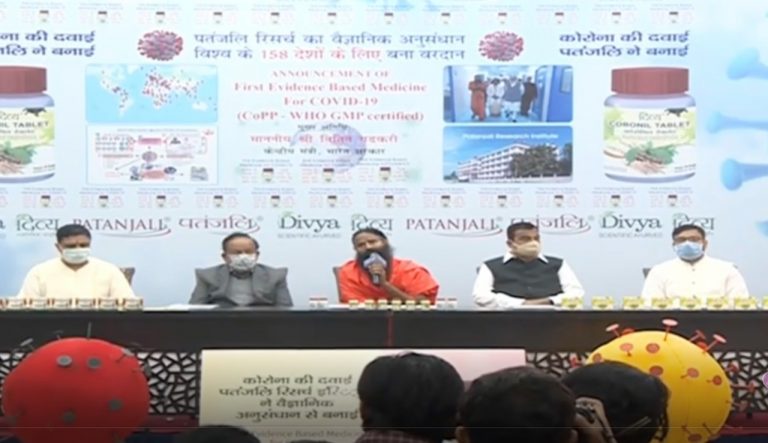
Baba Ramdev on Friday released a scientific research paper on the first evidence-based medicine for COVID-19 by Patanjali Ayurved. According to Baba Ramdev, Patanjali’s Coronil Tablet, a medicine to fight off the coronavirus has received a certification from the Ayush Ministry as per the WHO format. The announcement was made in a press conference which was also attended by Union Ministers Dr Harsh Vardhan and Nitin Gadkari.

Coronil’s certificate of a pharmaceutical product (CoPP) is a certificate issued by the Ayush section of the Central Drugs Standard Control Organisation as per the WHO certification scheme, which establishes the status of the pharmaceutical product and the applicant in the exporting country. After receiving the WHO approval, Coronil will be available for exports to 158 countries across the globe to fight the menace of COVID-19.

It is notable here that the Ayush Ministry has now recognised Coronil as a medicine for supporting measure in COVID-19.

On the occasion, Baba Ramdev assured that best practices and recommended procedures have been followed in manufacturing the medicine. Baba Ramdev also took a swipe at the detractors of the Coronil Tablet, stating that some people think India is not competent enough to research in the field of Ayurveda, relying on research by foreign-based entities to be confident of the efficacy of a medicine.

Union Health Minister Dr Harsh Vardhan heaps praise on Ayurvedic medicine system

Union Minister Dr Harsh Vardhan said that Ayurveda has slowly gained prominence in a host of countries, including Australia, New Zealand, Colombia, Mauritius, Bangladesh, Sri Lanka and China. He added that across the world, Ayurveda of India is being institutionalised in the regular medical system. A doctor with a degree in Ayurveda is welcomed in many countries for the skill he/she possesses.

The Union Minister said the information on Ayurveda should be credited to the thousands of years old Vedas and scriptures. Dr Harsh Vardhan also spoke about how Ayurveda is massively contributing to the Indian economy and how it is increasingly being accepted within the country as well as abroad.

“Ayurveda has Rs 30,000 Cr economy in India. As per official data, it used to see a growth of 15-20% every yr pre-COVID. Post-COVID, this growth rate has risen to 50-90%. It’s an indication that people have accepted it. There’s a marked improvement in exports & FDI,” said the health minister. 

Patanjali was earlier ordered to sell it only as ‘immuno-booster’

The scientific paper and the approval by the Ayush Ministry vindicates Patanjali Ayurved’s claims on its medicine ‘Coronil Tablet’ that it made during its launch last year. In June 2020, Ramdev had claimed that Coronil can cure COVID-19 patients. However, the Ayush Ministry immediately put restrictions on Patanjali on selling it. Later, the Union ministry confirmed that Patanjali can sell the product only as an immunity booster and not as a medicine to cure the infection.