Home Blog Page 458

Bihar: Pastor converts women by offering jobs, college admissions; attacks Hindu deities and claims to cure diseases

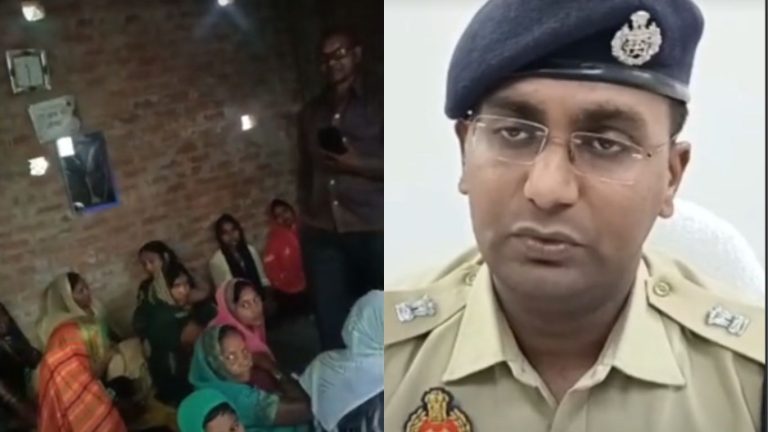
A pastor attempted to seize a Hindu widow’s land in Buxar, Bihar. He used to lead Christian prayers on her property. The pastor was in charge of a massive conversion campaign. He used to urge people to pray to Jesus Christ instead of Hindu gods and goddesses. The accused has been identified as Sunil Kumar. He has been running a conversion campaign in Siwan village, Bihar, since 2014, according to a report by Dainik Bhaskar. On Sundays, the pastor would rent a room in a house and lead prayers. There used to be hundreds of participants in the congregations.

Women made up the majority of those who attended these prayers. He constructed a shelter and resumed his job after being evicted from the house where he used to lead prayers. He then exploited a poor Hindu woman in this place. He began exploiting a woman’s home for his conversion racket after lending her ₹2 lakh for her daughter’s marriage in April 2024. The Hindu woman was under persistent pressure from the pastor to join in the prayers. He demanded the amount when the Hindu woman objected to his actions. According to her, the perpetrator desired to occupy her home and turn it into a conversion center.

The women who came at the place would force her to embrace Christianity. He would even force her to involve other people in the Christian prayers. A person disclosed that Sunil used to target the women of the village and ask them to stop worshipping Hindu gods and goddesses. He used to offer them employment and admission to college, among other things, if they prayed to Jesus Christ. According to the report, he also converted a large number of Harijan women of the area. Although the women did not officially change their religion, they no longer worship Hindu deities.

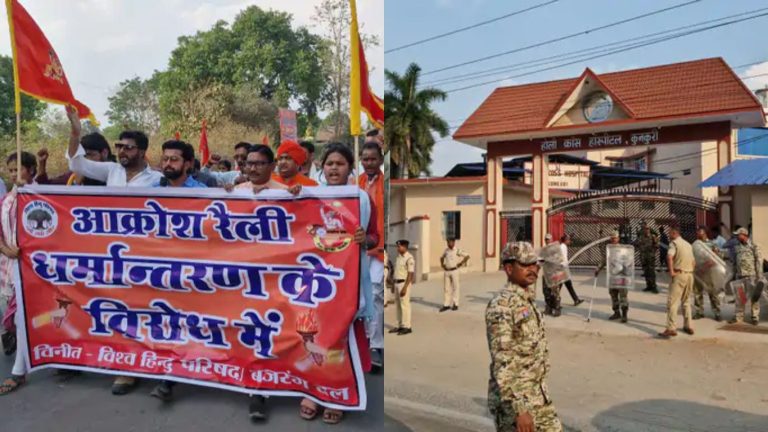
Along with conversion, he also defrauded Hindu women. Furthermore, he deceived them by enticing them in the name of money and jobs. Additionally, he formerly taught in a Christian school. He also claimed to cure people’s illnesses. He even brainwashed some women. He asserted that worshipping Jesus will be the solution to their issues rather than praying to deities like Durga-Shiva. Members of the Bajrang Dal had recently demonstrated against him and he has been missing ever since. The locals are outraged over the developments, however, no action has been taken against him till now.

IT Minister Ashwini Vaishnaw Challenges tech giants such as TCS, Infosys and Wipro to develop indigenous operating system for mobile phones

0

Union Information and Technology Minister, Ashwini Vaishnaw on Friday challenged the technology giants such as TCS, Infosys, and Wipro to develop an operating system for mobile phones.

Participating at 32nd ICT Business Awards & DQ Digital Leadership Conclave, an event organised by Dataquest India, “ Union Minister Ashwini Vaishnaw said, “From this stage I would like to give this challenge to our big tech companies like Infosys, TCS and Wipro take up this challenge and develop the operating system for mobile, develop and operating system for our country.”

Urging the tech giants to develop an operating system for mobile phones, he further added, “Yes, you have been doing very well in providing the services, time has come when we must become a product nation. And we will support from the government and “

Addressing the event, the Union Minister outlined the government’s priority to become a prudent nation in the area of technology.

He said, “Our Prime Minister Narendra Modi has given us that vision, has given us that inspiration, and has given us that confidence and resources to really think big. Come up with new solutions. Look at not only solving today’s problems, but also lay the foundation for solving future problems. Develop technologies, not just be a service provider to the world, but develop technologies, develop products, and be in that top 5 nations which are maybe someday like G7 and G20 people will start talking of T5. So technology 5, top 5 technology nations, be a part of that. That’s the inspiration we keep on getting from him.”

The Union Minister spoke about the government’s efforts to lead and democratise the landscape of the Artificial Intelligence (AI).

He added that five units are being constructed, and this year the country “should see the first made in India chip roll out.”

Going further, he highlighted the launch of AI Compute Portal which will be available to researchers, startups, and government agencies, to access highly valued GPUs and high-powered computing resources specifically designed for artificial intelligence (AI) tasks.

He said, “Only yesterday we rolled out the first common compute facility for 14,000 GPUs. These 14,000 GPUs will now be available to all our researchers, students and startups so that they can test their own AI models, algorithms, and create applications which will win the world. That is the vision with which we are moving and hopefully another 12 months from now we should have our own foundational models also”

In response to a question from ANI, the Union Minister stated that the government has established a number of technology-related goals in order to meet the 2047 targets. He also mentioned that the government’s third term will be devoted to the development of several autonomous AI models. According to him, the second goal is to create problem-focused tiny models; the third is to create graphics processing units (GPUs); the fourth is to support startups and fifth is to support the talents.


(This news report is published from a syndicated feed. Except for the headline, the content has not been written or edited by OpIndia staff)

Madhya Pradesh: Pregnant cow slaughtered in Damoh, culprits open fire at Hindu organisations

A horrifying incident of the slaughter of a five-month-pregnant cow has come to light from Damoh district in Madhya Pradesh. When some Hindu organisations reached the spot upon finding out about the cow slaughter, they were fired upon by the miscreants.

As per reports, a cow was killed on Friday (7th March) morning in the Sita Bavdi area of Damoh. Some Hindu organisations had reportedly received information that a cow was being killed inside a house in Kasai Mandi in the Sita Bavdi area. However, the culprits had already killed the pregnant cow before the members of the Hindu organisations reached there. The culprits also opened fire at the members of the Hindu Organisations who informed the police about the incident.

There was a five-month-old calf inside the cow

Veterinary doctor RK Asati, who conducted the post-mortem of the slain cow, said that the cow was butchered into pieces. He found a 5-month-old calf inside the cow which survived for some time after the death of the cow but died later.

The police sprung into action upon receiving the information and police personnel were deployed to ensure peace in the area. Additional SP Sandeep Mishra said that a case has been registered against unidentified persons under section 307 of the Madhya Pradesh Gauvansh Vadh Pratished Adhiniyam, 2004 and under provisions relating to hurting religious sentiments. He said that the police detained some people on the spot and the culprits will be arrested soon. He assured that the demands of the Hindu organisations will also be considered. Taking swift action against the culprits, the administration bulldozed the illegal construction belonging to them. Tehsildar Mohit Jain assured that people encroaching on the government land will not be spared.

Hindu organisations declared a bandh and held protest marches

Outraged by the brutal incident, the Hindu organisations called for a bandh in the area and took out protest rallies burning effigies. They ended the protest by submitting a memorandum to SDM RL Bagri. SDM Bagri said that he has received three memorandums addressed to the Chief Minister containing demands to stop cow slaughter. He assured that the memorandums will be sent to the intended places.

Hindu Jagran Manch leader Nitya Pyaasi said that the effigy burnt during the protests was symbolic of the condemnation of the ideology that encourages cow slaughter. On the one hand, they talk about fraternity and on the other hand they slaughter our revered cow. “Earlier, on January 2, 2024, we demanded the demolition of the hideouts of these people but some people have continuously indulged in slaughtering cows to disturb the atmosphere of the city,” said Pyaasi.

Vishwa Hindu Parishad District President Anju Khatri expressed satisfaction over the swift response of the administration. He said that the houses of the culprits built on encroached land have been demolished and the administration has agreed to the demand of evoking the NSA against the culprits. He added that if the demands are not fulfilled by the administration then protesters will be resumed.

Attempts to build a new gate in front of Shiv Temple underway for fraudulently built Al Mateen Mosque of Brahmapuri: Suppression by putting MCD posters and more

There is a controversy brewing around the Al-Mateen Mosque in Delhi’s Brahmapuri area. This mosque was already in lane number-13, but now efforts are being made to extend it to lane number-12. The notable thing is that the new gate is to be opened near the Shiv Temple.

People of the area are saying that this mosque was built fraudulently and now the insistence to make it bigger is part of a conspiracy. MCD has stopped the construction for now, but an attempt to suppress the matter by putting up mosque’s board is also visible. Hindus are scared, because bullets were fired from this mosque during the 2020 anti-Hindu riots. On the other hand, Muslims are saying that they will build a mosque when peace is restored. So what is the entire matter, Let’s understand it in simple language.

The starting of the mosque: The journey from flat to mosque

The story of Al-Mateen Mosque of Brahmapuri begins in 2013. Pandit Lal Shankar Gautam, who lives here, says, “In 2013, some Muslim people bought a flat in Gali No. 13. At first they started offering Namaaz there, no one had any problem. But gradually, that flat was converted into a mosque.”

Pandit Gautam says that earlier it was just an ordinary house, but later it was turned into a four-storey mosque. He believes that all this was done purposefully, so that the hold of Muslims in the area becomes strong. Initially no one cared, but after the 2020 anti-Hindu riots, people’s eyes opened.

Expansion of the mosque: Conspiracy or necessity

After the year 2020, efforts to expand the mosque started. In 2023, the mosque people bought a plot next to the existing structure in lane number-12. This plot earlier belonged to a Hindu family. Gautam says, “First they bought that house, then demolished it and started building a part of the mosque there. All this was done very thoughtfully.”

Hindus fear that if the mosque is expanded, the crowd will increase, and subsequently the danger for them will increase. Gautam says, “We cannot forget what happened in 2020. If the mosque becomes twice as big, then imagine how many people will gather here. This is a warning bell for us.” On the other hand, the deputy Imam of the mosque, Saddam Hussain, says, “Our population is increasing. The mosque had become too small. What is wrong in this? We want to live in peace.”

Anti-Hindu riots are a big cause of fear

The riots that took place in the north-eastern areas of Delhi in the month of February in the year 2020 were a nightmare for the people of Brahmapuri. At that time, there was a lot of violence in Seelampur, Jafrabad and Brahmapuri. 53 people were killed and hundreds were injured. During these riots, the name of Al-Mateen Mosque came to the fore.

Shankar Lal Gautam says, “On February 25, bullets were fired from the mosque. Thousands of people suddenly gathered there. It was said that the mosque was set on fire, which was a lie. After this, there was firing in Gali No. 13, in which three Hindu boys were injured.” After that incident, fear gripped the Hindus. People started feeling that the mosque was not built here only for worship, but for some other purpose. After the riots, many Hindu families left from the area and sold their houses.

The expansion of the mosque was stopped many times, now MCD is being accused

The matter of expansion of this mosque is going on since 2023. When the work started, people complained to the police and the construction stopped. Then the mosque people took permission from Municipal Corporation of Delhi (MCD) on November 23, 2024. After this, the construction work started again in February 2025.

However, on February 13, 2025, the North-East District Police again received a complaint. When the police investigated, it was found that the map of the mosque was passed in an incorrect manner. MCD immediately stopped the work and sent a notice to the mosque people. The construction has been stopped for about a month since then. On March 3, there was also news of stone pelting in the area, but the police did not find any evidence.

However, Hindus feel that the MCD is trying to suppress the matter. Shankar Lal Gautam says, “Now a board has been put up stating that the construction work is going on with the permission of the MCD, even though it is banned. Despite this, the board has not been removed. First they passed the wrong map, now they are pretending.” He believes that all this is happening under some pressure.

Muslims have belief that the construction work will definitely be completed in future

The people of the mosque say that they will not give up. Naib Imam Saddam Hussain says, “We are confident that this construction work will definitely be completed after the situation cools down. Right now there is pressure from the police and MCD, but this will not last long.”

Some local Muslims say that they are waiting for the situation to calm down. A shopkeeper nearby said, “Right now everyone is quiet, but as soon as we get a chance, the work will start. We want our mosque.”

This attitude is scaring the Hindus of the area even more. They feel that this peace is only superficial and something bad can happen later.

Community center excuse: truth or lie

Now the people of the mosque are saying that they were not building a mosque in lane number 12, but a community center. Saddam Hussain claims, “We wanted to build a place for children to study. We were also thinking of calling a doctor there. This is not a conspiracy, but Hindus are not able to digest this.”

Gautam says, “All this is an excuse. Earlier there was talk of building a mosque, now when there was opposition, the story was changed.” Some local Muslims also believe that in fact a mosque was being built. One person says, “The talk of community center is just to keep people quiet.”

Everything was on hold till Delhi assembly elections

In this case, a question also arises that why everyone was silent till the voting of the assembly elections in Delhi, in February this year. Some people feel that the mosque people hoped that Arvind Kejriwal’s government would come back and the decision would be in their favour.

Shankar Lal Gautam says, “There was no development before the voting for the assembly elections. Perhaps they thought that Kejriwal’s government would suppress us (Hindus). Now that the government has changed, the situation on ground has changed” Hindus suspect that the matter of community center was also brought up due to this change in dynamics on the ground, so that the dispute cools down a bit.

After the anti-Hindu 2020 riots, the migration of Hindus has increased from Brahmapuri. Earlier, both the communities used to live together in lane number 12 and 13, but now most of the houses are being bought by Muslims. An elderly person says, “Earlier everything was fine here. After the riots, there was fear. Now seeing the expansion of the mosque, it seems that there is a preparation to drive us away.”

People believe that first the mosque will be expanded, then the atmosphere will change, and then Hindus will leave under compulsion. However, Muslims say, “We are paying good money, so people are selling”, even though Hindus say this is happening out of fear.

The dispute in Brahmapuri is not just about the mosque. It is a story of fear, mistrust and old wounds. Hindus feel they are being driven away in the name of the mosque, while Muslims say they need space. The MCD and the police have maintained peace for now, but people are scared about how long this will last. Was the community center ever really being built, or just an excuse to save the mosque? The answer is not clear yet, but the people of Brahmapuri are living between fear and hope.

When govt changes Anuj Chaudhary will be in jail: Samajwadi Party leader Ram Gopal Yadav threatens Sambhal CO accusing him of inciting violence

On 6th March, Sambhal Circle Officer (CO) Anuj Chaudhary urged local Muslims to avoid stepping out for one day on the occasion of Holi if they want to avoid the colours, and they should not offer Jumma Namaz on 14th March to avoid any unpleasant situation due to Holi. Sambhal CO’s statement did not sit well with Samajwadi Party leader Ram Gopal Yadav, who said that if his party comes to power in Uttar Pradesh, CO Chaudhary would be jailed.

The Samajwadi Party leader also accused CO Anuj Chaudhary of inciting violence in Sambhal last year. “Anup Chaudhary incited riots. Anup Chaudhary was saying goli chalao goli chalao…everyone saw it. He only was the CO then. What better to expect from him? Would he talk right? Whenever the system changes, such people will be in jail,” Yadav said when asked about CO Chaudhary’s statement appealing to Muslims to avoid stepping out of their homes on Holi and performing Jumma Namaz outside their homes.

As reported earlier, Sambhal Circle Officer (CO) Anuj Chaudhary urged Hindus and Muslims to maintain peace during the festival. He advised people from the Muslim community to avoid stepping out for one day on the occasion of Holi if they want to avoid the colours and festivities. He also urged Hindus not to throw colours at people against their wishes.

This year Holi will be celebrated on 14th March which is a Friday. Every Friday, Muslims offer Jumma Namaz in large numbers. Considering the coincidence between Holi and Jumma Namaz, CO Chaudhary advised Muslims not to offer Jumma Namaz on 14th March to avoid any unpleasant situation due to Holi. “Jumma comes 52 times a year while Holi comes only once a year. If any person from the Muslim community thinks that his religion will be corrupted due to Holi colours, he should avoid stepping out of his house on Holi. And if he still wants to come out then he should have a big heart not to be offended by the colours of Holi,” the CO said to the media.

Explaining the importance of Holi for Hindus, CO Chaudhary said, “Just as Muslims eagerly wait the entire year for Eid, similarly, Hindus also look forward to Holi. Holi is celebrated by preparing sweets and applying colours. Similarly, on Eid sweets are prepared and people greet one another. Both the communities, Hindus and Muslims, should respect each other.”

He assured that the administration will take stringent action against anyone trying to disturb peace in Sambhal on the occasion of Holi.

Notably, the Samajwadi Party which has a history of doing Muslim appeasement politics has been supporting Islamists involved in Sambhal violence in November 2024. The party gifted Rs 5 lakhs each as compensation to the kin of the 5 individuals who were killed during the violence. 5 persons were killed during the Sambhal violence where the police were attacked by a local Muslim mob on 24 November after te court-ordered survey of the Jama Masjid. 20 police personnel were injured and several vehicles were torched. 5 persons who were a part of the mob died in the violence. Samajwadi Party MP Zia Ur Rehman Barq was also booked for instigating violence in Sambhal.

Indian Express lets TN Minister fan language hysteria with a diatribe on ‘Hindi imposition’: How the 3-language formula is not about Hindi and the media is playing with fire

DMK, the ruling party in Tamil Nadu, is kicking up a storm over the three-language formula in the NEP 2020, crying ‘Hindi imposition’ despite the policy’s clear stance that Hindi is not mandatory. Days after Tamil Nadu CM MK Stalin claimed that adopting NEP would impose “2000-year regression” in the state, Minister for Information Technology and Digital Services, Palanivel Thiaga Rajan penned an op-ed for Indian Express fanning linguistic hysteria garnished with a diatribe on Hindi in an apparent attempt at reviving 1960s-style paranoia for political gains under the pretext of protecting the Tamil language.

In the article titled “Dis/Agree: Don’t be fooled – ‘three-language formula’ is about imposing Hindi” published on 7th March, the DMK leader accused the Central government of ‘political extortion’ over the latter’s decision to halt Rs 2,152 crore under the Samagra Shiksha Abhiyan as sought by Tamil Nadu CM in a letter to Prime Minister Narendra Modi.

“The threat, stated in public by the Union Minister of Education, is simple: Implement the NEP in full through legislation in TN’s assembly (including the compulsory three-language formula) or the Centre will not release the Parliament-approved, pre-allocated, funds. Given the lack of a single example to show how this will improve outcomes, we see the threat as pure political extortion. Such an attempt to force the will of the Union government on TN’s elected legislature is in flagrant violation of the Constitution,” the TN minister wrote.

Starting with the supposed ‘learning overload’ on students and increased logistics and staffing costs that would come with adding a third language as directed in NEP 2020, claiming that it would not have any substantial benefits, the DMK leader came to his real chagrin—Hindi imposition.

For this, Thiaga Rajan resorted to fearmongering and claimed that there is “justifiable fear” that a “third language would corrode the use of the native language, sometimes to the point of its practical demise.”

Justified by whom? The DMK leader assumes a zero-sum game where adding a language would automatically kill another, completely ignoring the benefits of multilingualism including increased job opportunities.

“A cursory look at the Home Minister’s statements every Hindi Day, and the multi-fold spending on Hindi promotion, as opposed to other regional languages, will highlight the true intent,” the DMK leader further writes.

This is such a juvenile contention. On Hindi Diwas, what will the Home Minister talk about, promoting Gujarati? It is obvious that Hindi being a widely spoken language in many parts of India and an official language gets prominence, it however, does not mean that other languages are less important or should be eradicated. Even if we look at Home Minister Amit Shah’s statement on Hindi Diwas last year, he talked about how Hindi, contrary to the narrative pushed by certain political parties, strengthens other Indic languages and vice versa. Even on Hindi Diwas, the  Home Minister highlighted how the Centre is undertaking measures to promote not only Hindi but other local languages. “Prime Minister Shri Narendra Modi has given a new life to all our languages ​​and Hindi by giving an important place to imparting primary education in mother tongue in the new education policy,” Shah said.

The DMK leader is insinuating that somehow the Modi government is aggressively promoting Hindi language, however, he fails to mention that the Home Ministry under even previous Congress governments, has been promoting Hindi as an official language (per the Constitution, Article 343) since 1947. This is not some new-found fixation of the BJP or Modi government. In fact, between 2009-2013, the UPA government spent Rs 349 crore to promote Hindi. The NEP’s Third-Language Formula is an educational guideline, not a Hindu propaganda machine. Remember, correlation is not causation?

Thiaga Rajan’s op-ed is stuffed with emotionally charged rhetoric and cherrypicked historical references to amplify the fear of linguistic subjugation. PTR asserts that the three-language formula is a “threat” to Tamil identity and culture, deeming it a “dagger to our hearts”. He mindlessly links it to a supposed broader political agenda of the Modi government. The DMK minister further accuses the Central government of using “any means as a weapon” to subjugate ancient cultures like that of Tamil Nadu, peddling a narrative of victimhood and invoking a need to resist an imaginary threat.

The DMK leader makes a bold accusation with zero substantiation. What “means”? What “weapon”? The NEP’s TLF is not Hindi-specific as the DMK wants to project it. This “any means as a weapon”, is mere conjecture banking on the anti-Centre sentiment rather than facts.  

Thiaga Rajan repeatedly uses terms like “coercive actions” and “imposition”, painting the National Education Policy as an existential threat or rather a blatant attack on Tamil contrary to what it actually is— a flexible educational framework. The DMK leader invokes unfounded fear of cultural erasure suggesting that promoting another language inherently suppresses Tamil and is thus a zero-sum conflict.

Unsurprisingly, throughout the article, Thiaga Rajan deliberately downplays the NEP’s flexibility and instead remains fixated on the perceived intent to impose Hindi. It is apparent that the minister did not engage with the policy’s actual wording but only assumed a hidden ‘agenda’, which aligns with the DMK’s long-standing political stance against the Centre’s imaginary linguistic overreach.

“Beyond the politicisation of fund allocation and adding politically self-serving last-minute conditions for the disbursement of funds, the most troubling examples include: Unprecedented use of Article 293(B) to constrain state borrowing beyond their respective FRBM-equivalent legislation; illegal, covert coercing of bilateral and multilateral lending agencies to adopt lending constraints to non-BJP government-ruled states, and worst of all, the intentional appointment of obdurate governors to thwart the work of elected governments,” Thiaga Rajan wrote.

While the DMK leader laments the alleged “politically self-serving last-minute conditions” for funds disbursement, he did not highlight how his government demonstrates obstinacy in not implementing the Centre’s policies at their whims giving their own set of justifications. This time the justification for waging a language war is the supposed ‘threat’ to Tamil language and identity.

NEP’s three-language formula

While Palanivel Thiaga Rajan asserts that “Hiding behind the fig leaf of the idea that the third language being mooted is not Hindi does not fool anyone”, the National Education Policy 2020 does not hide anything, rather, it is upfront: no language is mandated. The DMK leader’s cynicism dismisses TLF’s flexibility as a ‘trick’ but offers no evidence to prove his claim. He simply passes off his distrust in Centre’s intent as insight.

The three-language formula was implemented as a consequence of an agreement reached by the chief ministers of numerous Indian states at their 1961 meeting. Rather than being a goal or limitation on language learning, it was framed to serve as a convenient starting point for the analysis of the nation’s evolving body of knowledge and emotional integration. NEP 2020 has promoted the same as a means of fostering multilingualism and bolstering national unity. The aim is to provide students with the resources they need to communicate successfully across the country. Additionally, it seeks to promote acceptance of linguistic diversity and expose kids to a variety of cultures and languages in order to build national integration.

However, NEP clearly mentioned, “The three languages learned by children will be the choices of states, regions, and of course the students themselves, so long as at least two of the three languages are native to India. In particular, students who wish to change one or more of the three languages they are studying may do so in grade 6 or 7, as long as they are able to demonstrate basic proficiency in three languages (including one language of India at the literature level) by the end of secondary school.”

The policy does not require students to take up any one language, instead, it allows the states and learners to choose. The formula underlines that each Indian student must study three languages: a foreign language and two native including one regional. Given the English language’s prominence in post-independence India and its utility as a global link language, English is automatically selected as the foreign language. The NEP makes it clear that this system will be more flexible and no state will be compelled to use a particular language. The students themselves will pick the three languages that can be taught to them, provided that at least two of the three are native to India, its states or its regions. However, the Tamil Nadu government is outrightly opposing the implementation of NEP in state-run schools and asserting that somehow the NEP is not a framework but a diktat. By refusing to implement NEP and its three-language formula, the Tamil Nadu government is stripping the students of their choice to learn a third language, which may or may not be Hindi or Sanskrit.

Amusingly, on one hand, the DMK leader lamented that the Centre has halted the release of funds to Tamil Nadu, on the other, he asserts that “Money alone cannot meaningfully alter employment or growth rates if the prevailing social structures are not conducive to such improvements.” Thiaga Rajan cites the example of Gujarat, PM Modi and HM Amit Shah’s home state, to argue that somehow the GIFT City and allocation of megaprojects has not really increased employment or improved the quality of life of that state’s residents.

This, however, is a half-baked swipe. The GIFT City in Gujarat has drawn over 400+ companies, including global banks like HSBC and tech giants like IBM, and has already created over 20,000 jobs while this number is only increasing. By 2025, this financial hub is projected to contribute 1% of India’s GDP. This is hardly trivial. With this, real estate, retail and service sector are also benefitting alongside improving quality of life.

Media playing with fire by platforming those hell-bent on widening linguistic and regional divides

The DMK has historically thrived on regional and linguistic pride, turning anti-Hindi sentiment into electoral gold since the 19060s. From anti-Hindi protests that toppled Congress in 1967 to the ongoing “language war” spearheaded by MK Stalin, the DMK has mastered the art of weaponising Tamil identity for its political gains. However, the same party that goes berserk against any supposed attempts at introducing Hindi or Sanskrit to Tamil people does not oppose Urdu rather makes poll promises to promote the Urdu language to appease Muslim voters. Apparently, only Hindi and Sanskrit threaten Tamil identity.

While language politics and regionalism have been the political essentials of DMK, the media allowing political leaders to use its platform and reach to peddle a narrative devoid of facts and reasoned critique but only based on insinuations and fearmongering, is alarming. Indian Express handing DMK minister a megaphone to rant about “Hinthi imposition” is peak irresponsibility. The piece blatantly fuels linguistic hysteria, ignoring the flexibility of the three-language formula. By amplifying this diatribe, the media is playing with a dormant fire, and advertently or inadvertently aiding the revival of 1960-like paranoia and chaos. NEP-TLF is not about Hindi hegemony but the promotion of Indic multilingualism, any media outlet platforming any political leader or ‘intellectual’ to twist facts for the furtherance of their apocryphal narrative is not informing the readers but inciting them.

Why are Hindus in Delhi’s Seelampur (Brahmpuri) putting up ‘house for sale’ posters? The Al-Matin Masjid, 2020 riots, firing and more: Exclusive ground report

The area of Seelampur, or Brahmpuri in North-East Delhi, is in the headlines again, and for the wrong reasons, again. The tension between the Hindu and Muslim communities over the expansion of the Al Matin mosque has been brewing for the past few weeks. Holika Dahan is observed every year by the Hindus in an area that is opposite to the mosque, but this year, Holi is falling during the month of Ramzan and on the day of Jumma Namaz. The locals are apprehensive about potential clashes, even violence and not without reason.

The Hindus in the area remember the 2020 anti-Hindu riots in Delhi, where the same Seelampur area saw massive violence and there were even reports of bullets being fired from the Al-Matin mosque. Is this densely populated locality in Delhi really becoming a hub of Islamic radicalism? Or is this just a politically motivated ‘claim’? We went to the ground to find out.

Mosque expansion and ‘house for sale’ posters

The Al-Matin mosque was already functional and running in a 4-story house in the Gali No 13. Recently, plans were made for its expansion. An adjacent plot has been purchased from a Hindu family for this purpose; their house was demolished and the area has been marked for the mosque expansion.

The local Hindus have concerns. “A bigger mosque can accommodate a mob twice the size of 2020 riots”, they say. 60 Hindu families have houses in the adjacent street, Gali No 12. The mosque expansion plan has them triggered. This is the reason roughly half (around 25-30) houses have already put up posters declaring ‘house for sale’.

Pandit Shankar Lal Gautam, the complainant against the mosque expansion project says, “The proposed construction is illegal. The MCD has been misled to pass the plan and map of the mosque. There is a Shiv Temple nearby. The expanded mosque’s gate will open right before it. Two communities will be face-to-face on every religious festival. We don’t want anything like 2020 (riots) to happen again.

Shankar Lal says the plan is for demographic change in the name of mosque expansion. Whichever houses of the Hindus have been sold, the buyers are all Muslims.

Anti-Hindu riots of 2020: the wounds are still raw

The anti-Hindu Delhi riots of 2020 are fresh in everyone’s memory here. 53 persons were killed in the areas of Seelampur, Jafrabad and other localities of North East Delhi. Hundreds were injured. Locals claim that bullets were fired from the Al Matin mosque and a mob of hundreds had gathered there during the violence. OpIndia had covered the riots extensively.

The demographics of the Brahmapuri area has changed significantly since then. Hindus started selling off their houses and relocating. Local resident Dinesh Sharma (name changed) says, “Everything for us changed after 2020 anti-Hindu riots. We lost loved ones and saw our people suffer. The expansion of the mosque creates similar fears in us. What will happen in case another communal violence breaks out?” Many Hindu families from Gali No 12 shared similar concerns.

Muslims say, ‘the controversy is baseless”

Deputy Imam Saddam Hussain of the Al Matin mosque talked to us. He said, “The plot was donated to us. We need a bigger mosque because the number of Muslims coming to the mosque in the area has increased. What is wrong in it? Nobody is forcing anyone to sell houses here. People are selling because they are getting good prices.

Hussain further added,”The plot where the construction is taking place, is for a community centre, not for mosque.” However, locals say the alleged community centre will be a part of the mosque itself. The local Muslims also insist that the claims of communal violence are unfounded and they allow Holika Dahan every year in front of the mosque. Local Hindus disagree. A woman says, “Everyone knows what happened in 2020. We saw what happened. What if they get violent again?”

Al Matin mosque and the place where Holika Dahan happens

Holi Vs Ramzan

Holi is on 24th March this year, coninciding with Jumma Namaz in the month of Ramzan. The local Hindus are apprehensive about Holika Dahan in front of the mosque. Ajay Kumar from Gali No 12 says, “There are policemen now. What if they leave, or unavailable? Everything appeared ‘normal and peaceful’ in the days leading to 2020 riots too. nobody expected the violence. We don’t want to risk the safety of our families”. Ajay’s eyes widen with fear when he speaks about his children.

It is notable here that the Al Matin mosque used to operate from a private residence. Eventually, the residential house was converted into a mosque. It was donated as ‘Jakaat’ in the name of an Islamic organisation. The mosque in Gali No 13 is 10-12 years old. It has been built gradually from a residential house to the current 4-story structure. Holika Dahan has been happening in the area for years before that.

The adjacent plot to the mosque is accessible and is connected to Gali No 12. A small passage joins Gali No 12 and 13. The new gate of the mosque could have been made towards the passage, but attempts have been made to designed in a way that it opens towards Gali No 12 where there is a Shiv temple. Hindus have objected to that. The Shiv Temple was constructed in 1984. Local Hindus have been paying there and observing festivals for decades.

The location of the Shiv temple in Gali No 12 and the under construction mosque extension

Police and MCD action

The police has acted upon the complaints and concerns and have increased patrolling in the area. The MCD has halted the construction work for the mosque extension. A show cause notice has been sent to the Al Matin Society. There are allegations that the proposed extension has been passed with false information. Police say that both communities in the area want peace, and no untoward incidents have been reported. However, the local BJP councillor says nobody will be allowed to trigger violence in the area and the exodus of Hindus will not happen.

Demographic change are strategic?

Hindus believe that the construction of the larger mosque area is ‘modus operandi’. They say the mosque comes first, then the people in the area change, the general atmosphere changes, the circumstances change. Eventually the mosque grows and Hindus get displaced. “We have seen it in 2020 and after that. There was harmony and peace before. But 2020 happened and suddenly everything changed”, says an elderly Hindu man.

The Gali No 12 and 13 in the Brahmapuri area come under Maujpur Ward No 228. 3 Hindu youth were injured in the firing after the 2020 anti-Hindu riots on February 25.

Hindus have been gradually leaving the area after seling their properties. Local Muslims deny the riots affect. They say the Hindus are selling houses because they are getting good prices. Hindus say they do not want to live in the area because a lot has changed after the riots.

The reasons are multi-fold. The Hindus cannot forget the 2020 riots. They are apprehensive about the changing demographics and they firmly believe that the extension of the mosque is a sign of changing times. They fear the numbers are stacked against them and the current “peace” is merely a fleeting pause.

This is first in a series of ground reports from the area. The Hindi version of the above article can be read here.

‘Attempt to suppress journalistic freedom’: Rajasthan HC grants relief to Arnab Goswami in case filed by Pawan Khera, says FIR lacks evidence

Journalist Arnab Goswami was granted relief by the Jodhpur bench of the Rajasthan High Court in a significant decision on 3rd March, which stayed all coercive steps against him in a formal complaint filed under Section 153A of the Indian Penal Code (IPC). The case concerned a news report that was broadcast on Republic Bharat, a Hindi news channel that is part of the Republic Media Network, about the destruction of a temple in Rajgarh and a demolition drive in Alwar, Rajasthan.

A complaint by Congress spokesperson Pawan Khera objecting to the news led to the registration of a first information report (FIR) against Goswami at the Ambamata Police Station in Udaipur on 17th May 2022. The Congress Party was in power in Rajasthan at that time under the leadership of Ashok Gehlot. Days later on 20 May 2022, Arnab Goswami was granted interim relief by the Rajasthan High Court.

The judgment was issued by a single judge bench based on the preliminary conclusion that the case lacked the aspects of the violation under Section 153A, which penalizes the incitement of animosity between various religious communities. The court emphasized that the section does not consider “mere reporting of an event of public interest, devoid of inflammatory intent or impact” to be an offense.

“Upon perusal of the contents of the FIR, it prima facie appears that the allegations against the petitioner lack substantive material connecting him to the alleged offences. The FIR does not annex any transcripts, video clippings, or substantial evidence to demonstrate that the petitioner, in his personal capacity, has made statements or engaged in acts that could invoke the provisions of Section 153A of the IPC. The absence of such material renders the allegations speculative and unsubstantiated,” the court pointed out.

According to Justice Farnjand Ali, the temporary injunction would remain in effect until Goswami’s plea contesting the criminal case’s registration is resolved. He further mentioned that even if the accusations in the FIR are believed at face value, they do not reveal the commission of a crime under the section.

The court expressed that the persistent criminal inquiry in this case appears to be an attempt to stifle journalistic freedom by exposing Goswami to unnecessary legal procedure. “The continued investigation, despite the apparent lack of evidence, suggests an attempt to suppress journalistic freedom and subject the petitioner to unwarranted legal proceedings,” it pronounced.

As a result, the court halted any coercive measures against Goswami in this case. “Accordingly, the present Stay Application is allowed. It is directed that till the disposal of the main petition, no coercive measures shall be taken against the petitioner in connection with FIR No. 276/2022 of Police Station Ambamata, Udaipur.”

The court read the clause and stated that in order for an offense to be confirmed, it must be proven that the accused either: Promoted or attempted to promote enmity, hatred, or ill-will between various communities through words (spoken or written), signs, or visible representation or performed acts that were detrimental to the preservation of harmony and disturbed public peace.

“A careful reading of the FIR and the submissions made before this court indicate that the essential ingredients of Section 153A are not satisfied in the present case. The FIR neither specifies the exact statements nor provides any documentary or electronic evidence to show that the petitioner has engaged in speech or conduct that incites enmity or disharmony. The lack of specificity in the allegations raises serious doubts about the bona fides of the prosecution’s case. Moreover, it is well settled in law that the invocation of Section 153A requires a direct and deliberate act of promoting enmity or hatred. For an offence under Section 153A to be constituted, the alleged words or acts must be clearly intentional, targeted, and capable of inciting disorder or violence. Mere reporting of an event of public interest, devoid of inflammatory intent or impact, cannot be construed as an offence under Section 153A,” the judge highlighted.

Goswami had already received interim relief in May 2022. Afterward, he was given a more restricted form of temporary relief in the case from Justice Dinesh Mehta, which was periodically extended. The state had requested that this temporary protection be removed. The obvious absence of specific allegations in th FIR against him, based on Justice Ali’s observation, cast serious doubt on the prosecution’s case and supported the initial suspicion that it was being used as “an instrument of harassment rather than a legitimate legal proceeding.” The next hearing of the case is after 8 weeks.

Background of the case

Goswami petitioned the high court to have the FIR against the broadcast dismissed. He maintained in his petition that the FIR was politically motivated and intended to harass and implicate Republic TV via legal cases. “In a case where the Congress Government of the state of Rajasthan was being questioned, a member of the Congress has filed a complaint. This establishes how the entire case is motivated and made to harass and embroil a legitimate news network and its members in a litany of cases,” the appeal submitted.

It further stated that rather than upsetting communal harmony, the broadcasts were intended to preserve it. “In fact, the channels also covered how a Muslim Group had filed a complaint naming Congress Zilla Head Yogesh Mishra for vitiating harmony in the region. Therefore, far from causing strife, Republic was exposing it.”

The words “Jahangirpuri ka badla” was used in the show regarding the demolition of Alwar. Goswami asserted the purpose of this sentence was to raise concerns about whether the demolition campaign was driven by political motivations rather than focus on any particular community.

The plea stated, “It is submitted that there was an uproar over a demolition drive in New Delhi’s Jahangirpuri on 20-21st April, 2022. This demolition was being done by the Delhi MCD which is headed by the BJP. Soon after, there was news of the Alwar Demolition in Rajashtan where there is a Congress government in power. Therefore, the question about ‘Jahangirpuri Ka Badla’ were being raised in the context of it being a political battle over demolition.”

The motion further noted that there was no disruption of public order following the broadcast. It proved that the show did not in any way endanger or disturb the peace on the ground. Additionally, Goswami informed the court that he had no personal involvement in the telecast, discussion or telecast nor was he involved in Republic Bharat’s daily decision-making process.

The case was called to be a blatant abuse of the legal system driven by political vendettas and other factors. Likewise, it was contended that the selective start of criminal proceedings against the petitioner when similar reports were published by other media houses raises major concerns about the probe’s objectivity and motivation. Goswami added that the filing of the FIR seemed to be an attempt to intimidate and silence independent journalism ,which is a cornerstone of democracy.

How Christian groups in Arunachal Pradesh are opposing anti-conversion law, meant to protect indigenous people: Read about the law and Gauhati HC order

On Thursday (6th March), Christian evangelist groups held demonstrations against the implementation of the Arunachal Pradesh Freedom of Religion Act (APFRA) in the northeastern state.

They were mobilised under the banner of the Arunachal Christian Forum (ACF) in Itanagar to protest against a law, meant to protect indigenous people in Arunachal Pradesh from predatory and deceitful conversions.

ACF president Tarh Miri declared that more than 2 lakh Christians participated in the protest, demanding the repeal of the Arunachal Pradesh Freedom of Religion Act (APFRA). The 1978 law has been lying dormant for about 44 years now.

“We are against the implementation of the APFRA because it is targeted at Christians and will curtail our freedom of religion,” Tarh Miri misled his supporters.

Earlier on 17th February this year, ACF staged an 8-hour hunger strike. The protestors were seen holding placards which read ‘We demand the repeal of APFRA,’ ‘Do not turn us against one another,’ and ‘There is no honour in enforcing APFRA.’

On 21st February, ACF members met the Home Minister of the State Mama Natung, but the meeting proved ‘inconclusive.’

What does the Arunachal Pradesh Freedom of Religion Act say

The Arunachal Pradesh Freedom of Religion Act came into existence in October 1978 to “provide for prohibition of conversion from one religious faith to any other religious faith by use of force or inducement or by fraudulent means and for matters connected therewith.”

The legislation, which received the assent of the President of India, was aimed to protect indigenous religions, beliefs and practices.

It identified several ‘indigenous Faiths’ including Buddhism (practiced by the Monpas, Membas, Sherdukpens, Khambas, Khamptis and Singphos), Vaishnavism (practised by Noctes), Akas and Nature worshippers (including worshippers of Dunyi-Polo).

Section 3 of the Arunachal Pradesh Freedom of Religion Act clearly says – “No person shall convert or attempt to converts, either directly or otherwise, any person from one religious faith to any other religious faith by the use of force or by inducement or by any fraudulent means nor shall any person abet any such conversion.”

The law further makes it clear that anyone found violating Section 3 would be liable to a fine of up to ₹10,000 and punished with maximum imprisonment of up to 2 years.

It also mandates imitating the Deputy Commissioner of the particular district (in Arunachal Pradesh) about the conversion of an individual from a religious faith to another. Failure to do so is punishable with imprisonment of up to 1 year and a fine of up to ₹1000.

An offence under this Act shall be cognizable and shall not be investigated by an officer below the rank of an Inspector of Police,” states Section 6 of the legislation.

At the same time, it states categorically that prosecution under the Act needs prior sanction from the Deputy Commissioner of police or authorisation from an officer now below the rank of Extra Assistant Commissioner.

The legislation also clarifies that that the government will make rules for the implementation of the Act.

The Background of the Controversy

The Arunachal Pradesh Freedom of Religion Act was enacted to protect indigenous communities in the northeastern state from unethical and deceitful conversion by predatory evangelist groups. At that time, P.K. Thungon was the Chief Minister of Arunachal Pradesh.

For context, the Christian population in the State was 0.79% as per the 1971 census data. Within the next 40 years, the Christian population has drastically risen to constitute 30.26% of the total population of Arunachal Pradesh (2011 Census data).

Despite the anti-conversion law being enacted 46 years ago in 1978, it was never implemented due to opposition by Christian groups.

This explains the large-scale protests against the implementation of the Arunachal Pradesh Freedom of Religion Act as the deceitful conversion of indigenous tribes would become punishable in the State.

A Public Interest Litigation (PIL) was filed in the Gauhati High Court seeking the enactment of rules by the government of Arunachal Pradesh for the implementation of the anti-conversion law. The major breakthrough in the case came in September 2024.

A 2-judge Bench of Justices Kardak Ete and Budi Habung closed the PIL after examining the response of Advocate General I. Choudhury, who pointed out that it would require 6 months for the government to frame rules.

We expect the concerned authorities to be mindful of their obligations and the draft rules would be finalized within a period of 6(six) months from today,” the Gauhati High Court noted in its order on 30th September 2024.

With just 3 weeks away from the deadline set up by the court, Christian groups have upped their ante in opposing the legislation.

Indigenous people extend support to the Arunachal Pradesh Freedom of Religion Act

On the other hand, the indigenous groups have extended their support for the Arunachal Pradesh Freedom of Religion Act 1978.

An outfit by the name of ‘Indigenous Faith and Cultural Society of Arunachal Pradesh (IFCSAP)’ is fighting for the religious rights of the indigenous group. They have held demonstrations and foot pilgrimages to extend their heartfelt support for this legislation.

OpIndia spokes to advocate Tambo Tamin, a member of IFCSAP and the person who filed the PIL in the Gauhati High Court. “It is not draconian law. We need it for the freedom of all religious groups,” he told us.

IFCSAP has uploaded several posts on its Facebook page, emphasising that the implementation of the Arunachal Pradesh Freedom of Religion Act 1978 is essential for the freedom of all individuals.

The General Secretary of the outfit, Maya Murtem, told The Indian Express, “The rules will only be against forceful conversions and allurement. Those who are opposing it are showing that they have the wrong intent. We need it because currently conversions are not being recorded at all and we don’t have any data on it… The law will require each conversion to be reported.”

In the meantime, the Chief Minister of Arunachal Pradesh Pema Khandu has assured, “(The rules) are not against Buddhists, Hindus, Christians or Muslims. The government has been asked to frame the rules to give some more protection to indigenous (faiths).”

The government is willing to take all stakeholders on-board before implementing the law, which has been lying dormant for 44 years.

Ranveer Allahabadia Controversy: The YouTuber appears before Guwahati crime branch over his comments on “India’s Got Latent” show

0

YouTuber Ranveer Allahabadia arrived at the office of the Crime Branch, Guwahati Police Commissionerate, on Friday. His visit comes as part of an ongoing investigation into the controversial ‘India’s Got Latent’ show, which has sparked legal and public backlash due to its explicit content.

The controversy began when an FIR was filed by the Guwahati Police on February 10, accusing several prominent influencers and YouTubers, including Ashish Chanchlani, Jaspreet Singh, Apoorva Makhija, Ranveer Allahabadia, and Samay Raina, of promoting obscenity through their participation in the show.

The FIR references charges under various sections, including the Indian Penal Code, the Information Technology Act, and the Cinematograph Act, specifically highlighting the inappropriate and vulgar discussions that took place during the episode in question.

Earlier, on February 27, Ashish Chanchlani appeared before the Guwahati Crime Branch along with his advocate, where police officials recorded his statement as part of the investigation.

The police had registered a case under Cyber PS case no. 03/2025, which involved charges of promoting indecent representation of women and engaging in obscene conduct.

On March 6, the legal proceedings surrounding the ‘India’s Got Latent’ show escalated with the influencers appearing before the National Commission for Women (NCW) in Delhi.

Among those present were YouTubers Ashish Chanchlani and Ranveer Allahabadia, influencer Apoorva Makhija, and the show’s producers, Saurabh Bothra and Tushar Poojari.

The group provided statements to the NCW Chairperson and legal team in connection with the controversial remarks made during the show.

The controversy began when a viral incident from the show drew sharp criticism from the public and netizens, leading to calls for stricter regulation of online content.

The show featured inappropriate comments from its guests, which led to widespread outrage. In response, Ranveer Allahabadia and Apoorva Makhija recorded their statements before the NCW to address the issue.

In the midst of the ongoing legal battle, YouTuber Ashish Chanchlani took to social media to express his gratitude for the overwhelming support from his fans.

In a heartfelt video shared on Instagram, he acknowledged the messages he had received and reflected on the difficult times he was facing.

“Hello doston, kaise ho aap log? I know, maine aapke messages padhe hain, chal raha hai. Maine socha story pe aapse baat kar lun, lekin ab samajh nahi aa raha kya kahun. Lad lenge situation se, dekhe hain aise tough times, isse bhi kuch naya seekh lenge,” Chanchlani said in the video.

He further asked for his followers’ continued support when he resumes posting content. “Main aap sabse bas yahi request karta hoon ki meri family aur mujhe apni prayers mein rakhna. Jab bhi main wapas aaun, mera kaam thoda idhar-udhar ho gaya hoga, lekin tab bhi support karna. I will work hard, as I have always worked hard. Bas dhyan rakhiye sab log apna,” he added.

Meanwhile, Ranveer Allahabadia, who was also involved in the controversy, addressed the issue on social media.

Allahabadia had made a highly inappropriate comment during an episode of ‘India’s Got Latent’, which drew considerable backlash.
In response to the criticism, Allahabadia issued a public apology on his X (formerly Twitter) account.

“My comment wasn’t just inappropriate, it wasn’t even funny. Comedy is not my forte. I am just here to say sorry,” Allahabadia said in his video.

He further emphasized his commitment to using his platform more responsibly, particularly given his influence over younger audiences.
“Family is the last thing that I would ever disrespect,” Allahabadia said.

In a related development, the Supreme Court has granted Ranveer Allahabadia permission to resume his podcast, ‘The Ranveer Show,’ albeit with specific conditions regarding decency and morality.

(This news report is published from a syndicated feed. Except for the headline, the content has not been written or edited by OpIndia staff)