Home Blog Page 4618

R-Day riot and aftermath: How “fact checking” became the biggest form of fake news

Here is an imaginary conversation.

You: Hello 101, please come quickly to my house No. 123 on XYZ street. It is on fire.

Fire station: Did you say that is your house, sir?

You: Yes, my house.

Fire station: Sir, our records indicate that the house is registered in the name of Mr. Shyam. Are you Mr. Shyam?

You: No, Mr. Shyam is my father. He is not here right now.

Fire station: Sir, you said before that this is your house. Now you have admitted to lying. I am afraid we will have to report you to the police for fraud.

You: Are you joking?

Fire station: No sir, just fact checking.

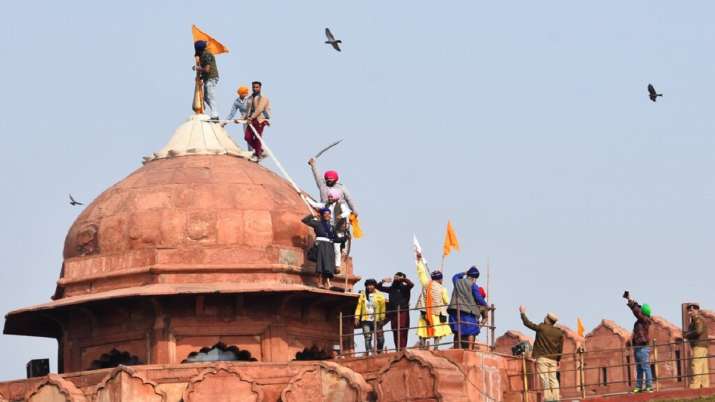
Now consider this. On Republic Day, a mob of “liberals” storms the Red Fort in Delhi. They climb the flagpoles and plant whatever flag they happened to bring with them. All day long, they riot in the streets. Nearly one hundred police personnel are injured and in hospital. One video shows these “liberals” tossing away the Indian tricolor into the distance, like it was a piece of garbage. Another video shows the “liberals” in tractors, chasing down policemen who are on foot, forcing the latter to jump into a ditch to save their lives.

How do you rescue your image after this?

That’s where “fact-checking” came in super handy for the liberals. Was it a “good flag” or a “bad flag” they planted on the Red Fort? A team of highly capable “fact checkers” volunteer to find out the truth. Within hours, the matter becomes clear. The “good flag” is supposed to be shaped like this or that, it is supposed to be this much long and that much wide. And with this information, the liberals recover. They are now on the front foot, talking down to you about your ignorance.

Did you see what happened? The debate was supposed to be about why a different flag was flown on the Red Fort on Republic Day. The “liberals” were supposed to answer why they used tractors to chase policemen into a ditch. None of that is happening. Instead, we are bogged down with details of size, shape, color and design of flags.

In other words, the “fact checkers” have managed to deflect the conversation. That was the whole point of the “fact check.” To change the subject. And it worked.

Every now and then, something comes along that opens up an entirely new form of warfare. It was in World War 2 that the importance of an air force came to be fully appreciated. Suddenly, the trench warfare of World War 1 became obsolete. Unless you could command the air, you were toast. In the last few days of the war, the Germans began using rockets. They were too late to turn the tide of the war, but the age of missiles was coming. The Cold War was all about missiles and warheads. Most recently, it is unmanned militarized drones. They made all the difference in the recent war between Armenia and Azerbaijan.

And so it is with propaganda warfare. Biased coverage, opinion pieces, on air spin are all still relevant tools. But the hottest new thing is “fact checkers.” Their job is to dismantle the narrative of the other side, by making people focus on marginal details instead of looking at what actually happened.

Consider what happened yesterday when some people protested against the folks who had blockaded Delhi’s border for months. How did the “liberals” respond? They started “fact-checking” the counter protesters! The fact checkers quickly spotted that many of the counter-protesters were “BJP supporters” instead of “locals.” Apparently, that de-legitimizes whatever they had to say.

Now you could ask : can’t BJP supporters be citizens and/or locals? And if they are not locals, so what? The liberals gathered at the protest are themselves from other states and most of their leaders have well known political affiliations. Why can’t the counter protesters have the same?

Good points. But you are still playing the game the “fact-checkers” wanted you to play. They are deflecting and forcing you to justify your legitimacy. As a consequence, they don’t have to answer your questions.

To stop playing their game, you have to first ask yourself what a fact checker is? Presumably, it means somebody who reports the facts. But wait!!! Didn’t we already have a class of professionals whose official job description is to report facts from the ground?

I remember. They were called “journalists.” What happened to them? I challenge any journalist to explain the difference between the official job description of journalists and fact checkers.

I know what happened to journalists. They got exposed for their institutional bias. And people no longer trust them to report facts. So what do they do? They come back wearing a fake mustache and beard claiming to be someone totally new and different. That’s what “fact checking” is. Same old propaganda journalism, now wearing a different colour hat.

The Republic Day riot was a watershed moment for media in India. Never before have “fact checkers” been used in such frontline roles and on such a scale in propaganda warfare. The game has changed. And not for the better.

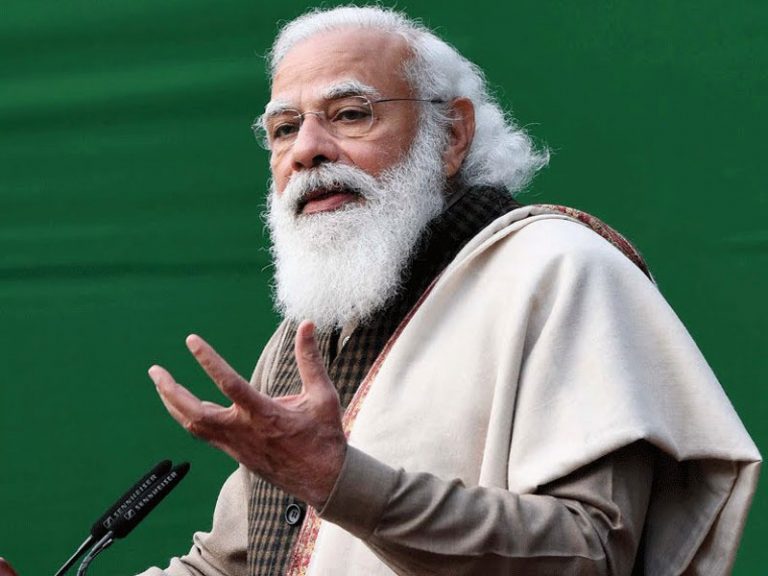
Mann Ki Baat: From Padma Awardees to Strawberries and Red Fort siege, here is what PM Modi talked about in the year’s first episode

0

On January 31, Prime Minister Narendra Modi addressed the nation in the 20th episode of Mann Ki Baat 2.0. This was the first episode of 2021.

In the 32-minute long address, PM Modi covered a vast array of topics, including Parakram Diwas, Republic Day celebrations, Padma award winners, Covid vaccine, Amrit Mahotsav, 75th Independence Day, Electricity generation using vegetable waste, ‘Mon Shugu’ paper, strawberry festival, ‘Incredible India Weekend Getaway’, road safety and more.

January highlights

As this was the first address of 2021, PM Modi highlighted the main events and celebrations that took in January. He mentioned January 23, the birth anniversary of Netaji Subhash Chandra Bose, which was declared as Parakram Diwas by the Indian government. He talked about the Padma Awardees and urged everyone to learn about them.

He said, “The nation honoured people doing extraordinary work; for their achievements and contribution to humanity. This year too, the recipients comprise people who have done excellent work in myriad fields; through their endeavour, they’ve changed someone’s life, taking the country forward. I urge all of you to know more about these people and their contributions. You will see how this inspires everyone!”

Saddened by the insult of Tricolour

Though PM had some happy memories from the first month to share, he could not resist from showing his pain over the way Tricolour was disrespected on January 26 by so-called farmers that barged in the Red Fort and hoisted an alien flag.

The Covid vaccine

Talking about the Covid vaccine, PM said that India had started the biggest Covid Vaccine programme. India is vaccinating citizens faster than anywhere in the world. Over 30 lakh Covid warriors have already received their first shot in just 15 days, while the same took 18 days in the US and 36 days in Britain.

He talked about how India is sending vaccine to other countries. India has received word of appreciation from many leaders, out of which the one by the Brazilian President that referred to Lord Hanuman carrying Gandhamardan mountain stood out.

He said, “You must also have seen recently how the President of Brazil, in a tweet, thanked India – every Indian was gladdened at that. People residing thousands of kilometres away in remote corners of the world are deeply aware of that context in Ramayan; they are intensely influenced by it. This is a specialty of our culture.”

75 years of Independence

PM Modi said that India would commence the celebrations of 75 years of Independence, Amrit Mahotsav. He said it is the best time to explore the places from where our heroes of the freedom movement came. He also urged the people of India, especially the youth, to learn about the freedom fighters, events of the freedom moment and write about them.

He said, “Write books about the saga of valour during the period of freedom struggle in your area. Now, as India will celebrate 75 years of her freedom, your writings will be the best tribute to those heroes of our freedom.”

He further added that this initiative would encourage young writers from all states of all languages. “This will also prepare a category of thought leaders that will decide the course of the future. I invite my young friends to be a part of this initiative and to use their literary skills more and more.” Ministry of Education’s website has more information about the initiative.

Amrit Mahotsav was announced in 2015 by PM Modi. The festival will commence celebrating 75th Independence Day on August 15, 2022. It will be a 75-week long festival in which every week will have a theme dedicated to different segments that define how India is progressing. The government will soon launch a booklet that will showcase how India has progressed in the past and what the future holds for the country. It will also highlight the freedom fighters that played a crucial role in the freedom movement. On August 15, several mega projects will be dedicated to the nation.

From waste to wealth

PM Modi talked about a local vegetable market in Boinpalli of Hyderabad that has started producing electricity using the waste vegetables. Every day, the market generates 500 units of electricity that is used by the market. Along with the electricity, 30 Kilos of biofuel is also generated at the plant that is used for cooking food in the market canteen. He said, “Today in Boinpalli vegetable market what was once a waste, wealth is getting created from that – this is the journey of the creation of wealth from waste.”

He further mentioned an initiative by the people of Badaut village Panchayat of Panchkula in Haryana. They have started filtering wastewater in the village itself and using the water for irrigating the fields.

The ‘Mon Shugu’ paper

PM Modi talked about the ‘Mon Shugu’ paper manufacturing in Arunachal Pradesh. The paper is made using the bark of Shugu Sheng. That means there is no need to cut down the tree to make this traditional paper. Also, it is manufactured without using any chemicals, making it safe for the environment. A social worker Gombu has revived this old tradition and is providing job opportunities to the tribes in the region.

The Strawberry festival

PM Modi mentioned the ongoing strawberry festival in Jhansi, Bundelkhand. He said, “Through this festival, farmers and youth are being encouraged to do gardening and grow strawberries in the vacant spaces behind their home, or in the Terrace Garden. With the help of new technology, similar efforts are also being made in other parts of the country, Strawberry which was once identified with the hills is now also being cultivated in the sandy soil of Kutch, boosting the income of farmers.”

Yogi Adityanath, Chief Minister, Uttar Pradesh, thanked PM Modi for mentioning the festival in the Mann Ki Baat episode. He said, “Thank you, Prime Minister, for mentioning the ongoing ‘Strawberry Festival’. It is an honour for the hardworking farmers of Bundelkhand, who have succeeded in the difficult task of growing Strawberry on rocky land.”

Incredible India Weekend Getaway

The regional office of the Ministry of Tourism of West Bengal has organized ‘Incredible India Weekend Getaway’ in which tourists can learn Indian artwork and explore heritage. He said, “The Handicraft artisans from West Midnapore, Bankura, Birbhum, Purulia, East Bardhaman, organized handicraft workshop for visitors. I was also told that the total sales of handicrafts during the Incredible India Weekend Getaways is very encouraging to the handicraft artisans. People are also making our art forms popular employing novel methods across the country.”

Road safety

While talking about the ongoing Road Safety month, PM Modi mentioned about the innovative slogans used by Border Road Organization such as ‘This is highway, not runway’ or ‘Be Mr. Late than Late Mr.’

He said such slogans are effective in spreading awareness. PM Modi urged everyone to submit such slogans, and good slogans will be used in the campaign.

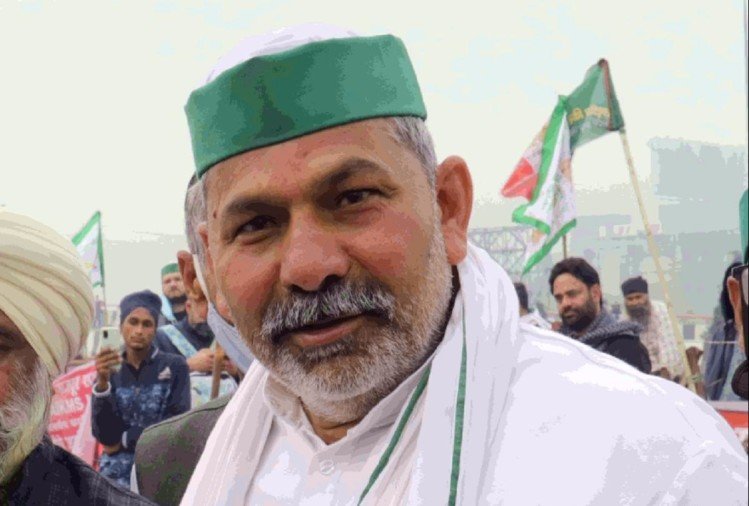
Muzaffarnagar riots, provocative speeches and failed political stints: A brief profile of Rakesh Tikait

Delhi on January 26 was in the grips of a horrifying spate of violence and vandalism when a legion of protesters breached the police barricades along the borders to rush into the city. The rampaging mob ran riot, destroying and damaging public properties and vehicles in its wake. Protesting mobs reached the Red Fort, where they desecrated the historic monument by hoisting religious flags.

Soon after violence and bedlam characterised the tractor rally, whose permission was sought under the pretext of carrying out a peaceful march, the role of the so-called farmer leaders representing the ‘protesters’ —Rakesh Tikait and Yogendra Yadav—came under the scanner for egging on the protesters to use brute and violence during the rally.

Acting against the lumpen elements, the Delhi Police filed an FIR under stringent Unlawful Activities (Prevention) Act and Section 124(A)(sedition) to probe a larger conspiracy and criminal design behind the violent tractor rally. The FIR mentioned Bharatiya Kisan Union(BKU) leader Rakesh Tikait for spearheading and inciting the mob that wreaked havoc in Delhi.

Who is Rakesh Tikait?

Rakesh Tikait has emerged as one of the prominent leaders leading the ‘farmers’ agitation against the three Farm Bills passed by the Centre in September 2020. He is the current spokesperson of the Bharatiya Kisan Union(BKU), an organisation co-founded by his father, Mahendra Singh Tikait, and currently led by his elder brother Naresh Tikait.

Rakesh received the legacy of his father Mahendra Singh Tikait, one of the foremost farmer leaders in the 1980s. Mahendra was believed to have enjoyed widespread support from the farmers which he leveraged in the Delhi’s power corridors to influence the government’s policies regarding agriculture and farmers. The Bharatiya Kisan Union came into existence in 1987, when the farmers under the leadership of Mahendra Singh Tikait carried out a big movement in Karmukheri in Shamli district. The movement had resulted in the death of two farmers—Jaipal and Akbar. It was after the incident that the BKU was formed and Mahendra Tikait was made its president.

After completing his MA and LLB from Meerut University, Rakesh Tikait had joined Delhi Police as Sub-Inspector in 1985. Soon, in the 1990s, Rakesh quit from Delhi Police and took the plunge into politics, following into the footsteps of his father and elder brother. Though Naresh Tikait is the current president of the Bhartiya Kisan Union(BKU), it is alleged that the organisation’s functioning is largely controlled by Rakesh Tikait, who takes all significant decisions in consultation with his elder brother.

Rakesh Tikait had once supported Farm Bills

It is worth noting that Rakesh Tikait had supported the farm laws passed by the Modi government. In fact, the BKU demanded in writing that the Indian farmer be liberated from the tyranny of APMCs.

However, as the opposition against the Farm Bills started gaining strength, with political parties using it as an issue to corner the Modi government, Rakesh Tikait pulled off an about-turn—from allegedly congratulating the Prime Minister on reforms to becoming one of the most vehement opposers of the Agriculture Laws.

Rakesh Tikait and the 2013 Muzaffarnagar riots

While Tikait has been desperately trying to prise out political mileage from the ongoing farmers’ protests, it is pertinent to note that this is not the first time that Rakesh has been accused of fomenting unrest. About seven years back in 2013, Rakesh was booked for stoking communal disharmony with his allegedly inflammatory speeches which eventually led to 2013 Muzaffarnagar flare-up. Rakesh had been booked for stoking communal disharmony in the run-up to 7 September 2013 Muzaffarnagar riots.

According to the residents of Muzaffarnagar, Rakesh Tikait and his brother, Naresh, had both been “primary culprits” for the gruesome communal flare-up witnessed by the town. Rakesh had reportedly attended the mahapanchayat on September 7 and the police had booked him for whipping up communal passions through his incendiary speeches.

Tikait had then admitted that he did attend the mahapanchayat meeting but washed his hands off the violence that ensued in its wake. He alleged that the crowds were out of control and they were not listening to any leader.

“They were not our people. They were not listening to any leader. They did not belong to any platform. They were furious with police for naming people wrongly in the initial FIRs regarding the August 27 incident,” Tikait had then said.

Over 60 people had died in the riots and thousands were left homeless. Six rape cases were also registered in connection with the riots. Tikait had then claimed that the ‘Jats’ were falsely accused of rape and demanded a fresh probe.

A similar modus operandi is in works in the recent incident of violence during the tractor rally on Republic Day. Here, too, Tikait had employed the familiar defence of disavowing the protesters after the protests led by him have turned violent. Tikait, evidently, is among those leaders who want to remain in public glare but does not want to own responsibility of the repercussions their actions might invite.

A video of Tikait asking protesters to carry sticks, flags during the tractor rally has gone viral on the internet. But ss the tractor rally carried out by protesters devolved into chaos and disarray, with protesters resorting to violence and vandalism, Tikait refused to shoulder the responsibility of the violence and pushed the blame on the Centre and the Delhi Police for the Republic Day disruption.

Rakesh Tikait, the politician

In 2004, Tikait floated a political wing of BKU, Bahujan Kisan Dal. While Tikait himself did not contest these elections, his party did, but did not win a single seat. In 2007 Uttar Pradesh Assembly elections, BKD forged an alliance with Congress where Tikait contested from Khatauli seat. He did not win these elections. He then joined the Rashtriya Lok Dal (RLD) in 2009, which was then an NDA alliance partner. However, the alliance fell through and RLD joined the UPA.

In 2014 and contested the general elections from Amroha. This was seen as a move to please the Jat community after the Muzaffarnagar riots of 2013. He again was unsuccessful in winning.

Today, the ‘liberals’ are hailing Tikait as the next big thing to happen to Indian politics where they conveniently forget the Muzaffarnagar communal riots. In fact, all provocative speeches, all instigation to violence is forgiven if you stand against Modi.

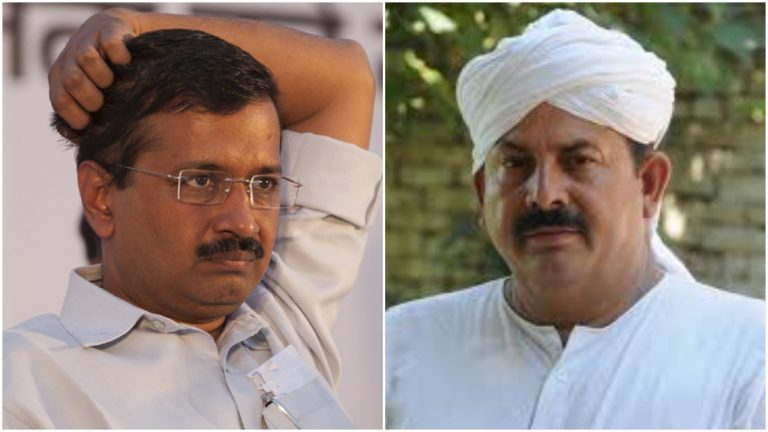
Oops, he did it again! Kejriwal falls for yet another parody account, mistakes ‘Poonam Pandit’ for BKU’s Naresh Tikait

Less than two days after falling for a parody account Republic day riot accused Rakesh Tikait, Delhi Chief Minister Arvind Kejriwal has yet again fallen for a fake account. This time it was one of Naresh Tikait, the brother of protestor Rakesh Tikait.

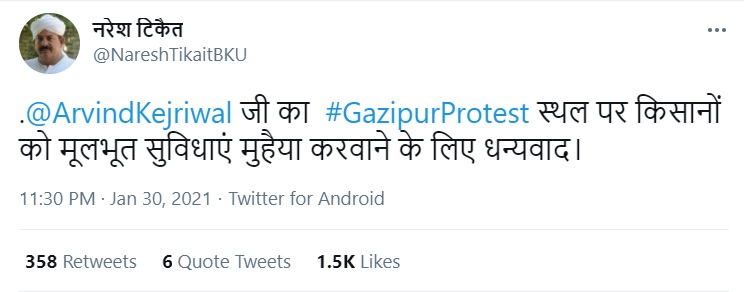
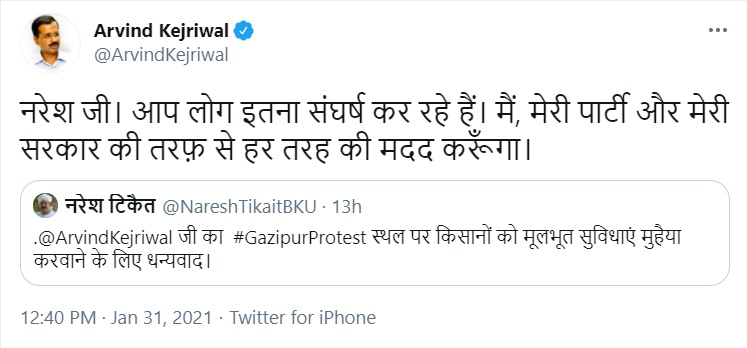
On Saturday, a Twitter account allegedly posing as farmer leader Naresh Tikait posted a tweet thanking Chief Minister Arvind Kejriwal for stepping in to “provide facilities” to protestors to prolong their illegal occupation of public properties and roads.

The tweet praising Arvind Kejriwal came after Delhi government decided to arrange for providing facilities for protestors, a day after the latter had unleashed massive violence in the national capital. The Delhi government led by Arvind Kejriwal had directed his ministers to make all arrangements for Tikait’s supporters so that they face no inconvenience.

According to Delhi Deputy Chief Minister Manish Sisodia, CM Arvind Kejriwal had ordered the government to send help after riots-accused Rakesh Tikait asked him to make some necessary arrangements so the protestors can continue to camp at the Ghazipur border. He said that the CM ensured that Tikait’s requirements are fulfilled within a few hours. Sisodia said he would visit the border on Friday morning to see the arrangements.

Reportedly, Arvind Kejriwal has ordered AAP Ministers to visit Singhu Border and Ghazipur border to ensure necessary facilities are being provided to protestors.

Following the helping hand lent by the Delhi government to prolong the protests, the Twitter account claiming to be of Naresh Tikait thanked Arvind Kejriwal.

Kejriwal falls for parody account of Naresh Tikait

In response to the praises showered by ‘Naresh Tikait’, Delhi Chief Minister said that he and his government were always willing to help the protests as they were already struggling.

Screengrab of Arvind Kejriwal’s tweet

However, user @BefittingFacts revealed that the account claiming to be Naresh Tikait is fake. The account is handled by someone who had used the username @PoonamPnditji previously for the account. But at some point, the user appears to have changed the username to mimic Naresh Tikait and managed to con Arvind Kejriwal into believing her account as the ‘real’ account of Naresh Tikait.

Interestingly, this is not the first time that Arvind Kejriwal has fallen for a parody account.

Arvind Kejriwal falls fake account of Rakesh Tikait

Just a few days before, AAP supremo Arvind Kejriwal had fallen for a parody account of anti-farm law protestor Rakesh Tikait.

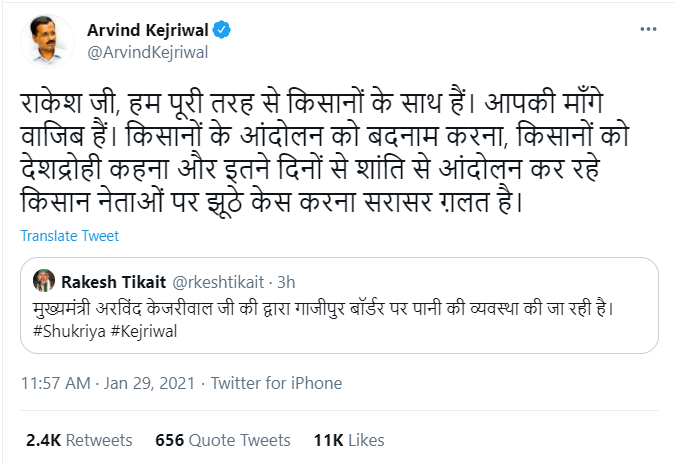
After maintaining silence over the violence and vandalism that transpired in the National Capital on Republic Day, AAP supremo Arvind Kejriwal finally decided to break his silence on Friday as he hailed BKU chief Rakesh Tikait and promised his support.

In a tweet, he said, “Rakesh ji, we are completely in support of the farmers. Your demands are valid. It is wrong to defame the farmers’ movement, call them ‘anti-national’ and to file false cases against farmer leaders who have been spearheading a peaceful agitation.”

Screengrab of Arvind Kejriwal’s tweet

Rakesh Tikait is one of the masterminds of the tractor rally, who fomented trouble in the national capital by instigating the so-called protestors to unleash violence on Delhi’s streets, which unfortunately ended with the shocking act of desecration of tricolour at the Red Fort and rampant violence.

However, a Twitter user (@BefittingFacts) pointed out that Kejriwal’s tweet was directed not to ‘real’ Rakesh Tikait but to a parody account. The parody account, which earlier had the username @kiransingh_077 changed it to @rkeshtikait and wrote, “This is the official Twitter account” in his bio.

Hinduphobic comments, incendiary speeches and a small crowd: Here is what happened at Elgar Parishad 2021

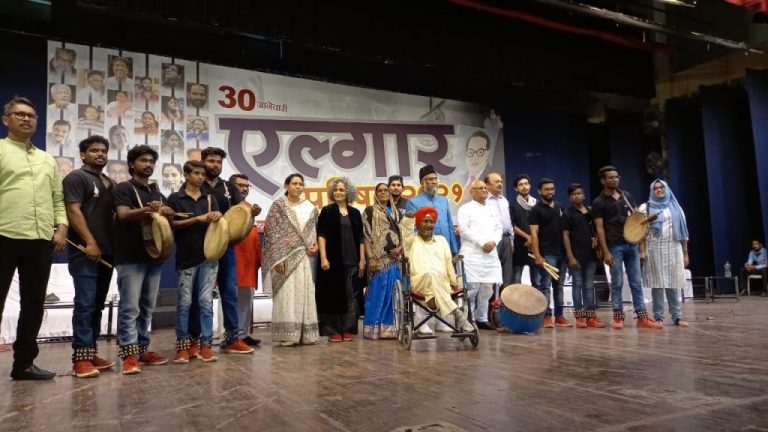
The Elgar Parishad was held in Pune again this year and saw the participation of trouble makers such as Sharjeel Usmani, Arundhati Roy and Prashant Kanojia. The Elgar Parishad of 2017 was the focal point of massive violence involving ‘Urban Naxals’ and anti-social elements and had attracted large crowds. This year, however, it appeared to be a muted affair.

Despite the lack of crowds, the venom was present nevertheless. There are videos going viral on the internet where the speakers can be heard making extremely controversial comments and crass Hinduphobic remarks. Along expected lines, the trouble-makers mentioned above were at the forefront of it.

Sharjeel Usmani, who was arrested recently by the Uttar Pradesh police but later granted bail by the Court, said that the ‘Hindu Samaj’ of today is “rotten” to the core. He also said about the Yogi Government in Uttar Pradesh that his administration has murdered 19 people everyday in encounters in one year and all of them were either Muslims or Dalits.

Usmani, who has written columns for Newslaundry in the past, does not provide evidence for his claims that appear demonstrably false. Arundhati Roy was not far behind. She compared the Indian electorate which voted the NDA Government to power to the mob that stormed Capitol Hill on the 6th of January.

In the process, she also made the vile ‘Gaumutra’ jibe to mock Hindus, the same jibe that was made by the Pulwama attack terrorist.

Prashant Kanojia also delivered a speech where he made some rather incendiary comments. He said the movements will continue until their ‘Kashmiri brothers’ receive justice, Akhlaq and Pehlu Khan receive justice and the farm laws are not repealed.

He said that the movement will continue until the RSS is not uprooted from this world. Furthermore, in a particularly incendiary bit, he told Dalits that it better to ‘die fighting in the streets’ than live as ‘oppressed’.

The event was held at a sensitive time when protests are still underway at the national capital and only days after a Khalistani mob unfurled the Sikh flag at the Red Fort on Republic Day. The participation was small with only around 500 attendees and the event was held amid tight security.

Telangana CID freezes 26 bank accounts associated with Christian evangelist organisation and a Pastor

The Economic Offences Wing of the Telangana Crime Investigation Department has frozen twenty-six bank accounts that belong to Christian evangelical organisation – Operation Mobilisation (OM) India group of Charities. The twenty-six bank accounts belong to a total of seven related charity groups.

According to the reports, the investigation agency of Telangana had filed a criminal case against Christian evangelist Joseph D’Souza, his son Josh D’Souza and others based on a complaint by Albert Lael, the former Chief Finance Officer (CFO) of OM India group of charities and National Director of 103 Good Shepherd Schools run by the Christian organisation.

Following the investigations, it has now been revealed that the accused received large amounts of money through donations from abroad to run various charities in India. The funds thus received were deposited in banks as Fixed Deposit (FDs), which were then diverted and misappropriated by the accused, thus cheating the donors and other patrons of the organisation.

The CID froze the accounts to halt more transactions by the evangelist group, which may lead to the accused misappropriating and diverting more of the charity funds. The CID is also investigating alleged violations of the Foreign Contribution (Regulation) Act (FCRA).

Meanwhile, the prime accused Joseph D’Souza has challenged the Telangana High Court’s CID order to remove the restrictions on the multiple accounts.

Christian organisations Operation Mobilisation India and Dignity Freedom Network and Operation Mercy India Foundation, have partner-organisations and affiliates in Canada, UK, USA and Australia.

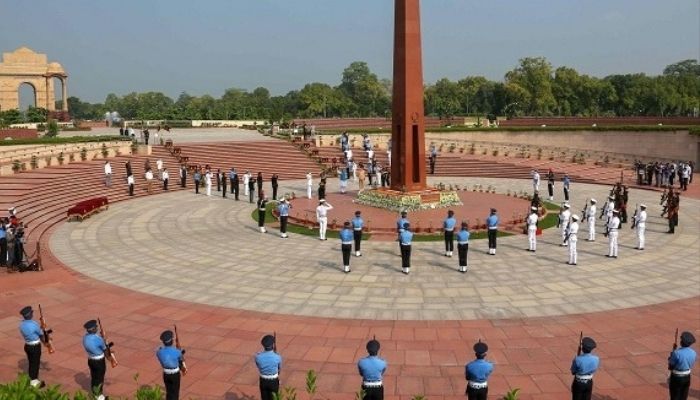
Soldiers martyred in Galwan Valley get their names engraved at National War Memorial

The names of 20 soldiers, who were martyred in action during the violent Galwan Valley clash with the People’s Liberation Army (PLA) of China, have now been engraved on the National War Memorial in New Delhi.

On June 15, the Chinese troops had attacked the Indian troops along the LAC near Ladakh border. The clashes had resulted in India losing 20 of its soldiers. Although no bullets were fired, the Chinese troops pelted stones and attacked the security personnel with rods and clubs.

The fallen Indian soldiers were honoured by the government and their last rites were performed in the presence of government representatives, accorded them the due status of martyrs. PM Modi and the COAS had also visited to meet and speak to the injured soldiers.

Fallen Indian soldier awarded Maha Vir Chakra posthumously

The government of India has decided to honour Col Bikkumalla Santosh Babu of the 16th Bihar Batallion, who had laid down his life in the clash between Indian and Chinese forces in Galwan Valley on June 16, with the Maha Vir Chakra this Republic Day. “Col Babu is likely to be awarded the Maha Vir Chakra posthumously on this Republic Day,” government sources told ANI.

According to reports, the government’s decision came after the Indian Army top brass recommended that soldiers who took on Chinese troops in the Galwan valley clash should be awarded the war-time chakra series awards at this Republic Day.

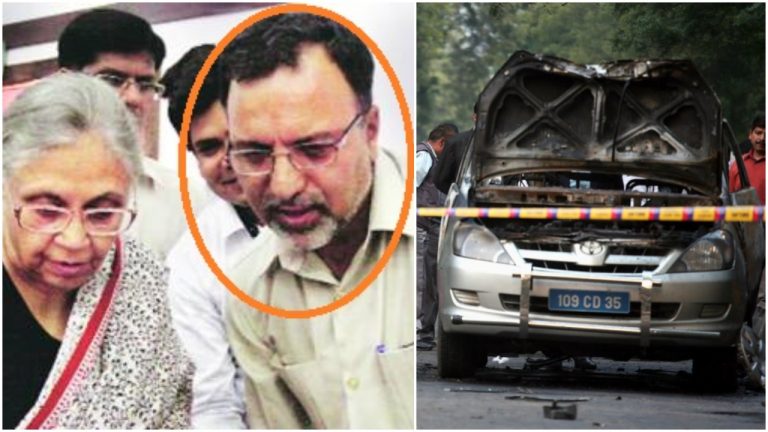
‘Journalist’ Syed Mohammad Ahmad Kazmi, who was booked for 2012 Israel embassy blast: Where is he and what is he doing

On Friday, an IED Blast was reported outside Jindal House near the Israel Embassy in Delhi. According to the forensic teams, three cars were damaged, and black powder was used to carry out attacks on the Israel Embassy.

A letter in an envelope addressed to “Israel Embassy Ambassador” was found on the spot during the investigation. The letter contained a threat which says that the blast on Friday was just a ‘trailer’. As per the report, the threatening letter also contained a reference to two ‘Iranian martyrs’ – General Qassim Soleimani, the head of Iran’s elite Quds Force, and Nuclear Scientist Dr Mohsen Fakhrizadeh.

Qasem Soleimani, the Iranian commander who commanded the Quds Force of the IRGC, was killed by the US forces in January 2020 in Baghdad. In November 2020, Iranian nuclear scientist Fakhrizadeh was assassinated on Tehran’s outskirts by a 62-member squad.

This is not the first time that the Israel Embassy in India has been attacked. On February 13, 2012, a sticky bomb was placed on Tal Yehoshua Koren’s car, the Israeli diplomat’s wife, in which she had received injuries. Incidentally, the Quds Force, also known as Iranian Revolutionary Guard Corps (IRGC), was then accused of carrying out attacks on the Israeli Embassy in New Delhi. Four people had suffered injuries after a bomb explosion on an Israeli diplomatic car in New Delhi.

The assassination attempts of Israeli diplomats had come after the killing of an Iranian scientist. Iran and blamed Israel for the assassination and had vowed to take revenge for the scientists’ killings. The attacks had also coincided with the anniversary of the killing of Iran-backed Shiite Lebanese group, Hezbollah leader, Imad Mughniyeh.

Indian journalist accused of playing a key-role in aiding Iranians to carry out attacks

Following the attacks on Israel embassy, the Delhi police had also concluded that attack was a handy work of IRGC. Upon further investigation, the Delhi police had revealed that IRGC members had discussed the plans to carry out attacks on Israeli diplomats in India with an Indian journalist Syed Mohammad Ahmad Kazmi. Further, the investigations had also disclosed that Kazmi was in contact with the members of IRGC for nearly 10 years. 

After a detailed investigation, the Delhi Police arrested journalist Syed Mohammad Ahmad Kazmi for aiding bike-borne bombers. In 2012, the special cell of Delhi had arrested Kazmi and charged him with being part of a conspiracy and booked him under the Unlawful Activities Prevention Act. During interrogation, it was revealed that he was privy to the conspiracy to target Israeli diplomats.

Another interesting fact is Seema Mustafa, the current chief of controversial Editors’ Guild of India, had then jumped into the support of the accused Kazmi to proclaim his innocence in the Israeli Embassy bombing case.

Who is Syed Mohammad Ahmad Kazmi?

Syed Mohammad Ahmad Kazmi, who hails from Meerut district, Uttar Pradesh, began his journalism career in 1983 with Delhi office of Iran Republic News Agency (IRNA), Iran’s national broadcaster. Kazmi, who had a command over Arabic and Persian languages, helped him translate and interpret news emanating from Gulf countries.

In the later years, Kazmi developed an interest in West Asia, particularly Iraq, Iran and Israel. After seven years of serving Iranian media, Kazmi started his own media venture ‘Media Star’, a news agency specialising in West Asia. After a brief stint, he joined Doordarshan as a news anchor in 1993 and became an Urdu newsreader on DD News.

During his days in Doordarshan, Kazmi was part of the team that produced ‘World View India’- a weekly foreign affairs show on Doordarshan. According to Saeed Naqvi, a journalist and father of Saba Naqvi, Kazmi had a ‘fantastic insight’ into the region and the reason was his impeccable contacts and network. Naqvi co-produced the weekly show with Kazmi and has travelled with him on various foreign assignments.

According to the police, Kazmi had a deep network in Iran, which worked against him during the 2012 Israeli Embassy bomb blast case. The then Delhi police commissioner B K Gupta had disclosed that Kazmi had also confessed to having helped the Iran nationals conduct a recce of Israel embassy.

“He also disclosed that at the insistence of Syed Ali Sadr Mehndi, a person of Iranian origin, he was introduced to Houshan Afshar and along with an Irani recced the area around the Israel Embassy. They used a scooty for this recce, which was procured by Houshan Afshar. During this recce they decided to target Israeli diplomats,” Gupta had said. Interestingly, Kazmi’s pro-Iran stand has not been denied even by his family.

Kazmi was granted bail by the Supreme Court of India in October 2012 but restrained from going abroad. As of today, Kazmi is still out on bail. He continues to host a show on his YouTube channel ‘Media Star World‘ where he discusses West Asia and the region’s issues.

As per his LinkedIn profile, he is also Editor of an Urdu paper ‘Qaumi Salamati’. He was made editor of the paper after he secured bail in October 2012. Then also it was rumoured that Iran had funded the paper. Senior Congress leader and the then Delhi Chief Minister Sheila Dikshit was also present at the launch of the paper as chief guest.

Bomb blast in Israel Embassy in New Delhi

On Friday, a low-intensity explosion occurred near the Israel Embassy in the national capital. The explosion took place near the Jindal House on APJ Abdul Kalam Road in the heart of the city. 

According to the Delhi Police, the explosives were reportedly not very powerful. In a statement, the Delhi Police had said that no injury has been reported during the Jindal House blast. “Initial impressions suggest mischievous attempt to create a sensation,” the Police said.

The blast is being investigated as an attempted terrorist attack, and the Israel Ambassador has been assured security to the mission and all diplomats.

A letter in an envelop addressed to “Israel Embassy Ambassador” was also found on the spot as per police sources. The letter contains a threat which says that the blast on Friday was a ‘trailer’. As per the report, the threatening letter also contained a reference to two ‘Iranian martyrs’, Qasem Soleimani and Dr Mohsen Fakhrizadeh.

Following the incident, Israel released a statement saying that they considered the Friday attacks as an act of terrorism. A team of investigators from Israel is also expected to reach the national capital to assist the Indian agencies in the investigation.

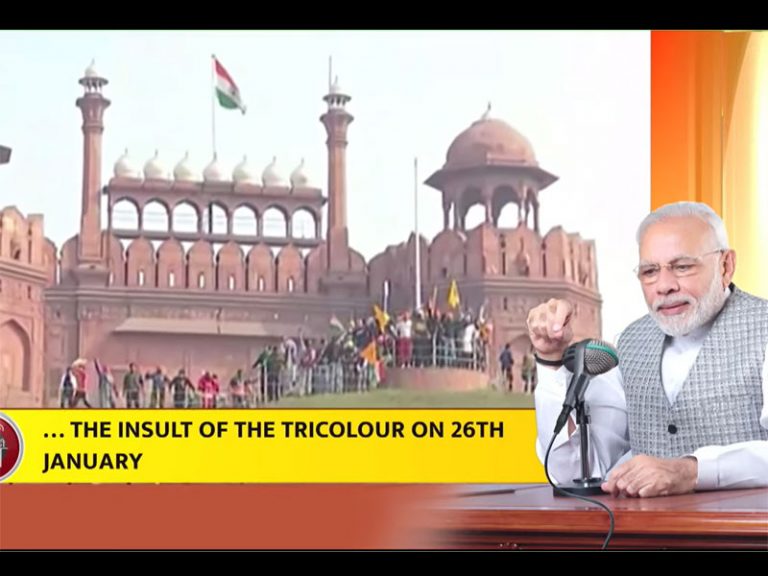
‘Tricolour was insulted on Republic Day’: PM Modi expresses anguish over riots during his Mann Ki Baat radio programme

In the first episode of Mann Ki Baat in 2021, Prime Minister Narendra Modi expressed anguish over the Red Fort incident of January 26 and said that the nation was shocked to witness the insult of Tricolour. The visuals of so-called farmers standing and raising slogans next to the flag post were projected on Doordarshan when PM Modi talked about the incident.

PM Modi further said that we have to fill the coming days with hope and novelty. “We need to work hard to fulfil our resolutions. We have to take our nation forward with fast speed, “he added.

President on Red Fort incident

On January 29, the President of India had also criticized the incident during his address to both houses.

He said, “The recent acts of dishonouring the National Flag and showing disrespect to the auspicious occasion of the Republic Day are unfortunate. While the Constitution gives us the right to freedom of expression it is also expected that we abide by the laws and rules with equal sincerity.”

The January 26 Red Fort riots

On January 26, while the Republic Day parade was going on at Rajpath, the protestors started their tractor rally before the time allowed by Delhi Police. Agitators broke the barricades and damaged police vehicles and busses to enter in Delhi. They took the routes that were not permitted by the Delhi Police. When the police tried to stop them, they got violent and started attacking police personnel.

There are videos where protestors can be seen trying to mow down the police officers. Some protestors had batons, swords and even guns that they used to attack the police officers. The tractors were allegedly modified to breakdown the barricades. Amidst provocative speeches by the farmer leaders, the protestors reached Red Fort.

At the Red Fort, the so-called farmers became hooligans and broke down the gates. They entered the premises in large numbers and destroyed the equipment, windows and furniture. They urinated on the premises and raised provocative slogans against the government and PM Modi.

Amidst all the violence at Red Fort, the so-called protestors hoisted a flag, purported to be the Nishan Sahib, on the flag post where Prime Minister hoists National Flag on August 15. They also hoisted the same flag next to the National Flag and on the dome of Red Fort. The incident of raising the flag on Red Fort was in lines with what banned terrorist organization Sikhs For Justice had demanded and promised a cash prize too.

Cases against rioters and journalists

Delhi Police has registered several cases against the rioters including actor Deep Sidhu who was present at Red Fort. Farmer leaders including Yogendra Yadav, Rakesh Tikait and Darshan Pal are booked for provoking farmers. Some journalists, including Rajdeep Sardesai, are also facing legal action for spreading fake news during the riots.