Home Blog Page 4836

Marriage between first cousins per se illegal under the Hindu Marriage Act, observes Punjab and Haryana High Court

0

The Punjab and Haryana High Court during the hearing of an anticipatory bail application of a petitioner, who was in live-in relationship with his minor first cousin and wanted to marry her after she turned 18, observed that the marriage between first cousins was per se illegal. A Bench of Justice Arvind Singh Sangwan was hearing the anticipatory bail application on November 19 filed by the petitioner who was facing charges under section 363 (kidnapping) and section 366A (procuring of minor girl) of the Indian Penal Code.

During the hearing, the court noted, “I find that in the present petition also, the petitioner has not disclosed about the fact that he is the first cousin of (the minor) and therefore the submission in the present petition that as and when she attains the age of 18 years, they will perform marriage is also per se illegal”.

Advocate CS Rana appearing for the petitioner submitted before the court that the petitioner and the minor were in a live-in relationship. He brought on record a criminal writ petition filed in the High Court seeking protection for the couple in which the minor had submitted that she was living with the petitioner, whom she described her ‘friend’, out of her own free will and that she feared that her parents would harass her and disturb her ‘peace of mind’. The petitioner had promised in the petition to marry the minor on her attaining majority. The said writ was disposed off with a direction to police to decide the petitioner’s plea for protection.

State opposed the petition on the ground that the petitioner and the minor were ‘Sapindas’

Appearing for the state, DAG Joginder Pal Ratra opposed the current petition submitting that the petitioner and the minor were in fact first cousins as their fathers were siblings. He submitted that the petitioner and the minor were not allowed to marriage by virtue of being ‘sapindas’ under the Hindu Marriage Act and therefore the question of there being a live-in relationship did not arise. He said that the live-in relationship was per se immoral and not acceptable in society.

The petitioner’s counsel sought more time to present arguments to show that the relationship/marriage between the petitioner and the minor was not illegal. The next hearing of the matter has been scheduled on January 11, 2020.

Who are ‘Sapindas’ under the Hindu Marriage Act

Section 5 (v) of the Hindu Marriage Act, 1955 states that a marriage may be solemnised between any two Hindus if the parties are not sapindas of each other, unless the custom or usage governing each of them permits a marriage between the two. Section 3 (f)(i) of the same Act defines sapinda relationship as including up to three generations in the line of ascent of through the mother and up to five generations in the line of ascent through the father. The line is traced upwards in each case from the person concerned who is counted as the first generation. Section 3 (f)(ii) states that two person will be considered sapindas if one is the lineal ascendant of the other within the limits of sapinda relationship or if the two persons have a common lineal ascendant who is within the limits of sapinda relationship with reference to each of them. Section 11 of the Act declares a marriage between sapindas as null and void.

Read- A Hindu conservative argument against same sex marriages: Religious sanction, dictatorship of the minority, and where does it end?

In simple words, under Hindu Marriage Act, a person cannot marry another person within three generations on the side of mother (counting upwards) and a person within five generations on the side of father (counting upwards). So as per law, a person cannot marry another person if he or she falls within five generations upwards on his/her father’s side (e.g. father’s offspring. grandfather’s offspring and so on) and if he or she falls within three generations upwards on his/her mother side (e.g. mother’s offspring, mother’s sister’s offspring and so on). There are several other degrees of prohibited relationships in which marriage cannot be take place .
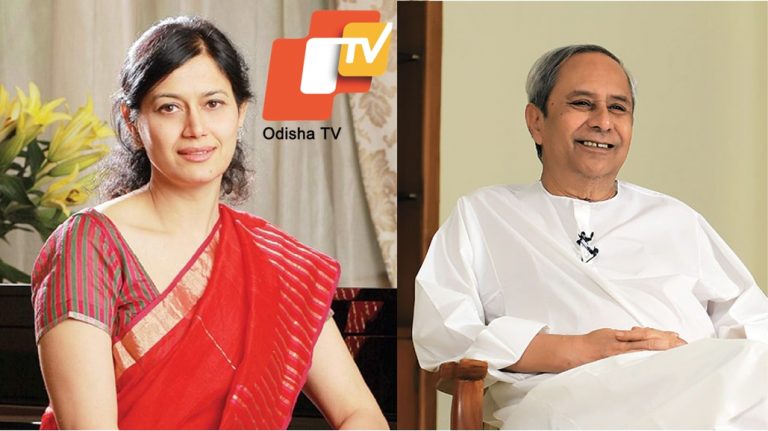
OTV MD Jagi Mangat Panda seeks probe by a national agency on charges against the channel, alleges harassment with false cases by BJD govt

The Naveen Patnaik govt in Odisha has registered around 20 cases against Odisha TV (OTV), its sister companies, employees and family members, including the 84 years old father of Jagi Mangat Panda, the managing director of the company. This was revealed in a press release issued by Jagi Mangat Panda today, who said that the channel is being harassed with false cases as part of a conspiracy orchestrated at the behest of BJD government in Odisha because of Chief Minister Naveen Patnaik’s personal vendetta. Due to the continuous harassment, the media house has demanded a probe into allegations against it by a national agency.

Saying that the false cases include several criminal cases, Panda said that they vehemently deny these allegations. She said that there has been no wrongdoing by them and they are confident that this will be proved in the courts. It may be noted Jagi Mangat Panda is the wife of BJP leader Baijayant Panda, who was earlier in BJD, and currently the primary challenger to CM Patnaik.

“We assert that these cases are being orchestrated by the 21-year-old BJD government in Odisha, because of CM Naveen Patnaik’s personal vendetta against us,” the managing director of the media house said. “It is no secret that ever since my husband Jay Panda started speaking out about the BJD’s widespread corruption five years ago, and thereafter joined the BJP, the Odisha government and BJD have been targeting and harassing our family members and organisations and entities connected with us, as well as actual violence against us on several locations,” the statement alleged.

Jagi Mangat Panda informs that five of their employees have been arrested, two of whom were forced to resign from the channel while in custody. She said that the channel is been cooperating with the authorities, & large numbers of our employees have been going to police stations for interrogation as and when summoned.

Saying that they will continue to cooperate with state authorities, she demanded a probe into cases against the channel by a neutral national agency. “Because of the biased behaviour of the Odisha authorities, it is high time that these allegations are investigated by a neutral national agency,” the press release issued by Jagi Mangat Panda said.

She also appealed the national media to cover full facts of the issues, and not just focus on “just the allegations and developments from one perspective which suits the BJD.”

Odisha Government vs OTV

We have earlier reported how OTV MD Jagi Mangat Panda has alleged that her organisation is being targeted for coverage of the Naveen Patnaik Government’s alleged corruption. Recently, on November 10, Randhir Singh, father of Jagi Mangat Panda had issued a video appeal to the Union Home Minister of India, Amit Shah, seeking protection from the excesses of the police officials against his family and employees at the channel’s studio in Sarua, Khordha, under the pretext of carrying an investigation into a land issue.

It is pertinent to note here that OTV Sarua Studio Manager Anirudhha Panda was arrested by a group of policemen at 3 AM on 10th November. The posse of about 15-20 police officials had reportedly climbed the boundary walls of the studio and hustled away Panda in the dead of the night without offering any reason.

Last month, Ramesh Rath,  a senior reporter with Odisha Television (OTV) was allegedly arbitrarily picked up by a group of policemen barely a few hundred metres from his residence and was not allowed any communication, even with his family members. The channel had dubbed the arrest as a fallout of Rath reporting about Naveen Patnaik’s chopper run to assess the flood situation in the state. The Odisha police excesses, however, did not stop at this. A day after Rath’s arrest, a team of police had reportedly arrived at the office of the channel to search without warrants for the same, OTV had stated.

Before this other two employees working for the channel were also arrested. Rath and the other two were arrested in as many as 20 cases, leaving little doubt amongst many of the state-sponsored harassment against the company employees.

The Odisha Government has levelled a host of allegations against OTV and its affiliate organisations. OTV MD Jagi Mangat Panda had in a press release earlier, asked the Odisha government to investigate all the allegations levelled against them but asked them to stop harassing the employees, forcing them to tender their resignations. 

Uttar Pradesh: How the govt utilised the MGNREGA to revive a river and improved the lives of scores in the process

The Uttar Pradesh Government, for quite some time, has planned on rejuvenating rivers and in the process, generate employment under the MGNREGA. Numerous rivers are under the radar for rejuvenation and the state government under Yogi Adityanath and Minister for Rural Development Rajendra Pratap Singh are attempting to utilise the opportunity to provide employment to those currently in need of it. One river that has already been rejuvenated is the Odi river.

The Odi river originates in Madanpur village in Lalitpur and travels a distance of 20 kms across 8 revenue villages. The construction of 10 check dams on the river, over a period of time, resulted in choking of the river as a consequence of siltation. It eventually resulted in the drying up of the river leading to loss of vegetation, drying up of wells and agricultural prospects in the region appeared bleak as well.

A document prepared by Yogesh Kumar, additional commissioner of MNREGA, noted, “The total of 4 gram panchayats including the Gram Panchayat Madanpur, Didaunia, Hansera and Paharikala are situated in the basin of this river. Because of the formation of excessive check dams on river Odi and due to the accumulation of the silts, the river’s water source had ceased and the river also lost its original form. This river had completely disappeared for the last several years and the geographical and vegetative balance of the river started to deteriorate, due to which the revival of the river Odi was extremely important.”

The local administration became aware of the plight of the river, and after much deliberation, the task of reviving it was taken up under MGNREGA. According to the plan, 42 locations were selected in a distance of 14 Kms from Madanpur to Jamni Dam for work related to water conservation. In 33 of these places, the work was completed between April to June 2019. The work in the remaining 9 were started in March the same year and additional 5 spots were identified.

The work started with the process of de-siltation of the water way and involved the repair of the check dams. 25000 saplings were planted on either side of the river. A total of 70,666 person-days of work was generated in the process and 558 families were benefitted as a consequence. Desilting work was carried out at Madanpur, Didoniya, Hashera and Pahadikala.

On the completion of the work, the lost river resumed its flow and the entire stretch was flush with the water. The vegetation in the area revived as well and about 250 dried-up wells were recharged. It benefitted 3500 families through irrigation with an area of 9600 acres being irrigated by the Odi river. The rejuvenated river helped improve the lives of the people in the region to a great degree and also improved the ecosystem in the area.

Where water was available only for 5 months earlier, water is now available throughout the year. 700 acres of barren land were converted into agriculture land in the process and consequently, the farmers are available to double the crop from the land. It has enhanced their income and has reduced migration from the region. The effort has been awarded by the Government of India with the National Water Award.

Pakistan: Deaf-mute minor Christian girl abducted by son-mother duo, forcefully converted, married, and gang-raped by 5 men for 2 months

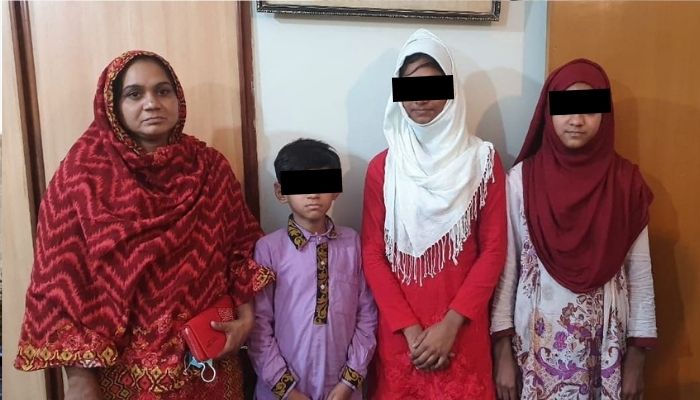
On March 16 this year, a 17-year-old Christian girl Komal, who is reportedly deaf and mute, was kidnapped from her house and forcefully married to a Muslim man in her neighbourhood in Lahore in Pakistan, reported British Pakistani Christian Association (BPCA).

As per reports, a First Information Report (FIR) was filed on March 17 by the Sandha police in connection to the abduction of the minor girl. However, the police did not take any action against the accused. It was after the intervention of local MP Tariq Gill that the police started to trace the last call which the victim’s mother Rubina received before she went missing. During the probe, the suspects were identified as Ali Mubashir and Mohammed Azeem. The police found that the duo was around the location of the victim’s house when she went missing.

When police contacted Azeem, he decided to come for questioning but later became untraceable for two months along with Mubashir. On April 10, Rubina received another call where she allegedly heard the voice of her daughter. On being reported to the police, the number was traced to their neighbour Kashif Ghulam Rasool. Besides Rasool, three others including Muhammed Azeem, Mubashir Ali and one Ali Abbas were found to have forced the victim into a van. One of the accused, however, remains unidentified. The Sandha police then arrested the trio from a house in Deepalpur in Okara district while Kashif Ghulam Rasool remained on the run.

Victim is the property of abductor Kashif, claims his paternal uncle

Later, the paternal uncle of Kashif turned up at the police station of June 5 and produced the victim, who had been missing for 2 months. He produced a fake Islamic marriage certificate and a birth certificate that claimed that her age was 18. He had also produced a certificate that showed that she had willingly accepted Islam. While he allowed the victim to meet her parents, he cautioned that she would not be returned to the family. He claimed that the victim was the property of her husband and should be returned to her husband following the meetup.

Police refused to give the custody of the victim to the parents

On meeting her daughter, Rubina said that Komal was in a distressed state during their communication in sign language. The victim had communicated that she was raped regularly by 5 Muslim men and longed to be in their custody, instead of her abductor. However, when Rubina said the same thing to the police, they refused to grant her permission to take her daughter with her. Later, MP Tariq Gill visited the police station and demanded the release of the victim and a further probe into the matter. During a medical examination on June 6, conducted by Dr Tauqir Asifa, it was confirmed that the victim was subjected to both physical and sexual abuse. The medical test, conducted at the Health Department of the Government of Punjab, found multiple scars on the left foot and wounds on her right forearm.

Komal narrates her ordeal

While communicating via sign language at the District Education Officer (Special Education) in Lahore, she narrated, “I was cleaning the floor of my house at around 1:30 pm. Suddenly Kashif Ghulam Rasool and her mother Raqiya came and dragged me out of my house by my arm. I’m deaf-mute so I could not make any noise to catch the attention of family members. They took me into a car and drove me to the other side of the River Ravi. On 19th March they took me to Jamia Nameea Lahore and was converted to Islam, Kashif made me do it. Kashif Ghulam Rasool forced me to marry him. After that, my husband took me to different places to avoid arrest by the police and he often beat me.”

Prime accused granted pre-arrest bail, victim still recovering

Kashif and his mother Raqiya, who also assaulted the victim, applied for a pre-bail arrest and Additional Sessions Judge Lahore, Ch. Zulfiqar Ali, granted bail to the duo on a surety bond of 30,000 PKR each. Later, Qari Muhammad Saeed of Dar-Ul-Aloom Jamia Naeemia gave a statement saying that Komal had converted without any fear or duress on the March 19 and that her marriage was legal. The father of the victim, Patras Masih, has lamented about the poor policing in the case. Following a protest outside Lahore Press Club, DSP Javed Sadiq of Central Investigation Agency assured the victim’s parents of a fair investigation on 4th November 2020. reportedly, the victim is in a secret place now and recovering from the trauma.

Chairperson for the British Asian Christian Association,Juliet Chowdhry, stated, “This young woman has suffered the vilest and horrid attack. “There are few women my age that could survive such an ordeal and yet despite her young years, she has shown a strength and faith in God that is remarkable. She prayed and trusted in God – knowing full well he was going to set her free. My daughter Hannah is the same age as Komal and also understands British Sign Language, she hopes to communicate with her soon to share prayers and to encourage her. When she heard of these horrors she wept – all Christian women should be moved to tears at the base cruelty faced by our sisters in Pakistan. This story should be a wake-up call – but how many of you will actually actively get involved in eradicating this evil?”


“We are not here to promote American values”: Airbnb co-founder to company top executive over the company sharing user data with China

0

In an explosive new report published in The Wall Street Journal, a top executive at the American behemoth Airbnb had revealed that he had resigned last year over the company’s dubious data-sharing practices in China. The executive, who resigned barely after six months into service, had alleged that Airbnb shared details such as phone numbers, email addresses with the Chinese government when the users booked a rental.

Sean Joyce, a former deputy director of the Federal Bureau of Investigation, was hired in May 2019 by the home rental service Airbnb as its first “chief trust officer”, a role which involved safeguarding users’ safety on the platform.

However, six months later, he expressed concerns over the organisation’s practice of sharing data on millions of its users with the Chinese authorities. Joyce was alarmed that the organisation was not fully transparent about the data shared with the Chinese Communist Party, including details of Americans who used the company’s services in China.

“Joyce also objected to the scope of the data shared, such as messages sent between guests and hosts,” the report published in the WSJ said.

Though Airbnb had told users since 2016 that it shares their details with the Chinese government as per the review of its communications, Joyce believed that most of the users were not aware of the scope of their details shared, which included phone numbers, email addresses, transcripts of the chat messages between the guests and the hosts, the article said.

When contacted by the Wall Street Journal, Mr Joyce responded that he has “differences in value” with Airbnb.

Joyce resigned in 2019 after Airbnb leadership defended its compliance of China’s data-sharing requirements

According to the report, Joyce confronted the organisation leadership in summer 2019 after Chinese officials sought more details such as “real-time” data of the users seeking rental services. In the meeting, which was attended by Chief Executive Brian Chesky and co-founder Nathan Blecharczyk, who leads Airbnb’s China unit, Joyce accosted the leadership about the organisation’s willingness to share users’ private data with China.

“We’re not here to promote American values,” Mr Blecharczyk reportedly told Mr Joyce. Weeks later, Joyce tendered his resignation.

Airbnb did not respond to the report, most likely because it is in a “quiet period” after announcing it is going public with an IPO.

Company says it could lose its ability to operate in China if it didn’t comply with their demands

“When it filed to go public this week, Airbnb Inc. that its ability to continue doing business in China is a risk factor for its brand and profitability,” the report said. It added that the company could lose the ability to operate in China if it refuses to comply with the country’s data-sharing requirements.

Rad- Chinese firm with military and communist party links caught collecting personal information of 2.4 million people globally, including 10,000 from India

“Operating in the country has sparked debate among the home-sharing startup’s senior leadership for some time, leading a top executive to depart abruptly last year, according to people familiar with the company,” it added.

However, Airbnb’s readiness to divulge data to the Chinese authorities has paid rich dividends to the home-rental organisation. “Airbnb’s business in China has grown astronomically in recent years, rising from several thousand listings at the end of 2014 to about 372,000 active listings in September,” the report mentioned.

‘References to Kashmir by Biden campaign attempts to garner votes’, ‘India has to highlight Pakistan’s 1947 invasion’: Speakers at webinar discuss Kashmir

0

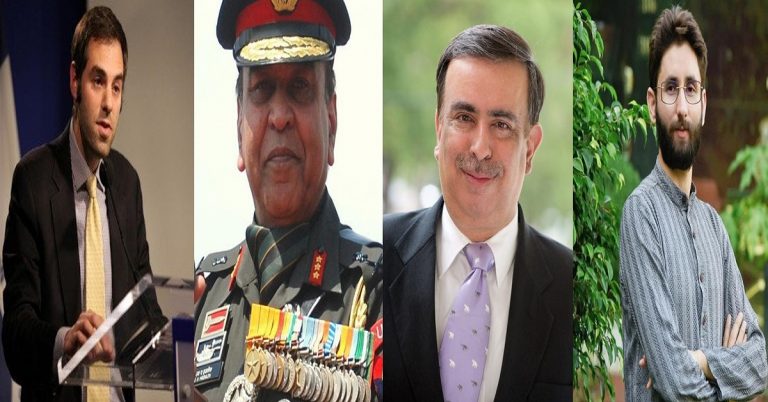
Dr. Michael Kugelman, Deputy Director of the Asia Program at the Woodrow Wilson Center, observed that the incoming Joe Biden administration is unlikely to permit the Kashmir issue to deteriorate the improving relationship between India and USA.

He said, “The incoming Biden administration may be more willing to talk about the Kashmir issue privately but the issue will not be a high priority. There has been very little said by the Biden-Harris camp about the Kashmir. All references made by the Biden-Harris camp have been attempts to garner votes at home before the election rather than concrete promises of action.”

The comments were made at a webinar hosted by the Usanas Foundation. The webinar focused on Pakistan’s invasion of Kashmir in 1947 and Lt. General Ata Hasnain, Kashmiri politician Mir Junaid and Professor Amitabh Mattoo were the other eminent speakers.

“The only way that Kashmir is currently seen by the US is as a stability issue, Kashmir has been the spark of multiple wars between India and Pakistan. Kashmir will not be a big priority and the incoming administration will more likely focus on domestic problems such as the ongoing pandemic and socio-economic troubles,” Dr. Kugelman added, emphasizing that Joe Biden “sees India-US relationship above all as a counter-terrorism partnership and countering China is a secondary aspect.”

Dr. Kugelman also predicted that in case of another Pakistan-sponsored terror attack against India like Pulwama, Joe Biden will firmly side with India. The other speakers focused on the brutalities that were committed by Pakistan-backed tribals in Kashmir in 1947.

Lt. Gen. Ata Hasnain highlighted the need to emphasise the brutalities that were committed in 1947. Failure to do so has permitted numerous false narratives regarding Kashmir to become engrained, he argued.

Mir Junaid stated, “The main point of interest is not the Accession of Kashmir by India, but the invasion of Kashmir by Pakistan backed tribals.” Professor Mattoo highlighted the manner in which the residents of Kashmir trained themselves in arms to fight the invasion.

TMC MP Saugata Roy refutes claims that he is resigning from the party to join BJP, says BJP IT Cell is spreading fake news

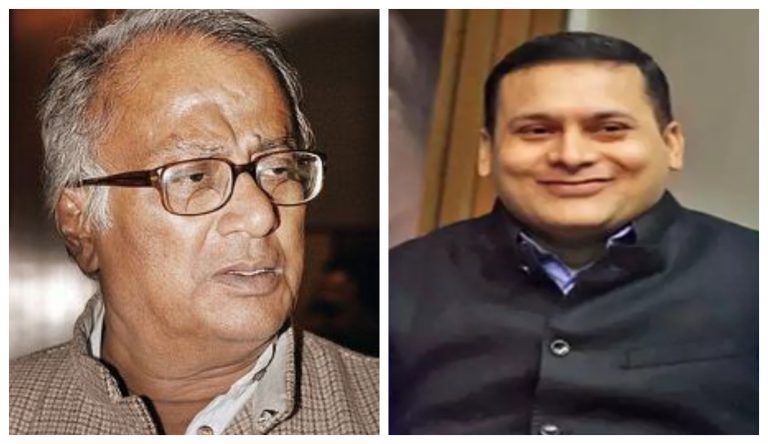
Trinamool Congress MP Saugata Roy today refuted the claims of BJP MP Arjun Singh who had said that Roy only pretended to be a TMC leader in front of the camera and that he would soon resign from TMC. Singh had claimed that five TMC MPs were likely to submit their resignations from the party to join the BJP.

On being asked whether Roy was included in BJP’s list, Singh said that Roy pretended to be TMC leader. “Saugata Roy pretends to be TMC leader and Mamata Banerjee’s mediator in front of the camera. He also communicated with Suvendu Adhikari. But once the camera moves, you can include Saugata Roy’s name also”, said Singh. However, lashing out at the BJP, Saugata Roy denied the claims of Arjun Singh. Roy said that this was BJP IT Cell Head Amit Malviya’s technique of spreading fake news.

Trouble brewing in Mamata’s nest

Rebellious voices have emerging in the TMC ahead of the Assembly elections to be held in 2021. Few days ago, senior party leaders had voiced their grievances against election strategist Prashant Kishor was roped in by CM Mamata Banerjee to manage her party’s campaign in the upcoming elections. The rebel leaders including TMC legislators Mihir Goswami and Hariharpara, Niamot Sheikh had said that Banerjee was losing control of the party.

This came after TMC’s heavyweight legislator Suvendu Adhikari openly revolted and launched veiled attacks at the party leadership during his election rallies. There were speculations that he might quit the party and join BJP.

Hospitals in rural and tribal areas to be handed over to Red Cross: Maharashtra Health Minister Rajesh Tope

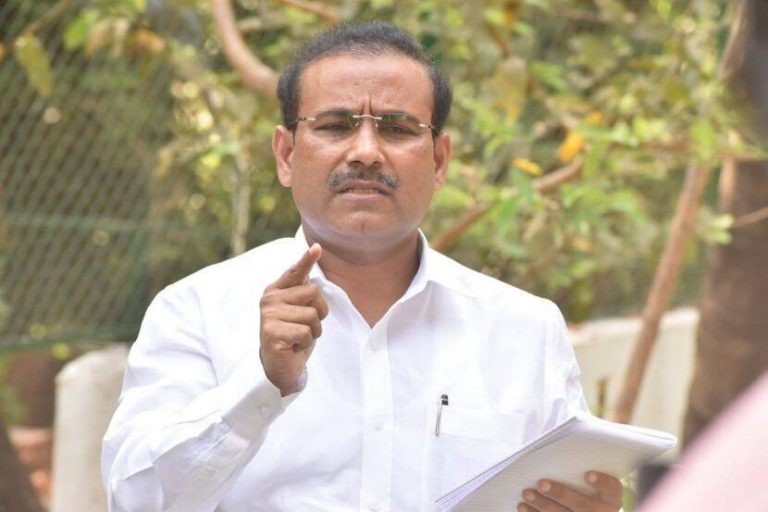
Maharashtra Health Minister Rajesh Tope on Saturday said that the Maha Vikas Aghadi government in the state will decide in the next two weeks on the transfer of the hospitals in the tribal and rural areas of the state and the primary health centres under them to the Red Cross society or other charitable organisations.

Tope announced this while he was on his visit to a rural hospital in Mahabaleshwar. MLA Makrand Patil was also present on the occasion. Citing the shining performance of the Mahabaleshwar hospital and primary centres in the region which have been under the control of Red Cross Society management, the Maharashtra Health Minister said that other hospitals in tribal and rural areas should also be handed over to the Society.

“The rural hospital in Mahabaleshwar is an example of a change in management that brings good results. Providing advanced health care in this region was an uphill task. So recently, the state government handed over all the primary health centres in the region to the Bell Air Hospital run by the Red Cross Society. The performance in the hospitals and primary centres have seen a dramatic improvement. Mahabaleshwar Rural Hospital and Primary Health Center are at the top of the list. The new management effectively implemented several schemes of the state government such as maternity care. Due to its excellent performance, this hospital has achieved the highest number in the district,” Tope told reporters.

For 5 years, Red Cross will own the rural hospitals and primary health care centres: Tope

Tope further added that despite the change in guard of the hospital and primary health centres in Mahabaleshwar, the salaries of the charitable organisations, medicines for the patients, electricity bills and other miscellaneous expenses have been borne by the state government.

Talking about improving the medical facilities in the state, Tope said that 500 ambulances numbered 102 will be procured by the state government. Many Ambulances will be provided to Mahabaleshwar as it witnesses a large number of tourist visits, the minister added.

“Where there is a rural hospital but there is no intensive care unit, the intensive care unit would be started and the institutions would be allowed to charge for providing the services. The administration and the rural hospital have an agreement for only one year. During this one year, the administration will facilitate the hospital management in improving medical facilities in the villages. But for the next five years, the hospital will be owned by the Red Cross Society and the organization,” he said.

However, handing over of the medical facilities in rural and tribal regions of the state have engendered alarm among many people who have taken to social media platforms to condemn the Maharashtra Health Minister’s decision.

Netizens condemn the Maharashtra government’s decision to hand over rural hospitals to Red Cross

Legal activist group ‘Legal Rights Observatory’ took cognisance of Tope’s announcement and tweeted that handing over the tribal and rural health centres to foreign groups like Red Cross could be suicidal considering that India is plagued with Naxal and Maoists issues with foreign involvement in the rural areas. The group asserted that legal intervention would be in order if Tope went ahead with his announcement.

Another Twitter user said that granting health care centres to Red Cross would mean a free pass for the religious conversion of tribal and rural population.

One of the Twitter user called the decision announced by Maharashtra Health Minister a “dangerous move”.

Red Cross might act as a front for evangelism and funding of Naxalism

The apprehensions harboured by Indians about foreign organisations running medical facilities in the country are not entirely unfounded. In the past too, many foreign groups, most notably Christian missionaries, operated under the cover of providing subsidised and even free health care services, but in reality, were involved in carrying out their evangelistic activities. 

The Red Cross Society, an international organisation involved in relief work, is therefore seen with the same suspicion by the wary Indians. The fact that Maharashtra is one of the states racked with the menace of Naxalism and Maoism and the discovery of the foreign involvement in supporting this insurgency has only added to the apprehensions. 

Besides, several cases of lack of transparency by Red Cross Society in dispensation of its relief work have come to the fore. A scam was unearthed in 2016 in which an amount of nearly Rs 16 lakh was embezzled from the Red Cross India Fund. 

More recently, a report published in January 2020 states that the audit report of the Indian Red Cross Society from April 1, 2015, to March 31, 2018, obtained by The Tribune under the RTI Act has revealed a number of irregularities in various projects of the society, including sale of food packets, income from cinema halls of Chandigarh and income from ambulances and funeral vans. 

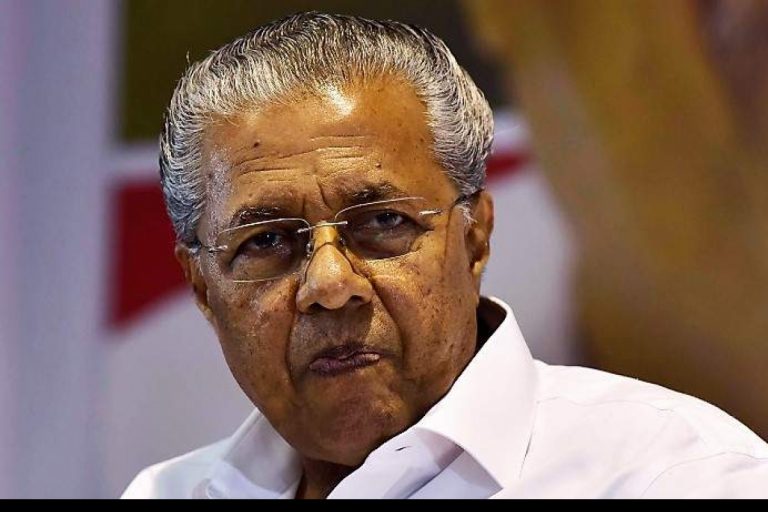
Communist govt in Kerala passes ordinance that can get anyone arrested for criticism of anyone on any media platform: Read details

Even as protests against the controversial section 118-A of the Kerala Police Act continue to mount, Kerala Governor Arif Mohammad Khan has signed an ordinance that gives arbitrary powers to police to arrest people for expressing their opinion not just on social media but also on mainstream media.

According to the reports, Kerala Governor Arif Mohammad Khan on Friday signed an ordinance amending the Kerala Police Act that gives the law enforcement more teeth to prosecute persons in the name of fighting the increasing incidents of crimes perpetrated through social media.

Reportedly, the provisions in the law cover not only social media but the mass media too, including print and visual media, and even posters and billboards.

The opposition against the Section 118-A in the Kerala Police Act comes from the fact that it gives unbridled powers for the law enforcement agencies to curtail the freedom of the press and arrest anybody on the charges of exploiting social media to target individuals, especially women and children.

The new section empowers the police to act against media and register cases on the event of detection of a cognisable offence under the relevant section. The amendment proposes five years of imprisonment and a fine of Rs 10,000 for those convicted of producing, publishing or disseminating derogatory content through any means of communication to intimidate, insult or defame any person through social media.

The newly introduced provision says, “anyone who produces content, publishes or propagates it through any means of communication with an intention to threaten, insult or harm the reputation of an individual will be punished with an imprisonment of five years or a fine of Rs 10,000 or with both”. 

The Kerala state government, which often hailed as the most liberal state government in the country by left-liberals, had brought the controversial amendment to the Kerala Police Act by adding Section 118-A to the law that was originally passed in 2011.

However, the amendment is extremely vague and provides massive discretion to the law enforcement agencies to pick up anyone on the pretext of posting ‘derogatory’ or ‘insulting’ content on social media platforms against individuals.

Opposition to the amendments within the LDF coalition

Addition to the opposition to the proposed amendment to the Kerala Police Act from various opposition parties, civil society groups, human rights activists, the Communist Party of India (CPI), one of the principal coalition partners of the ruling LDF coalition in Kerala has expressed its concerns against the law saying that it could reverse the course on media freedom, muzzle free speech and jeopardise civil liberties.

In the party’s newspaper – Janayugam, the CPI has expressed serious concerns against the proposed executive order. Reportedly, the party felt that civil society at large and media, in particular, viewed the proposal with scepticism.

The CPI felt that the government should not ignore the apprehension that the move to bestow the police with the power to examine published content critically and register cases even in the absence of a specific complaint was patently anti-democratic.

Kerala defends amendment to Kerala Police Act

Defending the ordinance, the Pinarayi Vijayan-led Communist government had claimed that since cyber attacks are a major threat to private life, it has been decided to amend the Police Act as the existing legal provisions were inadequate to fight such crimes. It had said that the proposed amendment was brought keeping in mind the rising crime graph, fake propaganda and hate speech on social media since the outbreak of a pandemic.

The Kerala government said while the Supreme Court had repealed section 66-A of the IT Act and Section 118 (d) of the Kerala Police Act on the grounds that these were against freedom of expression, the Centre has not introduced any other legal framework. The Kerala police, in such a scenario, are unable to deal effectively with crimes committed through social media, the government had said.

Reportedly, the Kerala government decided to bring amendment after a group of women ‘activists’ had attacked a Youtuber for allegedly making abusive and derogatory comments against them. The government claimed that there was a need for an effective law to tackle online vilification and abuse of individuals.

It is pertinent to note that the Kerala government had earlier passed a similar amendment to the act and had introduced Section 118 (d) into the law. According to Section 118(d) of the Act, any person who causes annoyance to any person in an indecent manner by statements or verbal or comments or telephone calls or calls of any type or by chasing or sending messages or emails by any means shall be punishable with imprisonment for a term which may extend to three years or with fine not exceeding ten thousand rupees or with both.

However, in 2015, the Supreme Court in Shreya Singhal judgment had held that Section 118(d) violated Article 19(1)(a) of the Constitution of India.

Senior journalist close to Congress reveals the real reason why senior party leaders are dissenting: Not change, but to fill a power vacuum

The recent rumblings in the Congress party are attributed by many as a result of the string of electoral defeats in the by-polls elections in several states and more importantly an embarrassing poll drubbing in the Bihar assembly elections. But there is an ulterior motive behind these despondent cries by the senior Congress leaders, a senior journalist close to Congress has said in a report published in the Mumbai Mirror.

Many senior party leaders, including P Chidambaram, Kapil Sibal and others have been vocal about the need for a complete overhaul of the party in order to rescue itself from sliding into imminent political oblivion. About 23 dissenting leaders had shot off a letter to Congress President Sonia Gandhi back in August, emphasising the need for sweeping changes to be made in the party from top to bottom in order to arrest the eroding confidence of the party’s support base.

More recently, 23 Congress leaders wrote a letter addressed to Sonia Gandhi, raising concerns over the party’s disappointing performance in the recently concluded Bihar Assembly elections. In their letter, the leaders reportedly demanded that an immediate CWC meeting be called to discuss the poll debacle in Bihar. They had also purportedly asked for immediate organisational elections for the party president’s post in the view of the recent electoral defeats.

Senior party leaders vying for party manager position: Rasheed Kidwai

While the leaders ascribed their hand-wringing to the continuing dismal performance of the Congress party, a senior journalist close to Congress claims that behind the facade of concern for the welfare of the party, lies personal ambitions and career motivations harboured by the senior party leaders which are driving them to raise complaints about the leadership vacuum in Congress.

Rasheed Kidwai, a journalist known to be in thick with the Congress leadership, contends that the recent attempts by the party heavyweights to highlight the party’s poor leadership are meant to position themselves as suitable candidates, well equipped and capable shepherding the party through the ongoing turmoil.

Kidwai claims that from Chidambaram to Sibal, Tharoor, Divijaya Singh, Rajeev Shukla, Milind Deora and many others are eyeing the coveted position in the party right below the Gandhis in the Congress party hierarchy.

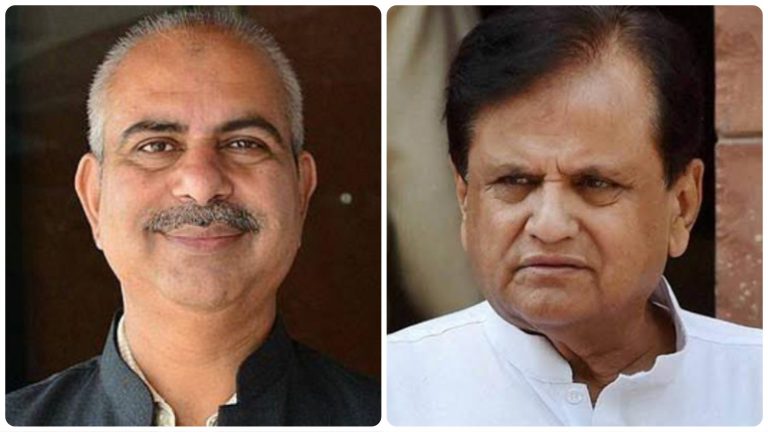
The journalist states that the internal churning in the Congress party is much to do with the ailing condition of party leader Ahmed Patel, who is battling for his life in an ICU in Gurgaon’s Medanta hospital. Patel had been a lynchpin of the Congress party, known for being close to the Gandhi family, stitching unexpected alliances, keeping rebels in check and fashioning Congress’ electoral strategy.

Ahmed Patel’s critical illness leaves a void for party heavyweights to jostle for greater leadership roles

With Patel incapacitated, the Congress working apparatus has been in a state of uncertainty since his admission to the Metro hospital in early October. That Patel played a crucial role in the party’s internal working is demonstrated from the fact that the peace accord between Sachin Pilot and Rajasthan CM Ashok Gehlot remains to be signed, Kidwai says. He also added that the post of the AICC media head had been lying vacant since the promotion of Surjewala as full-time general secretary.

Similarly, in the absence of Patel, the Congress war room has been dysfunctional as the search for a coordinator goes on. The AICC treasurer is a coveted position which was previously held by senior leaders like Uma Shankar Dixit, Atulya Ghosh, Pranab Mukherjee, PC Sethi, Sitaram Kesari, and Motilal Vohra before Patel took control. The post held significance as the post-holder was in the know of where the money came from and where it was going. The AICC treasurer was entrusted with the responsibility of not only mobilise funds and muster crowd and support even when the party leaders’ campaigns failed.

Kidwai claims that as Patel continues to be critically ill and the key positions in the party remain vacant, several politicians, from P Chidambaram to Shukla, have their eyes set on the post of the effective party manager, not to steer Congress out of the quagmire but to elevate one’s stature in the party.