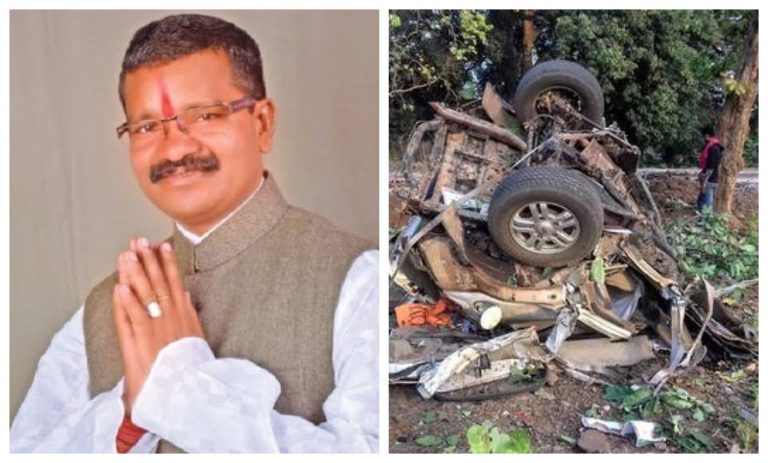
The National Investigation Agency (NIA) filed the charge sheet yesterday against 33 cadres of the Communist Party of India (Maoist) in relation to the assassination of BJP MLA Bheema Mandavi in Chhattisgarh last year. The charge sheet was filed in a special NIA court in Jagdalpur under various sections of the Indian Penal Code (IPC), the Unlawful Activities (Prevention) Act (UAPA), the Arms Act and the Explosive Substances Act.
According to NIA spokesperson, six out of the 33 accused, namely Madka Ram Tati, Bhima Ram Tati, Linge Tati, Laxman Jaisawal, Ramesh Kumar Kashyap and Haripal Singh Chauhan, belong to Dantewada in Chhattisagarh and have been arrested. Five of the accused are dead while the remaining 22 are absconding. The six arrested accused had allegedly provided shelter, food, logistic support, electric wires and steel containers to the naxals.
Mandavi and Four Police Personnel had died in the IED blast
In April, 2019 MLA Mandavi was killed along with four security personnel of Chhattisgarh Armed Force (CAF) in an IED blast which was followed by indiscriminate firing near Shyamgiri village in Dantewala. The assailants had looted the arms and ammunition of the slain CAF personnel. The case was re-registered by the NIA on May 17, 2019 but the investigation was initiated not before March 17, 2020 due to certain legal issues that were raised by the Congress government in Chhattisgarh.
How the Conspiracy was Hatched
According to an NIA official, the decision to assassinate Mandavi was taken in December 2018 in West Bastar at Dandakaranya Special Zonal Committee (DKSZC) level meeting. In another meeting held in the end of February, 2019 in the Gonderas Forest area of South Bastar at Darbha Division Committee level, headed by Giri Reddy who is a member of the DKSZC and in-charge of Darbha Division, it was decided to kill Mandavi along with other political leaders and police personnel as part of Tactical Counter Offensive Campaign (TCOC) with the objective to disrupt elections.
The Secretary of Darbha Division Committee Bada Deva was appointed the overall in-charge for carrying out the objectives of the TCOC. As per the conspiracy, the occasion of the annual fair in Shyamgiri village was chosen as the Maoist leaders thought that prominent political leaders would be attending it. Cadres of the CPI (Maoist) were mobilised who placed the IED on the Nakulnar-Bacheli road near Shyamgiri village. According to NIA official, there was active involvement of the top leadership of the CPI (Maoist) including its general secretary Nambala Keshava Rao in the conspiracy.
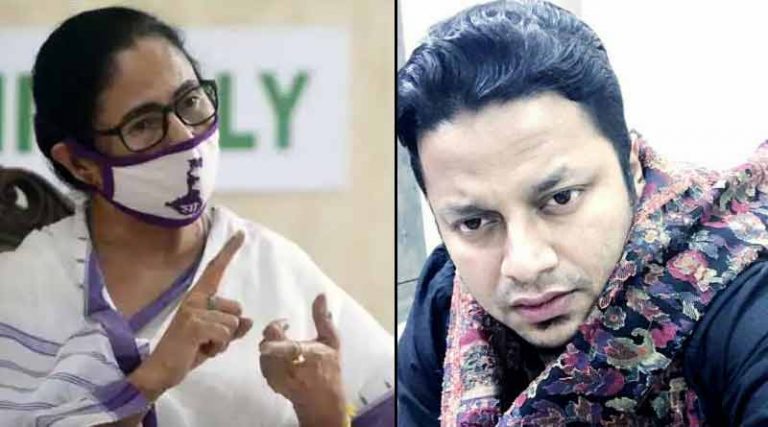
On Friday, BJP National Secretary Anupam Hazra reportedly tested positive for the Wuhan Coronavirus. The development comes five days after he had threatened to hug West Bengal Chief Minister Mamata Banerjee if he ever developed the infection. The BJP leader was tested for Coronavirus after he complained of uneasiness. He has now been admitted to a private hospital in Kolkata.
On Sunday, Anupam Hazra hit out at the Trinamool Congress (TMC) supremo during a BJP party programme in Baruipur, South 24 Parganas. While speaking to reporters, he said, “Our party workers are fighting a bigger enemy than Coronavirus – Mamata Banerjee. When we saw that we can fight her without masks, we stopped taking the Coronavirus pandemic seriously. This is the reality.”
He further emphaised, “Ami to thik korechi atai ki jodi amar konodin corona hoi ami prothom Mamata Banerjee ke joriya dhorbo (By the way, I have decided that I would first hug Mamata Banerjee if I ever contract Coronavirus).”
(Video Courtesy: Sanmarg)
FIR against Anupam Hazra for ‘maligning’ Mamata Banerjee
Earlier, a police complaint was filed against Anupam Hazra by the Trinamool Congress in Siliguri. The party workers also carried out demonstrations against the BJP leader. A senior party member informed, “We have lodged a police complaint against Anupam Hazra. We have urged the police to take immediate action against him.”
While the party has distanced itself from the comments, Anupam Hazra defended his statement. He emphasised, “If my comments are demeaning, then, Mamata Banerjee too had made such comments against the Prime Minister. If one FIR has been filed against me, then, at least 10 FIRs should be lodged against 10 TMC leaders.”
‘Who After Nehru’? This was one key question which became the headline in almost all national and international newspapers after the demise of Jawaharlal Nehru, the first Prime Minister of the country on May 27, 1964. The death of India’s first Prime Minister Jawaharlal Nehru stimulated debates, both inside and outside the Indian subcontinent, on India’s future in a post-Nehruvian world. However, after the death of Jawaharlal Nehru, Lal Bahadur Shastri took over as the Prime Minister of India.
During his nineteen months as PM, one got many glimpses of his unique style of leadership. Much of these months were spent in settling down and dealing with one crisis after another. Just as Winston Churchill was known as the ‘War Time Prime Minister’ in Britain, it would be only just to refer to Lal Bahadur Shastri as the Prime Minister who helped India navigate through its most difficult period in the Post-Independence era.
From calming the violent anti-Hindi agitation that erupted across the southern states to take the first steps in resolving India’s biggest food shortage by promoting the Green Revolution and convincing people to voluntarily give up one meal so that the food saved could be distributed to the affected populace and the White Revolution (Amul cooperative), Shastri led India through its most crisis-ridden period.
Shastri’s mandate to become Prime Minister was not easy. After Jawaharlal Nehru’s death, there was a fragmented consensus within the Congress party about his ability to lead the nation. After India’s crushing defeat in the Sino-Indian border war of 1962 and a severe food crisis which followed, India’s morale had fallen. Given these developments, India appeared vulnerable. In 1965 Pakistan wanted to take advantage of this ‘weak leadership’. The assumption was that a relatively unstable India would not involve itself in another full-scale war. And it appeared to be a perfect moment for Pakistan to make another effort to seize Kashmir.
Lal Bahadur Shastri surprised many with his wartime leadership that saw the Indian government openly declaring that they will not tolerate another attempt by Pakistan to snatch Kashmir by force.
How vulnerable India’s situation was at that time can be ascertained from what Chakravarti Rajagopalachari informally called Rajaji or C.R said after the death of Jawaharlal Nehru:
“The greatest danger now facing India is the failure to effect cordial relationship with Pakistan or neglect of this important issue. The consequent weakness of the sub-continent against communist aggression should be the first concern of all thinking men India and Pakistan. I also feel that on the economic plane the greatest danger now is a stubborn continuation of the policy of expensive taxation and far too ambitious Soviet-style of Planning, leading to inflation. The vital element of the population, on which depends democracy, is crushed between inflation and taxation. Put in general terms, the greatest danger now would be the failure of the new Government to realize the need for a change of policy in spite of admiration and worship paid to the memory of the late Prime Minister”.
Prime Minister’s election after Nehru’s death
However, Nehru had not anointed a successor before his death, and the battle for supremacy was on with Kamaraj pulling the strings under his famous “Kamaraj Plan” to reinvigorate the party.
It is pertinent to note here that over the years many old guards and the young brigade of the Congress party has used the selection of Lal Bahadur Shastri for the PM post to contend that the party does not necessarily belive in ‘dynasty politics’ as in 1964, Lal Bahadur Shastri succeeded Nehru as India’s Prime Minister, not Indira Gandhi. However, we all know that this argument does not hold waters. It is obvious that this sophistry given by the Congress supporters has been used only to cover up the truth of the dynasty politics prevailing in this political party.
After Nehru’s death, the then Congress leadership was divided between Jayprakash Narayan, Morarji Desai and Indira Gandhi for the post of India’s PM. It is widely believed that on one hand while Morarji Desai was not ready to accept the post, Kamaraj himself did not want to hand over the reins of the country to the old and established guard-Morarji Desai. It is widely believed that this was Kamaraj’s (and Nehru’s) plan to weed out the old guard, leaders such as Morarji Desai, Lal Bahadur Shastri, Jagjivan Ram, Biju Patnaik and S.K. Patil, many of who could stand in the way of Indira Gandhi’s eventual elevation as PM.
The plan succeeded. When Nehru passed away, Shastri was elected, mainly because Kamaraj backed him against Desai. And, when Shastri died suddenly, Indira became PM.
In fact, Jawaharlal Nehru always wanted his daughter Indira Gandhi to be his successor. No one else but Lal Bahadur Shastri himself said this to the late journalist Kuldip Nayar. Kuldip Nayar has mentioned this in his book Beyond the Lines that Shastri had once told him that Nehru wanted to see Indira as his political successor.
Kuldip Nayar had written that in the moments just after Shastri’s demise in Tashkent: “Swaran Singh turned to me and asked, ‘Kuldip, who do you think could be the next prime minister?’ I repeated to him what Shastri had himself told me a few months earlier, ‘If I die in the next two years, my successor will be Indira Gandhi. If I survive, it will be YB Chavan’.
Kuldip Nayar also revealed in his book that Lal Bahadur Shastri was not Nehru’s first choice for his successor.
In fact, the Nehru-Gandhi’s disapproval to Shastri rising to power can be gauged from the fact that Gandhi dynasty has tried to virtually delete Shastri’s name from India’s history. History has it that Indira Gandhi was not in favour of building Shastri’s samadhi in Delhi after his death.
Kuldip Nayar has written in his book that only after Lalita Shastri, wife of Shastri Ji, threatened to fast unto death, did Indira Gandhi change the decision and build a samadhi of Shastriji in Delhi.
The making of Indira Gandhi-the Prime Minister
Indira Gandhi was the daughter of Jawaharlal Nehru, the first prime minister of India. She served as prime minister from January 1966 to March 1977 and again from January 1980 until her assassination in October 1984, making her the second longest-serving Indian prime minister after her father.
But her road to power and politics was carefully crafted by Jawaharlal Nehru. He shrewdly elevated her to the position of the President of the Congress, in 1959, which marked her entry into politics and the first phase of dynastic politics in Congress. After Nehru’s death, Indira Gandhi was sent to the Rajya Sabha and made a cabinet minister in the Shastri government. Soon after the death of Lal Bahadur Shastri, Indira Gandhi became the Prime Minister of the country.
Those who claim that Indira Gandhi’s name was not even discussed for the next Prime Minister candidature after Nehru should read the ‘New York Times’ report in which on January 9 1964, just 5 months before Nehru’s death, Indira Gandhi was mentioned as a possible successor to Nehru.
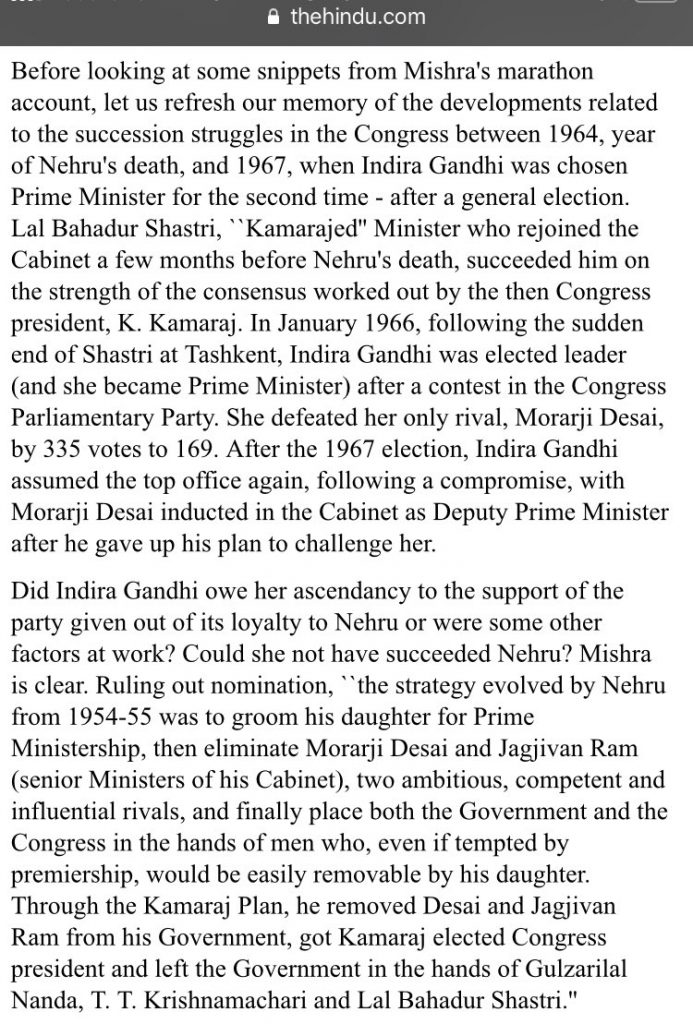
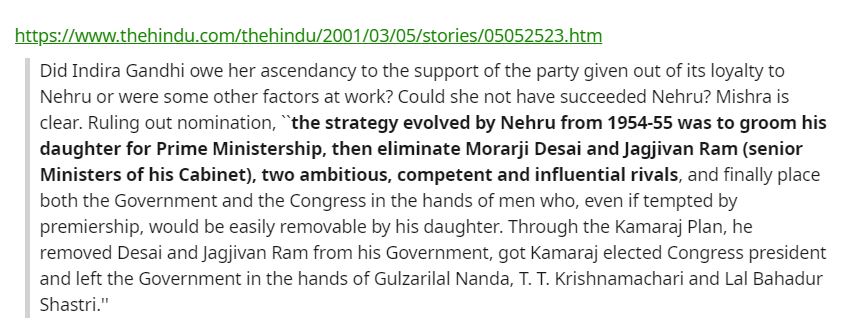
In fact, DP Mishra, a senior Congress leader who closely witnessed power transitions after Nehru’s and Shastri’s deaths explains Nehru’s game plan. The strategy evolved by Nehru was to groom his daughter for PM-ship, then eliminate Morarji Desai and Jagjivan Ram, two ambitious, competent and influential rivals, and finally place both the Govt and the Congress in the hands of men who, even if tempted by premiership, would be easily removable by his daughter. Through the Kamraj plan, he (Nehru) removed Desai and Jagjivan Ram from his government, got Kamaraj elected as Congress President and left the government in the hands of Gulzarilal Nanda, TT Krishnamachari and Lal Bahadur Shastri.”
When Alexei Kosygin called Lal Bahadur Shastri ‘super Communist’
India’s second Prime Minister- Lal Bahadur Shastri, the exemplary stalwart and an impeccable leader, was also known to be considerate toward those working in his team. On 3rd January 1966, he left for Tashkent hoping for a long-term peace solution with Pakistan. Tashkent was very cold at that time of the year and Shastriji was carrying his usual Khadi woollen coat. Russian leader Alexei Kosygin realised that the coat he wore was not warm enough to fight the snowy winter winds of Central Asia.
Kosygin wanted to present a Russian overcoat to Shastriji but was not sure how to do so. Finally, at a function, he gifted a Russian coat to the Prime Minister hoping that he would wear it while in Tashkent. Next morning, Kosygin noticed that Shastriji was still wearing the Khadi coat. Hesitantly, Kosygin asked the Prime Minister if he liked the overcoat. Shastriji said: “It is really warm and very comfortable for me. However, I have lent it to one of my staff members who was not carrying a good woollen coat to wear in this severe winter. I will surely use your gift during my future trips to cold countries”.
Kosygin narrated this incident during his welcome address at a cultural programme organised in honour of the Indian Prime Minister and the Pakistani President. Kosygin remarked: “We are communists but Prime Minister Shastri is a Super Communist”.
There are many aspects related to Shastriji’s life and values, which make him a cut above all the politicians of any time and age, but it is not easy to pen down the stalwart’s personality in a few words.
Whether it be the incident where the former PM took a loan of Rs 5,000 from PNB to buy a fiat car or be it tactfully handling the food crisis in India or being refered to ‘super communist’ due to his compassion for fellow workers, Lal Bahadur Shastri emerged as a leader with his own distinct style and approach.
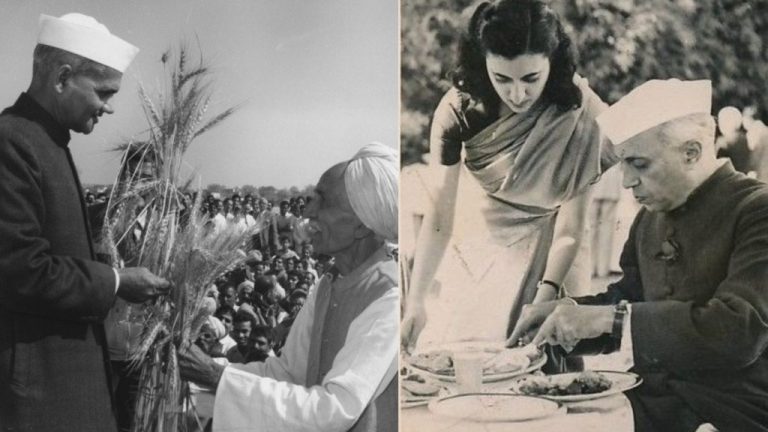
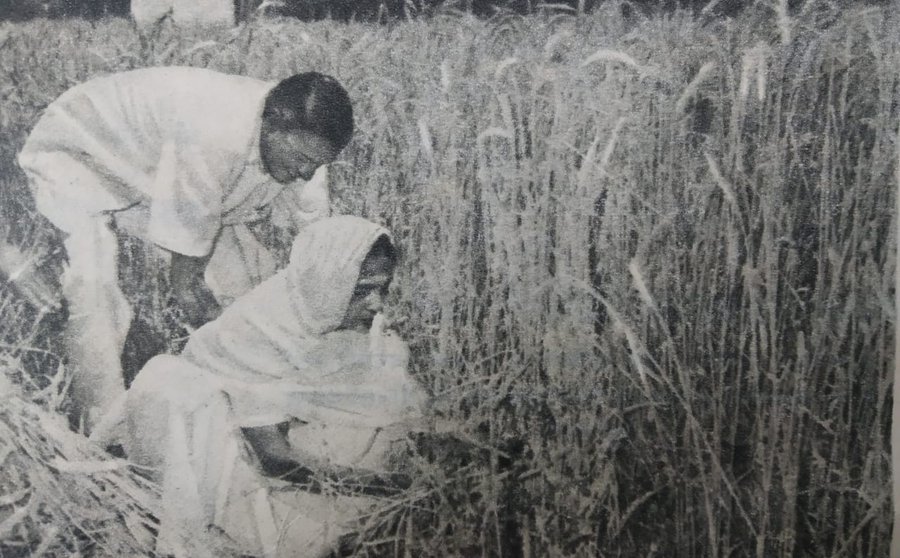
In this picture, 3 months after Shastriji’s death, his wife Lalitha Shastri is harvesting this crop. Shastri ji had grown this crop at 10 Janpath to inspire the countrymen during the food crisis.
Today on his birth anniversary, Shastriji would be remembered as a people’s person who dealt with all individuals with trust, tact and transparency. The trust quotient that Shastri evoked was extremely high. One would not come across examples of his letting down a colleague. His mentors reposed implicit faith in him as did his peers and followers.
It’s extremely unfortunate that Lal Bahadur Shastri departed from the scene much before the country could truly benefit from his full potential.
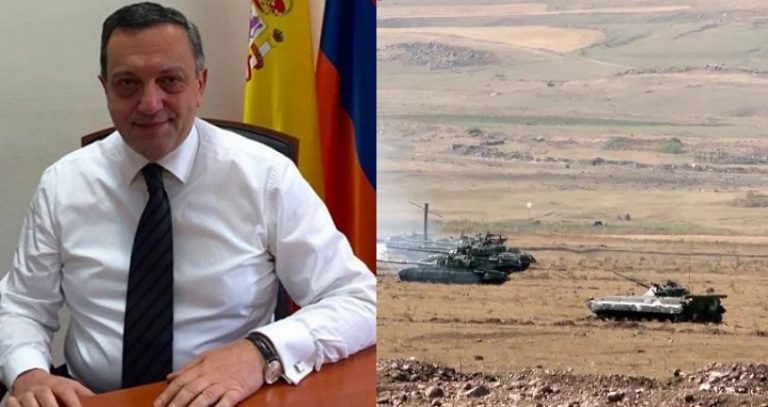
As the spectre of a full-blown war between Armenia and Azerbaijan looms around the corner, the Foreign Minister of Armenia, Avet Adonts, said in an interview with Zee News that it won’t be a surprise to find fighters from Pakistan to battle alongside mercenaries operating in Azerbaijan.
Adonts recounted how Pakistanis were present on the ground in the 1990s when war broke out in Nagorno Karabakh, a longstanding bone of contention between the two countries. With the history of Pakistanis interfering the conflict, the foreign minister said that he couldn’t exclude the possibility of fighters from Pakistan joining the Azerbaijan military against Nagorno-Karabakh and Armenia.
Adonts also slammed Turkey for imposing a war on Armenia. “This imposed or instigated war has been a well planned jointly with Turkey,” he said. He further added that the dictatorship of Azerbaijan, supported by Ankara, instigated a large-scale war when its military instruments, aeroplanes, artillery and all other equipment were mobilised to attack Nagorno-Karabakh on the morning of September 27.
Pakistani trolls jump to the defence of Azerbaijan, vowing to wage a jihad against Armenia
Soon after Turkey extended its support to Muslim-majority Azerbaijan against Christian-majority Armenia, the eternal-rental state Pakistan, which shares a close affinity with Turkey and purports itself as a beacon for the Islamic world, jumped into the conflict, blaming Armenia for ratcheting up hostility against Azerbaijan.
Many social media trolls in Pakistan extended their solidarity with Azerbaijan and vowed to fight against Christian-majority Armenia. Several of them claimed that the war between the two countries represented a war between Christianity and Islam and it was the duty of the Pakistanis to join their co-religionists in Azerbaijan to repel the Armenian attack.
However, Pakistan has refuted the allegations of its forces fighting alongside Azerbaijan against Armenia. In a press release, Pakistan reacted saying the media reports claiming its fighters’ are present on the ground in Azerbaijan are “speculative and baseless”.
Big breaking: Pakistan reacts, says “media report claiming Pakistani army fighting” alongside Azerbaijani forces against Armenia is “speculative and baseless.”
Though it rejected the allegations of providing ground support to the mercenaries backed by Azerbaijan, it nevertheless supported the Muslim-majority country, asking Armenia to stop its military action to avoid further escalation.
Clashes erupt between Muslim majority Azerbaijan and Christian-majority Armenia over Nagorno-Karabakh
Deadly clashes erupted on Sunday between two former Soviet Republics—Azerbaijan and Armenia, over a longstanding territorial dispute for the turbulent Nagorno-Karabakh enclave, a strife-torn region that lies within the jurisdiction of Azerbaijan but is governed by ethnic Armenians.
Nagorno-Karabakh and Armenia had declared martial law after Azerbaijan launched an aerial and artillery attack on Sunday, killing several of the military servicemen and injuring hundreds of others.
Azerbaijan, on the other hand, had also imposed martial law, claiming its attack was in retaliation to shelling by Armenia that had reportedly killed five members of a single-family.
The Hathras Case has sent shock-waves throughout the country. While a lot of details about the case is yet to be unearthed, politicians have already descended upon the village to overturn their falling fortunes. Simultaneously, a great deal of misinformation is also being spread by the mainstream media to further its own partisan agenda. Meanwhile, an SIT probe has been ordered into the matter.
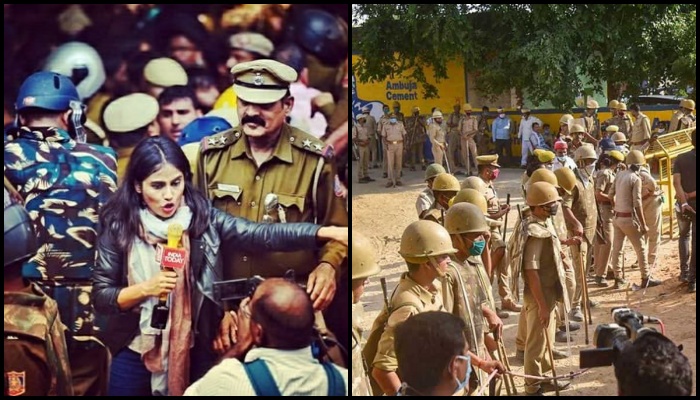
Now, the telephonic conversations between one India Today journalist and the brother of the deceased, Sandeep, has gone viral which has been accessed by OpIndia. In the audio clip, Tanushree Pandey can be heard trying hard to convince Sandeep to send her a video statement of his father alleging that he was under immense pressure from the administration.
Throughout the conversation, Tanushree Pandey appears insistent on coaxing out a very specific statement from Sandeep while the latter remains non-committal on his statement and appears hesitant to toe the line that the journalist wants him to toe. He confirms the journalist’s allegations of pressure and on other occasions, he says that his father was not very clear on whether he was pressurised or not.
Tanushree Pandey tells Sandeep that she has learnt from somewhere, she does not specify where, that an attempt is being made to blame the death of the sister on her family. It does appear to be an incendiary piece of information that has not been reported anywhere in the media. This bit of false information appears entirely fake and seems to have been invented solely to take advantage of the family’s misery to peddle a particular political agenda.
The objective of the conversation is clearly to have Sandeep’s father on record claiming that he was pressurised to give a statement that he was satisfied with the investigations into the matter thus far. She says, “Sandeep, please do one thing for me. And I promise that I will not move from here until your family has received justice… Sandeep, make a video of your father where he says, ‘Yes, there was a lot of pressure on me to issue a statement that I am satisfied.. I want investigation because my daughter has died. And we were not even allowed to see her and she was buried.'”
She adds, “It will only take five minutes. Quickly make the video and sent it to me only.” During their conversations, Tanushree Pandey also tries to incite Sandeep against the SIT that has been formed, however, the brother makes it clear that the SIT was asking them relevant questions and they had left since then. During the whole conversation, the brother appears reluctant and hesitant while the journalist tells him that he should consider her his sister in a bid to convince him.
In another conversation that appears to be between villagers and Sandeep, the brother is advised that he should not accept Rs. 25 lakhs and reach a conclusion. He is told that he should even accept Rs. 50 lakh to reach a conclusion. The lady in that conversation says that some politician is saying that ‘faisla’ should not be reached. During this conversation, the names of one ‘Rahul’ and Manish Sisodia and Barkha Dutt also comes up.
This is not the first time that Tanushree Pandey has been involved with something such as this. During the protests against the CAA, she could be seen having a hush-hush conversation with a leftist student at JNU where she appeared to be ‘coaching’ the person. In the video, the journalist, quite clearly, appears to be having extensive discussions regarding what the events that transpired at the University and at one point, has a prolonged hush-hush discussion with the student that’s not audible to the ears.
In the video that we had accessed, it could be seen that the two of them were having a conversation off the record where an attempt is deliberately made to have a hush-hush conversation so that the content of it is not audible to the observers. Furthermore, in the video, it appears that it isn’t journalism that was happening but propaganda with active collusion between the journalist and the Vice-President of JNUSU.
We have reached out to Tanushree Pandey over the matter. She is yet to respond.
The demise of one Dr Anoop Krishna, allegedly after receiving flak on social media, has startled the medical community in Kerala. On Thursday, Dr Krishna committed suicide at his residence in the Kollam district. He was a well-known orthopaedic surgeon and had appeared on several TV shows. The doctor specialised in Sports Medicine, Arthroscopy and Arthroplasty.
His suicide has now been attributed to the backlash he faced after the untimely death of a 6-year-old child, Adhya Lakshmi, at his clinic, Anoop Orthocare hospital, a week ago. Dr Anoop had decided to carry out the operation on the child after several doctors refused to conduct surgery, amidst the pandemic. Reportedly, the child was born with a heart defect and eventually developed ventricular fibrillation, resulting in erratic heartbeats and eventual death. The child had a heart attack after she was administered anaesthesia at the clinic. She was then admitted to the Kollam Medical College but couldn’t be saved.
While alleging medical negligence, the parents of the deceased child had filed a complaint against Dr Anoop and his hospital. They had claimed that administering anaesthesia resulted in the death of the child. The family also protested outside the hospital. When the news of the child’s death spread on social media, Dr Anoop was subjected to an online backlash.
Deceased doctor wrote ‘sorry’ prior to committing suicide
Dr Anoop was reportedly under mental stress, which forced him to take his own life. He had written ‘sorry’ on a wall, prior to committing suicide. The Station House Officer (Kollam East) stated, “We had taken a case against the hospital for unnatural death. The child was under treatment in the hospital. We are not sure whether the two incidents are connected. The reason for his suicide is not yet known.” He added, “Further details will be known only after the postmortem report.”
Fellow doctors blame ‘social media trials
The medical community in Kerala has come out in support of the deceased doctor and blamed ‘media trials’ for his untimely demise. Fellow doctors emphasised that Dr Anoop had conducted surgeries successfully in the past and that a patient could not be saved every time.
Dr Sulphi Noohu, Indian Medical Association (Thiruvananthapuram chapter) condemned the social media campaign and wrote, “Despite all the attempts to save her including taking her to another hospital, the child passed away. And there comes a bunch of social media warriors to do a trial. They wrote a verdict that the doctor was guilty. They even wrote that the doctor killed the child for a little money.”
Another ortho-surgeon, Dr Sunil stated, “Doctors could not save every life. They don’t have the magic to defeat death every time. A doctor grieves with the family every time a patient dies, despite their best efforts to save them. I hope it won’t cost their own lives anymore.”
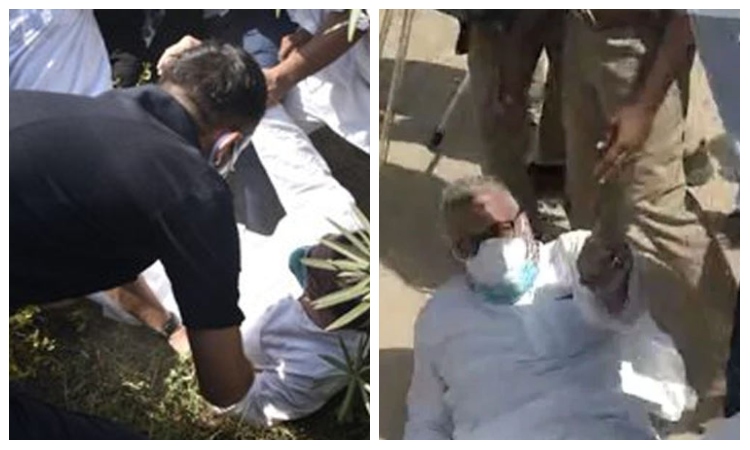
The Hathras incident has become more of an event the political opponents are milking to score political brownie points. A day after Congress prince Rahul Gandhi’s iconic ‘fall’, TMC leader Derek O’Brien followed cue. Derek, who was on his way today to meet the family of the Hathras victim, almost identically found himself a clean spot to ‘fall’ as the cops tried to stop him from proceeding.
A 29-second clip tweeted by ANI, which has now gone viral on social media, showed a woman leader of the party being turned away by a person in plains clothes as O’ Brien comes into the frame. In what looks like an argument which ensues between the police personnel and the TMC leaders, Derek O’Brien is seen losing his balance and going ahead with curious stumbling steps.
#WATCH हाथरस में पीड़िता के परिवार से मिलने जा रहे तृणमूल कांग्रेस के डेरेक ओ ब्रायन हाथरस बॉर्डर पर धक्का मुक्की में नीचे गिरे। pic.twitter.com/1n5Kv72EOe
Taking a cue from Congress the TMC delegation, led by Derek O’Brien was en route to Hathras to express solidarity
Taking a cue from Rahul and Priyanka Gandhi, despite Section 144 still being in place, a four-member delegation of the Trinamool Congress, led by senior party leader Derek O’Brien was en route to Hathras on Friday to express their solidarity with the victim’s family when they were impeded by the police from going to the village.
“He was pushed to the ground. Maybe he is injured too. He was attacked. How can they do it?” ANI quoted Kakoli Ghosh Dastidar, another TMC leader who was a part of the delegation as asking.
A delegation of Trinamool MPs have been stopped by UP Police from entering Hathras. The delegation had travelled about 200 km from Delhi. The Trinamool MPs were on their way to the village in Hathras, travelling separately, to express solidarity with the grieving family and convey their condolences,” the TMC said in the statement.
“At this moment, we are just 1.5 km from the victims home in Hathras, explaining to police officials that we will walk the 1.5 km to the victim’s house in Hathras,” the statement said.
Rahul Gandhi’s legendry, almost identical ‘free fall’
In almost an identical situation yesterday, Congress scion Rahul Gandhi and sister Priyanka Gandhi had embarked on a journey to Hathras to meet the victim’s family. Enroute, since the restrictions are in place, their convoy was stopped. The brother-sister duo then got off their airconditioned car and decided to walk the remainder of their 150+ km journey. On their way when the cops tried to stop, Rahul Gandhi tried to run away. Amit the confrontation with the police Rahul Gandhi found himself a clean spot to ‘fall’.
Like a domino effect, another Congress worker also ‘fell’ on Rahul Gandhi, to save the former Congress President and son of current interim Congress President from any injuries.
Rahul Gandhi’s legendry free fall invited a meme fest on Twitter. The creative minds on Twitter came up with hilarious memes and jokes. From dance moves in legendary Bollywood movies to the comparison between the Congress prince’s fall with that of famous footballers, Twitterati just couldn’t stop gushing about the act.
For a long time now, Twitter has been accused of having in place lax regulation policies that empower users and allow them to initiate unpleasant exchanges. However, this time around, it was the former CEO of Twitter, Dick Costolo, who used the social media behemoth’s inadequacies to post comments supporting violence on its platform.
Responding to a conversation regarding whether the tech company elites and business leaders should involve themselves in social justice issues, Costolo made a contentious remark saying some capitalists “are going to be the first” to be “shot in the revolution”.
“Me-first capitalists who think you can separate society from business are going to be the first people lined up against the wall and shot in the revolution. I’ll happily provide video commentary,” Costolo tweeted.
Me-first capitalists who think you can separate society from business are going to be the first people lined up against the wall and shot in the revolution. I’ll happily provide video commentary.
Costolo’s tweet, suggesting that he would like some of his peers and colleagues face a firing squad comes amidst the turmoil in the American society in the wake of the coronavirus-induced recession, racial reckoning sparked by the death of George Floyd in police custody this May.
CEOs and business leaders are caught in a quandary as to what role they should play in the movement, with their apathy towards participating in the revolution engendering a sense of disgruntlement among their employees.
The debate about the American business leaders partaking a greater role in the social upheaval was doing the rounds for some time now. However, it was triggered anew after the Coinbase CEO Brian Armstrong posted in a blog that his company would not take part in the social justice movement roiling the United States. He asserted that the company doesn’t engage in issues which do not lie at the core of their mission and cited the internal rife within organisations such as Facebook and Google to allege that it adversely impacts the productivity of the organisation as a whole.
Twitter does not initiate any action against Former CEO despite his tweet violating company policies
In response to Armstrong’s post, the former Twitter CEO castigated the Coinbase CEO, saying that it is akin to asking the employees to “shut up and dribble”. In the ensuing conversation, Costolo was seen making a case for leaders to engage in upholding social contract with the employees and not just economic relationship. However, when one of the Twitter users responded that those seeking an activist role in a tech company might as well join a non-profit organisation, Costolo replied that he sees Business leaders being lined up against the wall and fired at for not participating in an effort directed at bringing about the social change.
While Twitter has of late shown an unusual alacrity to label tweets or remove them altogether citing violation of the company policies. Twitter’s violent threats policy reads that tweets “threatening to kill someone” and “threatening to seriously hurt someone and/or commit another [sic] violent” act that could result in injury are not permitted on the site. However, the company has so far not initiated any action against Costolo’s tweet.
One of the frequent disagreements I have with the editorial team of OpIndia – and yes, I am liberal enough to allow them to publish stuff I don’t agree with (thank you, accepts the award) – is about criticism of Mahatma Gandhi. OpIndia has a bunch of articles that dissect his views, and one article, which proved to be quite controversial, also talked about his assassin Nathuram Godse and his motives.
Today I lost my liberalism a bit and killed one article idea that aimed to highlight the weird ideas Mahatma Gandhi had, especially around his extreme pacifism, which were suicidal, to be honest. After killing the idea, I felt bad because criticism of such ideas is totally valid. I killed it because I thought that why should it be done on his birthday today. However, I must accept that it was not really a great reason to kill an article idea.
Therefore, out of guilt, I’m writing one article myself so that content plan doesn’t suffer. And more importantly, the editorial team doesn’t get an excuse to blame it on me, saying traffic was low on a day because I killed an article.
On a serious note, I do earnestly believe that that the right-wing, or rather the Hindus, don’t have much to gain by attacking Mahatma Gandhi. This stand of mine is purely in terms of strategic communication and I’m writing this article to help people debate this idea. I could be wrong as well, but let me explain my position.
Mahatma Gandhi is not your next door Hinduphobe
I’m a paranoid Hindu. I believe that if Hindus don’t realise the threats to their religious and cultural identity and if they don’t pushback in whatever capacity they can, their identity will be sullied beyond redemption in a matter of a couple of decades. Each and every Hindu will be forced to disown that identity, and the last surviving ‘pagan’ religion will vanish. Yes, what the Mughals or the British couldn’t do, can indeed become a reality in modern times with modern psyops.
Even if you don’t share my alarmism and pessimism – and not everyone should get this paranoid because it can also make one depressed and defeatist – you’ll have to agree that Hinduphobia is a clear and present danger. There are entities and ideologies that simply hate Hinduism. They talk about the need to achieve the annihilation of Hinduism.
Some are very honest and say that in as many words – such as Periyarites or the neo Ambedkarites – while some are deeply dishonest and scheming and hide this hatred for Hinduism by creating false narratives about Hindutva vs Hinduism or Brahminism vs Hinduism – the latter types are basically the ‘liberals’.
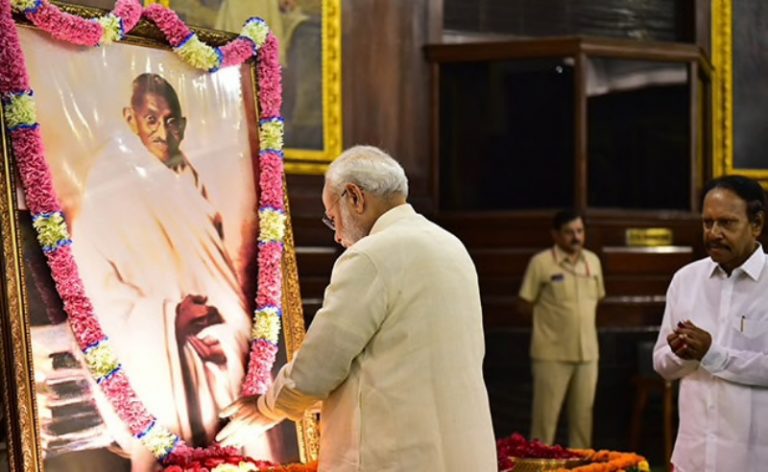
Both the Periyarites and Ambedkarites hate, simply hate, Gandhi. They hate Gandhi with much more intensity than an average ‘Sanghi’ can ever do. Forget hating, a Sanghi like Narendra Modi can’t stop singing praises of Mahatma Gandhi, but you can’t find a single, literally a single Periyarite or neo-Ambedkarite finding anything good about MK Gandhi.
Remember, these are the people who can side with Islamists, with Naxals, with Anarchists, with the Chinese, and with anyone who can mask their Hinduphobia by dressing it up as anti-Hindutva or anti-Brahminism. They not only form a strategic alliance with such elements, they even come up with intellectual sounding claptrap to whitewash the bigotry of their new allies. However, they – the likes of Periyarites and the Ambedkarites – don’t provide even lip-service to Mahatma Gandhi, forget allying with his thoughts or his philosophy, even though Gandhi is presented as antithesis of Hindutva.
So there must be something in Mahatma Gandhi that gets the goat of the most Hinduphobic elements, right? Why do they hate Gandhi so much? Why do they feel that had there been no Gandhi, they would have been able to annihilate Hinduism already? What exactly did Gandhi do that thwarted their attempts to annihilate Hinduism?
Sometimes it is good to think like your enemy. Think about it.
The liberal love for Mahatma Gandhi is fake
While the likes of Periyarites and the neo-Ambedkarites are very honest and forthcoming in their hate for Gandhi, the ‘liberals’ are there to confuse you. That’s their core job – to confuse the Hindus. They do everything to distract you from seeing the real threat to your identity, and then they also tell the Hindus that actually it’s the Sanghis who are doing ‘Hindu-Muslim’ to distract you from the “real issues”. Admirable quality indeed.
Where the likes of Periyarites and neo-Ambedkarites fail, the liberals score. They provide awesome lip-service to Mahatma Gandhi. They have appropriated Gandhi to such an extent that it has become the default reaction of the right-wing Hindus to attack Gandhi, for the ‘other side’ appears to love him. But liberals don’t really love Gandhi.
Remember Gandhi talked about cow protection, about preserving traditional Hinduism that included the caste system (but not caste atrocities). He talked about the importance of temples in the society and championed many more religious and ‘conservative’ values. He belonged to an era when speaking against idol worship was supposed to be a “reform”, but Gandhi never spoke against idol worshipping. And there are dozens of such examples, which is why he is hated by the Hinduphobes.
A ‘liberal’ too hates these things, but he is too smart not to say it openly, not yet. He believes in strategic communication too. However, sometimes the mask slips off and their hate for Gandhi comes out. Take for example the following thought by a liberal thinker published in a liberal website:
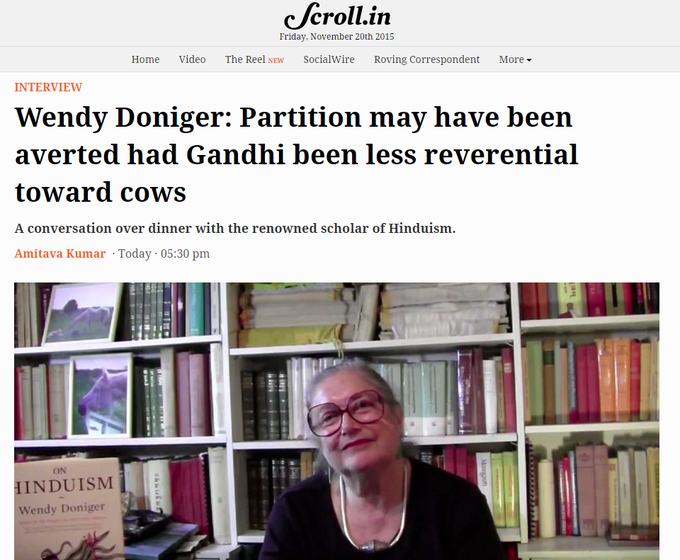
An article published in left-leaning website Scroll in November 2015
They blamed Gandhi for partition. And what was Gandhi’s mistake? He was a practising Hindu. This is a quintessential liberal belief, not much different from what Periyarites and the Ambedkarites believe, but just that liberals are careful not to say it brazenly, lest Hindus actually start seeing who is behind the liberal mask.
Wendy Doniger and Scroll are no exception. Likes of Arundhati Roy have blasted Gandhi many times, and so have many more liberal icons. But they are careful not to overdo it. Because they need Gandhi. Actually, they need Gandhi’s dead body ridden with bullets fired by Nathuram Godse.
That’s the only thing liberals love about Gandhi – his death.
That’s the best thing they could have asked from whatever god they believe in. Not only a man whose ideas they simply can’t find fitting into their “idea of India” was eliminated, but they also got an excuse to paint everyone talking about Hindu causes as a “Godse follower”. Gandhi’s death is the biggest tool in the hands of liberals to discredit any voice that questions them.
Attacking Mahatma Gandhi won’t weaken the ‘liberals’
Now here one might argue that if Gandhi’s death is a stick with which all genuine criticism is stopped, isn’t it rather ‘desirable’ that Gandhi’s views and actions are relentlessly attacked so that “Godse follower” is no longer a pejorative?
If that’s the idea, it won’t work. At the end of the day, Nathuram Godse is going to be a murderer. He himself knew that he will be hated for the act and that he will become a villain. Hinduism is not like Islam where murderers in modern times – be it Ilm-ud-Din or myriad of others who become heroes in the Islamic world by committing murders to ‘avenge’ insult to prophet or religion – can be glorified. The DNA of the two religions are simply different. Tough luck if that is the plan.
Let me repeat again here that my perspectives are entirely from the point of view of strategic communication, and in my mind, it’s not a sound communication strategy. This may work with a specific bunch of people but won’t work with the larger Hindu community.
And what is more important – to paint Godse as not a villain or to make sure no one is pushed to become Godse again? Godse took upon sin on himself for a very different reason. Actually, he took upon himself a sin that would have finally fallen on the liberals.
Had Godse not killed Gandhi, Gandhi – his thoughts, his ideas, his causes – would have been slowly killed by the ‘liberals’ just in a matter of few years. Just think of Anna Hazare; he was thrown out like a ‘doodh ki makhkhi’ once political victory was scored by the team that swore by his name. Mahatma Gandhi would have met the same fate in independent India after the first general elections.
And today’s Congress has virtually killed Gandhi already. They celebrate Periyar now. So by attacking Mahatma Gandhi, you are not really weakening the liberals, or for that matter, not even the Congress party today.
Doesn’t mean that Gandhi shouldn’t be criticised at all
However, I must clarify that I don’t mean to say that Mahatma Gandhi shouldn’t be criticised at all or he should be put on a pedestal where he is worshipped as some great Hindu icon whose ideas are relevant in current times. Obviously not. Being a self-declared paranoid Hindu, I just can’t suggest it at all.
Mahatma Gandhi, due to his really really weird and extremist pacifist ideas, ended up weakening the Hindus – there is no doubt about that. Hindus have been warriors and that’s how they survived thousands of years of invaders destroying their temples and massacring their people. Mahatma Gandhi hugely erred by trying to paint Hinduism as some inherent pacifist religion or Hindus as inherently meek and weak people. One can criticise this aspect of Gandhi without totally destroying his persona or brand.
Similarly, his over-reliance on Hindu-Muslim unity has to be criticised. Most people do today realise that it was foolish of Mahatma Gandhi to extend support to movements like Khilafat, which at the core of it was a pan-Islamist movement – an idea that finally ended up in the creation of Pakistan.
Today, when the other side is talking about “Khilafat 2.0”, it becomes very relevant to talk about these mistakes of Mahatma Gandhi and to ensure that they are not repeated and India doesn’t surrender to Islamist might again. And they can well be talked about without glorifying Godse or tearing down every aspect of Gandhi’s life and personality.
As I said, it’s about communication, it’s about making sure the ideas are read and heard and understood. It’s not about Gandhi or even his mistakes per se. Talk about his mistakes, ask others to learn from it, but there is not really much to gain by ‘blaming’ Gandhi for those mistakes. Think about it; if you solely blame Mahatma Gandhi for partition, you are unwittingly furthering liberal propaganda (go back to the Scroll article I had referred to above). Gandhi couldn’t see the threats of Islamism and ensuing partition, but the partition was caused by Islamism, not by Gandhi. Plain and simple.
Gandhi failed to see some threats. Maybe had he lived long enough, he would have realised. Or maybe he wouldn’t have. That’s immaterial. Someone who fails to see an enemy doesn’t become an enemy. All criticism of Gandhi or his ideas should have this point in mind.
The Hathras case took a political turn yesterday after Rahul Gandhi and Priyanka Gandhi Vadra decided to indulge in theatrics. The brother-sister duo embarked on a journey to Hathras to meet the victim’s family. When their motorcade was stopped owing to section 144 being imposed in that area, Rahul Gandhi and Priyanka Gandhi hopped out of their vehicle and started walking along with scores of Congress workers, shouting slogans against UP Chief Minister Yogi Adityanath.
While they were walking, they were again stopped by the police. Congress workers indulged in a scuffle with the police officials who were merely trying to do their job and ended up injuring a lady officer. Rahul Gandhi tried to show how he was being “manhandled” by the Uttar Pradesh police by falling to the ground after carefully selecting a clean spot. The scene that was enacted by Rahul Gandhi would be hilarious if the situation itself was not so tragic.
However, there seems to be a method to Rahul and Priyanka Gandhi’s madness after all. One has to wonder if using the tragic fate of a young girl to hit out at the Yogi government is their only aim, or is there more than what meets the eye?
In the recent past, several cases of love jihad have been reported from Uttar Pradesh where Muslims were trapping, converting, and in some cases, even raping and killing Hindu girls. In the last 2 months, 20 cases of Love Jihad were reported from Uttar Pradesh and several other states. One of the recent cases were particularly brutal where a Hindu girl was beheaded after she refused to convert to Islam.
The Yogi Adityanath government had formed an SIT to probe these cases and significant headway was made in the investigation. It was reported that the police is almost at the cusp of breaking the mystery behind the nexus.
It is obvious that the sentiment runs high after several such cases are reported. In the meantime, the Hathras incident took place, which was not a very cut and dry case. On the one hand, initial statements of the mother indicated that it was a case of personal rivalry between the families. In fact, in the initial video statements, there was no mention of rape by the mother or the victim. Later, the media reported that she was gang-raped and the statement was later added by the family of the victim. The police then came out to say that the medical reports of the victim do not indicate rape and the cause of death as indicated in the medical report is strangulation and injury to the neck and spine.
Congress has always proved itself to be political opportunists. When the unfortunate Hathras incident happened, the Congress party, running out of issues and options sniffed one and started politicising the issue. The aim here could be two-pronged – One was to cash in on the sentiment after cases of love jihad were being reported from Uttar Pradesh and two, to whitewash their own image after the debacle of Nirbhaya case 2012. The latter would obviously serve the former.
While Rahul and Priyanka Gandhi Vadra indulged in their usual theatrics, their trusted allies took to Twitter to start comparing the two heinous incidents. Purported Journalist with The Wire, Rohini Singh, took to Twitter to “compare” the two incidents – Nirbhaya and Hathras – and talk about how well the former was handled by the Congress party.
It is never right to compare two rapes. But let’s compare how the Nirbhaya and the Hathras cases have been handled by two different govts. Nirbhaya was admitted in Safdarjung hospital. The head of the party in power Sonia Gandhi visited the family at the hospital….
Rohini Singh first says it is wrong to compare two cases, but then, goes on to write an entire thread comparing two cases which are vastly different.
Delhi police showed immense efficiency in cracking the case- a blind case at the time- and the rapists were all arrested. A new rape law was brought in. The same law that the current ADG, law and order in Uttar Pradesh, seems to know little about now it seems…
Singing praises of Sonia Gandhi and the Congress, she hails the fact that Sonia Gandhi met the protestors after the 2012 Nirbhaya gang-rape case which shook the conscience of a nation. While Rohini Singh talks about Sonia Gandhi meeting the victim and the protestors, what she completely forgets to mention, surely by design, is that Sonia Gandhi met the protestors in a midnight stunt only after facing severe criticism over lathi-charging and using water cannons against the protestors.
As was the norm back in the day, and perhaps still is, the Congress party often planted news for their image management and the media happily obliged citing ‘sources’, a method Rohini Singh and her colleagues are all too familiar with. Back then as well, after facing severe criticism over the brutality heaped against the protestors, the news was planted in the media that the “government was displeased” with the police for brutalising the protestors.
There were the exact words of an India Today report:
The government has asked police commissioner Neeraj Kumar to give an explanation by Monday. Further, he has been asked to explain how the OB vans of channels entered the high-security Rajpath and India Gate without prior information. Top Congress party sources confirmed their dissatisfaction with Kumar’s handling of the entire case and the agitation.
The India Today report further said;
The government responded to the protests by unleashing policemen in riot gear who lobbed teargas canisters and resorted to lathicharge to break them up. Unfazed, the protesters lay siege to Raisina Hill throughout the day. At the end of the day, 72 people were injured, including 37 policemen of whom two sustained serious head injuries. In all, policemen fired 125 teargas shells seven times during the day. Two government vehicles, a Delhi Police bus, six public buses and two motorcycles were damaged.
While tens of people were injured by the barbarity unleashed mostly on students by the Congress government for no reason, Rohini Singh seems to recalls a very different chronology of events since she seems to believe that the Congress government handled the situation extremely well.
Further, Rohini Singh also doesn’t seem to remember the shameless conduct of Congress leaders back then.
Sonia Gandhi had remained mum when the Congress leader and former Delhi Chief Minister late Sheila Dikshit has said that the 2012 Nirbhaya gangrape case was “blown out of proportion” by the media. There was not a word of condemnation when her own party’s senior leader downplayed the Nirbhaya case saying that there were several cases of rape taking place across the country and that her government had no role to play in the security situations.
For the uninitiated Congress leader, late Sheila Dikshit served as the chief minister of New Delhi 15 years from 1998 to 2013 and was at the helm of affairs when the Nirbhaya case happened in the capital city.
Likewise, not a word of damnation when Congress leader Shashi Tharoor had in an insensitive remark favoured making public the identity of the Nirbhaya Gang rape victim.
In the Hathras case, not one leader is saying that the victim did not matter or why she was out in the fields by herself. Not one leader is making irresponsible statements and the investigation has been left to the police solely. In fact, thought the police has asserted that the medical report indicates no evidence of sexual assault, it is the media that is not reporting accurately thereafter.
Further, Rohini Singh says, “Nirbhaya’s family never accused anyone in the govt of putting pressure on them, threatening them. The family took their daughter home one last time & cremated her. The cremation was attended by the then CM of Delhi, MoS Home and even the state head of the opposition party, BJP”.
Nirbhaya’s family never accused anyone in the govt of putting pressure on them, threatening them. The family took their daughter home one last time & cremated her. The cremation was attended by the then CM of Delhi, MoS Home and even the state head of the opposition party, BJP.
Rohini Singh may have selective amnesia but the Congress government back then had not even revealed the location of the cremation after the mortal remains of Nirbhaya had been flown back to India. The cremation arrangements were made at 6:30 AM so that no crowd could gather but had to be done at 7:30 AM due to Hindu traditions, the location, was kept secret to avoid a sea of people and the media.
That the Chief Minister of Delhi, Sheila Dixit attended the cremation is not something to be hailed, but questioned, at least for those with a sound mind. It was the CM of Delhi from Congress at the time who had said that the case is being blown out of proportion by the media. It would only be a severely compromised journalist who would see Sheila Dixit attended the cremation as an act of compassion and not as a political move to whitewash the disgusting statement made earlier.
She further takes up how the police was ‘intimidating’ the family and wonders why Nirbhaya’s mother never blamed the Congress.
Why did the mother of the victim have to beg and fall at the feet of the cops to let her take her daughter home one last time to put haldi on her before cremating her? Why did the police carry out a hurried cremation without her family present?
Firstly, the video where she says the cops were threatening the police was twisted by India Today, but of course, one would not expect Rohini Singh to see facts over her agenda. The police were merely saying that after the media leaves, the police will be standing with the family. There was no intimidation in the video that was aired by India Today. Secondly, what Rohini shamelessly does is take away Nirbhaya’s mother’s agency. The lady fought tooth and nail for years to seek justice for her daughter. What Rohini does here, in her desperation to exonerate the Congress party, almost makes it seem like the state did a favour by deciding to hang the rapists of her daughter, while discounting the harrowing experience she went through to ensure her daughter gets justice.
Of course, she then goes on to mouth platitudes like, “Why has UP govt hired a PR agency that is spamming everyone with how there was no rape in the Hathras case? Why threats of FIR? This sort of headline management was never seen during the previous case. Why isn’t a nation allowed to grieve?”.
There is no evidence of this. The police will come out and talk about the findings of the medical report. In fact, if there was indeed no rape, everyone should be relieved. While the girl was tragically and brutally killed by a monster, at least she was not violated. That should give some sort of hope, some closure to every one of us shocked by the incident. However, here, Rohini Singh seems almost disappointed that the girl was not humiliated (according to the police) before she was brutally killed. Perhaps at the altar of agenda, humanity has to die.
In fact, while hailing the Congress and lamenting about the BJP today, Rohini Singh conveniently forgets that it is Congress that plays politics on the dignity and corpses of our girls and not the BJP. After the Nirbhaya case in 2012, PM Modi (Then the Chief Minister of Gujarat) had gone on record to say that he will not play politics on the dignity of our women and will not get into competitive numbers like which state has more cases.
This is not the only time when Rohini Singh used the Hathras case to further her own, vile hypocrisy. Only yesterday, she had tried to shield the Congress government in Rajasthan by downplaying the horrific incidents of rape and murder there.
While one has to marvel the dedication with which Rohini Singh is trying so hard to give the “political advantage” to Congress while preying on the dead body of a young girl, brutalised only days ago, it is a testament to her mediocrity that she was not even able to do that properly. Perhaps journalists who were “made” during the Radiia scandal were propped up for this purpose alone, even if they are not very good at it.