Home Blog Page 5035

A Hindu conservative argument against same sex marriages: Religious sanction, dictatorship of the minority, and where does it end?

0

A petition has been filed in the Delhi High Court recently demanding the recognition of same sex marriages under the Hindu Marriage Act. The petitioners contended that the Act does not specifically say that marriage is between a man and a woman even though it does make it clear that marriage is between a ‘bridegroom’ and a ‘bride’.

The petitioners also contended that denial of marriage rights to the LGBT community is in violation of the Rights to Equality and Life that are guaranteed in the Indian Constitution. In its first hearing on the matter, Solicitor General Tushar Mehta said that he was opposed to same-sex marriages and our laws and culture do not recognise such marriages either. The Court, however, said that it could very well be the position of the law but the judges need to have an open mind.

It does appear rather disconcerting that the precise law and its provisions do not appear to matter here. The need to have an ‘open mind’ in the current context is only a euphemism for a quest to legitimise one’s own personal opinions and accord them the sanction of legality. An ‘open mind’ is often the excuse that is relied upon by people across the board to maintain the pretence that the opinions they hold are so inherently superior that everyone will naturally come to hold them if only the rest could think for themselves and were not brainwashed by others.

Without venturing into a philosophical debate around the concept of an ‘open mind’, it is important to make it clear here that it would be an absolute travesty of judicial norms to concede to the demands that have been made by the petitioners. The law is clearly not in their favour and it once again highlights the menace of public interest litigation which have become an avenue to indulge in personal aggrandisement for motivated individuals.

The Religious argument against same-sex marriages

First and foremost, it has to be said quite outright that there is no concept of same-sex marriage in Hinduism. In Hindu marriages, the groom is considered to be a form of Vishnu while the bride is considered Lakshmi. Therefore, it is preposterous to accord sanction to homosexual marriages under the Hindu Marriage Act. Having said that, there are far greater issues to contend here and ones that would have to be contended going forward.

Marriage is, at the end of the day, a social institution. In Hinduism, especially, it is not a mere agreement between two individuals but a union of two families. Procreation and providing for the children born to the couple is one of the preconditions for marriage. Needless to say, without any of this, same-sex marriages can be considered as such only in the most rudimentary application of the word.

Even so, demanding marriage rights for homosexuals under the Hindu Marriage Act appears particularly mischievous. Right to Equality and Right to Life that the petitioners rely on to bolster their argument does not concern only those members of the LGBT community that self-identify as Hindus. If this was indeed about homosexual rights, where is the concern for Christian and Muslim homosexuals?

As has been correctly pointed out by a user on Twitter, the rising clamour for homosexual marriages is merely the consequence of a long march towards secularisation of public life and the decline in perception of marriage as a religious bond and a sacred duty. This is, of course, a western conception of public life and marriage and unfortunately, since vast sections of our cultural elites are westernized, this perception has also gained prominence among people who dictates our laws and control the machinations of the state.

The user, Śrīkānta Kṛṣṇamācārya, further said, “When marriage ceases to be a “religious” bond, it reduces into merely a legal formalization of a romantic relationship. Kids are incidental. Not necessary. With that mindset, it is inevitable that gay unions acquire a certain equivalence with heterosexual relationships.”

“In the new normal, marriage is just a legal stamp on one’s sexual alliance,” he added. He correctly pointed out that the rhetoric on same sex marriages ought to be viewed as part of the long march towards “secularization, materialism, and a general decline of interest in the hereafter”. To be clear, Mr. Kṛṣṇamācārya was not making any value judgements but only making an observation. And his observations were accurate.

But it has to be added at this point that Indian society is not the West, we do not want our society to emulate western norms. We observe the west from a distance and can see for ourselves that the complete disassociation of social institutions from their religious roots has had devastating impact on their social cohesiveness.

Furthermore, the overwhelming majority of Indian society still considers marriage to be a sacred bond between a man and a woman and live their life as per their ancestral norms before the eyes of Gods and Men. Under such circumstances, when Indian society has vastly different conception of marriage than western notions of it, it appears disingenuous on the part of a microscopic minority to completely alter the legal definition of it as per their own convenience.

If members of the LGBT community wish to garner acceptance in society, then they have to accept certain social norms as well. ‘Give and take’ is a part of every social contract and, as we are all well aware, Courts are a horrible place for negotiations. The LGBT community might have their wishes granted in the Court, since they will be heard by ideological compatriots, however, by engaging in such endeavours, they might forever earn the enmity of the larger sections of Indian society, which has historically treated them far better than other cultures around the world.

Dictatorship of the Minority

The most disingenuous part of the petition is that no effort was made at all to convince the masses of the virtues of their argument. In a democracy, people should have the right to have some say on how the state defines important institutions such as marriage. Instead, the petitioners decided to short-circuit the entire process and proceed directly to alter the state’s definition of marriage.

This is precisely what ‘Dictatorship of the Minority’ looks like. If we are to live in a democracy, and suffer the consequences of it, then the masses ought to have the right to have some say over the definitions of such sacred institutions. As it is, there is painfully little sway that the masses hold over matters of public policy anyway. If we are going to disenfranchise them on decisions regarding social norms as well, then why should any ordinary citizen of this country feel personally invested to uphold and protect our democracy?

Ideological battles ought to be fought only by elected representatives in the Parliament. Turning the halls of our Courts into a battleground for ideologies, as has been the norm in recent times, betrays popular mandate. It is verily the undermining of democracy itself. And marriage is such a fundamental social institution that even elected representative should have no business meddling with it.

There is another argument to be made, of course. Altering the definition of marriage is a radical reformation of the structure of society. By definition, any manner of radical reformation ought to occur with the consent of the governed. And even if the masses advocate for radical reformation of social structures, then it falls upon the ruling elite to evaluate the evidence at hand and then decide whether such a change is desirable or otherwise. My argument here is, our default position should be an aversion towards radical change.

And that is because social norms and institutions survive because they lend certain advantages to the society they manifest themselves in. If they cease to provide functional benefits to the society concerned, then it would become apparent through significant tensions in a society and in a multitude of other ways, at which point, members of the society will themselves take the initiative to rectify the problems at hand.

Unnecessary tinkering with fundamental social institutions might result in a situation where unforeseen unintended consequences manifest themselves which hazard the continued sustenance of the civilizational way of life itself. And there is no evidence to suggest that marriage, as an institution, has become defunct or needs reformation. It is impossible for any social institution to satisfy every single individual in a society. Personal grievance of a microscopic minority is no good reason to advocate the alteration of the legal definition of marriage.

Where does it end?

When homosexuality was decriminalised in the country, I was supportive of the decision and welcomed it. However, events since then have forced me to reconsider my support. LGBT activism in India borrows its ideological inspiration from that in the West and, quite clearly, the worst aspects of western activism is fast taking root in India.

In a series of reports, we exposed the manner in which our children are being exposed to the toxic ideology of gender identity politics and efforts are being made to turn our children into foot-soldiers of the ideology. One such NGO, Nazariya QFRG, advertised a colouring book for students that included depictions of nude women masturbating and wearing dildos in it.

Such organisations are brainwashing our children and the politics of gender pronouns, which is receiving a blow-back even in the West, is fast gaining ground in India. We have already seen the manner in which the adverse impact it has on the growth and psychological health of our children. In western countries, it is legal now for prepubescent children to receive gender assignment therapy that includes the injection of life altering drugs.

Children as young as 14, sometimes even younger than that, can now receive hormone therapy that prevents the normal growth of their puberty merely because they feel they are a ‘girl trapped in a boy’s body’ or vice versa. The extent of the adverse impact such ideologies have on children has become abundantly clear in recent times.

Lisa Littman, an American Academic, said that ‘socially-awkward’ girls self-identified as transgender after being drawn together in chat rooms where they reinforced each other’s beliefs about their identity. She was ostracised by the academia for observing this particular trend. And all of this has happened with the advocacy and explicit endorsement of the LGBT Community.

Furthermore, LGBT activism has been extremely unfavourable towards women. Biological men are now being permitted to participate in sports categories meant for women merely because they claim to be women. Their biological features lend them an automatic advantage over the feminine gender and as a consequence, if this is further normalised, then women will be marginalised in sports categories created explicitly for them.

Also, people who are onboard with this ideology believe that men can menstruate and give birth to children. Women are being called ‘menstruators’, which is an extremely derogatory term. Therefore, under such circumstances, since the people advocating for same sex marriages in India belong to the western school of LGBT activism, we have to ask, where does this end?

It is not an unjustified argument to demand that this particular brand of activism be put to an end before it reaches that point and junk efforts to legalise same sex marriage so that it serves as a discouragement to such forms of activism. It also needs to be mentioned here that the overwhelming majority of LGBT activists cast Hinduism in extremely poor light.

Hinduphobic imagery can be frequently observed at all pride rallies while the activists associate themselves with the worst elements of the Muslim community. And yet, when time comes to demand legalisation of same sex marriages, it is the Hindu Marriage Act that they seek to amend. There does appear to be inconsistencies regarding the matter within the fold of LGBT activists.

Thus, given the religious sanction against same sex marriages in Hinduism and the Hindu Marriage Act which specifically recognises that a marriage is between a bridegroom and a bride, combined with the fact that conceding to the demands of the petitioners would tantamount to a dictatorship of the minority and undermine the very institution of Democracy itself, the petition ought to be junked outright.

Furthermore, the brand of activism that produces such petitions leads us to a very dark place that we must avoid at all cost. That should also be borne in mind while adjudicating upon such petitions.

The Wire journalist loses her mind, claims Golden Retriever dog is ‘upper caste’

0

In what appeared like a satirical tweet, one Naomi Barton who identifies herself an ‘Audience Editor’ with leftist propaganda website The Wire lost brought in ‘Brahminism’ in a seemingly harmless video of a cute puppy. In the original video, a twitter user who goes by the name ‘little honey dew’ (@wineandhair) had shared a video of a pet dog, a Golden Retriever, being welcomed into its owner’s house as per the Hindu rituals.

The Twitter user shared the video with the caption “My new favourite thing is desi families welcoming their new puppies with traditional ceremonies”. In the video, the dog can be seen receiving a warm welcome into the house. As the dog enters the house, a family member puts a tilak on the dog’s forehead, sprinkles some flowers over it and performs the Aarti. However, this upset Naomi.

Commenting on the video Barton said that the video appeared cute and harmless but it actually showed how the Brahmanism was a construct. She even went on to declare the Golden Retriever an upper caste and sermonised on adopting dogs. Apparently, welcoming puppies, in whatever way an individual wishes, is ‘Brahiminism’ and has roots in casteism.

Again, this is not a parody or satire. There were people who even hailed Barton’s insightful observation in all seriousness.

Again, this is not satire.

‘We are answerable only to the Govt of India’: Facebook rejects Delhi assembly committee’s summons

0

On Tuesday, Facebook India snubbed the Delhi government after it had issued summons to the social media giant to testify before the Delhi Assembly ‘Peace and Harmony committee’ led by AAP’s Raghav Chaddha on September 15. The summons was issued to Managing Director and Vice-President Ajit Mohan over complaints of ‘deliberate inaction’ by Facebook against hate speech that culminated in the Delhi riots.

Facebook snubs Delhi government

In its statement, Facebook India declined to attend the hearing of the committee, citing that they have already testified before a Parliamentary Standing Committee in early September for ‘safeguarding citizen’s rights’.

It stated, “The regulation of intermediaries like Facebook fall within the exclusive authority of the Union of India. Given that the matters are under consideration by Parliament, we object to the notice and request you recall it.” The social media giant further emphasised the subject of ‘law and order’ in the Union Territory of Delhi falls under the Union government.

Raghav Chadha takes offence; issues new summons to Facebook

AAP MLA Raghav Chadha, the head of the committee, was irked after being snubbed by Facebook. Labelling it as a ‘disregard’ to the ‘privilege’ of the committee, he informed that summons would be issued to the social media platform yet again. He alleged that Facebook is trying to hide crucial facts in connection to the riots.

Raghav stated, “Facebook’s refusal to appear before the committee is an attempt to conceal crucial facts in relation to its role in the Delhi riots. A fresh summons will be issued to it in line with principles of natural justice.”

Alleged links between AAP and Facebook management

Ankhi Das is the Public Policy Director, Facebook for India, and South & Central Asia. While the left-liberal jamaat has accused her of being a ‘BJP agent’, her old Facebook posts tell a different story. When the Aam Aadmi Party had shared a ‘Jhaadu Dance’ video prior to the Lok Sabha elections, Ankhi Das had dubbed it as a ‘cool campaign’.

Moreover, writing an opinion piece in ‘Daily-O’ titled, “The battle for Delhi on Facebook”, she had praised the Facebook campaign of the Aam Aadmi Party. Ankhi wrote, “Much like they did in the December 2013 Delhi elections, the Aam Aadmi Party had a much stronger ground game. Its street power merged seamlessly with its campaign strategies on Facebook.”

While suggesting that the BJP took its voters for granted, she insuinated, “The AAP’s success shows that no party – no matter how popular – can take the electorate or a good online strategy for granted.”

Delwar Hossain Sayeedi: The man who is convicted for war crimes against Hindus and pro-Bangladeshi supporters in 1971 war

Earlier in May 2020, Bangladeshi social media posts were replete with posts demanding the release of one Delwar Hossain Sayeedi, a Jamaat leader who is convicted of committing numerous war crimes in the 1971 Bangladesh war that led to the partition of East and West Pakistan.

Steady support is being garnered for the Islamist leader, notably on the social media websites, where his supporters are demanding the release of Sayeedi, currently facing life imprisonment after being found guilty of genocide, killing and rape during the 1971 independence war in Bangladesh.

Several Twitter users demanded the release of the Islamist leader, imprisoned for his war crimes against the pro-Bangladeshi supporters during the 1970 Bangladesh liberation war.

Some of the Bangladeshi Twitter users, while demanding his release even claimed that Sayeedi has been convicted of trumped-up charges.

While a section of Bangladeshi social media users has been involved in a campaign to seek the release of Sayeedi, it is important to reflect upon the antecedents of the man in question, who has been accused and convicted in connection with the war crimes that were meted out on the people of East Pakistan who supported the idea of an independent sovreign nation of Bangladesh. Sayeedi was a member of the private militia ‘Razakars’, raised by the Pakistani Army as a part of its crackdown against the pro-Bangladeshi supporters.

Sayeedi, a part of private militia ‘Razakar’ raised by Pakistani Army

In the run-up to the liberation war for Bangladesh, the army of West Pakistan, which considered Bengali speaking East Pakistanis as inferior and impure, raised a private militia called “Razakars“, comprising the members of Army personnel, Bihari Muslim migrants and anti-Bangladesh and pro-Pakistan Bengalis and Urdu-speaking migrants who lived in Bangladesh at the time.

The militia was raised by the Pakistani Army to forcibly quell the mounting rebellion by the East Pakistan’s inhabitants for the independence of the region from the illegitimate West Pakistani government. Delwar Hossain Sayeedi was one of the members of the ‘Razakars’ tasked with the responsibility of using violence and force to stamp out the opposition staged by the pro-Bangladeshi supporters.

The Razakars, under the auspices of the Pakistani Army and the Provincial Government, wreaked havoc on the pro-Bangladeshis seeking a nation free from Pakistani rule. In doing so, they mercilessly murdered, raped and tortured millions of Hindus and protesters who opposed to the sovereignty of West Pakistan over East(now Bangladesh). It is estimated that Pakistani Army and its supporting Razakar militia killed between 300,000 to 3,000,000 people and raped 200,000–400,000 Bangladeshi women in an organised genocidal rape campaign.

Delwar Hossain Sayeedi convicted of war crimes in 1971 Bangladesh liberation war

Delwar Hossain Sayeedi, the top Jamaat-e-Islami leader, presided over the genocide of Hindus and pro-Bangladeshi supporters during the 1971 war. The International Crimes Tribunal(ICT) in 2013 charged him of 20 counts including guilty of charges including mass murder, torture, forcefully converting Hindus to Islam and brutal rapes of women. Of the 20 charges against him, Sayeedi was sentenced to death for two—the murders of Ibrahim Kutti and Bisabali, and for setting fire to Hindu households in Pirojpur in 1971.

The conviction of Sayeedi triggered a wave of violence across Bangladesh, with his vehemently protesting against the verdict and demanding his immediate release. Bangladeshi government had to call in paramilitary force to control to rampaging protesters, who were further agitated by the rumours that Sayeedi’s reflection was seen in the moon, thereby assuming his perceived innocence.

Supreme Court of Bangladesh commutes Sayeedi’s death sentence to life imprisonment

A year later his sentence was commuted to life imprisonment by the Supreme Court of Bangladesh. The apex court sentenced Sayeedi to life imprisonment on 5 charges of the 20 framed against him. In another appeal verdict in a war crimes case, the top court announced the sentence of prison until death to Sayedee for three charges pertaining to the murder of Bisabali, arson in a Hindu neighbourhood and the abduction and rape of three sisters of Gauranga Saha.

Saha was a prosecution witness, who identified Sayeedi as a man who handed over his three sisters to the Pakistani Army, to be taken away as sex slaves. They were returned after 3 days. Sayeedi was also sentenced to death for forcible conversions of 100-150 Hindus.

Since the verdict by the Supreme Court in 2014, Sayeedi’s ardent supporters have been trying to mount a campaign to seek the release of their leader by pressuring the Bangladeshi government. In 2017, two pleas were filed in the Supreme Court of Bangladesh seeking his acquittal, but the Chief Justice of Bangladesh dismissed the petitions. The state, which took more than 4 decades to punish the war criminals responsible for the grievous crimes against humanity, had sought a review to maintain the ICT’s verdict that sentenced Sayeedi to death. However, the court had upheld the life imprisonment sentence against the Jamaat leader.

Actor Nawazuddin Siddiqui’s estranged wife stands by her allegations, records statement with UP Police

0

Bollywood actor Nawazuddin Siddiqui’s estranged wife Aaliya Siddiqui (former name Anjana Kishore Pandey) recorded her statement in Budhana police station in Muzaffarnagar, Uttar Pradesh yesterday. Aaliya, who came to Budhana from Mumbai, recorded her statement against Siddiqui and his four other family members in relation to a molestation case involving his brother.

Aaliya had filed a complaint with the Mumbai police on July 27 on the basis of which an FIR was registered by the Mumbai police. The FIR was later forwarded to the Budhana police station in Uttar Pradesh because the jurisdiction of the alleged offence was there. She recorded her statement under section 161 of the CrPC with SHO Kushalpal Singh, as per reports.

“Statement under section 161 of the CrPC has been taken by the Investigating Officer on Saturday. The complainant alleged that Nawazuddin Siddiqui’s brother molested a minor family member in 2012. Further investigation is on”, said SHO KP Singh.

Aaliya, in her statement, alleged that she had informed her in-laws about the incident of molestation but she was asked to keep quiet. In the month of May, she had sent a legal notice to Siddiqui through WhatsApp seeking divorce and maintenance. She has two children with the actor. Aaliya had said that there are several serious issues between them. She had also said that some of the issues related to Nawazuddin Siddiqui’s brother Shamas.

In an interview, she had accused Siddiqui of bringing women over to their house when she was pregnant with their first child. She also said that this used to happen even when the two were dating each other.

‘I am now with BJP-RSS, will not let gundagardi happen in Maharashtra’: Navy officer who was assaulted by Sena goons

0

Days after being assaulted by the Shiv Sena goons, the retired Navy officer Madan Sharma on Tuesday met Maharashtra Governor Bhagat Singh Koshyari.

Following his meeting, Sharma addressed the media and said, “I have now joined BJP and RSS. We will not let any gundagardi happen in Maharashtra. Why is law seen in two different ways? If someone is connected to a politician, then he will be treated differently compared to a common man?”

He further added, “From now on, I am with BJP-RSS. When I was beaten up, they had levelled allegations that I’m with BJP-RSS. So now I announce, that I am with BJP-RSS today onward.”

Madan Sharma demands dismissal of Maharashtra government

The retire Navy officer said that he had apprised the Governor about the attack and the ‘weak nature’ of the charges under which the accused Shiv Sainiks had been booked. “The governor assured me that he’ll take action on my memorandum. I demanded that state government be dismissed, President Rule’s be imposed. He assured he will speak to the Centre,” Sharma informed.

Navy veteran brutally attacked by Shiv Sena goons

On Friday, Madan Sharma was attacked by Shiv Sena goons in Maharashtra for sharing a cartoon on WhatsApp. The WhatsApp forward was allegedly a satirical cartoon featuring Uddhav Thackeray and his allies Sharad Pawar and Sonia Gandhi. In the CCTV footage of the incident that has gone viral on social media, one can see how the veteran was brutally attacked by a bunch of goons.

Speaking to the media after the incident, Madan Sharma had said that he had received a phone call from an unknown person earlier in the day. A person, who identified himself as Kamlesh Kadam, had asked him to come down at his society’s gate. As Sharma reached the gate, Kadam and other Shiv Sena goons attacked him brutally and injured him. They assaulted me, punched me and kicked me. My right eye sustained injuries, Sharma had said.

Congress leaders including Shashi Tharoor and Digvijaya Singh extend support to Delhi riots accused Umar Khalid

Arrested Sunday late night on the charges of being one of the prime co-conspirators of the large-scale anti-Hindu riots that erupted in Delhi in February this year, former JNU student and ‘activist’, Umar Khalid has been sent to 10 days of police custody by the Karkardooma court. Khalid was arrested under the Unlawful Activities (Prevention) Act (UAPA) after almost 11 hours of interrogation. 

The news of the arrest of the controversial ‘activist’ created a flurry amidst the assortment of ‘liberals’ who took to Twitter, to rant and rave about the arrest of Umar Khalid. Likewise, the Congress loyalists too have been shaken by the news of the arrest of the former JNU student, who also took to the microblogging site to express their vexations.

For liberal intellectuals, it is very tempting to blame Modi for anything and everything happening under the deep blue sky. Going by the penchant, Congress senior leader and Lok Sabha MP Shashi Tharoor plunked the blame of the arrest of the ‘JNU scholar’ on the Modi government. Responding to a Tweet by Khalid’s father Syed Qasim Rasool Ilyas on the arrest of his son, Tharoor wrote: “PM says he welcomes criticism, but forgets to mention the cost of criticism to be paid by those who speak out. In today’s India, payback is only reserved to our own citizens, never against countries who actually question and challenge our sovereignty. #StandWithUmarKhalid.”

Shashi Tharoor’s tweet

Senior Congress leader Digvijaya Singh also Tweeted in support of the JNU student. This despite the fact that Khalid was arrested for his alleged role in collaborating the violence that swept across the northeast Delhi in February. It appalling that the senior Congress leader was giving credence to Harsh Mander, the ‘activist’, who himself has been named in the charge-sheet filed by the Delhi police explaining incidents leading to the North-east Delhi riots.

The charge sheet mentioned that on 16th December 2019, Harsh Mander visited the protest site and asked protesters not to believe or have faith in the Supreme Court of India. He incited the protestors by telling them that the only way to get justice is to fight the battle on the roads. 

Digvijaya Singh standing with Umar Khalid

Likewise, for the national spokesperson of Congress Salman Anees Soz, Umar Khalid, who’s accused of being involved in Delhi riots, was not the problem. The real problem for this shortsighted Congress loyalist, prevailed in the government and the judicial system of India.

Salman Anees Soz’s tweet

He also claimed that allegations of instigating riots is ‘dissent’.

The Congress IT cell member Srivatsa mourned Khalid’s arrest, alluding that he has been arrested because of his Muslim “name”, while the ‘real’ culprits are roaming freely. However, difficult it might be for these leftists to digest, but the fact is that while the FIR filed by Delhi police names Umar Khalid for hatching the conspiracy that led to the ghastly riots, there have been no charges against any of the names which Srivatsa otherwise mentions in his Tweet.

Congress IT cell teammate Srivatsa on Umar Khalid arrest

Congress IT cell worker Gaurav Pandhi, who too was profoundly agonised over the former JNU student’s arrest, elucidated how Khalid was actually a victim who was being portrayed as perpetrator.

Pandhi on Umar Khalid

Moreover, Congress leader Salman Khurshid also opined that invoking UAPA in cases of protests will have a “chilling effect” on democratic rights. Rajya Sabha MP and Congress spokesperson Abhishek Singhvi and Former Law Minister and Congress bigwig Kapil Sibal also lamented the arrest of Umar Khalid alluding that the government was targeting the ‘victims’.  

“The manner in which the police seems to be investigating the Delhi riots establishes two things — the investigation process has been sullied and is proceeding in tandem with political considerations of the union government to brush under the carpet the complicity of those who started the riots and targeted people, and blame those who were the victims,” Indian Express quoted Kapil Sibal as saying.

These Congress leaders should probably be reminded that one of the prime accused in the Delhi riots case, former AAP councillor, Tahir Hussain, has named Umar Khalid as the one who introduced him to Khalid Saifi for planning the riots in the city.

Earlier, an FIR was registered against Umar Khalid which said that the Delhi Riots were a preplanned conspiracy that was hatched by the former JNU student and his associates. As part of the conspiracy, Umar Khalid is accused of giving provocative speeches at two different locations and appealing to people to take to streets during the visit of US President Donald Trump so that the propaganda that minorities are oppressed in India can be internationalized.

Food vloggers ‘Bong Eats’ comes out to defend Delhi riots accused Umar Khalid, call him an ‘independent voice’

On Monday, a popular culinary YouTube channel named Bong Eats came out in support of Umar Khalid after he was arrested by the Special Cell of the Delhi Police on charges of ‘conspiracy’ during Delhi Anti-Hindu riots.

In stark contrast to the usual content, the channel posted a smiling picture of Umar Khalid along with an extract of a revolutionary poem, ‘Karar oi Louho Kopat (Prison doors of steel).’

Screengrab of the tweet by Bong Eats

Gajnar bajna baja! Ke Malik? Ke Raja? Ke dai saja mukto sadhin satya ke re?,” the tweet read. The loose translation goes as, “Beat the drums in jubilation. Who is the master? Who is the king? Who can punish free, independent voice of truth?” The song was originally written by celebrated Bengali poet Kazi Nazrul Islam when he was held up in prison during the Indian Independence movement.

Bong Eats dedicated the song to Umar Khalid, suggesting that none can tame the ‘independence’ of the alleged conspirator of Delhi riots. The channel, managed by Saptarshi Chakraborty and Insiya Poonawala, had been operating since 2016 and uploads recipes of Bengali cuisine.

Bong Bites has an audience base of over 1 million people

In their own words, “At Bong Eats we document the food of Calcutta. We cook traditional Bengali recipes prepared in home kitchens, as well as some of the most beloved dishes found in the myriad streets, cabins, and restaurants in the city…With this project, Bong Eats, we hope to demystify such preparations and make them accessible to just about anyone interested in cooking and eating.

The channel had recently crossed 1 million subscribers on Youtube.

Bong Eats refuses to do course-correction

However, fans of the culinary channel were upset after Bong Eats came out in support of Umar Khalid. When a Twitter user (@coolfunnytshirt) urged to not exploit the audience of the channel with their revolutionary political ideology, Bong Eats asked him to unfollow instead of doing course-correction.

“Hello comrade, whoever is running this account , do all this ‘revolutionary’ activities from your personal account. What are you guys teaching here? How to cook Shaheen Bagh biryani?” the Twitter user asked. “Our account our rules. Na poshala dekho na (If you don’t like, then don’t watch)”, the channel said in a reply to the tweet.

The role of Umar Khalid in Delhi riots

Umar Khalid, along with several other rabble-rousers such as Jamia media coordinator Safoora Zargar, RJD’s youth wing president Meeran Haider, Pinjra Tod activist Natasha Narwal and several others have been booked under the stringent Unlawful Activities (Prevention) Act (UAPA) for allegedly instigating the violence that swept over large swathes of the northeast Delhi in February earlier this year.

The Delhi Police Crime Branch in its FIR dated 6th March 2020 stated that the anti-Hindu riots that took place in North East Delhi between 24-26 February during the visit of US President Donald Trump were preplanned. The FIR copy stated that the anti-Hindu riots conspiracy was hatched by ex-JNU student Umar Khalid and his associates who are linked with two groups. As part of the conspiracy, Umar Khalid gave provocative speeches at two different locations and appealed to people to take to streets during the visit of US President Donald Trump so that the propaganda that minorities are oppressed in India can be internationalized.

The Dream of Dravida Nadu: How the movement started with heroic speeches and ended in a damp anti-climax

In today’s polity, the Dravidian movement, through its primary electoral platform the DMK, has always stood for increased autonomy and for more powers to be devolved to the States.

They position it as an argument for increased citizen freedoms due to localized and distributed political freedoms. However, this was not their original demand. For close to a quarter-century, the demand was for a separate State called Dravida Nadu. However, the DMK did not place much thrust on this demand after the first early years and completely abandoned it in 1963.

What was their stand and what changed?

Dravidar Kazhagam and Dravida Nadu

The Justice Party and EV Ramasamy’s Self-Respect Movement merged in 1938 under EVR’s leadership. The earlier Justice Party leaders, the landlords and upper-class zamindars, moneylenders were a class that was fast fading in the wake of the British Empire’s slow retreat from India.

The Government of India Act, 1935 did away with the system of dyarchy. Direct elections were a far bigger determinant of governance. The older Justice Party leaders had made it to the Legislative Council of Madras Presidency through special constituencies such as for planters, trade associations, large landholders, Government officials and loyalists. Their ability to form governments was severely restricted after the 1937 elections, where the constituencies reserved for landholders and Commerce and Industry bodies were vastly reduced in numbers.

The popular vote went to the Indian National Congress, the Muslim League took the Muslim votes and there was very little left for the Justice Party.

The merged entity was renamed the Dravidar Kazhagam in 1944. It now decided to remain outside electoral politics and work for the upliftment of the Dravidian race and to improve the scientific temper and rational thinking in society.

Pre-Independence

EV Ramasamy made the demand for Dravida Nadu a key point in the Dravidar Kazhagam agenda. The leaders of the Dravidar Kazhagam met Sir Stafford Cripps when the Cripps Mission came to Madras and tried to drum up support for his demand from Jinnah and from Ambedkar.

While Jinnah was initially receptive, there was no further traction they could gain from him. Sir Stafford Cripps was dismissive of this idea and asked for it to be passed as resolution in a popularly elected assembly. It is not known what Dr Ambedkar thought of this idea.

The DMK

In 1949, the charismatic and ambitious CN Annadurai, who was much younger and had built a following among a new generation of middle-class youth with education, left the Dravidar Kazhagam over differences with his older mentor.

He formed a political party the DMK, with the objective of gaining political power through elections and use this power for their ideological ends, which included a goal of a homeland for Tamils, free of ‘Aryan’ influences and North Indian exploiters. Their agenda included industrial development for Madras on par with the Northern States.

Potti Sreeramulu’s fast to death over the demand for a separate Andhra Pradesh, to be carved out of Telugu-speaking regions of Madras Presidency, the Hyderabad State and other coastal regions changed many things.

It was quite clear that neither Travancore and Cochin, reconstituted into Kerala, Mysore, to form the core of a new Karnataka nor the Telugu-speaking regions showed any enthusiasm to be part of a Dravida Nadu. The Dravidian movement now changed its demand to ‘Tamil Nadu for Tamils’.

However, the DMK cadre not Annadurai did not show the kind of energy they directed towards the other demands, such as the anti-Hindi agitation. It was obvious that a separate Tamil Nadu did not have any traction among the general Tamil populace.

Separatism and the Indian State

The manner in which Princely states such as Jamnagar, Hyderabad and Kashmir were integrated demonstrated the seriousness of the fledgeling Indian State in dealing with separatist tendencies.

The Indian State maintained an overwhelming monopoly over military capability, utilizing the laws that the British Raj had put in place to subjugate a native populace. 

In Goa, a few thousand Resistance fighters, armed with vintage weapons, were able to hold up against a colonial power like Portugal.

In 1961, the Indian Army simply walked into Goa during Operation Vijay. The North East tribal districts of Assam were also pacified through the 1950s and 60s.

If the Indian State had the military capacity to gain territory from European colonial nations and bring head hunting tribes to the negotiating table, the school teachers, shop keepers, movie actors and petit bourgeoise that made up the DMK would have had to assess their chances realistically.

Dropping the demand

It is a persistent urban legend circulated that the DMK dropped their demand for a separate Tamil Nadu in 1962, in the wake of the Chinese aggression. This was an ostensible measure to show solidarity in facing an external threat with a unified face. The real reason was the 16th Amendment to the Indian Constitution, passed in 1963, which placed a demand upon every Member of Legislature or Parliament to pledge him/herself to uphold the unity and integrity of the Indian Union.

If the party continued with its demand for secession, all their legislators would have to lose their positions and the party would become ineligible to contest elections.

By now, they had a good number of legislators, 50 in the Madras Legislative Assembly and 7 MPs in the Lok Sabha. They would be loath to lose this hard-won political position. 

Annadurai, in a private conversation, disclosed his misgivings about the implications of this Act. The changed situation could result in indefinite imprisonment under British era sedition laws. The newspapers would not be allowed to eulogize them. He was not sure if the general public would remember them if he went to prison for months together. 

At the time of forming the DMK, the leading team was called the Aim Perum Thalaivargal – the Five Great Leaders – NV Natarajan, Nedunchezhiyan, EVK Sampath, Annadurai and KA Mathiazhagan. Of these, Neduchezhiyan, known for his fierce oratory, was willing to only stay in jail till 3 months. Natarajan was willing to go to jail for a year but needed time before to sort out his children’s weddings first. Even the then dynamic student leader Aladi Aruna could not afford more than 3 months sentence.

The 1962 stand-off with China was an excuse to exit this situation honourably. Annadurai handled it with his characteristic dexterity. He was a Rajya Sabha member at the time and he was called upon to explain his party’s stand in view of the secessionist position that the Naga leader Phizo was advocating. His argument was that the Dravidar Kazhagam had deliberated upon the appropriate solutions for the situation pre-Independence and had then advocated for a separate political arrangement for the Southern Provinces.

The DMK had merely carried forward this legacy. Referring to an earlier speech of the then Home Minister of the time, Lal Bahadur Shastri, that propaganda for secession would be put down if it exceeds bounds, Annadurai made a plaintive appeal – ‘Have we become skull-hunters or head-hunters? Did we indulge in any extra-legal activities?’ – clearly referring to the Nagas.

The entire speech was a master piece in obfuscation and whataboutery, which bears study for any student of electoral politics.

Epilogue

The war cry of separatism was ‘Adainthal Dravida Nadu, ilaiyel Sudu Kadu’ – ‘Dravida Nadu or the graveyard are our only two options’. After this was discarded, the DMK was pointedly asked in Assembly, ‘ Since we are not in Dravida Nadu yet, is this the graveyard?’ The only response was ‘You, too, are in this assembly. Surely, you do not consider this a graveyard?’

That inane comeback was the typical story of most of the Dravidian movement’s campaigns that start with heroic speeches and end in a damp anti-climax.

Text Of Annadurai’s Speech in Rajya Sabha

Secession and Sovereignty

[Delivered by Anna at Rajya Sabha, in December 1963]

Introductory Note by the Editor S.Ramachandran

The Chinese Aggression in October 1962 created national consciousness and national solidarity in India of a kind unknown in the country’s history. A separatist party like the DMK went all out to support the country in her war efforts. Its leader made a clarion call: ‘…enter the name DMK in the roll call of honour for the integrity and safety of the country’. Nevertheless, there was a section of opinion in the country which felt that it was necessary to take action to safeguard the country against any fissiparous tendencies raising their heads in the future. A National Integration Committee with Sir C.P. Ramaswami Aiyer as chairman was appointed to make recommendations on the steps to be taken to deal with the tendencies for separation. On the recommendations of this Committee, the Constitution (16th amendment bill, 1963) was tabled by the Minister of Law, Thiru A.K.Sen. Its avowed purpose was to amend article 19 of the Constitution in order to give parliament the necessary powers to enact laws, to restrict certain rights guaranteed under that article. Its real objective was to make any party pleading for secession, ineligible to contest the elections.

Anna Speaks at the Rajya Sabha 1962-66 front cover. Minister of Law said that it sought to meet the ‘forces of disintegration’ which threatened the solidarity, unity and sovereignty of the country. Anna sees the Bill as a subversive attempt to abridge fundamental rights. In the highest traditions of liberalism, he stands up for the right to present his views to the people. The speech underlines the danger of suppressing genuine discontent by the forces of law. The Bill, he argues, was undemocratic even at the inception. Again, sovereignty does not reside entirely in one particular place in a federal structure. In a country like India where diversities and regional disparities are pronounced and the working of the Federal Structure has created frustration there is no harm in demand for review and reappraisal of the Constitution.

He warns the other opposition parties of the dangers inherent in allowing the ruling party to restrain freedom of speech and expression and to abridge the fundamental rights. It is a passionate plea for democracy and freedom. Anna requests the government ‘not to establish silence by coercion or force but to establish concord by talking the language of the heart.’

Anna’s Speech:

Madam Deputy Chairman, it is perhaps a painful paradox that we are today discussing the amendment of the Constitution to give the government a new legal weapon to put down not an antagonist but a protagonist of a cause and that too immediately after expressing our desire and willingness to meet the Chinese aggressor round a table for negotiation. I have been listening with more than extraordinary interest to the remarks made from both sides of the House. Let me, at the outset, as a sponsor of the idea which you seek now to put down by legal repression, give an analysis of the demand and its history, not, of course, to reiterate my point of view but just to dispel some of the misinterpretations that have been made of that demand. One Hon. Member was saying that the demand for Dravidastan was based on what Phizo demanded. The truth is far from it. Another member has stated here that such fissiparous tendencies arose after the advent of independence. That is coming very near the truth but not the truth itself. The DMK is an offshoot of the DK. The DK has been in existence long before independence and while there were wranglings, problems and policies as to the future political setup, the DK, in which I was at the time acting general secretary, presented a political formula for the South. It is only a corollary to that that the DMK is enunciating. Therefore, this has nothing to do with the acts of commission or omission of the ruling party. It has nothing to do with similar or more ferocious demands in any other part of the country. I would request members of this House, to at least analyse the problem before they pounce upon the problem itself.

Secondly, I want to point out that so soon after expressing our willingness to meet an aggressor should you not try, as members of this great nation, to understand us before you try to ban the very propaganda itself? Are we so debased that we should be treated as untouchables in the political arena? Is not our demand serious that you should try to convince us, convert the people?

Are we not amenable to reason? Have you attempted that? That is my humble submission to this House. Irrespective of party affiliations I am requesting every one of the Members of this House to bestow their serious thoughts to this aspect – whether we have been consulted, whether the ruling party has taken some trouble to analyse our problem. I am mentioning the word ‘ruling party’ because most of the opposition parties have tried to analyse it. This morning one Hon. Member was saying that the Communist Party was allied with us in this. To the honour of the Communist Party I may say that when we approached them asking them to accept our principle, they had the guts to say that they would not. But electoral alliances or electoral adjustments have got nothing to do with ideologies and therefore when we approached the Communist Party and other parties we wee not acting in accordance with ideologies, but only with a view to getting political alliances. It may be of interest to this House to know that even now. This very day, the Madras Congress and the DMK in Madras have come to an agreement over the mayoral election. Therefore political adjustment is one thing, electoral alliance is entirely another thing and ideology is different.

An electoral alliance does not mean the surrendering of one’s ideology. The Madras Congress is strong enough to uphold its ideology and the chief minister of Madras is very strong in his conviction about the Congress ideology. I do not want the Chief Minister of Madras or the Madras Congress to be misconstrued in our debates. I am saying this just to point out there can be electoral alliances without surrendering one’s ideology. But I am pleading for an understanding of the ideology; I am pleading for an analysis.

Now, this Bill is brought forward to safeguard and maintain the sovereignty and integrity of India. What the danger is to that sovereignty I do not know, and I have not been told. Perhaps the Law Minister – I am sure that he is engaged in drafting a new law and that is why he is not to be found in the House – if he were here, would turn round and say: ‘Know you not that there are fissiparous tendencies in this country? Know you not that we have constituted a National Integration Committee for this very purpose? Know you not that we are acting in strict accordance with the suggestions of the National Integration Committee?’ I am perfectly aware of the constitution, Madam Deputy Chairman, of the National Integration Committee under the able leadership of Dr C.P. Ramaswami Aiyar, a sturdy champion of India’s sovereignty and integrity, so sturdy indeed that as Diwan of Travancore he announced the independence of Travancore and proclaimed a pact with Pakistan. Today fortunately for the Congress he is a non-aligned power and you have taken him as the Chairman of the Committee. Let me request members of this House to analyse how this Committee functions. It was charged with a mission to find out how best to attain national integration, not merely to put down propaganda for secession. It was given the mission to find out how best to forge national integration.

What are its constructive suggestions? What are its constructive proposals barring the penal provision that they want to get from out of the National Integration Committee’s deliberations? The National Integration Committee, Madam Deputy Chairman, toured all over India and had the courtesy, of course, to go to our state. It interviewed men of various political persuasions but were not able to meet members of the DMK because by that time the State Government of Madras had assigned to us apartments in the Vellore Central Jail. That is the reason advanced by the National Integration Committee for not meeting us but at that time, if the National Integration Committee was interested in knowing our point of view, if they wanted to have contact with us, the organizing secretary of the party, Mr N.V.Natarajan was outside the jail; Mr Manoharan, MP was outside; Mr Raja Ram was outside.

They could have got hold of any one of these people. I do not mean that Dr C.P. Ramaswamy Aiyar should come to the jail to meet us. He has had the experience of putting others in jail and not going to jail himself. So I do not expect him to come all the way to jail to meet us. We are very small men. I do not want such a show of generosity from a Committee manned by such stalwarts, but they could have taken the trouble to get into contact with some people who were outside.

Did they take that trouble? I would request every member of this House to forget for a moment the fierceness of our demand. Forget for a moment the dangerous consequences but please answer me. I need no words; a slight smile, a happy twinkle, a friendly nod is enough. Is it not common courtesy and democratic decency that the Committee should have got into contact with the members of our party? No, they did not do that. But they have given a statement and in the Statement of Objects and Reasons of the present Bill it is said that they are strictly following what the National Integration Committee has suggested. Therefore the genesis of the Bill is most undemocratic. It is to bring home that point of view that I have taken this trouble of taxing your patience.

Now, I will come to another point. The demand for Dravidastan has been erroneously said to be dangerous and many of the leading lights of the ruling party have been saying even months ago or weeks ago that they do not understand what we demand. They do not understand and yet they understand that it is a potential danger. How it is rational or logical or even political, I do not understand. It was in this House or in the other House – I do not exactly remember – that the Home Minister was saying some months ago that all propaganda for secession will be put down when it goes out of bounds when its dimension grows to a certain extent. Nobody sought any clarification because it was thought that any propaganda for secession will be put down if it leads to any overt act if it leads to crossing the bounds of legality.

That was stated by the Home Minister some months ago. What has happened in the intervening period? Have we become skull-hunters or head-hunters? Did we indulge in any extra-legal activities? No. On the other hand, as soon as the Chinese aggression took place we offered our unstinted and spontaneous cooperation to the war effort. I am very glad now that the Law Minister is not here, because when the very same point was mentioned by the leader of our group in the other House, the Law Minister stood up, not with a smile but with a stern face and waving his hands majestically stated that it was all due to the Defence of India Act.

The Law Minister is entitled to uphold the potency of law especially when he is the parent of it but in his anxiety to uphold the potency of law he has banished from his mind common courtesy. I do not expect the Law Minister to give any commendation to the DMK. We have the people’s approbation in plenty and it cannot be strengthened by any commendation from the Law Minister. I may mention here another fact. In his anxiety to uphold the potency of law, he has minimized one other salient fact. The present unity of purpose, the national upsurge is entirely due to the ability and nobility of thought of the Prime Minister of India.

That is more potent than laws. Laws are after all corrective and preventive. The law says, do not do this, do not do that. That is not as effective as the mighty influence that the Prime Minister exerts over the minds of millions irrespective of party affiliations. In his anxiety to uphold the law, I do not know why the Law Minister should minimize the influence that the Prime Minister exerts. He could have at least stated that the cooperative spirit today to be found in this country is due to the magnetic personality and the democratic liberalism of Pandit Jawaharlal Nehru.

I do not know what happens inside the Cabinet. If the Law Minister’s statement were read by an outsider, what impression would that create? That everyone will become so anti-national, anti-patriotic, that there will be trouble. I would request the Law Minister to have a sense of proportion when he makes assertions. Apart from that, the Defence of India Act is not and cannot be the conscience-keeper of the nation. It can only be the jail-keeper of the nation. Therefore, if the DMK has come forward to offer its unstinted support to the war effort, I do not expect a good conduct certificate from the Government for that. I do not want reciprocity. I am pointing this out to ask if you do not find a natural instinct, a spontaneous upsurge coming up in our minds. Should you not allow this instinct to have a natural growth? And is this measure a sort of manure? It is a damper and an irritant.

Why not allow this natural instinct and this spontaneous upsurge to have its full shape, to have its full blossom, to have its full force? What is the urgency behind this measure? Why are you so hasty? That is the point. And to bring home that point I was pointing out our support to the war effort.

As I said, we are very small men, but we happen to represent 3.4 million voters in our country as against the five million voters who made the Congress the ruling party in Madras. I hope I need not argue very much about the difference between five and three. I assure this House that if you do not put dampers on our progress, I assure this House that if you do not bring in legal repressions, we are the next ruling party in Madras. And the central Cabinet Minister, the Hon. C. Subramaniam, issued almost an invitation in his Coimbatore speech. He said: ‘Give up separation, I would welcome you to form a Ministry.’ It is to such a party that you are denying the common courtesy, the democratic decency, by not giving us an opportunity to place our point of view before the National Integration Committee or even taking us into confidence.

The leader of the Communist Party, my esteemed friend Mr Bhupesh Gupta, has been kind enough to put forward a suggestion. He said: ‘Why don’t all the democratic forces and the nationalist forces unite together to counteract them?’ I welcome that. I would like to see whether the people accept my point of view or your point of view. Why should you run away from that chivalrous contest? I would even request Mr Bhupesh Gupta to consider whether it is not more politic to consider converting us before counteracting.

Bhupesh Gupta: That is what I said. I will try.

I am very thankful to Mr Bhupesh Gupta. Either his method of converting us is not effective or it has not been as intense as he desires. But I would request this House to suggest to the Government that a Consultative Committee be formed with members of all political parties to come and have discussions. Correct us if we are erroneous. Convince us if you have got solid facts. Convert us to your point of view. Instead of that you are compelling us. Compulsion, especially through law – I need not say it in a House where there are so many luminaries in the legal profession – is the worst form of argument.

When there are two ideas contesting in the competitive market of public opinion, if you debar one idea with legal force you are shirking that contest. And what was the statement being issued by members of the Congress Party in our state right up to the Tiruchengode by-election? They were saying this and it was repeated in this House also.

One member, my friend Mr Bhupesh Gupta, stated that I am a solitary single figure. Another member stated that we have no hold in Kerala, in Karnataka, in Andhra. I do not claim to have converted or even to have got hold of an appreciable dimension of support in those sister states. I never claimed that. My only point is that when I am making this point it would be felt by those territories, by those linguistic states. I never claimed that what I think is being thought at Waltair or Hyderabad or at Mysore or in Trivandrum. I never said that. As a matter of fact, I have not gone to these places. I have not addressed any meeting in Hyderabad.

I have not gone to Mysore to speak. And why don’t you allow me to go there, why don’t you come along with me? I would even make a sporting offer. Let there be a Consultative Committee of all the parties and let us all tour the country to find out what the country needs. Convince me and then say that my demand is unthinkable. But do not bring this measure and then say what are you going to do with this measure?

My friend Mr Bhupesh Gupta was saying that we may go underground. Now, we always remain on the ground. We propose not to go underground. But surely the sullen discontent will go underground.

Bhupesh Gupta: That is what I said.

The sullen discontent will go underground, and that cannot be countenanced by any measure. Political philosophy has not yet formulated a measure to fight out hidden discontent in the minds of millions. And, therefore, by this measure you are driving discontent, sullen discontent, sincere discontent, underground.

There is another point that I want to make. Why do you think that our demand endangers sovereignty? Before answering that we should be very clear about what we mean by sovereignty. The preamble to the Constitution says that the political sovereignty rests with the people. Then legal sovereignty is divided between the Federal Union and the constituent units. Why don’t you take it that our scheme is to make the states still more effective sovereign units? Why don’t you take it in that light? Why do you think that the moment we demand Dravidastan, we are cutting at the root of sovereignty?

Sovereignty does not reside entirely in one particular place. We have a federal structure. That is why the framers of the Constitution wanted a federal structure and not a unitary structure, because as many political philosophers have pointed out, India is so vast – in fact, it has been described as a subcontinent – the mental health is so varied, the traditions so different, the history so varied, that there cannot be a steel frame unitary structure here. My complaint is – and it has been endorsed by the PSP member Mr Gurupada Swamy and others – that the working of the federal structure all these thirteen years has created a sense of frustration in the minds of the states. They feel they may not side with me, that the states are fast becoming dole-getting corporations. They feel that they are relegated to the background, and there is a very natural instinct in them that they should be given more power.

When coupled with that there is the regional disparity and added to that is the linguistic tangle. Do you not think, that it is very natural for men like us to feel disillusioned and that it is not very unnatural that we should think of separation? Well, come to us halfway and say we go so far and no further. But when you say that, when you meet us halfway, give us proper answers to the puzzles that are created not by us but by the working of the Constitution to the detriment of the states.

Did not the West Bengal government and the Union government have to go before the Supreme Court on the issue of the coal mines? The Law Minister happens to come from West Bengal. Are the Bengalis fully satisfied? Constitutionalists as they are, they have to abide by the Supreme Court decision, and if my friend, Mr Bhupesh Gupta, were not of Communist persuasion, he would perhaps be the first to champion the cause of West Bengal. I bow my head to the national instinct of the Bengalis.

Bhupesh Gupta: I did champion it here.

Dr. B.C. Roy: I knew it.

I am very sorry you have lost the battle. What I want to say is that the working of the federal structure is in such a way that the states are feeling more and more frustrated, and their demand is to make the Union Government think that there should be a review of the Constitution, a reappraisal of the Constitution. And in that I am supported by a very presentable personality, a personality who can, when he wants, get out and get into the Cabinet.

I am referring to the Hon. Mr. T.T. Krishnamachari, Minister of Economic and Defence Coordination. On September 8, 1962, delivering an address in one of the institutions in New Delhi I memory of a great soul, the late lamented Feroze Gandhi, he has stated that as framers of the Constitution they have failed to incorporate a provision for a decennial review of the Constitution. Not only that, he said that public opinion should assert itself for that. Well, why do you take me as a Naga? Take me as a guardian of public opinion and come along with me to the states and find out the opinion of the people in the states.

Well I do not think that I want to place any difficulty or trouble in the way of any member of the ruling party, but without mentioning names I may say that many of the members of the ruling party in Madras may swear by the sovereignty and integrity of India, but whenever they find one of their proposals not taken up, whenever they find that they are not allotted the amount they need, they think about me. (Interruption). That is why Annadurai is demanding support. Deny me a steel plant in Salem, I rise up there.

Deny Tuticorin its development, the DMK comes in. Therefore, you should take the DMK as the spearhead of the opposition to the unitary nature of the federal structure of this Constitution. As elder members of parliament, why should you take this into the jungle? Lift it up to the highest political arena and allow it free play; make the federation become a real federation.

Then some of the members may turn around and tell me, ‘You are taking about separation’. Mr. Bhupesh Gupta was saying that it was unthinkable. Even if others are not aware of it, Mr. Bhupesh Gupta should be aware of the Soviet Constitution. It allows the prerogative of separation and yet they are not raising a hue and cry that their sovereignty is in danger. (Interruption) Mr. Bhupesh Gupta seems to take the bad out of the Soviet Union and not the good out of it.

I would request him and persuade him to see that the very mention of separation is not a danger to sovereignty. Not only that, even granting that our propaganda for separation endangers sovereignty, what should a democratic party that controls the Government try to do? Should it not go to the people? Does not our preamble say that sovereignty rests with the people? It is the people who have created the Constitution. It is to them, the repositories of our political rights, that you should appeal.

I go to the people with confidence. I would request members of the ruling party to assure your Government about your capacity, about your ability to counteract me by educating the public. Why do you give up your rights? You as members of the ruling Party and as responsible public men should suggest to the Government, ‘Do not intervene between us and the public. If Annadurai carries on a propaganda for separation, we are alive to that danger. We shall meet the people and make the people understand the venomousness of the propaganda.’

May I request members of this House to give an amount of respect to the common man as a democrat? Do not think that the common man can be deluded by anybody. He may not be well versed especially in law but he has got a sound and robust common sense. He knows how to distinguish between cheese and chalk, and when you bring in this measure, you are passing a vote of no-confidence against the common sense of the entire nation. Why not leave the issue to the people? Let them decide. Do not think that I along with a handful of people in the party can delude the people or mislead them. The Law Minister in the other House gave an argument which I can only say would please teenagers.

So long as sovereignty rests with the people, they should be the proper authority to decide upon issues. Since the federal structure has been to a certain extent debased and taken into the unitary structure, the demand for separation can be viewed in consonance with the discontent of the other states. I was pressing that point that even granting that our propaganda is dangerous, the members of the ruling party should try to counteract us. And even granting that they are relinguishing their right, I would request the members of the House to consider whether, to counteract that propaganda, curtailment of the fundamental rights is necessary. I would ask the House to consider that point. Of course, I am conscious and perfectly aware that fundamental rights are not absolute and that there are limitations.

Parliament has got every right to restrict them. These are the elementary principles. One need not take much trouble to understand them. But some trouble should be taken to understand that the emphasis should be on the rights and not on the limitations and that is why in our Constitution it is stated in very clear terms, that the restrictions ought to be reasonable. My honest submission is that the restrictions are not reasonable, not reasonable in the sense that firstly, you have not analysed the problem; secondly, you have not tried to understand us; thirdly, you have not given us alternatives and fourthly, you have not taken the people into your confidence. It may not be in the legal sense, but in the political sense the restrictions that you have placed are not reasonable.

And coming to the fundamental rights, I was saying that the Law Minister was giving a very funny argument in the other House. He said that if fundamental rights were to be allowed to have their full sway, some people might use those fundamental rights to invite the Chinese themselves. What I want to point out is, why should the Law Minister or, for that matter, any member discount the ability of the public to judge things for themselves? Would the public countenance anybody getting on the platform and saying, ‘We welcome the Chinese?’ No. Our people may not be well-versed in the sections and in the chapters of the Constitution but they know how to differentiate between good and evil. And that is why in spite of so much enslavement by a powerful imperial power, the people were ready to come forward when there was a call for fighting for freedom. Don’t minimize your abiding faith and confidence in the public.

And as regards the fundamental rights, the argument presented by the Law Minister in the other House, as I have said, is far removed from not only truth but also from all seriousness. But, as I said, limitations can be placed and Parliament is empowered to place limitations. But all these limitations should be in consonance with the extraordinary circumstances warranting such limitations. I argue, I submit that there have not been any extraordinary circumstances warranting such a limitation. In fact, in the Motilal Nehru Committee, I think in the year 1928 Pandit Jawharlal Nehru has stated very clearly that we should not only get out fundamental rights but guarantee to the people that those rights will not be withdrawn under any circumstances. Note these words, Madam Deputy Chairman, and through you, I would request members of this House also to mark all these words: ‘under any circumstances’, we may have grown weaker since, I can understand it.

But has an extraordinary circumstance arisen to warrant these restrictions? No, and arguments have been put forward that circumstances may arise, that the DMK might not have crossed the legal bounds but yet the tendency to creat mischief is there, the tendency to create danger is there and we should put down with an iron hand even that tendency. I do not think that I have time enough to talk about the place of the phrase ‘tendency’ in the legal field and jurisprudence known to the legal hierarchy. But I would say this that one of our best legal luminaries, Mr Justice Patanjali Sastry, has stated that it is better to allow certain noxious branches to have a luxurious growth rather than to attempt to cut off and sap the vitality of the plant. That is one of the judicial pronouncements about fundamental rights and its limitations.

And in America there are many Supreme Court judgements. Of course, we are not bound by them but they point to the liberality of thought that can be found in democratic countries. At one time, in one of the states, New York I think, when a new law was brought in that those who wanted to become teachers should take an oath there that they would be loyal to the Constitution and that they would be loyal to the political institutions, the Governor of New York stated that such an abridgement of the fundamental rights was unnecessary and vetoed it. I think that we should follow or at least try to shape our thoughts according to the liberal traditions built up in other democratic countries.

If, instead of that, you say, ‘Well, we have the power to annihilate, annihilate any opposition party, today the DMK, tomorrow the Communist Party, the day after the Jana Sangh,’ you have got that power, well carry on. But remember where any government depending for its solidarity and supremacy only on legal repression went. And what the result would be, I need not remind you. Even today, we found on this side of the House, Mr Bhupesh Gupta wanted not only the DMK to be countered but the Jana Sangh to be counteracted because to him the Jana Sangh is a communal party. And the PSP has stated that the Communist Party is more dangerous than the DMK, so we come in handy.

If you allow the ruling party to get into the temptation to restrain or restrict freedom of speech and expression, it may be aimed at the DMK today, but what gurantee is there that it may not be aimed at other parties tomorrow? For that the ruling party need not argue. We argue outselves. The PSP argues for restricting the Communists; the Communists argue for restricting the Jana Sangh. The more the merrier for the ruling party. Therefore I would request members of this House to look at this problem as a problem of restriction of fundamental rights. Let the members of the ruling party at least say that they can stoutly oppose us in our propaganda; let them come forward at least to convince me and on that ground, if they can, let them oppose this Bill in toto. Because my friend, Mr Bhupesh Gupta, has said that he is accepting it in principle. Another friend of mine, Mr Gurupada Swamy, has said that he is accepting it as an overall objective, which means that they realize the consequences of such restrictions. I would request them to take into consideration the consequences of such a law rather than the party at which it is aimed. It has been stated, Madam Deputy Chairman, that freedom of expression and thought should not be restricted in a democratic society if members of the ruling party are confident not only about themselves but about the people.

‘One of the most important purposes of society and government is the discovery and spread of truth on subjects of vital concern. This is possible only through absolutely unlimited discussion…’ As Bagehot points out, ‘…once force is thrown into the argument, it becomes a matter of chance whether it is thrown on the false side or the true, and truth loses all natural advantages in the contest.’ I would request the Government not to establish silence by coercion or force but to establish concord by talking in the language of the heart. I therefore appeal to the members of the ruling party to stand by the fundamental rights, and to maintain your right to educate the public, instead of bringing in a legislation which is in the nature of a penal provision to put down all thought and all expression of dissent or difference.

My point, Madam Deputy Chairman, is this: I appeal to the members of the ruling party to suggest to their government that a measure of this sort is unnecessary, is undemocratic, and it cuts at the very roots of fundamental rights. I am not referring to the fundamental rights in the Constitution, but to the fundamental rights of Congressmen. They are not made a party to this issue. They are asked to stand aside. The measure says, ‘Annadurai should be counteracted. You have failed in that. Let me come in.’ This sort of passing a vote of no-confidence against the ability and capacity of the Congressmen of Madras, for whom I have the greatest respect.

You seem to minimize their importance. That is my trouble. You seem to feel that they are incapable of counteracting this. This is the tragic situation, and therefore it is that I would request the members of the ruling party to suggest to the Government, ‘Here we are, stalwarts, to fight any fissiparous tendencies. Leave us to look after Annadurai, such a small, puny figure. A mere look, an emphatic word, is enough to scotch that fellow.’

Say that to your party, to your Government, and withdraw this Bill because it means not only now but for all time to come, it will be said that a situation arose in India wherein the Government of India had to bring forward an amendment to the Constitution to counteract a small group or, to borrow a phrase from my friend Mr Bhupesh Gupta, to counteract a single solitary man. I would say this, that the Bill is aimed at not only the DMK but at others also. My point is, I am concerned with the party to which I belong.

If there are other representatives who may be talking equally in this way or if there are representatives of this ideal who have submerged that ideal for their selfish ends, I am not concerned with them. My point is to present the point of view of the DMK; it may be aimed at others also. But if you look at the dailies, weeklies and if you go to hear speeches from political platforms, they will be pointing out only the despicable DMK, not others.

Finally, I would appeal to the sponsor of this motion to drop it in the name of democracy, in the name of political decency, in the name of having abiding faith in the ability of the people to eschew evil. And if he is not able to free himself from the temptation completely, let me at least request him to defer consideration of this measure till the period of stresses and strains is over; controversies should be kept in the background. And if the sponsor of the measure is not able to comply even with that request, Madam Deputy Chairman, please allow me to register my protest against the ruling party’s methods, moves and measures.

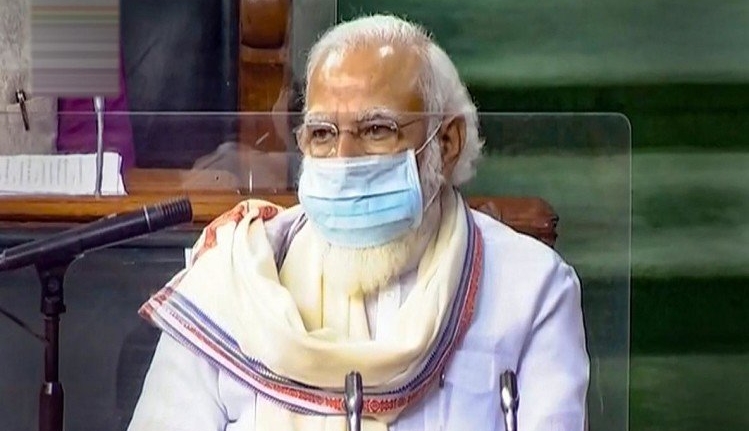
The simple reason PM Modi won’t say “China”

After months of restraint, the Indian Army has now taken hold of advantageous positions against the Chinese PLA. The whole world knows this and is also laughing at the Chinese because of it.

But since the Galwan Valley clash in mid-June, some people have been going on and on on social media, mainstream media and online platforms: Why won’t the Prime Minister even say ‘China’?

He won’t. Because it’s the most basic ground rule of diplomacy. Because India’s Prime Minister speaks only at the level of his Chinese counterpart. In other words, Xi Jinping.

Why would PM Modi say China?

Did Xi Jinping ever mention India?

In Moscow recently, our Defense Minister Rajnath Singh spoke to the Chinese Defense Minister Wei Fenghe. Around the same time, our External Affairs Minister S Jaishankar met Chinese Foreign Minister Wang Yi.

Do you see how simple this is? Our Defense Minister talks to theirs. Our Foreign Minister talks to theirs. Even talks between frontline military officers are always at the same level. There are “Brigade Commander level” talks and “Corps commander level” talks and so on.

In other words, PM Modi cannot talk about China because Xi Jinping is not talking about India.

Do you expect India’s Prime Minister to respond to a troll from the Global Times?

This is basic diplomatic protocol. And we the people need to understand the compulsions here. Obviously, we cannot expect the PM to go on record naming China to explain why he won’t name China.

Unlike Xi Jinping however, PM Modi heads a democracy. And therefore he faces domestic pressures to communicate with the people. His critics are therefore trying to use his basic diplomatic compulsion to their advantage.

Why won’t he name China? Is he scared? – They ask.

Many of these critics are actually quite well informed people. And they understand perfectly well why the PM cannot explicitly name China here. They just don’t care. They want to break the morale of our people and our forces. Why? Because they are jealous, bitter and angry.

Ever since the standoff with China began, a certain group of people has constantly been making statements that will hit the morale of the Indian military and the Indian people. These people have a pathological hatred for our current Prime Minister. They are finding it hard to distinguish between undermining PM Modi and undermining India itself. And most of all, they have an emotional need to defend one particular politician from 1962.

Like other normal human beings living in 2020, these bitter commentators could have shrugged off 1962 as distant past. Most of these people probably weren’t even born then, or were very young. But when you have committed to serving five generations (and more) of one family, you are constantly looking to redeem the honor of ghosts.