Home Blog Page 5058

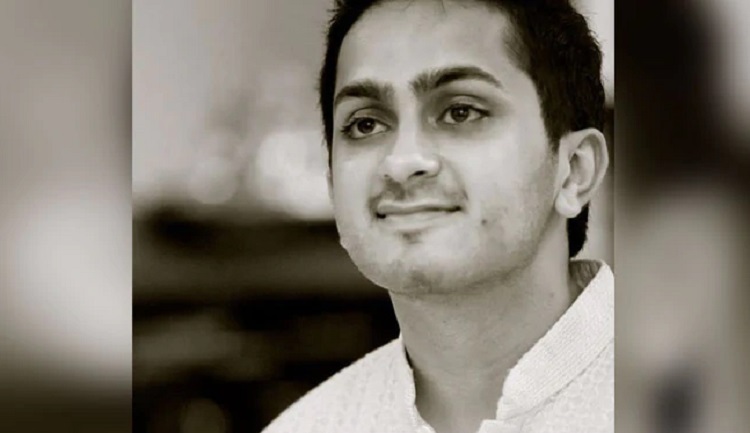
Tahir Hussain led mob from his house and the Masjid, instigated Muslim mob, led to murder of Ankit Sharma: Read what Court said

Taking cognisance of the charge sheet filed against former AAP leader Tahir Hussain for his involvement in the Delhi Anti-Hindu riots, a Delhi court on Friday said that Muslims turned violent after AAP leader Tahir Hussain had provoked and started pelting stones on the Hindu community.

According to the reports, the court took cognisance of the charge sheet filed by the Delhi police against the former AAP leader for his role in instigating the riots and the brutal murder of IB official Ankit Sharma’s murder during the Anti-Hindu riots in northeast Delhi in February. The court also issued a production warrant against the accused and asked them to be produced through video conference on August 28.

However, the police informed that they are yet to obtain a sanction to charge Hussain and other co-accused in the case from the authorities concerned as required in a sedition case.

Metropolitan Magistrate Purushottam Pathak, however, noted that any delay in proceeding further in the trial will unnecessarily delay and defeat the purpose of constituting special courts for trial of the riot cases.

“I am of the opinion that there is sufficient material on record to take cognisance of the offences alleged to have been committed by accused persons,” the judge said in his order.

Anti-Hindu riots is a well planned conspiracy: Delhi court

Taking cognizance of the charge-sheet filed by the Delhi police, the court observed that the Anti-Hindu Delhi riots took place in a “planned manner” resulting from a “well-hatched conspiracy”. The court said that the riots were allegedly abetted by the leader of the mob, accused Tahir Hussain and other co-accused also acted upon.

The court added, “Accused Tahir Hussain also facilitated them to the rooftop of his building and provided other logistics support with a view that large scale riots maybe there causing the resultant loss to life and the property of the other community.”

The court observed that prima facie the accused Tahir Hussain was leading the mob from his house and also from the Masjid near Chand Bagh Pulia on February 24 and 25. He was instrumental for the gathering of the unlawful assembly in conspiracy with accused persons namely Haseen, Nazim, Kasim, Sameer Khan, Anas, Firoj, Javed, Gulfam and Shoaib Alam, having common intention and unlawful object, the court said.

“He provoked and instigated his community against the other community with a view to promote enmity on the grounds of religion between Hindus and Muslims claiming that Hindu people have killed a number of Muslims and have set their shops on fire att Sherpur Chowk and they should not let any Hindu go scot free. On his provocation/instigation, the Muslims turned violent and became volatile on 24.02.2020 and 25.02.2020 and started burning ships and pelting stones and petrol bombs on Hindu community and also targeted their houses situated in that locality. Thereupon, the uncontrolled mob turned into rioters and in process of rioting, caught hold of Ankit Sharma and ragged him to Chand Bagh Pulia and caused his death by inflicting multiple injuries using sharp objects/weapons in a brutal manner and with a view to conceal evidence, all of them in furtherance of there common intention, threw his dead body in the drain”, said the Court.

Portion of the court order (Image Source: Journalist Jitendra Sharma)

The court also said Hussain provoked and instigated his community, promoting enmity on the grounds of religion between Hindus and Muslims claiming that Hindu people have killed a number of Muslims, set their shops on fire at Sherpur Chowk and they should not let any Hindus getaway.

Most significantly, the Court said that “There is sufficient material on record to take cognisance of the offences alleged to have been committed by accused person”.

Muslim mob led by Tahir, killed Ankit Sharma

The charge-sheet mentioned that the mob led by Tahir Hussain came from the side of Chand Bagh Pulia, caught hold of IB officer Ankit Sharma and dragged him, beat him to death and threw his body in the drain.

In the charge sheet, Hussain is named as the main accused along with nine others — Anas, Firoj, Javed, Gulfam, Shoaib Alam, Salman, Nazeem, Kasim, Sameer Khan for the murder of Sharma.

The post-mortem report had stated that the Muslim mob had killed Ankit Sharma with sharp objects after 51 stab injuries were found on his body. The charge sheet said Sharma was killed by the cold-blooded rioters, which had shaken the social fabric of the society and instilled a fear in the minds of the residents of the area.f

Tahir Hussain – the mastermind behind the Anti-Hindu Delhi riots

Tahir Hussain, the Aam Admi Party (AAP) councillor who involved in the organisation and execution of the Delhi Riots. In the charge-sheets filed by the Delhi Police and the Special Cell, it is revealed that Tahir Hussain met Umar Khalid and Khalid Saifi of ‘India Against Hate’ group and hatched a plan for the Delhi riots way back on the 8th of January. This meeting was held at Shaheen Bagh where the anti-CAA protests were taking place.

The charge sheets also say that Tahir Hussain got money to organise these riots from several quarters in shell companies. In another disclosure, it was reported that Khalid Saifi had even travelled to Malaysia to meet Islamist Zakir Naik to collect funds for the Delhi Riots.

In his disclosure statement, Tahir Hussain details how he organised the riots to take revenge against Hindus and teach ‘Kafirs’ a lesson. He further talks about making PCR calls in between the riots to ensure that he had a solid alibi. Further, he also reveals how he had organised for thousands of Muslims to congregate in the Chand Bagh area to carry out the riots.

While coming under scrutiny in the Sushant Singh Rajput death case, Mumbai police arrest man who had abused Sonakshi Sinha online

On Friday, the Mumbai Police, which has recently been under fire for not adequately investigating the death of Sushant Singh Rajput, arrested a 26-year-old man named Shashikant Jadhav from Aurangabad for harassment and use of objectionable language against actress Sonakshi Sinha. He has also been involved in the harassment of other actors as well.

Reportedly, Sonakshi Sinha had been subjected to ‘cyber bullying’ on Twitter, post which she deactivated her account. When the ‘online harassment’ continued even on her Instagram page, she sought the help of one Ritesh Bhatia from Cyber Baap and Mission Josh to help identify the perpetrator. Sonakshi Sinha then approached the cyber cell of the Mumbai police on August 14, following which Shashikant Jadhav was nabbed on August 21.

DCP (Mumbai Crime Branch), Rashmi Karandikar stated, “We have arrested the accused. Mumbai police cyber cell continues to play a role in making the internet a safe place. Also, women’s safety has always been our priority. Cyberbullying and cyberstalking are punishable offences. We should all work in the direction of making the internet safe for all.”

Accused apologises for his derogatory remarks

“I have realised my mistake. I had made foul comments on the Instagram profile of Sonakshi Sinha and other actors. That’s why I have been arrested. I want to apologise to all of them. I will not repeat my mistake ever again,” Jadhav was heard as saying.

Sonakshi Sinha speaks up on cyberbullying and harassment

Recently, the actress had launched a campaign titled Ab Bas, in association with Mission Josh, to raise awareness about cyberbullying, its impact, and legal options that can be pursued in such cases. Taking to Instagram, Sonakshi said, “The online world was made to be a safe space for all of us.. Jo aaj bilkul bhi nahin hai (It is no more now.)” She emphasised that she will not tolerate abuse anymore and encouraged others to follow suit.

Thanking the Mumbai police, she said, “I am immensely grateful to cybercrime branch Mumbai for taking prompt action and being so supportive. I took this step to report the culprits so that even others gather the courage to do the same. Ab Bas, we will not watch and allow online abuse to happen to us or others.”

Amit Tuli, associated with the actress’ team, stated, “Our aim was to ensure the conversation around harassment translates into action, so that it deters many others. Today it’s the celebrities being threatened, tomorrow it could be any of us, and this chain needs to be broken.”

Mumbai Police under fire for not investigating the death of Sushant Singh Rajput adequately

The Supreme Court has directed the Central Bureau of Investigation (CBI) to investigate the unnatural death of Sushant Singh Rajput. The SC has asked the Mumbai Police to hand over all the evidence they have collected in connection the case so far to the CBI.

Observing that the FIR registered at Patna on the complaint filed by Rajput’s father was correct, the SC said that the CBI will be competent to probe not only the Patna FIR but any other FIR related to Rajput death case.

The apex court justified the actions taken by the Bihar police in the case as the Mumbai police had not only failed to register an FIR in the case but had also failed to conduct investigations relatable to the allegations in the complaint.

“The records of the case produced before this Court, does not prima facie suggest any wrong doing by the Mumbai Police. However, their obstruction to the Bihar police team at Mumbai could have been avoided since it gave rise to suspicion on the bonafide of their inquiry”, the SC said, observing that Mumbai Police were conducting only a limited inquiry into the cause of unnatural death, under Section 174 CrPC.

It observed that complainant and Bihar Government had claimed that the Mumbai police, even during the limited inquiry under Section 174 CrPC, were attempting to shield the real culprits under political pressure, a claim which it said was “stoutly refuted by the State of Maharashtra”.

Delhi Police arrests ISIS terrorist Abdul Yusuf, wanted to carry out ‘lone-wolf’ attack in national capital: Details

On Friday night, the Delhi police have reportedly arrested an Islamic State (ISIS) terrorist named Abdul Yusuf from North Delhi after a brief exchange of fire between the terrorist and the police personnel. The cops had also recovered 2 kg of IEDs (Improvised Explosive Devices) and a weapon from the IS operative.

ISIS terrorist Abdul Yusuf was nabbed on Ridge Road between Karol Bagh and Dhaula Kuan in Delhi after a shootout. The police also recovered a pistol from him post-firing.

Delhi Police engages in retaliatory firing

The Delhi Police had received inputs about Yusuf from Central Intelligence authorities, post which he was nabbed by the cops. When he was asked to surrender by the police personnel, the ISIS terrorist fired 2-3 shots at the police personnel. This led to a brief exchange of fire between the two sides.

IS operative was radicalised on social media

As per reports, a manhunt has been launched by the Delhi Police to find the source who helped Yusuf procure the explosives. The ISIS terrorist had been planning to carry out a lone-wolf type attack in the National Capital.

However, it is unclear whether he wanted to carry out a suicide bombing attack or an attack in a crowded place. Reportedly, Yusuf was radicalised on social media and many of his handlers are based in Syria and Pakistan.

If a journalist says she is neutral, she must be lying: Shekhar Gupta shatters the sham of ‘neutrality’ in a rare moment of honesty

Shekhar Gupta, one of the foremost faces of supposed “neutrality” in the world of journalism and the chief of the Editors Guild of India recently acknowledged that journalists naturally had political biases.

Speaking on his Youtube show, celebrating three years of his media venture ‘The Print’, Shekhar Gupta took some questions from his audience.

One of the audience members asked him a question on how does he prevent his biased opinion from coming into his ‘journalism’. Responding to his question, Shekhar Gupta said that if any journalist ever said he or she was neutral, the person must surely be lying.

Gupta then went on to say that even journalists were human beings and they are not neutral. “We are human beings. We cannot be neutral. We are not machines and we are not robots. Remember, after five years we all go and vote,” says Shekhar Gupta.

Further, Gupta said that everybody votes for a political party after five years. In the video, he even says that the Chief Justice of India, President of India, Chief Election Commissioner vote every five years, insinuating that people who exercise their constitutional right during elections too have their political biases.

Shekhar Gupta further laments about political parties, which people like him oppose, winning elections after elections with a huge majority. He says, “You cannot change it or you cannot deny”. Essentially, Shekhar Gupta says that he has learnt to deal with his bias over time and it is not easy. Citing an example, Shekhar Gupta says that a political party, that you don’t want to win, may win and while reporting, you have train yourself to simply say “this party won”.

Gupta adds that he has learnt to live with prejudice based on his experience. “News is always what you wanted to be,” Shekhar Gupta admits in his show.

The veils of neutrality finally slip

For a very long time, the self-proclaimed “liberal” establishment has claimed that the journalists who further the narrative that they believe in, including Shekhar Gupta are “neutral”. In essence, they said that the journalists who they repose their faith in often have the ability to put aside their political biases and report news in a manner that has no ideological slant.

This is, of course, not true. Every five-star journalist that India has seen often has a strong political bias that leans to the Left. In a rare moment of honesty, Shekhar Gupta has admitted that neutrality is a sham that was created for journalists to further their own agenda without being questioned on their own biases.

The relationship between Pakistan and Saudi Arabia deteriorates even more, here are the factors behind it

Everything is not good between the once long-time allies Pakistan and Saudi Arabia. The relationship which had been flourishing not so long ago is currently on the rocks, most notably reflected by the snub to the Pakistani Army General Qamar Javed Bajwa on his visit to Saudi Arabia.

Pakistan General Bajwa is currently on a trip to Saudi Arabia, apparently, in an attempt to iron out the strained relationship between the two countries. However, the Pakistani Army Chief General was rebuffed when his request for a meeting with the Crown Prince Mohammed bin Salman was turned down and he was fobbed off with obligatory meetings with the Saudi Vice Minister of Defence Khalid bin Salman and the Saudi Chief of General Staff Maj. Gen. Fayyad bin Hammad Al-Ruwaili.

What led to a strain in a flourishing Pakistan-Saudi Arabia relationship?

Saudi Arabia and Pakistan had traditionally been strong allies which could largely be attributed to the commonality of the religion shared by the two. Islam has been an underpinning factor in holding the relations between the countries robust. However, until some time ago, Saudi Arabia was also one of the biggest economic benefactors of Pakistan. In 2019, Saudi Arabia had pledged to invest about $20 billion in Pakistan, including $10 billion investment to develop its Gwadar port.

Before that, Saudi had bailed out a plummeting Pakistani economy by granting Islamabad a generous loan package of worth $6 billion in 2018. The loan served as an elixir for the cash-strapped nation which was at that time under severe economic crisis, staring at an imminent financial collapse with shrinking foreign reserves and a swelling trade deficit.

The difference between Saudi Arabia and Pakistan emerged over the latter’s unyielding view on Jammu and Kashmir

The difference between the two long-time allies–Pakistan and Saudi Arabia–emerged when the latter sided with India over the Kashmir issue earlier this year. The dispute between the two countries took root in February 2020 when Saudi Arabia passed up Pakistan’s request to convene a special meeting of the Council of Foreign Ministers of the Organisation of Islamic Cooperation (OIC), to get Muslim countries’ to condemn India on the Kashmir issue.

Ever since India hollowed out Article 370, stripping Jammu and Kashmir of its “separate status”, Pakistan has been demanding on a meeting of the Organisation of Islamic Cooperation to internationalise Jammu and Kashmir and get India to reverse the decision.

The recent utterances by Pakistani Foreign Minister Shah Mehmood Qureshi further dented the already fragile relationship between Saudi Arabia and Pakistan. “If you cannot convene it, then I’ll be compelled to ask Prime Minister Imran Khan to call a meeting of the Islamic countries that are ready to stand with us on the issue of Kashmir and support the oppressed Kashmiris,” he had said. By this, Pakistan had threatened to split OIC, the international organisation of Islamic nations headed by Saudi Arabia.

Saudi Arabia is also threatened by the emergence of a new Muslim-world order

This is the not the only thorn in the frazzled ties between the two nations. The Kingdom also feel threatened by the emergence of a new bloc of Muslim countries that directly threatens Saudi Arabia’s leadership of the Muslim ummah. Last year, Saudi Arabia had refused to attend a summit organised by Malaysia as it was not organised under the banner of OIC. In fact, Saudi even forced Pakistan to pull out of the international summit of Muslim leaders held in Malaysia.

The Turkey authoritarian ruler Erdogan had then revealed that Pakistan PM Imran Khan—who had passionately supported the summit—had to withdraw from the meeting after Saudi Arabia put pressure on Islamabad and issued economic threats to Pakistan. He claimed that the Kingdom had threatened Islamabad of repatriating 4 million Pakistanis working in Saudi Arabia and also to withdraw $3 billion from Pakistan’s central bank even as Pakistan is teetering on the edge of a financial crisis.

According to the reports, Saudi had demanded Pakistan early repayment of a $3 billion loan. Earlier in August, Pakistan borrowed $1 billion from its all-weather ally–China to pay off Saudi Arabia.

The realignment of Saudi Arabia’s geopolitical interests with India

While Saudi Arabia had been resolutely standing besides Pakistan for decades on its concerns vis-a-vis Kashmir and providing monetary and military assistance to Islamabad, the recent shift in its stance can be partly attributed to the geopolitical reality and the benefits derived from having a mercantilist relationship with India. India is the fourth largest trading partner of the Middle-east Kingdom and the value of the bilateral trade between the two countries is close to $28 billion, an overwhelming of which had been due to the crude exports to India.

Besides, the trade ties between India and Saudi Arabia have deepened, with Saudi Aramco reportedly investing in Indian behemoth Reliance Industries. It is also being reported that Saudi Arabia’s public investment fund (PIF) has initiated discussions with Reliance Industries on investing about $1 billion in Jio’s fiber assets.

With the world focusing its attention on the renewable sources of energy and the slackening demand for the crude oil, the notion of fostering profitable trading relations with an emerging regional power such as India and investing in futuristic technologies build by Indian companies is more lucrative for the Gulf countries, including Saudi Arabia, than continuing to align with the cash-strapped Pakistan, which is on the brink of an unsalvageable financial crisis and risk disrupting its favourable trade ties with India.

With the coronavirus pandemic wrecking serious economic damage, and with little respite expected in the foreseeable future, countries have discerned that the glue of shared economic interests has a greater likelihood of weathering them through this economic turmoil than the fixation with the commonality of the religion. It is, perhaps, this sobering realisation that has caused Saudi Arabia to tacitly ask its former ally Pakistan to get over its obsession with Jammu and Kashmir, the territory which Pakistan characterises as its “jugular vein”, and reconcile to its changed identity. 

Madras High Court curbs mass processions but allows immersion of idols of Lord Vinayaka by individuals

0

In a positive development, the Madras High Court has reportedly allowed the installation of idols of Lord Vinayaka outside the homes of devotees as well as immersion of the idols in water bodies. The ruling has come in response to pleas that challenged the order of the Tamil Nadu government banning people from installing idols at public places or taking out processions.

No community should be prevented from celebrating religious festivals

While disposing of the plea, a 2-Judge Bench of the Madras High Court comprising of Justices MM Sundresh and R Hemalatha observed that no community or individual should be barred from participating in their religious festivals. However, the court stated that those celebrating the festival must adhere to social distancing guidelines and reiterated that no processions or celebrations by any organisation will be entertained.

Madras High Court objects to arguments made by the State

Vijay Narayan, the State advocate-general, stated that relaxations provided during the installation and immersion of idols of Lord Vinayaka can lead to law and order issues in Tamil Nadu. He argued that the government order to ban processions was done keeping in mind the difficulty in controlling the crowds. The High Court strongly objected to the arguments made by the State and directed that individuals must be allowed to immerse idols in water bodies.

During the course of the hearing, the Shiv Sena President Radhakrishnan agreed to not organise processions. Further, G Karthikeyan representing the Hindu Munnani also contended that no processions would be organised and that the organisation will abide by the government order.

Kanpur: ‘Because of girls like you people are encouraged to interfere with Muslim laws’, police officer advises triple talaq victim to follow Sharia law

A triple-talaq victim, hailing from Sujatganj, Kanpur, Uttar Pradesh, was advised to follow Sharia law and accept the triple talaq given to her by the husband when she went to the Babu Purwa PS to lodge a complaint against the same. “It’s because of girls like you that people get to interfere with Muslim laws”, police officer Mansoor Ahmed allegedly reprimanded the victim asking her to obey her husband.

When Hina Parveen confronted the officer, saying that Indian law has declared triple talaq illegal and unconstitutional, the police officer Mansoor Ahmed sternly replied: “You are not the first girl to be given triple-talaq. This is a regular Muslim practice under the Sharia law, which you should follow. Forget about Indian law, just follow Sharia law”.

IO of Babu Purwa PS, Mansoor Ahmed, who had lectured Hina, asking her to give in to the demands of her husband and his family, has reportedly been transferred and IO Pawan Dubey has replaced him and taken charge.

What transpired

Hina Parveen had married one Noorzade alias Ishan from Ajit ganj, falling under the jurisdiction of Babu Purwa police station area in Kanpur, Uttar Pradesh on July 5, 2019. Noorzade went to Saudi Arabia, three months after their marriage. On October 27, 2019, Noorzade made a Whatsapp call to Hina and gave her triple talaq over the phone. After this, her in-laws beat her up and threw Hina out of the house.

Hina filed an FIR against 8 people including husband Noorzade, mother-in-law, father-in-law, brothers-in-law and sister-in-law on November 4, 2019, at Babu Purwa police station. Hina alleged that her in-laws had demanded Rs 5 lakh as dowry. Her parents, who belonged to a humble background, could not arrange for the money, following which, the in-laws started torturing her and conspired the divorce, said Hina. She also accused her brother-in-law of threatening her of an acid attack, after she lodged the FIR against them. Hina had also taken to social media to sought help in January.

According to a Jagran report, Hina Praveen feared that the probe in her case would be hampered, as her in-laws might influence the police in Babu Purwa thana. Owing to this, she had demanded the authorities to transfer her case to the Rail Bazar police station.

As per her demands, the case was transferred to the Rail Bazar police station. Reportedly Sujatganj police station in-charge Mansoor Ahmed had been entrusted with the inquiry but he had taken no action in the case. After Mansoor Ahmed’s transfer, the case was handed over to inspector Pawan Dubey.

Kanpur triple talaq victim accuses police of inaction

On August 11, 2020, inspector Pawan Dubey arrested Hina’s husband, Noorzade and sent him to jail. Shockingly, Hina learnt that except Noorzade, all other accused names were deleted from the FIR.

Hina Parveen, the triple talaq victim from Kanpur, had accused the police of inaction. She said that it’s been almost 9 months since she registered the complaint against in husband and his family but no action has been taken against them.

Husband on record admits of bribing the police with Re 50,000: Hina Parveen

Hina confirmed that she has ample evidence against her husband. She has a phone recording in which her husband admits of bribing the police with Re 50,000 so that the names of his family members are removed from the FIR. She said that in the phone recording her husband confesses of plotting against her with the help of his family members. He confesses that he married Hina for money. In the audio recording, Hina says, Noorzade can he heard using filthy language against the Prime Minister and the police establishment. Despite having such concrete evidence, why isn’t the police taking any action, asked Hina?

The accused heard confessing of conspiring against his wife

She confirms that she has met the CO of Babu Purwa police station, Alok Singh, and asked him to inquire as to why police have removed the names of the accused from the FIR. Alok Singh has reportedly given Hina assurance that he would expedite the matter.

She said that on Alok Singh’s instructions, IO Pawan Dubey called her up and took former IO Mansoor Ahmed on conference call. While Pawan Dubey said that Mansoor Ahmed had removed the names of the other accused in the case, the latter refuted the allegations.

Hina, who has been running pillar to post seeking justice for the last 9 months has demanded that on the basis of evidences she has produced, the police must take immediate action against all the accused.

Bombay HC accepts PIL challenging transfer of funds from Siddhivinayak Temple Trust to Maharashtra government

0

The Bombay High Court has accepted a Public Interest Litigation(PIL) contesting the transfer of funds from the famous Siddhivinayak Temple to the Maharashtra state government. However, the court refused to grant any interim relief in the petition, observing that if the petitioner wins, the court can always direct the state government to reverse the transactions made.

The matter was heard by a division bench of Chief Justice Dipankar Datta and Justice Revati Mohite-Dere. The bench issued notices to the Trust and its Executive Officer seeking their response and instructed the State Government to file a reply affidavit by the 18th of September this year. The case will be again heard in the month of October.

A petition challenging the transfer of the funds from the Siddhivinayak Temple Trust to Maharashtra state government was filed by a Goregaon resident Leela Ranga, a devout Hindu and an ardent devotee of Lord Ganesh, who regularly visited and donated at the Siddhivinayak Temple. The petition had sought to challenge two resolutions passed by the state government in connection with the fund transfers of Rs 5 crores each.

Shree Siddhi Vinayak Ganpati Temple Trust Act 1980 forbids the transfer of money for non-specific purposes

Arguing before the court, senior advocate Pradeep Sancheti and advocate Ghanshyam Mishra contended that both these transfers were against the special law passed to govern how the money collected at the temple can be utilised. Sancheti asserted that an analysis of the first GR shows that the transfer was “initiated” by the Maharashtra government and not by the Trust.

He further added that on the second occasion, the Government’s approval came two months after the transfer of Rs 5 crore was made, while the law mandated for “advance sanction” for purposes defined in it.

The first transfer of Rs 5 crore was made for bankrolling government scheme called “Shiv Bhojan” which provides meals at Rs 10 to the poor and the destitute, the next tranche of Rs 5 crore was transferred to the Chief Minister’s Relief Fund in the wake of the coronavirus pandemic.

The petitioner argued that none of the two transactions was covered under the special law—Shree Siddhi Vinayak Ganpati Temple Trust (Prabhadevi) Act, 1980 – as section 18 of the Act provides for the transfer of money only for very specific purposes. The purposes which are not associated with the temple, and can be used for donations are– establishment and maintenance of any educational institutions, hospitals, dispensaries, homes for destitute persons or persons physically disabled or other charitable or religious institutions, or giving financial aid to such institutions or persons.

However, this, too, can be done only if it is authorised by the committee of the Trust, and if it has surplus funds for donations. Still another stipulation prevents the Trust from transferring money to a single entity more than once within five years.

Petitioner alleges a nexus between Chairman of Siddhivinayak Trust and Maharashtra Government

The lawyers arguing for the petitioner alleged that there could be a possible quid pro quo between these transfers and the extension granted to the Chairman of the Managing Committee of the Trust by the State Government last month. The petition stated that instead of pulling up committee of the Trust for authorising the payment without following due procedure, the Chairman of the Trust was rewarded by providing him with an extension.

“The government cannot be the recipient of any donations from the Trust. If it were to be concluded otherwise, the Government, being the sanctioning authority, would be in a position to confer largess upon itself, which could not have been the intention of the Act,” the petition reads.

India needs to take the Quantum jump, it is time to make the country more Quantum Computing friendly

This is the Quantum Age! There, I said it. With the diversification of theoretical and experimental forays into realising quantum technology, the race to create the first fully functionable and marketable quantum computer has heated up. Today, Google, IBM, Microsoft, Hitachi, Toshiba and various other companies are using everything from superconducting qubits to photonic systems for quantum computation and communication applications.

Quantum computers are a million times faster than a regular computer (chip) – with Google announcing that it has a quantum computer that is 100 million times faster than any traditional counterpart in its lab, able to withstand cyber attacks better, miniaturized (about 1,500 qubits in Intel’s new qubit D1D Fab chip could fit across the diameter of a single human hair) and more efficient (modern classical supercomputers use between 1-10 mW on average vs a comparable quantum computer would 25 kW).

Nations across the world have been investing in developing quantum technology. Countrywide investments till date, in the realm of quantum technology, include those in China (National Laboratory for Quantum Information Sciences – $10 billion), United States of America (US National Quantum Initiative Act – $1 billion committed per annum), European Union (Quantum Technology for commercial purposes – $1.1 billion), United Kingdom (UK National Quantum Technologies Programme – $390 million), Netherlands (QuTech Centre for Quantum Computer – $150 million) and Singapore (Centre for Quantum Technologies – Singaporean $29.7 million, in 2008).

Why, you ask?

Quantum technology can spur the development of new breakthroughs in science, and defence (cyber and space security and warfare/deterrence capabilities, particularly with public-key cryptosystems and quantum satellite technology; India is unprepared for any quantum cyber-attack), energy (optimizing power grids, help in monitoring oil and gas deposits, discovering new materials for more efficient carbon capture and efficient data processing in energy sector), medicine (quantum machine learning to diagnose illnesses sooner, clinical trials with virtual humans simulated ‘lives’, the movement of hospitals to the cloud, predictive health and security of medical data), finances and business (quick development of financial strategies, detection of fraudulent activities, complex forecasting of markets, portfolio optimization, asset pricing and risk analysis) and communication (fast and secure communication, usually using photonics with fiber optical channels, besides quantum RAN (Radio Access Network) deployment and Quantum Internet).

India does not have a concerted initiative on building a quantum computer or central institution for Quantum Technology, such as ISRO is for space research. We have various independent groups working across the country, be it in IISc, TIFR, PRL, IISERs, IITs and JIIT, but there has been little, in terms of implementation of protocols such as those for quantum teleportation. We may have Quantum Key Distribution (QKD) being performed in certain labs, but we are still some way off from realising quantum cluster-states, distributed network protocols and surface-to-space QKD.

In the Budget 2020 speech, Finance Minister Nirmala Sitharaman made a welcome announcement for Indian science, saying that, over the next five years, she proposed spending ₹8,000 crore on a National Mission on Quantum Technologies and Applications. India initiated QuEST (Quantum-Enabled Science & Technology) in 2019, with an investment of Rs 80 crore (around $11 million) over the next 3 years to develop quantum technology. As per my interactions with various research groups in the country, the problem with QuEST has been in terms of the money reaching the groups across the country and the implementation of the scheme to the extent that it can be.

Looking at the external threats we face as a country and the myriad ways in which quantum technology can help India, I hope the government makes this a priority, in the upcoming days. I believe the Union government should aim to build one central quantum computing system in the country, completely developed and constructed with expertise and resources from within the country (as much as possible) and to build one central institute for research on Quantum Technology (along the lines of ISRO). What is also needed is to initiate tie-ups with companies such as Wipro, Infosys and Reliance on QuTech, collaborate on quantum technology with universities, such as IIT Delhi and RRI, as well as unite all venture capitalists (VCs) and industrial stakeholders who may be interested in QuTech.

In the bid to build quantum technology in the country, an important legal barrier for IP in technology R&D, on the software side, is section 3(k) of the Patents Act, 1970, which excludes “computer programmes, per se or algorithms” from patentability in India. The exact words

3. What are not inventions.—The following are not inventions within the meaning of this Act,—

(k) a mathematical or business method or a computer programme per se or algorithms;

If we have to move ahead towards a comprehensive plan for making the situation more conducive for quantum technology, on both the software and hardware side, we will have to remove some of these hurdles that remain. We are making steady and promising progress on this front, and I hope that my country shall be able to move ahead in leaps and bounds, when it comes to QuTech in the days ahead.

West Bengal: Radical Muslim leader attacked by TMC workers, TMC MLA Saokat Mollah blamed for attack

0

In a curious turn of events in the West Bengal, controversial Islamic cleric Abbas Siddiqui was attacked by Trinamool Congress workers on 10th August. The Furfura Sharif Peerzada was gheraoed and attacked by a group of TMC workers at South 24 Pargana’s Bhangar area, where he had gone to meet one of his followers.

Video clips of the event showed TMC workers encircling the house and threatening and abusing Siddiqui, apart from trying to break into the house by slamming on the doors and windows.

On 9th August, some followers of Siddiqui were attacked by TMC workers, and some of his followers were injured in this attack. Siddiqui had gone to meet one such injured person in Canning. Peerzada Abbas Siddiqui said that the moment he reached the house, he came under attack. He alleged that his vehicle was attacked with stones and bricks by hundreds of TMC workers. Siddiqui said that after he got down from the vehicle, he was surrounded by the miscreants holding sticks and firearms. Reportedly his supporters were thrashed by TMC workers and his vehicle was also damaged.

Peerzada Abbas Siddiqui alleged that the attack was engineered by TMC MLA Saokat Molla. Siddiqui said that thousands of supporters of Saokat Molla armed with sticks, bombs, guns had attacked him. He said that the attackers threatened to kill him also. Following the attack, Siddiqui’s supporters launched a protest in South 24 Pargana, demanding immediate arrest of the culprits.

It has been speculated that Siddiqui has been targeted by TMC because the influential Muslim leader has announced that he will contest the next assembly elections in West Bengal. Siddiqui, who claims to be a “fan” of AIMIM leader Asaduddin Owaisi, had announced in March that he will contest elections in at least 45 seats. With BJP making significant inroad in the state in the last few years, any party taking away a major portion of Muslim votes can create trouble for the Mamata Banerjee led party.

After the attack, Siddiqui received support from unexpected quarters, the BJP in the state. BJP leaders have condemned the attack. State BJP leader Abhijit Das said that Siddiqui had gone to meet an injured associate, he has every right to do that. He said that the state govt has not taken against the attack. State BJP president Dilip Ghosh has also condemned the attack.

Past controversies of Abbas Siddiqui

Not too long ago, Abbas Siddiqui was forced to apologise after a video of his went viral on social media where he could be heard wishing death ipon Indians. He was heard saying, “Recently I have got the news that mosques are being set on fire, mosques are being burnt for the last two days. I think something is going to happen within a month. May Allah accept our prayers. May Allah send such a terrible virus to India that ten to twenty to fifty crore people die in India. Am I saying something wrong? It is absolutely blissful.”

The speech was made in the aftermath of the anti-Hindu Delhi Riots in February and during the advent of the Coronavirus pandemic in India. In his apology, the cleric claimed that he was ‘quoted out of context’. Subsequently, he affirmed his commitment towards secularism and elaborated on his alleged acts of ‘goodness’ and ‘philanthropy’.

Earlier, Abbas Siddiqui had threatened to block the Kolkata Airport if the Citizenship Amendment Act is not revoked.