Home Blog Page 5059

Hindu Congresswoman Tulsi Gabbard not invited to Democratic Convention, pedophile-buddy Bill Clinton receives invite even in era of ‘Me Too’

United States Congresswoman Tulsi Gabbard has confirmed that she was not invited to participate in the Democratic National Convention which nominated former US Vice-President Joe Biden for the presidential elections in November 2020. Tulsi Gabbard, who shares less than cordial relationships with the Democratic establishment, had practically ended VP nominee Kamala Harris’s presidential campaign during one of the primary debates.

Tulsi Gabbard confirms she was not invited to the Democratic National Convention

During the course of her campaign, Tulsi Gabbard had to suffer numerous smears and a sustained slander campaign by the Democrat establishment and the Media Military Industrial Complex for her opposition to US military intervention abroad. Ending the policy of ‘regime change wars’ was her flagship promise.

Democrat nominee for the presidential elections in 2016, Hillary Clinton, insinuated that Tulsi Gabbard was a ‘puppet’ of Russian President Vladimir Putin without any shred of evidence. This slander against a serving veteran was consistent with the Russian Collusion hoax that the Democrat party has been waging against US President Donald Trump since his election.

Amusingly enough, while the Democrat party did not extend any invitation to the first Hindu US Congresswoman, it did invite even Republicans to speak at the national convention. Not only that, Bill Clinton, friend of disgraced pedophile Jeffery Epstein, was also invited to speak despite the series of sexual abuse allegations against him.

Bill Clinton spotted receiving neck massage from Epstein victim

In photos that were released recently by Daily Mail, Bill Clinton could be seen sitting comfortably receiving neck massages from Epstein-victim Chaunte Davies with a smile on his face. The photographs are reportedly from 2002 when the victim was a 22-year old and served as Epstein’s personal masseuse.

Bill Clinton receives neck massage from the victim of disgraced pedophile Jeffery Epstein.
Image Credit: Daily Mail

The neck massage reportedly occurred during a trip to Africa Bill Clinton undertook on Epstein’s infamous private jet, nicknamed The Lolita Express, with the pedophile. It was one of the several trips that the husband of Hillary Clinton undertook in that jet. Epstein-aide Ghislaine Maxwell, currently in prison on charges of sex trafficking, is reported to have repeatedly urged Davies to give Bill Clinton a neck massage following which he asked her, ‘Would you mind giving it a crack?’

While there is no evidence of wrongdoing against Bill Clinton in this particular instance, his conduct towards women have been far from acceptable. He has been credibly accused of rape by multiple and his intimate relationship with Jeffery Epstein has continued to raise eyebrows. Even in the era of ‘Me Too’, when the Democratic Party attempted to destroy the life of Trump’s Supreme Court pick Justice Brett Kavanaugh over utterly dubious allegations, the party finds no problem with Bill Clinton. Tulsi Gabbard, however, is to be sidelined.

Republicans invited to Democratic National Convention, but not Tulsi Gabbard

Former Governor of Ohio, John Kasich, who suffered a crushing defeat at the Republican Primaries in 2016 at the hands of Donald Trump also spoke at the Democratic National Convention. Many progressives were disgruntled by the fact that the Republican was given more time to speak than many rising stars within the party.

Other than Kasich, former New Jersey Gov. Christine Todd Whitman; Quibi CEO Meg Whitman, an advisor to Mitt Romney’s presidential campaigns; and former Rep. Susan Molinari, who delivered the keynote address at the 1996 GOP convention, were also participants at the convention. Even as Republicans were invited to speak at the DNC, an invitation was not extended to Tulsi Gabbard, who ran a presidential campaign and even won delegates.

Possible reasons for Tulsi Gabbard exclusion

Other than the hostility that Tulsi Gabbard suffers due to her anti-war campaign and not-so-friendly relationship with the Democratic establishment, her religious identity could also have been a factor behind her exclusion. Throughout her campaign, she has suffered Hinduphobic attacks from the Islamist supporters of the Democrat party.

Tulsi Gabbard has also been accused of being a ‘fascist sympathizer’ and ‘Hindu fascist’ solely due to her Hindu identity. Links have also been drawn between her and the RSS without any good reason other than the fact that she is a Hindu woman. Thus, at a time when the Democrat party has supported the Islamist line on Kashmir and the Citizenship Amendment Act, it comes as no surprise that the same treatment is being meted out to Tulsi Gabbard, who they accuse of being close to ‘Hindu Fascists’ in India due to her religious identity.

How Dravidian ideologues used ‘opposition to Hindi’ to build their ‘protector of Tamil culture’ image and retain power

We earlier looked at how Dravidian ideologues blocked nationalist education during the British Raj, and later strengthened the hands of Christian missionary schools in the 1950s.

We will now look at how they used the plank of opposition to Hindi as a means of building their image as protectors of Tamil culture and native rights and to bring them to power.

The Justice Party and power

Ever since the British began to devolve power to native Indians, the Justice Party, which was formed by upper-caste landlords to challenge Brahmin domination in Government positions and jobs, automatically saw this as an opportunity to fortify their political power.

In 1916, Dr T M Nair, who had been associated with the Indian National Congress, lost elections to the Imperial Legislature of India. He blamed this upon Brahmin domination. Similarly, many other upper-class businessmen, merchants, landlords, zamindars and rulers of minor principalities in Madras Presidency felt the same grievance.

They formed the South India Liberal Foundation, popularly known as the Justice Party, after an English language newspaper called Justice.

As part of the Montague-Chelmsford reforms of 1919, Madras Presidency had a system of dyarchy in place. The Governor of the Presidency held wide executive powers, but shared some of them, Education, Sanitation and Local Government with a Legislative Council. The constituencies they were elected from were

  • Communal constituencies such as Muslims, rural Muslims, urban non-Brahmins, urban Muslims, Indian Christians, Anglo-Indians
  • Special interests – Chamber of Commerce, planters, landlords, Universities
  • Territorial constituencies – of which a portion were reserved only for non-Brahmins.
  • Nominated members

The upper-classes of the Justice Party dominated special interests, nominations and communal constituencies. Also, since the largest political movement – the Congress did not participate in elections, the Justice Party ran the Government of Madras Presidency from 1920 to 1937, with a four-year interlude between 1926 to 1930, when a Government was formed by minority votes to the Swaraj Party led by Subbarayan, which was a splinter bloc of the Congress led by Srinivasa Iyengar and then Satyamurti.

Given the backgrounds of Justice Party leaders, they were socially conservative and British loyalists.

Provincial Autonomy

The Independence Struggle brought about further increase in autonomy for India. The Government of India Act of 1935 created a bicameral legislature, with Members of the Legislative Council nominated by the British Raj and Members of the Legislative Assembly elected by popular vote. Suffrage was not universal but restricted only to people holding land or paying taxes. 

This amounted to a 7 million-strong electorate, or 15% of the population of Madras Presidency. Even though this electorate would tilt towards conservatism and a slower pace of change, it was composed of a larger bourgeoise, which was overwhelming in favour of the Congress. The 1937 elections saw a Congress government brought to power with 159 of 215 seats in the Legislative Assembly.

C Rajagopalachari or Rajaji was the first Chief Minister. 

Dravidians out of power

It is always a pattern that Dravidian politicians, once out of power, will ally indiscriminately with all political forces. They also have the propensity to engage in generating chaos and wide spread agitations.

Their experience of a complete loss of power demoralized the Justice Party. The earlier generation of leaders took a back seat. By this time, EV Ramasamy had joined the Justice Party.

He was already toying with the idea of demanding a separate Dravida Nadu or homeland for Dravidians in South India. The introduction of Hindi as a compulsory language was a God-send for his brand of politics.

Hindi Learning

Utilizing Hindi as a link language for communication across all parts of India had been a long-term objective of the Indian Nationalist movement. Since the language distance between South Indian languages and Hindi was more than those of Maharashtra and Bengal, a separate organization, the Dakshina Bharata Hindi Prachar Sabha, was established by the Congress in 1918. 

In 1938, Hindi was introduced as a compulsory subject in Government Secondary Schools by the Rajaji Government. The Opposition immediately broke out in protest. 

As the movement gained momentum, the Government reacted in a ham-handed manner, jailing picketers. Police brutality resulted in custodial deaths of two young activists – Thalamuthu and Natarajan.

These two young men were from under privileged backgrounds, of illiterate parents and from historically under privileged castes. In a persistent pattern, it is usually such foot soldiers that bear the brunt of difficulties brought upon them by upper caste Dravidian leaders.

To put this in perspective, students in classes 6,7 and 8 would undergo 3 hours of additional study per week to learn an additional language. In then Madras Province, this would not affect more than 25% of the enrolled student population. They would have started with the basic alphabet and proceeded to a basic ability to construct sentences and read words.

That such an issue merited so much unrest in a time of approaching War, persistent malnutrition, illiteracy – overall literacy in Madras Presidency was 11% in 1931 and the spectre of famines and epidemics during the British Raj, must seem strange to anyone. However, it has been a skill of the Dravidian politicians to make the trivial a rallying point to whip up passions. They are so effective that it is a kiss of death for any Tamil politician to not sing paeans to Tamil or suggest that learning of Hindi or Sanskrit may not harm the cause of Tamil.

The illusion created was that children learning Hindi for a few years would turn Hindi into the official language of India, thereby dooming all Tamils to second class status or destroying the Tamil language. The narrative created was of cunning Brahmins who would impose Hindi, learn it first, deny it to other Tamils and thereby destroy Tamil and the Tamil race.

End of the Protest

In 1939, the Congress resigned from Government on account of the British pressing India into the Second World War. The order to introduce Hindi was rescinded by Governor Erskine in 1940.

There were protests again in 1948-1950, when Congress Governments attempted to re-introduce Hindi.

However, what catapulted the Dravida Munnetra Kazhagam to power was the agitation of the 1960s, which we will see in the next part. 

Beyond a play for power, the antipathy to Hindi among the Dravidian Nationalists is a very calculated strategy to control the narrative. We shall see how the dynamics of this aspect work in the next part, too.

US IMPACT organises the largest virtual celebration of India’s Independence Day in USA, 35 Congress candidates address the Indian diaspora

0

On August 15, 2020, an Indian American Advocacy group in the United States, US IMPACT, organised the largest virtual celebration of India’s Independence Day. The event saw participation from 35 Congressional and Senate candidates, elected officials from across the United States and prominent Indian personalities. The highlight of the event was the participation of two famous Keynote Speakers- Mohandas Pai, chairman of Manipal Global Education, and Tejasvi Surya, a BJP MP from the Bengaluru.

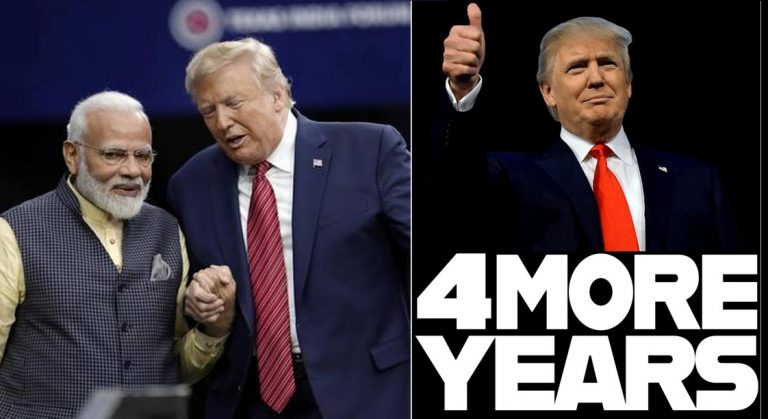
The event saw appreciation from the dignitaries for the law-abiding and hard-working Indian immigrants in the United States. Candidates spoke passionately about the friendly bilateral ties between the two countries, personal bonhomie between Indian PM Narendra Modi and American President Donald Trump. The forum not only provided a platform to celebrate the 74th Independence day of India but it also served as a portal to raise problems afflicting the two democracies.

Keynote addresses by Mohandas Pai and Tejasvi Surya

Addressing the Indian diaspora and US Congressmen in the United States, Mohandas Pai urged the two great democracies: India and the United States, to come together and make the world a safer and peaceful place to live. Tejasvi Surya, on the other hand, stressed on the need for the US Congressmen to support the Immigration reforms that would ease the pain of the Indian Americans stranded in the Green Card glut. He also exhorted the political class of the United States to understand the crucial importance of the CAA in India’s neighbourhood. The duo also emphasised the need for strengthening the relations between the two countries with Trump as the US President and Narendra Modi as India’s Prime Minister.

MP Tejasvi Surya addressing the US IMPACT event
Mohandas Pai addressing the event

Congressman Ralph Norman from 5th District South Carolina extolled the relationship with India and spoke highly of the contributions of the Indian Americans in his congressional district. Another Congressman Van Taylor from Texas identified India as the largest democracy having $150 billion potential of trade with the USA. He also emphasised the importance of democracies like India and America to stand up against the authoritarian regimes such as that in China.

US Congressional and Senate candidates spoke highly of their Indian connections

Many other Congressional and Senate candidates such as Pat Fallon, Nancy Mace, Steve House, Jesse Jensen, Aliscia Andrews, Margaret Streiker, Victoria Spartz etc. took pride of their Indian connections and spoke how contribution from the Indian diaspora stood out in a positive way towards the development of American culture and economy. The Indian Origin candidates Rik Mehta (Running for US Senate –NJ), Manga Anantatmula (Congressional Candidate for VA –11)and Ritesh Tandon (CA –17) gave emotional messages to the Indian audience on the occasion of India’s Independence Day.

Ritesh Tandon, Republican Congressional candidate addressing the event

Many of the congressmen and senate members, including Joseph Lee Haywood (NC –06), Casper Stockham (CO –07), Mark Leyva (IN –01), Susan Smith (IN –07), Eric Early (CA –28), Kevin Cookingham (CA –16), Johnny Nalbandian (CA –27), Mark Reed (CA-30), Jim Marchant (NV -04), Dan Rodimer (NV-03), Jeanne Ives (IL 06), Sargis Sangari (IL –09), Esther Joy King (IL –17), Valerie Mukherjee (IL-10), Robert Lancia (RI-02), and Buzz Patterson (CA -07) spoke about their deep connections with India and Indian American diaspora. They all praised the Indian Americans for their significant contributions towards the development and economy of their districts.

Congress candidate Sargis Sangari speaking at the US IMPACT event celebrating India’s independence Day

Issues such as “Defunding the Police” were denounced openly. Another topic that was widely discussed, almost by every candidate, was the need for the reforms in the Immigration laws to help the Indian origin Green card applicant stuck in the country-based quota glut.

The event was broadcasted live on several social media platforms such as Facebook, Twitter and YouTube. Until now, about 238,000 viewers have viewed the event. Besides, many of the dignitaries who attended the event had shared the live feed on their respective social media pages.

US IMPACT

US IMPACT is the largest Indian American Advocacy group in the USA. It has a presence in as many as 29 states. The group has an active volunteer base of over 5800 members and currently working with over 140 candidates & congressmen running for re-elections, assisting them in various capacities such as with Phone Banking, grassroots mobilization etc. These candidates are spread across the country and have a significant Indian population within their Congressional Districts.

The Co-Founder, Board Member and the President of US IMPACT, Amit Warkad hailed the event as instrumental in enlightening the Indian Americans of the love and respect that Republican Party candidates had for India.

Sridhar Chityala, Board Member, Chair of US IMPACT Economic Advisory committee and member of IVFT advisory committee mentioned that the event was an outstanding opportunity to demonstrate that candidates, communities and leaders can be brought under a unified umbrella.

Khush Rawlley, one of the Founders of US IMPACT and the advisory board member of IVFT (Indian Voices for Trump) Coalition stated that the event was absolutely enlightening and it was for the first time that so many Republican candidates have been addressing the Indian diaspora for over 5 hours.

Badri Singh, co-founder and the strategist behind US IMPACT believes in providing the necessary platform for Political Leaders to reach out to the Indian American community to increase the participation of Indian Americans in voting process. “We groom, train and help the candidates via various means including fund raising for their elections” said Badri Singh.

US IMPACT plans to host many such events as the elections approach. The entire event of 15 August can be viewed here.

Destruction of temples, Hindu houses, and killings of Hindus before and after the demolition of illegal structure on Ram Janmabhoomi

After the reclamation of Ram Janmabhoomi by Hindus, the left media and its Islamist cohorts are bracing themselves to unleash a war against the Hindus. The media which promoted myriad lies of the Marxists and other Leftist-minded Islamic apologists convinced the Muslims of the Babri Masjid Action Committee that no temple had existed at the spot of the disputed structure on Ram Janmabhoomii! Syed Shahabuddin once said in 1990 [on record] that he will demolish Babri Masjid with a hammer if proven that a temple pre-existed at the spot.

Until 1989 there had been no question about the Ayodhya Ramjanmabhoomi site’s history. All the written sources, whether Hindu, Muslim or European, were in agreement about the pre-existence of a Ram temple at the site. “Rama’s birthplace is marked by a mosque, erected by the Moghul emperor Babar in 1528 on the site of an earlier temple”, according to the 1989 edition of the Encyclopaedia Britannica, entry “Ayodhya”. There was testimony after testimony of Hindus bewailing and Muslims boasting of the replacement of the temple with a mosque.

Belgium-based world famous scholar, Dr. Koenraad Elst (1959-) has written:

“In December 1990, the government of Chandra Shekhar invited the two groups involved, the Vishwa Hindu Parishad and the Babri Masjid Action Committee, to mandate a team of scholars for discussing the historical truth of the matter.  Misled by the media into believing that the Hindu claims were pure fantasy, the BMAC office-bearers arrived ill-prepared, expecting a cakewalk over the ‘discredited case of the VHP fanatics’. They were speechless when the VHP team presented dozens of documents supporting their case.

The BMAC then invited a team of proper historians chaired by Marxist professor R.S. Sharma, who arrived at the next meeting with the demand that they are recognized as “independent scholars” entitled to sit in judgment on the controversy, i.e. to pass a verdict between their BMAC employers and their VHP opponents.  The government representative did not grant this hilarious demand.

At the next meeting, these Marxist historians declared that they hadn’t studied the evidence yet and needed six more weeks, a strange statement from people who had just led 42 academics in signing a petition confirming once and for all that there was absolutely no evidence at all for a temple. At the meeting scheduled for 24 January 1991, they simply didn’t show up anymore.”

The 1990-91 scholars’ debate was a resounding victory for the Hindu side. It also showed that the Leftist historians can only lie to a naïve or uninformed audience or an audience which WANTS to believe or hear what they say; while in front of real scholars, they have no arguments on facts. We saw this in case of other negationists like Supriya Verma, in their articles and publications, they denied the existence of any temple, refuting the ASI report, and yet when questioned by the court, they admitted that they had not visited the site and what they said was merely their ‘opinion’.

After it was proven in the December 1990-January 1991 scholars’ debate with irrefutable evidence presented by the Hindu side that the Babri Masjid had indeed been built after demolishing a temple, Syed Shahabuddin and the Muslim side was left speechless and did a U-turn!

Later, the Archeological Survey of India (ASI) did an excavation on orders of the court in 2003, the labourers who did the digging included a number of Muslims, deliberately hired as per the demand of the Muslim side, and 4 out of the 20 authors of the ASI report which found the temple were also Muslims [included as per their demand], and the excavation found a temple. Despite all their demands on the inclusion of Muslim labourers and Muslim authors of the ASI report being granted and evidence of a temple being found, the Muslim side refused to accept the truth that a temple pre-existed, and refused to give up claim.

All along, post-1989 Marxists and Muslims had claimed that Babri Masjid had been built on virgin land. Later when the existence of a structure [clearly temple] was proven, some of them started claiming that the pre-existing structure was Buddhist, and not a temple, or, like Supriya Verma, that they were ‘older mosques’! Then what about their claim of the Babri having been built on ‘virgin land’? In short, nothing in the world [not all the proofs in the world] will ever make them accept that the Babri Masjid was built after demolishing a temple on that site, despite conclusive literary evidence, conclusive archaeological evidence, despite the ASI report’s authors including Muslims, the labourers digging including Muslims.

 Dr. Koenraad Elst has also written in his book “BJP vis-à-vis Hindu Resurgence” (Voice of India, 1997):

“You wouldn’t guess it from their polished convent-school English, their trendy terminology, or their sanctimoniousness, but the likes of Romila Thapar, Irfan Habib or Gyanendra Pandey [our comment: Marxist historians in India who have indulged in negationism-denying the crimes of Islamic rulers, and denying that a temple existed at the spot of the disputed structure] have blood on their hands. The wave of Muslim violence after the Ayodhya demolition (and the boomerang of police repression and Shiv Sena retaliation) was at least partly due to the disinformation by supposed experts, who denied that the disputed building [our comment: Babri Masjid] had a violent iconoclastic prehistory [our comment: i.e. been built after demolishing a temple], and implied that Hindus can get away with concocted history in their attacks on innocent mosques. This disinformation gave Muslim militants the sense of justification needed to mount a ‘revenge’ operation and to mobilize decent Muslims for acts of violence, which they never would have committed if they had known the truth about Islam’s guilt in Ayodhya”.

Now there is a very real danger that the pseudo-secularists’ (apologists of Islamists and Hindu-baiters) demonization of Babri demolition and opposition to the Ayodhya Ram temple Bhoomi Pujan will lead to more attacks on Hindus in Pakistan and/or Bangladesh or even in India like they did in the past. Hence there is an urgent need to highlight Islamists’ demolition of Hindu houses and around 5000 temples in Bangladesh, Pakistan and Kashmir under Indian rule (including 500+ temples demolished BEFORE the demolition of the illegal structure) both before and after the demolition of 6 December 1992, looting and killings of Hindus in Bangladesh, bomb blasts in Mumbai, Chennai, other places and the fact that there is going to be re-building of a mosque at a different site in Ayodhya.

There were around 100 temples demolished in Kashmir (under Indian control) and 400+ temples demolished in Bangladesh BEFORE the demolition of the illegal structure called Babri Masjid in Ayodhya. There were around 400 temples demolished in Bangladesh in the year 1989 itself in light of the Ayodhya movement, including around 200 temples demolished in October-November 1989 in light of the Shilanyas of 9 November 1989. Thousands of Hindu homes and businesses were destroyed. Many Hindu shops were looted and burnt.

At least 45 temples were demolished in Bangladesh in 1990, in light of the kar sewa of 30 October and 2 November 1990, at least 34 in Dhaka district and at least 11 in Chittagong district. Hundreds (at least 550+) of Hindu shops and houses were looted or burnt in this violence in Bangladesh too.

Since these attacks happened in Bangladesh on such a large scale in both 1989 and 1990, it is absolutely certain that such anti-Hindu violence would also have occurred in Pakistan. However, this writer has not been able to find out the exact number of temples demolished in Pakistan or Hindus attacked there in 1989 or 1990. He found a report that at least, one Hindu was killed and 4 temples were damaged in November 1990 in Pakistan.

After the demolition of Babri Masjid on 6 December 1992, it is reported that there were at least 245 temples demolished in Pakistan, and 3600 (Three thousand six hundred) temples demolished in Bangladesh. In the 1992 anti-Hindu pogroms in Bangladesh post-Babri, 28,000 non-Muslim homes were destroyed, 2,700 Hindu businesses, 3,600 temples and other places of worship were destroyed. The estimates of the total loss amounted to 2 billion (200 crores) Bangladesh Takas. More than a hundred temples were also demolished in Kashmir under Indian rule, and also other temples in some other places in India like Bhopal, Assam.

95% of all Hindu temples in Pakistan have been destroyed or converted since 1990. As per the 2014 survey report of the All Pakistan Hindu Rights Movement (APHRM) out of the total 428 minority places of worship in the country, 408 are converted into toy stores, restaurants, government offices and schools after 1990 and only 20 Hindu temples are remaining there. It is possible that a lesser number of temples were attacked in Pakistan than Bangladesh after 6 Dec 1992. It doesn’t mean that Pakistan was more tolerant, it was because of the low number of temples existing there by 1992. Thousands of temples had already been destroyed by that time since Pakistan came into being in 1947.

Sikh religious places are usurped too. Many of the places of worship of Sikhs have also been decimated by Pakistan. The most prominent among them was Guru Duwara Gali, a Sikh religious place, that has been converted into a garments shop in Abbottabad. Around 171 Gurudwaras in Pakistan are either destroyed, are close to collapsing, have been converted into mosques (or schools, police stations, etc.), or were demolished in order to build homes.

The government of J&K officially said in 2012 that 208 temples were destroyed in Kashmir in 20 years since the early 1990s. But its true number may be much higher. According to the Kashmiri Pandit organization Kashmiri Pandit Sangarsh Samiti (KPSS), the actual number of destroyed temples is around 550. The Government of J&K admitted that its summer capital Srinagar tops the chart in the destruction of temples with the number of such destroyed temples being 57 there. However, none of the mosques was destroyed in this vandalism. Many of these temples are now converted into mosques.

This article gives just an indication of what happened in Pakistan in just 1 day after Babri demolition- Pakistanis attacked 30 Hindu temples. A lot more happened after that too. Police forces did not intervene when the temples were attacked, nor did they act when a crowd stormed the Air-India office, dragged furniture into the street, and set the office on fire as reported by The New York Times on 8 December 1992.  At least 24 people (safe to assume, mostly Hindus) were killed in Pakistan and at least 100 temples were attacked by Muslims as reported by The Dallas Morning News on 15 December 1992.

Pakistani journalist Reema Abbasi and photographer Madiha Aijaz have travelled across the length of Pakistan and documented the state of Hindu temples. Reema wrote a book titled “Historic Temples in Pakistan: A Call to Conscience”. Reema notes that nearly 1000 temples were targeted during that frenzy spate of vile destruction of temples in Pakistan which took place after the Babri mosque’s destruction in the early 1990s. This same number of 1,000 temples being attacked was given by this website giving information on Hindus of Pakistan.

Just read one report of the Associated Press dated 31 October 1990 on the violence in Bangladesh in 1990 in light of kar sewa in Ayodhya headlined Moslems Attack Hindu Temples in Bangladesh:

CHITTAGONG, Bangladesh (AP) _ Gangs of Moslems, many armed with knives and clubs, attacked Hindu temples, smashed idols and set fire to hundreds of homes in response to clashes in India, witnesses said today.

Angry mobs took to the streets late Tuesday on hearing news of an attempt by fundamentalist Hindus in India to take over a mosque and replace it with a temple at the holy town of Ayodhya. More than 150 people have been killed in India in fighting related to the dispute…

A crowd of about 100 people defied the curfew imposed at dawn today and assaulted a Hindu shrine. In all, at least 11 temples have been broken into and vandalized since Tuesday, according to officials and witnesses.

The worst violence flared at Kaiballadham, site of the Chittagong’s largest temple. Witnesses said 2,000 people with knives and iron rods rampaged through a residential district around the temple at midnight and burned at least 300 houses.

Police fired into the air to disperse a mob that was preventing firemen from approaching the area. Sushil Gosh, one of 500 displaced people who set up a camp on a hill above the temple, said four men were missing.

Police also fired at Reazuddin Bazar and Chittagong Medical College when mobs of up to 200 people tried to storm temples and burn Hindu-owned stores. One group destroyed about 50 mud-and-straw houses inhabited by low-caste Hindus, mainly fishermen. Another group attacked a garage owned by a Hindu and damaged five vehicles.

Police said about 1,500 Hindu fishermen at central Chowkbazar district fled their homes during the night attack but returned in the morning when the situation was brought under control…”

If the media had repeatedly mentioned these attacks on Hindus (killings of 24 people, mostly Hindus, in Pakistan), destruction of thousands of temples before and after Babri, destruction of thousands of Hindu houses, loss of property of Hindus of 200 crore Takas only after 6 December 1992, and a lot in 1989 and 1990 too, there would have been no (or at least, lesser) infuriation among Muslims, and it is quite possible that the bomb blasts of Mumbai and Kolkata of March 1993, and subsequent acts of terrorism could have been avoided.

After this anti-Hindu violence in Pakistan, Bangladesh and Kashmir, there were the deadly 1993 bomb blasts in Mumbai which killed 257 people, injured 1400+ and damaged property worth more than 100 crore rupees. There were bomb blasts by Islamists in Kolkata as well, killing 69. After this there was a bomb blast by Islamists in August 1993 in the RSS office in Chennai, killing 11 including 6 high-level pracharaks. Then on 6 December 1993, there were blasts in various trains. On 6 December 1997, there were again blasts in trains in Tamil Nadu killing 10 people and injuring 70.

But the Indian media covered up these temple demolitions, as well as these bomb blasts by Islamic radicals in India (except the 1993 Mumbai blasts), and focused only on Babri Masjid-that too ignoring the fact that it was built after the demolition of a temple, on a site very sacred to the Hindus (the birthplace of Lord Ram), and a slaughter of hundreds of Hindus by Babur’s soldiers in 1528 at that place before demolishing the temple.

Besides this, it is entirely obvious that a Hindu sacred site (Ayodhya) belongs to Hindus; no one, whether a religious Western or East Asian or a Muslim will ever agree to give up his own sacred sites to others. There are dozens of mosques in Ayodhya. Forget temples, not even non-Muslims are allowed in Mecca and Medina. Here, we will not even consider the historical context of the demolition of thousands of temples including sacred ones like Somnath, Puri, etc, and slaughter of millions of Hindus in medieval India. Seen just in the context of the pre-and-post 6 December 1992 violence, the construction of a Ram temple in Ayodhya is a very tiny atonement for the acts of Islamists.

And here we are again not considering the lives sacrificed by kar sewaks (the death toll of kar sewaks in the 30 October 1990 kar sewa was more than 120, nowhere near the official figure of 16) in Ayodhya in the 1990 kar sewa, as well as 1992 kar sewa (some kar sewaks lost their lives on 6 December 1992 in Ayodhya too, e.g. one man named Dinesh Chand) and in the Godhra massacre of 27 February 2002. Ram temple is a very small consolation, in light of all these facts.

Seen in the correct context, Babri demolition itself was absolutely nothing Muslims should have had infuriation about had they truly known the reality- as Koenraad Elst said. But here it is a large section of the media which is guilty of reporting inflammatorily by needlessly infuriating Muslims even more. It is not that there would have been no sense of infuriation. Because the terrorists who attack and kill do so thinking that it is their duty to ‘convert or kill’ all non-Muslims, and especially believe that worship of idols and more than 1 God (polytheism) are unforgivable sins. Hindus who are idolators and polytheists are to be severally crushed, according to this ideology.

Bhure Lal, former IAS officer who had also served in the Army in Vigilance Commission and is a highly respected expert wrote in his book “The Monstrous face of ISI” (published in early 2000 just after the 1999 Kargil war) on pp 44-45:

“The ISI resorts to the following:

…5-Infiltrate and capture mass media and identify pro-Islamic newspapers and asking them to write pro-Pakistani and pro-Islamic articles.

 6-Spreading disinformation through media that Indian Muslims are victimized.

 7-Indentifying Indian politicians who thrive on Bangladeshi Muslim vote bank so that they can be protected against police and other administrative action…

12- The agency had set up a ‘disinformation’ cell and planted ‘stories’ designed to denigrate India. The ISI has funds placed at its disposal to manipulate news. …

15-The ISI employed tens of thousands of agents, “including at least every other newspaper reporter”…”

Who gains by the repeated painting of Muslims as victims, whitewashing their fanaticism completely? It only helps our enemies across the border and Islamic radicals inside. Such repeated infuriation of Muslims by painting them as victims over the Ayodhya Ramjanmabhoomi issue and the demolition of the Babri Masjid has to be countered by highlighting the guilt of Muslims in all these anti-Hindu acts in Pakistan, Bangladesh, Kashmir as well as in other parts of India like the 1993 Mumbai bomb blasts, 1993 Kolkata blasts, 1993 RSS Chennai office blasts, 1997 Tamil Nadu trains blasts etc.

Two articles published in Saudi Arabia websites call for reexamination and editing of the Quran, but, for spelling and grammatical errors alone: Here are details

0

Two articles published on websites in Saudi Arabia have demanded that ‘scribal errors’ in Quran be corrected and have also said that the religious texts be reexamined in light of modern perceptions so as to adapt them for the modern age. The articles, one published in January 2020 and the other in July, have made the suggestions in order to make them more readable, MEMRI has reported.

Saudi journalist Ahmad Hashem on his article published on the 10th of January 2020 on the “Saudi Opinions” website said that the Quran as it is known today was written during the reign of the Third Caliph of Islam Uthman bin Affan (ruled 644-656) in the Uthmanic script named after the Caliph under whose rule it was written.

Therefore, there was no reason to hold the writing system sacred, as the overwhelming majority of Muslims around the world are wont to do, as it is a human intervention, the author argued. Presenting numerous examples of spelling errors, he argued that there were nearly 2500 errors of spelling and grammar that were made which remain part of the Quran to this day.

The second article, authored for the website Elaph by Jarjis Gulizada, a writer and political analyst of Kurdish-Iraqi origin and the editor of the Iraqi magazine Baghdad, published on the 20th of July 2020 also argued that it is ‘irrational’ to hold the script as sacred and demonstrated more errors. MEMRI, which provided a translation of the article, reported, “He calls to publish an amended version of the Quran using modern spelling, because, in its present form, “it is not suitable for the Islamic nation in the modern world, and especially for non-Arab Muslims,” and states that this task should be undertaken by Saudi Arabia, specifically by its king and crown prince.”

The first article states, “The ‘Uthmani script, in which the Quran is written, was formed by several of the Prophet’s Companions and several members of the following generation, and they deserve credit for the effort they made, according to their ability at the time. [However,] the legacy they left us can be developed and amended if there is a better and more convenient alternative, as was done [in later years] when diacritics and punctuation marks were added [to the Quranic text]. The time has come to amend the spelling errors and other errors it contains, and adapt it to the rules of the Arabic language and grammar – for the Quranic text is open to any amendment that will make Allah’s book easier for Muslims to read and linguistically more correct.”

“The first issue I urge [them] to undertake is a reexamination of the Quranic script, [namely] the ‘Uthmani script, which is not suitable for the Islamic nation in the modern world, and especially for non-Arab Muslims, due to the difficulty of pronouncing words that are misspelled… Although Sunnis regard the ‘Uthmani script of the Quran as sacred, the evidence [they present] for this is irrational, because there is no rational basis for attributing sanctity to something man-made such as a script,” states the second.

All the translations in the report have been made by MEMRI.

Uttar Pradesh: Samajwadi Party leader attempts suicide, accuses former CM Mulayam Singh Yadav’s grandson Tej Pratap Singh Yadav of harassing him

0

The former state secretary of Samajwadi Party’s backward class cell, Harvir Singh Prajapati of Mainpuri in Uttar Pradesh attempted committing suicide by consuming poison on Thursday. Before consuming poison, the Samajwadi Party leader, in his Facebook post accused Uttar Pradesh’s former Chief Minister Mulayam Singh Yadav’s grandson and former Mainpuri MP Tej Pratap Singh Yadav of mentally harassing him.

SP leader Harvir Singh Prajapati’s Facebook post

In the post, Prajapati wrote that Tej Pratap Singh Yadav, along with Chaudhary Rajesh Khatik and Vishwanath Prajapati should be held responsible for his suicide. He alleged that Tej Pratap has been harassing him for the past two weeks. Tej Pratap Yadav, according to Prajapati, has been intimidating him and forcing him to leave the party and join BJP. Prajapati wrote that Yadav threatened him that if he does not resign from the party, he will implicate him in a false rape case.

Harvir Prajapati threatened of similar consequences like Samajwadi Party minister Gayatri Prajapati

Prajapati further wrote that Tej Pratap has been intimidating his children as well. He further alleged that in order to frame him in a case similar to that of former UP minister Gayatri Prajapati, Tej Pratap Singh Yadav hired two girls and send them to him. He alleged that the two girls spoke to him on video calls and the conversations were recorded. Now those videos and photos were being used to trap him.

For the uninitiated, Uttar Pradesh’s former minister and SP leader Gayatri Prajapati was accused of gang-raping a woman and her minor daughter in 2017. He is also accused in a mining scam. Prajapati was arrested along with his aides based on an order by the Supreme Court. The victim had in 2014 claimed that Prajapati had invited her to Lucknow on the pretext of providing her with a job and a house to live in. But much to her horror, Prajapati allegedly raped her along with his accomplices. She had claimed that the rapists even filmed the horrifying act and continued to blackmail her.

Meanwhile, Harvir Singh Prajapati continued to allege that the girls were threatening him to do what Tej Pratap Singh Yadav, Chaudhary Rajesh Khatik and Vishwanath Prajapati have been asking him to do, otherwise, he would be framed in a false rape case.

Prajapati wrote that he is feeling ashamed to face his family members, that is why he is ending his life.

As soon as the Prajapati’s relatives and friends saw his Facebook post, they rushed to his rescue. The SP leader was immediately taken to the hospital. He is said to be out of danger.

SP expelled the Harvir Singh Prajapati after his Facebook post against Tej Pratap Yadav

The Samajwadi Party’s state unit has expelled Harvir Singh Prajapati after learning about the incident.

Samajwadi Party’s state unit’s press note

It a press release, the party’s district president wrote that the state unit has taken cognizance of Harvir Prajapati’s defaming Facebook post against Tej Pratap Singh Yadav and in lieu of that he is being expelled from the party with immediate effect.

Mumbai: 4 policemen suspended for beating a man to death while enforcing lockdown, SIT formed

The Mumbai police have reportedly suspended four police constables for allegedly beating a 22-year-old man named Raju Velu Devendra to death in the Nehru Nagar slum area on March 30.

The Bombay High Court had on 17 August transferred the case to a SIT. A bench comprising chief justice Dipankar Datta and justice Anuja Prabhudesai had ordered the the Mumbai Police chief to appoint two officers with ‘impeccable integrity’ to probe the case. The Mumbai Police has been asked to complete the investigation within a month.

Contradictory claims by Mumbai Police

According to ACP (Santacruz) Suhas Raikar, the deceased criminal had broken into a house with the intent to execute a robbery but was overpowered by the local residents. Although the Mumbai Police initially claimed that Raju was lynched to death by locals, they later informed the Bombay High Court that the CCTV footage showed no ‘mob lynching’. On Monday, they, however, told the court that four constables namely Santosh Desai, Digambar Chauhan, Ankush Palve, and Anand Gaikwad had been suspended for beating the victim.

Detainee exposes ‘sham investigation’ of Mumbai Police

Reportedly, the said policemen registered a complaint on March 31 and had detained 8 people from Chawl No 5 for the death of Raju. They had even claimed that two ‘accused’ had confessed to the crime of a mob assault. As per reports, they were released after 8 days in detention. The accused policemen told the family that the deceased man was thrashed on being caught red-handed, leading to his death. One of the men detained by the Mumbai police informed that on the intervening night of March 29-30, the four cops nabbed Raju after locals had informed the police while he was breaking into a house. He said that Raju was assaulted when he was trying to escape.

Advocate files PIL in Bombay High Court

Reportedly, an advocate by the name of Firdause Irani had written to the Chief Minister’s Office (CMO), Commonwealth Human Rights Initiative (CHRI), Mumbai Commissioner of Police and the Prime Minister’s Office (PMO) highlighting police brutality. Eventually, he approached the Bombay High Court and had filed a Public Interest Litigation (PIL) in this regard.

Irani had alleged that to enforce lockdown orders, Mumbai Police has been inflicting atrocities on people and had enclosed the report by a human rights organisation to claim that during the lockdown, 15 people, including 2 in Mumbai, had died due to police brutality to enforce lockdown. Raju’s name was among the victims.

In July, the Bombay High Court had expressed displeasure over the delays in the case. A government lawyer had stated that CCTV footage had shown the deceased man being assaulted by 4 cops using fibre lathis. The HC had ordered the Juhu police to expedite the investigation.

Raju Velu’s family had informed that they were chased by policemen while going to a relative’s house on March 30 and Raju was caught. On the next day, they were allegedly informed by the police that Raju was lying at Nehru Nagar Chowk. Upon taking him to the hospital, he was declared brought dead.

Who are Mukesh and Sudhanshu Bansal, arrested for donating money to AAP through shell companies? Read details

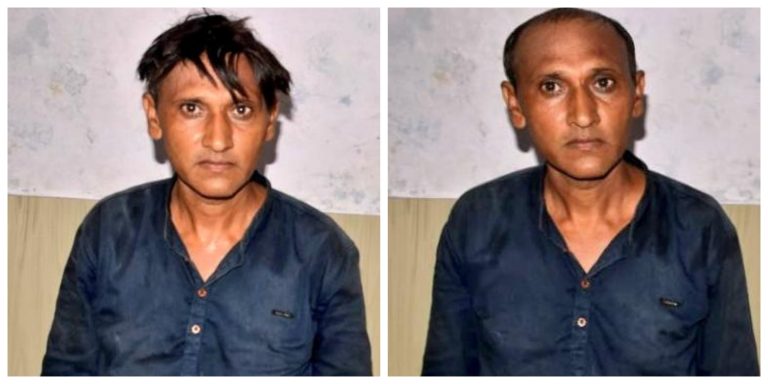
Delhi Police has arrested two businessmen today, one Mukesh and another Sudhanshu Bansal, for transferring money to the Aam Aadmi Party (AAP) through shell companies. The two men are accused of procuring Director Identification Number (DIN) using fabricated documents and photographs and using the firms for money laundering and other illegal activities. The two men will soon be produced in court.

The name of Sudhanshu Bansal first propped up when allegations of fraud were first made against the Aam Aadmi Party in 2015. A press release by the AAP Volunteers’ Action Manch (AVAM) claimed that four donations worth Rs. 50 lakhs each were made at the same time at 12 am on the 5th of April 2014. All these companies were claimed to have given fake addressed and it was alleged that none of these companies are engaged in any business.

The same allegations were raised by rebel AAP leader Kapil Mishra two years later. On the 14th of May, 2017, Mishra made the same allegations that Rs. 2 crore was transferred to the AAP in four instalments through four shell companies. However, after he raised the allegations, Mukesh came forward and claimed that he had made the donations.

There is some confusion regarding the surname of Mukesh. At some places, he is addressed as Mukesh Kumar and on other occasions, as Mukesh Sharma. In his statement, Mukesh claimed that all the allegations raised were false and the money that was donated was ‘genuine’. When he was asked to comment on the fact that the address of these companies were false, he claimed that no company was found at these places because that was how he wanted it.

Mukesh further said that he wished to donate the money without attracting too much attention as he was not greedy for anything and neither did he want anything in return. He claimed to have donated the money because he believed that AAP has come into politics to serve the poor. It appears to be the same video that was retweeted by AAP supremo Arvind Kejriwal in defence of the party.

“That video will come back to bite Arvind Kejriwal because I can show that Mukesh Kumar is the sacrificial lamb here and that he didn’t donate Rs 2 crore”, Kapil Mishra had said then. He said, “I challenge Arvind Kejriwal to tell Income Tax Department that the donation was received from Mukesh Kumar. Mukesh Kumar’s company is a bank defaulter. How can he donate Rs 2 crore to Aam Aadmi Party?”

“Mukesh Kumar’s company is also VAT defaulter. Instead of paying VAT to Delhi government, the company donated money to AAP. Delhi government had issued notice to SKN associates, which later donated money to the party,” he stated further. Kapil Mishra further claimed that only two of the cheques were signed by Mukesh which showed that he had donated only Rs. 1 crore. He went on to question where the other Rs.1 crore came from.

“Arvind Kejriwal is keeping quiet despite me providing clinching evidence of his corrupt practices. I have also presented evidence on the Hawala charge last Sunday. It has been one week, but no one from the AAP has come up with any clarification. It is evident from this presentation how AAP forged letter heads to shell companies. Even the letter heads were fake,” he continued.

The authorities are currently investigating the matter and it remains to be seen whether any senior functionaries of the AAP were involved in the alleged money laundering as alleged by Kapil Mishra.

Supreme Court dismisses petition seeking inquiry against former Chief Justice Ranjan Gogoi

0

The Supreme Court on Friday dismissed a plea which sought a three-judge panel to inquire into the conduct of former Chief Justice of India Ranjan Gogoi as a judge of the Supreme Court.

According to the reports, the Supreme Court bench headed by Justice Arun Mishra termed the PIL as “infructuous’ and asked why did the petitioner not file a petition in the last two years. Rejecting the petition, Justice Mishra said that Justice (Retd.) Gogoi has already demitted workplace.

“Why did not you (petitioner) press it for hearing in the last two years? This plea has become infructuous as he has demitted office,” the bench, comprising Justice Mishra, Justices B R Gavai and Krishna Murari mentioned.

Reportedly, the petition was filed by one advocate Arun Ramchandra Hublikar, who sought an inquiry into the alleged “omission and commission” by Justice (retd) Gogoi as a judge of the Supreme Court. However, the bench said that it would not entertain such a petition.

The petitioner said before the court that he had met the secretary general of the top court for listing of his plea but it was not listed.

Justice Gogoi, the first Chief Justice of Supreme Court from the northeast, is credited to have delivered the judgement in one of the most long-standing issues, the Ram Mandir verdict, before his retirement as the CJI on November 17, 2019. He is currently serving as the nominated member of the Rajya Sabha – the upper house of the Parliament.

Supreme Court grants permission for religious functions at 3 Jain Temples in Mumbai during ‘Paryushana’

0

The Supreme Court on Friday passed an order allowing three Jain temples of Shri Parshwatilak Shwetambar Murtipujak Tapagacch Jain Trust to remain open for the Paryushana festivities for the remaining two days. The verdict added that COVID-19 protocols have to be strictly followed while carrying out the religious functions in the temples.

A Supreme Court bench headed by Chief Justice of India SA Bobde passed the order, granting permission for the Jain Temple to remain open for the last two days of the Paryushana, that end on Saturday. The court has allowed opening of Jain temples at Dadar, Byculla and Chembur in Mumbai.

Furthermore, the apex court cautioned against using the verdict as a precedent for celebrations of festivals by other communities or trusts and stated that the order pertains to a single Jain Temple that the petitioner represents.

“At the outset, we must note that the interim prayer of the Petitioner before the HC was limited to open one Jain temple with Standard Operating Procedure during the Paryushan period” the order read.

CJI Bobde stated that the concession was granted to Jain Temples only and it cannot be applied to any other temple or Ganesh Chaturthi celebrations, where a large number of people congregate.

“We must make it clear that the order, in this case, does not extend to any other Trust or any other temples. Our order is not intended to apply in any other case, particularly which involves a large congregation of people which by their very nature cannot be controlled,” the order said.

Bombay HC had denied permission to Jain Trust earlier

Earlier last week, the Shri Parshwatilak Shwetambar Murtipujak Jain Trust had approached the top court seeking permission to keep Jain Temples open during the Paryushana festival which commenced on August 15. The petition was against the interim order passed by the Bombay High Court on August 13.