Home Blog Page 5464

Scientists Beyond Borders – COVID19: A global collaborative initiative to fight coronavirus

While everyone is playing their role in order to stop the crisis of COVID-19 wildfire, a group of entrepreneurs, engineers, scientists, researchers, and faculties from across the globe- India, Australia, UK, France, and the USA, collectively known by the name of “Scientist beyond borders” is also trying their best in challenging coronavirus. The group has been working on “Opening up science and democratizing technology”- collecting, analyzing, disseminating data, and awareness, based on this pandemic globally. Collaborating industry partners are opening up their technology know how and patents for public good. Also, other main work on innovating new ideas of designing equipment and PPEs mainly for this virus has been done and they are trying to giveaway these ideas and approaches for free along with the required guidance so that public across borders can utilize them.

Relevant information, news/ research articles, and scientific data from authorised sources are translated and represented in graphical illustration with the help of experts and in simpler sentences for the common people to understand and circulated through different social networks- Twitter, Instagram, and Facebook. The circulated information is also translated into different languages of India. 

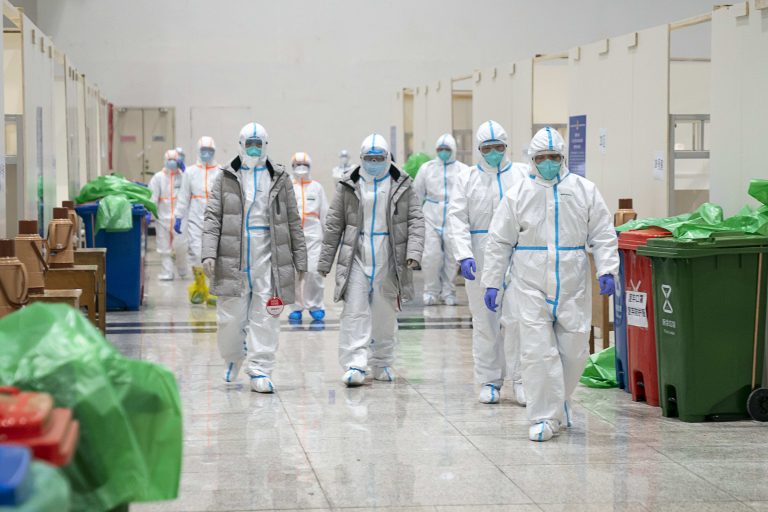
Scientists beyond borders group has designed and made different equipments- protective gear, 3D printed masks, Isolation capsule specially designed for the front-liners and coronavirus affected patients, sanitizers, UV based disinfecting products, and sample collection and testing facility services. A coverall suit protective clothing for the front-liners has been designed, using medical grade fabric covering from head to toe along with necessary sealing.

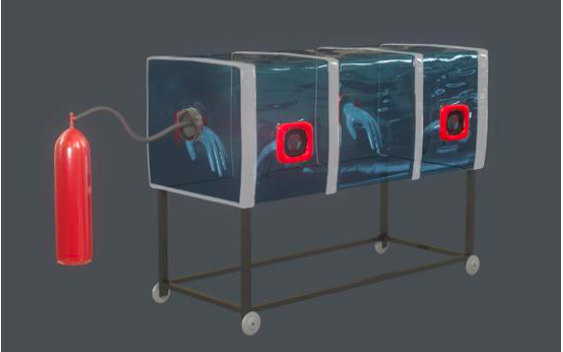
Isolation capsule

Biosafetly level 4 head-cover PPE has been designed to protect the user from contamination, pollution, and infection present in the environment. The head-cover is being made of polyester fabric with PVC coating supported by a ventilation system isolating the inner and outer environment. It has a special air blowing unit with the filters. There by protecting frontline healthcare workers with any possible contamination through air or touch.

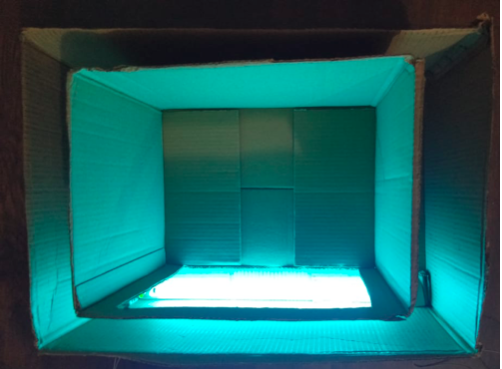
UV disinfectant box

A low-cost UV-C tube light based disinfecting smart portable appliance is also developed to disinfect and dispose of medical used devices, rooms, floors, and others. A mop is developed to disinfect floor-using UV light and hot steam and a portable hand-held UV sanitizer device for unreachable places and for work areas, laptops, mobiles, etc. For the disposal disinfection of harmful bacteria or viruses, a UV-C tube light-based disinfecting dustbin is uniquely designed to disinfect the Room, Floor and more so used for disinfecting used masks, gloves etc. to be used at hospitals and public spaces.

As the government in major affected areas and countries are under lock-down, people who need to be tested for this virus face a major problem in transportation. Therefore, our group designed a mobile sanitized sample collection and testing facility vehicle with improved and optimized facilities dividing the vehicle into two different sanitized area, for patient and doctors with negative pressure and filtered air being exhaust out limiting the exposure of the doctors and preventing public at large from coming in contact with suspected patients by on site sample collection. The implementation of this vehicle will restrict the movements of infected suspects and can collect the samples from their doorsteps or community centres, thus reducing the chances of spreading the COVID-19 virus. 

As the pandemic is contagious and the affected patient needs to be transported in isolation, for this purpose an isolation capsule is designed for transporting the infected patients has been designed meticulously. This isolation capsule is designed to provide medical staff and first responders a safe means to isolate contaminated patients and transport them from one location to another. It uses reinforced flexible vinyl material with antifungal and antibacterial properties for the encapsulation, gloves and pipe inlet are provided to use in need and the capsule uses clamps thus the whole set-up can be mounted on a trolley, ambulances, rescue helicopters and inside moving vehicles. 

Therefore, with all these set-ups, designed equipment, Scientist Beyond Borders group is endeavouring their best by taking advantage of their knowledge, experience and efforts in giving a platform and empowering public at large with updated information and open to use technologies.

Gujarat: 10 arrested for attacking police in Vadodra’s Kasam Aala Mosque area, main accused Nazir and 6 others absconding

The Gujarat Police has arrested 10 of the 17 named accused reportedly involved in an incident of mob violence against a police team that took place on Monday near Kasam Aala mosque in Nagarwada area of Vadodara. A First Information Report (FIR) was registered after a violent mob of over 50 people attacked the cops while they were trying to enforce lockdown, in the wee hours of the morning at one the worst Coronavirus-hit areas of the city.

As per a report in DeshGujarat, the primary accused named Nazir Sindhi first abused and threatened to kill a police officer named Gautam Kanti, if he did not vacate the area. The cop was then forced to call backup. Post-Sehri, at around 5:00 am, a group of 50 men and women were seen loitering around the streets, in complete violation of the lockdown norms.

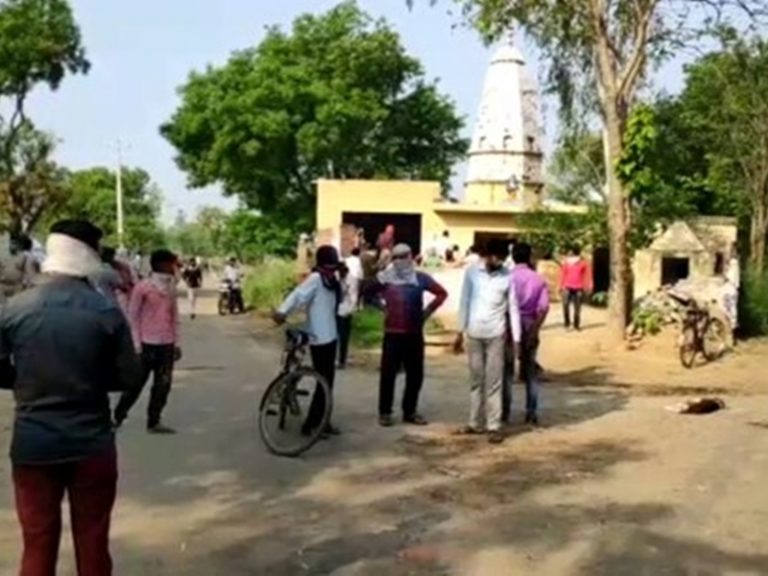
When the Gujarat police tried to convince them to stay indoors, the agitated mob attacked the cops. Nazir and his accomplices Rizwan Lakhajiwala and others were equipped with sticks and swords. When they provoked the mob, the police came under a volley of stones and bottles. Reportedly, Nazir also threw a bicycle at the cops. More backup was called in and the police were finally able to overpower the mob.

10 arrested, 7 absconding

While 10 people had been arrested, 7 of them (including Nazir) are still on the run from the law enforcement authorities. The accused have been identified as Nazir, izwan, Salim, Ramiz, Asif, Sohil, Riyaz, Fazal, Dilaf, Javed, Tahir, Abid, Nizam, Anis, Sajid, Jenul, and Zahir.

Charges against the attackers

Charges have been pressed against the accused involved in the mob violence under Indian Penal Code (IPC) Sections 307 (Attempt to murder), 353 (Assault), 332 (Voluntarily causing hurt), 323 (Punishment for voluntarily causing hurt), 337 ( negligently endangering human life), 269 (Negligent act likely to spread infection), 294B (verbal abuse), 506 (2) (criminal intimidation), 143 (unlawful assembly), 147 (Rioting), 148 (Rioting with a deadly weapon),149 (a member of unlawful assembly guilty of an offence committed in prosecution of common object) and under the Disaster Management Act.

The perils of US hegemony, the petrodollar and the role India could play in the emergence of the New World Order

The Firm Conviction

During the First World War, Woodrow Wilson, the 28th President of the United States (US) (1913-1921) had very clearly stated on record, “Is there any man, is there any woman, let me say any child here that does not know that the seed of war in the modern world is industrial and commercial rivalry?” What did this prophetic declaration mean? It was undoubtedly a clear message that the quest to dominate and protect own economic security had become a major pre-condition of any war. If this was the conviction of the US President a hundred years ago, then in the light of recent trade war with China, what has changed today?

Discovery of Energy Resource

After hundreds of thousands of years of existence of the human race, it was in the year 1903 that an aircraft was invented which flew for 12 seconds. But only 65 years later in the year 1969, humankind had managed to land the first man on Moon. It is estimated that the world population reached one billion for the first time in 1804. It was another 123 years before it reached two billion in 1927, but it took only 33 years to reach three billion in 1960. What induced such a huge growth rate of both technology and population? It was undoubtedly the discovery of oil in the middle of the 19th century or rather to be precise, in the year 1830 and resultant availability of energy resource at the disposal of human beings that led to rapid growth in such a short time which mankind had never witnessed before despite over 400 thousand years of existence. 

Seeds of Rivalry and War

Four decades after the discovery of oil, the year 1870 was declared as the year of Great Oil Rush. Thus, with the discovery of oil, which accelerated an unprecedented rapid growth and development, protecting the industrial and commercial interests became the deep-seated conviction and sole aim of all-powerful countries of the world in the twentieth century. This also led to a rush towards seizing control over such resources wherever available in the world by any means necessary and as a result, sowing the seeds of war. In fact, interestingly, over one hundred years ago in the year 1904, Germany had attempted to build a railway line through Turkey into Iraq for gaining access to Middle East’s energy reserves, but the United Kingdom, France and the US jointly intervened and successfully scuttled it. This is why one of the first battles of the First World War didn’t take place in Europe but instead took place in Iraq between the British Indian Army and the Ottoman Empire. Cutting off Europe’s access to the Middle East oil fields was one of the early primary objectives of the war.

Hegemony of the Petro Dollar

After the collapse of the Soviet Union in 1991, the United States became the sole superpower in the unipolar world that emerged thereafter. In the follow-up years, the world witnessed a number of flashpoints and regime changes in the quest to maintain the hegemony of the Petro-Dollar system. The term PetroDollar actually originated in 1973 when the US agreed to provide military protection to Saudi Arabia and even sell them arms and other military equipment in a deal that would see Saudi oil sold the world over in US dollars.  Saudi Arabia would also recycle the excess dollars back into the US financial system through US Treasury Bonds. By 1975, every OPEC member had adopted the PetroDollar system agreeing to sell their oil in the American currency. Today, the US dollar makes up for nearly two-thirds of the global economy and serves as the reserve currency for most of the world’s central banks due to the dollar being the primary currency required for purchase or sale of oil and natural gas.

The Emergence of the Petro Dollar and the Bretton Woods Agreement

The origin of the current American hegemony can be traced all the way back to the 1944 Bretton Woods Agreement. In 1944, world leaders and economists met to form a New World Monetary System for the post-war era. With the Bretton Woods Agreement, the American dollar became the reserve currency of the world, promising other Nations that they could redeem their dollars for gold. While the dollar’s value was set in gold, valuations of the currency of other countries were fixed to the dollar. The value of the dollar was set at Franklin D Roosevelt’s 1934 revaluation of $35 per ounce of gold.

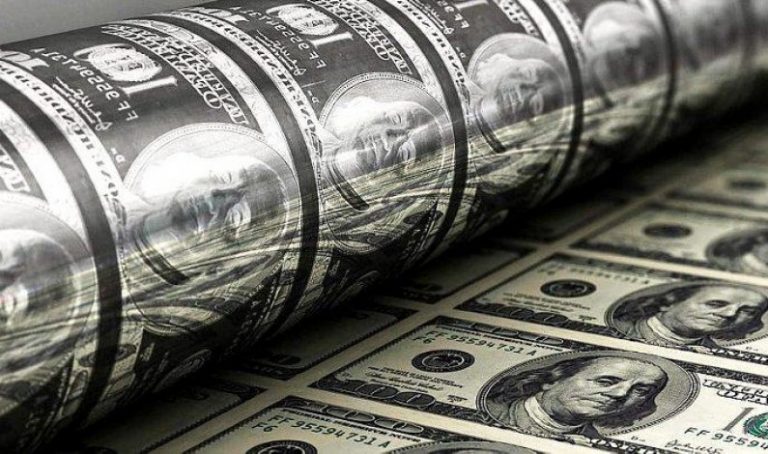
However, this was not a true gold standard and it heavily favoured the US. In a true gold standard, the currency is convertible by a private citizen or foreign central bank. However, under the Bretton Woods Agreement, it was mandated that only foreign central banks could convert their dollars to gold. It thus, favoured the US because while the US could settle its foreign payments in dollars, the other Nations had to settle their foreign payments only in gold.  This, therefore, ensured that the US could simply keep printing dollars and sending them overseas until foreign central banks start to demand gold in exchange for their dollars.

After the Second World War, the US offered to rebuild Europe which had suffered extensive damage and destruction. However, due to the rising overseas expenditure including both in the military and foreign aid provided to Europe, the US realised by the year 1961, that it was left with no option but to resort to printing excess dollar to meet with the ever-increasing requirement. But by 1967, the excess printing of dollar led to US foreign liabilities soar to $36 billion while the US had only $12 billion in gold reserves, that is, only one-third of the total obligation.

The problem for the US had actually begun in 1965 when General Charles de Gaulle, President of France, who by that time, had made France a resurgent economic powerhouse through austerity programmes and had managed to build up gold reserves of the Nation. After he returned to power in 1965, he started demanding the other Nations of the world to follow France’s lead and exchange their dollars for gold in return.

By the end of 1970, the economic situation in the US economy deteriorated while the war in Vietnam was still raging. For the first time in the 20th century, the US faced a trade deficit. This flood of new dollars to other countries almost always found their way back home in the form of gold demands which the US was no more in a position to cover. By 1971, the total US gold reserves had fallen further to just $10 billion, while foreign central banks held some $80 billion, that is eight times the total gold reserves with the US. The situation further deteriorated when around the same time, France redeemed $3 billion for gold by sending a French battleship to New York to take delivery of the gold from the Federal Reserve and bring back to France. This was roughly one-third of the total gold reserves of the US at that time. The same day, Congress released a report recommending devaluation of the dollar in an effort to protect the dollar from “foreign price-gougers.”

However, it was too little and too late. The dollar was already in a full-blown crisis and was on the brink of collapse and hyperinflation. Countries had lost faith in the dollar. So, finally, on 15 August 1971, President Richard Nixon, in an event presented as “Nixon Shock” for the World to remember, unilaterally closed the US gold window. The dollar was now a free-floating currency backed by nothing but trust in the US economy – which at the time under President Nixon was at its lowest since the Second World War.

Thereafter, as part of next move, Henry Kissinger, National Security Advisor under the Nixon administration, visited Saudi Arabia in 1973 and managed to coerce the Saudis to conduct all their petroleum sales in US dollar in exchange for US military protection and aid. Thus, emerged the PetroDollar system which to date has a complete stranglehold of the World’s Financial Markets. The demand for the dollar, therefore, once again began to soar, fuelled by the increase in demand for oil. Every country who now wished to purchase petroleum from the Saudis needed to maintain reserve only in terms of dollar to facilitate trade.

The US, now bolstered with the high demand of dollar from every corner of the world, started to print more and more dollars without getting affected by the inflation. Thus, it became necessary for the US to seek more and more control of oil and gas reserves world over through covert and over militaristic means. After the fall of the Soviet Union, the world began to witness the US, now unchecked and unchallenged as the sole superpower, adopting a more militaristic approach rather than covert means to protect its hold over the energy markets.

CIA – An Instrument of Power

The Central Intelligence Agency (CIA) of the US was constituted in 1947. From the available records with US National Security Archives at George Washington University Library declassified up to the year 2004, the strategic and tactical employment of the CIA as an instrument of power, comes out quite clear. As per the report published in Washington Post, between the year 1947 and 1991, there were 72 attempts to change those Regimes that did not toe Washington’s line. These 72 attempts included 66 covert operations and Six overt. 16 elections meddled with 75 percent success.  Within a few years of the CIA getting constituted, memories of two famous incidents of Regime Change are still fresh in mind. One was the coup in Iran in 1953 and a year later in Guatemala in 1954 where the CIA is known to have eliminated two popular leaders whose refusal to accommodate foreign capital, made them the enemy of Washington.

In Iran, the US managed to get democratically elected Mossadegh removed by the Shah of Iran and in his place get General Zahedi nominated as Prime Minister, thus restoring full control. This was called Operation AJAX handled by Colonel Kermit Roosevelt of the CIA. Similarly, in Guatemala, the CIA launched Operation PBSUCCESS and managed to depose another democratically elected leader Jacobo Árbenz and install a Washington favoured dictator called Colonel Castillo, thus restoring full control on the resources of the country. Two Regime changes set the US on a course that still holds good. Over the last 60 years, successive American Governments have assumed the right to topple any Government around the world in a bid to protect their own interests.

Once the US succeeded in introducing the PetroDollar and consequently, when the economy headed for huge growth, the period between 1975-1990 saw a number of successful covert and overt operations launched by the US to protect their trade and energy security interests. Some of the well-known operations or incidents the world got to witness were like the contra affair in Nicaragua, overthrowing the Government in Chile and installing another dictator in Pinochet, military invasion of Grenada and skirmishes with Gaddafi’s Libya. In the year 1979, however, the US faced a major setback when they were pushed back by the Ayatollah in Iran. This setback opened a new chapter in the history of the war-ravaged Middle East when the US started to extend covert support to not only the Mujahideen in Afghanistan as part of a long-term agenda against the Soviet Union but also covert support to Saddam against Iran.

Post Collapse of the Soviet Union

After the collapse of the Soviet Union in 1991, the US emerged as the sole superpower. Emboldened with unparalleled military power, the US concentrated its focus and might on gaining access and control over the oil and the gas-rich Middle East. The US began using military power overtly to effect Regime changes. The period especially between the collapse of the Soviet Union and pre 9/11, witnessed an unprecedented rise in conflicts raging virtually on every continent, even where the US initially had no role to play such as the military intervention in Kuwait, NATO-led operations in Kosovo, invasion of Panama and airstrikes in Sudan. Thus, the quest for energy dominance had begun ensuring the dominance of the PetroDollar as the main currency of the world to trade-in.

Post 9/11, the world witnessed more and more flashpoints emerging encompassing countries such as Afghanistan, Iraq, Libya, Syria, Lebanon, Sudan and Somalia. The US Congress had empowered the President of the US to militarily intervene and bomb any part of the World in the war against global “Terror and Weapons of Mass Destruction”.  Even though the Soviet Union had ceased to exist from the year 1991 and so was the Warsaw Pact, but strangely, NATO continued to grow from 17 members in 1990 to 29 members by 2009. While Russia was struggling to revive itself, NATO kept expanding into Eastern Europe and Baltics closer to Russian heartland deploying both conventional and nuclear-capable missile defence.

The world also witnessed the US supporting anti-government uprisings and Regime change around the Russian periphery in addition to extending covert assistance to opposition movements and parties inside Russia. A similar expansion of the US was also noticed taking place in the Asia-Pacific Region closer to the East and the South China Sea. By the year 2010, the US had managed to successfully close in on the Western side of Russia as well as the Coastal side of China, thus effectively endangering Russia’s access to warm water ports – the main trading route.

By this time, the overt and covert military spending of the US had more than doubled and was equal to the military spending of all developed Nations taken together. The US had also established 800 major Military Bases spread over 74 countries as compared to other military powers like France and Russia which had only 13 and Nine bases respectively.

Slowly Changing Dynamics- Ups & Downs

Amidst the ongoing coercive expansion of the US might, the silver lining on the horizon, however, was that Russia under President Vladimir Putin managed to silently pay off all its debt owed to the International Monetary Fund (IMF) by early 2005 and was onto the road of economic recovery. Russia achieved this feat by quietly expanding its oil and gas exports and capturing the majority of the market in Eastern and Central Europe. Europe consists of highly developed Advanced Industrial Nations requiring an exponential quantity of energy. The US had only two major oil pipelines going into Europe. Thus, with Europe’s limited connectivity to pipelines and absence of any potential alternative to Russian oil and gas resources, it made them more dependent on Russian supplies, thereby marginalising US energy exports to the region. As Russia’s control over the energy market stabilised significantly, its economy too started to grow rapidly. By the year 2008, oil was virtually selling at $140 a barrel. 

Somehow, this golden phase did not last long. While President Putin in an attempt to diversify the Russian economy from its heavy dependence on oil and gas exports decided to take on huge loans once again, the US, on the other hand, chose this as an opportune time to double the production of its continental oil using fracking technology which resulted in flooding the market with cheaper oil. Even though the know-how of fracking technology was known since the 1980s, the Obama Administration, however, chose to widely deregulate the use of this process only at the time when Russia had once again taken on massive debt. By then, Russia was under so much of debt burden due to heavy loan that they needed the price of oil to be at least $85 dollars a barrel to be able to continue to service debts.

Around the same time, another factor which contributed to the sliding oil prices was the signing of the Joint Comprehensive Plan of Action (JCPOA) between Iran and six other nations. Sanctions on Iran by the West were lifted and Iran re-entered the market furthering the decline in oil prices. This led to the undoing for Russia in 2014-15 when the international price of oil came down to as low as $48 a barrel putting the Russian economy once again in danger. During the same period, while NATO was continuing to inch closer and closer to Russia’s Western border, the US went ahead imposing sanctions on an already financially struggling Russia. This period also saw Russia getting embroiled in a proxy war with the West in Ukraine from where the bulk of Russian gas and oil supply passed into Europe.

It is said that the enemy’s enemy is a friend and this was proved beyond doubt when the World saw China immediately stepping in to help bail out Russia from the economic crisis. Nearly Forty Agreements pertaining to Trade were signed between Russia and China in the year 2015, which ranged from purchasing Russian gas for the next 30 years for over $400 billion to the manufacturing of machinery, IT, telecommunication, robotics, microelectronics, forestry, agriculture etc. While they also signed off on a New Double Tax Treaty, China offered to assist in the supply and transport of Russian goods to Eastern Europe, South East Asia and Africa.  This bonhomie led to the revival of Eastern Bloc which seemed a reminiscence of the Soviet Union and the Warsaw Pact.

A New Threatening Shift

As Russia – China partnership strengthened, Iran too joined the Bloc and a process of dumping dollar began initiating a rush for purchasing gold by their respective central banks instead. An increasing effort to trade in yuan and non-dollar denominated currencies in the energy markets began to be noticed. This undoubtedly opened the doors for the devaluation of the dollar which started to appear as no longer the currency of choice for international trade. Demonstrating farsightedness, India too went ahead and signed currency swap agreement with countries such as Japan, UAE and few others cumulatively adding up to over a $100 billion.

With Europe’s dependency continuing to increase on Russia and Iran, the US under Trump administration decided to pull out from Iran Nuclear Deal and reinstate sanctions on Iran. This began the process of Iranian oil leaving the international market and US managing to grab larger share of international oil market. This was achieved by deregulating nearly the entire US coastline to offshore drilling as also nearly 42 National Parks for extracting oil. By the beginning of 2019, the US became the largest producer of oil in the world.

On the other hand, the US also went ahead and announced that the war in Syria was over claiming to have wiped out ISIS. This claim of US was completely opposed to the earlier belief of the US intention to topple Assad. However, in all likelihood, it is believed that a tacit Syrian Peace Deal behind doors had taken place in Oct 2018 between major oil buyers – Germany and France, oil transporter- Turkey and supplier Russia. The likes of Exxon Mobil, Chevron, British Petroleum and Russia’s Gazprom carved up their respective routes through Anti-West Assad regime-controlled Syria and Pro-West Kurd controlled newly established the State of Rojava for their oil and gas pipelines. Now the US will take the gas from Qatar through the pipeline from a much shorter route through Iraq-Syria (Kurds controlled) into Turkey and Europe.

Similarly, a US-Taliban peace deal has also been signed few months ago thus ending a long war in Afghanistan. This is likely to open up the long-awaited avenue for the US to take the gas pipeline from the landlocked country Turkmenistan through Taliban controlled Afghanistan either through Baluchistan into the Arabian Sea or link with existing Azerbaijani – Turkey pipeline.

Multi-hued Threat Prism

Thus, the future of unfolding global security scenario must be seen through the combined prism of emerging threat on US dollar, the US losing control over oil and gas reserves of the Middle East, re-emergence of the Eastern Bloc and the need to dominate South China Sea and the Indian Ocean Region which is the main trading route for all major economies of the world.

Where Does India Figure?

India presents itself as a natural geographical segment acting as a strong pivot extending deep into the Indian Ocean enabling a long reach to India’s Expeditionary Forces to be able to effectively dominate the major sea trading route of the Indian Ocean Region covering from Chabahar, Gwadar, Hambantota, Chittagong to Strait of Malacca.

India needs to give a big push to indigenous defence production riding on the back of emerging new technologies with the aim of not only becoming self-reliant, but also a major arms exporter in order to build India’s economic strength. This will help India in the long run to build a strong Navy and Air Force and thereby extend India’s military reach beyond the confines of immediate borders and get to be recognised as a Regional Power.

Setting own terms, India may also consider becoming a bridge to countries especially China, seeking access to the Indian Ocean. As far as Pakistan is concerned, India must maintain its focus with full preparation for any physical intervention required at a short notice in view of the engulfing unrest in Baluchistan and Khyber Pakhtunwa, which may lead to bloodbath and heavy military action against the insurgents by the Pakistani state in the Af-Pak border region.

India is blessed with a huge hardened work force, youth with fertile brain, friendly climate and natural resources including globally scarce fresh water due to the Himalayas. Taking advantage of these resources, India must encourage business houses of major countries to establish themselves on Indian soil in collaboration with Indian companies utilising India’s increasingly skilled populace, cheap land and easily available labour.

With increasing visibility of an assertive Eastern Bloc, India must continue to maintain strategic autonomy. Without getting into any binding military alliance at this stage, India must continue with existing close relationship with Russia, the US, France, Israel, Japan and immediate neighbours like Nepal, Bangladesh, Bhutan and Sri Lanka serving and safeguarding each other’s mutual interests.

Breton Wood Institutions today do not reflect the geopolitical realities of the world they currently operate in because these systems came in the aftermath of World War II. Since countries like India, China, Brazil and war-ravaged Japan were nowhere close to their current economic and military standing, the West in those days, rightly felt that the new world order would be shaped to the image of their liking. The West thus, chose to design these Institutions skewed in their favour assuming that the Earth was their inheritance in spoils of war.

But much has changed since the late 1940s, India now stands as the sixth largest economy in the world and increasingly assertive of her objectives at the international stage. With indigenous defence production taking deeper roots and other export-oriented industries to include pharma, base metals, jewels, IT services dominating respective global market, India is anticipated to rise to become the third largest economy in the next few years. As India’s economy grows, so too does its geopolitical clout and, therefore, India will not only continue maintaining strategic autonomy, but with her growing clout at the global level, will seek to reform International organisations and bodies such as the International Monetary Fund (IMF), World Trade Organisation (WTO) among others shifting the balance of power in these bodies away from the old western powers thus creating a multi-polar world, which would fairly reflect the new geo-political realities of the world.

India in her endeavour to reform these international organisations has taken bold unprecedented steps by challenging the US in WTO’s courts over her farm subsidies. India along with China and Russia has established the New Development Bank (NDB) to provide alternative to developing countries seeking aid from the debt traps and western backed privatisation programmes of the IMF and World Bank. India had started the Non-Aligned Movement many decades ago so as to maintain a multi-polar world and a large number of countries did join. But it could not have a very effective negotiating power for long due to internal differences among the member countries, lack of economic strength and eventual dissolution of the Soviet Union. But now the situation is different and thus, India must continue to move firmly towards creating a multi-polar world backed by the likes of Indonesia, Japan, Germany and Brazil who despite their post-World War II resurgent economic prosperity just like India have next to no say or voting power at various international forums.

Summary

To achieve a more balanced world order, India undoubtedly needs to first grow militarily in view of the current geopolitical scenario which clearly indicates the possibility of global conflict is not too distant a future. With the re-emergence of the Eastern Bloc challenging the major World Powers in the West and increasing ongoing tussle between the two blocs for protecting one’s own trade and energy security, may compel the World to witness history repeating itself. Under such circumstances, will India manage to clearly stay out of it? The answer can be both Yes and No. Therefore, in such an ambiguous situation, the best option for India will be to prepare herself in as many domains as possible to be able to choose the best option prevailing at that time.

One major threat, looming large on India, though yet not very clearly visible to the Indian masses today, is the enemy within. There is no dearth of such souls in India who survive on the crumbs thrown at them by Foreign Instruments of Power meant for launching covert operations to bring about Regime change. The continued demographic invasion into India from neighbouring countries, cyber terrorism, data colonization, ever increasing pseudo armchair intellectualism, foreign funded NGOs, foreign funded print and electronic media, political parties which choose to divide the masses on caste or religious affiliations and self-appointed crusaders and ombudsmen pose a big threat as knowingly or unknowingly they are being used by inimical forces from outside the country as a tool for pressuring the current government with unrest on the streets and using the said unrest as a leverage during closed negotiation meetings. There are umpteen examples in World history of such tactics being employed against Regimes in Latin America and Africa which refused to toe the line of the West. Unfortunately, India too has started to witness the effectiveness of such instruments of covert operations through a number of well organised and coordinated mass protests and riots that took place in various parts of the country in the last couple of years.

Any Choice

Both the Politicians and the Citizens of India have to realise sooner than later that to successfully tackle the fallout of the current unfolding global security challenges, India has to seriously strengthen all available Instruments of Power on a multifaceted domain which also includes building one National Identity and weeding out these hidden tukde tukde gang serpents poisoning and weakening the country from within.

Authored By
Lt Gen Abhay Krishna, PVSM, UYSM, AVSM, SM, VSM, (Retd)
Former Army Commander South Western Command, Eastern Command and Central Command


Meet Rafia Naz: A yoga teacher in Ranchi who has been threatened, assaulted, abused by her own community multiple times

Rafia Naz, a Yoga teacher from Hatia area in Ranchi, Jharkhand has made it to the headlines of many English as well as vernacular newspapers as a Yoga teacher, has been the target of radical members her own community on multiple occasions for years for merely following her passion. Rafia, who is the eldest among her siblings and teaches yoga for a living and considers yoga to be beyond religion has been targeted for daring to teach Yoga despite being a Muslim.

Radicals issue fatwa and death threats against Rafia in 2017

Rafia Naz came into public focus after photos of her doing yoga with Baba Ramdev went viral on social media in 2017. This had attracted the ire of few radicals who have issued a fatwa against her for this act. 

OpIndia got in touch with this brave woman, who undeterred by several threats and attacks continue teaching yoga. On being asked as to for how long this had been happening and the reasons behind the attacks on her, she replied that now all this has become a part of her normal routine. She has been facing the abuse and intimidation of these fundamentalists for years. She says that on November 8, 2017, some radical Islamists had threatened her on Zee News that Muslims would not read Namaz on the funeral. A day after that, on November 9, 2017, after she gave an interview to a TV channel today, some people pelted stones at her house.

Recounting the several times she has been abused and vilified because of her profession, she said that radicals have attempted to even kill her in the past. When asked as to what she thinks might be the reason behind these drastic reactions, Nazia said that the only reason was that she was a Muslim. Naz recalled how on June 20, 2016, she was physically assaulted by few radical Islamists who were against her profession. “I used to walk back home after work. On June 20, 2016, a pot was thrown on me. Sometimes, unknown people on the road would pull my scarf and run away. Once I was hit with a rod on my waist. A lot has happened to me”, remembered the Yoga teacher while in conversation with OpIndia.

Recollecting the horror, Naz said that had anyone gone through the same mental and physical impalement what she has been through for so many years would have become suicidal. Naz stated that she had decided to face all problems and be brave.

Rafia Naz goes on to apprise us with another mortifying incident of her past which left her and her family members flustered. She recollected how once her morphed nude pictures were circulated in social media by members of her own community for daring to defy their conservative rationale. She said that despite complaining to authorities and sharing details of like the ID, URL, link, etc., the posts were not blocked.

Kidnapped with an intention to kill at the age of 19

Rafia Naz furthered that when she was 19-years-old, she was once kidnapped by some radicals who wanted to kill her. When she was abducted and was being taken away on a scooty, she accidentally fell. She managed to flee and hid somewhere away from her house and remained there for the entire night only to return home the next day, recalled Naz.

The yoga teacher narrated another similar incident when she was once threatened to be killed within 48 hours. She also reminisced that once she was attacked by a rod so severely that she was unable to even sit. That assault gave her such intense wounds on her back that for the next one year Naz had to sleep on the floor, recalled the Yoga instructor.

Round the clock security provided by government

As we tried to delve further, we asked her whether she was provided with any kind of security from the state government? Rafia Naz answered: “In 2017, Jharkhand Chief Minister Raghubar Das took cognizance and provided me with 24-hour security, which has recently been withdrawn. I do not know why it has been removed. At that time, Rapid Action Force (RAF) and CRPF personnel were stationed outside my house, recollected Naz. “Imagine, how perilous the situation would have been then if RAF and CRPF jawans had to be deployed outside my house. To deal with a crisis like a coronavirus pandemic, the government has not yet involved the CRPF, now you can imagine how dire my situation would have been then that I had to be provided with CRPF and RAF security”, continued Rafia.

When threats against Rafia increased after her video with Yoga Guru Baba Ramdev went viral, it was acknowledged by Jharkhand Chief Minister’s Principal Secretary Sanjay Kumar. He, as a result, directed the police to increase Rafia’s security. Ranchi’s senior superintendent of police, Kuldeep Diwedi subsequently dispatched a police force to meet Rafia. Later as per a report issued by Jharkhand police, she has been given two bodyguards.

Rafia Naz calls her family her biggest strength

On being asked what kept her going, Rafia said that she drew strength and inspiration from her family. “My family is my real strength, they keep encouraging me”, said Rafia.

Recollecting the unnerving incidents of her past, Rafia said that because of her stand to keep teaching Yoga, even her family attracted the ire of those radicals. They were constantly abused and threatened. They were harassed with questions like: for how much money have you sold off your daughter?

“When I walk on the road, they humiliate me by calling me the mistress of RSS”, said Rafia furthering that whenever I go with a friend, people jeer my friend walking beside me by saying “look at that prostitute’s sister”. For them, my crime is that I am a Muslim woman practising and teaching yoga. I am stubborn because it is Indian culture and we should not be ashamed to follow it. I will keep practising yoga until death”, said the Jharkhand girl.

Speaking to OpIndia, Rafia at this point, recollected how she has struggled to get justice for herself and her family but seldom succeeded. She was many a time advised to commit suicide. When she went to the police to lodge complains, there too she received disappointment. “I was advised not to waste the officer’s time”. The police abused and belittled me by passing vulgar remarks at me. They said things like “the Prostitue is spoiling the atmosphere of our locality”, but all this never discouraged me, I never used to give up. Made sure not to leave the police station until my FIR was lodged and I was not given the FIR receipt slip, said Rafia.

Here, the Yoga Instructor recollected one such incident when she was harassed by the police, who refused to cooperate with her and help her in distress. Referring to an incident which happened with her, Rafia said: “Once I was invited to a program in Khelgaon. I was told that if I did not attend that particular seminar, I would not be offered any other seminar in the future. I was forced to accept the offer. When I reached Khelgaon I saw that the venue was empty and there was no such program. On realising that I was tricked I felt that place to return home. On the way back, a truck rammed into my car so badly that the door of my car was broken into pieces. At that time there was a security person inside the car with me. He called up the police for help. When he explained the situation to the police, he got an answer in return that it would be impossible to catch the attackers as they would have fled by then”, recollected Rafia furthering: “I then asked them to check the CCTV footage for clues. The police said in return that all the CCTV cameras in that area were spoilt, hence it would be impossible to track the attackers as they would have fled far by then”.

As Rafia delved into the traumatic incidents, she admitted that she is now afraid to speak or take a stand for herself. Earlier if anything wrong happened, she used to raise her voice and fight for justice, but now it is not so. Rafia said: “I am not afraid for myself but I fear for my family. I have seen the real face of people. I have seen how people are on camera and how are off-camera. I have seen people selling themselves for a few bucks. So now I have become like this. Earlier I was not like this, these people have made me like this”.

Rafia Naz has been practicing Yoga since the age of 4

Rafia Naz’s interest in yoga can be gauged from the fact that she has been doing yoga since the age of 4. So far, he has won 52 medals at the national level in the field of yoga. Rafia was awarded the ‘National Patanjali Yoga Promoter Award’ at the International Yoga Festival in Jammu and Kashmir. Similarly, the title of ‘Yogaprabha’ has been awarded at the All India Yoga Mahasammelan in Lucknow. She has been honoured by Yoga Guru Baba Ramdev.

Rafia Naz says that yoga is a means of connecting the soul with God. It has nothing to do with religion. Rafia has opened a school named ‘Yoga beyond religion’. In her institute, she teaches yoga to poor and orphaned children for free. Facing so much harassment and trauma in life, she has put up a brave face during all those episodes and has asserted that she will continue teaching yoga for life.

This is not the first time that Yoga has attracted opposition from certain sections for theological reasons. In 2018, the Nagaland Baptist Church Council has declared Yoga a spiritual discipline deeply rooted in Hinduism and asked its associate Churches to not practise as it is not compatible with Christianity.

In 2015, the All India Muslim Personal Law Board (AIMPLB) had declared that Yoga, along with Surya Namaskar, was not acceptable to Muslims and had appealed to secular forces to join their cause in opposing the “imposition” of Yoga by the Modi government.

Uttar Pradesh: After Palghar Sadhu lynching, two Pujaris found murdered in Bulandshahr

Two Pujaris (temple priests) were found murdered in Bulandshahr, Uttar Pradesh on Tuesday morning.

SSP Bulandshahr Santosh Kumar Singh while speaking to news agency ANI said that one Murari alias Raju from Pagona village in Bulandshahr had taken away a chimta belonging to the pujaris. The priests had scolded him for the same. “He must have kept this in his mind and hence today morning he came and killed both the priests. Villagers also spotted him walking out of village with a sword in his hand. He was nabbed two kilometres out of village, in half-naked and inebriated condition. He has been arrested and he is still intoxicated. The probe is underway,” he said.

Bulandshahr Sadhus murdered

The two priests have been identified as Jagdish alias Rangi Das (55) and Sher Singh alias Sewa Das (45) who were serving at a local Shiva temple. They used to live in the temple premises. Uttar Pradesh Chief Minister Yogi Adityanath has taken cognizance of the incident and has directed top officials to inspect the site of crime. He has asked for a detailed report and given orders to ensure that strict action is taken against accused.

Palghar Sadhus lynching

The Bulandshahr incident comes days after the lynching of two Sadhus and their driver in Maharashtra’s Palghar on April 16, 2020. Horrifying visuals of the Palghar lynching incident where a mob of over 100 people killed two Sadhus and their driver even as the Police stood there as mute spectators, just letting the barbaric act unfold, had gone viral on the social media. It is pertinent to note here, that by their own admission, the police force with one API and two PSI’s were at the scene of crime well 20 min before the final and deathly reign of hits took place. While the police say that they were overpowered by the mob, the videos show that the sadhus were simply handed over to the crowd by the police personnel.

Punjab: Health Department to quarantine all Hazur Sahib returnees from Nanded after 5 asymptomatic patients test positive for Coronavirus

0

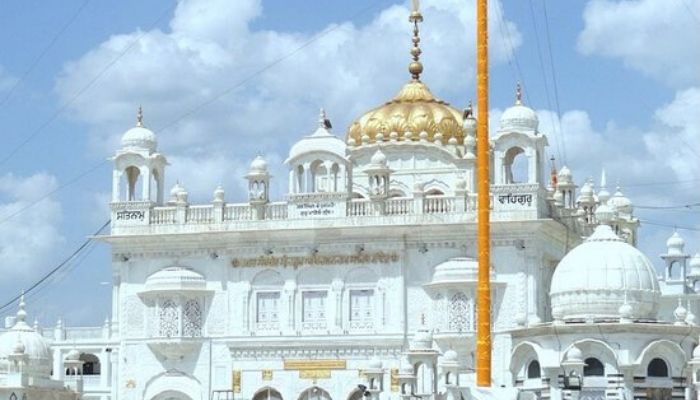
On Monday, the State Health Department of the Punjab Government had issued an order to put devotees returning to the state from Takht Sri Hazur Sahib in Nanded in Maharashtra in quarantine facilities as a precautionary measure, after five asymptomatic devotees were diagnosed with the Wuhan Coronavirus in Tarn Taran.

Deputy Commissioner (Mohali), Girish Dayalan, had informed that all pilgrims who returned from Hazur Sahib would be tested for the Chinese virus. If their results were negative, then they would be placed under home quarantine for 14 days. However, if their test results turned out to be positive, then they would be isolated at government-run quarantine facilities.

Reportedly, 3 additional pilgrims who had returned from Hazur Sahib also tested positive for the Chinese virus in Kapurthala. They include a woman (58), youth (38) and a young girl (11). Those who tested positive for Coronavirus in Tarn Taran have been identified to be belonging to the town of Surasingh. Initially, 50 samples were collected and all returnees were quarantined at home.

Coronavirus Deaths in Punjab

Recently, a 62-year-old woman in Patiala died of the Chinese virus at Rajindra hospital. 41 people who come in contact with the deceased are now reportedly infected. As of April 27, Coronavirus has infected 331 people in Punjab and had claimed 18 lives.

Earlier, in a regretful incident, Anil Kohli, the Assistant Commissioner of Police (ACP) Ludhiana, had died battling coronavirus. According to the district public relations office, 52-year-old ACP Kohli passed away on April 18 at SPS Hospital, Ludhiana. “Sad News ACP Anil Kohli passed away. Died of #COVID-19. Was admitted in SPS Hospital Ludhiana,” Ludhiana district public relations office tweeted today.

The ACP was on the ventilator since April 11. His first test results came out negative. However, he was tested once again, which resulted positive with no sign of improvement in his health.

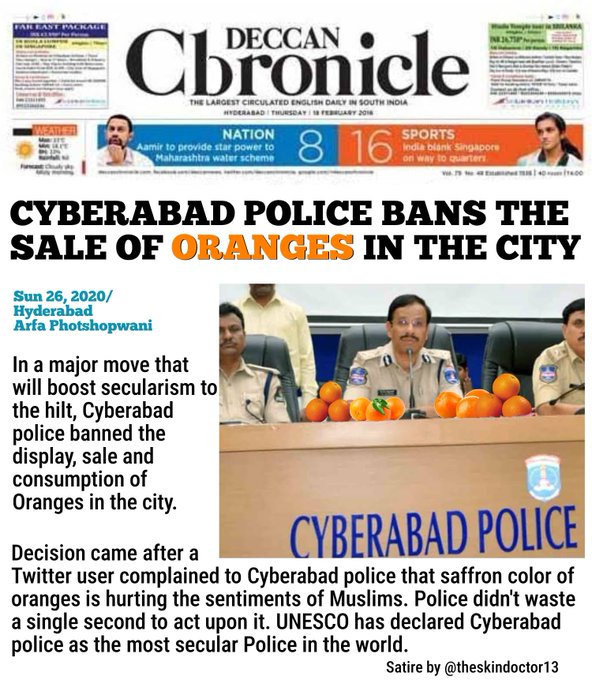
Hyderabad: Cyberabad police registers FIR against satire that said they banned oranges in the city, despite disclaimer announcing that it is satire

The Cyberabad police had recently faced widespread criticism for initiating action against a Hindu shopkeeper who had displayed the saffron flag on his cart, based on a tweet by a Muslim person who had claimed that the saffron flag by ‘Sanghis’ is promoting religious discrimination. Popular Twitter handle @theskindoctor who often posts photoshopped images for satirical purposes has shared another joke on social media mocking the incident.

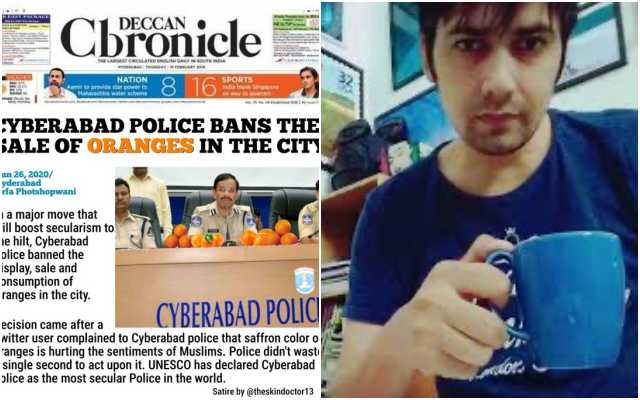
In an image that clearly said “satire” at the bottom, @theskindoctor had attempted to draw attention to the absurdity of the Hyderabad police initiating action against saffron flags in the name of secularism.

Major Neelum Singh (rtd), who runs the popular Twitter handle @skindoctor had used the photoshopped front page of Hyderabad-based English daily Deccan Chronicle and had created a spoof report that said the Cyberabad police has banned the sale of oranges in the city to ‘boost secularism’. The image had clearly mentioned that it is a satire. Many twitter users had shared the image, including BJP leader Major Surendra Poonia, who later deleted it.

However, the Cyberabad police does not seem to take even jokes about the saffron or orange colour lightly. The police have reportedly registered an FIR against skin doctor for the image.

Skindoctor shared the information on Twitter that there has been an FIR against him in Hyderabad.

It is notable here that despite the image declaring that it is an satire, and obvious satirical lines in it, like “Deccan Cbronicle” for the name of the news paper, report by “Arfa Photoshopwani” and a line at the bottom that said, “Cyberabad police has been declared the most secular police in the world by UNESCO” the Cyberabad police has treated the image as ‘fake news’ and have filed a case against @skindoctor for it.

Speaking to OpIndia, skindoctor stated, “I had clearly written that it is a “satire”. I had also written my handle name and had myself tagged Cyberabad police in it. Despite that, I’m booked under 153A and other sections.”

The arbitrary action of the Cyberabad police, on the top of the recent news of the action against poor fruit vendors for sporting saffron flags, have created an outrage among Twitter users.

The recent news of police action in Jharkhand and Bihar against poor vendors just for displaying their religion on their carts, which is a common practice for many, has left many baffled at the level of harassment that is going on against poor, common Hindus in the name of secularism and appeasement.

BJP MP Arvind Dharmapuri had also demanded to know the reason behind the official Twitter handle of the Cyberabad police tagging the Rajendra Nagar police station to look into the matter where a Muslim Twitter user had claimed that by displaying saffron flags, the shopkeeper is practising religious discrimination.

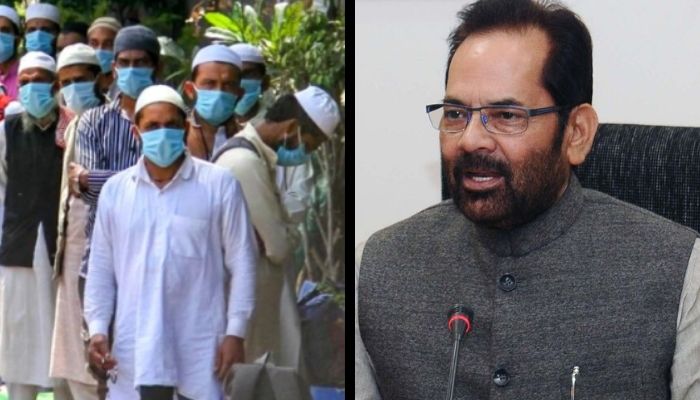
Union Minister Mukhtar Abbas Naqvi calls out ‘Tablighi Heroes’, says patriotic Muslims donating plasma doesn’t absolve Tablighis of their crime

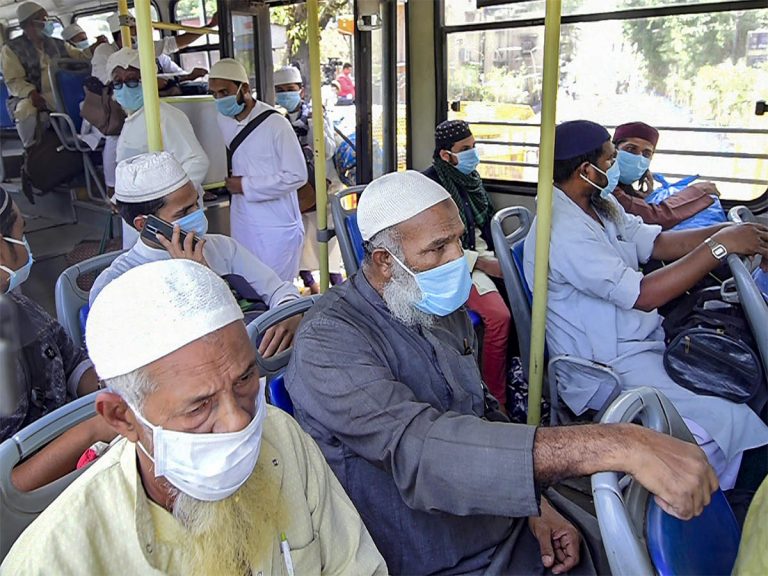
On Monday, Mukhtar Abbas Naqvi, BJP leader, and Minority Affairs Minister, took to Twitter to slam members of the Tablighi Jamaat who, despite endangering public health and safety, have the audacity to claim themselves a “Corona warriors.” Calling out their sinful behaviour and “criminal conduct”, the BJP politician accused the Jamaatis of insulting lacs of Corona Warriors.

Mukhtar Abbas Naqvi also pointed out that the action of patriotic Indian Muslims to donate plasma to help fight the Wuhan Coronavirus should not be confused with that of the well-hatched conspiracy of the Tablighi Jammat members to prove every Indian Muslim as a Jamaati.

His stinging comments came after a few people chose to whitewash the actions of the Jamaatis in endangering public health by citing the example of some recovered Jamaatis who decided to donate their plasma.

Role of Tablighi Jamaat

The Tablighi Jamaat fiasco was, undoubtedly, the biggest setback to India’s fight against the Wuhan Coronavirus. The mass gathering at the Markaz Nizamuddin in Delhi, and the subsequent transport of the virus through carriers across the length and breadth of India has jeopardised greatly the safety and health of this country.

However, if the gathering itself was irresponsible borne of a toxic mix of ignorance, stupidity, and callousness, the conduct of some of the Jamaatis that followed could only be attributed to their perversity. Some were also involved in attacking health workers, making bizarre demands and spitting on doctors.

3 senior IRS officers chargesheeted for creating uncertainty and panic by publishing unauthorised tax hike report, stripped of charge

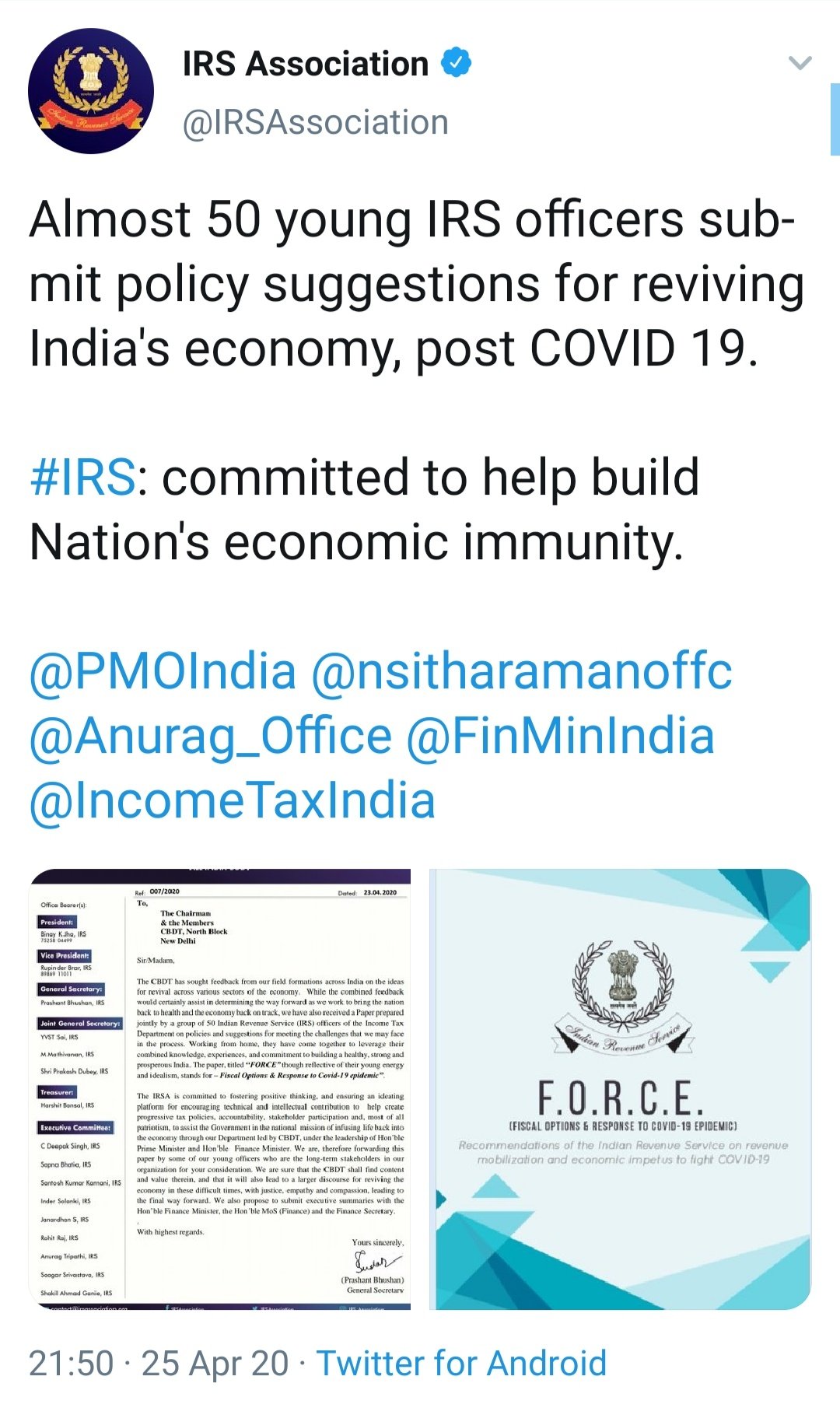
The Central Board of Direct Taxes (CBDT) on Monday issued chargesheet to three senior IRS officers under Rule 14 of CSS (CCA) Rules, 1965 over violation of rules and divested them of the current responsibilities. As per reports, the action was taken by CBDT for their role and and complicity in preparing the ‘tax hike’ report titled FORCE which was circulated in the media since April 25.

One of the officers, Prashant Bhushan, is the general secretary of the IRS Association and his wife is a Congress MLA from Begusarai in Bihar. Other officer chargesheeted is Prakash Dubey, currently posted at the DoPT and is the joint secretary of the IRS Association. The third officer Sanjay Bahadur is 1989 batch IRS officer and is currently posted as Principal Director, Investigation, North-East region.

According to ANI, government sources say that despite 30 years of experience in the service, these senior officers failed to exercise due care and misguided 50 young officers. The sources informed ANI that the government would have listened to the young officers and would have given due consideration. However, instead of sending the report to the government via official channel, the three senior officers misguided them and put out the report in public domain creating panic and anxiety.

Initial probe by the CBDT shows that the FORCE report created panic and tax policy uncertainty at a time when India is already going through a difficult economic situation amidst the coronavirus lockdown.

Netizens speculate selective leaking of FORCE report

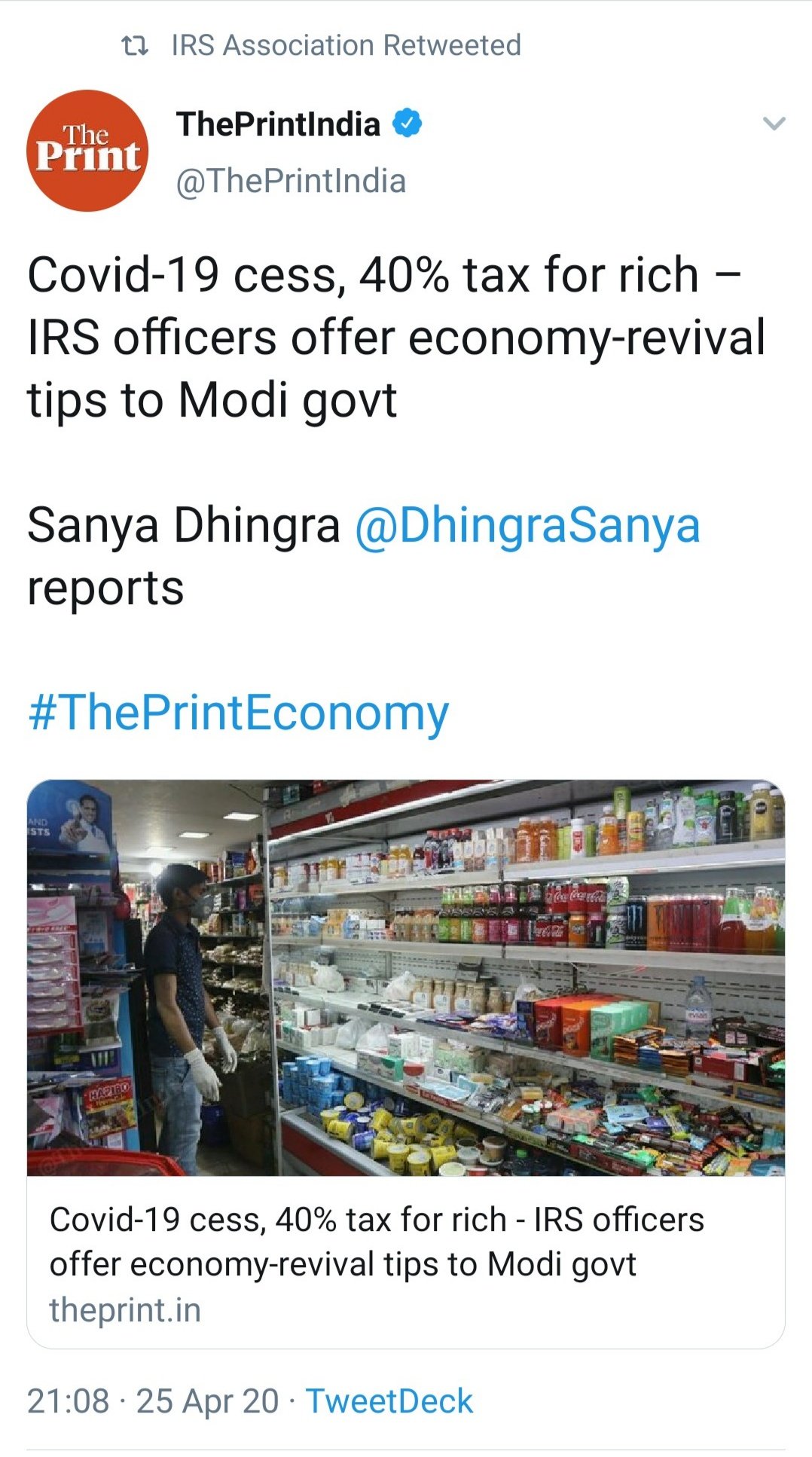
Following the action taken by CBDT, netizens speculated whether the FORCE report was selectively leaked to certain media outlets before officially being put up by IRS Association to create panic. As Twitter user and lawyer Ketan Bhate pointed out, Shekhar Gupta’s ThePrint published the report on FORCE report on 25th April 2020 and it was shared on social media at 9:08 PM.

ThePrint report shared on social media at 9:08 PM on April 25. (image courtesy: @BhateKetan on Twitter)

IRS Association also retweeted this ThePrint report. Further, the IRS Association shared the report through its official handle over 30 minutes after ThePrint published the story.

IRS Association tweeting FORCE report at 9:50 PM, over half an hour after ThePrint report (image courtesy: @BhateKetan on Twitter)

FORCE report

In the contentious report, the IRS officers suggested introducing the ‘wealth tax’, over-burdening the rich, and charging an additional 4% cess to bridge revenue deficit caused due to the Wuhan Coronavirus outbreak. As per the 43-page report, the Government can earn up to ₹18,000 crores by implementing the suggested proposals.

One of the recommendations of the report was the introduction of the wealth tax to be charged to those with a net worth of ₹5 crores or more. Besides, the IRS officers suggested levying a one-time 4% ‘COVID Relief Cess’ on individuals with more than ₹10 lac annual income. Moreover, the document also proposed taxing individuals with more than ₹1 crore annual income at 40%, which is 10% higher than the current 30%. As such, the income tax liability on such individuals will be close to 56%.

Along with the above measures, the IRS officers also recommended increased surcharges for foreign companies in India, creation of an amnesty scheme to collect unpaid tax, sanctioning of ‘Coronavirus Savings Certificates’ for investments not more than ₹2.5 lacs for 5 years, taxation of multinational firms making royalty payments to their parent companies and 3% equalisation charge to e-commerce companies.

Coronavirus outbreak: 10 Indonesian nationals who had attended Tablighi Jamaat meet in Delhi arrested from Mumbai

0

Even as the financial hub of the country, Mumbai, staggers under a steep surge of the Wuhan Coronavirus cases, 10 foreign nationals from Indonesia, who had attended the Tablighi Jamaat event at Markaz Nizamuddin in mid-March were arrested from the city under relevant IPC sections after completion of their quarantine period.

The arrested 10 Indonesians were a part of 12 Tablighi Jamaat members from Indonesia who were staying at an apartment in Mumbai’s Bandra West from the 29th of March after attending the Jamaat meet, an official privy to the details of the arrest said. The official added that the police came to know about Tablighi Jamaat members staying in Bandra only on the 1st of April. “We discovered that they had travelled to India in two groups on February 29 and March 3 and later visited the Markaz for the congregation,” he said.

Raising alarm about the possible spread of the virus in the city, the official said that though the Jamaat members had reached Mumbai on March 7, they hunkered down in an apartment only on March 29, implying that they might have been wandering around the city during the 22 days. “During their medical examination, two members of the 12-member group tested positive for coronavirus, following which 10 others were placed under quarantine for a period of 20 days. They were arrested on Wednesday (April 22),” he said.

They are arrested under sections 188 (Disobedience to order duly promulgated by a public servant), 269 (Negligent act likely to spread infection of disease that is dangerous to life) and 270 (Malignant act likely to spread infection of disease dangerous to life) of the Indian Penal Code (IPC), and under relevant provisions of the Epidemic Diseases Act. They were brought before the Bandra court on April 23 which sent them in the custody of the Bandra police.

Mumbai has emerged as the potent coronavirus hotspots in the country, with the number of cases registered in the financial capital is witnessing a sudden uptick. According to the latest statistics, the total number of positive coronavirus in the metropolis stands at 5407 and the overall death toll at 204.

Tablighi Jamaat meet-a super-spreader of coronavirus

The Tablighi Jamaat time bomb erupted across the country in the last week of March when around 200 people with Wuhan Coronavirus symptoms were admitted to various hospitals in Delhi from the Markaz Nizamuddin and surrounding places. Subsequently, the area around the Markaz Nizamuddin was cordoned off by the Delhi Police. Soon, cases began to erupt across the country with links to the Tablighi Jamaat and the country stood horrified as the magnitude of the Islamic Missionary organization’s transgressions became known.

Soon enough, it became known that around two thousand people, quite possibly a lot more, had attended the event and as late as the 22nd of March, 2500 people were present at the premises of the Markaz Nizamuddin and around 1500 of them left the place on the 23rd of March. Even so, it meant that around a thousand people were still stuck at the global headquarters of the Tablighi Jamaat as of the 24th of March. Since then, it has been a continuous series of escalations and atrocious conduct by the members of the Jamaat who have made things difficult for the administration and the healthcare providers at every step along the way.