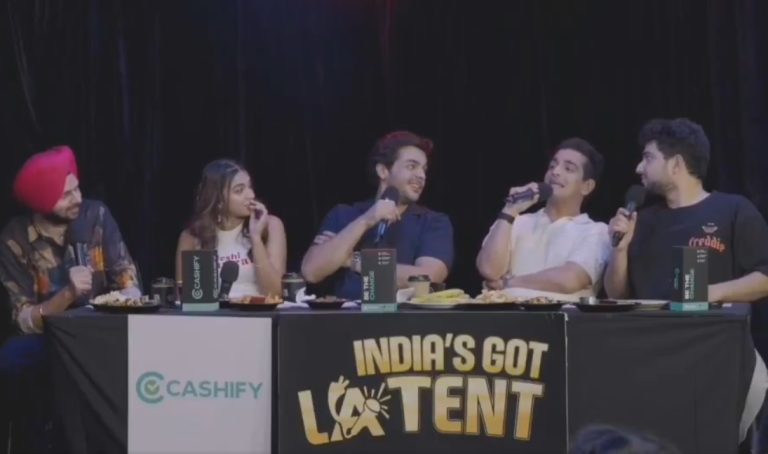
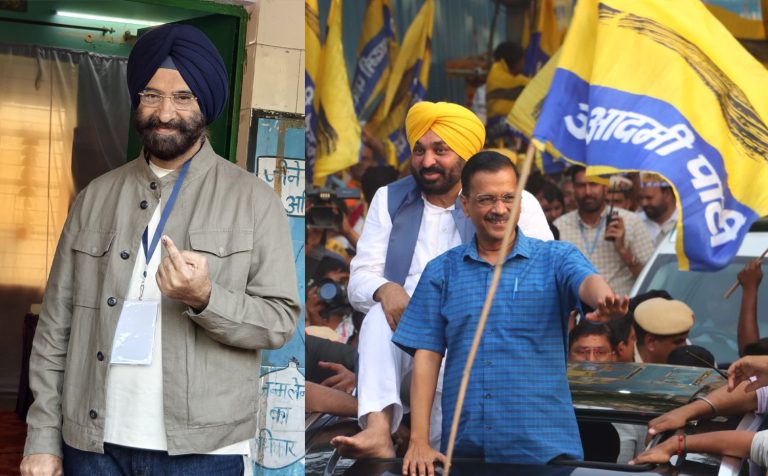
Comedian Samay Raina has finally broken his silence on the ongoing controversy surrounding his YouTube show, ‘India’s Got Latent’.
The stand-up comedian took to his Instagram Stories to share a statement stating that he has removed all videos of the show from his channel and is “fully cooperating” with the authorities. He also added that his only intention was to entertain people.
“Everything that has been happening has been too much for me to handle. I have removed all India’s Got Latent videos from my channel. My only objective was to make people laugh and have a good time. I will fully cooperate with all agencies to ensure their inquiries are concluded fairly. Thank you,” Samay wrote on his Instagram Story.
The controversy erupted after a remark by YouTuber Ranveer Allahbadia in a recent episode of the show did not go down well with the audience. Following the backlash, a formal complaint was filed against Ranveer Allahbadia, social media influencer Apoorva Makhija, comedian Samay Raina, and the organizers of India’s Got Latent.
Meanwhile, Allahbadia had earlier issued a public apology, admitting that his comments were “inappropriate” and that he “had a lapse in judgment.”
“My comment wasn’t just inappropriate, it wasn’t even funny. Comedy is not my forte, I am just here to say sorry,” he said in a video posted on his X account.
He also acknowledged concerns about his influence on young audiences. “The podcast is watched by people of all ages. I don’t want to be the kind of person who takes that responsibility lightly. Family is the last thing that I would ever disrespect. I need to use this platform better. That has been my learning from this whole experience,” he added.
(This news report is published from a syndicated feed. Except for the headline, the content has not been written or edited by OpIndia staff)
In the wake of the recent revelations about how USAID funded journalists around the world to safeguard strategic interests of the American Deep State, we investigated funding and links of some media organizations that have been very critical of the current ruling dispensation in India.
The billionaire Omidyar earlier invested in India through an organization called the Omidyar Network. This Omidyar Network was also a partner in the ‘Alliance for Affordable Internet’ initiative of USAID and jointly invested in the Global Impact Investing Network (GIIN) with the Rockefeller Foundation.
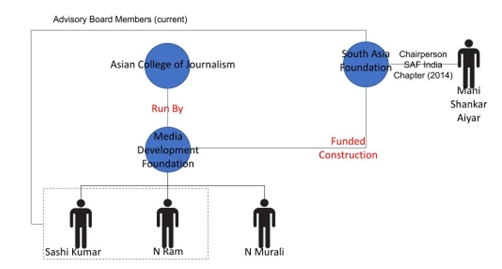
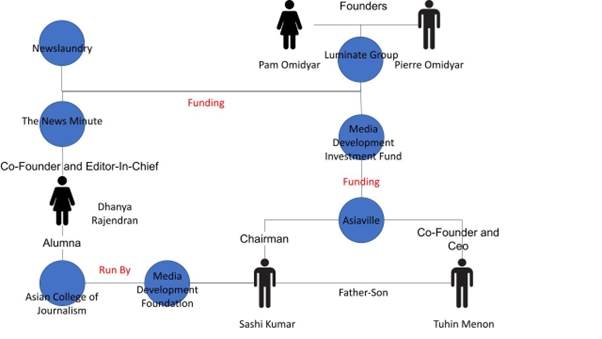
Pierre and Pam Omidyar also have another organization called the Luminate Group, which is making investments in India. These two graphics and subsequent explanations ought to give an explanation.
In FY 2014-2015, Media Development Foundation received more than Rs 80 lakhs from South Asia Foundation, a non-profit registered in France, through an MoU signed in 2007, through the FCRA route
Currently, Mr Sashi Kumar and Mr N. Ram are both part of the advisory body of South Asia Foundation, along with Mr Navin Chawla and ex-NAC member Dr Syeda Hameed.
ACJ and Omidyar
Mr Pierre Omidyar and Ms Pam Omidyar have established the Luminate Group for safeguarding press freedom and democracy, with the same team that worked for the Omidyar Network.
Luminate Group has also donated to Global Disinformation Index (GDI), is a London-based think tank focused on combating alleged disinformation on online news sites. GDI is jointly funded by, among other entities, the Open Society Foundation
The Luminate Group has funded Media Development Investment Fund – document retrieved from Luminate Group site
Co-Founder and Editor-In-Chief of The News Minute, Ms Dhanya Rajendran is an alumna of the Asian College of Journalism.
ACJ and the United States State Department
The US Consulate at Chennai and ACJ jointly conducted a series of workshops by U.S. and Indian fact-checking experts, discussions among senior journalists, news ombudsmen, and working journalists during a series of workshops conducted across South India in the regional languages of Kannada, Malayalam, and Tamil in July-September 2019. Dan Shelley, Executive Director, Radio Television Digital News Association, Washington, D.C. was among the participants. A handbook for fact-checking has been published as a result of these deliberations, utilizing a grant from the US Consulate at Chennai.
The handbook recommends a set of fact checking websites for journalists to use, which include Alt News run by Mr Mohammed Zubair and Mr Pratik Sinha, Boom Live, SMHoax Slayer and Factchecker.in. Alt News is also credited as a partner that supplied training material and conducted sessions.
Radio Television Digital News Association is run by RTDNA Foundation, a founded by Colonel Barney Oldfield, whose long and impressive career included a stint as a Hollywood studio publicist, WWII Army and post-war Air Force public relations officer, author, lecturer, businessman and philanthropist who founded over 40 private foundations including the RTDNA Foundation. Col. Oldfield served as press aide to Gen Eisenhower during World War II, after which he worked as a public relations agent in Hollywood and worked for three decades in public relations for Litton Industries, an American defense contractor.
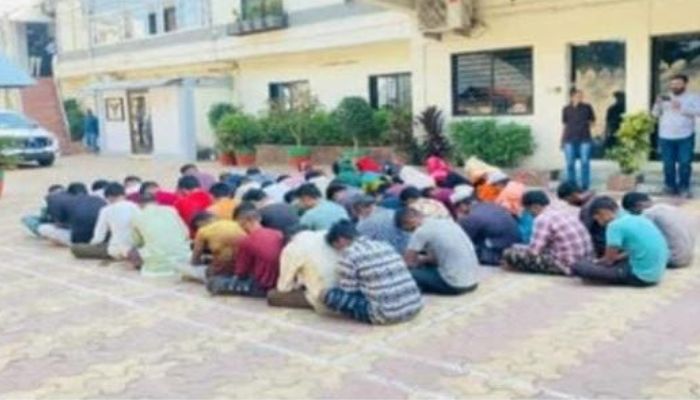
As the crackdown on illegal Bangladeshi immigrants continues across the country, especially in Gujarat, on Wednesday (12 February 2025), Minister of State for Home Harsh Sanghvi informed on X that 15 such Bangladeshi infiltrators have been deported.
Sanghvi wrote, “Ahmedabad Crime Branch took action against anti-national activities! 15 immigrants successfully sent to Bangladesh.”
Ahmedabad Crime Branch Cracks Down on Anti-National Activities!
Successfully deported 15 immigrants to Bangladesh.
– Identified and arrested persons involved in trafficking minor girls for prostitution – Busted a racket producing fake Indian documents for illegal immigrants -… pic.twitter.com/agkzS5gkHU
The minister said that persons involved in trafficking minor girls for prostitution were identified and arrested. For this, the police had busted a racket of making fake Indian documents for illegal immigrants.
The deportation was done by the Ahmedabad Crime Branch.
Notably, 50 such infiltrators have been arrested so far after raids were conducted at many places including Chandola, and Danilimda. Out of these, 15 people and 1 minor have been deported so far. The process of deporting others is also underway.
These immigrants were found to be in possession of fake Indian documents, including fake Aadhar cards. The authorities also uncovered a human trafficking ring involving Bangladeshi women and minor girls being trafficked for prostitution.
Investigations revealed that the immigrants had been living in Ahmedabad under pressure and had been involved in activities against the country. Following the discovery of proof of their Bangladeshi citizenship, deportation proceedings were initiated.
On February 1, the 15 Bangladeshi immigrants, including the minor, were successfully deported to Bangladesh with the Bangladeshi embassy providing evidence of the immigrants’ citizenship. Deportation for 35 more individuals is expected to take place by March.
ACP Bharat Patel further stated that the women involved in prostitution were exploited by agents, and money generated from these activities had been sent to Bangladesh under the guise of trade.
Authorities are continuing their investigations into the trafficking network and the funds transferred to Bangladesh.
Meanwhile, in Delhi, teams of Dwarka district, Delhi Police apprehended a total of 16 people suspected of staying in India illegally, among whom five were Bangladeshi nationals.
The teams succeeded in apprehending alleged Bangladeshi nationals Mohd Sharif, 54; Najrul Shiekh, 50; Parveen, 25, wife of Najrul Shiekh, and two children. Foreign nationals allegedly from African countries were apprehended by the police.
The officials said that the people were found overstaying in India without a valid Visa. They were produced before the Foreign Regional Registration Office (FRRO), which ordered their deportation. Accordingly, they were sent to a detention centre.
Earlier on February 7, Mumbai’s RCF police arrested seven Bangladeshi citizens who were allegedly living illegally in Chembur’s Mahul village for the last five years. The Bangladeshi nationals–three men and four women–were arrested, as per the Mumbai Police.
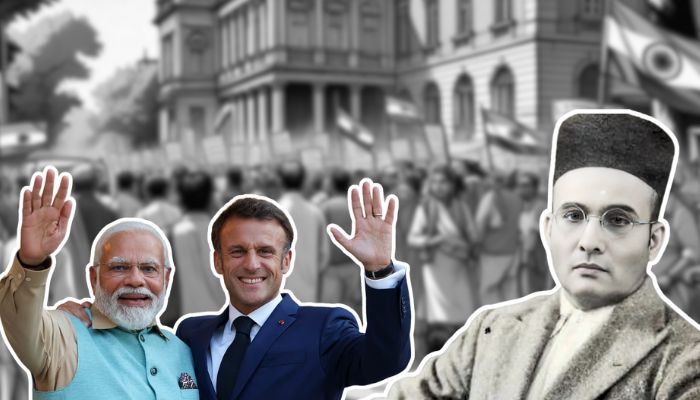
In the vast tapestry of India’s freedom struggle, woven with the fine threads of fortitude and resilience, are the heroic tales of freedom fighters who gave it their all in the quest for India’s independence. Their shining legacy continues to intrigue and inspire people. One such freedom fighter is Vinayak Damodar Savarkar, popularly known as Veer Savarkar. As Prime Minister Narendra Modi is in France for a three-day visit, he visited Marseille on 11th February as he remembered Savarkar’s ‘escape to liberty’ in the French city.
Taking to X, PM Modi remembered Veer Savarkar’s “courageous escape” from the British captivity at the French port city of Marseille. He also thanked the French activists of that time who demanded that the Indian revolutionary not be handed over to British custody.
“Landed in Marseille. In India’s quest for freedom, this city holds special significance. It was here that the great Veer Savarkar attempted a courageous escape. I also want to thank the people of Marseille and the French activists of that time who demanded that he not be handed over to British custody. The bravery of Veer Savarkar continues to inspire generations!” PM Modi posted.
Landed in Marseille. In India’s quest for freedom, this city holds special significance. It was here that the great Veer Savarkar attempted a courageous escape. I also want to thank the people of Marseille and the French activists of that time who demanded that he not be handed…
On Wednesday, PM Modi and French President Emmanuel Macron visited Marseille to pay homage to Veer Savarkar. As the two world leaders honour Savarkar’s historical connection with the French port city, what made Savarkar’s daring escape attempt significant is what happened before and after the escape.
Veer Savarkar arrested by British authorities: Crime? Galvanising revolutionary activities against the British colonialists
In the early 1910, Veer Savarkar was arrested in London in connection with the Nasik Conspiracy Case. In 1909, AMT Jackson, then district magistrate of Nasik was assassinated by by Anant Laxman Kanhare. It was during the investigation of this case that the existence of Savarkar’s Abhinav Bharat Society and how Savarkar’s poems, books and speeches were inspiring Indian youth to resist the British oppressors came to the fore for the Englishmen, who were spooked by a revolution of sorts quietly sweeping the nation and mobilising youth against the British.
Acting on a war footing, the British commissioned a preliminary investigation into the assassination of Jackson, which revealed that the weapon used for the Jackson murder had been sent from London by Savarkar.
The assassination of Curzon Wyllie, the political aide-de-camp to the Secretary of State for India, Lord George Hamilton by Madan Lal Dhingra, an Indian revolutionary and member of Savarkar’s India House in London, already created further troubles for Savarkar. This was because he refused to condemn Wyllie’s assassination in The Sociologist, and was accused of supplying a gun to Dhingra. As India House and Abhinav Bharat’s role caught the notice of the British, several Indian revolutionaries in Britain decided to move to Japan, the USA and France.
Savarkar had also moved to Paris in 1909 following the crackdown on India House. But he returned to London in 1910. Despite knowing that the Fugitive Offenders Act had been slapped on him, Savarkar returned to London. He was, however, unaware that a plan to arrest him was already in progress. In the Nasik Conspiracy case, Veer Savarkar was charged with sedition, waging war against the British Government and conspiring to overthrow it.
As per a letter dated 26th March 1910 from Assistant Police Inspector Guyder to Deputy Superintendent C.I.D. Charles John Power, the latter was accompanied by three police jamadars who were tasked with serving the arrest warrant issued against Savarkar. However, one of the officers Usman Khan passed away after reaching London.
Veer Savarkar was taken to Bow Street Magistrate and his belongings were searched. The Indian freedom fighter was found carrying nationalist books, newspaper cuttings, photographs of Mazzini and Madan Lal Dhingra, his writings on Garibaldi and a paper with code language. Savarkar was tortured to decipher the code language, however, he did not reveal the message.
Meanwhile, two plans were chalked out to free Savarkar from Brixton Jail, however, he gave a cryptic message to one of his compatriots VVS Aiyar: “While heading to Hindustan, the ship will halt at Marseille Port…”
Savarkar’s ideas encapsulated in his popular book The Indian War of Independence, already made him a marked man by the British government, however, despite being incarcerated and stripped of his freedom, Savarkar’s spirit and patriotic zeal remained unbroken.
The daring leap to liberty at Marseille
On 8th July 1910, when Veer Savarkar was being transported to India for trial aboard the British ship SS Morea, leapt through the porthole of the ship at Marseille port. Savarkar managed to escape even though a strict vigil was placed on him by the police and there were no portholes in the room he was kept in. In fact, he was not even allowed to walk or sit alone and had to take his meals while sitting between two police officers— Detective-Inspector Edward Parker of Scotland Yard, Deputy Superintendent C.I.D. Charles John Power.
Moreover, the French authorities had received intelligence from British authorities in advance that attempts might be made at Marseille to free Savarkar.
At around 6:15 am, Savarkar asked the two police officials Amarsingh Sakharamsingh Pardeshi from Nashik and Muhammed Siddique from Poona to take him to the ship’s toilet., It is said that Pardeshi was a former member of Savarkar’s secret society Mitra Mela. After entering the lavatory, Savarkar locked the door from inside and was escaping from the porthole there when the officers understood that their captive had escaped.
Savarkar swam 10-12 feet and climbed up the quay wall. He came across a French gendarme and requested to take him into custody as Savarkar wanted to take political asylum in France. However, the French officer did not understand English and arrested him. Later, Savarkar was handed over to the British authorities and brought back to Morea.
Beyond the courage shown in escaping the British captivity, Savarkar’s greatness does not lie in the distance he swam but in the fact that despite having the option to escape arrest, he decided to court arrest to prove his mettle. Once the purpose was served, Savarkar’s escape attempt was to mock and embarrass the British government. In fact, his attempt to seek asylum on French soil was his way of challenging the British government’s supposed ‘law-abiding’ credentials in front of the world.
British media downplayed Savarkar’s heroism but French media and politicians supported the Indian freedom fighter
While the British media, unsurprisingly downplayed Savarkar’s daring escape attempt with there being very limited coverage in Daily Mail, the incident created a sensation in France. The French media widely covered the incident and French socialists. A French Socialist paper L’Humanite condemned the French authorities for denying asylum to Veer Savarkar and wrote, “This abominable violation of the right of asylum was effected in absolute secrecy; had it not been for a telegram published yesterday (July 11th) in the Paris Daily Mail we should still have been in ignorance of the incident. But it is quite impossible that the matter can be allowed to rest here. In delivering up a political refugee the Marseilles authorities – admitting that they had acted on their own initiative – have committed an outrage of which account will most assuredly be demanded and in respect of which the sanction of the State itself is necessary.”
Similarly, some non-socialist papers L’Eclaire Le Temps, and Le Matin also declared Savarkar’s arrest in France as an “international scandal” and a violation of the right to asylum. Making most of the opportunity to highlight the Indian freedom struggle, Shyamji, Ranaji and Madam Cama approached French leaders like Monsieur Jaures among others and convinced them that a massive blunder has been committed by the French authorities in denying Veer Savarkar asylum and allowing his arrest on French soil.
L’affaire Savarkar
Amidst outrage in the French media and civil society, France communicated to the British authorities that Veer Savarkar should be handed back to them as he was arrested on French soil. The French authorities alleged a violation of international laws regarding asylum and extradition. However, Britain was of the view that Savarkar was not in France for long enough to claim asylum and tried to make seem like it was a domestic issue. Based on this assertion, Britain refused to hand Savarkar back to the French government.
The disagreement between the two governments led to one of the most controversial cases brought before the Hague Tribunal. Justice was the last outcome Veer Savarkar or the French government would have expected from this trial since most of the arbitrators at the Permanent Court of Arbitration were inclined towards Britain.
For Savarkar’s case, the tribunal was composed of August M. F. Beernaert of Belgium, Earl of Desart of England, Louis Renault of France, Gregors Gram of Norway and A. F. de Savornin Lohman of Holland. The trial began on 14th February 1911 and ended on 17th February 1911, the verdict was pronounced on 24th February 1911.
Unsurprisingly, the Hague Tribunal under President Beernaert ruled in favour of Britain and said that there was no obligation on the part of Britain to return Veer Savarkar to France. The tribunal concluded that there was no violation of international law or France’s sovereignty. It said that the French constable acted in good faith by returning Savarkar to British custody.
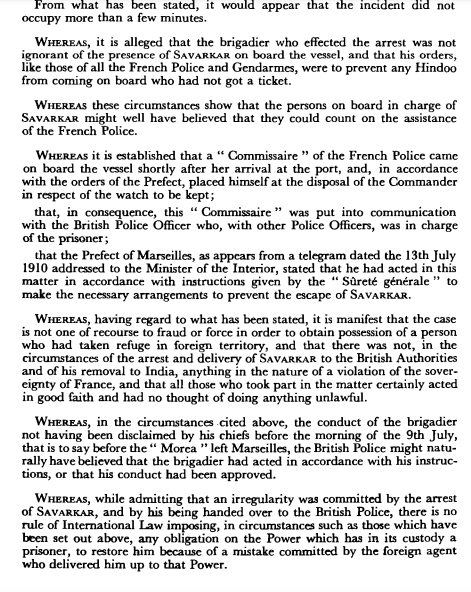
“WHEREAS, having regard to what has been stated, it is manifest that the case is not one of recourse to fraud or force to obtain possession of a person who had taken refuge in foreign territory and that there was not, in the circumstances of the arrest and delivery of SAVARKAR to the British Authorities and of his removal to India, anything like a violation of the sovereignty of France, and that all those who took part in the matter certainly acted in good faith and had no thought of doing anything unlawful,” the Hague Tribunal said.
“WHEREAS, in the circumstances cited above, the conduct of the brigadier not having been disclaimed by his chiefs before the morning of the 9th July, that is to say before the ” Morea ” left Marseilles, the British Police might naturally have believed that the brigadier had acted by his instructions, or that his conduct had been approved,” it continued.
Excerpt from Hague Tribunal’s order (Source: legal.un.org)
The Hague Tribunal admitted that an irregularity was indeed committed in Savarkar’s arrest on French soil and his subsequent handover to the British police, it did not necessitate Britain to return the Indian revolutionary to France.
“WHEREAS, while admitting that an irregularity was committed by the arrest of SAVARKAR, and by his being handed over to the British Police, there is no rule of International Law imposing, in circumstances such as those which have been set out above, any obligation on the Power which has in its custody a prisoner, to restore him because of a mistake committed by the foreign agent who delivered him up to that Power,” the Hague Tribunal’s order stated.
“The Arbitral Tribunal decides that the Government of His Britannic Majesty is not required to restore the said VINAYAK DAMODAR SAVARKAR to the Government of the French Republic,” the Hague Tribunal ruled.
With the Hague Tribunal ruling in favour of Britain, Veer Savarkar was brought back to India and tried in the Nasik Conspiracy case. He was tried in two other cases as well. The trials went on for 68 days and on 24th December 1910, a 28-year-old Veer Savarkar was sentenced to life imprisonment in the Cellular Jail in Andaman and Nicobar Islands. During his time in Kala Pani, Veer Savarkar was subjected to torture and suffering. He was also subjected to neck shackles, cross-bar iron fetters, and forced to do hard labour. As if this was not enough, the British government started a second trial against him and Savarkar was given a second life sentence on 30th January 1911.
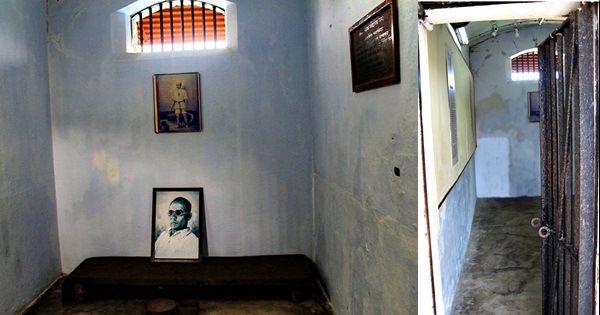
Veer Savarkar’s prison cell at Cellular Jail in the Andamans (Source: MyIndiaMyGlory)
Fifty years in the grim confines of Kala Pani, however, could not deter Veer Savarkar from his commitment and passion for a Swatantra Bharat. Despite being subjected to indescribable torment, wrote some of his most influential Marathi poems and books from prison including Hindutva: Who is a Hindu? During his time in jail, Savarkar closely observed how Hindu inmates were discriminated against by the Muslims warders with many even converted to Islam. He also advocated for prison reforms. He wrote strategic letters of ploy to the Britishers, not only for himself but for others also, to get out of jail. Even after coming out of jail in 1924, Savarkar continued his efforts towards uniting Indians against the oppressive British Raj. While the Islamo-leftist ecosystem to this day continues to malign Veer Savarkar’s legacy, the Modi government honours the struggles and sacrifices of Veer Savarkar and is now celebrating his legacy to cement diplomatic and cultural ties with France.
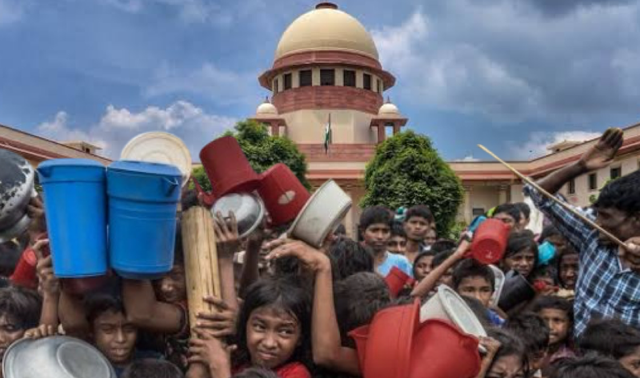
On Wednesday (February 12), the top court of the country said education shall be provided to all children without discrimination in response to a PIL filed seeking government benefits and school admissions for Rohingya refugees. The court, however, added that before deciding on the benefits for the Rohingya refugees, the status of residence of their families needs to be ascertained.
Emphasising that children’s education should not face discrimination, the Bench, comprising Justice Surya Kant and Justice N Kotiswar Singh, directed the NGO to submit address proof of Rohingya immigrants in Delhi to assess possible relief measures.
Additionally, the court ordered the NGO not to disclose personal details of minor children. The court will hear the matter again on February 28.
This directive came in response to a public interest litigation (PIL) filed by the NGO, which sought a mandate ensuring that Rohingya refugees could enrol their children in schools and access government benefits without requiring Aadhaar cards or citizenship verification.
Senior Advocate Colin Gonsalves, representing the petitioner, argued that the Rohingya refugees were in a dire situation, unable to secure school admissions for their children in Delhi.
When the Supreme Court requested their residential details, Gonsalves noted that the refugees possessed identity cards issued by the United Nations High Commissioner for Refugees (UNHCR), recognizing their status.
The Bench stated that once details regarding the Rohingya immigrants’ living conditions were submitted, it would determine how to assist.
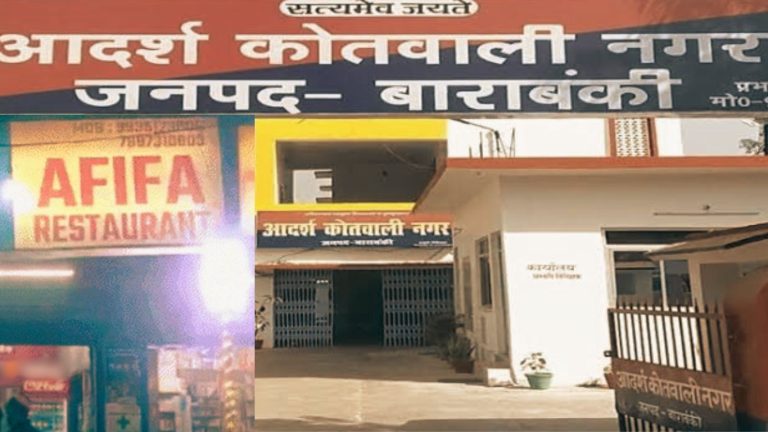
Uttar Pradesh police have reportedly arrested the owner of a restaurant named Afifa restaurant in the Nabiganj area in Barabanki in connection with the forced religious conversion of a minor Dalit boy. The restaurant owner had allegedly forced the minor boy to undergo circumcision and convert to Islam. All the accused, including the restaurant owner, have been arrested by the police in the case.
The minor boy approached a Bajrang Dal leader
The matter came to light last year in December when a case was filed by a Bajrang Dal leader named Vinay Singh Rajput after the minor boy narrated his ordeal to him. On receiving information about the forced conversion of a minor Hindu boy, Vinay Singh Rajput along with Vishwa Hindu Parishad (VHP) District President Brijesh Vaishya visited the Afifa restaurant in Barabanki where the boy used to work.
The boy told them that he was brought here by scrap dealers Murshid and Riyasat Ali (Murshid’s father) on the promise of a job. They kept him for some time and later he was given a job at Afifa restaurant. The boy accused the restaurant owner of forcefully making him undergo circumcision and converting him to Islam. The restaurant owner also changed his name to Noor Mohammad.
Bail applications of the two accused were rejected
A case was filed against Murshid, Riyasat Ali and the restaurant owner at the Barabanki police station on the complaint of Rajput under the provisions of the Uttar Pradesh Prohibition of Unlawful Conversion of Religion Act, 2021 and the Scheduled Caste and Scheduled Tribe (Prevention of Atrocities) Act, 1989. Murshid and Riyasat Ali were immediately arrested by the police while the restaurant owner was on the run. The bail applications of the two arrested accused were rejected by the court on 20th December, 2024. OpIndia has obtained copies of the FIR and the bail orders. After the filing of the case, the minor boy was sent by the police to the Juvenile Justice Board Azamgarh.
The victim’s father was allegedly killed by his Muslim step-mother
According to police, the boy is a resident of Atraulia police station area of Azamgarh. The boy’s father had reportedly performed a second marriage with a Muslim woman after the death of his first Hindu wife and the boy’s mother. The boy has an elder sister who is married and lives in Ahmedabad. The boy alleged that his father was killed by his stepmother for property. She threw the boy out of the house after his father’s death. He came in touch with Murshid and Riyasat Ali while looking for a job.
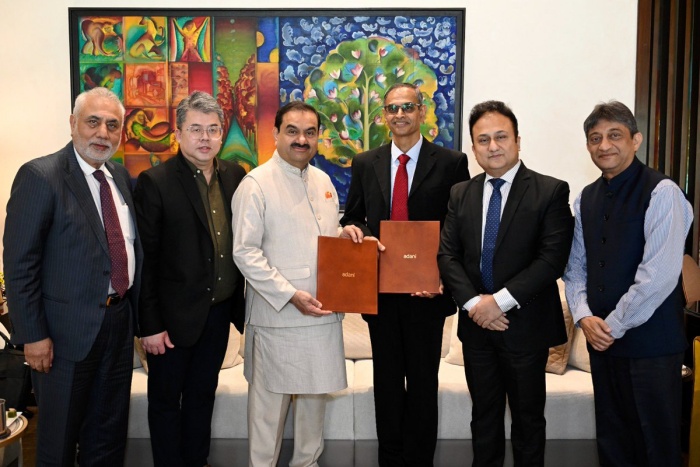
The Adani Group has partnered with Singapore-based ITEES to develop an advanced technical training centre, keeping up with the increasing demand for a highly skilled technical workforce in the coming years. Adani Group chairperson Gautam Adani informed in a post on X that the Group is going to establish the world’s largest finishing school in Mundra, Gujarat.
Delighted to announce one of India’s largest Skill & Employ initiatives! In partnership with Singapore’s ITEES, the global leader in technical training, the Adani Group is launching the world’s largest finishing school in Mundra. This state-of-the-art facility will blend… pic.twitter.com/uZUsw3I1HB
“Delighted to announce one of India’s largest Skill & Employ initiatives! In partnership with Singapore’s ITEES, the global leader in technical training, the Adani Group is launching the world’s largest finishing school in Mundra” Gautam Adani posted.
He further added that the proposed state-of-the-art facility will blend AI-driven immersive learning with cutting-edge innovation centres, and annually train over 25,000 learners to help accelerate the Make in India movement.
What is ITEES?
ITE Education Services (ITEES) is a globally acclaimed, skill-based technical training provider wholly owned by Singapore’s Institute of Technical Education (ITE). It has been providing technical and vocational training to learners from Singapore and worldwide, including several projects in India, the Middle East, Africa and Latin America.
ITEES already has a presence in India. It has been the knowledge partner at the World Skill Centre, Bhubaneswar, Odisha and Global Skills park in Madhya Pradesh.
In January 2024, ITEES signed an agreement with NAMTECH in India to collaborate on developing a world-class technical and vocational training ecosystem.
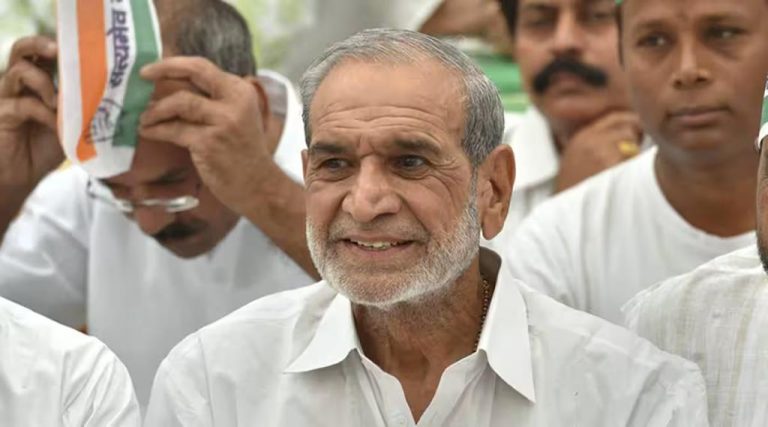
The Rouse Avenue court convicted former Congress MP Sajjan Kumar in a 1984 Anti Sikh riots case.
This case is linked with the killing of father son duo in Saraswati Vihar area on November 1, 1984. Sajjan Kumar is serving a life sentence in another anti Sikh riots case of Delhi Cantt.
Special judge Kaveri Baweja pronounced the judgement and convicted Sajjan Kumar.
Sajjan Kumar was produced physically before the court. On January 31, the court had reserved the order after hearing additional submissions by the Public Prosecutor Manish Rawat.
This case is related to the killings of one Jaswant Singh and his son Tarundeep Singh in Saraswati vihar area on November 1, 1984.
Advocate Anil Sharma had submitted that Sajjan Kumar’s name was not their from very beginning, law of foreign land is not applicable in this case and there was a delay of 16 years in naming Sajjan Kumar by the witness.
It was also submitted that a case in which Sajjan Kumar was Convicted by the Delhi High Court is pending appeal before the Supreme court.
Advocate Anil Sharma had also referred to the case cited by the senior advocate HS Phoolka. He submitted that the law of the land will prevail even in the extraordinary situation and not the international law.
Additional Public Prosecutor Manish Rawat in rebuttal had submitted that the accused was not known to the victim. When she (a family members killed in the riots) became aware that who is Sajjan Kumar she named him in her statement.
Earlier, Senior advocate H S Phoolka had appeared for riots victims and argued that the police investigations were manipulated in the Sikh riots cases. Police investigation was tardy and to save the accused.
It was argued that during riots situation was extraordinary. Therefore, these cases have to be dealt with in this context.
During the arguements senior advocate H S Phoolka had referred to judgement of Delhi High Court and submitted that It is not an isolated case, it was a part of bigger massacre, it is a part of genocide.
It was further argued that as per official figures 2700 Sikhs were killed in Delhi in 1984. It was an ordinary situation.
Senior Advocate Phoolka had referred to the Delhi High Court judgement in 1984 Delhi cantt case wherein the court called the riots crime against humanity. It was also said that objective of genocide is always targetting of minorities.
There is a delay. Supreme court took it seriously that there is delay and a SIT was constituted, he argued.
Senior advocate had also referred to the judgement delivered by foreign courts in the cases of genocide and crime against humanity. He also referred to Geneva Convention.
It was also submitted that a a charge sheet was prepared against Sajjan Kumar in 1992 but was not filed in the court. It shows that the police was trying to save Sajjan Kumar.
On November 1, 2023, the court had recorded the statement of Sajjan Kumar. He had denied all the charges levelled against him.
Initially an FIR was registered in Punjabi Bagh police station. Later on, this case was investigated by the Special Investigation Team constituted on the recommendation of justice G P Mathur committee and filed a charge sheet.
The committee had recommended the reopening of 114 cases. This case was one of them.
On December 16, 2021, the court had framed charges against the accused Sajjan Kumar for commission of the offences punishable Under Section 147/ 148/149 IPC as well as the offences punishable Under section 302/308/ 323/395/397/427/436/440 read with Section 149 IPC.
It has been alleged by the SIT that the accused was leading the said mob and upon his instigation and abetment, the mob had burnt alive the above two persons and had also damaged, destroyed and looted their household articles and other property, burnt their house and also inflicted severe injuries on the person of their family members and relatives residing in their house.
It is claimed that during the course of investigation, material witnesses of the case were traced out, examined and their statements were recorded under section 161 Cr.P.C.
The statements of complainant under the above provision was recorded on 23.11.2016 during the course of this further investigation, in which she again narrated the above incident of looting, arson and murders of her husband and son by the mob armed with deadly weapons and she is also claimed to have deposed therein about the injuries suffered by her and the other victims of the case, including her sister in law who is stated to have subsequently expired.
She had also clarified, interalia, in that statement that the photograph of accused was seen by her in a magazine after around one and half months.
(This news report is published from a syndicated feed. Except for the headline, the content has not been written or edited by OpIndia staff)
Bharatiya Janata Party winning candidate from Rajouri Garden, Manjinder Singh Sirsa, on Wednesday alleged Aam Aadmi Party National Convenor Arvind Kejriwal of attempting to stage a ‘coup’ against Punjab Chief Minister Bhagwant Mann.
He further claimed that the next 15-20 days would be crucial for the Punjab CM, as Kejriwal is likely to place blame on Mann for various issues and remove him from office.
This came following AAP’s massive defeat in the recently concluded Delhi Assembly polls, where they lost to the BJP by a significant margin.
Sirsa referred to the ousting of Punjab’s former Health Minister Vijay Singla, questioning if Kejriwal would succeed in replacing Mann with himself. He expressed doubts about Kejriwal’s ability to become the Punjab CM, adding that the situation would further weaken Mann’s position.
“The next 15-20 days are extremely crucial for Bhagwant Mann… He will be blamed for everything… Then he will be removed just like Punjab’s former health minister, Vijay Singla… But, after removing him, will Arvind Kejriwal be able to become the CM? I don’t think so… Arvind Kejriwal is trying to stage a coup against the Punjab CM seat,” Sirsa said.
Additionally, Sirsa said that all the winning MLAs in the Delhi Assembly Polls would meet with the National President in the coming days to discuss the party’s CM face and added that the discussion would take place once Prime Minister Narendra Modi returns from his visit to the US.
“All MLAs will meet the National President in the next two days… Our national leadership will discuss the CM face once PM Narendra Modi comes back (from the US visit),” he added.
The BJP had secured a landslide victory in the Delhi Assembly election results, which was declared on February 8, winning a two-thirds majority, while the ruling Aam Aadmi Party (AAP) suffered major setbacks, witnessing a drastic reduction in its numbers in the 70-member assembly.
The BJP won 48 seats in a historic mandate, marking its return to power in Delhi after 27 years. Several AAP leaders, including former Chief Minister Arvind Kejriwal, lost in their strongholds, while outgoing Chief Minister Atishi managed to retain her seat.
The Congress, which was hoping for a revival, once again failed to win a single seat.
(This news report is published from a syndicated feed. Except for the headline, the content has not been written or edited by OpIndia staff)
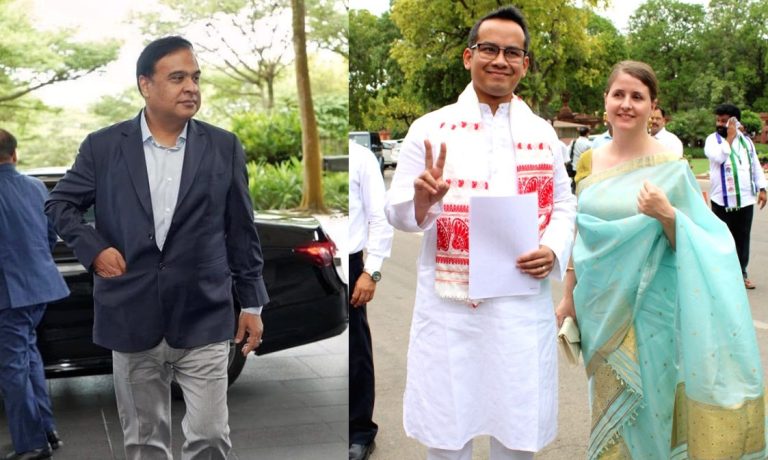
Assam CM Himanta Biswa Sarma launched an attack on Congress MP Gaurav Gogoi, without naming him, on the issue of Gogoi’s wife retaining her British citizenship for 12 years after their marriage in 2013. He also mentioned allegations of ISI links against Elizabeth Colburn, saying the questions must be answered.
In a post on X, the Assam CM wrote, “Serious questions need to be answered regarding allegations of ISI links, leading young individuals to the Pakistan Embassy for brainwashing and radicalization, and the refusal to take Indian citizenship for the past 12 years. Additionally, participation in a conversion cartel and receiving funds from external sources, including George Soros, to destabilize national security are grave concerns that cannot be ignored.”
Serious questions need to be answered regarding allegations of ISI links, leading young individuals to the Pakistan Embassy for brainwashing and radicalization, and the refusal to take Indian citizenship for the past 12 years. Additionally, participation in a conversion cartel…
He added, “At some point, accountability will be necessary. Simply deflecting responsibility or attempting to shift the focus onto others will not serve as an easy escape route. The nation deserves transparency and truth.”
While Himanta Biswa Sarma didn’t mention any name, it is apparent that he was talking about Gaurav Gogoi and his wife Elizabeth Colburn, who has retained her British passport after her marriage with Gogoi in 2013.
The Assam CM’s tweet also accused her of leading young individuals to the Pakistan embassy for “brainwashing and radicalization”. He also alleged participation in a conversion cartel and receiving funds from external sources, including George Soros, to destabilize national security, calling them grave concerns.
Himanta Biswa Sarma also questioned why a lawmaker’s wife was allowed to retain foreign citizenship for such a long time while there is a different rule for officers. He said that he has learnt that IFS officers must obtain prior permission before marrying a foreign national, and the foreign spouse must acquire Indian citizenship within six months.
During my interactions with an IFS officer in Singapore, I learned that officers in the Indian Foreign Service cannot marry a foreign national without prior permission from the Government of India. Moreover, even when permission is granted, it comes with the condition that the…
He tweeted, “During my interactions with an IFS officer in Singapore, I learned that officers in the Indian Foreign Service cannot marry a foreign national without prior permission from the Government of India. Moreover, even when permission is granted, it comes with the condition that the spouse must acquire Indian citizenship within six months. Interestingly, this rule does not apply to our lawmakers. However, allowing a foreign spouse of a lawmaker to retain foreign citizenship for 12 years is far too long. Loyalty to the nation must always take precedence over all other considerations.”
Elizabeth is currently working for Oxford Policy Management, which works on Climate. She also works as a project manager in the Climate and Development Knowledge Network (CDKN) in Delhi. The Assam CM was referring to allegations on social media that Elizabeth is linked to ISI through Ali Tauqeer Sheikh, CDKN’s Regional Director for Asia, who also worked in the Pakistan Planning Commission. Elizabeth worked closely with Tauqeer Sheikh in Pakistan. It is also alleged he was her PhD guide.
Gaurav Gogoi’s NGO suspected of FCRA violation
In December last year, Gaurav Gogoi accused the Modi government of using the George Soros issue to hide its failures. The son of former CM Tarun Gogoi said that to hide its failures in Manipur, BJP was raising the issue of interference by George Soros and his Open Society Foundation.
While Gaurav Gogoi said this as a Congress leader, an interesting point is that he has links with organisations funded by Soros.
Gaurav Gogoi is the founder of Farm 2 Food, an Assam-based organisation with the aim of providing training and tools for taking up sustainable, farm-based livelihoods. The Jorhat headquartered non-profit lists National Foundation of India, an organisation funded by George Soros and other deep state entities, as one of its partners.
Notably, the National Foundation of India lists the Open Society Foundation of George Soros, the Ford Foundation, the Omidyar Network, and the Rockefeller Foundation, among others, as its donors. All these organisations are known as deep state assets working against nationalist governments worldwide, including India. They have funded numerous anti-India campaigns and initiatives.
Moreover, Farm 2 Food is not registered with FCRA, which means it can’t receive foreign funding. Despite that, the NGO is working with foreign organisations, raising questions about whether the group is violating FCRA provisions.
Farm 2 Food lists the Swiss Re Foundation as one of its partners. The foundation run by reinsurance major Swiss Re works on climate and health sectors. Its website states that it provides grant funding to its partners, apart from other supports.
Farm 2 Food is implementing the School Nutrition Garden Initiative in various schools in Assam. This is an Ashoka Foundation project funded by Swiss Re. However, it is notable that the Ashoka Foundation is FCRA-registered.
As per the 2022-23 annual report of Farm 2 Food, it received grants of ₹1,80,000.00 and donations of ₹14,74,685.16 in that year. However, it does not list its grantors and donors. Therefore, it can’t ascertained whether it received any foreign funding directly.