Home Blog Page 570

Accenture, CEO lock their X accounts after online backlash over Atul Subhash’s suicide; his wife is employed by the IT giant

0

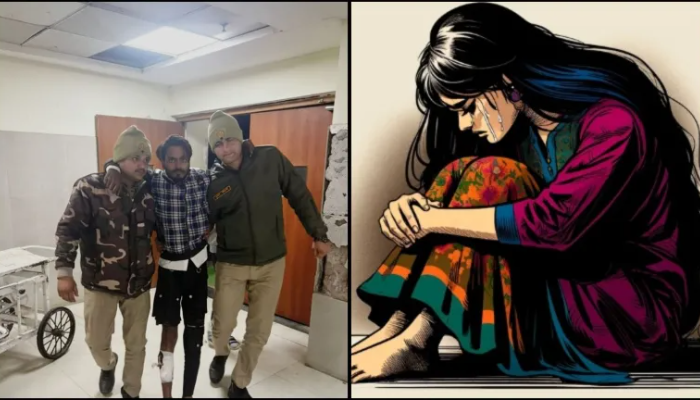
IT giant Accenture has locked its official X account following demands for the sacking of AI expert Atul Subhash’s wife after he committed suicide. Subhash tragically took his life on December 9, 2024, leaving behind a 24-page suicide note and a 90-minute video in which he accused his estranged wife, Nikita Singhania, an employee at Accenture, of harassment and extortion.

Before long, several users on X demanded Accenture dismiss Singhania for allegedly pushing her husband to take the drastic step of taking his own life. One of the users tweeted, “The bare minimum @Accenture should do is sack the murderer responsible for the death of Atul Subhash.” Many others accused the company of being complicit in Subhash’s death.

As the barrage of tweets asking Accenture to dismiss Singhania began to mount, the company locked its official X account, trying to handle the online repercussions of the 34-year-old software engineer’s suicide, which has brought to the fore the issue of harassment faced by men in a toxic relationship.

However, the move is widely perceived as an effort to minimize scrutiny as the situation unfolds. Additionally, Accenture CEO Julie Sweet also locked her X profile amidst the escalating criticism. Meanwhile, candlelight vigils were organised outside Accenture’s offices in Bengaluru, where IT professionals gathered in solidarity with Subhash, calling for justice.

The marriage between Nikita Singhania and Atul Subhash, which took place in 2019, ended in a contentious separation in 2021. In his suicide note, Subhash accused Singhania and her relatives of relentless harassment, including demands for a significant portion of a ₹3 crore settlement and filing false domestic violence and dowry harassment cases against him. He claimed these pressures pushed him into despair, ultimately leading to his tragic decision to end his life.

The police have launched an investigation into the circumstances surrounding Subhash’s death. An FIR has been filed against Singhania and some of her family members, charging them with abetment of suicide, among other offences. Authorities are also probing allegations of extortion and harassment leading up to the incident. While both families have denied the accusations, the case has sparked a broader debate about marital disputes and the legal rights of men in India.

Meet the judges of the Supreme Court special bench set to decide the validity of the Places of Worship Act

On the 12th of December 2024, the Supreme Court ruled that no further petitions will be registered against the Places of Worship Act while the pleas challenging the constitutional validity of the Act are being heard. A special bench comprising Chief Justice of India Sanjiv Khanna, Justice Sanjay Kumar and Justice KV Viswanathan issued a directive that no effective interim or final orders should be passed by lower courts, including orders for surveys, until the court decides on the constitutionality of the Act. In addition, the Centre was given four weeks to file its response.

The Supreme Court directive came at a time when a nationwide debate is ongoing over the disputed Sambhal Jama Masjid, which the Hindu side contends to be the Harihar temple, the Gyanvapi-Kashi Vishwanath dispute, and the Shri Krishna Janmabhoomi dispute among others wherein the crux of the issue demolition and subsequent encroachment and construction of mosques by Islamic invaders like Babur. 

While the Muslim side sees the Places of Worship Act (1991) as no less than a protective shield in facilitating its encroachment of ASI-protected and erstwhile Hindu religious sites, the Hindu side views it as opposed to the principles of natural justice. As the fate of this Act relies on the judgment of Chief Justice of India Sanjiv Khanna, Justice Sanjay Kumar and Justice KV Viswanathan, let’s take a look at the career trajectory of these judges.

CJI Sanjiv Khanna

Sanjiv Khanna is the nephew of former Supreme Court Judge Hans Raj Khanna, who infamously took on Indira Gandhi’s government in 1976. Inspired by his uncle, Justice Sanjiv Khanna enrolled at the Bar Council of Delhi in 1983 and was appointed to the Delhi High Court as an Additional Judge in 2005. Justice Khanna was thereafter elevated to the Supreme Court in January 2019. He is set to serve in the capacity of Chief Justice of India for a brief period of 6 months until 13th May 2025.

Image via Business Standard

On the 11th of November 2024, Justice Sanjiv Khanna was sworn in as the 51st Chief Justice of India.

He was a part of the 7-Judge Bench that overruled the 1967 Azeez Basha case, which denied minority status to Aligarh Muslim University. CJI Sanjiv Khanna and three other judges directed that the status of AMU be freshly determined based on the tests laid down in that particular case (Aligarh Muslim University Through its Registrar Faizan Mustafa v Naresh Agarwal).

In April 2024, he along with Justice Dipankar Dutta shot down [pdf] a petition filed by the Association for Democratic Reforms (ADR), seeking 100% VVPAT verification of votes cast on Electronic Voting Machines (EVMs). Justice Khanna was previously part of the 2019 Bench that increased the number of booths, which undergo VVPAT physical verification, from 1 to 5 per Assembly Segment. 

In February this year, Justice Khanna was part of a 5-judge bench that dubbed the electoral bond scheme ‘unconstitutional.’ Justice Khanna in a concurring judgment dismissed the argument that donor privacy applied to donations made through banks. He noted that bank officials are aware of the identities of the donors who purchased the bonds.

He was part of the 5-Judge Bench that unanimously upheld the constitutionality of abrogation of Article 370. In a concurring judgment, Justice Khanna stated that the removal of Article 370 did not undermine India’s federal structure.

In 2019, Justice Khanna did not interfere with the decision of the Election Commission of India (ECI), which stalled the release of Prime Minister Narendra Modi’s biopic amid the enforcement of the Model Code of Conduct (MCC). He was also part of the Bench which rejected the Centre’s petition to increase the compensation given to victims of the 1984 Bhopal Gas Tragedy. The apex court contended that the settlement could be set aside only on grounds of ‘fraud’, which was not pleaded by the Centre.

He along with 4 other Judges also upheld that the Supreme Court has the authority to grant divorce to couples using its discretionary powers under Article 142 of the Indian Constitution without the need to approach lower courts (Shilpa Sailesh v Varun Sreenivasan). In 2018, Justice Khanna also ruled in favour of the decriminalisation of adultery in Joseph Shine v Union of India.

In August this year, Justice Sanjiv Khanna was a part of the bench that challenged the DK Marathe College’s ban on hijab, questioning why the prohibition had not been applied to other religious markers like tilak and bindi although the College contended that the dress code applied to students of all religions and castes.

In September this year, Khanna led the bench which granted bail of former Delhi Chief Minister Arvind Kejriwal, who was arrested by the CBI in connection with the Delhi Liquor Scam.

In November this year, a bench led by CJI Khanna stopped the Sambhal court from proceeding with the survey order till the Jama Masjid Commitee’s plea was listed in the High Court.

On 25th November, a bench comprising CJI Khanna and Justice Sanjay Kumar rejected several petitions contesting the use of the terms “socialist” and “secular” in the Constitution’s Preamble under the 42nd Amendment passed in 1976 during the emergency imposed by former Prime Minister late Indira Gandhi. The bench, which included Chief Justice of India Sanjiv Khanna and Justice Sanjay Kumar noted that the Preamble is also subject to parliamentary amending authority and added that the Preamble’s adoption date does not limit the Parliament’s ability to make changes to it. The retrospective argument was dismissed on this basis.

CJI Khanna stated that “being socialist” in the Indian context only refers to a “welfare state”. “The way we understand socialism in India is very different from other countries. In our context, socialism primarily means a welfare state. That is all. It has never prevented the private sector which is thriving well. We have all benefited from it. The word socialism is used in a different context, meaning that the state is a welfare state and must stand for the welfare of the people and shall provide equality of opportunities,” he said.

CJI Khanna is also known for his observations on ‘secularism’. As the Supreme Court judge in August 2023, he called the alleged call for boycott of Muslims as “unacceptable”.

Controversy:  Justice Khanna’s elevation to the Supreme Court was a bit controversial since he superseded 32 judges, sparking debates on the collegium system’s selection criteria.

Justice KV Vishwanathan

Born on 26th May 1966, in, Kerala’s Kalpathy, KV Vishwanathan graduated from Coimbatore Law College, Bharathiar University. In the year 2009, the Supreme Court designated Vishwanathan as a Senior Advocate, after 20 years of legal practice. In August 2013, he was appointed the Additional Solicitor General of India who served as ASG till May 2014. In 2023, he was ascended directly from the Bar to the Supreme Court. With this, he became the 10th advocate to be appointed to the Supreme Court without any prior High Court-level judicial experience.

Image via SCI

As a lawyer, KV Vishwanathan represented petitioners in several noted cases like the Right to Privacy and the validity of the Aadhaar Act, the case involving a challenge to WhatsApp’s privacy policy wherein he represented the Internet Freedom Foundation. In addition, Vishwanathan advocated for the recognition of the marriages and rights of transgender people. “Centre says that by our very nature, we cannot procreate. Is procreation a valid defence from keeping us from effects of marriage? None of the marriage statutes prescribe any upper limit for marriage. Women beyond 45, who are unfit for pregnancy, are allowed to marry. Heterosexual couples who cannot have children are allowed to marry,” he argued in this case. Notably, Vishwanathan also represented YSRCP leader Jagan Mohan Reddy in the disproportionate assets case filed by the CBI.

As the Supreme Court judge, Justice Vishwanathan delivered certain notable judgments. In the K.P. Khemka v. Haryana SIIDC case, Justice Vishwanathan was involved in deciding whether time-barred debts might be recovered using special legislation rather than civil suits. This case raised important issues about the junction of legislative limitations and recovery mechanisms.

Recently, Justice Vishwanathan alongside Justice BR Gavai directed the Central government to grant a permanent commission to a woman officer serving in the Army Dental Corps. This came as the woman officer had alleged that she was unfairly excluded from the benefits available to her colleagues. The bench noted that it was a case of discrimination and stressed the necessity to implement policies in a fair and consistent manner.

Justice Viswanathan has also been vocal about revising bail proceedings. He raised concern over the alleged abuse of incarceration as a pre-trial punishment and called for reforms to end bail delays, particularly for undertrial inmates. Alongside Justice BR Gavai, while granting relief to Jharkhand CM Hemant Soren’s aide, Prem Prakash, in an illegal mining-related case filed by the Enforcement Directorate, he said that even in PMLA cases, bail should be the norm and jail should be the exception. “Section 45 PMLA does not re-write this principle [that bail is the rule] to mean that deprivation is the norm and liberty is the exception..” he stated.

Notably, Justice Viswanathan was a member of the SC bench that deemed ‘bulldozer justice’ “unconstitutional” on the 13th November, stating that the right to shelter is a fundamental right under Article 21 of the Constitution. The bench held the verdict that state authorities cannot determine the guilt of a person and alleged crimes cannot be the basis for demolishing a person’s house or properties. Determining the guilt of an individual is the job of the judiciary, the verdict said.

During the hearing of please challenging the constitutional validity of the Places of Worship Act (1991), Justice Vishwanathan said, civil courts cannot “run a race with the Supreme Court” when a Constitution bench has laid down certain principles regarding the Act.

Justice PV Sanjay Kumar

Born in Hyderabad in 1963, PV Sanjay Kumar obtained his law degree in 1988 and later served as a government pleader from 2000 to 2003. In August 2008, Kumar was elevated as an additional judge of the Andhra Pradesh High Court. In October 2019, despite being the second senior-most judge, in Telangana High Court, he was transferred to the Punjab and Haryana HC. His transfer was widely opposed by the Telangana Advocates Association given that he was likely to become the next CJI of the state high Court. However, he was transferred to the Punjab and Haryana High Court and later served as the Chief Justice of the Manipur High Court in 2021.

Justice Sanjay Kumar (Credit: Supreme Court of India)

In the 2024, Mumbai college Hijab ban case, Justice Kumar alongside CJI Khanna stayed the ban questioning why the prohibition had not been applied to other religious markers like tilak and bindi. “Can you forbid someone from wearing a tilak? Is this not included in your guidelines?” Justice Kumar questioned.

In April this year, Justice Kumar alongside Justice Aniruddha Bose allowed Karikho Kri’s appeal and set aside the impugned order in a group of two civil appeals against the Itanagar Bench’s decision, in which the High Court partially allowed the election petition holding Karikho Kri’s election from 44 Tezu (ST) void under Sections 100 of the Representation of the People Act, 1951. The Bench held that the broad premise that a candidate must lay his life out for scrutiny by the electorate is unacceptable, and the candidate’s ‘right to privacy’ would still exist.

In April 2023, Justice Kumar was a part of the Supreme Court bench that stayed Congress leader Rahul Gandhi’s conviction in the Modi surname defamation case and restored his status as a Member of Parliament. While pronouncing the judgement, the 3-judge bench observed that the utterances of Rahul Gandhi were not in “good taste” and said that a person in public life ought to have been more careful while making public speeches. However, questioned why the maximum sentence was given, which led to his disqualification.

In 2021, a division bench of the then Manipur HC CJI Sanjay Kumar and Justice Jamir decided that although India has no proper refugee protection framework, it does grant refuge to refugees coming from neighbouring countries. The court ordered that seven Myanmarese people must initially approach the UNHCR in New Delhi before the Union of India can determine whether they are eligible for refugee status and asylum in India.

In the 2012, Shaik Farid vs Government of Andhra Pradesh case, an Andhra Pradesh HC bench including Justice Sanjay Kumar was to decide whether the term of the Members of the Waqf Board is co-terminus or concurrent with their terms as MPs. In this case, the court held that the expiry of an MP’s tenure or of the state legislature does not impact his elected membership of the Waqf Board.

Places of Worship Act and the “exemption

Back in 1991, the PV Narasimha Rao-led Congress regime passed the Places of Worship Act to protect the religious character of places of worship as they existed in 1947, with the exception of the Ram Janmabhoomi-Babri Masjid issue, which was already in court. It also provided for the preservation of the religious character of such a place of worship on that particular day.

As per this Act, a site of worship’s religious character must remain the same as it was on August 15, 1947. The law also says that nobody ever shall translate any religious denomination’s holy site into one of a distinct denomination or section. In addition, the law asserts that each and every lawsuit, appeal, or other proceedings pertaining to changing the character of the area of worship pending before any court or authority on August 15, 1947, will be terminated as soon as the legislation becomes effective, meaning there cannot be any further legal proceedings. Furthermore, the act also imposes a positive obligation on the state to maintain the religious character of every place of worship as it existed at the time of independence.

However, the Act also mentions a crucial exception. Legal proceedings can be filed under the Places of Worship Act of 1991 if the change of status occurred after the August 15, 1947 deadline. This prevents judicial proceedings, litigation, and appeals over the possibility of status that occurred after the cut-off date. Furthermore, the law exempts any place of worship that is an ancient and historical monument or archaeological site protected by the Ancient Monuments and Archaeological Sites and Remains Act of 1958. This means that if a place of worship of any religion is designated as an ancient and historical monument or archaeological site, it may be exempt from the Places of Worship Act.

Punjabi singer Ranjit Bawa’s show in Himachal Pradesh cancelled after protests by Hindu groups

A program by Punjabi singer Ranjit Bawa scheduled to be held at Nalagarh in Himachal Pradesh has been cancelled after protests by Hindu groups. Bawa was to perform at Red cross fair at Nalagarh in Solan district on 15th December.

Vishwa Hindu Parishad and Bajrang Dal had staged a protest against the show earlier this week and had submitted a memorandum to the administration seeking to cancel the show. VHP and Bajrang Dal have accused Ranjit Bawa of hurting the sentiments of Hindus by his actions.

A three-day district-level Red Cross fair has been organized in Nalagarh, which will take place from 13 to 15 December. Cultural programs are being held as part of the fair. The administration had invited Ranjit Bawa for a program on the night of 15 December. But now the administration has cancelled the show, agreeing to the demands of Hindu groups.

The Punjabi singer is accused of using derogatory language for Hindu deities in his songs. The protestors pointed to the song “Mera Kya Kasoor” by Bawa, saying that the song hurt the sentiments of Hindus. Bawa labelled Hindus as casteists in the song in the name of talking against caste discrimination.   

Bawa also played the lead role in the Punjabi movie Toofan Singh, which was not certified by the censor board and therefore not released in India. The movie based on Khalistani terrorist Toofan Singh tried to glorify terrorists and present the terrorists as heroes.

After arresting Allu Arjun for the Pushpa 2 stampede death, Hyderabad Police says “adequate police bandobast” was in place

0

Hyderabad police on Friday issued a clarification regarding a letter being circulated in the media requesting police bandobast for December 4 and 5 in connection with the release of his film ‘Pushpa-2’.

In a press release, Deputy Commissioner of Police, Central Zone, Hyderabad City said, “Clarification regarding the letter being circulating in media addressed by Sandhya Cine Enterprise 70 MM to ACP Chikkadpally requesting bandobust on 04/05-12-2024 in connection with release of Pushpa-2. We receive a lot of requests for bandobast citing visits by some political personalities, film celebrities, religious programs etc., However, it is beyond our resources to provide bandobast for every event”.

Sandhya Cine Enterprise had requested Hyderabad police on December 2 for the arrangement of bandobast on December 4 and 5 in connection with the release of the ‘Pushpa-2.’

Police said that the organiser did not meet any officer and simply submitted the letter. Police also said that the crowd was well in control till the actor arrived.

“In specific cases where a heavy crowd is expected or some popular personality is visiting, the organizer personally visits the police station / ACP / DCP office and briefs about the program depending upon which we provide the bandobust. In this case, the organizer did not meet any officer and simply submitted the letter in the inward section. No details were made available to the police despite this we arranged suitable bandobust for crowd management outside the theatre. The crowd was well in control till the actor arrived,” police said.

Police alleged that the actions of the actor led to a stampede and subsequently the death of a woman.

“He came to the theatre, came out from the sunroof of his vehicle and started waving to the public gathered there. This gesture attracted a lot of the public towards the theatre’s main gate. At the same time, his private security started pushing people to make way for his vehicle. His team was intimated to take him back citing a large public gathering but they didn’t act on it and Allu Arjun was there inside the theatre for more than two hours. Therefore, it is clear that adequate police bandobast was in place, it was his actions which led to this unfortunate incident, in which a lady died and her son is still unconscious on a ventilator even after 9 days of the incident,” police said.

Hyderabad police also dismissed the allegations that the police personnel misbehaved with Allu Arjun at the time of his arrest.

“Another issue is that the police personnel misbehaved with Allu Arjun at the time of arrest is also not true. When police reached his residence, he requested some time to change his clothes. He went inside his bedroom, police personnel waited outside and took him into custody when he came out. There was no use of force or any misbehaviour with him by any police personnel. He was given enough time to interact with his family and wife and he came out and entered the police vehicle,” police further said.

(This news report is published from a syndicated feed. Except for the headline, the content has not been written or edited by OpIndia staff)

Gujarat: Fake ED team arrested after looting a jewellery story in a ‘raid’ was led by AAP leader Abdul Sattar, reveals state home minister

0

Twelve people were taken into custody last week in Gujarat for conducting a fictitious Enforcement Directorate (ED) raid at a Gandhidham jewellery store. Now, it has been revealed that the gang is led by Abdul Sattar Manjothi, who is the official general secretary of the Aam Aadmi Party (AAP). The fake ED team had conducted a raid at a jewellery store on 2 December that led to the theft of jewelry and cash valued at Rs 22.25 lakh. The group pretended to be ED officials and staged a bogus raid at Radhika Jewellers in Gandhidham on 2nd December and stole the valuables while they were inside the store.

Minister of State for Home Harsh Sanghavi shared the development on X (formerly Twitter) and slammed AAP. He took the main accused’s name and wrote, “Another feat of Arvind Kejriwal’s Aam Aadmi Party has come to light. In Gujarat, a party leader created a fake ED team and looted people by becoming its leader. Fake ED team chief caught in Kutch turns out to be Gujarat Aam Aadmi Party leader. This is the real evidence of the misdeeds of Kejriwal’s disciples.”

The minister also shared photographs of Abdul Sattar with senior AAP leaders, including party chief Arvind Kejriwal.

Furthermore, the fake raid team produced bogus identification documents, such as an ID card in the name of Ankit Tiwari, an ED officer. Armed with phoney identification documents, the group entered Radhika Jewellers on the day of the raid and took jewelry and cash estimated at Rs 25.25 lakh. Twelve people have been taken into custody by the police, but Vipin Sharma, one of the perpretrators, is still at large. Authorities have confiscated three cars from the group and discovered gold jewelry priced at Rs 22.27 lakh.

Kutch Police came into action after the businessman filed a complaint. The police informed that the gang included individuals from Ahmedabad, Gandhidham, and Bhuj, and was targeting key businessmen. Upon robbing businessmen in Ahmedabad and Bhuj, the gang decided to defraud retailers in Gandhidham. The gang went to a jewellery store, dressed as ED officials, and conducted ‘raids’ at the businessman’s house and shop. The businessman became suspicious after the ‘raid’ and filed a complaint with the A Division Kutch police.

Police responded promptly and initially arrested two gang members. Preliminary investigations indicated the involvement of more people, and they eventually arrested eight more people in Ahmedabad and Bhuj. Apart from Abdul Sattar Manjothi, others arrested in the case include Bharat Morvadia, Devayat Khachar, Hitesh Thakkar, Vinod Chudasama, Eugene David, Ashish Mishra, Chandraraj Nair, Ajay Debey, Amit Mehta, his wife Nisha Mehta and Shalendra Desai.

Delhi HC rejects plea by descendant of Bahadur Shah Zafar-II seeking possession of Red Fort and compensation since 1857

The Delhi High Court on Friday dismissed a plea filed by a Mughal descendent seeking possession of Red Fort. The petitioner Sultana Begum is the widow of the great-grandson of the last Mughal emperor Bahadur Shah Zafar-II. The appeal was filed against a 2021 decision by a single judge of the high court, which had earlier dismissed her petition,

A division bench of Acting Chief Justice Vibhu Bakhru and Justice Tushar Rao Gedela dismissed the appeal citing long delay of two and half years in filing the plea against the 2021 verdict. The single judge had also dismissed the plea citing delay, as the fort was taken over by the British long ago.

Sultana Begum claimed that the possession of Red Fort was taken away from her forcibly by British East India Company in 1857. The plea had claimed that Begum is the rightful owner of Red Fort, as she inherited the property from her ancestor Bahadur Shah Zafar II. 

The plea filed through advocate Vivek More further argued that the Government of India was illegally occupying the Fort. Begum also sought compensation from 1857 till date for alleged illegal occupation of the fort by the Indian govt.

The petition made a request for the Centre to either return the Red Fort to the petitioner or provide compensation dating back to its capture in 1857 after the First War of Independence.

Red Fort, also known as Lal Qila, was commissioned by Mughal emperor Shah Jahan after moving the capital from Agra to Delhi. Originally a red and white marble palace, the fort was plundered during the Nadir Shah’s invasion and most of the artwork and jewels were taken away, including the legendary Peacock Throne.

Later the British removed the marble structures after the Indian Rebellion of 1857, and started to use it as a military garrison. The British demolished around 80% structures of the fort, removed all the furniture, and erected stone barracks for army. Jewels and artwork left behind after the Nadir Shah invasion were taken to England, and many of the are in the British Museum.

After independence, Red Fort remained to be used as a military base. However in 2003, the fort was transferred to the Archaeological Survey of India for restoration and conservation by the Vajpayee government.

Allu Arjun arrest: Sandhya theatre’s request for police arrangements on release day goes viral, raises questions on Hyderabad police

Hours after the arrest of actor Allu Arjun in the city of Hyderabad in connection with the death of a woman in a stampede at Sandhya Theater, a letter by the screen authorities has come to the fore raising questions on the Hyderabad Police. The theatre management on 2nd December reportedly had written a letter to the Hyderabad police seeking police deployment for the screening of the recently released movie ‘Pushpa 2’.

The letter stated that the special screening for the movie was scheduled for 4th December and the star cast including the directors and producers of the movie would be present for the screening. Amid this, the theater management said that a massive fan crowd would gather at the premises. “We request for an arrangement of police bandobast on 4th December and 5th December at Sandhya 70 MM theatre,” the letter read.

Photos of the letter also showed that the letter has been received and stamped by the Hyderabad police.

Notably, the screening of the movie was scheduled on 4th December and the theater management had requested for the police deployment 2 days ago. Despite this actor Allu Arjun’s arrival caused a stampede situation in the theater premises resulting in the death of a woman fan. The deceased was later identified as 39-year-old Revathi who had come for the special screening with her family.

The woman and her son were stuck in the stampede before they fell unconscious. Later they were taken to the hospital where the woman was declared dead. The son meanwhile is undergoing treatment at the hospital.

The actor had earlier promised that he would bear the cost of the child’s treatment and would offer Rs 25 lakhs to the grieving family.

Following this, an FIR was filed against the Sandhya theater and two of the managers of Allu Arun for mismanagement. Earlier, the police had stated that the stampede was caused by the sudden appearance of the actor at the theatre for the premiere on 4th December. Police said that neither Allu Arjun’s team nor the theatre informed police that the actor would be visiting the theatre to attend the premiere of Pushpa 2.

Police also accused the Sandhya Theatre management of not making any arrangements for the actor’s visit, which caused the stampede. There was no separate entry and exit for the actor and his team at the theatre. When Arjun arrived with his security, the crowd tried to enter the theatre with him. At that time, his security allegedly tried to push the people away, which deteriorated the situation and led to a stampede. The theatre’s main gate also collapsed during the incident.

However, the letter by Sandhya management out in public today, seeking police deployment two days prior to the event date raises questions about the state police.

Officials from the Hyderabad Police Commissioner’s Task Force and the Chikkadpally police station arrived at Arjun’s house on Friday morning and took him into custody. Sandhya Theatre’s owner and two employees have already been arrested.

Allu Arjun has been booked under BNS section 105 (punishment for culpable homicide not amounting to murder) and 118(1) r/w 3(5) (voluntarily causing hurt or grievous hurt). In an update to the case, Allu Arjun has filed a plea to quash the FIR and requested a stay in the further proceedings. The case will now be heard by the High Court.

Questions on the motive of Hyderabad police

Though the filing of an FIR against the actor after the woman’s death seemed like regular proceedings, the dramatic arrest and the events henceforth have raised some questions for the Hyderabad police.

BJP leader Bandi Sanjay has condemned the arrest of Allu Arjun, stating that preventing the stampede was the job of the law enforcement authorities, and that it is wrong to blame Allu Arjun for the woman’s death.

“National Award-winning actor Allu Arjun, lifted straight from his bedroom without even being given time to change, is a disgraceful act of mismanagement and disrespect. A star of his stature, who brought global recognition to Indian cinema, deserved better treatment. The tragic death of a woman in the stampede at Sandhya theatre is deeply unfortunate, but it only underscores the Congress government’s failure to manage the massive crowd“, Bandi Sanjay posted on X.

BRS leader KTR has also condemned the arrest and has posted that the stampede and the woman’s death cannot be blamed on the actor.

“Arrest of National Award-winning star Allu Arjun is the pinnacle of insecurity of the rulers! I totally sympathize with the victims of the stampede but who failed really? Treating Allu Arjun Garu as a common criminal is uncalled for especially for something he isn’t directly responsible”, KTR posted.

The recent news that the Sandhya theatre had already informed the police about the arrival of Pushpa 2 stars and makers at the theatre and requested police arrangements to manage the crowd, has indeed raised questions on the conduct of the authorities and the sudden arerst of the actor.

Atul Subhash suicide: PIL in court seeks laws to prevent harassment of innocent men, misuse of IPC Section 498A

0

A Public Interest Litigation (PIL) has been filed in the Supreme Court to ensure that husbands and their family members are not harassed in cases filed under domestic violence and dowry laws, following the suicide of a man named Atul Subhash (34), who reportedly ended his life as a result of harassment by his wife through matrimonial cases. Advocate Vishal Tiwari’s Public Interest Litigation asked the Union to follow the Supreme Court’s rulings in Preeti Gupta v. State of Jharkhand (2010) and Achin Gupta v. State of Haryana (2024).

The plea requested the creation of an expert committee headed by a retired high court judge to examine legislation pertaining to domestic abuse and dowries and recommend ways to stop their abuse. It will include renowned attorneys, retired judges, and legal scholars. The appeal also asked for a directive to document any gifts or objects given during marriage registration. Additionally, it aimed to implement the remarks made by the Supreme Court in a 2010 judgment that highlighted the misuse of IP Section 498A.

The appeal stated that to prevent its exploitation and abuse, it was time to review and amend the current Domestic Violence Act and dowry laws, citing the latest suicide case. According to the petition, innocent men’s lives could be saved and the true intent of the dowry laws would not be undermined. It also asked that a writ of mandamus or any other suitable writ be issued by the highest court.

The court called attention to the misuse of Section 498A of the Indian Penal Code (IPC) which allows the husband and his family members to be unduly involved in criminal proceedings where the wife is accused of domestic abuse and it encouraged the legislature to alter this, in the case of Preeti Gupta. In the Achin Gupta case, the Supreme Court asked the Parliament to reflect upon changing Sections 85 and 86 of the new criminal code, which are the equivalent of Section 498A IPC, to stop their misuse. The Bharatiya Nyaya Sanhita (BNS), which went into effect on 1st July 2024, has kept the clause, nevertheless.

The petitioner cited Atul Subhash’s suicide, which triggered heated online discussions, and stated that “the time has come to make review and reforms in existing Dowry laws and Domestic Violence Act so that its misuse and abuse could be stopped and innocent men can be saved and the real purpose of the Dowry laws may not be defeated.” The plea submitted that laws prohibiting dowries and domestic abuse were introduced to safeguard married women, however, these regulations have now been used by women as a tool to harass their husbands and their parents.

The PIL added, “There have been many incidents and cases of false implication of man in dowry cases, which has led to very tragic end and also raised question on our justice and criminal investigation system.” It further read, “Before he died by suicide, Atul Subhash recorded an 80-minute video in which he accused his estranged wife and her family of slapping multiple cases on him and his family to extort money from them. Atul Subhash also criticised the justice system in his 24-page suicide note. The Suicide note has also made allegations upon the judge of being demanding the money for settlement which is a very serious issue.”

The petitioner submitted, “The gross misuse of the dowry laws has defeated the purpose of these laws for which they were enacted. These cases not only impact the lives and careers of husbands and wives but also have a very deep impact in negative form upon their children. It affects their mental health behaviour which could result in the ruin of their proper growth.”  

Atul Subhash mentioned that the 2013 Prevention of Sexual Harassment at Workplace (POSH) Act was passed to provide safe working conditions for women, but, he noted, that there have been instances where women have wrongly accused bosses or coworkers of settling personal scores. “Although stringent rape laws are essential to protect women against sexual violence, there have been instances of false accusations for personal vendettas or financial gains. In cases of divorce and child custody battles, some women misuse laws favouring mothers to gain sole custody of children, regardless of the child’s best interests,” he asserted.

According to the police, Subhash, who worked for a private company in the city, left behind a 24-page suicide note in which he described his years-long emotional agony over marital problems, many lawsuits brought against him, and harassment from his wife, family and a court in Uttar Pradesh. A police official informed that his wife Nikita Singhania, her mother Nisha, father Anurag, and uncle Sushil were all charged with aiding and abetting suicide after his passing.

Impeachment motion by Kapil Sabil and other Rajya Sabha MPs against Justice Yadav over alleged anti-Muslim comments at VHP event: The false ‘secularism’

A motion to remove Allahabad High Court Judge Shekhar Kumar Yadav from office was submitted to the Rajya Sabha Secretary-General on 13th December over his allegedly controversial statements. The motion was signed by 55 members of the Rajya Sabha which is more than the 50 MPs needed to file an impeachment resolution. The motion was submitted by a delegation headed by Kapil Sibal and others including Vivek Tankha, Digvijaya Singh, P. Wilson, John Brittas, KTS Tulsi, Manoj Kumar Jha and Saket Gokhale.

The request to begin the process of impeaching Justice Yadav was filed under Article 218 of the Constitution and the Judges (Inquiry) Act, of 1968. The motion is anticipated to be discussed during the current Winter Session of Parliament. According to the motion, Justice Yadav “engaged in hate speech and incitement to communal disharmony in violation of the Constitution of India” in his speech and lecture at a Vishva Hindu Parishad (VHP) event. The motion further contended that his comments specifically target minorities, demonstrating bias and prejudice against them. It added that he breached the Restatement of Values of Judicial Life, 1997, by openly voicing opinions on political issues pertaining to the Uniform Civil Code (UCC).

The members of parliament have asked Rajya Sabha Chairman Jagdeep Dhankhar to send the motion to the President of India, in line with the Judges (Inquiry) Act of 1968, to form an inquiry committee to look into the accusations of hate speech, judicial ethics violations and communal disharmony. The committee will then begin the appropriate steps to remove Justice Yadav from office if the claims are verified. The Supreme Court also requested a report on Justice Yadav’s remarks from the Allahabad High Court in response to many objections made to the Chief Justice of India (CJI) Sanjiv Khanna.

“We have given a notice to the Rajya Sabha Secretary General to impeach Allahabad High Court judge, Justice Shekhar Kumar Yadav. He had given an inflammatory speech on 9th December at the High Court premises. We believe that the judge has no right to hold that post and he should be removed. We have moved a motion to remove the judge. This is not a political issue but an issue of protecting the Constitution and the independence of the judiciary. We urge Prime Minister Narendra Modi, Union Home Minister Amit Shah and leaders of the ruling party to join us in protecting the Constitution. The Supreme Court should also order the removal of the judge and he should not be assigned any work until a decision is taken on the motion. 55 MPs have signed the motion,” stated Kapil Sibal.

What’s inside the notice

Three accusations are made in their 21-page petition: that Justice Yadav engaged in hate speech and incitement to communal disharmony in violation of the Constitution, that he targeted minorities and displayed bias and prejudice against them and engaged in public debate or expressed his views in public on political matters relating to Uniform Civil Code in violation of the Restatement of Values of Judicial Life 1997.

The notice read, “On 9th December, Justice Yadav made public remarks during event organised by Vishwa Hindu Parishad (VHP) that were inflammatory, prejudiced, and directly targeted minority communities. Justice Yadav, in his lecture has asserted the country would function according to the wishes of the majority (bahusankhyak) in India.” It claimed, “Justice Yadav’s actions contravene the directive principles enshrined in Article 51A(e) of the Constitution of India, which mandate promoting harmony and renouncing practices derogatory to the dignity of individuals.”

The notice also charged, “Speech/lecture delivered by Justice Shekhar Kumar Yadav, Judge of the Allahabad High Court, on Sunday i.e. 9th December, in an event organised by Vishwa Hindu Parishad, prima facie shows that Justice Yadav, has engaged in hate speech and incitement to communal disharmony in violation of the Constitution of India.” Furthermore, it added, “That speech/lecture delivered by Justice Shekhar Kumar Yadav, Judge of the Allahabad High Court, on Sunday i.e. 9th Decmber, in an event organised by Vishwa Hindu Parishad, prima facie show evidence that Justice Yadav has targeted minorities and displayed bias and prejudice against the minorities (Katmullah).”

According to the motion for impeachment, he broke both “the secular ethos of the Constitution and the judge’s oath of office.” The assertion that Muslim youngsters cannot be expected to be kind since they are exposed to animal killing at an early age was also met with objection in the motion which claimed that Justice Yadav had damaged public trust in the judiciary through his divisive and biased utterances.

It even charged that his remarks about the Ram Janambhoomi movement are political in nature and affect the judiciary’s independence. “Such statements jeopardise the judiciary’s role as a neutral arbitrator and protector of rights, it leads to a complete lack of faith in a litigant approaching the court with folded hands,” the motion stated. A judge may be dismissed from office for conduct that compromise judicial ethics, impartiality, and public confidence in the judiciary under Articles 124(4) and 124(5) read with Article 217(1)(B) and Article 218 of the Indian Constitution.

The opposition argued that Justice Yadav’s actions were against the fundamental principles outlined in Article 51 A(e) of the Indian Constitution, which call for fostering unity and refraining from actions that diminish human dignity. The petition claimed that the judiciary’s function as a “neutral arbiter” and “protector of rights for all citizens” hasjeopardized by the use of discriminatory terminology against Muslims.

Two communities, two different rules: Judiciary’s version of ‘secularim’

‘Secularism’, the colloquial term for anti-Hindu bias in Indian politics, has also permeated the walls of the judiciary, where anything deemed anti-Muslim could lead to the impeachment of a high court judge while smiling over calls for Brahmin genocide and abusing the majority community for reclaiming their ancient places of worship through legal system, by present and former justices is accepted as normal. Secularism and cohesion in this nation appear to be impacted only when Muslims are purportedly targeted, otherwise, everything appears to be hunky dory when Hindus are subjected to disparaging comments and unwarranted criticism.

Surprisingly, as our esteemed judges have repeatedly demonstrated, attacking the Hindu majority does not contravene either the constitution or the ethics of the judiciary in the secular state of India. Notably, not just incumbent judges but those who retired have voiced similar controversial views. On 6th December, former Supreme Court Justice Rohinton Nariman denounced the five-judge panel that rendered the 2019 Ayodhya calling it a “mockery of justice” that went against the fundamental tenets of secularism. Notably, he is also an ordained Parsi priest.

He referred to the Vishwa Hindu Parishad’s karseva movement as the “dictatorial” and “tyrannical” push for the temple’s construction. The Hindu community was also accused by Nariman of constantly breaking the law during the Ram Mandir movement. A former Supreme Court judge displayed open bias against Hindus and publicly denigrated the most significant legal struggles spanning over 500 years to peacefully regain one of their holiest sites, dismissing both their effort and patience. His remarks are a testament to his ‘impartiality’ as a Supreme Court judge especially when he handled cases related to Hindus.

As if humiliating Hindus for having the audacity to seek legal justice for their ancient temples which were destroyed by Islamic invaders wasn’t enough, Kurian Joseph, another former Supreme Court judge, asked the Chief Justice of India to abandon the Supreme Court’s motto, “Yato Dharmastato Jaya” (Where there is Dharma, there is Victory). He claimed that it deviates from the national motto and, implicitly, the national spirit while speaking at a gathering hosted by left-liberals and the controversial website “The Wire,” in February. “Truth is the Constitution. Dharma is not always the truth. Dharma is the discharge of your duty in terms of the need of the hour,” he alleged.

Notably, he compared the Catholic Church to the Preamble of India in 2018 during a seminar. “The Catholic Church is one that has always assimilated in itself all the traditions and cultures brought in by the believers from all over the world. This is similar to the preamble of our Constitution, which starts with the word ‘We’.” He then addec that the Pope is the “one person who holds this Church in a single entity.”

He disregarded the fact that the Supreme Court functions as a check on the authority of legislative and executive to guarantee that all decisions are in accordance with the nation’s Constitution and its motto represents the division of powers. It’s further interesting to note that our neutral judiciary can compare the “secular” Constitution to the Catholic Church, but, a phrase that is ingrained in the country’s cultural ethos and connects to its historical heritage without any religious connotations should be eliminated since it is inconsistent with the nation’s motto and spirit.

If attacks on Hindu temples, their heritage, and the willingness of the majority to stand up for what was rightfully theirs through legal framework weren’t enough to annoy our judiciary, then grinning at references of genocide and mass murder of a large group of Hindu Brahmins is also part of their repertoire. Former justice of the Supreme Court K. M. Joseph smiled when Solicitor General (SG) Tushar Mehta discussed Dravida Munnetra Kazhagam (DMK) leader R Rajiv Gandhi’s statement that one should kill all Brahmins in the name of equality, in March of this year.

How can anyone forget how the sitting justices humiliated Nupur Sharma, a former spokesperson of the Bharatiya Janta Party when she went to the highest court to seek justice after Islamists took to the streets for her blood with “Sar Tan Se Juda” slogans following the dog whistling by Mohammed Zubair of Alt News. Justice Surya Kant criticized her “loose tongue” for the turmoil rather than defending her fundamental right to freedom of speech and safety.

She was even held accountable by Justice Jamshed Burjor Pardiwala for the actions of two Islamists who brutally beheaded Kanhaiya Lal in Udaipur and flaunted that they had done it for Islam. Why didn’t anyone realize that the top court’s remarks set a very dangerous precedent wherein violence is justified in the name of provocation by someone, particularly a woman? The Supreme Court of India essentially affirmed the Islamic calls for Nupur Sharma’s murder and execution, declaring her guilty of blasphemy which should have caused an uproar among all political parties and the judiciary, but sadly, nothing of the sort occurred.

Conclusion

Most significantly, none of the Rajya Sabha, Lok Sabha, or even local politicians recognized the threat to secularism in any of the aforementioned incidents. Therefore, no impeachment motion was filed against a single incumbent judge for their controversial opinions.

This is because one of the most obvious characteristics of the Indian version of a secular democracy is the blatant disrespect of Hindus and their religious sentiments. Secularism in India, in fact, flourishes when Hindus are at the receiving end of such abuses. However, everything that is even considered slightly offensive to Islamist sensitivities is actively countered because, in practice, the minority is the only one who benefits from this perverted system, while the majority community bears the brunt of it. The same has been illustrated by the current action initiated against Justice Yadav.

Bangladesh has become third most dangerous place for journalists after Palestine and Pakistan, finds Reporters Without Borders

As the new year 2025 draws closer, a crucial report by the ‘Reporters without Borders’ has revealed that the country of Bangladesh has emerged as one of the most dangerous countries for journalists. Reporters Without Borders, called Reporters Sans Frontières (RSF) in French, is an international non-profit organization safeguarding the right to information. Its headquarters is in Paris, France.

As per the 2024 Round-up published by RSF, Palestine is the most dangerous country for journalists, followed by Pakistan and Bangladesh. The ranking was done based on various attacks on journalists, including murder and kidnappings.

In its recently published 2024 Round Up report, the RSF has stated that there has been an alarming increase in targeted attacks on journalists, especially during political unrest and protests. As per the report, both India’s neighbouring countries, Pakistan and Bangladesh saw disturbing protests that claimed the lives of several journalists while on duty.

“A violent crackdown in Bangladesh during July protests over a controversial public job quota system claimed the lives of five journalists. The protests led to a major political crisis and the eventual ouster of Sheikh Hasina. The targeting of journalists by security forces was not coincidental, as the authorities sought to suppress coverage of the mass uprising that resulted in the overthrow of the government,” the report said.

It further added that Bangladesh’s security Forces had also posed threats to press freedom in the year 2024. As per the report, around 54 journalists lost their lives in the year 2024 among whom 2 were women. Of these 54, around 16 breathed their last in Palestine, 7 in Pakistan, 5 in Bangladesh, 5 in Mexico, and 4 in Sudan. Further, it said that over half of the journalists died while reporting facts from the conflict zone.

Image RSF

“Dying is not an acceptable risk of journalism. This fatalism cannot prevail, and passive tenses should not be used: journalists do not die, they are killed; they are not in prison, regimes lock them up; they do not disappear, they are kidnapped. These crimes violate international law and too often go unpunished. Journalists are no longer collateral victims but targets, inconvenient witnesses, and even bargaining chips, pawns in a political game,” said Thibaut Bruttin, Director General, RSF while condemning the deaths.

On 28th August this year, 32-year-old Sarah Rahanum a newsroom editor at Bengali language Gazi Television (GTV) who lived in Kallyanpur was found dead in Dhaka, the capital of Bangladesh. Her body was found in Hatirjheel Lake. On 4th August, a Hindu journalist named Pradip Kumar Bhowmik was murdered by the ‘protesters’ in Bangladesh. He died as the ‘protestors’ laid siege on the Rayganj Press Club in Sirajganj. Mehedi Hasan, a journalist with Dhaka Times, was killed while covering clashes between protesters and security forces in Dhaka. Apart from these, two more deaths of journalists were reported from the country in the recent times.

The data further highlighted that Palestine was the most dangerous country for journalists on duty. It stated that since October 2023, when Hamas launched an attack on Israeli civilians, around 35 journalists have been killed in connection with their work. Otherwise, around 145 of a total of 157 media deaths have been reported alone from the country.

“Palestine is the most dangerous zone for journalists, recording a higher death toll than any other country or territory in the past five years. Worldwide, the number of journalists killed for covering conflict zones — in the Gaza region, Iraq, Sudan, Myanmar, and Ukraine has reached a record high since 2020. Due to the large number of journalists killed in Pakistan (7) and the protests that rocked Bangladesh (5), Asia kept its place as the region with the second-highest number of murders,” the report added.

It is crucial to note that the Islamists in Bangladesh have been launching targeted attacks on the minorities in the country since the fall of the Sheikh Hasina government. The interim government recently accepted that around 88 such incidents had happened in the past 3.5 months. Now it has come to the fore that not only minorities but also media professionals have been facing threats by the Bangladesh security personnel.

Apart from this, the RSF reports state that countries like China, Myanmar, and Israel have topped the list of countries that have detained journalists in the due course of their jobs. China has detained around 124 journalists, Myanmar 61 and Israel 41.

Further, 55 journalists have been kept hostage in the past year of which 38 are held hostage in Syria, 9 in Iraq, 5 in Yemen, 2 in Mali, and 1 in Mexico. Of these further, 25 have been held hostage by ISIS.

Image RSF

Notably, around 100 journalists are currently missing around the world as stated by the RSF. “More than a quarter of them have disappeared in the last 10 years. Mexico stands out as the most dangerous country, accounting for over 30% of all cases of missing journalists,” it said.

These disappearances, often attributed to authoritarian or negligent governments highlight the urgent need to strengthen the protection of journalists and combat impunity.