Home Blog Page 59

Iraq to Venezuela and beyond: How US media giants like NYT, WaPo and others serve as the propaganda arm of the White House

In the early hours of Saturday, January 3, the US military launched a large-scale operation code-named Operation Absolute Resolve against Venezuela. US aircraft rained down ammunition on key Venezuelan military assets while a Delta Force team went to capture the Venezuelan President Nicholas Maduro and his wife Cilia Flores. 

Maduro and Flores were taken into custody and flown out of Venezuela to New York, and US President Trump announced soon that they would face charges for narco-terrorism and other criminal activities. The operation took the whole world by surprise, not just because of its suddenness, but also for the sheer impunity of it, the audacious breach of sovereignty. 

Operation Absolute Resolve included elite Delta Force commandos, over 150 aircraft, airstrikes, and months of CIA surveillance. The images of Maduro being handcuffed and paraded around by US forces will be circulated for decades. The geopolitical ramifications are yet to be grasped completely.

Amid the cacophony of the Trump administration’s insufferable bravado, there is a barrage of questions. A lot of nations have condemned the incident and raised serious concern about the shocking absence of a ‘rules-based international order’ when it comes to US hegemony. Dictator as he might be, Maduro was the head of a sovereign nation. The US capture of Maduro was a blatant disregard of that sovereignty. 

Curiously, though, the US media, which behaves as the global champion of human rights, democracy and justice and holds sermons for the entire world on the above topics on a regular basis, is hailing the act. 

As per a report, some of the top names in US media were already aware of the plan to capture Maduro, but chose to stay silent for ‘national security’. An exclusive in Semafor has revealed that the NYT and Washington Post both had prior knowledge of the raid before it was underway, but they chose to remain silent and delayed publishing anything about it, ‘upon the request’ of the Trump administration.

First in @semafor: NYT, WaPo learned of the secret US raid on Venezuela soon before it was scheduled to begin but held off publishing what they had at the administration’s request to avoid endangering US troops pic.twitter.com/LyWNSpNJwK— Max Tani (@maxwelltani) January 4, 2026

The decision by NYT and WaPo was apparently in terms with their ‘journalistic traditions’. Semfor writes, “.. it offers a rare glimpse at a thread of contact and even cooperation at some of the highest stakes American national security issues”.

The obidience shown by NYT and WaPo is significant, because on principle the legacy media in the USA has been vocally anti-Trump since day-1. Also, because the same legacy media in the USA is the self appointed preacher of justice, morality and democratic values to the whole world.

The obedience, however, is nothing new. There are ample instances where the US legacy media has effectively worked as a US propaganda arm, trumpeting the US cause to serve the US interests and keeping silent when silence served the White House best, despite their usually assumed pretence of being the champions of free speech and media freedom. 

The Bay of Pigs invasion

In 1961, the NYT reportedly had advanced knowledge of a CIA-backed plan for Cuban exiles to invade Cuba. At the urging of the then White House officials, NYT toned-downed a front page story and tried its best to downplay the CIA involvement. 

NSA Wiretapping Program

The NYT knew about George W Bush’s secret approval for the NSA to start domestic eavesdropping against US citizens without any warrants, but did not publish it, because the Bush administration asked them not to. NYT obeyed. They withheld publication for about a year because the White House reportedly told them it would harm national security.

CIA’s ‘secret prisons’

The Washington Post had uncovered the CIA’s network of overseas detention facilities for terrorism suspects. However, at the request of senior administration officials, it withheld the names of specific Eastern European countries hosting the sites in its Pulitzer Prize-winning report. So much for ‘free press’ and justice.

US invasion of Iraq and the ‘Weapons of Mass Destruction’ lie

The legacy media in the US have not only played ‘secret keeper’ for the White House, but they have also been very active trumpeters and drumbeaters for the US government. 

Throughout the early 2000s, the legacy media in the USA pulled all their resources to convince everyone in the world about the biggest lie of that decade, that Iraq was hiding weapons of mass destruction, and it was absolutely necessary to remove Saddam Hussein from power. 

So loyal was the coverage that the big names in US media never even bothered to question the US government on the veracity of those claims.

The @washingtonpost ran at least 140 front page articles promoting Iraq invasion, and ran at least 27 editorials pushing for war in the 6 months leading up to Bush’s invasion. No one at WaPo paid for lying & accessory to murdering a million people.
Happy anniversary! pic.twitter.com/iRkRfq5bDR— Mark Ames (@MarkAmesExiled) March 19, 2023

They quoted Iraqi defectors and exiles, parroted whatever the Pentagon said and claimed. The Washington Post even ran stories presenting intercepted aluminum tubes as “evidence” of Iraq’s nuclear program. Other big names, like Fox etc went full blown patriotic shouting how important it is for the USA to invade Iraq and “save the world”.

The examples above are just a sample. The big names in US media, like NYT and WaPo, despite their claims of independence and assumed moral superiority, have been effectively the propaganda arms of the US government. Their conviction and journalistic stand have often been subject to US convenience, US interests, and even White House priorities in the short and long term. 

Tomorrow marks 19 years since Colin Powell lied to the UN to justify the US invasion of #Iraq. Maybe more reporters should have questioned “US credibility” then. pic.twitter.com/TJeTGFYwUp— Assal Rad (@AssalRad) February 4, 2022

During Operation Mockingbird, the CIA went on to hire journalists to aid their Cold War narrative shaping. During the COVID years, despite significant concerns and expert analysis, the legacy media just parroted whatever the Biden administration said. It not only dismissed the lab-leak hypothesis, it also went on a misinformation overdrive to shield certain names, dismiss any reference to the glaring involvement of Fauci and Peter Daszak in the gain-of-function research the US government had going on in Wuhan, and labelled all contrary voices as liars. 

Post Elon Musk’s acquisition of Twitter, now known as X, a series of revelations told the whole world how the mighty social media giants were also taking direct orders from the Biden administration, even to the extent of misleading their own citizens.

Even their foreign coverages serve US interests, hailing obedient US allies as peaceful utopias and any not-so-aligned country as an undemocratic, backward hellhole. India has often been at the receiving end of elaborate smearing campaigns by these publications, because India chooses to follow its own foreign policy, instead of invariably saying yes to dictat from White House. 

Iraq, Libya, Venezuela, Syria are names in a long list of meddled nations and regime change operations that the US government has undertaken over the years, with explicit support from their so-called ‘free press’. 

Exclusive: Madras High Court scraps illegal sale of temple land, orders restoration to deity after three decades; read judgment details

0

On 15th December, the Madras High Court set aside the sale of 3.93 acres of land that belongs to Arulmigu Annamalainathar Temple. The Court held that the sale of temple property carried out in the 1990s was illegal, procedurally flawed, and against the very purpose of safeguarding religious endowments. Out of the long list of respondents, around 90 of them were of the Muslim community including at least two mosques. OpIndia accessed judgment copy in the matter.

The Court, in its judgment, ruled that temple land cannot be treated as disposable private property. It must be preserved for the benefit of the deity and devotees. The Court further directed that the land must be restored to the temple. The judgment has brought closure to a dispute that had lingered for over 30 years.

In its judgment, the court made it clear that trustees and officials under the Hindu Religious and Charitable Endowments Department (HR&CE) act only as custodians of temple property. Any deviation from statutory safeguards, even if backed by subsequent government orders, cannot legitimise an otherwise illegal sale. The judgment reaffirmed that the mandatory provisions under the HR&CE Act are not procedural formalities. These provisions are substantive protections meant to prevent misuse and erosion of religious assets.

What land was involved and why it belonged to the temple

The dispute revolved around 3.93 acres of land situated in Kadayanallur. It had long been recorded as land belonging to the Arulmigu Annamalainathar Temple. The land formed part of the temple’s endowed properties and was meant to generate income or utility for religious and charitable purposes connected with the temple. Notably, these endowments are vested in the deity, not in any individual trustee or administrator of the temple.

The court noted that temple lands enjoy a special legal status. They are not commercial properties that can be freely monetised at will. These lands are religious properties protected by law, tradition, and public trust. Any decision to sell such land must pass strict tests of necessity, transparency, and demonstrable benefit to the temple. It was against this backdrop that the sale of the land over 30 years ago was examined. During the hearing, the court scrutinised how the land came to be sold and whether the law was followed at any stage.

How the hereditary trustee initiated the decision to sell temple land

The controversy began in the early 1990s when the hereditary trustee, V Subramaniya Iyer, of the temple took a decision to sell a portion of the temple land. The justification given for the sale was that the sale proceeds would be deposited and the interest earned would be used to meet temple expenses. However, this reasoning later came under close scrutiny, as the law governing temple properties permits sale only if it is unavoidable and clearly beneficial to the institution.

The court observed that there was no material on record to show that the temple was in any financial distress that would have compelled the sale of part of its land. Instead, the proposal appeared to be driven by administrative convenience rather than genuine need. The court emphasised that the role of the trustee was not to maximise short term liquidity but to preserve temple assets for future generations of devotees.

The 1995 public auction and allegations of undervaluation

After the trustee decided to sell the land, a public auction was conducted in 1995. On paper, the process appeared compliant. However, the manner in which it was carried out soon raised serious concerns. The highest bidder, R Subramaniam, was nephew of the hereditary trustee. This revelation immediately triggered allegations of conflict of interest.

At the time, the land was sold for around Rs 10.17 lakh. Several stakeholders stated that this was far below its prevailing market value. The current value of the land is around Rs 110 crore. The court later noted that when temple land is sold, authorities are duty bound to ensure that the institution receives the best possible price. Any sale that appears to benefit private individuals at the cost of the temple undermines the very purpose of the protective framework under the HR&CE Act.

Why objections after the auction became a legal problem

There was a critical flaw in the entire sale process, particularly in the timing of objections. Ideally, objections must be invited from devotees, tenants, and interested persons before finalising the auction. However, in this case, objections were called only after the bidding had already been conducted. This reversal of procedure struck at the root of legality.

The High Court stated that inviting objections after an auction is not a curable defect but a fundamental violation of the safeguards in place. The purpose of calling for objections before the auction is to allow concerns about valuation, necessity, and fairness to be addressed before irreversible decisions are taken. By bypassing these steps, the authorities effectively denied stakeholders a meaningful opportunity to be heard.

Civil court verdict in 2001 declaring the sale void

The irregularities in the auction eventually led to litigation before a civil court. In 2001, the civil court declared the sale deeds executed in favour of the auction purchaser null and void. The court held that the sale had been conducted in violation of mandatory legal requirements and could not be sustained merely because it had been presented as a public auction.

The civil court’s judgment was significant as it was never challenged by the purchasers or the authorities. As a result, it attained finality. In legal terms, this meant that the sale stood cancelled and the land continued to belong to the temple. The High Court later noted that once a competent civil court had invalidated the transaction, there was no legal basis for reviving or re validating it through administrative or executive action.

How the matter resurfaced despite an existing civil court judgment

Although the civil court’s judgment was never challenged, the dispute refused to end. Years later, the auction purchaser approached the government seeking intervention under the HR&CE framework. In a surprising move, the government issued an order directing the department to proceed with the execution of sale deeds. The government effectively attempted to resurrect a transaction that had already been struck down by a civil court.

The High Court took a dim view of this development. It observed that executive authorities cannot sit in appeal over a judicial decision, particularly one that has attained finality. Allowing a government order to override a civil court judgment would not only undermine the rule of law but also create a dangerous precedent for the management of religious properties.

Government intervention under Section 34 and its legal implications

The government order was sought to be justified by invoking provisions under Section 34 of the HR&CE Act. This section empowers authorities to permit the sale of temple property under specific circumstances. However, the High Court rejected the justification and clarified that this power is circumscribed by strict conditions and cannot be exercised in a manner that bypasses statutory safeguards or judicial findings.

The court emphasised that Section 34 does not grant blanket authority to validate illegal sales retrospectively. Any government approval must be preceded by compliance with all mandatory requirements, including proof of necessity, prior notice, and consideration of objections. In the present case, none of these foundational steps had been lawfully completed.

High Court examination of HR&CE safeguards and statutory violations

While examining the case, the High Court undertook a detailed analysis of the safeguards built into the HR&CE Act. The court reiterated that these provisions exist precisely because temple properties are vulnerable to misuse by those entrusted with their management. Trustees and officials are expected to act as fiduciaries. This means they must protect the interests of the deity and devotees rather than treating temple assets as disposable property.

According to the court, the mandatory sequence prescribed under the law had been turned on its head. Public notice, consideration of objections, and an assessment of necessity were either missing or conducted in a mechanical manner. Such deviations were not minor irregularities but substantive violations that struck at the root of the transaction’s legality.

Court findings on necessity, benefit, and misuse of trustee powers

The primary question before the court was whether the sale of the land was genuinely necessary or beneficial to the temple. The justification offered by the trustee was that the sale proceeds would be deposited and the interest used for temple expenses. The court found this reasoning wholly inadequate. It observed that if such reasoning were accepted, any temple land could be sold on the pretext of earning interest, rendering statutory protections meaningless.

The judgment clarified that trustees do not have unfettered discretion to sell temple property. Their powers are tightly regulated because temple lands are held in trust for religious and charitable purposes. Any action that results in permanent loss of such property, without compelling necessity, amounts to a breach of trust.

Status of occupants on temple land and steps taken by authorities

In its judgment, the court took note of the fact that several individuals were occupying portions of the land by the time the dispute reached its final stages. Rather than ordering a blanket eviction, the authorities adopted a pragmatic approach after the court’s intervention. Occupants were given the option to regularise their occupancy by becoming tenants of the temple or to vacate the land.

According to the records placed before the court, many occupants agreed to continue as tenants under the temple administration. In cases where occupants refused to cooperate, eviction proceedings were initiated with the support of local authorities. The High Court recorded these developments to demonstrate that the restoration of temple property was not merely a theoretical exercise but was being implemented on the ground.

In this context, the identity of those in possession has also drawn attention, though it was not legally determinative for the court.

The case records show that the persons arrayed as respondents were those who came into possession of the disputed land as purchasers or subsequent purchasers following the original transaction. The names reflected in the proceedings indicate that most of these individuals belong to the local Muslim community, and the land in question also includes at least two mosques, which were impleaded as respondents in the litigation.

The presence of these religious structures and occupants was not treated by the court as determinative of title. Instead, the High Court confined itself to examining the legality of the original sale and the validity of permissions relied upon, holding that identity or subsequent development on the land could not override statutory safeguards governing temple property.

Final directions issued by the court and their practical impact

While concluding the matter, the High Court upheld the cancellation of the sale and affirmed that the land must remain with the temple. It set aside the government orders that had sought to revive the illegal transaction and reinforced the principle that executive actions cannot override statutory mandates or judicial verdicts.

The court sent a clear message that time does not cure illegality when it comes to religious endowments. Even decades old transactions can be scrutinised and struck down if they violated the law.

Conclusion

The judgment must be seen as a reminder that temple properties are not administrative assets. They are sacred trusts governed by law. By striking down an illegal sale even after three decades, the court reaffirmed that statutory safeguards under the HR&CE Act exist to prevent the quiet erosion of religious endowments through procedural manipulation. The judgment reinforced that trustees and governments alike are accountable to the deity and devotees, and that illegality does not gain legitimacy merely with the passage of time.

1026 to 2026, the invaders are dust in the wind, but Somnath has risen again and again, eternal and indestructible: Read PM Modi’s inspiring article

Somnath…hearing this word instils a sense of pride in our hearts and minds. It is the eternal proclamation of India’s soul. This majestic temple is situated on the Western coast of India in Gujarat, at a place called Prabhas Patan. The Dwadasha Jyotirling Stotram mentions the 12 Jyotirlings across India. The Stotram begins with “सौराष्ट्रे सोमनाथं च..”, symbolising the civilisational and spiritual importance of Somnath as the first Jyotirling.

It is also said:

सोमलिङ्गं नरो दृष्ट्वा सर्वपापैः प्रमुच्यते।
लभते फलं मनोवाञ्छितं मृतः स्वर्गं समाश्रयेत्॥

It means: Just the sight of Somnath Shivling ensures that a person is freed of sins, achieves their righteous desires and attains heaven after death.

Tragically, this very Somnath, which drew the reverence and prayers of millions, was attacked by foreign invaders, whose agenda was demolition, not devotion.

The year 2026 is significant for the Somnath Temple. It has been 1,000 years since the first attack on this great shrine. It was in January of 1026 that Mahmud of Ghazni attacked this temple, seeking to destroy a great symbol of faith and civilisation, through a violent and barbaric invasion.

Yet, one thousand years later, the temple stands as glorious as ever because of numerous efforts to restore Somnath to its grandeur. One such milestone completes 75 years in 2026. It was during a ceremony on May 11th 1951, in the presence of the then President of India, Dr. Rajendra Prasad, that the restored Temple opened its doors to devotees.

The first invasion of Somnath a thousand years ago in 1026, the cruelty that was unleashed upon the people of the town and the devastation that was inflicted upon the shrine have been documented in great detail in various historical accounts. When you read them, the heart trembles. Each line carries the weight of grief, cruelty and a sorrow that refuses to fade with time.

Imagine the impact it had on Bharat and the morale of the people. After all, Somnath had great spiritual significance. It was also on the coast, giving strength to a society with great economic prowess, whose sea traders and seafarers carried tales of its grandeur far and wide.

Yet, I am proud to state unequivocally that the story of Somnath, a thousand years after the first attack, is not defined by destruction. It is defined by the unbreakable courage of crores of children of Bharat Mata.

The medieval barbarism that began a thousand years ago in 1026 went on to ‘inspire’ others to repeatedly attack Somnath. It was the start of an attempt to enslave our people and culture. But, each time the Temple was attacked, we also had great men and women who stood up to defend it and even made the ultimate sacrifice. And every single time, generation after generation, the people of our great civilisation picked themselves up, rebuilt and rejuvenated the Temple. It is our privilege to have been nurtured by the same soil that has nurtured greats like Ahilyabai Holkar, who made a noble attempt to ensure devotees can pray at Somnath.

In the 1890s, Swami Vivekananda visited Somnath and that experience moved him. He expressed his feelings during a lecture in Chennai in 1897 when he said, “Some of these old temples of Southern India and those like Somnath of Gujarat will teach you volumes of wisdom, will give you a keener insight into the history of the race than any amount of books. Mark how these temples bear the marks of a hundred attacks and a hundred regenerations, continually destroyed and continually springing up out of the ruins, rejuvenated and strong as ever! That is the national mind, that is the national life-current. Follow it and it leads to glory. Give it up and you die; death will be the only result, annihilation, the only effect, the moment you step beyond that life current.”

The sacred duty of rebuilding the Somnath Temple after independence came to the able hands of Sardar Vallabhbhai Patel. A visit during Diwali time in 1947 moved him so much that he announced that the Temple will be rebuilt there. Finally, on May 11th 1951, a grand Temple in Somnath opened its doors to devotees and Dr. Rajendra Prasad was present there. The great Sardar Sahib was not alive to see this historic day, but the fulfilment of his dream stood tall before the nation. The then Prime Minister, Pandit Jawaharlal Nehru, was not too enthused with this development. He did not want the Honourable President as well as Ministers to associate with this special event. He said that this event created a bad impression of India. But Dr. Rajendra Prasad stood firm and the rest is history. No mention of Somnath is complete without recalling the efforts of KM Munshi, who supported Sardar Patel very effectively. His works on Somnath, including the book, ‘Somanatha: The Shrine Eternal’, are extremely informative and educative.

Indeed, as the title of Munshi Ji’s book conveys, we are a civilisation that carries a sense of conviction about the eternity of spirit and of ideas. We firmly believe that that which is eternal is indestructible, as outlined in the famous Gita verse “नैनं छिन्दन्ति शस्त्राणि…”. There can be no better example of our civilisation’s indomitable spirit than Somnath, which stands gloriously, overcoming odds and struggles.

It is this same spirit that is visible in our nation, one of the brightest spots of global growth, having overcome centuries of invasions and colonial loot. It is our value systems and the determination of our people that have made India the centre of global attention today. The world is seeing India with hope and optimism. They want to invest in our innovative youngsters. Our art, culture, music and several festivals are going global. Yoga and Ayurveda are making a worldwide impact, boosting healthy living. Solutions to some of the most pressing global challenges are coming from India.

Since time immemorial, Somnath has brought together people from different walks of life. Centuries ago, Kalikal Sarvagna Hemchandracharya, a respected Jain monk, came to Somnath. It is said that after praying there, he recited a verse, “भवबीजाङ्कुरजनना रागाद्याः क्षयमुपगता यस्य।”. It means – Salutations to That One in whom the seeds of worldly becoming are destroyed, in whom passion and all afflictions have withered away.” Today, Somnath holds the same ability to awaken something profound within the mind and soul.

A thousand years after the first attack in 1026, the sea at Somnath still roars with the same intensity as it did back then. The waves that wash the shores of Somnath tell a story. No matter what, just like the waves, it kept rising again and again.

The aggressors of the past are now dust in the wind, their names synonymous with destruction. They are footnotes in the annals of history, while Somnath stands bright, radiating far beyond the horizon, reminding us of the eternal spirit that remained undiminished by the attack of 1026. Somnath is a song of hope that tells us that while hate and fanaticism may have the power to destroy for a moment, faith and conviction in the power of goodness have the power to create for eternity.

If the Somnath Temple, which was attacked a thousand years ago and faced continuous attacks thereon, could rise again and again, then we can surely restore our great nation to the glory it embodied a thousand years ago before the invasions. With the blessings of Shree Somnath Mahadev, we move forward with a renewed resolve to build a Viksit Bharat, where civilisational wisdom guides us to work for the welfare of the whole world.

Jai Somnath!

The article above, penned by PM Modi, appeared as a blogpost in his website. It has been reproduced here with due credit.

From ‘India’s cleanest city’ to public health emergency: All you need to know about deadly water contamination in Indore

Indore, which over the years has been recognised as the cleanest city in India, finds itself in a state of severe health crisis in early 2026. In the Bhagirathpura area of the district, at least 15 people have died, and over 200 are still in hospitals from a nasty water contamination mess as of early January 2026. Folks started getting sick from vomiting, diarrhoea, fever, and dehydration after drinking the municipal tap water that turned foul-smelling and dirty-looking.

How the crisis unfolded: Timeline and cause 

Back in mid-December 2025, people in Bhagirathpura, an area with about 15,000 residents, first noticed something off with their tap water. It looked discoloured, smelled bad like sewage, and tasted bitter. They kept complaining to city officials, but nothing happened fast enough. By 25th December, families were still using it for cooking and drinking since there weren’t good options.

Image via PTI

Things got bad quickly on 27th and 28th of December. The first bunch of illnesses caused severe stomach issues from the tainted water. Local clinics saw patients coming in weak and dehydrated. Health teams started checking homes. Then, on 29th December, cases exploded. Mayor Pushyamitra Bhargava said at least three deaths were tied to diarrhoea from the bad water, with more folks rushing to bigger hospitals.

On 30th December, over 100 were admitted, and reports said more than 1,100 got sick in total. Symptoms all pointed to waterborne bugs. Surveys ramped up house-to-house. By 31st December, death counts were fuzzy; officials said four to seven, but families linked even a six-month-old baby’s death to milk made with the water. 

The state government announced ₹2 lakh compensation for the families of the deceased. Administrative action followed, with a zonal officer and assistant engineer suspended and a sub-engineer dismissed.

On 1st and 2nd January, lab tests finally confirmed it, bacteria like E. coli, Salmonella, and Vibrio cholerae in the supply, mixed in from sewage leaking through a busted 30-year-old pipeline under a public toilet near a police outpost. 

They fixed the pipe, isolated it, cleaned things up, and started sending clean water via over 20 tankers a day. Officials told everyone to boil water or avoid taps till checks cleared it. Over 1,400 to 2,000 affected in all, with promises for better monitoring statewide.

NHRC steps in, seeks accountability

On Thursday, 1st January, 2026, the National Human Rights Commission (NHRC) took suo motu cognisance of the case on the 1st of January through reports that appeared in the media. The Commission noted that if the reports were true, the case embodied a grave breach of the victims’ right to health and life.

The commission fired off a notice to Madhya Pradesh‘s Chief Secretary, demanding a full report within two weeks. News from 31st December pointed to the main drinking water pipe running right under a public toilet, a leak let sewage flood in. Broken lines everywhere made it worse, pushing dirty water straight to homes. This kind of neglect hit hard on vulnerable folks’ right to safe living.

Jal Jeevan Mission findings raise bigger concerns

A fresh Union government report released on Sunday, 4th January, under the Jal Jeevan Mission showed big problems with rural drinking water in Madhya Pradesh. Out of samples from rural spots, 36.7% weren’t safe to drink – tested for E. coli, total coliform in certified labs, plus pH checks right there. This came out amid the Indore deaths, now at 15 confirmed from city supply issues.

In Indore district’s rural homes, just 33% got potable water; well below acceptable standards. Some areas like Alirajpur hit 100% good, but others like Anuppur had zero. Gwalior at 20.9%, Morena 25.2%, and more showed spotty results. Bhopal was 56.9%, Jabalpur 54.3%. About 23.4% of homes didn’t get steady supply, 36.7% had busted taps during checks. Only 3.7% griped about taste, but 22% said not enough water came safety slips often go unnoticed till it’s too late.

Pollution Control Board warnings ignored for years

This wasn’t out of nowhere. A Madhya Pradesh Pollution Control Board probe back in 2016-17 tested groundwater at 60 spots in Indore, including Bhagirathpura. Almost all had total coliform over 10 MPN per 100 ml – a clear sign of faecal sewage sneaking in from bad pipes and drainage. 

They told Indore Municipal Corporation: mark those pumps and wells unsafe, put up signs, stop sewage mixing. But large chunks of the city, especially old pipeline zones with waterlogging, stayed risky.

Concerns over Indore’s water system were also highlighted in a 2019 Comptroller and Auditor General (CAG) report on water management in Indore and Bhopal. The report found serious deficiencies, despite a $200 million Asian Development Bank loan sanctioned in 2004 to improve water and sanitation infrastructure in Bhopal, Indore, Jabalpur, and Gwalior. It aimed for a clean, steady supply for all. 

But a 2019 CAG report slammed the mess: water only hit four zones daily in Indore, five in Bhopal. Just over half the families, 530,000 out of 941,000, had taps.

Leaks took 22 to 108 days to fix. From 2013-2018, 4,481 bad samples, 362,000 families in Bhopal and 533,000 in Indore without clean water, 545,000 water disease cases.

Losses were huge; 30-70% non-revenue water vanished, unknown. Tax collections tanked, with dues at Rs 470 crore. Supply was skimpy: 9-20 litres per person daily in Bhopal, 36-62 in Indore. 

Tanks went uncleaned, no audits to spot waste. Experts call it criminal neglect, sewage lines laid carelessly near drinking pipes, both failing lets filth in. One activist said that if even one pipe held, no deaths. Another blamed blind city growth for more tragedies ahead.
Government action and official response

Chief Minister Mohan Yadav owned it, posting on X about strict steps. He ordered show-cause notices to Indore Municipal Commissioner and the Additional Commissioner, booted the Additional Commissioner, and yanked the Superintending Engineer from water works. They filled spots right away to fix the gap.

In a post on X, he wrote, “…I issued directions to the Indore Municipal Corporation Commissioner and Additional Commissioner to issue a show-cause notice in this regard, to immediately remove the Additional Commissioner from Indore, and to relieve the In-Charge Superintending Engineer of the charge of the Water Distribution Works Department. I also issued directions to immediately fill the necessary positions in the Indore Municipal Corporation with effect from now.”

Compensation kicked in at ₹2 lakh per death family early on 31st December. Chief Medical Officer Madhav Prasad Hasani said top care was a priority. Pipeline got repaired pronto, tankers rolled 20+ daily with safe water. Door-to-door checks caught hundreds more cases, hospitals handled 200 still admitted.

“Currently, senior doctors and district administration officials are continuously monitoring the situation at the hospitals and keeping a check that proper treatment is being ensured to the patients. I am going for the hearing of a case regarding this contaminated water issue and give further details later. Till now, as per records, four deaths occurred though we will revise and update if we received additional data and evidence in this regard,” Hasani told ANI.

Who is Delcy Rodriguez? Venezuela’s Vice President who has taken charge on Supreme Court’s order after President Maduro’s capture by the US

After the armed forces of the United States invaded Venezuela and captured President Nicolás Maduro along with his wife Cilia Flores, the country’s Supreme Court on Saturday ordered Vice President Delcy Rodríguez to assume the role of acting president. The announcement came after U.S. President Donald Trump said that American forces will be in the country and run it till a proper transition can take place.

The Supreme Court’s order has come as a setback for the opposition, who were celebrating the capture of the President and hoping to form the government.

According to a report by Reuters, in a ruling issued by its Constitutional Chamber, the Supreme Court said Rodriguez would temporarily take charge to ensure the continuity of the Venezuelan state. The court stated that she would assume “the office of President of the Bolivarian Republic of Venezuela, to guarantee administrative continuity and the comprehensive defence of the Nation” during what it described as the “forced absence” of President Maduro.

The court added that it would continue deliberations to decide the legal framework required to maintain governance, sovereignty, and national defence in the current situation. The ruling comes at a time of extreme tension between Caracas and Washington, with conflicting claims emerging over who now holds power in Venezuela.

The Supreme Court of Venezuela also said that it rejects and condemns the extremely serious military aggression carried out by the United States against the people and territory of Venezuela, as well as the capture of Maduro and his wife. It said that the American action violates the Constitution and laws of Venezuela, as well as international law and the Charter of the United Nations.

Who is Delcy Rodríguez?

Delcy Rodríguez is one of the most powerful and recognisable figures in Venezuelan politics. Born on 18th May, 1969, in Caracas, Rodríguez is 56 years old and comes from a deeply political and revolutionary family background.

She is the daughter of Jorge Antonio Rodriguez, a left-wing guerrilla leader who founded the Liga Socialista party in the 1970s. Her father is remembered by supporters of Venezuela’s socialist movement as a revolutionary figure who fought against what he saw as imperialist influence in Latin America. This legacy played a major role in shaping Delcy Rodriguez’s political worldview from an early age.

Rodríguez studied law at the Central University of Venezuela, one of the country’s most prestigious institutions. Trained as an attorney, she entered public life during the rise of the Bolivarian movement and quickly built a reputation as a sharp, outspoken defender of Venezuela’s socialist government.

Rapid rise through the political ranks

Delcy Rodríguez first gained national prominence when she served as Venezuela’s Minister of Communication and Information between 2013 and 2014, where she was responsible for shaping the government’s media strategy during a period of political unrest.

From 2014 to 2017, Rodriguez served as Venezuela’s foreign minister. During this time, she became known internationally for her combative defence of the Maduro government against criticism from the United States, the European Union, and regional blocs. One of the most notable moments of her tenure came in 2017, when she attempted to attend a Mercosur trade bloc meeting in Buenos Aires after Venezuela had been suspended from the group, leading to a diplomatic standoff.

In 2017, Maduro appointed Rodriguez as the head of the pro-government Constituent Assembly, a powerful body that effectively sidelined the opposition-led National Assembly. The Constituent Assembly played a key role in expanding Maduro’s powers and reshaping Venezuela’s political institutions, further cementing Rodríguez’s status as one of his most trusted allies.

In June 2018, Maduro named Rodriguez vice president. Announcing the appointment on X (formerly Twitter), Maduro described her as “a young woman, brave, seasoned, daughter of a martyr, revolutionary and tested in a thousand battles.”

Rodriguez’s key role in Venezuela’s Economy and Oil sector

Beyond her political influence, Rodriguez has also been at the centre of Venezuela’s economic decision-making. Over the years, she has simultaneously held the roles of vice president, finance minister, and oil minister, giving her enormous control over the country’s economic direction.

In August 2024, Maduro formally added the oil ministry to Rodriguez’s portfolio, tasking her with managing Venezuela’s most critical industry at a time of escalating US sanctions. Oil remains the backbone of Venezuela’s economy, and Rodríguez was responsible for navigating sanctions, maintaining exports, and managing relations with both state-owned companies and the struggling private sector.

Interestingly, despite her socialist credentials, Rodriguez has applied relatively orthodox economic policies in recent years in an effort to rein in runaway inflation and stabilise the economy. This approach has earned her influence even among segments of Venezuela’s battered private sector.

She also works closely with her brother, Jorge Rodriguez, who currently heads Venezuela’s National Assembly. Together, the siblings form a powerful political axis at the heart of Maduro’s government.

Trump’s claim: Rodríguez “Sworn in” as President

The situation took a dramatic turn when US President Donald Trump made a series of explosive statements earlier on Saturday, 3rd January. Trump claimed that Delcy Rodriguez had already been “sworn in” as Venezuela’s president and suggested that she was willing to cooperate with Washington.

Trump went even further, declaring that the United States would be “running Venezuela in the immediate future.” His remarks created confusion and sparked international concern, as they appeared to signal a direct challenge to Venezuela’s sovereignty.

These claims were immediately disputed by Venezuelan officials and contradicted by events unfolding in Caracas.

Rodríguez pushes back, demands proof of life for Maduro

Less than two hours after Trump’s comments, Delcy Rodriguez addressed the nation in a televised message broadcast on state television. Speaking from Caracas, despite earlier reports that she was in Russia, Rodríguez made it clear that she rejected the US narrative entirely.

“There is only one president in this country, and his name is Nicolás Maduro Moros,” Rodriguez said firmly. She insisted that Maduro remained Venezuela’s legitimate leader despite his capture by US.

Rodriguez also demanded that the US government provide proof of life for Maduro and his wife, Cilia Flores. Her message, delivered in audio and televised formats, questioned the legality and morality of the US operation.

“What is being done to Venezuela is a barbarity,” she said. “We are determined to be free.”

Accusing the US of regime change agenda

In her address, Rodriguez accused the United States of launching an illegal invasion under false pretences. She said Venezuela had long warned that an aggression was underway and claimed the real objective was regime change.

“We had already warned that the masks had fallen off,” she said. “This aggression seeks regime change in Venezuela, and with it, the seizure of our energy, mineral and natural resources.”

Her remarks directly challenged Trump’s triumphant tone and made clear that Washington’s plans would face serious resistance from Venezuela’s leadership.

A show of unity against US claims

Significantly, Rodriguez delivered her speech alongside members of what she called Venezuela’s National Defence Council. The group included the defence minister, the attorney general, and the heads of the legislature and judiciary.

This unified appearance was a clear signal that Venezuela’s institutions were closing ranks, directly contradicting Trump’s assertion that the United States would soon control the country. Venezuelan state television repeatedly identified Rodríguez as vice president during the broadcast, reinforcing the message that Maduro remained the country’s president.

Both Venezuela’s defence minister and attorney general also publicly criticised Trump and condemned the US military action, calling it a violation of international law.

Trump, however, remained defiant. In a news conference, he warned Venezuelan political and military leaders to comply with US demands, saying that “what happened to Maduro can happen to them.”

Despite this threat, Rodríguez’s swift and forceful response suggested that Maduro’s supporters are not backing down. Her statements made it clear that, in their view, Maduro’s detention does not end his presidency.

As Venezuela enters a volatile new chapter, Delcy Rodríguez has emerged as a central figure, not as a replacement for Maduro, but as his fiercest defender. Whether the Supreme Court’s interim arrangement can hold amid mounting international pressure remains to be seen, but one thing is clear: the battle over Venezuela’s leadership is far from settled.

Cricket or Dawat-e-Jihad? A conspiracy to introduce Islamic victimhood into the field

Cricket is essentially a game of bat and ball. It is a disciplined struggle for timing, line, and length. It is a sport shaped by team competition and sportsmanship, not by displays of an individual’s faith.

But over the past few years, there has been a deliberate attempt to transform the cricket ground into a religious arena. From the pitch to the dressing room, the Islamic agenda and the Muslim victim card are being infiltrated. This transformation appears to be part of a well-planned conspiracy, not a coincidence.

Be it Australian cricketer Usman Khawaja, announcing his retirement, lamenting that he faced “differences in his treatment because he is a Pakistani Muslim,” or Furqan Bhatt appearing on the field in the Jammu and Kashmir Champions League with a Palestinian flag on his helmet—these incidents don’t qualify as personal statements. They are attempts to normalise Islamic victimhood, political Islam, and religious agendas using the platform of cricket. Here, sport is the medium, the message is something else.

Those with a basic understanding of cricket know that Usman Khawaja was no ordinary player. An international career spanning over a decade, 87 Tests for Australia, and his name being discussed for captaincy—neither his Muslim origins nor his birth in Islamabad hindered his remarkable journey.

Don Bradman didn’t become a great cricketer because he prayed in church. Sachin Tendulkar didn’t become the God of Cricket because he was a devotee of Saint Satya Sai Baba. Wasim Akram’s reputation was built not by prayer but by swing. Virat Kohli’s identity is not due to his visits to Premanand Maharaj’s ashram, but due to his cover drive.

The world knows them all for their cricketing prowess, not for their personal beliefs. Their beliefs are personal, off the field. But before he leaves, Usman Khawaja has put cricket on the back burner and Pakistan and Islam at the forefront. This isn’t just an insult to the spirit of the game; it’s a murder of the very sport that gave him the platform to make these statements.

Usman Khawaja and Furqan Bhat are part of the trend set and fostered by Pakistani cricket. Prayers during matches, religious gestures in front of the cameras, the compulsion to attribute victory to Allah’s grace—each such gesture was defended in the name of ‘personal faith.’

But when it happens repeatedly, systematically, and in a camera-friendly manner, it ceases to be personal. It becomes a message. That same message inspires budding players like Furkan Bhat to establish their religious identity before their cricketing career.

We’ve seen messages like ‘Victory belongs to Allah’ on jerseys. This is an attempt to adapt the language of the game to the vocabulary of a particular religion. This same language is heard in Pakistani players’ post-match presentations and repeated in TV studios. Remember how many times in cricket analysis have you heard about Yousuf Youhana’s transformation to Mohammad Yousuf after converting to Islam being described as a ‘turning point’? Have you heard discussions about Saeed Anwar’s alleged ‘miracles’ after he became a cleric, more than about his cover drive?

Recall the 2014 video in which Pakistani cricketer Ahmed Shehzad was caught telling Sri Lankan player Tillakaratne Dilshan that if you convert to Islam, you will ultimately attain paradise no matter what you do in life. This wasn’t a conversation with a fellow cricketer. It was a religious intrusion.

The ICC has issued warnings in some cases, but it has failed to stop the religious infiltration. The Danish Kaneria incident shows that this toxicity has spread beyond the field and into the dressing room. He openly described how he was isolated based on his religious identity and pressured to convert. This is not the suffering of one player, but evidence of a mentality where religion takes precedence over the team.

The question here isn’t one of faith. The question is whether the cricket team is an extension of some religious agenda? If not, why this religious coercion?

Usman Khawaja’s statement is the next step in this trend. When age, fitness, and discipline are questioned, religion is used as a shield. Pakistan is adept at this art. For years, it has dismissed its failures as “conspiracy,” criticism as “anti-faith,” and discipline as “suppression of faith.”

It’s not that cricket is a purely gentleman’s game. It has been embroiled in many controversies, such as the Kerry Packer series, match-fixing, and Monkeygate, but religion has never been the agenda. When religion becomes the agenda, the neutrality of the game is lost. Team spirit is shattered. A shared religion takes the place of a shared goal. Discipline slackens, and audience confidence erodes.

The solution must be clear and strict. Any political or religious display on the field should be declared completely unacceptable. If religious coercion is found in the dressing room, the entire team should be punished. If necessary, that country should be banned from international cricket.

Remember, cricket is a game that unites civilisations, not a field to divide them. When players put their agendas before their jerseys, the game loses. The spectators lose.

Cricket must be allowed to remain cricket, free from the burden of Islam. If this doesn’t happen, the day is not far off when ideologies, not bats and balls, will clash on the field.

(This article is a translation of the original article published on OpIndia Hindi.)

Leftists outrage after BCCI asks KKR to release Mustafizur Rahman: Why the Left can’t tolerate India responding to Hindu persecution in Bangladesh

0

On Saturday, January 3, the left-wing liberal ecosystem found yet another reason to erupt in outrage after the Board of Control for Cricket in India (BCCI) directed Kolkata Knight Riders (KKR) to release Bangladeshi cricketer Mustafizur Rahman from the upcoming Indian Premier League (IPL) season.

The decision followed widespread public anger over Rahman’s inclusion at a time when Hindus in Bangladesh continue to face targeted violence in the aftermath of the August 2024 ouster of former Prime Minister Sheikh Hasina. The political upheaval was followed by Islamist mobs running amok, attacking Hindu homes, temples, and individuals with near impunity, shocking Indian public opinion and triggering calls to bar Bangladeshi players from India’s cash-rich cricket league.

BCCI secretary Devajit Saikia confirmed that the board had formally informed KKR of its decision and permitted the franchise to sign a replacement player if it chose to do so. KKR subsequently clarified that it had released Mustafizur Rahman from its squad.

Public anger rooted in real atrocities

While India–Bangladesh relations had already soured in recent months, the situation deteriorated sharply after gruesome incidents such as the lynching of Hindu man Dipu Chandra Das and multiple attacks on Hindus under the pretext of “blasphemy.” These incidents were not aberrations but part of a wider pattern of religious persecution that the Bangladeshi state has failed to decisively curb.

It was against this grim backdrop that Indian citizens questioned the propriety of allowing a Bangladeshi cricketer to participate in one of the world’s most lucrative sporting leagues, even as minorities in his home country were being hunted for their faith.

Left-liberal outrage over India responding to public sentiment

However, the moment the BCCI acknowledged public anger and acted, the familiar outrage machinery of the left-wing ecosystem kicked into overdrive. Journalists, historians, and foreign policy commentators rushed to lament “damaged diplomacy” and “lost soft power,” as though sporting ties must take precedence over mass violence against Hindus.

Gargi Rawat of NDTV questioned the move, tweeting: “Imagine what kind of message this sends to our neighbour Bangladesh. Sangeet Som may have scored points for his domestic audience, but this damages India’s diplomacy and relations.”

Ram Guha, a self-described historian with a knack of distorting facts and spinning narratives, termed the decision “deeply unwise,” arguing that cricketing ties were vital for good relations with Dhaka and speculating that such a move could push Bangladesh closer to Islamabad, a familiar trope deployed whenever India takes a stand that the Left finds inconvenient.

Foreign affairs editor Suhasini Haider went further, suggesting that India had no business expressing disapproval over the persecution of Hindus if it risked offending Dhaka. She lamented that while External Affairs Minister S Jaishankar could visit Bangladesh and Prime Minister Narendra Modi could meet Bangladeshi leaders, a cricketer was apparently being denied the right to play in India.

Adding to this chorus, ‘columnist’ Saba Naqvi also weighed in hours after the BCCI’s directive, declaring that India had lost all “moral stature” in South Asia and had become “mean-spirited” for not allowing a Bangladeshi player to feature in a commercial league.

In a lengthy post on X, Naqvi argued that India’s historical role in Bangladesh’s liberation, the fact that the Bangladeshi national anthem was composed by Rabindranath Tagore, and India hosting the deposed Bangladeshi prime minister should have prevented such a decision.

She went on to claim that India was choosing a “nasty uncivil script not befitting a great power,” allegedly driven by impending state elections and “Hindutva hardliners,” concluding with the lament that India had fallen from being a “moral power the world admired.”

The argument was revealing, not for its concern about morality, but for its complete erasure of the ongoing persecution of Hindus in Bangladesh. Once again, the violence faced by minorities was treated as a minor inconvenience, while the exclusion of a foreign athlete from a private league was elevated into a civilisational crisis.

Selective morality and predictable hypocrisy

These sermons on morality appear to be reserved exclusively for the Indian state. Had Virat Kohli been barred from playing in a foreign country for political reasons, the same left-wing ideologues would have instantly framed it as a failure of India’s foreign policy. None would have questioned the country imposing the ban; instead, New Delhi would have been asked to explain itself.

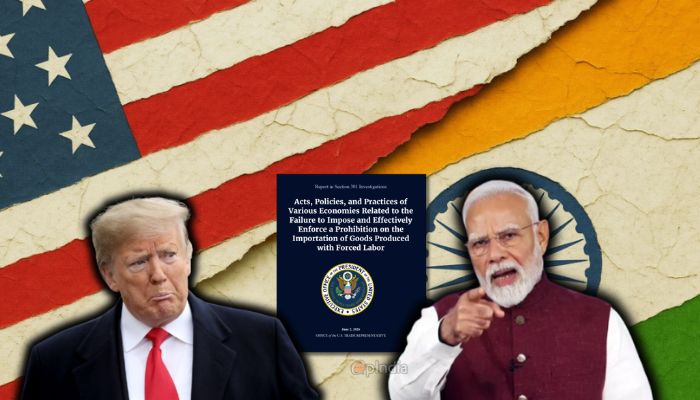
This perversity is not confined to sports. When Donald Trump imposed tariffs on India, the left-liberal ecosystem rushed to write obituaries for India’s foreign policy. Few asked why the United States was attempting to strong-arm India into a trade deal favourable to Washington. As always, the instinct was to blame India first.

False moral equivalence as a permanent feature

Whether the issue is diplomacy, trade, or cricket, the script remains unchanged. India asserting itself is portrayed as a moral failure; India responding to public sentiment is framed as majoritarian bullying; and India refusing to subordinate its decisions to elite approval is cast as civilisational decline.

The outrage over Mustafizur Rahman’s exclusion ultimately says little about India’s moral stature and much more about the left-wing ecosystem’s enduring discomfort with a country that no longer seeks validation from its self-appointed moral custodians.

Months after Opposition leader Maria Machado ‘thanked’ Trump for her Nobel Peace Prize, the US attacked Venezuela to topple the Maduro regime

In what appears to be a typical regime change operation masquerading as moral action against “narcotic terrorism,” the United States carried out multiple strikes in Venezuela in the wee hours of January 3, 2026. The capital city of Caracas was jolted out of sleep as its skies were echoed by the sounds of strafing fighter jets around 2 am. The strikes were confirmed by none other than US President Donald Trump through a post on Truth Social.

Trump also confirmed that the US forces captured Venezuelan President Nicolas Maduro and his wife, Cilia Flores, and flew them out of the country to the U.S. Attorney General Pamela Bondi said that Nicolas Maduro and his wife, Cilia Flores, have been indicted in the Southern District of New York, adding that the president has been charged with Narco-Terrorism Conspiracy, Cocaine Importation Conspiracy, Possession of Machineguns and Destructive Devices, and Conspiracy to Possess Machineguns and Destructive Devices against the United States. 

The US attack on Venezuela is not a sudden event, but a predictable outcome for a country or regime that falls out of US favour. The developments, conspicuously, come months after Venezuelan opposition leader Maria Machado dedicated her Nobel Peace Prize to the US President and thanked him for what he had been doing “around the world for peace”. She described her Nobel win as a “recognition of the struggle of all Venezuelans” and a boost to conclude the task, which was “to conquer freedom.”

Machado openly called for US intervention in Venezuela in the name of achieving Freedom and democracy. “We are on the threshold of victory and today, more than ever, we count on President Trump, the people of the United States, the peoples of Latin America, and the democratic nations of the world as our principal allies to achieve Freedom and democracy,” Machado wrote on X after winning the Nobel Peace Prize in October 2025.

Screenshot

Responding to Machado’s Nobel victory, President Trump had said he talked to her over a phone call, wherein she told him that she accepted the Nobel Peace Prize in his honour and she believed that he deserved it. The mutual appreciation displayed by the two leaders leaves little room for doubt as to the past and the future trajectory of events unfolding in Venezuela.

In December 2025, Machado endorsed the US pressure on President Maduro and made a global appeal to cut the flow of money from drugs, arms and human trafficking, which she attributed to what she described as the authoritarian regime in Venezuela. She had remarked that she was “very hopeful” that Venezuela would be free and that “It’s going to be soon.”

Trump accused the Maduro regime of narcotic terrorism

The US-Venezuela conflict arises mainly from the US dual allegations of the Maduro regime pushing thousands of migrant workers to the southern border of the US and smuggling narcotics into the US territory. President Trump accused President Maduro of “emptying his prisons and insane asylums” and “forcing” inmates to migrate to the United States. Trump has also accused Maduro of drug trafficking and working with groups designated as terrorist organisations.

The US President alleged that Venezuela acted as a major transit route for cocaine and thus contributed to the US drug crisis. He claimed that Venezuelan boats have been engaged in smuggling narcotics through the Caribbean and eastern Pacific. Deviating from the traditional US practice of dealing with drug cartels through law enforcement, the Trump administration launched a military campaign against the Venezuelan drug cartels in September 2025. The US carried out strikes on suspected drug-smuggling boats in the past months, an act described by Trump as a “war on drugs”.

The US strikes on Venezuela look like a typical regime change op

In 2020, Maduro was indicted on “narco-terrorism” conspiracy charges in the Southern District of New York. The US says that it is engaged in an armed conflict with drug cartels, which it has been accusing Maduro of harbouring and leading. However, the Venezuelan President has been categorically denying the US allegations and has termed the accusations as a US ploy to remove him from power to gain access to Venezuelan oil. Notably, days before the US strikes, Maduro had offered to cooperate with the US on the issues of drug trafficking and migration. It is speculated that President Maduro might face charges in the US, considering his 2020 indictment. Meanwhile, President Trump might also face questions at home as the US strike in Venezuela was carried out without Congress’s approval.

What is transpiring in Venezuela is a familiar script that the world has seen come into action multiple times in the past in countries, including Vietnam, Iraq, Afghanistan, and Syria. Toppling existing unfavourable regimes and planting a favourable rule in countries has been an old US tactic around the world.

From one-child policy to condom tax: Why China’s pro-birth policies are failing and why India should pay attention

0

China was associated with population control for many years. Family life was shaped for generations by the one-child policy, which was more than just a rule. It was a system enforced through law, incentives, and pressure. Contraception was encouraged, births were discouraged, and the government firmly intervened in reproductive decisions.

When a country that once controlled births starts taxing condoms

Today, that legacy has now completed a full circle. In a striking reversal, condoms and oral birth control pills are now more expensive in China. Due to the country’s dramatic reversal of tax exemption on contraception. The small message conveys a louder voice that the country that once worked to limit births is now anxious about having too few.

This policy change is motivated by statistics rather than morals or philosophy. A shrinking, ageing population is beginning to threaten China’s economic momentum and future stability. The deeper question this raises goes beyond China: what happens when individual choices to delay or avoid parenthood make economic sense but, collectively, leave nations struggling to sustain themselves?

Why China is pushing for babies urgently

China’s urgency to boost the births stems from harsh demographic realities. After decades of strict population control, its fertility rate has dropped to around 1.15 children per woman. It is far below the replacement level of 2.1 needed to sustain a stable population. China has recorded a population decline for the last 3 years, even as deaths outnumber births.

At the same time, more than 20% of the population is aged 60 or above. which is also adding pressure to public finances, healthcare, and the pension system.

Because of a shrinking workforce and slowing economic growth, Beijing is more concerned about the possibility of “getting old before rich”, a situation in which a country faces the costs of ageing without the economic productivity to sustain them.

The long shadow of the one-child policy

For more than 30 years, China’s one-child policy did more than restrict family size. It has fundamentally reshaped societal behaviour and individual aspirations. The policy was introduced in 1980. This programme embedded state control deep into private life, turning reproduction into a monitored act. With time, small families were not just enforced but normalised. Having one child or none became the default, while larger families came to be viewed as impractical, risky, or even irresponsible.

As a result of this protracted programme, marriages were postponed, and childbirth was pushed farther into adulthood as couples modified their goals to fit economic and political constraints. The costs of raising kids become more expensive alongside urbanisation and the psychological and emotional damage caused by aggressive enforcement like forced abortions, sterilisations, and invasive surveillance. Importantly, it also undermines the public confidence in the government regarding issues related to reproduction and family. After the policy was scrapped and replaced with two-child and three-child norms, behaviour did not immediately change. The larger lesson is clear: laws can change policy, but social conditioning built over many generations cannot be swiftly or easily reversed.

Why pro-birth policies are struggling to work

In an effort to reverse the fertility rate, the Chinese government has implemented several pro-birth initiatives in recent years. These include promises to eliminate out-of-pocket hospital delivery costs, expand childcare subsidies, offer cash incentives for families with young children, and increase access to public preschools. Universities have been urged to support good messaging about marriage and family life. Removed the administrative barriers to marriage registration.

However, fertility rates have continued to decline despite these attempts. A basic drawback of state involvement is shown by the discrepancy between policy goals and societal responses. While marketing campaigns can signal official goals and financial incentives can lower certain immediate costs, they cannot address underlying concerns about work-life balance, housing affordability, job stability, and economic security.

The other side: Why young couples are hesitant

To understand why pro-birth policies are failing, it is necessary to look beyond the country’s intent and focus on the reality of the couples’ faces every day. In China’s major cities, housing prices have risen far faster thanincomes. Turning home ownership, a traditional requirement for marriage, has become an unattainable dream. Childcare and education costs add another layer of financial pressure, with the quality of schools, daycare, and extracurricular activities demanding sustained spending over decades.

With slowing economic growth, it is becoming harder to plan long-term. Long working hours and demanding corporate cultures leave little room for family life, while dual-income households become a necessity rather than a choice. For women, it is much harsher. Despite high levels of education and workforce participation, childcare and household responsibilities continue to fall disproportionately on them, often at the cost of career progression and financial independence. In such conditions, parenthood is perceived not as a natural next step but as a high-risk decision. For many young couples, delaying or avoiding children feels economically rational, not irresponsible. An attempt to preserve stability in an increasingly uncertain future.

Beyond China: A global pattern, not a Chinese exception

China’s demographic struggle is not an isolated case but part of a broader global pattern visible across advanced economies. South Korea offers the starkest example. Despite being one of the world’s wealthiest nations and spending billions of dollars on cash incentives, childcare subsidies, housing support, and even state-sponsored matchmaking, it now has the lowest fertility rate in the world. Japan, too, has poured resources into family support programmes, yet continues to record falling birth rates, declining marriage rates, and a rapidly ageing population.

These cases underline a crucial reality: that economic prosperity and generous incentives alone are not enough to reverse fertility decline once it becomes deeply embedded in social behaviour. When delayed marriage, child-free living, and career-first priorities harden into norms, policy tools lose their effectiveness.

The lesson from East Asia is sobering. Once demographic decline becomes structural rather than cyclical, reversal becomes extraordinarily difficult. Therefore, timing matters far more than the spending.

India enters the picture quietly but clearly

What China, Japan, and South Korea have been grappling with for years, India is now beginning to enter the demographic conversations. According to the recent data, India’s total fertility rate has slipped below the replacement level of 2.1. It marks a significant shift for a country long associated with population growth. At the same time, the average age of marriage and first childbirth is rising steadily, particularly in urban and semi-urban areas.

In India’s major cities, East Asian patterns are beginning to appear. Young couples are postponing marriage, prioritising education and careers, and increasingly opting for smaller families or none at all. High housing costs, competitive job markets, and the growing necessity of dual-income households are reshaping traditional family timelines.

This does not yet amount to a demographic crisis. India still has a relatively young population and a sizeable working-age base. However, it is no longer insulated from the forces driving fertility decline elsewhere. The early signs suggest that without timely course correction, India could find itself confronting the same challenges now haunting East Asia.

The cost of not having children for India

India’s demographic story has long been framed as an advantage, with a young population and a large workforce driving growth. However, as fertility rates fall and family sizes shrink, that advantage risks gradually turning into a liability. A sustained decline in births would mean a smaller working-age population in the decades ahead, even as the number of elderly citizens continues to rise. This shift carries clear economic implications. Fewer workers will be required to support a larger dependent population, placing pressure on public finances, pension systems, and healthcare infrastructure.

The demographic dividend that once fuelled growth could slowly give way to demographic drag, in which productivity slows, and fiscal burdens increase. Beyond economics, an ageing society also faces social challenges, including changing family structures and an increased demand for care and support systems. These outcomes are not immediate or catastrophic, but they are cumulative. Left unaddressed, they can reshape growth trajectories and strain institutions over time. 

Conclusion: Between Two Costs, a Narrow Window

There is no simple choice in the population debate. For families, having children has become increasingly expensive, uncertain, and emotionally demanding. For nations, however, not having enough children carries its own long-term costs, like economic, social, and structural ones. The challenge lies in navigating this tension without coercion or denial.

China’s experience shows what happens when demographic correction comes too late, after social habits have already hardened. India can still learn from those models, but the time for slow, careful action is running out. The decisions taken today will determine whether future generations inherit demographic balance or demographic strain.

Why are ‘global human rights champions’ missing in action as Hindus are killed in Bangladesh? Where are the ‘Gretas’ & Trudeaus?


The attack on Khokon Chandra Das in Shariatpur and the lynching of Dipu Chandra Das were not chaotic flashes of mob rage driven by confusion or accident. In both cases, the chronology was horrifyingly apparent: a crowd gathered, restraint collapsed, and brutal force followed. Dipu Chandra Das was lynched by a mob, while Khokon Chandra Das was beaten, stabbed, doused with petrol, and set on fire, eventually dying in a hospital due to severe injuries.

Pattern, not accident

The brutal attack on Khokon Das and the killing of Dipu Chandra Das did not occur in isolation. In the last few weeks, multiple cases of mob violence targeting Hindus were reported across different districts in Bangladesh. In Rajbari, a Hindu man, Amrit Mondal, was attacked and killed after rumours were spread against him. In Mymensingh, Dipu Chandra Das was lynched by a mob acting on unverified blasphemy allegations.

These are not isolated incidents. Hindus have been killed, lynched, stabbed, threatened and sometimes entire Hindu villages have been burned by Islamists in the past year and a half, with the caretaker government in Bangladesh always, always either pretending they are unrelated cases of petty crime, or trying to justify the cases as political anger against Awami League supporters.

What links these cases is not a single allegation, but a recurring structure of violence. Mobs form rapidly, social restraint collapses, and violence is unleashed with extreme brutality. Homes are torched, families flee, and the wider Hindu community is left terrorised long after the crowd disperses. The aftermath follows another familiar script: sporadic arrests, official assurances, and then silence.

Who spoke up and who didn’t

The violence did draw responses, but unevenly. Governments moved first. India publicly conveyed concern over the safety of minorities in Bangladesh and urged Dhaka to ensure accountability. The United Kingdom also issued statements condemning the killings and emphasising the need to protect vulnerable communities. These were formal, on-record reactions that acknowledged the gravity of the crimes. Local activists from Bangladesh, Hindu organisations, and diaspora members were much more outspoken. To prevent the problem from falling out of the public eye, they planned protests, gave police updates, identified victims, and documented instances.

What stood out was the relative quiet from major international human rights organisations, notably Amnesty International and Human Rights Watch, unlike their response to conflicts such as Gaza, where both organisations issued rapid statements, detailed reports, emergency appeals, and sustained media briefings. The attacks against Hindus in Bangladesh did not trigger comparable mobilisation. The contrast is visible not only at the organisational level but also among high-profile global activists.

Not a single prominent activist like Greta Thunberg, who has been outspoken and highly active on Gaza-related issues, even on political issues like the farmer protests in India, have not issued public statements on the recent killings of Hindus in Bangladesh. Public statements are still a big thing; she has not made a single tweet about these atrocities. The same silence applies to several other prominent international activists who regularly comment on human rights crises worldwide. There were no stand-alone investigations, no urgent global campaigns, and no continuous public briefings explicitly focused on these killings. Where Bangladesh was referenced, it was mainly within broader thematic discussions, not as a crisis demanding immediate international pressure. This comparison is difficult to overlook. When governments and local civil society speak clearly, but the world’s most influential human rights watchdogs respond cautiously or minimally, especially when they have demonstrated the capacity for rapid action elsewhere, it raises an uncomfortable but legitimate question. It is about priority and which victims are considered worthy of ongoing international campaigning.

What silence actually Looks Like

In this context, silence does not mean the complete absence of words. It is more subtle and more consequential. It appears as the absence of focused attention. There have been no dedicated investigative reports centred specifically on the plight of Hindu victims in Bangladesh. There have been no emergency action alerts urging supporters worldwide to pressure authorities. And there has been no sustained international media push driven by NGO briefings that keeps the issue in circulation beyond the first news cycle. This stands in contrast to how global human rights organisations have responded to other episodes of mob violence or communal attacks elsewhere. In those cases, even before court proceedings conclude, NGOs often publish preliminary assessments, appoint spokespeople, issue rolling updates, and frame the violence as a test of state responsibility. The aim is not just documentation but momentum to ensure governments remain under constant scrutiny. In Bangladesh’s recent cases, that momentum never materialised. The killings briefly surfaced in regional reporting and social media, then receded from the international agenda. Without sustained amplification, diplomatic pressure weakens, public memory fades, and the victim’s life becomes a footnote rather than a catalyst for accountability.

Conclusion: When silence becomes a choice

The question raised by these killings is not whether global human rights organisations or prominent activists are obligated to respond to every act of violence. It is whether their selective urgency undermines the very universality they claim to defend. When the lynching of a religious minority confirmed by police, documented by media, and acknowledged by governments fails to trigger sustained global advocacy, the silence itself becomes questionable.

Human rights lose moral force when attention appears conditional. Advocacy loses credibility when outrage is immediate in some theatres but restrained or absent in others. For the victims and their families, this disparity is not academic, but it shapes whether justice is pursued with seriousness or allowed to dissolve into procedural formality and forgotten headlines.

Bangladesh’s Hindu minorities do not need symbolic sympathy or fleeting mentions in annual reports. They need the same consistency, urgency, and international pressure that global institutions readily deploy elsewhere. Until that happens, claims of universal human rights will continue to ring hollow, measured not by words issued, but by the silences that remain.