Home Blog Page 60

Children threatened for wearing a tilak, women harassed with obscene gestures: Ahmedabad’s Hindus say wedding processions not allowed to pass the mosque – Ground report

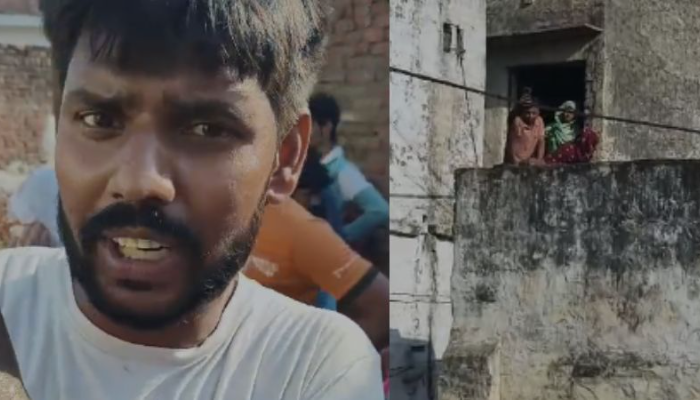
After reports of harassment of Hindus by local Muslims surfaced in Kalana village of Sanand taluka in Ahmedabad, Gujarat, OpIndia talked to local Hindus. Speaking to OpIndia, the Hindus recounted their ordeal and disclosed how Muslims in the village have been repeatedly targeting them. Local Hindu women told OpIndia that the Muslims do not allow them to celebrate festivals and stop them from taking wedding processions past the local mosque.

A Hindu family was recently attacked by a Muslim mob over a social media post of a Hindu boy. The father of the boy was seriously injured in the attack and is receiving medical treatment at a hospital. The father told OpIndia that his son had made a social media post demanding justice for Bangladeshi Hindu Dipu Chandra Das, who was lynched and burnt alive in Bangladesh. He said that the social media post enraged local Muslims, who threatened that if such posts were made, the entire Thakorvas locality would be set on fire.

“Muslims perform obscene acts in front of our sisters and daughters:” Hindu women.

The Hindu women told OpIndia how local Muslims have been harassing them for a long time. The women said that local Muslims men have been tormenting them for the past 12 months. They said that Hindu children are threatened for wearing a tilak (a Hindu religious mark on the forehead), and no Hindu festival or other celebration is allowed to be observed peacefully in the village.

Expressing distress, a Hindu woman said, “When Hindu women and girls go out, Muslims stand in front of them in public wearing revealing clothes.” She added that some Muslims have been sexually and mentally harassing Hindu women for a long time.

Hindu children threatened for wearing a Tilak.

The women further revealed that local Muslim men target young Hindu children and threaten them for wearing a tilak. They also stop them from celebrating Hindu festivals. Another Hindu woman said that her husband and other family members were physically attacked when they were returning from work. She said Hindu women are scared to step out of the house as Muslims make obscene gestures towards them.

Hindu women of Kalana are demanding justice and have urged Deputy Chief Minister Harsh Sanghavi to take notice of the incident. They also sought the intervention of BJP MLA Alpesh Thakur, who belongs to the Thakur community.

Hindu wedding processions are not allowed to pass the mosque

The Hindu women expressed suspicion that the recent attack on Hindus was a pre-planned conspiracy. Talking about the stone-pelting, one woman said that so many stones couldn’t appear in a single day and that it had been planned for 10 days. She recounted that she woke up in the morning and was going about her daily routine when suddenly the stone-pelting began.

The Hindus said that incidents of violence frequently occur during Hindu weddings in the village. They said that the groom and the wedding procession are not allowed to pass the local mosque. They further said that if Hindus try to take a wedding procession past the mosque, they are threatened by Muslims. Currently, the police are investigating the matter and taking action.

What exactly was the incident?

The entire incident took place on Monday night (29th December). Stone-pelting also occurred on Tuesday morning. Later, a police convoy reached the village and conducted a search operation. Fearing action, the accused fled their homes and hid in the village fields, where they were arrested after a search operation using drones.

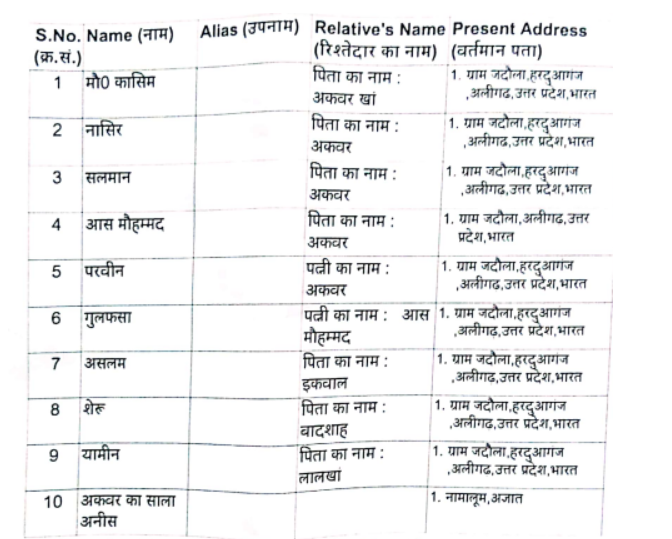
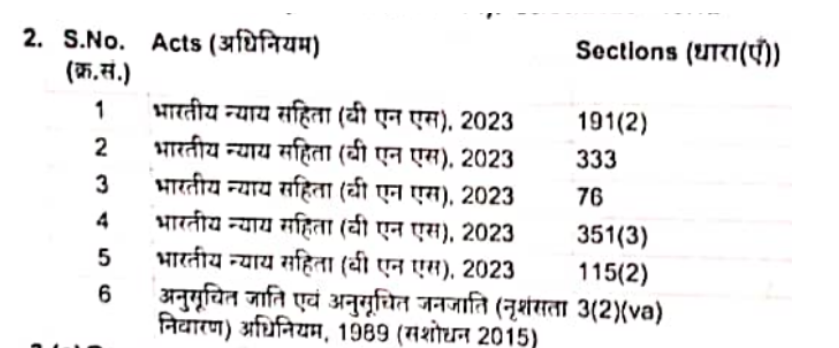
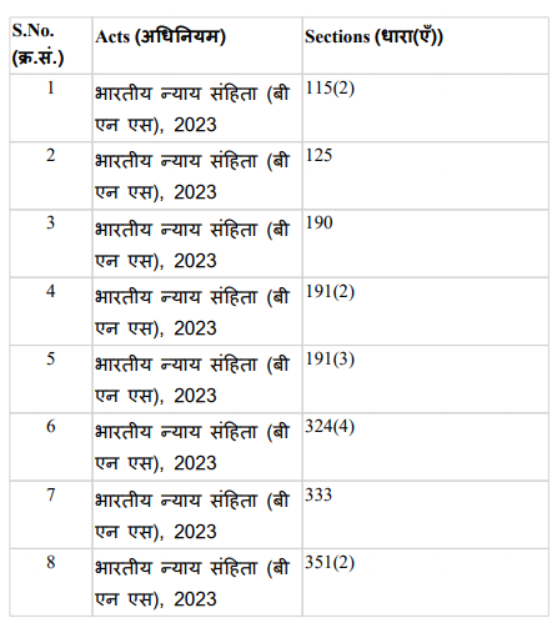
Based on a complaint filed by the Hindu minor, the police registered an FIR against 22 Muslim individuals, including Shahrukh. Based on the complaint, the police registered a case against the accused under Sections 115(2), 352, 351(3), 189(2), 191(2), 190, 194(2), 324(2), and 125(A) of the BNS at the Sanand GIDC Police Station and initiated further investigation. Later, 42 people were taken into custody.

Rich want over-regulation to make the poor invisible: Zomato founder Deepinder Goyal opens up on gig work debate; responds to 10-minute delivery, career progress and other concerns

Amid the debate over the working conditions of gig workers, Deepinder Goyal, founder of Zomato and Blinkit, has addressed the issues raised by delivery partners and others through a series of posts on X. The debate was raised after a nationwide strike was called by delivery partners associated with platforms like Zomato, Blinkit, Swiggy, Zepto, Amazon, and Flipkart on 31st December 2025, following a flash strike on 25th.

Deepinder Goyal in his posts defended the gig economy, clarified misconceptions about 10-minute deliveries, explained benefits available to delivery partners, and attributed disruptions to a small group of “miscreants.”

Delivery Workers’ Strikes and Demands

The strikes were organised by unions such as the Gig and Platform Service Workers Union (TGPWU) and the Indian Federation of App-based Transport Workers (IFAT), representing over 200,000 app-based delivery workers across India. The actions were framed as protests against an “exploitative” system, with workers demanding systemic changes to improve dignity, protection, and fairness.

A flash strike on December 25, 2025, reportedly caused 50-60% service disruptions in several cities, including metros and tier-2 areas like Gurugram, as workers halted operations to draw attention to ongoing issues. This was followed by a December 31, 2025, nationwide strike called for New Year’s Eve to maximize impact during peak demand. Unions claimed broad participation; however, it was found that only a small section of gig workers participated in the strike, and the majority were working as usual. Goyal also said that platforms like Zomato and Blinkit saw minimal disruption.

Workers are demanding fair and transparent pay, protesting falling earnings due to low per-order payouts, rising fuel costs, and a lack of holiday incentives. They are also demanding fixed minimum wages and an end to opaque algorithms that reduce incentives. Safety and working conditions were major concerns, with criticism on “ultra-fast” delivery models like 10-minute promises, which workers claimed increase accident risks by encouraging rushed driving. Demands included scrapping these targets, providing better insurance, rest breaks, and protection against long working hours.

Job security and grievance redressal were also highlighted, with complaints about arbitrary account suspensions without due process, weak support systems, and a lack of social security, such as pensions and health benefits. Unions called for national policies on gig worker rights, including background checks and fair termination processes. They sought an end to exploitative practices, such as pressure from platforms to meet unsafe targets, and recognition of gig work as deserving of labour protections.

Deepinder Goyal’s Response to the Debate

On 1st and 2nd January, 2026, Goyal posted a series of comments on X, directly addressing the strikes, gig worker conditions, and misconceptions about Blinkit’s 10-minute delivery model. He emphasised the system’s fairness and voluntary nature, explaining how the delivery platforms generate employment.

Regarding the strikes and gig worker treatment, Goyal said that Zomato and Blinkit achieved record highs on New Year’s Eve, with over 7.5 million orders delivered by more than 450,000 partners to 6.3 million customers, unaffected by strike calls. He credited local law enforcement for managing a small number of “miscreants”, about 0.1% of workers who intimidated others by snatching parcels, assaulting them, or threatening vehicle damage. He said that these agitators are former workers terminated for fraud, theft, impersonation, or absconding with cash, possibly instigated by “politically motivated individuals” seeking media attention, and argued that most delivery partners rejected the strike, choosing “honest work and progress.”

Defending the gig economy, he noted it as one of India’s largest job creators, with long-term benefits like stable incomes enabling education for workers’ children, and urged sceptics not to fall for “narratives pushed by vested interests,” asserting that an unfair system wouldn’t attract and retain so many voluntary participants.

Responding to specific queries, Goyal confirmed all workers have medical and life insurance, and hiring requires a valid driver’s license and background check. Responding to a query on ‘career progression’, he described gig work as temporary, saying it is not a career with progression, with 65% annual attrition. “This is not a permanent job for anyone. Most people do this for a few months in a year and move on to something more permanent,” he said. Importantly, he also stated there are no penalties for late deliveries, acknowledging real-world delays like traffic.

On the 10-minute delivery model, which strikers linked to safety risks, Goyal explained that it is enabled by operational efficiency, and it does not put any pressure on riders to rush through traffic. He explained that delivery partners are not even shown the time, and it is based on the distance from the store to the customer’s location. As Blinkit mostly delivers grocery items, and such stores are located in almost every location in a city, the app is able to promise 10-minute delivery, he explained.

Goyal stated that orders are picked and packed in 2.5 minutes at dense store networks near customers, with riders then covering an average of under 2 km in about 8 minutes at a safe 15 kmph. He said that riders have no timer visible in their app showing the customer’s promised time, removing any incentive to rush. He said that he understands why everyone thinks that 10-minute delivery must be risking lives, adding that it is indeed hard to imagine the sheer complexity of the system design that enables quick deliveries.

Addressing traffic violations, Goyal argued it is a societal issue in India, not unique to delivery workers, and attributed public bias to uniforms making them noticeable while non-uniformed violators go unremembered. He encouraged users to speak directly with riders for honest insights into why they choose gig work, suggesting it humbles assumptions of exploitation, and while admitting no system is perfect, he maintained it is “far from what it is being portrayed on social media.”

Addressing the claim of declining incomes, Goyal gave statistics showing that the income of gig workers rose by 10.9% last year, to ₹102 per hour from ₹92 per hour the previous year. According to him, if someone works 10 hours a day for 26 days a month, the average gross earning will be ₹26,500, and the net will be around ₹21,000 after deducting fuel and maintenance.

However, most workers don’t work the entire year; they work only for a few days. He said, “In 2025, the average delivery partner on Zomato worked 38 days in the year and 7 hours per working day, reflecting true gig-style participation rather than fixed schedules.” As per him, only 2.3% of partners worked more than 250 days in the year. Therefore, demands for full-time employee benefits like PF, or guaranteed salaries for gig roles don’t align with the nature of the job, Goyal said.

Deepinder Goyal further explained that delivery partners are not assigned shifts or geographies; they determine when to log in and log out, and their area of work in a specific city. They can even add or remove a desired work area based on their preferences. Based on these features of the job, gig work is a reliable source of secondary income for delivery partners, which is available to them all 365 days of the year, Goyal said. He stressed that it is used as a flexible, stop-gap earning option, not as a permanent employment.

Deepinder Goyal also confirmed that the riders keep 100% of the tips given by customers, saying it is over and above the wages. “All tips get passed on to our riders as is, without any deductions (even no deductions for payment gateway charges),” he said. However, he added that tips are a small part of a rider’s overall income, as India does not have a culture of paying big tips like in the West.

Gig workers at Zomato and Blinkit get accident insurance with coverage of up to ₹10 lakh, medical insurance with coverage of ₹1 lakh plus OPD coverage of ₹5,000, loss of pay insurance up to ₹50,000, and maternity insurance with coverage of up to ₹40,000. Goyal said that his company spent over ₹100 crore on insurance coverage for delivery partners in 2025. Additionally, female workers get period rest days of 2 days per month.

The company also helps the riders in filing their income tax returns. Moreover, delivery partners can also access the gig variant of the National Pension Scheme launched by the Government of India. The company also offers SOS Service for immediate support in case of emergencies, including accidents, vehicle breakdown, theft etc.

Emphasising the role of the sector in generating jobs, Goyal said that gig workers are one of the largest organised job creation engines in India, adding that they provide insurance, fair, timely and predictable wages.

Responding to calls for regulation of the sector, he said, “Gig doesn’t need more regulation, it needs less regulation. It will bring more people into the fold, who will be able to earn some money, upskill themselves and later join India’s organised workforce. Not to mention, consistently send their kids to school – which will fundamentally change the fabric of our nation one generation later.”

In his last comments on the issue, Deepinder Goyal offered a broader sociological perspective on the gig economy debate, calling it a historical shift that has made the labour of the working class visible to the affluent at an unprecedented scale, thereby evoking discomfort and guilt among consumers. He said that for centuries, class divides kept the labour of the poor invisible to the rich, but gig economy has brought them face to face.

He argued that for centuries, class divides kept workers invisible, allowing the wealthy to consume without confronting the human cost, but gig platforms now bring direct, repeated interactions that personalise inequality, such as seeing a delivery partner’s exhaustion while receiving a luxury meal.

“This is the first time in history at this scale that the working class and consuming class interact face-to-face, transaction after transaction. And that discomfort with our own selves is why we are uncomfortable about the gig economy. We want these people to look our part, so that the guilt we feel while taking orders from them feels less,” he wrote.

Goyal contended that calls to ban or over-regulate gig work stem not from genuine concern for dignity but from a desire to restore this invisibility of the poor. He warned that such actions would eliminate livelihoods without creating better alternatives, pushing workers back into unregulated informal sectors.

Goyal said, “Over-regulate it until the model breaks, and you achieve the same outcome through paperwork instead of slogans: the work evaporates, prices rise, demand collapses, and the people we claim to protect are the first to lose income.”

“The rich get their old comfort back. Convenience returns without faces. Guilt dissolves. We go back to clean abstractions and moral posturing from a distance. The poor don’t become safer, they become invisible again: back in cash economies, back in backrooms, back in shadows where regulation rarely reaches and dignity isn’t even debated,” he further stated.

Goyal advocated using this visibility-driven discomfort as a catalyst for continuous improvements, positioning the gig economy as progress toward addressing systemic issues rather than a return to ignorant complacency.

As the Magh Mela 2026 begins in Prayagraj, Yogi govt in UP prepares for 15 crore devotees: Read about the religious significance and Kalpavas ritual

With the beginning of the new year, the Sangam city of Prayagraj is once again poised to immerse itself in an ocean of faith. Starting on 3rd January, 2026, and continuing until 15th February, 2026, the Magh Mela 2026 is set to attract millions of devotees. Following the grand success of the Maha Kumbh 2025, this Magh Mela is another major test for the Yogi Adityanath government in Uttar Pradesh.

The Yogi government has decided to organise it on the Mahakumbh model, ensuring a safe, clean, and divine experience for devotees. It is estimated that 120 to 150 million devotees will come to take a holy dip at the Sangam this time.

The Magh Mela is considered a smaller version of the Kumbh Mela, but its religious significance is no less. Taking the holy dip (Snan) at the Triveni Sangam during the month of Magh bestows the same merit as performing thousands of Ashwamedha Yagyas, as per the Hindu faith. This fair is not only a festival of bathing, but also a celebration of penance, restraint, and self-purification.

Religious significance of Magh Mela

The month of Magh holds a special place in Hinduism. According to Hindu scriptures, bathing in the Ganga during the month of Magh washes away all sins and leads to salvation. Prayagraj’s Triveni Sangam, the confluence of the Ganga, Yamuna, and the invisible Saraswati, is considered the most sacred place in the world. Bathing here cleanses one of the sins of all past lives.

The Magh Mela is held annually, while the Kumbha (Kumbh) is held every 12 years and the Ardha Kumbha (Ardh Kumbha) every six years. However, following the success of the Maha Kumbh 2025, this Magh Mela has become particularly significant. Devotees believe that taking a bath at the Sangam purifies the soul and brings happiness and peace to life. This festival symbolises restraint, charity, and devotion.

Kalpavas: A unique tradition of penance

The most significant part of the Magh Mela is the Kalpavas (spiritual practice of Kalpavas). Kalpavas means to stay for a long period of time. Devotees stay in tents on the banks of the Sangam from Paush Purnima (3rd January, 2026) to Mahashivratri (15th February, 2026) and perform rigorous austerities.

The main rules of Kalpavas are

  • Sleeping on the ground, on a kusha seat.
  • Simple food once a day (fruits, milk, satvik diet).
  • Observance of celibacy.
  • Daily bath in the Sangam.
  • Bhajan-Kirtan, Ramayana-Mahabharata recitation and meditation.

It is said in the scriptures that by performing Kalpavas, a person reaps the fruits of 12 years of austerity at once. It is considered a direct path to salvation. Millions of Kalpavasis set up small tents on the banks of the Sangam and live a simple life for the entire period.

Major Snan dates in 2026 Magh Mela

The Magh Mela 2026, held at the Triveni Sangam in Prayagraj, features six main Snan festivals, including three Amrit Snans (royal baths). These dates are determined according to the Hindu calendar, and each has special religious significance. The scriptures state that bathing at the Sangam during the month of Magh bestows merit equivalent to performing thousands of Ashwamedha Yagyas and absolves the sins of past lives ( Padma Purana, Prayag Mahatmya ).

These days, millions of devotees gather at the Sangam banks, where, along with a holy dip, an atmosphere of devotional singing, charity, and austerity is created. On the occasion of the Amrit Snan, a grand procession of saints and sages, featuring Naga Sadhus riding elephants and horses, flags and banners, and the resounding sound of drums, is a sight to behold. This scene offers a vibrant glimpse of the eternal tradition.

There are six main dates for special Snan festivals during the Magh Mela 2026. Of these, the three most important are the Amrit Snan (Amrit Snan).

3rd January, 2026 (Paush Purnima): This marks the official beginning of the Magh Mela and Kalpavas. The first major Snan takes place on this day. Bathing during the full moon on this full moon day purifies the mind and brings spiritual peace. The Skanda Purana states that bathing in the Sangam on Paush Purnima bestows blessings from the gods. On this day, Kalpavasis set up tents and began their penance, and the Mela area came alive with devotees from all over India.

14th January, 2026 (Makar Sankranti): The first Amrit Snan takes place on this day. This festival is celebrated when the Sun enters Capricorn, which is considered the beginning of Uttarayan. According to scriptures, Snan (holy dip), donating (Daan), and consuming sesame and jaggery on this day are especially virtuous (Mahabharata, Anushasan Parva). The most attractive event during Amrit Snan is the procession of the Akharas – Juna Akhara, Niranjani, Mahanirvani, etc. – all proceed towards the Sangam in a grand procession. Devotees offer prayers to the Sun God and then bathe.

29th January, 2026 (Mauni Amavasya): The most important bathing festival of the Magh Mela. On this day, it is customary to observe a silent fast and take the holy dip, which fosters self-control and self-reflection. The Matsya Purana states that bathing at the Sangam in Prayag on Mauni Amavasya opens the door to salvation and washes away all sins. This day is the most crowded at the fair, as it is considered the main bathing time. Kalpvasis especially await this date.

2nd February, 2026 (Basant Panchami): The second Amrit Snan. This is the festival dedicated to the worship of Goddess Saraswati, the goddess of learning, wisdom, and knowledge. Wearing yellow clothes, worshipping Saraswati, and bathing in the river Saraswati bestow wisdom and discernment. The significance of Vasant Panchami is described in the Bhagavata Purana. The procession begins again, and the Sangam banks are decorated with yellow flowers and textiles.

12th February, 2026 (Magh Purnima): The third Amrit Snan. Bathing in the full power of the moon on Magh Purnima brings happiness and prosperity. According to the Vishnu Purana, bathing in the Sangam on this day is equivalent to donating thousands of cows. The final grand procession of the Akharas takes place on this day.

15th February, 2026 (Mahashivratri): The final Snan and the conclusion of the fair. Bathing in the holy waters, accompanied by the worship of Lord Shiva, fulfils all desires. The Shiva Purana describes bathing in Prayag on Mahashivratri as highly virtuous.

The Yogi government has made grand preparations.

Following the historic success of the Maha Kumbh Mela in 2025, the Yogi Adityanath government has set a goal of organising the Magh Mela in 2026 on the same scale. Chief Minister Yogi reviewed the preparations several times and issued strict instructions to ensure all arrangements were completed by 31st December, 2025, which has been accomplished.

The main preparations are as follows-

Area Expansion: The fair area has been expanded to 800 hectares . Construction of tent cities, sectors, and ghats has progressed rapidly.
Security: Thousands of police personnel, CCTV, drones, and AI-based surveillance. VIP protocol has been completely abolished at the main bathing place.
Sanitation and Health: Deep cleaning of the Sangam banks, temporary hospitals, ambulances, and a team of doctors.
Transportation and Parking: Special trains, buses, and parking arrangements. A traffic diversion plan has been prepared.

Electricity and Water: 24-hour electricity and clean drinking water throughout the area.
Tourism Facilities: For the first time, four temporary tourist information centers will be available, providing information on guides and hotels.
Budget: ₹42 crore was initially approved, with additional arrangements made from the remaining budget of the Maha Kumbh.

Chief Minister Yogi said that the Magh Mela is a living embodiment of the eternal tradition. The government’s goal is to ensure every devotee has a safe and divine experience.

Special carpets made at Gyanpur Jail in Bhadohi for the Magh Mela (Image via X/DM_Bhadohi)

Grand tradition of Hindu festivals get highlighted under Yogi government

Under the leadership of Yogi Adityanath, Hindu festivals and religious events have reached new heights in Uttar Pradesh since 2017. Previously, these festivals were celebrated on a simpler, local scale, but now they have become world-class, record-breaking, and have been attracting millions of devotees. The government’s focus has been on respecting Sanatan culture, ensuring the safety, convenience, and comfort of devotees. This has not only strengthened faith but also significantly boosted tourism and the economy. This tradition has now become the hallmark of Uttar Pradesh.

Let us understand with some prominent examples how these events became grand and divine-

The unique splendor of Deepotsav in Ayodhya

Ayodhya‘s Diwali festival of lights is now world-famous. The Yogi government linked it to the spiritual significance of the city of Ram. Every year, millions of diyas are lit on the banks of the Saryu River. In 2025, the city was illuminated with over 2.617 million diyas, setting two Guinness World Records: the largest number of diyas lit and the collective Saryu Aarti performed by 2,128 Vedacharyas.

The event is punctuated by laser shows, Ramlila (the sacred fire of Rama), and cultural programs. While only a few thousand lamps were lit, now millions and world records demonstrate the grandeur the government has given to this timeless tradition.

Maha Kumbh 2025: The world’s largest religious gathering

The 2025 Maha Kumbh Mela in Prayagraj was historic. Over 660 million devotees took a dip in the Sangam, a world record. The Yogi government ensured the safest, cleanest, and most organised event in the world. This event generated an estimated ₹3.5 lakh crore in benefits to the state’s economy. Previously, the Kumbh Mela had limited arrangements, but now it has become a global-scale, divine event.

Flowers were showered on devotees from helicopters during the Maha Kumbh 2025 (Image via X/SwachhKumbh)

Kanwar Yatra: A shower of flowers in the name of faith

The Kanwar Yatra was made grand in Sawan. Chief Minister Yogi Adityanath himself was seen showering flowers on Kanwariyas from a helicopter and conducting aerial inspections of the route. This same scene was witnessed on the Meerut-Muzaffarnagar route in 2025. Thousands of CCTV cameras, lighting, water, and security arrangements have made the journey smooth. Previously, there were complaints of inconveniences, but now it has become a safe and divine festival of faith.

The lights of Dev Deepawali in Varanasi

On Kartik Purnima, the ghats of Kashi are illuminated with 2.5 million diyas. In 2025, laser shows, green fireworks, and cultural programs added to the grandeur. Chief Minister Yogi Adityanath himself witnessed the magnificent spectacle of Dev Deepawali from a cruise. It is becoming globally renowned as the Diwali of the Gods.

This tradition symbolises the revival of Sanatan culture. The Magh Mela 2026, being organised on the Maha Kumbh model, is an important part of this tradition. Prayagraj will once again send a message to the world that India’s faith and culture are immortal.

(This article is a translation of the original article published on OpIndia Hindi.)

Global anti-India forces unite: From Jihadi Ilhan Omar to anti-India Pramila Jaypal, 8 US lawmakers write letter to ‘free’ Umar Khalid, some of them had met Rahul Gandhi

The Islamo-leftists never leave one of their own behind, at least not in rhetoric, even if that person is a terror sympathiser, secessionist or an accused riot mastermind. Incarcerated for over five years now, Umar Khalid, the accused mastermind of the 2020 anti-Hindu Delhi Riots, continues to garner support from local as well as foreign left liberal media and politicians. In a latest episode of the ‘Free Umar Khalid’ drama, 8 US lawmakers have penned a letter to the Indian government demanding bail and a free trial for Umar Khalid.

The letter dated 30th December 2025 has been signed by rabid anti-India Islamist Ilhan Omar, Rashida Tlaib, Pramila Jayapal, Jim McGovern, Jamie Raskin, Chris Van Hollen, Peter Welch, Jan Schakowsky, and Lloyd Doggett.

In the letter addressed to India’s ambassador to the United States, Vinay Mohan Kwatra, the Democrat representatives wrote, “We write to you as Members of the United States Congress to express our continued concern regarding the prolonged pre-trial detention of individuals charged in connection with the February 2020 violence in Delhi, including student activist and scholar Umar Khalid.”

The Democrat lawmakers invoked ‘democracy’, ‘freedom’, ‘rule of law’, ‘human rights’, ‘pluralism’ to sermonise the Indian government into believing that Umar Khalid is innocent and thus, should be released. Sounding like defence lawyers hired by Khalid, the signatories of the letter, claimed that the anti-CAA protests were ‘peaceful’ and even painted Muslims as the victims of the anti-Hindu riots in 2020.

Jim McGovern even called the Citizenship Amendment Act (CAA) “fundamentally discriminatory just because the law excludes Muslims, the provision to grant citizenship to persecuted minorities from Islamic or Muslim majority neighbouring countries. The Democrats, however, failed to explain how Muslims can be persecuted in Islamic countries for being Muslims. Apparently, Democrats consider the application of common sense in the context of Muslims as ‘fundamentally discriminatory’.

The Democrat representatives seemingly attributed Umar Khalid’s prolonged incarceration to the state’s unfairness, lack of due process, and even tried to advocate for his innocence. However, contrary to the false narrative peddled by Islamo-leftists to garner support and sympathy for Umar Khalid, OpIndia has reported earlier that out of the 14 adjournments in 2023 and 2024, 7 delays and adjournments were sought by Umar Khalid himself. It therefore becomes evident that the withdrawal was certainly not because of the famed “delay” in hearing. While the Islamo-leftist ecosystem continues to cry ‘injustice’, it is the alleged failed forum shopping attempts of the accused’s lawyer that have Khalid rotting in jail for so long.

In fact, former Chief Justice of India, DY Chandrachud, had also said earlier this year that the real problem lies in the mindset of some lawyers and political groups who want their cases heard only by certain judges. Highlighting what OpIndia has reported multiple times, the former CJI said that court records showed that Khalid’s legal team, led by Sibal, had sought at least seven adjournments before finally withdrawing the bail plea in February 2024, citing “a change in circumstances.”

The US lawmakers also painted Delhi riots accused Sharjeel Imam, Gulfisha Fatima, and Khalid Saifi as ‘victims’ of freedom of religion or belief violations by the United States Commission on International Religious Freedom (USCIRF). This came even as Sharjeel Imam called for separating India’s chicken’s neck corridor that connects mainland India with the northeast states, Gulfisha Fatima is accused of inciting Muslim women to partake in violent protests in 2020 and attack police with sticks, red chilli powder, etc, and Abdul Khalid Saifi is accused of raising and collecting funds for arranging guns and “managing protest sites”.

Not to forget, the USCIRF itself has a history of peddling anti-India propaganda and glorifying Islamic extremists as ‘activists’ while villainising Hindus and the democratically elected Modi government, all in the name of analysing religious freedom in India.

The signatories of the outrageous letter painted Muslims and the instigators of the 2020 anti-Hindu Delhi riots as victims, insinuating that somehow Hindus were behind the riots. However, they made no mention of Delhi, where the Police Head Constable and an Intelligence Bureau Constable were killed in the riots. 

The action follows New York Mayor Zohran Mamdani, notorious for peddling anti-Hindu and anti-India propaganda, reportedly writing a letter to Umar Khalid expressing solidarity.

As it is evident that the letter signed by the Democratic lawmakers is riddled with bias and a Muslim victimhood agenda, it is pertinent to know who these lawmakers are.

Jim McGovern: Opposing CAA, anti-conversion laws, advocating for designating India as country of concern for religious freedom and to now crying for Umar Khalid

James Patrick McGovern, commonly known as Jim McGovern, represents the Massachusetts 2nd congressional district since 2013. He has been a vocal critic of the Modi government and the Bhartiya Janata Party (BJP). McGovern has on multiple occasions claimed that human rights, religious freedom, and democracy are deteriorating under Prime Minister Narendra Modi’s leadership.

Back in January 2022, Jim McGovern, who co-chairs the Tom Lantos Human Rights Commission, addressed a Special Congressional Briefing called to commemorate India’s 73rd Republic Day. McGovern claimed that the Modi government is promoting Hindu nationalist policies, and religious freedom and human rights were backsliding. He also amplified the false and alarmist narrative peddled by the Indian Islamo-leftists that the Citizenship Amendment Act, when combined with the National Register of Citizens (NRC) proposal, would institutionalise discrimination against Muslims. This briefing was attended by Hamid Ansari, the former Vice President of India.

Notably, this briefing was organised by a coalition of 17 US-based ‘rights’ organisations, including IAMC, HfHr, Sikh Coalition, among others. Most of these organisations have earned notoriety by peddling anti-Hindu and anti-India narratives and indulging in lobbying activities in the US to undermine American Hindus.

“For the first time in 2019, a law was passed that links citizenship to religious identity. There is every reason to fear that this change, combined with the proposal for a National Register of Citizens institutionalizes discrimination against Muslims,” McGovern said.

McGovern’s remarks came even as the CAA was absolutely unrelated to the NRC and had nothing to do with Indian Muslims. The CAA was notified in 2024, and so far, Pakistani, Bangladeshi and other Hindu and other persecuted religious minorities who fled their home country to escape persecution at the hands of Muslims simply for being Hindus are being granted Indian citizenship. Not a single Indian citizen has lost their citizenship.

Questions arose back in 2019 as to why Muslims were excluded from eligible religious communities, particularly when Shias and Ahmadis are persecuted in Pakistan; however, their exclusion did not stem from any discriminatory mindset but from the fact that, despite persecution, Shias and Ahmadis identify as Muslims. Thus, their persecution becomes a sectarian violence issue and not an issue of religious minorities being persecuted by the majority.

This was important to discuss because Jim McGovern, in the recent letter he signed seeking bail and a fair trial for Umar Khalid, continues to push the lie that CAA is ‘discriminatory’.

He also framed the Indian government’s decision to refuse renewal of the foreign-funding license for the Missionaries of Charity, the Christian organisation founded by ‘Mother’ Teresa, as “discrimination against Christians”.

McGovern, however, did not delve into the fact that the denial of FCRA license renewal was not any act of discrimination but because the organisation failed to submit some necessary documents. Within days of submitting complete documents, the license was restored.

“The concern about discrimination based on religious identity [was] so great that the US Commission on International Religious Freedom has recommended that India be designated a Country of Particular Concern,” McGovern asserted.

He had also cried hoarse about the UAPA and other strict anti-terrorism laws enacted by the Modi government, claiming that such laws are misused to target journalists, activists, attorneys, and other civilians.

Condemning the so-called ‘targeting of journalists, activists and other dissenters, under the UAPA and other such laws, McGovern said, “This kind of misguided anti-terrorism legislation is not the sign of a healthy democracy. We cannot be silent when measures are taken that discriminate against whole populations or when inflammatory language is used that could incite violence against those populations.”

He completely disregarded the fact that journalists, activists, and any civilian, for that matter, are not immune to prosecution over anti-national activities. Those booked under the UAPA and other stringent provisions were not targeted for their journalistic work or activism but for alleged involvement in activities jeopardising India’s national security and/or territorial integrity.

Jim McGovern also coddles inherently anti-Hindu entities like the Indian American Muslim Council (IAMC). Back in 2016, the IAMC testified before the Tom Lantos Human Rights Commission in Washington, DC, at the hearing titled ‘Challenges & Opportunities: The Advancement of Human Rights in India. McGovern echoed the IAMC’s propaganda about discrimination against religious ‘minorities’.

The Indian American Muslim Council is reported to have links with the banned Islamic terror outfit, Students’ Islamic Movement of India (SIMI).

Interestingly, Umar Khalid’s father, Syed Qasim Rasool Ilyas, is a former member of SIMI. In November 2025, the Fraternity Movement, the student wing of the Welfare Party of India, participated in the ‘anti-air pollution’ protests in Delhi.  Pollution, however, was only a ruse for Urban Naxals to protest against the elimination of notorious Naxalite Madvi Hidma.  It is interesting to note that Umar Khalid’s father, Syed Qasim Rasool Ilyas, is a key member of the Welfare Party of India.

Besides, the Indian American Muslim Council has ties with Lashkar-e-Taiba (LeT) and Jamaat-e-Islami (JeI) through its founder, Shaik Ubaid. The IAMC is a Jamat-e-Islami-backed lobbyist organisation claiming to be a rights advocacy group.

In the past, it had reportedly collaborated with and even paid money to various groups in the USA to get India blacklisted by the USCIRF (United States Commission on International Religious Freedom). IAMC had been caught spreading fake news and misinformation to further the Islamist cause in India. It had also been slapped with the UAPA in 2021. The IAMC often publishes dubious reports and propaganda materials slandering American Hindus and Hindus in India, under the pretext of countering ‘Hindu nationalism’. The IAMC had also backed Zohran Mamdani, another anti-India and anti-Hindu propaganda peddler.

In 2019, after the Modi government abrogated Article 370 and 35A, discontinuing Jammu and Kashmir’s “special status”, McGovern claimed that India was indulging in massive human rights violations by detaining politicians, restricting ground access to journalists, and using ‘brute force’ against protestors.

McGovern, along with other signatories of the Umar Khalid letter, Jamie Raskin, Jan Schakowsky, Lloyd Doggett, had cosponsored a House resolution “Urging the Republic of India to end the restrictions on communications and mass detentions in Jammu and Kashmir as swiftly as possible and preserve religious freedom for all residents.” The bill was sponsored by Pramila Jayapal, another signatory of the ‘free Umar Khalid’ letter.

In June 2025, McGovern joined the IAMC-founded Hindus for Human Rights (H4hR) group member Ria Chakrabarty to advocate for designating India as a Country of Particular Concern for religious freedom. McGovern extended support to Khalistani separatist terrorist Gurpatwant Singh Pannu, who repeatedly threatened violent attacks against India. He claimed that India orchestrates ‘transnational repression’. The Democrat leader made mention of the anti-India activities of Khalistanis and projected the situation as India ‘persecuting’ Sikhs.

McGovern has persistently amplified the Muslim victimhood narrative carefully concocted by Indian and foreign Islamo-leftists, and echoed liberal talking points that project Hindus are inherently intolerant and oppressive.

Jan Schakowsky: Cries Islamophobia in India, meets Rahul Gandhi, and wants bail for Delhi Riots mastermind Umar Khalid

Janice or Jan Schakowsky represents Illinois’s 9th district, has advocated for good India-US relations, but indulged in activities pushing Muslim victimhood narratives in the Indian context. Back in 2021, Schakowsky co-sponsored the Combating International Islamophobia Act bill, which, as the name suggests, aimed at countering the so-called ‘Islamophobia’ globally. This bill was sponsored by Ilhan Omar, an infamous Islamist.

In 2023, Jan Schakowsky urged then-President Joe Biden to raise concerns about ‘human rights violations in India.

In September 2024, Jan Schakowsky and Ilhan Omar met Congress leader Rahul Gandhi during his infamous US visit.

Delighted to meet the Indian Leader of Opposition (LoP), Schakowsky wrote on X, “It was great to meet with India’s Opposition Leader, @RahulGandhi! His push for inclusive growth, protection of minority rights, and holding the Modi government accountable is crucial for India’s future.”

Months later, in January 2025, Schakowsky reintroduced the ‘Combating International Islamophobia Act’. The Bill explicitly named India, claiming that Muslims are subjected to discrimination and crackdowns due to their religious identity. The Bill was sponsored by Ilhan Omar and co-sponsored by Schakowsky and Rashida Tlaib, among others.

And now, Schakowsky has written a letter urging the Indian government to grant bail to Umar Khalid as if the Modi government is preventing his bail or a fair trial.

Pramila Jayapal: A notorious anti-Hindu and anti-India voice in the US

The next name in the list was Pramila Jayapal, who is known for her anti-India and anti-Hindu bias. In December 2019, she brought a Congressional resolution urging India to end restrictions on communications in Jammu and Kashmir. Her stand against the Indian Government’s decision to abrogate Article 370 in the state made the Indian-American community feel betrayed, cheated and saddened.

Following her resolution, MEA Jaishankar famously cancelled his meeting with a group of United States lawmakers following their refusal to exclude anti-India Congresswoman Pramila Jayapal from the delegation that was scheduled to meet him. “Don’t think her report has a fair understanding of the situation in Jammu and Kashmir or a fair characterisation of what the Government of India is doing. I have no interest in meeting her,” the External Affairs Minister revealed after speculations of cancellation of the meeting came forth.

Jamie Raskin: The perpetual Muslim victimhood peddler

Another signatory of the ‘Free Umar Khalid’ letter, Jamie Raskin, had joined Schakowsky in 2023 to sign the letter urging Biden to raise concerns over imaginary ‘human rights violations’ in India. In 2020, Raskin peddled fake news that somehow the Indian government halted the operations of Amnesty International in an authoritarian move.

“India’s decision to halt @amnesty’s work documenting human rights violations is a scandalous and self-incriminating offense against democracy. @SecPompeo, will you denounce this authoritarian move with @narendramodi during your visit?” Raskin wrote.

However, Amnesty India, one of the shadiest non-governmental organisations, was not targeted under any witch hunt by the Modi government. In 2020, bank accounts of the organisations were frozen, not for the first time. In 2018, Amnesty’s bank accounts in India were frozen by the Enforcement Directorate after its offices were raided for violation of FCRA laws. It was widely claimed in 2020, the Modi government targeted Amnesty due to its report on the Delhi Riots; however, the organisation’s financial activities had been under investigation since 2010.

It was alleged that Amnesty tried to bypass the FCRA Act by floating a commercial entity in the name of Amnesty International India Pvt. Ltd (AIIPL). The probe agency alleged that Amnesty via one of its Indian entities had established an overdraft facility for Rs 14.25 crore, keeping the said Rs 10 crore FD as collateral, which means the receipt of FDI (foreign direct investment) by the trust only.

The NGO was accused by ED of violations in borrowing and lending regulations of FEMA to the tune of Rs 51.72 crore for rendering civil society activities in the country by getting remittances from its parent body, Amnesty International UK, in the garb of export of services.

Not to be forgotten, Amnesty International has a history of interfering in India’s internal affairs. It has constantly been trying to falsely project India as a violator of human rights and ‘oppressor’ of Muslims. The NGO and its former head, Aakar Ahmed Patel, also campaigned for the arrested Urban Naxals in the Bhima Koregaon violence case. 

Interestingly, Jamie Raskin had failed to report a massive stock holding and payout for his wife. In January 2022, he claimed that India continued to struggle for human rights, especially under PM Modi, which “affects not just India’s Muslim, Christian, and Sikh minorities, but also Hindus who dissent against the Hindu supremacist movement.” The statement was given at an event hosted by Amnesty International USA, Genocide Watch, IAMC and other organisations.

Llyod Doggett: Criticises ‘Hindu nationalism’, amplifies ‘Indian Muslims under threat’ bogey

Lloyd Doggett represents Texas in the U.S. Senate and has been a longtime member of the Congressional Caucus on India. Back in 2008, Doggett had voted against cooperating with India as a nuclear power.

In 2020, Doggett, in his statement on the Republic Day of India, insinuated that the Modi government flags, patriotic symbols, and religion to sow divisions, indulges in pitting neighbour against neighbour. Doggett had also cried hoarse over the CAA, NRC, and the revocation of the statehood of Jammu and Kashmir. He also glorified Aishe Ghosh, then the JNUSU president.

“The new citizenship bill, the threat of NRC expansion, unilateral revocation of the statehood of Jammu and Kashmir, troubling talk of Kashmiri “deradicalization camps,” provide ample reason to push back, right here. Across India, powerful and clear voices have come to the forefront; let us particularly honor Aishe Ghosh, the courageous student in New Delhi, who refused to be silenced by a violent Hindu nationalist assault,” he said.

Aishe Ghosh, whom Doggett called a ‘courageous student’, is an accused in the 2020 JNU riots case. Aishe Ghosh rose to fame during the 2020 JNU riots, during which the left-wing ‘students’, joined by outsiders, had unleashed large-scale violence against other students inside the university and had forced them to boycott classes in protest against the fee hike.

As the president of JNUSU, Ghosh had allegedly led the mob that physically attacked students and prevented them from registering for the winter semester to enforce the boycott. The left-wing mobs, led by Aishe Ghosh, had allegedly also vandalised the university server room and disabled Wi-Fi on the campus, preventing students from registering online. Several students and ABVP leaders were injured in the attack by left-wing groups.

Chris Van Hollen

The next signatory of the letter from Vinay Kwatra seeking bail and trial for Umar Khalid is Chris Van Hollen. Born in Pakistan, Hollen had, in 2020, along with three other lawmakers, written to the US Secretary of State requesting an assessment of the human rights situation in Kashmir and the rights of religious minorities in India. They wrote, “We write as longtime friends of India regarding some of the troubling actions taken by the current government. More than six months after Indian Prime Minister Narendra Modi’s government unilaterally revoked the autonomy of Jammu and Kashmir, the government continues to block most internet in the region. India has now imposed the longest-ever internet shutdown by a democracy, disrupting access to medical care, business, and education for seven million people. Hundreds of Kashmiris remain in ‘preventive detention,’ including key political figures.”

They also targeted India for CAA and said, “In addition, the Indian government has taken other troubling steps that threaten the rights of certain religious minorities and the secular character of the state. This includes the passage of the controversial Citizenship Amendment Act, which is being challenged in India’s Supreme Court.”

In June 2023, Hollen joined several US representatives, including most of the signatories of the Umar Khalid letter, urging Biden to raise concerns over ‘human rights’ violations.

Back in March 2023, Chris Van Hollen claimed that the Modi government was deliberately silencing Congress leader after the court delivered its verdict against Rahul Gandhi in the Modi surname defamation case.

“As a friend of India, this news is alarming. In a healthy democracy, you don’t silence opposition — you debate them. Free speech is essential to democracy & India has already fallen to #150 out of #180 in the World Press Freedom Index. This is another step in the wrong direction,” the senator for Maryland wrote, completely disregarding the fact that Rahul Gandhi losing his parliament membership was a consequence of the court verdict, not any move by the Modi government.

Ilhan Omar: Infamous for bias against Hindus and anti-India views

Ilhan Omar is a Somalia-born radical Islamist politician from the US. She was elected to the House of Representatives from Minnesota on a Democratic ticket. Outside the global Muslim brotherhood or the Ummah, Omar is seen as someone running errands for the powerful Islamist lobbies, whose only aim is to push radical Islam in modern societies.

A representative of Minnesota, Ilhan Omar, has several times in the past parroted the same lies peddled by the radical Islamists and Pakistan. For years now, Omar has indulged in propagating anti-India narratives, especially targeting the Narendra Modi government, and has sought the Biden Administration’s official help to further her propaganda war.

US lawmaker Ilhan Omar/ Image Source: NPR

With support from other ‘left-liberal’ circles, both in India and the West, Ilhan Omar has been at the forefront of raking up the issue of Kashmir in the US House of Representatives with a pro-Pakistan stand demanding that US agencies intervene in the matter. Omar has also peddled lies about the alleged attacks on minorities, issues of human rights, and freedom of speech in India, claiming that Muslims in the country are facing atrocities at the hands of Hindus.

In 2024, in a US House Foreign Affairs Committee Hearing on South Asia Human Rights, Ilhan Omar had also attacked Indian journalist Aarti Tikoo Singh, who had testified before the US Congress on the Kashmiri Hindu genocide in the valley in the 1990s.

Ilhan Omar has links with radical Islamist organisations. It is alleged that Omar is a pawn of the Muslim Brotherhood and Qatar’s rulers. She also has ties with radical Islamic organisations such as Islamic Relief and Helping Hand for Relief and Development (HHRD), the sister organisation of the Islamic Circle of North America (ICNA), a Western branch of the Jamaat-e-Islami, a terror group that is banned in India. HHRD also has ties with Islamic terror groups such as Lashkar-e-Taiba in Pakistan.

Ilhan Omar is a known antisemite and has expressed steadfast support for the terrorist group Hamas. When the Israel-Palestine crisis broke out in 2021, Ilhan Omar sided with Jihadists to whitewash their crimes against Israel.

In 2019, Omar had courted controversy when she had defended the 9/11 terrorists by referring to them as “some people doing something”. She is also a proponent of the ‘one-nation’ solution to the Israel-Palestine conflict, which effectively means refusing to let Israel exist as a country.

Rashida Tlaib: Hinduphobe, Islamist, and Islamic terror apologist

Congresswoman from Michigan’s 12th District, Rashida Tlaib, is a vocal Islamic terror apologist and antisemitic leader in the USA. In 2021, Tlaib joined a panel with notorious Islamic terror sympathisers and Jihadists to peddle anti-India propaganda on Kashmir. The panel was linked to an organisation called Sound Vision in Chicago, which is itself an offshoot of the Islamic Circle of North America (ICNA).

Notably, ICNA is a notorious Islamic organisation in North America that has intimate links with terror groups such as Hamas, the Muslim Brotherhood, Jamaat-e-Islami, and other Islamic terror organisations.

The ICNA had glorified the US-designated global terrorist, Syed Salahuddin, in their magazine ‘The Message’. The ICNA has hailed Islamic terrorist Syed Salahuddin as the ‘undisputed leader of the Mujahideen who is struggling to liberate the territory of Kashmir from brutal Indian occupation.

Ahead of Prime Minister Narendra Modi’s US visit and address to the joint session of the US Congress in June 2023, Tlaib had announced a boycott of PM Modi’s speech, alongside Ilhan Omar. She called PM Modi’s visit ‘shameful’.

“It’s shameful that Modi has been given a platform at our nation’s capital—his long history of human rights abuses, anti-democratic actions, targeting Muslims & religious minorities, and censoring journalists is unacceptable. I will be boycotting Modi’s joint address to Congress,” Tlaib wrote on X.

Tlaib had opposed the abrogation of Articles 370 and 35A in Jammu and Kashmir. She has also been against the CAA.

Unsurprisingly, Tlaib is a known antisemite who propagates the idea that Israel does not deserve to exist. Earlier, she had planned to host an event, terming the foundation of Israel as ‘Nakba’, which means the ‘catastrophe’, at the US Capitol. The event was supported by radical anti-Israeli groups that propose a complete social and economic boycott of Israel.

However, after media reports of the radical groups joining the event, House Speaker Kevin McCarthy blocked the event, condemning the open antisemitism fanned by Tlaib. Tlaib’s whole political career is built around fanning antisemitism and hatred against the Jewish state of Israel.

Conclusion

The US lawmakers who wrote the letter advocating 2020 anti-Hindu Delhi Riots mastermind Umar Khalid’s release themselves have a track record of peddling anti-India propaganda and toeing Ithe ndian Islamo-leftist line of villainising Hindus and the Modi government. It is unsurprising that after the American leftist media, even the politicians are writing desperate letters absolving Khalid of any wrongdoing, even as the matter remains sub-judice. The way Democrat leaders are passing judgments of their own and vouching for Umar Khalid’s innocence, they are leaving even Indian Islamists behind in concocting Muslim victimhood narratives, who claim that Umar Khalid is being targeted due to his Muslim identity, even though Khalid claims to be an atheist.

In all seriousness, however, Democrat lawmakers making demands about any case pertaining to India’s domestic affairs is unacceptable and amounts to interference in the internal matters of another country. Ideological imperative aside, Democrats should refrain from poking their nose in India’s internal matters. It will not sit very well with them if Indian lawmakers start commenting on their country’s internal matters, including Joe Biden’s shameful presidential pardon of his son Hunter Biden or why Osama Bin Laden was not arrested and offered a free and fair trial before a US court instead of hunting him down in Pakistan.

Umar Khalid is an Indian citizen is facing the Indian law, and shall be granted bail or denied one, acquitted or convicted in accordance with the Indian law, not international law, or the whims of American lawmakers.

Will burn your entire neighbourhood: Muslim mob threatens Hindu family in Gujarat over social media post demanding justice for Dipu Das, pelt stones

A Hindu family faced an assault by a Muslim mob in December, after which the police began to probe the incident, in which a potential link to Bangladesh has surfaced. The matter transpired in Kalana village of Ahmedabad in Gujarat. The victims asserted that a social media post provoked the assailants. The post was made by a Hindu youth from the hamlet after the murder of a Hindu man in Bangladesh.

This information was revealed when OpIndia conducted interviews with the victims. The first individual targeted by the accused was a minor. His father also sustained injuries during the attack. He shared his account with us while undergoing treatment at the hospital.

The father reported that his son had shared a post on social media regarding the brutal murder of Dipu Chandra Das and demanded justice. He added that local Muslims issued threats, stating that one Hindu had been set on fire in Bangladesh and if he continued to share such posts, the entire Thakurwas (Hindu neighbourhood) would be incinerated.

Women have been harassed regularly

Local women have revealed that Muslim men in the area have been harassing them for the last year. Hindu women and girls are struggling to leave their houses, as inappropriate gestures are directed at them. Hindus emphasised that they are being threatened for wearing religious symbols (tilak) and are not permitted to celebrate any Hindu festival or occasion peacefully within the village.

A woman highlighted that either her husband or other family members are thrashed upon their return from work. She reiterated that Hindu females are subjected to obscene gestures when they leave their homes and demanded punishment for the culprits alongside justice for the Hindu community.

Women were in tears as they narrated their horrific experiences, requesting justice from Deputy Chief Minister Harsh Sanghavi, and expressed that they had been suffering for three days without food or water. Meanwhile, a woman also raised questions at Alpesh Thakor, a leader of the Thakur community.

A Hindu woman from the village recounted the stone-pelting, disclosing that it was highly unlikely for so many stones to surface in a single day, suggesting that the conspiracy was orchestrated beforehand. She mentioned that the stone-pelting commenced while she was taking her morning tea.

The visuals of the house showcased that the roof, along with its pipes, had collapsed. The woman who was inside the house informed that she was washing clothes when stones began to fall on the roof. Stones also fell in the spot where her child was sleeping. She remarked that the roof fell due to the sheer quantity of stones.

Background of the instance

The entire incident occurred on the night of 29th December (Monday). Stone-pelting persisted into the morning of Tuesday. The authorities arrived at the village and initiated a search operation. The accused, fearing repercussions, left their homes and hid in the village fields, where they were apprehended following a search conducted with drones.

The police submitted an FIR (First Information Report) based on the complaint of the underage Hindu and booked 22 members of the Muslim including a man named Shahrukh. A case has been initiated at the Sanand GIDC (Gujarat Industrial Development Corporation) police station under sections 115(2), 352, 351(3), 189(2), 191(2), 190, 194(2), 324(2) and 125(A) of the Indian Penal Code (IPC) and began further investigation. Afterwards, 42 individuals were taken into custody.

Read the report in Gujarati here.

UCO Bank’s former CMD amassed 100 crores by helping a corrupt industrialist get loans worth 6200 crores through shell companies: How ED busted the scam

The Enforcement Directorate (ED) discovered an extensive banking fraud of over Rs 6,200 crore, which took place under the Congress rule. As per reports, Sanjay Sureka, a businessman from Kolkata, devised and executed the scam by setting up a network of 60 fictitious shell firms. These companies had no actual operations, but they displayed bogus business activity on paper. The industrialist was arrested by the agency on 17th December 2024.

Sureka used drivers, housekeepers, office boys, junior employees and family members as directors, and created a fraudulent turnover of thousands of crores in iron and steel manufacturing. He leveraged these faux businesses to build an image of a rapidly expanding enterprise with enormous revenue. With the head of one of the major banks acting as an accessory, he defrauded a consortium of PSU (Public Sector Undertaking) banks of an astounding amount.

Sureka obtained the loans with the assistance of Subodh Kumar Goel, the then Chairman and Managing Director (CMD) of UCO Bank, formerly known as United Commercial Bank, between 2007 and 2010, during Congress-led UPA’s (United Progressive Alliance) regime. The ED’s inquiry report found out, “Against loans of over Rs 6,200 crore, the company’s liquidation value barely reached Rs 600 crore, and assets sold so far have realised only Rs 434 crore,” reported The Times of India.

“It is a case study in how an entire financial ecosystem can be manipulated through fake turnover, circular transactions and system-wide blind spots, ultimately leaving public sector banks poorer by more than Rs 6,210.7 crore, excluding interest,” expressed a senior official quoted by TOI.

ED raids Sureka’s properties, nabs him under PMLA

The staggering scam came to light as Sureka was nabbed following widespread raids in 13 places connected to him in Kolkata in December 2024. His firms, including Concast Steel and Power Group and his house in Ballygunge, where multiple expensive cars and jewels priced at Rs 4.5 crore were confiscated. The Central Bureau of Investigation (CBI) submitted an FIR (First Information Report), which prompted ED to start money-laundering proceedings.

An official statement read, “The group had availed a credit facility from 11 Public Sector Banks and five financial institutions, having a total default of Rs 6210 crore as the company turned into NPA (Non-Performing Asset) on 30.9.2016. ED initiated an investigation per an FIR registered by CBI, BSFB (Banking Securities Fraud Branch), Kolkata, under various sections of IPC (Indian Penal Code) and Prevention of Corruption Act against Sanjay Sureka & others on the basis of a complaint filed by the SBI (State Bank of India), the lead bank of the consortium.”

For more than a year, the ED had been maintaining an eye on Sureka’s involvement in the fraud. He was unable to give appropriate responses when questioned about the misappropriation of funds and the confiscated jewellery. Furthermore, he could not provide legitimate documentation for the expensive items inside his home. The Calcutta High Court also denied his request for bail last November and affirmed that information alone can support a Prevention of Money Laundering Act (PMLA) arrest.

ED had already attached real estate assessed at Rs. 210.07 crore in February 2025, under the act. It was determined that Sureka advantageously controlled these possessions, which included homes, offices, commercial stores and plots.

Inception of an extraordinary con

Concast Steel & Power Limited (CSPL), a once prominent steel company of Kolkata, was at the root of the fraud. It had units in Andhra Pradesh, Odisha and West Bengal, for the production of mild steel, sponge iron, pig iron, and rolled goods, including TMT (Thermo-Mechanically Treated) bars, angles, channels, and ferro alloys. Sureka acquired control of the business in 2008 and gradually began to form the network of counterfeit entities.

According to the ED, the funds were obtained without the required checks, interest, or penalties and in exchange. The then UCO Bank CMD SK Goel received benefits through shell corporations that purchased properties on his behalf and subsequently gave his family members ownership.

The probe disclosed that CSPL displayed fabricated acquisitions, sales and conveyance of products. No products were transported, but false truck receipts and bills were generated. There was no actual money transferred through banks in about 99 per cent of sales and payments, which were merely book entries.

Officials with insight into the case unveiled, “This meant Concast was essentially selling to itself and then realising these payments through accounting fiction. By 2017, the deception hit its peak, 99% of all sales to these entities were settled through book adjustments, not a single real rupee flowed in through the banking system.”

The investigation outlined that CSPL produced fake invoices, ledger entries, and transport papers to support its nonexistent purchases and sales of iron and steel items with affiliated companies.

A source mentioned, “Fake transportation receipts were prepared to show trucks carrying goods between factories and shell companies, even though no truck ever moved, no goods were loaded, and no delivery was made. Yet on paper, CSPL looked like a bustling, high-volume operation with continuous production and sales.”

The same network of connected corporations supplied more than half of all raw materials. However, the report unearthed that about 90% of payments to them were created through internal modifications, similar to sales. There was no actual cash outflow or material movement, while only regular entries were made to inflate working capital requirements, legitimise large fund withdrawals and manufacture expenses.

Meanwhile, banks continued to lend money amid years of deceptive conduct. Rs 434 crore has been recovered thus far from CSPL’s assets, which were only worth about Rs 600 crore when it failed. On the other hand, public banks continued to pour thousands of crores and no red flags were ever raised.

ED arrests partner-in-crime and other key accused

The agency apprehended former UCO Bank CMD SK Goel on 16th May of last year, and attached the properties connected to his family and acquaintances that are valued at more than Rs 106.36 crore. ED had searched his premises as well as those belonging to others in relation to the investigation.

Goel was taken into custody at his New Delhi home and brought before the special PMLA court in Kolkata on 17th May. He was placed under ED custody until 21st May. Large loan facilities that were “sanctioned” under Goel’s authority were “diverted” and “syphoned off” by the borrower group as he gained “substantial illegal gratification” for his unlawful services.

“The illegal gratification was layered and channelled through various entities to give a facade of legitimacy. Investigation revealed that Goel received cash, immovable properties, luxury goods, hotel bookings, etc, routed through a web of shell companies, dummy persons, and through family members to conceal the criminal origin of the money,” the agency highlighted.

According to the findings, a number of properties obtained through phoney or fake businesses have been identified, “beneficially owned or controlled” by Goel and his family members. “The source of funds of these entities is linked to CSPL. Evidence gathered so far also shows use of accommodation entries and structured layering through front companies for systematic settlement of kickbacks,” ED added. Goel had approached a Kolkata sessions court for bail, but the petition was rejected.

Anant Kumar Agarwal, a chartered accountant (CA) from Kolkata, was also captured by the ED in July on allegations of helping Goel launder money. The agency highlighted that the former actively founded and supervised a network of pseudo companies. These served to pass off illegal proceeds as legitimate financial transactions, including share capital routed for cash and spurious unsecured loans.

The ED revealed that Agarwal held important roles in organisations directly involved in money laundering operations. He also offered his expert aid to conceal the money trail. Under the pretence of genuine business entries, the firms were used to layer and reroute the dirty money, frequently bringing it into legal accounting accounts.

The agency had declared, “Properties worth Rs 612.71 crore have been provisionally attached till date. The key accused persons, namely Sanjay Sureka, Subodh Kumar Goel and Anant Kumar Agarwal remain in judicial custody,” on 25th July.

Bangladesh angle in the attack on Hindus in Ahmedabad: Locals recount their ordeal to OpIndia, women allege prolonged harassment – Ground Report

In Kalana village of Sanand taluka in Ahmedabad district, a Hindu family was attacked by a local Muslim mob. While the police are investigating the incident, a “Bangladesh angle” has also emerged. The victims stated that Muslim individuals issued threats after being provoked by a social media post made by a Hindu youth from the village following the killing of a Hindu youth in Bangladesh.

This emerged when OpIndia met and spoke with the victims. The first person to be attacked was a Hindu minor. His father was also injured in the assault and spoke to OpIndia while undergoing treatment at a hospital.

The victim’s father said that his son had posted a story on social media seeking justice for the killing of Dipu Das in Bangladesh. He alleged that after seeing the story, local Muslims threatened them, saying that a Hindu had been burned alive in Bangladesh and that if such stories were posted, the entire Thakorvas locality would be set on fire.

Local Hindu women allege long-term harassment of daughters

Local women further alleged that for the past 12 months, some local Muslim individuals have been harassing them. Hindu women and girls are finding it difficult to step out of their homes, and obscene gestures are being made at them. They alleged that they are threatened for wearing tilaks and are not allowed to celebrate any Hindu festival or event peacefully in the village.

Another woman alleged that when her husband or other family members return from work, they are assaulted. She said obscene gestures are made whenever Hindu women and girls step outside. Demanding action, she said the accused must be punished and justice must be delivered to Hindus.

Other women, narrating their ordeal in tears, appealed to the Deputy Chief Minister Harsh Sanghavi for justice. They said they had endured all this for three days without food or water and now wanted justice. Another woman also questioned Thakor community leader Alpesh Thakor.

A Hindu woman from the village, speaking about the stone-pelting, said so many stones couldn’t be hurled in a single day and that it must have been pre-planned. She said that while they were going about their morning routine, having tea and attending to daily chores, stone-pelting suddenly began. OpIndia has also brought visuals from inside their homes.

The visuals show holes punched through the tiled roofs of houses. A woman present in the house said she was washing clothes when stones began crashing through the roof. Stones also fell where her child was sleeping. She said the volume of stones was so large that their rooftops were shattered.

What exactly happened

The incident occurred on Monday night (29 December). Stone-pelting also took place again on Tuesday morning. Subsequently, a police contingent reached the village and carried out combing operations. Fearing action, the accused fled their homes and hid in nearby fields, from where they were traced using drones and arrested.

Based on a complaint filed by a Hindu minor, police registered an FIR against 22 Muslim individuals, including one identified as Shahrukh. Acting on the complaint, the Sanand GIDC Police Station registered a case under Sections 115(2), 352, 351(3), 189(2), 191(2), 190, 194(2), 324(2), and 125(a) of the Bharatiya Nyaya Sanhita and initiated further investigation. Subsequently, 42 people were detained.

Iran on the boil: How economic collapse is fueling an open revolt against the Mullah regime

Iran is on a boil as the nation grapples with economic and political crises. This crisis has escalated into nationwide protests beginning in late December 2025. The Iranian people are on the streets to protest against myriad long-standing issues, including skyrocketing inflation, collapsing currency, chronic energy shortages, water scarcity, air pollution, and overall mismanagement under the Islamic Republic regime.

Three years after the Mahsa Amini episode, which saw massive agitation, Iran witnessed nationwide protests

What began as a localised strike by shopkeepers and bazaar traders in Tehran on 28th December 2025 soon snowballed into protests spreading across over 17 out of 31 provinces in Iran. Major cities witnessing street protests include Isfahan, Shiraz, Kermanshah, Tabriz, and Yasuj. It is being said that the protests stemming from economic and other factors have evolved into an anti-Mullah regime demonstration.

In some incidents, the protestors, including students and workers, have raised slogans like “Death to the Dictator, referring to Supreme Leader Ali Khamenei. The ongoing protests have also seen people raising slogans calling for regime change, specifically, the return of the Shah or Reza Pahlavi.

On 30th December, students held protests at four universities in Tehran, wherein “Rest in Peace Reza Shah” slogans were raised. Reza Shah was the founder of the royal dynasty ousted in the 1979 Islamic ‘revolution’. In Dehloran and Baghmalek, protestors chanted pro‑monarchy slogans, including “This is the national slogan: Reza Pahlavi,” “Javid Shah” (“Long live the Shah”).

By 1st January 2026, the protests had entered their fourth day, with nationwide bazaar shutdowns, university closures, and clashes in several areas. The local media reports that over 37 protestors have been killed, hundreds arrested or wounded, while 8 security forces members have died in the ongoing chaos.

On 1st January, the semi-official Fars news agency said that a 21-year-old member of the Basij, a paramilitary force connected with Iran’s Revolutionary Guards, was killed during clashes in Kouhdasht city. In the stone pelting protestors, 13 police and Basij officers have sustained injuries.

The southern province of Fars also witnessed massive protests, with agitators trying to break into a local government building. Several officers were reported injured, while four protestors were arrested in the city of Fasa. A part of the governor’s office was damaged during the unrest.

The Iranian security personnel are using brute force to crush the uprising, as visuals from the ground show the authorities using violence, tear gas, etc, to disperse protestors. The videos also show protestors hurling objects at the police officers.

Protests in Fars, Iran (Image via SkyNews)

The protesting merchants, particularly youth, say that they will bear losses by shutting down business to participate in protests, arguing that they are fed up with years-long economic mismanagement, sanctions pressure and diminishing hope for a better future.

Iranian govt hints at willingness to engage in negotiations, does not forget to threaten protestors with ‘decisive response’

President Masoud Pezeshkian has acknowledged the raging public anger against the government over the Iranian currency depreciation and overall economic downslide, offering to listen to “legitimate demands. However, Prosecutor General Mohammad Movahedi-Azad has said that even though protests against the economic situation in the country are legitimate, damage to public property or any security threat would invite “decisive response”.

In the face of rising public anger, Mohammad Reza Farzin, the head of Iran’s Central Bank, resigned, and President Pezeshkian appointed Abdolnaser Hemmati as the new head.

On one hand, the Iranian authorities are trying to quell public anger with rhetoric and replacements in top positions; on the other, the Mullah regime is taking measures to tighten security control.

Recently, Supreme Leader Ali Khamenei appointed IRGC Brigadier General Ahmad Vahidi as deputy commander-in-chief of the Iranian Revolutionary Guards. In many universities, classes have been moved to online mode. While authorities say that this move is temporary, it is obvious that this is being done to prevent student mobilisation. Meanwhile, a sudden public holiday was declared in 21 out of 31 provinces in Iran.

Amidst a declaration of accepting the legitimate demands of protestors, the Iranian regime is responding to the protests with tear gas, internet blackouts, and deployments of heavy military vehicles.

A large part of the country is now witnessing government-ordered shutdowns of offices, universities and businesses, leading to a standstill in commerce, further worsening the economic crisis.

Economic downslide, currency depreciation and inflation trigger protests in Iran

The ongoing protests in Iran are primarily triggered by a serious economic crisis, although regime change voices are also significantly loud. The immediate trigger is the dramatic collapse of the Iranian Rial (Iran’s currency), which plunged to a historic low of around 1.42–1.45 million to the US dollar. The Rial lost nearly half of its value in 2025 alone.

It is notable that Rial was never in a very strong position against the US dollar, as when Mohammad Reza Farzin took charge as the Central Bank’s chief, the exchange rate of Rial was 430,000 to the USD. However, the sudden drop to 1.42 million showed the quagmire the Iranian currency has descended into.

This record depreciation of the Iranian currency is fuelled by prolonged international sanctions, slashed oil revenues after the June 2025 clash with Israel, as well as domestic economic mismanagement. The depreciation of the Iranian currency’s exchange rate is reported to have been significantly triggered by the government’s liberalisation policies.

Resultantly, Iran is grappling with hyperinflation, with official rates surging 42.2% in December 2025 and food prices reaching an alarming high of 72% year-on-year, while medical goods rose by 50%.

With growing reliance on imports, failure to access frozen funds abroad and foreign exchange, Iran’s economy is in deep trouble. The country’s GDP growth dropped from 5.7% in 2023 3.7% in 2024 and to a projected 0.6% in 2026, as per the IMF.

Due to eroding purchasing power, millions of people are struggling to afford basic goods, food, and healthcare. Besides the unbearable living costs, what has further exacerbated the situation is the impending tax hikes in the new Iranian year. The Iranian taxpayers fear that their condition is going to worsen further after tax levies are raised.

Iranian Shah-in-exile calls on youth to rise in protest: Is regime change on the cards or will Khamenei crush the agitation?

While the Khamenei-led Iranian regime is appealing for unity amid “enemies” pressures, Reza Pahlevi, the exiled Iranian Crown Prince, has declared open support to the protestors, saying that the flame of a “national revolution” has been kindled.

“Your presence in the streets across Iran has kindled the flame of a national revolution. The continuation and expansion of your presence and taking control of the streets is today our foremost, vital priority. I call upon the people of Iran to join in with the nationwide strikes and protests: government employees, workers in the energy and transportation sectors, truck drivers, nurses, teachers and academics, artisans and entrepreneurs, retirees and those who have lost their savings—everyone, unite and join this national movement.”

In another message to the Iranian youth, Pahlavi said, “The Islamic Republic tried to keep you confined to your homes by closing public places and universities. But you bravely stood in the streets. I am proud of every one of you. We need greater solidarity and to hold the streets. Therefore, I ask you to use every opportunity, gathering, and event in the coming days to expand this movement. My team and I will continue to work toward mobilising more forces, causing greater defections from the regime, and also bringing your voice to the world. Victory belongs to us.”

The Iranian Crown Prince’s vocal support for the protesting Iranians, the anti-Khamenei sloganeering by protestors and the growing resentment against the Ayatollahs have reignited the question: Is regime change on the cards?

This question warrants recalling US President Donald Trump’s “Make Iran Great Again” remark made in June 2025, when the Iran-Israel conflict was raging, and the US bombed Iran’s nuclear facility. Trump had also said that Iran’s Supreme Leader Ayatollah Ali Khamenei was under his radar. Donald Trump’s indication that the US is in favour of and even willing to orchestrate a regime change had raised eyebrows then. The US has been interested in ousting the anti-US Ayatollahs and installing a pro-US democratic government.

While tensions flared up in Iran, Donald Trump on Monday teased that if Iran relaunches its nuclear program, the US will strike again. “We’ll knock them down,” Trump said.

The ‘regime change’ talks may have filled anti-Ayatollah factions within Iran and the world. However, the Mullah regime, with the Islamic Revolutionary Guards Corps (IRGC), Iran’s powerful and Islamist institution with significant military and economic clout at its disposal, can crush the protests. During the 2022 nationwide ‘Zan, Zendagi, Azadi’ protests after a young girl, Mahsa Amin, was killed by the ‘Morality Police’ in custody, over ‘improper Hijab’, the world believed that the fall of the Ayatollahs is certain. Yet, the protests were crushed, and the regime prevailed, although there has been a softening in stance about imposing Islamic ‘morality’.

However, considering the last two years have been marked by violent regime change in several countries, nothing is impossible. The possibility further increases with Iran’s deepening isolation, internal decay, and economy reeling under the burden of US and UN-imposed sanctions. It remains to be seen if Khamenei manages to hold the grip or a new political dawn awaits Iran.

Illogical to assume that freedom struggle was led by a single leader or organisation: How Madras HC opened a can of worms in one judgement allowing erection of Stupa

On 26th December (Friday), the Madurai Bench of the Madras High Court delivered a significant judgment that has paved the way for the establishment of a memorial stupa to commemorate the 1755 “Natham Kanavai War,” which was fought against the British Empire. The verdict was pronounced by Justice GR Swaminathan in response to a petition by lawyer Siva Kalaimani Ambalam. He is also the managing trustee of Thannarasu Kallar Nadu Charitable Trust.

He approached the court when the Tahsildar of Natham denied his request to erect a stupa monument in honour of the triumph of native forces over the colonisers. The writ suit requested permission to build a memorial symbol for the war on the petitioner’s patta land in Puthur Village of Natham Taluk in Dindigul district of Tamil Nadu.

18th-century warfare to chess championships: Success begets more success

The court established a fascinating comparison with India’s staggering achievements in Chess, designating Chennai as the capital of the game within the nation. It highlighted the exceptional chess players emerging from the state who are bringing pride to the country on a global scale.

The court stated that Tamil Nadu “is now home to a host of superstars in that sport. Gukesh Dommaraju, the current world champion, is a Chennaivasi. Grandmasters with very high Elo ratings, such as R Praggnanandhaa, Vaishali Rameshbabu, Pranesh, Ilamparthi, Aravindh Chithambaram, etc., are its residents.”

It also invoked the name of chess grandmaster RB Ramesh, who started a Chess Gurukul (academy) in Chennai and produced many international chess champions from India, including R Praggnanandhaa and Bharath Subramaniyam. “How did all this become possible? Because of the victories scored by one individual. None other than the legendary Vishwanathan Anand,” the court highlighted.

The judge evoked the proverb “success has many fathers but failure is an orphan.” He mentioned, “Success will beget many more successes. It can be a huge motivation. It can instil inspiration and trigger transformation. That is why it is necessary to celebrate success. It is not without reason that the Government of India commemorates Vijay Diwas Day on 16th December every year. It marks the victory of the Indian Armed Forces over Pakistan in the 1971 India-Pakistan War.”

The instances served as a reminder from the court that celebrating success is essential, as it can inspire, motivate and initiate transformation. The history of India and its freedom movement is replete with examples where victories, or even attempts to confront adversaries, have motivated numerous others to this day. This phenomenon persists today across multiple fields, including defence, sports, medicine and entertainment. The success stories of individuals encourage many to follow a similar trajectory.

A soldier’s sacrifice

The court provided further insight into the importance of acknowledging such achievements. It emphasised, “India, that is Bharath, is a single nation. It has a civilizational unity. It is also a collection of communities that speak different languages and belong to different regions. Each community has its own sub-communities. They were originally identified by the classes and castes to which they belonged. We have been fused into a common citizenship.”

The judge expressed that India is referred to as a “salad bowl” metaphorically, in contrast to the United States, which is described as a melting pot. He added that the various strands continue to retain their individuality in India and stressed that higher goals can be achieved by utilising the historical memories connected to these identities, pointing to the current matter.

The court referenced a book by the wife of General K Sundarji, the former Army Chief, who was also known as a “thinking man’s general.” It brought attention to the general’s question concerning why a soldier on the battlefield chooses to give up his life and underscored, “The soldier under no circumstances would conduct himself in a way that may bring dishonour to his group. To uphold the regiment’s heroic name, any amount of sacrifice is worth it.”

Duty of citizens and the truth of India’s freedom struggle

The court cited Article 51A of the Indian Constitution and conveyed that it is the responsibility of every Indian citizen to uphold and adhere to the noble principles which inspired our country’s struggle for independence, to protect the nation and to perform national service when required. It also noted that a large portion of this generation is ignorant of the wars and efforts Indian society had to free itself from the clutches of the foreign powers, which disregarded the biblical phrase “ask and it shall be given.”

“The British occupied us and ruled us for close to two hundred years. But right from the beginning, there was resistance and struggle. A false historical narrative has been built as if we got freedom without paying any price. It is again incorrect to assume that the freedom struggle commenced only after 1905 and that it was a movement led by a single organisation or a single leader,” the judge observed.

He indicated the immense sacrifices made by countless Indians to eradicate the tyrannical British Raj from the land. Many of these not only suffered through rigorous punishments, torture, assaults, and other forms of maltreatment but also ultimately gave up their lives for their homeland.

Unfortunately, this reality is not as much admitted in the nation where it has been perpetuated that Mohandas Karamchand Gandhi and his Swadeshi movement, or Jawaharlal Nehru, or their Congress party were the architects of independence, as rightful recognition is withheld from several who rose up against the Britishers.

However, the fact is that no single person, party or movement can be credited for independence, which was achieved through the efforts of millions of Indians. India’s freedom movement is etched in their blood, sweat and tears as they devoted everything, including their lives, to liberate their country from the bonds of oppression.

Tamil Nadu’s role in independence

The court then pointed out the crucial role of Tamil Nadu in India’s struggle for independence and noted that the first revolt against the British originated from the state long before 1857.

It expressed, “Tamil Nadu has contributed singularly to the freedom movement. There are scholars who hold the view that the first war of Indian independence was not waged in 1857 but much before from the Tamil soil. Several instances are cited. This court is not competent to go into these historical questions. But it can take judicial notice of the fact that the British met their match in the region of Madurai. Several names come to mind. Marudu brothers, Velunachiyar, Puli Thevar, Kattabomman, Oomaithurai, Valukkuveli Ambalam, the list can go on.

The judge insisted that celebrating the wars in which the indigenous people defeated the colonial army was just as important as remembering the names of those courageous soldiers. He conveyed that every such triumph attained at tremendous expense and against overwhelming odds should be cherished, and the memory of the martyrs should be respected.

“The petitioner, who is a practising lawyer, has gathered materials to show that in Natham Pass (Natham Kanavai), there was a bloody confrontation between the Melur Kallars and the English forces in the year 1755 in which the Kallars emerged winners,” the court mentioned.

Natham Kanavai War and the Kallar community

The court subsequently illuminated the history of the “Natham Kanavai War” and voiced that the brass idols from the Thirumogur (Koilkudi) Temple were stolen by the English soldiers. The group carrying the idols, under the command of Colonel Alexander Heron, was to cross the Natham Kanavai when the members of the Kallar community came together in large numbers.

They attacked Heron and his army to recover the sacred objects. The incident claimed thousands of lives. However, the Kallar community was able to recover every idol. Only thirty sepoys are reported to have survived along with Heron as they returned to Trichirappalli.

The judge also revealed the marital heritage of the Kallar community and equated them with Rajputs and Gurkhas. He further clarified the British intent to categorise them as criminals and unleash atrocities upon them.

He highlighted, “The Kallar community has a martial background. They can be compared to Gurkhas and Rajputs. Probably that was why the British branded them as criminal tribes. They languished for decades and faced untold hardships till the legendary leader Pasumpon Muthuramalinga Thevar redeemed the community.”

No permission is required to commemorate historical events

The court informed that the writ petition was undoubtedly submitted late, but the notion of laches (legal principle that prohibits from pursuing a claim or entitlement if unjustly postponed) cannot be applied. It emphasised, “So long as the impugned memo is holding good, the petitioner cannot install the stupa in the petition-mentioned site. Therefore, the writ petitioner cannot be non-suited on this ground.”

The officials alleged that there was no other explanation for the denial of authorisation other than the impending parliamentary elections. “Now the respondents submit that the report has been obtained from the jurisdictional police and based on the same, further action can be taken,” the judge added and discussed that he was unable to fully support the position.

He remarked, “The petitioner, after all, wants to erect a stupa to commemorate the victory of native forces over the colonial forces. Such events must be celebrated and preserved for historical memory. I had already taken the view that for the installation of the statue of a freedom fighter, that too only in a patta land, no permission is required,” alluding to a previous issue.

He had then declared, “Just as one’s home is his castle, one’s land is his fiefdom. The state can step in only by due process of law. A statutory or common law right cannot be restricted or taken away through an executive instruction or government orders. Only a statute that is not ultra vires the Constitution can impinge on such rights.”

The court at the time ruled that prior authorisation from the District Collector would be needed to erect a religious building for public worship, but the right of an individual to erect a statue in honour of a person he reveres cannot be restricted or tampered with because there is no such statutory law or rule addressing the installation of statues.

UAPA-accused Catholic Jesuit priest Stan Swamy’s memorial

The judge addressed the case pertaining to the placement of a statue of the Unlawful Activities Prevention Act (UAPA) accused Catholic Jesuit priest, late Stanislaus Lourduswamy alias Stan Swamy. The former recounted that the Tahsildar had declined permission, which was later granted by the same court. He also presented the controversial life of Swamy, which was stained by anti-national activities.

The court also presented the controversial life of Swamy, which was stained by anti-national activities, to maintain that if no approval is needed to set up a statue of such a notorious figure, then there should certainly be no necessity to seek permission to honour a crucial part of the nation’s freedom struggle.

“It is true that Stan Swamy is seen as a fighter for tribal rights by sections of society. But the fact remains that he was an accused in a case arising under UAPA. He died in prison. If for erecting a stone pillar in memory of Stan Swamy, permission is not required, certainly, no permission is required for erecting a stupa in memory of the Natham Kanavai battle,” it affirmed.

Swamy was booked as the principal conspirator in the Bhima Koregaon Elgar Parishad case of 2018, collaborated with the Maoists to overthrow democracy and dedicated his life to damaging the country. Furthermore, the Islamist outfit, Popular Front of India (PFI), which was later banned by the centre, was allowed to arrange programs at the Jesuit-run Indian Social Institute (ISI) when he was the director.

Ironically, such a vile man is commemorated with a statue in the very same land he worked to destroy, while those who died for the country either continue to remain anonymous, are denied their due or have to persistently fight for the acknowledgement of their great sacrifices, even posthumously.

The decision is announced

The judge quoted an earlier ruling regarding a government order, which specified that the instruction was exclusively related to public locations and not to patta lands.

“It is, of course, open to the government to bring in a law regulating the erection of statues even in private places. But then, so long as such a law has not been enacted, by issuing circulars and government orders, the right of an individual to put up a statue in one’s patta land cannot be taken away,” he elaborated on the verdict to provide more clarification.

The court stated that the order “pertains only to the erection of statues. The case at hand pertains to installing only a stupa. There is also no controversy, and there is not going to be any law and order implication. Therefore, the government may not have any objection.”

The court determined that the aforementioned judgment would equally be relevant to the present case despite the government order and finally concluded, “In this view of the matter, the impugned memo is quashed. The petitioner is at liberty to erect the memorial stupa forthe Natham Kanawai War in the petition-mentioned land. This writ petition stands allowed. No costs.”

Dhruv Rathee and Congress’ ‘gig workers’ strike falls flat: Deliveries continue on December 31, OpIndia reality-check exposes the truth

Several social media platforms and some left-wing portals created a buzz over the past few days, claiming that millions of gig workers and delivery partners of Swiggy, Zomato, Zepto and Blinkit would go on strike on 31st December, 2025.

Several YouTubers, including Dhruv Rathee, and organisations linked to the Congress party actively amplified this narrative, suggesting that essential delivery services would be disrupted during the New Year celebrations.

But the ground reports and reality checks conducted by OpIndia showed a completely different picture. The much-hyped strike failed to take off, with deliveries continuing smoothly, and young gig workers chose to work over calls for protest.

OpIndia reality check: Orders accepted and delivered on time

To verify the claims of a nationwide strike, OpIndia journalists carried out on-ground checks in multiple locations. Orders were placed on popular delivery apps, and they were accepted without any difficulty. The deliveries also arrived on time, showing no signs of disruption. When delivery partners were spoken to, their response was clear and consistent.

Many said they could not afford to stop working and lose their daily income. “We need to earn, and we have to work,” several delivery partners told reporters, making it evident that the strike call had little connection with the real needs of gig workers on the ground

Sanjay Gava and Congress link come under focus

During the investigation, an organisation named the All India Gig and Platform Workers Union (AIGPWU) came into focus. The union is chaired by Sanjay Gava. OpIndia found that Sanjay Gava has been associated with the Congress party. Photos of Gava with Congress President Mallikarjun Kharge and Rahul Gandhi have surfaced.

When OpIndia called Sanjay Gava, he initially said he had no information about a nationwide gig workers’ protest. However, within half an hour, he changed his statement and claimed that his organisation was indeed involved in the protest call. This sudden change raised questions, especially since the national president of the union appeared unsure about his own organisation’s role.

Telangana link and protest demands

The first call regarding the protest reportedly came from Telangana. Sheikh Salauddin, president of the Telangana gig worker platform union, was identified as one of the key voices behind the protest call.

The main demand raised by the unions was directed at the central government. They demanded that gig workers working with Ola, Uber, Swiggy, Zomato, Blinkit, Amazon and Flipkart should be officially recognised as employees rather than being called “partners”. According to them, the term partner does not offer the same security and benefits as employee status.

Government stand and labour code provisions

The central government has already included gig workers under the new labour codes. Several welfare measures and protections for gig and platform workers have been mentioned in these laws. Despite this, Congress and left-leaning groups continue to claim that the government has done nothing for gig workers.

Similar protest tactics were earlier used during the Labour Code Bill protests, the farmer movement, and the truck driver agitation. This time, gig workers were projected as the new face of protest politics.

Concerns over public disruption during the New Year

Such protest calls aim to create inconvenience for the public, especially during important occasions like New Year celebrations. Industrial cities like Kanpur have earlier witnessed disruptions due to protests, and similar attempts are now being made at a national level.

Despite the strong online campaign, the ground reality showed that services remained unaffected, livelihoods were protected, and the delivery ecosystem functioned normally.

Strike narrative collapses

The grand plan to disrupt services and trouble citizens on 31st December failed. Claims made from Lutyens’ Delhi and foreign locations could not shake the resolve of India’s hardworking gig workers.

Delivery services ran smoothly, celebrations went on as planned, and the much-hyped strike disappeared without any real impact. In the end, the ground reality spoke louder than online propaganda, and normal life continued uninterrupted.