Home Blog Page 618

India intensifies crackdown on online Khalistani propaganda, blocks over 10,000 URLs in three years

0

The Government of India has intensified its crackdown on online Khalistani propaganda. According to recent media reports, the authorities have blocked over 10,500 URLs linked to Khalistani content on social media platforms in the last three years. This extensive exercise to restrict problematic content is being conducted under Section 69A of the Information Technology Act. The steps taken by the government show its commitment to national security and determination to combat attempts to destabilise the country through digital platforms.

Coordinated action against pro-Khalistan content

The Ministry of Electronics and Information Technology (MeitY) has worked closely with the Ministry of Home Affairs (MHA) to identify and block web addresses that promote the Khalistan referendum and other extremist ideologies. Between 2021 and 2024, the authorities have blocked a total of 28,079 URLs on platforms such as Facebook, X (formerly Twitter), YouTube, Instagram, Telegram, and WhatsApp.

The numbers highlight the scale of the effort. According to available data, Facebook saw the highest number of blocks (10,976 URLs), followed by X (10,139 URLs). Platforms like YouTube, Instagram, and WhatsApp were also targeted, with 2,211, 2,198, and 138 accounts respectively blocked during this period.

An unnamed official quoted by The Indian Express stated, “Since 2021, we have blocked 10,500 URLs related to the Khalistan referendum under Section 69A of the IT Act.” The official added that the government has also acted against other forms of extremism, including 2,100 URLs linked to the Popular Front of India (PFI), an organisation banned in India for its alleged radical activities.

Notably, the initiative is not limited to specific organisations. Radicalisation posts and accounts related to groups such as the LTTE, Jammu & Kashmir militants, and Waris Punjab De (WPD) have also been targeted to curb their reach and impact on vulnerable people across the country.

A year-wise breakdown of blocking efforts

The crackdown on web addresses promoting extremism has intensified in recent years. In 2022, 6,775 accounts were blocked. In 2023, the number increased sharply to 12,483, while in 2024, 8,821 accounts have been blocked so far. Facebook and X accounted for the maximum number of account blocks compared to other social media platforms.

For example, on X, 3,417 accounts were blocked in 2022, 3,772 in 2023, and 2,950 by September 2024. On Facebook, 1,743 accounts were blocked in 2022, 6,074 in 2023, and 3,159 this year.

YouTube saw 809 accounts blocked in 2022, 862 in 2023, and 540 this year. On Instagram, the government blocked 355 accounts in 2022, 814 in 2023, and 1,029 so far in 2024. WhatsApp saw relatively fewer blocks, with 66 accounts blocked in 2022, 16 in 2023, and 56 in 2024.

Officials noted that many of these accounts were also being used for fraudulent schemes targeting vulnerable people. On Facebook, a significant number of URLs were blocked for redirecting users to third-party websites or app stores, where they were tricked into downloading malicious applications or joining WhatsApp or Telegram groups. These groups or websites then facilitated scams involving fraudulent investments or work-from-home schemes.

Escalation in pro-Khalistan activity linked to India-Canada tensions

Media reports suggest that the increase in pro-Khalistani content has been noticeable in the context of strained relations between India and Canada. According to a Economic Times report from November, tensions following Canadian Prime Minister Justin Trudeau’s allegations against India regarding the murder of Khalistani terrorist Hardeep Singh Nijjar have emboldened pro-Khalistani groups on social media.

Organisations like Sikhs for Justice (SFJ) and the World Sikh Organisation (WSO) have been at the forefront of spreading propaganda against India on social media platforms. Several accounts linked to these organisations have been withheld in India, meaning users in the country cannot access these accounts on platforms like X, which displays a message that the account has been withheld in response to legal demands.

Experts say the current geopolitical environment has provided fertile ground for extremist and terrorist groups to amplify their rhetoric on social media platforms. Short voice and video messages promoting an alternative governance model called “Khalsa Raj” have been circulated on messaging platforms to recruit and indoctrinate individuals, particularly the youth.

Abhinav Pandya, CEO of the Usanas Foundation, a think tank specialising in security affairs, noted, “The Khalistani movement has no ground support in Punjab, so they are increasingly resorting to online propaganda to attract sympathisers.”

The legal framework: Section 69A of the IT Act

The Government of India has used provisions under Section 69A of the Information Technology Act to take action against online radicalisation. These provisions empower the government to block content that threatens the sovereignty and integrity of the nation, its defence, public order, or friendly relations with foreign states.

Blocking orders are typically issued based on inputs from intelligence agencies. In this case, agencies provided evidence that certain URLs and applications contained material prejudicial to India’s national security.

Officials emphasised that these measures align with the reasonable restrictions outlined in Article 19 of the Constitution, which balances freedom of speech with considerations of national interest.

A persistent challenge

Despite the government’s efforts to fight these organisations on social media, the challenge remains ongoing. Pro-Khalistani elements continuously adapt, finding new methods to make their content viral on social media platforms. Officials describe the fight against such propaganda as a dynamic exercise requiring continuous monitoring and intervention.

Uttar Pradesh: Lady constable abused, assaulted, and dragged into a sewer; Irfan, Saleem and 3 others booked

0

On Sunday, December 1st, the Uttar Pradesh Police booked around 5 persons, two of whom have been identified as Irfan and Saleem for assaulting a woman constable in the Moradabad region of the state. The incident is believed to have happened when the woman constable was in her civil attire walking towards her home in the civil lines area behind the old RTO office.

One of the accused persons arrived on the bike and stopped close to the victim. As per the reports, he told the woman that his bike had stopped and asked her to start the bike. But before she could respond, the accused began assaulting and abusing her. The video of the incident is making rounds on social media.

In the video, it can be seen that the accused hit the woman first and then he dragged her towards the gutter. Further, he slapped her and also tried to touch her inappropriately. Seeing this, a few more persons gathered on the spot to save the woman but the accused continued to hit her.

The woman reached the Civil Lines Police Station and filed a police complaint against the accused. In the complaint, it has been mentioned that around 5-6 individuals harassed the lady constable and physically abused her. Two of the accused persons have been identified as Irfan and Salim.

Meanwhile, Moradabad Police took cognizance of the event and revealed that a police complaint had been filed in this case.

“The woman constable filed a complaint in this case stating that she was abused and assaulted by around 5-6 persons. She also said that she was sexually assaulted. FIR in this case has been filed. Investigations are underway,” one of the officers added.

Congress leaders file petition in Supreme Court, ask to restrain lower courts and states from doing survey at disputed mosques

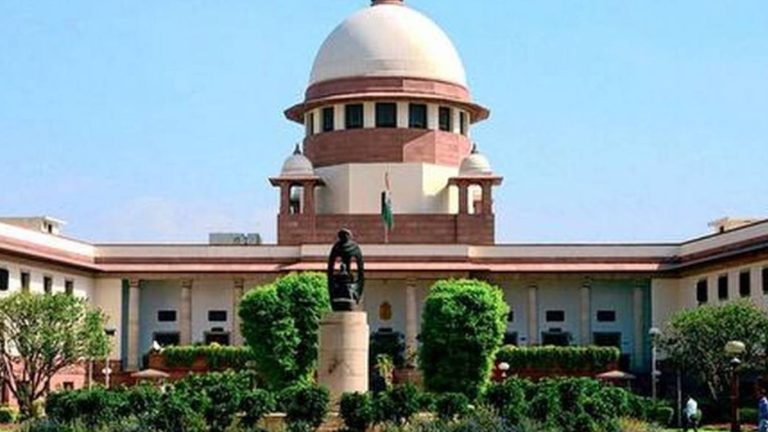
On 30th November, Congress leaders Alok Sharma and Priya Mishra filed a writ petition in the Supreme Court seeking to halt the execution of court-ordered surveys at religious sites. In the petition, Alok and Priya cited alleged violations of the Places of Worship (Special Provisions) Act, 1991.

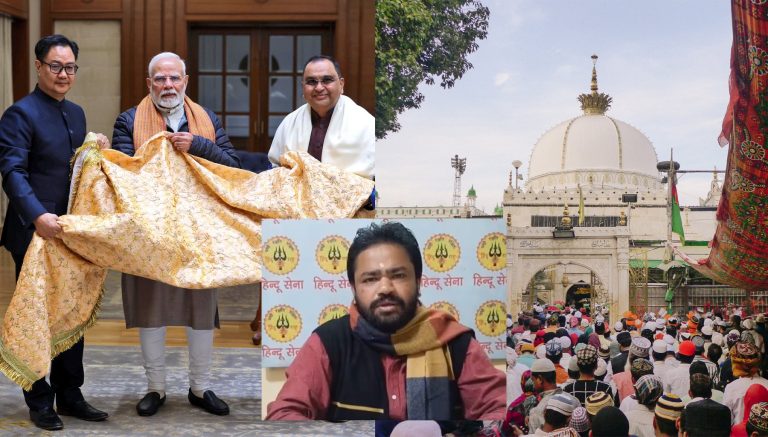
The petition has come at a time when violence erupted during a court-ordered survey of the Jama Masjid in Sambhal, and the Ajmer Trial Court accepted a petition claiming that the Ajmer Sharif Dargah used to be a Shiv Mandir.

Petitioners call for adherence to the Places of Worship Act

In the petition, Congress leaders called for directions by the apex court, ordering the state governments and lower courts to refrain from enforcing survey orders that, according to them, risk disrupting “communal harmony”. The petitioners further sought directions to ensure that all relevant cases are reviewed by the higher courts before any action is taken, citing the provisions of the 1991 Act that mandates the maintenance of the status quo of religious sites as of 15th August 1947.

They further requested a stay on all pending survey orders and sought directions from the Supreme Court to the state governments and union territories to prioritise peace. The petition stated: “To maintain harmony, orders by civil courts should not be executed hastily. Instead, they should be brought before the High Court or the Supreme Court.”

‘Cases stirring communal unrest’, claim Congress leaders

In the petition, Congress leaders Sharma and Mishra cited multiple cases that they claimed led to communal tensions, such as the Ajmer Sharif Dargah, the Sambhal Jama Masjid, Mathura’s Sri Krishna Janmabhoomi-Masjid, and Varanasi’s Gyanvapi mosque.

The petition was filed through Advocate Narendra Mishra, arguing that the litigations seeking surveys of religious sites are “barred” by the 1991 Act. The petitioners contend that continued legal disputes over historical religious sites risk destabilising the country’s communal fabric.

Exceptions to the Places of Worship Act – Detailed provisions explained

In 1991, the PV Narasimha Rao-led Congress regime passed the Places of Worship Act to protect the religious character of places of worship as they existed in 1947, with the exception of the Ram Janmabhoomi-Babri Masjid issue, which was already in court.

As per this Act, a site of worship’s religious character must remain the same as it was on 15th August 1947. The law also states that nobody shall convert any religious denomination’s holy site into one of a distinct denomination or section. Additionally, the law asserts that every lawsuit, appeal, or other proceedings pertaining to changing the character of a place of worship pending before any court or authority on 15th August 1947 will be terminated as soon as the legislation becomes effective, meaning there cannot be any further legal proceedings. Furthermore, the Act also imposes a positive obligation on the state to maintain the religious character of every place of worship as it existed at the time of independence.

The 1991 Act, while preserving the religious character of structures as they existed on 15th August 1947, includes specific exceptions. These provisions are designed to account for historical, legal, and social realities that necessitate deviations from the general prohibitions of the Act.

One of the most significant exceptions related to places of worship in the Act is for the sites that are classified as ancient and historical monuments or archaeological sites. These sites are governed by the Ancient Monuments and Archaeological Sites and Remains Act, 1958, or other similar laws. Notably, this exemption, provided under the Section 3 of the Act, acknowledges that such monuments, often of national and cultural significance, are not exclusively religious in nature. Furthermore, these sites require separate legal consideration for preservation and study. It ensures that these sites continue to be managed under their specific frameworks that may involve conservation work and research.

Source: Ministry of Home Affairs

Jama Masjid in Sambhal is an ASI-protected site, survey was legal

In the case of the Jama Masjid in Sambhal, it is an Archaeological Survey of India (ASI) protected site. Being an ASI site, legally, a survey can be ordered by a court as directed by the 1991 Act. The same applies to other ASI-protected sites in India that were built after destroying Hindu temples.

Interestingly, in an affidavit, ASI alleged that its officers were not allowed to enter the mosque for inspection and that the Jama Masjid management committee has done several interventions and modifications inside the mosque. It further stated that an ASI team had inspected the disputed mosque once in 1998 and then in June 2024. The Superintending Archaeologist of ASI’s Meerut circle Vinod Singh Rawat submitted that the Sambhal Jama Masjid management committee has carried out various interventions and modifications in the disputed mosque. Moreover, Rawat said that the masjid management committee has restricted the ASI team from carrying out inspection and thus, the ASI is unaware of the present status of the mosque, in addition, the ASI also does not have any information on whether any additions were made to the mosque.

Another key exception in the Act pertains to disputes or legal proceedings concerning the religious character of a place of worship that were resolved before the Act came into force, that is, on 11th July 1991. The Act states that if such cases were settled by the courts, tribunals, or through mutual agreements among the parties involved, they cannot be reopened under the Act. This provision is aimed at maintaining legal finality and avoiding any resurgence of disputes that have already been addressed through established legal provisions.

Here, the case of Krishna Janmabhoomi can be considered. It was stated that the land dispute was settled through an agreement for the site, and the 1991 Act protected the settlement. However, in the petition to the court, it was argued that the agreement was not a legal one, and the court should revisit it by ordering a survey of the site. Furthermore, the petitioners also argued that as the site is ASI-protected, it will be subject to the rules of “The Ancient Monuments and Archaeological Sites and Remains Act, 1958” rather than the Places of Worship Act. The case is still pending in court.

The Act further excludes religious structures that were converted before the commencement of the Act. The law recognises conversions that happened by acquiescence, where there was explicit or implied consent to the change. In such cases, the Act bars the matter from being legally challenged again. With these exemptions, the Act ensures that changes made before 1991, whether widely accepted or unchallengeable due to legal constraints, remain unaffected.

Conclusion

The petition by Congress leaders Alok Sharma and Priya Mishra, aiming to stop court-ordered surveys under the Places of Worship Act, 1991, overlooks important exemptions in the Act. For instance, surveys of ASI-protected sites like Sambhal’s Jama Masjid are allowed under the law. Similarly, the Act permits revisiting disputes settled before 1991, like the Krishna Janmabhoomi case. By ignoring these details, the petition raises doubts about the true intentions of the Congress leaders involved.

Bangladesh bars 63 ISKCON members from travelling to India despite valid passports and visa, says ‘govt approval’ needed

On Sunday (1st December), 63 members of the International Society for Krishna Consciousness (ISKCON) were stopped at the Benapole border crossing, despite having proper passports and visas. The immigration officers denied entrance to the ISKCON devotees citing a lack of ‘official approval’ for their travel.

Imtiaz Ahsanul Quader Bhuiyan, officer-in-charge of Benapole immigration police, stated that they received instructions from higher authorities not to allow them to cross the border, as reported by The Daily Star newspaper. He said that while the ISKCON devotees had legitimate passports and visas, they lacked government permission. “We did not allow 54 passengers to travel to India due to suspicions regarding travel purposes,” Bhuiyan said without making any mention of the other group of 9 ISKCON devotees.

A group of 54 ISKCON devotees and another group of 9 devotees from different areas in Bangladesh arrived at the checkpoint between Saturday night and Sunday morning. After waiting for hours for clearance to proceed, they were told that their travel was not authorised. “We came to participate in a religious ceremony in India, but immigration officials stopped us, citing the absence of government permission,”  ISKCON member Saurabh Tapandar Cheli said.

Expressing his frustration over the travel restriction, Cheli added, “I came to attend a religious ceremony in India. But immigration authorities sent me back without giving any explanation.”

Meanwhile, Radharamn Das, vice-president of ISKCON Kolkata questioned the decision of the Bangladeshi authorities to stop ISKCON monks from travelling to India despite valid documents. “Considering the current situation in Bangladesh, they chose this period for a pilgrimage in India. But 9 were stopped on Saturday and another 54 on Sunday by BGB. They were told it was unsafe for them to travel to India at this point and asked to go back. I just wonder, on what grounds could they be disallowed from heading to another country despite having valid visas and other documents?” the ISKCON Kolkata member told TOI.

While atrocities against Hindus in Bangladesh have been on an all-time-high since the unceremonious ouster of Sheikh Hasina in August this year, the persecution of Hindus has increased since the arrest of Hindu priest Chinmoy Krishna Das, a spokesperson for the Bangladesh Sammilita Sanatani Jagran Jote, on the 27th of November. He was held at Dhaka’s Hazrat Shahjalal International Airport on suspicion of sedition. His arrest provoked huge protests among supporters. The prosecution claims that on 25th October, he and others raised a saffron flag over the Bangladeshi flag at a protest in Chattogram. Bangladeshi officials also blocked the bank accounts of 17 individuals affiliated with ISKCON, including Chinmoy Das, for 30 days. The tension rose after two ISKCON monks, Adi Purush Shyam Das and Ranganath Das, both from Chattogram, were arrested on Friday while returning after giving prasad to Das in jail.

‘The Caravan’ editor, who peddled ‘Muslims protecting temple’ narrative in Bangladesh, tells others not to bother about attacks on Hindus

Salil Tripathi, the contributing editor at the leftist propaganda magazine ‘The Caravan’, had attempted to silence those speaking on the plight of Hindus who are left at the mercy of violent Muslim mobs in Bangladesh.

When geopolitical analyst Jeff M Smith highlighted that the Trump administration must address India’s concerns about the precarious situation in Bangladesh, Salil Tripathi suggested that only Bangladeshis should be bothered about it.

In a tweet on Sunday (1st December), the serial propagandist stated, “What’s happening in Bangladesh is a matter for Bangladeshis, and nobody elsewhere should bother, unless they have an agenda.”

Salil Tripathi attributed motives to people voicing concerns on the anti-Hindu attacks in Bangladesh so as to discourage them from speaking about it on social media.

It is a common ploy employed by the left-liberal ecosystem to intimidate those into silence who dare to oppose their narratives.

The contributing editor at ‘The Caravan’ thus sought to deviate public discourse over the role of violent Muslim mobs in endangering the lives of Hindus and other religious minorities in Bangladesh.

Coincidentally, Salil Tripathi was at the forefront of peddling the Islamist narrative of ‘Muslims protecting Hindu temples in Bangladesh’ without highlighting the religious affiliation of the attackers.

“Young Muslims protecting Hindu temples in Bangladesh,” he had tweeted on 6th August this year i.e. a day after the undemocratic ouster of Sheikh Hasina as Prime Minister.

His diversionary tweet was aimed at shifting focus from the atrocities committed on Hindus and their temples by Muslim mobs to photo-ops about them ‘protecting’ Hindu places of worship.

Attack on Hindus in Bangladesh

There have been at least 205 attacks on Hindu temples, shops and businesses within days of the fall of Dhaka.

We previously exposed how Muslim students have forced as many as 60 Hindu teachers, professors and government officials to resign from their positions.

Human rights activist and exiled Bangladeshi blogger, Asad Noor, has recently revealed that the minority community is now being coerced into joining ‘Jamaat-e-Islami’.

On 6th September, a procession of Hindu devotees carrying the idol of Lord Ganesha came under attack in the Kadam Mubarak area in Chittagong city of Bangladesh.

Ahead of the Durga Puja celebrations, a radical Muslim man named Yasin Mia vandalised the idols of Goddess Durga and other Hindu deities in Gouripur town in the Mymensingh district of Bangladesh on 25th September.

In the latest series of attacks, idols of Goddess Durga and other Hindu deities were vandalised at the Rishipara Barwari Puja Mandap and the Manikadi Palpara Barwari Pujamandap on 28th September and 1st October respectively.

The attacks were carried out in Sujanagar upazila in Pabna district in Rajshahi Division of Bangladesh. While a total of 4 idols were defaced at the Rishipara Barwari Puja Mandap, another 5 Hindu idols were destroyed at the Manikadi Palpara Barwari Pujamandap.

On 3rd October, 7 idols of Hindu deities were destroyed at the Gopinath Jiur Akhara Durga Puja mandap. The incident occurred in Kishoreganj in the Dhaka Division of Bangladesh.

On 5th November, the Hindu community came under attack from police and law enforcement authorities in Hazari Goli in Chittagong city of Bangladesh.

There have been multiple instances of attacks on Hindus under the pretext of ‘blasphemy.’ The recent cases of Hridoy Pal, Utsab Mandal, Partha Biswas Pintu and Utsab Kumar Gian are shining examples of targeted persecution.

On 29th November, a violent Muslim mob attacked Hindu minorities and vandalised 3 temples in Patharghata in Chittagong district of Bangladesh.

The Hindu religious sites that were targeted by the Muslims included the Shantaneshwari Matri Temple, the Shoni Temple, and Shantaneshwari Kalibari Temple. The attack took place immediately after the conclusion of Jumma Namaz

On 30th November, a prominent Hindu journalist named Munni Saha was arrested by the police from Karwan Bazar in Dhaka city of Bangladesh.

So far, there have been many attempts to downplay violence against Hindus as ‘fake‘, ‘exaggerated‘ or ‘politically motivated‘.

The recent arrest of Chinmoy Krishna Das Prabhu and his aides, attempts at banning Hindu organisation ISKCON and stiffling Hindu protests with cases of ‘sedition’ highlight systematic persecution under the interim government of Muhammad Yunus.

Cyclone Fengal: Dams overflow in Kanchipuram in Tamil Nadu amid heavy rainfall

0

Continuous heavy rainfall caused by Cyclone Fengal has led to overflowing dams in Kanchipuram, prompting the India Meteorological Department (IMD) to issue an orange alert for the district on Sunday.

In the past 30 hours, 163 millimetres of rainfall has been recorded in the Kanchipuram district, 207 millimeters in Uthiramerur, 134 millimeters in Walajabad, 140 millimeters in Sriperumbudur, 114 millimeters in Kundrathur and 134 millimeters in Chembarambakkam.

Additionally, 10 out of 381 lakes in Kanchipuram district and 103 out of 528 lakes in Chengalpattu district have reached their full capacity.
Furthermore, due to continuous rainfall, the Hanumanthandalam and Magaral dams in Uthiramerur taluk of the Kanchipuram district are overflowing and the excess water is flowing into the Cheyyar river.

Heavy rainfall has been recorded in several parts of Tamil Nadu since Saturday morning, with Cyclone Fengal causing widespread flooding.
Cyclone Fengal, which made landfall on the coasts of Tamil Nadu and Puducherry on Saturday, November 30, has caused widespread flooding in several areas, particularly in Cuddalore.

As the storm moves westward, heavy rainfall is expected in parts of Andhra Pradesh, including coastal and Rayalaseema regions. The India Meteorological Department (IMD) on Sunday issued warnings for continued severe weather in these areas.

KVS Srinivas, Managing Director of the Cyclone Warning Centre in Visakhapatnam, stated that the cyclone has remained stationary at the same location for the past six hours but is expected to move westward slowly.

He further mentioned that moderate to heavy rainfall is expected in several regions of Andhra Pradesh, including the coastal and Rayalaseema regions, in the next 24 hours.

“Cyclone Fengal crossed North Tamil Nadu between 10.30 pm and 11.30 pm last night. It is now moving westward. During the past six hours, it has been stationary at the same location. It is likely to move westwards very slowly. As we forecasted for coastal Andhra Pradesh and Rayalaseema, heavy t very heavy rainfall was recorded at some places in these regions. Many areas in Rayalaseema have recorded heavy rainfall. Today, moderate rainfall is likely to continue in many places of coastal Andhra Pradesh,” said Srinivas.

“Heavy rainfall is forecasted for Kakinada and other districts of north coastal Andhra Pradesh, as well as for Nellore in the south coastal region. Heavy rainfall is also expected in several areas of Rayalaseema in the next 24 hours,” he added.

Meanwhile, several districts in Tamil Nadu continue to experience incessant rainfall after Cyclone Fengal made landfall on November 30. Residential areas in the Cuddalore district have been flooded, and disaster teams are using boats to rescue affected residents.

The National Disaster Response Force (NDRF), along with the local administration, is actively involved in rescue operations, using boats to evacuate people from flood-hit areas.

Earlier, the India Meteorological Department (IMD) reported that Cyclone Fengal made landfall on the coasts of Puducherry and Tamil Nadu and remained stationary for six hours near the Union Territory, approximately 30 kilometres north of Cuddalore and 40 kilometres east of Viluppuram.

According to the IMD, Cyclone Fengal crossed the North Tamil Nadu and Puducherry coasts late on Saturday night, between 10:30 pm and 11:30 pm IST, with wind speeds of 70-80 km/h, gusting up to 90 km/h. 

(This news report is published from a syndicated feed. Except for the headline, the content has not been written or edited by OpIndia staff)

Delhi Police registers case against man who threw liquid at AAP Chief Arvind Kejriwal, reveals it was water

0

Delhi Police have registered a case against an individual accused of allegedly throwing liquid at Aam Aadmi Party (AAP) National Convenor Arvind Kejriwal, an official confirmed.

“A case has been registered against the accused who threw liquid at AAP National Convenor Arvind Kejriwal. A glass and a 500-ml bottle, partially filled with water, have been seized. Proceedings under Sections 126/169 BNSS have been initiated against Ashok Kumar Jha to prevent recurrence of such offences in the future. Further inquiry is underway,” Delhi Police stated.

The incident occurred on Saturday while Kejriwal was conducting a padayatra in Delhi’s Greater Kailash area.

According to police, the AAP Chief was interacting with the public when Ashok Jha attempted to throw “water” on Kejriwal. However, he was quickly apprehended by nearby police personnel.

“The attempt was foiled, and the individual was detained. The accused serves as a Bus Marshal at the Khanpur Depot. Further examination is ongoing to ascertain the motives behind his actions,” police said.

Following the incident, Delhi Chief Minister Atishi alleged that the accused was affiliated with the BJP.

“Today, in broad daylight, a BJP worker attacked Arvind Kejriwal ji. The BJP is anxious about losing the Delhi elections for the third time. Delhi residents will respond to such disgraceful acts. Last time, they secured eight seats; this time, they’ll get none,” she stated.

Punjab Chief Minister Bhagwant Mann called the attack “shameful.”

“The attack on Arvind Kejriwal in Delhi’s Greater Kailash is disgraceful. Ever since Kejriwal ji began questioning the BJP on Delhi’s law and order and public safety, the BJP has been visibly unsettled. This attack is a result of that panic. It is the third attack on him in 35 days. Whenever the BJP fails in its duties, it resorts to such tactics,” CM Mann said.


(This news report is published from a syndicated feed. Except for the headline, the content has not been written or edited by OpIndia staff)

Pakistan: Death toll in ongoing Shia-Sunni clashes in Kurram reaches 130, violence continues on 11th day despite ceasefire agreement

0

The death toll in ongoing tribal clashes in Pakistan’s Kurram district has risen to 130, with at least six more fatalities and eight more injuries reported on Sunday. The violence, which has been raging for the 11th consecutive day, has also left 186 people injured, as reported by Geo News.

The intense clashes have led to the closure of the main Peshawar-Parachinar road, halting travel, and the suspension of movement at the Pak-Afghan Kharlachi border.

The closure of these key routes has caused a shortage of oil, food supplies, and medicines in the region, while the Kurram area is facing a communication blackout with mobile and internet services cut off. Schools in the area have also been shut down due to the ongoing unrest.

Deputy Commissioner Javed Ullah Mehsud confirmed that police and security forces have been deployed throughout Lower Kurram, and efforts to negotiate a ceasefire are ongoing. “We remain optimistic about progress toward a ceasefire and the reopening of transport routes,” Mehsud said, reported Geo News.

The violence has escalated since November 21, despite a recent ceasefire agreement, which was quickly violated. A 10-day truce was negotiated last week, but sporadic violence has undermined its effectiveness.

The clashes began 11 days ago when two separate convoys under police escort were ambushed, leading to 52 deaths on the first day. Since then, the conflict between the tribal groups has intensified, with police struggling to regain control.

The Human Rights Commission of Pakistan reported 79 deaths in the region between July and October, highlighting the ongoing instability, Geo News reported.

Previous peace efforts, including a seven-day truce brokered by provincial officials in November, have also failed to bring lasting peace. A high-level delegation consisting of KP Chief Secretary Nadeem Aslam Chaudhry and IGP Akhtar Hayat Gandapur negotiated a ceasefire last weekend, but violence erupted again soon after.


(This news report is published from a syndicated feed. Except for the headline, the content has not been written or edited by OpIndia staff)

‘This is Nuts’: Department Of Government Efficiency (DOGE) co-lead Vivek Ramaswamy on New York’s $220-million deal with Pakistan-owned hotel

Following his return to the White House, US President-Elect Donald Trump has constituted a Department of Government Efficiency (DOGE). This department will be headed by the official richest man in the world Elon Musk and Indian-American Vivek Ramaswamy.

The main task of this department will be to cut down on government spending and make the entire government more efficient.

Meanwhile, it has come to light that United States is paying money to Pakistan for a prime hotel in New York City that is being used to house illegals in the country. Vivek Ramaswamy has come out strongly against this payment of hundreds of millions to Pakistan.

Posting on X (formerly Twitter), Author John LeFevre wrote, “The city of New York pays $220 million to rent the entire Roosevelt Hotel in Manhattan to house illegal migrants. The hotel is owned by the government of Pakistan, and the deal was part of a $1.1 billion IMF bailout package to help Pakistan avoid defaulting on their international debt.”

Highlighting the bizarre nature of the deal, LeFevre wrote, “Prior to this sweetheart deal, the hotel had been closed since 2020, having long-struggled with occupancy and in dire need of renovation.”

Responding to the post, Vivek Ramaswamy expressed his dismay at such a strange deal, and said, “A taxpayer-funded hotel for illegal migrants is owned by the Pakistani government which means NYC taxpayers are effectively paying a foreign government to house illegals in our own country.”

Vivek Ramaswamy further added, “This is nuts.”

Roosevelt Hotel, named after the former US President Theodore Roosevelt is a sprawling 19-storey New York City hotel in a prime location in the New York City.

Jamia Millia Islamia issues warning to students: No protests, dharna against any constitutional dignitary

0

Jamia Millia Islamia (JMI) has warned students against raising slogans or organizing protests without prior permission from university authorities, saying “disciplinary” action would be taken against “erring” students.

In an office memorandum dated November 29, the university reminded students that protests, especially those targeting constitutional dignitaries or law enforcement agencies, are not permitted without formal consent.

This order came in response to the protest by students during which slogans were raised against Prime Minister Narendra Modi. The university emphasized that any such activities are not aligned with its academic environment and must be avoided.

“It is once again reiterated for the information of all students of the University that no protests, dharnas, raising slogans against any constitutional dignitaries shall be allowed in any part of the University Campus, otherwise disciplinary action against such erring students shall be initiated as per provision of the University rules,” the memorandum said.

In response, the All India Students’ Association (AISA) has strongly condemned the move, accusing the university administration of succumbing to political pressure from the ruling regime.

“This directive is not merely an attack on students–it is an attack on the very essence of a university,” AISA said in a statement. The student body further alleged that the administration has become a “mouthpiece for the BJP-RSS agenda” and called on progressive forces to resist what it termed the “Sangh’s authoritarian grip” on the institution.

In the notice, the administration referenced a previous office order issued in August 2022, which outlined similar restrictions on student protests. “It is once again reiterated that no protests, dharnas, or slogans against any constitutional dignitaries shall be allowed in any part of the University Campus,” the notice read.

The university also warned of disciplinary action against students violating these guidelines, in accordance with, university rules. Faculty members and department heads have been instructed to communicate the directive to students under their purview.

Meanwhile, AISA called on students and democratic forces to unite against the order, pledging to reclaim the university’s autonomy and preserve its tradition of resistance.

“This is part of the Sangh’s larger agenda to strip universities of their autonomy and transform them into factories of conformity,” AISA said.

The group emphasized Jamia’s legacy of standing up to oppression, from its founding during the anti-colonial struggle to its role in opposing the CAA-NRC. “We will not let this legacy be hijacked by the Sangh’s foot soldiers in the administration,” AISA added. 

(This news report is published from a syndicated feed. Except for the headline, the content has not been written or edited by OpIndia staff)