Home Blog Page 747

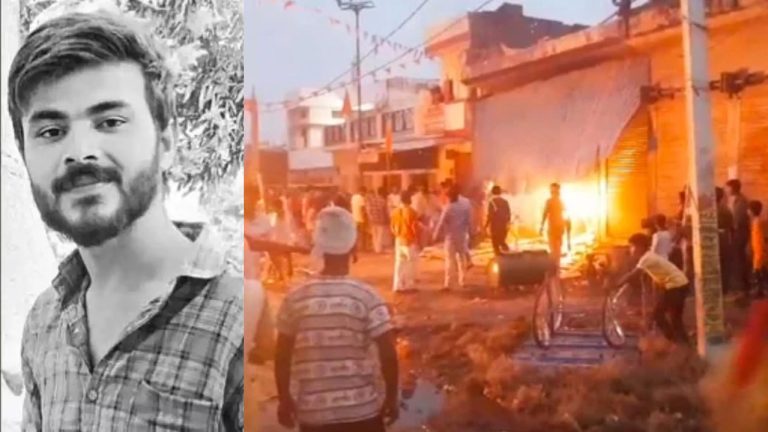
Gurgaon: 23-year-old motorcyclist killed after being hit by a car, accused driver who drove on wrong side already out on bail

0

On Sunday, 15th September, a 23-year-old biker got killed after his motorcycle was hit by a car moving in the wrong direction on Golf Course Road near Belvedere Park, DLF Phase II in Gurgaon. The Police conducted an investigation on Monday and said that the man was on a motorcycle with a friend when the tragic crash occurred.

According to investigators, the event occurred at about 5.45 am on Sunday, when the deceased, Akshat Garg of Pochanpur in Dwarka, Delhi, was riding his motorcycle using all the safety precautions. He was wearing safety gear which included a helmet and gloves. His friend and coworker, Pradyuman Kumar, 22, was following him on another motorbike at a distance of about 100 feet away. 

As per the report by Hindustan Times, the two men began their journey from different locations. Garg traveled from Dwarka and Kumar from New Palam Vihar and the duo intended to meet a group of riders in Ambience Mall after leaving DLF Downtown. According to authorities, after crossing the Sikanderpur-Cyberhub flyover, they neared a curve when a speeding Mahindra XUV 300 car emerged from the opposite direction. The automobile, which had a political party sticker on it, hit head-on with Garg’s bike, the police said.

Image- Hindustan Times

“Neither the car driver nor Garg had any chance to avoid the collision. The impact flung Garg above the car, and his motorcycle was mangled beyond recognition,” the police said.

After the incident, commuters passing by gathered swiftly and emergency services were notified. The ambulance was called and Garg was immediately shifted to the hospital, however, the doctors declared him dead. 

Garg’s friend, Kumar, attempted to help him. “There were two men in their mid-20s and a dog inside the car. Commuters apprehended them and handed them over to the police. Unfortunately, my friend became unresponsive within seconds after I tried to open his helmet,” Kumar said. 

Kumar noticed that the car was driving in the wrong direction in the lane designated only for fast vehicles. “My GoPro camera, attached to my helmet, captured the entire accident. But, despite watching the footage, the cops did not take a copy of it,” he said. “Later, I found out the car driver was released from the police station,” he added. 

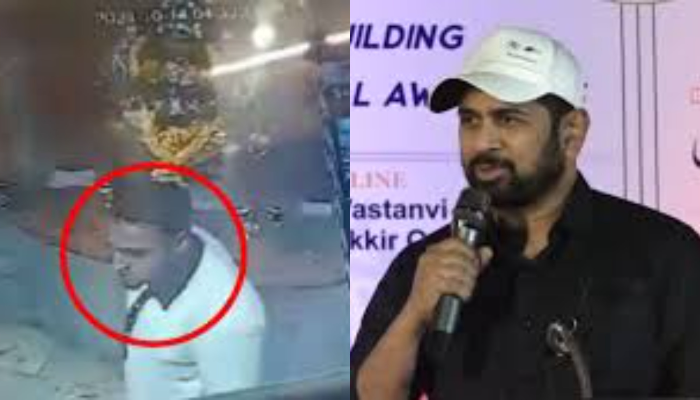
According to Sandeep Kumar, the Gurugram police’s public relations officer, the driver was apprehended on the spot. “He was later identified as Kuldeep Kumar Thakur, 25, from Madhubani, Bihar. He lived in Ghitorni, Delhi, and owned a company that handles social media campaigns for elections,” Kumar said.

“He told police that he was returning from Palwal and was driving as per Google Maps which prima facie doesn’t seem right. He was later granted bail from the police station,” he said. On friend Kumar’s complaint, an FIR under the section of the Motor Vehicles Act, including 106 (causing death by negligence), 281 (rash driving), 324(4) (mischief causing damage of over Rs 20,000), and 166 (compensation after a motor vehicle accident) has been filed.

Further probe into the case is underway.

Stone peltings, clashes and more: 17 attacks in 9 days on Hindu celebration of Ganesh Puja by Islamists across India and Bangladesh

0

Every year, as Hindus celebrate Ganesh Chaturthi and take out processions across the country, Jihadis follow their ritual of attacking these processions. This year, several attacks took place not only in India but in Bangladesh as well. Here is a list of 17 such attacks that took place during this year’s Ganpati celebrations.

On 6th September, Hindu youths carrying an idol of Bhagwan Ganesh were attacked by Islamists in the Mundra area of Kutch district, Gujarat. As per the complaint filed by the injured Hindu youth, Yuvraj Singh Jadeja, the incident occurred when he was returning home with two of his friends after buying a Bhagwan Ganesh idol to celebrate Ganesh Utsav.

Hamja-Farooq and three others attack Hindu youths carrying Ganesh idol over trivial issue; threaten them with sharp weapons
Hamja-Farooq and three others attack Hindu youths carrying Ganesh idol over trivial issue; threaten them with sharp weapons (Image Source – OpIndia Gujarat)

He, along with his two friends, had come to Mundra on Friday morning to buy a Ganesh idol. After placing Lord Ganesh’s idol in a tempo, they were returning home from Mundra Umiyanagar College. When they reached the petrol pump near the post office, their tempo could not move ahead as its path was blocked by a bike parked in the middle of the road. Two or three persons were chatting there. When they asked the accused, Hamja, Garooq, and three others, to clear the road and park their bikes on the sidewalk, the accused verbally argued with them. The altercation escalated, and the accused brutally assaulted the Hindu youths.

The victim mentioned in the complaint that following the attack, one of the accused brought a sword from somewhere to attack them. The accused threatened the Hindu youths, saying that they would not let them go alive and that they would be finished. Some of the accused also had other sharp weapons. An FIR was filed at Mundra police station against five accused on the complaint of Yuvraj under Sections 115(2), 125(1), 189, 190, 191, 296(b), 351(2), and 351(b) of the Bharatiya Nyay Sanhita (BNS). Meanwhile, two accused have been arrested in this case.

Stones pelted on Bhagwan Ganesh idol in Madhya Pradesh

On 7th September, miscreants pelted stones at a Bhagwan Ganesh idol in Mochipura of Ratlam district in Madhya Pradesh. The attack led to massive protests, and around 500 people surrounded the Station Road police station, raising slogans against the stone pelters. An FIR was registered in the matter.

Protests in Ratlam (Image Source: ETV)

When the police initiated the investigation and reached the spot, someone again pelted stones, and one of them hit a police vehicle, breaking the glass. People present at the spot also pelted stones in retaliation. The police swung into action to prevent any further escalation and used mild force to disperse the crowd.

According to the FIR, on the night of 7th September at around 8:30 PM, members of the Puja committee were carrying the idol from Khetalpur to Mehndikui Balaji via Hathikhan Mochipura for the installation of Ganesh Ji. Women and children were also present in this procession. As soon as they reached Mochipura on Hathikhan Road, someone threw a stone at the idol.

Stones pelted at Ganeshotsav pandal in Surat

On the 7th and 8th of September, stones were pelted at a Ganeshotsav pandal in the Lal Gate area of Surat, Gujarat. As per reports, some Muslim minors pelted stones at the pandal, leading to hundreds of Hindus protesting and demanding strict action. The police swiftly swung into action and made some arrests. Security has been increased in the area.

Source: OpIndia Gujarat

According to OpIndia Gujarat’s report, the incident took place at the Ganesh pandal in the Variyali Bazar area of Lal Gate. Some minors, reportedly from the Muslim community, pelted stones at the pandal. After the stones were thrown, Hindus filed a police complaint. The news spread quickly around the city, and crowds swelled, demanding action.

Reportedly, stone-pelting incidents took place on 7th and 8th September, prompting Hindus to inform the police. Speaking to OpIndia, Yagnesh Patel, a Bajrang Dal activist from Surat, said that when police came to investigate the matter, stones were pelted at them from the Muslim area. Hindu organizations have alleged that stone-pelting also took place from nearby mosques.

Home Affairs Minister for Gujarat, Harsh Sanghvi, also took note of the incident and ordered strict action. In a post on X, Sanghvi said, “As I promised, we have caught the stone-pelters before sunrise! 6:30 am #Surat Update. Here are the details: 27 stone pelters arrested. CCTV, video visuals, drone visuals, and other technical surveillance work is still ongoing. Strict action will be taken against all accused. Our teams have worked the whole night to identify the stone pelters and bring them to justice. Jai Ganesh!!”

Stones pelted on a Ganesha mandap in Kutch, Gujarat

Stones were thrown at the Ganesha mandap in the Kutch village of Nakhatrana where Muslim children are reported to have been used to execute the conspiracy due to which the idol of Lord Ganesha was vandalised. An Islamic flag was also hoisted in a Hindu temple which was a short distance from the mandap. The incident has led to a tense situation in the area. The authorities, meanwhile, registered a case and arrested seven people. Maulana Ghulam Hussain Jafar, Asif Sumra Padhiyar, Sahil Ramzan and Hanif Jusan are among the arrested.

The matter pertained to Kotada Jadodar hamlet. A video of the incident was captured on 10th September and showed the defaced idol. A man in the footage can also be heard accusing the police of not taking any action in the name of “bhai-chara” (brotherhood) for two days.

In a shocking revelation, it emerged that a gang of minor Muslim youths were behind the stone pelting. The mastermind of this gang had planned to attack 10 Ganesh Pandals daily. The police investigation also revealed that the leader of the gang of Muslim minors had been receiving ‘madarsa training’ for the past three months. 

In Lucknow, Muslim mob attack Ganesh Puja pandal amid “Allah Hu Akbar” slogans, pelt stones and threaten to kill Hindu family

On 10th September, Muslim extremists pelted stones at a Ganesh Puja pandal in Lucknow, Uttar Pradesh and broke the urn (kalash) kept near the idol amid slogans of “Allah Hu Akbar.” Afterwards, Hindu organizations protested at the police station and demanded action. The authorities have registered a case and arrested two suspected minors. The case pertains to the Chinhat police station area of ​​​​Lucknow.

Islamists attack on Ganpati Visarjan procession in Mandya, Karnataka

On 11th September, communal clashes erupted in the  Mandya district of Karnataka after stones were pelted at the Ganesh idol near a dargah in Nagamangala town on Mysuru Road.

According to reports, some Hindu youths were taking out a procession for the immersion of the Ganesh idol in Badarikoppalu village. When the procession was about to cross a dargah on Mysuru Road, people from the Muslim community came and started a heated argument with the Hindu devotees. Following the altercation, members of the Muslim community allegedly pelted stones at the Ganesh idol and displayed lethal weapons. According to a News18 report, slippers were also thrown at the idol.

Members of the Hindu community became angry at the attack and approached the police seeking justice. They kept the Ganesh idol in front of the police station and staged a massive protest. As more people learned about the incident, they reached the police station and joined the protest, demanding permission to take out a procession on Mysuru Road.

Following the incidents, some miscreants set shops owned by Hindus on fire. Several shops were ransacked. Bikes and other vehicles parked on the side of the roads were also damaged and burnt.

Communal clashes erupt after Muslims forcefully hoist Islamic flags atop Hindu houses during Ganeshotsav celebration in Bharuch, Gujarat

Tensions mounted in Bharuch when Hindus and Muslims came face to face after members of the Muslim community forcefully installed Islamic flags and pylons atop Hindu houses during the Ganesh Chaturthi celebration.

The entire incident unfolded on the night of September 10 in the Gokulnagar area, which is home to both Hindu and Muslim communities. While the Hindu festival of Ganeshotsav is currently being celebrated, the Muslim festival of Eid is also approaching. During this time, some Muslims began to install their religious flags and pylons in anticipation of Eid.

Despite requests from Hindus to avoid installing Islamic flags and pylons atop their homes, their appeals were ignored, and the Muslims continued with the installation. This led to a confrontation, resulting in clashes between the two communities, with reports of stone pelting and violence emerging from the brawl.

Stones pelted on Ganesh immersion procession in Mahoba, Gujarat

On 14th September, stones were pelted at a Ganesh Visarjan procession in Mahoba, Uttar Pradesh. The incident led to communal clashes between two groups, and they assaulted each other, resulting in a law and order situation. Following the incident, Hindu organisations raised slogans outside the police station, demanding action against the attackers. 

As per reports, two Ganesh idols were taken out for the Visarjan procession in Mahoba. When the procession reached Kasauratori area of Kotwali police station in Mahoba, a firecracker allegedly fell on a kutcha house. There was a piece of polythene on top of the house, which caught fire. The owner of the house put out the fire using water and then threw water on Hindus participating in the procession. When Hindus objected, it turned into a clash between the two sides.

During the argument, Hindus were attacked in the Muslim-majority area with a bucket and faced stone pelting. The police rushed to the spot to control the situation. Following the incident, members of Hindu organisations reached the police station and started sloganeering, demanding strict action against those who attacked them.

Hindu youth attacked for organising Ganesh festival

On Saturday, 14th September, Maharashtra Police in Pune’s Daund area booked one Yasin Ismail Sayyed for assaulting a man for organizing the Ganesh Festival program in the city. The accused used a sharp weapon to it the victim identified as Sitara Torve and threatened him with death for conducting programs amid the Hindu festival, Ganeshotsav.

Muslims attack Hindus for using gulal during Ganpati Visarjan in Jhansi, UP

On September 15, in Jhansi, a clash erupted between two communities during Ganesh Visarjan over the raising of slogans and throwing of gulal. The altercation, which lasted about 15 minutes, involved heavy kicking and punching. Women were also assaulted and thrown into the mud, leaving six people injured. The incident sparked outrage among Hindu organizations after a video of the fight went viral.

Chanting slogans of “Jai Shri Ram,” several Hindu organizations gathered at the police station and staged a protest, demanding the arrest of individuals from a particular community involved in the brawl. As tensions escalated, authorities intervened, calming the situation by addressing both sides. The altercation occurred in Madarganj Mohalla, a Muslim-majority area in Month Town.

The fight broke out after the group returned from the Ganesh immersion. According to Munnalal Raikwar from Madarganj Mohalla, a group of about 20 to 25 people had taken the Ganpati idol for immersion. Initially, a verbal exchange occurred with members of the other community over slogans and gulal, but it was resolved at the time. However, upon returning later in the evening, tensions reignited when members of the other community began hurling abuses. When they objected, a violent confrontation ensued, lasting around 15 minutes, resulting in multiple injuries.

Hindu devotees returning from Ganesh Visharjan attacked in Delhi’s Trilokpuri area

On September 16, Monday, Muslims attacked the Hindu devotees returning after Ganesh Visarjan in Delhi’s Trilokpuri area. Two youths were injured in the attack. An eyewitness said that the attackers were armed. They misbehaved with the women.

The Mayur Vihar police station registered a case under the relevant section and detained two suspects. The police claimed that there was no communal angle in the incident and that it is suspected that a clash broke out between the two groups of residents due to their old rivalry.

Similar incident occurs in Farrukkabad

On Monday, September 16, Hindu devotees in Farrukkabad, Uttar Pradesh were attacked when they were returning after Ganesh immersion. An eyewitness confirmed that the Muslims abused and pelted stones at the devotees when they passed through a Muslim area while returning after immersing the Ganesh idol. Slogans like, “Islam zindabad, Pakistan zindabad” were also raised. The incident was caught on CCTV.

Stone pelted on Ganesh idol procession in Chhattisgarh

On September 17th, Muslims pelted stones at a Ganpati immersion procession in the Ara village in Balrampur, Chhattisgarh. A 15-year-old Hindu girl named Sheela Yadav was severely injured in this attack. Angry villagers reached the Bariyon police station and demanded strict action against the culprits.

Rajpur police in charge, Bhardwaj Singh said that after the incident, a case was registered against four people namely Hashib, Imam, Ittakhab and Islam.

Islamists pelt stones and break Ganesh idol when procession nears Hindustani mosque in Bhiwandi, Maharashtra

On Tuesday (September 17), stones were hurled at a Ganpati immersion procession in Bhiwandi, Maharashtra. The incident took place around midnight when a large Ganpati idol from Ghughat Nagar was being transported to the Nadinaka Kamwari River for immersion. As the procession passed near the Hindustani Mosque at Vanjarpatti Naka, some individuals threw stones at the idol, causing reported damage.

This act triggered a confrontation between the groups, leading to a physical altercation.

Similar stone pelting incident on Ganesh Visharjan procession takes place in Lagaon Jamod town and Buldhana, Maharashtra

Similar stone-pelting incidents occurred in several other parts of Maharashtra. In Lagaon Jamod town, stones were thrown at a Ganpati immersion procession at around 8 pm on Tuesday (September 17) in the Chubhara area. According to reports, the stone pelting lasted for around 30 minutes, leaving several injured.

A similar incident was also reported from the Buldhana region.

Muslim mob tries to attack Ganesh Visarjan Yatra in Vaso, Kheda for playing DJ while passing through a mosque

On Tuesday, 17th September, massive chaos erupted in Kheda, Gujarat after a Ganesha Visharan procession was almost attacked by a Muslim mob of around 150-200 Muslims. The Hindu participants of the procession were confronted with sticks and pipes as the procession passed by the mosque. As per the local reports, an argument initially erupted over the DJ music played in the procession. The Muslim mob happened to protest against the DJ sound before confronting the participants over the issue.

The Police arrived at the spot and immediately took control of the situation. 11 people have been arrested in the case and several others have been booked. Notably, all the accused persons are believed to be belonging to the Muslim community. 

Ganesha idol procession attacked near masjid in Chittagong, Bangladesh

On 6th September, a procession of Hindu devotees carrying the idol of Lord Ganesha came under attack in the Kadam Mubarak area in  Chittagong city of Bangladesh. The incident occurred a day before the  Ganesh Chaturthi celebrations were scheduled to be held in the city. As per reports, members of the ‘Batargalli Dhwapara Sarbajanin Puja Committee’ were bringing the idol of the Hindu deity in a van from the factory of artisan Uttam Pal.

Bangladesh: Ganesha idol procession comes under attack in Chittagong, hot water and bricks hurled, Hindus stage protest
Hindu procession attacked near Kadam Mubarak mosque, image via Kalbela/ Dainik Azadi / BNA News

At that time, hot water was thrown on the Lord Ganesha idol and the Hindu devotees from atop a high-rise building on Momin Road. It must be mentioned that the said building is close to the Kadam Mubarak mosque. The deliberate attack led to a heated argument between the devotees and residents of the building.

According to eyewitnesses, bricks were also hurled at the Hindu procession. A young Hindu man, who was hurt during the incident, informed that another Hindu devotee sustained serious injuries to his head.

Another stone attack during Ganesh Visarjan: Islamists pelt stones and break Ganesh idol when procession nears Hindustani mosque in Bhiwandi, Maharashtra

0

Stone pelting at Hindu processions has become a disturbing trend in various regions, often leading to communal tensions and violence. In one such latest attack, stones were hurled at a Ganpati immersion procession in Bhiwandi, Maharashtra. The incident took place around midnight on Tuesday (September 17), when a large Ganpati idol from Ghughat Nagar was being transported to the Nadinaka Kamwari River for immersion. As the procession passed near the Hindustani Mosque at Vanjarpatti Naka, some individuals threw stones at the idol, causing reported damage.

This act triggered a confrontation between the groups, leading to a physical altercation.

Angered by the incident, the Ganesh Mandal demanded the arrest of those involved and refused to proceed with the immersion. The local police intervened and used a lathi charge to bring the situation under control, resulting in several people being injured. Some individuals were detained and an investigation in underway.

Speaking to the media on Wednesday (September 18), Additional Commissioner of Police Dnyaneshwar Chavan said that the Ganpati immersion procession near the Hindustani Mosque had started peacefully and was proceeding without issues. However, tensions arose when a stone was thrown, sparking disputes and altercations among some individuals, which led to a disruption.

“The situation is now under control, and those involved in the disturbances are being identified for legal action. Some individuals have been detained for questioning, and further actions will follow,” he added.

According to reports, similar stone-pelting incidents occurred in several other parts of Maharashtra. In Lagaon Jamod town, stones were thrown at a Ganpati immersion procession at around 8 pm on Tuesday in the Chubhara area. According to reports, the stone pelting lasted for around 30 minutes, leaving several injured.

A similar incident was also reported from the Buldhana region.

Why was Hezbollah using old-tech pagers to communicate instead of cellphones: Explained here

In one of the most shocking and effective anti-terrorist operations till date, the Israeli intelligence agency Mossad is believed to have carried out the explosion in pagers held by thousands of Hezbollah terrorists on the 17th of September in Lebanon and Syria. The attack left over 2800 terrorists injured and 9 dead as per latest reports.

While certain theories are floating around how exactly Mossad executed the simultaneous explosions in the pagers Hezbollah terrorists were carrying, it would be interesting to know why these terrorists were using pagers at all in the era of modern technology smartphones.

Following the killings of key commanders in targeted Israeli airstrikes in the past few months, the Iran-backed Islamist terror group Hezbollah had employed certain ‘low-tech’ tactics to avoid its adversary’s advanced surveillance systems. It has also been utilising its own technology, drones, to study and assault Israel’s intelligence-collecting capabilities, a policy described by Hezbollah’s commander, Sayyed Hassan Nasrallah, as “blinding” Israel. However, it seems Hezbollah was blinded to the capabilities of Mossad to beat the terror group at their own game.

Notably, ever since Hezbollah extended support to Palestinian Islamist terror group Hamas, the Israeli defence forces and Hezbollah have been exchanging fire. Israel’s sophisticated Electronic surveillance technology has proved vital in its strikes on Hezbollah targets.

As per a Reuters report, the IDF has stated that it has security cameras and remote sensing equipment trained in regions where Hezbollah operates, and it often sends surveillance drones over the border to spy on the enemy. Notably, Israel’s electronic spying, which includes hacking into cell phones and computers, is widely recognised as some of the most sophisticated in the world.

Hezbollah banned cell phones, switched pagers and couriers to counter Israel’s sophisticated tech surveillance

In response to Israel’s next-level warfare, Hezbollah changed its tactics. Cell phones, which may trace a user’s location, have been prohibited on the battlefield instead more old-fashioned methods such as pagers and couriers are being used. In addition, Hezbollah has also been using a private fixed-line telecommunications network. If conversations are overheard, code words for weaponry and meeting places are used. These are updated almost every day and sent to units through couriers.

Interestingly, the Al Qaeda terrorist Osama Bin Laden had evaded arrest for decades by cutting off from internet and cell phones. Perhaps, Hezbollah took a page from Laden’s book, however, Israel has managed to breach Hezbollah’s old-fashioned counters to the Israeli sophisticated tech warfare.

As per Islamist terror group Hezbollah and Lebanese security authorities, Israel has also begun using local agents to zero down on targets. Since Lebanon is engulfed in economic crises and political rivalry, Israeli recruiters have been doing their job well.

In an interesting incident from 22nd November last year, a woman from south Lebanon received a cell phone call from someone claiming to be a local official. The caller, who spoke fluent Arabic, enquired if the family was home. No, the woman said, adding that they had been to eastern Lebanon. Minutes later, a missile smashed into the woman’s home in the village of Beit Yahoun, killing five Hezbollah jihadis.

While Israel is showing no mercy to the terrorists, the call was made to the woman to confirm if any civilians were present at the target location before launching the strike.

‘Israel was tracking cell phones’, so they switched to pagers

Following the killings of Wissam al-Tawil, Taleb Abdallah, and Mohammed Nasser, commanders in charge of Hezbollah’s operations in the south, as well as Saleh al-Arouri, Hamas’ deputy leader, who was killed while attending a meeting in Beirut, Hezbollah suspected Israel was tracking their cell phones. The terror group used its affiliated Al-Nour radio to caution its terrorists not to heed cold calls from callers claiming to be local officials as they could be Israeli agents. Since then, the cell phone ban is strictly implemented and any Hezbollah terrorist found in possession of cell phone is kicked out of the terror group. Besides, Hezbollah is using small, homemade, unmanned aerial vehicles (UAVs) to gather information about Israeli targets and attack its surveillance systems.

In the 17th September pager attack, it is being said that Mossad got hold of the shipment of pagers ordered by Hezbollah before they were handed over to the Islamist terror group. As per one of the theories on how the attack was orchestrated, Mossad allegedly placed a certain amount of PETN, a highly explosive substance, on the batteries of the devices and exploded them by raising the temperature of the batteries remotely. However, the theories are still being debated with no official confirmation.

Meanwhile, Elijah J. Magnier, a Brussels-based senior political risk analyst opined that an error message sent to all the devices causing them to vibrate, forcing the user to press the buttons to stop the vibration. The combination detonated a small amount of explosives hidden inside and ensured that the user was present when the blast went off.

Interm govt of Bangladesh grants magistracy power to the Army with immediate effect, officers will now be able to arrest citizens without warrant

Bangladesh’s interim government, led by the controversial ‘Nobel laureate’ Muhammad Yunus, has granted the military special executive magistrate powers throughout the country with immediate effect. This information was announced in a notification issued by the Ministry of Public Administration on Tuesday (September 17). The Army officers will act as executive magistrates across the country and exercise the granted powers for the next 60 days, the circular read.

The delegation of magisterial powers to the Army will enable it to perform police and prison-related duties, as well as the responsibilities of executive magistrates. An officer with these powers can arrest individuals without warrants and put them behind bars.

The power vested in the Army officials gives them the authority to open fire in case of self-defence or extreme necessity, said an adviser to the interim government.

Speaking about the development with local media, Supreme Court lawyer Barrister Tapash Kanti Baul said, “The Army didn’t have the power to make an arrest without the presence of an executive magistrate. But now they can place anyone under arrest since they can exercise the power vested upon them under Section 65 of the CRPC.”

It may be recalled that after the violent ouster of Sheikh Hasina on August 5, the army headed by Waker-uz-Zaman had taken charge of Bangladesh briefly before the interim government was sworn in on August 8.

The Bangladesh Army Chief assured that all those who were involved in crimes over the past few days will not be spared and legal action will be taken against them. He added that the Air Force and Navy chief are with him and all of them are working together.

It is evident that even though a new interim government headed by an eminent economist will be installed in Dhaka, it will be under the control of the army.

‘Not involved, had no idea’: USA denies prior information or complicity behind Hezbollah’s exploding pagers in Lebanon

The United States has said that it was “not involved” and “not aware in advance” about the series of pager explosions that took place in Lebanon.

While addressing a press briefing on Tuesday, US State Department spokesperson Matthew Miller said that the US is gathering information about the incident that happened in Lebanon.

Speaking further on the incident, Miller said, “We are gathering information on this incident. I can tell you that the US was not involved in it. The US was not aware of this incident in advance. At this point, we’re gathering information.”

Miller’s statement comes after Lebanon’s Health Minister confirmed a series of explosions across the country, resulting in the deaths of at least eight people and injuring 2,750 others.

When asked what information the US has gathered, he said, “We continue to collect information. I don’t have any public readout. We are collecting information in the same way that journalists are across the world to gather the facts about what might have happened.”

In response to another query about whether the US has any doubt about Israel’s involvement in the incident, he said, “I don’t have any assessment one way or another at this point.”

He further said that he will not speculate on the impact of any incident, particularly in the early stages. He said that US wants to see diplomatic resolution to the conflict between Israel and Hezbollah.

Asked about any message the US wants to give Israel, Miller said, “I never want to comment or speculate about the impact of any one incident, especially in the early stages of the incident. I am not going to do so here, that has been our policy to try to avoid doing. Our overall policy remains consistent, which is we do want to see a diplomatic resolution to the conflict between Israel and Hezbollah. We want to see one that allows the tens of thousands of Israelis who have been displaced from their homes and tens of thousands of Lebanese who have been displaced from their homes to return home. That’s what we are continuing to pursue.”

Asked if there were indications that Iran could take advantage, given reports that the Iranian ambassador in Lebanon was injured, Matthew Miller said he did not want to speculate until those reports were confirmed. He said that the US would urge Iran not to take advantage of any incident to try to further increase tensions in the region.

“I have seen the reports. I don’t want to speak to what the implications might be before a report is confirmed. But certainly, as is always the case, we would urge Iran not to take advantage of any incident, any instability, to try to add further instability and to further increase tensions in the region. That has been our message to Iran since October 7,” he said.

The blasts in Lebanon were caused by exploding handheld pagers, according to a report by Al Jazeera. Lebanon’s Health Minister Firass Abiad informed that 200 people are in critical condition after the communication devices exploded on Tuesday. He also said that the victims are receiving treatment in over 150 hospitals.

In a statement earlier on Tuesday, Hezbollah said that “pagers belonging to employees of various Hezbollah units and institutions exploded,” killing two of its fighters and a girl. The group further said that it was investigating to determine the causes of the explosions.

A Hezbollah official, speaking on the condition of anonymity, described the explosion of handheld pagers as the organisation’s “biggest security breach” in nearly a year, according to Al Jazeera.

No official statement has been released by the Israeli military regarding the explosions in Lebanon. Earlier, Arab media had reported that some 1,000 Hezbollah operatives so far have been injured by exploding pagers and radios.

Reports suggest that Hezbollah figures in Syria were also injured in the apparently simultaneous blasts. Iran’s ambassador to Lebanon, Mojtaba Amani, was injured by the explosion of an electronic pager, Al Jazeera reported.

Social media is rife with videos that caught the explosions, their aftermath, and chaos in Lebanese hospitals. Unverified Arab media reports have attributed the blasts to an Israeli cyber attack.

Iran’s ambassador to Lebanon, Mojtaba Amani, was slightly injured by the explosion of an electronic pager, Al Jazeera reported.

Notably, Israel’s Security Cabinet on Monday night updated its official war goals. Israel’s ongoing war with Hamas in Gaza’s goals includes the objective of allowing residents of the north to return safely to their homes after being displaced by attacks by Hezbollah, according to Israel’s Prime Minister’s Office, The Times of Israel reported.

In a statement, Israel’s Prime Minister’s Office stated, “The safe return of the residents of the north to their homes” has now been added as a fourth objective to the war,” The Times of Israel reported.

After a late-night meeting of the security cabinet in Tel Aviv on Monday, the statement said, “Israel will continue to act to achieve this goal.” Notably, Israel has been engaged in a conflict with Hamas following the October 7 attacks.


(This news report is published from a syndicated feed. Except for the headline, the content has not been written or edited by OpIndia staff)

Scenes out of a Hollywood Spy film: Pagers used by Hezbollah terrorist organisation mysteriously start exploding all across Lebanon, 100s injured

Amid the raging war in the Middle East, a major incident is being reported from Lebanon on Tuesday (17th September 2024). Cadres of the terrorist organisation Hezbollah, in hundreds, have suffered severe injuries after their pagers exploded. The incident showed that the Hezbollah cadres have been using pagers on a mass scale to communicate with each other.

While it was not immediately clear how the devices detonated on such a large scale within a short span, pro-Hezbollah, Lebanese citizens and a section of social media users especially from the Arab are blaming Israel for it, alleging that it carried out a cyberattack and destroyed Hezbollah’s communication system.  

A security source said that devices were also exploding in the south of Lebanon. 

On the condition of anonymity, a Hezbollah terrorist holding an official post in the terror organisation, said that the detonation of the pagers was the “biggest security breach” the group had been subjected to in nearly a year of war with Israel. 

According to news agency Reuters, locals said explosions were taking place even 30 minutes after the initial blasts. These multiple explosions have triggered panic and chaos in Lebanon, especially throughout the southern suburbs of the capital Beirut, which is a Hezbollah stronghold. 

Multiple unverified videos are doing rounds on social media in which people can be seen running helter-skelter amid explosions. Several individuals can also be seen shouting in pain as blood can be seen dripping from their limbs or faces.  

Lebanese internal security forces said that a number of wireless communication devices were detonated across Lebanon, especially in Beirut’s southern suburbs, leading to injuries.

According to Iranian news agency Mehr, the Iranian ambassador to Lebanon, Mojtaba Amani, was also injured in the incident. However, the claim has not been independently verified by global news agencies. 

As per Reuters, the wave of explosions lasted around an hour after the initial detonations, which took place at about 3:45 p.m. local time.

Speaking with Reuters, the head of the Nabatieh public hospital in the south of the country, Hassan Wazni, said that around 40 wounded people were being treated at his facility. The wounds included injuries to the face, eyes, and limbs.

Currently, Israel and Iran-backed terror organisation, Hezbollah are engaged in a cross-border warfare. The two warring sides have been exchanging strikes in the aftermath of the 7th October terror attack on Israel.  

Meanwhile, the Israeli military, which has often faced allegations of striking out terrorists, has declined to comment about the detonations.

Nonetheless, the mass explosions in pager may not be a case of faulty instruments, rather it raises concern of a whole new domain of warfare.

Financial aid, 22-month programme and a conspiracy at heart: Secret documents reveal how USAID orchestrated a successful ‘regime change’ in Bangladesh

The role of the United States and its government agencies in the undemocratic ouster of Sheikh Hasina as the Prime Minister of Bangladesh is becoming clearer by the day.

The controversial United States Agency for International Development (USAID) has signed an agreement to provide $202 million (~2414 crore Taka) to the interim government in Bangladesh, led by ‘American asset‘ Muhammad Yunus.

The objective ‘on paper’ behind the financial aid is supposedly to empower youth, strengthen democracy and governance and bring about development in Bangladesh.

Reportedly, USAID has shelled out $425 million so far and has committed about $954 million to Bangladesh between 2021 and 2026.

The large influx of capital into the dwindling economy of Bangladesh by the US is not just merely out of goodwill, as the deep state would want us to believe.

USAID is one of the several government agencies used by the United States to peddle influence in other nations. This includes building public consensus and furthering strategic interests such as setting up a military base on Saint Martin Island.

Screengrab of the article in The Sunday Guardian

On Sunday (15th September), The Sunday Guardian published an explosive piece wherein it revealed that the US administration and its agencies had been conspiring against the Sheikh Hasina-led-government in Bangladesh since March 2019.

Based on its access to classified documents, the weekly newspaper stated that the US government-funded non-profit organisation named International Republican Institute (IRI) is at the helm of the regime change operation.

“The IRI…was implementing the broader objectives of the National Endowment for Democracy (NED) and the United States Agency for International Development (USAID). The documents also show how the project was necessary to counter-balance India’s “interference”,” the report stated.

A nefarious programme called PARIS

The Sunday Guardian noted that IRI is tasked to implement projects, funded by USAID, including a sinister programme named PARIS (Promoting Accountability, Inclusivity, and Resiliency Support Program.”

It ran from March 2019 to January 2021 during which it ‘enhanced political participation’ of Bangladeshis and amplified ‘anti-authoritarianism voices.

“IRI implemented a broad-based social empowerment project that fostered and expanded citizen-centered, local and non-traditional forums for political engagement,” the newspaper noted.

The International Republican Institute issued 11 advocacy grants, created 225 ‘art products’ to address social issues, supporters 3 civil society organisations, trained 77 activists, engaged 326 citizens to develop 43 specific policy demands, which were later proposed before 65 Bangladeshi govt officials.

According to The Sunday Guardian, IRI (tasked to implement USAID-funded projects) lamented that the Covid-19 situation did not create enough public resentment to stir a regime change/

“The health and economic consequences of the coronavirus pandemic had the potential to destabilize Bangladesh’s politics. However, death rates in Bangladesh remained low and the economy recovered despite dire projections,” it stated.

Similarly, it stated that PAIRS would be relevant in wake of the digital security act that was passed by Hasina, curbing social media freedom and how it planned to rope in individuals to work for it rather than civil society organizations.

IRI therefore drafted a shrewd political strategy to unseat Sheikh Hasina. In its own report, IRI noted, “In Bangladesh’s closing space environment, IRI designed a creative programmatic approach to push back against anti-democratic trends as well as find space where immediate progress could be made…Through the approaches, IRI’s program raised public awareness on social and political issues in Bangladesh and supported the public to challenge the status quo, which ultimately aims for power shift inside Bangladesh.”

With the active help of the US embassy, IRI was involved in all possible events, book launches, story-telling, photo exhibition, art exhibition, theatre performance, dance events, movie, documentary screenings, round table meet, advocacy training programs and more.

It ran another PARIS campaign between February 2021 and September 2022 on a grant of $900,000 to influence public opinion against Sheikh Hasina.

Controversial track record of USAID in Nicaragua and Venezuela

According to a research report published by the Council of Hemispheric Affairs, USAID interference led to the 2018 uprising in Nicaragua. An extraordinary leaked document revealed the US government’s plan to interfere with the internal affairs in Nicaragua before and after the 2021 presidential election.

The 14-page extract of a much longer document outlined a contract of USAID to create “the environment for Nicaragua’s transition to democracy.” William Grigsby from Radio La Primerisima revealed the plan in the document that described how USAID worked with various NGOs, think tanks, media organisations and human rights bodies to support opposition to the Ortega government.

To support and justify the interference by the US body, the document misrepresented historical events such as claims that the Sandinista party manipulated the elections even though the Organization of American States (OAS) acknowledged there were only minor irregularities. Furthermore, it also rewrote the 2018 uprising narrative ignoring the fact that the opposition indulged in violence and economic disruption.

The US has a long history of interventions in Nicaragua dating back to 1856. The existence of such documents that revealed the plan of the US’s intervention was not surprising. Notably, Ben Waddell’s article in Global Americans points out that “US support has helped play a role in nurturing the current uprisings,” highlighting the role of US-funded groups in fostering opposition.

USAID has a long history of meddling with Venezuela’s internal affairs as well. According to a 2019 report in People’s World, USAID aligned closely with the National Endowment of Democracy in “Transition Initiatives” to promote the foreign policy goals of the US. The organisation has been an integral part of US efforts to organise humanitarian aid convoys to Venezuela which aligned with the political agenda of the US administration and then-interim president Guaido.

USAID’s Venezuela program supports civil society and democratic governance, echoing the principles of the UN Human Rights Convention. Wikileaks revealed a five-point strategy by the U.S. embassy in Caracas to undermine Chávez. USAID and NED funded opposition groups extensively and the former’s operations often blended humanitarian aid with political motives. The State Department’s Bureau of Energy Resources also works to reduce Latin American reliance on Venezuelan energy.

US interference in 2024 Bangladesh elections

Ahead of the January 2024 elections in Bangladesh, the United States government, its agencies and the embedded media were involved in orchestrating a ‘regime change operation’ in Bangladesh.

Attempts were made to distort the public perception of incumbent Bangladeshi Prime Minister Sheikh Hasina and present her as an ‘autocratic leader.’

The Joe Biden-led-US government was accused of election interference under the pretext of ‘saving democracy’ and conducting ‘free and fair elections’ in the Islamic Republic.

Coercion, virtue signalling and arm twisting were being carried out by the US in Bangladesh through its representatives, agencies and policies.

While nothing could impact the re-election of Sheikh Hasina as the Prime Minister of Bangladesh at that time, the tables turned completely in the following 7 months.

When three ABVP activists were stoned to death by the SFI-DYFI goons, and the left govt destroyed evidence: Read about the ‘Parumala Balidan Diwas’

Tuesday (17th September 2024), marks the 28th anniversary of ‘Parumala Balidan Diwas’. It commemorates the death of three student activists of ABVP who were mercilessly stoned to death by the ‘student activists’ of SFI and DYFI, the student wing of CPI(M). 17th September 2024 also marks another year of travesty with Justice as the brutal incident of the stoning of three students to death was passed off as a ‘drowning case’, courtesy of the state government’s apathy which is accused of tampering with evidence in the case.  

The case is a glaring example of how left-wing goons carry out targeted violence against other student organisations who try to counter them on the ideological front in academic institutions and how they maintain their unchecked hegemony through the use of force. Interestingly, the apathy of the Marxist government towards the death of three young students was such that, the then Kerala CM EK Nayanar reportedly taunted the opposition who were protesting against the gruesome murder. He asked them, “Why do you people bother with the death of ABVP students?” 

On Tuesday (17th September 2024), ABVP shared a post on Instagram to pay tribute to the deceased ABVP karyakartas and mark the 28th anniversary of ‘Parumala Balidan Diwas’. 

The Instagram post read, “ABVP pays tribute to martyrs Karyakartas – Anu, Sujith, and Kim, who lost their lives in a brutal red terror attack by the SFI-DYFI nexus at Devaswom Board College, Parumala, Kerala, on this day in 1996.” 

It added, “Communist forces, under the influence of the then E.K. Nayanar-led Kerala government, distorted the truth of their sacrifice, reducing their sacrifice to a false narrative of death by drowning. This cowardly act sought to silence the spirit of nationalism and instill fear in the hearts of students at Parumala, discouraging them from embracing a cause greater than themselves.” 

The student wing affiliated with RSS further stated that the martyrdom of Anu, Sujith, and Kim will keep inspiring them to stand strong against leftist oppression on campuses and fuel their resolve to reclaim educational spaces and uphold the spirit of nationalism and freedom across Bharat.

The case details

The fateful incident unfolded on 17th September 1996 in Devaswom Board College in Parumala, Kerala. 3 students namely Sujith, Kim Karunakaran, and PS Anu were attacked by SFI and DYFI goons. 

The miscreants attacked them because they were ‘guilty’ of actively participating in the campus unit of ABVP, working for nationalist causes and countering violent ideologies like Communism, Marxism, and Naxalism. 

When the SFI and DYFI goons started hounding them, they tried to escape by running away from the goons. 

In their efforts to escape the onslaught, Sujith, Kim Karunakaran, and PS Anu jumped into the nearby Pampa River, hoping that they would get away by swimming the span of the river. However, the goons didn’t spare them and started pelting stones at them with the intent to kill. 

However, women who were at the river banks washing clothes threw sarees into the river to save them. It is said that the goons didn’t spare those women either. They hurled abuses at those women and pelted stones to scare them away. Fearing of getting grievously hurt, the women ran away from there. 

The Marxist government tampered with the evidence

Unfortunately, all three students didn’t survive and they were stoned to death when they were trying to swim to safeguard their lives from the goons. 

It is said that the Marxist government in Kerala, which was led by Naynar, destroyed evidence to protect the SFI and DYFI goons. It is accused of manipulating the postmortem report and fabricating a new one to protect the goons. 

The fabricated postmortem report stated that the deceased ABVP activists were drunk and drowned after they fell into the river. Courtesy of the fabricated evidence, the Marxist-led Kerala government successfully managed to get the acquittal of all 18 SFI activists involved in the case from the Kerala High Court in June 2006. 

Tragically, there is no respite for ABVP workers and RSS volunteers even 28 years after that incident. They are frequently hounded and publicly killed, heck to death with impunity by community cadres or their affiliated student wings. 

Despite all the odds, nationalist activists have continued the fight against the leftist nexus in Kerala. A marked example was witnessed in 2017 when ABVP launched a campaign called ‘Chalo Kerala’. The aim was to highlight and oppose the atrocities being committed by communist groups and governments. More than 50,000 workers of ABVP reached Kerala and participated in that campaign. 

Largest Student Organisation: ABVP

Akhil Bharatiya Vidyarthi Parishad is the largest student organisation in the world. The student wing is affiliated with the Rashtriya Swayamsevak Sangh (RSS). Yashwant Rao Kelkarji founded ABVP in 1948. Since then, ABVP has played a leading role for students’ rights and nationalist causes. It has been involved in creating awareness and putting up an ideological fight against Naxal violence, the menace of red terror, and communism among other activities like movement in support of the abrogation of Article 370.  

Can’t tell women not to work at night, provide security to them: Supreme Court on West Bengal govt’s new policy after Kolkata doctor’s rape and murder case

On Tuesday, 17th September, the Supreme Court ruled that the West Bengal government could not stop women doctors from working 12-hour or longer shifts. While hearing a suo moto case about the rape and murder of a young doctor at the state-run RG Kar Medical College and Hospital, the court remarked that women seek equal opportunity, not concessions. The Chief Justice of India, DY Chandrachud, Justice JB Pardiwala, and Justice Manoj Misra’s bench made the statement after the state had informed them that the women doctors’ night shift might be avoided as part of recent security measures.

CJI Chandrachud strongly disagreed and asserted that the state needed to reverse the decision and permit the women doctors to function on an equal footing with their male colleagues. “How can that be? Women do not want concessions, but equal opportunities. Women doctors are willing to work in all conditions. They must work in all conditions. The state of West Bengal has to correct it. You cannot say that women doctors cannot work beyond 12-hour shifts and not at night. Armed forces, etc. all work at night, which includes women,” he pronounced while ordering the state to change the policy.

He pointed towards Kapil Sibal and directed, “Sibal, you need to address this issue. The solution lies in ensuring proper security measures. West Bengal should amend the notification. It is your responsibility to provide security. You cannot restrict women from working at night. Pilots, army personnel, and others work during the night time hours,” 

On behalf of the Mamata administration, senior advocate Kapil Sibal contended that the state would send out a notification to resolve the issue as it was merely a temporary security measure. The centre could offer security for the doctors if the state government refused to provide it, declared Solicitor General Tushar Mehta. CJI Chandrachud emphasised that no woman in the nation should be told she cannot work at night and that it is the responsibility of the state to ensure protection. “We cannot tell any woman today in our country, who is in the workforce, that you will not work at night,” he expressed.

The junior doctors told the top court during the hearing that they would not mind returning to work as long as the policies that were discussed during their 16th September meeting with Chief Minister Mamata Banerjee were implemented. The doctors mentioned that they would discuss going back to work during a general body meeting later today. The government’s assurance that the protesting doctors would face no consequences was noted by the court, which requested an affidavit from the state. Kapil Sibal responded by saying that the state “will be filing the affidavit.”

Meanwhile, the victim’s name was asked to be removed from Wikipedia during the hearing by the Supreme Court to safeguard the dignity of the deceased and ensure privacy in sensitive cases like this one. 

The doctors’ submissions were deemed meritorious by the court, which also instructed the state government to initiate the necessary measures if they had not been taken earlier. “Each of these aspects would merit serious consideration. We impress upon the state of West Bengal to take remedial action if not already done, within a period of 3 days from this order,” it announced.

Additionally, CJI explained that the court was sticking to its previous verdict which called for doctors to return to work by 5 pm on 10th September. “We are not modifying our last order, we have created the conditions for coming back to work, let them (the government) do what they have to do to implement the orders,” he voiced.

The state claimed that 415 CCTVs would be installed at the RG Kar Hospital; however, the court observed that only 37 CCTVs had been installed there. Kapil Sibal stated that the process was in motion, but CJI highlighted that it was moving slowly. The District Collectors were asked by the court to keep an eye on how the funds allotted for hospital security measures were being spent. It pointed out that in order to allow the representatives of junior and senior doctors to share their opinions, a “participatory process” must be followed.

The West Bengal government’s request to halt live broadcasting of the court proceedings in the Kolkata rape and murder case was also denied by the apex court on 17th September.

On 9th August, the victim doctor was discovered deceased in the college’s seminar hall. The results of an autopsy proved she had been murdered and raped. Doctors around the nation have gone on strike in protest of the incident, advocating for tighter legislation and policing to protect the safety of medical personnel. The incident has caused widespread indignation and protests. The investigation into the matter has been handed over to the Central Bureau of Investigation (CBI) by the Calcutta High Court which slammed the negligence and attitude of the state government. Meanwhile, the main accused named Sanjay Roy was arrested by the authorities.