Home Blog Page 958

2024 Lok Sabha elections: Pappu paas ho gaya, admit it, but beware of what he is going to do next

In a meeting convened after the 2024 Lok Sabha elections concluded, the INDI Alliance members came up with their own exit poll – calling it Janta Ka Poll – and claimed that their alliance was going to win 295 seats. Not 290, not 300, not even a range, but exactly 295.

Many wondered what was the symbolism, if any. Later while replying tersely to questions by journalists, Rahul Gandhi referred to Sidhu Moosewala while reinforcing the number 295. 295 was title of one of the hit songs by Moosewala, a Punjabi rapper known for inflammatory lyrics and glorification of gun culture. He was killed in 2022 in an apparent inter-gang rivalry.

So that was it? Clearly there was some symbolism to it as INDI Alliance guys obviously hadn’t employed some polling agency to undertake a survey where this exact number of 295 emerged. But symbolism linked to a Punjabi rapper sounded rather random. While Rahul Gandhi may have thrown Moosewala’s name, there is another symbolism with 295 that I feel is more relevant.

295 was the total number of Lok Sabha seats Janata Party had won in 1977 Lok Sabha elections – an election where someone immensely popular and powerful like Indira Gandhi was defeated.

295 and “Janata” ka poll – two things that directly refer to the 1977 elections is too much of a coincidence. Even if it was not deliberate symbolism, it actually betrays what the alliance thought it was doing – it believed Modi to be as powerful and popular like Indira when she was at her peak, and they imagined themselves as the bunch of folks who were going to overthrow the ‘despot’.

It’s rather ironic that it was being led by the grandson of Indira, but then when has irony dawned upon Rahul Gandhi anyway.

In 2024, Modi was facing challenge as a two term Prime Minister – something Manmohan Singh had faced ten years ago. Drawing that parallel, I personally thought that Modi had nothing to worry, because none of those factors that led to defeat of Manmohan Singh was applicable to Narendra Modi. I obviously wasn’t too way off the mark and results are a victory of Modi government even if BJP alone failed to get the majority mark. But Modi 3.0 is going to be a reality unlike UPA-III.

However, it is clear that the opposition and its supportive ecosystem weren’t trying to defeat Modi the way Manmohan Singh was defeated – even though all of them conjured up non-existent big-ticket scams around Electoral Bonds and Adani and earlier Rafael – but they were trying to defeat Modi as Indira was defeated.

Just look at the reasons why Indira Gandhi was defeated in 1977 – unrest and chaos triggered by protests, especially student protests around unemployment, historically high (till date) inflation figures, charges of election malpractices (that led to disqualification of Indira from her parliamentary seat later) and subsequent imposition of Emergency.

Don’t they match point by point with charges that the opposition and its ecosystem threw at Modi? They were so desperate to match point by point that they came up with the term “Undeclared Emergency” because Modi didn’t impose any real Emergency like Indira.

They have failed to defeat Modi and their 295 dreams didn’t materialize. But they haven’t spectacularly failed. The opposition and the supportive ecosystem – which includes foreign press, domestic YouTube warriors, academics, activists, and all sorts of foreign outfits trying to affect narratives through modern tools like AI – have tasted blood as their strategy definitely worked in Uttar Pradesh. They are now going to up the ante. That’s why they are celebrating. It is in anticipation of ‘the next level’.

While their plans might have passed a little test, it’s our duty that the nation doesn’t fail.

Fortunately, what this lot is going to do in future is now very clear, and thus we can’t say that we didn’t see it coming as many are currently saying about Uttar Pradesh. This lot, led by Rahul Gandhi, is definitely going to synthetically re-create the challenges that Indira Gandhi faced as Modi enters his third term; because that is one thing about Rahul Gandhi that is guaranteed – he will keep doing the same thing again and again, hoping that it works once at least. And his supportive ecosystem isn’t tired of that trait of him either, after all they themselves have re-launched him over dozens of times, literally, ever since he joined active politics.

So what to expect from Rahul Gandhi and his ‘gang of brothers’ in coming months and years?

Essentially, more and more engineered chaos and conflict.

The first of these things are going to protests, all kinds of. Farmers with Moosewala and AK47 stickers on their tractors can come back for third season in all probability. That’s where Rahul Gandhi wasn’t too off the mark when he ‘explained’ 295.

The new introduction in this season of protests would be overt use of caste (because that has been a major factor in Uttar Pradesh upset). As such, even farmer protests were essentially caste protests only led by Jatt farmers, but now we’d have non-farmer protests with one or the other caste group coming out in streets to fight for their ‘rights’.

This is going to be the trickiest for the BJP to handle because more often than not, the party and its support system ends up offering ‘forked versions’ of caste narrative than an alternative version. ‘Subaltern Hindutva’ was somewhat an alternative narrative (not exactly around caste system, but around social dynamics) but it has remained primarily a pop-term only after gaining currency post the 2014 parliamentary victory. A well thought of plan to counter exploitation of this faultline is badly needed.

The demand for caste census obviously will grow and for that general census itself has to be completed that has been pending since 2021. Fear mongering around census will happen again linking it to NRC, and kaagaz nahi dikhaayenge nonsense will come back.

Then there will be North-South divide campaign. While the ecosystem is feigning all respect and admiration for Uttar Pradesh for halting BJP’s march currently, the supportive ecosystem of INDI Alliance will continue to mock, defame, and spread hatred about the ‘fast breeding’ ‘uneducated’ ‘unclean’ bhaiyyas. This will especially be triggered as we move close to delimitation of Parliamentary seats that is scheduled to happen in 2026 or thereafter.

Remember that delimitation too is contingent upon census. Therefore, undertaking the census is going to be a huge headache for Modi government; more than operational issues, the government will have to fight unmatched levels of propaganda and fear mongering. Attempts to keep out infiltrators from getting counted in the census would be headlines about Muslim persecution in the foreign press.

These is just an indicative list. Think of any faultline, or not even faultline but just a degree of difference among the citizens – whether based on region, language, caste, religion, class, or anything you can count – and a chaotic narrative around that will be introduced. Foreign press will suddenly discover how group A in this part of India has been oppressing group B, and how the world must not avert their eyes. All eyes on India, you see.

It’s not time to laugh at Pappu paas ho gaya or Pappu can’t dance saala. Pappu paas bhi ho gaya hai and he is dancing to the tunes of neo-colonial powers. It’s time to resolve that this evil plan of this lot is not going to get support by us even unknowingly. Don’t make the mistake of thinking it’s just about Modi. Obviously on the surface, it’s about defeating him, but dig deep beyond the surface and you see what is cooking.

The current state of affairs of our nation could be far from perfect, but if we loosen our guard right now, we would risk going into a spiral of chaos and conflicts from where it would be too late to recover from.

(Update: an earlier version of the article erroneously referred to Rahul Gandhi as the granddaughter of Indira Gandhi. The error is regretted and fixed now, with assumption that Rahul Gandhi identifies himself with the gender assigned at birth.)

NDA unanimously passes resolution to elect Narendra Modi as leader of the alliance, PM Modi secures the support of 293 MPs

A day after the announcement of Lok Sabha election results, the BJP-led National Democratic Alliance (NDA) has officially passed a resolution to elect Narendra Modi as the leader of the alliance, making it official that he will be the Prime Minister of India for the third consecutive time. The resolution was passed unanimously on 5th June 2024 after NDA partners held a meeting at PM Modi’s official residence in New Delhi.

At the meeting, the BJP secured the support of 293 MPs, well ahead of the majority mark. While the pre-poll alliance has 292 MPs including BJP’s 240, Sikkim Krantikari Morcha with 1 MP joined the meeting and signed the letter confirming support to the BJP-led alliance. Leaders of TDP, JD(U), Shiv Sena, NCP, JD(S) and other NDA members attended the meeting. While it was reported that NCP’s Ajit Pawar skipped the meeting, party leader Praful Patel was there.

The resolution letter issued after the meeting lauded the leadership of Prime Minister Narendra Modi for the development of the country in every field. It also highlighted that it is after six decades that the voters have elected a strong government with an absolute majority for the third consecutive time. 

It read, “India’s 140 crore countrymen have seen the country developing in every field in the last 10 years due to the public welfare policies of the NDA government under the leadership of respected Prime Minister Shri Narendra Modi. After a very long gap, of almost 6 decades, the people of India have elected a strong leadership with an absolute majority for the third consecutive time.”

Electing Narendra Modi as the leader of the alliance, it added, “We all are proud that NDA fought and won the 2024 Lok Sabha elections unitedly under the leadership of respected Shri Narendra Modi ji. We all unanimously choose respected NDA leader Shri Narendra Modi as our leader.”

It further stated, “The NDA government under the leadership of Shri Modi ji is committed to serve the poor, women, youth, farmers, and exploited, deprived, and oppressed citizens of India. The NDA government will continue to work towards improving the standard of living of the people of India by preserving the heritage of India and for the all-round development of the country.” 

The meeting was attended by BJP president JP Nadda, BJP leaders Amit Shah, and Rajnath Singh, BJP’s allies including Janata Dal (United) chief Nitish Kumar, Telugu Desam Party (TDP) supremo N Chandrababu Naidu, Shiv Sena chief Eknath Shinde, Janata Dal (Secular) leader HD Kumaraswamy, Janasena Party chief Pawan Kalyan, Lok Janshakti Party (Ram Vilas) chief Chirag Paswan, Nationalist Congress Party (Ajit Pawar faction) leader Praful Patel among others.

Discussions were held on the government formation by the NDA in the meeting. According to sources, PM Modi will likely take the oath for the third time on June 8. As per India Today citing sources, Bihar Chief Minister Nitish Kumar wants NDA to hurry the process of government formation and wants Narendra Modi to “act fast”. 

Jaldi kijiye (act fast),” he told PM during the NDA meeting. “There should not be any delay in forming the government. We should do it as soon as possible,” sources quoted Nitish Kumar as saying

Meanwhile, as per reports, after holding a meeting with the newly elected Member of Parliament of the NDA on 7th June, the NDA partners will meet President Droupadi Murmu. 

Sources told ANI that Defence Minister Rajnath Singh, Union HM Amit Shah, and BJP President JP Nadda will together discuss the formation of the government with the allies.

Earlier in the day, PM Modi tendered his resignation to President Droupadi Murmu, who accepted it and asked him to continue till the new government assumes office. The development came after the Union cabinet recommended the dissolution of the 17th Lok Sabha. The term of the current 17th Lok Sabha was about to end on 16th June and following the recommendation of the Union cabinet, President Murmu officially dissolved the 17th Lok Sabha. 

Pratapgarh: Qadir stabs a Dalit girl by storming inside her house, absconding after killing her

On Tuesday (4th June), a shocking murder case came to light from Uttar Pradesh’s Pratapgarh district. A man named Qadir Musalman stormed the house of a Dalit family and stabbed a girl to death. According to reports, the accused frequently visited the victim’s house and had been harassing her for a long time. According to reports, the motive for the murder is said to be a love triangle. Police have registered an FIR and initiated an investigation.

The incident took place in the Kotwali City police station area of Pratapgarh district. On Tuesday, the victim’s father lodged a complaint at the police station. In the complaint, he stated that he and his family live in Kanshiram Colony in the city. He has two daughters. The elder daughter’s name is Jyoti, whom he married off in the Chhatarpur district of Madhya Pradesh.

The victim’s father, Nandiram, stated that a young man named Qadir Musalman had been visiting their house for the past 1-2 years. Qadir worked as a roti maker in hotels. Nandiram further mentioned that he was not at home on Tuesday. Qadir came to the house at 3:30 pm when Jyoti was there with her younger sister, Pushpa.

During this time, Qadir entered the house and began abusing the victim, hurling casteist slurs. He then took out a knife and attacked Jyoti. Her sister, Pushpa, got scared and called their father. By the time the complainant reached home, his daughter had passed away.

Jyoti’s body, soaked in blood, was lying on the ground. Nandiram then informed the police about the matter. The police took the body into custody and sent it for a post-mortem. After killing Jyoti, Qadir has been absconding. The police are conducting raids in search of Qadir, who originally hails from Meerut. They have formed several teams for this purpose.

OpIndia has accessed a copy of the complaint. Qadir has been booked under Section 302 of the Indian Penal Code (IPC) along with the SC/ST Act. Media reports suggest that a love triangle is behind Jyoti’s murder. It has been reported that Jyoti separated from her husband 4 years ago.

Rebel Congress leader defeats UBT candidate in Sangli: Was Shiv Sena UBT betrayed by its MVA alliance partners NCP and Congress?

As independent candidate Vishal Patil emerged victorious from the Sangli seat in Maharashtra, speculations are rife about the Nationalist Congress Party (NCP) and Congress, tricking Shiv Sena (UBT) supremo Uddhav Thackeray over fighting from the said constituency. Vishal (Dada) Patil rebelled against the Congress party in April after I.N.D.I. Alliance allotted the Sangli seat to Shiv Sena (UBT). Consequently, Vishal Patil decided to contest the Sangli seat as an independent candidate.

Vishal Patil defeated BJP’s Sanjay Patil by a massive margin of 100053 votes and Shiv Sena (UBT) candidate Chandrahar Subhash Patil by 510806 votes. Notably, Vishal Patil is the grandson of Congress stalwart and former Chief Minister Vasantdada Patil. Patil was set to contest from Sangli, however, after internal discussions between Congress, NCP, and Shiv Sena (UBT), the seat was awarded to Shiv Sena (UBT).

Source: ECI website

However, Vishal Patil’s landslide victory has raised questions about whether the NCP and Congress had tricked Shiv Sena UBT by granting it to fight from Sangli, a Congress stronghold, and allegedly betrayed their coalition partner by goading Patil into contesting as an independent candidate and not rallying their cadres to consolidate the voters for Shiv Sena UBT candidate.

As exit polls predicted an easy win for Vishal Patil even Shiv Sena (UBT) leaders expressed their anger over their alliance partners. A day before counting, Shiv Sena (UBT) leader Sanjay Raut attacked the Congress party and NCP without taking names saying that his party would not sit quiet over what happened in the Sangli seat during elections. Reports say that Raut was talking about infighting among the Maha Vikas Aghadi (MVA) allies over the Sangli seat and how Congress was reluctant to give up its traditional stronghold. “We know what happened in Sangli. We are not in politics to play marbles,” he said.

As reported earlier,  everything is not hunky-dory between the three alliance members in Maharashtra, who will be vying for assembly seats later this year when the state goes to polls. After Shiv Sena (UBT) announced its candidate from Sangli in March this year, former Congress leader Sanjay Nirupam urged his party’s high command to break the alliance with Shiv Sena (UBT) saying that the party has taken an “extreme stand”.

Even so, Congress abandoning its bastion for its alliance partner, only to find their leader go rogue and fight and win from the seat in a one-sided contest has raised suspicions about the true intent of the party vis-a-vis Shiv Sena UBT.

Sangli has long been a Congress stronghold which it held for 52 years, from 1962 to 2014. It was the bastion of Vasantdada Patil, Maharashtra’s three-time Chief Minister and one of the state’s tallest politicians. From 1980 until 2014, Vasantdada’s family members were elected to the seat.

Did Uddhav Thackeray fail to sense why Congress easily let go of its stronghold for Shiv Sena (UBT) and then one of its rebel leaders handed down a humiliating defeat to his party? Sanjay Raut’s outrage after exit polls suggests that the party deciphered the game its alliance partners NCP and Congress allegedly played with them, however, it was too late.

Interestingly, Vishal Patil’s statement after winning the Sangli seat further solidifies the speculation as he said his fight was never against Congress rather it was to “save the party”. This also confirms that Congress leaders secretly helped Patil in his victory.

“The public took this election into their own hands. I am the original Congressman and my fight was not against the Congress but to save the party in Sangli district,” Vishal Patil said.

Excise Policy Scam Case: Delhi court dismisses Arvind Kejriwal’s interim bail plea on medical grounds, extends judicial custody till June 19

0

The Rouse Avenue Court on Wednesday dismissed the interim bail plea moved by Delhi Chief Minister Arvind Kejriwal seeking 7 days bail citing medical reasons in excise policy money laundering case.

While dismissing the plea, the court directed the Tihar Jail Authorities to conduct all required medical tests and avail treatment for the applicant, Arvind Kejriwal. Meanwhile, the Court also extended his judicial custody until June 19, 2024. Arvind Kejriwal was produced through virtual mode before the court.

In compliance with Supreme Court directions, Delhi CM Arvind Kejriwal has surrendered himself before the Tihar Jail on June 2, 2024.

The same court on June 1, had kept the order reserved on the bail plea moved by Arvind Kejriwal.

During arguments, Senior Advocate N Hariharan, who appeared for Kejriwal, submitted that “the interim bail was for the purpose of campaigning for my party, which is a national party…I am out for 20 days and had I not done it, you would’ve said he didn’t campaign and fell ill. It was a lot of stress due to the campaigning, and you know that stress is an aggravator of diabetes. What was alarming was that KETO levels rose in the urine. The aspect of concern is high level of sugar and the keto numbers.”

Appearing for Enforcement Directorate (ED), Solicitor General Tushar Mehta and Additional Solicitor General SV Raju submitted that there are several suppressions of facts, including health conditions. During preliminary objections, ED lawyers stated that we have objections to filing of interim bail as well. This court cannot modify the Superior Court order. He’s on interim bail because the SC granted, what he is asking here is an extension of Supreme Court order.

This interim bail plea is required to be dismissed as it is full of suppression of facts. ED, while opposing Kejriwal plea seeking extension interim bail by one weeks said, Supreme Court had granted Liberty to him that he can file regular bail but the liberty to seek extension of interim bail is not granted to him. He has said that these tests require 7 days, the nature of the test has been suppressed.

ED also raised maintainability issues on the interim bail plea and submitted that instead of getting a medical test done, he was travelling across. medical test would take more than an hour.

ED further submitted that the applicant in fact gained 1 kg and falsely claiming that he has lost 7 kg. The Registrar of the Supreme Court has passed a speaking order, and the same has been suppressed by them. There is a reason of suppression and it is because he had been travelling for campaigning purposes, but he didn’t get the tests done then

Recently, Kejriwal, through his legal team, has filed two different bail application before the concerned court. His regular bail plea listed for hearing on June 7, 2024.

Earlier, appearing for ED, ASG SV Raju submitted that he’s campaigning in Punjab. His health did not hinder him from campaigning. Strenuous campaigning has been done. Last minute bail is being filed. His conduct doesn’t entitle him to any bail.

Kejriwal earlier moved the Supreme Court for extension of interim bail. On Wednesday the Supreme Court rejected his plea, stating that since he was given liberty to move trial court for regular bail, the plea here is not maintainable.

Kejriwal had gotten interim bail from Justices Sanjiv Khanna and Dipankar Datta on May 10 and was asked to surrender to Tihar jail on June 2. On May 17, the bench reserved verdict on his challenge to the validity of his arrest by ED in Excise Policy money laundering case.

The Supreme Court further clarified that since order is already reserved on challenge to arrest, Kejriwal’s plea for extension of interim bail has no relation to main petition.

On May 28, the Rouse Avenue Court reserved the order on cognizance point on ED’s Supplementary chargesheet (prosecution complaint) filed against Delhi Chief Minister Arvind Kejriwal, Aam Aadmi Party (AAP) in connection with a money laundering case related to Excise Policy case.

The Court, after hearing ED’s submissions, fixed the matter for pronouncement of order on cognizance point on June 4, 2024.

On May 17, 2024, Enforcement Directorate officials along with Special Public Prosecutor (SPP) Naveen Kumar Matta filed the charge sheet in the Rouse Avenue Court of Delhi.

On May 10, the top court granted him interim bail until June 1 in the money laundering case registered by the ED in connection with the Delhi excise policy. However, it ordered that he not visit the Office of the Chief Minister and the Delhi Secretariat. The bench had asked Kejriwal to surrender on June 2.

The apex court was hearing Kejriwal’s appeal against a Delhi High Court judgement that dismissed his plea against arrest by the ED and his subsequent remand in the excise policy case.

Kejriwal, while filing an appeal in the apex court, contended that his arrest after the announcement of the general elections was “motivated by extraneous considerations.”.

On April 9, the High Court dismissed his plea for release from jail and rejected his argument of political vendetta amid the looming Lok Sabha elections.

The High Court had said that Kejriwal’s absence from nine ED summons over six months undermined any claims of special privilege as Chief Minister, suggesting his arrest was an inevitable consequence of his non-cooperation.

Kejriwal was arrested by the ED on March 21 in connection with a money laundering probe relating to alleged irregularities in the now-cancelled Delhi excise policy 2021-22.


(This news report is published from a syndicated feed. Except for the headline, the content has not been written or edited by OpIndia staff)


Odisha rejected a barrage of freebies, cash offers, and free electricity promised by Naveen Patnaik’s BJD to elect BJP

On 4th June, the results of the Odisha Assembly Election 2024 were announced. In a stunning turn of events, the Bharatiya Janata Party (BJP) turned victorious ending the 25-year rule of the Biju Janata Dal (BJD) in the state. This victory came despite the extensive list of freebie promises laid down by the BJP in its manifesto including 100 units of free electricity, scholarships for all students, substantial financial support for self-help groups, and more.

The electorate favoured BJP’s vision for development, job generation, and long-term solutions instead.

Naveen Patnaik, outgoing Chief Minister of the state and BJP’s supremo had launched an ambitious manifesto. It included free electricity to households consuming up to 100 units per month and partial subsidies for those who were using between 100 to 150 units of electricity. BJP claimed that the initiative would provide relief from financial burden for the low-income families, including those of farmers. Notably, a significant portion of the farmers in the state rely on electric pumps for irrigation.

Source: SS from BJD Manifesto.

Furthermore, the BJD promised significant financial support to self-help groups. Patnaik announced to earmark Rs 20,000 crore over the next ten years to empower women involved in these groups. He also promised to give pensions to the members of such groups.

To give an idea about the scale of the freebie promise, Mission Shakti boasts about 6 lakh women self-help groups, and 70 lakh women in total across the state.

Source: BJD manifesto.

Another BJD promise included spending 1 lakh crore on youth along with increased ‘scholarships’ for all students who enroll in college. All college-going girls were promised Rs 14,000 annual ‘scholarship’ and boys a sum of Rs 12,000.

Source: BJD Manifesto.

The promises looked attractive but BJP criticised BJD for coming up with the list of lucrative offers as last-minute resort to come back to power just before Odisha Assembly Election. BJP leaders, including Union Minister Dharmendra Pradhan, criticised BJD over the feasibility and timing of the promises. BJP leaders questioned why such benefits were not implemented in the state during the long tenure of BJD. Furthermore, they called BJD’s promises “poll gimmicks” and argued that they lacked substance and practicality.

On the other hand, the BJP gave the people of Odisha a comprehensive vision of governance. BJP promised up to 300 units of free electricity but not by subsidising the electricity bills. The promise was made via PM Surya Ghar Yojana, a central government scheme that was launched on the day of Ram Mandir Pran Prathistha in January 2024. Under this scheme, the government would install solar panels in homes promoting sustainable energy use.

Source: BJP’s Odisha manifesto

This step is aimed at reducing electricity costs and aligning with the broader environmental goals. Furthermore, the BJP focused on healthcare, infrastructure and sustainable development of the state and appeared to have appealed to the electorate leading to a change in power. Furthermore, BJP also promised to rejuvenate all 19,630 ponds and lakes in the state, install solar-power street lights in all Gram Pachayats and more.

The Odisha Assembly Election results have marked a significant shift in the political landscape of the state. Out of 147 Assembly seats, BJP won 78 seats while BJD managed to win only 51 seats. Today, Himanshu Sahu, the independent winner from the Dharmashala constituency has joined the BJP, taking the BJP tally to 79.

It showed how the state voters preferred practical and long-term solutions over immediate but possibly unsustainable freebies. It is interesting to note that parties like Aam Aadmi Party (AAP) have breached the electorates’ choices using freebies in Delhi and Punjab. The situation appears to be different in Odisha where the electorate rejected the freebie business altogether. Furthermore, BJP’s emphasis on issues such as unemployment and the migrant crisis has hit the nerve of the electorate in the Assembly Elections.

In a significant development, Naveen Patnaik lost the Kantabaji assembly seat to BJP’s Laxman Bag. Kantabanji is one of the places where the migrant labor crisis is at its worst. The BJP, though it picked up other issues later, had made the lack of jobs and industrialization, and the intense migrant labor crisis in Odisha one of its main campaign points.

Both HM Amit Shah and PM Modi spoke on the issue of ‘Dadan Khati’, poor Odias migrating to other states for seeking employment. “We will bring industries here. So no longer forced migration for employment”, was the key BJP promise.

For the first time in 25 years, BJD will sit in the opposition in the state. It is a signal that the voter sentiments and political dynamics of the state of Odisha have changed. The electoral outcome is going to have implications not only in the state but also in national politics. BJD always had a stronghold of the regional political landscape with Naveen Patnaik being the leader of the masses. His leadership had become synonymous with state governance. BJP managed to break the long-standing dominance reflected a broader acceptance of the saffron party in the state and showed how ground-level work despite repeated failures eventually worked in the favour of the BJP.

The BJD lost not just in the state, but got obliterated from Lok Sabha

In the 18th Lok Sabha, the BJD will have zero members. The BJP not only managed to wrestle the state government from a regional party that had enjoyed uninterrupted power for 25 years, it snatched the Lok Sabha seats from the BJD too. Out of the 21 Lok Sabha seats in the state, BJP has won 20, and Congress 1. The BJD has been left with nothing.

ECI results data for Odisha Lok Sabha

BJP is slowly increasing its influence in the states where it never managed to win seats, be it General Elections or Assembly Elections. Take the example of the Odisha Assembly Elections or the BJP winning a seat in Kerala in the Lok Sabha Elections for the first time in history. It shows that BJP’s approach towards the electorate in these states has helped in increasing the saffron party’s influence and BJP is finally coming out of the notion that it is a “North Indian State Party”.

As elections are over, here are the difficult conversations we need to have if Dharma has to prevail for the next 10 years

On the 4th of June, BJP supporters were stunned. While they expected a resounding victory with NDA crossing 400, the results threw a spanner. BJP won 240 with NDA falling short of the 300 mark – settling at 293 seats. What is perhaps far more worrying for most supporters is that the 293 mark stays stable only if the fickle Nitish Kumar does not switch sides for a sweeter deal. Chandrababu Naidu, who won resounding numbers in Andhra Pradesh says he is firmly with the NDA at the time of writing this article.

While the BJP on its own saw a massive dip in their numbers, Congress saw an uptick. The party won 99 seats with INDI Alliance clinching 232 seats.

The BJP alone, essentially, got far more seats than the entire INDI Alliance combined. While BJP’s numbers saw a dip, Congress celebrating its ‘loss’ is far divorced from reality – as Congress generally is. For a leader, vilified by the international media and elements at home, to get a resounding third term is a feat that no world leader could have pulled off.

The despondency, however, comes from the fact that the expectations the party’s supporters had was a resounding victory – legitimately so, after all, it was the BJP which said NDA would touch 400 seats. It is also worthy to remember that a large chunk of the BJP support base remembers the effect of a coalition govt. The supporters remember how the Atal Bihar Vajpayeee government fell because of fickle coalition partners and therefore, the prospect of a coalition government is certainly one they had not prepared themselves for. The despondency is, therefore, understandable even though BJP pulled off a minor miracle by coming back for a third term.

There are several theories afloat on social media attempting to analyse what could have led to these deminished numbers for the BJP. What is glorious is that despite a victory, the “bhakts” are analysing problem areas while Congress, despite their loss, are in a celebratory mode. One can’t really fault them, given that they seem to have come back from the ashes.

One of the loudest factors being discussed by BJP’s supporters is the consolidation of Muslim votes in favour of the INDI alliance. The SC votes which earlier went to BSP too seem to have substantially shifted to the INDI Alliance, especially in Uttar Pradesh, with the alliance managing to fan caste faultlines. The other is local leaders depending too much on the Modi factor instead of truly connecting with their electorate. Others are mistakes in ticket distribution, a prolonged election season amid a heatwave, too many imports in the party and ignoring the core voter base.

What has perhaps also hurt BJP numbers are localised factors which are often beyond the purview of social media scrutiny. While Lok Sabha Elections are generally fought on national issues, this time, it would certainly seem (from a peripheral view) that local factors played an extremely important role in how the electorate voted.

While everyone is entitled to an opinion, personally, I believe I am in no position to analyse the nuances of electoral politics. Firstly, there is not enough data available right now to make any informed conclusion about vote consolidation or assembly segment wise analysis. Secondly, I don’t think any organisation in the world has the kind of electoral mechanism that BJP has. I believe BJP is in the best position to get ground feedback and analyse what could have led to their reduced numbers.

However, while the party analyses what went wrong electorally, and the reasons could potentially be something none of us have thought about or considered, this is also an opportunity for the party to truly evaluate and address the grievances and complaints that their own supporters have been voicing for a while now. I personally believe that it is only when something is deconstructed, can it be built back up in a meaningful manner. While the party is in introspection mode, it is important to articulate the silent rumblings of its supporter base. These issues that I would speak of may have not affected the electoral outcome at all. I certainly have no data to claim that they did. However, in such hotly contested elections with so many variables at play, I believe every issue – small or big – has a compounding effect on how a political party is viewed.

Imports from other parties – the ‘washing machine’ grouse

According to several reports, BJP gave over 100 tickets to imports from other parties. These included several problematic elements as well. Former Congress leader Kripa Shankar, for example. Kripa Shankar was not only accused of scams to the tune of Rs 230 crores when he was the Mumbai Congress Chief in 2012, he was also one of the people along with Digvijay Singh, Mahesh Bhatt etc, who released the book blaming RSS for the 26/11 Mumbai terror attack. It was in 2021 that he joined BJP even as the corruption cases remained open. There were several other tainted leaders, those accused in scams and others who had displayed terrible Hinduphobia in the past, who jumped ship and joined BJP. Kripa Shankar fought on a BJP ticket in 2024 Lok Sabha Elections from Jaunpur, Uttar Pradesh and lost with a margin of almost 1 lakh votes to SP. In 2019, BSP candidate had won from this constituency and the SC votes clearly transferred straight from BSP to SP.

When BJP won in 2014, there were three planks that made BJP appealing to the electorate – development, action against the corrupt and Hindutva.

With imports who are corrupt and/or anti-Hindu, one cannot be oblivious to the hit the image of the party takes overall. If the corrupt leaders of other parties and those anti-Hindu elements join BJP, one would be forced to ask what differentiates BJP from Congress or SP – leading to disillusionment among those voters and supporters who truly believed that BJP stands for these values. The local cadre disenchantment that it leads to is also a factor that BJP would have to address. Yes, taking such imports into the party have been justified with grand arguments of political compulsions and expediency. There were supporters of the party on social media who also said that that the corrupt and the anti-Hindu have been inducted to the party keeping national interest in mind – given that electoral victory is of paramount importance. I don’t disagree that BJP needs to stay in power instead of the ‘khatakat’ gang, however, when political expediency trumps core values, the silent dissent of the support base is a given. FM Nirmala Sitharamaan responding to these rumblings by saying that everyone was free to join BJP, essentially dismissing the concerns of supporters did not bode well for a party that claims to be connected to its support base like no other.

I have not done an analysis of all the imports into BJP and whether they helped the party or not, however, their image of being anti-corruption and pro-Hindutva certainly took a massive beating.

Misplaced statements

Politics is as much about what is said as it is about what is done. In fact, some cynics (in which I include myself) may say that in politics, what is said matters far more than what is done. Given this fact, there were several statements by BJP stalwarts which betrayed its support base.

JP Nadda said in an interview to the Indian Express in March 2024 that the party has no plans to build temples in Kashi and Mathura.

“The BJP does not have any such idea, plan or desire. There are no discussions either. Our system works in a way in which the party’s thought process is set by the discussions in the Parliamentary board, then it goes to the national council which endorses it. Prime Minister Narendra Modi, he said, has decided that the party’s focus will be the poor, the exploited, Dalits, women, youth, farmers and the marginalised sections of the society. “These sections should be mainstreamed and empowered. We have to strengthen them,” he said.

On being asked about the statements of Yogi Adityanath and Himanta Biswa Sarma about building temples, JP Nadda said, “There is no ambiguity. The BJP had incorporated the demand for the Ram temple in its Palampur resolution (of June 1989). The temple became a reality after a long struggle. That was on our agenda. Some people become emotional or get excited and talk about other issues. Our party is a big party and every leader has a style of talking.”

In the same interview, he also said that BJP had become self sufficient and did not need RSS for its functioning. He did say that there was immense respect between the two organisations, Nadda said that the RSS was a cultural organisation while the BJP was political. “Everyone has got their own work. In the beginning we would have been less capable, smaller and needed the RSS. Today, we have grown and we are capable. The BJP runs itself. That’s the difference”.

These were stunning statements coming from the President of the party – a party which was seen as pro-hindutva.

Of course, Nadda is not the only one. RSS chief Mohan Bhagwat himself asked people not to look for Shivling in every mosque, right when the issue of Kashi Vishwanath and Baba Vishwanath was at its peak. Of course, there was clarification later where Indresh Kumar said that Bhagwat only means that there is no need to search for the truth which is right in front of everyone’s eyes, but truly, nobody bought that explanation. All of these statements coupled with the constant Pasmanda outreach does the party no favours with its core support base.

BJP likes to believe that it is only development which ensures that their flock stays together, but social media commentary by political supporters often reach decibels which drown out real voices of well-wishers. This happens often and over several issues – this one being one of them. Development is important, yes. But BJP’s image is sure to take a hit if it abandons its Hindutva plank. These statements were indication that BJP is abandoning its Hindutva plank and simply saying that it is the party under whom the Ram Mandir was built is not enough to wash these taints because the disillusioned would say that it was not the BJP which bought an ordinance but the Supreme Court which passed the order. Of course, this argument can go on and on with arguments and counter-arguments, however, the narrative and perception among the faithful is set – to the grave detriment of the party.

Not standing by its own supporters and workers

Let us go back to 2022. Horrifying images of the murder of Praveen Nettaru flooded social media. He was struck multiple times, hacked to death mercilessly by Jihadis of PFI. The murder and the sheer brutality of it flooded Hindus with ire. What transpired in Karnataka thereafter was almost unprecedented from BJP’s perspective. BJP cadre from Karnataka poured on to the streets, protesting against BJP doing very little to protect its own cadre. Nalin Kumar Kateel, the state chief of the party along with other leaders and MLAs were heckled by the cadre. The protestors were then lathicharged.

While the party vowed to punish the culprits, the protest itself was a tectonic event. Has the investigation in the Praveen Nettaru murder progressed? Yes. Was the PFI eventually banned? Yes. But why did the cadre feel the need to protest against its own party for their failure to protect their own?

It is true that BJP workers and Hindutva leaders have increasingly come under attack, with the BJP very little to protect their own people. At least publicly so. The menace of Jihadi violence and the Left becoming increasingly brazen has been an issue summarily pushed under the rug by the BJP. While the Jihadi beheads, the Left gives it cover fire. While the Jihadi attacks, the Left puts a target on the back of Hindus who need to be attacked. BJP has mostly been comatose. It has perhaps been so busy trying to prove that they are not fascists that their complacency itself has become a kind of neutered fascism for their supporters.

Right before the Praveen Nattaru murder, the Bengal post poll violence marred the 2021 Assembly Elections. During and after the violence, BJP was truly and genuinely nowhere to be seen. Its local leaders abandoned their cadre and after women were raped, men murdered, BJP cited the Constitutional morality in an attempt to explain why they were letting their cadre get slaughtered. Anyone who raised these issues were branded as those who had no faith in the leadership of the party – which was not necessarily true.

Thereafter, the Nupur Sharma case only made it worse for the party. I believe there is no point getting into the details of the case, because anyone who reads me would know what had happened. But Nupur’s suspension from the party only signalled that the party was willing to throw its own people under the bus – the reasons truly did not matter. They ended up legitimising the very forces which murdered Praveen Nattaru and were threatening to murder Nupur. To this date, Nupur has not been brought back into the party. Is the government providing her with security and ensuring she is kept safe? Absolutely. Is that enough? Not really. Nupur Sharma is a symbol of how the party functions with respect to those who are hounded by the Islamist and Leftists.

There are several such cases, for example, the statement of Devendra Fadnavis after the Twitter handle TrueIndology evaluated the history of Phule. The party has increasingly signalled that they don’t particularly need supporters and therefore, when they fall into trouble, their life is cheaper than the party’s electoral interest. Did this translate into loss of votes for BJP in 2024? I am not sure. Maybe, we would never know. However, did this dent the image of the party and the faith people placed in it? Absolutely. Anyone who says it did not is certainly not a well-wisher.

Party willing to bend to street power

In its rise to power, BJP was seen as a party who was not afraid to enforce the writ of the state. That image took a serious beating because of the several instances where they took a knee to violent street veto. When the Khalistanis ripped apart the Indian flag and murdered people at the protest site, the expectation was that good laws, meant to benefit crores of farmers, would not be rolled back. Instead, supporters expected the government to come down like a ton of bricks on anti-national elements. That did not happen. The police were beaten mercilessly by these ‘protestors’ and were hardly allowed to retaliate. Thereafter, the farm bills were taken back, in a terrible display of surrender.

The Delhi Riots were no better. When the Shaheen Bagh protests were taking place, with clear Jihadi undertones, the government did nothing. Thereafter, when there was daily violence against Hindus, the government did nothing. Thereafter still, when the Delhi anti-Hindu violence happened, while the government swooped in with alacrity and curbed the violence in 3 days, the police was hardly allowed to use force.

The delay in the implementation of CAA only furthered the image that the government was scared of the mobs taking to the streets again. We were repeatedly told that the delay is owing to COVID, however, again, nobody was buying that narrative.

Several such micro level aggressions have gone unnoticed and/or unaddressed. A party that boasted being run by strongmen, several such instances dented that image almost beyond redemption. There could be several arguments proffered, and I am sure many of them would be valid – for example – I have also explained several times that the police could not forcefully clear Shaheen Bagh because women were used as the front. However, repeated such instances becomes a pattern and the pattern indicated that the BJP was a party that would talk about enforcing the writ of the law but would develop cold feet when the mobs took to the streets.

Hindu issues ignored – only to be used as a Hail Mary pass

As I said earlier, it has become rather popular to claim that it was only the development plank which got BJP to power. However, electoral politics aside, claiming that the Hindutva ideology played no part would be extremely detrimental. Again, we would never know the percentage of votes that BJP gets for its development plank and the percentage it gets for Hindutva issues – but it is one of the central appeals of BJP.

Let me make something clear though. BJP/RSS and a large swath of their supporters have to admit that there is a strange phenomenon at play here. Perhaps one of its kind in the entire world – where BJP/RSS could have attracted a horde of supporters because of the image of them that the Left peddled for decades. Essentially, the Left has pushed for decades an image of BJP/RSS, which is considered a ‘vice’ by the Left propagandist, but a virtue by the Hindus. Hindus then ended up supporting BJP/RSS not necessarily for what they believe in historically, but what the Left thought they believed in. These supporters (including myself) are now the stars of a tragicomedy – where they are beginning to realise that these ‘vritues’ are not present in BJP/RSS – not in the way we thought they were – but now, our expectations are tuned to that image of the BJP/RSS that the Left wanted us to believe and subsequently what we came to understand as a valid response to the Left propaganda and attacks.

Regardless of this, the image certainly is that BJP and RSS are rock solid when it comes to Hindutva issues and Hindus.

In its 10 years, the first itch about its Hindutva image came in 2016, when Prime Minister Modi made a statement saying some people are posing as Gaurakshaks and committing crimes. “Misdeeds of some, posing as Gau Rakshaks are doing a great disservice to the noble deed of Gau Seva, as practiced by Bapu & Vinoba Bhave”, he had tweeted.

At that time, most of his supporters were upset and angry, however, it was mostly not criticised as much because it was believed that BJP is a deep shade of Hindutva and such statements are only being made due to political expediency. It is indeed true that while the PM commented on Gaurakshaks, statements regarding attacks against Hindus never came. By 2019, after his victory, there was a spate of violence against Hindus. From the Hauz Qazi incident to fake Jai Shree Ram crimes, attacks against Temples and religious processions, the Kamlesh Tiwari murder and the Delhi anti-CAA violence – all of it – targeted against Hindus.

Everyone expected the top echelons of the party to speak up – they were after all the pro-Hindutva/Hindu party. No comments really came from the top echelon. The Nupur Sharma incident led to the murder of Kanhaiya Lal and for two years, nobody really spoke about it from the top echelon of the party. The statement on him only came during an election rally prior to Rajasthan elections. For many, this resonated as cynical politics, using the death of Hindus as a political tool.

Apart from the silence over violence against Hindus, statements by RSS Chief Mohan Bhagwat on beef eating, JP Nadda on Temples and BJP not being a saffron party certainly did not help. The treatment of the disagreement with Shankaracharya during the Ram Mandir consecration was shoddy show that could have been avoided. One may disagree with the Shankaracharyas, but the high seat of Dharma must be given its due respect.

While reaching out to Pasmanda Muslim, the plight of Hindus seemed to be summarily ignored. The usual argument to counter this is that BJP made the Ram Mandir – yes – the Ram Mandir was indeed built during the tenure of the BJP, but that cannot be a card to compensate against other shortcomings on Hindus issues. Another rhetorical shut down is how supporters can claim to care more about Hindus compared to the top echelons of the party – this is again a strawman argument. Demeaning supporters from being concerned about the lack of interest in important Hindu issues certainly is not a marker against the loyalty of the supporters or the ideology of the leaders. But questioning leaders is a right of a voter that cannot be alienated, especially, when the people questioning are supporters and well-wishers – not blind haters.

Caste, caste, caste – Annihilate or mutual respect?

This subject perhaps deserves an entire article of its own but touching upon it is important as far as this article is concerned. The Supreme Court in 2019 had diluted the provisions of arrest under the SC/ST act – essentially putting in place a safeguard against malicious cases and arrest. In August 2018, the Modi government passed a bill overturning the judgement of the Supreme Court, making the act far more stringent. It is a fact that several cases filed under the SC/ST act are found to be false and malicious and the stringent arrest provisions under the attack are hardwired to persecute the innocent. The slide of the BJP on its road of potentially demonising the general castes started from this point.

While the upliftment of the marginalised is important, politics of pandering to Ambedkarites and by extension, demonising general castes, is a slide that negatively impact several voters and supporters. While the BJP took a turn towards this slide, some of the pop-intellectuals co-opted by the BJP started spewing extremely toxic takes against General Castes. Some called them “Bastards”. Others insisted that anyone who did not want their caste-identity annihilated was a casteist. Other severely anti-Hindu Neo-Hindutva posers were co-opted by the very ecosystem espoused by the BJP and made overnight Hindutva stars.

Caste identities are reality of India. While caste discrimination must be eliminated, wishing to annihilate caste identities is attempting to homogenise Hindus – a failed project. Caste identity is not divorced from religiosity and we need respect for each caste, INCLUDING General Castes. Hindu unity won’t come from homogeneity but from upholding unique identities. That is a fact that many feel and several talk about it. Those who do, are hounded as casteists and forced to retreat. There is much more to be said on the issue, but safe to say that demonising those who belong to the general castes seem to be a political project to many supporters and it dented the BJP’s image as the party meant for all Hindus – the Rupala incident, I believe, was only a manifestation of this malaise.

Pushback by political voices against criticism

It is often said that the problem with most in power is that they rather be ruined by praise than saved by criticism. And that seems to be an issue that has afflicted not just the party, but its loyal political supporters as well. When any of the issues discussed above have been brought up by genuine well-wishers, the push back against those voices have been severe – not by the party directly – but by their loyal supporters and workers. Let me honest here – I don’t particularly blame these supporters. The fear that BJP might go out of power because of the dissent, paving the way for sinister Congress is real and certainly not misplaced. However, Hindus can no longer afford to be cats who close their eyes when danger looms, hoping, that the darkness drowns the danger itself. The pushback has often been brutal, vilifying the voices who dare to speak and branding them as the enemy – simply for flagging important issues and sentiments that the party in power might be missing.

It is entirely possible that these are actions by over-zealous party workers who have no official sanction. It is possible that the party in power is not driving this narrative to silence dissenting well-wishers. But to an average individual being vilified simply for talking about the obvious, it would certainly appear as though the campaign is condoned by the party, at the very least, if not sanctioned.

While these supporters vilify genuine well-wishers, they often co-opt extremely problematic individuals who have historically been anti-Hindu, anti-Modi and anti-India because in that moment, they may be saying somethings that the party or the leaders wish to hear.

Prime Minister Modi once said that he invites criticism, for it is criticism that drives democracy. The PM, of course, goes too far with it. I don’t think he or anyone in the BJP needs to take the motivated, asinine criticism from the Leftists seriously. They need to be brushed aside as the ramblings of the deranged. However, difficult conversations must be had within the Dharmic ecosystem. Political supporters impending these discussions only hurt the party and the Prime Minister – not help them.

In my opinion, it is time that the party engages with those from within the Dharmic spectrum who might not agree with them fully. I am not saying that the ‘core’ supporter would always be right. Some could be myopic, some could be merely misinformed, some could indeed want to have the power of ‘backseat driving’, but all these conclusions have to be reached post conversation and analysis.

What I am sure about is this – BJP cannot succeed in its plans to expand its genuine support base while removing one constituent or the other from the core, because that’s by definition what makes an entity unstable.

It is time to listen to genuine nationalists, not the pseudo, newly minted pens and voices for hire. It is It is time to have difficult conversations with all stakeholders from the Dharmic spectrum. It is time to open your heart and mind to those who you may not particularly agree with, or even like, because they rock the boat too much. It is time to focus on genuinely Hindutvavadis, not those who have slid over to this side simply because it was politically convenient, given the one-sided political dominance of BJP. It is time to shun the yes-men. It is time to not give up on the ‘core’ while chasing the periphery.

Dharma, in itself, is rather difficult to articulate in English since no parallel word or phrase exists to capture its essence. It is a concept inimitable to Sanatan Dharma and the English vocabulary simply falls short. I would therefore depend on greater minds and their wisdom in an attempt to article what it stands for. 

“Like the English word ‘law’, the word ‘dharma’ has taken on different connotations. Its original wider meaning is ‘law’. The dharma of any object upholds its existence and regulates its behaviour. It is in this sense that we refer to the dharma of nature, the dharma of water, the dharma of fire and so on…This wider meaning led to the use of the term while describing the laws governing other-worldly objects, irrespective of whether these laws were verifiable or not! The term ‘dharma’ gradually encompassed the mutual relation between Heaven, hell, reincarnation, god, individual (soul), creation and the like. In fact, the word ‘dharma’ soon came to be almost exclusively used in its other-worldly connotation.… The actions of human beings in this world were thought to affect his existence in the hereafter. So ‘dharma’ came to also mean that which upheld his life in the hereafter. In the past, the rules that governed worldly relations between individuals and nations were also termed ‘dharma’. This is clear from terms such as dharma of war (yuddhadharma), dharma of governance (rajdharma), dharma of conduct (vyavahaardharma) and the like”, wrote Veer Savarkar (1934, Vidnyannishtha nibandha or pro-science essays, Samagra Savarkar vangmaya, Vol. 3, p.309-310). 

From what Veer Savarkar wrote, it is evident that Dharma is a “duty” that is to be performed, to uphold the purpose of existence. It is the law which governs the conduct of that entity in the fulfilment of his existential duty and the path one must follow to attain Moksha. Dharma, therefore, is not religion, however, it is a part of wider religious tenets. 

Dharma, the eternal duty, certainly cannot be limited to political expediency but in doing what is right. What is just. Upholding the truth and the Dharmic, moral fabric of a society. It is time to have these difficult conversations now so Dharma can prevail.

Separatists, Khalistanis, accused criminals and rebels: Here are the 7 Independents who won Lok Saba polls, including 2 in prison

The Election Commission of India (ECI) has announced the results for all the 542 (one BJP candidate had won from Surat unopposed) Lok Sabha seats. Although the NDA has surpassed the majority mark and is poised to form the next government, the opposition I.N.D.I. Alliance has also ramped up its efforts to gather numbers to stake its claims. While the numbers are heavily decked to indicate a rout of non-NDA, non-I.N.D.I. Alliance parties or candidates, 7 Independents have emerged victorious in these elections. 

Here are the details of the 7 Independent candidates who have won the Lok Sabha elections this time –

Rajesh Ranjan alias Pappu Yadav: Local strongman with a criminal past

Rajesh Ranjan aka Pappu Yadav, who had jumped parties multiple times in his ‘political career’, won as an Independent candidate from Bihar’s Purnia. He got 5,67,556 votes and defeated JDU’s sitting MP Santosh Kumar by a margin of over 23,000 votes.

(Source – ECI)

The five-time MP from Bihar, Yadav is a local strongman politician with a criminal past. He is an accused in cases of kidnapping and rioting and has a murder case pending against him in the Supreme Court. 

On 20th March this year, Yadav formally merged his political outfit Jan Adhikar Party (Loktantrik) into Congress claiming that Congress leaders Rahul Gandhi and Priyanka Gandhi Vadra had assured him a ticket from Purnia. However, as per the I.N.D.I. Alliance seat-sharing pact, RJD bagged the Purnia seat. Following the development, Pappu Yadav filed the Lok Sabha nominations from Purnia on 30th March as an independent candidate. 

Over the years, he was associated with various parties including the RJD, the Samajwadi Party, and the Lok Janshakti Party. On 9th May 2015, he launched a new party called Jan Adhikar Party ahead of the elections. In September 2020, prior to the Bihar Assembly Elections, Yadav formed a new alliance named the People Democratic Alliance (PDA), which included the Bahujan Mukti Party, the Social Democratic Party of India (SDPI), the Indian Muslim League, and the party of Bhim Army President Chandrashekhar Azad Ravan. Notably, SDPI is the political wing of the Popular Front of India (PFI) which has been banned under UAPA for extremist and terrorist activities.

Abdul Rashid Sheikh: Separatist leader currently lodged in Tihar under UAPA

In Baramulla, independent candidate Abdul Rashid Sheikh secured 4,72,481 votes (45.7% vote share). He comfortably defeated Omar Abdullah, former chief minister of J&K and leader of Jammu & Kashmir National Conference, who managed to secure only 2,68,339 votes. It is notable that Sheikh, a separatist leader, is currently lodged in Tihar under the Unlawful Activities (Prevention) Act (UAPA).

(Source – ECI)

Popularly known as Engineer Rashid, he is the founder of the Jammu and Kashmir Awami Ittehad Party. Earlier, he contested Assembly Elections in 2008 and 2014 and stood victorious. He also contested the 2019 Lok Sabha elections but could not win. Before joining politics, he was a construction engineer, hence the name Engineer Rashid. In 2019, he was arrested by the National Investigation Agency on the charges of terror funding activities becoming the first recognised leader to be arrested under UAPA. He represents a faction that has challenged the sovereignty of India in the region for decades.

Sarabjeet Singh Khalsa: Son of Beant Singh, the man who assassinated Former Indian Prime Minister Indira Gandhi

In Faridkot, Sarabjeet Singh Khalsa contested as an independent candidate. He is son of Beant Singh, one of former Prime Minister Indira Gandhi’s assasins. Sarabjeet secured 2,98,062 votes (29.38% vote share). He defeated Aam Aadmi Party’s Karamjit Singh Anmol who received 2,28,009. Sarabjeet’s family is known for its pro-Khalistani sentiments and has advocated for a separate Sikh state. 

(Source – ECI)

His victory is a stark reminder that the undercurrents of the Khalistani movement persist in the state of Punjab posing a serious threat to India’s unity and integrity.

Amritpal Singh: Pro-Khalistani separatist leader lodged in Dibrugarh jail for radical Khalistani activities

In Khadoor Sahib, another pro-Khalistani separatist leader Amritpal Singh won by a significant margin and is the second candidate to win from jail. Amritpal Singh is currently lodged in Dibrugarh Jail in Assam after being arrested by central agencies under National Security Act (NSA). Amritpal secured 4,04,430 votes which translated to 38.62% vote share. He defeated Congress’s Kulbur Singh Zira who secured 2,07,310 votes. Amritpal Singh gained popularity in Punjab after taking over the late Deep Sidhu’s organisation Waris Punjab De. Sidhu was also a pro-Khalistani leader. Notably, Amritpal was seen as Bhindranwale 2.0 by pro-Khalistani elements in Punjab.

In 2023, Central agencies and Punjab Police launched a manhunt against Amritpal Singh for his pro-Khalistani and anti-India activities. The hunt began in March 2023 but he managed to stay on the run for over a month and was arrested at the end of April 2023. Amritpal Singh, who donned attire similar to Khalistani terrorist Jarnail Singh Bhindranwale during his march across Punjab, gave an impression that his movement was against drugs in the state, which is a serious problem.

By the time he was arrested, Amritpal already had a weapon training centre and gained lakhs of followers which was visible in the election results. Amritpal Singh and several of his aides are currently lodged in Dibrugarh Jail in Assam. A Khalistani leader securing over 4 lakh votes is not a good sign for national security.

Mohmad Haneefa: Candidate from Shia Muslim-dominated Kargin region wins Ladakh

Mohmad Haneefa, who was a candidate from the Shia Muslim-dominated Kargil region, won the Ladakh Lok Sabha constituency as an independent candidate. He secured 65,303 votes and defeated his nearest Congress rival Tsering Namgyal by a margin of 27,906 votes. In the triangular contest, BJP’s Tashi Gyalson bagged 31,956 votes. This was the first major electoral contest in the region since it was carved out from Jammu and Kashmir and designated as a Union Territory in 2019.

Haneefa, a former district president of the National Conference, quit the party along with its entire Kargil unit to contest as an Independent after the Congress fielded Namgyal as the I.N.D.I. Alliance candidate. 

Umesh Babubhai Patel: Has 14 criminal cases, defeats three-time BJP MP

In a major setback to the BJP, independent candidate Umesh Babubhai Patel defeated its three-term MP Lalu Patel by 6,225 votes from the only Lok Sabha seat in the Union Territory of Daman and Diu. Umesh secured 42,523 votes while Lalu got only 36,298. Congress’s Ketan Patel finished third as he got 11,258 votes. He had contested in 2019 as well but he lost to Lalu Patel that year. 

Responding to a media query about which party he would support, Patel said, “I am yet to decide, but the decision will be taken keeping in mind the betterment of the people of Daman and Diu. We will talk to the people and my core people.”

An arts graduate, Umesh runs the NGO, Daman Youth Action Force (DYAF). For a long time now, he has been leading protests against the administrator of Daman and Diu, and Dadra and Nagar Haveli, Prafful Patel. According to the details mentioned by him in his election affidavit, Patel has 14 criminal cases registered against him. The details can be read from here.  

He came into the media limelight in April 2017 when DYAF opposed the Gujarat High Court’s decision to merge Daman and Diu with Gujarat for effective implementation of the Gujarat Prohibition Act. According to the Gujarat government’s submission in the High Court, 90% of liquor seized was smuggled from Daman. 

On 14th April 2017, he was arrested after he took out a huge rally against the Gujarat High Court-directed merger. He also runs Swami Vivekanand Vidhyalay in Nani Daman, offering education to students from classes 1 to 10 in both Hindi and English. On 7th September 2021, he was arrested yet again following the alleged suicide of a clerk who worked at the school. 

In his complaint, Kishan Shahis, the father of Prashant Shahis who died by hanging himself, accused him of constantly harassing his son after which he took the extreme step.

Vishal Prakashbapu Patil: Grandson of Former Maharashtra CM and late Congress leader Vasantdada Patil, his victory has sparked a rift between I.N.D.I. alliance partners in Maharashtra

Vishal (Dada) Prakashbapu Patil has won from the Sangli Lok Sabha constituency as an independent candidate. He secured 5,71,666 votes and defeated BJP’s Sanjay (Kaka) Patil by over 1 lakh votes, a huge margin for an independent candidate. The I.N.D.I. Alliance candidate, Shiv Sena (Uddhav Balasaheb Thackrey) leader Chandrahar Subhash Patil came in third place. 

Vishal is the grandson of former Maharashtra chief minister and late Congress leader Vasantdada Patil. He contested as an independent candidate after he failed to get a Congress ticket. 

Vishal (Dada) Prakashbapu Patil has 9 criminal cases against him including charges related to Forgery (IPC Section-463), making a false document (IPC Section-464), and charges related to Punishment for forgery (IPC Section-465). 

Meanwhile, Vishal’s victory as an independent has sparked a rift between I.N.D.I. Alliance partners in Maharashtra with Shiv Sena (UBT) leaders engaging in a war of words with leaders, supporters of their alliance over the election results and aftermath of seat-sharing talks over Sangli seat. 

Nepal: 900 MW hydropower project constructed with Indian assistance makes major breakthrough, PM Dahal attends

0

The Arun III hydropower project in Nepal, which is being constructed with Indian assistance, marked its breakthrough.

Nepali Prime Minister Pushpa Kamal Dahal on Tuesday in the presence of Indian Ambassador Naveen Srivastava triggered the last blast to mark the breakthrough of the 11.8 KM headrace tunnel of Nepal’s first export-oriented project.

The 900 MW hydropower project being constructed on the Arun River with a budget of about USD 1.4 billion, is a run-off-the-river type project whose construction started in May 2018.

The Satluj Jal Vidyut Nigam (SJVN) was awarded with the project through international competitive bidding in March 2008. The Investment Board Nepal and SJVN signed an agreement for the development of the Arun III project in November 2014.

In his address at the event, Nepal’s Prime Minister said that the breakthrough has brought Nepal and India closer to their goal of providing clean, renewable energy and contributing to the sustainable development of the region. He expressed his appreciation for the ongoing efforts and reaffirmed the government’s commitment to facilitating the timely completion of the Arun III project.

Indian Ambassador to Nepal, Naveen Srivastava, recalled the long-term power trade agreed upon between Prime Minister Narendra Modi, and his Nepali counterpart, for the import of electricity from Nepal last year.

The completion of the export-oriented 900 MW Arun III would be a major milestone for the agreement.

As of now, around 75 per cent of the project work has already been completed, and the remaining work is progressing in full swing. Along with this, the work on the 217 km-long associated transmission line is also in progress.

The largest hydropower project is expected to generate electricity next year, which has the potential to generate 3,924 million units of electricity every year. The SJVN is executing 2,200 MW of three hydroelectric projects in the Arun River basin, including a 679 MW Lower Arun Hydropower Project.

In July 2021, Nepal signed a USD 1.3 billion deal with SJVN to develop the 679MW Lower Arun, the second mega project undertaken by the southern neighbour after the USD 1.04 billion 900 MW Arun III.

The Lower Arun project will not have a reservoir or dam and will be a tailrace development of the Arun III project, which means water will re-enter the river for the Lower Arun project.

The Arun III was slated to start producing energy by 2020, but it didn’t happen as the financial closure deadline was pushed back by a year and a half.

According to the agreement, SJVN will provide 21.9 per cent of the monthly generated energy free of cost, which is expected to be equivalent to Rs 155 billion, and pay another Rs 107 billion in royalties over the next 25 years of its commercial operation.

The project is expected to provide direct economic benefits amounting to Rs 348 billion in the form of dividends, income tax, VAT, and customs, including the 21.9 energy and royalty, over the 25 years of commercial operation, after which the project’s ownership will be handed over to the Nepal government.

Arun III was conceptualised in the mid-1980s and redesigned in the nineties as a two-stage project of 201 MW each, planned for funding by a consortium of international donors led by the IDA of the World Bank.

However, the project fell into the backburner after the World Bank withdrew from the project due to criticism over multiple aspects of the project–its project design, implementation plan, and negative environmental impacts.

More than a decade later, the project was revived, with its installed capacity more than doubled from 402 MW to 900 MW. 

(This news report is published from a syndicated feed. Except for the headline, the content has not been written or edited by OpIndia staff)
Watch: Muslim women line up outside Congress office in Lucknow demanding ‘guarantee cards’ of Rs 1 lakh promised during campaign

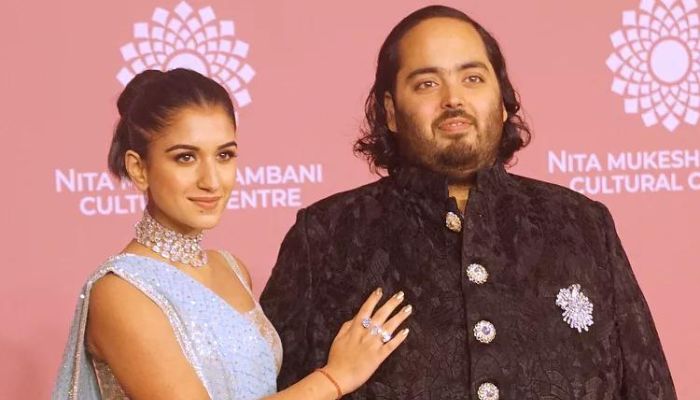
As the INDIA bloc unexpectedly triumphed in Uttar Pradesh during the Lok Sabha elections, numerous women in Lucknow lined up outside a Congress office to request the ‘guarantee cards’ promised during the campaign.

Before the elections, Congress had distributed ‘guarantee cards’ to many households, pledging Rs 1 lakh annually to the female head of every impoverished family.

Footage revealed a substantial number of Muslim women standing in line outside a Congress office in Lucknow, braving the scorching heat.

Some women demanded ‘guarantee cards,’ while others who had already received them submitted forms to get the promised money deposited into their accounts. Some claimed they received receipts from the Congress office after providing their details.

The Congress launched the ‘Ghar Ghar Guarantee’ program to reach nearly 80 million households with 25 guarantees. Among these was the Mahalakshmi scheme, which promised Rs 8,500 per month directly to the accounts of female heads of Below Poverty Line (BPL) families. This scheme is similar to Karnataka’s Congress-led Gruha Lakshmi scheme, which provides Rs 2,000 to women heads of poor families.

Recently, many women rushed to open accounts at the General Post Office in Bengaluru, anticipating monthly deposits of Rs 8,500 if the INDIA bloc gained power at the Centre.

Despite the INDIA bloc winning 234 seats, defying exit polls, the NDA is poised to form the next government, with the BJP-led NDA securing 292 seats, surpassing the majority mark of 272.