

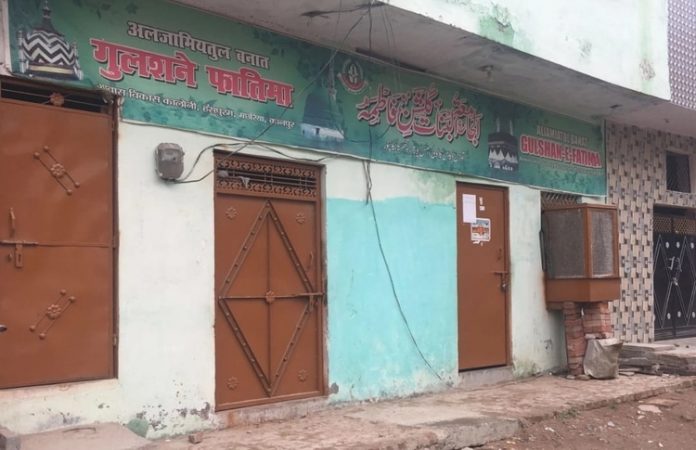
The Kanpur Madrasa Maulvi Javed who was accused of raping a minor girl inside the Madrasa has now taken the defence that he had performed Nikah with the victim. The victim was allegedly taken by the accused to the Madrasa on the pretext of filling some form. However, there was no other student present in the Madrasa except Javed’s maternal aunt Abda Islam and his daughter Sheeba who taught there. The accused cleric raped the girl there but the two women did not come to help her.
The accused who had gone into hiding was arrested by the police by tracking his phone location. As per a report by Swarajya journalist Swati Goel Sharma, the police told that the accused cleric has confessed to making a sexual relationship with the victim but added that he first performed Nikah with her. However, he did not produce the Nikahnama before the police. He also claimed that the girl was not a minor but was 19 years old. The birth certificate of the victim produced by her family showed her date of birth as March 19, 2004, which makes 15 years old.
The girl’s family is worried because of the rumours of the Nikah of the accused with the victim are being spread in the community. “We are being accused of framing Javed for money. No one is supporting us”, the girl’s father said. Also, the family is facing the hostility of the community. According to Imran, the girl’s cousin, no one accompanied the family to the police station. He said that the accused has the support of the locals.
Victim’s mother said that Abda had offered them money and asked them no to complain to the police. Refuting the cleric’s claims of Nikah, she said that her own husband is 34 years old then why would she marry her minor daughter to a man who is older than her father. “My husband is 34. How can I bring a son-in-law older than him?”, she said.
The girl’s father contended that a valid Nikah requires a Kazi and four witnesses, two from each side and after the Nikah, a copy of Nikahnama is provided to both the parties. But none of it was done in this case.
According to Noorjehan Safia Niaz who is a Muslim women’s rights activist and founder of Bharatiya Muslim Mahila Andolan, no standard procedure of Nikah is followed by the community. She said that the Nikahnamas issued by any Madrasa or mosque with merely the institute’s name printed on them and some columns to fill are accepted as valid both by the community and the courts.


