Home Blog Page 233

Days after saying India will say ‘sorry’ to US, Commerce Secretary Howard Lutnick says US will sort out India once New Delhi stops buying Russian oil

There is a timeless Hindi adage,“Rassi jal gayi, par bal nahi gaya” (The rope may scorch in the flames, but its stubborn twists remain). India has inflicted global embarrassment in US President Donald Trump by refusing to stop buying Russian oil and snubbed his one-sided trade deal. Yet, Trump’s attack dog, Commerce Secretary Howard Lutnick, said that US will ‘sort out’ India once it stops buying Russian oil. Earlier, Lutnick said that India would say ‘sorry’ to US.

Appearing on a CNBC show on Thursday, the US Commerce Secretary said, “We’re going to sort out India. You know, India basically has to open their market, has to stop buying Russian oil. People don’t remember India didn’t buy Russian oil before the war with Russia and Ukraine…1 per cent of their oil was from Russia. And now 40 per cent of their oil is from Russia because we’ve sanctioned it, so they can buy it, you know, $7-10 a barrel cheap. So, they’re buying it, refining it, and then selling it to the rest of the world and making a bundle.”

“So, the president (Trump) called nonsense on that and said you got to stop that stuff. So, I think India, we’ll sort it out once they stop buying Russian oil,” Lutnick added.

Howard Lutnick has a knack for mocking and belittling America’s partners and adversaries alike. Last week, Lutnick claimed that despite India maintaining a firm position on continuing oil trade with Russia, New Delhi would eventually return to the table to strike a deal with Washington in the coming months and say ‘sorry’.

Speaking to Bloomberg TV, Lutnick said, “So I think, yes, in a month or two months, I think India is going to be at the table and they’re going to say they’re sorry and they’re going to try to make a deal with Donald Trump. If India does not support the United States, they will have to pay 50 per cent tariffs on its exports to the US.”

While Donald Trump has softened his tone and gone from calling Indian economy ‘dead’ weeks back to India a ‘great nation’ recently, his officials continue to vilify New Delhi and peddle false narrative about India’s Russian oil purchases.

All these theatrics are nothing but a part of Trump administration’s pressure tactics, not to end Russia-Ukraine war, not to essentially cripple Russian economy but to arm-twist India into opening its agriculture and dairy markets for US companies.

Moreover, the Trump administration sees India, with its huge population a lucrative market and wants New Delhi to cut its Russian oil purchases. While it is widely known that Prime Minister Narendra Modi’s refusal to nominate Trump for Nobel Peace Prize and open Indian agricultural and dairy market are the main reasons for India-US relations seeing a sudden bitterness, the US also wants India to buy American crude oil, petroleum products and LNG.

An admission to the Trump administration’s ambition of diverting India’s crude oil and LNG imports from Russia to US, was made by Sergio Gor, Trumps’ nominee to be US Ambassador to India during his nomination hearing on 11th September.

“In the ongoing trade talks, we want the Indian market to open for our crude oil, petroleum products, LNG. India’s Middle Class is larger than the entire US. You’re talking about a population of 1.4 billion individuals there (India). Their middle class by our definition is larger than an entire United States of America and so we have countless possibilities to expand into those markets…” Gor said.

Apparently, the Trump administration’s tariff war against India was not only the expression of Trump’s frustration over not securing credit for his imaginary credit for brokering India-Pakistan ceasefire, Nobel prize nomination or attempt to deter India from ‘fuelling Russian war-machine’.

The US profiteered massively from the Russia-Ukraine war by selling its LNG and petroleum products to Europe on much higher rates and defence equipment to Ukraine. Even in peace talks intended to secure end to Russia-Ukraine war, Trump is eyeing a dollar-minting deal. And now, Trump administration wants India to ditch Russia for American petroleum products.

In war, or in peace, with adversaries or with allies, the US always looks for the goldmine.

From abuses to deepfakes: Congress targets PM Modi’s mother with an AI video, sparks outrage ahead of Bihar polls

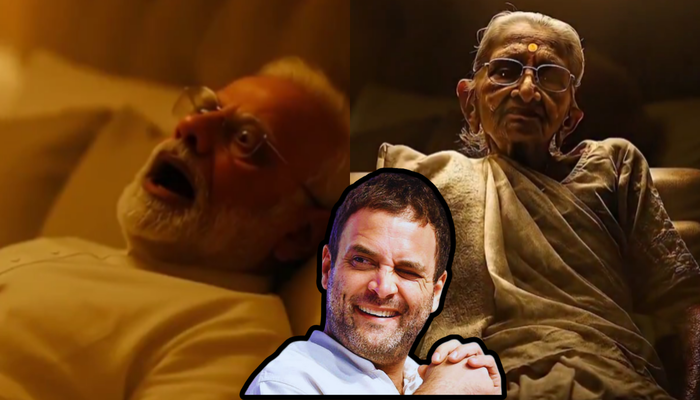
As the assembly elections are approaching in Bihar, the Congress Party has resorted to launching personal attacks on PM Modi. After PM Modi and his late mother were abused during Congress-RJD’s ‘Vote Adhikar Yatra’ last month, now the Bihar Congress has targeted him and his mother, Heeraben, by posting an AI video on social media.

In a below-the-belt move, the Bihar Congress shared a 36-second AI video on X on Friday (12th September), showing characters resembling PM Modi and his late mother. The video, captioned “Maa appears in Sahab’s dreams”, depicts PM Modi going to bed saying, “I’m done with today’s ‘vote chori’, let’s get a good night’s sleep now.” Further, the video shows him falling asleep and seeing his late mother, who appears angry, in his dream. She accuses PM Modi of using her name for politics.

The distasteful video stirred a political storm as the BJP demanded an apology, describing the video as disgusting and an insult to all mothers and sisters. The party demanded action against those responsible for posting the AI video.

Congress has become ‘Gaaliwadi’ instead of ‘Gandhiwadi’: BJP

Accusing the Congress Party of mudslinging, BJP MP Anurag Thakur said, “RJD and Congress have shown the depths to which politics can sink. To engage in mudslinging and insult someone’s mother — especially one who has passed away — is shameful. People of Bihar are well aware that those who stoop to such acts are aligned with the state opposition and Congress. When individuals from this land abuse the mother of PM Modi, it reflects poorly on their political ethics”.

Expressing contempt, BJP MP Radha Mohan Das Agrawal said that he would approach the Election Commission regarding the video. “Prime Minister Modi has always kept politics separate from family life. It is painful that the Congress first abused the prime minister’s mother and is now using deepfake technology to mislead the country and insult all mothers,” said Agrawal.

Launching a scathing attack on the Congress, the BJP spokesperson Shehzad Poonawalla termed the video as shameful and added that the party had become Gaalwadi (abusive) instead of Gandhiwadi. “Far from remorse for abusing PM’s mother, Congress justified and defended the accused with lies. This party has become ‘Gaaliwadi’ instead of Gandhiwadi,” Poonawalla said.

Nothing disrespectful in the video: Congress

Following a massive backlash over the video on social media, the Bihar Congress had to launch a so-called inquiry into the matter, while senior Congress leader Pawan Khera defended the offensive video. Supporting the video, Khera said that it did not disrespect PM Modi’s late mother. “Where is the disrespect shown to his late mother? Show me one word, one gesture, anywhere that you see disrespect. It is the duty of a parent to educate their child. She is only educating her child, and if the child thinks that it is disrespectful towards him, it is his headache, not mine, not yours,” said Khera.

Khera went on to preach to PM Modi, saying that, being in politics, PM Modi should accept everything. “Mr Modi cannot do ‘touch-me-not’ politics. He is in politics, and he needs to take everything, even the sense of humour of the opposition, properly. In fact, there is no humour in it, there is naseehat (advice) in this,” Khera added.

This comes after Prime Minister Narendra Modi and his late mother were abused with slurs such as ‘Maderch*od’ during a Congress-RJD rally in Darbhanga, Bihar, on August 27, 2025.

PM Modi to visit Mizoram, Manipur, Assam, West Bengal and Bihar from 13 to 15 September, states to get projects worth over ₹71,850 crore

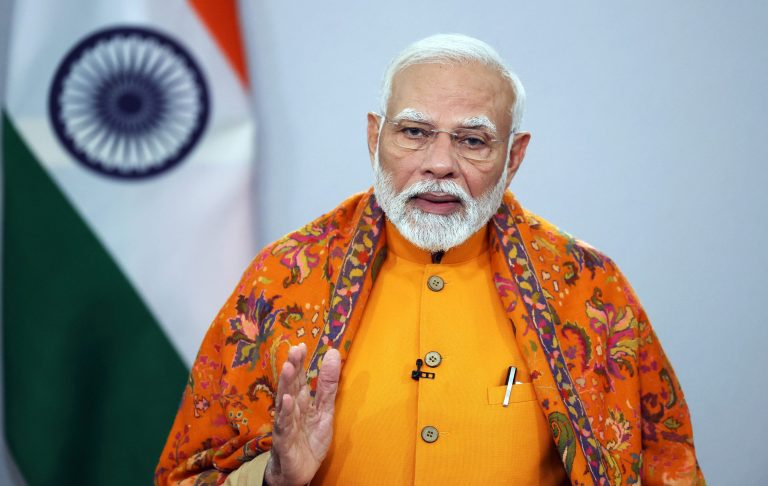
Prime Minister Narendra Modi will visit Mizoram, Manipur, Assam, West Bengal and Bihar from 13th to 15th September, the Prime Minister’s Office said in a press release on 12th September.

He will reach Mizoram on 13th September, and then proceed to Manipur in the afternoon. PM Modi will then travel to Assam on the same day evening. After spending two days in Assam attending various programs, he will move to West Bengal on 15th September. He will travel to Bihar on the same day, from where he will return to New Delhi.

On 13th September, the Prime Minister will visit Mizoram and lay the foundation stone and inaugurate multiple development projects worth over ₹9000 crore at Aizawl, at around 10 AM. He will also address a public function.

Thereafter, he will visit Manipur and lay the foundation stone of multiple development projects worth over ₹7,300 crore at Churachandpur at around 12:30 PM. He will also address the gathering on the occasion. Further, he will inaugurate various projects worth over ₹1,200 crore at Imphal, at around 2:30 PM and address a public function.

Prime Minister Modi will thereafter visit Assam and participate in the celebrations of the 100th birth Anniversary of Bharat Ratna Dr. Bhupen Hazarika in Guwahati, at around 5 PM. He will also address the gathering on the occasion.

On 14th September, Prime Minister will inaugurate and lay the foundation stone of major infrastructure and industrial development projects worth over ₹18,530 crore in Assam. He will lay the foundation stone of various projects in Darrang district at around 11 AM and address a public function. Thereafter, he will inaugurate Assam Bio-ethanol Private Limited, Numaligarh Refinery Plant in Golaghat district, at around 1:45 PM. He will also lay the foundation stone of Polypropylene Plant there.

On 15th September, Prime Minister will visit West Bengal and inaugurate the 16th Combined Commanders’ Conference-2025 in Kolkata, at around 9:30 AM.

Thereafter, Prime Minister will visit Bihar and inaugurate the new terminal building of Purnea airport at around 2:45 PM. Further, he will also lay the foundation stone and inaugurate multiple development projects worth around ₹36,000 crore at Purnea and address the gathering on the occasion. He will also launch the National Makhana Board in Bihar.

PM Modi in Mizoram

Prime Minister will lay the foundation stone and inaugurate multiple development projects worth over ₹9000 crore at Aizawl. These projects will cater to multiple sectors including Railways, Roadways, Energy, Sports among others.

In line with his commitment to world-class infrastructure and last mile connectivity, Prime Minister will inaugurate the Bairabi-Sairang New Rail line, worth over ₹8,070 crore, connecting the capital of Mizoram to the Indian Railways network for the first time. The Rail line Project, built in a challenging hilly area, has 45 tunnels constructed under complex geological conditions. Additionally, it also includes 55 major bridges and 88 minor bridges. The direct rail connectivity between Mizoram and the rest of the country will offer the people of the region safe, efficient, and cost-effective travel options. It will also ensure the timely and reliable supply of food grains, fertilizers, and other essential commodities, thereby enhancing overall logistical efficiency and regional accessibility.

Prime Minister Modi will also flag off three new express trains, Sairang (Aizawl)-Delhi (Anand Vihar Terminal) Rajdhani express, Sairang-Guwahati Express and Sairang-Kolkata Express on this occasion. Aizawl will now be directly connected with Delhi through a Rajdhani Express. The Sairang-Guwahati Express will facilitate movement between Mizoram and Assam. Sairang-Kolkata Express will directly connect Mizoram to Kolkata. This enhanced connectivity will improve access to hospitals, universities, and markets, thereby strengthening educational, cultural, and economic ties across the region. It will also generate employment opportunities, and significantly boost tourism in the region.

In a major boost to road infrastructure, Prime Minister will lay the foundation stone of multiple road projects. It includes Aizawl Bypass Road, Thenzawl–Sialsuk Road and Khankawn–Rongura Road.

The 45 km Aizawl Bypass Road, worth over ₹500 crore, under Prime Minister’s Development Initiative for North East Region (PM-DevINE) scheme will aim to decongest Aizawl city, improve connectivity to Lunglei, Siaha, Lawngtlai, Lengpui Airport, and Sairang Railway Station among others. It will reduce the travel time from southern districts to Aizawl by around 1.5 hours significantly benefitting the people in the region. The Thenzawl–Sialsuk Road under North East Special Infrastructure Development Scheme NESIDS (Roads), will benefit many horticulture farmers, dragon fruit growers, paddy cultivators, and ginger processors, while strengthening connectivity with the Aizawl–Thenzawl–Lunglei Highway. The Khankawn–Rongura Road under NESIDS (Roads) in Serchhip District will provide better access to markets and benefit various horticulture farmers and other people in the region, while supporting the planned Ginger Processing Plant.

Prime Minister will also lay the foundation stone of Chhimtuipui River Bridge on the Lawngtlai–Siaha Road. It will provide all-weather connectivity and reduce travel time by two hours. The bridge will also support cross-border commerce under the Kaladan Multimodal Transit framework.

Prime Minister will lay the foundation stone of Khelo India Multipurpose Indoor Hall for Sports Development. The hall at Tuikual will provide modern sports facilities including a multipurpose indoor arena benefitting and nurturing Mizoram’s youth for national and international competitions.

Strengthening the energy infrastructure in the region, Prime Minister will lay the foundation stone of 30 TMTPA (thousand metric tons per annum) LPG Bottling Plant at Mualkhang in Aizawl. It will aim at ensuring a steady and reliable supply of LPG in Mizoram and neighbouring states providing easier access to clean cooking fuel. It will also create local employment opportunities.

Prime Minister will also inaugurate Residential School at Kawrthah under the Pradhan Mantri Jan Vikas Karyakram (PMJVK) scheme. The school in Mamit aspirational district will provide modern classrooms, hostels, and sports facilities including an artificial football turf. It will benefit over 10,000 children and youth, laying the foundation for long-term social and educational progress.

Furthering his vision of quality education for all, Prime Minister will also inaugurate Eklavya Model Residential School at Tlangnuam. The school will improve enrollment, reduce dropout rates, and provide holistic education opportunities for tribal youth.

PM Modi in Manipur

In line with his commitment to inclusive, sustainable and holistic development of Manipur, Prime Minister will lay the foundation stone of multiple development projects worth over ₹7,300 crore at Churachandpur. The projects include Manipur Urban Roads, drainage and asset management improvement project worth over ₹3,600 crore; 5 National Highway projects worth more than ₹2,500 crore; Manipur Infotech Development (MIND) project, Working Women Hostels at 9 locations, among others.

Prime Minister will also inaugurate multiple development projects worth more than ₹1,200 crore at Imphal. They include the Civil Secretariat at Mantripukhri; IT SEZ Building and New Police Headquarters at Mantripukhri; Manipur Bhawans at Delhi and Kolkata; and Ima Markets, unique all women’s market, in 4 districts.

PM Modi in Assam

On 13th September, Prime Minister will participate in celebrations to commemorate the 100th Birth Anniversary of Bharat Ratna Dr. Bhupen Hazarika in Guwahati. The celebration will honour the life and legacy of Dr. Hazarika, whose contributions to Assamese music, literature and culture remain unparalleled.

On 14th September, Prime Minister will inaugurate and lay the foundation stone of major infrastructure and industrial development projects worth over ₹18,530 crore in Assam.

In Darrang district’s Mangaldoi, Prime Minister Modi will lay the foundation stone of multiple projects. The projects include Darrang Medical College & Hospital and GNM School and B.Sc. Nursing College, strengthening medical education and healthcare delivery in the region; Guwahati Ring Road Project that will enhance urban mobility, decongest traffic, and improve connectivity in and around the capital city; and Kuruwa–Narengi Bridge over River Brahmaputra improving connectivity and promoting socio-economic development in the region.

At Numaligarh in Golaghat, Prime Minister will inaugurate the Assam Bioethanol Plant at Numaligarh Refinery Limited (NRL) aimed at promoting clean energy and reducing dependence on fossil fuels.

He will also lay the foundation stone of the Polypropylene Plant at Numaligarh Refinery Limited (NRL) adding significant value to Assam’s petrochemical sector. It will also generate employment opportunities and lead to overall socio economic development of the region.

PM Modi in West Bengal

In line with his commitment to a strong, secure and self-reliant India, Prime Minister will inaugurate and address the 16th Combined Commanders’ Conference-2025 in Kolkata on 15th September. It is the apex-level brainstorming forum of the Armed Forces, that brings together the nation’s top civilian and military leadership to exchange views and lay the groundwork for the future development of India’s military preparedness.

Held once in two years, the 16th Combined Commanders’ Conference would be held in Kolkata from 15th – 17th September. The theme of this year’s conference is ‘Year of Reforms – Transforming for the Future’.

PM Modi in Bihar

Prime Minister Narendra Modi will launch the National Makhana Board in Bihar. The Board will promote production and new technology development, strengthen post-harvest management, promote value addition and processing and facilitate market, export and brand development in Makhana, thereby benefiting the Makhana farmers of Bihar and the country.

Bihar accounts for approximately 90% of the country’s total Makhana production. Key districts like Madhubani, Darbhanga, Sitamarhi, Saharsa, Katihar, Purnea, Supaul, Kishanganj and Araria serve as the primary hubs since they have favourable climatic conditions and fertile soil that contribute to the superior quality of makhana. The establishment of the Makhana Board in Bihar will give a major boost to the Makhana production in the State and the country and strengthen the presence of Bihar on the global map in this sector.

Prime Minister will inaugurate the Interim Terminal Building at New Civil Enclave of Purnea Airport which will enhance passenger handling capacity in the region.

Prime Minister will lay the foundation stone and inaugurate multiple development projects worth around ₹36,000 crore at Purnea.

Prime Minister will lay the foundation stone of 3×800 MW thermal power project at Pirpainti, Bhagalpur. It will be Bihar’s largest private sector investment worth ₹25,000 crore. It is designed on ultra-super critical, low-emission technology. The project will provide dedicated power and strengthen Bihar’s energy security.

Prime Minister will lay the foundation stone of Phase 1 of Kosi-Mechi Intra-State River Link Project worth over ₹2680 crore. It will focus on upgrading the canal including desilting, reconstruction of damaged structures, and renovation of the settling basin, while also enhancing its discharge capacity from 15,000 to 20,000 cusecs. It will benefit multiple districts in northeastern Bihar with irrigation expansion, flood control, and agricultural resilience.

In line with his commitment to improve rail connectivity, Prime Minister will inaugurate and lay the foundation stone of rail projects and flag off multiple trains in Bihar.

Prime Minister will lay the foundation stone of Rail Line between Bikramshila – Katareah worth over ₹2,170 crore, providing direct rail link across the river Ganga. It will provide a direct rail link across the Ganga significantly benefitting people in the region.

Prime Minister will inaugurate the new Rail Line between Arariya – Galgalia (Thakurganj) worth over ₹4,410 crore.

Prime Minister will flag off train in Araria – Galgalia (Thakurganj) Section which establishes direct rail connectivity between Araria and Kishanganj districts, significantly improving access across Northeastern Bihar. He will also flag off Vande Bharat Express Train between Jogbani and Danapur, directly benefitting districts such as Araria, Purnea, Madhepura, Saharsa, Khagaria, Begusarai, Samastipur, Muzaffarpur, Vaishali, and Patna. He will also flag off Amrit Bharat Express Trains between Saharsa and Chheharta (Amritsar) and Jogbani and Erode. These trains will provide modern interiors, improved facilities, and faster travel capabilities, while enhancing economic, cultural, and social integration across regions.

Prime Minister will also inaugurate the Sex Sorted Semen Facility at Purnea. It is a state-of-the-art semen station under the Rashtriya Gokul Mission, capable of producing 5 lakh sex-sorted semen doses annually. The facility, first of its kind in eastern and north-eastern India, uses indigenously developed technology launched in October 2024, aligning with the vision of Make in India and Atmanirbhar Bharat. By enabling higher chances of female calf births, the technology will help small, marginal farmers and landless labourers secure more replacement heifers, reduce economic stress, and raise incomes through improved dairy productivity.

Prime Minister will also participate in Griha Pravesh ceremonies being held for 35,000 rural beneficiaries under PMAY (R) and 5,920 urban beneficiaries under PMAY (U) and hand over keys to a few beneficiaries.

Prime Minister will also distribute Community Investment Funds of around ₹500 crore to Cluster Level Federations under DAY-NRLM in Bihar and hand over cheques to a few CLF Presidents.


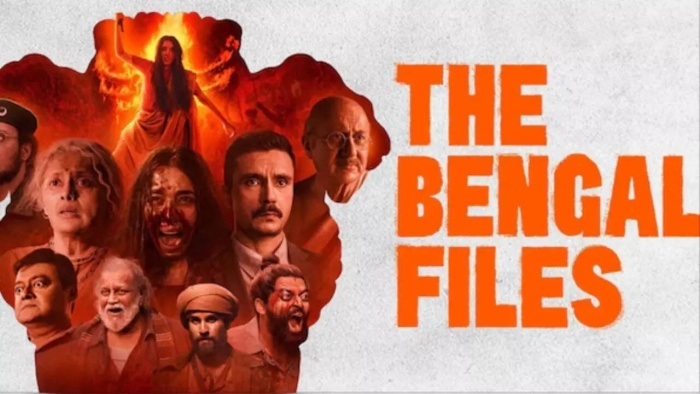
Is The Bengal Files really a flop movie?

I watched Vivek Agnihotri’s The Bengal Files on the evening of its release last Friday. It was a private screening organized by a celebrity eye surgeon in Mumbai for 300 friends and family members. Naturally, the theater was housefull.

I watched it again two days later, on Sunday afternoon, at a public show, not a sponsored or private one. The theater was housefull again, and I made a reel of it that went viral on social media.

I watched it a third time yesterday, Thursday, at a late evening show. The audience was about 50%, with half of them evidently affluent and cultured citizens, going by their appearance even from a distance. The rest half were mostly smart Mumbaikars in their 20s and 30s.

Even after watching it thrice, the reaction was one of shock, stunned silence, and awe. The words “Wow, Vivek!” escape you, and you’re left wondering why, in nearly eight decades of independence, no filmmaker had made a film like this before.

When Vivek Agnihotri’s ‘The Tashkent Files’ was released, opponents didn’t launch any pre-release propaganda against it. With ‘The Kashmir Files’, there was significant opposition after its release, but not before. However, with ‘The Bengal Files’ opposition began even before the trailer was released. After the trailer, opponents created an atmosphere suggesting the film’s release would spark Hindu-Muslim riots across the country. Actually they feared it might become a superhit like ‘The Kashmir Files’ which grossed ₹350 crore against a ₹15 crore budget.

After ‘The Bengal Files’ released, anti-national elements in the media and social media unleashed a barrage of negative reviews. On Twitter and Facebook, some people started criticizing the film without even watching it. Never before has a Hindi film faced such widespread and intense negative propaganda.

Box office figures don’t prove a film’s impact, greatness, quality, or even popularity. A prime Hollywood example is The ‘Shawshank Redemption’ based on a short story by Stephen King, who is often praised as the modern Charles Dickens. This prison drama was declared a flop upon release in the 1990s. Yet, today, it consistently ranks second in Hollywood’s top ten films, often just behind ‘The Godfather’ based on Mario Puzo’s best selling novel. 

Hindi cinema has countless similar examples. Guru Dutt’s ‘Kaagaz Ke Phool’ and Raj Kapoor’s ‘Mera Naam Joker’ were box office failures that bankrupted their makers. Today, they’re cult classics, counted among the finest Hindi films. Everyone says they were ahead of their time, and audiences weren’t ready. Yash Chopra’s multi-starrer ‘Silsila’ despite superhit songs, was a flop but is now a cult classic. There are many such cases.

‘The Bengal Files’ is estimated to have been made on a ₹35–40 crore budget. Industry sources say its first week’s box office collection hasn’t reached ₹15 crore. In India, it has earned around ₹11–12 crore so far, with overseas collections around ₹2.5 crore.

While these figures are certainly disappointing, many recent hit films, like ‘Jawan’ have inflated box office numbers to mislead audiences. Vivek Agnihotri’s films don’t practice such manipulation.

If a film made for ₹35 crore earns ₹35 crore, it doesn’t mean it breaks even. From the collection, entertainment tax goes to the government first, then theater owners take their share. After other expenses, the distributor gets a cut. Only then do producers get what’s left, from which production costs are deducted to calculate profit, which is then taxed. 

Generally, a ₹35 crore film needs to collect around ₹70 crore to break even. Only after that the producers start seeing profits.

The OTT rights for ‘The Bengal Files’ have likely been sold, but the amount isn’t public yet. Even with that, it seems unlikely the producers will recover their investment. Producers Abhishek Agarwal and the Agnihotri couple will likely have to share the losses. Let us pray that doesn’t happen.

Vivek Agnihotri has said in interviews that ‘The Bengal Files’ was funded by profits from ‘The Kashmir Files’. If the money invested in ‘The Bengal Files’ doesn’t return, let alone profit, can Vivek continue making films? He may have immense courage, but will others financially back his projects? Vivek Agnihotri must not be discouraged. His team and supporters shouldn’t abandon him. Ups and downs are part of the journey.

A film flopping at the box office doesn’t make its creator a failure. If Vivek Agnihotri only cared about money, he could’ve made films like Karan Johar or Priyadarshan make, and bought villas in Dubai or Switzerland. He has the talent, skill, and acumen for it. But he aims to awaken the viewer through cinema. Films like ‘The Kashmir Files’, ‘The Vaccine War’ and ‘The Tashkent Files’ have sparked awareness among audiences. After watching ‘The Bengal Files’ for the third time, I overheard college students in the theater foyer. One asked, “Really? Did ‘they’ get Shastriji killed?” Vivek’s films are opening India’s eyes, prompting questions.

Few knew about Direct Action Day or the Noakhali Hindu massacre, as those pages were erased from school and college curricula. Such films bring these truths to light. Before ‘The Kashmir Files’, only a handful knew how Kashmiri Hindus were displaced and how Kashmir was deliberately distanced from India. Through the film this knowledge reached crores. 

Similarly, ‘The Vaccine War’ revealed how India stood firm against the greed of multinational pharma companies like Pfizer during COVID, saving economic losses and lives that would have been lost because of a compromised vaccine that was outright wrong for the India’s climate. You might find this in obscure reports or books, but as an average citizen, you wouldn’t read it. Now you have a crystal clear picture in a 2.5 hour film.

The same applies to Lal Bahadur Shastri’s suspicious death in Tashkent. Official records were tampered with, and later the controversy was buried. Without Vivek’s film, most Indians would remain unaware. Only when filmmakers like him make movies about the deaths of scientists like Vikram Sarabhai or Homi Bhabha will we get closer to the truth. 

Vivek Agnihotri made a low-budget film, ‘Buddha in a Traffic Jam’ over a decade ago, addressing urban Naxals, the educated city elites masquerading as philanthropists while fueling Maoist and Naxal violence in India’s hinterlands.

Borrowing a famous Hindi cinema dialogue, we can say: ‘The Bengal Files’ hasn’t flopped; films like ‘The Bengal Files’ do not flop.

Making such films require courage to risk not just reputation but one’s life itself. It involves staking crores, not lakhs, and enduring losses while knowing surely that your opponents will attack you- in success or failure. It demands faith in the philosophy of Karmanye Vadhikaraste (do your duty, don’t worry about results).

Films like ‘The Bengal Files’ must be made. Fear of box office failure shouldn’t bury such subjects in obscurity. If a leftist or secular film flopped, would they focus on its collections or praise the director’s creativity and courage?

Had ‘The Bengal Files’ earned as much as ‘The Kashmir Files’ it would’ve inspired other filmmakers and financiers. The massive success of ‘The Kashmir Files’ led to many more such films- Ekta Kapoor produced The ‘Sabarmati Report’ and Vipul Amrutlal Shah produced ‘The Kerala Story’. Dozens of smaller films emerged due to the environment created by ‘The Kashmir Files’.

There’s a difference between good, truthful films and commercially successful ones. Not all good films make money, and not all profitable films are worth watching. Yes, it hurts when good filmmakers suffer losses, not just financial loss, but also the non-acknowledgement of their creativity.

Yet, this pain must be borne by the creator, their team, and millions of fans like us. We must console ourselves that, like ‘Kaagaz Ke Phool’, ‘Mera Naam Joker’, ‘Silsila’ or ‘The Shawshank Redemption’, ‘The Bengal Files’ is going to be celebrated as a cult classic for much longer than its theatrical release. And we’ll take pride in saying: ‘We watched it once (or even three times) when it was released’.

The above article was originally published in OpIndia Gujarati. Click here to read the Gujarati version.

Yogi Adityanath government to develop Ayodhya, once ruled by Lord Ram’s Suryavansh dynasty, into a model ‘Solar City’: Here are the highlights of the project

The Yogi Adityanath government in Uttar Pradesh is working to transform the city of Ayodhya, once the capital of the Suryavansh to which Lord Ram belonged, into a ‘Solar City’. The step aims to link the city’s glorious past with a modern future. Ayodhya has an ancient connection with the Sun as it was ruled by Lord Ram’s lineage, which was linked to the Sun God.

The Yogi Adityanath government’s solar energy project in Ayodhya is set to be a significant step in the direction of fulfilling the country’s clean energy goals. The Uttar Pradesh New and Renewable Energy Department Agency (UPNEDA) is leading the plan to develop Ayodhya as a ‘Solar City’. The city will act as a model for the implementation of the project in other proposed cities.

The Ayodhya Solar City project involves the installation of solar panels on the rooftops of 117 government buildings, totalling 2.5 MW. This includes a 250 kW solar panel installed at RML Awadh University, a 155 kW panel at Agriculture University, a 100 kW capacity panel at the district court, a 58 kW panel at Ram Katha Museum, and 50 kW panels at different government secondary schools.

The initiative also includes setting up a 40 MW solar park along the Saryu River, operating solar-powered boats and installing solar streetlights. In addition to that, the government plans to make use of solar energy in the city’s infrastructure by installing solar-powered charging points, drinking kiosks and solar trees. The government is also promoting the use of electric vehicles. To encourage residents to install rooftop solar panels, the government is providing incentives like solar subsidies.

A key ingredient of the solar city initiative is the 40 MW solar power plant located at Rampur Halwara in the Manjha area of the district. The plant is capable of fulfilling 40 per cent of the electricity requirement of Ayodhya.

The Ayodhya Solar City project is a 5-year project, which commenced in 2023 and is expected to be completed by 2028. The project, which is being implemented in a phased manner, is part of the state’s Solar Energy Policy 2022. The policy aims to develop 16 municipal corporations and Noida as solar cities, and establish Uttar Pradesh as a leader in the field of renewable energy in the country. It has an ambitious goal to achieve 22,000 MW of solar capacity by 2026-27, with 14,000 MW from solar parks and 8,000 MW from rooftop installations.

Badaun: Muslim Shanu lures Dalit Hindu girl pretending to be Hindu and rapes her in moving car with Arif’s help, both shot in leg in police encounter

0

In Uttar Pradesh’s Badaun district, a Muslim youth befriended a Hindu woman by posing as ‘Sunny’ on Instagram, took her to Manuana Dham and raped her in a moving car along with his friend. The incident transpired on 9th September 2025. After about seven hours of effort, the police arrested both the accused in an encounter.

The victim, a Dalit Hindu girl and a resident of  Kadar Chowk in Badaun, came in contact with a man named ‘Sunny’ on Instagram, who had hidden his real name Shanu. The accused introduced himself as a Hindu said that he belongs to the same caste as her, and they started talking frequently.

The girl had visited Manuna Dham on Tueday, 9 September, and she had told him about the same. At around 7 pm, Shanu reached there in a car with his friend Arif. They talked for some time and then lured her sit in the car.

They went to Bisauli Road, where accused Shanu raped the woman in the moving car driven by Arif. When she resisted, he gagged her mouth and threatened her with a gun. Arif kept driving the car while Shanu kept raping her. Later, at around 9 PM, they returned near Manuna Dham Gate, pushed her out of the car at gun point, and fled. The woman immediately lodged a complaint in Aonla police station. 

On Tuesday night itself, the police launched a search operation. At around 3 AM, police received informaiton about the car used in the crime. It was learnt that the accused were standing near Revati turn with the car. When the police reached the spot and surrounded the accused, they opened fire. The police also opened fire in return.

Shanu and Arif were shot in their legs in the retaliatory firing by the police. Shaanu was shot in both legs and Arif in the right leg. After this, both were arrested and sent to hospital.

Police have also recovered weapons and car from them. Notably, two pistols, cartridges, a car and other items have been recovered from the possession of the gangrape accused. A case has been registered against them at Aonla police station. Both the injured have been sent to the district hospital for treatment. 

During investigation, police found that Shanu and Arif had made several social media accounts on Facebook and Instagram using Hindu names. It is belived that both of them have trapped many other girls.

Chhattisgarh: 10 Naxal terrorists killed in an encounter, including senior Naxal leader Modem Balkrishna, who carried a reward of ₹1 crore

0

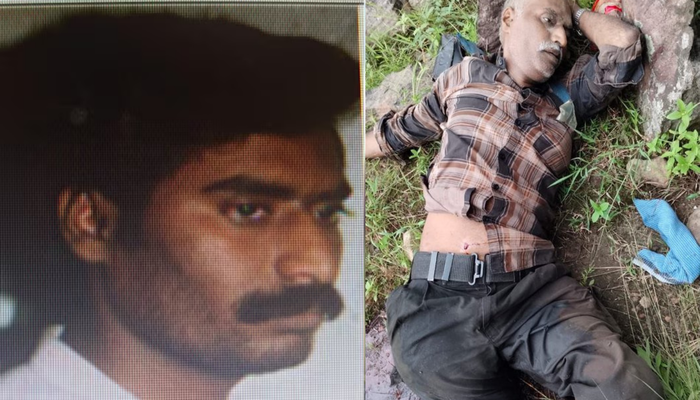
In a major anti-Naxal operation in the Gariyaband district in Chhattisgarh, the security forces eliminated 10 Naxal terrorists, including senior Naxal leader Modem Balkrishna alias Manoj, who had a bounty of ₹1 crore on him. Balkrishna was killed during an encounter on Thursday afternoon (11th September) in the forest of the Matal area.

Union Home Minister Amit Shah hailed the security forces for the achievement and urged the remaining Naxal cadres to surrender. “Our security forces have achieved another major success against the Naxalites today. In Chhattisgarh, CRPF’s Cobra commandos, Chhattisgarh Police, and DRG conducted a joint operation and eliminated 10 notorious Naxalites, including CCM Modem Balakrishna alias Manoj, who carried a bounty of ₹1 crore. The remaining Naxalites should surrender in time. The complete eradication of red terror is certain before March 31st,” Shah wrote on X.

The security forces reportedly received intelligence inputs about the presence of Naxals in the Mainpur forest region. Acting swiftly on the inputs, joint teams of E-30, STF, and COBRA launched an anti-Naxal operation on Wednesday night (10th September). Sporadic encounters began between the security forces and the Naxals in the morning, which continued till the afternoon.

The security forces have been conducting search operations in the area to see if more Naxals have been injured or killed in the encounter. “The encounter began in the afternoon. The Maoists discriminately opened fire on our forces, after which we retaliated. The exchange of firing continued till evening. After the encounter ended, search operations were conducted, and the bodies were found. Their identities are being ascertained. Weapons, including automatic ones, have been recovered,” Inspector General of Police Amresh Mishra said. He added that the security forces cautious and vigilant as Naxals usually target the security forces using the improvised explosive devices (IEDs) when they return from operations.

Who was Modem Balkrishna

Modem Balkrishna alias Manoj was a senior Maoist leader who hailed from the undivided state of Andhra Pradesh. He is said to have joined the Maoist cadre decades ago and was a member of the Central Committee, the second-highest body of the Maoists after the Politburo. Balkrishna was wanted by the security forces and carried a reward of ₹1 crore. He was involved in several incidents of murder, robbery and attacks on local police.

Intensifying their operation against Naxals, the security forces eliminated several Naxal leaders, including dreaded Nambala Keshav Rao alias Basavaraju, this year. The elimination of Maoist leadership by the security forces has weakened the Maoist cadres, which are now staring at a certain end.

Modi government has committed to eradicate Naxalism by 2026

In pursuance of its zero-tolerance policy towards Naxalim, the Modi government launched Operation Kagar in January 2024. It is a multi-pronged strategy combining aggressive military operations, enhanced coordination between Central and State forces, and development efforts to address the root causes of Naxalism. Under this operation, around 1 lakh para-military troops, including the Central Reserve Police Force (CRPF), its elite CoBRA units, District Reserve Guards DRG), and state police, have been deployed in the left-wing terrorism affected areas. These security personnel are equipped with modern technology like drones for information gathering, AI for intelligence gathering, and satellite imagery, among others.

Union Home Minister has declared to eradicate Naxalism by March 2026. As of 2015, approximately 106 districts across 10 states were classified as naxal-affected. This number was reduced to 38 by 2024 and further to 18. Out of these, 12 were considered the most impacted by naxal activities, yet this figure has now fallen to just 6.

Congress MP Gaurav Gogoi Pakistan links case: SIT submits its report to Assam govt, CM Sarma says a conspiracy was underway to undermine India’s sovereignty

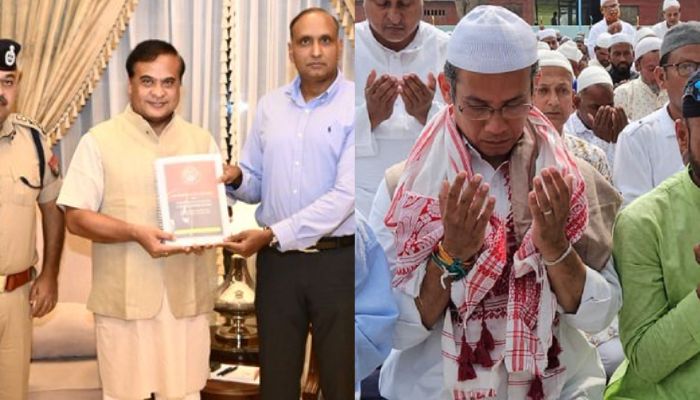
On Wednesday (10th September), the Special Investigation Team (SIT) constituted by the Assam government to probe the alleged links of Congress MP Gaurav Gogoi with Pakistan submitted its 96-page report to Chief Minister Himanta Biswa Sarma.

The report was handed over at Lok Sewa Bhawan in the presence of SIT members Munna Prasad Gupta, Rosie Kalita, Pranabjyoti Goswami and Maitrayee Deka.

In a post on X, CM Sarma said that the Assam Cabinet had constituted the SIT to investigate the “anti-India activities” and “have unearthed startling facts.”

He wrote, “On 17th February, 2025, the Assam Cabinet constituted a Special Investigation Team (SIT) to investigate the anti-India activities of one Pakistani national, Ali Tauqeer Sheikh, and his associates. During the course of this exhaustive investigation, the SIT has unearthed startling facts which point towards a larger conspiracy aimed at undermining the sovereignty of our nation.”

He further said that the inquiry also shed light on how Pakistan’s Ministry of Interior facilitated the visit of an Assam MP to the neighbouring country.

He wrote, “The SIT has also established the involvement of a British national, who is also married to an Indian Member of Parliament, in the larger nefarious activities of Ali Tauqeer Sheikh. Furthermore, the investigation also sheds light on how the Ministry of Interior, Govt of Pakistan, facilitated the visit of an Hon’ble Member of Parliament from Assam in their country.”

The Chief Minister added that the state government will now examine the SIT’s findings in detail. CM Sarma alleged that out of four members of Gogoi’s family, three hold foreign citizenship.

“The Assam Government will now examine the report of the SIT in detail and place it before the State Cabinet. Once the matter is discussed in the Cabinet, the information gathered during the enquiry will be made public,” the Assam CM wrote on X.

Meanwhile, Congress leader Gaurav Googi has claimed that CM Sarma’s allegations are based on a “fabricated story.”

“He (Assam CM Himanta Biswa Sarma) thinks that people of Assam are foolish enough to believe his wild allegations. He does not respect the intelligence and the wisdom of the people of Assam. The people of Assam know that he has built a fabricated story based on allegations only to hide the corrupt rule of his government and how he has used the chair of the Chief Minister of Assam to enrich his family and amass huge properties and illegal wealth…” Gogoi said.

It must be recalled that during a parliamentary discussion of Operation Sindoor 29th July, Union Home Minister Amit Shah blasted Congress MP and party’s deputy leader in Lok Sabha, Gaurav Gogoi, for his previous trips to Pakistan and asked as to whether he had ever visited the India-Pakistan border.

As OpIndia reported earlier, Elizabeth Coulburn, Gogoi’s British wife, is a project manager at Delhi’s Climate and Development Knowledge Network (CDKN). Surprisingly, Ali Tauqeer Sheikh, a Pakistani native, serves as the Regional Director of CDKN for Asia. He has a history of spreading misinformation against India, especially via his X account. He even posted in support of Gogoi for raising Delhi riots issue in the Parliament.

Sarma has repeatedly made grave allegations against him. “Serious questions need to be answered regarding allegations of ISI links, leading young individuals to the Pakistan Embassy for brainwashing and radicalization. and the refusal to take Indian citizenship for the past 12 years. Additionally, participation in a conversion cartel and receiving funds from external sources, including George Soros, to destabilize national security are grave concerns that cannot be ignored,” CM Sarma asserted in February of this year.

Rahul Gandhi violated security protocols 113 times since 2020, CRPF forced to write letter to Congress President: Read about the ‘yellow book’ for VIP security followed by the paramilitary force

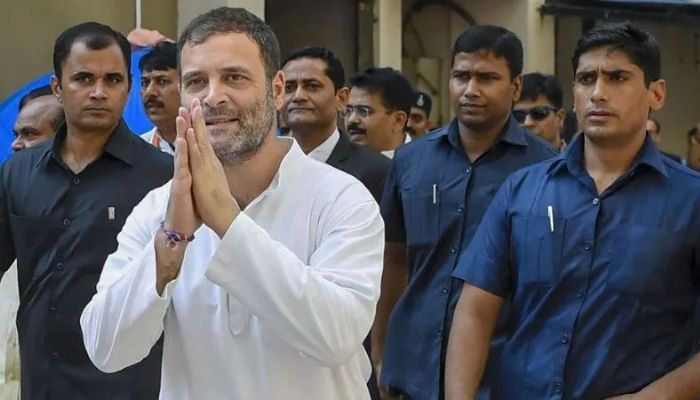
The Central Reserve Police Force (CRPF) has been compelled to write a letter to Congress President Mallikarjun Kharge regarding the repeated violations of security protocols, outlined in its ‘yellow book’ for VIP security, by Rahul Gandhi.

The leader of the Opposition enjoys a ‘Z plus (Advanced Security Liaison)’ armed protection, which implies that about 10-12 CRPF commandos provide security cover to the Congress leader.

They also carry out reconnaissance of the locations which are set to be visited by Rahul Gandhi. However, the leader of the Opposition has repeatedly made unscheduled movements without prior imitation to the CRPF.

This gross violation of security protocol was witnessed during both domestic and international visits to countries like Italy, Vietnam, UAE, Qatar, UK, and Malaysia.

CRPF highlighted that such unannounced movements by Rahul Gandhi posed ‘high risk’ to his own security.

It urged the Congress leader to adhere to guidelines, which are mandated in the ‘yellow book’ of the CRPF meant for VIP security.

The Central Reserve Police Force pointed out that it was important for the protectee to keep the paramilitary force in loop at all times.

According to a report by The Indian Express, Rahul Gandhi has violated security guidelines 113 times since 2020. He flouted protocols during the Delhi leg of Bharat Jodo Yatra as well.

In a tweet, BJP spokesperson Amit Malviya highlighted, “Under the yellow book protocol, individuals under high-category security are required to provide prior intimation about their movements, including foreign travel, to enable deployment. Rahul doesn’t.”

In the meantime, the Congress party has cast aspersion on CRPF, which provides armed protection to Rahul Gandhi.

Malikarjun Kharge has questioned the ‘timing’ of the letter at a time when the Congress leader is busy peddling ‘vote chori’ conspiracy theories.

Spokesperson Pawan Khera alleged in a tweet on Thursday (11th September), “Is this a veiled attempt to intimidate the Leader of Opposition, who has already announced another imminent disclosure? Is the government rattled by the truth he is about to reveal?”

Yellow book of CRPF for VIP security

It must be mentioned that the Union Ministry of Home Affairs (MHA) has issued special guidelines for providing security to VIPs. It is called the ‘Yellow Book.’

The security protocols of all VIPs, barring the President, Prime Minister and Vice President, are outlined in the the ‘yellow book.’

Public personalities who have Z or Z+ security are mandated to notifiy CRPF about their travel plans and activities in advance. This helped the paramilitary force to assess and mitigate threats and keep the protectee safe.

If Congress leader Rahul Gandhi continues to break security protocols and flout guidelines, then, he could potentially risk his life like his father Rajiv Gandhi (who was killed during a targeted assassination in 1989).

Despite Trump’s pressure to impose 100% tariff on India, EU is all set to sign FTA with India, its Trade Commissioner arriving in New Delhi to conclude negotiations

In a move underscoring Europe’s independent trade strategy, the European Union is accelerating negotiations for a Free Trade Agreement (FTA) with India, even as U.S. President Donald Trump urges the bloc to impose up to 100% tariffs on Indian for continued purchase of Russian oil. Commerce Minister Piyush Goyal said that 60%-65% of the chapters have already been finalised, and the agreement will be concluded substantially soon.

The 13th round of EU-India FTA talks kicked off in New Delhi on Monday, with EU Trade and Food Commissioner Maroš Šefčovič and Agriculture Commissioner Christophe Hansen scheduled to arrive in India on 12 September. Minister Piyush Goyal said, “By the time my counterpart Mr Maros Sefcovic, the EU trade commissioner, and Mr Christophe Hansen, the EU agriculture commissioner, come to India, I think we will be quite set to try and conclude the agreement substantially.”

Goyal stated that the agreement could be substantially concluded by the end of 2025, paving the way for a joint strategic agenda at the next EU-India summit in early 2026.

Like the trade deal discussions with the US, agriculture remains the most complex subject, with India unwilling to open up the sector to protect the domestic farmers. In that context, participation of the Agriculture Commissioner of the EU is significant. Wine and spirits, processed agricultural products, dairy, sustainability commitments, and business visas are some of the thorniest issues.

An EU official told media that the broad agri-food market access offer involved in any agreement would be discussed along with negotiations on the EU-India Geographical Indications (GIs) agreement, and general cooperation with India on agricultural matters.

The FTA, relaunched in 2022 after a seven-year hiatus, aims to boost bilateral trade, currently valued at around €120 billion annually, by addressing market access for goods, services, investment, and contentious issues like agriculture and non-tariff barriers.

Sources indicate that chapters on digital trade and anti-fraud measures have been closed, with agriculture now formally on the table, a sign talks are nearing completion. The deal could enhance India’s exports in sectors like pharmaceuticals, garments, and steel, while providing the EU access to India’s burgeoning consumer market.

This progress comes against the backdrop of Trump’s recent actions against India. According to multiple reports, the U.S. president has pressed EU leaders to slap tariffs of up to 100% on imports from India and China, citing their purchases of Russian oil as fuelling Moscow’s war in Ukraine. Trump, who earlier this year raised U.S. tariffs on Indian imports to 50%, argued the measures would isolate Russian President Vladimir Putin economically. However, EU officials have dismissed the idea as unlikely, pointing to legal hurdles, ongoing FTA negotiations, and the bloc’s own trade priorities.

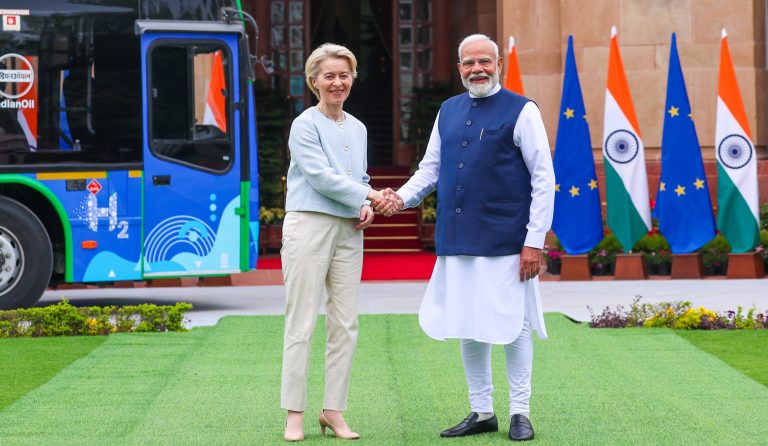
EU Commission President Ursula von der Leyen, in a recent call with Prime Minister Narendra Modi, reaffirmed the bloc’s commitment to wrapping up the FTA by year-end, while welcoming India’s role in Ukraine peace efforts. Danish Ambassador to India Rasmus Nørgaard, in an interview, countered Trump’s characterization of India’s economy as “dead,” calling it “the world’s fastest growing economy” and praised the EU’s investment push.

The EU-India FTA, if signed, could add billions to both economies and reinforce multipolar trade dynamics, potentially mitigating the impact of U.S. tariffs estimated at 0.3-0.4% of India’s GDP in the short term. As negotiations intensify, all eyes are on whether Brussels will yield to Washington’s demands or chart its own course with New Delhi.