Home Blog Page 269

Donald Trump, first of his name, lord of empty promises: How the world has grown weary of America’s blustering braggart-in-chief

US President Donald Trump, the man, the myth, the marketer-in-chief of make-believe victories. For someone who claimed he could stop wars before breakfast and close trade deals during lunch, one would assume he had, at the very least, a vague idea of how diplomacy works. But alas, his grandstanding has consistently proven to be about as effective as the Chinese air defence systems deployed by Pakistan. 

Just as BrahMos missiles tore through the Pakistani sky, hitting their targets with ruthless precision while Chinese air defence systems dozed off like a bored watchman—unaware, unprepared, and utterly useless—Trump’s showboating too has followed the same pattern: jarringly advertised, spectacularly ineffective, and ultimately blind to reality.

Starting with his pièce de résistance: Russia-Ukraine conflict. During the campaign trail, Trump thundered that he would end the war “in 24 hours,” even going to the extent of claiming that the war would never have happened if he were the President.

Fast forward a few months, and reality, the war continues to grind on and there is no end in site, at least in the foreseeable future. Reports now suggest Trump may be quietly tiptoeing away from the mess he once promised to clean up. A man who marketed himself as the geopolitical troubleshooter now seems to be scampering away from troubles. Or perhaps, he never intended to do shoot the trouble in the first place.

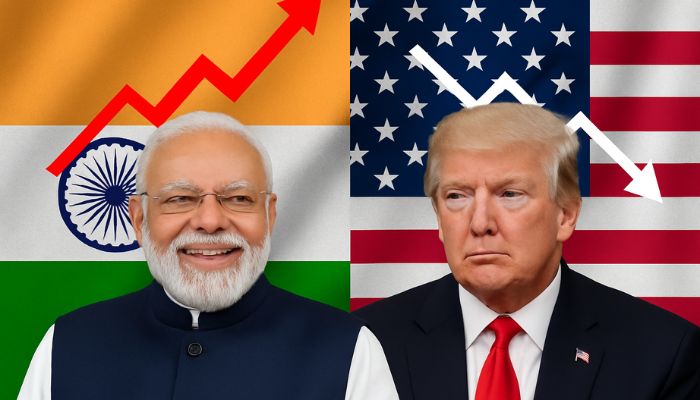
Then came his tariff crusade, where he imagined he could scare the world into submission with import taxes and swagger. He slapped tariffs left and right like a man possessed, convinced that trade wars were “good and easy to win.” But reality hit hard—markets bled, Americans became jittery, anxiety swept over allies, prices rose, and economists sounded the alarm. 

Eventually, after markets shuddered and his advisors subtly backed away, Trump performed his signature move: the humiliating climbdown disguised as a “huge victory.” Cue the China trade deal—the very country he vowed to pummel into economic submission. Naturally, he painted this retreat as a triumph, because in Trumpistan, every loss is an opportunity waiting to be marketed as an “alternative win.”

In South Asia, Trump didn’t miss a beat in hijacking credit for the India-Pakistan ceasefire. When India’s airstrikes crippled Pakistan’s terror infrastructure and exposed its hollow defense, it was Pakistan that came crawling for peace. But Trump, ever the opportunist, puffed up his chest and claimed the US had brokered calm. Reality check: the only thing America mediated was the live broadcast of his delusions.

And then there’s the Israel-Hamas conflict. When war erupted again in Gaza, Trump offered about as much substance as a motivational poster. He could neither rein in Israel’s offensive nor pressure Hamas to halt its provocations. Instead of presenting meaningful options to reduce civilian suffering or facilitate dialogue, Trump defaulted to his usual mode: tweeting tough, doing little, and declaring imaginary victories. Gaza burned, hospitals overflowed, and innocents suffered; all while Trump flailed to appear relevant. His inaction was so profound, one could almost believe he thought “Middle East peace” was just another branding opportunity. The people of Gaza got no relief, no roadmap, and certainly no peace, just another war in a growing list of global fires Trump claimed he alone could extinguish.

But this wasn’t the end of US President’s blustering.

As the world lurches from one crisis to another, most recently with the Israel-Iran war, Trump’s hollow promises of getting things “solved” had only become starker. Israel attacked and nearly decimated all of Iran’s military chain of command, besides destroying its nuclear sites, which has predictably prompted a stern response from Tehran, throwing the Middle East in a period of uncertain turmoil and at the brink of a wider conflict. Meanwhile, Trump has remained on the sidelines—not engaging in meaningful endeavours to defuse tensions, but furiously posting on social media, reminding Iran’s Islamic regime of the “consequences” he had once warned about for rejecting his so-called “deal.”

In the end, Trump’s foreign policy doctrine appears to be equal parts swagger, self-delusion, and a dash of narcissism. He’s the guy who turns up after the fireworks, claims he lit them, and insists they wouldn’t have exploded without his blessing.

Donald Trump is, as the popular saying goes, all hat and no cattle, though in his case, even the hat looks suspiciously borrowed.

Leela Samson, a Gandhi family loyalist, apologises for defaming Kalakshetra student as ‘mistress’ of a teacher who was accused of sexual harassment

The former director of Chennai-based ‘The Kalakshetra Foundation’, Leela Samson, has posted an apology after defaming a student of the esteemed institute more than 2 years ago.

Samson served at the ‘The Kalakshetra Foundation’ between 2005-2012. In December 2022, she stirred the hornet’s nest by accusing a student named Athena Sadiq of being the ‘mistress’ of a teacher (Hari Padman), who was facing allegations of sexual harassment.

In a Facebook post on Sunday (15th June), Leela Samson stated, “On December 23, 2022, I put a post on Athena, former student and presently Tutor at the Kalakshetra Foundation, on Facebook. I had wrongly mentioned her name in connection with a male faculty. I regret the error and no further comments will be made by me on her in the future.

Screengrab of the Facebook post by Leela Samson

Reaction of the victim

Athena Sadiq (who was defamed in 2022 by the ex-Director of The Kalakshetra Foundation) responded to Samson’s post, highlighting the need for her to be cautious of the words uttered in the public domain.

You left Kalakshetra in 2012 and have had no further connection with the college. Yet, despite this, you did not verify the authenticity of the rumor before posting a false allegation. It took me more than two years to make you realize your mistake-more than two years of legal battle to make you understand the weight of your position and the power of your words,” she stated.

The consequences of false allegations can be severe, not just for the person being accused but for everyone caught in the storm. I have experienced this firsthand, and I can attest to the difficulties that come with defending oneself against misinformation. While it is easy for rumours to spread, it takes immense effort to restore truth and dignity,” Athena Sadiq added.

Screengrab of the comment posted by Athena Sadiq

After having realised that Leela Samson reduced the visibility of her apology post, Athena Sadiq posted on Facebook –

“To those who actively shared, commented, and reacted to the post two and a half years back, without verifying the authenticity of the allegations-many voices spoke loudly then, but where are those voices now?

Leela Akka has now limited comments and restricted the post to a smaller circle. Does this change the willingness to engage?

Silence in the face of truth weighs heavily. I am not asking for blame or conflict-only a small show of support from those who once stood at the forefront of this discussion. That, in itself, would mean a great deal.”

The Background of the Controversy

Athena Sadiq had previously sued Leela Samson in August 2023 for spreading rumours, which led to her defamation and character assassination.

In December 2022, Samson had alleged that a teacher at the Rukmani College of Fine Arts (an institution run by Kalakshetra Foundation) had been harassing and molesting students for over 10 years.

The teacher was identified as Hari Padman, who has since been sacked, arrested and granted bail in connection to the sexual harassment case.

According to a report by ‘The Commune Mag’, Athena Sadiq (whose name was not published at the time) was a dance intern at the Rukmini Devi College of Fine Arts. She had been associated with the esteemed institute for over 7 years until then.

Screengrab of the Facebook comment by Leela Samson

In one of the comments, Leela Samson wrote, “He (Hari Padman) has a mistress – Athena who is an intern and known to bully the younger students. Everyone knows. Junior students apparently ask the question – what do have to do to get a role in the concert section!

Following social media upheaval over the controversy, Leela Samson deleted her original post accusing Hari Padman of being a ‘sexual predator’ and Athena Sadiq of being his ‘mistress.’

In her police complaint, Athena Sadiq stated, “Before mentioning my name in the Facebook post, it would have been prudent and proper for Ms. Leela Samson to have checked with me about the veracity or genuineness of the rumours she was supposedly hearing about me. The same was not done. There was not even a shred of truth to the allegations mentioned in the comment.”

The complaint was closed by the police after Leela Samson claimed that ‘mistress’ translated to the Tamil word ‘ejamaani’ which translated to ‘feudal landlady’. She had rationalised her distasteful remarks by claiming that Athena Sadiq tutored the son of the accused Hari Padman.

The Kalashetra Foundation’s Internal Complaints Committee, as per Commune Mag, conducted an inquiry into the Facebook comments of Leela Samson but found not truth to the allegations of any relationship between the victim and the accused teacher.

More than 2 years later, on Sunday (15th June), Samson finally apologised to Athena for her unfounded claims.

Past controversies of Leela Samson

OpIndia had reported on Leela Samson more than a decade ago in January 2015. We pointed out how the former Director of ‘The Kalakshetra Foundation’ was the ex-dance teacher of Congress leader Priyanka Gandhi Vadra.

We highlighted how she was forced to resign from Kalakshetra for flouting the upper age limit meant for the position of a Director.

The Gandhi family loyalist had come under the scanner for financial irregularities and at least 16 irregular appointments.

During her stint with the Central Board of Film Certification (CBFC) as ex-chairperson, she objected to films that exposed Islamic fundamentalism or hurt sentiments of the Christian community.

Interestingly, Samson defended the release of the movie ‘PK’ by claiming, “Every film may hurt religious sentiments of somebody or the other. We can’t remove scenes unnecessarily because there is something called creative endeavour where people present things in their own way.”

She had removed the ‘dancing Ganesha’ from the logo of the Kalakshetra Foundation and ordered the removal of all Ganesha Idols from the premises.

How violence against Hindus started in Maheshtala? Muslims triggered over a Tulsi plant near temple, Junaid’s wife spreading rumors of being forced to chant Jai Shri Ram, and more

On June 11, 2025, a Muslim mob targeted Hindus in Maheshtala, Kolkata. Muslims were angry over planting of a Tulsi plant outside a temple. During this time, they also attacked and vandalized the temple. They selectively targeted shops and houses of Hindus in the area. The police have filed 7 FIRs in this case.

As per a Dainik Bhaskar report, Hindus shared that Muslims were not allowing the construction of Tulsi manch in front of the Shiva temple. Rubai Ghosh shared that a fruit seller named Junaid has grabbed the land in front of the temple. Ghosh said that not a single Muslim opened his shop on June 11, and they all gathered in thousands in the area.

Another Hindu in the area, Vijendra Goswami, said that this mob started pelting stones and started violence. They also targeted the police along with the Hindus. The Muslim mob even tried to break the Shiva temple and looted all the goods kept in the shops nearby. Hindus say that their vehicles were also damaged in the violence.

Aurobindo Balo, who was injured in this violence by the Muslim mob, said that the mob was led by Junaid, a fruit seller, while his wife Rani was instigating the mob. Hindus living nearby shared that instead of trying to resolve the issue through dialogue, the Muslim mob resorted to violence and kept targeting their shops.

Aurobindo Balo said that Junaid’s wife spread the rumour of being forced to chant Jai Shri Ram. He said that at that time 2-3 thousand people had gathered and the police could not do anything during the violence. Meanwhile, Muslims have claimed that Junaid was asked to chant Jai Shri Ram and the violence happened due to the Tulsi plant.

The police have registered 7 FIRs in this case. The police have arrested 41 people. Junaid has also been arrested. The police is also investigating the role of other Muslims in the area. The police have also arrested some Hindus in the case.

It is worth noting that on June 11, 2025, a Muslim mob resorted to violence in Maheshtala, Kolkata. The target of this violence was a Shiva temple which was vandalised. More than 60 people were injured in the violence, including policemen. The video of the violence also surfaced online. BJP has demanded action against the culprits from the state government.

Healthcare transformation in 11 years of Modi Sarkar: From scarcity and disarray to digitalised, streamlined development

The story of Indian healthcare before 2014 was one of crisis on almost every front: funding was patchy, inefficiencies accumulated, and treatment often felt like a long, arduous journey that few rural residents had even started. The scale of the crisis was staggering, with government spending teetering between 0.9% and 1.2% of GDP, a figure so low that by 2007, the World Bank ranked India 184th out of 191 countries. Private out-of-pocket payments covered nearly four-fifths of total health costs, a burden so heavy that families routinely borrowed money, sold off small parcels of land, or chose silence over treatment. A 2004-05 survey found that 28% of rural patients turned back at the clinic door because they could not afford the fee, and the annual tally of households sliding into poverty due to medical bills was estimated at fifty to sixty million.

Picture the countryside, where the disparity was stark. Roughly three-quarters of qualified doctors clustered in cities, leaving villages to scramble for care in makeshift clinics and poorly lit pharmacies. There were only 12 trained providers for every 10,000 people, about half of what the WHO deems acceptable, and in many districts, unlicensed quacks handled seventy-five per cent of primary visits.

The bricks-and-mortar side of public health was almost as wobbly. Data from the mid-2010s suggested that barely two-thirds of Primary Health Centres were open on a typical workday, and one-third of Community Health Centres lacked the mandated staff, including doctors and nurses. Even when a PHC was staffed, essential supplies such as vaccines, glucose strips, or clean syringes disappeared with alarming regularity; as a result, nurses often prescribed medicines that patients could not obtain from the local shop.

Why did previous Central governments shy away from healthcare?

India’s healthcare crisis before 2014 wasn’t just the result of poor infrastructure or lack of funding. It stemmed from a more profound, systemic neglect that ran through the core of the policy and governance structure. The most significant structural flaw was that healthcare was treated as a “state subject” under the Constitution, which meant the central government often shied away from direct responsibility. This led to uneven priorities, policy paralysis, and wide interstate disparities in both spending and service delivery. The Centre had the funds and constitutional responsibility for national programmes, but the execution rested with overburdened and often corrupt state governments. Coordination between them was poor, and political will was usually missing.

The system existed on pen and paper, and the files were stored in dusty cabinets that nobody opened until necessary. There were no digital rails to hold things together—central dashboards, statewide insurance logs, a central disease ledger, or even a simple immunisation tracker. Public hospitals maintain individual logbooks located by the reception desk, so moving a chart from one ward to the next is akin to playing snail-paced charade. Primary clinics, district hospitals, and specialist wards often fail to communicate effectively, resulting in patients having to recount the same story repeatedly.

In the big cities, the waiting rooms were crowded, but the price tags were steep. Corporate chains have refined their marketing so thoroughly that many people assume top-tier care is what healthcare entails. Out in the villages, oxygen tanks and CT scans were the stuff of science fiction, so most people stopped at the nearest chemist and gambled on whatever remedy sounded least silly. Quacks on scooters, BHMS grads or full-blown improvisers in faded white coats often fill the gap.

Everything about the safety net was woven for people who already had a cushion, leaving the rest to juggle symptoms and unpaid bills. Speed, scale, and fairness lined up on paper, but consistently fell short in real life. For millions, the choice boiled down to empty pockets today or empty bellies tomorrow, and neither option felt like a victory. Ultimately, India’s pre-2014 healthcare system failed because it lacked vision, urgency, accountability, and national ownership. Without a coherent and centralised strategy, it was a system doomed to collapse under its contradictions.

What changed after 2014, when Modi came to power?

The period following 2014 marked a significant and permanent shift in India’s healthcare policy. Instead of piecemeal welfare schemes, India established a coherent, integrated system with sustained, long-term ambitions that encompassed out-of-hospital and community healthcare, clinical care, and public health. Healthcare was no longer treated as a fringe issue; instead, it was returned to its rightful place as a cornerstone of national development, economic security, and social equity. The restructuring of India’s healthcare system was not simply a matter of constructing hospitals or dispensing drugs; it was a systematic change that brought with it a new vision for health. This new vision focused on preventive care, technological advancements, and equitable access to healthcare, and it was implemented nationwide.

Ayushman Bharat: From slogan to systemic shift

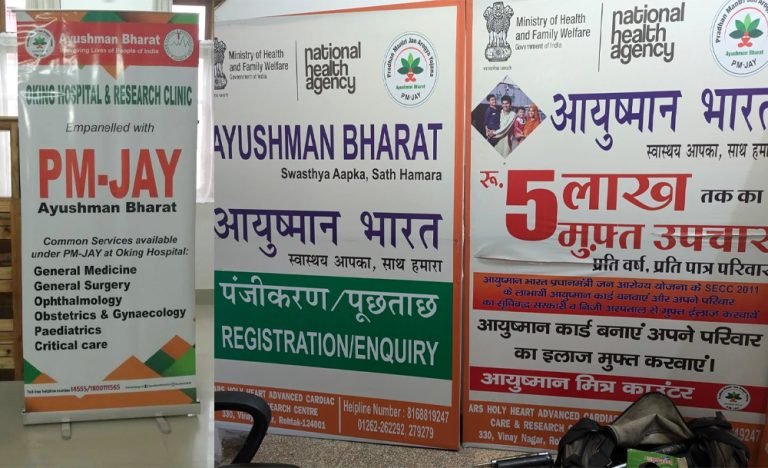
In 2018, the Indian government launched Ayushman Bharat, comprising two landmark initiatives that have transformed the healthcare landscape in India. PM-JAY (Pradhan Mantri Jan Arogya Yojana) and Health and Wellness Centres (HWCs). PM-JAY became the world’s most extensive government-funded health insurance system, covering up to ₹5 lakh annually and over 50 crore Indians, primarily poor and vulnerable populations. It provided coverage for secondary and tertiary care and established a chain of thousands of hospitals, both public and private, that were empanelled into this system. For the rural family who had previously avoided hospitals due to prohibitive costs, PM-JAY became the affordable safety net.

At the same time, Health and Wellness Centres (HWCs) were addressing the stale, old base of India’s healthcare, primary care. HWCs provided a free source of treatments for day-to-day diseases, diagnostics, medications, maternal and child care, and referral networks. By 2025, over 1.7 lakh HWCs were operationalised, many in tribal and rural areas that were previously hard to reach, creating access to primary care at a minimum decent and mostly professional level at the first point of contact.

Digitally Disruptive: Ayushman Bharat Digital Mission (ABDM)

The bar on a turn of transformation was set higher with the launch of ABDM in 2021, which was a digitally enabled infrastructure for health services. Citizens can now locate their own Health IDs, which will allow them to securely manage and share their health records across multiple platforms and with various stakeholders, thereby reducing the risk of lost prescriptions and accidental disconnection. Hospitals, clinics, lab reports, and pharmacies were all critical components of a national healthcare network that enabled teleconsultations, AI-based diagnostics, and facilitated referrals. For the first time, continuity of care was a reality, even for patients in difficult-to-reach or remote districts. The connection of the ABDM platform also helped to plug significant leakages in the system and reduced possibilities for corruption that emerged through erroneous funding arrangements and fake claims.


Today, the Ayushman Bharat Digital Mission links more than 55 crore health records and has onboarded over 6.4 lakh verified health professionals on a single platform.

Expanding Capacity: Budget Boost & Institutional Expansion

Beyond the expansion supported by a massive budgetary increase, specifically a jump from ₹37,000 crore in 2013–14 to ₹89,000 crore in 2023–24. There was also a significant increase in the number of new medical colleges to help alleviate the shortage of medical doctors, especially in the poorest states. Several new AIIMS were established in states such as Bihar, Chhattisgarh, and Assam, providing tertiary care access to populations that had previously been neglected due to their geographic location.

Through their budgetary decisions and various Production-Linked Incentive (PLI) schemes aimed at promoting the indigenous manufacturing of devices, APIs, and health tech equipment, the Indian government has demonstrated a serious interest in strengthening India’s medical manufacturing ecosystem.

Telemedicine & Mental Health

India’s adoption of telemedicine was significantly accelerated, especially during the COVID-19 pandemic. The eSanjeevani platform has facilitated over 10 crore (100 million) consultations during this period, in collaboration with urban doctors engaged by rural patients via video consultations. Whereas traditional medical delivery systems have left the area of mental health unattended, the government launched an effort to address mental health with Tele-MANAS, a 24/7 telephone helpline for anyone managing the impacts of anxiety, depression, and stress, particularly during COVID-19. Publicly funded special initiatives extended telemedicine services to areas including women’s health, adolescent health, and geriatric health, each signalling a more comprehensive approach to health.

COVID-19 Response: Digital Precision and Scale

India’s response to COVID-19 was remarkable when compared to many countries, characterised by incredible speed, scalability, and data-driven decision-making. India’s CoWIN digital platform was the essential backbone of the world’s most extensive vaccination programme: CoWIN tracked more than 2.2 billion doses in real-time and registered over 111 crore users. ICU beds across states, oxygen plants across states, and isolation centres were quickly scaled up, and remote consultations were made speedy and convenient through eSanjeevani to reduce the burden on hospitals that were overwhelmed. Digital tracking of the pandemic facilitated the containment of outbreaks. Overall, India’s process involved considerable coordination, yet also demonstrated that India can excel under pressure.

For its leadership role, India not only kept its people safe from disease, but it also protected the world from COVID-19. As a demonstration of ‘Vaccine Maitri,’ India directed more than 130 million doses of vaccines to over 100 countries around the world.

‘Make In India’ success story: Now the parts of smartphones made in India are also indigenous, value addition reaches above 20%

During the past few years, the electronic manufacturing sector in India has grown at an unprecedented pace. India has emerged as the world’s second largest smartphone manufacturer. Many foreign companies, including Apple and Samsung, are manufacturing their phones in India. India is exporting smartphones worth billions of dollars every year now.

The Modi government’s ‘Make in India’ and PLI (Production Linked Incentive) schemes have played a big role in this success story. However, some economists used to mock these schemes and used to say India is just assembling phones and there is no real manufacturing happening. However, a recent report has given a befitting reply to such critics.

More than 20% of the parts are being manufactured in India

According to a report by Business Standard, more than 20% of the parts used in Apple phones and other electronics products made in India are now being manufactured within the country itself.

This achievement has been made possible by various vendors manufacturing in India who supply parts to Apple. Apple has parts suppliers all over India. These include TDK Corporation, Hon Hai Precision, Tata Electronics, Foxlink and many other companies. They manufacture parts in different states of India, including Uttar Pradesh, Haryana, Tamil Nadu.

China, which has been running Apple’s biggest factory for a long time, has only reached 35%-40% local value addition till now. Meanwhile, India has achieved 20% in just 5 years, and this local contribution is growing rapidly. Not only Apple, but Samsung has also been using locally manufactured parts in its phones made in India.

According to the report, 25% of the parts used in Samsung and Dixon phones are also made in India. The government’s target is to take it to 35%-40% in the coming years. This will strengthen Indian industry and reduce dependence on foreign countries for essential parts.

Production of parts locally also increases technical capabilities and helps to continuously reduces costs. India has achieved such success in the automobile manufacturing sector earlier. In the 1980s, Suzuki started assembling cars in India but now 95% of the parts in every Suzuki car manufactured in India are Indian.

India exports smartphones worth ₹2 lakh crore+

India is now the world’s second largest smartphone manufacturer after China. While most of the smartphones sold in the country are now made locally, India is also exporting a huge number of smartphones. In the financial year 2024-25, India exported smartphones worth $ 24 billion (about ₹ 2 lakh crore).

This was 55% growth over the previous year. A large part of these were iPhones manufactured by Apple. Apple had manufactured and exported iPhones worth more than $17 billion (₹1.46 lakh crore) from India in the financial year 2024-25. Apple’s dependence on India has increased even more in recent times.

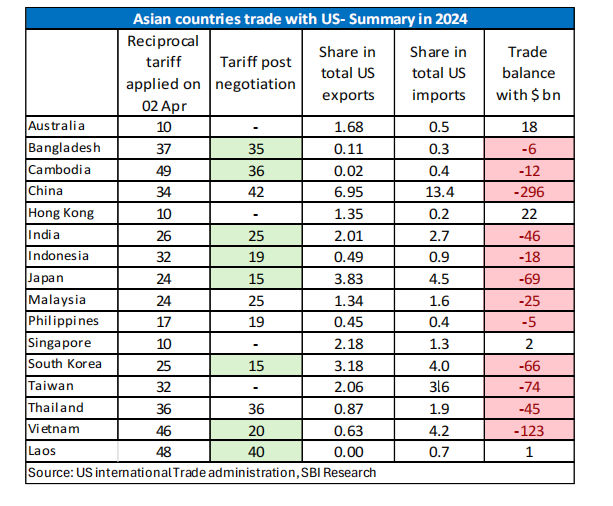
After the US President imposed tariffs on other countries including China, now only iPhones made in India are being exported to the US. While the US has imposed a 25% tariff on India, the tariff on China is much higher.

Another recent report shows that Apple is exporting 97% of the iPhones made in India to the US. The US President has also put pressure on Apple to manufacture iPhones in the US and not in India. However, Apple has made it clear that it will increase its manufacturing capacity in India in the coming days.

Currently, Taiwanese company Foxconn and Indian company Tata manufacture iPhones in India. Apart from this, Wistron is also entering this field. These companies are currently manufacturing iPhones on a large scale in Tamil Nadu and Karnataka.

‘They don’t let us celebrate our festivals or chant Jai Shri Ram’: 40 Hindu families in Azamgarh put homes on sale after repeated harassment in Muslim-majority Chhota Pura

In a deeply troubling development from eastern Uttar Pradesh, nearly 40 Hindu families in the Muslim-majority locality of Chhota Pura in Azamgarh district have put up posters reading “Ghar Bikaau Hai” (House for Sale) on their homes, citing sustained harassment, targeted abuse, and sexual intimidation by local miscreants. The decision, families say, is not out of impulse but born of sheer helplessness, a desperate cry for dignity and safety after being allegedly ignored by the district administration and police.

The trigger was a violent incident on June 3, when women and girls from the Hindu community were performing traditional pre-wedding rituals in Bamhaur, an adjoining locality. The festive mood turned tense when a group of youths from the other community reportedly began filming the women without their consent. When objected to, the men allegedly hurled lewd remarks and attempted to harass the women. Alarmed, the women raised cries for help, prompting male relatives to intervene. What followed was a physical clash between the two sides, which left at least eight people injured.

According to a Times of India report, a case was subsequently registered against both groups. Six persons were arrested in connection with the incident. Mubarakpur Police, under whose jurisdiction the area falls, stated that they admitted the injured to a local hospital and began investigations promptly. However, the residents claim that the June 3 clash was not an isolated incident but the tipping point in a long pattern of harassment and official apathy.

Residents allege that for months, they have faced abuse for playing devotional songs, DJs at weddings, or participating in cultural festivities. Women and girls reportedly face constant catcalling and intimidation in public spaces. “Our daughters and wives can’t step out without being stared at or followed. Festivals have become stressful instead of joyful. And when we complain, nothing happens,” said a visibly upset local resident.

The failure of authorities to act decisively has only deepened their fears. “We went to the police so many times. We requested better patrolling, stricter action — but nothing changed,” another resident said. “Now, we’ve decided to sell our homes. At least elsewhere we might live in peace.”

Azamgarh Additional Superintendent of Police (ASP) Madhuvan Kumar Singh acknowledged the issue and said the police have reached out to the families to assure them of protection. “We have taken note of reports that some families are planning to migrate. We are contacting them and assuring them of adequate police presence to ensure their safety,” he was quoted as saying.

The Mubarakpur Police Station in-charge, Nihan Nandan, also stated that the frequency of patrols in the area has been increased following the June 3 incident in an effort to restore calm.

Despite these assurances, most families appear unconvinced. “Where was this protection earlier? Why does it take headlines and protests for the administration to wake up?” questioned another local, gesturing at the fading posters declaring their homes for sale.

The incident has sparked outrage on social media and raised uncomfortable questions about minority-majority dynamics in certain areas, the safety of women, and the responsiveness of local authorities to communal tensions. For now, what remains is a scene of silent protest — walls lined with “Ghar Bikaau Hai” signs, voices of anxiety and defiance echoing through the narrow lanes of Chhota Pura.

Whether this public cry for help leads to meaningful action or fizzles out as yet another forgotten headline will depend on how seriously the state government treats both the grievances and the ground realities.

India enters Quantum era: DRDO & IIT Delhi successfully demonstrate Quantum entanglement-based free-space secure communication

In a breakthrough for national cyber defense and futuristic communications, India has successfully demonstrated quantum entanglement-based free-space quantum secure communication over a distance of more than 1 kilometer. The landmark experiment was carried out by the DRDO-Industry-Academia Centre of Excellence (DIA-CoE) at IIT Delhi, marking India’s formal entry into the era of quantum-secure communications.

The demonstration, a part of the DRDO’s project titled ‘Design and Development of Photonic Technologies for Free-Space QKD’, achieved a secure key transmission rate of 240 bits per second with a remarkably low quantum bit error rate (<7%), using an optical link set up on the IIT Delhi campus. This pioneering effort lays the foundation for real-world deployment of Quantum Key Distribution (QKD), quantum networks, and eventually the quantum internet—offering unhackable encryption across strategic domains.

“This is a game changer in future warfare and national cyber security. India has entered a new quantum era,” said Raksha Mantri Rajnath Singh, congratulating DRDO and IIT Delhi for the achievement.

Quantum entanglement-based QKD provides a major advantage over conventional secure communication systems. Unlike classical encryption methods, quantum systems allow any intrusion attempt to be instantly detected, as the entangled quantum state collapses upon interception—ensuring absolute security, even with imperfect or compromised devices.

The demonstration was led by Prof. Bhaskar Kanseri’s research group and witnessed by top DRDO officials including Director General (MED, COS & CS), Director SAG, Director DFTM, Dean (R&D) IIT Delhi, and DRDO lab scientists.

Importantly, this free-space communication method bypasses the need for expensive underground optical fibers, especially valuable in mountainous or urban terrains where physical infrastructure is difficult or disruptive to install.

This isn’t the team’s first quantum milestone. In 2022, they established India’s first intercity quantum link between Vindhyachal and Prayagraj, and in 2024, achieved 100 km quantum key distribution over telecom-grade fiber, further pushing the frontiers of scalable quantum security.

The research is part of a larger initiative by DRDO to develop next-generation defense technologies through 15 Centres of Excellence at premier institutions like the IITs and IISc. These centers serve as innovation hubs where academia, industry, and government collaborate to tackle critical challenges in India’s defense preparedness.

DRDO Chairman Dr. Samir V. Kamat and IIT Delhi Director Prof. Rangan Banerjee also lauded the team’s efforts, calling it a crucial leap toward India’s quantum-enabled digital sovereignty.

As global powers race to weaponize quantum technologies, India’s successful demonstration of entanglement-based free-space QKD firmly positions it among the frontrunners in securing the quantum communication frontier.

Sending a strong signal to Turkey, strengthening India’s EU pivot: Read why PM Modi’s landmark visit to Cyprus is strategically significant

On 15th June Prime Minister Narendra Modi landed in Cyprus, signifying the first visit by an Indian premier to the island nation in 23 years. He traveled there along with a substantial delegation of approximately 100 officials at the request of President Nicos Christodoulides. The trip also includes Canada for the G7 summit and Croatia as part of the three-nation itinerary.

The visit possesses considerable geopolitical importance in light of the strengthening relations between Turkey and Pakistan. It is regarded as an attempt to balance Ankara’s regional assertiveness, increase bilateral cooperation with a reliable ally and expand New Delhi’s involvement in Europe and the Mediterranean. Consequently, Cyprus has become a crucial part of India’s regional geopolitical strategy.

Meanwhile, on 16th June, PM Modi received the highest honor in Cyprus, the Grand Cross of the Order of Makarios III, from President Christodoulides.

The last Indian prime minister to visit Cyprus was Atal Bihari Vajpayee in 2002 after Indira Gandhi in 1982. The outreach has taken place at a moment when the relationship with Turkey is highly strained because of its overt support for Pakistan during “Operation Sindoor” which even led to massive boycott calls from Indians.

Deeper cooperation with Cyprus and consequently Greece has been viewed as a strategic counterbalance, as the use of drones provided by Turkey in assaults on India by Islamabad added to New Delhi’s concerns.

Interestingly, the timing of PM Modi’s arrival in Cyprus aligned with rising tensions in West Asia. His official aircraft had to take a different route because the airspace in Israel, Iran and momentarily in Lebanon were closed. It had to fly through the Arabian Sea, Somalia, Ethiopia, Eritrea and Egypt before arriving on the island.

Bitter relationship between Cyprus and Turkey

Cyprus is an island near Syria and Turkey in the eastern Mediterranean Sea. It is situated at the intersection of Europe, Western Asia and Africa, playing a vital role in logistics and trade routes. It is a member of the European Union (EU), notwithstanding its geographical location in Asia.

Cyprus gained independence from the British in 1960. Only three years later, the uneasy power sharing between its two main communities, Greek and Turkish Cypriots erupted into violence, prompting the deployment of the United Nations Peacekeeping Force.

With the Greek Junta’s assistance, the Greek Cypriots staged a coup in 1974 in an attempt to unite the island with Greece. Afterward, Turkey launched an invasion and although Nicosia’s legal government was reinstated, Turkish troops have never completely left from there.

In fact, its northeastern region has proclaimed independence as the “Turkish Republic of Northern Cyprus,” a status that is recognized only by Ankara which maintains remote control over the one-third of the nation as Greek Cypriots govern the two-thirds of the land, which is recognized as the “Republic of Cyprus.”

Image via Mappr

This persistent division has yet to be resolved as the latter continues to deploy troops in the area, in defiance of United Nations resolutions that advocate for a reunified island governed by a bi-zonal, bi-communal federation. The United Nations has unsuccessfully tried numerous times to mediate and assist the two sides negotiate.

Encounters involving the leaders of Turkey and Cyprus are uncommon and generally take place by chance. The lack of diplomatic relations between the two nations is a consequence of the ugly conflict that has lasted for decades, leading to further disputes and confrontations between the two sides.

Signal to Turkey

Turkey aims to become a significant force in the politics of Indian subcontinent and the Muslim world. India wants to send a clear message to Ankara to change its stance on Pakistan and Jammu and Kashmir because it is infuriated at the country’s support for the terror state. Turkey has always maintained that India and Pakistan should work together to find a solution to the bilateral problem of Jammu and Kashmir.

It did not talk about the local plebiscite or the United Nations resolution. President Recep Tayyip Erdogan, however, offered to negotiate when he visited Pakistan in 2024 as his government changed its position on the issue in recent months. He remarked that Turkey would act solely if there was mutual agreement from the two sides as it maintains close relations with both.

Nevertheless, Ankara procured Pakistani Super Mushshak trainers in addition to providing Pakistan with its corvettes under the MILGEM project, much to India’s dismay. The former previously supplied Pakistan with Songar and Bayraktar drones. Additionally, it agreed to refurbish 41 of Pakistan’s F-16 fighter jets for $75 million.

It even delivered an electronic warfare training range and sophisticated targeting pods for Pakistan’s JF-17 aircraft. The National Aerospace Science and Technology Park in Pakistan and Turkish drone company Baykar inked an agreement in 2023 to collaborate on the development of Unmanned Aerial Vehicles (UAVs).

An IC-130 Turkish Air Force aircraft landed in Pakistan on 27th April and a Turkish Navy anti-submarine corvette docked at Karachi port on 2nd May, to aid Pakistan and send a strong message to India at a time when tensions between the two neighbours were at their highest after the 22nd April Pahalgam terrorist attack.

PM Modi’s journey to Cyprus and possible touring of the United Nations-controlled buffer zone (Green Line) could be interpreted as a strong statement of support for Cyprus in the face of Turkish expansionism. This serves India’s larger goal of diplomatically isolating Islamabad along with opposing the expanding Turkey-Pakistan axis.

Cyprus has already demonstrated its closeness to India by firmly supporting its positions on terrorism, Kashmir and the United Nations Security Council (UNSC) reforms. Cyprus not only condemned the Pahalgam incident but also declared that it intends to highlight the subject of Pakistan’s cross-border terrorism at the European Union.

As a result, the visit supports India’s Mediterranean strategy by lining up with a significant regional actor who opposes Turkey’s aggression.

Cyprus essential to EU and Mediterranean outreach

Cyprus plays a crucial part in India’s larger infrastructure and commerce goals because of its location in the Eastern Mediterranean. It has been recognized as a potential logistical hub along the route that connects Indian ports to European markets via the Middle East, as New Delhi pushes for the India-Middle East-Europe Economic Corridor (IMEC).

Cyprus is included in the pivotal corridor. According to the Indian Envoy, Delhi is working to achieve the goal of Viksit Bharat by 2047 through the India-Cyprus Economic Corridor. “We have a policy to become a ‘developed India’ by 2047, and they have ‘Vision 2035,’ so there is a synergy there. I think advantage of Cyprus is that it can serve as a gateway to the European Union as well as the larger region around it,” he highlighted.

Image via La Jaune et la Rouge

There are substantial offshore energy resources in the Eastern Mediterranean as well and Cyprus is a key player in regional gas development initiatives. India’s goal of diversifying its energy imports is in line with this strategic priority.

PM Modi visit addressed ways to strengthen energy cooperation, particularly in face of simmering regional tensions over claims to sea resources by other countries, particularly Turkey. The Eastern Mediterranean natural gas exploration market remains fraught with contentions because of its drilling operations.

Likewise, the opening of a representative office in Mumbai by Eurobank, one of the largest banks in Cyprus, aims to facilitate the entry of Indian companies into the European Union and foster the flow of capital and business between Europe, the Middle East, Africa and South Asia.

The island is a great place for Indian businesses looking to enter the European market because of its developed financial services sector, advantageous tax structure and well-established maritime industry.

Another strong argument for India to strengthen ties is the country’s upcoming presidency of the European Union Council in the first half of 2026. India’s aspirations to secure wider commercial accords with the bloc, such as the proposed India-EU Free Trade Agreement, which both parties seek to finalize by the end of 2025, can be fueled by a solid engagement with Nicosia.

Image via BBC

PM Modi’s visit leverages the nation’s influence within the EU to help open the door for more robust India-EU cooperation on trade, security and global governance concerns. India’s global initiatives are also expected to receive further EU endorsement owing to strengthened ties with Cyprus. 

Cyprus, which is embroiled in territorial conflicts with Turkey and is dealing with security issues, is eager to increase defense cooperation and would appreciate any help from India. The fact that PM Modi’s visit came before his departure for Canada and attendance at the G7 Summit is also indicative of New Delhi’s efforts to rally international support in the wake of “Operation Sindoor.”

Strong ties between New Delhi and Nicosia

India has constantly advocated for a solution to the dispute plaguing Cyprus that is grounded in European Union principles, international law and United Nations (UN) resolutions. It maintains that the only acceptable political solution for the divided island is a bi-zonal, bi-communal federation.

Three Indian officers, Lieutenant General PS Gyani, Major General Diwan Prem Chand, and General KS Thimayya, have served as Force Commanders for the United Nations Peacekeeping Force in Cyprus (UNFICYP), demonstrating New Delhi’s significant commitment to the organization.

Thimayya who died while serving in Cyprus is honored locally with a 1966 postage stamp and a street bearing his name. One Indian Army officer remains involved in the United Nations peacekeeping effort as of the middle of 2025.

Image via CollectorBazar

Cyprus has also steadfastly backed India’s global ambitions and always supported its fight against terrorism.. The island nation has openly supported India’s bid for a permanent seat on the United Nations Security Council as well as the India-United States Civil Nuclear Agreement, in international regulatory bodies including the International Atomic Energy Agency (IAEA) and the Nuclear Suppliers Group (NSG).

The signing of several Memoranda of Understanding between Indian and Cypriot companies during the business roundtable held in Limassol, which was attended by both PM Modi and President Christodoulides, greatly enhanced bilateral interaction between the two countries.

Formal agreements were made between the Cyprus Stock Exchange and the National Stock Exchange International Exchange which is in Gujarat International Finance Tec-City (GIFT) of Gujarat.

The agreement between National Payments Corporation of India (NPCI), International Payments Limited (NIPL) and Eurobank Cyprus to activate India’s Unified Payments Interface (UPI) in the country represented yet another critical milestone, enabling smooth cross-border payments for both businesses and tourists.

During his speech at the forum, PM Modi emphasized Cyprus’s growing presence as India’s economic partner, especially in terms of foreign direct investment. Furthermore, conversations with Cypriot business leaders in Limassol are aimed at strengthening commercial connections.

Moreover, trade data showed that in the fiscal year 2023-2024, bilateral trade between India and Cyprus totaled $136.96 million. Cyprus also holds a Double Taxation Avoidance Agreement (DTAA) with India and is a major source of foreign investment in India.

The signing of a Memorandum of Understanding on Defence Cooperation in December 2022 marked the beginning of a steady advancement in defence collaboration. Additionally, both nations signed a 2025 Bilateral Defense Cooperation Program (BDCP) in Nicosia. Coordination is currently managed by the Indian Defence Attache to Cyprus who is stationed at the Indian Embassy in Cairo.

The majority of the more than 11,000 Indian citizens living in Cyprus, according to the Ministry of External Affairs (MEA), are employed in industries like shipping, information technology, financial technology, agriculture, household services and higher education. A structured cooperation to establish a bilateral startup bridge is being explored by Startup India and Invest Cyprus in acknowledgment of this expanding people-to-people connection.

Additionally, PM Modi’s outreach to Cyprus conveys to Europe that India is looking for a tangible alliance that can provide New Delhi more diplomatic clout in the future, especially as it develops itself as a prominent voice of the Global South on the international scene.

The visit to Cyprus, thus, is important for an array of geopolitical, diplomatic, economic and strategic reasons which demonstrate its increasing significance in India’s larger regional and global perspective.

How Rajdeep Sardesai’s TikToker guest ‘Steve’ blamed pilots for Air India crash, without a shred of evidence, changed tune after experts pointed to engine failure in Boeing aircraft

Milking tragedies for traction has become an inhuman ‘trend’ in this era of social media. What exacerbates this is the complicity of a section of the mainstream media. An unforgettable tragedy unfolded in Gujarat’s Ahmedabad as a London-bound Air India flight crashed moments after takeoff on 12th June 2025. However, the TRP-hungry Indian television anchors like Rajdeep Sardesai decided to platform an American TikToker and self-proclaimed aviation expert named Captain Steve Scheibner, who changes his opinions faster than a chameleon changes its colour, to determine the cause of the crash.

While the nation was shocked over the crash of the Boeing-manufactured 787 Dreamliner in Ahmedabad and mourning the loss of 241 innocent lives, IndiaToday ‘journalist’ Rajdeep Sardesai invited Captain Steve to his show, who blamed Air India 171 pilots for the crash. The pilots of the crashed plane were identified as Captain Sumeet Sabharwal and First Officer Clive Kunder, who had over 9,000 hours of flying experience.

Captain Steve, a former US Navy pilot self-proclaimed aviation expert peddled a conspiracy theory that the pilots may have accidentally retracted the flaps instead of the landing gear during the initial climb. He described this as “a tragic mistake.”

“If that happens, it’s big — and that explains why the aeroplane stopped flying. The lift over the wings died because the flaps were retracted too early,” he said.

Rajdeep Sardesai decided to lap up an American TikToker’s speculation as ‘expert opinion’ and allowed him to peddle lies about Indian pilots who died trying their best till the last to prevent the crash. This was when neither the black box was recovered nor the voice recorder. Also, Sardesai did not even properly question the basis of Captain Steve’s conspiracy theory blaming pilots who are not even alive to defend themselves.

Apparently, Rajdeep Sardesai was awestruck after seeing an American old man with an accent, dressed up in a pilot uniform as if ready to take-off any moment, confidently passing off his speculation as ‘expert opinion’.

Besides blaming the pilots, Captain Steve also suggested power loss, fuel contamination, a bird strike, or flap configuration error as possible causes behind the crash. Not only IndiaToday, but CNBC-TV18, and several other mainstream media channels invited the American pilot-turned-TikToker, to blame Air India pilots without a shred of evidence.

Interestingly, in his YouTube videos and during his multiple appearances on Indian news channels, Captain Steve ruled out an immediate twin-engine failure. “We can see both engines. There’s no indication they’re not producing thrust — no sparks, no flames. Everything looked smooth,” Steve said.

Indian mainstream media gave airtime to a conspiracy theorist: Sensationalism over sensitivity

It happens only in India that a social media influencer gets significant airtime on major television news channels and digital media platforms to discuss a deadly airplane crash, all while posing as an ‘expert’ although armed not with facts but speculations and conspiracy theories.

Captain Steve initially posited that the crash might have been caused from a simple pilot error, suggesting that co-pilot Clive Kunder may have mistakenly raised the flaps instead of retracting the landing gear, causing a loss of lift.

The mainstream media not only in India but also in Britain widely aired Captain Steve’s theory, putting an immediate blame on the pilots without any evidence from the ongoing investigation and ripping the professional reputation of the two pilots posthumously.

Boeing and aviation tragedies

None of the prime-time anchors questioned the basis of Steve’s claims, placing blind faith in his self-declared ‘expertise’. News anchors like Rajdeep Sardesai mindlessly offered a platform to Captain Steve to push his Boeing-friendly agenda and deflect scrutiny from mechanical or manufacturing issues.

Notably, the catastrophic incident has once again highlighted Boeing’s association with yet another tragic aviation event. Its stock was down about 5% on 12th June when New York stock markets closed. Last year, the company struggled with a safety crisis, quality control problems and a disastrous seven-week strike by the wrokers that cost it around $1 billion each month.

Boeing continues to cope with the fallout from two fatal crashes involving its 737 Max aircraft in 2018 and 2019, which claimed 346 lives. Last month, the firm and the Department of Justice came to an agreement that would exempt it from criminal liability for the crashes.

From platforming social media influencers like Captain Steve, flashing AI-generated visuals of former Gujarat CM Vijay Rupani seated in the ill-fated plane to shoving mics in the face of grieving families of all those who lost their lives in this incident, Indian media has totally abandoned seriousness and sensitivity that such heart-wrenching tragedies deserve.

Sardesai and big media outlets like IndiaToday essentially allowed Captain Steve’s speculative narrative gain traction through their program just because of his polished presentation as an aviation expert, despite the fact that his primary visibility comes from social media rather than active role in crash investigations. Apparently, filling the prime-time with sensationalized narrative devoid of facts and sensitivity even in the face of a tragedy, trumped substantiated reporting and journalistic ethics.

Captain Steve takes U-turn after more facts emerge about the cause of the Air India crash

As if platforming a social media influencer as an unmatched aviation expert was not embarrassing enough, Captain Steve decided to further embarrass the ilk of Rajdeep Sardesai by changing tunes about the cause of Air India crash. After new evidence surfaced, especially a clearer video showing the deployment of the ram air turbine (RAT) on the aircraft, Captain Steve quickly shifted his stance.

In a YouTube video, Steve pointed to dual engine failure as the citing the RAT’s activation, the lone survivor’s account of a loud bang and flickering lights, and reports of the pilot’s mayday call indicating loss of thrust. Captain Steve conveniently changed tunes, after hogging media attention, garnered global viewership and boosted his social media following all on the basis of his ‘pilot-error’ hypothesis.

Media outlets achieved increased viewership but at the cost of pushing false narrative, especially in the aftermath of a tragedy. This, however, was a disgraceful mockery and humiliation of the victims of the tragedy and their families.

While Captain Steve was chasing media headlines and social media clout, the mainstream media chased rhetoric to fill prime-time and declare instant judgment. Sardesai and several other news anchors chose to rely on the speculative commentary of a social media influencer sitting in the United States, sidelining local aviation professionals who could have provided more contextually relevant insights.

It, however, has become a norm for the television news channels to prioritise speed over accuracy, sensationalism over sensitivity, rhetoric over facts, clout-chasing social media influencer over a reliable expert, and TRP over ethics and empathy.

This shamelessness peaked when Rajdeep Sardesai after giving airtime to a TikToker whose aviation credentials are overshadowed by his dramatic social media commentary, to peddle conspiracy theories, put up a post saying “Too many ‘experts’ injurious to health.”

“Important: Captain Steve now changes his theory on Flight AI 171. Says ‘dual engine failure’ most likely cause. Qs remains: why would 787 BOTH engines flame up suddenly? Net-net:Too many ‘experts’ injurious to health. Best to wait for black box reveal,” Sardesai wrote on X.

Imagine, it takes an embarrassing tune change of a self-proclaimed ‘expert’ Sardesai platformed on his show to realise that ‘too many experts are injurious to health’, probably Sardesai knew that such experts may be injurious to health but not beneficial for TRPs. Also, what a timely realisation that waiting for black box reveal instead of furthering conspiracy theories is best thing to do.  

Notably, Steve Scheibner is a former US Navy pilot, who once flew P-3 aircraft, and is now a commercial pilot with a significant following on social media. Captain Steve has over 6 lakh 20 thousand subscribers on YouTube. For his TikTok and YouTube videos, Steve hands out paper and pens, inviting passengers to jot down their questions for him to answer. He then offers technical and funny answers to their questions and puts up those videos on his social media handles and YouTube.

Incidentally, earlier this year, the American Airlines pilot was rebuked by the Delhi Air Traffic Controller (ATC) or not taxiing fast enough at Indira Gandhi International Airport. Steve was reprimanded for taxiing at 12 knots while at maximum gross weight. The aircraft was then directed to a “penalty box” – a holding area away from active runways. In a YouTube video, published on 25th March 2025, Captain Steve boasted how, despite being rebuked by Delhi ATC, he remained adamant about not taxiing fast.

Conclusion

Indian media channels could have called Indian aviation professionals, including retired commercial pilots to objectively analyse the potential causes of the crash, if at all, it was so necessary, to do so instead of waiting for authorities reveal black box data.

However, suffering from the ‘American ne bola hai toh theek hi hoga’ syndrome, the Indian mainstream media and alleged journalists like Rajdeep Sardesai chose to recklessly platform someone may be a aviation professional but was as speculative about the Air India crash as any other social media user with no aviation background or expertise.

Probably, they thought a pilot uniform-donning American ‘expert’ would come across as more credible than anyone else, even Indian aviation experts.

By amplifying unverified and unreliable voices as well as their conspiracy theories, the mainstream media not only disrespected the victims of the tragedy but also undermined their own credibility or whatever remaining shreds of it, while the country mourns the innocent lives lost.

As long as the media falls for the temptation of quick narratives and sensationalism just to garner viewership or fill airtime, they will continue parading social media influencers as authorities and experts, only to get embarrassed and backtrack later.

Khalistanis threaten to disrupt PM Modi’s visit for the G7 meet: The 7 active terror organisations in Canada that the Carney govt needs to watch out for

The meeting of G7, a group consisting of USA, Canada, UK, France, Germany, Italy, and Japan, is being held in Canada. Indian Prime Minister Narendra Modi is also going to Canada for this annual summit. Prime Minister Narendra Modi has been invited to this meeting by the new Canadian Prime Minister Mark Carney. PM Modi’s visit to Canada is taking place at a time when the relations between the two countries are trying to rebound after recent lows. Notably, Canada has become a refuge for Khalistani and Islamic terrorists in the last few years.

This G7 meeting in Canada is being held in Alberta. Prime Minister Modi is reaching Canada on Monday (June 16) for this summit to be held on 16-17 June 2025. Meanwhile, it is reported that Khalistani terrorists have planned protests and are thinking about even attacks on Prime Minister Modi during his visit to Alberta. This work can be carried out by many Khalistani terrorist organizations currently present in Canada. Many of these have been active for a long time.

Babbar Khalsa International (BKI)

Babbar Khalsa is one of the oldest and most organised Khalistani terrorist groups. It has its roots in the Babbar Akali movement of the 1920s, but it formally took shape in 1978 after clashes between the Akhand Kirtani Jatha and the Nirankaris on Baisakhi day.

Babbar Khalsa is banned in India under the UAPA law. After the assassination of Nirankari chief Gurbachan Singh on April 24, 1980, followers of Bibi Amarjit Kaur declared themselves as Babbar Khalsa. It started operating from Canadian soil in 1981.

Pakistani intelligence agency ISI funds its activities. This organisation was behind the bombing of Air India’s Kanishka plane in 1985, killing more than 300 people. Apart from this, this organisation had assassinated Punjab Chief Minister Beant Singh. Its leader Wadhawa Singh Babbar currently lives in Pakistan.

Apart from Wadhawa Singh, terrorists like Lakhbir Landa, Harvinder Rinda and Goldy Brar currently work for Babbar Khalsa International. All of them want to spread unrest in India while sitting outside India.

International Sikh Youth Federation

The International Sikh Youth Federation is also banned by India under UAPA. It works through its branches in the United Kingdom, Germany, Canada and the US. The main objective of ISYF is also to create Khalistan. This organization was earlier run by Jarnail Singh Bhindranwale’s nephew Lakhbir Singh Rode.

Rode died in Pakistan in 2023. Currently his son Bhagat Brar is involved in its operations. He is a businessman in Canada but keeps visiting Pakistan to seek support for Khalistani activities. He is also kept on a no-fly list by Canada.

Apart from this, another terrorist Manveer Singh Duhda is currently living in Canada and gives money to ISYF and increases its terrorist activities. Apart from this, terrorists like Sulinder Singh Virk and Malkit Singh Fauji are also involved with this organisation.

Sikh Liberation Front

Sikh Liberation Front, a group of Khalistanis settled abroad, includes Khalistanis from Canada, Britain and America. It is different from other Khalistani groups because it has no formal online or public existence. It works more like a group than an organization.

It includes three groups from America and Canada. Indian security agencies keep a constant watch on its activities. Its work is currently looked after by Moninder Singh Bual. He is a resident of Vancouver, Canada and is close to Canadian Khalistani leader Jagmeet Singh.

Khalistan Zindabad Force

Khalistan Zindabad Force, formed in 1993 under the leadership of terrorist Ranjit Singh Neeta, is currently banned in India under UAPA. Three KZF terrorists were recently killed in Pilibhit, Uttar Pradesh. KZF mainly instigates Sikh youth online and gets them to launch attacks to create unrest.

KZF also carried out the attack on the post in SBS Nagar, Punjab. Its links extend from America, Canada, Malaysia to Germany and Nepal. This organization has taken responsibility for several terror attacks, from the blast in Jhelum Express in 1996 to the bomb blast in Paharganj, Delhi in 2000.

Its chief Neeta is also banned under UAPA. He is wanted by NIA and Punjab Police. A terrorist named Bhupinder Singh Bhinda is also involved in this organization. He had planned to kill the head of Dera Radhasoami Satsang Vyas, he was also sentenced in this case. Apart from this, a terrorist named Gurmeet Singh Bagga is also involved in this organization.

Sikhs For Justice

Sikh for Justice (SFJ) is a Khalistani organization working from America. It was formed in 2009 by lawyer Gurpatwant Singh Pannu. It also wants to create an independent Khalistan. SFJ has continuously organized Khalistan Referendum in the name of creating a separate state Khalistan all over the world. Apart from this, this organization has been continuously promoting terrorism on social media.

It was banned by the Modi government in 2019 under UAPA. This group sometimes tampers with the map of India and threatens to kill Indian leaders and officers. SFJ has also announced rewards for this work.

The face of this organization is Gurpatwant Singh Pannu. Pannu constantly uses social media to advance the Khalistani agenda. He has had links with many terrorists before this as well.

Khalistan Commando Force

Khalistan Commando Force was formed in 1986. Its aim was to create Khalistan through violence. These people used to get involved in armed attacks, kidnapping for ransom and robbing banks, raising funds to buy weapons and train people. Its leader was Paramjit Singh Panjwar.

Under the leadership of Panjwar, KCF carried out many terrorist attacks in the late 80s and 90s. These included political murders to murders in colleges. KCF also killed 10 Rai Sikhs in Ferozepur. Its aim was to create fear in the state of Punjab.

After this, they killed Major General B.N. Kumar, head of the Bhakra Beas Management Board, and 18 students at Thapar Engineering College in Patiala. Panjwar is the mastermind of KCF. He continuously hatches anti-India conspiracies.

Khalistan Tiger Force

Khalistan Tiger Force or KTF was founded by Jagtar Singh Tara. He was earlier a member of Babbar Khalsa International. Tara was involved in the assassination of Punjab Chief Minister Beant Singh on August 31, 1995. India has currently banned Khalistan Tiger Force.

Jagtar Singh Tara was arrested in 2015 from Thailand. This organization has links to Britain, Canada, America, France and even Spain. KTF includes terrorists like Arshdeep Dalla and Mandeep Singh Dhaliwal. They are constantly hatching anti-India conspiracies.

Threat of terror attack during PM Modi’s Canada visit

When a head of state attends a global summit, the focus is usually on cooperation, development and policy. But in the case of Prime Minister Narendra Modi’s visit to Alberta for the G-7, Khalistani terrorists, sheltered by the Canadian government, have turned the tables.

The Khalistanis are not isolated voices living in hidden corners. They are heavily funded and spread across India, Europe and the US. In some cases, they are even being helped by entire governments.

Pakistan’s ISI is a well-known name in this story. The international community should indeed be concerned about how many of these terrorists roam freely in Canada, the UK, the US and mainland Europe. Countries that often promote human rights and the rule of law are the ones that provide shelter to these terrorists.

Khalistani terrorists have already shown by attacking Indian diplomats that they will not hesitate to target any Indian. In such a situation, the Mark Carney government in Canada needs to be wary of the threat these organisations pose.