Home Blog Page 270

Islamic Fulani Militia has been killing Christians for months in Nigeria, local politicians and media wash it off as local conflict between herders and farmers

On 13th June (local time), terrorists belonging to the Islamic Fulani Militia killed around 200 people of the Christian community in an attack on a village in central Benue State of Nigeria. The attack started late on Friday, and continued till the early hours of Saturday (14th June) in the village of Yelewata. Most of the victims, according to the Vatican News, were displaced Christians living in shelters provided by local Catholic mission.

Reuters quoted Amnesty International as saying, “Many people are still missing… dozens injured and left without adequate medical care. Many families were locked up and burnt inside their bedrooms.” Amnesty International did not take name of the Islamic terrorist group that orchestrated the killings in its social media post.

Benue is located in the Middle Belt of Nigeria and is dominated by Muslims in the North and Christians in the South. There have been frequent attacks on the Christians in the area by the Islamic Fulani Militia. However, these attacks have often been described as conflicts between the herders (Islamic Fulani Militia), and farmers (predominantly from the Christian community).

In May this year, at least 42 people were shot dead by suspected Islamic Fulani Militia members in a series of attacks across Gwer West district in the same region. Since 2019, over 500 lives have been lost in the region. 2.2 million people have been forced to leave their homes.

Police confirmed several dead in the attack

The Benue State Police Command confirmed that several people died in the attack initiated by “suspected bandits” who invaded the community. The state Police Public Relations Officer (PPRO), Edet Udeme, issued a statement stating that tactical teams were deployed in the region swiftly to counter the attack. There was a fierce gunfight between the attackers and the police. PPRO categorically avoided taking name of the Islamic terrorist organisation behind the attack.

The PPRO said, “Some of the attackers were neutralised in the process. But it is with great sadness that we report that some individuals also lost their lives and others sustained injuries during the incident.”

He added, “While the exact number of civilian casualties has yet to be officially confirmed, security personnel and medical workers are on ground attending to the injured. Our men are still in pursuit of the attackers. We will continue to do all it takes to keep everyone safe.”

President Tinubu doesn’t call out Islamic Fulani Militia for the attack

The President and Commander-in-Chief of the Armed Forces, Bola Ahmed Tinubu, tried to hide the fact that the Islamic Fulani militia carried out the attack and avoided taking its name in a statement issued following the attack.

In a post on X, Tinubu wrote, “I have been briefed on the senseless bloodletting in Benue State. Enough is enough! I have directed the security agencies to act decisively, arrest perpetrators of these evil acts on all sides of the conflict and prosecute them. Political and community leaders in Benue State must act responsibly and avoid inflammatory utterances that could further increase tensions and killings. This is the time for Governor Alia to act as a statesman and immediately lead the process of dialogue and reconciliation that will bring peace to Benue. Our people must live in peace, and it is possible when leaders across the divides work together in harmony and differences are identified and addressed with fairness, openness and justice.”

Nowhere in the statement did he categorically call out the Islamic terrorists or the group behind the attack.

Pope Leo prayed for the victims of the attack

On 15th June, Pope Leo prayed for “security, justice, and peace” in Nigeria before delivering the Sunday Angelus prayer.

He added that he was thinking in particular of the “rural Christian communities of Benue State who have been relentless victims of violence”. However, Pope Leo also refrained from naming the perpetrators of the attack.

‘Save Nigerians or resign’ – Pro-Atiku group tells Tinubu

Atiku Support Organisation (ASO), which is a political pressure group, has issued a statement condemning the inaction by President Tinubu over the “unending genocide” in Benue State. The group has called for the resignation of the President if he cannot save Nigerians from such massacres.

In a statement, National Publicity Secretary of ASO, Dr Victor Moses, described the continuous attacks on the Benue people as a “catastrophic failure” of the government. The statement read, “While global leaders like Pope Leo XIV have courageously condemned these atrocities from faraway Rome, our ‘Commander-in-Chief’ maintains an unfortunate silence as his citizens are slaughtered like animals and hunted like game.”

ASO pointed out that over 1,200 people have died since January this year in Benue State and yet no arrests, no prosecutions, no military action or visit by the President have taken place.

The group added, “This isn’t mere incompetence; it’s wilful dereliction of constitutional duty,” while referring to the ongoing “invasion” of rural Benue communities by armed groups who “murder fathers, rape mothers and burn children alive”.

ASO laid down three demands including deployment of the military to secure Benue State, relocation of the Chief of Army Staff to Benue State and a Presidential visit to the massacre sites.

The Islamic Fulani Militia – Christian farmers conflict of Nigeria

The conflict between Islamic Fulani Militia and the Christian farmers in Nigeria is a long-standing conflict. In the name of the need for land and water, Fulani militia has repeatedly targeted Christians living in the south. The nomadic Fulani herders from the North traditionally migrate southward and then attack the Christian farmers.

The attacks used to be seasonal, during the period when Fulani militia used to move southwards, and largely manageable. However, over time, they have escalated into a violent and deadly conflict.

There has been a number of cases of violence over the years, with Islamic militia groups repeatedly attacking the Christian community. Political inaction, lack of prosecutions, and rising ethnic and religious polarization have further worsened the situation.

In the past decade, thousands have been killed and millions have been displaced, leading to food insecurity and other economic issues. Some states did enact laws banning open grazing, but the enforcement of such laws has remained weak.

Islamic Fulani Militia has long history of attacking Christian community

In August 2021, at least 22 people were killed and 134 houses were burnt in four villages in Southern Kaduna State of Nigeria. Christian community leaders accused state-sponsored militia of the attack.

In December 2023, over 140 people were killed and 300 were injured in the central Nigerian state of Plateau. Security personnel were sent to prevent further clashes in the region. The attack, which began in the Bokkos area, spread to Barkin Lath, where 30 people were found dead.

Canada: Khalistanis use kids to desecrate tricolour and kick portraits of PM Modi ahead of G7 summit, Indian Sikhs condemn act of hatred

Ahead of the G7 summit in Canada, where Prime Minister Narendra Modi is an invitee, Khalistanis are using children for ‘protests’ and anti-India propaganda.

In a disturbing video that has now surfaced on social media, Khalistanis were seen using kids to desecrate the Indian tricolour and make them kick the portraits of PM Narendra Modi.

From the visuals, it became clear that the children were being encouraged to defile the Indian flag and the portrait of the Indian Prime Minister by Khalistanis standing away from the frame. A total of 6 children were involved in the disturbing action.

Khalistanis are mimicking Islamists, who are known to use children and women to attain their religious and political goals, through their radical activities.

In the meantime, another video of a Khalistani extremist named Manjinder Singh was shared on X (formerly Twitter) wherein he was seen vowing to kill Indian Prime Minister Narendra Modi.

“Yes, I am ready to kill Modi politics, (to) ambush Modi. [He] is an enemy of Canada, this Hindu terrorist Narendra Modi,” Singh told journalist Mocha Bezirgan.

Indian Sikhs speak out against Khalistanis and use of children for spreading hatred

Sikh BJP leader Manjinder Singh Sirsa spoke to PTI and stated, “Every Sikh is deeply disturbed and ashamed to see incidents in Canada where Sikh children are inflicting hatred.”

“It’s shocking how some people are using young children for political gain, portraying them in a way that resembles Taliban propaganda,” he pointed.

“This misrepresents Sikh children and fills them with hate, damaging the global image of Sikhs by labeling us as extremists. This goes completely against the teachings of Guru Granth Sahib Ji and the principles of Sikhism, which promote dialogue and service to humanity,” Sirsa emphasised.

“I have a grievance with the entire Sikh community of India — why does the entire community remain silent when our Prime Minister is abused abroad?” remarked President of the All India Anti-Terrorist Front Maninderjeet Singh Bitta.

“I think many of the things happening today, especially what the kids are doing, they don’t even understand. So, it becomes the responsibility of elders and their families to help them understand what’s going on…What happened it’s truly unfortunate,” AAP Rajya Sabha MP Harbhajan Singh stated.

“It was very shocking to see and hear. We do not support what happened. Today what PM Modi is doing, he is setting an example with his leadership…” stated the Secretary of Takht Sri Harmandir Sahib, Harbans Singh.

“These are children from another country being misled, and they are inciting the sentiments of people in India. Their minds have been brainwashed, which is not acceptable from any perspective. The Canadian government must take this issue seriously. It is wrong to defame our Prime Minister Modi in this manner, a leader who is working tirelessly for Sikhs, the nation, and the world…” remarked Sardar Trilochan Singh.

Indian Sikhs have unequivocally condemned the brainwashing of young kids by Khalistani extremists in Canada.

Baloch Liberation Army takes responsibility for the attacks on Pakistani forces that resulted in deaths of 4 soldiers

0

Baloch Liberation Army (BLA) fighters targeted five distinct assaults against the Pakistani army in Zamuran and Panjgur, resulting in deaths of four Pakistani army personnel. During these operations, the army’s surveillance cameras were taken out, while BLA fighter Riaz, alias Aman, was killed, according to a statement by Jeeyand Baloch, the BLA spokesperson.

Baloch Liberation Army fighters first struck Pakistani army personnel in the Dashtok Bamblo region of Zamuran at approximately 8 a.m. In another incident in the Zamuri sector of Zamuran, BLA fighters conducted a remote-controlled IED attack on Pakistani army troops who were collecting water near their base. This assault resulted in the immediate death of one Pakistani soldier, the statement indicated.

In addition, BLA fighters targeted and dismantled surveillance cameras placed by the Pakistani army near their encampment in the Sah Dem area of Zamuran on Friday, June 13. The Pakistani army utilised a quadcopter for reconnaissance on fighters, which was also hit and destroyed. On Friday night, Baloch Liberation Army fighters executed a hand grenade attack on a Pakistani army checkpoint at Kalam Chowk in the Chitkan region of Panjgur. This explosion killed one Pakistani soldier and left two others injured, according to the statement.

Baloch Liberation Army fighter Riaz, alias Aman, died due to a landmine explosion triggered by the Pakistani army in the Sahiji mountain range, as reported by Jeeyand Baloch.

Earlier, five personnel from the Pakistani security forces were killed and several others, including a senior officer, sustained injuries during two separate attacks conducted by the Baloch Liberation Army (BLA), as detailed in a statement from the group’s spokesperson. In the first event, BLA fighters ambushed a Pakistani military convoy in the Kund Kapran area of Zamuran within the Kech district.

“Two enemy vehicles were subjected to intense fire. One was obliterated, leading to the immediate deaths of five occupying soldiers and causing injuries to several others,” Jeeyand Baloch stated. In another operation earlier on Monday, BLA fighters reportedly targeted a police vehicle near Bakra Mandi along the Eastern Bypass of Quetta. This grenade attack resulted in injuries to Station House Officer (SHO) Noorullah and several other officers.

(This news report is published from a syndicated feed. Except for the headline, the content has not been written or edited by OpIndia staff)

Overcrowding, negligence or aging structure? What led to the bridge collapse over Indrayani river in Pune

An old, narrow bridge spanning the River Indrayani at Talegaon in Maharashtra’s Pune district collapsed on the afternoon of 15th June, killing four persons and injuring fifty-one. It disintegrated at approximately 3:15 pm while carrying between 150 and 200 people. People started to panic when a portion of the packed building broke, plunging them into the swift-moving river.

The emergency response teams received the alert by 3:30 pm. “A total of 51 people are injured and admitted to different hospitals, taking treatment, and four individuals have died. Three were identified as Chandrakant Salve, Rohit Mane and Vihaan Mane and one was male but unidentified,” informed District Collector Jitendra Dudi.

The search operation is now completed as every missing individual has been found. A total of fifty-five people were rescued.

What caused the collapse

The tragedy happened near Kundamala, a prominent picnic location on the Indrayani River which had risen as a result of several days of intense rain. There is a 70 to 80 foot stone slope at the beginning of the 470-foot bridge, per a report in NDTV.

Afterward, it is joined by two iron portions that are 100 feet long and a cement portion that is 200 feet long. The bridge is only four feet wide. Shelarmala and Kundamala villages are connected by the bridge.

Officials stated that just two people and one bike can cross the bridge at a time due to its extreme limited width. Together with a significant throng, there were, however, seven or eight bikes on the bridge at the time of the catastrophe. There were apparently at least 100 picnickers on the 30-year-old iron bridge when it caved in, despite the fact that it wasn’t raining at the time.

The Maval tehsil occurrence, according to Maharashtra deputy chief minister Ajit Pawar, was the result of structural failure brought on by rust and overcrowding. “We have received various versions of the incident. As per the preliminary information, the bridge was old and rusted. Many people were standing on the bridge when it collapsed,” he pointed out, reported The Times of India.

There was a warning board prohibiting two-wheelers from entering the bridge, which was designated as a pedestrian-only structure. Girish Mahajan, the Maharashtra Disaster Management Minister, who was on the scene to supervise rescue operations, indicated that the bridge fell because of the weight of an extensive crowd.

He outlined, “The bridge was meant only for pedestrians. It seems people on the bridge did not pay heed to the instructions, which caused the incident.” He also declared that the deceased’s family would receive Rs 5 lakh as compensation.

“The bridge had become weak. The Dehu Road Cantonment Board and police have put up boards in the area and near the entry to the bridge about the danger it poses. But tourists do not heed the advice. They throng the bridge, especially during monsoon, for taking selfies and making videos,” pointed out Bharatiya Janata Party leader Balasaheb Shelar, who lives in the neighboring village of Shelarmala, reported The Indian Express.

Local police patrol the area on Saturdays and Sundays to prevent tourists from crossing the bridge. “But once police leave, tourists make their way here from different points. There is no permanent police presence here,” a local voiced.

“The area is under the Dehu Road Cantonment board. It is not feasible to post policemen on both sides of the bridge every day. The cantonment board and police have put up boards warning tourists to stay away from the bridge,” stated Joint Commissioner of Police Shashikar Mahavarkar.

Gross negligence despite regular requests

Over the past few months, Kundmala has seen a rise in the number of tourists. Authorities disclosed that approximately 8,000 people crossed the deteriorating bridge each weekend, regardless of its inability to accommodate the volume of traffic. The bridge also developed potholes, which led to two-wheelers colliding.

Locals had temporarily covered the potholes on the bridge with cement blocks as there was no long-term fix. Two years ago, the residents wrote a letter to the Public Works Department and the Gram Panchayat, demanding that the bridge be repaired and that visitors not be allowed to move across it. Nevertheless, authorities had not conducted a structural assessment of the bridge in recent years.

Additionally, there was no security in the place. The administration started stationing police personnel close to the bridge every Saturday after the villagers made repeated requests. Ravindra Chavan, a minister and MLA for the Bharatiya Janata Party, approved Rs 80,000 last year to restore the damaged bridge.

However, the repairs were not made with the funds. Digambardada Bhegde, a former MLA had called for the building of a new bridge across the river in 2017. The funds were not spent on the repair work. “I request the Maharashtra government to please provide funds for the reconstruction of the bridge over the Indrayani River. Only one person can cross the bridge. There are eight to ten villagers near it,” he wrote in a letter.

The politician added, “Farmers, workers, and students need to cross the bridge, who do it on foot. However, two-wheelers and four-wheelers cannot pass through this. We request the Public Works Department and the administration to reconstruct the bridge.” The matter also echoed in the Parliament. However, the administration disregarded the appeal.

Shrirang Barne, a Shiv Sena MP from Maval, accused the local government and police of being at fault and stated, “I held a meeting and told them that during monsoon heavy rush of tourists happens at Kundamala and they should take all precautions.”

What happened on the fateful day

A lot of people had come from neighboring towns like Pune and Pimpri-Chinchwad to see the rapids and the rock formations of the riverbed at Kundamala since it was a Sunday,. The Indrayani River splits here into whirlpools and little waterfalls, particularly during the rainy season.

Witnesses informed that while people crowded onto the bridge to record movies and take pictures, two-wheeler riders attempted to pass, sparking conflicts. The center of the building fell into the river at this precise instant. According to locals, they were the first to rescue people who were hurt or drowning. The district collector asserted that the fire department, National Disaster Response Force (NDRF) and other authorities were to the location in fifteen minutes.

According to officials, a local had called the police control center to alert them about the gridlock on the bridge just hours before the occurrence. Three officials arrived on the scene shortly once and dispersed the crowd. However, the mob returned as soon as the police left triggered the collapse.

“We had imposed prohibitory orders at major tourist spots. Though Kundamala was not mentioned by name, our order clearly mentions that tourists should stay away from all waterfalls and water related spots,” the district collector insisted. Last year, a new bridge was approved and on 10th June, a work order was issued.

Witnesses unveiled that the iron bridge swayed for around five minutes before succumbing to the combined weight of multiple two-wheelers and visitors. According to a person, locals rushed to the scene to start rescue efforts as screams rippled through the air. “I struggled for 15 minutes in the water and finally held a pipe and came out,” he voiced.

A second witness who was on the location reported that there were at least fifty individuals on the bridge when the fatal incident unfolded. “People had their scooters and motorcycles parked on the bridge. Nobody paid heed to danger signs,” she charged.

People recall terrifying ordeal

A man who was admitted to the hospital narrated his distressing experience. He stated that a large crowd had assembled on the bridge, causing the road to become congested with vehicles approaching from both directions. The crowd congregated in one area, leading to the incident. “People standing in the middle of the bridge were swept away. We fell on the stones and got injured,” he added.

An individual noted that there were over 150-200 people on the bridge, however, there were more than 50 individuals at the specific location where the bridge gave way. He revealed that there were five to six bikes present and a traffic jam transpired. His brother pulled down two people amid the panic due to the damage on the other part of the bridge.

They fled downwards to save their lives. “It is God’s grace that my family is safe,” he mentioned. Another person also recounted the horrifying ordeal and thanked Lord Ram for protecting him and his family. “Today is the rebirth of me and my family,” he expressed.

“I must have been on the bridge for 10-15 minutes. There was a huge rush. I think at least 200 people had jammed the bridge. There were also some two-wheelers trying to get through the surging crowd. When the bridge suddenly collapsed, at least 50 people fell on each other. Some were swept away by the strong current of the water,” revealed an eyewitness.

He added, “When the bridge got overcrowded, the middle portion collapsed suddenly. Local villagers rushed in and saved some of the tourists. I myself pulled out two tourists. I saw at least four people being swept away by the strong current.”

“There was a notice pasted on both ends of the bridge which prohibited the entry of two-wheelers but no one heeded it. The situation was so grave that protective grills were installed on the bridge around 10 days back,” stated another person while emphasising that more than 150 people were on the bridge at the time of the instance.

The injured were being treated at three hospitals, based on district officials. An investigation regarding the absence of police presence in spite of the area’s popularity during the monsoon season has also been ordered. The Pune Zilla Parishad’s additional CEO (Chief Executive Officer), Chandrakant Waghmare stated that it was unclear who was in charge of maintaining the bridge.

He, then, assured, “But action will be taken.” The district collector mentioned, “We have decided to set up a five-member committee to find out whether the structural audit of the bridge was done. We will also find out whether the bridge was declared unsafe.” Chief Minister Devendra Fadnavis briefed Prime Minister Narendra Modi and Union Home Minister Amit Shah on the relief efforts as all three offered condolences over the disaster.

Trap Hindu girls, marry them, force them into prostitution: Congress councilor Anwar Qadri was paying money to Muslim boys for converting girls in Indore, now absconding

Yet another case of love jihad against Hindu girls by trapping them in love affairs and marrying them has come to light from Madhya Pradesh, this time from Indore. The name of Congress councilor Anwar Qadri alias Anwar Dakait has also come to light in this case. It is being reported that Anwar Qadri had given lakhs of rupees to his two henchmen, Sahil Sheikh and Altaf Khan, to trap Hindu girls, and then later convert them to Islam after marrying them.

Anwar Qadri had apparently given money to both of them and told them to trap Hindu girls by marrying them and then asked them to push them into prostitution. Now the police is investigating this Indore love jihad case. The councilor is currently absconding. Raids are being conducted to search for him.

The police had arrested the accused Sahil and Altaf in the case on Friday, June13. Both have admitted to taking money from the Congress councilor. Sahil admitted that he was given Rs 2 lakh to marry a Hindu girl. At the same time, Altaf also admitted that he too had received Rs 1 lakh. The councilor had promised to give the remaining amount after ‘the work’ was completed. A video of the statements of both is also going viral.

In this video, love jihadis Sahil and Altaf also show pictures of some Hindu girls on their phones. They had trapped these girls by creating Hindu IDs on social media. Then they called them for a meeting and sexually exploited them. After this, there was a plan to get married to them and convert them to Islam. The accused said that the Congress councilor had also asked them to force these girls into ‘dhandha’.

The police has registered a case against Congress councilor Anwar Qadri on the basis of the statement of the two accused. After this, when they reached Qadri’s house to arrest him, he could not be found. Now the police is continuously searching for him. The police said that Sahil and Altaf are still being interrogated, and they will be in remand till Monday (June 16).

Bajrang Dal busted the Indore love jihad case by catching the accused red handed

Sahil Sheikh and Altaf Khan were caught red handed by Bajrang Dal workers when they had gone to meet a Hindu girl in a public place. Bajrang Dal caught Sahil in the Super Corridor area. After this, the girl was sent home and both the accused were beaten up.

The workers handed them over to Banganga police. Sahil works in a car showroom, while Altaf is a painter.

The Bajrang Dal worker revealed that a chat was found open in the mobile phone of one of the accused. In this, he is talking to a Hindu youth and threatening him. The accused says, “I am the girl’s boyfriend and live in Narwal. Do whatever you can. I will make her accept Islam and you will not be able to do anything to me.” When the youth asked the reason, he said, “This is what is written in our religion.”

The accused further said, “Why are you asking all this? You are a man of the organization, I know everything. People from your organization are also connected to me.” After this, when Bajrang Dal searched his phone, they also found photos of Mahakal Darshan with Hindu girls.

The accused used to trap Hindu girls by keeping Hindu names on Instagram. Sahil had created fake IDs in the name of Arjun and Altaf had created fake IDs in the name of Raj. They used these IDs to befriend Hindu girls. Bajrang Dal filed a case against both of them. Police arrested both the accused. At the same time, there is a demand for the immediate arrest of Congress councilor Anwar Qadri who funded this conspiracy.

The case was filed on the complaint of two Hindu women

Police said that two victims had filed a complaint against Sahil and Altaf. On the basis of this, a case was registered against 20-year-old Altaf Khan, resident of Sanwer Road, Banganga, and Sahil Sheikh, resident of Narwal, under rape and other sections of the BNS.

Altaf raped a 19-year-old

The 19-year-old victim reached Banganga police station with her mother and lodged a complaint against Altaf. The girl said that she works in a parlor and Altaf is her neighbor. Being neighbors, normal conversation started between the two.

After a while, Altaf proposed to the girl. He said that he wants to marry her. However, due to Altaf’s actions, the girl distanced herself from him. Seeing this, Altaf entered her house, threatened to kill her and raped her.

A victim asked to wear burqa, taken to a cafe and raped

Another Hindu victim works as a caretaker. The victim has filed the complaint against Sahil Sheikh. The victim said that she started talking to Sahil on Instagram five months ago. He befriended her by telling her that he was a Hindu. On May 12, he called the victim to meet him and took her to his friend’s room on Sanwer Road.

Here, Sahil told the girl that he loves her very much. He also made physical relations with her by promising marriage. The victim did not tell this to anyone for fear of defamation. Then when the truth came out, she distanced herself from Sahil. But on May 30, Sahil again called her to meet him at a cafe in Vijay Nagar and raped her there.

The girl said that when she protested, Sahil lured her with money. Sahil said, “You just convert once, I will give you as much money as you ask for.” The girl said that Sahil also forced her to wear a burqa.

Iran-Israel conflict puts spotlight back on the Strait of Hormuz: Why this oil lifeline matters and can Iran really shut it down? Explained

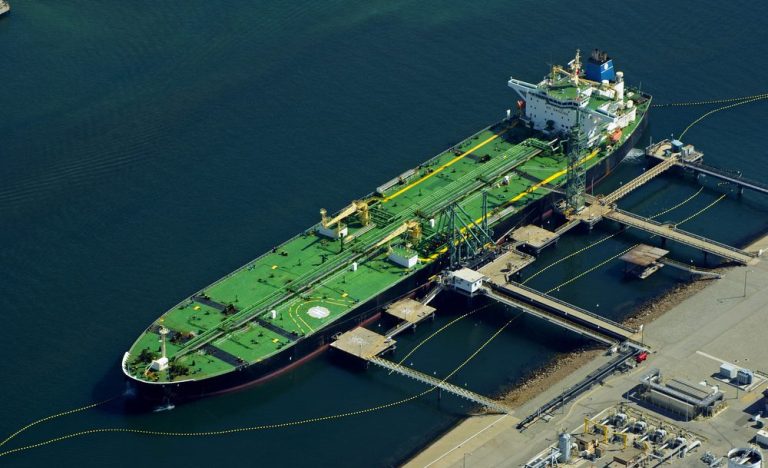
The escalating Iran-Israel conflict has once again turned global attention towards the Strait of Hormuz, a narrow yet vital maritime passage that handles a significant portion of the world’s oil and gas shipments. As tensions rise, questions are being raised about the potential for Iran to block this strategic chokepoint. What makes the Strait so critical to global trade, and does Iran truly have the capacity, or willingness, to shut it down?

What is Strait of Hormuz

The Strait of Hormuz is a narrow channel between Iran and the Omani Musandam Peninsula. It is around 30 miles wide at the narrowest point and connects the Persian Gulf to the Gulf of Oman. The Strait of Hormuz is deep and free of maritime hazards. The depth of the Strait is greatest near the Musandam Peninsula.

Source: MarketWatch

Commercial traffic through the Strait moves through the designated Traffic Separation Scheme (TSS) north of the Musandam Peninsula. However, the water is deep enough to accommodate larger ships to pass through an Inshore Traffic Zone south of the Omani island of Didimar. In this area, the Strait is over 650 feet deep. But often, restrictions are imposed on smaller vessels considering peacetime situations. Before 1979, the ITZ was the main shipping channel through the Strait.

There are eight major islands in the Strait, out of which seven are controlled by Iran. There is conflict of ownership of Abu Musa, Greater Tunb and Lesser Tunb islands between Iran and the United Arab Emirates because of their strategic locations. Since the 1970s, Iran has maintained military presence on these islands. Furthermore, Iran’s navy has access to open sea from bases at Chah Bahar, Bandar Abbas and Bushehr. Because of the control on these strategic islands, Iran has strong influence in the waters of the Strait.

Human habitation is not possible on the Iranian Gulf coast because of the arid and unbearably hot climate. However, because of the oil fields in the region, some development has taken place. July and August are the hottest months in the region. Dust, morning fog and haze can affect visibility in the Strait. During the summer months, dust haze is common on the southern coast of Iran.

Geopolitical and economic significance of Strait of Hormuz

The Strait of Hormuz holds significance because of its strategic location as it lies between Oman and Iran, linking the sea passage from the countries on the Gulf, including Kuwait, Iraq, Saudi Arabia, Qatar, United Arab Emirates and Bahrain, with the Arabian Sea and beyond.

According to a report by Mint, 20 million barrels pass through the Strait of Hormuz every day, apart from oil products shipments. It accounts for around 1/5th of global oil shipments and 1/3rd of the world’s liquefied natural gas (LNG). The US Energy Information Administration estimates that around 20% of the global oil consumption flows through the Strait.

Due to its strategic importance, the maritime sea lanes are watched by the US Navy’s Fifth Fleet based in Manama, Bahrain. Any disruptions in the Strait of Hormuz, even if temporarily closed, will send shocks to the global oil market.

Will Iran shut the Strait of Hormuz

As Israel has struck Iran’s nuclear programme establishments and military, Tehran has threatened to shut the Strait of Hormuz. Now the question is, will Tehran actually shut it to use it as a bargaining chip? While Iran may consider a temporary blockade to gain some leverage, the possibility of a full-scale shutdown of the Strait of Hormuz is scarce.

There are several reasons for Iran not going for a full-scale shutdown even if it is threatening to do so in theory. First of all, Iran and China have good relations. China is the number one importer of oil and accounts for around three-quarters of Iran’s oil exports. If the Strait of Hormuz is closed, shipments to China will be affected. In fact, there is a possibility that China may use its imports from Iran to force Tehran not to block the pathway.

Furthermore, closure of the Strait of Hormuz will have a direct impact on Iran’s relations with Oman and the Gulf Cooperation Council. Oman has always advocated for freedom of navigation in the sea passage. Iran would not want to create any rift with Oman, as it controls the southern half of the Strait. Also, Iran has difficult relationships with GCC states. Any risk of fallout with them would be avoided.

If the external factors are not to be considered, internally as well, it will be economically devastating for Iran as it will surge prices, leading to regime instability. Iran is already facing a lot of internal conflict. Any step that can lead to economic displeasure among the people will lead to catastrophic results for the regime.

Not to forget, in 1980 and 1988, when war broke out between Iran and Iraq, both countries targeted commercial vessels in the Gulf. Despite the attacks on the shipments, the Strait of Hormuz was not completely shut.

Importance of Strait of Hormuz for India

A closure or disruption in the Strait of Hormuz would spell trouble for India. Nearly 70% of its crude oil and almost 40% of its LNG imports pass through this route, with Qatar alone supplying nearly 10 million tonnes of LNG in 2024. Any blockage could severely impact energy security and prices. Additionally, India faces a diplomatic dilemma, having close ties with both Israel and Iran. With Chabahar port and the IMEC corridor already stalled due to rising tensions, India’s strategic and energy interests now hang in delicate balance amidst the worsening Israel-Iran standoff.

Notably, in 2024, India and Iran signed a 10-year pact over Chabahar, allowing India to manage the port for one decade. In 2016, during Prime Minister Narendra Modi’s visit to Iran, an agreement for Chabahar was inked. When Iran’s president, Hassan Rouhani, paid a visit to India in 2018, the prospect of expanding India’s role at the port was extensively discussed.

Chabahar Port and its significance for India and Iran

Chabahar, located near the mouth of the Gulf of Oman, is Iran’s first deep-water port. The port positions the country on the international oceanic trade route map. The port is located to the west of Iran’s border with Pakistan, around the same distance as Gwadar, a competitive port designed by China in Pakistan to the east.

India’s engagement in the port’s construction began in 2002, when Hassan Rouhani, then National Security Advisor of Iran, met with then-Indian NSA Brajesh Mishra.

Chabahar is strategically important for both Iran and India. It has the potential to aid Tehran in avoiding the adverse impacts of Western sanctions, while also providing New Delhi with an alternative route that avoids Pakistan, which blocks India’s land access for trade with Afghanistan and Central Asia.

India intends to use Chabahar Port as a transit hub along the International North-South Transport Corridor (INSTC) to connect with the Commonwealth of Independent States nations. INSTC will help India to reduce cargo movement between India and Central Asia, with Chabahar Port serving as a regional commercial transit gateway. Notably, INSTC is a 7,200-kilometre multi-mode freight transportation project connecting India, Iran, Afghanistan, Armenia, Azerbaijan, Russia, Central Asia and Europe.

Chabahar Port to serve as a counterbalance to Pakistan’s Gwadar Port and China’s BRI

China’s Belt and Road Initiative is a global trade and infrastructure plan patterned on the old Silk Road, which linked imperial China and the West.

Over the years, despite China’s best efforts, India has refused to support its Belt and Road Initiative (BRI) since the China-Pakistan Economic Corridor (CPEC) violates India’s sovereignty and territorial integrity, as it passes through the Pakistan-occupied Kashmir (PoK).

As tensions in West Asia continue to rise, the Strait of Hormuz remains a strategic chokepoint with global ramifications. While Iran’s threats to shut the passage serve as a powerful geopolitical tool, a complete blockade appears unlikely due to diplomatic, economic and regional consequences. For energy-dependent nations like India, the situation underscores the need for diversified energy sources and robust strategic partnerships. The world now watches closely, aware that any disruption here could trigger a global crisis.

India launches feasibility study for Indus water transfer plan, read all about this ambitious project planned to divert surplus Chenab flow from J & K to other Indian states

After the Indian government suspended the Indus Water Treaty in the aftermath of Pakistan-backed Islamic terror attack in Pahalgam, Pakistani government has been writing letters to India begging for the treaty’s resumption. While Pakistan were sending letters requesting India for the resumption of the treaty, their politicians have also been issuing ‘blood will flow’ and ‘we will stop your breath’ threats. However, India has taken firm stand and is in no mood to let its fair share of water flow into Pakistan.

India has chalked out an inter-basin water transfer plan for full utilisation of its share of Indus river waters. A feasibility study is being undertaken for a 113-km canal for diverting surplus flows from Jammu & Kashmir to Punjab, Haryana, and Rajasthan. This canal will link Chenab river with the Ravi-Beas-Sutlej system, Times of India reported.

Under this project, India will optimise its share of water as per IWT by ensuring better use of both eastern (Ravi, Beas, Sutlej) and western (Indus, Jhelum, Chenab) rivers, reducing excess flows into Pakistan.

Hinting at a larger plan, Union Home Minister Amit Shah while addressing a meeting in Pachmarhi said, “Indus waters will be taken to Rajasthan’s Sri Ganganagar through canals within three years.”

The proposed canal project will involve connecting the 13 existing canal structures across Jammu and Kashmir, Punjab, Haryana, and Rajasthan, ultimately flowing water into the Indira Gandhi canal system.

Uttam Sinha, senior fellow at the Manohar Parrikar Institute for Defence Studies and Analyses, explained how redirecting Indus waters would help India cater to domestic water requirements. He said, “Redirecting surplus flows from J&K to Punjab, Haryana and Rajasthan could help balance regional water availability. This internal reallocation would strengthen India’s water resilience in the face of climate variability and changing rainfall patterns.”

Modi government to revive Ujh multipurpose project

Notably, the Modi government is also set to revive the impending Ujh multi-purpose project in Jammu and Kashmir’s Kathua. The Ujh is a tributary of the Ravi. This project will be used for hydropower, irrigation and drinking purposes. A second Ravi-Beas link below Ujh, which was earlier planned to halt excess Ravi water from entering Pakistan, will now be part of the larger canal project. This would involve a barrage and tunnel to transfer water to the Beas basin.

Centre planning to double Ranbir Canal’s length

To facilitate the 113-km-long canal for redirecting surplus flows from Jammu and Kashmir to Punjab, Haryana, and Rajasthan, the central government is planning to double the length of the Ranbir canal from 60 km to 120 km to draw water from the Chenab. Based on feasibility assessments, the Centre will work towards fully utilsing the Pratap canal.

Ranbir canal (Image via Jammu Virasat)

Notaby, these programs supplement current short-term interventions like the Chenab’s Salal hydro projects and the desilting of Baglihar reservoirs.  In order to better exploit its Indus system share, India is also accelerating construction on a number of hydroelectric projects, including Pakal Dul (1,000 MW), Ratle (850 MW), Kiru (624 MW), and Kwar (540 MW).

Indus Water Treaty and how India has been maximising its share of water over the years

Signed on 19th September 1960 in Karachi, the Indus Water Treaty between India and Pakistan was brokered by the World Bank. This water-sharing agreement governs the use of the Indus River system by India and Pakistan. Signed by Prime Minister Jawaharlal Nehru and Pakistan Field Marshal Ayyub Khan, this treaty allocates the waters of six rivers originating in the Himalayas, broadly divided into two categories: the eastern rivers and the western rivers. The eastern rivers Ravi (origin in Himachal Pradesh), Beas (flows through Himachal Pradesh and Punjab), and Sutlej (originates in Tibet, flows through India into Pakistan) were allocated to India, while Indus, Chenab and Jhelum were allocated to Pakistan.

India effectively utilises the waters of eastern rivers for hydropower, irrigation and other purposes. Meanwhile, Indus, Jhelum and Chenab are essential for Pakistan’s hydropower, irrigation and other needs, with Indus being nothing short of Pakistan’s lifeline.

While the signing of IWT was touted as a historic step towards mutual cooperation and peace, this treaty was not essentially balanced; in fact, it actually benefited Pakistan more due to the higher water flow in its assigned rivers, the western rivers.

Notably, under this arrangement, India controls around 20 per cent of the total water flow, which translates into 33 million acre-feet or 41 billion cubic meters annually, and Pakistan gets 80 per cent, which is approximately 135 million acre-feet or 99 billion cubic meters. This agreement allowed limited non-consumptive uses of the western rivers, such as hydropower generation, however, it restricted blocking or dramatically altering water flow into Pakistan.   

However, with the treaty in abeyance, India is no longer required to heed Pakistan’s ‘concerns’ or ‘objections’ (read deliberate obstructions over the designs of Indian projects).

Over the years, India has progressively worked to utilise its full allocation under the Indus Water Treaty, particularly, after the 2016 Uri Attack. India has in the recent years, increasingly focussed on bolstering infrastructure to capture water from the eastern rivers and limited use of western rivers.

In this direction, PM Modi inaugurated the Kishanganga project on the western river of Jhelum in Jammu and Kashmir, in May 2018. Over 300 megawatts of electricity might be generated and at least 30,000 hectares of land can be irrigated using the approximately 0.65 million acre-feet (MAF) of water that the Kishanganga project stores from the Ujh river. PM Modi’s bold move came despite Pakistan’s protests.

The Kishanganga hydropower plant, which is situated on the Indus tributaries, started construction in 2007 and the Ratle Hydroelectric Plant, built on the Chenab had its foundation stone placed in 2013.

For a long time, India allowed some water of the Ravi River to flow into Pakistan unused. However, with the completion of the Shahpurkandi Barrage in 2024, this flow was halted, and around 1,150 cusecs of water were diverted to Jammu and Kashmir and Punjab for irrigation. With this, India not only maximised the usage of an allocated eastern river for domestic use but also reduced water reaching Pakistan. Meanwhile, construction work of the Ujh Multipurpose Project and Makaura Pattan Barrage on the Ravi River and run-of-river (RoR) projects, including Ratle and Kiru on the Chenab and Jhelum, respectively, has also been accelerated.

Atrocities against Hindus continue unabated in Bangladesh, 6 Mandirs looted in 24 hours, victims narrate ordeal

Bangladesh is witnessing a spike in anti-Hindu attacks. On Friday (13th June), it came to light that extremists looted 6 Hindu temples in 24 hours. The incident occurred in Kotalipara Upazila in Gopalganj district of Bangladesh.

The matter came to light through a report published by NTV News.

A Hindu woman informed, “Yesterday (12th June), a temple in Duaripara was looted. Today, 4 of our temples were robbed. All paraphernalia kept for performing Puja were taken away.”

“If this keeps on happening, then we cannot replace the stolen Puja material every time. It takes a significant amount of money to purchase puja utensils made of brass and bronze. We do not have the financial means to do it each time,” she lamented.

“Necessary steps must be taken to prevent looting of our valuables. I am making a heartfelt request to the government. The Hindu community is unable to bear the atrocities committed against it,” the woman continued.

She further pointed out, “How will we survive now? We are drawing the attention of the government. It is upto the government to nab the perpetrators. We are helpless, and we cannot do anything about it.

An elderly woman narrated how she discovered that her temple was looted by extremists. “When I came to the temple early morning on Friday (13th June) to offer prayers, I found that the earrings of the deity were missing.”

She found that gold ornaments, which adorned the idols of Gopal, Radha Krishna, Manasa, were nowhere to be found.

The elderly woman informed that while most idols in her temple were made of brass, the idol of Radha Krishna is made of silver. “My youngest son had gifted the idol to me. I have been offering prayers everyday for the past 3-4 years,” she added.

Another Hindu woman recounted, “All ornaments have been looted from the Mandirs. First, they broke into the house and then went for the temple, which is always kept open.”

“We did not realise what happened during the night time. We found about the robbery only in the morning,” she stated.

A young man narrated that bronze plates, a pitcher and puja essentials worth ₹40k-50K were taken away. “All of us are in a state of fear,” he lamented.

Muslim mob destroys Hindu homes in Netrokona

Several Hindu families, belonging to the Haridas community, have been rendered homeless after a Muslim mob destroyed their houses and looted their belongings. The incident occured in Purbadhala Upazila in Netrokona district of Bangladesh.

According to a news report by ‘Somoy National’ on Friday (13th June), a concerted attempt was being made for several months to uproot the Hindu families residing in the area for over 50 years.

To lay the foundation for their exodus, Muslim extremists put up signboards declaring the area as a property of ‘Janab Ali Markajun Nur Al Islamiya Madrasa.’

When the Hindu families complained to the local police, Muslim extremists came in droves and destroyed their homes in a series of targeted attacks. Atleast 5 houses were razed to the ground and all valuables including cash were looted.

Forced by circumstances, the helpless Hindu victims are now sleeping under the open sky without a roof over their heads.

“We had filed a complaint with the police. They (Muslim mob) came on Sunday (8th June) and destroyed our 3 other homes,” one Hindu man narrated. Another Hindu woman informed how the extremists assaulted her and her husband.

One Hindu victim narrated, “They want to start a madrasa here.” A police complaint has been filed by the aggrieved Hindu families.

The local administration has assured to take action against the culprits but no arrests have been made so far.

Uttarakhand Helicopter crash: FIR filed against officials of Aryan Aviation officials for operating helicopter in bad weather and ignoring SOP

An FIR has been registered against officials of Helicopter service operation Aryan Aviation after 7 people died in a crash of its helicopter in Uttarakhand today morning. The FIR has been filed against two officials of the company, Accountable Manager Kaushik Pathak, and Manager Vikash Tomar for violating rules while operating the chopper.

As per the FIR Aryan Aviation was allotted a slot from 6 AM to 7 AM on 15 June for its service, but the helicopter took off at 5.30 AM. It states that as per SOP issued by Directorate General of Civil Aviation (DGCA) and Uttarakhand Civil Aviation Development Authority (UCADA), it is necessary to check the weather conditions before take-off.

Since morning today, there were clouds and fog in the area. But despite the bad weather, the helicopter was operated and the SOP was ignored. The FIR states, “Aryan Aviation Pvt. Ltd. and its manager Vikas Tomar and accountable manager Kaushal Pathak knew very well that ignoring the SOP can cause loss of life and property of the passengers. It is clear from the above accident that Aryan Aviation Pvt. Ltd. and its manager Vikas Tomar and accountable manager Kaushik Pathak did not follow the SOP issued by DGCA and UCADA and showed gross negligence towards their duties, due to which the above accident occurred. Manager Vikas Tomar and accountable manager Kaushik Pathak are responsible for the death of 7 people in the accident.”

The FIR has been filed under BNS section 105 (Culpable Homicide not amounting to Murder) and section 10 of Aircraft Act, 1934 (penalties for violating rules under the act) at Sonprayag Police station in Rudraprayag district.

Five adults, one infant and the pilot died when Aryan Aviation’s Bell 407 helicopter operating in the “Shri Kedarnath Ji – Aryan Helipad, Guptkashi” sector crashed on Sunday at Gauri Mai Khark above Gaurikund.

Preliminary indications suggest that the probable cause of the crash may be Controlled Flight into Terrain (CFIT). The exact cause will be determined through a detailed investigation by the Aircraft Accident Investigation Bureau (AAIB).

The Char Dham Yatra operations by Aryan Aviation have already been suspended following the crash. It was determined that the helicopter took off despite poor visibility and extensive clouding at the valley entry area. 

The authorities also suspended licences of two pilots of another operator TransBharat Aviation after it was found that they also took off helicopters in the similar poor conditions.

All charter and shuttle helicopter operations in the region have also been suspended on June 15-16, 2025 as a safety precaution.

Directorate General of Civil Aviation has been directed by the Ministry of Civil Aviation, to immediately post officers from Airworthiness, Safety, and Operations to actively oversee all helicopter activity in the Kedarnath valley and rigorously review the functioning of the UCADA Command-and-Control Room.

The Uttarakhand Civil Aviation Development Authority has been directed to hold a comprehensive review with all operators and pilots before any resumption of services, to ensure full alignment with safety protocols. UCADA will also establish a dedicated Command-and-Control Room to monitor real-time operations and ensure immediate escalation of any risk indicators.

Adani Group denies social media claims that Haifa Port in Israel has been destroyed by Iranian missile, Israel’s largest port continues to operate normally

Haifa Port in Israel, majority of which is owned by Adani Ports, is not affected by the Iranian strikes, Adani Group has confirmed. Several social media users have been claiming since yesterday morning that the Haifa Port was completely destroyed by Iranian missiles.

Many social media users claimed that Iranian Ballistic Missiles have hit Israel’s Haifa port and Haifa Oil Refinery.

One X user named IRAN Update posted, “Indian company Adani’s cargo facility worth $4.2 Billion in Israel’s Haifa port, destroyed by Iranian strikes.” The tweet also posted a photo of some facility in fire in night, with no proof that it is Haifa port.

But it has been confirmed by the company that the port continues to operate normally, and there was no missile attack on it. Responding to the above-mentioned post, Adani Group CFO Jugeshinder Robbie Singh said, “False”.

While it is true that the oil refinery in the area sustained some localised damage due to Iranian attack, the port was not impacted. The refinery is located at some distance from the port.

Some shrapnel from Israeli interceptor missiles targeting the Iranian missiles fell in the chemical terminal at the port and some other projectiles fell at the oil refinery, but there is no damage to the port facilities.

Reports confirmed that cargo operations continuing unhampered at the port. There are eight ships at the port now and cargo operations were being carried out normally.

Haifa is the largest port in Israel, and is one of the largest ports in the eastern Mediterranean. In 2022, Adani Ports along with Israel’s Chemical company Gadot won a bid for privatisation of the port. Adani Ports and Special Economic Zone owns 70% of the Haifa port, while the rest 30% is owned by Gadot.