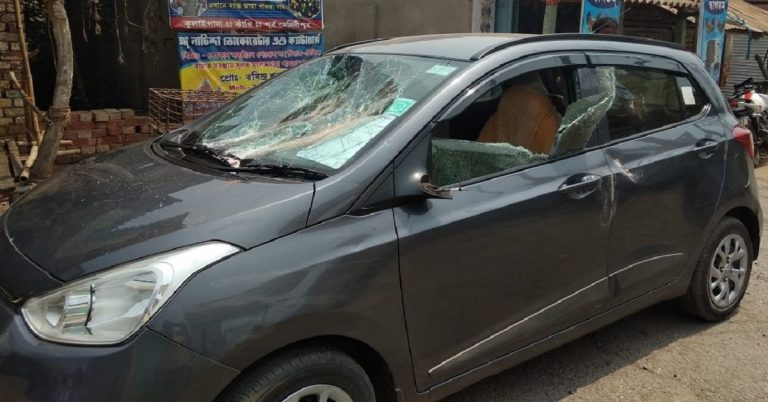
The car of Somendu Adhikari, brother of BJP leader Suvendu Adhikari, was reportedly attacked on Saturday, the first phase of polling in the West Bengal Assembly Elections. Somendu Adhikari has blamed the Trinamool Congress for the vandalism of his car. The incident reportedly occurred at Kanthi South.
The car of Soumendu Adhikari (Suvendu Adhikari’s brother) has been vandalized in Kanthi South, West Bengal.@payalmehta100 with details while BJP West Bengal In-charge, Kailash Vijayvargiya (@KailashOnline) with his views.
Senior BJP leader Kailash Vijayvargiya said that goons from the minority community were responsible for the actions. The driver of the car was reportedly beaten. However, he emphasised that compared to other elections, polling on Saturday was much more peaceful.
Suvendu’s brother Somendu said that some karyakartas were brutally assaulted before the TMC proceeded to vandalise the car. He said that the mob was led by Ram Govind Das. Das is said to be the Block President of the area.
The driver, Gopal Singh, said that he was beaten with stones. Visuals of his injuries makes it abundantly clear that he was terribly assaulted. Kanthi South is an assembly constituency in the East Medinipur district of the state.
“Under the leadership of TMC block president Ram Govind Das and his wife, poll rigging was underway at three polling booths. My arrival here created problem for them to continue with their mischiefs. So they attacked my car and thrashed my driver,” said Somendu.
Somendu Adhikari has been speaking out against the Nandigram Police and TMC of indulging in unfair electoral practices. On Friday, Suvendu Adhikari wrote to the Election Commission requesting suspension of Haldia Additional SP Partha Ghosh, Haldia SDPO Barunbaidya and others accusing them of malpractice.
Somendu said on Saturday, “He later went there again and met people. We approached the EC that there should be free and fair polls. People will choose whom they want. TMC is scared. We have given the name of one Alauddin to the EC, he creates disturbance there.”
“Voters being influenced and stopped from voting at booth number 149. Overall polling being held peacefully. EVMs malfunctioning at some locations, it happens in all polls, EC is looking into it,” he said.
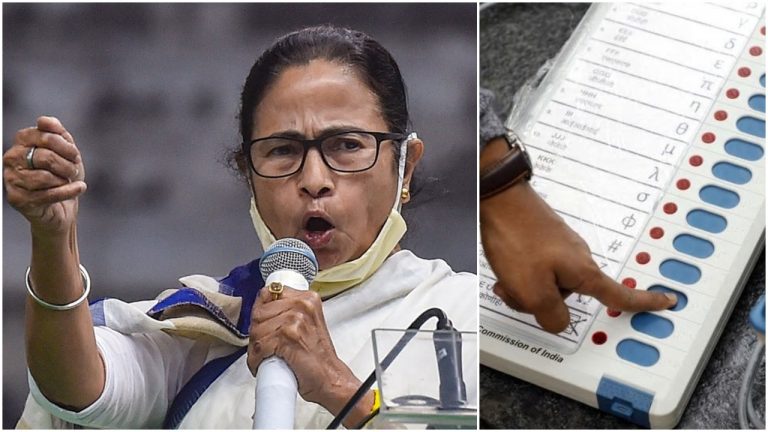
The first phase of the high octane West Bengal Assembly polls is underway in 30 constituencies on Saturday. Over 73 lakh voters in the eastern states of West Bengal will be exercising their franchise today. The voting for the first phase of polls kickstarted at 7:00 AM today. As expected, merely a few hours after the voters began to exercise their ballot, the jittery Trinamool Congress Party (TMC) has started peddling the ‘EVM hacked’ bogey.
The ruling TMC party, which is, this time, fighting for its survival in the state, took to Twitter to raise the false bogey of ‘EVM malfunctioning’. It said the voters in the Kanthi Dakshin assembly seat have been making a shocking claim that “they voted for TMC but VVPAT showed them the BJP symbol”. It asked the Election commission to immediately look into the matter. “THIS IS SERIOUS! THIS IS UNPARDONABLE!” exclaimed ruling TMC.
Shocking claim by voters which must be immediately looked into by @ECISVEEP and @CEOWestBengal.
Many voters in Kanthi Dakshin assembly seat allege that they voted for TMC but VVPAT showed them the BJP symbol. THIS IS SERIOUS! THIS IS UNPARDONABLE! pic.twitter.com/E0Bjjbc89y
— All India Trinamool Congress (@AITCofficial) March 27, 2021
Reacting to Trinamool Congress party’s allegations, BJP West Bengal Pres Dilip Ghosh said: “TMC knows that it is losing & that’s why it is saying all this. For such complaints, TMC should go to the Election Commission. TMC & Mamata Banerjee are under pressure and that is why they are saying such things”.
TMC knows that it is losing & that’s why it is saying all this. For such complaints, TMC should go to the Election Commission. TMC & Mamata Banerjee are under pressure and that is why they are saying such things: BJP West Bengal Pres Dilip Ghosh on TMC alleging rigging of polls pic.twitter.com/81XvGsEl76
Rightly so, this conspiracy theory peddled by most opposition parties, including Congress and the Aam Aadmi Party, in an apparent bid to hide their failure, has become extremely cliched. The information disseminated by the Election Commission of India has convinced most sane people that hacking EVMs is not possible, since they are stand-alone machines with no networking with the external world. Nevertheless, every single time when opposition senses that they are about to lose the battle, they start peddling this outrageous theory. After every election, VVPAT slips are tallied with the EVM results and they match 100% every time, ruling any such discrepancy that TMC is alleging.
Last year, Congress veteran leader Digivijay Singh had raised a similar din minutes before the counting of votes began for the Delhi Assembly elections. Similarly in 2019, when the Congress party realised that their candidate Randeep Singh Surjewala is set to lose the important Jind by-polls in Haryana, the workers of the Congress party took to the streets to protest against the election results while raising doubts regarding EVM tampering. Likewise, in 2018, when BJP was all set to form a government in Karnataka, a senior Congress leader had raked up the same issue of malpractices in Electronic Voting Machines (EVMs).
Whether it is BSP supremo Mayawati or the Aama Aadmi Party or the Congress party, like clockwork, the ‘EVMs are tampered’ bogey has been raised time and again by them.
Meanwhile, the first phase of voting is underway in the politically volatile state of West Bengal. Elections are being held in 30 seats amid tight security. The 30 seats include all constituencies in Purulia and Jhargram and segments of Bankura, Purba Medinipur and Paschim Medinipur. According to ECI, till 11 am, 24.61 per cent voter turnout was recorded.
Elections to the 294-member West Bengal Assembly will be held in eight phases starting from March 27 with the final round of voting taking place on April 29. The counting of votes will take place on May 2.
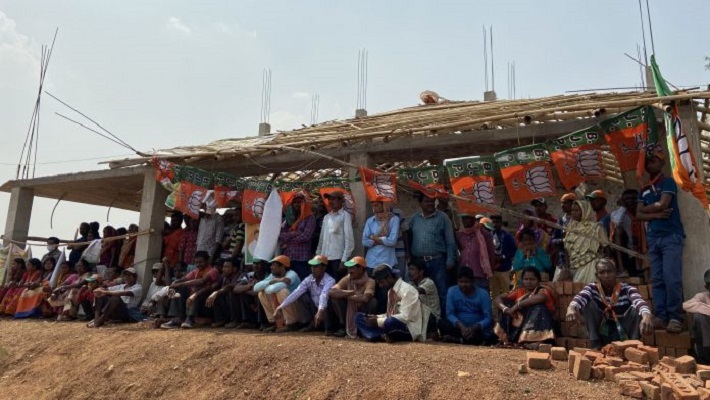
As we approached Jhargram town through the brown-leaf-carpeted road meandering through the Lodhasuli forest, around 160km west of Kolkata, the tiny fresh-green leaves atop the barren trees in the spring sun seemed to hold the promise of winds of change for the 4 seats, which go to polls on March 27 in the first phase of the eight-phase marathon West Bengal Assembly elections.
The dry and arid region, which is a part of the Chotanagpur plateau sharing borders with Bihar and Jharkhand, had been a hotbed of Maoists for years and had formed the Red corridor that extends from Andhra Pradesh, Odisha and Chhattisgarh. Progressing towards our destination with tea halts in between, conversations with the local people revealed the trend of ilaaka (area) bandi, which implies that villages have separate political affiliations and remain segregated according to such basis. The divide among people is so palpable that it even drives the local journalists into pursuing propaganda-based journalism. To the extent that they may try to influence visiting scribes.
On reaching the Jhargram town, we met a hotelier who hosts workers of all political parties. The gentleman confessed that he would not be able to come on record in the face of a possible backlash against him or his family but said there was actually simmering discontent among sections of people in the region against the present dispensation. And there was this BJP worker, working silently for the party who had a confession of a different sort to make — that he had been sidelined by the BJP he loved so dearly all his life. The ostensible reason — to accommodate those crossing over from the Trinamool to the BJP and to address the bigger task at hand — to ensure the defeat of the ‘grassroots’ party so that the lotus could bloom in all its glory in Bengal.
Though the public, in general, was pleased with the good roads and streetlights — something unthinkable during the 34-year rule of the Left Front government — that the Mamata Banerjee-led Trinamool Congress government had lavished on Jhargram and Jangalmahal, there was a simmering discontent — lack of employment opportunities. Most were reluctant to give out their names or reveal their political affiliations or who they would vote for. But what binds them together was the grouse against the Trinamool having played a double game with them.
Trinamool Congress has fielded a new entrant, actress June Maliah, who is a popular face of the Bengali film industry. Once considered to be a stronghold of CPI, Tarun Kumar Ghosh, son of former MLA Kamakhya Ghosh is the party’s candidate. BJP has fielded their former district president Samit Kumar Dash from the seat. On the other hand, in the Jhargram constituency, actress of Santhali films and daughter of former MLA Chunibala Hansda, Birbaha is contesting on Trinamool Congress’s ticket. CPM leader Madhuja Senroy is contesting against Sukhamoy Satpathy has been fielded by the BJP.
In the late-2000s, when Jhargram and Jangalmahal were synonymous with incidents of Maoist unrest, the Trinamool was accused to have threatened the Maoists to surrender and join its party or face the bullets or be implicated in fake cases. The name of one person, who was instrumental in helping carry out the ‘peace process’ or sort of ‘atonement’ of the Maoists surfaced during the conversations was that of erstwhile police chief of Jhargram, Bharati Ghosh. Once known to be close to chief minister Mamata Banerjee, she had referred to the chief minister as ‘ma (mother)’ at a public event.
The name of one person, who was instrumental in helping carry out the ‘peace process’ or sort of ‘atonement’ of the Maoists surfaced during the conversations was that of the erstwhile police chief of Jhargram, Bharati Ghosh. Once known to be close to chief minister Mamata Banerjee, she had referred to the chief minister as ‘ma (mother)’ at a public event. The former IPS officer, a graduate from Harvard University and London School of Economics, first worked in the criminal investigation department (CID) of West Bengal Police. After taking early retirement, she joined the BJP in 2019 and was subsequently nominated to contest the 2019 elections from Ghatal constituency.
In the 2021 Assembly elections, Ghosh is contesting from Debra constituency in Paschim Medinipur, 103 km from Kolkata, against ex-IPS officer Humayun Kabir, who joined the Trinamool in February this year. Following the killing of Maoist leader Kishan Ji, Trinamool Congress, in a tacit understanding with the lower-rung Maoists, managed to bring so-called peace to Bengal. Kishan Ji’s second-in-command Chhatradhar Mahto was inducted into the Trinamool Congress in 2020. Mahato, the face of the Maoist-backed tribal movement of 2008-2011 in Lalgarh, was freed on bail a few months ago after spending almost 11 years in jail.
In the run-up to the West Bengal Assembly elections, Mahato’s induction in the TMC attracted a lot of attention. Villagers admitted the presence of Maoists in the region but in the absence of leadership, was a spent force and could in no way take on the government in its present form. At an eatery in Bankura’s Harigram, the bonhomie among workers of different political hues was hard to miss. Most admitted that the roads and the lighting had improved but an elderly gentleman did not mince his words while narrating his disgust about the local primary health care centre. “The PHC started out with three nurses and a doctor. But now, it has got just one nurse, forcing people in an emergency to rush to Bankura Medical College and Hospital or to Kolkata.”
One of the young men sipping tea narrated how the Trinamool had resorted to ‘unnecessary violence’ during the panchayat elections in 2018 to prevent any opposition party to file nominations. Predictably, Trinamool won unopposed. He went on to say: “Here, people have put behind the horrors of their hard-earned money they lost in the Saradha, Narada and Rose Valley chit fund scams. But lack of job opportunities has forced most of us to leave our native place and go to Kolkata to get decent jobs in the private sector. In the absence of industries, who would even get a job here?” Jatin Lahiri, a proud BJP supporter, would bet his money on his ‘favourite Modi sarkar’ coming to power this time. He based his calculation on the 18 of the 42 Lok Sabha seats the BJP had bagged in the 2019 general election. But one of Jatin’s co-villagers, in contrast, spat venom against Modi and his policies, the farmers’ protests and alike.
As the EwokeTV team neared the end of its journey of the western districts, one thing was for sure — even the seasoned of political pundits would find it difficult to predict the final outcome at the hustings this poll season, with no clarity about the Bengal’s silent voters or the fence-sitters till the last moment. Though it’s do-or-die for the veteran Mamata Banerjee, the BJP, which tasted blood (read seats and vote share) in the 2019 Lok Sabha elections, is not willing to let go of its golden opportunity of capturing the throne of ‘Sonar Bangla’ (golden Bengal) and ushering in ‘asol poriborton’ (real change) with its double-engine model of governance.
(This ground report has been brought to you by OpIndia, in collaboration with Ewoke.tv).
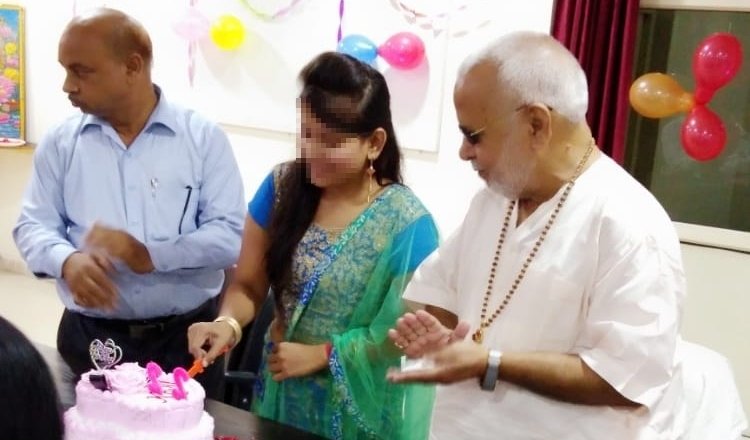
A special court in Lucknow acquitted former union minister Swami Chinmayanand today in a rape case that was filed against him by a law student. An LL.M. student studying at SS Law College run by Mumukshu Ashram of Chinmayanand in Shahjahanpur had accused Swami Chinmayanand under sections 354D, 342, 376C and 506 of the Indian Penal Code.
Special Judge PK Rai said, while pronouncing the verdict today, that the prosecution could not prove its case beyond reasonable doubt and that the victim had already turned hostile by withdrawing charges against Chinmayanand during the trial of the case. The verdict was reportedly pronounced in the presence of all the accused including Chinmayanand.
Moreover, the girl along with her acquaintances has also been acquitted by the court in relation to the charges of extortion and blackmailing leveled by Chinmayanand. The BJP leader had alleged that the girl and her friend had demanded money from him to withdraw the rape case.
The court acquitted both the parties as all the witnesses along with the ‘victims’ had turned hostile.
Background of the case
An FIR was lodged by the girl’s father against Chinmayanand in Kotwali police station, Shahjahanpur on August 27, 2019. He had stated in the FIR that the mobile phone of the girl, who was pursuing LL.M. and was staying in the college hostel, was switched off from August 23, 2019. He had alleged that when he checked his daughter’s Facebook profile, he found that she was being threatened for life by Chinmayanand and his associates as he had been sexually exploiting her. He had expressed apprehension that something untoward might had happened to her daughter. The father had said that he was not able to reach Chinmayanand as his phone was also switched off.
The girl was later traced by UP police to Jaipur where she was staying in a hotel with a friend of hers. It was found that she had moved to Jaipur on her own will, and she was not abducted by Chinmayanand as alleged by her father. The Supreme Court issued directives to the state government to set up a Special Investigation Team (SIT) after the girl moved the court. The court further directed the investigation to be monitored by the Allahabad High Court. Swami Chinmayanand was arrested by police on September 20, 2019 and jailed. The charge sheet in the case was filed on November 4, 2019.
Chinmayanand had accused the girl and her acquaintances of demanding money from him
An FIR was lodged by Chinmayanand’s lawyer on August 25, 2019 against the girl and her three acquaintances alleging that they had blackmailed Chinmayanand and demanded Rs 5 crore from him. The girl along with co-accused named Sanjai Singh, DPS Rathore, Vikram Singh, Sachin Singh and Ajeet Singh were arrested and sent to jail. The charge sheet against them was filed on November 4, 2019 under sections 385, 506, 507 and 201 of the IPC and sections 3 and 4 of the IT Act.
The girl later withdrew all the charges levelled by her against Chinmayanand saying that she was forced to level these charges under the pressure of certain persons at Shahjahanpur.
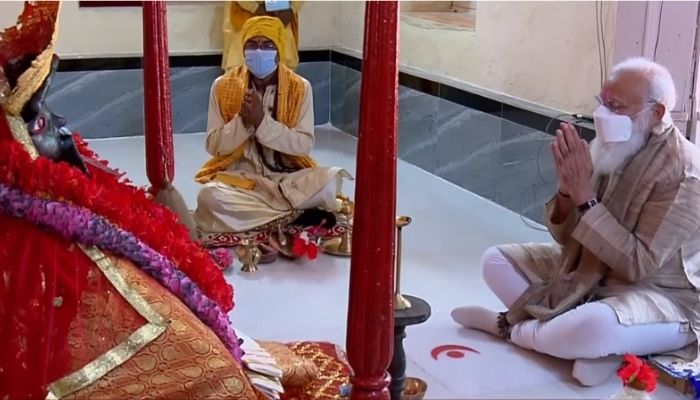
On Saturday, Prime Minister Narendra Modi offered prayers at the Jashoreshwari temple in Satkhira district in the Khulna Division of Bangladesh.
In a video shared by DD News, PM Modi was seen being welcomed with aarti, and tilak. As he proceeded towards the premises of the temple, the Indian Prime Minister was greeted with saankhodhoni (blowing of conch shells) and ulludhoni. He then adorned the idol of Goddess Kali with a crown, a shawl and a garland of flowers. Later, PM Modi sat down to recite sacred hymns and bowed his head to the deity. The Prime Minister was at the Jeshoreshwari temple for over 15 minutes.
(Video Courtesy: Youtube/DD News)
The history behind the Jeshoreshwari temple in Sathkira in Bangladesh where PM Modi offered prayers
“SHAKTI: 51 Sacred Peethas of the Goddess” book published by Rupa Publications and authored by Dr Alka Pande narrates the rich history and legacy of the iconic Jashoreshwari temple. Chapter 9 of the book reads:
“Part of pre-partition Bengal, certain areas of Bangladesh have a deep devotion to the Great Goddess. A small town complete with its bustling street markets, narrow winding streets, road-side stalls of street food and Kirana shops, Jessore— or as it is colloquially known, Joshor—is the quintessential Picture of Bangla life. Jessore is not the sort of town that can be mistaken for a tourist favourite; it is however a transit point between Khulna and the Indian border at Benapole.
The town self offers quaint geography to explore and a fine sampling of HS local proletariat culture. Most visitors who come to Jessore enjoy the many archaeological sites here, including the remnants of Chanchara Rajbari, the Kali Mandir and the Dargah OF Ghazi Kalu. Among the more interesting relics within the regions are the remnants of King Mukut Roys palace, dating back to the 12th century and Nawab Mir Julma’s residence, which in, comparison, is slightly younger, having been built around the 17th century.
While each of these sights provides an experience of the many faiths, rulers and communities which had their impact on the culture of Bangla, many visit this part of the country for the Jashoreshwari Devi Shakti Peetha. It is in the village of Ishwaripur in Shyamnagar of Satkhira and is believed to be the Peetha which is believed to be where the left palm of the Devi lies.
The Jashoreshwari temple is an ancient site built in the 15th century under the patronage of the ruler of Jessore, Maharaja Pratapaditya. If legends are to be believed, it is said that one day when Maharaja Pratapaditya was out surveying his kingdom, as was the practice among the royal heads at that time to understand the problems, trials and tribulations of their people, he discovered a luminous ray of light emanating from a woodland bush. When the Maharaja went to discover the source of the light, he found a piece of stone carved in the form of a human palm.
The Maharaja’s advisors told him to create a shrine for the engraved stone since it had to be Devi’s blessing for him to find. Maharaja Pratapaditya, who was a worshipper of Goddess Kali, built the Jashoreshwari Devi temple. Ever since Jashoreshwari Kali has been known as the Goddess of Jessore and the town was named after her.An ode to the Mahakali form of the Divine Goddess or Shakti, the temple was built by the Brahmin architect Anari. He built a 100-door temple for the Jashoreshwari Shakti Peetha.
In time, it was modified by both Laxman Sen and Pratapaditya. In the late 13th century, Laxman Sen made a few changes to the structure. After the war and civil unrest in the year 1971, large parts of the temple crumbled. Now when one visits the Jashoreshwari Peetha, the most prominent structures of its architecture are the pillars. A notable part of the remaining structure is the large rectangular, covered platform that forms the Nathmandir and has been erected adjacent to the main temple where the shrine rests. It is from this point that the face of the Goddess can be seen.
The Jashoreshwari Peetha has been described as the Goddess lotus-like hand; the Bhairava protecting her is Chanda. Since this is the spot where the Devi’s hand is placed, it is believed to be a place of immense spiritual power for it is with her hand that the Goddess bestows her gifts. It is through the Abhaya mudra of her hand that she removes all fears and darkness. There is regular puja held on Saturdays and Tuesdays in the temple, which is, usually done in the midst of a local gathering of devotees from the nearby villages and towns.
Jashoreshwari Shakti Peetha is open to all, despite the many sectarian divisions in the faith. Each year the temple is visited by thousands of pilgrims who congregate from all around Bangladesh and beyond, from the Indian subcontinent. The temple has an annual Kali Puja which is celebrated with much pomp and reverence. The Kali Mata worshipped at the temple is known to absolve the ego of her devotees, rid them of their sins, and the maya or illusion of their existence, and grant them the ultimate goal of salvation or enlightenment.
The form of Kali worshipped here is unique; her fierce form, her fire, is directed inwards, burning the ego and the impurities of the mind. It is the peetha that’s representative of the spiritual journey of the atman to the parmatman. Jashoreshwari Devi, who is the ‘all bearing’, the ‘all producing’, provides us with the unshakeable foundation upon which to build our enlightenment. The Kali Puja is held in the months of Navratri in the Ashwija Mas, or the month of October.
There is also a rather popular mela or fair that is held annually in the temple complex in celebration of the benevolence of the Goddess. Families, pilgrims, and tourists alike gather from everywhere, dressed in their finest to celebrate the Goddess, to bring to her feet their sincerest prayers and to, as is hoped, return with her blessing and guidance.”
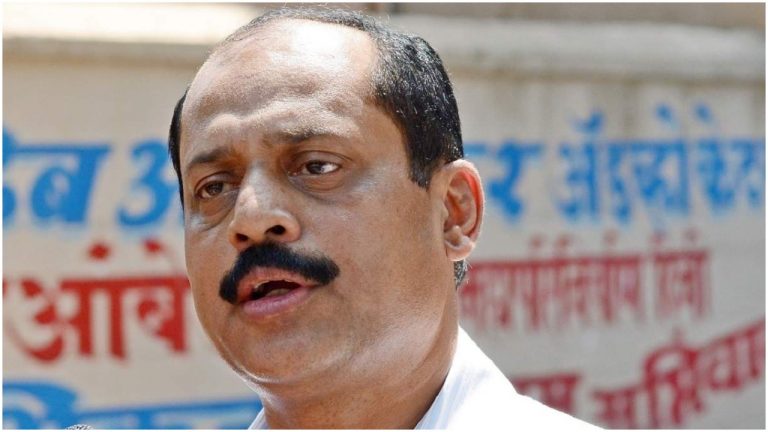
The prime accused in the Mansukh Hiren death case – Sachin Vaze – has reportedly admitted to the NIA that he destroyed five mobile phones, including his official one after Mumbai Police recovered the dead body of Mumbai-based businessmen from Kalwa creek on March 5.
According to the reports, the NIA officials have taken the help of experts to retrieve Vaze’s mobile phone data, which would give them crucial digital evidence about his involvement in the Manuskh Hiren death case. The officials suspect that Vaze was using at least 13 mobile phones.
Reportedly, with the help of another accused Vinayaka Shinde, a constable in Mumbai Police’ Crime Branch, Sachin Vaze had come into contact with a person who runs a club in South Mumbai, which was frequented by gamblers and bookies. The probe has revealed that Vaze had asked the club owner and Shinde to arrange some SIM cards for him.
Later, Vaze came into contact with bookie Naresh Gor, who provided five SIM cards for Vaze. Vaze had also arranged to get four mobile phones through one of his acquaintances, said an unnamed official according to the Free Press Journal.
During the investigation earlier, the Maharashtra ATS officials had recovered three mobile phones. However, they could not recover the cellphone used by Vaze to call Mansukh Hiren, as it was destroyed by the suspect through an acquaintance. The police had recovered three SIM cards, while two others used in the crime were destroyed.
Police have identified the person who helped Vaze get the four mobile phones. The investigators have also now identified the person who damaged the phone after Hiren’s murder and has interrogated him in connection with the case as well.
Hiren was murdered in the car, says Maharashtra ATS
Earlier, in a sensational disclosure, Maharashtra ATS sources had revealed that Mansukh Hiren was administered chloroform and then thrown in the creek from where his body was recovered. The report also says that Hiren was murdered in the presence of Sachin Vaze.
Reports suggested that the technical mobile tower and IP evaluation suggested that Sachin Vaze was present in the vehicle when Mansukh Hiren was killed. A post mortem report had revealed that Mansukh Hiren had sustained bruises before he was killed.
A report by Times Now report had said that soon after the murder of Mansukh Hiren, Sachin Vaze raided a bar in Dongri to evade suspicion. The owner of the bar confirmed that Sachin Vaze raided the bar with the assistance of Dongri police.
Sachin Vaze – an accused in the Antilia bomb scare case
The National Investigation Agency (NIA) arrested ‘encounter specialist’ Sachin Vaze for being a part of the group that planted the explosive-laden Scorpio on Carmichael Road (near Antilia) on February 25. The top cop was also investigated for his alleged role in the death of Mansukh Hiren, the owner of the Scorpio found near the Ambani residence.
Two cars – an Innova (white colour) and a Scorpio (green colour) were used to plant the bombs outside Mukesh Ambani’s residence in Mumbai on February 25. The police had traced the Scorpio to Mansukh Hiren, an auto part dealer in Thane. A few days later, his dead body was found in a creek. While initially it was claimed to be suicide, further investigation revealed that it is possibly a murder.
Later, it was found out that Mumbai top cop Sachin Vaze had used the same explosive-laden Scorpio found outside Reliance Group’s chief Mukesh Ambani’s residence Antilia to escort Alibagh Police in Arnab case.
On Wednesday (March 24), a Shia cleric was brutally murdered over allegations of blasphemy in the Jhang district of Punjab in Pakistan.
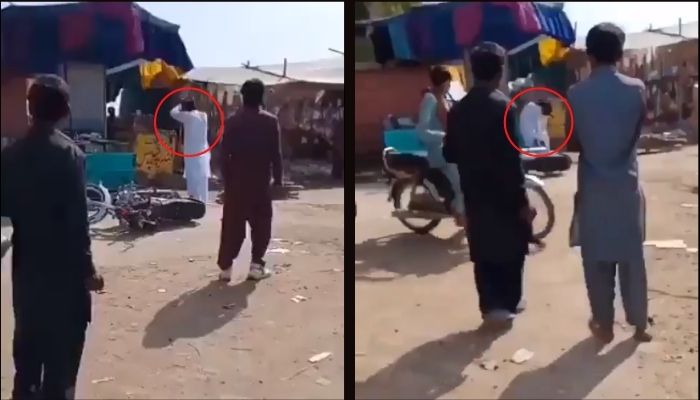
As per reports, the Shia religious scholar has been identified as one Taqi Shah. He had gone to a local festival (mela) along with his friend Hasnain Shah in Basti Murad in Shorkot Tehsil. The duo was attacked by an unnamed Islamist, who was armed with an axe. Taqi Shah was on a motorcycle when the accused assaulted him. He fell on the road from his bike, following which Shah was slaughtered with the axe.
The video of the gruesome killing has gone viral on social media. The accused, dressed in white, can be seen hitting the victim with the axe. The motorcycle is seen lying around the deceased’s body. After the barbaric crime, the Islamist fled the crime scene. On receiving information, the police reached the spot and transferred the deceased’s body to a nearby hospital for post-mortem
— Ali ☠ ?????? (Fiya & Bhindi Aapi ka ?) (@Beast__87) March 27, 2021
Primary accused arrested, sent to judicial custody
During the incident, the victim’s friend Hasnain remained safe and is now a key witness in the murder case. A case of murder was registered against 3 people at Shorkot City police station, following a complaint by the victim’s family. The police had so far booked 2 unidentified men and one identified man for the crime. On Wednesday evening, the cops nabbed one accused and produced him before a magistrate. He has been remanded to 14-day judicial custody.
Complainant alleges murder over a personal dispute
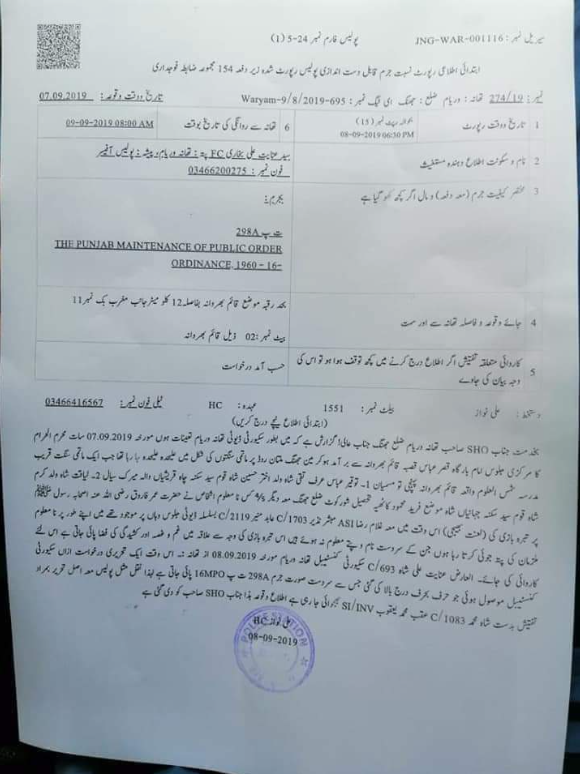
According to the complainant, Taqi Shah was killed over a personal dispute with the main accused. Reportedly, the victim and the accused had a heated argument while playing volleyball, a few days prior to the incident. Although the matter was resolved, the accused held grudge against the victim and killed him with his axe on Wednesday. It must be pointed out that a case of blasphemy was also registered against the Shia religious scholar in September 2019 and the accused confessed that he killed Shah due to blasphemy.
Screengrab of the blasphemy case against Taqi Shah (Photo Credits: Twitter/Kamran Ali)
Accused confesses to killing victim over blasphemy allegations
While speaking about the matter, Jhang District Police Officer (DPO) Sarfraz Virk informed that the accused had killed Taqi Shah over allegations of blasphemy. He said that the victim was accused of insulting companions of prophet Muhammad. “The suspect in his statement confessed to having killed the victim, Taqi Shah, over blasphemy allegations,” Virk added. As per the US Commission on International Religious Freedom, around 80 people are serving life imprisonment or facing the death penalty in Pakistan over blasphemy charges.
Islamists in Pakistan try to lynch a man alleging blasphemy
Earlier this month, an Islamist mob in Pakistan’s Karachi tried to lynch a man to death after he had allegedly desecrated a copy of the Quran. The angry mob attacked the man on the charges of blasphemy despite the presence of police officials.
According to the South Asia Media Research Institute (SAMRI), the Islamist mob thronged near a garments factory in Karachi and dragged a man to lynch him for allegedly desecrating the copy of the Quran. However, the man has denied the charges, and said that he had questioned maulanas for taking money promising to solve problems, but not doing anything after that.
A video of the incident at JB Garments has gone viral on the internet, in which one can see how a violent mob stormed the gates of the factory to carry out an attack. Amidst the chants of “Naara-e-Takbeer”, the Islamist mob attacked the man. However. the man survived the attack, although he was critically injured.
The National Investigation Agency (NIA) probe into the Antilia bomb scare has now revealed that suspended API Sachin Waze had himself placed the threat letter in the explosives-laden Scorpio that was found parked near industrialist Mukesh Ambani’s residence Antilia on February 25. The NIA has revealed that Sachin Vaze had first forgotten to place the threat letter inside the Scorpio and had later gone back to plant it.
According to the reports, during the investigation, the NIA officials have found out that Waze coordinated the entire exercise from parking the bomb-laden vehicle near Antilia to placing the threat letter inside the car. The NIA officials have relied on CCTV footage retrieved from the Mulund toll collection point to arrive at the conclusion.
On February 25, the Mumbai Police had recovered a letter addressed to Mukesh and Neeta Ambani from the bomb-laden Scorpio that claimed that the planting explosives was just a ‘trailer’ and threatened to return later with more preparations to assassinate the whole family.
Reportedly, a constable Vinayak Shinde working under Waze at the Crime Intelligence Unit (CIU) office had accompanied Vaze the explosive-laden Scorpio in the Innova near Antilia in the early hours of February 25. The Scorpio driver later left in the Innova.
Sachin Vaze returned near Antilia to place the threat letter inside Scorpio, says NIA
Later, two persons were spotted in the same Innova, which re-entered Thane from Mulund toll around 3.27 am. The CCTV footage revealed that around 4.03 am, the Innova was again seen entering Mumbai, but this time with a different number plate. The same number plate was used by Vaze for more than a month while travelling to his CIU office at the Mumbai Police headquarters.
The probe further revealed that Vaze had initially forgotten to place the threat letter inside the SUV and returned to the crime spot in Innova to do so. He was caught by CCTV cameras, one at the toll and another near the Antilia premises.
“Our probe has revealed that Vaze had forgotten to place the threat letter inside the SUV, and on realising this, he went back to place the typed threat letter. His movement near the SUV was caught by the CCTV camera of a nearby shop. Vaze was later made to wear a kurta and taken to the same spot to recreate the scene by the investigating team,” said an official according to the Free Press Journal.
The NIA has learnt that Vaze had promised Rs. 50,000 to another accused, Vinayak Shinde, to provide him logistical help.
The NIA officials stated that Vaze, who was present inside the Innova, was wearing a white kurta. Parking the bomb-laden vehicle near Mukesh Ambani’s residence, he stood there for at least 10 minutes. The images were captured on CCTV cameras. Again at 5.18 am, the Innova was seen travelling towards Thane from Mumbai to drop Waze home.
Sachin Vaze wore PPE kit to park bomb-laden vehicle, NIA re-creates the crime scene
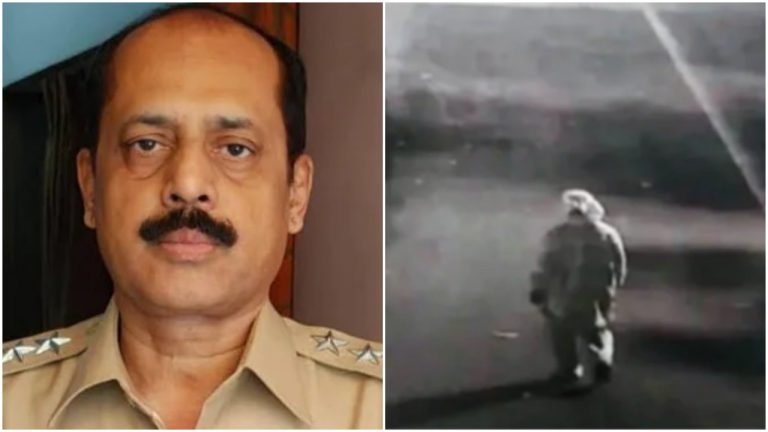
Earlier, it was reported that Sachin Vaze’s staff had admitted to the NIA that the man seen wearing a PPE suit and walking towards the Scorpio was Sachin Vaze himself. The staff had revealed to the investigating officers that Vaze was spotted near Antilia wearing a PPE kit on the eve of the bomb scare incident.
The staff had said that Vaze later destroyed the PPE kit. The National Investigating Agency officials had recovered a shirt from Sachin Vaze that was allegedly worn inside the PPE kit.
Following this, the National Investigation Agency (NIA), probing the Antilia bomb scare case, recreated the crime scene near Mukesh Ambani’s residence. According to the CCTV footage of the area, suspended API Sachin Vaze, a prime accused in the Antilia bomb scare case, was made to walk the scene.
Interestingly, Sachin Vaze was also been made to wear an over-sized Kurta, a mask and a handkerchief over his head to recreate the ‘PPE-wearing’ man spotted approaching the car on February 25. This recreation of the crime scene where Sachin Vaze is wearing an over-sized kurta, a mask and a handkerchief on his head seems to lend credence to the report that the NIA has evidence of the man in the PPE kit being none other than Sachin Vaze himself.
Sachin Vaze – an accused in the Antilia bomb scare case
The National Investigation Agency (NIA) arrested ‘encounter specialist’ Sachin Vaze for being a part of the group that planted the explosive-laden Scorpio on Carmichael Road (near Antilia) on February 25. The top cop was also investigated for his alleged role in the death of Mansukh Hiren, the owner of the Scorpio found near the Ambani residence.
Two cars – an Innova (white colour) and a Scorpio (green colour) were used to plant the bombs outside Mukesh Ambani’s residence in Mumbai on February 25. The police had traced the Scorpio to Mansukh Hiren, an auto part dealer in Thane. A few days later, his dead body was found in a creek. While initially it was claimed to be suicide, further investigation revealed that it is possibly a murder.
Later, it was found out that Mumbai top cop Sachin Vaze had used the same explosive-laden Scorpio found outside Reliance Group’s chief Mukesh Ambani’s residence Antilia to escort Alibagh Police in Arnab case.
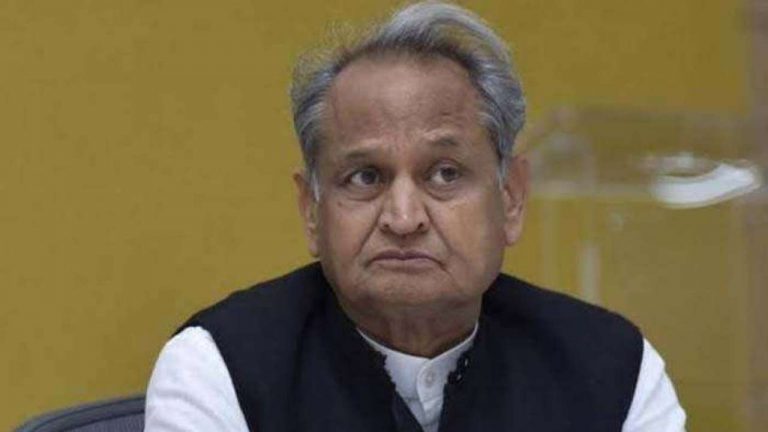
Delhi Police Crime Branch has lodged an FIR against Rajasthan Chief Minister Ashok Gehlot’s Officer on Special Duty (OSD) Lokesh Sharma on Thursday at Tughlak Road police station. The FIR was registered on the complaint of the Union Minister for Jal Shakti Gajendra Singh Shekhawat. An investigation has been started in the phone-tapping case.
According to reports, a senior police officer said that the case was transferred to the crime branch on Thursday and an FIR was registered under relevant provisions of the Indian Telegraph Act, the IT Act, and the Indian Penal Code.
The FIR reportedly states that Sharma had illegally intercepted the telephonic conversation with other persons. It states that on July 17, 2020, several big media houses and news channels had telecast telephonic conversations alleged to have taken place between Sanjay Jain, MLA Bhanwar Lal Sharma and Lokesh Sharma.
The FIR further states that the authorities have no jurisdiction to exercise the powers under the said section. Securing the political ends of a particular leader or a party does not substitute public emergency or public safety, the FIR stated.
A notice was served by Gajendra Singh Shekhawat to the media houses and it was disclosed in their reply that Lokesh Sharma had provided them with the intercepted conversations.
Rajasthan phone tapping case
The phone-tapping controversy had erupted in Rajasthan in July last year during a political crisis within the government due to the rebellion of the former deputy Chief Minister of Rajasthan Sachin Pilot. Pilot along with 18 other MLAs had revolted against Gehlot. Some audio clips had surfaced thereafter allegedly related to a telephonic conversation between Shekhawat and Congress leaders. Pilot-led MLAs had alleged that CM Gehlot had tapped their phones when they were staying at Jaisalmer’s Suryagarh hotel.
Congress had accused the BJP leaders of indulging in horse-trading in an attempt to topple the state government. The BJP had demanded a CBI inquiry in the matter. An FIR was registered in October last year at Vidhayak Puri police station, Jaipur against Pilot’s media manager Lokendra Singh and Aaj Tak journalist Sharat Kumar for reporting on the phone tapping of Congress MLAs during their stay in a hotel in Jaisalmer.
President Joe Biden administration announced that the United States of America would be holding an online World Leaders’ Climate Summit in the month of April. The White House statement released on March 26th said “President Biden invited 40 world leaders to the Leaders Summit on Climate he will host on April 22 and 23. The virtual Leaders Summit will be live-streamed for public viewing”.
According to the statement by the White House, the key themes of the summit are set to revolve around the urgency – and the economic benefits – of stronger climate action.
In the list of invitees included several world leaders like PM Modi of India, PM Sheikh Hasina of Bangladesh, PM Lotay Tshering and others like President Putin of Russia and Xi Jinping from China.
Other countries whose premiers have been invited to the Climate Summit include Antigua and Barbuda, Argentina, Australia, Brazil, Canada, Chile, Colombia, Republic of the Congo, Denmark, European Commission, France, Gabon, Germany, Indonesia, Israel, Jamaica, Japan, Mexico, Singapore amongst others.
However, in the list of 40 leaders, one name was conspicuously absent – that of Pakistan’s Prime Minister Imran Khan.
Interestingly, on January 20th, Imran Khan had taken to Twitter to congratulate President Joe Biden and hoped that USA and Pakistan ‘would work closely’ on a host of subjects, including ‘ countering climate change.
I congratulate President @JoeBiden on his inauguration. Look forward to working with @POTUS in building a stronger Pak-US partnership through trade & economic engagement, countering climate change, improving public health, combating corruption & promoting peace in region & beyond
By the looks of it, USA is not taking up Imran Khan on the offer of ‘working closely’ to ‘counter climate change’.
Imran Khan, the Prime Minister of Pakistan, has been trying extremely hard to cosy up to the new Biden administration in the USA. Ambitiously, Khan had recently offered to mediate between China and the United States of America as well.
Addressing the Pakistan-Sri Lanka Trade and Investment Conference in Colombo in February, Khan said, “I also feel that and I want to believe that Pakistan can play its part in reducing the rising tensions between the United States and China. Some 50 years back it was Pakistan that opened up China for the United States. It was Pakistan that organised the meeting between Henry Kissinger and the Chinese. So I hope that again we can play our part.”
“We would rather be a country that brings other nations and humanity together, rather than becoming a country that is part of rivalries between two countries,” he had added.
While Pakistan is certainly an ally of the USA, much to the laters peril, it is evident that as a country, it is almost impossible to take Pakistan as seriously as the rest of the world.