Home Blog Page 5793

JNU protests: VC M Jagadesh Kumar escapes attack mounted by 10-15 ‘students’ who pulled and gheraod him on campus

0

The students of the Jawaharlal Nehru University (JNU) on Thursday allegedly mounted an assault against the vice-chancellor (VC), M Jagadesh Kumar, in the university campus. According to the vice-chancellor, 10-15 protesting students surrounded him but the on-duty security personnel rescued him from an imminent attack.

Speaking to the media, Kumar revealed that he was attacked by the JNu students. “I was attacked today. I had gone today to visit the School of Arts and Aesthetics, JNU. There were around 10-15 students who surrounded me. They were trying to pull me down and in a mood to attack me. Fortunately, I was rescued by the security and managed to escape,” he said.


Besides, M Jagadesh Kumar’s car was allegedly vandalised by the students inside the university premises.

The vice-chancellor came to his office for the first time since the protesting students took hold of the administrative block, had a meeting with the presidents of 18 hostels, but the meeting remained inconclusive.

The Delhi High Court on Wednesday directed the police to provide adequate security when the vice-chancellor, registrar and other officials come to the administrative block on Thursday. However, despite the security, JNU hoodlums managed to reach dangerously close to the vice-chancellor and were on the verge of attacking him.

Read: JNU ‘students’ march to Rashtrapati Bhavan to protest against fee hike, police lathi-charge to control the unruly mob

It is noteworthy to mention that JNU students have been protesting for more than a month now on the issue of the new hostel manual which advocated a hike in hostel fees, dress code regulations, and curfew timings. The JNUSU also called for a protest-march from college to Parliament to demand the rollback of the increased fees, along with multiple other restrictions imposed which witnessed unprecedented violence and incidents of vandalism. The protesting students also vandalised a soon-to-be inaugurated Swami Vivekananda’s bust in opposition to the new fee hike and other restrictions.

Taking cognisance of the extended protests, the Ministry of Human Resource Development decided to constitute a panel to placate the angry students and take measures to end the protests.

Read: ‘Go way, people like you maligned us’: JNU goons stop Dr Anand Ranganathan from entering his lab, hurl insults at the scientist

The JNU administration explained its rationale behind the fee hike saying that the university is facing a deficit of Rs 45 crore and fee hike is necessary because of the huge electricity, water charges and the salary of contractual staff. However, the freeloaders of the JNU did not budge on their decision to continue protests.

Man arrested for raping his 8-year-old daughter for 2 years in Madhya Pradesh: Read the horrific details

0

In yet another shocking incident of brutality against minors, the Madhya Pradesh police have arrested a man named Ramesh Deora from Neemuch for sexually assaulting his daughter for over more than 2 years. An SIT has been instituted and the investigations in the case is underway.


The medical examination of the girl confirmed that she was indeed subjected to sexual assault. According to CSP Rakesh Mohan Shukla, the child helpline was informed that the resident of the scheme number 34 of the city routinely assaulted his daughter in a drunken state.

Childline counsellor talked to the girl who confirmed the assault committed by her father. The mother of the daughter had left them about 3 years back. Since then, the girl’s father, who worked as a labourer, sexually assaulted her routinely under the influence of alcohol.

About three years back, the wife of the accused absconded leaving her husband and their 4 children. One of the girls lived with her uncle while the other three kept living with their father Ramesh Deora. The 8-year-old victim had two younger siblings- brothers aged 6 and 3 years. According to the report, after the brothers fell asleep in the night, the father used to rape his 8-year-old daughter.

Fearing sexual abuse, on many occasions, the girl avoided being at her home and instead kept wandering on the streets for a day or two. However, when police interrogated the victim about the assault, she openly narrated her ordeal. An FIR has been registered against the accused under Section 376 of the IPC and the relevant sections of the POCSO Act.

The incidents of sexual assaults and murders, especially against the minors are steadily increasing. Recently, a similar incident of rape and murder was reported from the Pune city of Maharashtra. A 15-year-old teenage girl was allegedly raped and strangled to death in the Bhosari area of Pune by her step-father.

I don’t want to die, please save me: Man rapes an 18-year-old girl and sets her on fire when she threatened to lodge complain in UP

0

Days after the horrific tragedy of the Unnao rape victim, who was set ablaze by her alleged perpetrators while she was travelling to the court, another incident involving the rape victim being burnt alive has come to the fore. The incident pertains to Fatehpur district of Uttar Pradesh where an 18-year-old was raped and subsequently set on fire by her assaulter.

When OpIndia contacted the Hosainganj Police Station, the police confirmed that the accused named as Mevalal has been arrested under the charges of Section 376(rape) and 307(attempt to murder) of the Indian Penal Code. The police mentioned that the victim’s brother has filed a complaint against the accused and a probe has been ordered in the case.

On Friday night, a man living in the neighbourhood in the Husainganj area of Fatehpur raped the teenager. However, on Saturday morning, when the victim’s family was about to take her to file a complaint against the perpetrator, the assaulter poured Kerosene on the victim and set her ablaze. The victim sustained 90 per cent burns and was admitted to the district hospital. She was later transferred to the Lala Lajpat Rai Hospital in Kanpur and is currently in critical condition.

According to the victim, when she threatened the rapist of informing her family of the incident, the accused dragged her inside the room and set her on fire. Hearing the screams of the girl, the neighbours rushed to help the girl and douse the fire. She was rushed to the district hospital. Looking at the girl’s critical condition, doctors referred her to be transferred to the Kanpur hospital. According to the doctors at the district hospital, the girl had sustained 90 per cent burn injuries and only her lower legs remained unscathed.

The victim continued screaming in pain as reached the district hospital. When the district magistrate reached the hospital to record her statement, the victim continued saying, “Sir, I don’t want to die, please save me”.

Five men pretending to be CBI officers abduct Manipur CM’s brother from Kolkata using toys guns, rescued hours later

0

In a shocking incident, five men faking to be CBI officers entered Manipur Chief Minister N Biren Singh’s brother, Tongbram Lukhoi Singh’s apartment in Kolkata and abducted him.

He was, however, rescued by the Kolkata police hours later. The five accused, two of whom were from Manipur, have been arrested, confirmed the police.

In what transpired on December 13 (Friday), the accused carrying toy guns entered Singh’s rented home in New Town in Kolkata, West Bengal and kidnapped him and one of his associates, the police said, adding they later called Singh’s wife and demanded a ransom of Rs 15 lakh.

Following the complaint filed by Singh’s wife, Kolkata police launched a manhunt and rescued the two on Friday evening besides arresting all the five accused from Beniapukur area in central Kolkata. Of the five accused, two were from Manipur, two from Kolkata and one from Punjab.

The police seized two vehicles and three toy guns allegedly used by the accused, besides Rs 2 lakh in cash during the raid at their hideout in Beniapukur, confirmed a senior police officer with Kolkata police.

“It seems to be a kidnapping for money. The accused were working on behalf of someone from Manipur, who chalked out the plan,” the officer furthered.

The five are being interrogated. The two accused from Kolkata have criminal records, the officer said.

They also confirmed that Manipur Police have been informed about the incident and assistance for investigation was sought from them.

From enjoying mustard field to discussing UK elections: How five-star “journalists” looked away as Muslim mobs burnt Bengal

The state of West Bengal under Mamata Banerjee is burning as Muslim mobs led by Islamists have gone a rampage to such an extent that the state has deliberately chosen to remain on sidelines fearing more violence by these Muslim mobs.

The ‘liberal-secular’ industry which often gives moral science lectures on constitutionalism, democracy, rule of law seems has also joined the bandwagon to ignore the riots that are being unleashed by Muslim mobs in the state. It is not shocking anymore to see that the media often referred to as the fourth pillar of the democracy has turned a blind eye to the barbarity that is being unleashed by Islamist forces in West Bengal.

As perpetrators belong to the Muslim community, it is expected that the editors, journalists, members of the ‘liberal-secular’ media, the so-called intelligentsia will not speak or tweet on any developments that have happened in the state in the last 48 hours.

Rajdeep Sardesai, the Michealangelo of Indian journalism, as usual, has largely ignored the news of violent protests in West Bengal. Instead, he has been busy fantasising multi-crore scam accused P Chidamabaram, who has come out of the jail after 106 days of jail time.


Suhasini Haider, the National Editor and Diplomatic Affairs Editor of leftist rag- The Hindu which has lately joined hands with the Congress party in peddling anti-Indian propaganda, not only chose to ignore Bengal violence but also tried to deviate the protests by claiming that protestors everywhere in the country calling for the Citizenship Amendment Act to be repealed.

“The common sentiment is that India is united, its constitution is paramount and that governments must hear all voices,” she tweeted.


Unsurprisingly, Barkha Dutt – the retired news anchor, has spent time on teaching political lessons to ‘liberals’ following Labour party’s defeat in the United Kingdom. She found time to urge the liberals to let go of their elitism and lectured them how to defeat the right-wing.

Otherwise, on the issue of violence by Muslim mobs in Bengal, there is radio silence on Barkha Dutt’s timeline.


Shekhar Gupta, the undisputed leader of the media mafia of the country, was busy enjoying his time in mustard fields rather than holding the ‘establishment’ of West Bengal accountable for allowing Muslim mobs to set ablaze the state.


Rahul Kanwal, the poster-boy of ‘nobody’ seems to be enjoying his weekly off and in turn, has not commented on the West Bengal horror.

The rampage of the Muslim mob continues in West Bengal under the watch of Chief Minister Mamata Banerjee as Islamists have now vandalised more than five railway stations and set fire to a toll plaza in Murshidabad district on Saturday during their protest against the Citizenship Amendment Act (CAA).

Earlier in the day, the Muslim mobs had vandalised the complex and some trains by resorting to stone pelting, injuring a driver, officials said. The violence affected train services in Sealdah division of the Eastern Railway.

Protests against the CAB were planned soon after Friday prayers across mosques in the State and other various parts of the country which has resulted in extreme violence in parts of West Bengal.

The Muslim mobs have pelted stones at public properties and policemen along with burning of railway infrastructure in the state. Mobs pelted stones on ambulances and torched several vehicles, A cop was injured in the violent protests against Citizenship Amendment Act.

Judgement on Sabarimala not the last word: SC declines entry to Rehana Fathima and Bindu Ammini till review petitions heard

0

Coming as a major setback for the two women ‘activist’, Rehana Fathima and Bindu Ammini, who have been trying to desecrate the Sabrimala’s age-old tradition barring women in the 10-50 age group to enter the shrine, the Supreme Court on Friday declined to pass an order on their plea to allow them entry into the Sabarimala temple.

It was reported that Bindu Ammini had earlier decided on moving a contempt of court petition in the SC alleging that the Kerala government was not cooperating with women seeking to enter the sanctum sanctorum of Sabarimala, had instead moved a writ petition in the apex court on December 2.

This writ petition is in the form of public interest litigation (PIL) in which she has sighted the 2018 SC’s Sabarimala judgement and went on to say that this judgement has not been stayed by the top court. She also argued that SC had not referred the issue to a larger bench in its November 14 order.

Read: Kerala: Woman who entered Sabarimala last year with communist govt’s help moves SC seeking protection for entry this year

Reacting to this writ petition, the three-member bench headed by Chief Justice SA Bobde and comprising Justices Surya Kant and B R Gavai said: “We will endeavour to constitute a seven-judge bench at the earliest, and these matters would be taken up after the decision of this bench.

“Every woman who wants to go must go. But, the situation in the country becomes explosive, we don’t want any violence. There is a judgement, but it is not the last word on the issue”, said the Chief Justice.

In September 2018, the apex court in a verdict allowed the women of all age groups to enter the Sabarimala temple. In November 2019, a five-judge bench headed by then Chief Justice Ranjan Gogoi referred the matter to a larger bench by a 3:2 majority to examine the matter and pegged with issues like the entry of women into Mosques and Female Genital Mutilation.

Read: Today’s judgement by Supreme Court has effectively dislodged the 2018 verdict in Sabarimala case: Advocate J Sai Deepak

Today, the bench, headed by Chief Justice S A Bobde, said the “balance of convenience” required that no orders are passed in the mater today as the issue had already been referred to a seven-judge bench.

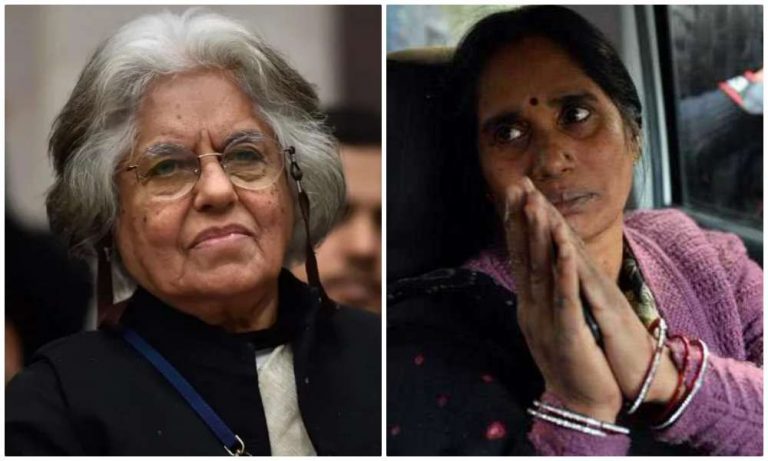
“It is a practice that has been going on for thousands of years. The balance of convenience requires that no orders should be passed in your favour now. If the matter, which has been referred, is found in your favour, we will certainly pass orders that you seek” CJI Bobde told Senior Advocates Colin Gonsalves and Indira Jaising, who appeared for petitioners Rehna Fathima and Bindu Ammini respectively.

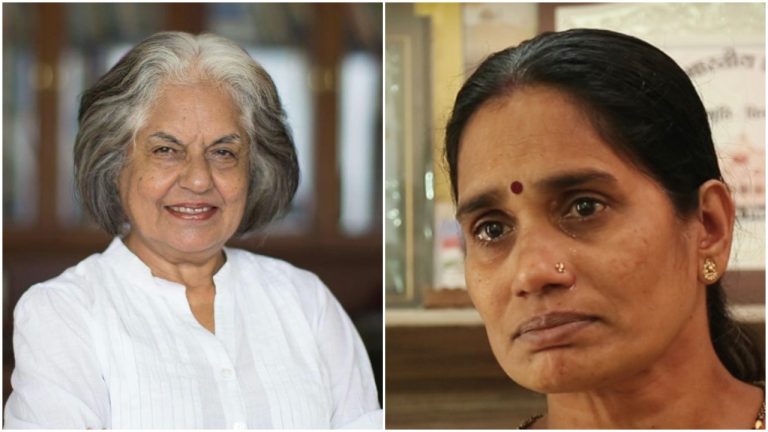
Senior advocate Indira Jaising, representing Bindu, contended before the court, “We are all here to avoid violence, this country based on the foundation of non-violence, we do not encourage violence.

Read: Sabarimala is NOT about ‘impurity’ being associated with menstruation, stop repeating that lie

“My client is a Dalit and Hindu woman, and she had entered the temple, as she is a believer”, said Jaising citing November 2018 judgement, which has not been stayed yet. The Chief Justice replied, “The judgement is not the final word.”

Taking note of the possibility of violence, the top court said the issue was “very emotive” and it did not want the situation to become “explosive” therefore asked the petitioners to be patient.

The two women, Bindu Ammini and Rehna Fathima, had approached the top court after attempts made by them to enter the hill shrine in Kerala had led to physical attacks against them.

Read: Lady who forcibly tried to enter Sabarimala says Muslim fanatics from SDPI paid her husband to convert her and daughter to Islam

Bindu Ammini, who was attacked with chilli spray while waiting near the Ernakulam police commissioner’s office on November 26 seeking police protection to enter the Sabarimala shrine had claimed that there is no stay of the 2018 SC verdict and the Kerala police are bound to give protection to women (between the age of 10 and 50) who wanted to climb the Sabarimala shrine.

The efforts of non-Hindus, activists and atheists to forcibly enter a Hindu religious shrine under the garb of democratic rights and disregarding the faith and traditions of the devotees have been criticised widely by Hindus around the world.

It is notable here that the Sabarimala temple is the seat of Lord Ayyappa who is worshipped there in his ‘Naishtika Brahmachari’ form. Hence, only the devotees who had observed a rigorous 41-day penance and are carrying the ‘Irumudi’ are traditionally allowed into the shrine. Women of menstruating age are barred.

Human Development Index 2019: Pakistan ranks lowest among South Asian countries

0

Pakistan ranks lowest amongst all the comparable South Asian countries in the Human Development Index 2019, says the latest report released by the United Nations Development Programme. Pakistan has slipped one rank down to 152 as compared to the 2018 report, out of the total 189 countries considered for the survey.

According to the UNDP’ report that was released on Thursday- “Pakistan is languishing at 13 per cent below the average HDI of South Asia including Bangladesh and India. Pakistan grew steadily over the period 2000 to 2015 but its progress slowed down afterwards.”

The neighbouring countries India and Bangladesh are at 129 and 135 positions respectively. Myanmar too is above Pakistan at 145th rank whereas Nepal is at 147th position. Collectively, all the above nations including Pakistan have been bracketed into “Medium Human Development”. India’s southern neighbour, Sri Lanka, is grouped under “High Human Development” category and is ranked at 71, 14 places higher than the People’s Republic of China which is at 85.

The report analyses that Pakistan’s HDI value marginally improved to 0.56 in 2018 as compared to 2017 stat of 0.558. Pakistan’s HDI improved by 25 per cent in the period from 2000 to 2015 with an average annual growth of 1.2 per cent but it slowed down after that. The report mentions that the improvement could be credited largely to education and income pointers.

Read: All roads lead to Gilgit-Baltistan: The tensions between India and Pakistan and what it could really mean

However, despite some advances, Pakistan Human Development Index 2019 continues to remain 13 per cent lower than than the comparable economies of South Asian countries and 12 per cent below the average HDI of the Medium Human Development category. Pakistan performed poorly on account of life expectancy at birth, expected years of schooling, mean years of schooling and GNI per capita with all the regional countries of South Asia.

With regards to the Inequality-adjusted Human Development Index (IHDI) too, Pakistan’s performance shrunk as it had an IHDI of 0.386 in 2018. In addition, Pakistan suffered a loss of 31.1% due to inequality in the distribution of HDI dimension indices.

Read: Former Pakistan MP who now sells peanuts in Haryana recalls how he was being forced to convert to Islam, celebrates CAB

One of the prominent parameters that defined the Human Development Index is education. While the expected years of schooling in India was at 12.3 years and in Bangladesh at 11.2, in Pakistan, however, it was only 8.5 years.

Pakistan is also accused of gross human rights violations in its illegally held Balochistan province along with federally administered Pakistan occupied Kashmir. Besides, Pakistan is also considered a breeding ground for Islamic terrorism and it holds the dubious distinction of sheltering the most dreaded terrorists from across the world.

Tech-giant Google recognises success of India’s UPI, recommends US Federal Reserve to implement similar model

Recognising the success of one of the flagship initiatives of Narendra Modi government – United Payment Interface (UPI), the tech-giant Google has recommended that the US Federal Reserve implement a real-time payments platform similar to India’s UPI.

According to a Bloomberg Quint report, the board of governors of the Federal Reserve published a paper in August this year, where it had proposed to develop a new inter-bank 24×7 real-time gross settlement service to support faster payments in the US.

The central bank had invited suggestions from relevant stakeholders on what the design and features of the ‘FedNow’ Service could look like.

In response to the Federal Reserve’s letter, Google has cited the experience of the UPI model used in India. “UPI was thoughtfully planned and critical aspects of its design led to its success,” said Google’s Vice President of Government Affairs and Public Policy Mark Isakowitz.

Read: UPI saw the highest number of transactions worth Rs 1 trillion in December 2018, reports NPCI

In a letter to Federal Reserve’s board of governors, VP Mark Isakowitz has written, “After just three years, the annual run rate of transactions flowing through UPI is about 19 per cent of India’s Gross Domestic Product, including 800 million monthly transactions valued at approximately $19 billion”.

He added that Google Pay, the company’s flagship payments application in India, is now one of the three leading UPI mobile applications. Google LLC has recommended that the Federal Reserve must pursue a similar model of open-payments, which is what UPI is based on so that the private entities are given the flexibility to collaborate to find unique solutions, which can best serve the end-users.

Additionally, Google has also asked that technology companies in the US should be permitted to access the end-users’ bank account information at the request of the customer.

Read: Bhim app, RuPay card and UPI based remittance app goes international, launched in Singapore

The Google has also recommended that the current FedNow Service should enable “push” or “pull” transaction requests so that technology companies can build a platform to assist users to initiate payments services with the bank executing transactions at the back-end, similar to UPI’s design.

What is Unified Payments Interface (UPI) that Google has recommended to the US Federal Reserve?

Unified Payments Interface (UPI) is a system that powers multiple bank accounts into a single mobile application of any participating bank, merging several banking features, seamless fund routing and merchant payments into one hood.

UPI also caters to the “Peer to Peer” collect request which can be scheduled and paid as per requirement and convenience. India’s United Payment Interface system allows banks, e-wallets and payment service providers to connect to the platform and build services on a mobile application. It also functions as a payments gateway for websites.

The system is UPI is based on ‘open-payments framework’, which means UPI is the base platform on top of which customers can either use the NPCI’s BHIM app, their banking applications or any of the numerous payments apps that have emerged in the last few years like Paytm, PhonePe or Google Pay.

UPI transactions in India has increased to a record high of Rs 1.91 lakh crore by the end of October 2019, from close to Rs 75,000 crore in October 2018. In November 2019, there were 1.2 billion transactions worth Rs 1.89 lakh crore flowing through the UPI platform.

Citizenship Amendment Act protests: Muslim mob continues rampage in Bengal, three more Railway stations and toll plazas set ablaze

The rampage of the Muslim mob continues in West Bengal under the watch of Chief Minister Mamata Banerjee as Islamists have now vandalised more railway stations and set fire to a toll plaza in Murshidabad district on Saturday during their protest against the Citizenship Amendment Act (CAA).

According to India Today reporter Indrojit Kundu, the mob have set a toll plaza on fire at Suti crossing in West Bengal’s Murshidabad district today. The law and order situation in West Bengal has gone completely out of control.


The Muslim mob continues to go on a rampage by attacking railway stations in the state. After vandalising and burning railway stations in Murshidabad and Howrah, the Muslim mob on Saturday attacked Sujnipara railway station under Malda division of Eastern Railways.


The Anti-CAA Muslim mobs also attacked the ticket counter at Sankrail railway station in Howrah district and set fire to the station.


The attacks on Railway infrastructure continues unabated in West Bengal as Muslim mobs have once again vandalised the Nimtita station on Saturday morning.

It is important to note that Muslim mobs had gone on a rampage in West Bengal’s Howrah district earlier in the day. They resorted to extreme violence by blocking tracks at the Uluberia railway station. The Muslim mobs had vandalised the complex and some trains by resorting to stone pelting, injuring a driver, officials said. The violence affected train services in Sealdah division of the Eastern Railway.

In the state of West Bengal, many members belonging to various Muslim organisations have resorted to violent protests following the passing of the historic Citizenship Amendment Act (CAB).

Read: Muslim mob pelted stones, poked rods, laughed sadistically: Survivor shares harrowing tale from Bengal anti-CAB protests

Protests against the CAB were planned soon after Friday prayers across mosques in the State and other various parts of the country which has resulted in extreme violence in parts of West Bengal.

The Muslim mobs have pelted stones at public properties and policemen along with burning of railway infrastructure in the state. Mobs pelted stones on ambulances and torched several vehicles, A cop was injured in the violent protests against Citizenship Amendment Act.

After protests against CAB in Jamia Millia Islamia turn violent, all semester exams postponed, winter break announced

0

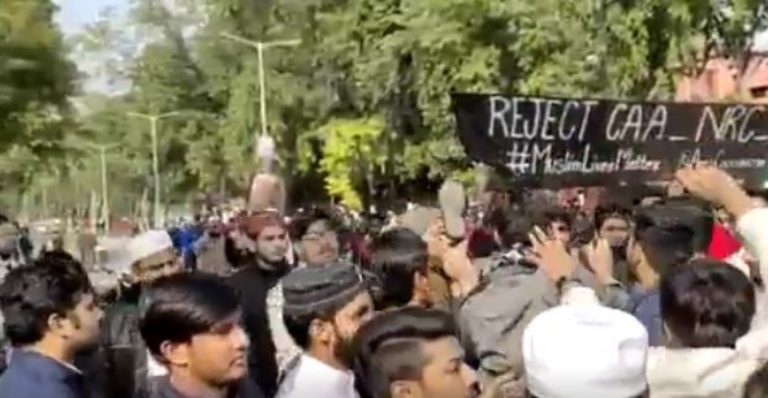
Most of the protests happening against the Citizenship Bill are being hijacked by various Muslim groups who are unleashing extreme violence across the country. In one of the incident, the protests took a communal turn in Delhi on Friday after ‘students’ of the controversial Jamia Millia Islamia (JMI) University resorted to mob violence against the police officials and shouted Islamic slogans “Allah-o-Akbar” during their protests. As many as 50 students were detained who were later released at around 8:30 pm.

Taking into view these violent protests by unruly students of the Jamia university, the authorities have decided to defer all semester exams scheduled on Saturday and announced winter break from December 16 to January 5. “University will open on January 6, 2020,” said Azeem Ahmed, Public Relations Officer of the university.

“All the semester exams scheduled today have been postponed,” a senior varsity official said.

Jamia students have called a university lockdown on Saturday and had planned to boycott the exams to protest against CAB and also against Friday’s violence following clashes with police during their march.

Reach: Watch: Protests against CAB in Jamia Millia Islamia turn violent amidst chants of Allaho Akbar, Nara-e-Taqbeer and La ilahi illilah

The students were heard sloganeering against Prime Minister Narendra Modi-led Central government and demanded that the Act which has been passed and notified earlier this week, should not be implemented.

Video’s had emerged where Jamia Millia Islamia University students could be seen raising ‘Allaho Akbar’ and ‘Nara-e-Taqbeer’ slogans. They are also heard saying, “Ye shahar zagmagaega, nur-e-la-illaha se, Ye desh zagmagaega, nur-e-la-ilaha se.Nara-e-takbir, Allahu Akbar”.

The ‘students’ of the Jamia Millia Islamia University in Delhi were also seen abusing police with provocative words as they used tear gas to disperse the violent mob.

In another video shared by one of the radical Islamic groups known as Tehzeeb Committee of Jamia Millia Islamia college, a ‘student’ can be seen making communal and provocative statements by claiming that ‘those who want to protect Muslims will have to protect Islam’. There were also several provocative statements that demanded Muslims to take to the streets. The “speech” was followed by a worrying slogan, “tera mera rishta kya, La ilahi illilah”. Similar statements were heard in Kashmir with respect to Pakistan by terrorists where they chanted “Pakistan se rishta kya, La ilahi illilah”.

Read: Muslim mob pelted stones, poked rods, laughed sadistically: Survivor shares harrowing tale from Bengal anti-CAB protests

Around 2,000 Jamia ‘students’ in Delhi were protesting against the CAB. The Jamia protesters against CAB had called for a march to Parliament House from the university campus to express their opposition to the legislation. However, they resorted to violence and broke police barricades.

As the police began to lathi-charge the students to calm down the situation, the protestors resorted to stone-pelting against these police officials. Several policemen have been injured in the mob attack of the students and three policemen are in critical condition in the ICU.

Naseem Ahmad Khan, the Exam Controller, said today: “We had scheduled our classes but there is no attendance. The students studying in this University feel that this Act will be discriminatory against them. We cannot help it. The protesters want the government to rethink on that.”